Another week of summer and already I’ve turned to fall.
This is Jonathan apple weekend at the orchard, marking halfway through the retail and u-pick season. When I think of a red apple, I think of Jonathan. We grow half a dozen varieties, including the heirloom. Except for the 89 degree ambient temperature yesterday it is beginning to feel like fall at the orchard.
At the end of my shift at the home, farm and auto supply store I moved pallets of water softening salt from the storage yard to the load out area for customers. Temperatures were moderate and the wind felt good as I traversed the length of the building in the lift truck. My two days a week schedule is facilitating the transition to retirement by providing some income and giving those days purpose outside the home.
Someday, maybe soon, all this will change.
September’s remaining days will be packed. Finishing garden, yard and kitchen work, and preparing for a winter of writing. After the general election, once the apple harvest is in, I hope for full days devoted to writing. I’m encouraged to work through the interim with positive results. Invested in the present, I’m looking toward a bright future.
It’s down to eggplant, green beans, peppers, butternut squash and kale as the garden winds down in late summer. Four crates of tomatoes remain to be used, and the ice box, storage shelves and freezer are nearing capacity.
The next project is planning the garlic patch for October planting. I think it will go where the celery and cucumbers grew this year. It was a successful crop so I’m doubling the amount planted — all with seed from this year’s crop.
The Autumnal Equinox begins Sept. 22 this year. After that, the winter cycle of cooking and living mostly indoors is renewed. Garden cleanup will be after first frost, usually in the middle of October. Then there is collecting grass clippings for mulch and trimming branches from trees and shrubs for a winter burn pile.
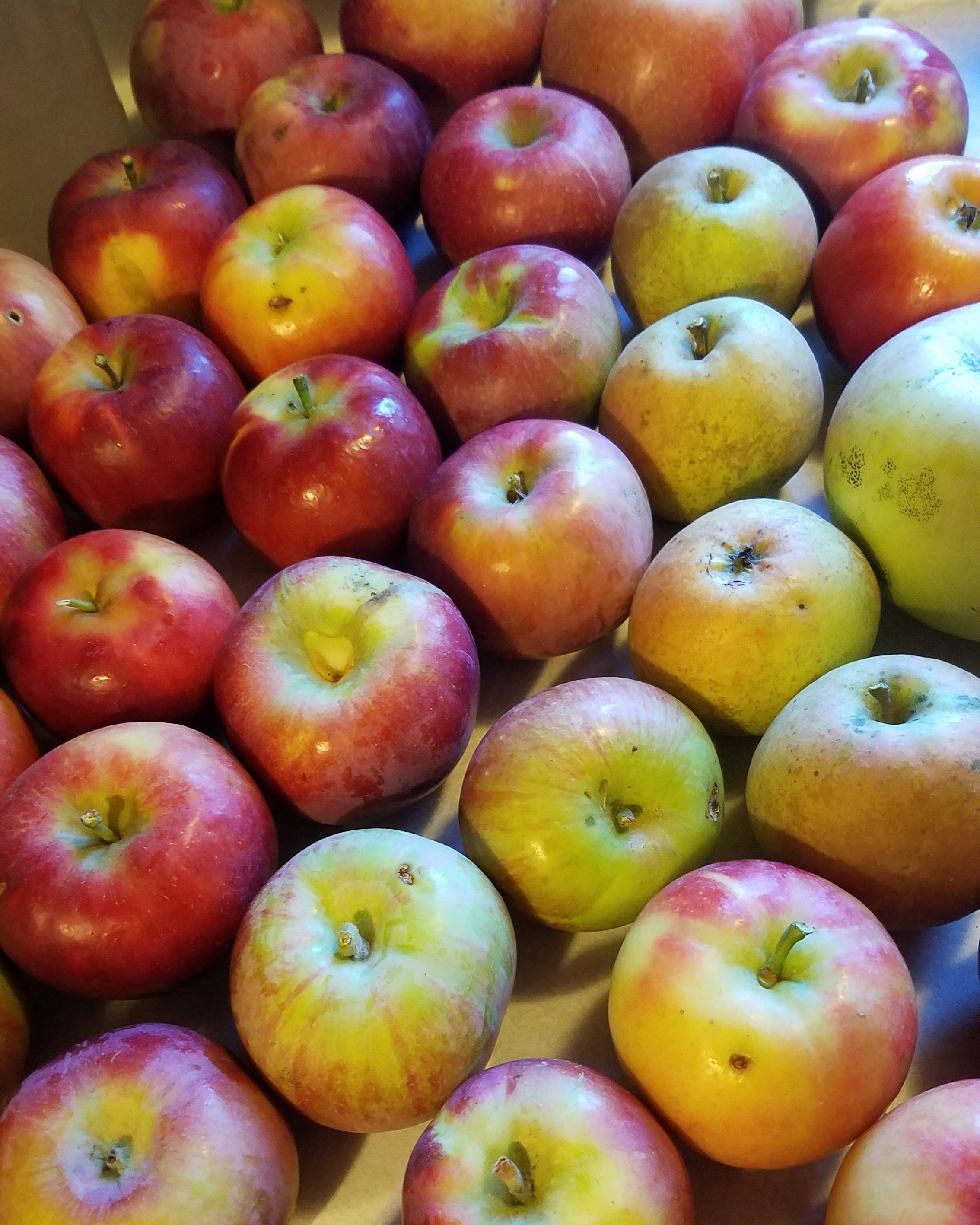
Apples, Sept. 11, 2018
Tuesday I made a trip to the orchard to pick apples and brought home more than a week’s worth in eight varieties. I had to stop picking before getting to all the ripe kinds because the bag was getting heavy. They will keep in the refrigerator… I hope.
There are seven weeks left in the apple season and I’m looking forward to all of them. There is nothing like my work as a mapper, helping guests find apples in our orchard. Last Sunday it was so busy, with perfect weather and pent up desire for customers to get outdoors, I began losing my voice after explaining the operation so many times. The harvest is a series of fleeting moments stretching toward a vanishing point.
The orchard has 100 varieties of apples that begin ripening in late July and continue until the last day of October. Pictured are Cortland, McIntosh, Wolf River, Jonagold, Honeycrisp, Hudson’s Golden Gem, and more. I’d say they were delicious and that would be an apple joke.
Vegetables for Library Workers
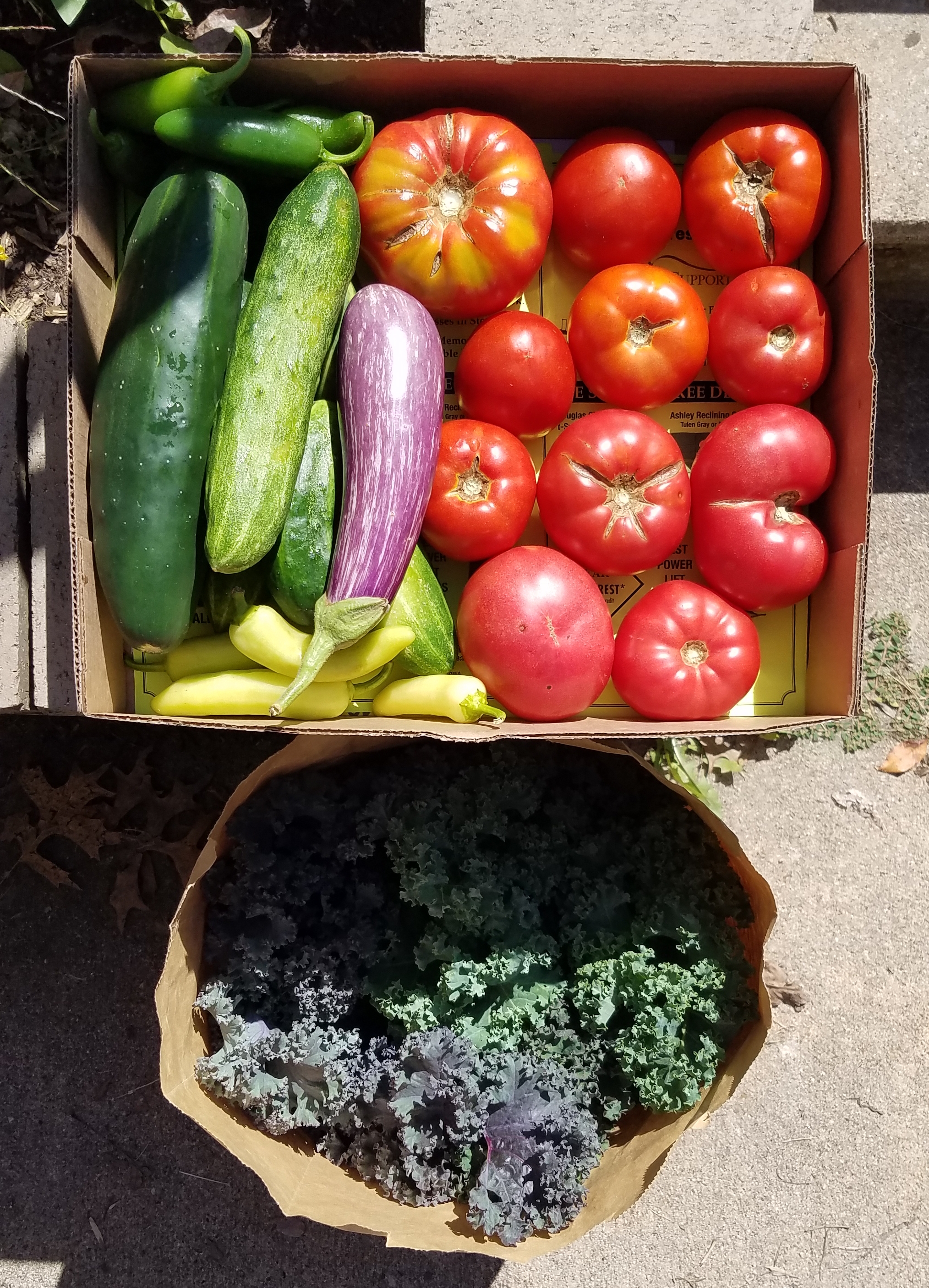
I took a care package to our library workers on the way to the orchard. Some of them work on Tuesdays and we didn’t want them to be left out of summer produce. They always appreciate fresh vegetables and this year favored Japanese cucumbers.
The garden has already been a success with some of the best crops I’ve yet grown in many varieties. Where there were failures (bell peppers, radishes, snow peas) there were big successes (tomatoes, celery, cucumbers, spinach, butternut squash, hot peppers). It has been a great year despite the weird weather.
Being in semi-retirement made a difference in preserving the harvest. An extra day or two during the week enabled me to take care of what was planted and process what came in the kitchen.
Since 2013 I’ve worked at the apple orchard on Labor Day.
The holiday coincides with ripening of Honeycrisp apples which is one of our most popular varieties. There are more than a dozen others, including Gala, McIntosh, Red Gravenstein, Burgundy, Cortland, Ginger Gold, Red Free and Akane, ripe and ready to pick.
It rained on Saturday, which suppressed the crowd, but Sunday a couple thousand guests stopped by. It was our busiest day this season.
My job title is “mapper.” That means I talk to many of our customers and help them have a positive experience at the orchard. A large map is displayed at my work station, from which I tell a story about how to find apples. Even when a majority of people seek the same variety, each customer is wants something a little different. It’s my job to figure out what that is and help them find it in a personal way. Sometimes I draw a map on a slip of paper showing where specific apples are. Mostly I use the map as a reference point and work to enable customers to break the chains of intellectual engagement and look at the 80 acres of land that makes up our orchard. With popular varieties that’s easier because the rows of apple trees are visible from my perch at the top of the hill. Among the many things our orchard represents, it is a chance to get away from daily life for a while.
Rain had been holding off Sunday until around 4:30 p.m. when clouds gathered and let loose a shower. Our guests headed into the sales barn and to their vehicles to get out of the weather. Rainfall signaled the end of the day more than our business hours.
I enjoy working at the orchard, especially when it is busy. My personal tradition has been to work on Labor Day and I’ve done it for as long as I can remember.
In the transportation and logistics business operations never ceased and our family had no culture of celebrating this holiday. I recall a Labor Day I drove into the Chicago loop to work in my office. I parked at a construction site near Lake Michigan, walked the block and a half to work, and went through security. I was one of the few people other than security inside the Standard Oil building on Randolph Drive. I believe I got a lot of work done that day, although today am not so sure.
Over the years we’ve become a family that doesn’t celebrate the eight or ten big holidays of the year. That might change in retirement. Even though I grew up in a union household, was a union member at the meat packing plant where my maternal grandmother and father worked, and have a daughter who is represented by a large union, Labor Day is a forgotten time for me. Maybe because I’d been part of management most of my worklife. More likely if I took the day off I wouldn’t know what to do as celebration. In the end, I’d rather spend time with people who are getting away from la vie quotidienne and help make their experience better on Labor Day.
After the rainfall I policed up trash from the picnic area and a young couple asked me to take a photo of them. Guest relations like this is an unwritten part of my job. I looked for proper framing where I could capture the day for them. She handed me her mobile device and I got them to smile. I snapped a photo of them in front of apple trees with our restaurant on the hill in the distant background. The photo pleased them.
I picked up discarded apples, plastic and paper and put them in trash barrels not full enough to empty. That work will be for Labor Day, when if the rain holds off we should have a couple thousand of guests seeking something, apples mostly, but also learning how to live in the 21st Century.
It’s raining as I type on the keyboard. Rain is to relent and I hope it does because one of the farmers for whom I work is getting married today.
In our small family there are not many celebrations. I’m not sure what to do at a wedding, although I’ll figure it out by 3:30 p.m. today.
Jacque is steering me in the right direction. We bought a gift on line and had it sent to the bride’s home. She is making a card. She suggested I refrain from going directly from the orchard in my work clothes as I had planned to do. I looked through the closet to find something to wear and there was my blue shirt and a pair of slacks. I have a pair of dress shoes left over from when I worked in the Chicago loop. I need to pick a tie. My navy blue blazer still fits. Special things for a special day. I’ll change in the employee rest room at the orchard then head down to the county seat for the ceremony. Civilization at work.
It’s still raining.
Since my first retirement nine years ago I’ve kept track of significant activities.
I keep a balance sheet, a list of books I’ve read recently, and record every event, meeting and significant encounter with people outside immediate family who are part of my world.
Early on there was a purpose to this, although I’m not sure now what it was. Three full binders later, I’m ready to give up tracking things so closely. My last full report was in December 2017 as my Social Security pension began. My second retirement seems opportunity enough to let go of details and focus on main tasks at hand. Things like weddings, funerals, birthdays, housekeeping and the like. I expect I’ll get better at it.
September begins the turn toward winter. The garden is in late summer production so there are tomatoes, celery, cucumbers, winter squash, green beans, eggplant and peppers coming in, requiring processing. Fruit is also coming in from the orchards with pears, apples and peaches lined up on the counter waiting to eat. Cooking has taken a fresh flavor with local food dominating most menus. Cucumber salad is happening daily and we’re not tired of it… yet.
2018 is proving to be a year of transition. So aren’t they all?
I’ve been planning garlic planting in late September and haven’t decided whether to use the cloves I grew as seed or to get more from the farm. I picked a place for them and once the cucumbers are done I’ll prep the soil. I think I know the answer. At some point we have to live on our own — I’ll use the cloves I grew this year, hoping they multiply and eventually become self-sustaining. I’m confident they will.
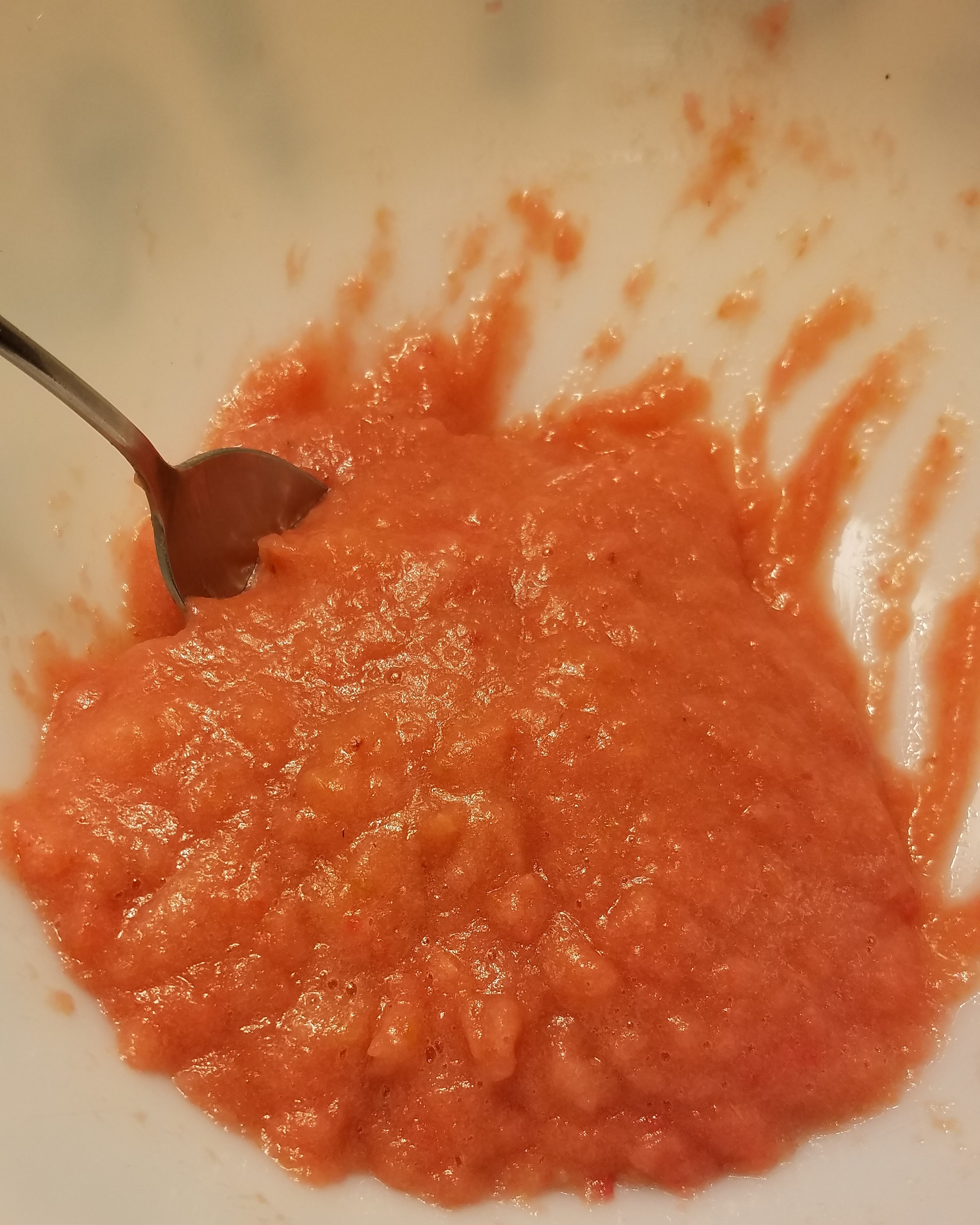
We don’t need any more salsa in the house yet the abundance of hot peppers this year had me making this recipe… it’s a big batch.
My Serrano pepper crops failed the last couple of years so I’m glad to have more this year.
There weren’t enough of them in the ice box so I went to the garden and picked more. No Roma tomatoes either so I used Clementine, a two-ounce, orange colored tomato of which we have an abundance.
This year I froze the salsa and am not sure how it will turn out when I use it — an ongoing experiment in food preservation. I bagged up two-cup servings. The rest is in the ice box ready for use. The recipe made 17 cups of salsa.
Serrano Pepper Salsa
Ingredients
2 pounds Serrano peppers
3-1/2 pounds Roma tomatoes
1 pound yellow onions
24 ounces tomato sauce
1/4 cup salt
1/4 cup ground black pepper
1 large head of garlic
Technique
Clean and stem the peppers. Clean and prep the garlic, tomatoes and onions, cutting into large chunks. Put the vegetables into a blender in batches. Grind it until medium coarseness. Mix the end result thoroughly in a large bowl. Add the salt, pepper and tomato sauce and mix until ingredients are incorporated.
It is debatable whether to cook the mixture. I like it fresh, although if one wants to can salsa it should be brought to a boil, stirring constantly to keep it from sticking to the pan, and then cooked for ten minutes under medium low heat. After cooking, fill pint Mason jars with the mixture, leaving an inch of head room, and process for 15 minutes.
We’ll be in salsa for months with this recipe. Now what to do with the jalapeno peppers. I’ve already pickled and frozen enough to last until next year.
Thunderstorms have been rolling over all day bringing needed rain and a chance to get caught up indoors.
I’m less freaked out about the amount of food processing ahead. There have been more cucumbers than normal and I canned the last seven quarts of sweet pickles this morning. That will be the last, I promise. I also canned pints of tomatoes, apple sauce and a jar of the same pickles. While the water bath was bubbling I made a pot of chili for supper with fresh tomatoes and Vidalia onions. We’ll cook the remaining sweet corn of the season. My retirement has had that effect — things are less freaky.
Tomatoes are next, although the plan is to eat as many fresh as possible. With only two of us at home, we can’t eat fast enough to keep up with the growing and cooking so some will be canned and turned into tomato juice and sauce. I’m taking it in stride.
Two weekends ago the orchard hosted our back to school weekend. A balloon artist/magician entertained children, and of course there were apples to pick and eat. It was a chance for parents to have one more family fun event before school begins.
Getting ready to attend grade school was one of the great pleasures of life. Each fall began with friends, new clothes, new pencils, and lined, blank sheets of paper. I needed new clothes after growing out of mine. I was first born, so no hand-me-downs. The sensation of hope and opportunity to begin anew is memorable, unlike anything I experience these days. It was something. I hope today’s graders feel the same way.
A Dad walked into the sales barn at the orchard carrying a young child on a backpack and a two-year old on his shoulders. He looked very fit. After they picked apples the toddler helped me transfer apples from our basket to a bag. “Do you want to count them?” I asked. At two, children aren’t really sure what counting is, or how exactly to do it. He just pick up one apple after another and let me do the counting after one and two.
I can see why people return to work after retirement. When we’ve worked our whole lives in stressful situations there’s no slowing down. It will take work to settle in more comfortably after 50 years in the workforce. What I once thought were extra things — cooking, gardening, reading and writing — are now life’s main event. Not sure how I feel about that. I won’t be for a while.
August is the last month to cover editorial duties at Blog for Iowa. I’m not sure what will be next. We’re moving quickly through the procession of apples, Red Gravenstein, Sansa, Akane and Burgundy this week. We have family Friday events through the month of September, so with work at the home, farm and auto supply store time will fly — almost like I’m working again.
Not really. Living one day in society at a time as best I can, hopefully with enough money for seeds in the spring.
(Editor’s Note: Iowa Farmers deal with an existential reality that is the weather. Regardless of increasingly polarized discussions about climate change, weather affects real people in tangible ways. Carmen recently wrote this piece to members of her Community Supported Agriculture project Local Harvest.)
The weather has been consistently challenging from the late spring to immediately hot May, from lots of rain to this current dry spell. There hasn’t been a catastrophic weather event, but all these different difficult weather conditions create more work to keep everything growing well.
I’ve been thinking more about it as we’ve been observing its impacts while harvesting more of the summer crops. I’ve talked to many other farmers (including folks that grow other types of crops) about the challenges of this season, and anecdotally it seems like the conditions have been hard on many types of crops and livestock alike. One of things that has struck me about this year is that it hasn’t been just one way like really hot or really wet, but every month has brought a different extreme to contend with. It’s made me wonder if it’s all this erraticness that’s been stressful to the plants and animals rather than just the heat or just the late spring.
I was curious to find out if the weather has just felt difficult to us or if it really has been extreme in the grand scheme of things, so I did a little internet research for weather data. What I found was interesting, and did seem to affirm my feeling that this year really has been weird. This was the coldest April on record (since records began in 1895), and was on average 10 degrees colder than normal. It was also somehow both the 5th snowiest April and the 13th driest April, which seemed a little ironic. 2018 tied for the 6th warmest May with 1887, and the average temperature was about seven degrees warmer than normal. Des Moines had three consecutive daily record highs from May 26-28. I was surprised that in Cedar Rapids the daily record highs for the end of May were all held by 1931 or 1934, and then I realized that was the dust bowl! June was the 10th warmest and 10th wettest June on record. July seems to have been pretty average after all those top 20 finishes for the previous months, as it was the 54th coolest July and the 47th driest July on record. Which I think kind of puts the extremeness of the previous months in perspective. Kind of nice to have an average month finally.
Anyhow, my main takeaway is that this year really does seem to be remarkably erratic when you look at the numbers, and it makes sense that plants and animals would respond unpredictably to all of these changes in the weather. I feel both good that I wasn’t making up that the weather has been extreme in many different ways this season, and kind of bad that it really has been historically weird this year. The fact that it took the dust bowl to beat this year out for daily heat records in May felt kind of grim.
Some crops like onions seem to have really suffered from this weather. You may have noticed that they’ve been smaller than normal this year, and after getting most of onion harvest done last week I’m sorry to report that many of the longer season onions are even smaller. This was especially disappointing to me after such a bountiful onion harvest of really giant ones last summer, but I think makes sense considering what we were up against. We planted more than 3 weeks later than we did last year because it kept snowing, and then had to irrigate the onions (which we hardly ever have to do) because it was so dry. We struggled to keep the weeds under control in the onion field in June when it was so wet, and spent almost a week wallowing in the mud trying to hand weed. All in all I’m glad we have some onions to show for all of it, and have a few ideas of things to try in case this ever happens again.
I also have to say that some crops seem to have really thrived in this weather. We’ve never had such a good cucumber or spring carrot crop before, both of which are crops that we have historically struggled to produce large quantities of for several weeks in a row. The combination of having plenty of carrots and cucumbers has felt like a great accomplishment, and I hope that we’re able to replicate it in a better weather year as well!
~ Carmen Black farms in Cedar Township in Johnson County, Iowa.
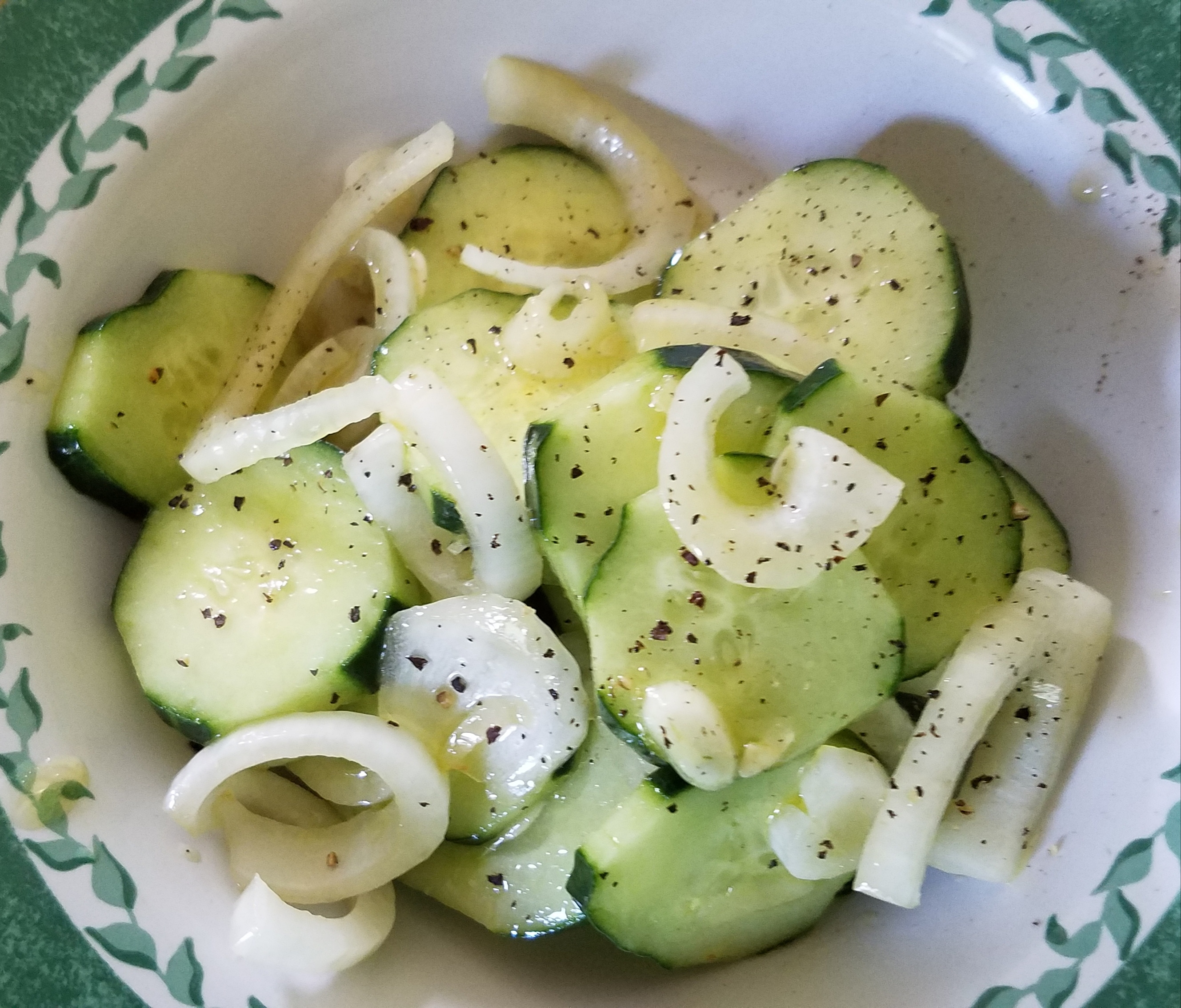
Peel them, slice and put them in a bowl. Add thinly sliced onions, extra virgin olive oil and your favorite vinegar, then salt and pepper to taste.
Mix gently then serve. It’s summer in a bowl.
When the garden produces them, we eat a lot of cucumber salads. This year I mastered the art of cucumber growing with a couple of simple things. First, I mulched as soon as I planted the seedlings. Then, I made sure deer had no access to the plants. I also put up cages and a fence for the vines to grow upward. The result has been abundant.
Other than in pickles, cucumbers don’t preserve well. They must be enjoyed in the moment, and sometimes that’s as good as it gets.
I bought State Fair, William’s Pride, Pristine and Duchess of Oldenberg apples at the orchard and brought them home. All but one have been eaten.
The goal was to taste them and determine which apples to buy for out of hand eating next week. My sixth year of weekend shifts at Wilson’s Orchard begins tomorrow.
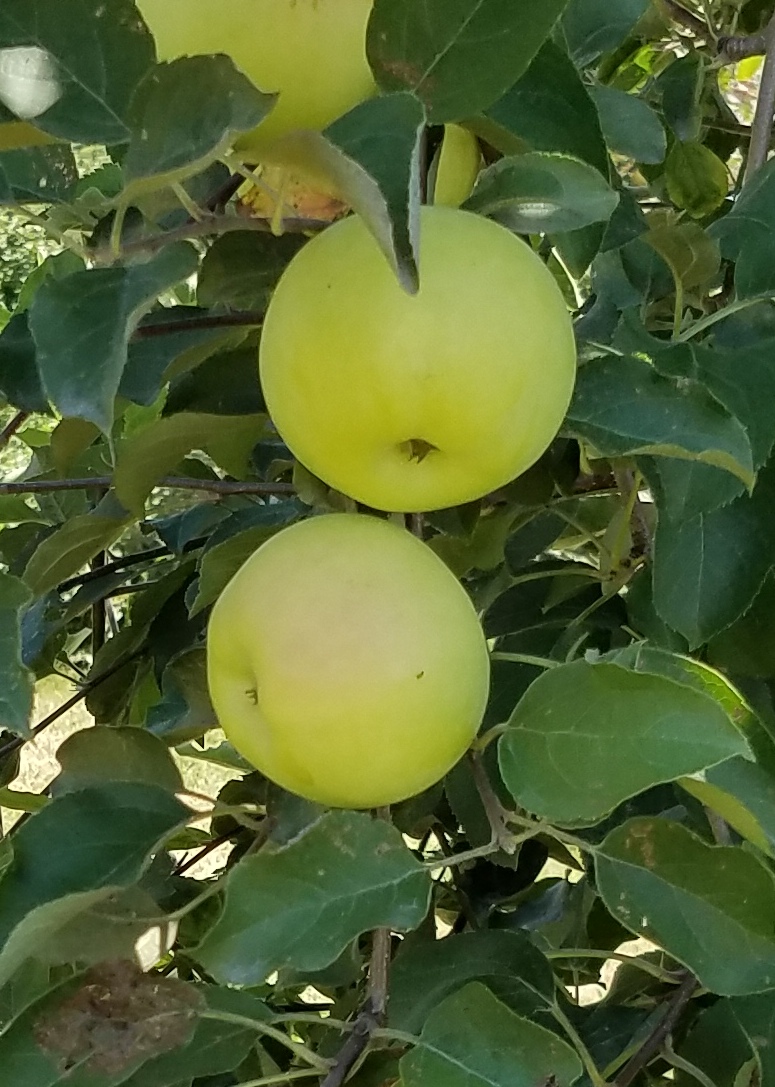
We decided on Pristine, which is a yellow-skinned, sweet and juicy apple. It doesn’t keep long so about ten should be enough for next week.
After an hour-long hike through the grounds, I can predict an abundant harvest. With zero apples on our three home apple trees, we’ll need the fruit.
What’s best about working at an orchard is meeting thousands of people from every background. Wealthy and poor, young and old, able bodied and infirm, urban and rural, liberals and conservatives, and everyone in between. Many visitors have a personal history with the orchard, or in the apple business. I relish hearing their stories. It’s great to work where my role is to help people find their way in the orchard and discuss something positive with them as they get away from their usual environment.
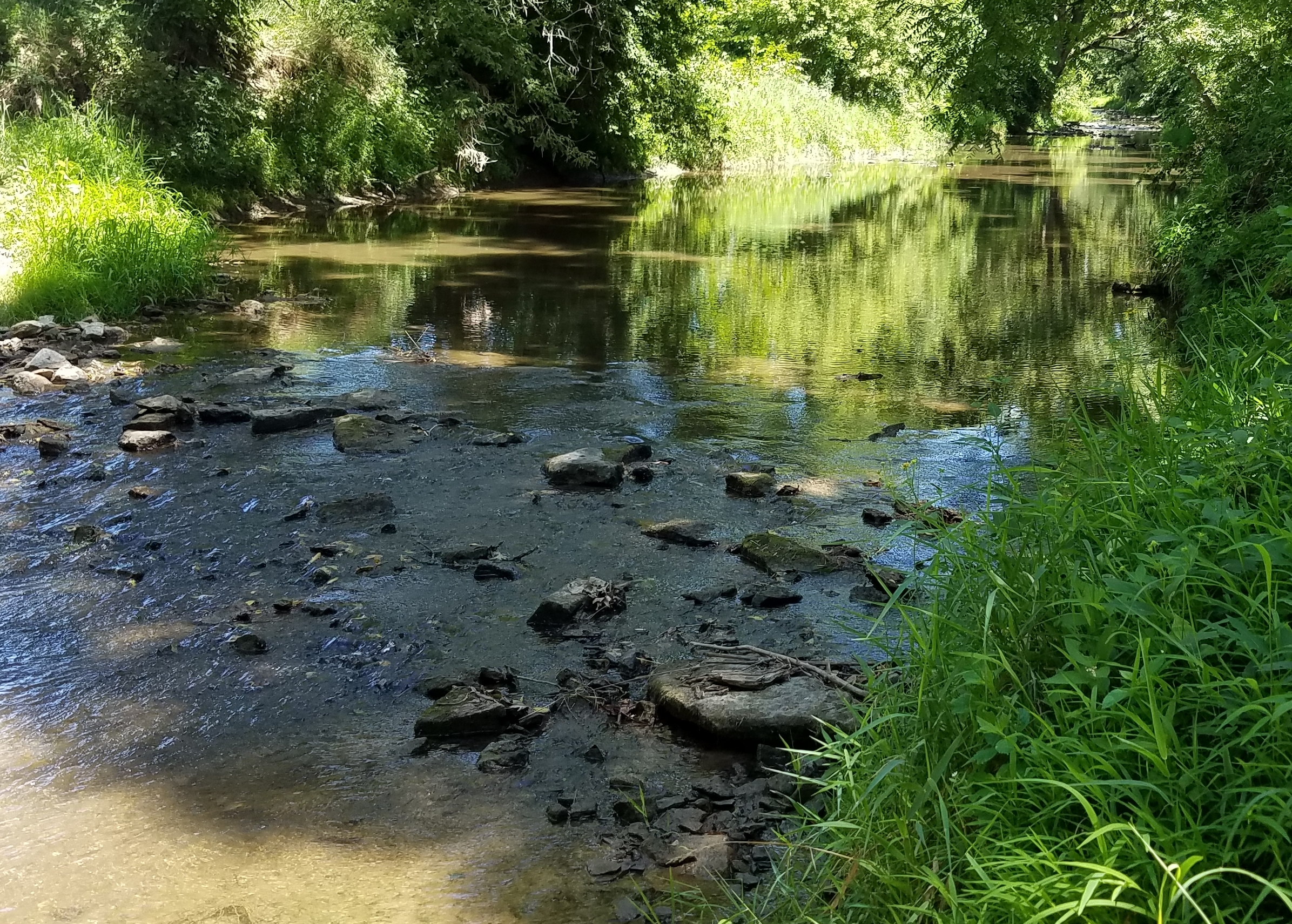
Here’s a photo of Rapid Creek, which runs through the middle of the orchard. The pre-season pic captures something serene in an otherwise turbulent world. We all need that from time to time.



 Journey Home
You must be logged in to post a comment.