Categories
Writing

The Customer is Always Right — but they lie

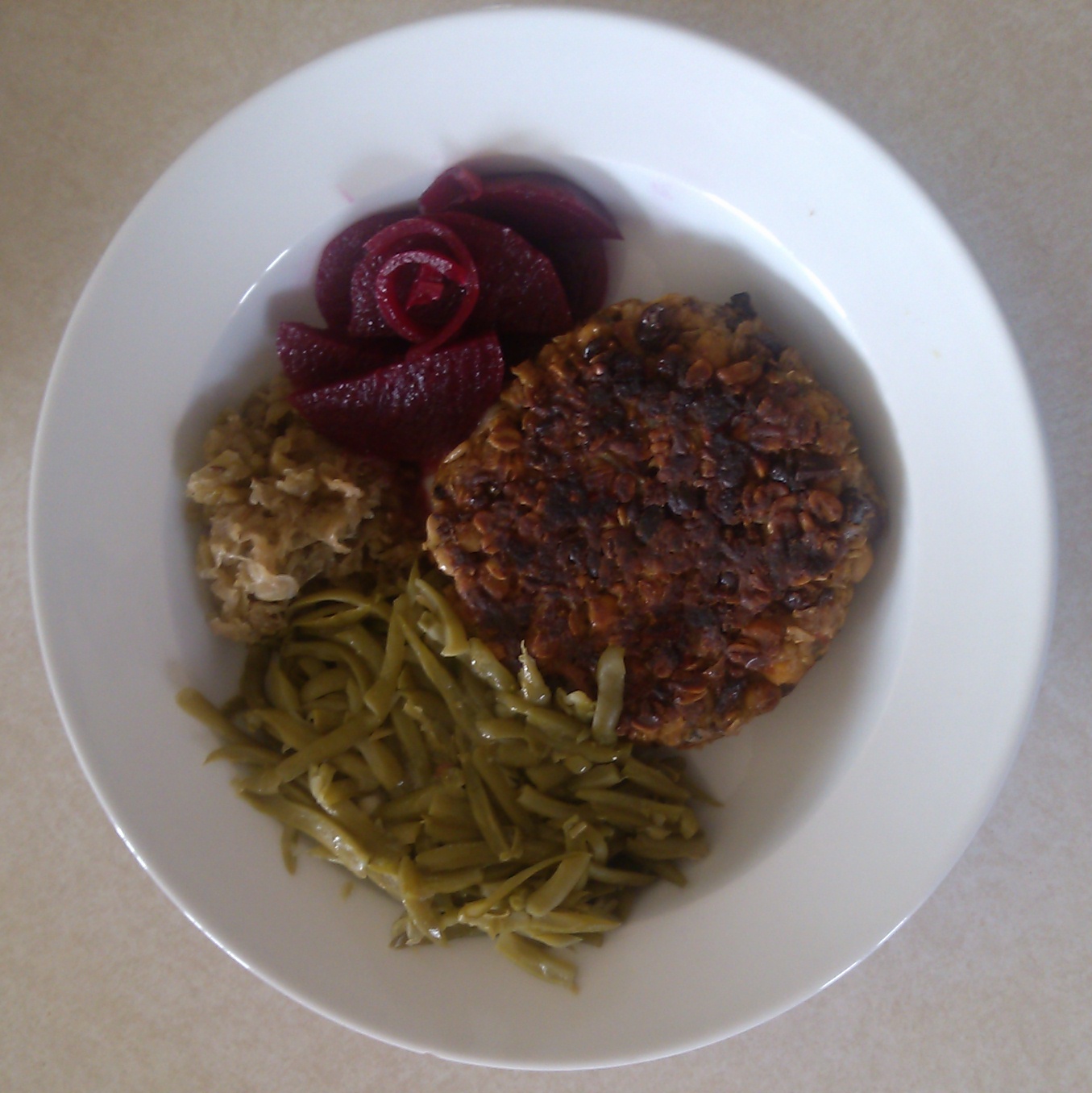
Veggie Burger
Veggie Burger

LAKE MACBRIDE— A friend worked at a fast food restaurant and spoke about their policy of replacing food items that were wrong when the order was prepared. For example, if a person asked for a burger with no pickles, and pickles were found when the package was opened. The restaurant replaced such items without hesitation, and free of charge. After all, he said, “the customer is always right.” He added, “…but they lie.” Customers frequently abuse the well-known make it right policy to get extra food. He knew because of his experience of properly preparing an order, only to have the customer return with half-eaten food, wanting a replacement for reasons that can only be described as lame.

Complaints are up at large franchise fast food restaurants, and given the scale of some operators, it is no surprise. In order to run a global restaurant business, with thousands of outlets, a company has to focus on the service delivery process. There is plenty of room for deviation from corporate standard operating procedures.

A focus on process means well-defined procedures for everything. With high employee turnover, some believe if the service delivery process is bulletproof, any employee, with limited experience, can step in with minimal training, and make sandwiches that delivery corporate quality.

Customers learn to work such delivery systems to their advantage. My friend was just calling out what in other social circles is an accepted practice of getting what one can from society without ethical concerns.

It may be a bit scandalous to say, but often the customer is not right. It is one thing for a starving person to work the system to get an extra sandwich from a company that can afford to provide one. It is quite another to go through life expecting that what are exceptions should become rules for exploiting businesses for personal gain. Whatever is wrong with corporate businesses, there is something more fundamentally wrong with a culture that produces both employees that are rude and deceitful customers. It is tough to blame that on corporations.

As a business owner, it can be comforting to focus on process. It is abstract, and works toward efficiency, employee safety and improved margins. But not everyone owns a business, and that leaves those of us in the fray of daily restaurant operations to fend for ourselves.

Bad customer service and deceitful customers are two sides of the same problem. Some of us are loathe to complain about service, because of the time it takes  and the negativity it can introduce into daily life. The customer who lies about a sandwich order for personal gain is an example of what is worst in society. The idea that we are not in life together, but that it is each individual for him or herself, any semblance of a moral compass abandoned.

We are on our own in society, emphasis on our. There is a proper place for honesty in our relations with people. It is something we can and should work on everyday, even in ubiquitous settings like fast food restaurants.

Categories
Home Life Kitchen Garden

Rainy Monday

LAKE MACBRIDE— Rain fell against the bedroom window, framing the day for inside work. The forecast is for showers to end in an hour or so, with a chance of thunderstorms tonight. Today’s high temperature is expected to be 73 degrees. We need the rain, and welcome warm temperatures. Now that the ground thawed, moisture should soak into the topsoil for gardens, lawns, trees and field crops. I would have preferred to work outside this morning, but there is plenty to do inside. We’ll see how things go as the day progresses.

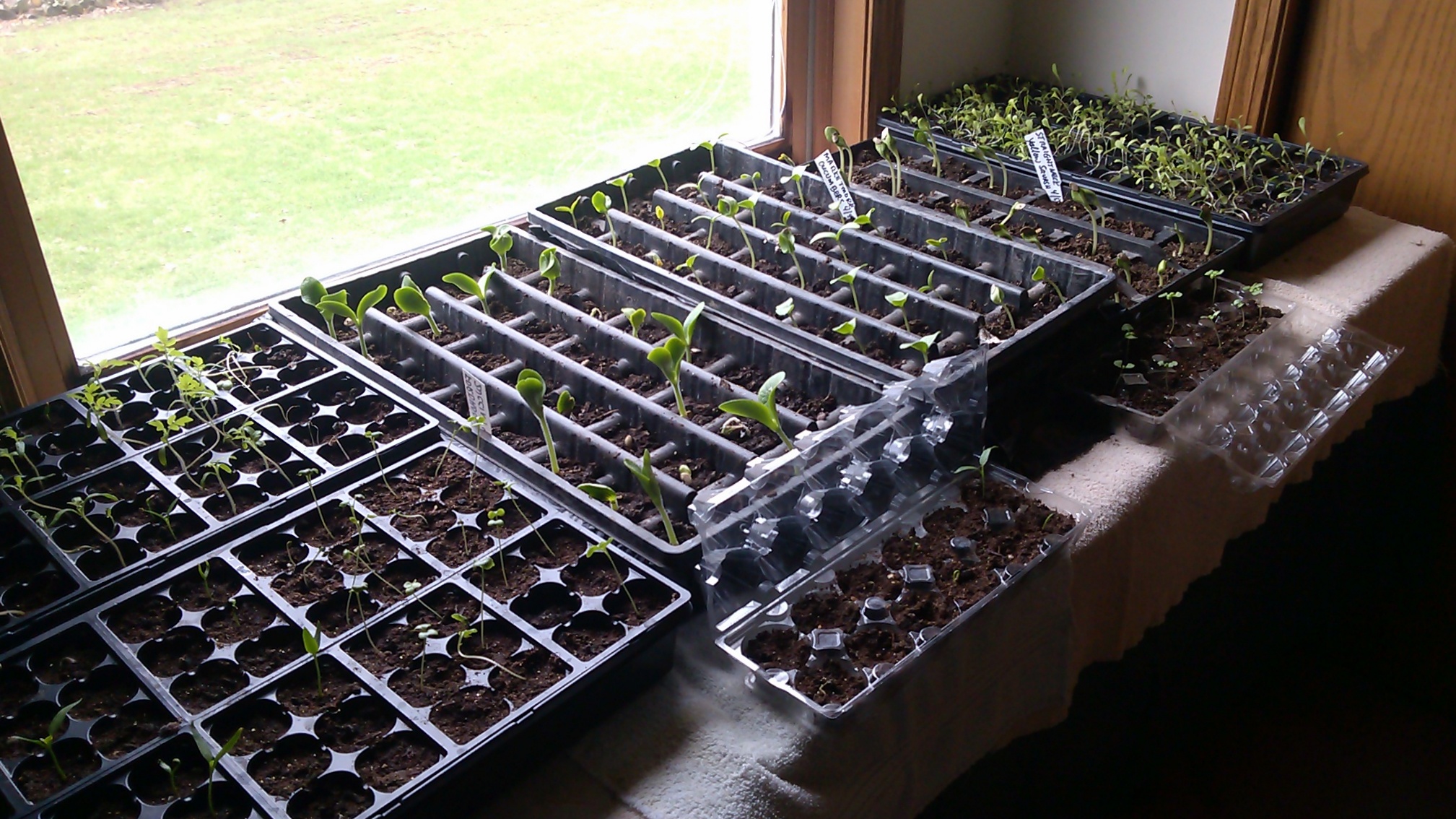
Yesterday, I made up more seedling trays. The CSA provided some used plastic trays which are now planted in yellow squash, cucumber and zucchini. They are situated near the south facing window in our bedroom, and there is not much room for more on the folding table.

To water the seedlings, I set up the lid of the recycling bin on a table in the garage and filled it halfway with water. I dunked the trays, one at a time, watering from the bottom. Each tray was warm to the touch as I carried it downstairs, evidence the south facing window was beneficial.

There is a significant investment of time in this year’s seedling experiment. Too, if the seedlings don’t sprout and mature properly, there will be the additional expense of purchasing from the farmers markets or grocery store. After cutting soil blocks at the CSA and seeing plants grow in the greenhouse, I gained confidence, and there is promise of success in most of the cells.

It has been 27 days since beginning my temp job at the warehouse. At the beginning, it wasn’t clear I could hack it, but that feeling has been overcome, and physical adjustments have been made and assimilated. With a start time of 3:30 p.m., the best hours of the day are mine to work on a multitude of projects at home. This inner focus, coupled with gardening, is what is needed most for the time being, while working toward a sustainable life on the Iowa prairie.

Categories
Kitchen Garden

In the Greenhouse

Bedding Plants
Bedding Plants

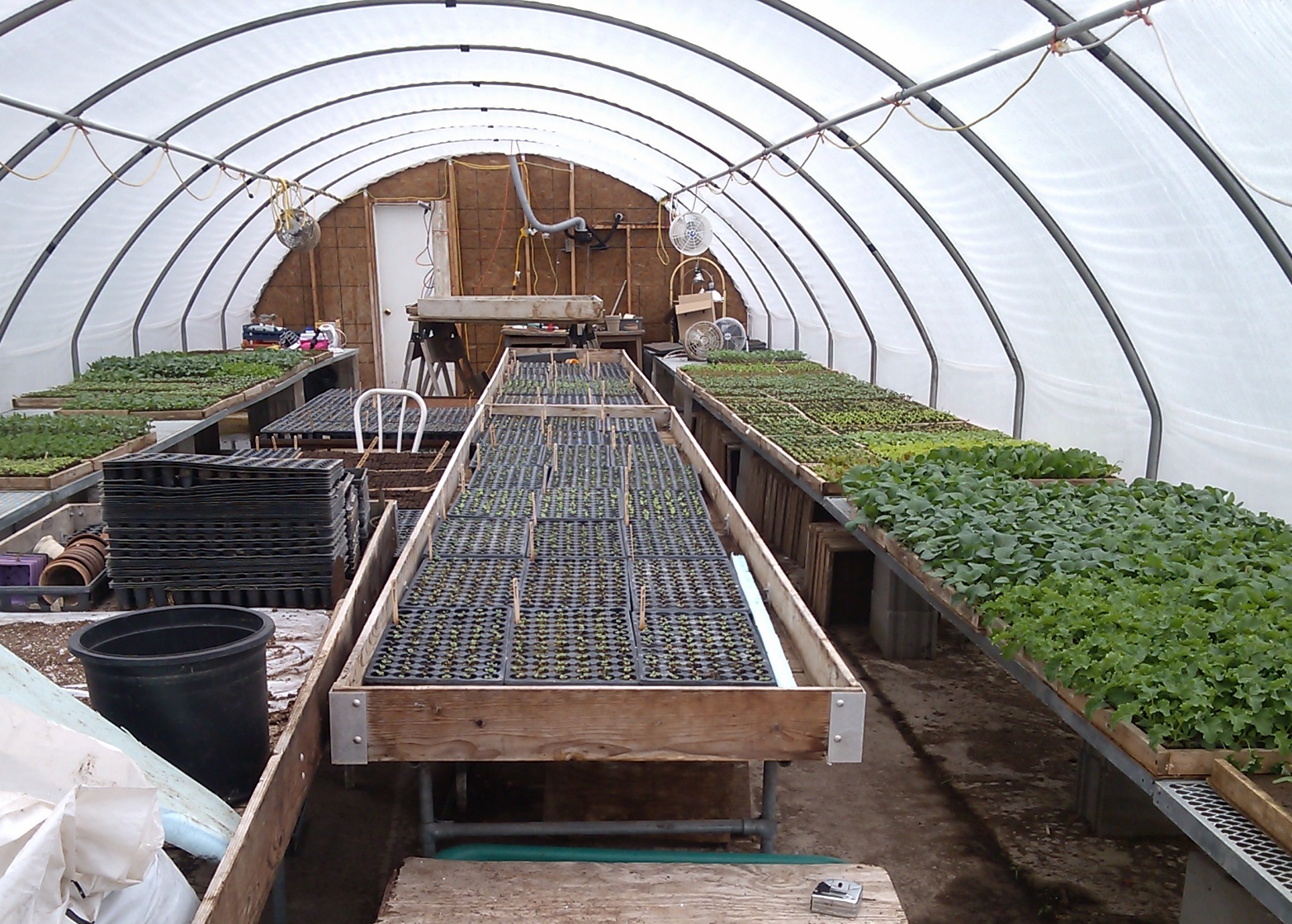
RURAL CEDAR TOWNSHIP— It’s the fifth week of making soil blocks for the farm, and flats of seedlings are filling the tables. It is warm inside the greenhouse, and most days I work in jeans and a T-shirt. There is a sense of accomplishment, even though nothing has been planted in the ground except a few items in the hoop house.

There is a small community of growers and talk centers around plants and ultra-local events. Soil quality, weather, temperatures— all leading to a bigger question— when to get into the ground during this cold spring? On a farm there will be a practical answer to this question. Here’s hoping to get out of the greenhouse soon, and into the fields.

GARDEN NOTES: On the home front, I dug, raked and planted the first seeds in the garden. A two foot by ten foot patch where I broadcast Arugula (Rocquette) on the eastern end, and the remainder in a mix of three 45 days to maturity lettuce seeds (Black Seeded Simpson, Gourmet Blend, and Simpson Elite). The watering cans went missing, so I dumped dishpans full of water into a colander to diffuse the initial flow. It worked well.

Inside, I set up a table near the only south-facing window, where I consolidated all of the indoor seedlings. Things are coming along nicely— for the most part. After consulting with the CSA, I abandoned the project of starting onions from seed and replanted those cells with Cayenne pepper seeds. The Rosemary mostly did not take, so I marked the ones that did and planted broccoli in the rest of those cells. I made what I am calling “bombs,” planting all of one kind of seeds in each of several old flower pots. A basil bomb, a mint bomb, and an arugula bomb will hopefully be available for the kitchen. Some have already sprouted.

Categories
Kitchen Garden

Getting Started in the Garden

Seedlings
Greenhouse Seedlings

LAKE MACBRIDE— Thursday will be the day to get started in the garden. Temperatures have been above freezing for a few days, so by then, the ground should be thawed enough to turn over and plant lettuce. I use the broadcast method for lettuce— a local tradition.

Six kinds of lettuce seeds are germinating in a seed starter. These will be grown into heads of lettuce, a first for me this year. Although it is a late start, it’s time to get going.

The garden is already active, with garlic, chives and oregano overwintering. The daylilies sprouted, as have other bulbs. This year I plan to relocate some of the bulbs from the garden to other places around the property. I say that every year, but this time it may be for real.

Spring has sprung, and it is about time.

Categories
Milestones

Change at the Solon Farmers Market

SOLON— While taking photographs on Friday, a couple of legion members were walking back to the hall in their uniforms. Someone had died. It turned out to be Booky Buchmayer, the man who sold produce at the Solon Farmers Market. On most days, he was the only farmer at the market, although I am not sure how much of the produce he grew himself. He brokered melons from Muscatine, and sweet corn from Rebal’s roadside stand on Highway One. He was a fixture of Solon, and his passing creates a vacuum in local society. Below is an edited version of his obituary from the Brosh Chapel web site. May he rest in peace.

Raymond “Booky” Buchmayer, 85, of Solon, died Saturday March 23, 2013 at Mercy Hospital in Iowa City. Funeral Services were held Friday, March 29, at Brosh Chapel in Solon. Burial followed in Oakland Cemetery with full military rites provided by the Solon American Legion, Stinocher Post #460.

Raymond was the first born of Otto and Agnes (Kriel) Buchmayer on Sept. 4, 1927 in Solon. He graduated from Solon High School and attended Cornell College for three years. He then attended and graduated from Bricklayer Trade School. He married Elaine Schindler on Jan. 17, 1953. She died Dec. 31, 1996. Raymond served in the U. S. Army during WWII and was an active member of the Solon American Legion where he served as past commander. He was the adjunct for the American Legion 1st District and a member of the Bricklayers Union Local #3. Raymond worked as a bricklayer for over 50 years with Larson-Unzeitg before retiring in 1990. He was a member of the Solon Volunteer Fire Department and worked for Mark’s Auto Body. Raymond was a member of the Solon United Methodist Church.

Raymond loved hunting, fishing and mushroom hunting. He loved to travel to new places, his large family and his morning coffee trips uptown Solon with the guys. He was active in the farmers market in Solon and famous for his melons. He married Betty Jo Brumwell Lamansky on Feb. 14, 2004 at the Solon United Methodist Church and his family really grew. Holidays, weddings and new babies kept him busy in his retirement years.

Raymond is survived by his wife, children, grandchildren, great-grandchildren, step-children, step-grandchildren and step-great-grandchildren.

Raymond was preceded in death by his parents, wife Elaine, infant son John and infant sister Irene.

“A gentle giant with a big heart”

In lieu of flowers, memorials may be directed to the Solon Fire Department, Solon United Methodist Church, and the Solon Veterans Memorial.

Categories
Kitchen Garden

First Day in the Garage and Garden

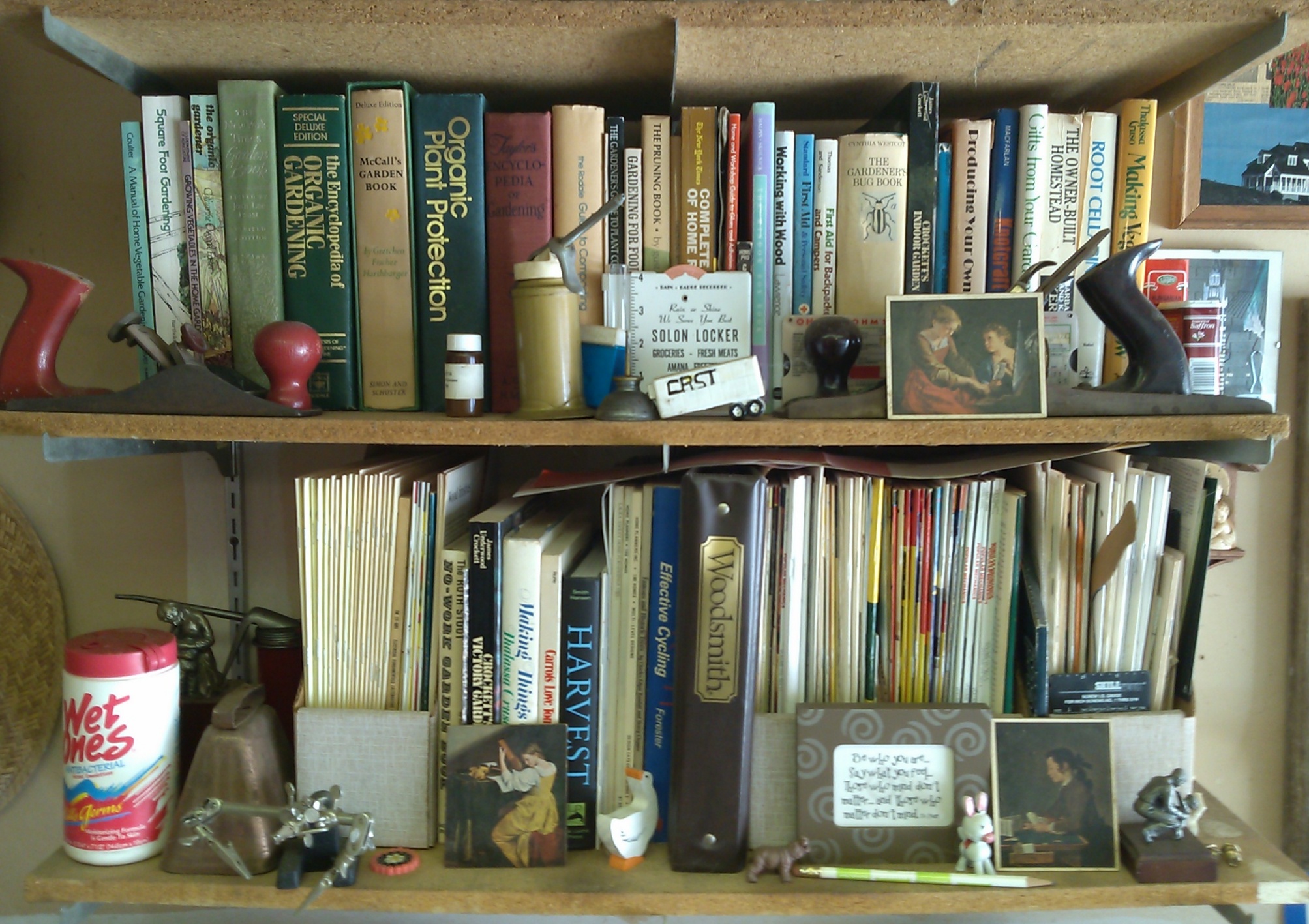
Garage Resources
Garage Resources

LAKE MACBRIDE— With temperatures in the mid-50s, and a day off work, how could I not spend the day in the garage and garden under azure skies? I cleared the first plot for the spinach, lettuce and herbs and turned the first spadeful of soil. Ice persisted two inches below the surface, but it won’t be long before the ground is warm enough to plant. I brought the trays of seedlings outside to take in the full sunlight of spring.

The front yard needs some work. Last year, a backhoe service dug down to the waterline, repaired a leak, and left a sinking spot near the house. We also had the septic service pump our tank last year: the ground covering the lids needed something. The soil was warm enough above the septic tanks to sow grass seed. As I did, I noticed the view of the lake now that our neighbors removed their diseased pine trees. The sense of isolation created by the treeline is gone. I am thankful for the view of the lake, glad to surrender a bit of privacy to see open water from our front steps again.

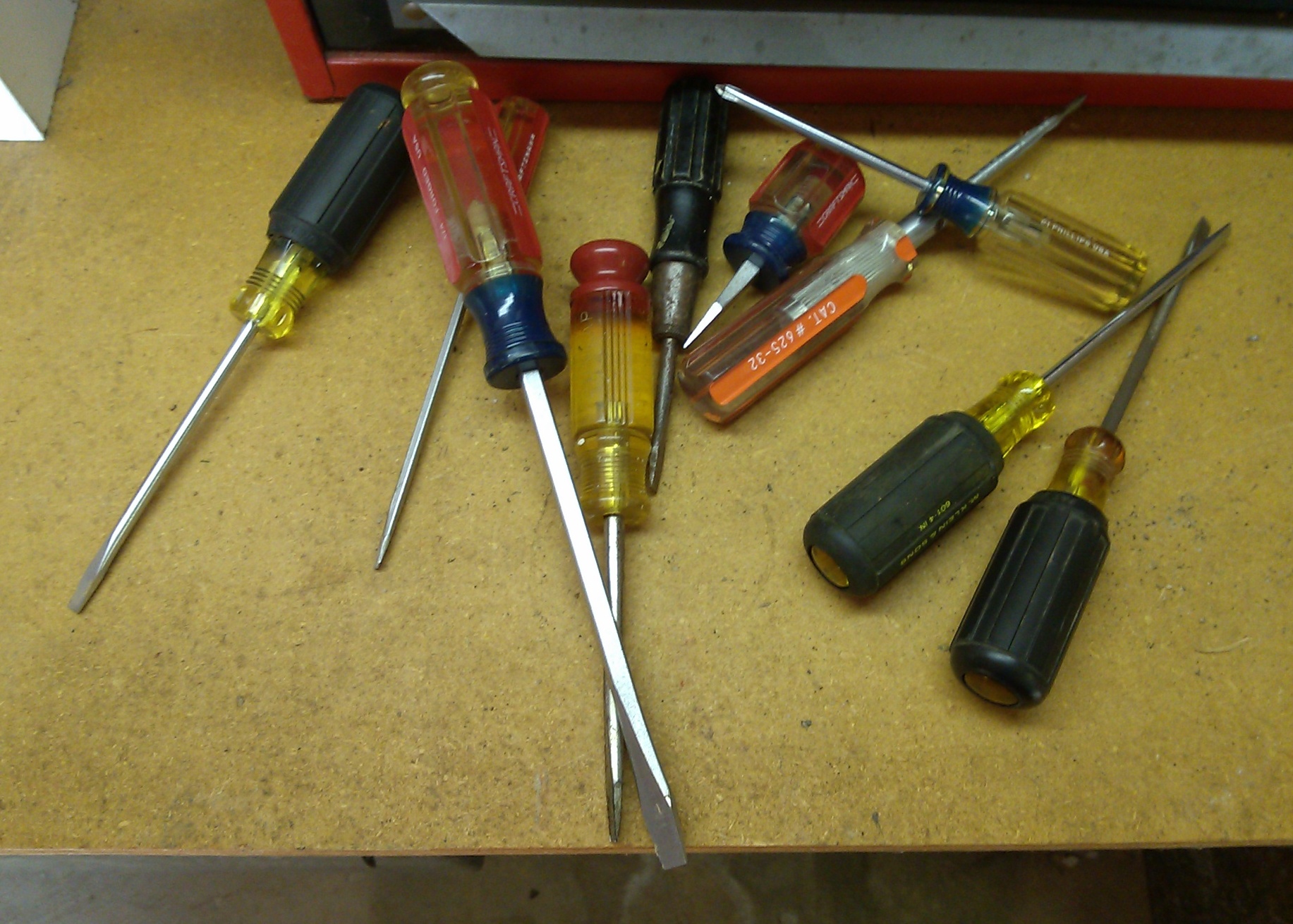
Screwdrivers
Screwdrivers

Last fall a contractor sowed grass seed mixed with soil in the community-owned ditch. The late winter runoff furrowed the ditch, requiring attention. The plan is to rake up the leaves and cover the trench this weekend, instead of waiting for the contractor’s return.

This year is the big sort. A process of downsizing— casting aside items no longer needed to sustain a life on the Iowa prairie. There are challenges for the sort in the garage, as a person can always predict a use for many things found there. Nonetheless, either they will be used, or they won’t. Decisions will be made. The big sort will reduce the detritus accumulated after auctions and trips to the home store, down to a more meaningful level. It didn’t go well yesterday.

It started with sorting the woodpile kept under my workbench. The first woodworking project will be making a box to carry my gardener’s boots— calf-high, rubberized for protection from dirt in the garden and manure on the farm. Now that I work on a farm, I’ll need the boots with me, and the box of boots will ride along in my car.

I sat on a five-gallon white plastic bucket and handled the wood scraps one-by-one, looking for the right sized pieces. A piece of hardwood leftover from my father-in-law’s project to make a weather station; another removed from decrepit drawers acquired at auction; some with hand-cut dovetails from another era. I got halfway down the pile and stopped. Partly because I found the scraps needed to make the box. Partly because the flow of memories was too much to take in all at once. It seemed impossible to get rid of any of them.

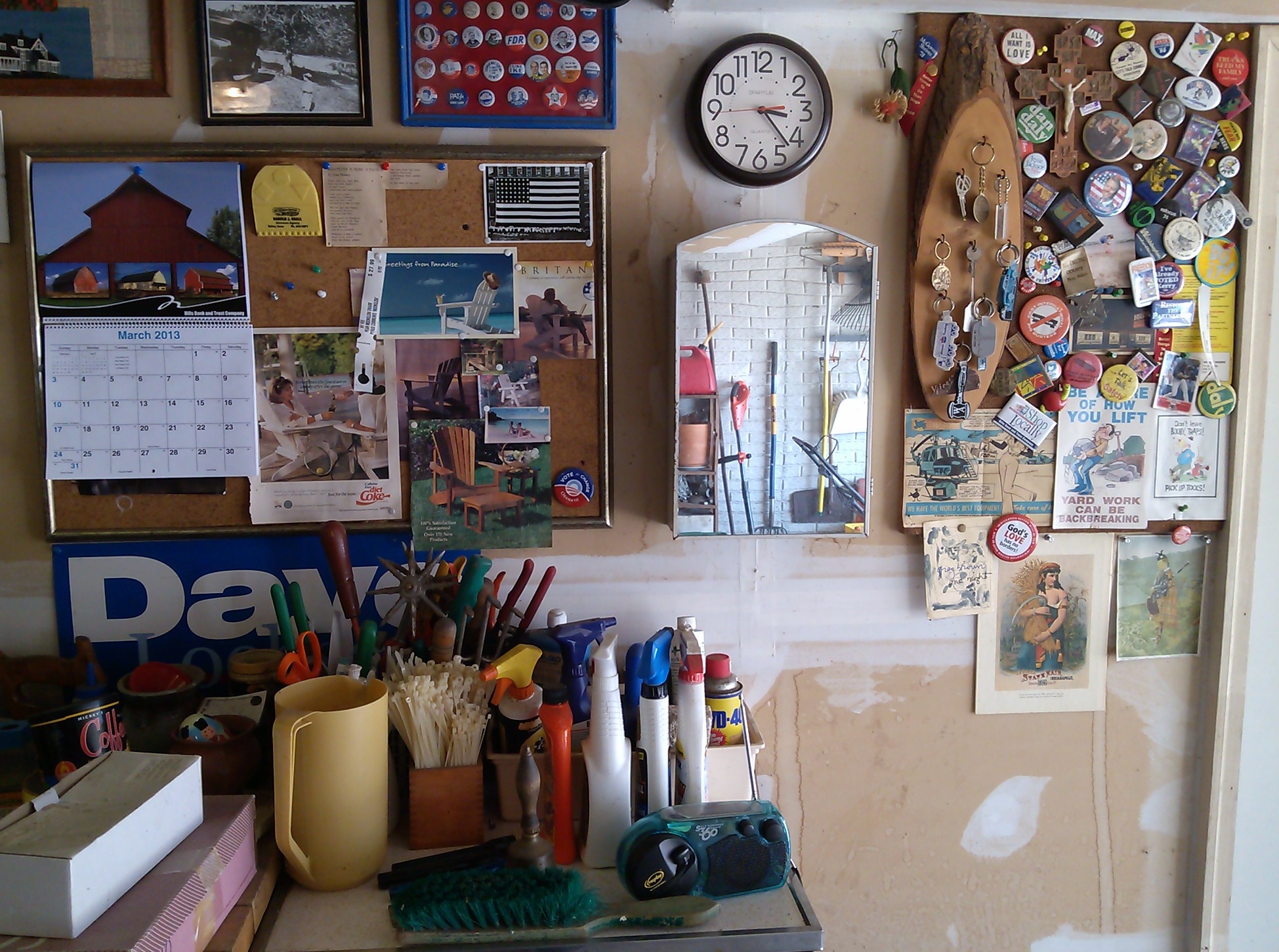
Bulletin Boards
Bulletin Boards

The day proceeded with similar storm and stress. In a society that seeks a reason for everything, with that certain Iowa intrusion into private lives, my garage and yard time is to unravel the genome of a life proscribed by others. A place and time of freedom in a post-Enlightenment Iowa life.

I brought the seedlings inside at the end of the day, and placed the ones planted yesterday on the heating pad— hoping to encourage germination and a bountiful harvest.

Categories
Kitchen Garden

Chickens, Opossums and Things

LAKE MACBRIDE— Good Friday is my first day without external obligations since I can’t remember. The sky is clear, temperature already warming— some part of today will be spent outside preparing the yard and garden for a dallying spring.

Work at the farm this week was cutting more soil blocks for planting. Some of the first trays of lettuce were being moved to the big hoop house on the top of the hill. The gravel roads are thawing, leaving a film of dust/mud on my new-old vehicle. It is great to be part of a farming operation. I’ll be washing my car more often.

Do opossums have a social network that clues them into where chickens roost? Or, are they constantly trolling the universe in their egg-seeking ways? Whenever an opossum crosses our yard, it looks like it is smiling, the full mouth of teeth preventing closure. When I spot one, they seem very busy, going somewhere with a fierce intensity. Of worldly creatures, the only one more sinister in appearance is the human. Everyone I know that raises some chickens has an opossum story.

There will be other posts this weekend, but for now, I am going to relax at home, finish my coffee, and contemplate what is next this morning, this weekend, and in this one life of the billions on the planet.

Categories
Writing

Urban Eggs

Chicken Feeding
Chicken Feeding

LAKE MACBRIDE— The smell of ammonia wafting between two houses was my first experience with urban chickens. Not good. The situation in Des Moines encompassed the arguments whether or not communities should permit people who live in cities to keep chickens.

Keeping chickens is a simple, if somewhat expensive way to produce food for the table. At the same time, some urban folk are caught up in their city life, so much so they don’t make time for the basic work of keeping chickens. Ammonia in the air is not good when people live close to each other, even if home grown eggs are pretty good.

Urban eggs and the chickens that lay them, are the epitome of bourgeois. Such chicken keepers are usually not impoverished. If anything, they can afford the extra expense of making a cage and providing litter and feed required to raise them. These home-based enterprises are status symbols: a material interest in pursuit of respectability among peers. Very boutique-like, and the definition of bourgeois.

I say live and let live, but cast a skeptical eye on people who would do better to purchase specially grown eggs from their local food market, than cloud the air among city dwellers with their inattention to things that matter, like changing chicken litter adequately.

Categories
Kitchen Garden

Spring, but not All

Seedling Starter
Seedling Starter on a Heating Pad

LAKE MACBRIDE— A layer of snow covered everything this morning, indicating that the calendar start of spring meant nothing to Mother Nature.

A few days ago, I checked the soil in the garden— it was still frozen. During many a previous year, the lettuce had been in the ground for three weeks, and seed potatoes were in the garage, waiting to be cut and seasoned before planting on Good Friday, now just five days away. Spring is not all it was expected to be this year.

I decided to try starting my own seedlings again. In the past, I failed miserably, but after making soil blocks at the CSA, found the confidence to try it again. The cells are mapped out on graph paper, and yesterday, I started putting the trays on a heating pad set to low for a few hours at a time. When I looked at the green pepper seeds this morning, they had begun to take root after this first heating pad session. There is plenty of moisture in the soil mix, so I’ll continue the practice and see how the seeds sprout and grow. So far, so good.

In an effort to avoid the deadly intersection of cabin fever and spring fever, I have been exploring some new writers and found Girl Gone Farming, which is a blog by someone who recently moved to a farm in Pennsylvania after living in New York City for three years. Worth reading here, especially for readers who are city folk.

The snow continues to float through the air, morning has turned to afternoon, and it appear to be spring, not at all, in the garden.

Categories
Kitchen Garden

Eggs and Indigent Living

Three Chickens
Three Chickens

LAKE MACBRIDE— Eggs play a role in a local food system, however, it is difficult to say anything new because the topic has been well covered. In 2012, Iowa led the country in number of eggs produced, with 14.5 billion, or 16 percent of the total U.S. egg production. The vast majority of these eggs were grown in mechanized, highly efficient, large scale poultry operations. Americans generally purchase eggs, along with most of their food, at a grocery store. It is hard to tell where an egg was produced from looking at it, but odds are that in Iowa it did not travel far from producer to consumer.

I picked three stories from personal experience to highlight my views about the relationship between eggs and sustainability, one each from rural Appalachia, Des Moines, and rural Cedar County, Iowa. I will present each story in a separate post.

In 1983, while visiting my father’s home place in rural Appalachia, my great aunt and uncle, my father’s brother, and my wife and I, decided to make a trip to my uncle’s four acres near Jefferson, North Carolina. Aunt Ruby loaded a basket of sandwiches and a cooler full of drinks, we piled into a car, and headed south on what seemed like a moment’s notice to see the property.

Situated above the New River, geologically one of the oldest rivers in the world, my uncle grew an acre of tobacco, and kept four cows. He had established a temporary residence by moving a mobile home to the summit of the property. He planned to build a permanent structure that could draw down into the earth via a system of hydraulic lifts so he could survive a nuclear holocaust, should that be necessary. He lived in Florida and had a local farmer tend his property most of the year. We paid a visit to the caretaker while we were there.

The caretaker was indigent, and by that I mean native to the area and living on a subsistence basis at the lowest end of any economic measurement. He invited us for a chicken dinner, and we could see the subjects of the proposed meal walking around his property. The offer of dinner was generous by any standard, but we declined. My uncle said it would have been a hardship for him to share some of his family’s chickens with us.

When people talk about indigents, the tone is often pejorative, meaning needy, or lacking some necessity. The indigent caretaker appeared to have most of what he needed to make a life.

His property was in a hollow with a spring at the top. The spring water provided much of what was needed to grow food and live a life. There appeared to be plenty to eat, including eggs and the aforementioned chickens, milk from my uncle’s cows and food from a garden. He had a government draw of less than $50 per month, which was apparently the only source of regular income. He was saving the money to buy a tractor, indicating government money can be used by indigents for capital expenses when their labor was providing everything else a family needed for basic living.

Reflecting on this thirty year old experience, all the talk about urban chickens, concentrated animal feeding operations and the impact of types of feed on egg quality seems a bourgeois concern. When people live at the edge of subsistence, and an extra person or two at dinner makes a real difference in how much food a family has to eat, an egg is an egg. The fortunate ones, like my uncle’s caretaker, have space to produce their own.

The bourgeoisification of egg production in contemporary urban society seems trivial by comparison to indigent living. If a person is hungry, an egg is an egg, and those who live close to the means of production have no choice but to produce their own.