Categories
Creative Life

Time Management While Aging

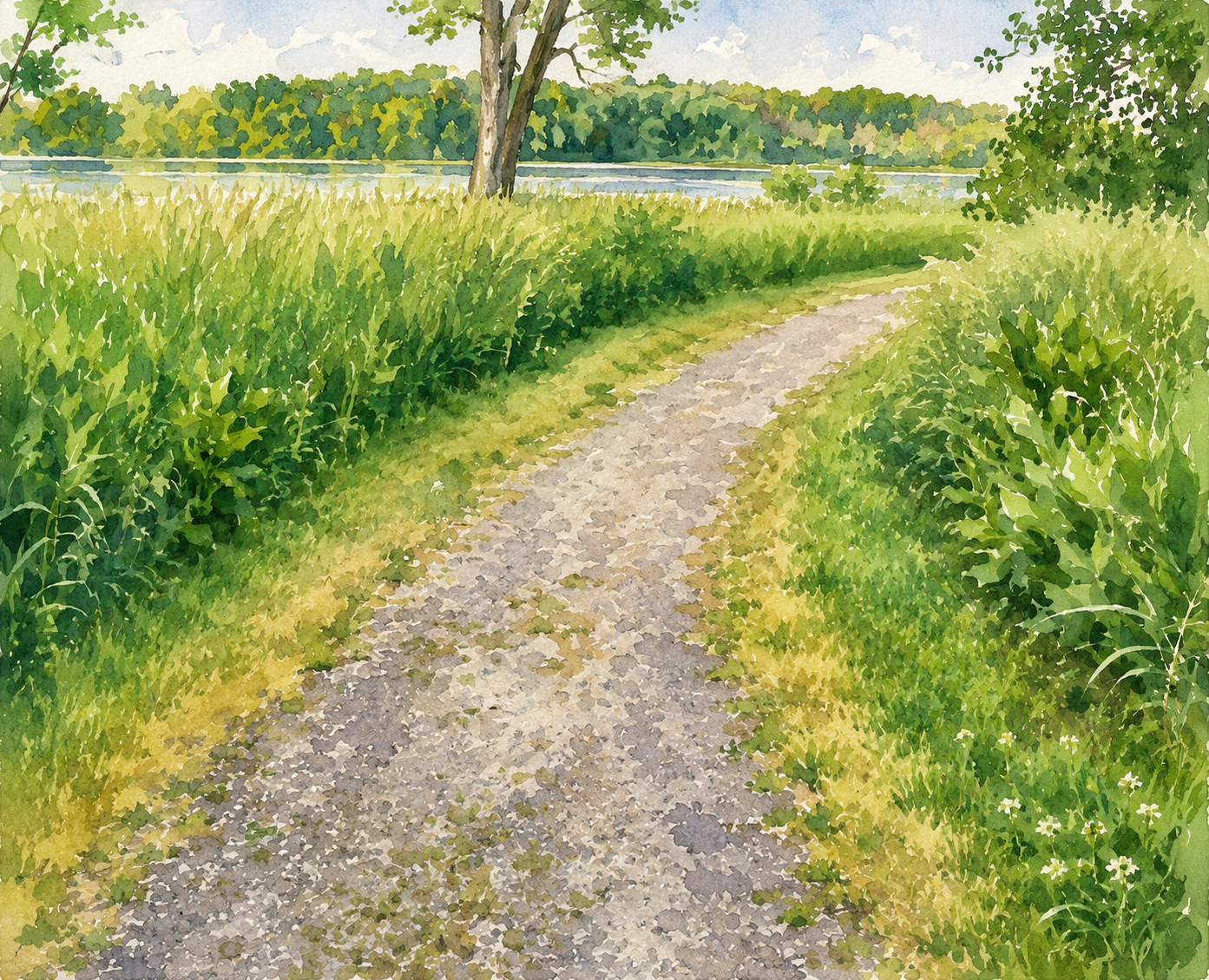
Footbridge over a field runoff creek into Lake Macbride.

I spent time Sunday working on how to use my time. The two parts were structuring days into time blocks and working to better define tasks listed for accomplishment. This post details some of what I did.

The natural breaks in my days at home are by time.

  • From waking at or before 4 a.m., I have a combination of routine morning things (calisthenics, breakfast, exercise, reading, writing), and unstructured creative time.
  • There are three pomodoros of 50 minutes each, beginning at 8 a.m. Each ends with a ten-minute break. I schedule activities for these pomodoros the day prior.
  • A break at 11 a.m. to have lunch, run errands, and perform household chores. Check social media, email, blog performance. This breaks up the day.
  • At 1 p.m., two pomodoros of 50 minutes each with a ten minute break in between.
  • Once the pomodoros are finished, I head to the kitchen to do dishes and begin preparing dinner.
  • 5 p.m. is a social hour with my spouse plus dinner, usually together.
  • Evening check in on social media, email, household tasks, and chores. Followed by sleep.

These time periods follow a natural rhythm developed since the coronavirus pandemic. While I need to watch the clock sometimes, there is a flow from one activity to the next that sometimes runs over. Almost always, I follow the seam toward completion if I can.

I need to learn to be more outcome oriented than task oriented. For example, clear one garden plot of debris from last season and till represents an outcome. It provides more structure than simply writing on the planner to spend time in the garden. Deliverables matter.

A main question is how will I structure more complex projects that span multiple days, weeks, and months? The good thing about the pomodoros structure is they force breaking complex tasks into do-able work units. This will be another learning process.

I was already using this structure unawares. We all need to maintain productivity and keep our daily routines fresh. When it seems like work, the system requires corrective action.

Categories
Home Life

2026 Walkabout

Mulberry tree lost some additional branches over winter, yet will still leaf out.

Last week I made my annual inspection of trees, bushes, and plants growing on our property. The large ones continue to deteriorate after the 2020 derecho damage. My rule is as long as they leaf out, I will leave them for another year. There will be an all-day project of cutting dead branches and making firewood from them.

The Pin Oak is in the best shape of the old ones, and the two new apple trees are coming right along. After cutting lilacs back dramatically, they are almost fully recovered. The legacy apple trees continue to die out, with only three of six left. The Red Delicious tree lost major branches during the derecho, and another large branch died over winter. There may be a harvest next year if it makes it that long.

I like the open spaces I created in the yard. The main pathway from the 25-acre woods to points west of our home is frequently used by deer. They leave their footprints all along the way. There don’t seem to be as many nesting songbirds in the row of trees with apple, pear, spruce, and mulberry. They seem to have moved across the yard to the neighbor’s patch of scrub growth. Maybe the nestlings are better shielded from predators there.

Due to moles and voles, our yard looks pretty disreputable. I have never been one to invest time or money in maintaining a lawn. Maybe it’s time to turn everything into an edible garden if I have the energy for that scale of work. In the meanwhile, the first mowing will reveal if there is anything positive about the lawn.

The next part of walkabout is climbing on the roof to inspect the shingles. I’ll wait until the maple tree begins to distribute seeds and clean the gutters at the same time.

This spring ritual has become a part of me. Here are a few photos from walkabout.

Categories
Living in Society

Immigrants on an Iowa Roof

Ready to Install the New Roof in 2011.

Since making this post on May 1, 2011, society’s view of ICE has deteriorated for good reason. The problem with illegal workers runs right up to a home owner’s front door where choices are made. This post is unchanged.

While walking in the neighborhood last fall it was hard not to notice a gang of 21 roofers working on a neighbor’s house. The job of removing and replacing the shingles took about 5 hours. It looked like there was not enough room for all of them up on that roof.  I tracked down the foreman and asked him to price my roof and after a few measurements, he quoted a very low price. He worked as a subcontractor during the week and on weekends he sought additional direct work to keep his crew busy.

On Wednesday, nine people were arrested by Immigration and Customs Enforcement Officers in Hiawatha, Iowa at a roofing job site. They could not produce paperwork indicating their immigration status, were detained, and then charged with immigration violations. All of them were from Mexico. We have yet to hear about what may be the real crime in this incident.

According to the news story, Eastern Iowa Construction (EIC) sub-contracted the Hiawatha roofing job to a business in Iowa City. What this means is that EIC made a sales commission on the job and did not perform the actual work. Photographs in the news story showed that the equipment on the site belonged to EIC. They likely received financial consideration for that as well. Nothing wrong here as that is what business is about, buying low and selling dear. Did EIC know the sub-contractor engaged undocumented workers to perform the labor? Hard to image they did not.

The question is about the sub-contractor. Did he comply with Federal Immigration law? Obviously not adequately. Did the sub-contractor pay the minimum wage? Maybe. But do the math on a roofing job. There is not enough to pay for the supplies, disposal of the old shingles, the sales commission, the subcontractor’s gross margin and a living wage for nine workers. This is the untold crime in the news story, the exploitation of undocumented workers.

While negotiating a new roof on our house, the author refused to sign a contract as long as the roofer kept language that he could sub-contract the work. He told me he needed to keep this option open, and it seemed most of his customers did not question that provision. I gave the job to someone who would do the work themselves without subcontracting.

We live in a society of law and crimes should be punished. Some portray ICE agents as the bad guys, when they are doing their job. Where are the unions in this picture? Where are the home owners to specify contractors who comply with the law instead of taking a lowest price based on worker exploitation?

One hopes the nine workers arrested by ICE make it home safely, and that in Iowa, home owners will start being concerned with the rights of workers as much as they are concerned with trying to maintain a life style in a time of austerity. It is easy to blame our problems on undocumented immigrants, on ICE, and on a host of others. These problems can literally be solved much closer to home.

Categories
Living in Society

Books, Too Many Books

Tired woman in the library.
Photo by Ron Lach on Pexels.com

We are out of storage space in the house, so something has to go.

Before the library’s March 7, annual used book sale, I donated more than 600 books. It was pleasurable seeing them laying on tables in the main meeting room while people browsed through them. I hadn’t realized how many French language books I had until I saw them together in a box on a table. The donation process continues. I named it “The Great Book Sort” and made an entry on my daily planner with no ending date.

This is a form of curation unlike others I began. My process is developing, yet the main activities were to clear my five-foot-squared sorting table and place a box or two at a time on it. As I take them out of the box, some go directly into the stacks in my writing space, others into a box for donation. The rest are divided into piles to keep, maybe to keep, books that can easily be checked out from the library, and those relegated to the garage or to the bedside table. By the time I’m done, the 3,000 spaces in my writing room will reflect my reading life, and part of my intellectual history.

I did some advance work. First, I decided the only authors whose works I will keep in their entirety are Saul Bellow, Joan Didion, William Carlos Williams, and John Irving. They rest on the top shelf to my left, watching over my every activity.

I mentioned my nine shelves of poetry in another post. There is a presidential history section which needs curating. Same with art books, regional history, reference books, farming-related books, and American Studies topics (native, black, women, and pioneer culture).

I began culling cookbooks. The two remaining shelves are ones I expect to use and the rest are either gone or in several boxes in the stacks to be reviewed once more, then likely donated. We have a project list that includes a new cabinet in the dining room for cookbooks. We are a distance from actually getting that. The recipes I keep in the kitchen are handwritten in spiral bound books and a collection of papers clipped together. Mostly this system works.

Part of this curation will be to refine the categories of what is on the shelves. Right now there are too many categories.

A home library is personal. My story in books is evolving from random collections into something more usable in daily life. I will never read everything again, yet the comfort of good books, carefully curated and surrounding me is a net positive. The Great Book Sort is a project worth doing.

Categories
Living in Society

Miles Toward Spring

At the Belvidere Oasis on March 6, 2026.

I listened to WBBM Newsradio on the drive into Chicago, just as I’ve done since the 1980s. The steady patter of headlines, weather, and traffic “on the eights” prepares you for the city — by the time the skyline is near, you’re already in tune with heavy traffic. That morning they were running a contest for tickets to Madama Butterfly at the Lyric Opera House, a bit of high culture drifting through the stream of brake lights, engine noise, and honking horns.

It had been a foggy morning, with Southwest Airlines canceling 113 flights, according to the radio. To bypass toll roads, my map application routed me through rural central Illinois, where farmers were already in the fields. Old-style telephone poles ran parallel to the highway, their double wires fading in and out of the fog. Beyond them lay tan and brown fields waiting for spring.

After reaching my destination in the western suburbs, my host put me directly to work assembling a piece of IKEA furniture. Once you learn to read the pictograms, the parts go together with ease.

It was spring-cleaning time, and I was there to help. After the IKEA project, I adjusted the rolling screen door leading to the patio, unpacked and sorted boxes of personal belongings, and helped assemble a shelving unit. It was a physically busy two days with our child near Chicago. By the time I got home, I was sore in places I didn’t know existed.

The best part of the trip was being with our child, sometimes talking and sometimes not. Working together on projects made the trip worthwhile.

After a day of driving and work, my hosts served a vegetarian curry for dinner. I enjoyed the table conversation — particularly the part about Chicago politics — and we covered how the work environment had changed and is changing. It creates a constant uncertainty, whether it is getting a resume format correct, social behavior at work, or diminished expectations for career advancement. As a member of the boomer generation, I took a bit of good-natured flak about how easy I had it. I didn’t argue. The work paradigm shifted.

I was up early the next day. The instant espresso in my travel bag helps in an unfamiliar place: I can make my own coffee while the household slumbers. The plan that day was a trip to buy groceries when Aldi opened.

Grocery shopping is different when a person doesn’t have a lot of money. When an item attracts interest, there is an immediate query into low-cost grocers like Walmart to compare prices. When the budget is tight, spending a few minutes cost-comparing is time well spent.

We wore face masks into the grocer. When money is tight, it is not worth the risk of exposure to influenza, COVID-19, or other human-transmitted diseases. Being sick means less time to earn income, and that matters.

After groceries were put away, we said our goodbyes and I got into the car — packed with boxes traveling with me into storage — and headed to the Jane Addams Memorial Tollway, westward bound. It is good to be with family, even if only a short while.

I stopped at the Belvidere Oasis which was busy and noisy with commercial drivers talking on Bluetooth devices. There was little social distance between us. I ate a large Caesar salad for lunch, then headed west.

It was raining when I started, yet the sky cleared toward the Mississippi River. WVIK Public Radio in Rock Island came into range, a marker of getting closer to home. Familiar miles passed quickly.

Entering Iowa, I turned off the radio and focused on the road ahead, taking in a landscape on the cusp of spring.

Categories
Home Life

In Mid-Winter

Before sunrise on the state park trail on Feb. 4, 2026.

It’s hard to believe half of winter is gone. Ambient temperature pushed toward freezing Wednesday afternoon, yet it didn’t quite make it. The lake remains frozen.

While I planned for it, political work on Sunday and Monday took a lot of energy. I’ve been recovering ever since. I finished the work by writing a personal note to each voter who attended caucus. The letter carrier just picked those up.

So today is a photo and a couple of paragraphs while I continue regaining energy. Life could be worse than that.

Categories
Kitchen Garden

Using Apple Butter

Apple Blossoms

Although 2025 was an “on year” for apples — all five trees bore fruit — I skipped making apple butter because there were more than three dozen pints in the pantry. I need more uses for the thick, sweet, and tasty condiment than spreading on toasted bread and muffins, dolloping on applesauce cake, and spooning it on pancakes. It turns out there are more preparations I hadn’t thought about.

As a vegetarian household, using apple butter in meat cooking, while popular elsewhere, is not viable. That isn’t the end of the discussion. One must change their way of thinking about apple butter. It is good as a spread, yet can be considered as a fruit-based sweetener, thick apple concentrate, or a spiced apple paste. These considerations open a whole new world. It could be used as a replacement for honey, molasses, or applesauce without much recipe variation. Following are some ideas to try.

The first thing I did was to dish up a serving of plain Greek yogurt and swirl two tablespoons of aronia berry apple butter into it. I don’t know why I hadn’t thought of it before, yet after trying it, apple butter will be a recurring breakfast menu item to pair with yogurt.

We already use applesauce as an egg replacement in baking. Our corn muffins, or any other muffins serve as a useful home for it to replace an egg. The texture is always moist, firm and tasty. I will just substitue apple butter and use a bit less.

Using it on grilled cheese sandwiches hadn’t occurred to me. It might pair well with the sharp cheddar cheese I use to make them. I make about one grilled cheese sandwich per month, and next time I will spread some apple butter on it to discover the flavor.

We are not big cake eaters or bakers. We do have a recipe for a spice cake. Next time we make it, we will try substituting apple butter for the oil. Based on the experience with applesauce cake and muffins, I bet it will be moist and delicious, as well as change the spice profile.

I found a recipe for a barbecue sauce or ketchup that includes apple butter, tomato paste, vinegar, onion and garlic powder, and spices. There is nothing to lose by making a batch and trying it.

There was a recipe for a salad dressing made from one tablespoon each of apple butter, extra virgin olive oil, vinegar and mustard. Simple. The way we like our recipes.

Substituting apple butter for the sweetened, condensed oat milk I use when making steel cut oats is a possibility. The spices will add a variation in flavor. I make this dish about twice per month and will try it next time.

The next “on year” for apples is forecast for 2027. Hopefully I will use most of the apple butter in the pantry by then and make new.

Categories
Living in Society

Something Different

Trail Walking on Jan. 12, 2026.

These are tough times for a lot of people I know. Hang in there, folks! The weird weather is causing the ice to melt and maybe some good will come of it. If not, spring is coming.

“Nostalgia in reverse, the longing for yet another strange land, grew especially strong in spring.” —Vladimir Nabokov

This morning I consider my pancreas. Yes, the mixed-function organ that helps with digestion and regulates blood sugar levels. I am mostly interested because of its role in the latter. The pancreas is a key organ in managing diabetes, with which I was diagnosed in May 2019.

I asked my new acquaintance, for which I have not determined a name, artificial intelligence. (NB: The name HAL has been ruled out). “What are two or three dietary intakes a person can use to promote pancreas health. No more than three.” The machine was uncharacteristically brief, taking my request for brevity literally:

Here are three dietary intakes commonly associated with supporting pancreas health:

  1. High-fiber foods – vegetables, legumes, whole grains; help regulate blood sugar and reduce pancreatic workload.
  2. Healthy fats (especially omega-3s) – fatty fish, flaxseed, walnuts; may reduce inflammation.
  3. Adequate lean protein – fish, poultry, beans; supports tissue repair without excessive fat stress.

AI apparently did not get the word that according to our Secretary of Health and Human Services, the war on protein is over. Nary a cow or hog product on this list of dietary intakes. Perhaps there remains some science on the internet, the domain of artificial intelligence. Perhaps the secretary and his minions have just not gotten this far in their propaganda campaign. In a throwback to when these things mattered, the machine cautioned, “general wellness guidance, not medical advice.”

As a mostly ovo-lacto vegetarian, I find this a good list. I can figure out where dairy fits in, although I know I should control how much of that I eat. Four dozen chicken eggs per year does not seem like a lot. I consume about two gallons of nonfat fluid cow’s milk per week. Cheese consumption is on the radar screen. I am eating more cottage cheese and it is displacing some of the cheddar cheese. I smear some sour cream on tacos instead of cheddar or Mexican-style cheese, although I do that for the flavor and not the fat content, which is higher. I should and likely will switch sour cream for nonfat Greek yogurt on Taco Tuesdays.

Eating more fiber is always a challenge. I have been tracking that number on an app, and in the first 12 days of 2026 I hit or exceeded my goal every day but one. Fiber is also good for my colon, according to physicians.

Regarding healthy fats, I need some work. The first thing I will do is replace the peanuts and raw cashews I eat with almonds, both raw and roasted. I need, or think I need a salted snack each day. I use about one to two tablespoons of extra virgin olive oil each day, and that falls into the “healthy” category, although I use water or broth as a cooking medium where it makes sense. I’m not a big seed eater, yet we have ground flax meal on hand and I could, and hopefully will, add it to more things. Chia and hemp seeds are readily available at the wholesale club, so I may get a bag of each and experiment with them. With regard to nut butters, I use Jif peanut butter, full fat-style, and that is that. Moderation is the key with Jif.

I have been able to reduce my A1C with diet since my 2019 diagnosis. The number went a little crazy when I contracted COVID-19, yet since then, my practitioner said it is managed. The thing is, unless deterioration of the pancreas is caught early and treated through diet and exercise to lose weight, the damage is often irreversible.

I have not thought a lot about my pancreas. Now that I’m living in my eighth decade, it is time. We can either get older and die, or we can get older and wiser. I prefer the latter, hence the focus today on the pancreas.

Categories
Living in Society

Garage Media Memories

Garage Sign

The garage will always be a special place of memory. It doesn’t matter whether it is my current garage, or some future garage should we move. I carry my garage life with me wherever we might go.

I made the sign in the 1980s. It invokes the memory of working in the garage with our child. The sign went with us to Indiana, and returned to Big Grove Township. It resonates with master carpenter Norm Abram’s Public Broadcasting Service program The New Yankee Workshop, and with Bob Vila’s This Old House. I’m reasonably sure, that during those years, there were many people like us working in the garage, learning about how household things worked, were built, and could be designed. For my generation, and for many millennials as well, this was a core memory.

The other garage memory dating from the 1980s was listening to programs on Iowa Public Radio. The organization had actual money to afford a wide variety of nationally syndicated programs. Mountain Stage was a live music program produced by West Virginia Public Radio in Charleston beginning in 1983. It was hosted by Larry Groce, its artistic director. It still exists with a new host, yet the cache was listening to it live on the radio in the garage. Those days are gone.

There was also A Prairie Home Companion which was just that for so many years. I remember recording the “last show” on June 13, 1987 while our child and I took a walk around the neighborhood. When we returned, the program had run overtime and my cassette tape ran out before recording it all. Luckily I found a rebroadcast the following day and was able to capture the rest. I was a faithful listener right down to Keillor’s actual end in July 2016. Not every weekend like a cult member, but when it was convenient while working in the garage or kitchen. Nothing quite framed my life as that time with the radio turned on.

Last week, The Corporation for Public Broadcasting announced they were closing the operation down after the president clawed back its funding. Better to shutter than to leave an opportunity for the president to use it for his own purposes, they thought. While local stations in Iowa persist in the wake of funding cuts, many stations in other parts of the country don’t appear to be making it in post-Trump world. That’s unfortunate.

It is curious I remember the radio but not the hundreds of projects on which I worked in our garage. The workbench I made in Indiana was a good one that I still use. I recently posted about the work table I made from wood scraps. Since finishing that project, it has been in constant use. I also made a wall of storage which is also in constant use. I guess that’s the difference. When you use something you made every day, it is just there in the present and not in memories.

These days I tune the radio to a country station in Cedar Rapids in the garage, or to BBC news simulcasts on public radio. It’s not the same as I remember from coming up as a family, using the garage to make and fix things. I can carry the memories with me. They help me know who I am.

Categories
Home Life

The Sun Will Rise Again

Trail Walking on Jan. 1, 2026.

With holiday season schedule deviations, I have a difficult time remembering what day it is. My spouse will be away at least for a week, and that makes daily life even more detached from society’s time line. I know I need to get to work and am doing so, despite the weekend. It’s Saturday, by the way. I knew that.

There are tasks and projects demanding my time on the third day of the new year. I spent this week reviewing them. Some got pitched, some moved up in priority, and others were declared finished. Importantly, I decided to continue this blog for another year. The other firm goal is to finish the rest of my autobiography in the first half of the year. What else?

  • I need to take care of me first because without personal health and a positive frame of mind it is difficult to get anything done in society.
  • Life’s too short to be bitchy, so I plan to strive for positive interaction with my fellow humans. I will express the occasional curse word, though.
  • I already wrote about continuing my reading program. I’m setting a new goal of finishing one book per week with the hope of beating it.
  • Exercising and being outdoors continues to be a high priority. Trail walking and gardening are the two main ways this manifests.
  • I want to live a simple life by reducing the amount of time spent on things other than friends and family, writing, and food production.

I wrote about using artificial intelligence in regular life here. The projects currently in queue are related to household operations, food production in the garden and kitchen, and living better. If a computer can help me be better with any of those, I’m willing to listen. The machines don’t really know me yet they give perspectives I hadn’t previously considered. At this point, the service is free. I experimented with giving ai a writing assignment. Mother of Mercy! It doesn’t know what in Hades it is doing there. That wasn’t a poem it wrote! It was a bowl of word salad and the bowl has a hole in it.

Our home has four functional places where I work indoors: Garage, lower level storage, kitchen, and my book room with a writing table. Each has goals for 2026. I mentioned the writing goals above. Here are the rest:

  • In the garage my work is primarily projects in one corner and garden prep in another. I am working on rebuilding a cabinet damaged in a move. I need to dispose of a lot of unused stuff to make room for the garlic harvest in July. When one project finishes, another immediately steps into place. I fix a lot of stuff on my workbench.
  • The main goal for lower level storage is to reduce the number of things stored. Our child is using part of the space after their apartment building caught fire last year. The rest of it is the parents who have way too much stuff. Creating open space here is a goal heading for reality, not a dream.
  • The kitchen must produce meals every day. In that constant activity I’m developing new dishes. One category is those we liked until one of us became vegan. The latest experiment is taking a casserole we made for many years and replacing the eggs and cheese with something else to make it vegan. It will require at least two trial runs before it goes into the meal rotation. This is not a quick fix project because taste and nutrition are both important. Another category is called “use stuff up.” An example of this is I got quite a few pounds of quinoa at a very low price. Figuring out what to do with it was delayed, but now I would like to get things going. I discovered a little goes a long way because of the expansion while cooking. I have three dozen quinoa disks in the freezer waiting for an application.

If we don’t have goals, we won’t accomplish much. These are my beginnings.