Voting is important because, as regular humans in a world of powerful interests, it’s all we’ve got.
Sure, we can band together with like-minded people and be stronger together. However, as Americans, a rugged individualism runs through us and some say has made us what we are. We cherish our individual freedoms as voters and seek a society with liberty and justice for all.
If voting is so danged important, why is it so many voters don’t vote?
Each of us has friends and relatives in the non-voter category. I celebrate the freedom to let other people decide policy and our laws, but am still engaged enough to work to influence society for the better. We can’t give up on that, although some people may like it better if I did.
Our general election is Nov. 6 and I hope readers will make it a point to vote.
The Republican Secretary of State took away straight Democratic, Republican or Libertarian ticket voting so we will have to vote each race individually. Voters will have to know a little about each candidate to vote the whole ballot.
Our civics teacher would like the idea of learning about all candidates and voting every race. That’s what I plan to do.
~ Published on Sept. 20, 2018 in the Solon Economist
Another week of summer and already I’ve turned to fall.
This is Jonathan apple weekend at the orchard, marking halfway through the retail and u-pick season. When I think of a red apple, I think of Jonathan. We grow half a dozen varieties, including the heirloom. Except for the 89 degree ambient temperature yesterday it is beginning to feel like fall at the orchard.
At the end of my shift at the home, farm and auto supply store I moved pallets of water softening salt from the storage yard to the load out area for customers. Temperatures were moderate and the wind felt good as I traversed the length of the building in the lift truck. My two days a week schedule is facilitating the transition to retirement by providing some income and giving those days purpose outside the home.
Someday, maybe soon, all this will change.
September’s remaining days will be packed. Finishing garden, yard and kitchen work, and preparing for a winter of writing. After the general election, once the apple harvest is in, I hope for full days devoted to writing. I’m encouraged to work through the interim with positive results. Invested in the present, I’m looking toward a bright future.
It’s down to eggplant, green beans, peppers, butternut squash and kale as the garden winds down in late summer. Four crates of tomatoes remain to be used, and the ice box, storage shelves and freezer are nearing capacity.
The next project is planning the garlic patch for October planting. I think it will go where the celery and cucumbers grew this year. It was a successful crop so I’m doubling the amount planted — all with seed from this year’s crop.
The Autumnal Equinox begins Sept. 22 this year. After that, the winter cycle of cooking and living mostly indoors is renewed. Garden cleanup will be after first frost, usually in the middle of October. Then there is collecting grass clippings for mulch and trimming branches from trees and shrubs for a winter burn pile.
Apples, Sept. 11, 2018
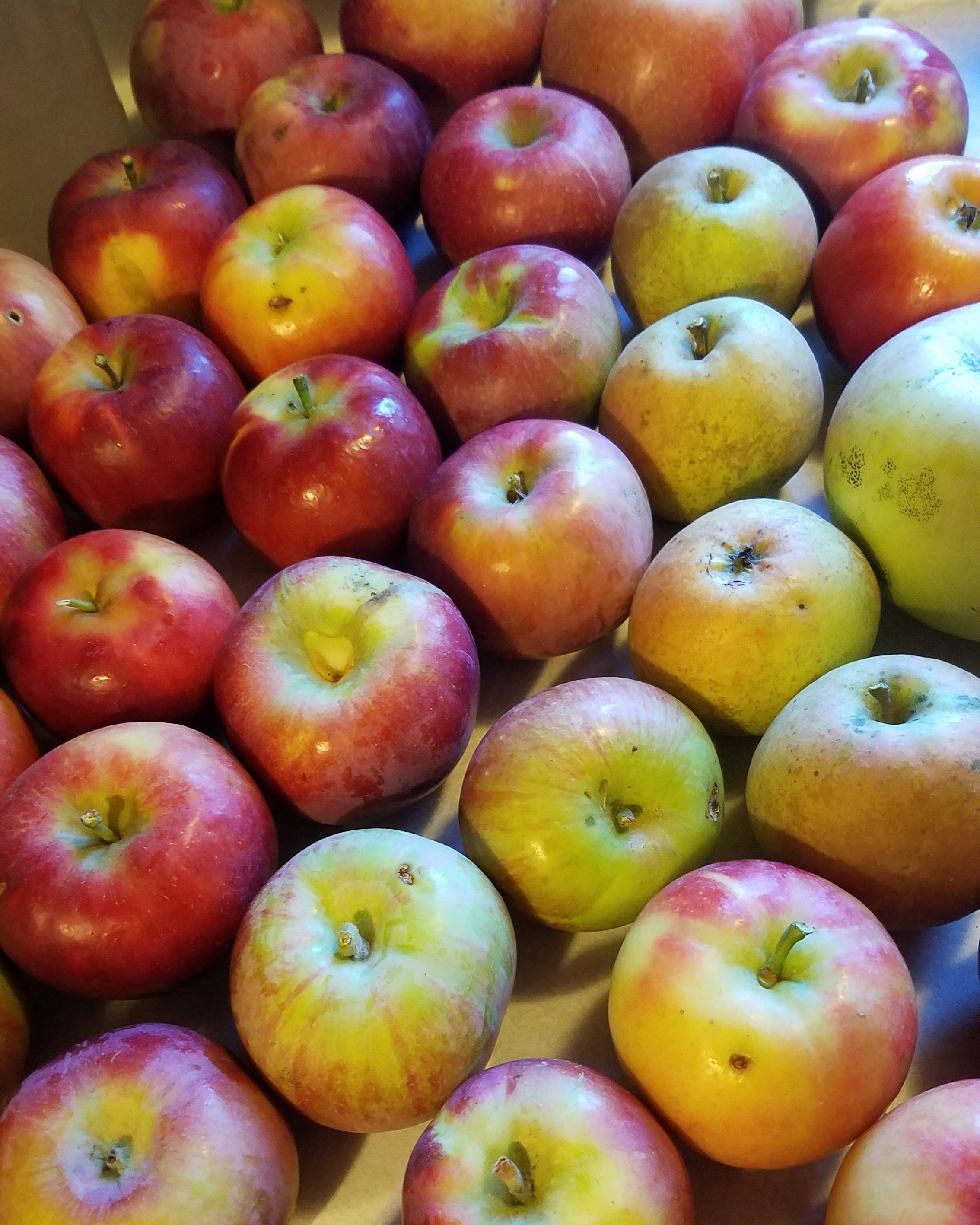
Tuesday I made a trip to the orchard to pick apples and brought home more than a week’s worth in eight varieties. I had to stop picking before getting to all the ripe kinds because the bag was getting heavy. They will keep in the refrigerator… I hope.
There are seven weeks left in the apple season and I’m looking forward to all of them. There is nothing like my work as a mapper, helping guests find apples in our orchard. Last Sunday it was so busy, with perfect weather and pent up desire for customers to get outdoors, I began losing my voice after explaining the operation so many times. The harvest is a series of fleeting moments stretching toward a vanishing point.
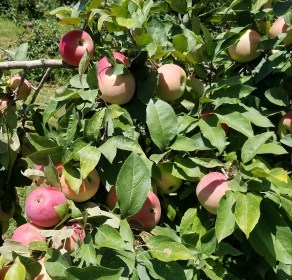
The orchard has 100 varieties of apples that begin ripening in late July and continue until the last day of October. Pictured are Cortland, McIntosh, Wolf River, Jonagold, Honeycrisp, Hudson’s Golden Gem, and more. I’d say they were delicious and that would be an apple joke.
Vegetables for Library Workers
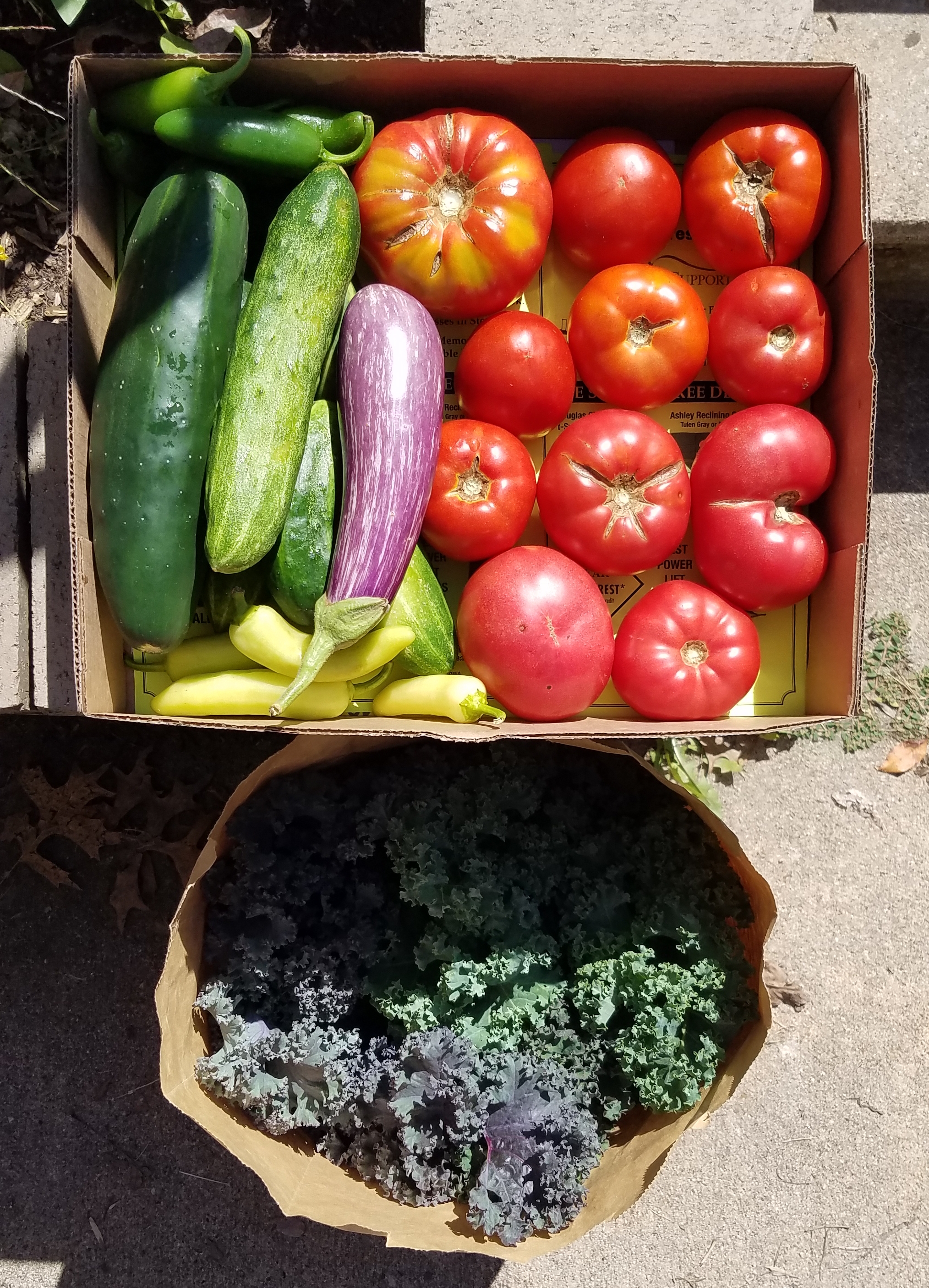
I took a care package to our library workers on the way to the orchard. Some of them work on Tuesdays and we didn’t want them to be left out of summer produce. They always appreciate fresh vegetables and this year favored Japanese cucumbers.
The garden has already been a success with some of the best crops I’ve yet grown in many varieties. Where there were failures (bell peppers, radishes, snow peas) there were big successes (tomatoes, celery, cucumbers, spinach, butternut squash, hot peppers). It has been a great year despite the weird weather.
Being in semi-retirement made a difference in preserving the harvest. An extra day or two during the week enabled me to take care of what was planted and process what came in the kitchen.
A report arrived they set up two extra rows of seats in the back of the Area Task Force on Aging legislative candidate forum yesterday. That didn’t take away from the sparse turnout for the event.
Long-time community advocate Bob Welsh told me a story which was apropos.
A church community hired a well known architect to design their new church. Everyone in the congregation knew and trusted him. He had one condition: no one would inquire into the design while work was in process or interrupt him. After consideration, an agreement was reached and the work proceeded.
When the church was finished, as congregants entered the first service in the new facility, there was only one pew, all the way in the back. While taken aback, devotees took their seats. Once the pew filled, a set of invisible motors moved the pew from the back to the front of the church and a second pew appeared. Thus the church was filled from front to back.
It turns out the preacher went long as they are wont to do. At a certain point, without prompting or considering the point in the heavenly narrative, the pulpit began to sink into the floor until it was gone. It turned out the architect understood the nature of a church perfectly and executed his plan accordingly.
I’ve come to know and like Bob Welsh and it was disappointing there were so few people attending the forum. In years past there was standing room only. I remember my position along the stage right side of the room one year, waiting to hear what candidates had to say. No need to stand now.
A forum for four races is impossible. By the time all was said and done, the six of eight candidates in attendance got a minute closing time plus about 12 minutes to respond to questions in small chits of time. Two of three Republicans were no-shows, although the one who did and the Libertarian were most interesting as they broke up the uniform responses of the four Democrats.
State Senator Joe Bolkcom’s constant refrain was, “We’re broke.” It reminded us no new programs would be possible until the legislature found a way to pay for them. The path to doing that would be through regaining control of the executive branch of government and at least one chamber of the legislature.
The common denominator is Governor Branstad’s privatization of Iowa Medicaid. Democrats at the forum uniformly and properly said it was a disaster and needed to be reversed, something winning the governor’s race would make possible. There is a role for privatization of select functions within the Medicaid umbrella, but the state requires the low overhead of managing complicated cases themselves. Democrats made a rational case to the few dozen gathered and potential cable T.V. viewers.
Here’s one thing politicians didn’t mention: thousands of stories about the failure of the Branstad Reynolds privatization of Medicaid across the state. This is personal, private, and touches almost all Iowans. There are no success stories.
No one wants to talk about the trouble they had finding a nursing home that accepts Medicaid patients. We don’t hear of vendors who have taken seven figure loans to make payroll and fund cash flow while waiting for MCOs to pay their bills. We don’t hear the horror stories of how patients are treated except in bits and pieces from our closest family and friends. The question why aren’t there enough medical practitioners is tied irrevocably to the state’s rapid loss of young people and a flight from rural to urban centers. The Medicaid scandal is personal and most people don’t want to talk about it because they find it embarrassing they were caught up in it.
Johnson County is a Democratic County, one of a few in the state. There are organized political groups working hard to execute a strategy they think will win the election. What I’m seeing in evidence like the low turnout at the Task Force on Aging is this approach doesn’t work any more. What will decide the 2018 Iowa midterms isn’t the hard work of political organizers. It is convincing people aged 35 and younger to vote at all, getting voters who vote only in presidential elections to go to the polls this year and vote the entire ballot, and hoping the number of Iowans devastated by the shit storm that was the 87th Iowa General Assembly will be enough to turn the tide.
That’s a helluva political mess we’ve gotten ourselves into. I still like Bob Welsh and the forum he helped found and always will. Sadly it is more evidence our politics is broken as the rats continue to navigate the ship.
I’m working to turn out voters this cycle. Are you?
Since entering a low-wage work world a few years ago, where standing for long shifts on concrete floors contributed to plantar fasciitis, I haven’t jogged and reduced the amount of trail hiking I do. Now that I’m semi-retired, my feet appear to be healing. I’d like to get back out on the trail on a regular basis.
We live near an entry point to the Lake Macbride State Park trail system.
The hard-packed gravel trail runs from the state park entry, five miles east to the City of Solon. It is well used by hikers, bicyclists, joggers and locals, and soon will be connected to a much larger trail system. Over the years I’ve used it a lot, notably as a jogging trail where in peak condition I’d jog five miles each day before heading into Cedar Rapids for work.
Friday I hiked home from Solon after dropping my automobile at the repair shop, then hiked back to town once it was repaired: six miles.
The trail is changing.
Human activity in the form of development has taken the biggest toll on nature. The Solon Recreation and Nature Area has been encroaching on natural areas near the trail since it was established. Addition of a paved, concrete bike path near the railroad easement has taken even more of the natural area out of the trail. The city end of the trail has been a mess since the construction began and will end up being an industrialized area rather than the nature it purports to be in its naming. I ran into a townie I know who said designers plan to keep the gravel portion of the trail. If that’s true, it is a blessing because there are so few low impact trails in the area.
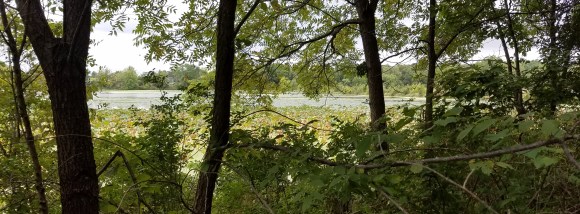
My trail experience is partly about exercise, partly about viewing the condition and maintenance of the trail. I enjoy finding new wildflowers like the Jewelweed in the image above. When there were more of them I picked wild blackberries, competing with birds for the sweet treat. The good news is my feet didn’t ache Saturday morning and on Sunday they returned to normal. I should be able to hike regularly again… and complain about human activity encroaching on nature right in front of my eyes.
We’ve known the 45th president seeks to eliminate regulations on the fossil fuel industry so it’s no surprise he announced his intention to modify the Clean Power Plan developed by President Obama’s Environmental Protection Agency.
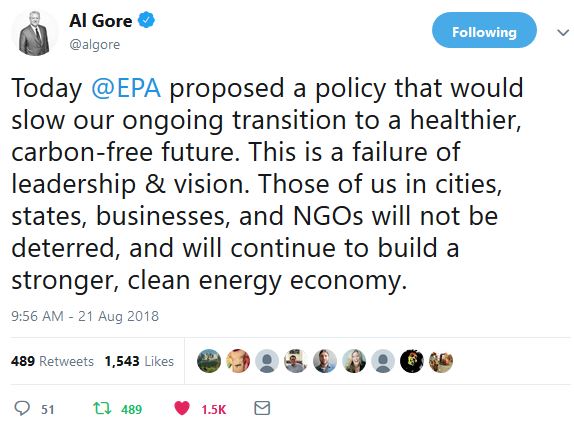
The plan was announced by the president in Charleston, West Virginia at a campaign-style rally on Aug. 21. Here’s what Al Gore, Chairman of the Climate Reality Project had to say.
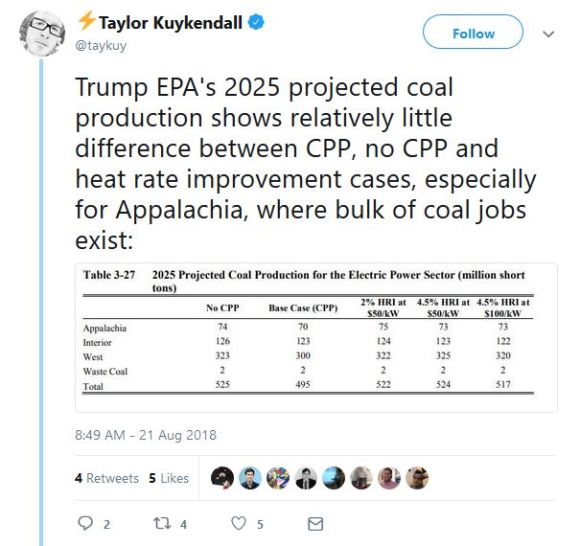
Whether or not the Clean Power Plan exists makes little difference to the future of coal-fired power plants according to Taylor Kuykendall.
Regardless of executive actions, the days of coal fired power plants are numbered. Electricity produced by wind, solar arrays and natural gas will push coal out of the picture because they are cheaper. This was true when home owners replaced coal furnaces in their homes with natural gas in the 1950s and 1960s. It’s true now. Not only that, there are public health issues with burning coal. It is market conditions that will reduce coal consumption in the United States.
One assignment during my transportation career was to start a school in Boone County, West Virginia to re-train coal miners to become truck drivers. We got a one year grant from the governor’s office to train 250 people. The day we announced it was front page news in the Coal Valley Times. Along side the article about us was one indicating another round of coal miner layoffs.
I recall standing in Democratic Governor Gaston Caperton’s office watching a train laden with coal making its way along the Kanawha River. We knew the coal industry was dying then, it’s dying now, and no amount of special interest pressure on our federal government will bring it back.
Clean coal is a dirty lie and despite efforts to prop the fuel up, government should let go of it and leave it in the ground. As Gore said, “we will not be deterred” from building a stronger, clean energy economy.
Since 2013 I’ve worked at the apple orchard on Labor Day.
The holiday coincides with ripening of Honeycrisp apples which is one of our most popular varieties. There are more than a dozen others, including Gala, McIntosh, Red Gravenstein, Burgundy, Cortland, Ginger Gold, Red Free and Akane, ripe and ready to pick.
It rained on Saturday, which suppressed the crowd, but Sunday a couple thousand guests stopped by. It was our busiest day this season.
My job title is “mapper.” That means I talk to many of our customers and help them have a positive experience at the orchard. A large map is displayed at my work station, from which I tell a story about how to find apples. Even when a majority of people seek the same variety, each customer is wants something a little different. It’s my job to figure out what that is and help them find it in a personal way. Sometimes I draw a map on a slip of paper showing where specific apples are. Mostly I use the map as a reference point and work to enable customers to break the chains of intellectual engagement and look at the 80 acres of land that makes up our orchard. With popular varieties that’s easier because the rows of apple trees are visible from my perch at the top of the hill. Among the many things our orchard represents, it is a chance to get away from daily life for a while.
Rain had been holding off Sunday until around 4:30 p.m. when clouds gathered and let loose a shower. Our guests headed into the sales barn and to their vehicles to get out of the weather. Rainfall signaled the end of the day more than our business hours.
I enjoy working at the orchard, especially when it is busy. My personal tradition has been to work on Labor Day and I’ve done it for as long as I can remember.
In the transportation and logistics business operations never ceased and our family had no culture of celebrating this holiday. I recall a Labor Day I drove into the Chicago loop to work in my office. I parked at a construction site near Lake Michigan, walked the block and a half to work, and went through security. I was one of the few people other than security inside the Standard Oil building on Randolph Drive. I believe I got a lot of work done that day, although today am not so sure.
Over the years we’ve become a family that doesn’t celebrate the eight or ten big holidays of the year. That might change in retirement. Even though I grew up in a union household, was a union member at the meat packing plant where my maternal grandmother and father worked, and have a daughter who is represented by a large union, Labor Day is a forgotten time for me. Maybe because I’d been part of management most of my worklife. More likely if I took the day off I wouldn’t know what to do as celebration. In the end, I’d rather spend time with people who are getting away from la vie quotidienne and help make their experience better on Labor Day.
After the rainfall I policed up trash from the picnic area and a young couple asked me to take a photo of them. Guest relations like this is an unwritten part of my job. I looked for proper framing where I could capture the day for them. She handed me her mobile device and I got them to smile. I snapped a photo of them in front of apple trees with our restaurant on the hill in the distant background. The photo pleased them.
I picked up discarded apples, plastic and paper and put them in trash barrels not full enough to empty. That work will be for Labor Day, when if the rain holds off we should have a couple thousand of guests seeking something, apples mostly, but also learning how to live in the 21st Century.
The last week of August signals the end of summer. As school begins and the season wraps into the Labor Day weekend, political campaigns retool for a push to close the deal with the electorate.
Maybe readers didn’t know negotiations were ongoing.
More than in any political year I’ve seen, Democrats have an agitated district of voters to deal with.
“I think there’s a lot going on out there in reaction to what the president has done on any number of issues,” former political science professor and second district congressman Dave Loebsack told James Q. Lynch of the Cedar Rapids Gazette in an Aug. 27 article.
For the most part this cycle, such agitation benefits Democratic candidates throughout the state. It seems possible Iowa voters will put the swing back into “Iowa is a swing state,” by electing more Democrats in November.
Based on what I’m hearing from multiple sources, this election will not be won with political door knockers organized by the state party or by third party interest groups like Let America Vote or NextGen America. It will be won by individual candidates with local operations largely independent of overall party strategy. It is individual campaigns coordinating with each other, with third party entities, and with Campaign for Iowa (this cycle’s version of the coordinated campaign), where the hard work of winning will be done. Some candidates do it better than others, and it is an open question whether any one of them will be effective. It can be effective for smart campaigners.
One race we hear little about in the news is the State Senator Kevin Kinney re-election campaign in District 39, which serves as an example of how campaigns are working this cycle. At a recent Johnson County central committee meeting Kinney explained one of his supporters decided to run against him as a Republican, so he has competition for re-election. It’s been all hands on deck ever since to get Kinney re-elected.
Half of Senate District 39 is located in liberal Johnson County and half in more conservative counties to the south. Kinney was in many ways the ideal candidate to represent this district. With long experience in law enforcement, and three terms on the local school board, he came to know district citizens over a period of years before he considered running for the senate. His legislative agenda and approach to campaigning fit the district. Here is an excerpt from his campaign Facebook page:
I’m running hard to continue representing you in the Iowa Senate. I want to continue my work protecting victims of sexual assault and human trafficking, helping Iowa farmers stay dynamic, and ensuring all Iowans’ access to affordable, comprehensive healthcare. But I can’t do it alone, I need your help to knock on doors, make phone calls, staff our office, take a yard sign, and more. We need you to spread the word about our campaign and our message one door, one call, and one sign at a time.
We’ll be canvassing every weekend and we’d love to see you with us, or out in your own town talking to your neighbors! On weeknights we’ll be calling our neighbors to make sure they vote for common-sense government in Des Moines. Sign up today to volunteer and get a yard sign! Get involved to make sure that your voice is heard.
On Sept. 2 Senate District 37 candidate Zach Wahls will join Kinney in North Liberty for a voter canvass. Wahls seat is likely Democratic in the general election, enabling the political newcomer to organize canvassers to work for other candidates. There is significant help going out from the eight liberal counties in the state. Ultimately winning in November depends on what candidates like Kinney do in their districts.
“With September starting soon it’s campaign season, and that means we’re pushing to talk to as many voters as we can,” Kinney posted on Facebook. “Come join us to talk to your neighbors about electing Democrats to the State Senate in Johnson County!”
There may not be a blue wave coming, but candidates like Kevin Kinney are doing their part to retain and gain ground in the Republican Iowa statehouse.
Click here to learn more about Kinney’s campaign for re-election.
I stopped at the Democratic headquarters in Davenport, Iowa in 1964, after paying the bill for my newspaper route, to stuff envelopes during Lyndon Johnson’s re-election campaign. Other campaign workers gave me a campaign button as a reward for helping out.
Johnson won that year in a landslide which became a formative expectation about Democratic politics. However, with the 1968 Democratic national convention in Chicago, Hubert H. Humphrey’s loss, and the election of Richard Nixon my attitude changed. I didn’t understand what happened.
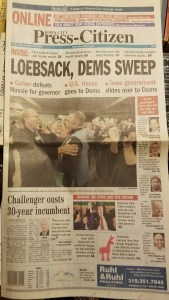
Since then, Democrats have never had an easy go of it. It wasn’t until the 2006 election of Dave Loebsack to the U.S. Congress that I experienced electoral jubilation similar to 1964. I’d gone home after the polls closed to watch the returns on the T.V. When it became clear Loebsack had a chance to win I drove to the county seat and joined in the celebration as 30-year incumbent Jim Leach conceded the election to Loebsack. That election didn’t just happen. My work to replace Leach began the previous election cycle and was regular and persistent. The same can be said of the many local Democrats who helped Loebsack win. Winning demanded a lot of hard work.
There is talk of a Democratic wave in 2018 but I don’t know about that. Our politics seems broken. People have hardened against the 45th president — withdrawn from society. For some the egregious behavior of the president and his marauding troop of grifters has drawn them out to participate in campaigns. Many — I’d say most — want no part of it. People have not only hardened against Trump, but against politics in its many forms. Heaven knows there is plenty to do to live a life, much less raise a family in 2018 without politics. The political dynamics that gave us big wins in the past are irrevocably changed.
I volunteer a few hours a week with a local campaign and will do more beginning in September. Individual actions, while remaining important, are not enough. I attended an event with State Senator Joe Bolkcom of Iowa City where he said we should band together with like-minded people if we want to impact policy. The idea goes against the grain of rugged individualism that characterizes many of our lives. As Hillary Clinton said during the 2016 campaign, “We are stronger together.” What holds true for elections and public policy has broader application.
I don’t know what happened with LBJ’s re-election, except it had mostly to do with JFK’s assassination and continuing the hope he inspired in us as citizens. History has shown us the worm can turn on landslide elections. The re-election campaign of Ronald Reagan serves as the penultimate example, which begs the question, “what’s next?”
There haven’t been any landslides since Reagan and may not be again for a long time. With the rise of the internet, people are more connected than ever and this has served to harden us in silos the way intercontinental ballistic missiles were during the Cold War. There remains an untapped power in the electorate but no one has found the control room in the age of Trump. There’s no clear path to unleashing citizens to rein in the corruption. Just the hard work of building an electorate to vote for Democratic candidates.
As my summer of writing for Blog for Iowa closes, I’m thinking not only of the coming general election, but what’s next. You can’t repeat the past, as Nick Carraway said in The Great Gatsby. The problem with our politics is there are too many Jay Gatsbys and Tom and Daisy Buchanans obscuring the view of our potential. To achieve a progressive future, we have to be able to understand what it looks like. For that we need to step outside politics in the age of Trump for a while.
It’s raining as I type on the keyboard. Rain is to relent and I hope it does because one of the farmers for whom I work is getting married today.
In our small family there are not many celebrations. I’m not sure what to do at a wedding, although I’ll figure it out by 3:30 p.m. today.
Jacque is steering me in the right direction. We bought a gift on line and had it sent to the bride’s home. She is making a card. She suggested I refrain from going directly from the orchard in my work clothes as I had planned to do. I looked through the closet to find something to wear and there was my blue shirt and a pair of slacks. I have a pair of dress shoes left over from when I worked in the Chicago loop. I need to pick a tie. My navy blue blazer still fits. Special things for a special day. I’ll change in the employee rest room at the orchard then head down to the county seat for the ceremony. Civilization at work.
It’s still raining.
Since my first retirement nine years ago I’ve kept track of significant activities.
I keep a balance sheet, a list of books I’ve read recently, and record every event, meeting and significant encounter with people outside immediate family who are part of my world.
Early on there was a purpose to this, although I’m not sure now what it was. Three full binders later, I’m ready to give up tracking things so closely. My last full report was in December 2017 as my Social Security pension began. My second retirement seems opportunity enough to let go of details and focus on main tasks at hand. Things like weddings, funerals, birthdays, housekeeping and the like. I expect I’ll get better at it.
September begins the turn toward winter. The garden is in late summer production so there are tomatoes, celery, cucumbers, winter squash, green beans, eggplant and peppers coming in, requiring processing. Fruit is also coming in from the orchards with pears, apples and peaches lined up on the counter waiting to eat. Cooking has taken a fresh flavor with local food dominating most menus. Cucumber salad is happening daily and we’re not tired of it… yet.
2018 is proving to be a year of transition. So aren’t they all?
I’ve been planning garlic planting in late September and haven’t decided whether to use the cloves I grew as seed or to get more from the farm. I picked a place for them and once the cucumbers are done I’ll prep the soil. I think I know the answer. At some point we have to live on our own — I’ll use the cloves I grew this year, hoping they multiply and eventually become self-sustaining. I’m confident they will.



 My first election campaign spoiled me.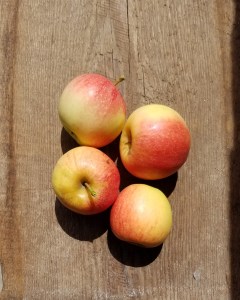
 Journey Home
You must be logged in to post a comment.