Categories
Living in Society

Plasma Sales and Iowa Politics

Farm Greeting
Farm Greeting

(EDITOR’S NOTE: This post was written for On Our Own: Sustainability in a Turbulent World in 2013 and has been corrected and updated). The Cumulus radio station in Cedar Rapids was advertising how a person could earn up to $340 per month selling their plasma. It’s enough to make it worth a look to see if plasma sales could fit into our budgetary bottom line. Sounds kind of grim, but people do it all the time.

Plasma is the pale, yellow liquid portion of blood that helps our bodies control bleeding and infection. When one donates plasma, blood is removed and the plasma separated and saved before being returned to our body. We generate more plasma within a couple of days so twice a week donations are usually possible.

Donating takes about an hour and plasma collection centers make it easy with a straight forward, step-by-step process. They explain how payment is loaded on a debit card. It is literally using one’s body as an ATM.

Several self-employed and low-wage earners in my circle use plasma sales to supplement monthly income. Got a toothache? Better schedule some sessions at the plasma center to get cash to pay the dentist. One suspects residents of our nearby college town use the cash for cigarettes, salty snacks, sugary drinks and alcohol, but in any case, plasma sales can be a reliable and steady source of income if one meets the requirements for donating.

Plasma money could be put to good use. For example, it could be used for political donations. That way, when a political telemarketer called, knowing my annual budget, I could say, “Yes. I’ll donate $100, which will take me four plasma sessions.” Politics would literally be based on blood money then.

We could go a step further and say that all financial contributions to politicians had to originate in plasma sales. There would be a natural limit to how much a person could donate, and a restriction could be placed on corporations that said something like, corporations can make political contributions, but such contributions must be paid via the plasma of shareholders, imposing a reasonable and well-defined limit to corporate money spent on political campaigns. I bet corporations would exercise their “free speech” differently under such a rule.

If my modest proposal about political contributions seems a bit edgy, I am pretty sure it would work. Having skin in the game would take on a whole new meaning.

Most Americans are asleep at the wheel of politics, and would not contribute, so there is little danger of a glut of plasma on the market.

If times get tough, I’ll re-visit adding a plasma sales income line to our household operating budget. For now, I’m just glad I don’t have to do it.

~ Written for Blog for Iowa

Categories
Living in Society

Voter Suppression In Iowa

BermanRepublicans have taken the effort to suppress voting rights nationwide, including in Iowa.

Iowa Republicans have done their part, if not as egregiously as in other states.

They would do more to suppress voting rights if they controlled our bicameral legislature and the governorship.

One of the first things Iowa Governor Terry Branstad did in 2011 when he assumed office was to reverse Governor Tom Vilsack’s executive order to automatically restore voting rights to convicted felons who had served their time.

Branstad established an application process for such felons, making it more difficult to regain their voting rights.

“Restoring voting rights to Iowans who have committed felonies is something that I take very seriously as governor,” Branstad said July 11 during his weekly news conference. “To automatically restore the right to vote without requiring the completion of the responsibilities associated with the criminal conviction would severely damage the balance of rights and responsibilities that we all have as citizens.”

“Iowa is one of only three states – alongside Kentucky and Florida – to impose permanent disenfranchisement for all people with felony convictions, unless the government approves individual rights restoration,” according to the Brennan Center for Justice. “On June 30, 2016, the Iowa Supreme Court upheld the state’s disenfranchisement law in a 4-3 split decision in a case called Griffin v. Pate.”

After Griffin v. Pate, State Representative Mary Wolfe (D-Clinton) said the Iowa legislature was presented with an opportunity regarding voting rights.

“In my opinion, the majority ruling seems to invite the General Assembly to amend current Iowa Code to redefine ‘infamous crime’ for purposes of disenfranchisement as something other than all felonies,” Iowa state Rep. Mary Wolfe, D-Clinton said to the Des Moines Register. “I certainly think the average Iowan would not agree that all felonies, every category of felonies, reaches the level of infamous crimes.”

Would such legislation advance in Iowa’s divided legislature? Republicans can be expected to block it in today’s political environment.

Blog for Iowa author Dave Bradley wrote last weekend, “There is no shortage of Republicans in positions of authority who will do nearly anything for their party to win elections, no matter what.”

Iowa native Ari Berman, author of Give Us the Ballot: The Modern Struggle for Voting Rights in America, points to North Carolina as an example of what Republicans have done to suppress voting rights.

Three weeks after the U.S. Supreme Court eviscerated the Voting Rights Act in Shelby v. Holder, the North Carolina legislature toughened its voter ID bill, already the most restrictive in the country, according to Berman.

Quoting North Carolina State Senator Josh Stern, Berman laid out what the bill added:

  • Shortened early voting by one week.
  • Eliminated same day voting and provisional voting if at wrong precinct.
  • Prevented counties from offering voting after 1 p.m. on the last Saturday before the election.
  • Prevented counties from extending poll hours by one hour on election day due to extraordinary circumstances like lengthy lines.
  • Eliminated state supported voter registration drives and preregistration for 16/17 year old citizens.
  • Repealed voter owned judicial elections and straight party voting.
  • Increased the number of people who can challenge voting inside a precinct.
  • More frequent purging of voter rolls.

On Friday, July 29, a federal court ruled North Carolina’s voting restrictions were “intentionally discriminatory.”

Would Iowa pass such a bill? It’s hard to say.

We can expect the conflict over voting rights to continue in the federal courts as Republican-controlled states attempt to reduce the number of people eligible to vote.

Progressive Iowa Democrats should work to retain our slim Senate majority as a firewall against further Republican voter suppression efforts.

To help retain a Democratic Senate majority, send a check to the Senate Majority Fund (Committee ID #9098), 5661 Fleur Drive, Des Moines, Iowa 50321.

~ Written for Blog for Iowa

Categories
Living in Society

Encountering Chuck Grassley

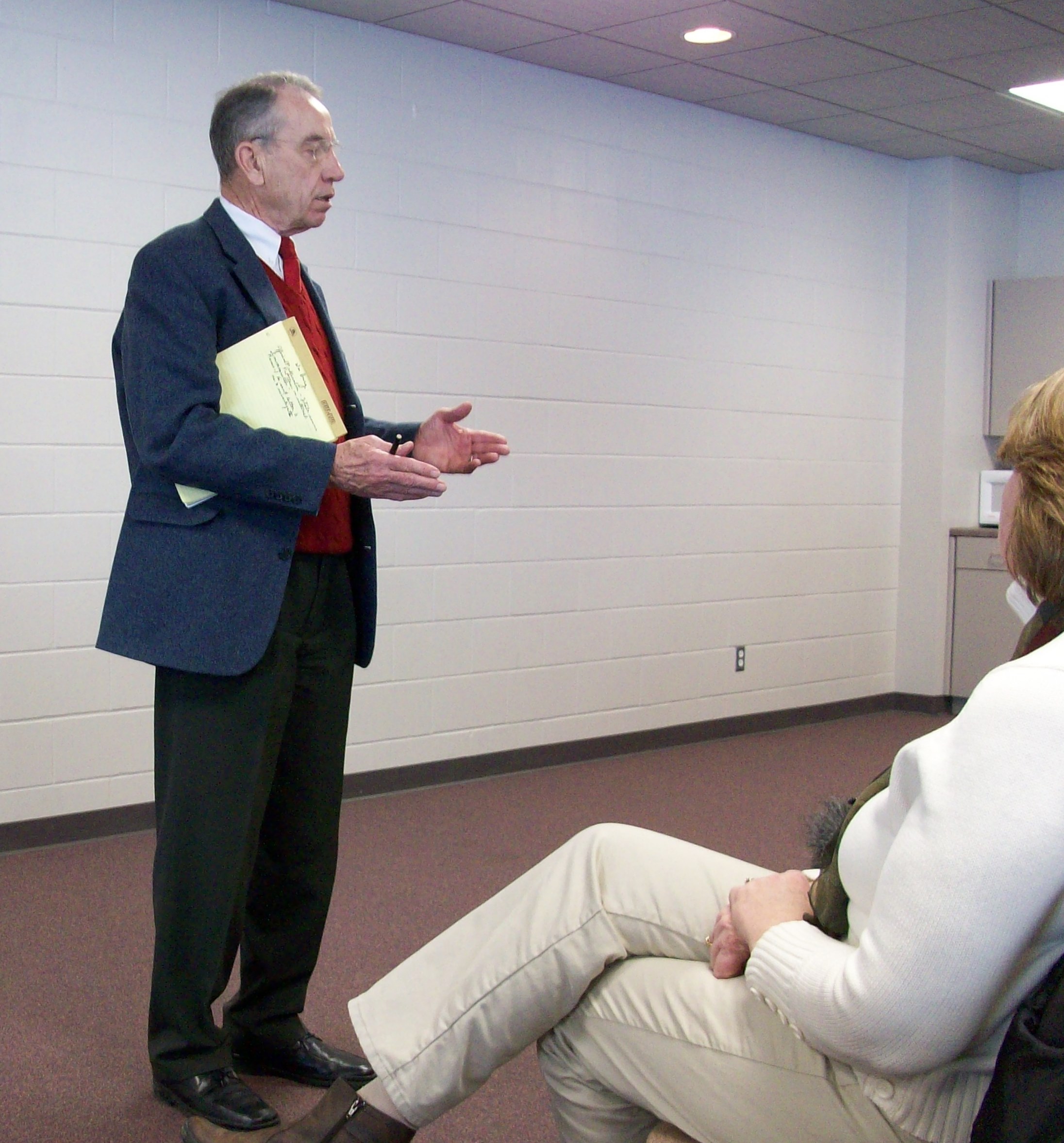
Senator Grassley in Williamsburg, Iowa in 2010.

The conventions dispersed and the road home was ahead as Blog for Iowa writers engaged with Senator Chuck Grassley last Friday.

Both Trish Nelson, in a chance meeting in Mount Pleasant, and Dave Bradley, at a town hall event in Columbus Junction, each encountered Grassley in eastern Iowa.

Both stories are worth hearing and indicate where our senior senator is regarding his life in the Republican party.

“News is sketchy while on RAGBRAI,” Nelson wrote in an email.

She was driving support for a team of veteran RAGBRAI riders and responding to Dave Bradley’s report from the Columbus Junction event.

“Speaking of RAGBRAI and Chuck, guess who I ran into checking out of our Super 8 this morning in Mt. Pleasant?” she wrote. “I even had a few minutes of face time with him.”

“I was like a deer in headlights at first but I managed to stay polite and we had a light, friendly conversation,” she continued. “I asked him what he thought about Hillary’s speech — he said he thought it was good and he fell asleep during it. He said she would just be more Obama.”

“I asked him his thoughts on Donald Trump and he said, ‘he needs to act more presidential,’ as if he was lamenting that he wouldn’t get elected because of that one small thing. I told him Trump can’t act presidential because he is so impulsive and that people are genuinely frightened that he could actually become president.”

Grassley asserted something positive about Trump, which Nelson countered.

“Chuck kind of backtracked and said, Trump ‘only’ has a 25% chance of actually being elected. He said the Republicans have too much ground to make up in the electoral college for him to win. It was weird, as as if he was trying to reassure me by acknowledging that Trump is probably going to lose anyway.”

I can’t believe I didn’t ask him about his obstruction of Obama’s SCOTUS appointment and the judiciary, and for awhile I was kicking myself, but at least I got to address concerns about Trump.”

Later in the day at a Columbus Junction town hall, Don Paulson of the Muscatine County Democrats asked Grassley the question about Merrick Garland.

“Grassley said 30 years ago some senators set a policy of no appointments in a president’s last year,” Dave Bradley reported. “What horseshit.”

Bradley assumed this was a variation on Grassley’s Biden talking point and nothing new.

During her campaign for state representative, Sara Sedlacek lost Louisa County, where Columbus Junction is located, by a significant margin.

“It was probably a 90% Republican crowd,” Bradley wrote. “All white except one. State Representative Tom Sands was there to give Grassley a big smack on the cheeks. Another guy praised Grassley for ‘standing up to Obama — you’re the only one that does.'”

This describes every Republican event I have attended — a venue for Republicans to vent. Dave ticked off these notes:

  • Several said leave the VA (or at least Iowa City) alone.
  • One woman had a prepared speech about puppy mills.
  • Another guy praised Republicans for defunding Obamacare and said they should pass the same bill every day.
  • Couple of other all praise to Grassley statements.
  • One college student did have some challenging questions on gun sales but of course Grassley had very well prepped responses rolled out in his folksy manner.
  • An anti-Grassley guy from Iowa City asked him about term limits — Grassley said he favored them, but you can also always vote me out.
  • Couple of questions on Social Security — Grassley claimed it has 17 more years (2033) but no one is willing to talk about it with everything on the table.
  • One guy claimed Obamacare took $900 million from Medicare — Grassley agreed and said it just disappeared from Medicare.
  • Damn it was painful not to just stand up and call him a f*cking liar.

“Unlike Muscatine much earlier this year (Grassley) is much better prepared and has his talking points down really well,” Bradley said. “Trying to get him to stumble will take an exceptional effort if someone is trying to. He even took pains to refute his not visiting all 99 counties — with a big sign on a stand proclaiming that he visits all 99 counties every year.”

Grassley doesn’t always hold public meetings on his 99-county tour according to a July 20 Des Moines Register editorial.

“Since 2011, he has held only three public, town hall meetings in Iowa’s 10 most populated counties, and there were no meetings of that type in eight of those 10 counties,” they said.

If you want to discuss an issue with Senator Chuck Grassley maybe you’ll randomly bump into him, or maybe you can speak for a couple of minutes at his public meetings. What is problematic about this type of accessibility is the unbridled forum — for Republicans particularly — to say just about anything.

In my experience at similar events, Grassley moderated the wackiest of the wacky. By enabling people to express themselves as he does Chuck Grassley encourages extremism and political spin. He helped create the party of Donald Trump even if he doesn’t think much of the mogul’s chances in November.

It is important to contact our elected officials, especially our federal representatives. However, when Senator Chuck Grassley talks about “representative government,” take it with a grain of salt. What you see isn’t always what you get.

~ Written for Blog for Iowa
Categories
Living in Society Writing

August Recess

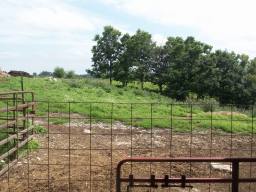
View from the Barn
View from the Barn

SOLON, Iowa — While Trish Nelson takes a well-deserved break, I will attempt to fill her shoes at Blog for Iowa.

Delegates from the national party conventions dispersed last week and there is a lot to write about. Party and twitterverse aside, the telltale sign the election campaign shifted to a new phase was when a political friend called last Tuesday for help finding lodging for our Iowa Democratic Party organizer.

As politics takes a summer vacation in August for most Iowans, I want to cover as much ground as I can, and less of what everyone else is posting. Following is part of my storyboard.

I’ll cover each of the four Iowa congressional candidates at least once. This is mostly to learn what I don’t know. My Congressman Dave Loebsack was confident about his chances in the second district when I saw him in July. Monica Vernon is a hard worker and fighter, and the prospects look good for her winning against first term congressman Rod Blum. Jim Mowrer and Kim Weaver are running in the western half of the state, and those races will be informative. These four races are the most important, yet under-covered in the state.

Because of it’s high visibility, I’ll rely on the coverage of others for the U.S. Senate race. As primary winner Patty Judge attempts to upset incumbent Chuck Grassley it is unclear she has the organization to win or that he is truly vulnerable. A campaign operative told me convincing Iowa Democrats Grassley is vulnerable is a key challenge. My reaction when she spoke near my home July 17 was she needs to point out the faults of her opponent less and talk more about Democratic values. Let third parties do the work of calling out Grassley on his many flaws.

Here is an entire month of posting about the presidential contest in four sentences. “Republicans nominated Donald Trump and Mike Pence for president and vice president respectively at their national convention. If they think they are going to win this election solely by demonizing Hillary Clinton they are on crack. I disagree with them on virtually everything so that’s enough said about the mogul and his sidekick. The focus should be winning down-ticket races.”

There will be discussion of the 2020 presidential caucuses during the 2016 campaign and I land in the camp of eliminating Iowa’s first in the nation status. With due respect to Dave Redlawsk, author of Why Iowa: How Caucuses and Sequential Elections Improve the Presidential Nominating Process, the quadrennial presidential caucus should be the first casualty in blowing up the Iowa Democratic Party. I have long believed first in the nation helps Republicans more than Democrats and plan to lay out my case over the next few weeks. Shorter version: Democrats should stop helping Republicans organize in Iowa.

Iowa native Ari Berman posts constantly about the importance of voting rights after Chief Justice John Roberts gutted the Voting Rights Act in Shelby County v. Holder in 2013. What are the challenges to voting rights in Iowa? There has been a lot of posting about the Iowa Supreme Court decision about voting rights for convicted felons. There is more to elucidate.

What else?

At the county fair our group had a corn kernel vote on security issues. Air and water quality were most important to fair-goers’ sense of security by a distance. Forestry management is part of that discussion. People forget the state was once prairie with oak-hickory forests that stood and regenerated for millennia. What is surprising is how slight is the modern role of urban sprawl compared to pressure on forests. I hear almost no one discussing forestry management and its impact on air and water quality yet see farmers tear out riparian buffers on a regular basis to plant a few more rows of corn and beans. This issue needs a voice.

Our government insanely wants to spend more than a trillion dollars re-furbishing our nuclear arsenal. What we should be doing is eliminating it. I’ll share some of the work of my colleagues in International Physicians for the Prevention of Nuclear War during coming weeks.

Nuclear power is on the wane nationally and some attention should be paid to the Palo, Iowa plant. Their permit was extended to 2024, and already there are rumblings at the plant that the “good jobs” there will be going away. It is in Iowa’s best interests to shutter Duane Arnold Energy Center and I’ll explain why.

Lastly, we need an alternative to our industrial food production system. There is a nascent local foods movement, but its rise has not been fast enough. There are substantial questions about local foods sustainability in its present form. Issues like land ownership, creating markets, reducing the use of pesticides, and scalability are all unresolved. If the local foods movement does not work toward solutions, one questions whether it will exist as a distinct entity going forward.

These and other topics will be my summer. I hope readers will follow along as I do my best to make it worth while to return to Blog for Iowa often.

~ Written for Blog for Iowa
Categories
Work Life

At the Apple Farm

Sign at Wilson's Orchard
Sign at Wilson’s Orchard

Between working opening day at the orchard and the kickoff of a friend’s political campaign I had two hours.

Day six of a hundred straight work days was about as good as it gets: a reunion with friends from last season, a chance to catch up and engage again in this apple life.

It’s not that the garden went neglected. I picked kale for the library workers and tomatoes, cucumbers and jalapeno peppers for the kitchen. There’s plenty of work to do around the house. Instead of doing it I crashed on the couch and slept deeply for an hour after my shift.

Refreshed enough to go at it again, I will — not later, but now.

Categories
Writing

August 2016

Freshly Dug Potatoes

While Europeans vacation in Italy and the South of France, I’ll be writing some 12,000 words on Blog for Iowa. August is neither recess nor vacation for low-wage American workers.

I’ll have a chance to earn a little more money to pay corporations for things we need like fuel, communications, health care and insurance, loans, and electricity. There’s also taxes wanting cash.

It’s been a struggle to earn enough money to pay monthly bills, so if I write as well, my life can correctly be characterized as “struggling writer.”

Not sure I like the moniker.

Yesterday a fellow said I needed a haircut.
“I don’t have the money,” I said.
“Haircuts only cost $15,” he said.
“If you give me the $15, I’ll get a haircut.”
“It’s really about the money?”
“Yes it’s about the money.”

I work in low-wage jobs to understand what people experience. It’s an attempt to be grounded in society and inform my writing. With a comfortable platform, that includes a line of credit and no mortgage, good health, and two working cars, my family has it easier than most.

The main challenge of low-wage jobs has been physical. Assembling kits, selling produce, demonstrating products, lifting bags of bulk commodities, chainsawing trees, and farm work all required standing and use of upper body strength. I’m stronger than I was, but my aging joints are taking a toll.

Writing jobs have been good when I could get them. There was little money in freelancing while the newspapers sought to do more with less. I filled a specific need for editors, and once the need went away, so did the offer of stories.

In August I’ll post my articles on Blog for Iowa, then here a day later. This site is home for my writing, so most everything I write longer than 140 characters finds its way here.

A new writing adventure begins and I’m so looking forward to it.

I hope readers will follow along.

Categories
Work Life

100 Days of Work

Locally Grown Sweet Corn

Today begins 100 straight days of work.

Monday through Friday I’ll be at the home, farm and auto supply store, Saturday and Sunday at the orchard, and in between there is writing, gardening, cooking, home maintenance, yard work and living.

It’s not a life of fun. It is doing what’s needed to sustain a life in Iowa.

I bought two new pair of blue jeans to accommodate the new schedule and get by with once a week laundry. Other than that, the logistics were already in place and I’m ready to go.

Next week I begin editing Blog for Iowa — at least one post a day. The 23 August posts have been roughly framed, although what happens in society will drive what gets posted when. I’m looking forward to posting 500-600 words daily.

Preseason Saturday at Wilson's Orchard
Preseason Saturday at Wilson’s Orchard

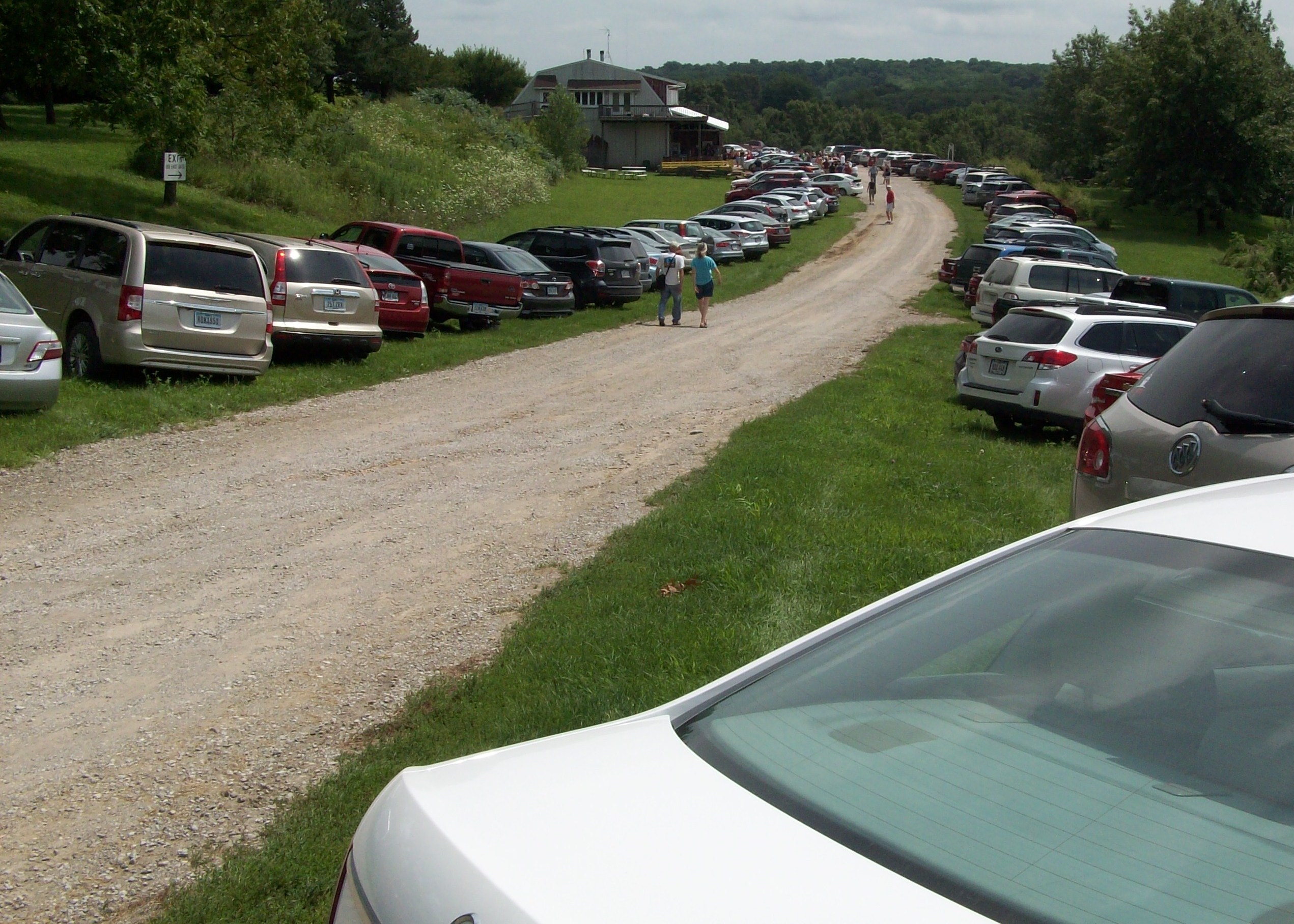
On Saturday at the orchard cars were lined up for preseason raspberries, blueberries and Lodi apples. With 50+ people in line, I didn’t go inside. If this crowd was any indication it’s going to be a very busy season.

I will work in the sales barn although the chief apple officer and his operations manager weren’t sure what I’ll be doing opening weekend. The octogenarian friend who got me the job four years ago has given up driving the tractor-trailer that provides tours. I enjoy working at the orchard because it is a nexus of contact with people I’ve known most of my life.

Missing is a plan to get enough rest in the coming days. While not a high priority, it needs consideration. I better get on that too.

Categories
Environment Home Life Kitchen Garden

New Saturday Night

Audio Cassettes
Audio Cassettes

Music filled the Saturday afternoon gap left by Garrison Keillor’s retirement.

Not radio, but music recorded on audio cassette tapes.

It is amazing there is even a player in the house. (There are two that work). The sound quality of this outdated technology was surprisingly good.

While processing vegetables into meals and storage items, I listened to Shaka Zulu and Journey of Dreams by Ladysmith Black Mambazo, and Graceland and The Rhythm of the Saints by Paul Simon. I hit the pause button when I left the room so the tape wouldn’t run out without hearing it.

When Jacque returned home from work we had our first sweet corn meal of the season: steamed green beans and corn on the cob. As they ripen, tomatoes will replace green beans. There is nothing like seasonal Iowa sweet corn. I made a cucumber-tomato salad as accompaniment using a recipe found by googling on-hand ingredients.

The Saturday kitchen produced a gallon of vegetable soup, refried bean dip, daikon radish refrigerator pickles and sweet pickles made with turmeric. Outside was hot and humid although nowhere near as oppressive as the summer of 2012 when we had record drought.

On Friday Donnelle Eller posted an article about corn sweat at the Des Moines Register. Corn and soybean plants, which cover Iowa farmland, transpire moisture. During pollination and ear formation as much as 4,000 gallons of water per acre of corn is released into the atmosphere daily, making it feel humid. There were a number of articles about corn sweat in the media last week.

What makes this year different is not corn sweat. The first half of 2016 was Earth’s hottest year on record. This impacts the hydrology cycle, change in which is a primary manifestation of climate change. With global warming the atmosphere can hold more moisture until a precipitating event makes a rainstorm. It is more often a gully-washer.

The high winds and heavy, short-duration rain have become more frequent in recent years. This week a storm caused significant damage to the garden. In addition to losing the Golden Delicious apple tree, the cucumber towers blew over uprooting about half of the pickling cucumber plants. The Serrano pepper plants blew over, breaking the stalk of one near the ground. The high deer fence blew down and deer got into the kale and pepper patch by jumping the low fence. The cherry tomato plants blew over, however I was able to upright and re-stake them without damage.

Climate change is real, it is happening now. It is time to act to mitigate the effects of global warming.

Political Event with Tim Kaine at Bob and Sue Dvorsky's home in Coralville, Iowa on Aug. 17, 2010
Tim Kaine at Bob and Sue Dvorsky’s home in Coralville, Iowa on Aug. 17, 2010

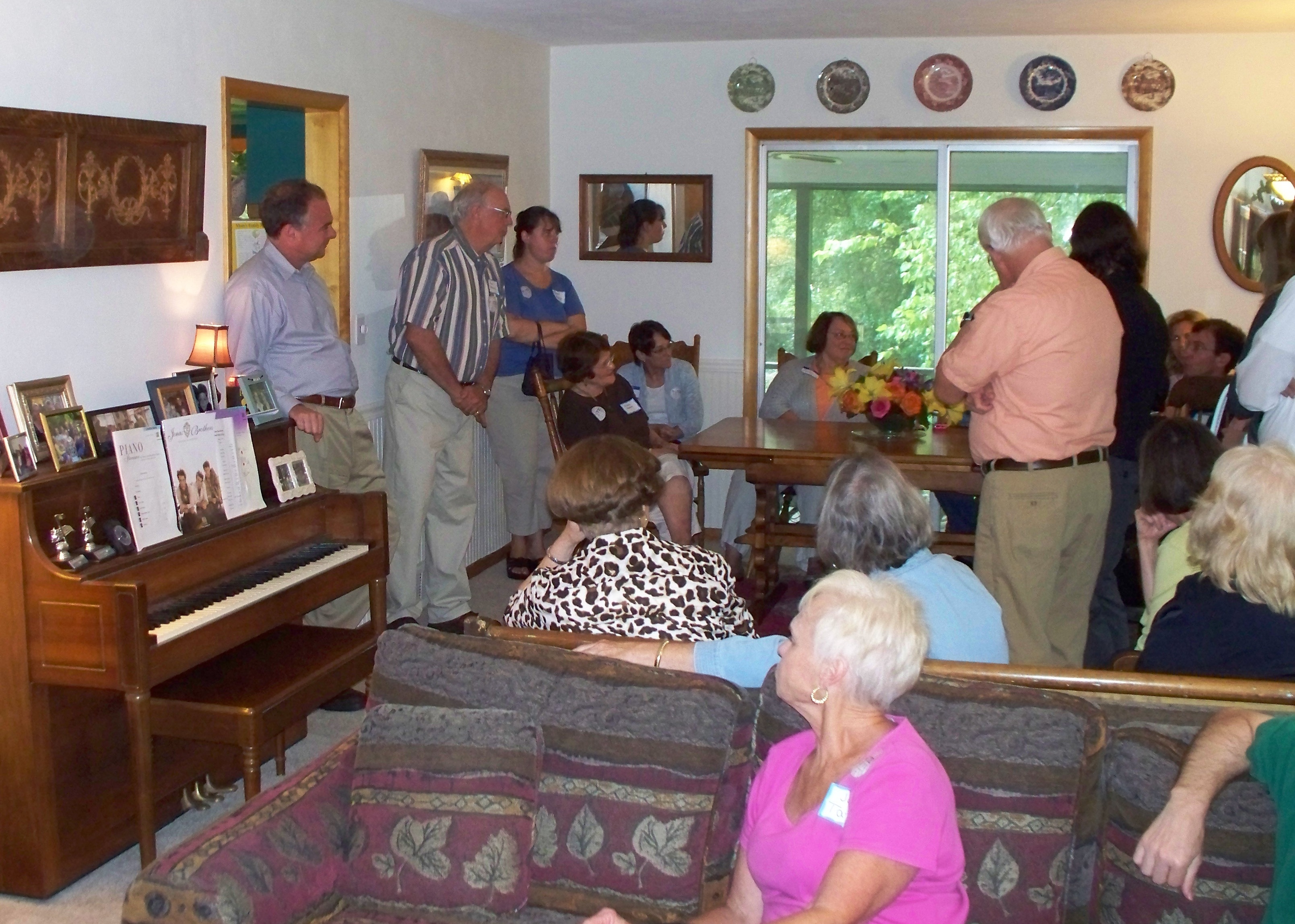
Hillary Clinton announced Senator Tim Kaine would be her running mate this weekend. Friends were posting photos all weekend from the August 2010 event he attended in Coralville. If he wasn’t the center of attention then, as the photo suggests, he will be now.

I’m torn about viewing the Democratic National Convention this week. Hopefully key speeches will be available for viewing afterward and I can avoid social media enough to think clearly about what Hillary Clinton says.

As Sunday begins, I’m not sure listening to recorded music will adequately replace Garrison Keillor’s A Prairie Home Companion. It’s here. It’s what I can do to sustain our lives in a turbulent world.

Categories
Kitchen Garden

Cook or Quit

Harvest for the Weekend Kitchen

I put on my rubber boots and went to the garden in the predawn sunlight. I left a trail where my boots scraped against the dew drops formed on the lawn.

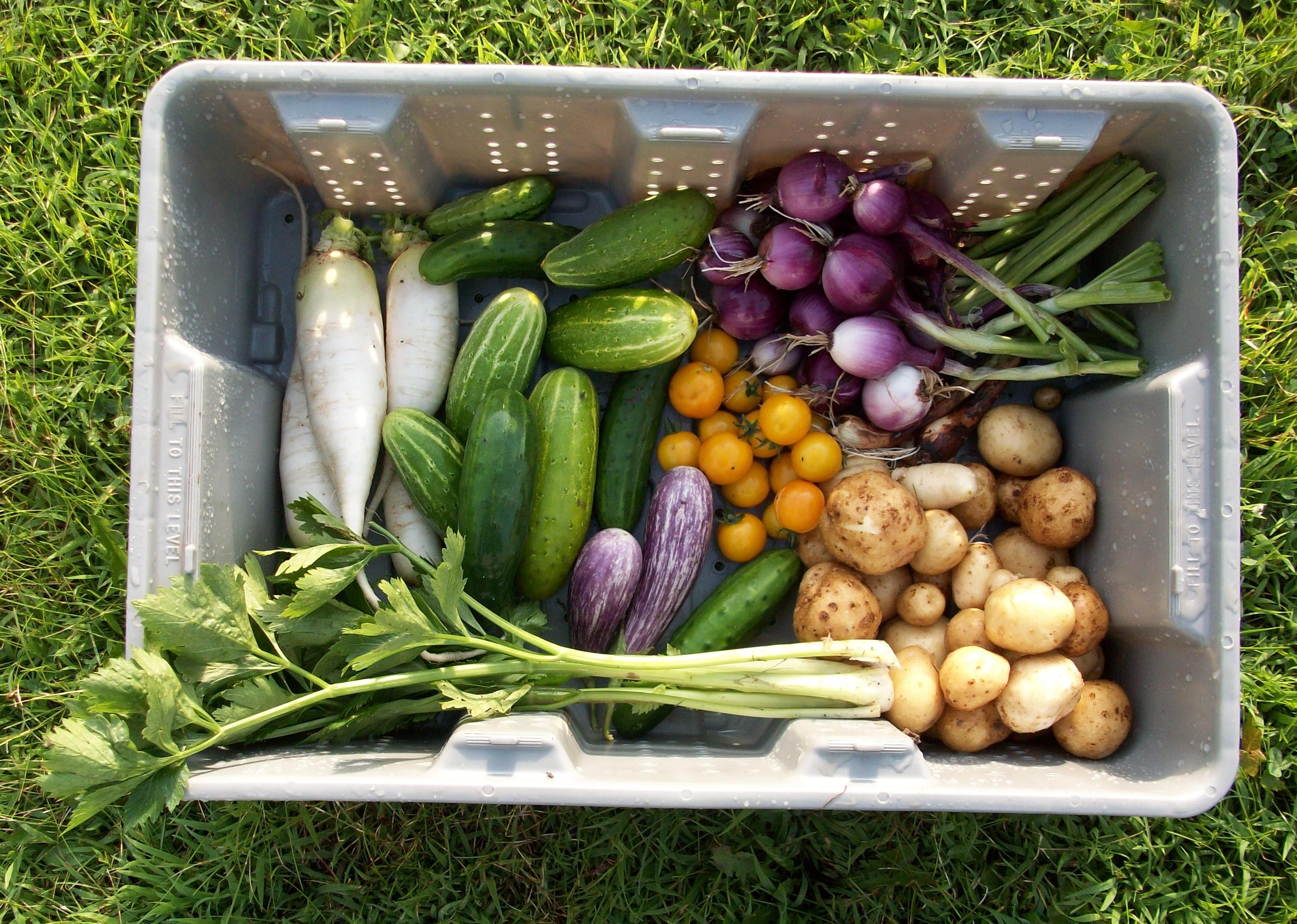
Fresh deer droppings lay moist under the oak trees and two rabbits stopped and watched as I made my way through the clover. I picked cherry tomatoes, jalapeno peppers, daikon radish and everything in this photo.

In the kitchen I made salsa using fresh ingredients, some old relish — everything that made sense. It was tasty and spicy, quite delicious.

The future of any local food movement is in the hands and kitchens of people who do these kinds of things.

If you ask my mother’s generation, “what is local food,” they often mention sweet corn and tomatoes. Hard to argue with the taste and seasonality of those two vegetables, but there is more.

Cooking goes against the grain of a global society increasingly and intentionally seeking to remove creative, engaged prep work from the kitchen and replace it with heat and serve processed food. Here’s an example.

While on break at the home, farm and auto supply store food preparation became a conversation topic as it often does.

A colleague explained how he bought a bag of prepared frozen meatballs from COSTCO and warmed them in his favorite barbecue sauce. He then took a small loaf of white bread, halved and toasted it, and spooned the meatballs on the bottom half making a meatball sandwich. He said it was really good as we listened.

If taste and ease of preparation is all we seek, the industrial food supply chain can meet our needs. In that case, when it comes to local food, what’s here becomes local.

I’ve been spending time in the kitchen this week. At 5 a.m. I stop what I’m doing and make breakfast. Stirfry, roasted vegetables, and because they are in season, fresh steamed green beans with every meal. It feels a little weird, but I felt better all day because I ate mostly what I grew before 7 a.m.

The local food movement is just not going to happen based on a small number of farmers, chefs and advocates and there’s the ceiling. If it becomes a part of our daily lives, which include vegetables from the garden, eggs from chickens we know and preparing food to taste, then the local food movement has a chance.

What it reduces to is either cook or quit.

Categories
Kitchen Garden

Farm Transition

View from the Barn
View from the Barn

RURAL CEDAR TOWNSHIP — Yesterday was the Practical Farmers of Iowa field day at Carmen Black’s Sundog Farm.

Carmen and Susan Jutz explained their farm transition process in a simple duet about bankers, government agencies, insurance companies and community.

Like everything Susan has done since I met her almost 20 years ago, the transaction of selling the farm had a home made feel to it. It looks like Carmen will continue that localized and home made culture.

Attendees walked the farm, with Carmen and Susan explaining pest control practices. Highlights included treatment for flea beetles, tomato blight, worms and cucumber beetles.

What I hadn’t thought about was providing proper space for air to circulate among tomato plants to prevent spread of disease. The wall of cherry tomatoes that blew over in yesterday’s storm is a good example. The wind caught the entire planting like a sail. If they were separated more, wind might blow through them, leaving them upright.

Susan’s eventual departure from the farm is another instance of my generation going home. On Sundog Farm there is a chance for sustainability as Carmen adds farm management to her experience. Opportunities like this are rare and Carmen appears to be making the most of it.