Categories
Kitchen Garden

Using It Up

Dinner July 13, 2019

The challenge for a gardener is to use or preserve the abundance in a way that makes sense.

At the beginning of a gardener’s life-long journey, what that means is not clear. Clarity approaches as our interaction with a kitchen garden matures, planting to meet the anticipated demands of modern living — season by season, meal by meal.

Gardening is as much about cooking and eating as it is about genetics, crop inputs, pest control and horticulture.

Saturday morning I made more basil pesto to freeze and started the first batch of dill pickles. Friday I pickled beets and dried parsley for the cupboard.

The photo represents dinner last night. The veggie burger and ketchup are processed foods and the vegetables are locally sourced. I grew the squash and peas, a farmer friend grew the onion and carrots. It was a satisfying, seasonal meal. Cooking techniques developed through years of practice and study made it possible to reduce the amount of time needed to prepare these dishes. At the end of the day, this meal was nothing, a throw-off addressing our need to eat. This meal was also everything.

People frequently post photos of their meals and we enjoy viewing them on social media. It is a natural impulse that say what I’ve done has meaning beyond a single meal or dish. In a search for truth and meaning in life eating is important, or as my colleague at the orchard Matt Steigerwald said, “food is important.”

Like so many things in life it reduces down to the question what will I do with my life today? Living with a kitchen garden and enjoying its production is one important thing among others.

Categories
Living in Society

At a Potluck Dinner

Mixed cucumbers and squash, July 12, 2019.

I sliced fresh cucumbers on the mandolin and dressed them with a mixture of olive oil, homemade apple cider vinegar, salt and pepper for the potluck.

Not sure how much to take, I used all the Tasty Jade Asian cucumbers I picked in the morning. It made a generous offering.

The dressing took place on the hood of my car in the parking lot for the event. Didn’t want the salad dressing to break, and the possibility of finding more ingredients along the route to the potluck kept options open until the last minute.

An octogenarian friend suggested it’s important to put your name on a potluck dish. I made a card, wrote the ingredients on it, and signed at the bottom. What’s in the dish seems more important than who made it, especially for people with dietary restrictions, but I seldom question my friend’s potluck wisdom. I made my name legible.

On a warm, summer afternoon in a park in North Liberty we gathered and enjoyed each other’s company. The potluck was the July meeting of our county’s Democratic central committee. It was an official meeting, but very informal. This being Iowa, a good percentage of the group included young political organizers for presidential campaigns, the Iowa Democratic Party, and other campaigns. There are a lot of elections between now and Nov. 3, 2020. By the way, Democrats, like most potluck attendees, are a bunch of gossips, the author included.

If people believe the way to learn about candidates and their policies is to attend large town hall meetings, they are wrong. Whatever I learned and continue to learn is done in small bits over a very long time with people I’ve come to know well. I didn’t realize that until I was able to suppress my driving social style and actually listen to people. Most elected officials are real people with real interests of their own. If they come to a potluck at all, that’s a sign they are accessible… and human.

There was no real news out of the potluck. It was the kind of warm summer evening of which there are too few in life. Suffice it there were many positive interactions before I headed home along Mehaffey Bridge Road.

Categories
Environment Kitchen Garden

Hot Weather Harvest

Neighbors Haying

On a fine summer day conditions were perfect to harvest hay and garlic.

My CSA friends recruited volunteers to bring in the garlic and across the county farmers were baling hay in large round and small rectangular bales.

On Independence Day farmers came to town to buy cultivators, salt blocks, pumps, feed, big pedestal fans, bedding (for horses), air compressor parts, nuts and bolts, and other stuff of life. At the home, farm and auto supply store we also sold a lot of propane, grills and kayaks, but that was not to farmers, as a farmer plans his/her kayaking and grilling ahead of time.

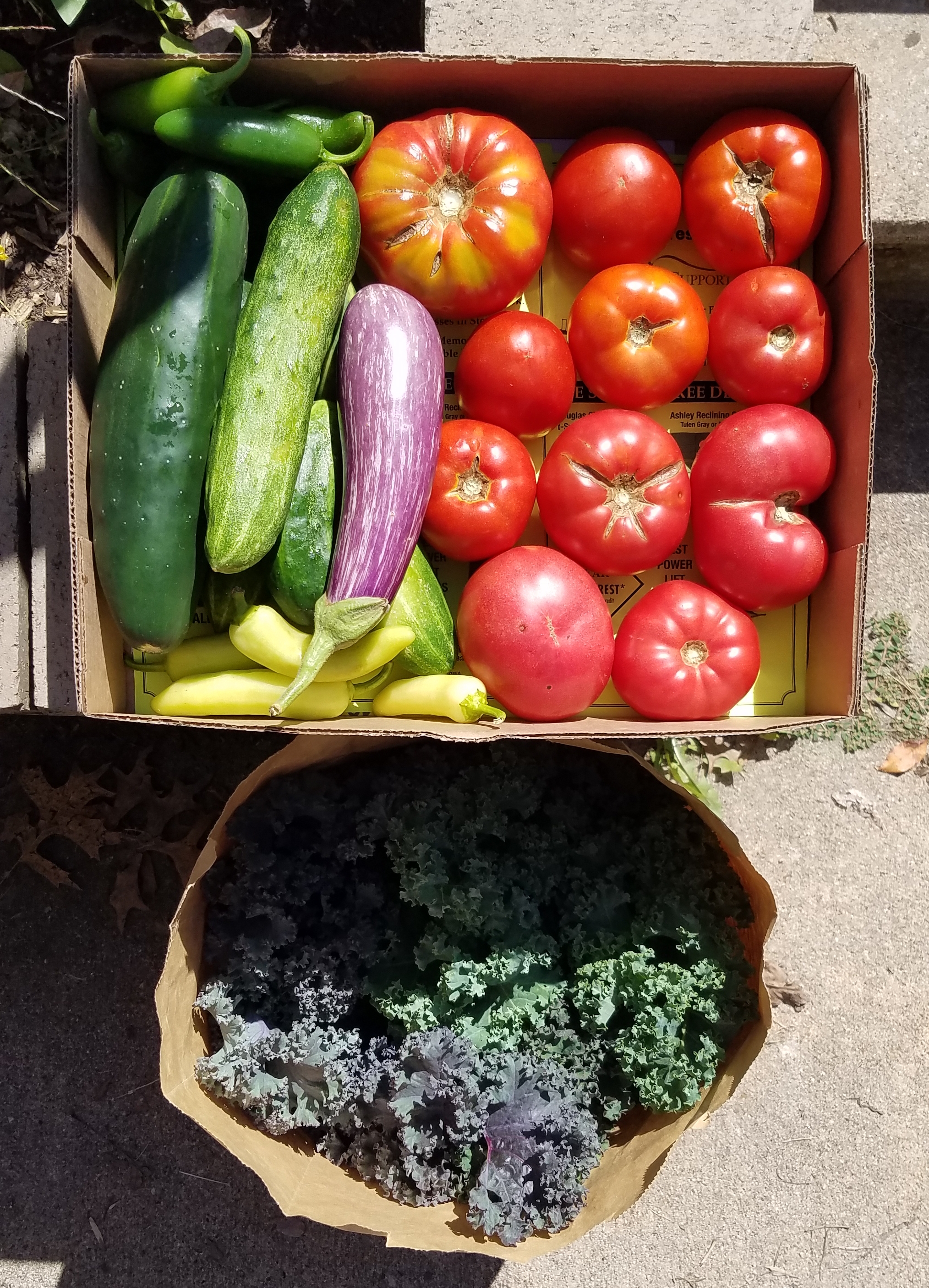
The rain has been good enough my garden doesn’t need much watering. Predatory insects are noticeably in abeyance, I suspect because of the polar vortex and extremely cold temperatures last winter. Tomatoes look as good as they have in years. It is already hard to use all the cucumbers. There will be green beans, okra, hot peppers, eggplant, squash, kale, carrots and more by the time August is finished.

We love summer.

Actually, we love life even in the extreme weather brought on by our own assault on nature. That we have perfect conditions for haying and garlic harvesting may well be an anomaly going forward. It was enjoyable this year and will be for however long it lasts.

I viewed the president’s speech on the environment on YouTube. It was not about climate change, human-made or other. In fact, the speeches by the president and about half a dozen others were devoid of any mention of the science of climate change, or solutions to solve the climate crisis.

I feel certain the bait shop owner from Florida has seen improvement in his local environment by the administration’s work on red algae. His speech was unprepared and somewhat random, but a slice of Americana available for public consumption and that, maybe, was the point. There was praise for the president from his staff, including the despised Andrew Wheeler, current head of the Environmental Protection Agency. If one adds up everything in the 56 -minute event, if we didn’t know the science of climate change, it would be believable. The climate crisis was absent from the environment Trump depicted and that is the problem with the Trump administration.

What bothered me the most, as it does any time I listen to the president, it’s the assertion that covers up a lie. Wheeler was bragging on how many super fund sites have been deleted from the list. Were they actually cleaned up or just declared clean and deleted?

I agree with Al Gore’s analysis:

Sometimes it’s hard to tell the origin of hot weather. Is it coming from Anthropogenic climate change, or from politicians in Washington, D.C.? Maybe a little of both.

Categories
Home Life

Sunday Drive for Ice Cream

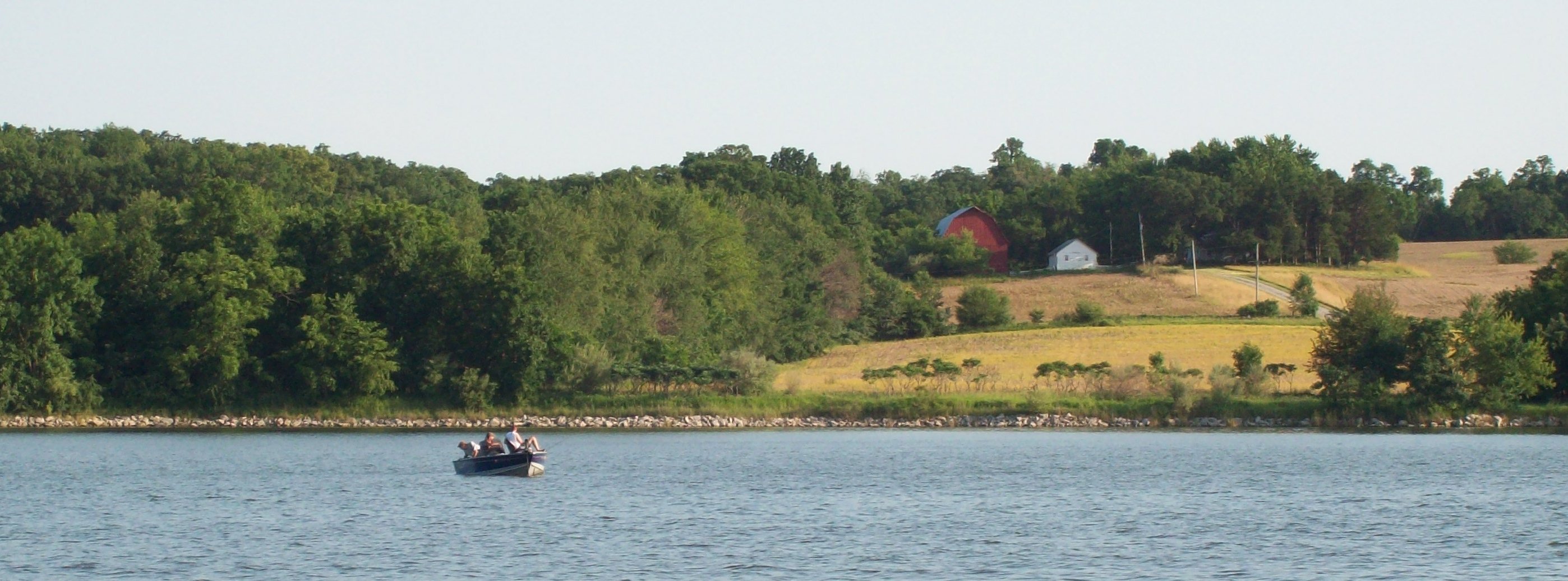
Lake Macbride, July 8, 2019.

Sunday afternoon I was getting cabin fever so I drove to Ely, bought gasoline, played Powerball, and bought a pint of mint chocolate chip ice cream.

It is six miles to Dan and Debbie’s Creamery where I shop a couple of times a year. I’d go more often but I keep forgetting they are closed Monday until arriving when the building is locked up. I’m also avoiding sugar and carbohydrates for health reasons or I’d work harder at more frequent visits.

The ice cream was delicious. I debated whether to get a half gallon for $9 or a pint for $5. Economy would have me buying the larger size, but chances are I would have eaten the whole thing in one or two sittings. I managed to split the pint into two dessert-sized servings and fit it into my daily carb budget. I have a carb budget.

Wildflower

Sometimes one has to get out of the house.

My imagination let loose as I drove on Ely blacktop through the Atherton Wetland. So much so I didn’t notice whether flooding has receded, or whether people were using the ATV park.

When I reduced my schedule at the home, farm and auto supply store to leverage Social Security and phase into a slowdown, I had no idea how it would impact me. Mostly, I’m becoming more aware of who I am. It has taken time and I am not sure I fully realize what it means. One thing is certain, I’m not who I was.

This July hiatus is a chance to figure part of that out.

Not certain when it happened, my driving social-style is in remission. It may be gone completely. I no longer need to be in charge. I’m happy to follow the lead of others if they are competent. I take time for things I would not have had the patience. I did not see that coming.

Lake Macbride State Park Trail, July 8, 2019.

With a form of financial security through a pension, the press of bills due without funds to pay them is also in remission (Thanks FDR for Social Security). Our consumer debt is going down: we gained almost $12,500 in net worth since my pension payments began and debt servicing picked up. Once the pressure of nose to the grindstone was relieved new possibilities opened up and there is more than financial improvement.

The biggest change is feeling comfortable staying home and working. I let one of my farmer friends know I would not likely be returning next year. At some point I’ll leave the home, farm and auto supply store to spend even more time at home. There is work here in the form of household repairs, reading, writing, gardening, cooking and such, to fill more time than I have left on this blue-green sphere.

In addition to the work, there’s the occasional chance to buy ice cream and become lost in the wetlands on my way home. I’m learning to see where I live again.

Categories
Reviews

Summer Reading 2019

Lake Macbride

For the next five weeks I’ll be covering weekdays for our editor Trish Nelson who is on summer break. This is my seventh year to provide summer posts, and more than ten years since I began posting at Blog for Iowa.

Regular readers know my topics: politics, foreign affairs, the climate crisis, the Iowa legislature and nuclear abolition. I’ll contribute those types of posts and more as I compete to gain your interest in a busy media landscape.

While Iowa lakes struggle to maintain safe water quality for summer activities like boating, low impact water sports, and swimming, Lake Macbride experienced its first-ever public health warnings about microcystins produced by blue-green algae. Department of Natural Resources staff recommended people not swim in the lake because of high levels of toxins in the water. While the swimming ban was lifted, there is another traditional summer activity for those skeptical about the water’s suitability: reading a book. Following is a list of books readers might consider for summer reading.

I know the 720-page Mueller Report published by The Washington Post sounds like a lot and maybe a straight through reading isn’t for everyone. However, read ten pages per day and it can be finished in 2.4 months.

Willard “Sandy” Boyd, the fifteenth president of the University of Iowa, published a memoir this year, A Life on the Middle West’s Never-ending Frontier. He was university president when I was an undergraduate and graduate student. Boyd remains active as Rawlings/Miller professor of Law at the university and is president emeritus. The memoir offers his views of the role of a public university and how it evolved since he first worked at the University of Iowa in 1954. I picked it for my personal connection to Boyd, but there is a lot more to the memoir, especially if your interest is in higher education.

If folks haven’t read a history of the great migration of black citizens fleeing the south in the 20th Century in search of a better life, The Warmth of Other Suns: The Epic Story of America’s Great Migration by Isabel Wilkerson offers an option. After fifteen years of research and writing, Wilkerson published the book in 2010. It “examines the three geographic routes that were commonly used by African Americans leaving the southern states between 1915 and the 1970s, illustrated through the personal stories of people who took those routes,” according to her Wikipedia page. Knowing the history of the Great migration is essential to maintaining progressive values.

What is a single book to better understand the climate crisis? I found an answer in The Uninhabitable Earth: Life After Warming by David Wallace-Wells. Fair warning: there is not much good news within these 310 pages. What the book does do is present a broad array of the effects of the climate crisis and how they impact us now and near term. Wallace-Wells seeks to address denial that climate change poses immediate consequences that are both ever-changing and happening in front of us. Required reading for anyone advocating a sustainable life on Earth. That should include almost everyone.

Democrats expecting a fair fight in the 2020 election aren’t playing by the same rules as Republicans. When we consider how progressive values might again gain dominance in American culture it is important to learn how we arrived at this Trump moment. Two books highlight how we got here and are worth reading: Dark Money: The Hidden History of the Billionaires Behind the Rise of the Radical Right (2016) by Jane Mayer, and Democracy in Chains: The Deep History of the Radical Right’s Stealth Plan for America (2017) by Nancy MacLean. When people talk about getting money out of politics they are just flapping their gums if they don’t understand how it got in. These two books provide that insight and are essential progressive reading.

It seems like yesterday I was having a cup of coffee with Kurt Michael Friese in Iowa City. It’s hard to believe he’s gone. In A Cook’s Journey: Slow Food in the Heartland Friese offers a guided tour of the slow food movement in the Midwest around 2008. While a little dated, the book is worth reading for the landscape of Midwestern local food it presents and people in the local food movement. It’s also a way to remember his work as a chef.

That’s what’s on my summer reading list. Feel free to share what’s on yours in the comments.

~ Written for Blog for Iowa

Categories
Environment

Trail Walking

Grass

The garden was muddy making it difficult to plant… so I waited.

For exercise I took a walk on the state park trail, 20 minutes out and 20 minutes back… with stops for photos.

Wildflower

Although the pace was slow, I could feel the benefit of the walk. It energized me to install the deer fence around the tomatoes and perform a few garden chores before an afternoon thunder storm.

I picked turnips and sugar snap peas from the garden. The first Japanese beetles have arrived. The six-foot stakes worked well to protect the tomato plot from deer who eat the top shoots if they can get to them. It makes a significant difference in yield. Almost everything looks good.

With season’s end of soil blocking tomorrow comes blank space to fill… or not. I’ll do something but let go of filling every moment with intentional action a while back.

One of the most profound things I studied in art history was horror vacui, or fear of the empty. We looked at photos of Greek vases where every space of the surface had images on it. The human tendency is to fill everything the way a person gets a tattoo or two and ends up with a full sleeve. Fear of the empty. It is more creative and more difficult to leave spaces blank. Letting go the obsession to engage every chance to express ourselves frees us to produce better work.

A gardener gets time to think about things like this… and watch the arrival of Japanese beetles, and vegetables planted with one’s own hands grow in sunlight, and devise unique solutions like my deer fence.

Some days we have to stand back and look at what we’ve built:

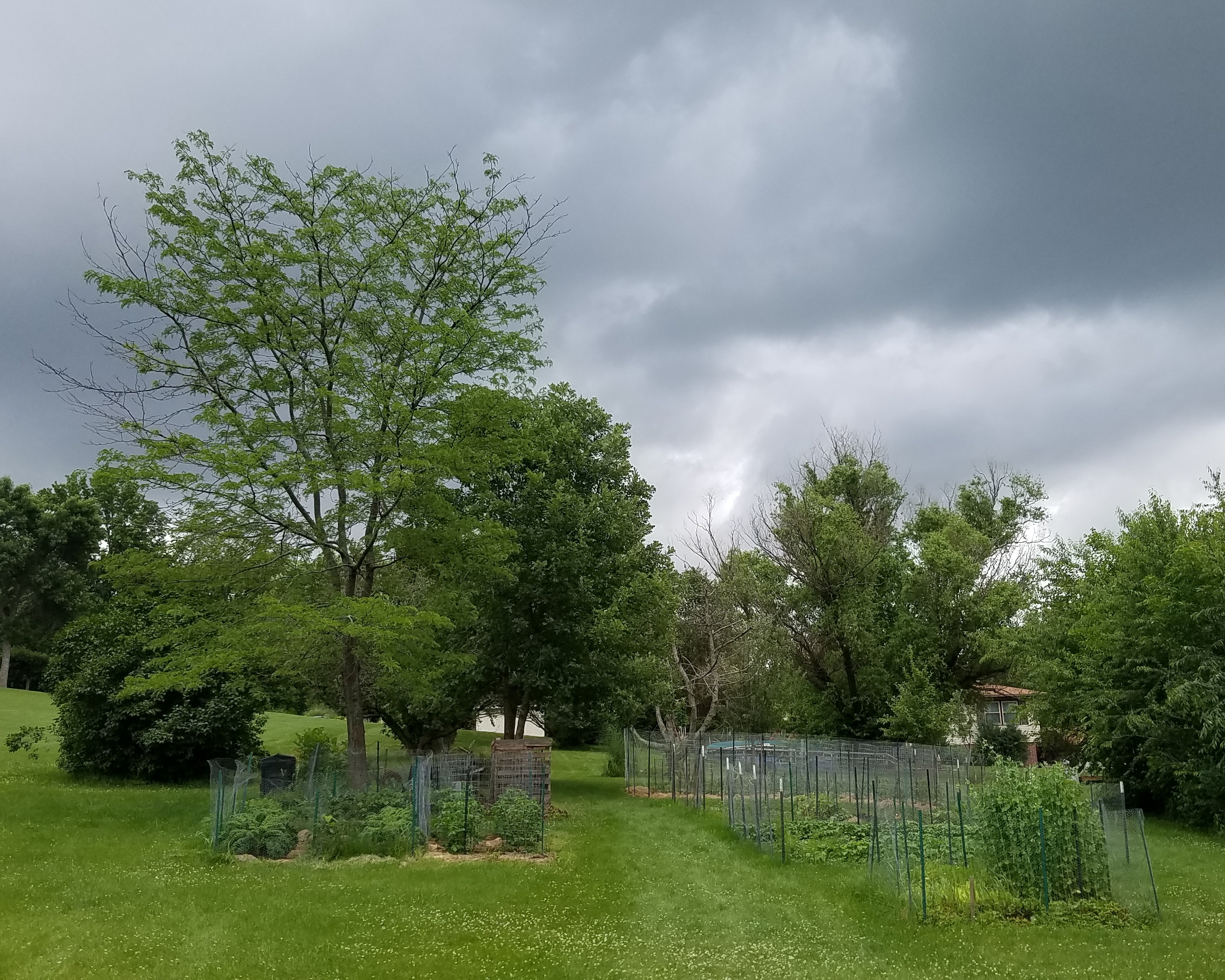
Garden Photo June 24, 2019.

Categories
Writing

2019 Summer Reading

Summer Reading

The myth of relaxing on a towel at a beach, sunglasses and sunscreen on, reading a book may not exist for most of us in Iowa. The beach nearest us has been closed in recent seasons because of the risk of exposure to microcystin and E. coli bacteria, both harmful to human health.

Nevertheless, reading is an important part of summer activities, and essential for people engaged in society. Our home owners association has a monthly meeting at the public library where staff politely boots us out in June and July because it falls on the same night as the summer reading program. Summer reading is one of the most important programs at a public library.

When I write “reading,” I mean books. A lot of our time is spent reading news articles which, while important, does not involve the kind of commitment as reading a book cover-to-cover. I started the Goodreads Reading Challenge last year and it helped me stay focused on reading. I’ve read 16 books this year and you can see which ones on my Reading List page.

Here, in no particular order, is a list of ten books on my bedside table for reading this summer:

Where the Light Enters: Building a Family, Discovering Myself by Jill Biden.

The Tallgrass Prairie: An Introduction by Cindy Crosby.

The Radium Girls: The Dark Story of America’s Shining Women by Kate Moore.

The Overstory by Richard Powers.

Pacific by Simon Winchester.

Milkman by Anna Burns.

The Wizard and the Prophet: Two Remarkable Scientists and Their Dueling Visions to Shape Tomorrow’s World by Charles C. Mann.

The Uninhabitable Earth: Life after Warming by David Wallace-Wells.

Janesville: An American Story by Amy Goldstein.

Energy: A Human Story by Richard Rhodes.

While beaches may be closed due to environmental pollution, I plan to find a shady spot on our property or a comfortable chair inside to crack open a book from time to time this summer. Please do leave a comment with what you are reading this summer below.

Happy summer reading!

Categories
Kitchen Garden

End of the Garden

Rapid Creek, Sept. 11, 2018

It’s down to eggplant, green beans, peppers, butternut squash and kale as the garden winds down in late summer. Four crates of tomatoes remain to be used, and the ice box, storage shelves and freezer are nearing capacity.

The next project is planning the garlic patch for October planting. I think it will go where the celery and cucumbers grew this year. It was a successful crop so I’m doubling the amount planted — all with seed from this year’s crop.

The Autumnal Equinox begins Sept. 22 this year. After that, the winter cycle of cooking and living mostly indoors is renewed. Garden cleanup will be after first frost, usually in the middle of October. Then there is collecting grass clippings for mulch and trimming branches from trees and shrubs for a winter burn pile.

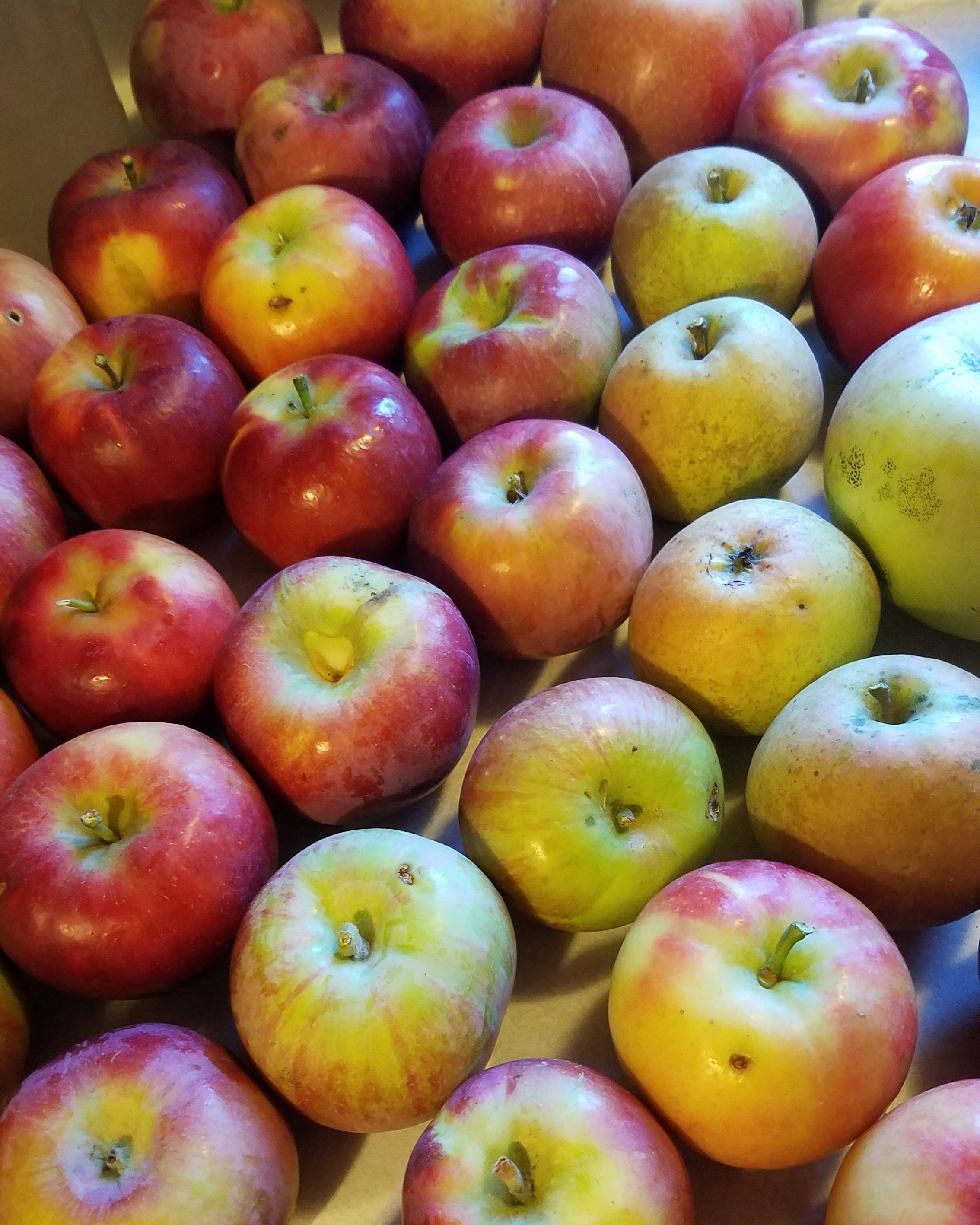
Apples, Sept. 11, 2018

Tuesday I made a trip to the orchard to pick apples and brought home more than a week’s worth in eight varieties. I had to stop picking before getting to all the ripe kinds because the bag was getting heavy. They will keep in the refrigerator… I hope.

There are seven weeks left in the apple season and I’m looking forward to all of them. There is nothing like my work as a mapper, helping guests find apples in our orchard. Last Sunday it was so busy, with perfect weather and pent up desire for customers to get outdoors, I began losing my voice after explaining the operation so many times. The harvest is a series of fleeting moments stretching toward a vanishing point.

The orchard has 100 varieties of apples that begin ripening in late July and continue until the last day of October. Pictured are Cortland, McIntosh, Wolf River, Jonagold, Honeycrisp, Hudson’s Golden Gem, and more. I’d say they were delicious and that would be an apple joke.

Vegetables for Library Workers

I took a care package to our library workers on the way to the orchard. Some of them work on Tuesdays and we didn’t want them to be left out of summer produce. They always appreciate fresh vegetables and this year favored Japanese cucumbers.

The garden has already been a success with some of the best crops I’ve yet grown in many varieties. Where there were failures (bell peppers, radishes, snow peas) there were big successes (tomatoes, celery, cucumbers, spinach, butternut squash, hot peppers). It has been a great year despite the weird weather.

Being in semi-retirement made a difference in preserving the harvest. An extra day or two during the week enabled me to take care of what was planted and process what came in the kitchen.

The plan is to do it again next year.

Categories
Home Life

Returning to the Trail

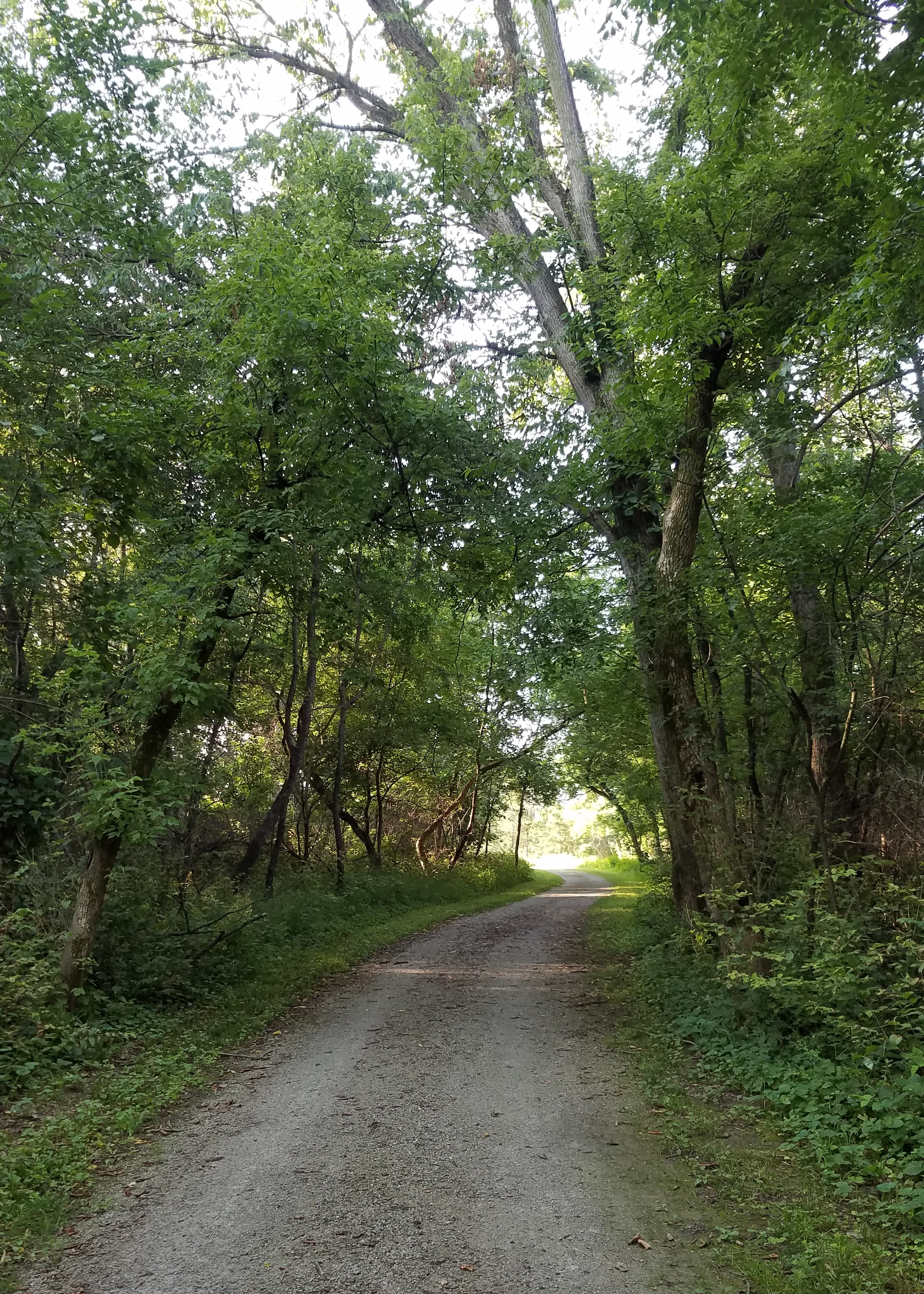
Jewelweed on the Lake Macbride Trail

I view trail hiking with trepidation.

Since entering a low-wage work world a few years ago, where standing for long shifts on concrete floors contributed to plantar fasciitis, I haven’t jogged and reduced the amount of trail hiking I do. Now that I’m semi-retired, my feet appear to be healing. I’d like to get back out on the trail on a regular basis.

We live near an entry point to the Lake Macbride State Park trail system.

The hard-packed gravel trail runs from the state park entry, five miles east to the City of Solon. It is well used by hikers, bicyclists, joggers and locals, and soon will be connected to a much larger trail system. Over the years I’ve used it a lot, notably as a jogging trail where in peak condition I’d jog five miles each day before heading into Cedar Rapids for work.

Friday I hiked home from Solon after dropping my automobile at the repair shop, then hiked back to town once it was repaired: six miles.

The trail is changing.

Human activity in the form of development has taken the biggest toll on nature. The Solon Recreation and Nature Area has been encroaching on natural areas near the trail since it was established. Addition of a paved, concrete bike path near the railroad easement has taken even more of the natural area out of the trail. The city end of the trail has been a mess since the construction began and will end up being an industrialized area rather than the nature it purports to be in its naming. I ran into a townie I know who said designers plan to keep the gravel portion of the trail. If that’s true, it is a blessing because there are so few low impact trails in the area.

My trail experience is partly about exercise, partly about viewing the condition and maintenance of the trail. I enjoy finding new wildflowers like the Jewelweed in the image above. When there were more of them I picked wild blackberries, competing with birds for the sweet treat. The good news is my feet didn’t ache Saturday morning and on Sunday they returned to normal. I should be able to hike regularly again… and complain about human activity encroaching on nature right in front of my eyes.

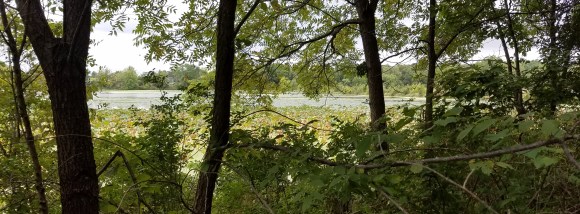
Lake Macbride from the Trail, Sept. 7, 2018

Categories
Writing

Holiday Weekend

Apples Ripening

Since 2013 I’ve worked at the apple orchard on Labor Day.

The holiday coincides with ripening of Honeycrisp apples which is one of our most popular varieties. There are more than a dozen others, including Gala, McIntosh, Red Gravenstein, Burgundy, Cortland, Ginger Gold, Red Free and Akane, ripe and ready to pick.

It rained on Saturday, which suppressed the crowd, but Sunday a couple thousand guests stopped by. It was our busiest day this season.

My job title is “mapper.” That means I talk to many of our customers and help them have a positive experience at the orchard. A large map is displayed at my work station, from which I tell a story about how to find apples. Even when a majority of people seek the same variety, each customer is wants something a little different. It’s my job to figure out what that is and help them find it in a personal way. Sometimes I draw a map on a slip of paper showing where specific apples are. Mostly I use the map as a reference point and work to enable customers to break the chains of intellectual engagement and look at the 80 acres of land that makes up our orchard. With popular varieties that’s easier because the rows of apple trees are visible from my perch at the top of the hill. Among the many things our orchard represents, it is a chance to get away from daily life for a while.

Rain had been holding off Sunday until around 4:30 p.m. when clouds gathered and let loose a shower. Our guests headed into the sales barn and to their vehicles to get out of the weather. Rainfall signaled the end of the day more than our business hours.

I enjoy working at the orchard, especially when it is busy. My personal tradition has been to work on Labor Day and I’ve done it for as long as I can remember.

In the transportation and logistics business operations never ceased and our family had no culture of celebrating this holiday. I recall a Labor Day I drove into the Chicago loop to work in my office. I parked at a construction site near Lake Michigan, walked the block and a half to work, and went through security. I was one of the few people other than security inside the Standard Oil building on Randolph Drive. I believe I got a lot of work done that day, although today am not so sure.

Over the years we’ve become a family that doesn’t celebrate the eight or ten big holidays of the year. That might change in retirement. Even though I grew up in a union household, was a union member at the meat packing plant where my maternal grandmother and father worked, and have a daughter who is represented by a large union, Labor Day is a forgotten time for me. Maybe because I’d been part of management most of my worklife. More likely if I took the day off I wouldn’t know what to do as celebration. In the end, I’d rather spend time with people who are getting away from la vie quotidienne and help make their experience better on Labor Day.

After the rainfall I policed up trash from the picnic area and a young couple asked me to take a photo of them. Guest relations like this is an unwritten part of my job. I looked for proper framing where I could capture the day for them. She handed me her mobile device and I got them to smile. I snapped a photo of them in front of apple trees with our restaurant on the hill in the distant background. The photo pleased them.

I picked up discarded apples, plastic and paper and put them in trash barrels not full enough to empty. That work will be for Labor Day, when if the rain holds off we should have a couple thousand of guests seeking something, apples mostly, but also learning how to live in the 21st Century.