Rain kept vegetable farmers out of their fields. The rule of thumb is wait four days after a rain for fields to dry. It rained all day yesterday.
Equipment is ready, truckloads of seed potatoes wait in bags, and farmers want them in the ground.
Conditions are ready to plant any cold weather vegetable once soil dries.
Traditional potato planting day is Good Friday, and some gardeners, including me, continue to follow that timetable. I’m growing in containers this year, so feel good about planting a bit early this weekend. I grow them in containers to keep burrowing rodents from getting the first pick and last year the technique worked.
In the break room at the home, farm and auto supply store a case was made not to grow potatoes at all.
They are cheap at the store. There is little difference between a freshly dug potato and a proper storage potato, they said. They take up space that can be planted with more desirable crops like tomatoes, squash and cucumbers. Nutritionally, potatoes are carbohydrates shunned in many modern households.
Leek and Potato Soup
Nonetheless, I persist in producing spuds for fresh eating and cooking. They are a small crop in a diverse home garden.
Growing potatoes — gardening generally — is a statement of resilience. A personal action running counter to a political class with which we increasingly disagree.
Let them ask their questions. What is a leek? Why grow potatoes? While they do, a family can be sustained with leek and potato soup in a way hard to find during a time of pre-cooked meals and convenience store restaurants.
Thinking and talking about potatoes is sublime as gardeners head toward dry ground and the weekend.
A text message came March 20 while I was stopped at a traffic light in North Liberty.
“In total we need 22 120s this week so you actually might be able to do it all tonight!”
It was 4: 51 p.m.
The combination of daylight savings time and the vernal equinox provided a window to soil block at the farm after my shift at the home, farm and auto supply store.
Driving east on Mehaffey Bridge Road toward Solon and the farm, descending into the Coralville Lake and then the Lake Macbride dip in the road, I made mental plans on how to approach the work.
Pelicans had returned to the sand bars on the east end of the north branch of Lake Macbride on their annual migration. Their bright whiteness cheered the beginning of spring.
Sunset was at 7:18 p.m. It would be a push to get 22 finished by then. I made it, just barely.
I had planned to plant lettuce of my own, but waning sunlight made it difficult to see and separate the small seeds. I planted spinach instead. Chasing sunset is not always what we expect.
Garden Burn Pile
Yesterday I worked in the yard and garden, clearing one of the plots to make a burn pile.
The wind was negligible so I dumped a garbage can filled with shredded mailer envelopes and other paper at the base of the brush pile. It took one match to make the burn.
I got out the chain saw and cut down four volunteer mulberry trees that had grown 15 feet tall midst the lilacs. I hadn’t noticed them until last fall when sunlight from the Western sky highlighted them. They burned easily.
Tomato Cages Protecting Belgian Lettuce
I gathered the tomato cages and piled them over the Belgian lettuce planted in March. The seeds are germinating and popping through the damp soil’s surface. The cages will be there to protect the lettuce for three to four weeks before the tomato seedlings are ready to plant.
It was a great day to spend in the garden.
A neighbor visited. She said the president of our home owners association sold his house and was downsizing to move into town. There would be three vacancies on the board with other resignations. I spend 14 years on the board beginning in 1995 and told her I would consider joining the board for the third time. I explained that I would start working at the orchard again in August, returning to a seven-day-per-week schedule. She thought the board could cover my absence, if needed, for a while.
Early spring has been busy already. There is so much life in which to engage. Taking part is important and contributes to sustaining a life in a turbulent world.
After a Saint Patrick’s Day meetup with friends in Iowa City I drove home, parked my car in the garage and haven’t moved it since.
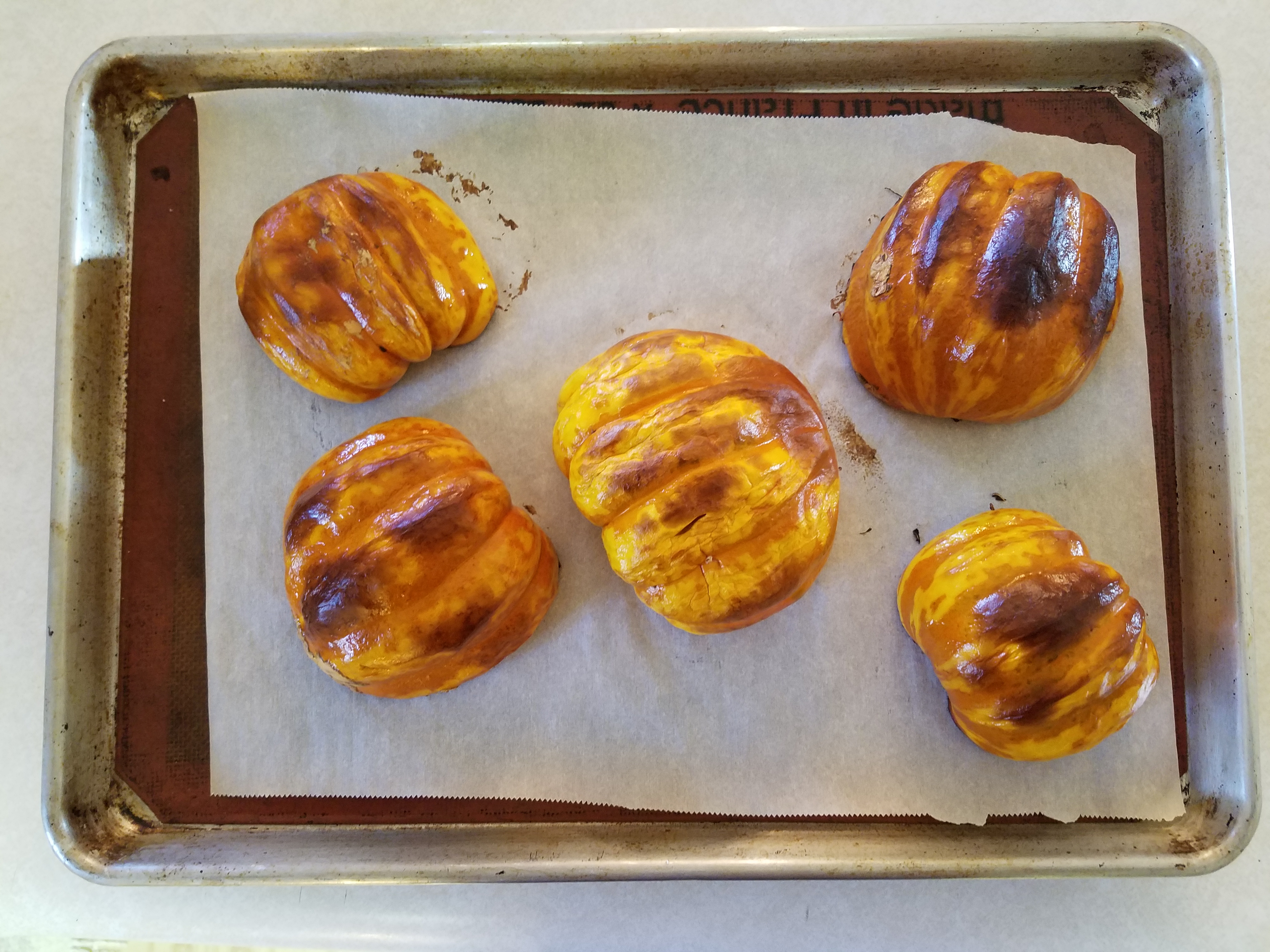
It was too cold for outside work on Saturday so I stayed in, did laundry, cleaned the bird feeder, wrote, read, and cooked dinner of bean soup, Carnival squash and applesauce cake.
The ambient temperature is expected to rise to almost 60 degrees, so I’m planning to work outside after a shift of soil blocking at a community supported agriculture farm.
I read Elizabeth Kolbert’s The Sixth Extinction: An Unnatural History in its entirety this weekend. Her combination of background information with personal stories of field trips is eminently readable. I can’t remember a day so absorbed in a book since leaving transportation. The main takeaway is how uncertain scientists are about changes in earth history over the long term and the consequences of our lifestyle.
Japanese Beetles
The broader meaning of words like “Anthropocene” is not settled, nor agreed. What I know after this immersion, and after reading Sapiens: A Brief History of Humankind by Yuval Noah Haran, I am ready to move forward with something other than narratives of how homo sapiens swarmed over the planet like Japanese beetles.
I buy more bird feed since working at the home, farm and auto supply store. Counting whole kernel corn, I have five different varieties in the garage. Each type attracts a different bird and we enjoy watching them through the French door off the dining area. Some days I feel like picking up a 20-pound bag on sale, and do. I went overboard with 50-pound bags of whole corn and millet, although sparrows seem to really like the millet. There is no science to my purchases.
Bartering is making this year’s garden planning a lot different. Part of the barter system is trading labor for a spring and fall share. Each side of the deal can be defined monetarily. I get a credit of $13 per hour for labor which is applied to retail price of the shares. I use greenhouse space and materials to germinate seeds and care for seedlings until planting in my garden. I will also acquire onion sets and seed garlic through the farms. Where there is a clear financial value, the barter system is simple and easy. This part of the exchange translates into things we can use in our garden or kitchen.
The exchange for specific produce is more complicated.
Canned Tomatoes
Tomatoes are a large part of summer. Last year I planted them in three different garden plots. This year I’ll decrease my plantings to what we’ll use fresh and rely on the farms for canning tomatoes. In 2013 the farmer provided crates of tomatoes which I canned. We split the canned goods 50-50 that year. That was a bit disadvantageous to me considering the amount of work. We haven’t finalized the split, but both farms I work on produce many more tomatoes than needed for their members. One farmer wants lots of canned tomatoes. Something can be worked out.
Bell peppers were a garden failure last year and for many previous years. I’m eliminating them completely. The farms produce bell peppers with a high frequency of imperfect fruit. I plan to trade labor for these seconds and get all of my bell peppers from them. In addition to fresh eating, I seed and freeze them to use throughout the year. We did a 50-50 split on these in 2013, however, this year I’m considering a straight trade of labor hours against a to be determined cost per crate.
There are a number of items we don’t use much in our kitchen but are abundant on the farms. I don’t plan to grow any kohlrabi or cabbage. Should be no problem getting what we need without occupying space in our garden. I’ll barter for some additional broccoli for freezing.
Likewise, I don’t plan to grow lettuce outside my small plot of Belgian lettuce. In between the spring and fall shares that’s coming from bartering.
Summer squash is abundant and available from the farms as are many kinds of greens: collards, chard and “braising greens.” I will grow my own kale and spinach, and everything else will be bartered from the farms.
Eggplant? If Johnny’s Selected Seeds proofs and sends Black Beauty seeds I’ll plant them along with Fairy Tale eggplant. The former can be sliced thick, baked and frozen. The latter are good for the kitchen while in season. There is always an abundance of eggplant at the farms.
Yesterday was the last winter Saturday of staying indoors. Going into the planting season it will also be my day off from the home, farm and auto supply store and the farms. Yesterday was a good day, made better by a feeling of accomplishment. As humans we sometimes need that.
In a couple of hours I removed cages, stakes and last year’s brush from the cherry tomato patch, turned over and broke up the soil, planted six kinds of lettuce, and posted the afternoon’s highlights on social media:
First spade of dirt turned; chives, walking onions, spring flowers up; lilacs, apple trees and pears budding (a lot); Caracas early carrots (57 days) planted; six kinds of lettuce (Wildfire mix, Ridgeline Romaine, Edox Butterhead, Red Salad Bowl, Australian Yellowleaf and Sanguine Ameliore) planted in the ground. I got out the mower to clear the brush from a small patch of garden because it was too windy to burn. It’s March 4 and spring has sprung.
First Spade
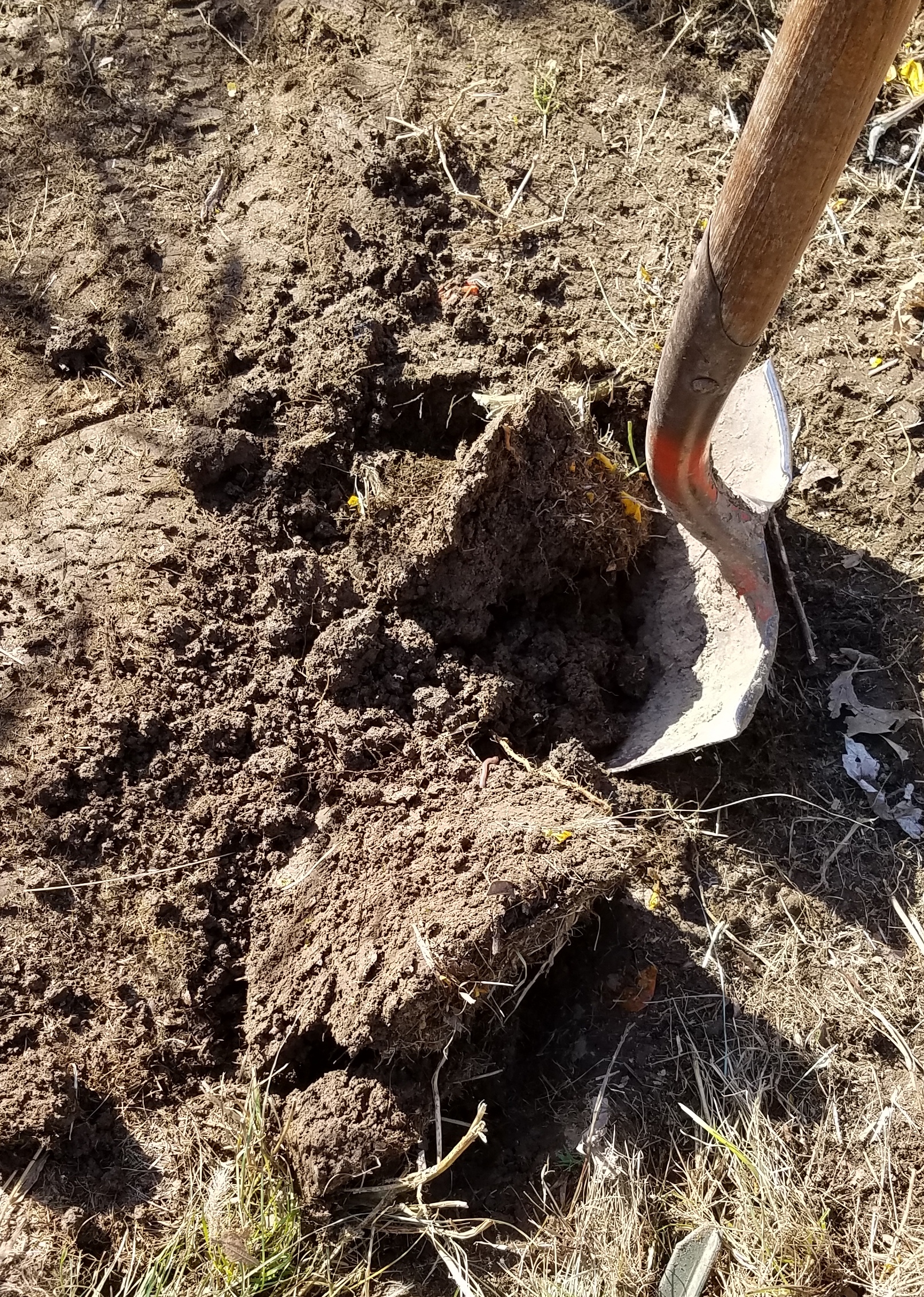
Taking soil from one of the sunken containers I mixed a bag of leftover soil mix from last year with it in a green cart. I refilled the container and planted carrots, covering them with straw from the tomato patch. I poured a bucket of water into the container through the straw. It felt good to get into our garden.
Buds of apple blossoms appeared in abundance. If they bloom normally and pollinate it will be a bumper crop. The arrival of pollinators and timing of the last frost will be crucial. Fingers crossed everything goes well. Last year’s apple crop was virtually non-existent. We are due for a good one.
Lettuce Seeds
February was the warmest on record in Iowa. The frost was out of the soil and the green up will not be long. It is very early to be doing much in the yard and garden.
About 20 people gathered in our nearby town to chat over beverages and hors d’oeuvres with Congressman Dave Loebsack. For some it was the first time to meet personally with a U.S. congressman. The event lasted an hour and a local organizer took notes and discussed a plan of political action with the many young people in attendance. I listened with some members of my own cohort (older folks table) and snapped a couple of photos.
Coffee with Our Congressman
The main group discussion was about the Patient Protection and Affordable Care Act and plans for the new administration to repeal and replace it. A bill is being crafted in the U.S. House of Representatives, but Loebsack hasn’t seen it even though he is on the committee that will eventually consider it. It rots to be in the minority for this and many other reasons.
Loebsack has been targeted by Republicans for the 2018 election.
“President Donald Trump’s 10-point win in Iowa in the 2016 election is emboldening the Republican Party to take on the state’s lone Democratic congressman,” according to the Quad-City Times.
Loebsack has been targeted since his 2006 election. We don’t assume re-election is in the bag and will have to see how the campaign rolls out. Already there are third party negative ads about Dave and a lot of work needs doing to retain the seat.
We turned the first spade of political soil yesterday as well.
My first work day at Local Harvest CSA, was spent organizing for the season and soil blocking for the first seedlings.
I made two trays for myself as part of the barter deal with the farmer.
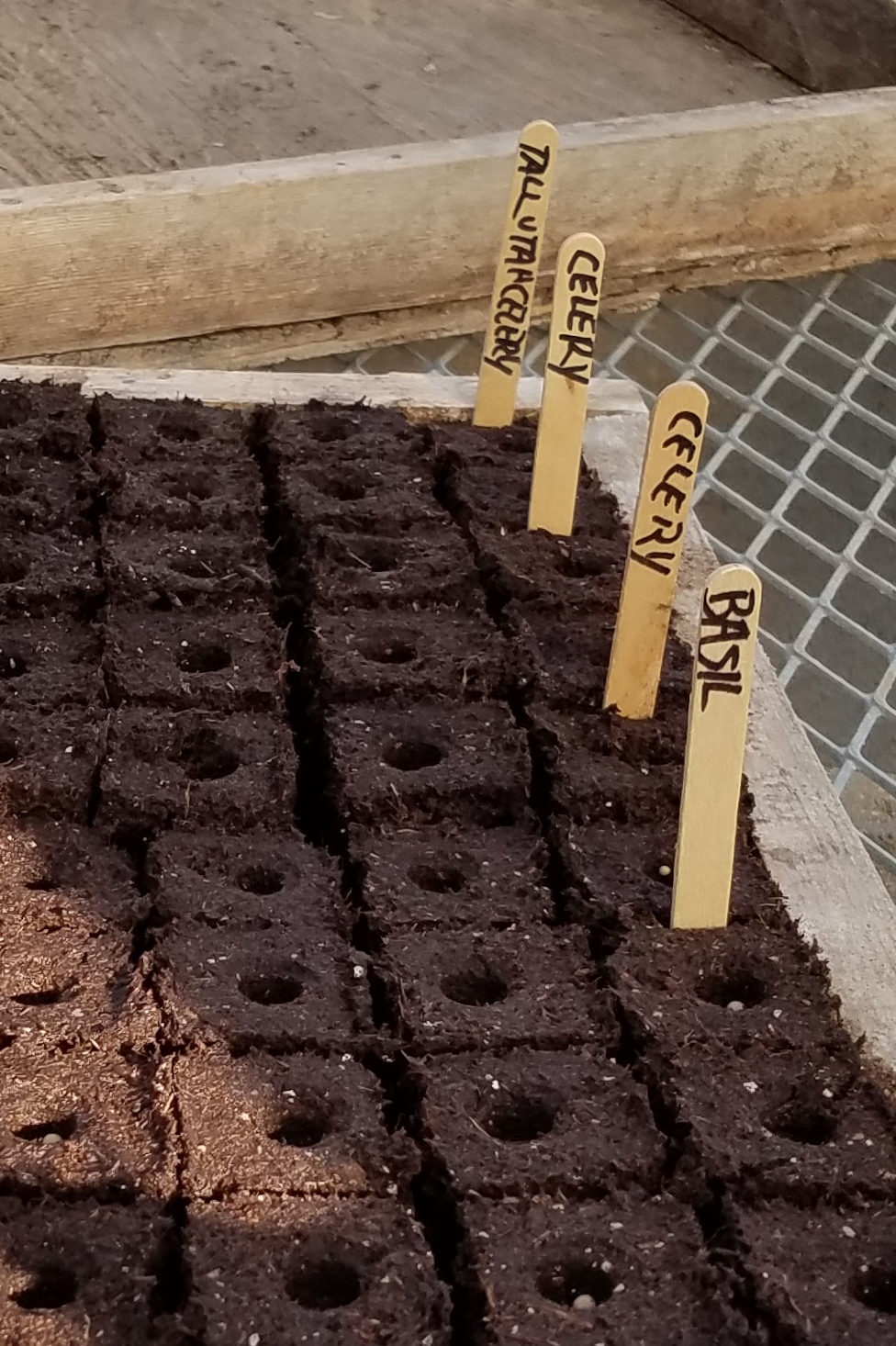
In one I seeded basil, Conquistador celery and Tall Utah celery. In the other was four kinds of kale: Dwarf Vates Blue Curled Scotch, Scarlet, Darkibor and Starbor. The growing season is here.
Basil and Celery
We never know the outcome of gardening. Tall Utah celery seeds are very small. It was difficult to get only one or two into each dibbled cell — I didn’t. I bought them on special from the Seed Savers Exchange in Decorah, Iowa where they don’t pellet seeds. Like with so much about gardening it is another experiment to see what grows well and tastes delicious. The pelleted Conquistador celery seeds from Johnny’s Selected Seeds in Winslow, Maine were easier to plant. A controlled germination house environment should encourage the best from these seeds. We’ll see how it goes.
3,120 Soil Blocks
Soil blocking is endemic to Community Supported Agriculture projects. Like much of our work, it is done by hand. Getting the moisture content of the soil mix right is a constant challenge. It is dry as it comes out of the bag into a tub. Watering is done in stages, testing the moisture content after each round of turning with a transfer shovel. Moisture management continues as the soil blocks are made. The pressure of the soil block tool squeezes moisture from the mixture as the blocks are made. It makes the soil mix wetter. It took 3.83 hours to get organized and produce the first batch of trays. As the season progresses, I’ll get faster.
The farmer went to town to get some supplies for the germination shed leaving me alone with two dogs and partly cloudy skies. I took a moment to breathe the fresh air and look at the sky. Hope springs from days like this. New hope for a successful season.
Snow fell in darkness leaving a thin blanket of white.
The pin oak tree began shedding last year’s foliage indicating warm weather activated new leaf buds and pushed out the old.
Seems weird to rake leaves in February. More to the point, it’s not normal.
In a couple of hours I return for a fifth season at Local Harvest CSA. The main spring task is soil blocking 72 and 120 cell trays for seed starting in the germination house. Part of my arrangement is keeping some of my own seedlings there. When I’m finished with the farm’s trays, I’ll make one 72 and one 120 tray for myself and seed them with kale, celery and basil. I’m hopeful they will do better than in the south-facing window in our bedroom. Getting my hands dirty with soil is a great way to get ready for spring, three weeks away by the calendar.
Other chores on my white board include doing taxes, computer file backup, cleaning the car, preparing the garden for spring and Belgian lettuce planting this week (traditionally March 2). I made extra servings of spaghetti with tomato sauce for lunches and want to make a batch of taco filling for breakfast on work days at the home, farm and auto supply store. There’s also more writing projects.
During a Climate Reality Project conference call on Thursday, a friend from Waterloo and I decided to work on a project with other friends from Waterloo-Cedar Falls. I’ve done two presentations there and look forward to more meaningful work. We’re planning luncheon, maybe next weekend.
This last lap in the workingman’s race looks to be action packed with local food, environmental and cash producing projects coming into focus.
Night’s snowfall melting in the sun makes way for budding plants in a grey and brown landscape. It is almost time to wipe the whiteboard clean and begin anew.
From: Paul Deaton
Sent: Sunday, Dec. 2, 2012 10:14 AM
To: Farmer Kate
Subject: Processing and other ideas
Kate:
Thanks for the kale and spinach. We had both for dinner last night, and now I have a whole refrigerator drawer full of kale, ready to make something. Very yummy, with the prospect of more yummy-ness.
It was curious that you brought up the food processing idea yesterday, as I had recently been thinking of something along those lines. I think a question you should ask is whether you want to become a food processor or stick to being a grower. The trouble most growers I know seem to have is scaling their operation to meet demand. If you focus on secondary things, like processing, it may dilute your efforts as a grower, and hold you back from getting to the peak earnings potential of your farm operation.
That is not to say you should not have an outlet for farm seconds, or do other things but run the farm, you should. But a different approach might work better for you and your limited staff.
Waste not, want not is John Wesley’s old adage. If you are not getting full yield out of the results your work, look for ways to off load part of it.
First, sell the second harvest (seconds and excess) outright, not worrying about what happens to it. Before we talked, I had been thinking about working out a deal with you and others to buy excess and seconds of produce wholesale. Partly I would stock my own pantry, but if there were a commercialization opportunity, the risk and time of developing it wouldn’t land on your shoulders. The problem of what to do with excess and seconds of tomatoes, peppers and onions, etc. by processing them has been solved repeatedly by others and there is significant commercial competition. As a grower, your income may be affected by that market, but how much direct exposure do you want before the idea is tested? My thought is to find wholesale buyers of your seconds and excess.
Second, find people to collaborate with you on things. The example you gave of someone canning tomatoes and paying you in kind was one idea you brought up. I like the idea, but don’t see how that could be scalable. If anyone ever calculates the work involved in home processing, particularly cost of labor, commercialization of this process seems unlikely, especially in light of commercial organic processors. At the same time, what is the value of this work to people who take part in the cooperative? My recommendation would be to pick a few collaborative projects to try each growing season. For example, if you find a great sauerkraut recipe, you might try commercializing that. Team up with someone who is willing to share the risk, plant some extra cabbage, and do it for one season. See how it goes. Have three or four of these projects during the 2013 growing season.
Third, people like the farm atmosphere. Look at Wilson’s Orchard and their apple turnovers. When people come out for the harvest, develop a “harvest season” event or series of events, and center it around a specific culinary or harvest theme. This may be complicated because of your proximity to Celebration Barn, with its limited number of annual events permitted there, but it is worth pursuing. Again, if you would do something like this, collaborate with someone else who can do the bulk of the work related to such an event. If you did it once and generated several thousand in revenue, would that be worth it?
Anyway, you didn’t ask for any of this, but I hope you find the ideas useful. I am going to do something to earn a living wage in 2013, so if you see opportunities for us to work together, please keep me in mind.
Temperatures are forecast in the single digits and low teens all weekend — fit weather for beginning the year.
My planned tasks include taking down holiday decorations and meeting with my friend Carmen to discuss a role at her community supported agriculture project this season.
I have a pile to take to our meeting: two seed catalogues and the Practical Farmers of Iowa convention booklet. This will be a year to barter labor for produce.
The year’s primary dynamic will be to conserve expenses and seek alternative ways to generate income. Beginning in 2012 I became more active in the local food movement. I determined that unless I devote more time to producing and marketing local food, it would be difficult to make a living in it.
That said, I hope to maximize production in my garden this year and use weekends to sell extra produce at the town’s farmers market. I had the same idea last year but didn’t get it done. It’s a good idea — turning vegetables and fruit into funds — one I want to put into practice as a sustaining way to generate enough money to pay my garden expenses as a starting point, and pay part of my retirement as an end goal.
If I can get to work this weekend, building a blueprint for this next chapter of my life will become easier.
In this final 2016 post it was easier than last year to outline my writing plans.
The work I do to pay bills and support my writing has been tough mentally and physically. To cope with an aging frame and occasionally distracted mind I have had to focus. That meant planning, and then with discipline, working the plan. 2016 was a mixed bag and I expect to do better in 2017.
I seldom post about my personal life and family — at least directly. That leaves issues I confront every day as grist for the keyboard.
There are four broad, intersecting topics about which I’ll write during the coming year.
Low Wage Work and Working Poor
Not only do I earn low wages in all of my jobs, I meet a lot of people who do too. During the last four years I developed a framework for viewing how people sustain their lives without a big job or high salary. A focus on raising the minimum wage, wage theft or immigration status may be timely but most of what I read misses the mark. Stories fail to recognize the complexity with which low wage workers piece together a life. This subject needs more exposition and readers can expect it here.
Food Cultivation, Processing and Cooking
Living on low wages includes knowledge of how to grow, process and prepare some of our own food. My frequent posts on this topic have been intended to tell a story about how the work gets done. I plan to grow another big garden in 2017 and perform the same seasonal farm work. I sent off a membership form to Practical Farmers of Iowa this morning and expect my experience with that group to contribute to food related writing.
Nuclear Abolition
I renewed my membership in Physicians for Social Responsibility. We have a global footprint and as a member I have access to almost everything going on world-wide to abolish one of the gravest threats to human life. The president elect made some startling statements about nuclear weapons this month. The subject should hold interest and perhaps offer an opportunity to get something done toward abolition. The United Nations voted to work toward a new treaty to abolish nuclear weapons. They did so without the support of the United States or any of the other nuclear armed states. In that tension alone there should be a number of posts.
Global Warming and Climate Change
My framework has been membership in the Climate Reality Leadership Corps. Like with Physicians for Social Responsibility we have a global footprint with thousands of Climate Leaders. We have access to the latest information about climate change and its solutions. The key dynamic, however, is how work toward accepting the reality of climate change occurs on a local level. What researchers are finding is skepticism about the science of climate change originates in the personal experience of people where they live. If the weather is very hot and dry they tend to believe in climate change. If it is cold, they tend not to believe. Thing is, climate change and human contributions to it are not a belief system as much as they are facts. Global warming and climate change already affect us whether we believe or doubt.
So that’s the plan. While you are here, click on the tag cloud to find something else to read. I hope you will return to read more in 2017.
It’s Christmas Eve in Big Grove, the ambient temperature is about freezing, and we’re ready to bunker in, finish decorating our Christmas tree and prepare a traditional supper of chili and cornbread.
My Christmas wish is for peace on earth.
Elusive as that may have been during 2016, we can’t give up hope. Not now. Not like this.
As winter solstice brought longer days — increasing light imperceptible in each day’s cycle — it is time again to fly with eagles, gain a broader perspective, and thank people who are always in these written words if rarely mentioned — my wife Jacque, our daughter, my parents and my maternal grandmother.
Reading
I continue to read more on my phone and computer than I do full-length books. Nonetheless I managed thirteen books in 2016, the most important of which were authored by people I know: Connie Mutel and Ari Berman.
Methland by Nick Reding had the biggest influence, by a distance.
Here’s the list of books, most recent first:
Diet for a Hot Planet: The Climate Crisis at the End of Your Fork and What You Can Do About It by Anna Lappé; My Life on the Road by Gloria Steinem; Sapiens: A Brief History of Humankind by Yuval Noah Haran; Methland: The Death and Life of an American Small Town by Nick Reding; Give Us the Ballot: The Modern Struggle for Voting Rights in America by Ari Berman; A Sugar Creek Chronicle: Observing Climate Change from a Midwestern Woodland by Cornelia F. Mutel; Atlantic: Great Sea Battles, Heroic Discoveries, Titanic Storms, and a Vast Ocean of a Million Stories by Simon Winchester; And Then All Hell Broke Loose: Two Decades in the Middle East by Richard Engel; Slavery in the Upper Mississippi Valley, 1787-1865: A History of Human Bondage in Illinois, Iowa, Minnesota and Wisconsin by Christopher P. Lehman; The Diary of a Napoleonic Foot Soldier by Jakob Walter; Old Man River: The Mississippi River in North American History by Paul Schneider; MiniFARMING: Self-Sufficiency on 1/4 Acre by Brett L. Markham; and Fast Food Nation: The Dark Side of the All-American Meal by Eric Schlosser.
For the fourth year I edited Blog for Iowa while Trish Nelson took a break, writing at least one post each weekday during August. My book review of Give Us the Ballot ran in The Prairie Progressive, a guest column ran in the Cedar Rapids Gazette, and I wrote two letters to the editor of the Solon Economist since the general election. I cross posted Next for Iowa Democrats on Bleeding Heartland, my first post there.
More outside publication is planned for 2017.
Working
Income from five jobs helped financially sustain us in 2016. Work at the home, farm and auto supply store provided health insurance and a regular, predictably low paycheck. In descending order of income were jobs at Wilson’s Orchard, Local Harvest CSA, Blog for Iowa and Wild Woods Farm.
Each of these jobs was good for a reason. Blog for Iowa encouraged me to write every day. Farm work helped me connect with others in the local food movement. The home, farm and auto supply store provided a venue for conversations with low-wage workers. I’ll seek additional income in 2017 and maintain relationships with each of these organizations.
The common denominator among these jobs is interaction with people. As I enter my last year of work before “full retirement,” I seek that as much as income.
Gardening
2016 was another improved year in our home garden. Among many experiments were growing root vegetables in containers (a success with carrots and daikon radishes), growing squash in the unused storage plot, and using sections of 4-inch drainage tile to protect young seedlings. Failures included bell pepper plants which succumbed to weed competition, and loss of tomato yield due to a lack of attention. The best crops included broccoli, celery, eggplant, tomatoes, Bangkok peppers, turnips, basil, sage, oregano and kale.
Ancillary activities included distribution of kale and a few other vegetables to local library workers and friends, and weekly posts about the garden on Facebook.
We raised adequate produce to serve the needs of our kitchen. I also learned a lot through collaboration with friends and neighbors.
Apples
I followed the 2016 apple season at the orchard and continued to develop our home apple culture. Our apple trees did not produce a crop this year.
The last of the 2015 crop is peeled, sliced and frozen, or turned into applesauce and apple butter. We have enough frozen apples left for a Christmas Day dessert. This year’s orchard apples were mostly eaten fresh.
I made more apple cider vinegar. The process was simple: I added Jack’s heritage mother of vinegar to apple cider from the orchard in half-gallon ventilated jars and waited. This year I added an eighth-teaspoon of brewers yeast to each container at the beginning. The benefit was hastened alcohol production and a superior final product. I also learned that a cooler temperature slows alcohol production and this can produce a better result. Today there are two gallons of apple cider vinegar in the pantry and another gallon and a half in production.
Politics
The general election did not produce the result many people, including me, wanted.
At the same time, a lot of acquaintances seek to become active and “do something” during a Trump administration. There is plenty of work to resist the expected rollback of what we value in society. Specifically, work toward protecting the environment, reducing the number of nuclear weapons, and ensuring social justice.
My term as a township trustee ends Dec. 31, so regarding politics, I can be an unencumbered agent of change. The next step is to leverage the opportunity the general election brought with it.
Retirement
The time since my July 2009 retirement from CRST Logistics can be divided into clearly defined phases. First came a period of social activism characterized by work with community organizations. It lasted until the end of 2011. Next was the political year 2012. After that, life found me working low-wage jobs to support my writing. That’s where I am today. In 2016 came a realization that in order to spend more time writing, I have to get past the finish line to “full retirement” as defined by the Social Security Administration. For me that’s in December 2017. I took the first step by signing up for Medicare this month.
2016 was a time to learn, work on writing, and do things that matter. More than anything, I have been writing. Everything else provided a platform or material for it. If 2017 presents significant challenges, there should be plenty to write about.











 Journey Home
You must be logged in to post a comment.