We don’t have mountains in Iowa. There are only so many cliffs. The idea of a landslide conjures something abstract and usage is mostly related to politics and the hope of a big win in the November general election.
Politics is not what I have in mind.
I’m on a bit of hiatus. Not sure when I’ll return but for the time being here’s a video for your entertainment.
We were busy at the orchard last weekend with perfect fall weather: sunshine and cooler temperatures. Throngs of people visited picking apples, buying apple products, and having fun with friends and family.
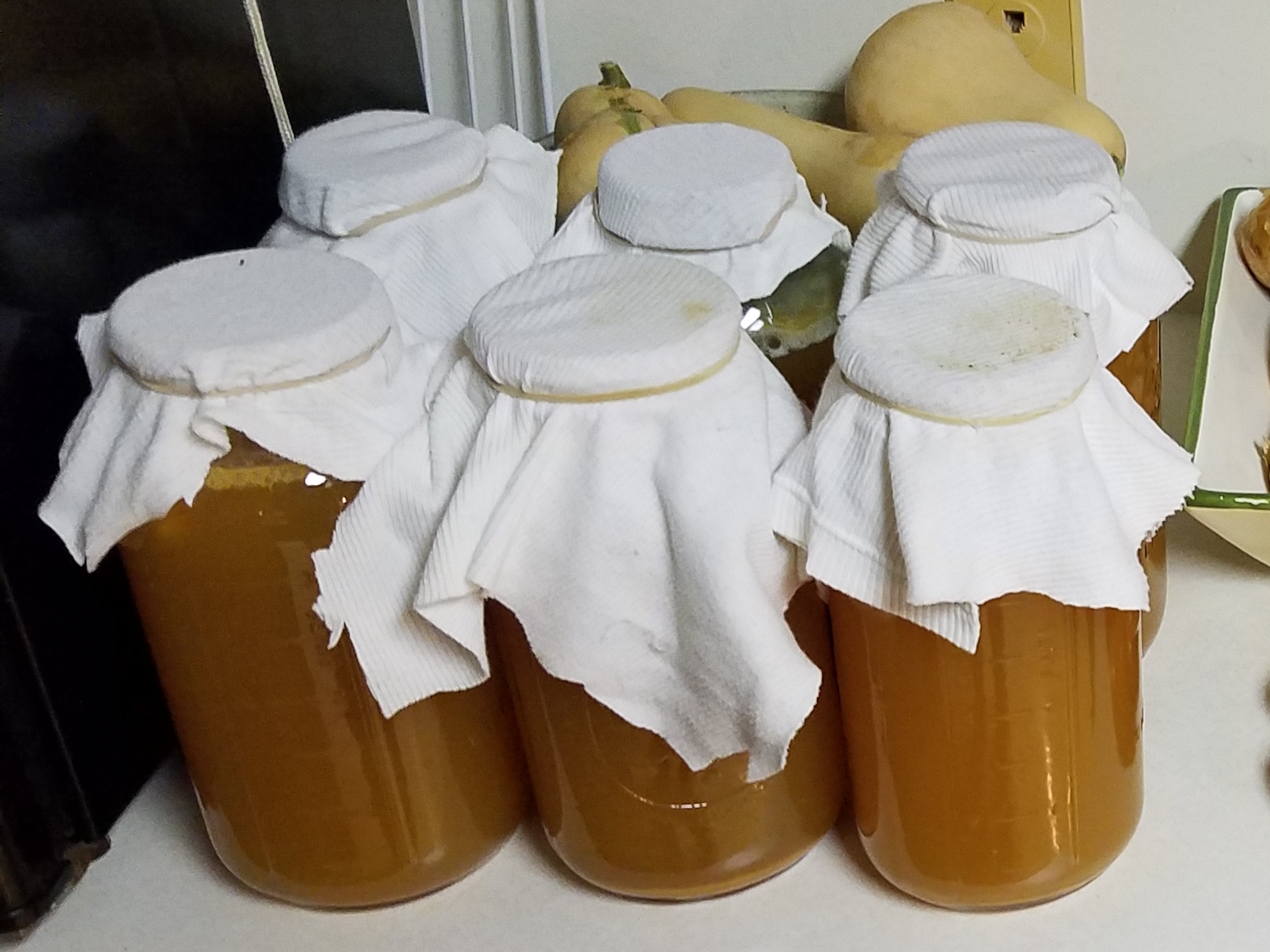
We are at peak apple cider sweetness this week. Gala and Honeycrisp apples make the cider sugar content highest of the year. A great time to make fermented products — cider vinegar for me. Since my apple trees did not produce this year, I bought four gallons and started vinegar on Saturday.
The mother of vinegar I use is traced back to the 19th Century. It’s a proven process and if one cares about flavor in a home kitchen, a necessary ingredient.
I haven’t written for a week, due mostly to my brother-in-law’s passing on Sept. 19. Jim and I started at the University of Iowa the same year, although I didn’t run into him after university until Jacque and I met. He married Jacque’s sister. A Celebration of Life is planned in October.
This year has been a challenge for many people I know. As our eyes turn toward the midterm elections we’re hoping to break the spell of this sour time. At least dilute it enough so it is more tolerable.
Another week of summer and already I’ve turned to fall.
This is Jonathan apple weekend at the orchard, marking halfway through the retail and u-pick season. When I think of a red apple, I think of Jonathan. We grow half a dozen varieties, including the heirloom. Except for the 89 degree ambient temperature yesterday it is beginning to feel like fall at the orchard.
At the end of my shift at the home, farm and auto supply store I moved pallets of water softening salt from the storage yard to the load out area for customers. Temperatures were moderate and the wind felt good as I traversed the length of the building in the lift truck. My two days a week schedule is facilitating the transition to retirement by providing some income and giving those days purpose outside the home.
Someday, maybe soon, all this will change.
September’s remaining days will be packed. Finishing garden, yard and kitchen work, and preparing for a winter of writing. After the general election, once the apple harvest is in, I hope for full days devoted to writing. I’m encouraged to work through the interim with positive results. Invested in the present, I’m looking toward a bright future.
I stopped at the Democratic headquarters in Davenport, Iowa in 1964, after paying the bill for my newspaper route, to stuff envelopes during Lyndon Johnson’s re-election campaign. Other campaign workers gave me a campaign button as a reward for helping out.
Johnson won that year in a landslide which became a formative expectation about Democratic politics. However, with the 1968 Democratic national convention in Chicago, Hubert H. Humphrey’s loss, and the election of Richard Nixon my attitude changed. I didn’t understand what happened.
Since then, Democrats have never had an easy go of it. It wasn’t until the 2006 election of Dave Loebsack to the U.S. Congress that I experienced electoral jubilation similar to 1964. I’d gone home after the polls closed to watch the returns on the T.V. When it became clear Loebsack had a chance to win I drove to the county seat and joined in the celebration as 30-year incumbent Jim Leach conceded the election to Loebsack. That election didn’t just happen. My work to replace Leach began the previous election cycle and was regular and persistent. The same can be said of the many local Democrats who helped Loebsack win. Winning demanded a lot of hard work.
There is talk of a Democratic wave in 2018 but I don’t know about that. Our politics seems broken. People have hardened against the 45th president — withdrawn from society. For some the egregious behavior of the president and his marauding troop of grifters has drawn them out to participate in campaigns. Many — I’d say most — want no part of it. People have not only hardened against Trump, but against politics in its many forms. Heaven knows there is plenty to do to live a life, much less raise a family in 2018 without politics. The political dynamics that gave us big wins in the past are irrevocably changed.
I volunteer a few hours a week with a local campaign and will do more beginning in September. Individual actions, while remaining important, are not enough. I attended an event with State Senator Joe Bolkcom of Iowa City where he said we should band together with like-minded people if we want to impact policy. The idea goes against the grain of rugged individualism that characterizes many of our lives. As Hillary Clinton said during the 2016 campaign, “We are stronger together.” What holds true for elections and public policy has broader application.
I don’t know what happened with LBJ’s re-election, except it had mostly to do with JFK’s assassination and continuing the hope he inspired in us as citizens. History has shown us the worm can turn on landslide elections. The re-election campaign of Ronald Reagan serves as the penultimate example, which begs the question, “what’s next?”
There haven’t been any landslides since Reagan and may not be again for a long time. With the rise of the internet, people are more connected than ever and this has served to harden us in silos the way intercontinental ballistic missiles were during the Cold War. There remains an untapped power in the electorate but no one has found the control room in the age of Trump. There’s no clear path to unleashing citizens to rein in the corruption. Just the hard work of building an electorate to vote for Democratic candidates.
As my summer of writing for Blog for Iowa closes, I’m thinking not only of the coming general election, but what’s next. You can’t repeat the past, as Nick Carraway said in The Great Gatsby. The problem with our politics is there are too many Jay Gatsbys and Tom and Daisy Buchanans obscuring the view of our potential. To achieve a progressive future, we have to be able to understand what it looks like. For that we need to step outside politics in the age of Trump for a while.
We turned on the T.V. for the first time in a couple of years to watch the weather report. A large storm moved across Iowa at a high rate of speed and despite home computers, mobile devices, and a community siren wailing in the distance, we felt we needed one more source of information.
The storm amounted to a heavy rain in the micro climate surrounding our neighborhood. It could have been worse.
I finished my summer work at Blog for Iowa. Two months, 52 posts, and a process for gathering information and putting up content our readers might find interesting. I first posted on the blog in February 2009 and made 993 posts since then. It has become part of my writer’s life with a different audience and more exposure. I plan to post more on Blog for Iowa although for now it’s time to turn the page.
I took two days of vacation from the home, farm and auto supply store this week, before the retail dash to the end of year holidays. The time off is compensated by additional work at the orchard. A month into apple season we’re gearing up for a big Labor Day weekend picking Honeycrisp apples — a community favorite. We’ve had a bowl of fresh apples sitting on the counter since I returned to work Aug. 4 for my sixth season.
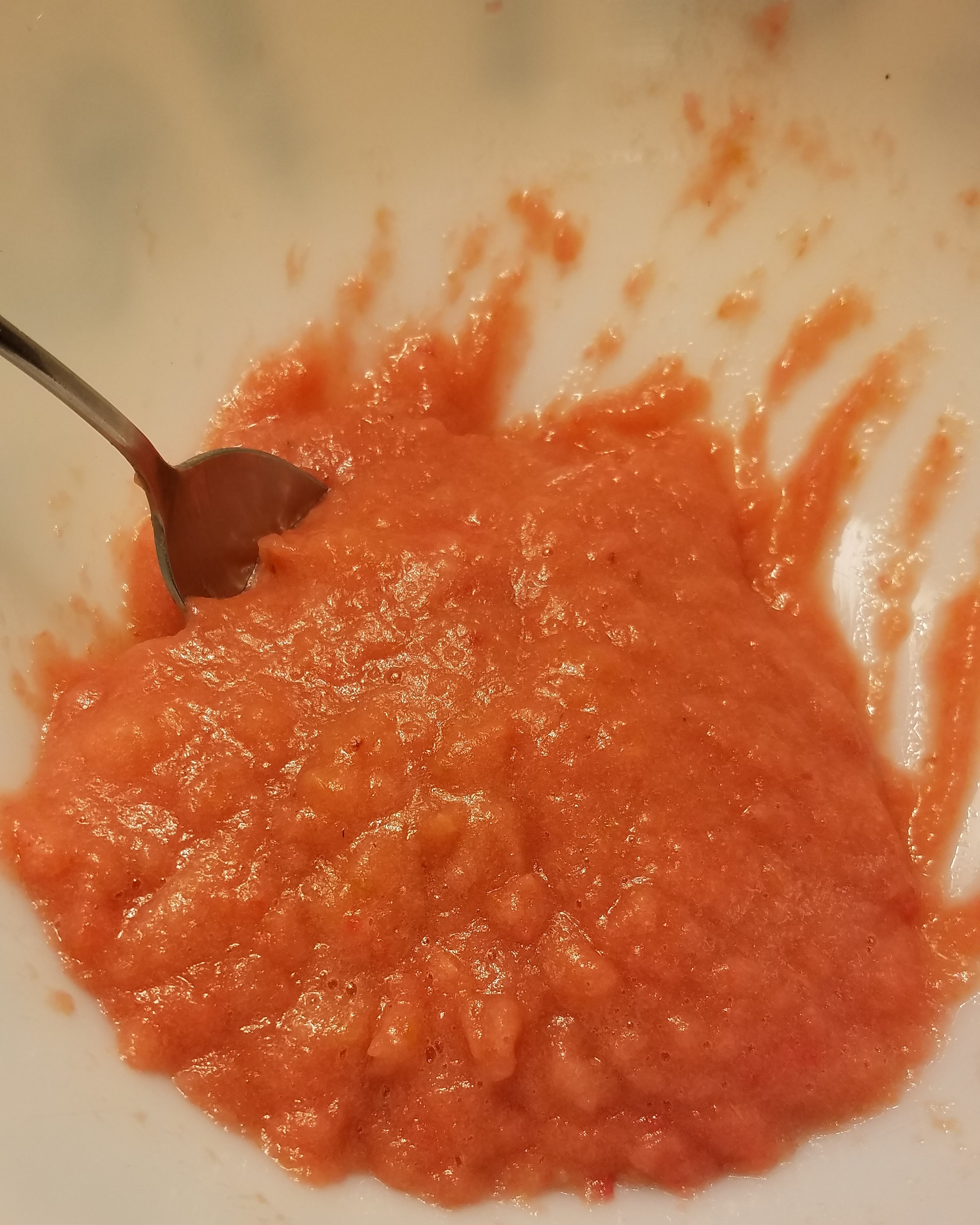
Yesterday, after my daily trip to the garden, I spent time in the kitchen processing vegetables. The bakery manager at the orchard gave me a bag of small, red hot peppers which are in the dehydrator. I roasted then processed a pan of jalapeno peppers producing eight ounces of hot pepper sauce to use in cooking. While I had the oven on I roasted eggplant and put it in the freezer. Cleaning, sorting, storing cucumbers and tomatoes — trying to stay on top of the harvest. There is a lot more processing to be done before summer ends.
These stories about daily life in Iowa are something. That I write them at all depends upon reasonably good health in a stable society. As much as society and our assumptions about it seem to be unraveling, it’s still here, providing a platform for imaginations. From here I can live a better life, even as I approach the end of my seventh decade. We can’t give in to entropy.
What excites me these days is an understanding that comes with letting go of the old arguments, the old apologies and explanations in life. I accept our human nature. Our intellect can see into the future, however, we can only live now.
I trade in narratives about what happened, about what could be. As I continue to write I seek something, resolution of past grievances perhaps. More importantly I seek a narrative that will carry us into tomorrow. A story about the greater good that remains possible in these turbulent times.
My list of today’s kitchen work has five things: zucchini bread, Serrano pepper salsa, process celery, make refrigerator pickles and Pecos pasta for supper. These will nourish me today and for a while. What I need isn’t food.
Occasionally I get glimpses of life as it could be. Paying attention to those is what makes life worth living. It’s nourishment for the unseen presence in our lives. Whether it’s God, my ancestors, or beams from the great beyond I can’t determine. In that sense, I plan to focus on these glimpses of life while telling my story. Hopefully I can provide something worth while for readers.
Thunderstorms have been rolling over all day bringing needed rain and a chance to get caught up indoors.
I’m less freaked out about the amount of food processing ahead. There have been more cucumbers than normal and I canned the last seven quarts of sweet pickles this morning. That will be the last, I promise. I also canned pints of tomatoes, apple sauce and a jar of the same pickles. While the water bath was bubbling I made a pot of chili for supper with fresh tomatoes and Vidalia onions. We’ll cook the remaining sweet corn of the season. My retirement has had that effect — things are less freaky.
Tomatoes are next, although the plan is to eat as many fresh as possible. With only two of us at home, we can’t eat fast enough to keep up with the growing and cooking so some will be canned and turned into tomato juice and sauce. I’m taking it in stride.
Two weekends ago the orchard hosted our back to school weekend. A balloon artist/magician entertained children, and of course there were apples to pick and eat. It was a chance for parents to have one more family fun event before school begins.
Getting ready to attend grade school was one of the great pleasures of life. Each fall began with friends, new clothes, new pencils, and lined, blank sheets of paper. I needed new clothes after growing out of mine. I was first born, so no hand-me-downs. The sensation of hope and opportunity to begin anew is memorable, unlike anything I experience these days. It was something. I hope today’s graders feel the same way.
A Dad walked into the sales barn at the orchard carrying a young child on a backpack and a two-year old on his shoulders. He looked very fit. After they picked apples the toddler helped me transfer apples from our basket to a bag. “Do you want to count them?” I asked. At two, children aren’t really sure what counting is, or how exactly to do it. He just pick up one apple after another and let me do the counting after one and two.
I can see why people return to work after retirement. When we’ve worked our whole lives in stressful situations there’s no slowing down. It will take work to settle in more comfortably after 50 years in the workforce. What I once thought were extra things — cooking, gardening, reading and writing — are now life’s main event. Not sure how I feel about that. I won’t be for a while.
August is the last month to cover editorial duties at Blog for Iowa. I’m not sure what will be next. We’re moving quickly through the procession of apples, Red Gravenstein, Sansa, Akane and Burgundy this week. We have family Friday events through the month of September, so with work at the home, farm and auto supply store time will fly — almost like I’m working again.
Not really. Living one day in society at a time as best I can, hopefully with enough money for seeds in the spring.
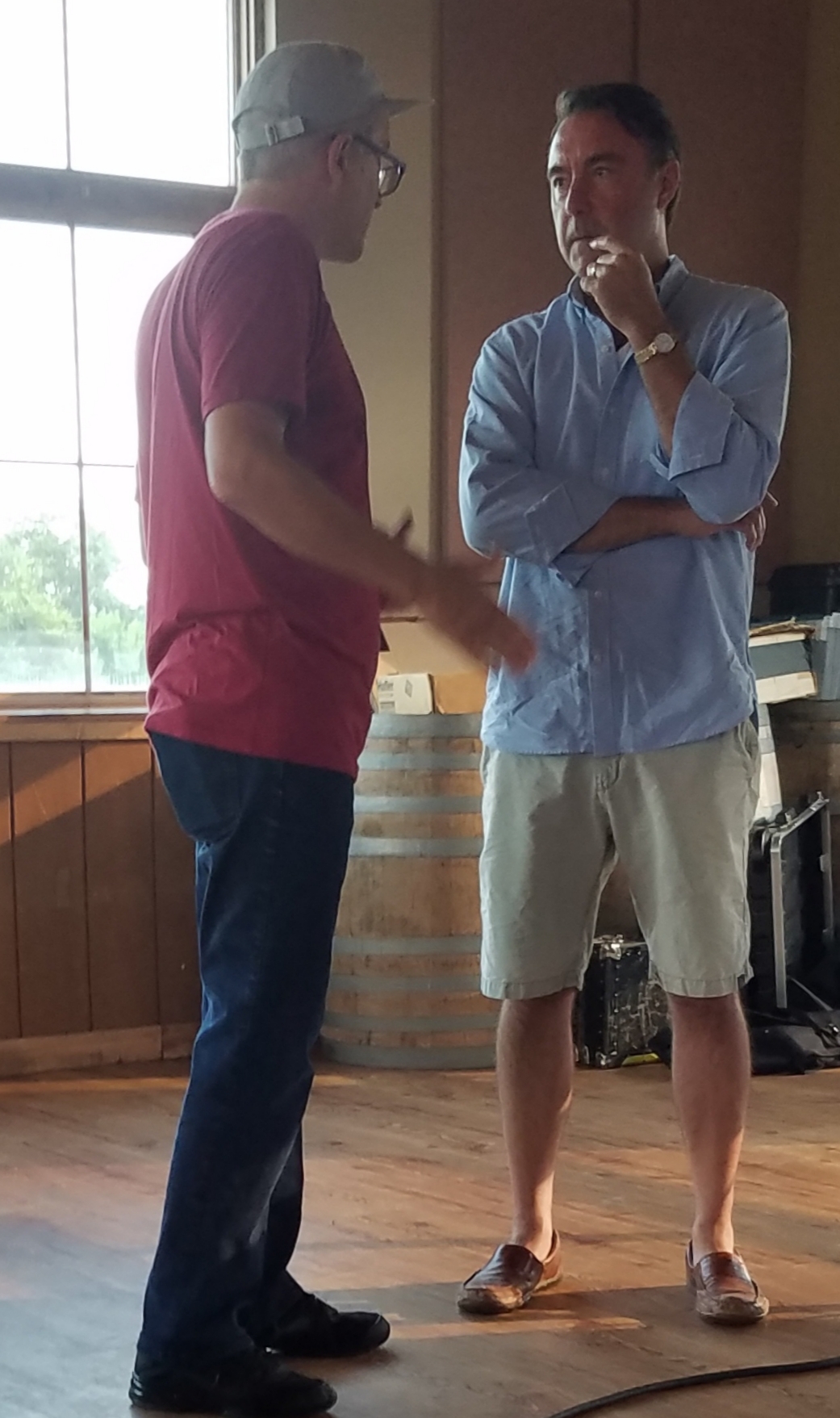
Ben Keiffer (L) and Dr. Christopher Peters chatting at Pints and Politics event, Thursday, Aug. 9, 2018
In an effort to get outside my comfort zone I tried something new. I went to a media event called “Pints and Politics” at the Cedar Ridge Winery and Distillery in Swisher Thursday after my shift at the home, farm and auto supply store.
The Cedar Rapids Gazette hosts Pints and Politics in which their columnists and reporters form a panel and answer audience questions. People drink alcoholic beverages and talk about politics. That is, most people. I drank about two pints of water before the show started and discussed a case with a lawyer I know who was there. I felt uncomfortable among the crowd of people mostly in my cohort of sixty somethings. Many seemed like they had retired with not enough to do. One presumes they read newspapers and listen to the radio. More than 200 people arrived for the forum.
Iowa Public Radio glommed on to Pints and Politics and makes an edition from the raw materials for their weekday program River to River with Ben Keiffer. Keiffer drank a beer and handed out a few Post-It pads with the Iowa Public Radio logo on them. These will be handy for dispatches to my spouse to be left on the refrigerator with information about our ongoing conflict with the spiders assuming control of our house. The Gazette, being a newspaper under duress in an on line world, had no such useful perquisites.
I attended the event Thursday and listened to the edited version on the radio Friday.
The panelists were Todd Dorman and Adam Sullivan, both columnists for the Gazette, and Joyce Russell, statehouse reporter for Iowa Public Radio. The two people I know best, Lynda Waddington and James Q. Lynch of the Gazette, while in adverts for the event, were both absent. I follow the work of the panelists. While Russell is a journalist, I’m not sure what one calls columnists. The word “pundit” was used several times during the event and the appellation will serve.
The event was rigged from the git-go to serve existing media narratives. Audience members submitted written questions to the panel and many more than could be asked were collected. This made the question editing process the driver in how the panel proceeded. The topics Keiffer chose were what’s already in the news: the Iowa Supreme Court hearing oral arguments on the state’s voter suppression law that day; President Trump’s recent visit to Peosta; and others. The radio version should be posted soon here. 2020 presidential candidate John Delaney announced completion of visits to all 99 Iowa Counties. Dorman suggested as a reward that his likeness be carved in butter and displayed at the Iowa State Fair.
I’m not sure what I expected and maybe that’s the point of trying something new. I did not know many attendees, and most of those I did were conservatives. Democratic Rep. Amy Nielsen was there. Cedar Ridge Winery and Distillery is in her district. Republican congressional candidate Dr. Christopher Peters was present working the crowd. Once Peters found out Rep. Rod Blum declined an opportunity to appear on River to River he made clear to Keiffer he had no reservations about appearing on the program. There was a table full of Libertarians, about proportional in number to the percentage of the general population. The rest of the audience leaned Democratic.
Adam Sullivan stood out on the panel simply because he talked so much. He served as a useful foil for more Democratic audience members to express their belief in status quo politics driven by media narratives. Russell is a professional, as are they all. The three of them all tried to get along. In the background I might have heard a “both sides” or two, but maybe that is confirmation bias whispering in my ear.
The most significant media narrative related to how elections are decided. I posted this on twitter Friday while listening to the radio.
Panelists agreed with Dorman we are in an election where issues not that important. “Persuasion stuff is kind of dead,” he said. Rile up the base on both sides. Get who you can of whoever is left. I’m not sure that’s the case, although here’s an example of media that believe it.
I want to emphasize 1. I’ve heard this before during recent election cycles, and 2. based on my experience this cycle, I don’t believe for one minute this is how the 2018 midterms are rolling out. Repeating this narrative is not as important as the fact people believe it. Based on reports I get from the field, the narrative is bankrupt and the panelists didn’t seem to be aware. That disconnect is important.
While attendees passed a pleasant two hours, I was decidedly unsettled by the experience. As I drove east along 120th Street in my 21 year old vehicle, the sun was moving toward the horizon. I turned north at the Ely Blacktop to get an ice cream at Dan and Debbie’s Creamery before heading south and home. What unsettled me was not the media personalities, or the people in Swisher. It was knowledge of the amount of work to overcome the tainted media narratives which were promulgated.
I get it that news writers need a hook and consumers of news need to understand it. A lot of fish were caught during Pints and Politics but the pool wasn’t very deep. I’m thankful for a new experience, but I doubt I’ll be returning to a media event like this.
Almost no one I know outside of politics is talking about the Nov. 6 election. That seems typical… and okay.
Most of us try to be organized. At least we pretend to be. We seek to live lives of logic, reason and decency. We’ll organize to figure out for whom to vote later, maybe around Thanksgiving.
Not so fast! It will be too late on Thanksgiving.
Here’s a head scratcher for logic fans from the Environmental Protection Agency. In our relentless pursuit to Make America Great Again, the administration wants to bring back asbestos. Yes that asbestos, the known carcinogen banned in 55 countries. It may soon be available again in consumer products near you.
Our president has a theory about asbestos regulation. In his 1997 book, Art of the Comeback, he explicitly said asbestos bans are a conspiracy “led by the mob, because it was often mob-related companies that would do the asbestos removal.” What kind of theory is that? It is a conspiracy theory.
Ask a public health professional or physician what they think about deregulating asbestos. While you’re at it, make your plan to vote on Nov. 6.
We planted a few tomatoes near the duplex we rented in Iowa City the spring after the wedding. As we lived our lives, raised our daughter, and sought economic stability, we either planted a garden or harvested what was there. When we owned a home, first in Merrillville, Indiana, and then in Big Grove, the garden got bigger and I became a better gardener. There is evidence in this year’s abundant harvest.
It didn’t come naturally even though gardening is elemental. The brief narrative of my gardener’s life.
As I step back from the working world to focus on home life what seems clear is society is moving at a startling pace toward disaster. Our industrial society consumes everything useful in nature, leaving us with foul air and water, depleted soil, polluted and acidified oceans devoid of marine life, and a warming world with all the consequences that yields. The earth will survive as it has. We people seem to be on the downside of our prominence. In multiple ways these are end times.
The Slovenian philosopher Slavoj Žižek asserts there is a chance for a new beginning in the terminal crisis in which human society finds ourselves. His arguments are not convincing to us regular humans.
What do we do?
What we have done is argue about approaches. Should we have a carbon tax? Should we ban abortion? Should we ban plastic straws? Is wind, sun, nuclear or natural gas a better source of electricity? Should we cut taxes and reduce government’s role in our lives? Should we become socialists, or even worse, democratic socialists? Should we let go of Hillary’s emails? Should we all just try to get along? Approaches don’t work and we should let go of them all.
The better question to ask is what story do we want to tell? As others have said, notably author Joan Didion, “We tell ourselves stories in order to live.” What narrative will take us out of the current crisis?
For me it’s “I’m becoming a better gardener.”
Regardless of pending social collapse we must go on with our lives. Partly to keep our sanity, and partly — importantly — to take steps toward a more livable world. We will never go back to the Iowa of 1832 before the great division and clear cutting began. What we can do is plant the seeds of a better life where we live. Our forebears left us a disaster. What can we do about it? Make the best of it with forward-looking narratives for the next generations.
I get it that many people don’t have means to do more than survive. When I see the abundance of our garden it’s hard to believe people go without a meal. Yet they do, in large numbers. We can feed a couple of them, but is that enough? It’s something.
The essence of the narrative is the verb to become. “I seem to be a verb,” R. Buckminster Fuller wrote. I seem to be that verb. We are not predestined to anything except our human span of nine decades, and that only if we are lucky. We live in an imperfect society that beckons engagement. I’m not sure working toward perfection is as good as doing something positive is. Knowing what to do requires a better narrative. One that hasn’t been invented for the 21st Century and beyond.
I plan to work on a better narrative, although garden in end times doesn’t seem too bad.

 My first election campaign spoiled me.

 Journey Home
You must be logged in to post a comment.