Categories
Environment

Making Climate Change Personal

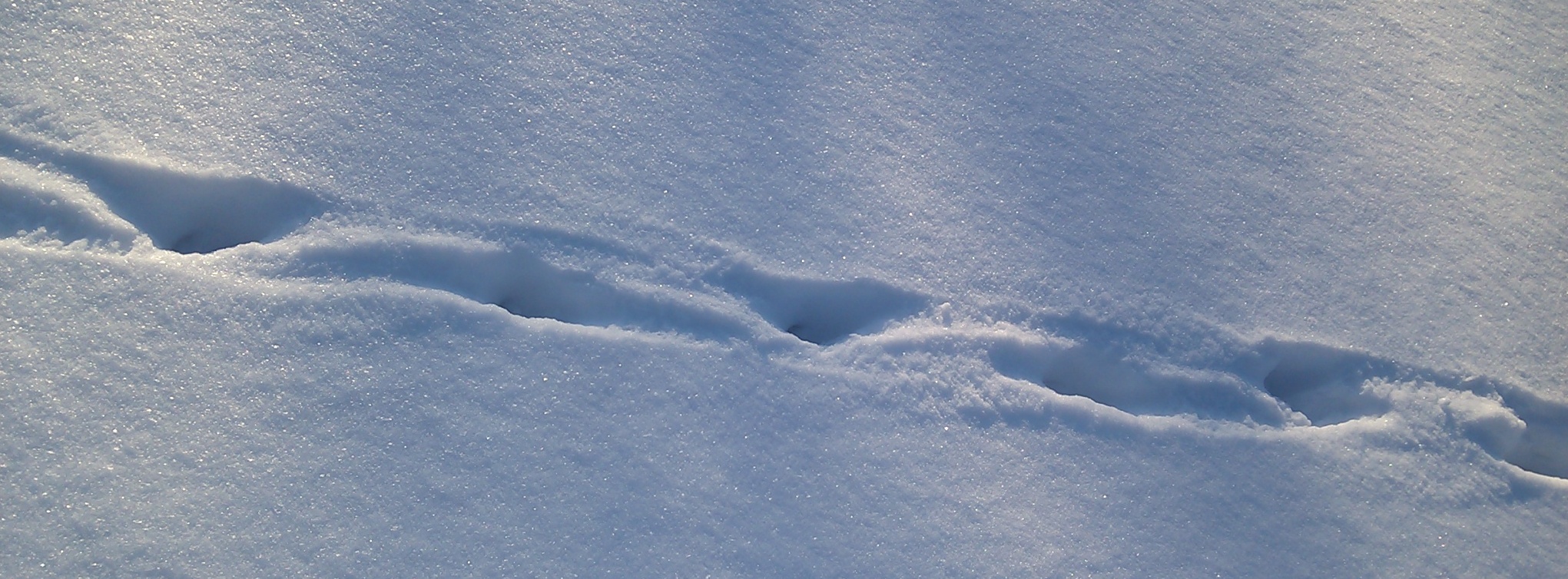
Animal Tracks
Animal Tracks

“We could use some of that global warming,” a truck driver told me.

It was a joke. The ambient temperature was in the low teens and we both work outside as part of our jobs. If the weather were warmer our jobs would be easier. I thought it was funny.

“I don’t really believe in global warming,” he said after a pause.

“It doesn’t really matter if you do,” I replied. “Like it or not our climate is changing because of man-made global warming. It affects us even when it is cold.”

He seemed skeptical. Given a recent study published in the Proceedings of the National Academy of Sciences journal I should have expected his response.

Our perception of climate change and willingness to accept scientific evidence about it is shaped by what we experience, according to Scott Waldman, writing in Scientific American.

That means if one lives where weather is cooler than average, he is more likely to be a climate change skeptic, deferring to personal experience as a guide. If one lives where it is warmer than average, she is more likely to accept the science of climate change, also deferring to personal experience as a guide.

“When personal experience and expert opinion don’t align on a topic that’s not critical to an individual’s well-being, they’re going to go with their gut rather than what the expert tells them,” Robert Kaufmann, the study’s lead author said.

The article’s title is a mouthful — “Spatial heterogeneity of climate change as an experiential basis for skepticism.” Here’s the crux:

Kaufmann said it’s human nature to trust one’s own experience over scientific evidence or political wisdom.

“Unless it really affects my everyday life, I’m not going to spend time studying this issue, and I’m not necessarily going to believe scientists either, especially now that experts are held in such ill repute, but I’m going to make up my mind based on how I can see and feel climate change,” he said. “For many people, that is record-high and record-low temperatures.”

Such attitudes notwithstanding almost two-thirds of voters across all parties want the Trump administration and the Congress to do more to address global warming, according to Kaufmann.

I appreciate a good climate change joke in the middle of winter because it presents an opportunity to address the fact climate is changing because of human-made global warming, and there is scientific evidence to support it. The conversation is something we should have more often, yet people avoid talking about climate change.

“Most Americans say global warming is personally important to them, but don’t talk or hear about it much,” Edward Maibach and others from the Yale Program on Climate Change Communication wrote.

In “Is there a Climate ‘Spiral of Silence’ in America?” the authors found “more than half of those who are interested in global warming or think the issue is important “rarely” or “never” talk about it with family and friends (57 percent and 54 percent respectively).” Fewer than half of Americans say they hear about global warming in the media monthly or more, and only one in five Americans hear people they know talk about global warming at least once a month according to the article.

It’s pretty quiet out there regarding discussion of global warming and climate change.

“The future of the planetary conditions on which human civilization depends are reliant now more than ever upon scientists and innovators, businesses and civil society, and our collective efforts to accelerate the implementation of the solutions to the climate crisis that are already available and cost-effective,” former Vice President and Nobel Prize winner Al Gore wrote in Scientific American.

If that’s the case, and no one is talking about climate change, how can we create meaningful action to mitigate the effects global warming is having on us?

The good news is technological solutions to the problem are working as the price of renewable energy approaches parity with fossil fuels. In some markets, solar generation of electricity is cheaper than with fossil fuels. If technology will lead the business community to reduce the greenhouse gas emissions contributing to global warming, we are part of the way there. Technology alone won’t drive the change we need. To find political will for action, every voter should engage in the issues. What can we do?

For my part I’m going appreciate the value of a good climate change joke, and use them to break the ice on conversations about the need to act on climate. People may agree or disagree, but talking about global warming and climate change, and the science behind them, is as important as laughter on a chilly day, or a cold drink during a drought.

Categories
Environment Kitchen Garden Sustainability Work Life Writing

On Our Own into 2017

Western Sky at Sunrise

In this final 2016 post it was easier than last year to outline my writing plans.

The work I do to pay bills and support my writing has been tough mentally and physically. To cope with an aging frame and occasionally distracted mind I have had to focus. That meant planning, and then with discipline, working the plan. 2016 was a mixed bag and I expect to do better in 2017.

I seldom post about my personal life and family — at least directly. That leaves issues I confront every day as grist for the keyboard.

There are four broad, intersecting topics about which I’ll write during the coming year.

Low Wage Work and Working Poor

Not only do I earn low wages in all of my jobs, I meet a lot of people who do too. During the last four years I developed a framework for viewing how people sustain their lives without a big job or high salary. A focus on raising the minimum wage, wage theft or immigration status may be timely but most of what I read misses the mark. Stories fail to recognize the complexity with which low wage workers piece together a life. This subject needs more exposition and readers can expect it here.

Food Cultivation, Processing and Cooking

Living on low wages includes knowledge of how to grow, process and prepare some of our own food. My frequent posts on this topic have been intended to tell a story about how the work gets done. I plan to grow another big garden in 2017 and perform the same seasonal farm work. I sent off a membership form to Practical Farmers of Iowa this morning and expect my experience with that group to contribute to food related writing.

Nuclear Abolition

I renewed my membership in Physicians for Social Responsibility. We have a global footprint and as a member I have access to almost everything going on world-wide to abolish one of the gravest threats to human life. The president elect made some startling statements about nuclear weapons this month. The subject should hold interest and perhaps offer an opportunity to get something done toward abolition. The United Nations voted to work toward a new treaty to abolish nuclear weapons. They did so without the support of the United States or any of the other nuclear armed states. In that tension alone there should be a number of posts.

Global Warming and Climate Change

My framework has been membership in the Climate Reality Leadership Corps. Like with Physicians for Social Responsibility we have a global footprint with thousands of Climate Leaders. We have access to the latest information about climate change and its solutions. The key dynamic, however, is how work toward accepting the reality of climate change occurs on a local level. What researchers are finding is skepticism about the science of climate change originates in the personal experience of people where they live. If the weather is very hot and dry they tend to believe in climate change. If it is cold, they tend not to believe. Thing is, climate change and human contributions to it are not a belief system as much as they are facts. Global warming and climate change already affect us whether we believe or doubt.

So that’s the plan. While you are here, click on the tag cloud to find something else to read. I hope you will return to read more in 2017.

Categories
Environment

Letter to the Solon Economist

the-climate-reality-project-logoSome of us aren’t doing any soul searching after the 2016 general election.

Democrats lost, and as a Democrat that means something to me personally. Yet I know what I stand for and so do my friends and family.

Nothing about our beliefs was changed by the election of Donald Trump. If anything, we plan to work harder to advocate for what we believe is just.

Last week the president-elect and his daughter met with former Vice President Al Gore. Gore’s statement after the meeting was important as it pertains to mitigating the negative impact of man-made global warming and climate change on humans. It also applies more generally.

“Despair is just another form of denial. There is no time to despair. We don’t have time to lick our wounds, to hope for a different election outcome,” Gore wrote. “We have to win this struggle and we will win it; the only question is how fast we win.”

I share Gore’s optimism and so should people who care about leaving a better world for our descendants.

Categories
Environment

24 Hours of Reality — 2016 Edition


Who knows what President Trump’s impact on the environment will be?

To hold ground environmental advocates have claimed since the Nixon administration, we can’t ignore the renewed challenges presented by the mogul’s rise to power.

We don’t know what Trump will do, however, environmental advocates have been stroking against the current all along. The stakes are too high to give up now, nor will we.

We are stronger together so I plan to join with my colleagues at The Climate Reality Project for mutual support and direction. A perfectly timed kickoff is the 24 Hours of Reality webcast scheduled Dec. 5 and 6. I will tune in for at least part of it and encourage readers to do likewise.

Here’s what our chairman had to say after the election:

In every great struggle humanity has undertaken, the march towards progress has included both successes and setbacks. And the struggle to protect and save the Earth’s ecological system is no exception.

Today, I am as optimistic and resolved as ever that we will solve the climate crisis. Our collective efforts are dependent not on politics or ideology — or elections — but on our commitment to each other, to the health of our planet and to a sustainable future for all.
We must — and will — continue to find hope and joy in our work that will define humanity for generations.

Last night President-elect Trump said he wanted to be a president for all Americans. In that spirit, I hope that he will work with the overwhelming majority of us who believe that the climate crisis is the greatest threat we face as a nation.

I wish him well in these efforts and intend to do everything I can to work with him and his administration to ensure that our nation remains a leader in the global effort to meet this challenge. Moreover, there is reason to believe that it is not naive or Pollyannaish to hope for more than what we fear.

We have already made great strides to solve the climate crisis all around the world. The work that has been done by civil society, businesses, investors, and governments at all levels will continue to be driven by the fact that solutions to the climate crisis are not just vital to our planet, but are vital to our economy. The market forces driving the transition to a sustainable economy simply will not be slowed.

Less than a year ago, when the historic Paris Agreement was reached, we knew that our journey was only beginning. We knew this work would not be easy – indeed, more would be required. Now we know that our work must be redoubled.

Today, without regard to last night’s outcome, we must turn our focus to making the promises of the Paris Agreement a reality by embracing the forces that are already working to grow our economy and transform our energy future.

A sustainable future is in sight – but we cannot take it for granted. We must fight for the future we all believe in. Now, more than ever, our planet needs us – and I’m inspired by the knowledge that we’ll take the path forward together.

Al Gore
Founder and Chairman
The Climate Reality Project

Closer to home, I’ve long followed State Senator Rob Hogg who is an advocate for protecting the environment and a member of The Climate Reality Project. Recently elected minority leader in the Iowa Senate, Hogg offered this advice:

Continue to speak up with elected officials. A Doubting Thomas today can be a leader for climate action tomorrow. Remind Republicans of their successes including the Clean Air Act, the Montreal Protocol, and solar energy investment tax credits. Do not let them off the hook by ignoring them.

Midway through my seventh decade of life it is time to get more active. I am ready for what lies ahead and the road forward.

Categories
Environment

Evacuation of Cedar Rapids Under Way

Blah
Extreme One-Day Precipitation Events in the Contiguous 48 States. Bars = years; line = 9-year trend. Image Credit: U.S. EPA

The headline from this morning’s Des Moines Register was that residents of 5,000 Cedar Rapids homes were asked to evacuate in advance of the flood crest predicted to arrive Tuesday morning. The height of the crest has been revised downward to 23 feet, however, damage is expected to be severe.

Cedar Rapids fire officials plan to ask for the names of next of kin of residents who refuse to leave the flood zone.

City officials say government has been preparing for a major flood since the record-breaking 2008 event.

There is bravura in the execution of the local preparations indicating the city knows how to mobilize to prevent anticipated damage — better than it did in 2008. It is always good to see people coming together in times of natural disaster to help each other.

At the same time, almost everyone in government, in news media and in other accounts of the disaster fail to consider the root causes of the heavy precipitation events driving record flooding. The world continues to annually dump more than 38 billion tons of carbon dioxide into the atmosphere like it was an open sewer. That’s 2.4 million pounds per second.

News media and politicians may be enamored of the story of human resistance to the forces of nature, but failure to address the root cause of increased levels of carbon dioxide and other greenhouse gases in the atmosphere through proper governance should be unacceptable.

Government plays a significant role in mitigating the effects of climate change. Perhaps it’s time we changed the current crop of politicians who fill elected office seats from those who are cheer leaders for reaction to natural disasters to those who will take action to prevent them.

Without action, the chart above from the U.S. Environmental Protection Agency will continue to map a direction that puts people and assets in jeopardy.

We should know better and do something about global warming and climate change as a society.

Godspeed Cedar Rapids. May your elected officials who don’t already do so perceive tomorrow’s flooding as a wake-up call to action.

Categories
Environment Living in Society Social Commentary Sustainability

Protect Environment; Stop Nuclear Weapons

Paul Deaton
Paul Deaton

(Editor’s Note: When this guest column ran in the Cedar Rapids Gazette on Wednesday, Sept. 21, its abstract nature became real as heavy precipitation events pummeled Butler County and other parts of northeastern Iowa, disrupting lives there and downstream. Living in an environment where rain damages crops instead of nurturing them; where rivers jump their banks, close schools and displace people; and where Cedar Rapids must protect the city from record amounts of floodwater multiple times in eight years, something’s wrong. We must take action that includes electing a government that will address the causes of global warming and nuclear proliferation, not just deal with the actuality we have created).

Protect environment; stop nuclear weapons
By Paul Deaton

Guest column for the Cedar Rapids Gazette Sept. 21, 2016.
Reprinted with permission of the author

If we accept the premise articulated by Hillary Clinton’s presidential campaign, that we are stronger together, there is a lot in society requiring our collective attention.

There are no lone wolves in human society, although a number of people want to get away from the pack. Can we blame them? Being stronger together is a fundamental characteristic of Homo Sapiens. It’s what we do as a species.

What should we be working on?

It is hard to avoid the primacy of following the golden rule. We should be applying the golden rule, better than we have been, to everything we already do. This is basic.

Two other issues call for our attention, the threat of nuclear weapons, and mitigating the effects of climate change.

Today, on very short notice, nuclear powers can unleash a holocaust ending life as we know it. Nuclear war is not talked about much in the 21st Century; however the threat is as real today as it was when President Truman authorized the Hiroshima and Nagasaki nuclear bombings. The United States should take the lead in eliminating nuclear weapons. We need a transformational change in our nuclear policy that recognizes these weapons are the gravest threat to our security and must be banned and abolished.

We are wrecking our environment and should stop. Just 90 companies are to blame for most climate change, taking carbon out of the ground and putting it in the atmosphere, geographer Richard Heede said. If that’s the case, the move to eliminate fossil fuel use can’t come quick enough. These companies should be targeted for regulation by governments. Companies say they are not to blame for the demand from billions of consumers that drives fossil fuel use. Technologies exist to eliminate fossil fuels, and we should adopt them with haste. One purpose of government is to act as a voice for people who have no voice. Regulating business to protect our lives in the environment would serve that purpose.

After the 2016 election these issues will remain. The first can gain wide support easily. It is time the other two gain parity.

~ Paul Deaton retired from CRST Logistics in 2009.

Categories
Environment

Autumn Begins with a Flood

Flooded Wetland
Flooded Wetland

There was a lot to make one cranky as summer ended yesterday, including the weather.

Extremely heavy rains are flooding parts of Iowa and the impact will soon be felt downstream.

The Cedar River is expected to crest at 24.1 feet next week in Cedar Rapids, Iowa, the highest level after the record 31.12 foot crest on June 13, 2008.

“We have four days to get ready, and now is the time to start,” Mayor Ron Corbett said Thursday.

We’ve had a lot more time than that to get ready.

During Al Gore’s Climate Reality Leadership Corps Training, conducted in Cedar Rapids in May 2015, Mayor Corbett made a presentation about the 2008 Cedar River flooding, how it impacted Cedar Rapids, and what actions were taken and being considered to mitigate damage from potential future floods. The next week will determine whether the plans and discussions were enough to prevent serious damage.

Senator Joni Ernst has been pushing the U.S. Army Corps of Engineers to expedite completion of the Cedar Rapids Flood Control Project, recently in the Water Resources Development Act.

“This legislation includes my work to direct the Army Corps of Engineers to expedite the completion of the Cedar Rapids flood control project,” Ernst wrote in a Sept. 15 press release. “The provision emphasizes to the Army Corps of Engineers that Congress wants this project to remain a priority. I will continue working to ensure the Army Corps of Engineers understands the great need for this long-standing project to be completed in a timely and efficient manner.”

These efforts seem well intentioned, but too little, too late.

The connection between this flood and global warming is clear. When the atmosphere is warmer, its capacity to store water vapor increases. When it does rain, it can do so in heavy precipitation events in which a large amount of rain falls in a brief amount of time. The frequency and intensity of heavy precipitation events has increased since World War II and that appears to be what happened in northeastern Iowa over the last few days.

Here’s an excerpt from a WHO-TV news article about flash flooding in Butler County. It tells the story:

BUTLER COUNTY, Iowa — Storms in northern and northeastern Iowa overnight caused some damage as they spawned tornadoes and dropped heavy rain – up to 10 inches – in some areas.

“We expect the crest this evening what we’re being told around 7 p.m. probably water levels similar to 2008 or more so,” said Jason Johnson, Butler County Sheriff.

Flooding from the Shell Rock River has cancelled classes in the North Butler School District for Thursday and many students gathered at the high school to help fill sandbags. Highway 14 on the way to Charles City is impassable because of water over the road.

Butler County Sheriff  Johnson says there isn’t a widespread evacuation in Greene but some residents are moving to higher ground.

In Floyd County, 7.55” of rain was reported and Charles City saw 6.35”. The Little Cedar River is at moderate flood stage at Nashua and near Ionia. The rainfall total reported for Ionia is 6.24″.

Work will remedy the crankiness of summer’s end. One didn’t expect it to be sand bagging levies, homes and businesses to prevent damage from what is projected to be the second worst flood in Cedar Rapids history. It will get us through the weekend.

The newest flood begs the question of what’s next to mitigate the damage from future flooding? Government involvement in a solution is necessary but it must be implemented faster than it has been. We also have to connect the dots between our personal actions, global warming and climate change more than we have.

For now, we’ll just have to deal with the existential reality of the flood, something I recall doing since the 1960s. It’s a way of sustaining our lives in a turbulent world, but we can do better.

Categories
Environment

What’s After Paris?

Gore ParisLast week, Al Gore reflected on the ten years since he founded The Climate Reality Project. Following is an excerpt from an email he sent to the Climate Reality Leaders he trained.

Ten years ago, I trained the first group of Climate Reality Leaders in my barn in Carthage, Tenn. I asked them to join me in spreading the word about the urgency of the climate crisis, and I was impressed by the commitment and passion they demonstrated. I’m even more impressed now as the work they’ve done in their own communities and beyond has helped to spark a global movement for action on climate change.

In the decade since that first group came together, I’ve trained more than 10,000 Climate Reality Leaders who are just as committed to making the world a better place for future generations. The Climate Reality Leadership Corps is active in more than 130 countries around the world and represents people from all backgrounds and walks of life. I’ve enjoyed working alongside teachers, scientists, community leaders, business owners, students, and so many others who all share a dedication to promoting solutions to the climate crisis.

Ten years of concerted action by the Climate Reality Leadership Corps came together last year when 195 countries committed to working together to reduce greenhouse gas emissions planet-wide as part of the Paris Agreement. Now, it’s time for us to continue our work together and push countries to strengthen and implement their commitments so we can make the promise of Paris a reality.

Even as we look to the future, I want to make sure we take a moment to appreciate the last 10 years and all of the amazing work that you’ve done to help share the truth about the science and solutions of climate change with your friends, family members, colleagues, and everyone else.

I want to thank each and every one of you for what you’ve done in your own communities to bring attention to the most important issue of our time.

It is easier to play a role in the global effort to mitigate the causes of global warming and climate change when thousands of others are doing the same thing, each in their own way. That’s been my personal benefit from The Climate Reality Project.

I joined in Chicago (August 2013) and have no regrets. I learned the story behind Gore’s film An Inconvenient Truth, and the science behind it. Gore presented a broad mix of information about what is happening in our environment because of global warming and how it impacts communities.

Since then, I’ve presented my story to individuals and groups in the area and seek opportunities to do more. I served as a mentor at the Cedar Rapids training last year and have written about the need to act on climate change in my blogs, and in letters to the editor of our local newspaper. When I worked as a freelance correspondent, climate change informed my world-view and was a context in which I framed stories whether they were about farming or forestry, the school board or city council, or about new business openings or individual achievements.

Talking about global warming and climate change has become part of my life.

If the Paris agreement was the culmination of ten years of work, as Gore said it was, the work is not finished.

With a sharp focus on identifying the impact on our climate of CO2 emissions from burning fossil fuels, Gore and many allies made the point about seeking alternatives. As solar and wind-generated electricity reach price parity with fossil fuels (and they are doing so faster than anyone imagined) the coal industry is in disarray and nuclear power is waning.

There is a cloud on the hopeful horizon of renewable energy. Buoyed by exploration and discovery of oil and shale gas reserves, companies like British Petroleum, once green washing us with their interest in renewables, divested their interests in solar and wind energy this decade to focus on oil and gas.

I predict declining prices of solar power will help it dominate the future of municipal and regional electricity generation. Already companies like Central Iowa Power Company (CIPCO) are changing their tune. Not so long ago they were promoting nuclear power at their annual shareholder’s meeting. Today, they are building solar arrays.

If there is a blind spot in Gore’s laser focus on burning fossil fuels it is the impact of greenhouse gas emissions from other sources. He acknowledges them, but they have not taken the spotlight. There’s work to be done regarding manufacturing, agriculture, mining and other aspects of our industrialized global economy.

Every time I talk to an Iowa farmer Gore’s work can be heard in the conversation. Not so much from me, but from farmers. They’ll tell you the hydrology cycle seems different even if they dislike Al Gore and don’t acknowledge it is related to global warming. They don’t have to and I don’t need ratification of my own beliefs.

Like so many others I am focused on the work of mitigating the causes of climate change. You may not know it, but it is baked into everything I do.

What have you done lately to create a better environment for all of us to enjoy?

~ Written for Blog for Iowa
Categories
Environment Home Life Kitchen Garden

New Saturday Night

Audio Cassettes
Audio Cassettes

Music filled the Saturday afternoon gap left by Garrison Keillor’s retirement.

Not radio, but music recorded on audio cassette tapes.

It is amazing there is even a player in the house. (There are two that work). The sound quality of this outdated technology was surprisingly good.

While processing vegetables into meals and storage items, I listened to Shaka Zulu and Journey of Dreams by Ladysmith Black Mambazo, and Graceland and The Rhythm of the Saints by Paul Simon. I hit the pause button when I left the room so the tape wouldn’t run out without hearing it.

When Jacque returned home from work we had our first sweet corn meal of the season: steamed green beans and corn on the cob. As they ripen, tomatoes will replace green beans. There is nothing like seasonal Iowa sweet corn. I made a cucumber-tomato salad as accompaniment using a recipe found by googling on-hand ingredients.

The Saturday kitchen produced a gallon of vegetable soup, refried bean dip, daikon radish refrigerator pickles and sweet pickles made with turmeric. Outside was hot and humid although nowhere near as oppressive as the summer of 2012 when we had record drought.

On Friday Donnelle Eller posted an article about corn sweat at the Des Moines Register. Corn and soybean plants, which cover Iowa farmland, transpire moisture. During pollination and ear formation as much as 4,000 gallons of water per acre of corn is released into the atmosphere daily, making it feel humid. There were a number of articles about corn sweat in the media last week.

What makes this year different is not corn sweat. The first half of 2016 was Earth’s hottest year on record. This impacts the hydrology cycle, change in which is a primary manifestation of climate change. With global warming the atmosphere can hold more moisture until a precipitating event makes a rainstorm. It is more often a gully-washer.

The high winds and heavy, short-duration rain have become more frequent in recent years. This week a storm caused significant damage to the garden. In addition to losing the Golden Delicious apple tree, the cucumber towers blew over uprooting about half of the pickling cucumber plants. The Serrano pepper plants blew over, breaking the stalk of one near the ground. The high deer fence blew down and deer got into the kale and pepper patch by jumping the low fence. The cherry tomato plants blew over, however I was able to upright and re-stake them without damage.

Climate change is real, it is happening now. It is time to act to mitigate the effects of global warming.

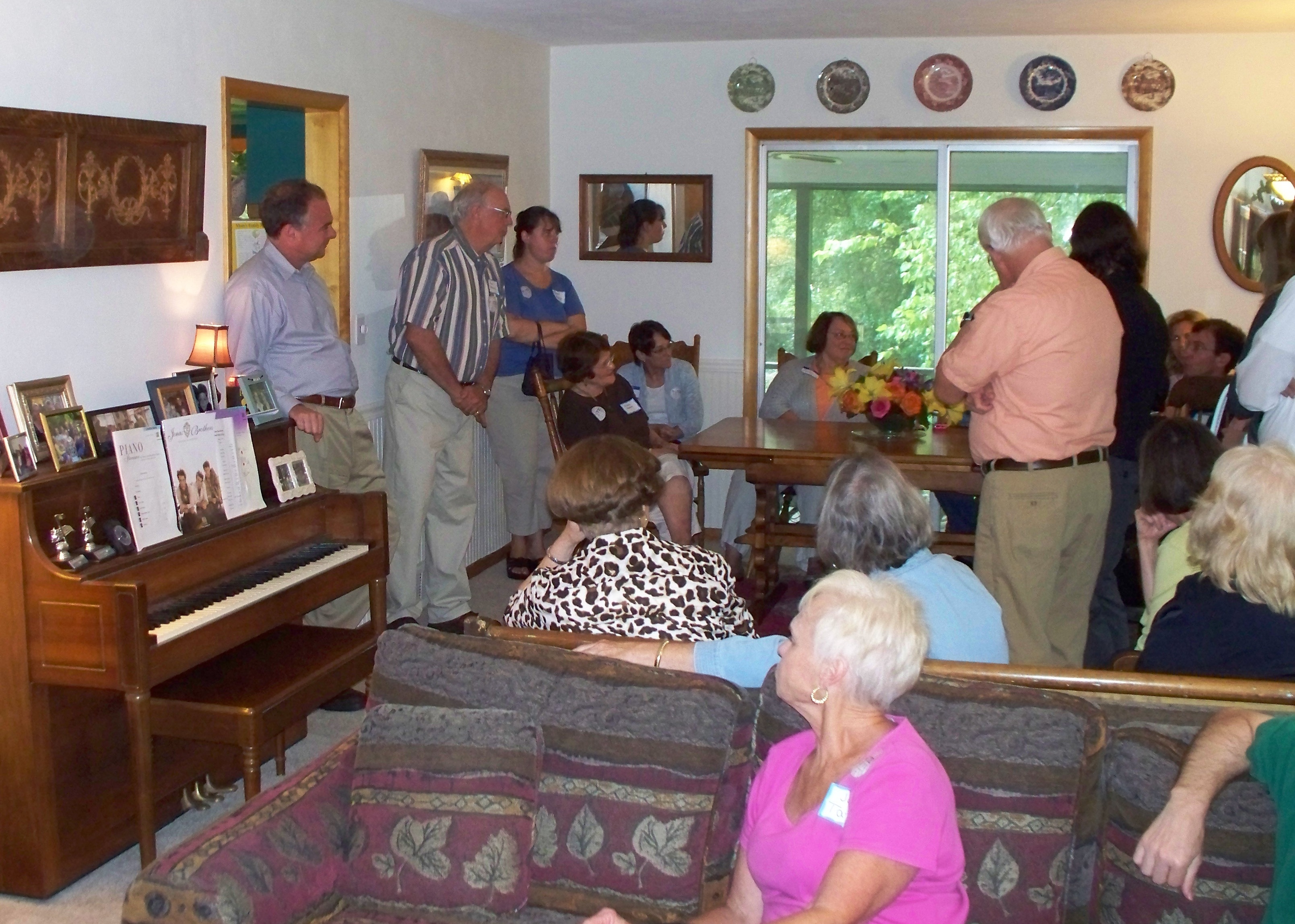
Political Event with Tim Kaine at Bob and Sue Dvorsky's home in Coralville, Iowa on Aug. 17, 2010
Tim Kaine at Bob and Sue Dvorsky’s home in Coralville, Iowa on Aug. 17, 2010

Hillary Clinton announced Senator Tim Kaine would be her running mate this weekend. Friends were posting photos all weekend from the August 2010 event he attended in Coralville. If he wasn’t the center of attention then, as the photo suggests, he will be now.

I’m torn about viewing the Democratic National Convention this week. Hopefully key speeches will be available for viewing afterward and I can avoid social media enough to think clearly about what Hillary Clinton says.

As Sunday begins, I’m not sure listening to recorded music will adequately replace Garrison Keillor’s A Prairie Home Companion. It’s here. It’s what I can do to sustain our lives in a turbulent world.

Categories
Environment Reviews

Book Review – A Sugar Creek Chronicle

A Sugar Creek ChronicleIn A Sugar Creek Chronicle: Observing Climate Change from a Midwestern Woodland Connie Mutel produced an engaging narrative of her efforts to cope with change while living on a parcel of Oak – Hickory forest in Northern Johnson County, Iowa.

The narrative is about climate change as the title suggests. It is also rich with descriptions of the flora and fauna of the region and how her life as a Midwestern ecologist, wife, mother, and cancer survivor has changed and is changing because of our warming planet.

It was hard to put the book down once I started reading.

The narrative is a combination of autobiography, new journalism, scientific research and advocacy for the political will to take action to mitigate the causes of anthropogenic global warming and its impact on our climate before it’s too late.

What makes the book important is less the scientific discussions about climate change, and more how Mutel copes with a life she believed held stability and predictability as key components. In telling her story Mutel articulates a personal perspective of current scientific research about climate change in a way that should provide easy to grab handles on a complex topic.

The idea that carbon dioxide causes global warming is not new. Around 1850, physicist John Tyndall discovered that carbon dioxide traps heat in our atmosphere, producing the greenhouse effect, which enables all of creation as we know it to live on Earth. That story has been told time and again.

The benefit of reading Mutel’s observations is one finds a lot in common with her life, on many levels. Her inquiry into global warming and climate change provides us a window not only to her world, but to ours.

~ Posted on Amazon.com.