Categories
Kitchen Garden

Bowl of Summer – Cucumber Salad

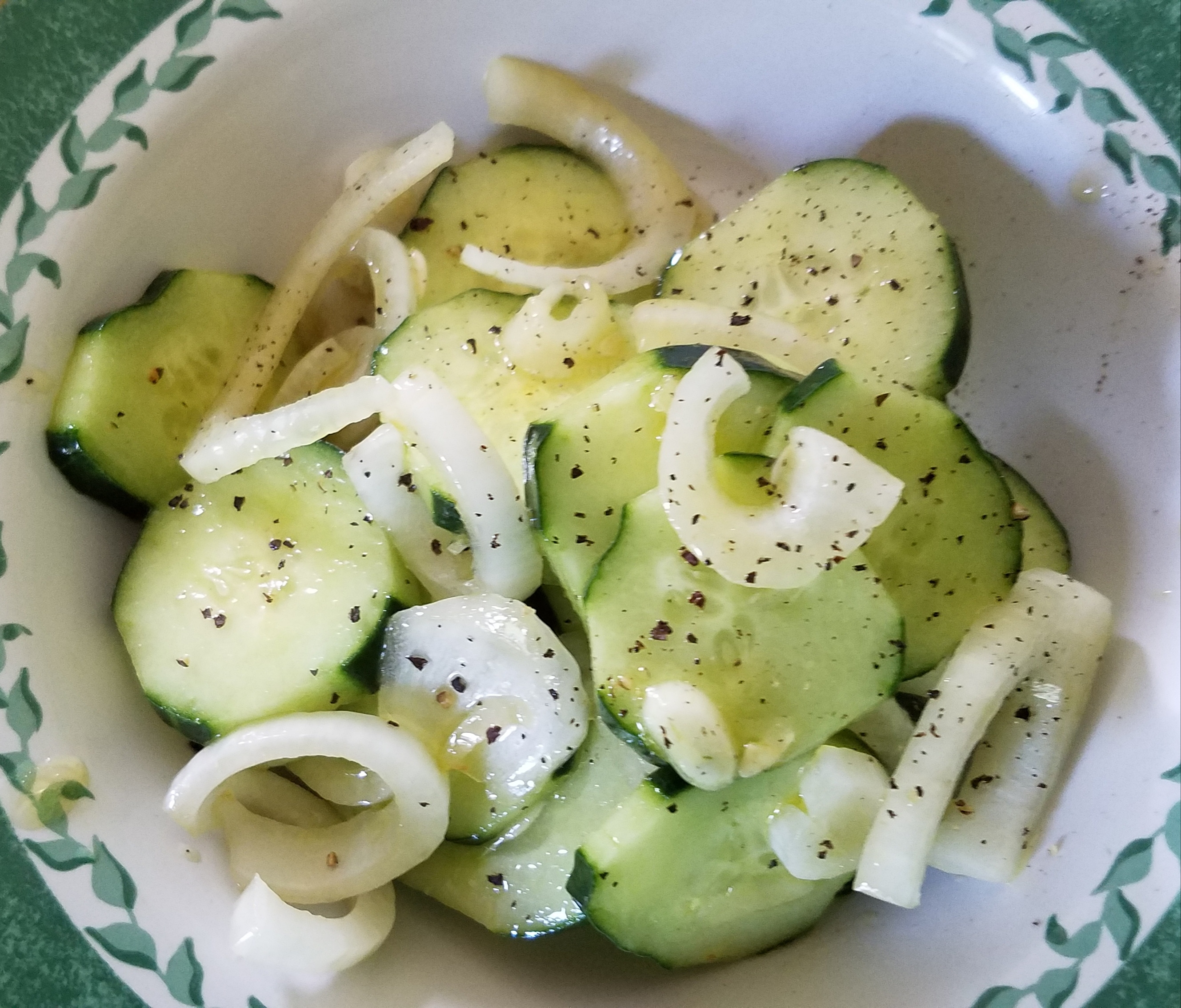
Cucumber Salad

Cucumber salad is not even a recipe.

Peel them, slice and put them in a bowl. Add thinly sliced onions, extra virgin olive oil and your favorite vinegar, then salt and pepper to taste.

Mix gently then serve. It’s summer in a bowl.

When the garden produces them, we eat a lot of cucumber salads. This year I mastered the art of cucumber growing with a couple of simple things. First, I mulched as soon as I planted the seedlings. Then, I made sure deer had no access to the plants. I also put up cages and a fence for the vines to grow upward. The result has been abundant.

Other than in pickles, cucumbers don’t preserve well. They must be enjoyed in the moment, and sometimes that’s as good as it gets.

Categories
Kitchen Garden

Eggplant Season

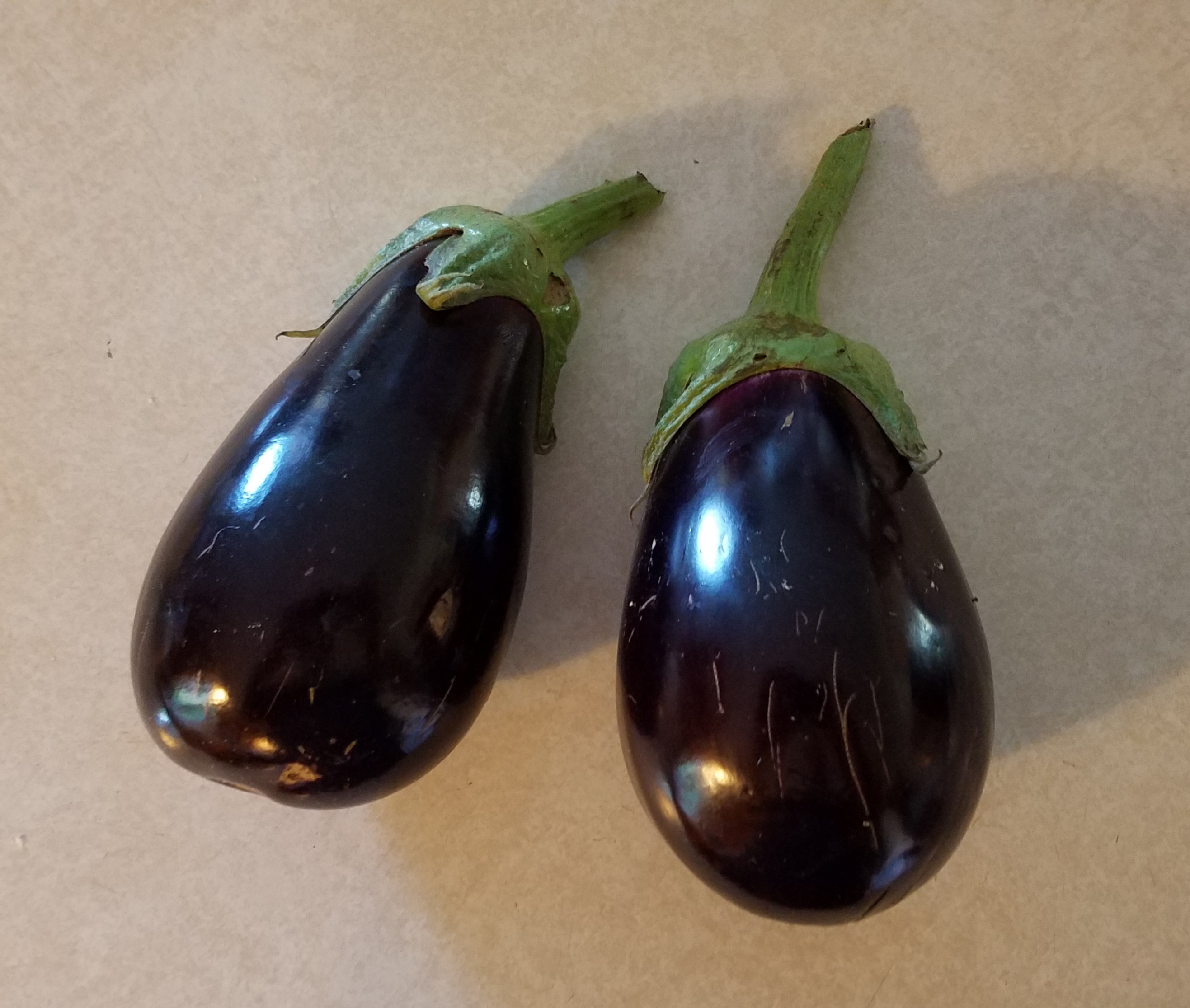
Galine Eggplant

By the time eggplant season is finished. everyone in the family is tired of it.

Here’s a simple, tasty recipe that’s not as much a recipe as techniques to use garden abundance in mid summer. The savory flavor will have diners coming back for more.

The first part is preparing eggplant slabs for the dish and for freezing.

Cut two half-inch slabs lengthwise from the middle of each eggplant and reserve the smaller portions from the sides. Skin on or off, your choice.

Lightly salt the slab of eggplant and drizzle extra virgin olive oil on it until both sides are coated. Place it on a baking sheet lined with parchment paper or a silicone mat. Cut slabs from all the large eggplants you have and line them up.

Place the pan in a 450 degree preheated oven and bake for 8 minutes. Take the pan out and flip each slab using tongs and put them back in the oven for another seven to eight minutes. Take them out and set the pan on a cooling rack.

Once cooled, what is not needed for the dish can be frozen, then bagged up in zip top bags for later in the year. Great to use these in Eggplant Parmesan.

Eggplant Dinner

The dish has three components: the eggplant slab, quarter inch slices of fresh mozzarella cheese, and a vegetable ragout.

The ragout is a way of using what’s available. Put a frying pan on the burner with a tablespoon of high smoke point cooking oil. I diced an onion, diced the reserved small slices of eggplant, finely sliced garlic scapes, fresh celery, and two hot peppers (jalapeno or Serrano). Any combination of what needs to be used up should serve. Sautee until the onions begin to soften.

While the vegetables are sauteing, grate half a large zucchini on a piece of parchment paper and set it aside. Halve eight to ten cherry or grape tomatoes and put them with the zucchini. Check the vegetables and once soft add the zucchini and tomatoes and stir constantly until the zucchini begins to cook. Don’t overcook the zucchini.

In individual baking dishes, or in a glass baking pan if you don’t have individual, line up one or two eggplant slabs per serving, depending on size. Next place a slice of fresh mozzarella on each large slab of eggplant. Top with the ragout and put another slice of mozzarella in the middle on top. Put the dish in to the oven and warm it for 10 minutes or until the cheese melts.

Take it out, transfer it to a plate, salt and pepper to taste, and the entree is finished. If you like, top it off with a poached egg.

Note: I did not use any seasoning other than salt and pepper and the dish was quite savory. If you have herbs and spices on hand, feel free to add your favorites.

Categories
Kitchen Garden Work Life Writing

Wanting to Wake Up

Community Pond

At retirement plus 19 days I thought I’d be more productive.

Yesterday, after a shift at my desk and an hour-long visit with a neighbor and a team of surveyors, I took a nap… with long, deep sleep. Groggy when I woke, the better part of the day had escaped me.

More time to heal after a life of work.

It’s not like the main spring work of gardening was doable. Rain and ambient temperatures in the twenties and lower thirties gave me a chill most of the day. My farmer friends take advantage of every micro dry spell to plant a row of seeds or plow a field. A home gardener needs an ample period of dry ground and time to get in seed potatoes, early lettuce, radishes, turnips, peas and the like. Thus far the burn pile remains and the ground is unbroken, indicating there was a garden but little else. On the other hand, when the weather breaks, I’m ready.

Boxes of canning jars pile up as we draw down the pantry.

Last night Jacque and I went separate ways for dinner. She prepared a pasta dish with pasta made from lentil flour accompanied with a side salad. I prefer pasta made with semolina flour. These days a salad is organic greens from a specialty grocer, carrots, celery and home made dressing.  When she finished in the kitchen I made a dish I had been thinking about for a week.

Mother made a simple gravy with bacon grease, flour and milk. My supper was a variation of that.

The gravy recipe is easy: three tablespoons fat, three tablespoons flour to make a roux then two cups milk simmered on low heat until thickened. We cook vegetarian at home so I substituted salted butter for the bacon grease. Mother added cooked hamburger to the gravy but I wanted more.

Dinner preparation began with diced storage onions, bell pepper from the freezer and a four ounce can of sliced mushrooms from the Netherlands sauteed in extra virgin olive oil, seasoned with salt and pepper. When the onions began to soften I added two finely diced cloves of garlic from Kate’s farm and incorporated them into the vegetables.

Next was two cups of Morningstar Farms recipe crumbles stirred in until thoroughly thawed and mixed. When the ingredients reached the proper stage I made a well in the center of the frying pan and added three tablespoons of salted butter to melt. I added an equal amount of flour to make a roux. When the roux had cooked for a couple minutes I added two cups skim milk and stirred the mixture until everything was incorporated. I brought it to a boil and turned down the heat to a simmer for about ten minutes until the liquid thickened.

I toasted a slice of sourdough bread, diced it, and spooned the mixture on top in a big bowl. That and a couple of raw carrots was dinner… with leftovers. Comfort food from memories of Mother.

In the annals of human history yesterday wasn’t much. Two people getting along in a place where we’ve lived for 25 years.

“I feel as if I’m fixin’ come out of hibernation and need to work with friends on something meaningful,” I emailed a friend. “What that is will eventually manifest itself… I hope we can recognize it when it does.”

For now I wait for the weather to break, rest and heal.

Categories
Environment Kitchen Garden

Hurricane Weekend

Hurricane Harvey from the International Space Station on Aug. 25, 2017. Photo Credit – NASA European Pressphoto Agency

Rain tapped the bedroom window this morning on the fringe of Hurricane Harvey.

It was a reminder of our connection to the oceans. They are absorbing heat from the atmosphere on a planet experiencing some of its warmest days in living memory. A warmer atmosphere holds more moisture and the result is intense storms like the Category 4 Hurricane Harvey.

In Iowa we adapt easily to hurricanes because of our distance from the coast. Needed rain benefits our gardens and farms. It recharges our surface aquifers. As the weather pattern moved over it seemed normal, not as devastating as it was when Harvey made landfall in Texas Friday afternoon.

Overcast skies and a slight rain depressed attendance at the orchard on Saturday. There were enough visitors to keep busy, especially in the afternoon when the sun came out. Sales seemed steady if light.

One of my favorite August apples is Red Gravenstein, a Danish cultivar. It was introduced to western North America in the early 19th century, according to Wikipedia, perhaps by Russian fur traders, who are said to have planted a tree at Fort Ross in 1811. Red Gravenstein is tart, juicy and crisp — great for eating out of hand.

The cider mill made the first press of apples for the sales barn. The gallon and half gallon jugs sold well. Over the years I’ve come to appreciate the changing flavor of our cider as we move through the apple harvest. I bought a gallon of cider and a dozen Red Gravenstein apples at the end of my shift.

I’ve been reading recipes for tomato catsup in old community cookbooks. After reviewing a dozen or so I went to the kitchen and created this sauce from the abundance of red bell peppers and tomatoes:

Red Pepper Sauce

Ingredients

Half dozen cored and seeded red bell peppers cut in quarters
Equal amount by weight of cored tomatoes one inch dice
One cup of malt vinegar
One teaspoon salt
One tablespoon refined sugar.

Process

Pour the vinegar into a saucepan and bring to a boil.
Add tomatoes and peppers.
Add sugar and salt.
Bring back to a boil and cook for 10-20 minutes until the vegetables are soft.

Strain the mixture. Retain the liquid to use as vinegar in salad dressings.
Run the vegetable mixture through a food mill and either serve immediately or bottle and refrigerate.

Recipe notes

To make a thicker sauce, either reduce it in the saucepan or add tomato paste.
I used malt vinegar because it was on hand. Absent malt vinegar I’d use homemade apple cider vinegar.

Categories
Kitchen Garden

Roasted Red Pepper and Tomato Soup

Bell Pepper Seconds

A gardener and farm worker has access to lots of summer vegetables, especially “farm seconds.” It is difficult to use them up before they turn to compost.

The recipe for roasted red pepper and tomato soup is simple and the results are sweetly tasty. It was born of an abundance of bell peppers and tomatoes.

I wouldn’t expect anyone to go to the market and buy ingredients for this dish. If one has the peppers and tomatoes, almost everything else is on hand in a well stocked kitchen.

Roasted Red Peppers

Make a batch or two of roasted bell peppers for the soup and to use in other dishes.

Preheat the oven to 450 Degrees Fahrenheit with the shelf in the middle position.

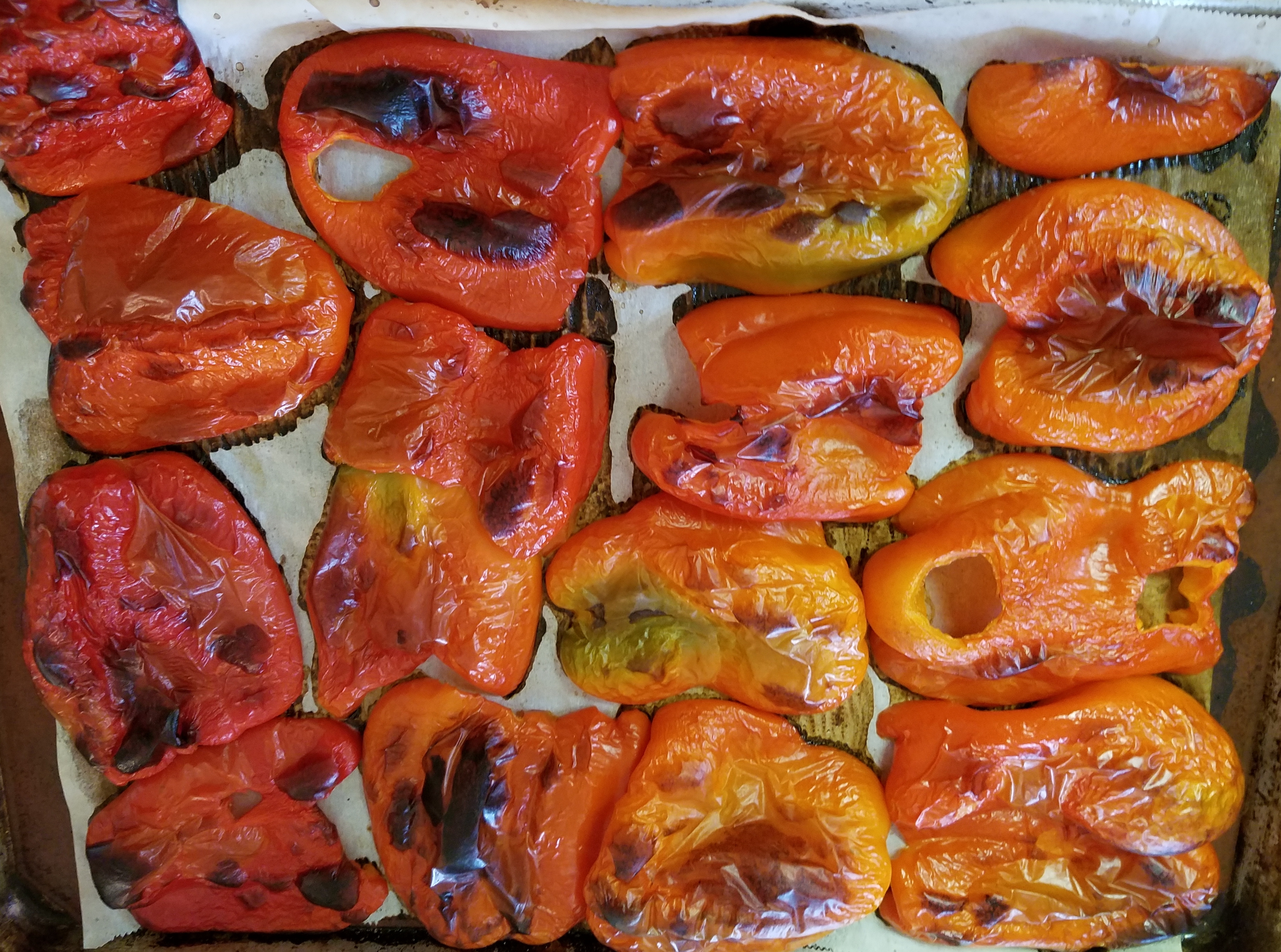
Cull the best red peppers from the lot, halve them and remove the membrane, core, seeds and any bad spots. Using a melon baller makes it super easy and more precise in removing all of the membrane. Peppers needn’t be perfectly halved. Put them skin side up on a piece of parchment paper on a baking sheet with sides. Nestle them close together to get as many as possible on the baking sheet.

Bake at temperature for 25 minutes and remove from the oven.

Using tongs, move the roasted peppers to a bowl and cover it with a plate. This process helps loosen the skin. Let them sit until they can be handled without burning fingers.

One-by-one take the pieces of pepper and remove the skin. Place them in a refrigerator dish and refrigerate until ready to use.

Roasted red peppers are an ice box staple during pepper season. For longer storage there are recipes for oiling and preserving them. They are so sweet and tasty they won’t last long in most households.

Roasted Red Peppers Before Removing Skin

Roasted Red Pepper and Tomato Soup

This recipe makes two quarts, enough to serve four – five people.

Add one cup vegetable broth to a Dutch oven and bring to a boil.

Add:

  • Equivalent of 5-6 large tomatoes, one-inch dice.
  • Enough roasted red peppers to approximately equal the weight of the tomatoes, maybe a little less.
  • Two tablespoons salted butter.
  • One six ounce can prepared tomato paste.
  • One teaspoon each dried spices including smoked paprika, granulated garlic and thyme. Fresh is better if you have it. Double the amount if you do. Herbs and spices are always to taste.
  • One tablespoon dried basil. Fresh basil is better. Double the amount if you have it.
  • Two tablespoons dried onion flakes.
  • One tablespoon sweetener. I used sugar because it was in the pantry.
  • Salt and pepper to taste.
  • Teaspoon of red pepper flakes, cayenne pepper or your favorite pepper spice (optional).

Stir to incorporate the ingredients, bring to a boil and turn down to a simmer. Cook until the tomatoes begin to soften. Don’t cook the tomatoes to death. You will want some bits of recognizable tomato granules in the final product.

Either transfer the mixture to a blender or use an immersion blender to smooth it to a pleasing texture. As mentioned, I like little bits of recognizable tomato and pepper.

Add one cup half and half and stir constantly until the soup is well-mixed and up to temperature.

Serve hot, garnished with fresh basil, a dollop of sour cream or snipped chives. Whatever looks appetizing and is available.

This recipe was fun to make and better than manufactured roasted red pepper and tomato soup in aseptic containers. Leftovers, if any, will keep for a couple of days.

Categories
Kitchen Garden

Garden is Planted, Dinner is Served

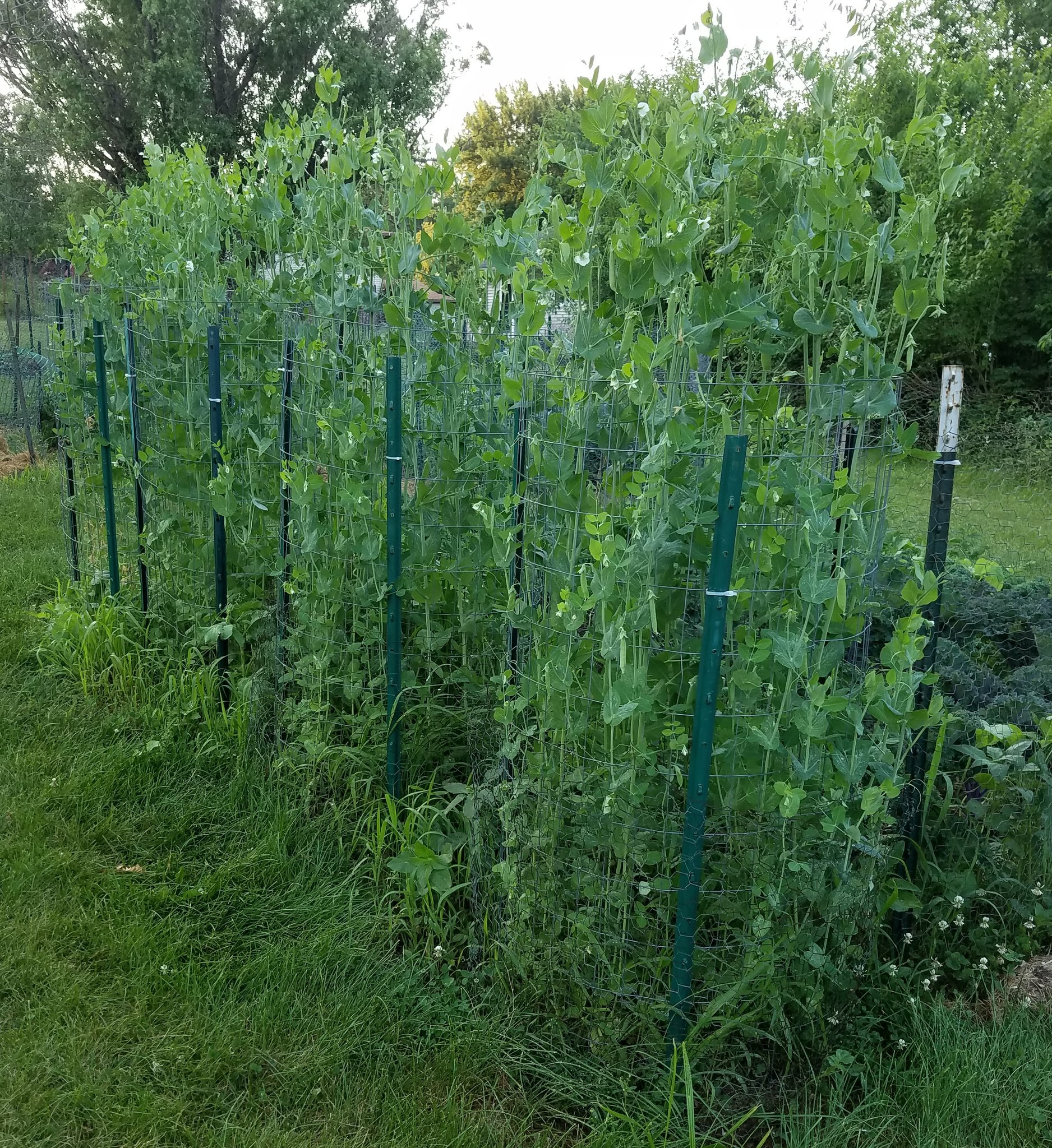
Six-foot Tall Sugar Snap Peas

Ambient temperature hit 91 degrees Sunday, about 20 degrees above historical average. The heat continues, drying the topsoil, creating want of rain.

An idea once held â€” the garden should be planted by Memorial Day â€” is outdated. As early crops come in, others will be planted. What’s more significant to yield than planting time is weeding, mulching — and with the heat, irrigation.

This year’s garden is four varieties of kale, sugar snap peas, radishes, beets, eight varieties of tomatoes, broccoli, three varieties of bell peppers, three varieties of hot peppers, winter and summer squash, basil, cabbage, collards, turnips, two varieties of celery, two varieties of carrots, six of lettuce, spinach, bok choy, daikon radishes, potatoes, onions, leeks, three cucumbers and of a pear and two three apple trees laden with fruit.

Our garden, combined with bartered shares in two CSA farms, will provide plenty of vegetables this summer. We should be set for a productive season.

Last night was what I had hoped for our kitchen garden.

I spot-watered plants that needed relief from the baking sun. Picking a turnip, I ate the small root and saved the greens. I picked a leaf of collards and headed inside to make this dish for supper.

Greens Hot Plate

Add high smoke point oil to a frying pan on high heat. Once the oil is hot add two cups thinly sliced Vidalia onions and season with salt, stirring constantly. (A pinch of red pepper flake would be a nice addition, allowing it to cook for a minute in the oil, but our cooking is capsaicin free until the finished dish reaches the table).

Prep greens — collards, kale, bok choy and turnip — by removing the thick stem and veins and tearing the leaves into bite-sized bits. Thinly slice the stems and add them to the onion mixture. Once the onions become translucent, add fresh garlic if you have it, although granulated works.

De-glaze the pan with vegetable broth. Stir and add the greens.

Add a quarter cup of vegetable broth and cover the pan to create steam. Once volume reduces in size to one third, remove the lid and mix the ingredients together. Re-season. Add a tablespoon of lemon juice. Continue gentle stirring until the leaves are tender.

In a large dinner bowl place a cup of warm rice. Using tongs, cover the rice with the greens mixture. Finish with thinly sliced spring onion, a drizzle of extra virgin olive oil and feta cheese. Season with salt and pepper to taste. Serve hot.

Categories
Kitchen Garden

Red Bell Pepper Soup

Red Bell Pepper Soup

The abundance of tomatoes, bell peppers and onions is leading to a pot of soup featuring those ingredients.

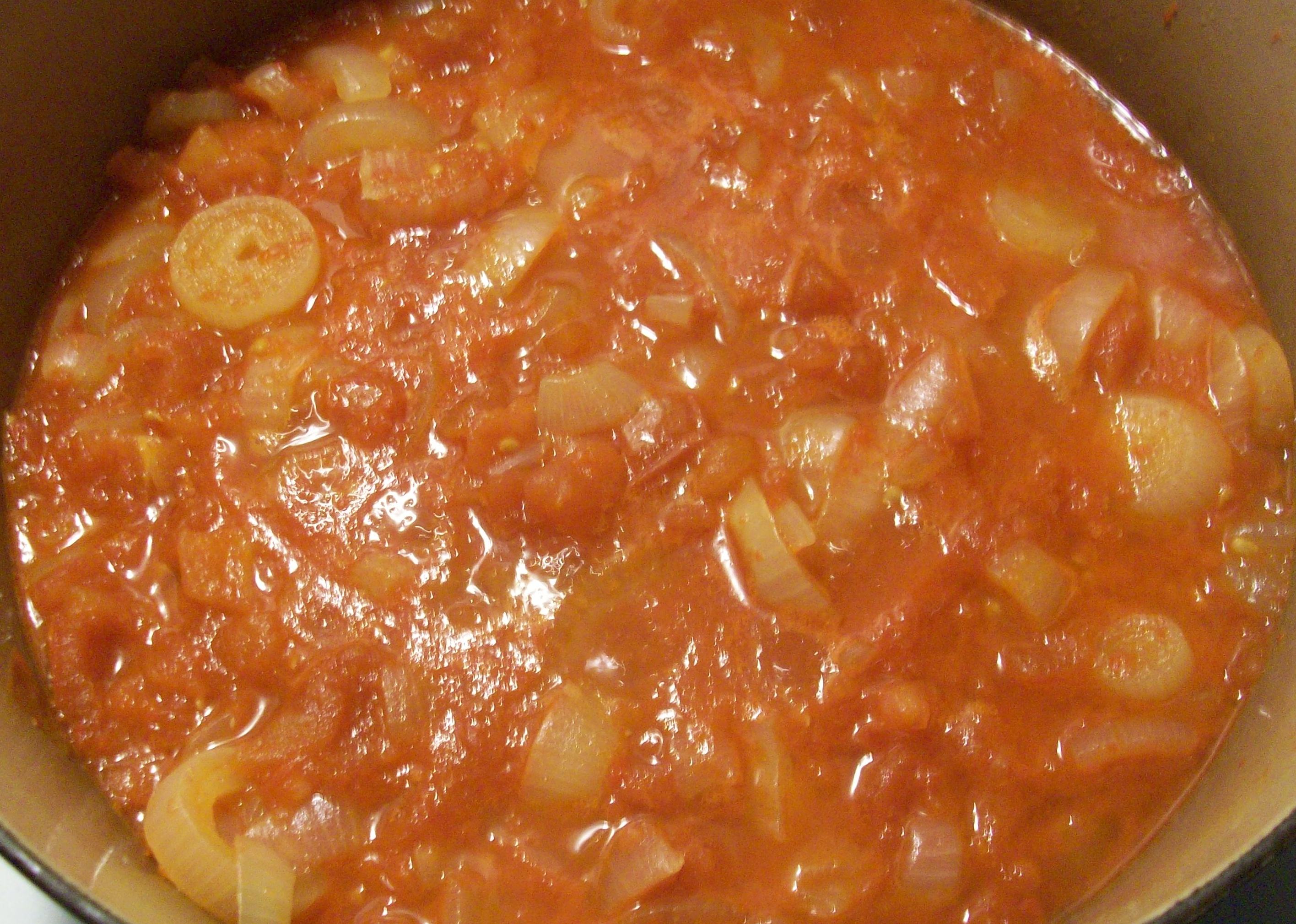
There is no recipe — I used ingredients already in the ice box. I cut up a bag of onion seconds and sauteed them in extra virgin olive oil until translucent; poured in a quart and a half of diced tomatoes (drained); and added a scant pint of the pulp of red peppers cooked and separated with a food mill, also drained. I seasoned with salt and that’s it.

The mixture is simmering in my Dutch oven on medium heat. Once it is thoroughly cooked, I’ll take the stick blender to it and taste. After that, who knows?

The adventure is in the doing and learning. Because of the uniqueness of this season, the dish is hardly replicable.

Categories
Kitchen Garden

Chopped Salad

Dinner Salad
Dinner Salad

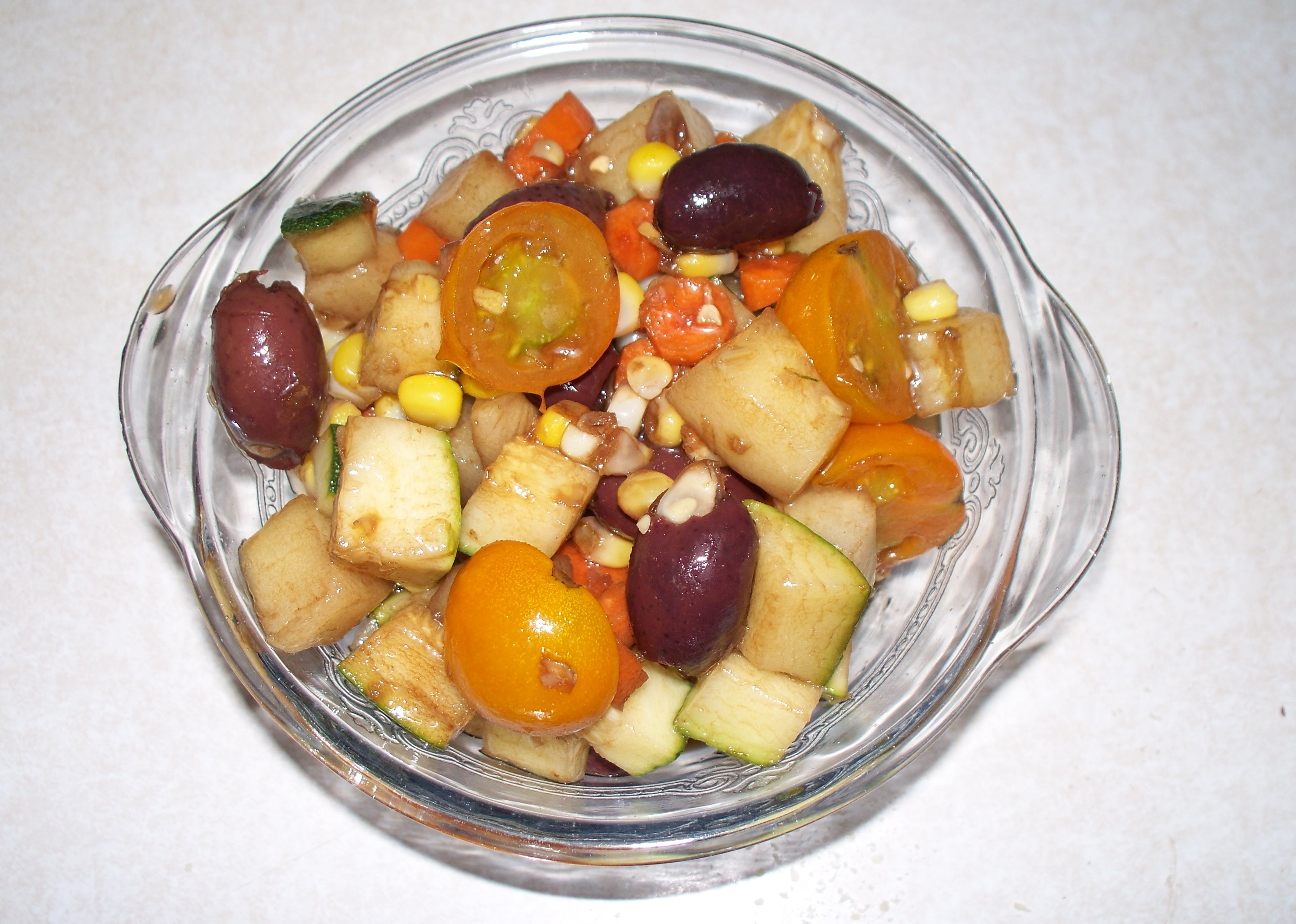
Summer’s abundant produce has us conjuring new recipes based on what’s available. We made a quick meal from leftover tomato-basil sauce, penne pasta made with lentils and the following salad.

Cut zucchini and cucumber into quarter inch cubes and place in a large bowl. Slice 4-5 peeled, small carrots and add with 2/3 cup cooked sweet corn. Halve and add about a dozen cherry tomatoes. Add two dozen Kalamata olives. For dressing, use a favorite, which in our household is a mixture of balsamic vinegar, extra virgin olive oil and salt and pepper to taste. Add fresh herbs as desired. Mix gently with a large spoon and refrigerate until ready to serve.

Categories
Kitchen Garden

Mining the Freezer

Tomato, Pesto, Parmesan Farfalle
Tomato, Pesto and Parmesan Farfalle

Our freezer shows a little space, but is still loaded with food.

I grabbed a pint jar of pesto and about three dozen cherry tomatoes from the freezer, some Parmesan cheese from the ice box, and a box of farfalle pasta from the pantry to make dinner.

It’s easy.

Cook the whole box of farfalle al dente. Strain and pour the lot into a big bowl. Spoon about half a pint of pesto on top, add the tomatoes (cut in half or peeled, the latter being easier with thawed, frozen tomatoes), and a cup of Parmesan. Stir gently with a rubber spoon, salt and pepper to taste, and it’s dinner.

Serve with a vegetable, some white wine, or lime sparkling water, and it is dinner, as good as it gets.

Categories
Writing

Roasted Pepper Garlic Spread

Cheese Spread with Pickles

The warehouse club sells packs of six 8-ounce bars of cream cheese. I bought one.

A basic use-it-up strategy is to make a spread for crackers and bread for after work snacking or luncheon. It’s easy.

Soften a bar of cream cheese on the counter until it reaches room temperature. Unwrap it into the bowl of a food processor.

On the bits and pieces shelf in the pantry locate some roasted bell peppers. Add about one whole pepper’s worth to the bowl. Roast your own if you have them, but in winter, who does?

Add one peeled clove of garlic and process until the texture is smooth.

The basic spread could be seasoned as you like it, although I found garlic is enough. Spread on crackers, toast or bread, Top it with pickled bits from the ice box: cucumbers, olives, beets or radishes and no finer winter snack can be found. If we lived in Russia a shot of vodka would be a mandatory accompaniment.

Much though I enjoy thinking and writing about cooking and processing food, it’s not why I blog. That is, the food’s not the story, the process is.

My first blog in 2007 was an effort to provide a place for our daughter to keep up with the home front. Not sure how much she reads it now, but she has been and remains a primary audience regardless of where I have gone with this writing. Luckily, I have grown a larger, supplemental audience.

Learning and writing about food preparation exemplifies a main process for understanding complex topics. There are few recipes simpler than the one above, but its simplicity belies complexity that led me to it. It is easy to collect recipes, more difficult to decide which batch of 25 will go into a seasonal repertory, and harder still to align a cuisine to seasonal, local food. Writing this blog helps with all of that behind the scenes, when all the reader sees is the end of the process in the form of a recipe.

So it is with the other main topics: sustainability, politics, the environment, worklife, climate change and local food. A constant trying-out of ideas and phrasing. Most of what I see in daily life is complex and simply recording what may have happened through a viewpoint not that interesting.

This blog is a process that leads hopefully to better living. I am thankful for anyone who follows along.