Categories
Kitchen Garden

Breaking the Back of Local Food Farmers

Woman Writing Letter

What could break the back of the local food system? Lack of affordable individual health insurance policies.

Finding and funding health insurance is a key pivot point for local food farmers when considering remaining in business. If they can’t afford health insurance, they may reconsider operations, take a job off the farm to get coverage, or even give up farming altogether. It’s that important.

Politicizing health care raised the level of uncertainty in a profession where uncertainty — about crops, weather, pests and customers — is de rigueur. Failure of our government to adequately address health care for everyone may be one too many burdens for small farm operators to bear.

The Patient Protection and Affordable Care Act has done a lot of good. Created in a political environment hostile to change, Democrats held hundreds of hours of public hearings and adopted more than 160 amendments proposed by Republicans, according to Minnesota Senator Al Franken. They held meetings with stake holders from every aspect of the country’s health care system to gain perspectives and buy in. Despite the law’s flaws, millions more people gained health insurance coverage, including farmers. The farmers I know have either been covered by the ACA or considered it as an option.

The contrast between Democratic creation of the law and the Republican efforts to repeal and replace it couldn’t be more stark. Crafted in secrecy, Senate Republicans eschewed public discussion that was the hallmark of the Democratic process while writing their new law. From whom are they taking counsel? We suspect but simply don’t know.

What we do know is small farm operators require health care and if they can’t afford an individual health insurance policy it may break their will. The uncertainty created in Washington, D.C. about health care has not been good for them. It hasn’t been good for any of us who believe sustaining a strong local food system is important.
Categories
Kitchen Garden

Garden is Planted, Dinner is Served

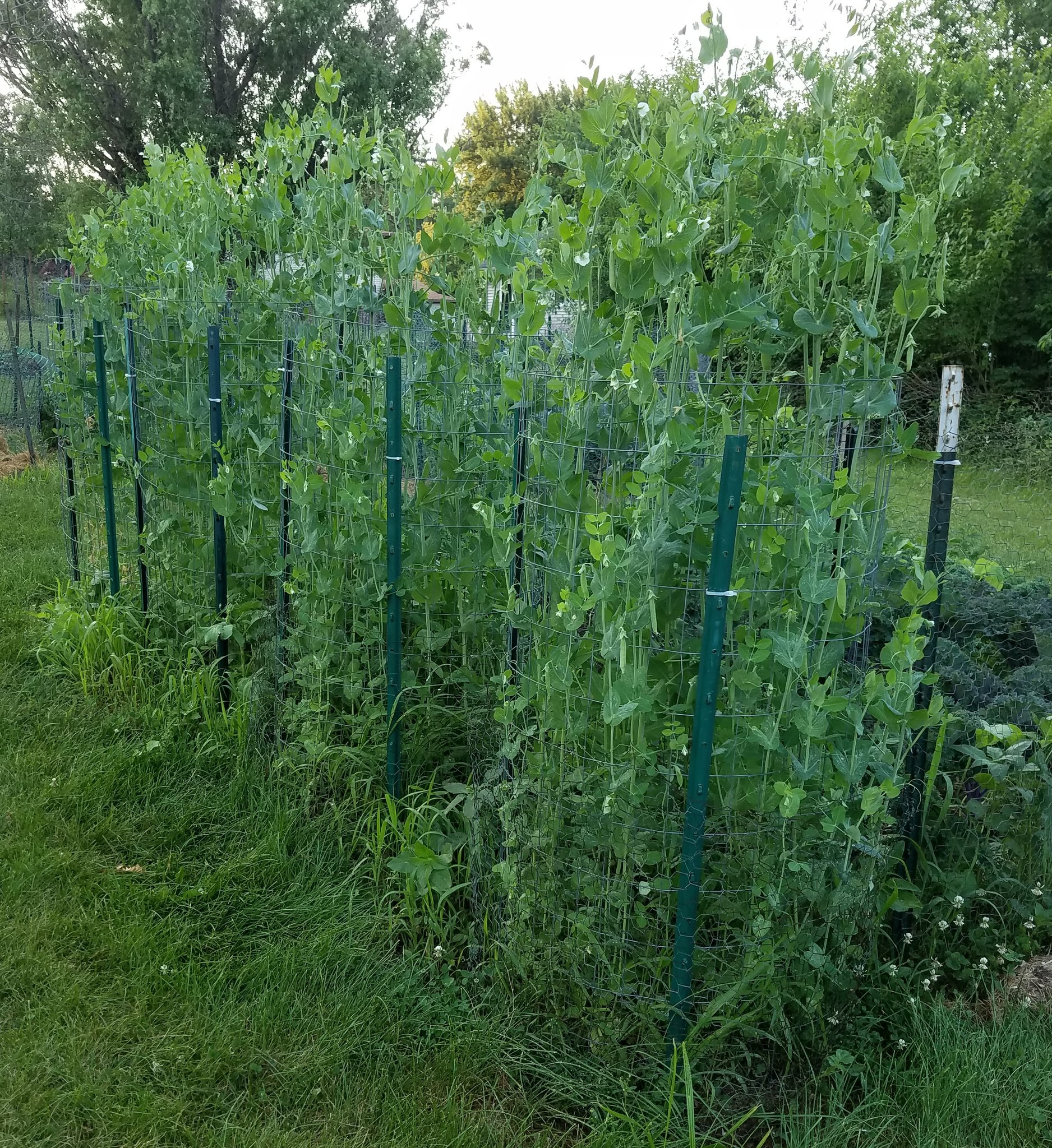
Six-foot Tall Sugar Snap Peas

Ambient temperature hit 91 degrees Sunday, about 20 degrees above historical average. The heat continues, drying the topsoil, creating want of rain.

An idea once held — the garden should be planted by Memorial Day — is outdated. As early crops come in, others will be planted. What’s more significant to yield than planting time is weeding, mulching — and with the heat, irrigation.

This year’s garden is four varieties of kale, sugar snap peas, radishes, beets, eight varieties of tomatoes, broccoli, three varieties of bell peppers, three varieties of hot peppers, winter and summer squash, basil, cabbage, collards, turnips, two varieties of celery, two varieties of carrots, six of lettuce, spinach, bok choy, daikon radishes, potatoes, onions, leeks, three cucumbers and of a pear and two three apple trees laden with fruit.

Our garden, combined with bartered shares in two CSA farms, will provide plenty of vegetables this summer. We should be set for a productive season.

Last night was what I had hoped for our kitchen garden.

I spot-watered plants that needed relief from the baking sun. Picking a turnip, I ate the small root and saved the greens. I picked a leaf of collards and headed inside to make this dish for supper.

Greens Hot Plate

Add high smoke point oil to a frying pan on high heat. Once the oil is hot add two cups thinly sliced Vidalia onions and season with salt, stirring constantly. (A pinch of red pepper flake would be a nice addition, allowing it to cook for a minute in the oil, but our cooking is capsaicin free until the finished dish reaches the table).

Prep greens — collards, kale, bok choy and turnip — by removing the thick stem and veins and tearing the leaves into bite-sized bits. Thinly slice the stems and add them to the onion mixture. Once the onions become translucent, add fresh garlic if you have it, although granulated works.

De-glaze the pan with vegetable broth. Stir and add the greens.

Add a quarter cup of vegetable broth and cover the pan to create steam. Once volume reduces in size to one third, remove the lid and mix the ingredients together. Re-season. Add a tablespoon of lemon juice. Continue gentle stirring until the leaves are tender.

In a large dinner bowl place a cup of warm rice. Using tongs, cover the rice with the greens mixture. Finish with thinly sliced spring onion, a drizzle of extra virgin olive oil and feta cheese. Season with salt and pepper to taste. Serve hot.

Categories
Kitchen Garden

Hard Day and Easy Night

Lettuce Harvest

After hours in the kitchen garden much remained to be done after Saturday.

Garden work began at 6 a.m. I moved to the kitchen at 3 p.m. and worked another four hours.

I was steadily busy throughout waking hours with only water breaks to sustain me.

I harvested kale and weeded the plot, replanted a failed tomato plant, weeded carrots, dug up two small plots to plant cayenne pepper and eggplant, harvested collards and put temporary fencing around them. I mowed the fifth plot and spaded soil in about a third of it. With the near 90 degree temperatures, I picked lettuce before it had a chance to bolt.

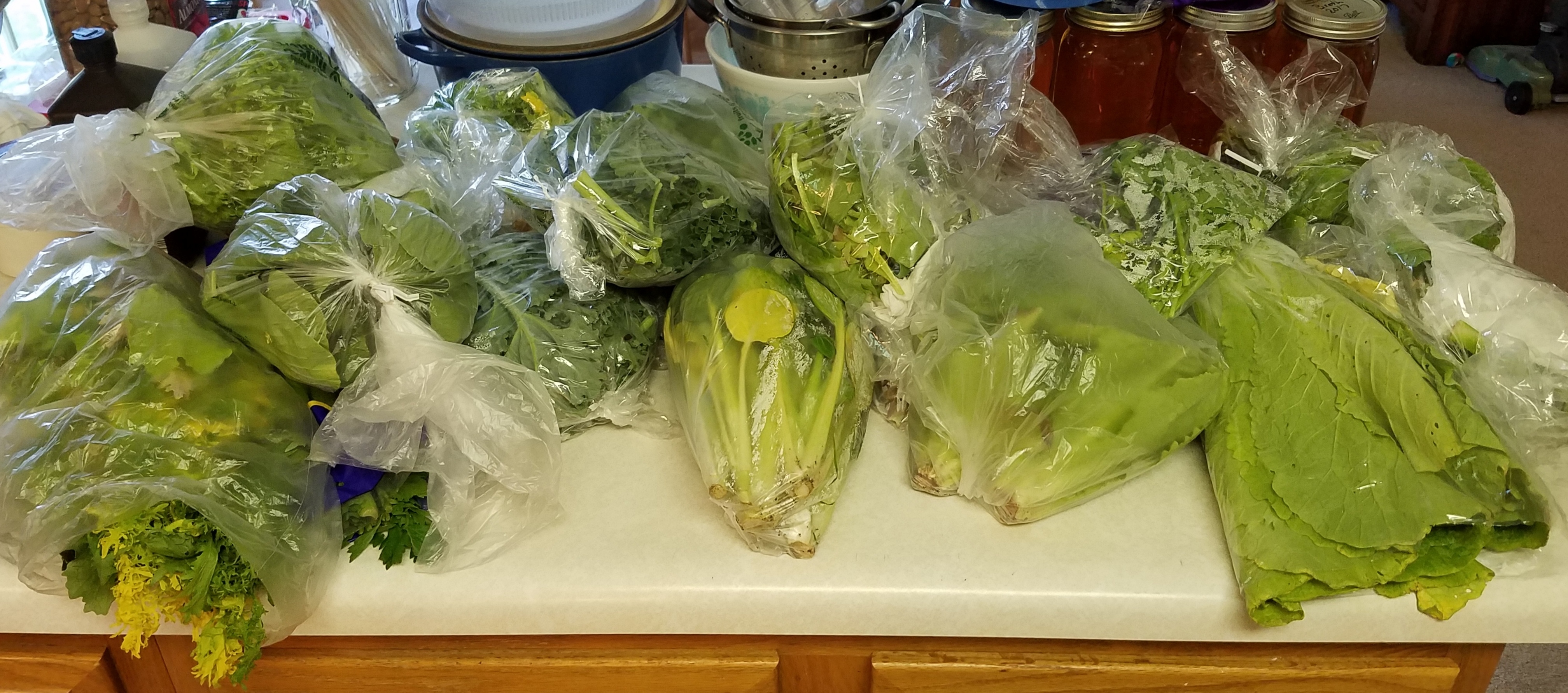
In the kitchen I cleaned lettuce, collards and kale and made dinner of a big salad. I steamed and froze the collards and emptied the ice box of every bag of greens and went through them. The goal was to make soup stock with the cooking greens. It was a dish too far. Organized, they went back into the burgeoning ice box.

Green Vegetables from the Ice Box

The highlight of the day was unexpected. The sugar snap peas are four feet tall and began to flower along the tops — as if an artist daubed white paint on a canvas, impressionist-style. I stopped and looked from different angles as sunlight faded flowery details. Beautiful.

Roadside Kale Distribution

I harvested 12 kale plants and weeded the plot. It yielded two full tubs and more. I made a box of 24 leaves for the library workers and washed the small scarlet leaves to put them away.

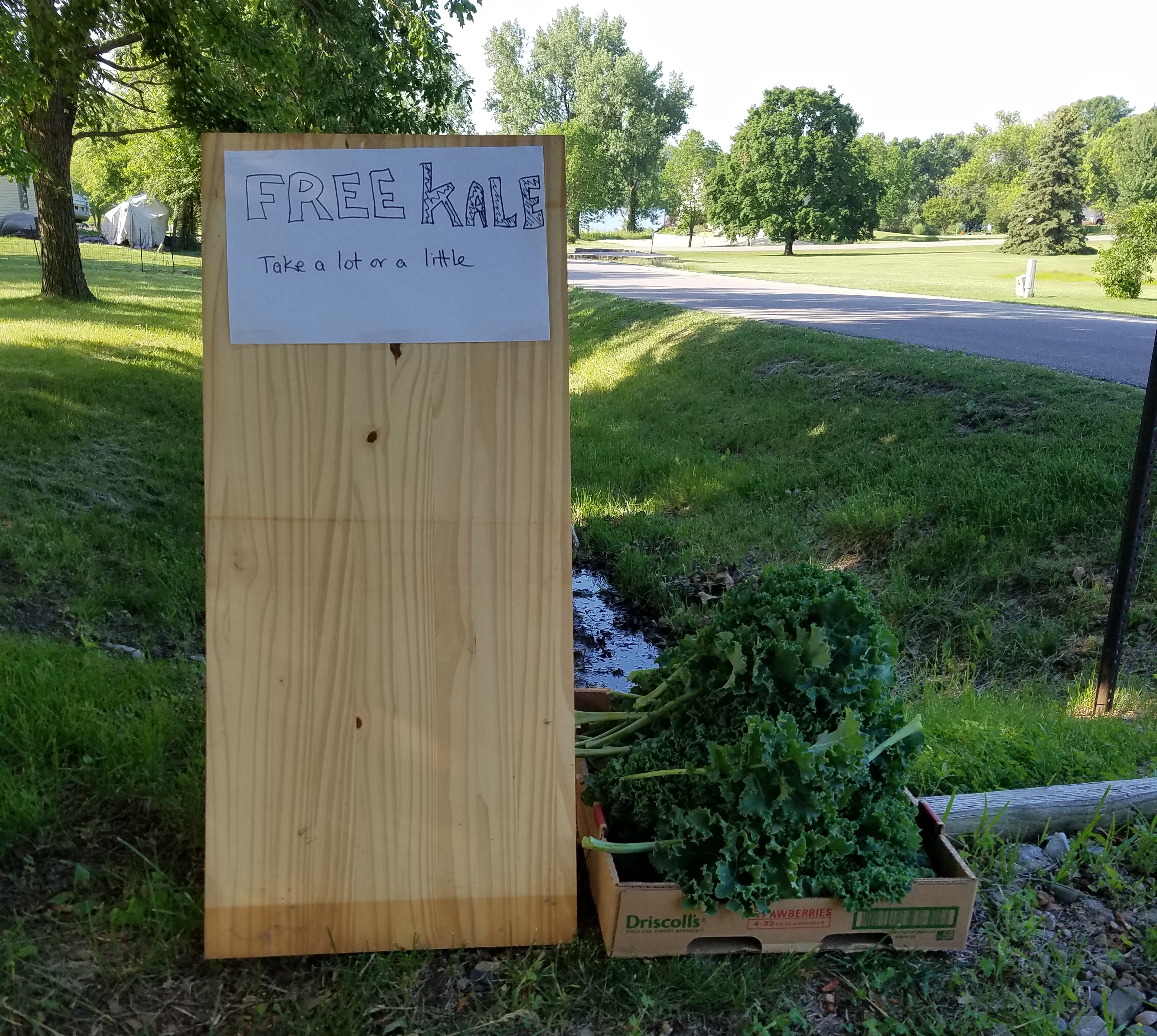
I put some of the abundance by the road for neighbors and passers by to take. It was the city-wide garage sale day so the expectation was bargain-seekers would find this spot. It was gone in less than 15 minutes.

After a shower and clean sheets I slept eight straight hours.

On the plus side I was so engaged in our kitchen garden there was little time to think about much else. At the same time it was difficult not to feel like little got done despite evidence to the contrary.

Well-rested, the weekend cycle of watering, weeding and planting starts again. It’s what we do to sustain a life in a turbulent world.

Categories
Kitchen Garden

Harvest Saturday

First Kale

Four of six garden plots have been planted and are doing well.

Weeds are also doing well.

I’m waiting for a break in the weather to coincide with my work schedule to finish the planting and mulching. This annual conflict was complicated by feeling under the weather on Sunday. I called off work at both farms and stayed indoors recovering. It felt like a lost day.

Saturday I harvested radishes, the last of spring spinach, some turnip greens for salads, and a tub of kale. We officially have more greens than can fit in the ice box.

Spring Vegetable Broth

To use up some greens I made a batch of vegetable broth and canned it. During the next six weeks I hope to can 36 quarts for use throughout the year. There should be plenty of raw material, although carrots are last year’s crop and almost gone, Vidalia onions are from Georgia, and celery is from Earthbound Farms in California.

I’m not an extreme locavore and feel no guilt using a few imported items for a dish. My cooking style is derived from a local food culture which includes my garden and the farms where I work. Above all else, it is about using what is on hand in the ice box and pantry — a lesson learned from some of the best cooks I’ve met. If some non-local ingredients are needed and on hand to supplement a recipe, I’m okay with that. Besides, there aren’t Iowa carrots or celery to be had this time of year.

What to do with all the kale?

I reached out via email to find a home for some kale while it is still fresh. The rest will be preserved if I can make time after work.

I use three methods of preservation: freezing, canning and dehydrating. Until we get a separate freezer our capacity for freezing is minimal and saved for other favorites like broccoli, corn and bell peppers. I haven’t tried canning kale before, and the best use of canned kale seems to be soups and stews. I dehydrated in the past, then flaked it in a food processor or blender and stored it on the pantry shelf. Kale flakes are for soup.

A tentative plan is to take the kale remaining after the give-away and can a dozen pints to use in soups as an experiment. The rest will go into the dehydrator in batches. There is an urgency to getting this done as I planted enough kale to harvest a tub every week from now until late October. Keeping up with processing the crop will be a key dynamic in our kitchen-garden.

The 15-day forecast is for rain next weekend, so hope of getting the garden in before Memorial Day doesn’t seem realistic. Will have to find bits and pieces of time during the week to start turning soil in the last plots, and replanting where the early crops are finishing.

Importantly, I’m not freaking out over the amount of work in front of me. A person can plant only one plot at a time. Sanity comes from focusing on the gardening task at hand and executing it as well as we know how. We need sanity in this sometimes insane world.

Categories
Kitchen Garden

Planting Tomatoes

Garden Pallets

It took most of the day to plant the fourth plot in five varieties of tomatoes.

Using two pallets from Kate’s farm I sorted the metal stakes by size then pitchforked the grass clippings that have been on the plot since last fall.

There were numerous worms and grubs under the matted grass — a sign of  soil fertility.

Once the surface was cleared, I spaded the entire plot and applied about 30 pounds of composted chicken manure. I broke up the clods of dirt with a hoe, then used a garden rake to till the soil further. I resist using a mechanical tiller, partly to disturb the soil as little as possible, and partly because the expense is more than we can afford. I took several water breaks to stay hydrated.

Tomato Diagram

Once the ground was broken and tilled, I measured. I grew eight varieties of tomato seedlings: Italian, German Pink, Amish Paste, Brandywine and Supersteak are slicers. Black Cherry, Gold Nugget and Saladette are cherry tomatoes. This plot is for the five slicers with the three cherry tomato plants going somewhere else. I’ll use these tomatoes fresh in the kitchen with canning tomatoes coming from my barter agreement with local farms.

I dunked each seedling in a water bath immediately before planting. I dug a deep hole with a trowel and broke up the soil by hand as finely as I could to cover them. I doused each planting with water so they wouldn’t crisp in the sunlight and 80-degree ambient temperature. I re-applied the mulch and caged them. It took 15 stakes to cage 25 plants. The planting is done.

When the sun comes up I’ll check to make sure every plant survived. If some didn’t there are plenty of extra seedlings in reserve.

Tomatoes are a highlight of our summer garden. Taking a full day to plant them is okay, and the precautions against failure are many. Over the years I’ve become a better tomato grower but everything is conditional — on weather, on soil fertility, and on gardening culture. Fingers crossed, this should be a good year.

Categories
Kitchen Garden

Spring 2017

Third Garden Plot was Planted

Spring has been punctuated by conversations with scores of people in my neighborhood and beyond.

On Friday I spent two hours delivering handbills regarding a neighborhood public meeting. About 20 people showed up Saturday at the corner of our two main streets. The meeting was organized to elect trustees to our sewer district. I got a chance to review district history as we conducted official business. There was a solid exchange of information about wastewater treatment, something important to any home owner.

In this community organizing work the real world does not resemble my Twitter or Facebook feeds AT ALL. Conversations, in person, with real people, serve us better than any social media application ever can.

As my nine-day vacation from the home, farm and auto supply store winds down, farm and garden work have been the main focus. The garden is on schedule and about half planted — three plots in with three remaining. There are more seeds and seedlings than there will be room for. Hope for an abundant season is everywhere.

I’ve had numerous conversations about tomato planting. Consensus is we wait until today, May 15, to plant tomatoes. By then the risk of frost has passed. I hope to be planting some of mine soon.

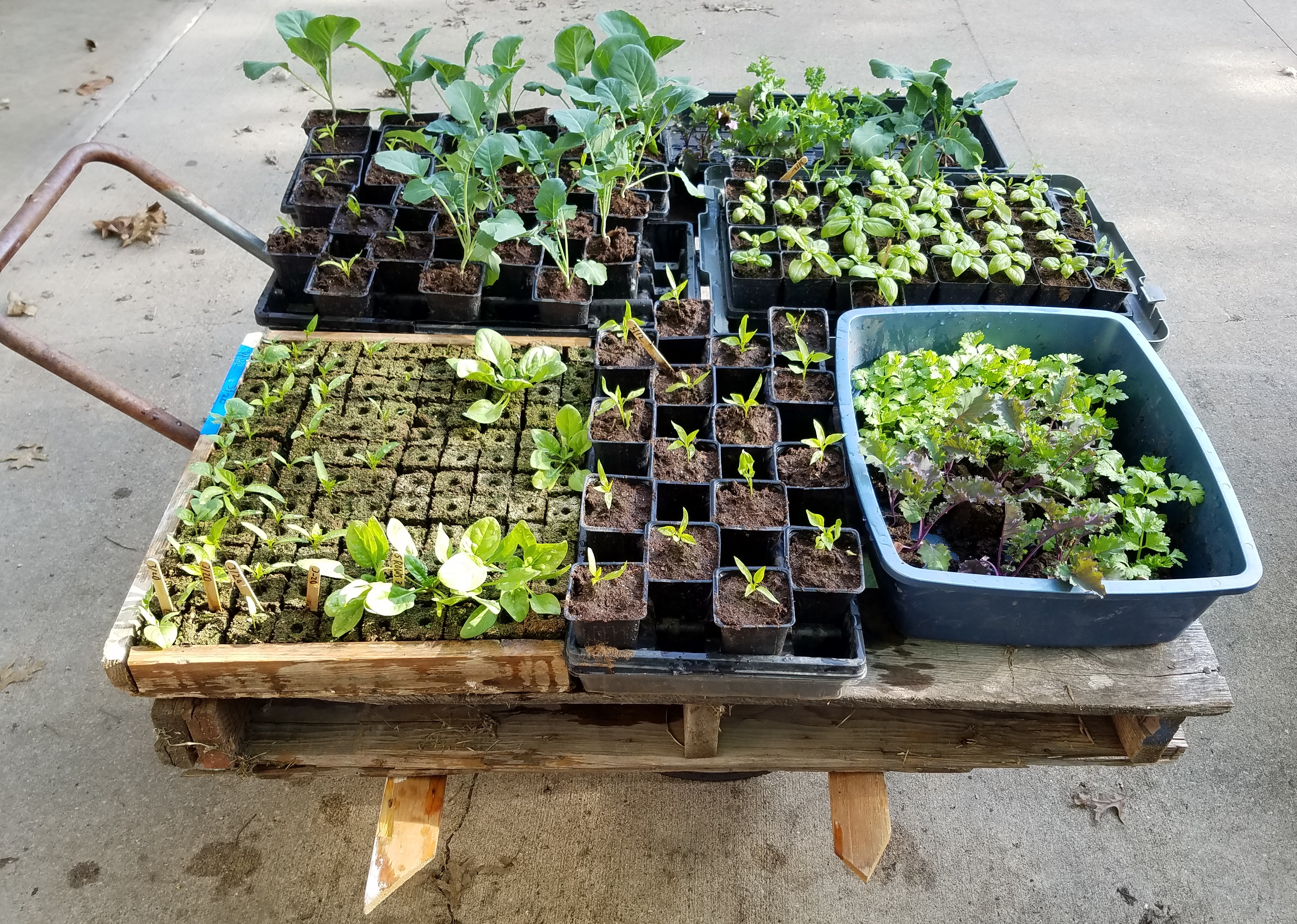
In the meanwhile, the seedling cart is overflowing from new greenhouse arrivals. There is a tray of lettuce, some summer squash, and a tray of leftovers from planting to fill in gaps caused by plant predators or failures. The tomato seedlings germinated well and I’ll have 50 or so leftover. The pepper plants are as good as I’ve raised and offer a better prospect than in previous years. Bartering for greenhouse space took my gardening level up a notch or two — a better start means a better result in the ground.

The five years I’ve been working in community supported agriculture projects provided an education about gardening I couldn’t have gained elsewhere. I’m grateful for the time Susan Jutz, Laura Krouse, Carmen Black, Kate Edwards and others spent explaining agriculture to me.

The sun rose today at 5:46 a.m. and won’t set until 8:18 p.m. More sunlight for a more productive spring. What more could we ask?

Categories
Environment

Pelicans Left

Fallen Apple Blossom Petals

Pelicans left Lake Macbride this week. They were gone when I drove across Mehaffey Bridge Road on Monday.

Have they depleted the fish stocks and gone to better hunting grounds?

Did they detect something in nature that triggered migration?

I don’t know, but hope they will return in the fall.

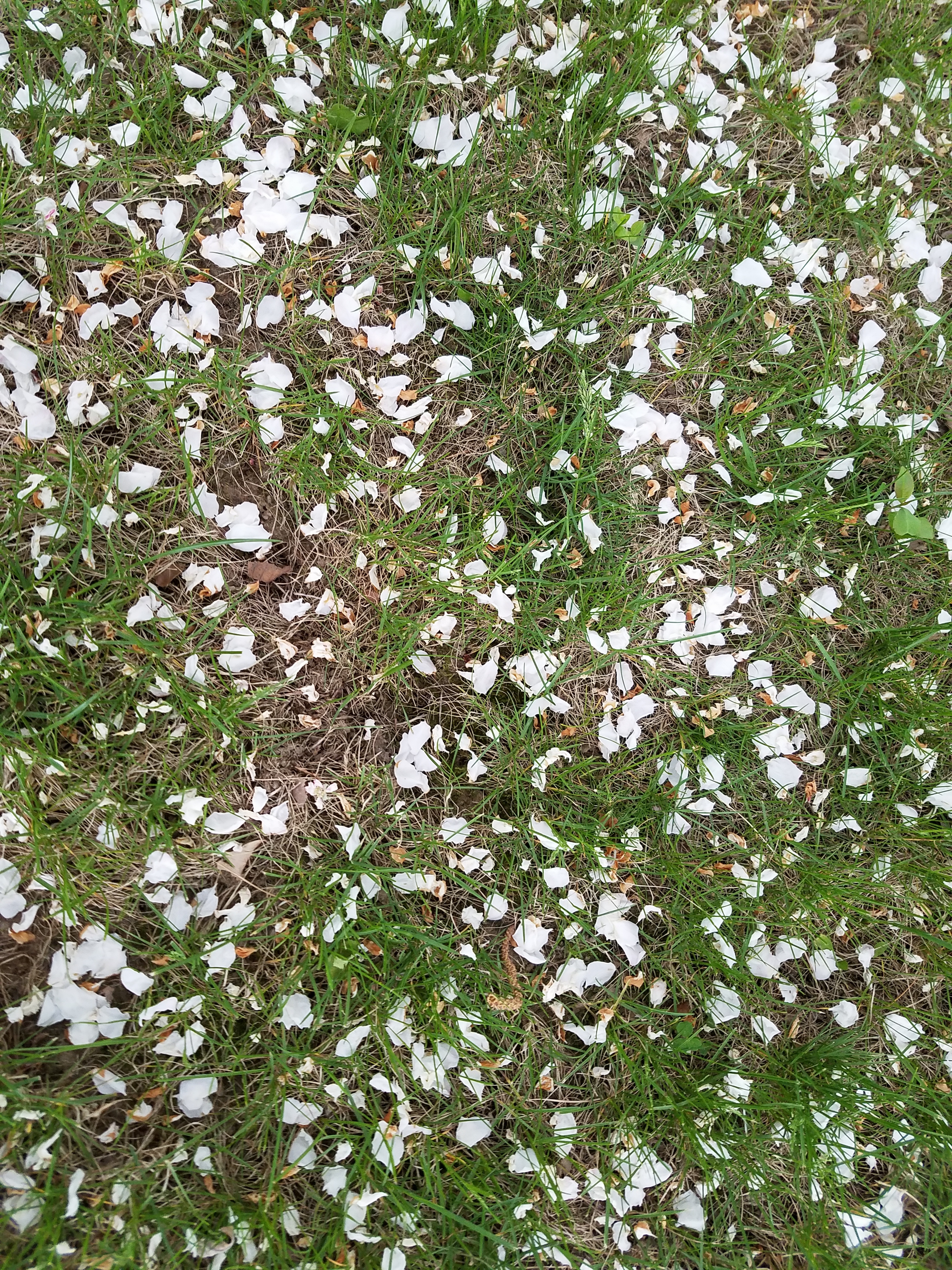
Pollination of fruit trees appeared to go well. Apple blossom petals are falling as fruit sets. We enjoyed the flowers for so brief a time. They served their purpose and are transformed by pollinators buzzing through the trees.

Rain began Wednesday and is expected to continue through the weekend. Tomato and lettuce seedlings remain at the greenhouse and the cart of seedlings at home is ready to plant if the ground dries out. I move the cart outside the garage in the morning and back inside as the sun sets. A transient ritual of gardeners who grow their own seedlings. Only a few more weeks and the cart will be re-purposed to other garden tasks.

A sense of transition is palpable as pelicans leave, blossoms are deflowered, and we take next steps on our walk through this season. We smell, touch and look at the wonder of life around us understanding it can’t be held — only lived.

Categories
Writing

First Share

New Seedling Cart with a Pallet from the Farm

After work at the home, farm and auto supply store I drove to the farm and picked up the first spring share. In it were spinach, baby kale, Bok Choy, Choi Sum, broccoli raab, rhubarb, oregano and garlic chives.

Already my mind is swirling with cooking ideas.

I’ll prepare a breakfast omelet using greens seasoned with oregano and garlic chives. Most of the oregano will be dried and flaked for cooking. Garlic chives will be processed with cream cheese for a sandwich spread. In the mix is rhubarb jam, spinach casserole, and sautéed greens. There will be lots of cooking with this week’s abundance.

It’s the next stop on along the annual circle of local food.

While at the farm I sorted through a stack of pallets used to deliver straw and hay and found two to bring home. I made a wheeled cart for summer crop seedlings finishing before the big May planting. The other will be used to organize the garage until Memorial Day. I’ve requested May 6 – 14 off work at the store to get planting done.

For the moment, life is about the weather — seeing how it unfolds and checking my weather app for forecast updates. It is also about forgetting the fray of politics for a while to become a practitioner of something useful — not only in Iowa but globally.

Categories
Writing

Goats of Easter

Goats of Easter

The sound of bleating lambs pierced the air during yesterday’s shift at the farm. It was a sad sound because we know their destiny.

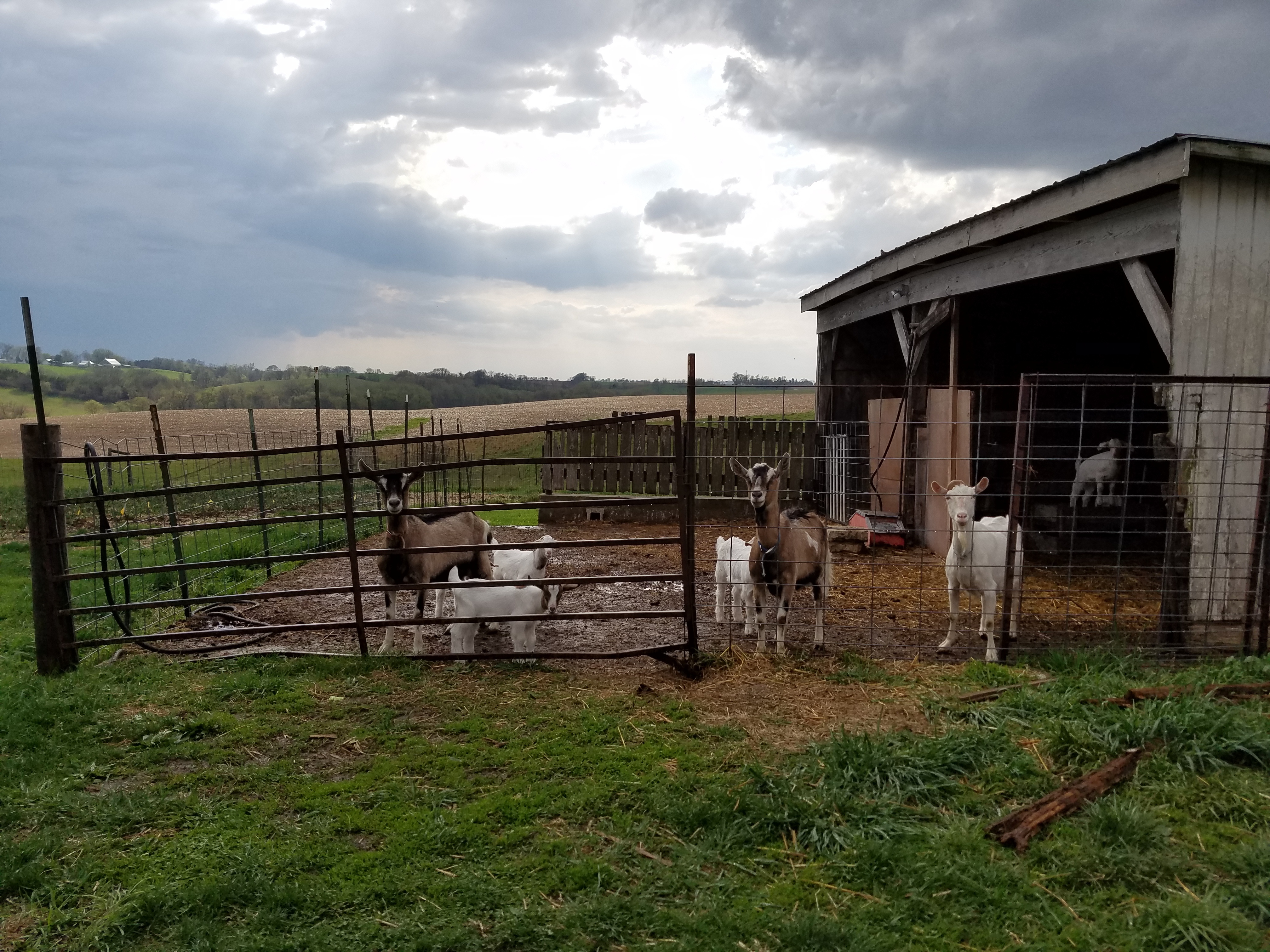
Above is a photo of goats instead.

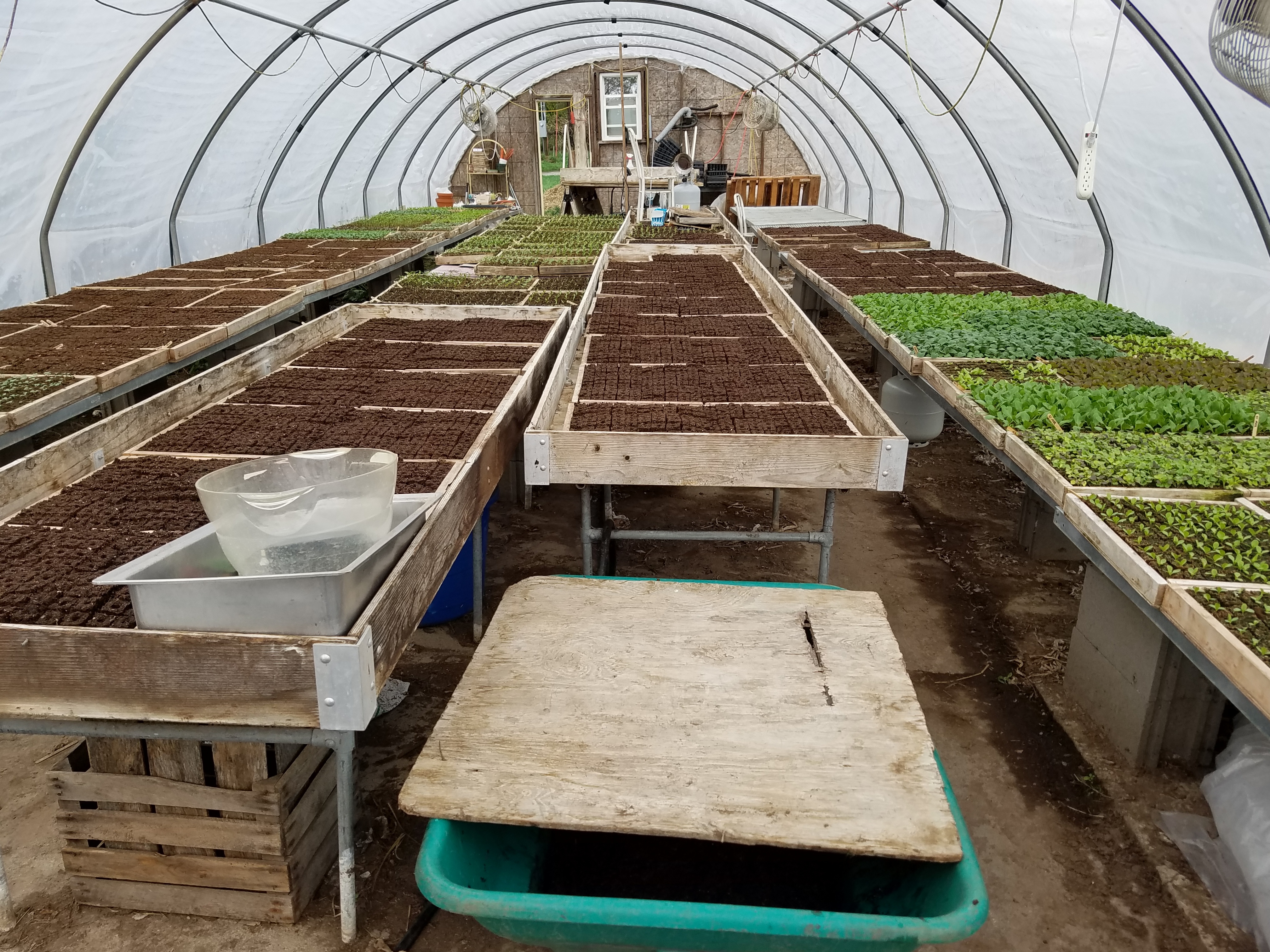
I made 60 trays of soil blocks for the germination shed. It’s time to transplant pepper plants from plastic trays where they germinated to individual soil blocks for finishing before planting. There are a lot of them.

Saturday, April 15 in the Germination Shed

I was to do 78 trays, but a thunderstorm blew over, dropping a brief torrent of rain and hail — enough hail to sting our skin. All of us —four people, two dogs and a cat — made our way into the germination shed to wait out the storm. It didn’t take long. The storm was an emphatic punctuation ending the day’s work.

Between Passover and Easter none of our lambs was sacrificed despite the popularity of leg of lamb as a holiday main course. On a farm we accept the reasons for raising lambs and goats, and the reality of thunderstorms.

I barter my work. Soil blocking yields participation in selected shares, notably the spring share which begins April 24, and fall shares from both farms. It is a way to leverage the high tunnel for early lettuce and greens, and to secure potatoes, sweet potatoes, cabbage, carrots, squash and other storage vegetables so I don’t have to grown them myself. We also exchange work canning tomatoes and freezing bell peppers with each receiving a share of the resulting jars or zip top bags.

I started seven trays of my garden seedlings in the germination shed, also part of the deal. I got bags of last year’s soil mix and onion sets that were part of the farm order. There are other sundry items: pallets saved from the burn pile, leftover partial trays of seedlings, and vegetables when there is over-abundance or if they are too imperfect for members.  While no money changes hands, there is mutual benefit from barter deals. My car was loaded as I departed the farm.

The sound of lambs permeates spring days bringing with it both hope and mortality. It’s a hopeful and sad sound. One that leads me to prefer goats.

Categories
Kitchen Garden

Weekend in the Field

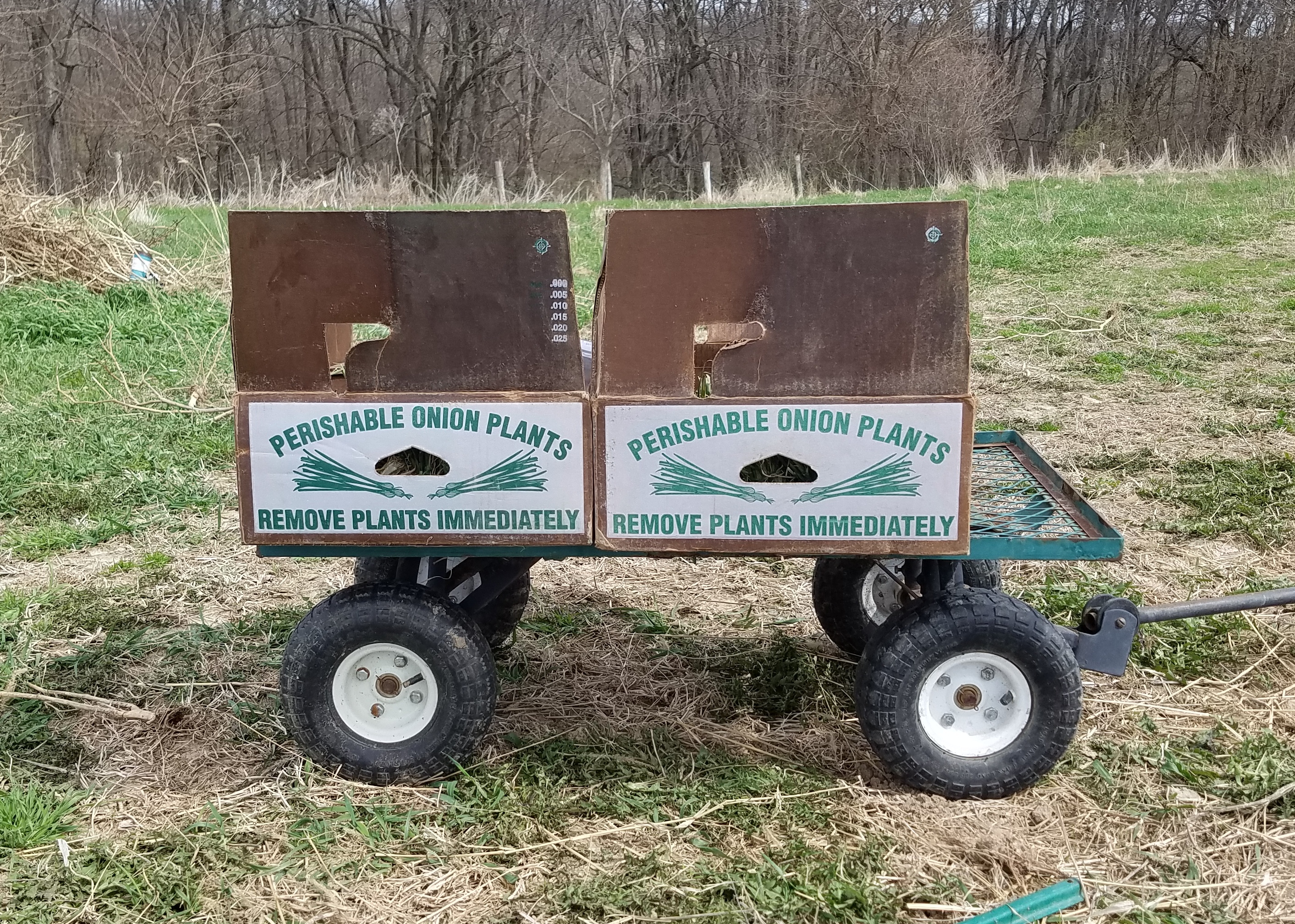
Onion Plants

The weather on Saturday was perfect for getting into the field. Wind had dried the ground making it tillable.

In the cycle of community supported agriculture projects, now is the time to plant onions — a key crop to share with members.

Most farmers I know were planting them — tens of thousands of onions.

I soil-blocked for the next planting in the germination houses — 4,608 at one farm and 4,320 at the other. I brought home two trays of kale, broccoli and hot peppers. The pepper plants will be transferred to larger soil blocks. The kale and broccoli will go into the ground this week after conditioning outside a few days.

Brought Two Trays Home for Conditioning

Saturday morning a group of about 20 people “pulled plastic” over a high tunnel damaged in a storm earlier in the year. We gathered at sunrise before the wind came up. I stayed until the bulk of the work was done. All the adults were either farmers or farm workers. Here’s what the new plastic looked like after the job was finished.

Repaired High Tunnel

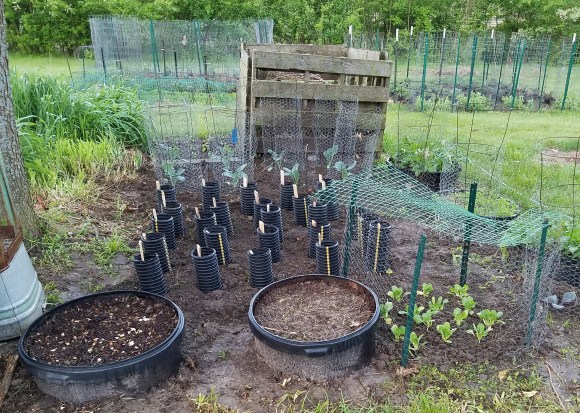
I worked in the garden after returning home. There’s a lot to do. The carrots and lettuce are up. I planted potatoes in containers, peas in cages, and beets and radishes near the peas.

I measured the remaining space in that plot and determined 36 kale plants would fit. That’s the same number I planted last year, although I hope for a better yield this year. The kale plot will be 6 Vates, 6 Starbor, 12 Scarlet and 12 Darkibor. I grew way more than I’ll need and leftovers will be given away to friends and neighbors.

I decided to just keep working until I drop this year. Life is short and gardening and farming is a good way to use it. I was tired by Sunday night.