Categories
Writing

Local Food at Risk

Last Garden Tomatoes

Our local food system is at risk before it has even become established.

The mix of retail interests, community supported agriculture, farmers markets, road side vegetable stands, restaurants and direct farm sales hasn’t coalesced into a sustainable local food system and it doesn’t appear it will any time soon.

One should never doubt the resilience of farmers. At the same time if markets go away due to changing tastes or financial stress, increased commodification could take slim margins out of farm businesses leading to bankruptcy. Iowans remember well the farm crisis of the 1980s.

A small group of pioneers made progress in starting a sustainable, local food system. People like Denise O’Brien, Dick and Sharon Thompson, Fred Kirschenmann, Francis Thicke and Susan Jutz took ideas about sustainability and put them into practical application. Their work enables a new generation of farmers to enter the local food business, people like Tony Thompson (New Family Farm), Kate Edwards (Wild Woods Farm) and Carmen Black (Sundog Farm). The idea of a return to diversified farms producing food for local markets begs the question how did we get away from it?
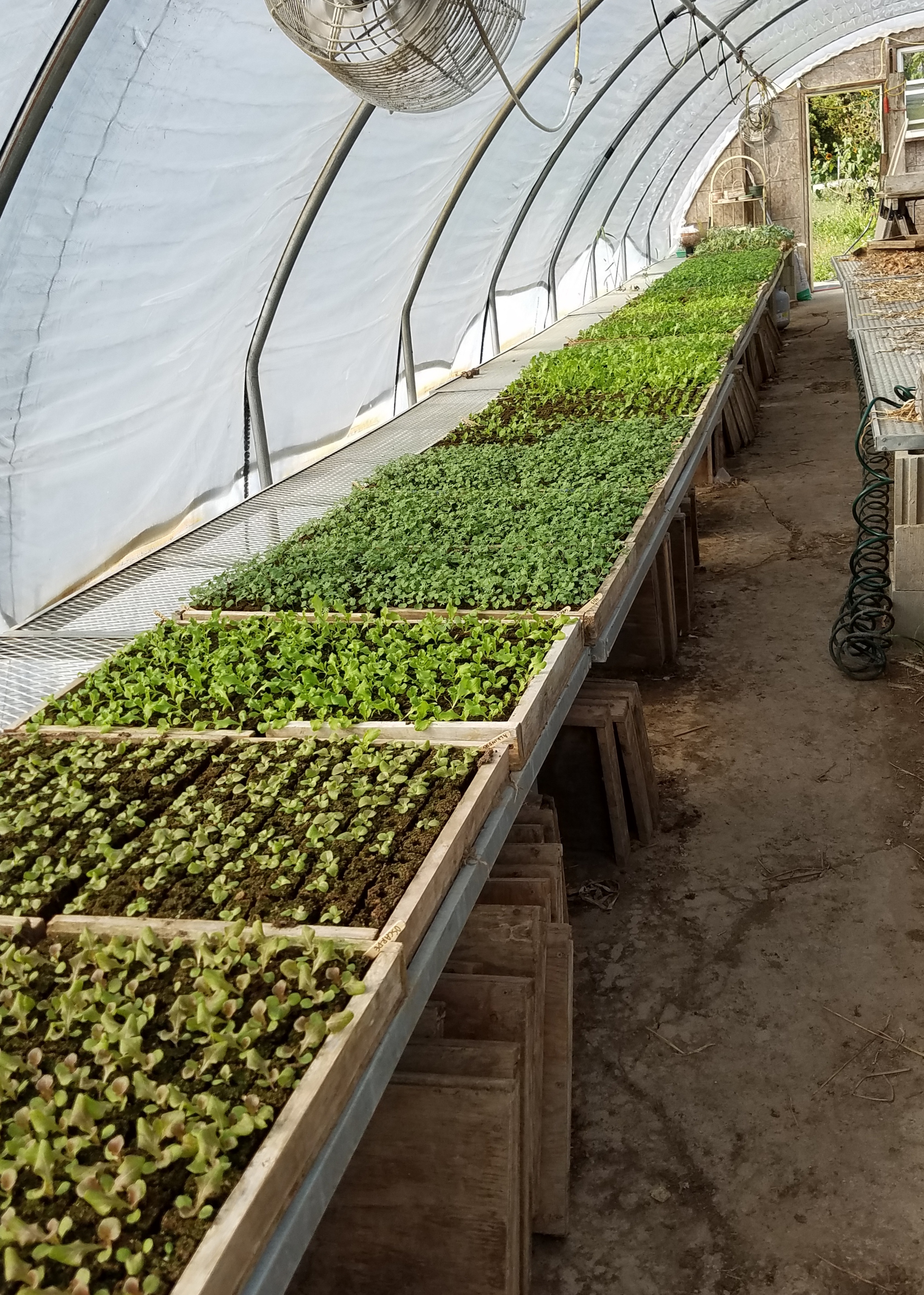
September Seedlings

Change is in the air. Change driven by economic hardship, oppressive policy in Des Moines and Washington, D.C., and climate change. It doesn’t look good for growers, retailers or consumers, not because business models have changed, but because we are entering an era when wealth flows to the top, leaving the rest of us struggling for subsistence. Cultural changes driven by our political and economic climate will test the resilience of a fledgling local food system. What we assume about Iowa’s growing conditions — adequate rainfall, predictable temperatures and soil quality — is subject to change as the oceans and atmosphere warm resulting in increased numbers and intensity of extreme weather events in Iowa.

The challenge is this: If I can buy perfect-looking Honeycrisp apples for $1.98 per pound at the grocery store, why would I pay more at a local apple orchard? The local foods answer is because one knows the farmer, has likely met him or her, and knows the inputs that go into fruit production. As families increasingly make limited resources go further, the risk to local food farmers is they will feel it as consumers pinch pennies.

Today’s food system centers around being able to say, “I’ve got mine,” with regard to a family’s food on the table or a viable agricultural business model. That individualistic, self-centered approach is not sustainable. Sustaining a local food system will take all of us working together.

Versaland, a farm owned by Suzan Erem and Paul Durrenberger, and operated by Grant Schultz, has been in the news. Schultz is well known locally and serves as an example of how a local farmer can create bad press, alienate neighbors and risk failure. In a recent blog post, Erem and Durrenberger answered the question what kind of farmer Schultz is in no uncertain terms: a neglectful, unfocused one. Read their post titled, “Grant Schultz — Facts to Consider.”

Schultz recently applied to the Johnson County Board of Supervisors to rezone part of Versaland. The supervisors rejected the application unanimously, in part because land owners Erem and Durrenberger did not support it. Local farmers with whom I’ve discussed the matter don’t understand why he wouldn’t get buy-in from the landowners before applying for rezoning. The answer is likely he can’t afford to buy the farm according to contract terms without the money his proposed idea might generate.

Whatever one feels about the Versaland saga, disputes — some including lawyers and some not — are common in agriculture. The reason the Versaland dispute stands out is there have been so few of them in the local food system. For the most part, people get along despite differences.

What is more concerning than a legal dispute is the disconnect between Versaland and its reality. This narrative started a couple of years ago.

“Mr. Schultz and Versaland have completely shifted the climate change narrative in the heartland,” author Jeff R. Biggers opined in the Nov. 20, 2015 New York Times. “Today’s farmers can play a key role in climate solutions.”

The narrative Biggers crafted about farming and climate change, featuring Schultz’ work, tells what may be possible but falls far short of what is. Schultz’ first steps in what Biggers asserts should be a global climate change campaign faltered with the revelations about Versaland the dispute brought to light. That Schultz appears to be a neglectful, unfocused farmer isn’t a crime. Those who live in the country know plenty of farmers like that. However it detracts from the credibility of Biggers’ narrative. To the extent Versaland is part of the local food system it drags everyone down.

Our local food system is not at risk for lack of a narrative. What matters more is the relationships between farmers and their customers, suppliers and landlords. Government plays a role and the negative cultural impact of federal and state governments in society remains to be seen. That is the greatest risk the local food system faces.

One hopes the window to establish a vibrant, sustainable local food system remains open, at least for a while.

Categories
Writing

Apples Toward Autumn

Deciduous Tree Leaves in Late Summer

Apples exercise hegemony over everything of late.

Yesterday our orchard’s chief apple officer cut a slice of Kidd’s Orange Red to sample and it’s been hard to think of anything else. A cross between Delicious and Cox’s Orange Pippin, developed in New Zealand by James Hutton Kidd, and introduced in 1924, the flavor is unbelievable. I’d say it was delicious but that would be an apple joke, favoring one parent over the other.

The orchard is in peak production. I picked one or two of each from the cooler to bring home: Gala, Crimson Crisp, Crimson Gold, Jonathan, Snow Sweet, and Jonafree. There are more than a dozen other varieties ripe for picking from the trees.

“Heat early in the growing season built sugar,” our chief apple officer told the Iowa City Press Citizen. “Sunny days with cold nights —like those in the past month — brought color and flavor.”

The Crimson Crisp apples are the best I’ve tasted this year. Food is about flavor as much as sustenance, isn’t it?

In our backyard the Red Delicious tree is ready to pick. This is a baseline commodity fruit apple for us. Like many home gardeners I make apple dishes from what is available. The fruit is smaller than usual because there are so many apples on each branch. There are plenty to make juice for drinking and apple cider vinegar, apple sauce, baked goods, dried apples and frozen slices for winter. Once they are picked, a mad rush to preserve them begins — I’m putting it off until Wednesday to work on a couple of other projects.

I took two bushels of kale leaves to the orchard on Sunday. I was surprised how many co-workers had never seen scarlet kale. Likewise my large leaves are much different from the bundles of small ones available in the grocery store. I asked one of my colleagues to compost whatever was left at the end of the shift. She said she wouldn’t but would take any remainders home. A gardener is always looking for outlets for kale.

In the garden, late pepper growth is happening. There should be plenty more Cayenne and Red Rocket hot peppers, some jalapenos, and maybe a few sweet bell peppers. The Fairy Tale eggplant is producing and there will be a few more large tomatoes. Some carrots survive but not enough to make a dish of them.

I took two days vacation at the home, farm and auto supply store next week to work in the yard. Garden cleanup, tree work and much needed mowing and trimming are on the agenda… also apple picking and processing. Here’s hoping the rain holds back those two days.

I’d move on to other work now except I can’t escape the complex flavor of apples. It dominates my waking hours and carries over while I sleep. As leaves on deciduous trees begin to turn I embrace the apple season, holding on until the last fruit falls, the last leaf turns to compost — sustaining a life in a turbulent world.

Categories
Environment

September Has Been a Pisser

Backyard Fire After Irma

Last week was stressful as Hurricane Irma passed through central Florida over our daughter’s home.

They boarded the windows, sandbagged the doors and laid in water and shelf stable food for when the electricity went out.

“The whole house has been playing Settlers of Catan, which we never get to play enough,” she texted. “Next up is Fluxx, a rules changing card game. The lights have been flickering slightly, but we still have power and water. Every so often, the outside sounds a bit like a car wash.”

She and her housemates weathered the hurricane, suffering minimal property damage. Her final message in the hurricane series was

Stay safe out there. If anything, I am reminded that everywhere in the US, there is some kind of emergency that can happen. Please, pack a Go Bag, prepare a plan, know where your evac locations are. I love you. Stay safe. Be prepared.

It turns out the previous board of directors for our sanitary sewer district failed to communicate new requirements to comply with ammonia nitrogen standards when they all resigned without notice. I emailed the Iowa Department of Natural Resources to learn more and there is a multi-year process for compliance added to our agenda. Stress level kicked up a notch with this.

The week ground down with efforts to meet my tomato contract. Farmer Kate and I traded my labor for her tomatoes. To finish the deal, I prepared seven quart jars of diced tomatoes each morning and water bath processed them in the evening. The work is not hard but it blocks out other things. A deal is a deal and she met her part of it with an abundance of organic tomatoes. On Friday before work at the home, farm and auto supply store I delivered two cases of canned tomatoes. We each should have plenty to make it until the next tomato season.

At Thursday’s county board of supervisors meeting a zoning application for a farm near here was considered and rejected unanimously. The controversy involves people I know in government and in the local food system. None of it is good for any of us.

“In one respect farming can be considered a tedious series of lawsuits, disputes and legal struggles,” I posted on Twitter. “Versaland bares that for all to see.”

I’m trying to understand the context and situation with more clarity and plan to write a longer post about local food in light of it.

September is always busy so there’s no surprise in any of the week’s activities and developments. Last night a group called the Iowa Faith and Freedom Coalition lavished praise and support for the 45th president. That was a pisser too.

Categories
Home Life Kitchen Garden Living in Society

How Will Beginning Farmers Get Out of the Poor Farm?

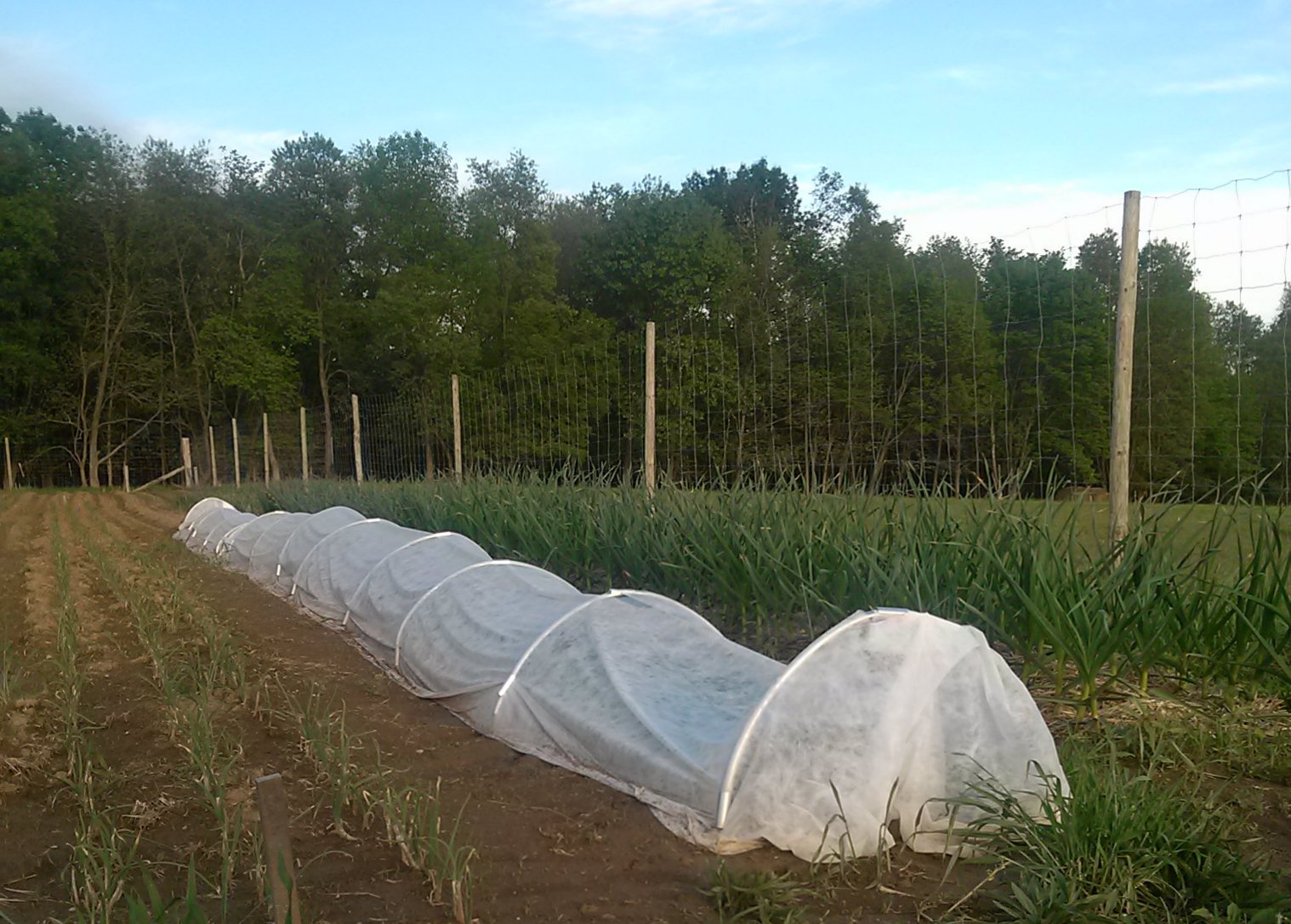
Vegetable Farm

The Johnson County Board of Supervisors disagrees on how to use the property known as the “Poor Farm” and that’s okay.

There’s no surprise something will be done with the property, especially to those paying attention. Supervisors recently decided what that may be.

In June, “The Johnson County Board of Supervisors on Friday voted (3-2) to move forward with a plan to restore and develop the historic county Poor Farm, including increasing the amount of land leased to small farmers and adding permanent affordable housing,” Iowa City Press Citizen reporter Stephen Gruber-Miller wrote.

I accept the 3-2 vote because we don’t elect supervisors with differing views to agree all the time. We want a diverse group of five supervisors. One that creates enough friction among themselves to hone the use of county assets and community resources in a way to make society better for everyone in this liberal-dominated community. Supervisor Rod Sullivan laid out the case for the board’s decision in a June 23, 2017 post on his website Sullivan’s Salvos. I’m confident something positive can come out of the board’s decision to develop the long-neglected county asset.

I like the idea of using county land as a way to help beginning farmers get started. The idea is different from reality. If they don’t have capital, farmers lease land — a temporary solution in which a lot of hard work building soil health can come to nought if they have to relocate. The cost of farm land remains high in Iowa. Every beginning farmer with whom I’ve spoken said their start-up issue is not only access to land, but the ability to purchase it. The county could help farmers by changing the definition of a “farm” from 40 acres to something smaller. In some cases an acre or two was all that was needed to get started in business. The point is local food operators can make a living farming less than ten acres. Resolution of this challenge does not lie in developing the Poor Farm.

In Johnson County there is a concern that if the farm size were changed, developers would take advantage of a smaller farm definition and build single homes on a larger acreages to serve the affluent local market of highly paid workers and retirees. The concern is not misplaced. This board of supervisors has the smarts to figure out how to enable beginning farmers to buy smaller acreages while protecting any changed land use ordinance from what the county deems undesirable development.

The key unanswered question about development of the Poor Farm is how do farmers make the transition from government dependency to independence via a stint there? Using the Poor Farm to provide land access presumes things I’m not sure are accurate — particularly a level of farming competence I’m not sure many have. It also presumes there will be a high failure rate from beginning farmers who take advantage of the program but then choose another career path. It seems obvious a better apprenticeship for new farmers would be to work on an established farm with an experienced farmer, as some local operators have done. On-site, subsidized housing is a way to help new farmers financially and makes some sense. Answering the question of how to enable a successful farmer to use and then leave the Poor Farm is the dominating question.

The idea of a “poor farm” is so Midwestern 19th century. I resist the idea of isolating beginning farmers from the agricultural community or outside the infrastructure of the city with its proximity to work, transportation, shopping and church. I would have thought we had learned a better way in the more than 175 years since Iowa was first settled.

We elected our board of supervisors to do what they think is right. If we don’t like it, we can elect someone else. That’s the way the system works. Based on the way they are handling development of the Poor Farm I’m not ready to fire any of them yet, despite unresolved issues.

Categories
Kitchen Garden Writing

Practical Gardening

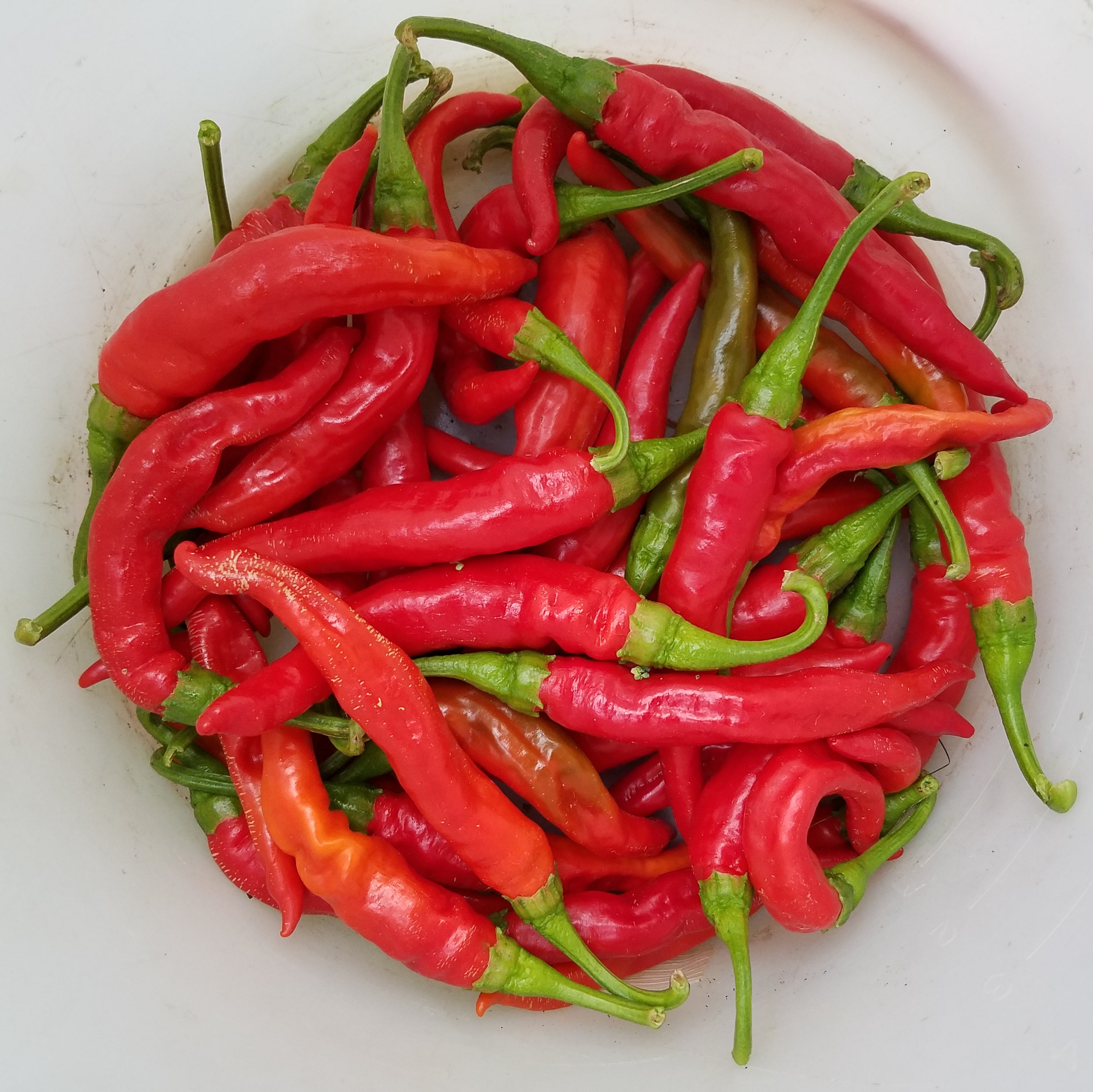
Red Rocket Peppers

Gardening is of light and shade, moisture and soil health, seed genetics and cultivation. It is an endeavor in which we can invest personal effort and a few resources to see practical results.

We garden in complex creation, only partly of our own making. Imbued with elements, animals, insects and microorganisms we don’t fully understand, this year’s garden plots brought new understanding, a bountiful harvest and a busy kitchen.

Gardeners become the verb “to garden,” and if lucky, become inseparable from the process of growing and cooking food. What was once new knowledge becomes embedded in daily actions that appear intuitive. We become the syntax of food production. Words can’t do justice to what gardeners experience and learn over decades. One sees it only in practice.

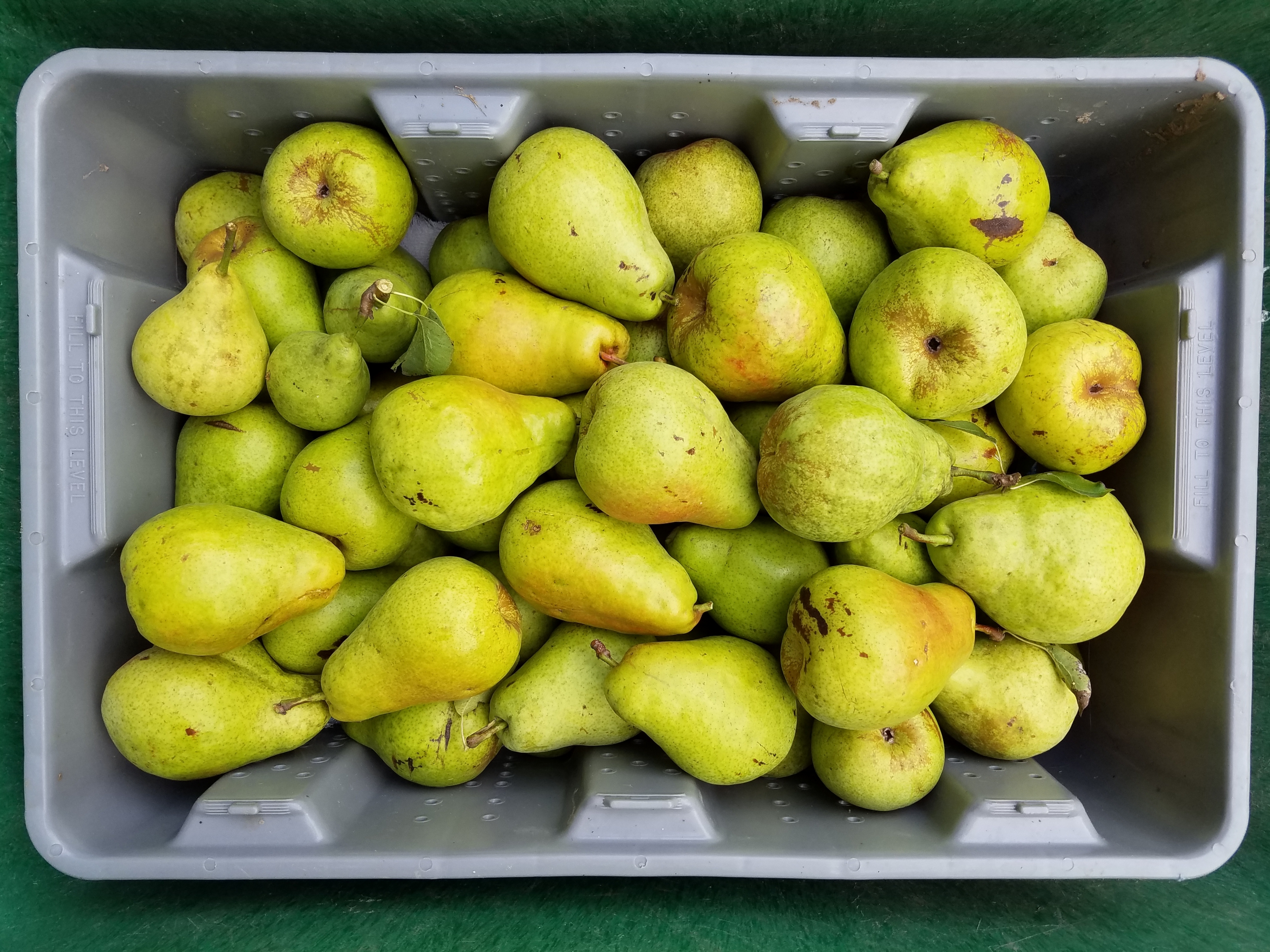
Pear Harvest 2017

Last night I rushed into the house after work at the home, farm and auto supply store to change clothes, get the ladder, and pick pears before they all drop. We planted the tree at our daughter’s high school graduation party and have had some almost every year since they bore fruit. The season is very short as are our lives. We plan to enjoy the sweetness of fresh pears as long as we can.

Red Delicious apples are not fully ripe. I ate one while rushing around the back yard chasing pears and sunlight. Sugars are beginning to dominate starches and a couple more weeks on the tree will serve them well. After that it will be a mad rush to pick and preserve them. It could be another 1,000 pound harvest.

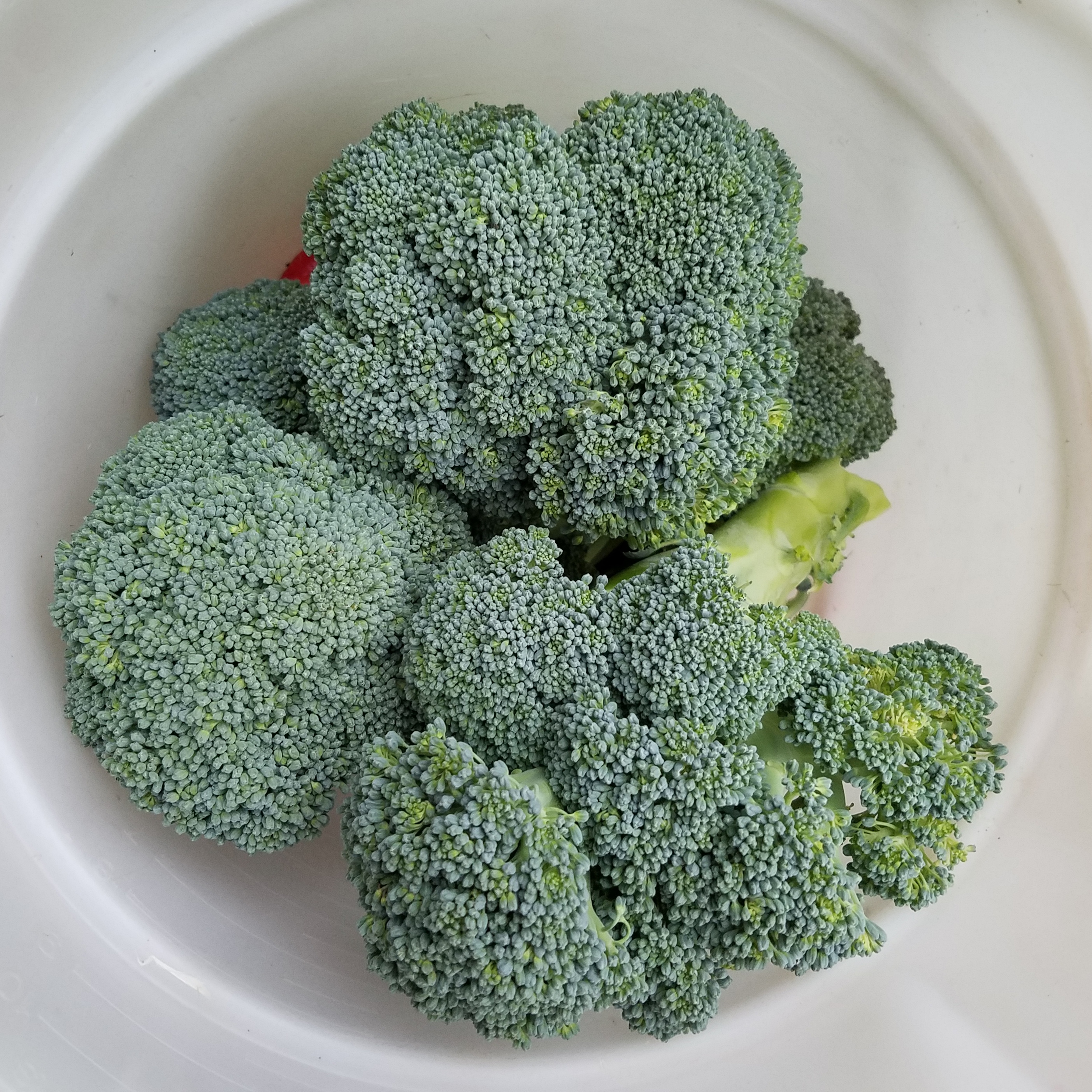
Second Growth Broccoli

There were beautiful second growth broccoli heads, about eight of them. I broke them off by hand, cut and peeled the stems for work lunch.

There were more Red Rocket peppers. I harvested the reddest ones, leaving many more to ripen. In the kitchen I took the others from the baking sheet in the oven (oven turned off) and carefully spaced them on the five trays of the dehydrator. I’ll dry them until they are ready to grind into red pepper flakes.

Someone brought cucumbers to the orchard on Monday. I took half a dozen (there were an inch thick and 5-6 inches long) and combined them with what was already in the ice box to make a second batch of fermented dill pickles. It takes 10 days if everything goes according to plan. Fingers crossed.

Monday I picked up two crates of tomatoes and two dozen quart Mason jars at Kate’s farm for canning. This is part of our barter arrangement in which she provides tomatoes, I process them, and we split them resulting canned goods. I sorted them Tuesday morning before my shift. Once spread out they filled four and a half crates instead of two.

I made ground tomatoes from the ones with bad spots as a base for pasta sauce. Here’s the process: Wash, trim and quarter the tomatoes then pulse in a blender until the big pieces break down. Put the blended tomato pulp in a juice funnel to separate liquid from the flesh.

After an hour, the split was 50 percent juice to 50 percent flesh. I put the results in jars and stored them in the ice box. I’ll can the juice and make pasta sauce while I work in the kitchen tonight or tomorrow night.

With two paid jobs and diminishing daylight there’s not much gardening time in my schedule. The lawn needs mowing and I plan to plant garlic in a week or two and there’s work to do preparing the soil.

It’s a rush until first frost, after which I may be able to slow down — but I doubt it.

Categories
Kitchen Garden Work Life

Three Cup Day

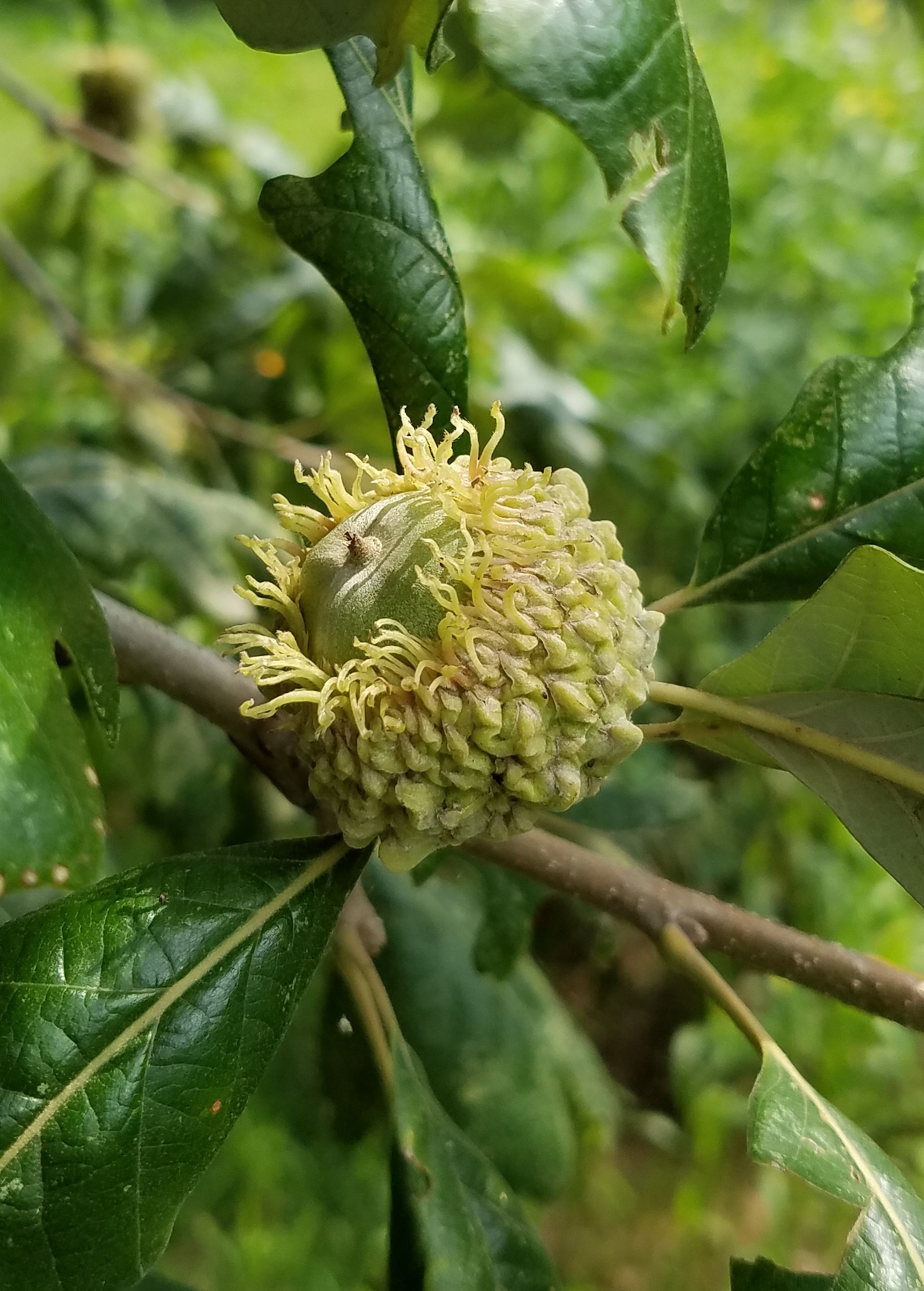
Bur Oak Acorn

Today will require an extra cup of coffee.

This week is the biannual vendor show at the home, farm and auto supply store. We’ll be short staffed today and tomorrow while associates from Iowa and Wisconsin travel to Dubuque to attend seminars and discuss products and process with our vendors.

If it’s like last year, my work queue will build up and I won’t dig out until Thanksgiving. The days will pass quickly and my aura may be colored in shades of grumpiness.

Coffee helps.

This weekend — Labor Day weekend — is the unofficial end of summer and I’m ready to glean most of the garden leaving only kale and peppers until first frost arrives in October. I secured seed garlic from one of the farms and will plant in September. The garden has been successful, the most successful in memory. It has been encouragement to plan for next year.

Saturday and Sunday I made a large pot of vegetable broth with items mostly from the ice box: kale, collards, chard, celery, three kinds of summer squash, carrots and onions. The resulting product was dark and rich.

I made rice with the broth, poured some in canning jars, and made a big batch of lentil-potato-barley soup for work lunches. I used eight or ten leeks in the soup which made it slightly sweet. Growing leeks creates a wonderful availability for the kitchen.

Last night I picked tomatoes, peppers, celery and leeks while the water bath canner came up to temperature on the stove. I ate a Red Delicious apple from the tree. It was slightly sweet and mostly starchy. It is time to begin monitoring the fruit’s progress. The pear tree is close to ripe and will be picked this week.

There is plenty of kitchen work ahead.

So begins another day in the final lap of a working life. I’m heading to the kitchen where I’ll make a second pot of coffee before work. The hot beverage doesn’t resolve our challenges. It makes them more tolerable.

Categories
Environment Kitchen Garden

Hurricane Weekend

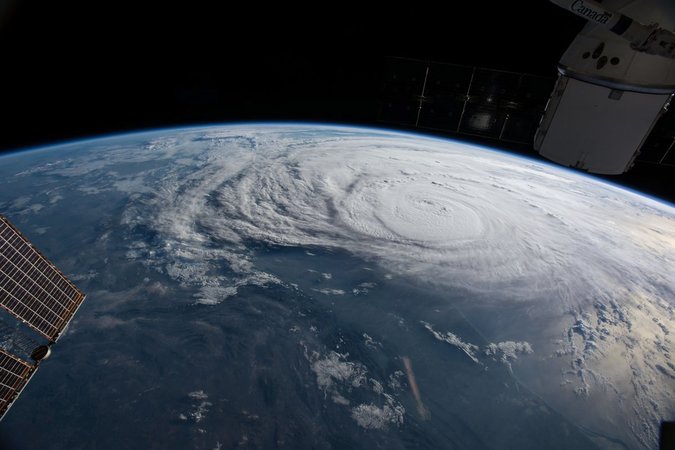
Hurricane Harvey from the International Space Station on Aug. 25, 2017. Photo Credit – NASA European Pressphoto Agency

Rain tapped the bedroom window this morning on the fringe of Hurricane Harvey.

It was a reminder of our connection to the oceans. They are absorbing heat from the atmosphere on a planet experiencing some of its warmest days in living memory. A warmer atmosphere holds more moisture and the result is intense storms like the Category 4 Hurricane Harvey.

In Iowa we adapt easily to hurricanes because of our distance from the coast. Needed rain benefits our gardens and farms. It recharges our surface aquifers. As the weather pattern moved over it seemed normal, not as devastating as it was when Harvey made landfall in Texas Friday afternoon.

Overcast skies and a slight rain depressed attendance at the orchard on Saturday. There were enough visitors to keep busy, especially in the afternoon when the sun came out. Sales seemed steady if light.

One of my favorite August apples is Red Gravenstein, a Danish cultivar. It was introduced to western North America in the early 19th century, according to Wikipedia, perhaps by Russian fur traders, who are said to have planted a tree at Fort Ross in 1811. Red Gravenstein is tart, juicy and crisp — great for eating out of hand.

The cider mill made the first press of apples for the sales barn. The gallon and half gallon jugs sold well. Over the years I’ve come to appreciate the changing flavor of our cider as we move through the apple harvest. I bought a gallon of cider and a dozen Red Gravenstein apples at the end of my shift.

I’ve been reading recipes for tomato catsup in old community cookbooks. After reviewing a dozen or so I went to the kitchen and created this sauce from the abundance of red bell peppers and tomatoes:

Red Pepper Sauce

Ingredients

Half dozen cored and seeded red bell peppers cut in quarters
Equal amount by weight of cored tomatoes one inch dice
One cup of malt vinegar
One teaspoon salt
One tablespoon refined sugar.

Process

Pour the vinegar into a saucepan and bring to a boil.
Add tomatoes and peppers.
Add sugar and salt.
Bring back to a boil and cook for 10-20 minutes until the vegetables are soft.

Strain the mixture. Retain the liquid to use as vinegar in salad dressings.
Run the vegetable mixture through a food mill and either serve immediately or bottle and refrigerate.

Recipe notes

To make a thicker sauce, either reduce it in the saucepan or add tomato paste.
I used malt vinegar because it was on hand. Absent malt vinegar I’d use homemade apple cider vinegar.

Categories
Kitchen Garden

Work, Kitchen, Garden

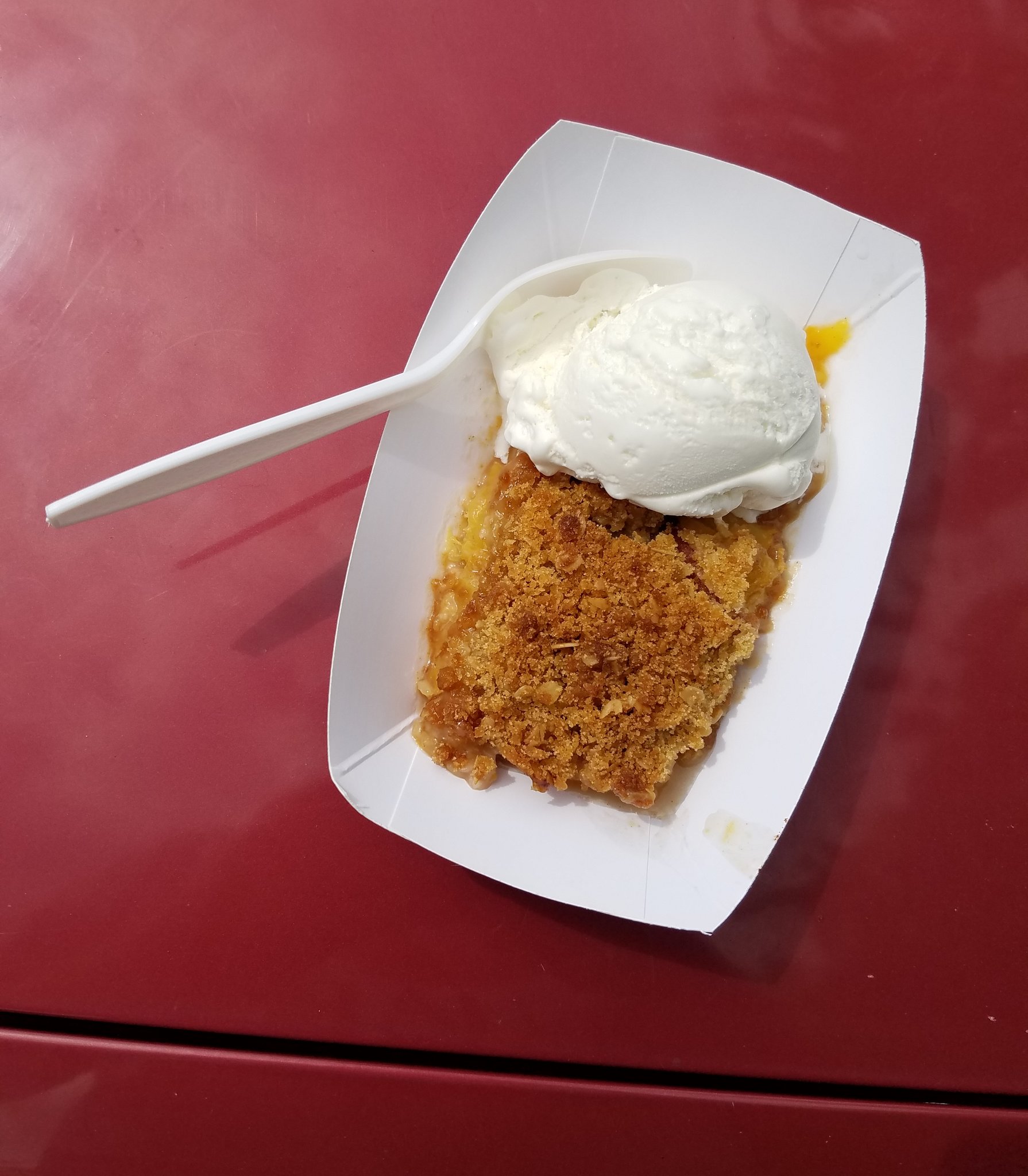
Peach Crisp at the Orchard

The text message came while I worked at the home, farm and auto supply store. I saw it on my afternoon break.

“If you want to start tomatoes there is a crate on the packing shed floor you could pick up on way home from work,” Farmer Kate texted. “I’m not home but if you need help finding them let me know.”

We barter my labor canning for her tomatoes. Ready or not, the next aspect of the local food season begins with its quick-paced rush to beat spoilage.

When I picked up the tomatoes there was also a crate of bell pepper seconds unclaimed by CSA members. A farm worker offered them and I put the crate in the back of my Subaru.

On the way hope I spotted the librarian leaving the library for her car and swung by to offer some peppers. My sister in law was at our house when I arrived home. I offered her some too. They are so sweet — unlike what’s available at the grocery store. A gift to be shared.

The garden is coming in with more apples than can be picked before they drop. Pears are almost ready, there are tomatoes, celery, hot peppers, basil and more waiting to be harvested and processed. There will be more cucumbers for pickling. Sweet corn will run another week or two at the roadside stand and we want to put some up. Every night after work and most mornings before, I’m in the garden harvesting or in the kitchen making dishes and preserving the harvest. Right now tomatoes, peppers, sweet corn and apples are in the house waiting to be processed. It’s a mad rush.

It’s also a good life. Staying busy with useful work blocks out negativity from other sectors of society. It’s cultured and produces the tangible benefits of relationships, knowledge and good food for our table and those with whom we share.

For the rest of August and September, it’s work, kitchen, garden for me.

Categories
Writing

Into the Apple Vortex

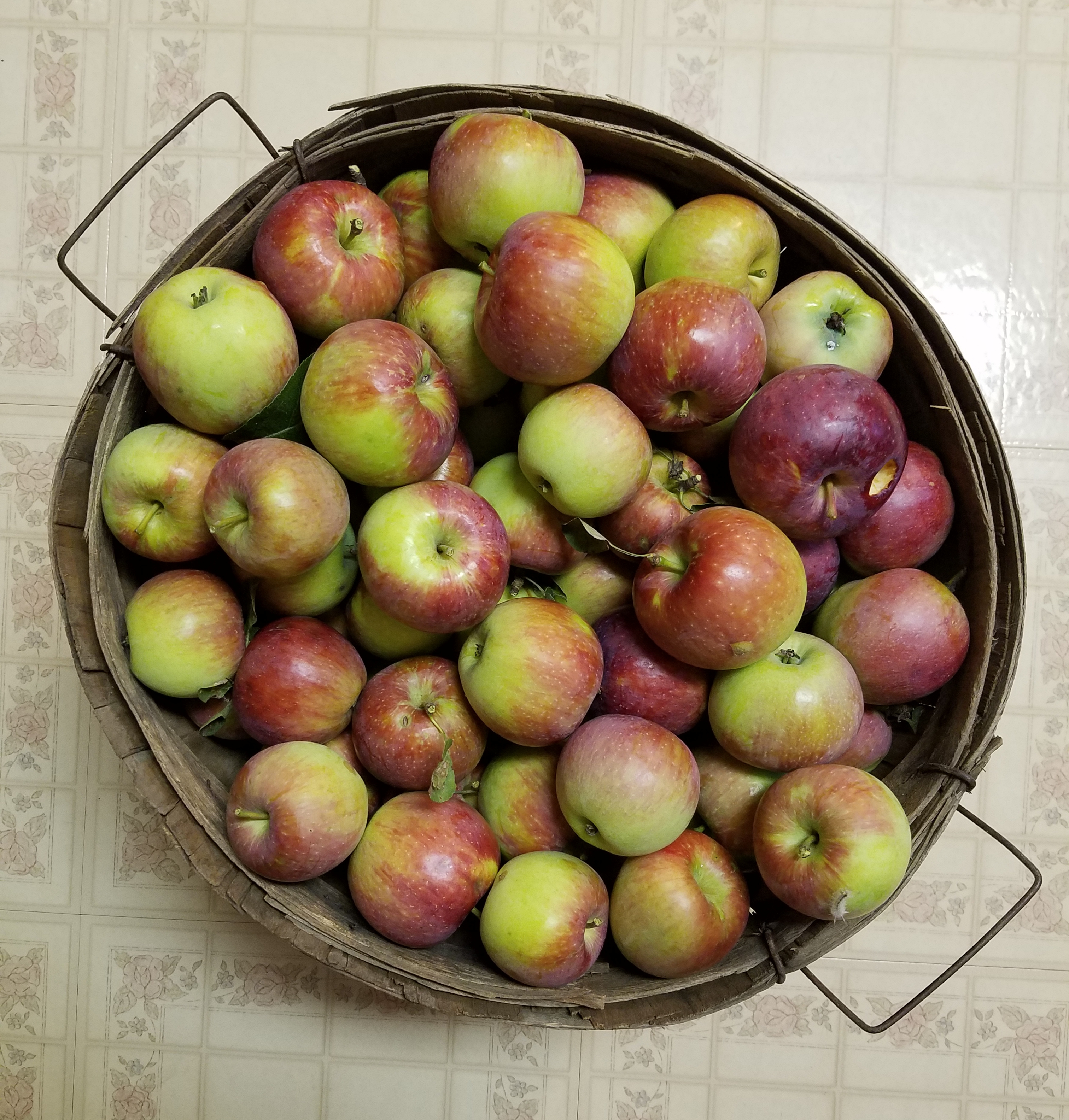
First Peck of Apples

This year’s apple crop has been one of our best. That means an apple activity vortex beginning now until the last red delicious is picked in October.

The two earlier trees are ready to pick and best suited for eating out of hand, apple sauce, apple butter, apple juice for drinking and cider vinegar, and baked goods.

Red delicious apples are good for these products as well and hold up for slicing, freezing and drying. A bit of everything apple is planned this fall.

Working two paid jobs, seven days a week relegates apple chores, and other processing of pears, tomatoes, hot and bell peppers and the like to late at night or early in the morning. These will be busy days, no doubt.

Canning Soup and Jalapeno Peppers

I’m considering getting a second water bath canner to speed up the process. At seven jars per batch I’ve gotten the work done, but at 14 more may be accomplished in the same time. We’ll see how that goes. I’m ready to start canning.

Some lessons learned. In past years I’ve canned garden vegetable soup and have about 24 quarts on hand. That’s enough to last until spring so there’s little reason to can more. The same is true of apple butter. I need to use some of what I have to make room on the shelf so I plan to skip this year. 20 quarts of apple sauce remain in the pantry from previous years. I’ll make enough to get to three dozen. That should take us through to the next large apple crop.

Ending up in an apple vortex during the last lap in a workingman’s race is not bad. I’d say it’s delicious but that would be an apple joke.

Categories
Kitchen Garden

Food Sustains and Protects

Gardener’s Breakfast

The origin of my adult interest in cooking and gardening is time spent in a motel room in Thomasville, Georgia while implementing a logistics project at a large, nearby mining and manufacturing company.

I’d go into the plant early and stay late, returning home to Iowa only every other weekend. When I got back to my room, I turned on the television and fell asleep watching the TV Food Network.

That’s not to say experiences with my mother and grandmother played no role. They did, especially in our kitchen on Marquette Street where Mother prepared meals using familiar ingredients both fresh and prepared, and at Grandmother’s kitchen — first at the Lend-A-Hand and then at the Mississippi Hotel.

Rather than sustenance, food became an escape in my adult years.

In the 1990s I escaped into the T.V. During thirty minute segments I could forget extreme poverty and plain family restaurants that served a meat and three sides in rural Georgia, and engage in personality chefs who enjoyed what they were doing as locals did not. I had no kitchen so the interest was intellectual. I did learn techniques, some of which I would use later in our home kitchen. We don’t get Food Network any longer but it set me on a course for being the kind of home cook I am today.

Yesterday I made breakfast of steamed broccoli, fresh tomatoes and quesadilla — a gardener’s breakfast. In a social climate of political turmoil, disease, famine and extreme weather events food continues to represent escape as well as nourishment. Producing local food and dishes is a way of navigating diverse interests in a society that seems to have gone mad. Not only escape, but protection of who we are from those who would change us.

In western culture we begin each day with choices about food. The lesson I learned in Georgia, on the T.V. and in family kitchens is to choose fresh and local in order to sustain our lives, and there’s more. Make something of our choices. For a brief moment yesterday it was a gardener’s breakfast. Now to turn to today.