Earth Day is upon us. We should do something to note the occasion. Things like plant a tree or garden, or get together with neighbors to volunteer in our community come immediately to mind. I want to do those and more.
An individual can do a lot to improve the environment. We are past the point of relying solely on individual actions to address environmental problems.
The non-profit Conservation Coalition recently posted video of Congresswoman Mariannette Miller-Meeks. She said, “We don’t talk about very simple things that we can do that will allow us to both clean our environment, have a better environment, let people enjoy nature, but then also will be very productive and low cost going into the future.”
Individuals can do more. However, reducing acid rain, to which she referred in the video, was accomplished neither by an individual, nor was it low cost. Acid rain was addressed by George H.W. Bush signing the 1990 Clean Air Act.
We need more environmental accountability driven by the Congress, specifically by Chuck Grassley, Joni Ernst and Miller-Meeks. Focus on individual actions diverts our attention from what’s most important: the issues only government can address. We need focus on government action this Earth Day.
~ Published by the Cedar Rapids Gazette on April 13, 2021
For the first time since February 2020 I got a haircut at a professional shop. Despite two home haircuts during the coronavirus pandemic it was shaggy.
It felt good seeking a professional now that I’m fully vaccinated. The mask-wearing stylist asked me how I wanted it cut. As usual, I didn’t know. I suggested we look at the various sized combs that go with the electric clipper and she pulled four of them out of her drawer. We settled on number six.
My instructions were the same as always: tapered in back, a part on the left side, and cut it short in front so the outdoors wind doesn’t blow it into my eyes. We both wore masks during the session.
Getting my hair shorn was a welcome break from a year of contagion.
Where does society stand as Earth Day approaches? On shaky ground.
The Iowa legislature was unable to pass a revised bottle bill this year. Grocers and other retailers have wanted out of the responsibility to accept recycled cans and bottles since the beginning in 1978. If the legislature passes anything, it would be to relieve them of this duty once and for all. That’s how we roll in Iowa under Republican rule.
The problem with any of the states that has a bottle bill is not the amount of deposit, recycler handling fees, or the decision which containers are covered. It is that even with the best programs too much plastic, glass and metal finds its way into the waste stream. For Pete’s sake, it’s raining microplastics and the ocean is inundated with the stuff. Bottle bills create a diversion from the problem of regulating manufacturers, they assert that consumers are responsible for this form of pollution. Blaming consumers is an old sawhorse originating in the industry-backed Crying Indian campaign of 1971. If you are of a certain age, you’ll recognize this commercial.
Iowa is a state that does not care about the quality of our water except to comply with public drinking water standards. We have more livestock than people here and between manure runoff, field drainage tile, and surface runoff, our list of impaired waters is very high. Just this month, Iowa Department of Natural Resources approved a cattle feedlot in the watershed of a pristine trout stream.
“IDNR’s refusal to disapprove the plan submitted by Supreme Beef shows the sad state of affairs in Iowa when it comes to animal feeding operations. State laws and the DNR both prioritize new concentrated animal feeding operations (CAFOs) over protecting our streams, rivers, and lakes,” Iowa Environmental Council attorney Michael Schmidt said in a statement.
There are two main components to environmental protection. Personal actions and government regulation of polluters. The largest corporations would like to see a focus on individual action because they seek to divert our attention from their corporate behaviors and what it would cost for them to improve. Elected officials? They mostly would like to avoid controversy with the electorate that put them in office. I eat a vegetarian diet, so I avoid most hog, cattle and chicken products. It’s not doing the job of environmental protection from livestock pollution.
Earth Day has become a celebration of Spring where individuals do things: clean up litter, plant a garden, or go on a bicycle ride. While personal action to improve the environment remains important, what matters more is corporate accountability, something a small group of industrialists is working hard to get us to avoid. Like the Crying Indian advertisement, they seek to distract us.
On Earth Day 2021, we must focus on holding corporate polluters accountable. That means working with elected officials to get something done to protect the environment. We’ll have to be persistent, though. In Iowa our federal elected officials don’t want to hear about holding their financial backers accountable. Even with our Republican office holders, one hopes repetition can lead to belief. Not contacting them about the environment is exactly what corporate interests want us to do.
Evening meals are our main ones, especially during the pandemic. I wrote a list of simple meals to get us through this time of contagion. Last night I spent a couple of hours preparing enchiladas for the first time.
Based on the amount of prep work, enchiladas are less than simple. Tortillas need cooking, a sauce must accommodate differing tastes, and issues of fillings and side dishes remain to be resolved. Enchiladas are a from the pantry meal this time of year.
I buy uncooked flour tortillas at the wholesale club. Cook them first and store on the counter in a tortilla warmer.
Next, I opened a 15-ounce can of prepared organic tomato sauce. Emptying the can into a sauce pan, I mixed a couple tablespoons of water with a tablespoon of arrowroot in the can. Once thoroughly mixed, I added it to the tomato sauce and incorporated. Seasoning: chili powder, onion powder, garlic powder and dried cilantro leaves. I brought the mixture to just boiling and turned it down to a slow simmer. There are two glass bread pans in the cupboard to separate plain from spicy. This base sauce will make both.
A filling is easy. We buy prepared vegetarian refried beans in 16-ounce cans at the grocery store. They come with onion powder, chili pepper and garlic powder already mixed in. They can be used as is, or with added seasoning. I added salt, garlic powder, onion powder, and dried cilantro leaves. Once seasoned, mix thoroughly.
Prepare the baking dishes with a light coating of cooking spray or lecithin. I prepared the less spicy batch first. Put a layer of sauce on the bottom of the baking dish. Roll the bean mixture in tortillas and place them in the sauce, seam side down. Our dishes hold three. Cover with additional tomato sauce, then wrap the pan with aluminum foil to retain moisture while cooking.
For my batch, I added prepared hot sauce to the remaining tomato sauce and lined the bottom of the baking dish with it. I used the bean mixture as a base filling and added prepared peppers from the ice box and a Mexican-style cheese. Once three enchiladas were lined up, I covered them with the remaining sauce, sprinkled some cheese on top and wrapped with foil. Both dishes went on a baking sheet and into a 350 degree oven for 30 minutes. At that point, remove the aluminum foil and cook another ten minutes. If you want the cheese to brown, put that one under the broiler.
It is important to pay attention to how much tomato sauce is used. This recipe makes enough for two bread-pan sized baking dishes and no more. Don’t run out!
I made a batch of Spanish rice to go along with the enchiladas. Enchiladas will be a nice addition to our pandemic rotation of evening meals.
Toward sunset I checked the greenhouse. The plants look healthy and unblemished.
There are a couple of empty shelf spaces which will be filled with tomatoes and peppers once the channel trays germinate on the heat pad. The question is when to plant?
My farmer friends posted this note about gardening in Iowa:
It’s really easy on these first nice days to get excited and plant plant plant but we know there’s some frosts still on the horizon! The roller coaster of spring in Iowa keeps us on our toes, but what it delivered today felt pretty dang good.
Local Harvest CSA, Instagram, April 5, 2021.
The ten-day forecast is for overnight lows well above freezing. Despite the risk of frost, I plan to get kale in the ground this week. It will tolerate some frost and I don’t want the seedlings to get root bound. In case the early crop fails, I started back up seedlings.
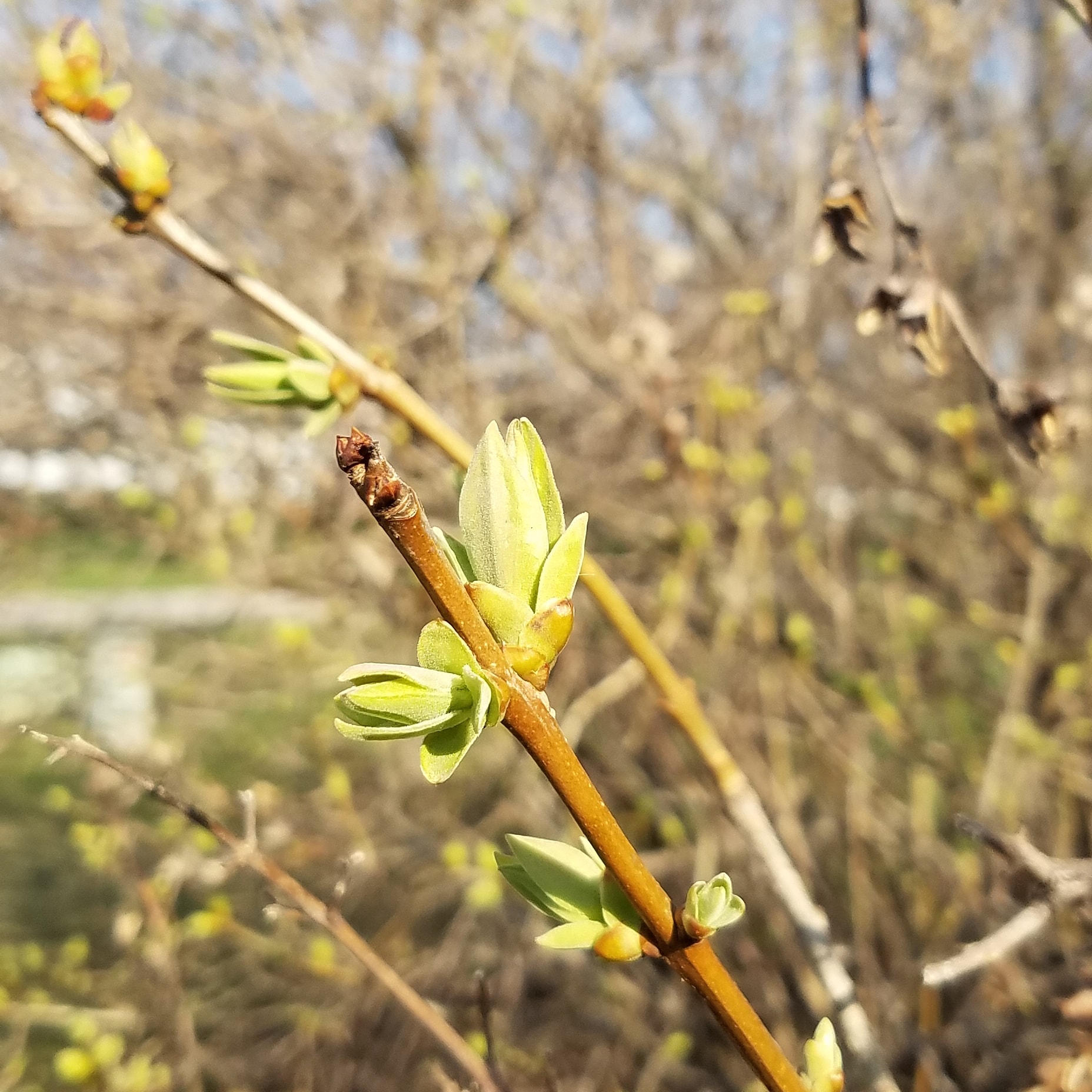
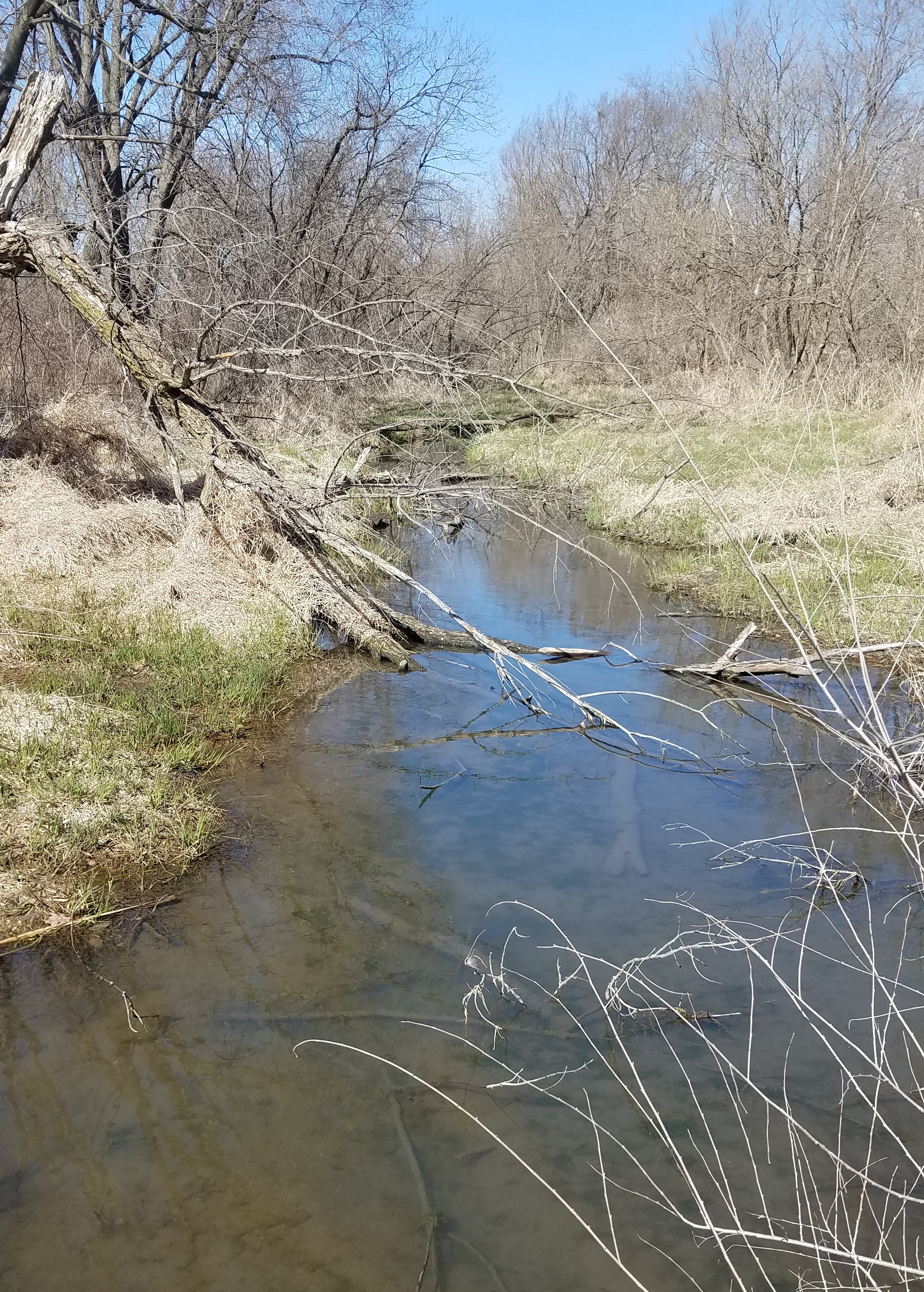
I walked on the state park trail yesterday afternoon and the place looks pretty bleak. The landscape is of browns and greys. Spring does not appear to have arrived and damage from the Aug. 10, 2020 derecho is noticeable everywhere.
There is hope in the greenhouse and untilled garden. Hope sustains us in the time of contagion.
An image of the garden is coming into view. The first plot is garlic planted last October. The second is two kinds of peas, two kinds of radishes, two kinds of carrots, and purple and white turnips. Where the blue tarps are will become a patch of leafy green vegetables: kale, mustard, chard, collards and the like. There are five more plots to plan and their use is rapidly clarifying.
Going forward, the plots will rapidly fill with seeds and plants. One is for onions, shallots and leeks, another devoted to tomatoes, a smaller one devoted to broccoli and the two remaining must contain everything else. There is plenty of room to dig additional plots, yet that’s not on the agenda this year.
The ten-day weather forecast is for overnight lows well above freezing. While there is a danger of frost during the next six weeks, kale and collard seedlings are going into the ground today or tomorrow. If it freezes, I’ll cover the plants with an old bed sheet.
Sunday there was a high risk of grass fire in our area. I had planned to burn off one of the plots along with a brush pile. I thought the better of it. With dry conditions, low humidity, and wind gusts of up to 25 miles per hour, delay was the best decision.
The shelves of the greenhouse are almost full of trays of plants. The heating pad has tomatoes and peppers germinating. The plan is coming together. It will be a rush to get everything in the ground by Memorial Day, the traditional day to finish initial garden planting.
While it was concerning ambient temperatures reached the high seventies yesterday, it appears I can get a crop this year. Fingers crossed that I will.
Easter was a time for us grade schoolers to don special clothing and attend Mass with Grandmother and our parents. There was a special Easter dinner, an egg hunt, a basket of treats, and Grandmother’s insistence on photographs of us dressed in our special outfits. We anticipated Easter throughout the year, which for me modeled the liturgical year.
Easter celebrated the Paschal mystery and was a special time, equal in its celebration to Christmas. Its main subject is the passion, death, and Resurrection of Jesus Christ – the work that God the Father sent His Son to accomplish on earth. Easter is central to being Roman Catholic.
What I didn’t realize then, but do now, is celebration of Easter with Grandmother was a cultural heritage derived from peasant life in Poland and carried to the United States by her grandparents. I wrote about the settlement of the Wilno, Minnesota Polish community and the bargain of establishing Saint John Cantius Catholic Church there. In a rich cultural life, Easter played an important role on the Minnesota prairie. Church life was also central to my growing up. It was a cultural impetus that eclipsed everything else in my life for a long time. In college, I even considered studying to be a Catholic priest.
Father attended Easter Mass with us but was not baptized Catholic. His interest, he told me, was in associating with the church community to locate patients for his nascent chiropractic practice. He was in process of conversion at the time of his death and neither made it to a chiropractic practice nor Catholicism before he died in the meat packing plant accident. Even so, the church was packed to the rafters at his funeral Mass celebrated by the Right Reverend Monsignor B. L. Barnes.
It is hard to shed the culture in which I came up, nor would I want to. Although Easter doesn’t mean as much these days, and I may go to hell because of it, I continue to note the occasion if only by celebrating the spring renewal of life all around us. Our grasp on today is tenuous and the well of our experience is both thirst-quenching and a potential drowning site. On Easter Sunday we must find renewal where it lies and work toward the potential for good rather than doom. The Pascal mystery teaches us there is hope and that’s a fit lesson for this time of contagion.
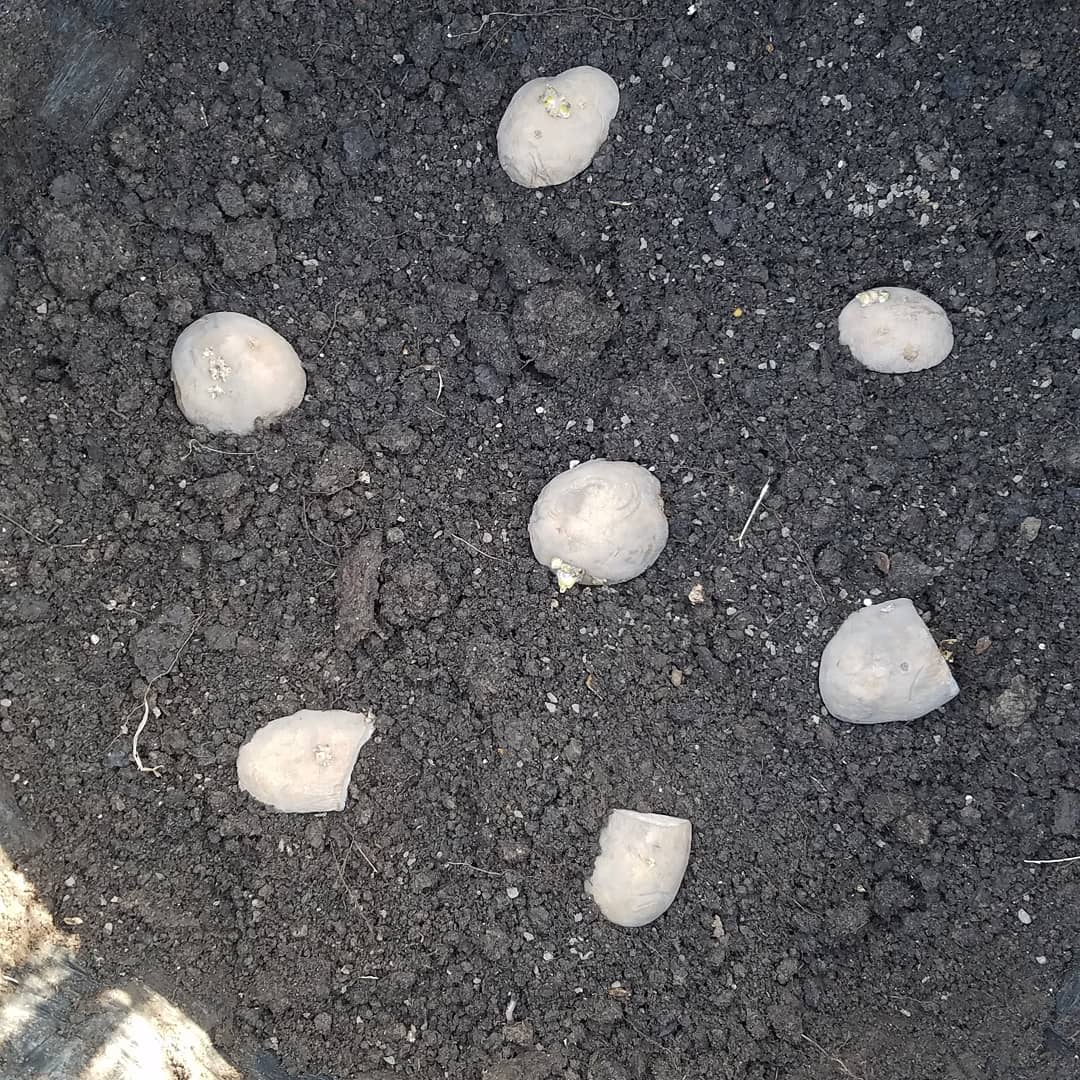
Everything aligned to plant potatoes on Good Friday as is a Midwestern garden tradition. It began with cutting seed potatoes and curing them in the garage for about ten days.
I removed all but the lower four inches of soil in four containers. Adding two scoops of fertilizer to each (composted chicken manure), I stirred it around until the soil was broken up and the fertilizer thoroughly mixed in.
Next I arranged seven or eight seed potatoes in the soil at the bottom of the tubs. I got a yard stick and made marks eight inches above the soil. I filled them in two layers to the marks, putting a scoop of fertilizer in between layers.
After smoothing the surface, I applied ground red pepper flakes to deter digging rodents and defecating cats from getting into the soil. Next step is to get the garden hose from winter storage and give each tub a thorough soaking.
Once the potato vines begin to sprout from the soil, I’ll fill each tub to the top with additional soil. After that, the plants are monitored and watered. If Colorado potato bugs show up, I’ll pick them off and drop them into a bucket of soapy water.
This process doesn’t grow many potatoes, but the harvest is delicious and abundant enough. Importantly, it reenacts a gardening tradition inherited from my maternal grandmother.
Derecho damaged woodlands in the state park. April 1, 2021.
With a forecast low temperature of 28 degrees, I put the space heater in the greenhouse overnight. Once the temperature rises in the next couple of hours, the five-day forecast is above 40 degrees continuously. It’s time to start gardening outdoors.
It looks clear for planting potatoes today, in the Good Friday tradition. Seed potatoes are ready, and soil in the six containers needs to be worked and fertilized. Without fanfare, gardening for the 2021 season begins.
I’ll dig in the plots for cruciferous vegetables to see if it’s dry enough. If it is, I’ll seed carrots, peas and lettuce. The coronavirus pandemic had me planting seeds indoors early and I’m itching to get kale, collards, broccoli and others in the ground. One step at a time.
Writing space in 2000 with a locally made central processing unit via which I ordered from Amazon.
We logged on to the internet from home for the first time on April 21, 1996. I made my first purchase from Amazon.com on Dec. 23, 1998. It was a gift card for my spouse.
During the first years on the computer I purchased a lot of VHS video tapes and almost no books from Amazon. Among those early purchases were The Great Train Robbery, Birth of a Nation, The Jazz Singer, The Seventh Seal and Roshomon, videos not available in local stores. I bought my first book in 1999, Decline of American Gentility by Stow Persons. It was unavailable in local bookstores even though Persons taught his course on American Intellectual History in Schaeffer Hall at the University of Iowa Pentacrest.
For books and videos, Amazon offered availability few others did. The immediacy of the internet made it preferable to driving half an hour to the nearest vendor in the county seat to place an order, then to return weeks later when the item arrived. When a person lives in the country, online shopping makes a lot of sense.
In 1998, Amazon.com reported a net loss of $124.5 million on $610 million in sales. They got better and are now very profitable. 2020 annual revenue was $386 billion with net income of $7.2 billion. They continue to grow and improve profitability, although no one dreamed they would dominate the marketplace as they do.
The trajectory of Amazon’s growth will accelerate as the company continues to control more of the supply chain and masters last-mile delivery (literally, the last mile(s) before the package reaches the customer’s door); This is the most difficult and complex aspect of fulfillment yet one of the most important touch points in terms of customer satisfaction.
Forbes Magazine, Feb. 21, 2021.
There are companies besides Amazon.com that moved their business model toward vertical integration, where all aspects of production through customer delivery were controlled. In the late 19th Century owners of such companies were called “robber barons” after feudal lords in medieval Europe who robbed travelers. The current owner of Amazon.com, Jeff Bezos, is easy to demonize as a robber baron, yet his business model requires customer satisfaction. A more practical criticism is to realize it is time for federal regulators to break up Amazon.com.
In Iowa, Teamsters Local 238 in Cedar Rapids is organizing local Amazon workers at facilities in Iowa City and Des Moines. Unions have had little recent success organizing private sector workers in Iowa. Most prominent union spokespeople in the state represent government workers. I am interested in Amazon from multiple perspectives.
If Amazon did not exist, there is little local retail infrastructure to replace them. For example, our local hardware store carries common items used to run a household. I enjoy going there first when I need something. One out of two times they don’t have what I need. Our local grocery store does not have many organic options. There are no specialty shops like books, fabric, and sundries. Bottom line, locals rarely have what I need.
When I look at recent online purchases, I’ve ordered a few things direct from vendors (a new Dell CPU and garden seeds). I get most clothing from J.C. Penney online, food from COSTCO, and books from Amazon. With the coronavirus pandemic more household sales went online.
In addition to retail availability, Amazon delivery drivers have become a presence in our neighborhood, as familiar as the United States Postal Service which also delivers some Amazon goods.
On Saturday I become officially “vaccinated” as it will have been two weeks since my booster shot of COVID-19 vaccine. Coming out of the pandemic I need new topics to write about and Amazon is in my sight. After 25 years of buying from them, I’m ready to do something else if they do not resolve some of the injustices created while growing their business, or if government regulators do not step in.
With a fixed income, managing money is important and lowest price for quality goods matters. Amazon is a suitable new topic for this blog.










 Journey Home
You must be logged in to post a comment.