Categories
Living in Society Work Life

Bait and Switch Over Manufacturing Jobs

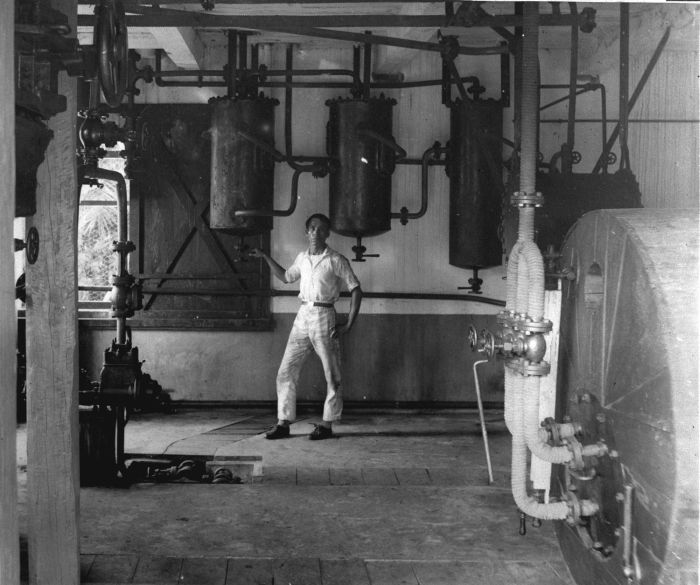
Palm Oil Extraction Photo Credit Wikimedia Commons

Since the general election I’ve been laying low, listening to people talk about the new administration and what President Donald J. Trump means to them.

Most supporters found a lot of what the president said and stands for to be objectionable, but voted for him because of the hope for jobs — a central campaign theme. Manufacturing jobs specifically. The kind with which I am very familiar.

On an issue page of the White House web page the administration laid it out:

Since the recession of 2008, American workers and businesses have suffered through the slowest economic recovery since World War II. The U.S. lost nearly 300,000 manufacturing jobs during this period, while the share of Americans in the work force plummeted to lows not seen since the 1970s, the national debt doubled, and middle class got smaller. To get the economy back on track, President Trump has outlined a bold plan to create 25 million new American jobs in the next decade and return to 4 percent annual economic growth.

As a deal-maker, 45 asserts he knows how to do it. His plan is not public so it’s impossible to evaluate it.

The metrics to evaluate 45’s proposal against what happens already exist in the Labor Department jobs report which shows the millions of jobs created during the Obama administration. Fill out the chart as time passes and new results are in, and there is an objective basis on which to evaluate performance. That is, assuming the methods of calculating jobs growth remain constant. A similar metric holds true for measuring economic growth. We should have a solid couple years in before the 2020 campaign begins. Thumbs up or thumbs down. It should be that simple.

I’ve worked several manufacturing jobs during my life and as a director of a logistics company that evaluated countless others. While living in Indiana I interviewed more than 10,000 people impacted by the exodus of jobs in the rust belt which produced what 45 described as the “American carnage” in his inaugural address. This is my turf, although it was during the Reagan administration, not the Obama administration the web site references.

45’s discussion of bringing manufacturing jobs “back” is a bait and switch. Globalization of the manufacturing process and automation that includes robots doing repetitive tasks has eliminated many manufacturing jobs permanently. It will eliminate more.

Yes some went to Mexico. When Mexico got too expensive they went to China and other parts of Asia. Those jobs are gone and we can’t and don’t want to go back to manufacturing as it was.

Like it or not, with Wall Street occupying four key positions in the administration whatever jobs are created are likely to be similar to those under Obama.

Coal mining runs through my family tree.

It was unskilled labor required of the Industrial Revolution and whether my forbears had been in the United States a century before the American Revolution or had just arrived in the late 19th Century, cheap unskilled labor was needed to mine coal and men in our family did it.

Automation and changing methods of strip mining significantly reduced the number of workers required. Those jobs aren’t coming back either, especially as the cost of renewable energy continues to reach grid parity with coal, and countries like China realize the growth of coal powered electricity generation is making its people sick and look to other electricity generation means. Demand for coal is expected to wane.

I am not hopeful for resurgence in manufacturing jobs, nor was this my issue. However, 45’s posture on jobs came from the lips of every Trump voter with whom I spoke, no exceptions.

If Democrats hope to win the next presidential election we need to understand why friends, neighbors and work colleagues voted for 45. In part, it was about jobs I don’t believe will be back the way we knew them.

Categories
Living in Society Work Life

Fair Share Ten Years Later

email-iconFrom:       Paul Deaton
Sent:         Monday, Jan. 15, 2007 7:13 PM
To:            Rod Sullivan
Subject:   RE: Sullivan’s Salvos

Rod:

I like your analysis of Fair Share, but I see some problems, and offer some friendly comments.

I have been on just about every side of the union issue, beginning with my membership in what was then called the Amalgamated Meat Cutters and Butcher Workmen of North America in 1971 (where I hold a retirement card). I worked at the University of Iowa while AFSCME unsuccessfully tried to organize us in the early ’80s, and supervised groups of teamsters from Local 238 in Cedar Rapids, and Local 142 in Philadelphia. In Philadelphia I negotiated the contract with the local BM. My mechanics signed cards when I ran a trucking terminal near Chicago, and ultimately decided the teamsters union was not for them. Based on this experience, I know a bit about unions.

When you mentioned Chris Rants was against Fair Share, my reaction is to support it. I see some problems with the Fair Share approach, though.

When employees agree to enable a third party to represent them, that is their decision. To be successful, a union has to provide value. I think it would be kidding ourselves to say the union could only represent its dues paying members. How would this be administered? Could another group of employees, dissatisfied with union A organize with union B because union A wasn’t serving their needs? Maybe, but that would not be good for employees, and I think that may be preempted by union A having a contract. In order to be successful with a third party negotiating for them, employees need to be together on issues, including belonging to the union and paying dues.

I don’t think you want a menu option for employees either, for the same reason. If I know that I can buy a union service, cafeteria style, then I believe many employees would choose that option as cheaper than paying dues, hoping they don’t need the services. I find this to be the case with young people who work with me now. They don’t pay the co-pay on health insurance hoping they won’t need it. Again employees need to be together on issues to make an effective bargaining unit.

Fair Share seems to assume at some level that people can’t get together on issues. That is increasingly true if we encourage diversity in the workforce. To the extent a union does not represent the needs and wants of employees, it becomes ineffective. I would make the case that Fair Share, while its cause may be justifiable, actually may be against the core principle of organized labor, that is joining together for a common cause. I don’t believe unions want to be in the business of fee for services.

I hope you find these comments of interest, and I hope you are staying warm now that winter is finally here.

Regards, Paul

Categories
Environment Kitchen Garden Sustainability Work Life Writing

On Our Own into 2017

Western Sky at Sunrise

In this final 2016 post it was easier than last year to outline my writing plans.

The work I do to pay bills and support my writing has been tough mentally and physically. To cope with an aging frame and occasionally distracted mind I have had to focus. That meant planning, and then with discipline, working the plan. 2016 was a mixed bag and I expect to do better in 2017.

I seldom post about my personal life and family — at least directly. That leaves issues I confront every day as grist for the keyboard.

There are four broad, intersecting topics about which I’ll write during the coming year.

Low Wage Work and Working Poor

Not only do I earn low wages in all of my jobs, I meet a lot of people who do too. During the last four years I developed a framework for viewing how people sustain their lives without a big job or high salary. A focus on raising the minimum wage, wage theft or immigration status may be timely but most of what I read misses the mark. Stories fail to recognize the complexity with which low wage workers piece together a life. This subject needs more exposition and readers can expect it here.

Food Cultivation, Processing and Cooking

Living on low wages includes knowledge of how to grow, process and prepare some of our own food. My frequent posts on this topic have been intended to tell a story about how the work gets done. I plan to grow another big garden in 2017 and perform the same seasonal farm work. I sent off a membership form to Practical Farmers of Iowa this morning and expect my experience with that group to contribute to food related writing.

Nuclear Abolition

I renewed my membership in Physicians for Social Responsibility. We have a global footprint and as a member I have access to almost everything going on world-wide to abolish one of the gravest threats to human life. The president elect made some startling statements about nuclear weapons this month. The subject should hold interest and perhaps offer an opportunity to get something done toward abolition. The United Nations voted to work toward a new treaty to abolish nuclear weapons. They did so without the support of the United States or any of the other nuclear armed states. In that tension alone there should be a number of posts.

Global Warming and Climate Change

My framework has been membership in the Climate Reality Leadership Corps. Like with Physicians for Social Responsibility we have a global footprint with thousands of Climate Leaders. We have access to the latest information about climate change and its solutions. The key dynamic, however, is how work toward accepting the reality of climate change occurs on a local level. What researchers are finding is skepticism about the science of climate change originates in the personal experience of people where they live. If the weather is very hot and dry they tend to believe in climate change. If it is cold, they tend not to believe. Thing is, climate change and human contributions to it are not a belief system as much as they are facts. Global warming and climate change already affect us whether we believe or doubt.

So that’s the plan. While you are here, click on the tag cloud to find something else to read. I hope you will return to read more in 2017.

Categories
Environment Work Life

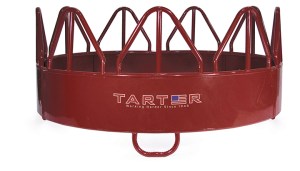
Hay Feeder Rings

Photo Credit - Tarter Farm and Ranch Equipment
Hay Feeder Ring Photo Credit – Tarter Farm and Ranch Equipment

Something is wrong when the garden produces tomatoes, cucumbers and peppers in Iowa the fourth week in October.

I’ll dice tomatoes for breakfast tacos later this week, Bangkok peppers are in the dehydrator, and cucumbers and jalapeno peppers in the icebox waiting to be used. There is chard and kale, oregano and chives. Those leafy green vegetables usually survive until November, but tomatoes and cucumbers?

Call it what you want but something is happening and we know exactly what it is.

I spent most of Friday working with hay feeder rings.

After re-resurfacing the outside lot where farm equipment is displayed at the home, farm and auto supply store, I assembled and re-merchandised the stock of feeder rings.

I don’t know if it was a day’s work, but spent a day doing it, working slowly and as safely as possible. I was tired after the shift with a hankering to leave everything and head west to work on a ranch — day dreams of a low-wage worker.

The garage was cluttered after a summer of intermittent work.

I checked off each item on the to-do list on my handheld device before heading to the orchard for a shift. I disassembled the grass catcher and stored it; re-mixed bird seed and filled the feeder; checked the air pressure on our auto tires; brought in salt and paper products from the car; stored 40 pounds of coarse salt in tubs for winter ice melting; cleared a work space on the bench; and swept the entire floor. It took about two hours. I wanted more, but time ran out.

Yesterday’s political events had me thinking of Gettysburg, Penn. My parents, brother and sister went there before Dad died. I remember reading President Lincoln’s Gettysburg Address on a placard near where he read it himself. With deep roots in rural Virginia, and ancestors fighting on both sides of the Civil War, it was a seminal experience for me. It began the process of turning me from being a descendant of southerners enamored of romantic notions about plantation life to being an American eschewing the peculiar institution and those who stood for it. To my mother’s probable dismay, I brought home a Confederate flag and hung it in my bedroom. Visiting Gettysburg helped me understand the reality of the Civil War and those who fought and lived through it. I was coming of age.

My parents pointed out the house and farm where Dwight and Mamie Eisenhower lived after his presidency. Eisenhower hosted world leaders there, including Nikita Khrushchev, Charles de Gaulle and Winston Churchill. He also raised Angus cattle. We thought favorably of Eisenhower even if he was a Republican. As Supreme Commander of the Allied Forces in Europe during World War II he was a well known part of our culture. Seeing his farm enabled us to touch reality in his celebrity.

My life is here in Big Grove. I’m not heading west to work on a ranch. I don’t display the Confederate battle flag or think about it much any more. I will re-read the Gettysburg Address as I did this morning and wonder how my ancestors got along with each other after fighting in the Civil War. Perhaps there are lessons for the United States in 2016. I’m certain there are.

Categories
Work Life

Crashing into September

Openings to the Dual Septic Tanks

Things are falling apart so Tuesday I begin four days paid vacation from the home, farm and auto supply store. I plan to catch up around the house and run a few errands in and near the county seat — and try to regain a sense of being in control.

Not counting one paid sick day, I will have made it 64 of 100 in my plan to work 100 straight days.

It is time to deal with existential realities in the life of a sixty-something.

There is a lot of crap going on.

As I posted Friday, autumn began with a flood, one wholly predictable, but still catching many by surprise. Politicians talked about doing something after the 2008 flood to mitigate future flood damage. Not much talk turned into action. One doesn’t need to be Jeane Dixon to predict there will be more, similar flooding caused by heavy precipitation events during the next ten years.

The presidential election is sucking up space to the extent even I’m tuning it out. Tomorrow is the first televised debate between Hillary Clinton and Donald Trump. If it is streaming I’ll tune in for as long as I can take it (still haven’t solved the problem of owning an analog television set).

Trump is a ridiculous candidate supported by many of my neighbors and co-workers. The Republican Party of Iowa appears to be running a superior ground game when compared to the Iowa Democratic Party. However, this presidential election is changing the rules, tactics and values of ground games. If both parties have mastered similar Get Out The Vote practices, the next winner will breakout with something new. Trump is trying to do that. The outcome is uncertain even if Clinton continues to lead in the polls. Trump would make a disastrous president if elected.

Perhaps a few days of retreat will help me get centered and facilitate positive action going forward. At least that’s the hope. Right now it feels like crashing into September with a long skid into insanity if I don’t do something about it. I intend to take corrective action.

Categories
Work Life

Work in Late Summer

Weedy Garden Plot
Weedy Garden Plot

This week my to-do list turned into a deal-with list and I don’t like it.

The tipping point was the car overheating while driving north on Highway One. There is not enough time to fit car repairs into late summer.

I’m going to have to deal with it.

The pool of liquid in the garage was the first sign. At first I thought it was condensation from the hot, humid weather. When it didn’t evaporate after 24 hours, I became concerned, then the car overheated enroute to the orchard. After checking fluid levels and consulting with friends I was able to make it home without overheating again. Now I have to find a repair shop and arrange transportation while it is getting fixed — all without going broke or missing a day of work. I’m dealing with it.

The key to dealing with this and everything else on my deal-with list is to take care of myself and not freak out. That I have this blog helps with the not freaking out part. There is solace in work.

Saturday I worked the orchard mapping station after my colleague left for the day. The ambient temperature was in the 70s and a breeze blew up from the creek bed cooling everything. I interacted with hundreds of people during the remainder of my shift, hearing about people’s plans to pick and later use apples in baking, making applesauce and storage. Most said they would just eat them. Who wouldn’t?

I also heard some personal things: about a trip to Palestine, protesting the Dakota Access Pipeline on the river, and a story about my mother when she was younger, how she had influenced another woman. Everything was part of a broader society, one with many personal connections, that arrives at the orchard in late summer.

From time to time it was quiet. The breeze was cool and comforting on my face. The exigencies of a deal-with life escaped like vapors, leaving me at the map station where I was content just to be.

My advice is when life has many demands, get to work. Not only can it accomplish something positive in the form of income and work-product, it can help sustain our lives in a turbulent world.

Categories
Home Life Work Life

Pressing the Limits

Garden Plot with Kale and Peppers

For the first time in a long time I missed work on Wednesday.

After a futile attempt to shave, shower and drive into the home, farm and auto supply store, I called off and slept until 2 p.m. — a total of 19 hours in bed.

I’m back to normal and scheduled four days vacation at the end of the month. If approved, I will use the time to catch up around the house and rest.

I don’t want to admit it, but 100 days of work may have been too much to attempt.

In an effort to understand low wage work life and the exigencies of lives where there is not enough income, I dealt with it as many do by adding more jobs. A predictable conclusion has been it doesn’t resolve the issue.

A key driver in the financial shortfall is buying health insurance, an expense that takes 34 percent of my wages from a full-time job. As the two of us approach Medicare age we’ll see some relief. We’ll also be approaching full retirement and presumably slowing our outside work. I look to my maternal grandmother’s example: she did alterations into her eighties. I expect to be doing something to earn money as long as I’m physically able. My current work on area farms is setting the stage for that.

Trying not to complain, these are observations about a life. In the spirit of Cotton Mather I’ve self-inoculated to see what happens. While believing in unlimited potential of a human, the brief illness is evidence of a physical limit. Knowing one’s limits will make us stronger and hopefully more effective.

We are well into the apple harvest at the u-pick orchard where I spend my weekends. It is an abundant crop and I enjoy interacting with hundreds of apple pickers each day. It is something like a fair, about which Garrison Keillor wrote in the Washington Post this week.

“The Fair is an escape from digitology and other obsessions, phobias and intolerances,” Keillor wrote, “also a vacation from the presidential election which has obsessed many people I know, including myself.”

The lone evidence of politics I spotted at the orchard last weekend was a single too-young-to-vote teen wearing a Trump T-shirt. Discussion of politics was completely absent within my hearing. I don’t know the demographics of apple pickers except from my own observations over the last four seasons. What I’d say is apple culture is an equalizer, something almost everyone with transportation can take part in and one in which I am happy to participate.

For me, it’s about forgetting a life that’s challenging and sometimes too hard for a shift at a time. It’s also about hope that society will find common ground.

Categories
Home Life Work Life

September Song

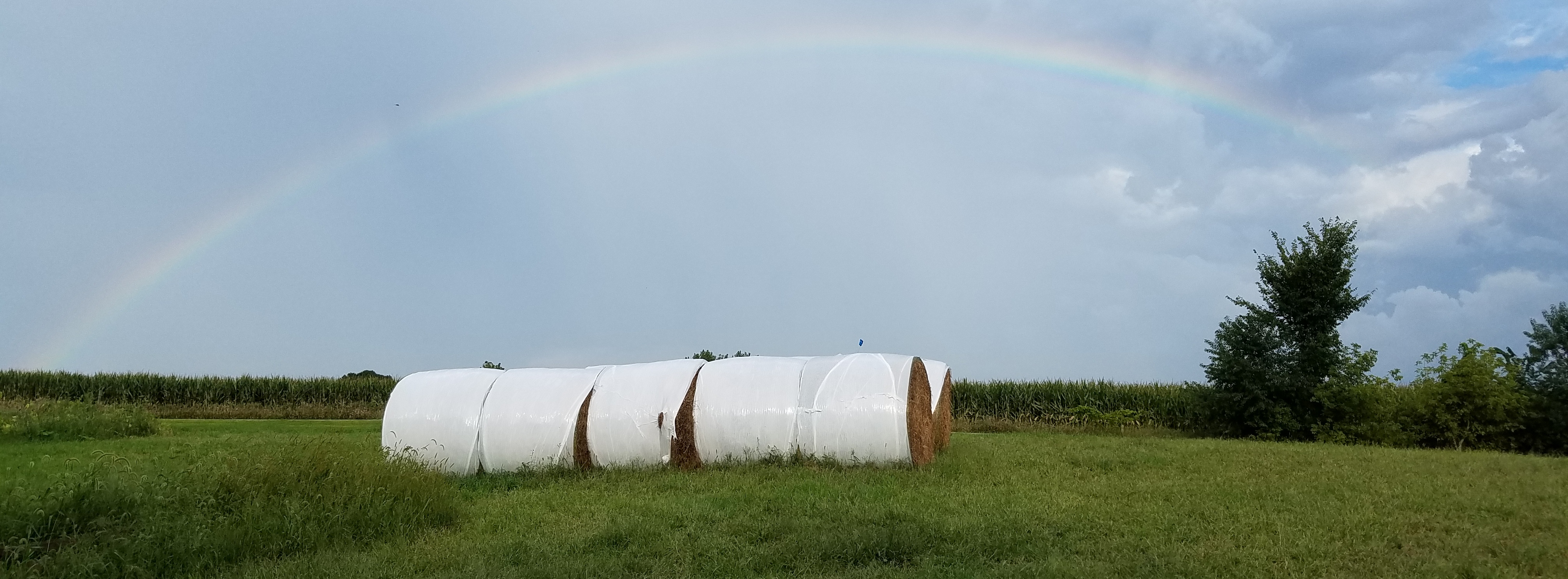
Rainbow at Wild Woods Farm

An air traffic controller can land only one airplane at a time and so it is with us.

Life’s cornucopia brings many gifts. Midst the abundance of life’s instance what’s essential for a sixty-something is reliance on a foundation built over time and selecting single tasks related to grand plans as well as we can.

August and this summer has been a great success, a disaster, a drain and an inspiration all at the same time. 37 days into 100 Days of Work it is time to take stock and see what makes it through the funnel of current interests related to longer term plans. It is also time to consider rainbows.

I plan to take a brief hiatus, a week or two, to take stock of the ongoing harvest of produce, and ideas. Then I plan to go on living. Hope to see you on the flip side.

Categories
Work Life

Into Fall

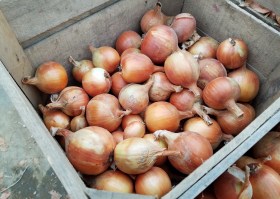
Box of Onions
Crate of Onions

The first leaves on our Autumn Blaze maple tree turned over the weekend — a reminder of summer’s imminent end.

A lesson learned this season was of the limits of worklife and the tendency to let personal things go when engaged in a big endeavor.

The garden, yard and house cleaning fell to the bottom of the priority list as I worked four jobs. It is ironic that in a year when my skills as a gardener improved, I was unable to keep up with the weeding and harvesting, which when combined with the lack of mowing for a month, created a jungle in our back yard. The birds and rabbits may be happy, but I was not.

Harvesting will continue. The garden paid for itself many times over. The question is what level of abundance is enough? I’m already thinking about preparing the plots for winter. It won’t be long before I pull the plants, stack the cages, roll up the fencing and mow. It assuages my guilt from leaving so much produce — tomatoes and pears especially — in the field.

Thunder and lightning blew past the orchard Sunday afternoon and I was released from work early. Because of the lightning, I skipped the greenhouse work at the farm — we don’t work when there is lightning. The storm created an opportunity to rest and after finishing my last post during Trish Nelson’s hiatus from Blog for Iowa, I did.

This week I hope to finish the onion trimming work and move on to what’s next. The presidential election is sucking up oxygen, so dealing with that is out there.

More importantly, what do I want to do next with my remaining years.

I used an on-line life expectancy calculator which determined I have a 75 percent chance of living past age 80, with an estimated life expectancy of 87 years. If that’s true, there’s a lot of living to do.

It will take a full day, maybe two, to clean up the tangled mess the yard and garden have become. Some time — not too much — must needs be spent learning to choose my occupations wisely.

Categories
Living in Society Social Commentary Work Life

August Is No Recess When Working Poor

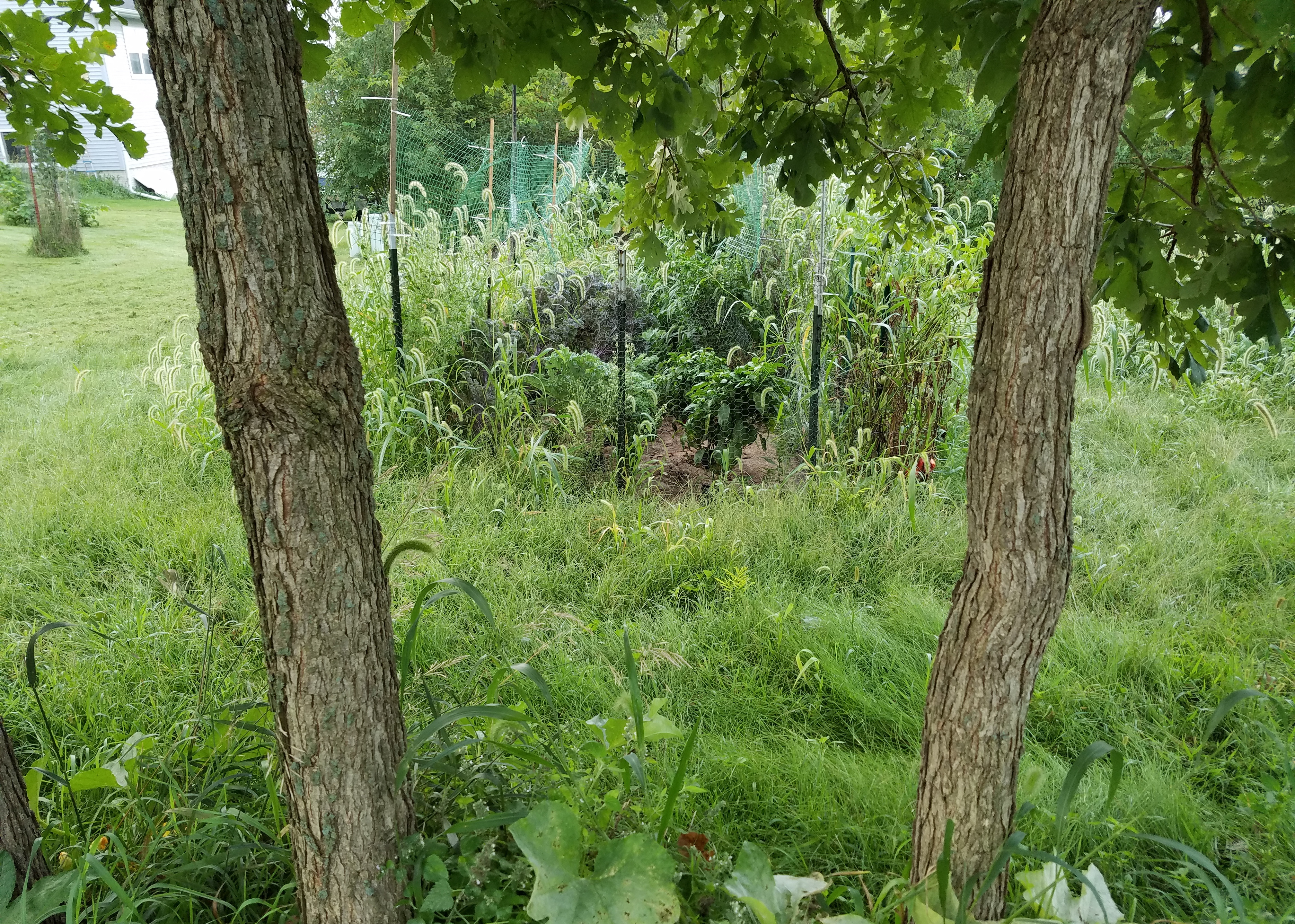
Working the Garden
Working the Garden

School is out for Iowans who work yet remain on the margins of society.

There is no recess from the constant demand to secure basic needs of food, shelter and clothing. The add-on expenses of transportation, health care, interest on loans, and servicing addictions? It’s a question of what gets priority each week.

Last summer I wrote about two issues: how work is not valued adequately and how compensation is a murky endeavor at best. There is a third: the resilience of people who work and are poor.

This August I work four jobs writing, in retail, and on two farms. After a 25-year career in transportation and logistics, our family balance sheet looks better than most of my low-wage peers. I can afford the experience. I’m one of the few workers who keeps a balance sheet because most live paycheck to paycheck sustaining their lives with inadequate income. I don’t see how people can make it, but they do.

I’m cautious when writing about peers because my narrative is grounded in real people with lives. It is important to show respect and maintain their privacy. I won’t write about anyone with whom I am currently working unless they already are a public figure. That rules out most everyone.

A significant number of my peers are aged 14 through 18 and live at home with parents or grandparents. Their money is spent on personal expenses and they are full of confidence and hope — enough so to be inspiring. There are also spouses and significant others where the partner works a big job with benefits and their low wage income adds to the household. There are the “special people” whose stories are so different they garner attention easily.

The person living in a car with her dog, boarding her horse with a co-worker while figuring out what to do next; the woman in an abusive relationship attempting to hide bruises with makeup; the man who has trouble standing for a shift on a concrete floor yet tolerates it because he needs the income; the small-time loan shark recently arrived from Chicago who heard from friends there are jobs and cheap living in the Cedar Rapids – Iowa City corridor. These stories capture the imagination, but in my view are too “special.” I’d rather write about plain folk like myself. My takeaway is no one who works for low wages has given up and that too is inspiring.

Many of us have lives where there is more to do than time allows. We have to set priorities. Approaching Medicare age it is hard for me to keep up with everything while working fours jobs. I don’t. Mowing the lawn falls to the bottom of the list and the long grass becomes habitat for birds and small animals. The garden is producing with abundance and I struggle to preserve enough of it for winter before it goes to compost. I have trouble staying awake on my daily drive across the lakes to work in Coralville. My challenges aren’t unique. The thing is I’ve worked a big job with benefits and wouldn’t go back for anything.

Once a person accepts the decency of most people, and what we share in interests, working poor are no longer a cipher or story for journalists and social scientists. They are one of us, more than we acknowledge.

If August is no recess, life is still pretty good because there are people who behave as if the amount of money we make is less important than seeking ways to help each other get along. That is as good as it gets.

~ Written for Blog for Iowa