Categories
Living in Society Writing

New Way of Seeing

Flooded Wetland

I had an epiphany while reading Mayor Pete Buttigieg’s memoir, Shortest Way Home, the March release of which coincides with his presidential campaign.

In the first chapter he described growing up in South Bend, Indiana, a place I frequented while working in transportation at about the same time.

It was a stretch to understand Buttigieg’s new narrative of something I knew well during the late 1980s. My conclusion after finishing the first chapter was I feel too comfortable with people closer to my own age with similar experiences. Like it or not, aware of it or not, a new generation of Americans has arrived and is already making change in a society I increasingly recognize only in memory.

I don’t know Buttigieg’s presidential chances among a large field with many experienced politicians, but I know this: I’d better join younger people in their efforts to improve society or get out of the way.

I’ve written about the struggle of young farmers regarding land use in our county. Some of them have been addressing the county board of supervisors since 2013 about the 40-acre rule which defines a farm. If a farmer farms on less than 40-acres here, by definition, it is not a farm, and therefore, the financial remedies of the Iowa agricultural exemption are unavailable. Having advocated with the supervisors during the run up to the most recent five-year land use plan, they are making an end run around them for lack of accommodation, seeking a remedy from the state legislature. Whether they will be successful this year is uncertain, but eventually they will reshape the law to better fit their vision of contemporary farming.

Congressman Dave Loebsack is in the same cohort as me, about a year younger. A relatively small group of us joined together in Iowa City to open his first campaign office for the 2006 election. Together we beat a 30-year incumbent Republican in the general election. Over time there have been complaints that Loebsack is not progressive enough. If one looks at his actual positions and votes, and hears it from him personally as I’ve been able to do because of our long relationship, that seems ridiculous. However, the new generation will have their way, maybe not now, maybe not in an orderly way after Loebsack retires, but their patience with perceived grievances won’t be bottled up for long. As Buttigieg’s narrative of South Bend in the late 1980s instructs, there is a different way of seeing things and it is not the view of white guys like me.

After the decennial political redistricting in 2010 Bobby Kaufmann won the first election in newly formed House District 73. He has dominated the district ever since, despite efforts by Dick Schwab (2012), David Johnson (2014), and Jodi Clemens (2018) to win the seat. Like him or not, he is the face of the new Republican party in Iowa and a popular figure in the district and around Iowa. That’s not to say he’s popular among Democrats and progressives because he mostly isn’t. Because he won four back-to-back elections he rose in the legislature and became the gateway for constituents to get things done. Will he support all of our initiatives? No. Will he listen? I found the answer to be yes.

I no longer see life through the eyes of a thirty-something. However, I’m willing to set aside my biases and predispositions if I can and spend time with men and women in their 20s and 30s to work on common issues. It’s the lesson I’ve learned from Pete Buttigieg’s candidacy.

There is so much needed to improve our lives and old solutions no longer work. To find our way, we need something different, and better. Our hope lies with the thirty-somethings who have arrived — like it or not.

Categories
Writing

Imagining a Narrative

Early Spring Rhubarb at the Farm

It’s been difficult to imagine myself in a post worklife world.

When I left my last transportation job work no longer defined me. I could become something new and different. Ten years later work continues to occupy a role in my story. That’s not unusual in the United States. I also don’t think it is that good.

Mostly retired, a pensioner, I lack a forward-looking narrative. Living a life, working part time for wages, those are not worth narration. They are part of the human journey, the arc of which often seems uncertain.

So I drift… read and write. I will read and write as long as I’m able… and take care of necessities.

Framing a life in work was abandoned. The actuality of it proved harder than writing these words. If I spend time in public, outside the flickering light of lamps and screens… sunlight through the French door, I’ll want a narrative more than “I’m a pensioner.”

I like the word pensioner, yet it’s an unusual introduction. My pension is from Social Security, it is real, and it pays many of our expenses. It reflects more than 50 years of work, during which I contributed to the fund. “I am a pensioner” seems okay, but I wouldn’t lead with that because it sounds so awkward, so work-related. There is more to life than a reference to work that generated a pension.

I told a life story in my post Autobiography in 1,000 Words, which seems long for a personal narrative. I like the facts presented yet they doesn’t say who I am, who I’m trying to be. Maybe I’d better know that first.

Should I present as writer? People recognize me as such. I don’t like talking about writing projects, so no, I wouldn’t lead with that.

Should I present as a gardener? I garden and post about gardening in multiple places. Why does a personal narrative have to be about only one thing? It doesn’t.

To whom would I tell a personal narrative if developed? I think about Dunbar’s Number and the cognitive limits it suggests. If we only get 150 stable relationships because of physiological limits, why am I even worrying about a personal narrative? My 150 knows me and I know them. Isn’t that enough?

Last Saturday a group gathered at Old Brick in the county seat and discussed political advocacy. That’s where this post about personal narrative originated — I felt I needed an elevator speech as I introduced myself. We all need a brief chat about who we are when meeting people.

I am genuinely interested in meeting people and hope any conversations will be more about them rather than me. If I talk in terms of their interests, it’s because I’m curious about how people live their lives. I need to hold up my side of the conversation.

“Hi. I’m Paul, a pensioner from rural Johnson County. I spent 50 years in the work force and now I’m here talking to you. What’s your name?”

I don’t know, pretty lame. It’s a conversation starter, and could lead somewhere the way an ignition switch on an automobile begins a trip. It’s not flashy but may serve. Maybe that’s all that’s needed and I’m over thinking this. Maybe such a brief speech is enough.

The arc of life is bending toward the unknown — an opportunity to imagine what could be. Maybe that’s the narrative, at least it could be.

Categories
Kitchen Garden

First Dig

Abandoned Silo

On Monday I inspected the garden plots and the ground remained too cold and wet.

Later in the week I made the first dig and the soil was clean of frost the 10-inch length of the divot. There were earthworms too. We’re getting close.

I finished pruning the apple trees and began to make a burn pile.

At the farm I planted:

Spinach;

Bloomsdale Long Standing, Ferry – Morse, 45 days.
Teton Hybrid, Ferry – Morse, 50 days.

Lettuce:

Buttercrunch, Ferry – Morse, 70 days.
Black Seeded Simpson, Ferry – Morse, 45 days.

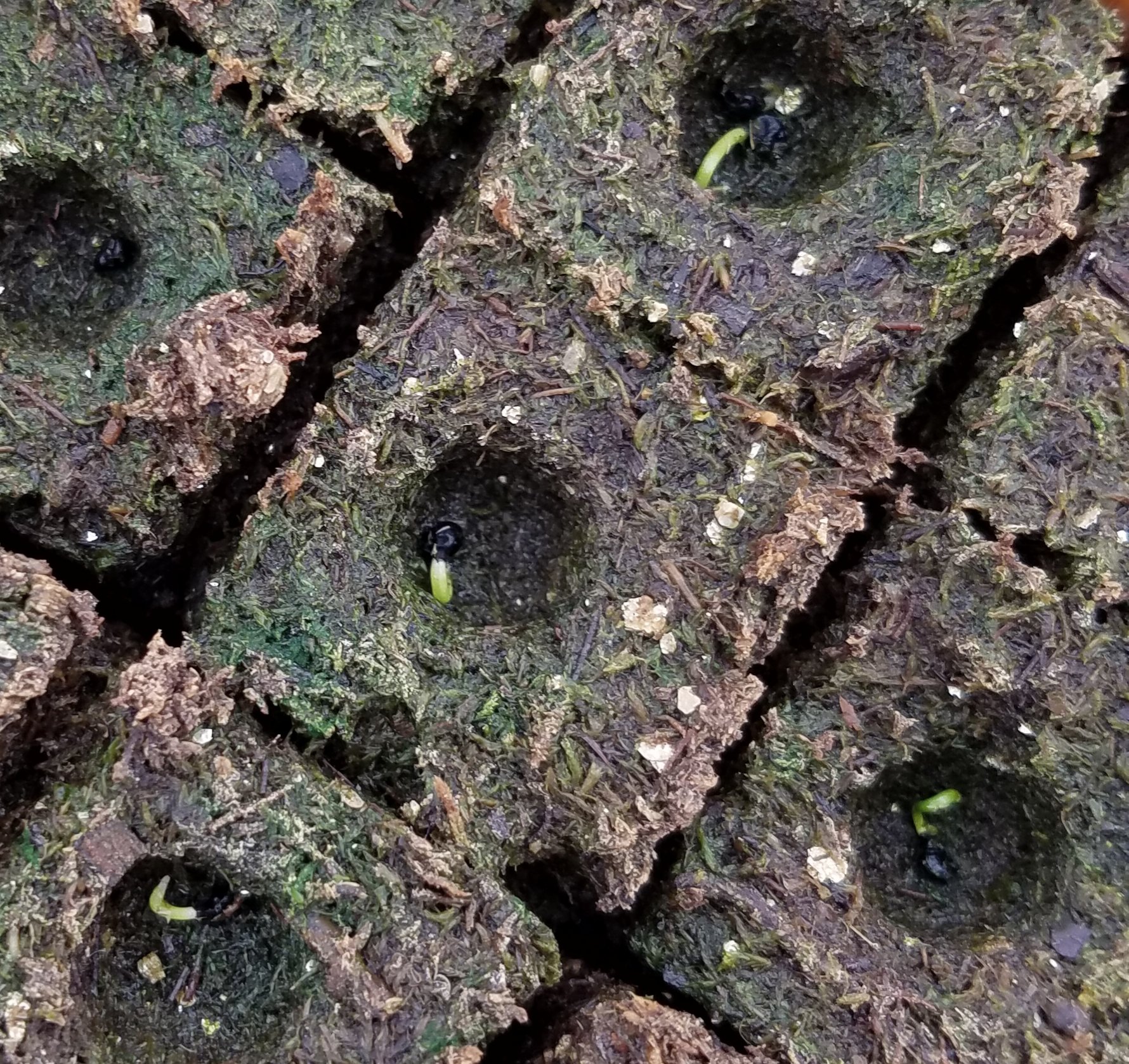
Everything planted in the greenhouse has germinated, except the parsley.

Summary: Total of five trays in the greenhouse and all appear to be doing well. The ground should be ready for digging a row of earlies (lettuce, carrots, turnips and beets) this week.

Categories
Kitchen Garden

Pivot to Gardening

Pruned apple tree

The first spadeful of garden soil revealed an absence of frost the length of the 10-inch divot — and plenty of earthworms.

It’s time to plant peas, lettuce, turnips — the early, albeit late vegetables.

It’s also pretty exciting. Like most people in my life I’m tired of indoors and ready to do more outside in moderate temperatures.

I rose at 4 a.m. and fell into a pattern of making coffee, heading to my work space and writing.

I read newspapers and checked social media. I wrote correspondence, emails and texts. I have three different blog posts started. Sometimes I finish a post before leaving the house. Sometimes a topic requires development so I’ll sketch an outline and work on it a few days. In any case, writing is a primary creative outlet and I value the work the first few hours of each day.

It’s only a fraction of the time and that’s where cooking, gardening and outside work comes in.

I made a two egg cheese omelet for breakfast. I’ve been viewing Julia Child’s French Chef videos about omelet-making and it made a difference in technique. Using high heat, slight agitation of the egg mixture as it’s cooking, and when to add ingredients to create the finished product. I hadn’t really considered those aspects of it before. It was a fine start to the day.

Outside I started making a burn pile, finished pruning the apple trees, and parked my car outside to leave garage space for spring. I cut back the sprouted trees in the flower bed to allow early bulbs to be seen. Spring is running late, but it’s coming fast. There will be plenty to fill my days going forward.

At the home, farm and auto supply store spring shipments arrive daily. On Thursday I unloaded truckloads of bagged dirt, large bundles of wooden fence posts, and an extra load of general freight from the centralized distribution center. It felt good to be outside in 50-degree temperatures.

I found a three-ring binder with brief writing about books I owned or read in the mid-1970s. From an entry on Dec. 2, 1975:

With reluctance I must admit my pursuit of literature outside my job has been minimal. I really haven’t been spending time at home reading. So, for the present, I am going to try a month, half a month anyway, with no poets. The daily reading is what is suffering most.

What I didn’t realize then was there would be a pivot point in life where I stopped pursuit of literature and started living it, where I read less poetry and started writing. This spring day is a reminder of that, made clear by the absence of frost in soil teeming with life and begging for something to grow.

Categories
Environment

Long Tail of Carbon Emissions

Flooded ATV Park, Johnson County, Iowa.

Earlier this century India and China decided to build fleets of coal-fired power plants as their citizenry entered a world most Americans and Europeans already knew for its modernity and comparative affluence. The two populous states required more electricity.

Carbon emissions from the new plants have come home to roost. According to the International Energy Agency,

Global energy consumption in 2018 increased at nearly twice the average rate of growth since 2010, driven by a robust global economy and higher heating and cooling needs in some parts of the world. Demand for all fuels increased, led by natural gas, even as solar and wind posted double digit growth. Higher electricity demand was responsible for over half of the growth in energy needs. Energy efficiency saw lacklustre improvement. As a result of higher energy consumption, CO2 emissions rose 1.7 percent last year and hit a new record.

China, the United States, and India together accounted for nearly 70 percent of the rise in energy demand, according to the report. Failure to reduce carbon emissions is a result of the lack of political will to adopt renewables as aggressively as their lower cost warrants.

Having lived through the India-China build-out of coal plants, I understand why and importantly that they are planning renewables and to some extent, natural gas and nuclear power, for new electricity generation. The writing is on the wall for coal’s hegemony according to Energy Innovation:

America has officially entered the “coal cost crossover” – where existing coal is increasingly more expensive than cleaner alternatives. Today, local wind and solar could replace approximately 74 percent of the U.S. coal fleet at an immediate savings to customers. By 2025, this number grows to 86 percent of the coal fleet.

While their analysis does not adequately consider stranded costs, it is doubtful India or China will abandon coal-fired power plants built since the turn of the century as they are comparatively new. That is, unless the climate crisis is adequately recognized by governments.

Any doubt climate change is real? The New York Times reported on the flooding in Hamburg, Iowa:

“I’m looking at global warming — I don’t need to see the graphs,” said Hamburg, Iowa’s mayor, Cathy Crain, referring to the role of climate change in increasing the frequency of extreme weather events. After two record-setting floods in a single decade, Ms. Crain said, “I’m living it and everybody else here is living it.”

We shouldn’t be shocked by the International Energy Agency report as rising emissions were planned by China, India and the United States a long time ago. There is a long tail on carbon emissions and government is largely responsible to turn the corner. The report highlights we are going the wrong direction.

How many more tragic incidents like the one in Hamburg are necessary before government acts on climate? More people are ready to act on climate now but we haven’t reached our politicians… yet.

Categories
Kitchen Garden

Germinating Leeks

Germinating Leeks

I felt very American on the way to the farm.

A flock of wild turkeys took flight from the field on the east side of our lane, and a bald eagle was picking at a deer carcass along 120th Street.

These emblematic birds inspire me every time I see them. It was a great start to a day of soil blocking.

I planted:

Rosemary: Ferry – Morse, 85 Days.

Cilantro: Ferry – Morse, 45-75 Days.

Genovese Basil: Johnny’s Selected Seeds, 68 Days.

It was an easy day in the germination shed as there were only 20 trays to block. 21 counting mine. The farmer spent time during the week playing catch up from a cold winter and the greenhouse is full. That feels great!

Summary: Kale, broccoli and leeks have germinated. Parsley and celery have not. I’m waiting a bit longer before turning soil in the garden.

Categories
Environment

Climate Change, Roundabouts and Retail Stores

Rural Johnson County – 140th Street NE west of Ely Road on March 23, 2019.

During a tour of my usual spots to observe flooding it doesn’t look as bad as it has.

In 2008, the flood waters came to within 100 yards of our home before receding. We are nowhere near that now.

Yesterday afternoon Governor Kim Reynolds issued a press release saying the president had approved a major disaster declaration for 56 Iowa counties. Hazard mitigation funding became available for the entire state.

What’s going on?

“Are we just rolling snake eyes over and over or is there something happening here?” Erin Murphy of Lee Enterprises asked on Iowa Press this weekend.

“We have 147 years of temperature and precipitation records for the state,” Iowa State Climatologist Justin Glison responded. “The trend shows us warming and with the warmer atmosphere, a warmer surface temperature, we’re able to hold more water vapor in the atmosphere. That gives us a higher probability of having more precipitation events. What we are seeing over the past thirty years is that the intensity of precipitation events is increasing… Yes, we are moving into a new type of precipitation regime.”

No mention of the words “climate change” and that’s okay. Glison’s message is what I have been saying the last six years, and part of what Al Gore said the two times I heard him present his slide show. The current flooding is climate change happening in plain view. It is time to do something to mitigate not only the damage caused by climate change but the changing climate itself.

What should we do about climate change? Embrace the truth about what this scientist said. Then develop the political will to change human activities that contribute to global warming in a way that makes sense and creates a resilient culture.

The rest of my day seemed anticlimactic. While crossing the Cedar River bridge on Highway One I decided to visit the Ace Hardware Store in Mount Vernon to see if they had a replacement part for the faucet handle in the bathroom.

I entered the roundabout at the intersection of U.S. Highway 30 and Route One. It is a bit confusing but I was able to decipher the signs related to which lane was correct for my trip. I like the roundabout for intellectual reasons, although most locals hate it.

Before the roundabout was completed in October 2013, the intersection was one of the five most dangerous in the state, based on frequency of accidents. In the years since the new roundabout opened, the frequency of accidents remained higher than expected. The intersection is currently exhibiting a crash frequency of 16.8 crashes per year according to a 2018 study. The expectation was there would be from six to eight crashes per year. To make a 60 percent reduction in accident frequency, the study recommends better driver education and improved signage near the roundabout. In other words, Iowa drivers are not finding navigation of the roundabout intuitive and it shows.

I arrived in Mount Vernon and parked across the street from the small hardware store. The future of small city retail was on display as I walked through the entrance. As an employee of a home, farm and auto supply store my radar was up to take in the sales process.

Two cashiers greeted me as I entered and asked if they could help. They directed me to the plumbing aisles which were easy to find in the small space. I walked past a popcorn machine that offered fresh, hot popcorn to eat while shopping. Eating and retail seem inseparable in the 21st Century. I declined to sample a bag. I quickly found a selection of faucet handles.

Using my handheld device, I had taken a photo of the old handle with a ruler held up to it from two angles. I sought an exact match. Within a couple minutes, a sales associate walked up and asked if he could help me find something. I said yes as I wasn’t finding what I wanted. He confirmed the display represented what was on hand and led me to a dual-monitor computer where he researched alternatives. The idea was if we could find the part, the associate would order it on the spot. We looked through four examples, both the Ace and manufacturer brands and couldn’t match the size.

In my experience, expanding product offerings from a retail store’s physical inventory is essential to survival in small cities and towns. It harkens back to the early days of the Sears catalogue. While there were no mobile or home computers back in the day, modern retail at its best emulates the idea there is a broad array of available products that with time can be delivered just about anywhere. The difference between my experience at Ace Hardware and a large on line retailer like Amazon.com is the personal attention I received from everyone I encountered at the store. That service is what satisfies our human need for personal interaction, and is likely to make us a repeat customer. In doing so, local retailers can learn and work toward sustainability.

What do climate change, roundabouts and retail stores have in common? I’m not sure, but that was my day in society.

Categories
Environment Home Life Writing

Starting Spring

Buckets of sand and salt near the garage door.

It felt good to be outdoors on Friday. The sky was clear and temperatures warmed enough to shed my coat. Green-up has begun.

We filed our income taxes with the Iowa Department of Revenue and the Internal Revenue Service. Earlier in the week I paid the second half of our annual county property taxes.

This morning I plan to walkabout our subdivision, inspect roads, and address concerns about water and sewer leaks. With the hard winter and significant ambient temperature swings, there is damage. Whatever needs fixing requires a plan and a budget. As a board member and trustee of our home owners association and sanitary sewer district I share responsibility for both.

We’ve done our part to support government services. Now spring can begin.

Outdoor work was sweeping up enough sand from the road in front of the house to refill sand buckets used last winter. I haven’t purchased sand in about five years. Because of the hard winter there was plenty available. A 50-pound bag of solar salt filled empty salt buckets.

I found the fan to blow air across the damp garage floor. It took about two hours for moisture to evaporate. Baby steps to start spring 2019.

Governor Kim Reynolds issued a disaster proclamation for Howard County Friday afternoon. The number of counties under disaster proclamations is now 53 (of 99), according to the press release. Current estimates of damage exceed $1.6 billion according to this morning’s Iowa City Press Citizen, although counties reported they have yet to fully assess damage within their jurisdictions. Governor Reynolds proclaimed nothing about what government would do to help mitigate the deleterious effects of climate change going forward.

My farmer friend from the home, farm and auto supply store reported the ground needs drying before getting into his fields. While the weather quickly became spring-like, the usual issues for row-crop farmers remain. My specialty crop friends also found the ground too wet to work. They are planting in their hoop houses which are traditional season-extenders.

Spring began Wednesday and is just getting started. We’re ready.

Categories
Juke Box

Juke Box – Jessica

Going into a long weekend of spring catching up. I’ll return to regular posts soon.

Here’s one of my fave recordings of Rickey Betts playing Jessica. I heard The Allman Brothers Band play the song at the University of Iowa Field House on Nov. 9, 1973, shortly after it was released. They won a Grammy for Jessica. Enjoy!

Categories
Environment

Flooding in Late Winter

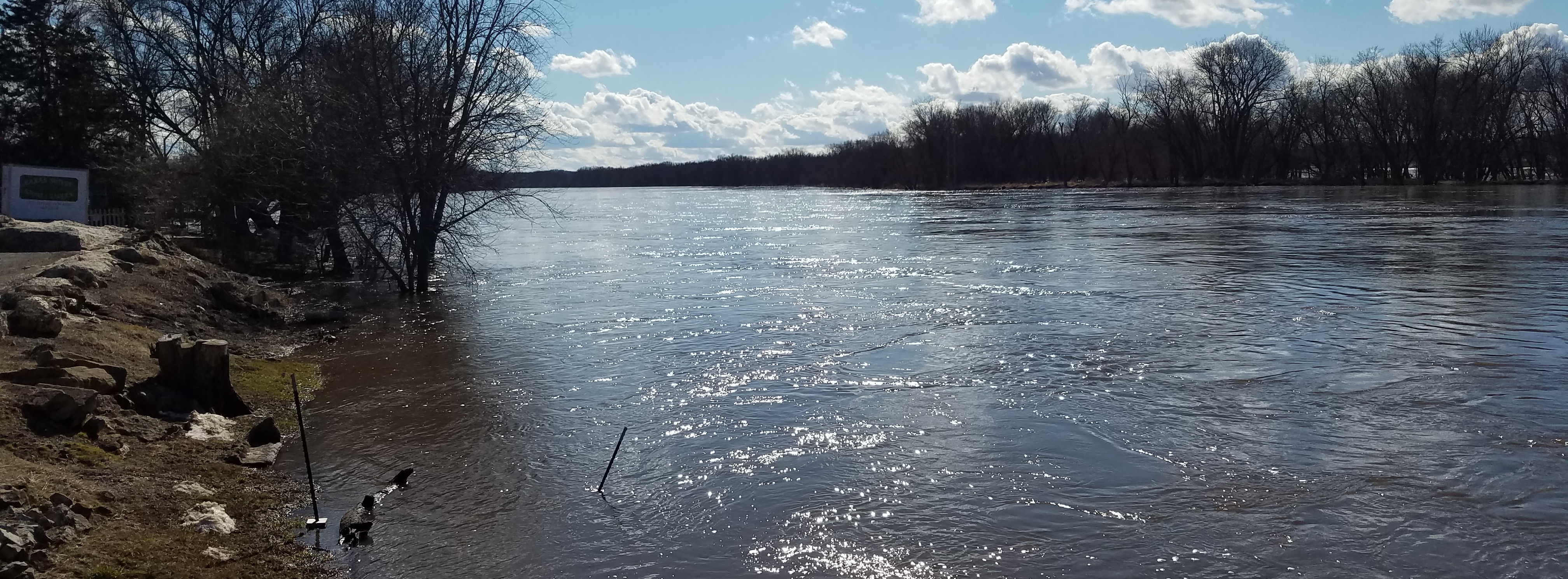
Cedar River on March 15, 2019

The amount of snow and ice melt in the Midwest is monumental.

Iowa Governor Kim Reynolds issued disaster proclamations for 41 counties because of flooding (Click on the map to see details).

News photographs show Offutt Air Force Base in Bellevue, Nebraska, home of the U.S. Strategic Command, is one third underwater with at least 30 buildings damaged.

Where did all the water come from?

Warmer atmosphere held more water vapor which was dumped on Iowa and surrounding states in the form of snow and rain during recent polar vortex events. Wild swings in temperature, sometimes as much as 70 degrees in less than 24 hours, combined with rain quickly melted the snow. Because of deep frost in the soil, there was nowhere for the water to go but downstream. Iowa is used to spring flooding, but not like this.

Climate change created conditions for this flooding, both by enabling a warmer atmosphere to hold more moisture, and through warming in the arctic, which destabilized the trade winds and made the polar vortex. It has been depressing to live through this winter. The damage we see on our small lot in rural Iowa is minuscule compared to the bigger picture.

Last week, Al Gore and the Climate Reality Project trained another 2,000 leaders in mitigating the effects of climate change. News media cover climate change now more than in recent years because viewers and readers experience its effects every day. Climate change is real, it is happening now and we hope it’s not too late to find the political will to do something about it.

The state is watching how our governor and other politicians react to this iteration of flooding.