Categories
Writing

Unsolicited Farm Advice

email-iconFrom:       Paul Deaton
Sent:         Sunday, Dec. 2, 2012 10:14 AM
To:            Farmer Kate
Subject:   Processing and other ideas

Kate:

Thanks for the kale and spinach. We had both for dinner last night, and now I have a whole refrigerator drawer full of kale, ready to make something. Very yummy, with the prospect of more yummy-ness.

It was curious that you brought up the food processing idea yesterday, as I had recently been thinking of something along those lines. I think a question you should ask is whether you want to become a food processor or stick to being a grower. The trouble most growers I know seem to have is scaling their operation to meet demand. If you focus on secondary things, like processing, it may dilute your efforts as a grower, and hold you back from getting to the peak earnings potential of your farm operation.

That is not to say you should not have an outlet for farm seconds, or do other things but run the farm, you should. But a different approach might work better for you and your limited staff.

Waste not, want not is John Wesley’s old adage. If you are not getting full yield out of the results your work, look for ways to off load part of it.

First, sell the second harvest (seconds and excess) outright, not worrying about what happens to it. Before we talked, I had been thinking about working out a deal with you and others to buy excess and seconds of produce wholesale. Partly I would stock my own pantry, but if there were a commercialization opportunity, the risk and time of developing it wouldn’t land on your shoulders. The problem of what to do with excess and seconds of tomatoes, peppers and onions, etc. by processing them has been solved repeatedly by others and there is significant commercial competition. As a grower, your income may be affected by that market, but how much direct exposure do you want before the idea is tested? My thought is to find wholesale buyers of your seconds and excess.

Second, find people to collaborate with you on things. The example you gave of someone canning tomatoes and paying you in kind was one idea you brought up. I like the idea, but don’t see how that could be scalable. If anyone ever calculates the work involved in home processing, particularly cost of labor, commercialization of this process seems unlikely, especially in light of commercial organic processors. At the same time, what is the value of this work to people who take part in the cooperative? My recommendation would be to pick a few collaborative projects to try each growing season. For example, if you find a great sauerkraut recipe, you might try commercializing that. Team up with someone who is willing to share the risk, plant some extra cabbage, and do it for one season. See how it goes. Have three or four of these projects during the 2013 growing season.

Third, people like the farm atmosphere. Look at Wilson’s Orchard and their apple turnovers. When people come out for the harvest, develop a “harvest season” event or series of events, and center it around a specific culinary or harvest theme. This may be complicated because of your proximity to Celebration Barn, with its limited number of annual events permitted there, but it is worth pursuing. Again, if you would do something like this, collaborate with someone else who can do the bulk of the work related to such an event. If you did it once and generated several thousand in revenue, would that be worth it?

Anyway, you didn’t ask for any of this, but I hope you find the ideas useful. I am going to do something to earn a living wage in 2013, so if you see opportunities for us to work together, please keep me in mind.

Thanks, Paul

Categories
Sustainability

Command and Control to Air Nationwide

On Tuesday, Jan. 10, at 8 p.m. CST Command and Control will air nationwide on Public Television.

The film from director Robert Kenner, based upon the book by Eric Schlosser, is the story of a Titan II missile silo near Damascus, Arkansas. In September 1980 a technician dropped a socket and punctured a rocket upon which was mounted a five megaton nuclear warhead, initiating a near disaster.

A five megaton nuclear bomb is more powerful than all of the ordinance used in World War II, including the atomic bombs dropped on Hiroshima and Nagasaki, Japan.

Disaster was averted in Arkansas, but was it worth the risk?

While our president elect uses twitter to opine about nuclear weapons policy, our nuclear arsenal resides in real-world places subject to real-world threats and, as depicted in Command and Control, to accidents.

On Jan. 20, Donald Trump will gain access to the codes to launch a nuclear attack within four minutes, at his own volition, without approval from anyone else.

For his part, outgoing President Obama launched a $1 trillion program to modernize our nuclear arsenal over the next 30 years.

One has to ask, shouldn’t we abolish nuclear weapons instead of modernizing them?

Nuclear weapons are scary things. Rather than reacting impulsively and superficially to a complex issue, Blog for Iowa recommends you learn about an accident with a nuclear weapon from this 92 minute film.

To learn more about the film, click here.

~ Written for Blog for Iowa

Categories
Environment

Making Climate Change Personal

Animal Tracks
Animal Tracks

“We could use some of that global warming,” a truck driver told me.

It was a joke. The ambient temperature was in the low teens and we both work outside as part of our jobs. If the weather were warmer our jobs would be easier. I thought it was funny.

“I don’t really believe in global warming,” he said after a pause.

“It doesn’t really matter if you do,” I replied. “Like it or not our climate is changing because of man-made global warming. It affects us even when it is cold.”

He seemed skeptical. Given a recent study published in the Proceedings of the National Academy of Sciences journal I should have expected his response.

Our perception of climate change and willingness to accept scientific evidence about it is shaped by what we experience, according to Scott Waldman, writing in Scientific American.

That means if one lives where weather is cooler than average, he is more likely to be a climate change skeptic, deferring to personal experience as a guide. If one lives where it is warmer than average, she is more likely to accept the science of climate change, also deferring to personal experience as a guide.

“When personal experience and expert opinion don’t align on a topic that’s not critical to an individual’s well-being, they’re going to go with their gut rather than what the expert tells them,” Robert Kaufmann, the study’s lead author said.

The article’s title is a mouthful — “Spatial heterogeneity of climate change as an experiential basis for skepticism.” Here’s the crux:

Kaufmann said it’s human nature to trust one’s own experience over scientific evidence or political wisdom.

“Unless it really affects my everyday life, I’m not going to spend time studying this issue, and I’m not necessarily going to believe scientists either, especially now that experts are held in such ill repute, but I’m going to make up my mind based on how I can see and feel climate change,” he said. “For many people, that is record-high and record-low temperatures.”

Such attitudes notwithstanding almost two-thirds of voters across all parties want the Trump administration and the Congress to do more to address global warming, according to Kaufmann.

I appreciate a good climate change joke in the middle of winter because it presents an opportunity to address the fact climate is changing because of human-made global warming, and there is scientific evidence to support it. The conversation is something we should have more often, yet people avoid talking about climate change.

“Most Americans say global warming is personally important to them, but don’t talk or hear about it much,” Edward Maibach and others from the Yale Program on Climate Change Communication wrote.

In “Is there a Climate ‘Spiral of Silence’ in America?” the authors found “more than half of those who are interested in global warming or think the issue is important “rarely” or “never” talk about it with family and friends (57 percent and 54 percent respectively).” Fewer than half of Americans say they hear about global warming in the media monthly or more, and only one in five Americans hear people they know talk about global warming at least once a month according to the article.

It’s pretty quiet out there regarding discussion of global warming and climate change.

“The future of the planetary conditions on which human civilization depends are reliant now more than ever upon scientists and innovators, businesses and civil society, and our collective efforts to accelerate the implementation of the solutions to the climate crisis that are already available and cost-effective,” former Vice President and Nobel Prize winner Al Gore wrote in Scientific American.

If that’s the case, and no one is talking about climate change, how can we create meaningful action to mitigate the effects global warming is having on us?

The good news is technological solutions to the problem are working as the price of renewable energy approaches parity with fossil fuels. In some markets, solar generation of electricity is cheaper than with fossil fuels. If technology will lead the business community to reduce the greenhouse gas emissions contributing to global warming, we are part of the way there. Technology alone won’t drive the change we need. To find political will for action, every voter should engage in the issues. What can we do?

For my part I’m going appreciate the value of a good climate change joke, and use them to break the ice on conversations about the need to act on climate. People may agree or disagree, but talking about global warming and climate change, and the science behind them, is as important as laughter on a chilly day, or a cold drink during a drought.

Categories
Environment Kitchen Garden Sustainability Work Life Writing

On Our Own into 2017

Western Sky at Sunrise

In this final 2016 post it was easier than last year to outline my writing plans.

The work I do to pay bills and support my writing has been tough mentally and physically. To cope with an aging frame and occasionally distracted mind I have had to focus. That meant planning, and then with discipline, working the plan. 2016 was a mixed bag and I expect to do better in 2017.

I seldom post about my personal life and family — at least directly. That leaves issues I confront every day as grist for the keyboard.

There are four broad, intersecting topics about which I’ll write during the coming year.

Low Wage Work and Working Poor

Not only do I earn low wages in all of my jobs, I meet a lot of people who do too. During the last four years I developed a framework for viewing how people sustain their lives without a big job or high salary. A focus on raising the minimum wage, wage theft or immigration status may be timely but most of what I read misses the mark. Stories fail to recognize the complexity with which low wage workers piece together a life. This subject needs more exposition and readers can expect it here.

Food Cultivation, Processing and Cooking

Living on low wages includes knowledge of how to grow, process and prepare some of our own food. My frequent posts on this topic have been intended to tell a story about how the work gets done. I plan to grow another big garden in 2017 and perform the same seasonal farm work. I sent off a membership form to Practical Farmers of Iowa this morning and expect my experience with that group to contribute to food related writing.

Nuclear Abolition

I renewed my membership in Physicians for Social Responsibility. We have a global footprint and as a member I have access to almost everything going on world-wide to abolish one of the gravest threats to human life. The president elect made some startling statements about nuclear weapons this month. The subject should hold interest and perhaps offer an opportunity to get something done toward abolition. The United Nations voted to work toward a new treaty to abolish nuclear weapons. They did so without the support of the United States or any of the other nuclear armed states. In that tension alone there should be a number of posts.

Global Warming and Climate Change

My framework has been membership in the Climate Reality Leadership Corps. Like with Physicians for Social Responsibility we have a global footprint with thousands of Climate Leaders. We have access to the latest information about climate change and its solutions. The key dynamic, however, is how work toward accepting the reality of climate change occurs on a local level. What researchers are finding is skepticism about the science of climate change originates in the personal experience of people where they live. If the weather is very hot and dry they tend to believe in climate change. If it is cold, they tend not to believe. Thing is, climate change and human contributions to it are not a belief system as much as they are facts. Global warming and climate change already affect us whether we believe or doubt.

So that’s the plan. While you are here, click on the tag cloud to find something else to read. I hope you will return to read more in 2017.

Categories
Home Life

New Year’s Eve Review of 2016

Rural Cedar Township

2016 was the year of the 1997 Subaru.

By choosing an old car as my main vehicle I got a low purchase price and issues related to a 20-year old car.

A leaking head gasket took more resources than expected to diagnose and repair. The car went to the shop three times beginning in September, generating $3,600 in repair and rental car expense. At that price a new car can never be justified. It’s fixed for now.

There were additional highlights.

January

I began working as the receiving clerk at the home, farm and auto supply store. The dynamic of my weeks changed as I worked regular hours Monday through Friday with weekends off. I haven’t quite adjusted to the “early start time” of 7:55 a.m., which cuts into my prime writing time.

We had a brief spell of sub-zero weather, during which I pruned our apple trees. There was no fruit this year.

I spent free time campaigning with friends for Hillary Clinton before the Iowa caucuses.

February

Hillary Clinton won the Iowa caucuses by the slimmest of margins. She won our precinct easily, garnering two delegates at the caucus to one for Bernie Sanders and one for Martin O’Malley. Clinton picked up the O’Malley delegate when he dropped out of the race on caucus night.

Had coffee with Congressman Dave Loebsack and a small group of area activists at the Big Grove Brewery in Solon.

Began soil blocking at Local Harvest CSA very early on February 7.

March

Had a work-related injury at the home, farm and auto supply store requiring a clinic visit and five stitches in my right hand.

Attended the Johnson County Democratic Convention in Tiffin.

April

Our daughter visited for a few days.

Hello Spring! Potluck hosted by Local Harvest CSA.

Had breakfast in Coralville with my friend from grade school. It was the first of several meals together this year.

May

Read and reviewed Connie Mutel’s book A Sugar Creek Chronicle: Observing Climate Change from a Midwestern Woodland.

Kurt Friese, candidate for county supervisor, meet and greet at Big Grove Brewery in Solon.

June

Participated in a signing ceremony for the new agency established to manage emergency services for the City of Solon and three townships.

Attended a wedding in the Soulard District of Saint Louis.

July

Attended Congressman Dave Loebsack’s annual Brews and BBQ event where I met Hawaii Congresswoman Tulsi Gabbard.

Campaign kickoff event for Amy Nielsen’s bid to represent Iowa House District 77 at her home in North Liberty.

Read the book Methland: The Death and Life of an American Small Town by Nick Reding.

Began seasonal work at Wilson’s Orchard. This commenced 100 straight days of work.

August

Met with Kate Edwards of Wild Woods Farm to arrange a job trimming onions.

Covered editor’s job at Blog for Iowa.

September

Filed initial enrollment application for Medicare.

Viewed the first presidential debate between Hillary Clinton and Donald Trump on my hand-held device.

Beginning of car trouble and repairs.

October

Mom fell out of bed and had to be hospitalized.

November

Participated in holiday gatherings for the home, farm and auto supply store and Wilson’s Orchard.

Thanksgiving at home.

December

1997 Subaru finally repaired.

Medicare coverage began.

Christmas at home.

We made it through the year with some new experiences. For that I am thankful. I’m also ready for 2017 to begin.

Categories
Home Life Living in Society Writing

Report From the County Seat

Schaeffer Hall, Iowa City, Iowa

My birthday trip to the county seat included these real-world variations from yesterday’s plan:

Ordered a voter list for my precinct from the county auditor to start organizing for the 2018 election and beyond.

Noticed the new Zombie Burger and Shake Lab opened next to The Mill. It seemed wrong.

Renewed my library card. Rural residents can take advantage of the Iowa City Public Library. I check out eBooks from home using my card.

Walked past children playing on the pedmall. They were laughing.

Walked past Schaeffer Hall where I spent much time attending classes 45 years ago.

Viewed the Hawkeyes in Space exhibit at the Old Capitol Museum. It is a history of the University of Iowa Physics and Astronomy Department and their contributions to the national space effort beginning in 1951 with the arrival of James A. Van Allen.

Went to Prairie Lights Book Store and bought copies of The Last Love Song: A Biography of Joan Didion by Tracy Daugherty and Born to Run by Bruce Springsteen. I also read some remembrances of Burns Weston and called out a friend on her use of what I felt were excessive exclamation points.

Stopped at the HyVee grocery store on North Dodge Street to buy a few items for my birthday dinner. I also returned cans for deposit.

I arrived home in time to read and fixed a dinner which included a test run of a noodle kugel recipe I got from a Des Moines blogger’s web site. The recipe came out well and there are enough leftovers to last a week. Intended to be a side dish, noodle kugel includes a lot of protein which is needed in our vegetarian household.

The president-elect was busy on twitter again yesterday. Here’s my nascent idea on how to handle him from a Facebook post I made.

Donald J. Trump throws tweets out to media the same way chaff was used to foil radar in WWII. We are seeing what he wants us to see about his incoming administration. All the noise is obscuring the signal, which many of us are not going to like once it comes into focus.

The positive side here is no pretense of being a “compassionate conservative” like Bush II pretended he was. I expect Trump to throttle down immediately to rollback progressive reforms dating back to FDR. I’m keeping my powder dry until we know more specifics of his agenda

I’m taking my advocacy lead from Friends Committee on National Legislation. Diane Randall laid out an agenda which seems practical and makes sense. Her outline of how to deal with appointees who require U.S. Senate confirmation is spot on:

In these confirmation hearings, senators ask the nominees questions that establish a public record. One of the most effective ways FCNL can influence the public record is to encourage senators to ask particular questions. FCNL, along with many of our organizational partners, is preparing questions for senators to ask the nominees. These questions are specific to each nominee, concerning their positions on enforcing current laws and their positions with regard to the safety and well-being of specific populations, or on past statements they have made about the role of the agency they will be heading.

Based on the past public statements, or votes for the nominees who have served in Congress, we are particularly concerned about nominees who have stated their opposition to environmental regulations, full access to health care and protection of voting rights and religious freedom.

Following FCNL’s lead isn’t mutually exclusive, but would be a bit of sanity in what appears to the egregiously brazen impetus of the president-elect’s nominees who have track records running against the grain of progressive values.

It’s two days at the home, farm and auto supply store for me, followed by a three-day weekend. Stay tuned.

Categories
Writing

7 Things About 2016

Hats and Rags
Hats and Rags

It’s Christmas Eve in Big Grove, the ambient temperature is about freezing, and we’re ready to bunker in, finish decorating our Christmas tree and prepare a traditional supper of chili and cornbread.

My Christmas wish is for peace on earth.

Elusive as that may have been during 2016, we can’t give up hope. Not now. Not like this.

As winter solstice brought longer days — increasing light imperceptible in each day’s cycle — it is time again to fly with eagles, gain a broader perspective, and thank people who are always in these written words if rarely mentioned — my wife Jacque, our daughter, my parents and my maternal grandmother.

Reading

I continue to read more on my phone and computer than I do full-length books. Nonetheless I managed thirteen books in 2016, the most important of which were authored by people I know: Connie Mutel and Ari Berman.

Methland by Nick Reding had the biggest influence, by a distance.

Here’s the list of books, most recent first:

Diet for a Hot Planet: The Climate Crisis at the End of Your Fork and What You Can Do About It by Anna Lappé; My Life on the Road by Gloria Steinem; Sapiens: A Brief History of Humankind by Yuval Noah Haran; Methland: The Death and Life of an American Small Town by Nick Reding; Give Us the Ballot: The Modern Struggle for Voting Rights in America by Ari Berman; A Sugar Creek Chronicle: Observing Climate Change from a Midwestern Woodland by Cornelia F. Mutel; Atlantic: Great Sea Battles, Heroic Discoveries, Titanic Storms, and a Vast Ocean of a Million Stories by Simon Winchester;  And Then All Hell Broke Loose: Two Decades in the Middle East by Richard Engel; Slavery in the Upper Mississippi Valley, 1787-1865: A History of Human Bondage in Illinois, Iowa, Minnesota and Wisconsin by Christopher P. Lehman; The Diary of a Napoleonic Foot Soldier by Jakob Walter; Old Man River: The Mississippi River in North American History by Paul Schneider; MiniFARMING: Self-Sufficiency on 1/4 Acre by Brett L. Markham; and Fast Food Nation: The Dark Side of the All-American Meal by Eric Schlosser.

Writing

I wrote 175 posts on On Our Own during 2016. I also sought increased readership by posting letters and articles outside my blog. Previous years’ posts garnered the most views. The most popular new posts (in descending order) were: We Like Amy Nielsen, Iowa Democrats Convene, Supervisor Race Update, Flesh Wound, and Living in the United States. Among my favorites were Into the Vanishing Point, Rural Door Knocking, and Palm Oil is Bad for Iowa.

For the fourth year I edited Blog for Iowa while Trish Nelson took a break, writing at least one post each weekday during August. My book review of Give Us the Ballot ran in The Prairie Progressive, a guest column ran in the Cedar Rapids Gazette, and I wrote two letters to the editor of the Solon Economist since the general election. I cross posted Next for Iowa Democrats on Bleeding Heartland, my first post there.

More outside publication is planned for 2017.

Working

Income from five jobs helped financially sustain us in 2016. Work at the home, farm and auto supply store provided health insurance and a regular, predictably low paycheck. In descending order of income were jobs at Wilson’s Orchard, Local Harvest CSA, Blog for Iowa and Wild Woods Farm.

Each of these jobs was good for a reason. Blog for Iowa encouraged me to write every day. Farm work helped me connect with others in the local food movement. The home, farm and auto supply store provided a venue for conversations with low-wage workers. I’ll seek additional income in 2017 and maintain relationships with each of these organizations.

The common denominator among these jobs is interaction with people. As I enter my last year of work before “full retirement,” I seek that as much as income.

Gardening

2016 was another improved year in our home garden. Among many experiments were growing root vegetables in containers (a success with carrots and daikon radishes), growing squash in the unused storage plot, and using sections of 4-inch drainage tile to protect young seedlings. Failures included bell pepper plants which succumbed to weed competition, and loss of tomato yield due to a lack of attention. The best crops included broccoli, celery, eggplant, tomatoes, Bangkok peppers, turnips, basil, sage, oregano and kale.

Ancillary activities included distribution of kale and a few other vegetables to local library workers and friends, and weekly posts about the garden on Facebook.

We raised adequate produce to serve the needs of our kitchen. I also learned a lot through collaboration with friends and neighbors.

Apples

I followed the 2016 apple season at the orchard and continued to develop our home apple culture. Our apple trees did not produce a crop this year.

The last of the 2015 crop is peeled, sliced and frozen, or turned into applesauce and apple butter. We have enough frozen apples left for a Christmas Day dessert. This year’s orchard apples were mostly eaten fresh.

I made more apple cider vinegar. The process was simple: I added Jack’s heritage mother of vinegar to apple cider from the orchard in half-gallon ventilated jars and waited. This year I added an eighth-teaspoon of brewers yeast to each container at the beginning. The benefit was hastened alcohol production and a superior final product. I also learned that a cooler temperature slows alcohol production and this can produce a better result. Today there are two gallons of apple cider vinegar in the pantry and another gallon and a half in production.

Politics

The general election did not produce the result many people, including me, wanted.

At the same time, a lot of acquaintances seek to become active and “do something” during a Trump administration. There is plenty of work to resist the expected rollback of what we value in society. Specifically, work toward protecting the environment, reducing the number of nuclear weapons, and ensuring social justice.

My term as a township trustee ends Dec. 31, so regarding politics, I can be an unencumbered agent of change. The next step is to leverage the opportunity the general election brought with it.

Retirement

The time since my July 2009 retirement from CRST Logistics can be divided into clearly defined phases. First came a period of social activism characterized by work with community organizations. It lasted until the end of 2011. Next was the political year 2012. After that, life found me working low-wage jobs to support my writing. That’s where I am today. In 2016 came a realization that in order to spend more time writing, I have to get past the finish line to “full retirement” as defined by the Social Security Administration. For me that’s in December 2017. I took the first step by signing up for Medicare this month.

2016 was a time to learn, work on writing, and do things that matter. More than anything, I have been writing. Everything else provided a platform or material for it. If 2017 presents significant challenges, there should be plenty to write about.

Categories
Home Life

Retreat Into Memory of Trees

Sugar Cookies
Sugar Cookies

Anthony Sells built the first sawmill in Big Grove Township in 1839. There were a lot of nearby trees, hence the name. Things changed.

Farm fields, and eventually subdivisions, replaced the Oak-Hickory forest. Except for the state park and a few scattered parcels, the change has been decisive and permanent.

Memory of trees persists as a place to retreat during the end of year holidays.

Like during much of our lives, food is a holiday consideration — special menus using favorite recipes. We secured fresh cranberries, oranges, Gold Rush apples, sweet potatoes, broccoli, cookie ingredients, apple cider, and a frozen cherry pie from the orchard for the season. Yesterday’s purchases included dark roasted Sumatran coffee (Arabica beans), 64 fluid ounces of half and half for ice cream, special crackers and cream cheese. Planned recipes include cranberry sauce, shortbread cookies, apple crisp, and wild rice. It’s a lot of food for a special meal tomorrow. We’ll eat leftovers for days.

There is more to life than food.

That’s where the camera fades to black and a window into my life is obscured.

The idea of old trees now gone provides solace. Outside living memory, there is no going back to the time before Sells’ sawmill. For most who live here, it is already forgotten.

On this ground we make our own history. Because it lives today, it dominates our outlook and activities. The recipe is not specific and we challenge today what we did yesterday in hope of a better tomorrow.

There is something about the trees. Some linger as Sells’ lumber in structures in the nearby town. What matter more is the idea here was once a different ecosystem. One has to ask, “will what we replaced it with be sustainable?”

I’m working to make it so and so should we all.

Categories
Home Life Kitchen Garden

Cleaning House, Making Soup

Harvest Soup
Harvest Soup

Holiday tradition in our house includes cleaning and decorating beginning mid-December.

Dec. 18 is our wedding anniversary. This year we plan to celebrate 34 years of marriage with a meal at a local restaurant.

Our wedding anniversary is also when the Christmas tree goes up with decorating to be finished by Christmas Eve.

As we cleaned, I made soup using bits and pieces of leftover vegetables and pantry items. It was thick and savory — the way soup is supposed to taste.

The process for soup-making is simple.

Turn the heat to medium high and place a Dutch oven on the burner.

Drain the juice from a pint of canned, diced tomatoes into the Dutch oven and bring to a boil.

Add a generous amount of diced onions (2 cups or more), three or four peeled and sliced carrots, two stalks of sliced celery, and three bay leaves. Salt generously and steam-saute until the vegetables begin to soften.

Add the diced tomatoes.

Next steps depend upon what is on hand.

For this batch I put a quart of turnip broth from the pantry in the blender and added cooked Brussels sprout leaves, and fresh Swiss chard and kale, all from the ice box. I blended thoroughly and added the mixture to the Dutch oven.

Next was a can each of prepared black beans and whole corn from the grocery store.

I found an old box of marjoram in the spice rack and added what was left — about a tablespoon. They don’t sell marjoram loosely packed in boxes any more so it must have been 20 years old or more.

Peeled and diced three red potatoes from the counter and added them to the Dutch oven. I also added the thinly sliced the stalks of kale and Swiss chard.

From the pantry I took a cup of lentils, and a quarter cup each of quinoa and pearled barley and added them.

I submerged the vegetables in filtered water from the ice box.

The rest of the process was to bring to a boil, turn the heat down to a simmer, and cook until it is soup — adjusting seasonings until it tastes good, and making sure the vegetables are covered in liquid.

The effort produced enough for a meal with a gallon stored in the ice box in quart Mason jars. We’ll be eating on that until Christmas day.

Categories
Living in Society

Next Act: Protecting the Commons

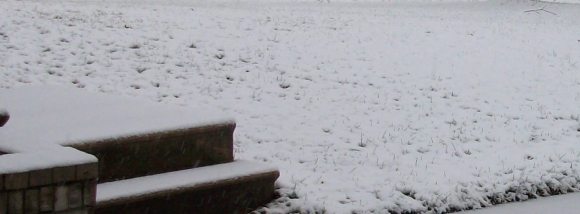
First Snowfall
First Snowfall

The president-elect made stunning cabinet picks in the 30 days since the general election. I don’t like any of them.

As political institutions re-tool, it’s clear millionaires and billionaires will be the primary beneficiaries of Trump’s administration. He won the election so it’s his right to name a team and set an agenda.

As my colleagues at the home, farm and auto supply store said often in recent weeks, “the election is over.”

Who knew it would be the agenda of the Republican party of Warren G. Harding and his return to normalcy that elected Trump?

“America’s present need is not heroics, but healing,” Harding said during a speech in Boston May 14, 1920. “Not nostrums, but normalcy; not revolution, but restoration; not agitation, but adjustment; not surgery, but serenity; not the dramatic, but the dispassionate; not experiment, but equipoise; not submergence in internationality, but sustainment in triumphant nationality.”

Harding’s view was nothing was the matter with world civilization after World War I that couldn’t be fixed by returning to “normalcy.” Trump’s campaign slogan, “make America great again” is reminiscent, if not derived from this.

“The world needs to be reminded that all human ills are not curable by legislation,” Harding said, “and that quantity of statutory enactment and excess of government offer no substitute for quality of citizenship.”

There is a lot to unpack in the Harding – Coolidge – Hoover era, which we now know gave us four-term President Franklin Delano Roosevelt. It was an unintended consequence of Andrew Mellon’s execution of Harding’s plan for a prompt and thorough revision of the tax system, an emergency tariff act, readjustment of war taxes, and creation of a federal budget system. Mellon’s long tenure and contribution to policy resulted in the Great Depression. His failures gave us FDR.

Whether the stress on western civilization after World War II was more or less than after World War I is hard to say. Republicans sought to overturn everything FDR stood for and enacted into law, then and now. With Trump they see a chance to turn back progressive reforms dating back to that era.

“The people were demanding a return to ways of prewar living — Harding’s ‘normalcy,'” Herbert Hoover wrote in his memoir. “But in reality, after such a convulsion, there could be no complete return to the past. Moreover, the social sense of our people, livened by the war, was demanding change in many directions.”

Enter Trump’s cabinet, comprised of elite citizens, each of whom appears to have disdain for the office to which they were appointed. They intend to unravel government as we currently think of it, leaving the rest of us behind.

There will be no making America great again under President Donald Trump for reasons similar to what drove the failure of Republicans during the Harding – Coolidge – Hoover era.

Now, more than at any time in my lifetime, the resources and energy of citizens are needed to protect the commons from the new hoard of marauders until the worm turns and progressives gain power again.

That day will come. I hope it doesn’t take the same 12 years after World War I to produce a new, progressive era.