Categories
Environment Living in Society Sustainability

Spring Hope

Embers

It’s been a struggle to get a grip on the presidency of Donald Trump. There’s nothing he’s done to give us hope.

Just give me a handle — anything to grasp onto as normal! Nothing.

Like many who care about the environment, nuclear abolition, and the commons, there seems little hope of advancing a positive agenda during the first term of the 45th president. What some settle on is giving up on 45 doing anything positive, resisting his degradation of our previous work, and working toward the 2020 presidential election and a Democratic president. In other words, create a political climate more receptive to our initiatives.

“I think we have to use the coming four years to create an understanding in the general public and amongst (sic) the security community that we need a fundamental change in nuclear weapons policy,” Ira Helfand, co-president of International Physicians for the Prevention of Nuclear War, wrote yesterday in an email. “Our goal should be that the new administration that takes office in January 2021 is fully committed to this change in policy, and staffed with people who share this vision.”

I respect Helfand’s sense of urgency to use the time we have to accomplish something. At the same time we can’t afford to shelve our priorities until the political climate is more likely to support them. What’s right is right and our work on the environment, nuclear abolition, and the commons must continue even if the odds are against us. There may never be a political climate receptive to the change we seek.

It’s time to turn the page on our reactions to Trump and do what’s right. For me that means joining together with others to work on preserving an environment where humanity can live out its next era in dignity and relative peace. That’s something to grasp onto.

If the evolution of homo sapiens is to eventually become extinct, there is little we can do about that. Whether it is the return of the Imam Mahdi before the end of the world, or the second coming of Christ, we can’t place all our hopes on a life after this one. We live here and now and must act to mitigate the damage we humans have wrought on the planet.

Earth is our only home and we must make the best of what we inherited.

All around us Spring is regenerating the biosphere as it has done for millennia. To be a part of that, especially with others, can only bring us good. Even if the political climate runs against our common sense, hope remains.

This spring we must re-dedicate ourselves to that hope.
Categories
Work Life Writing

Winkling the Week

Broccoli Seedlings

Sunday afternoon I felt a bit dizzy.

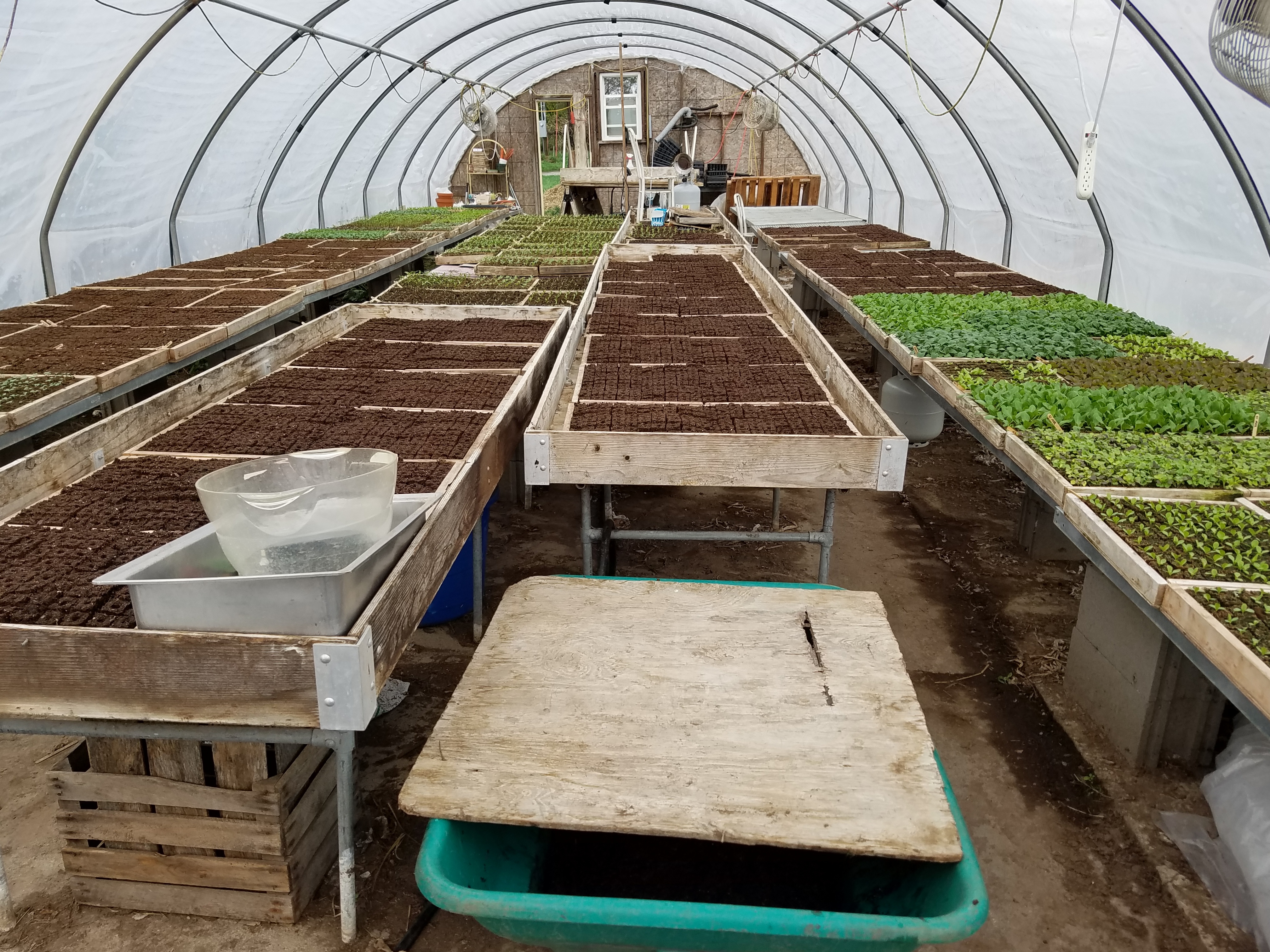
I assumed it was the long day, split between two farms, getting tired after making 57 trays of soil blocks.

As I placed the last tray of 72 blocks on the table for cucumber seeding, I washed my tools and headed for the car. Something was up.

It took three days to winkle it out: I caught some kind of bug that kept me from working at the home, farm and auto supply store.

On Monday morning I was dizzy and nauseous. I brushed my teeth, shaved, showered and dressed, then headed to the car for the drive across Mehaffey Bridge. Just after I crossed the south arm of Lake Macbride I stopped, too nauseous to continue. I called off sick and turned around. Near the old barn north of the lake I stopped again and vomited twice. I spent most of the rest of the day sleeping. I did pick up our vegetable share at the farm — probably not my best decision.

Determined not to take a second of my five annual sick days today, I woke, got dressed and tried it again. I made it to the parking lot, went in and found my supervisor. After preliminary pleasantries told him I felt too sick to work and went home and back to bed.

In all I clocked 25 hours of sleep in a 36 hour period.  As the sun moves lower in the western sky I’m on the mend. I don’t recall much about the last 48 hours.

I woke this morning about 9 a.m. just when Governor Terry Branstad’s hearing at the Senate Foreign Relations Committee was beginning. Branstad is President Trump’s nominee to become ambassador to China. The Des Moines Register live-streamed it, so I watched on my phone in bed. He looks to be a shoe-in because of his service as governor of Iowa and his long relationship (since 1985) with Chinese President Xi Jinping. I posted on Twitter, “Branstad seemed present, cognizant, schooled and mannered at his hearing today. Much different from person who nominated him.” It was a sign I was feeling better.

This week is the anniversary of President Nixon’s 1970 invasion of Cambodia and the protests that erupted around the country. At Kent State four students were killed by national guardsmen during the protests. My reaction to the news was to participate in my first-ever protest march. I carried one corner of one of four mocked up coffins to the National Guard Armory on Brady Street in Davenport. I felt participation would raise awareness about the war. When our photo appeared in the local newspaper, it confirmed my belief.

This week’s hope is that the ground will dry. The farming community is waiting for the ground to dry to begin planting. After a Rip Van Winkle style nap, what I winkle out is the need to focus on today because we never know what tomorrow will bring or what may disable us.

Categories
Environment Home Life

Inside Chores and Climate Marches

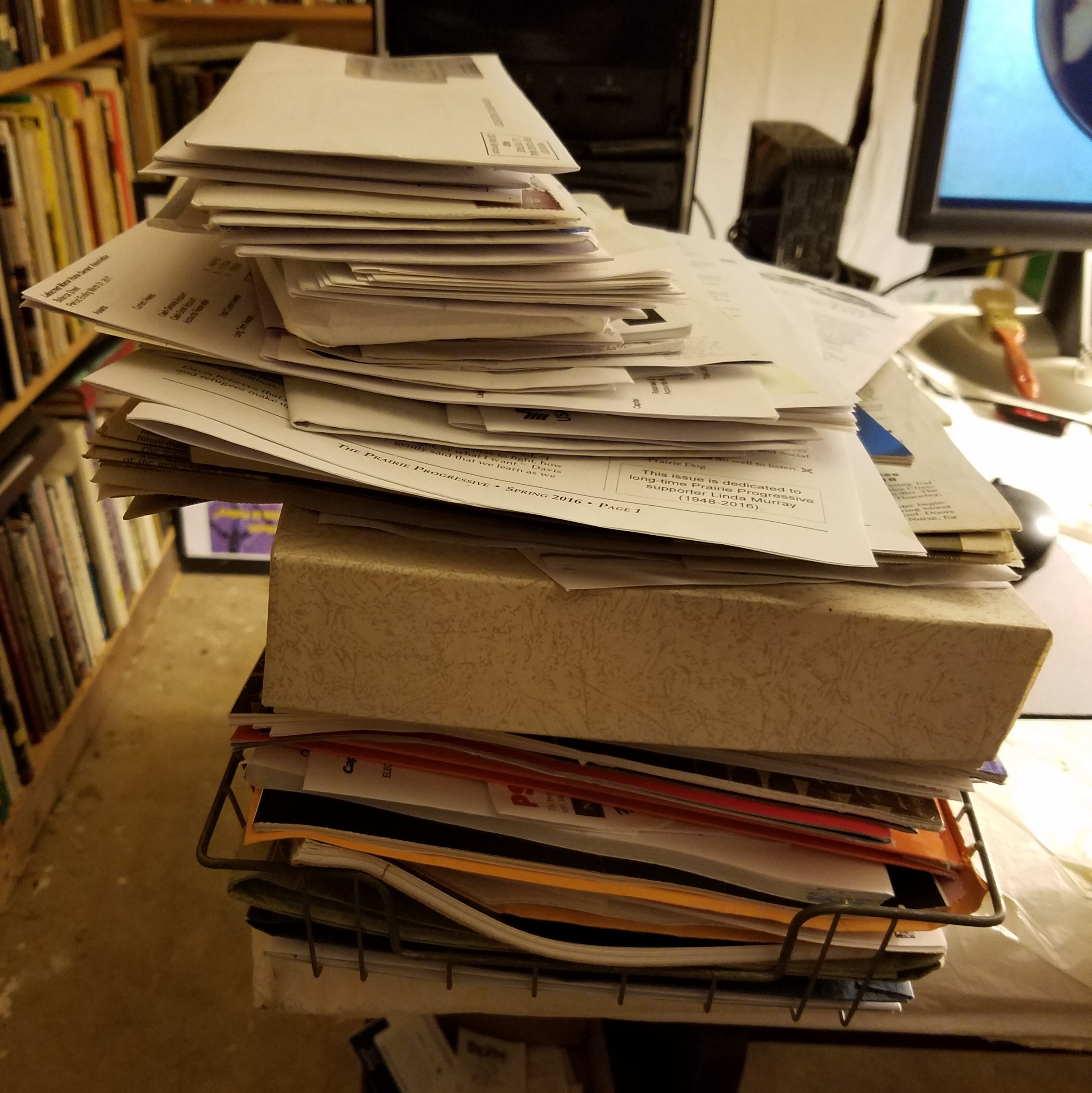
Overflowing and Neglected Inbox

Rain began mid-morning and is expected to continue until sunset.

Let it rain.

It’s an opportunity to work on inside chores before spring planting.

I’ll tackle a long-neglected inbox and use produce in the ice box and freezer to make soup. There’s plenty to do in the jumble the garage has become since winter — moving the lawn tractor toward the door, organizing the planting tools and cleaning shovels, rakes and bins for the season. I’m antsy about getting the garden planted — I accept it won’t be this weekend.

A few friends are participating in the People’s Climate March today. CNN and the Washington Post covered the District of Columbia march. There are several marches in Iowa and elsewhere. The key challenge for participants and other climate activists is determining what to do in a society where the importance of action to mitigate the causes of climate change garners slight interest.

“Surveys show that only about one in five adults in the United States is alarmed about climate change,” Jill Hopke wrote in The Conversation. “This means that if climate activists want this march to have a lasting impact, they need to think carefully about how to reach beyond their base.”

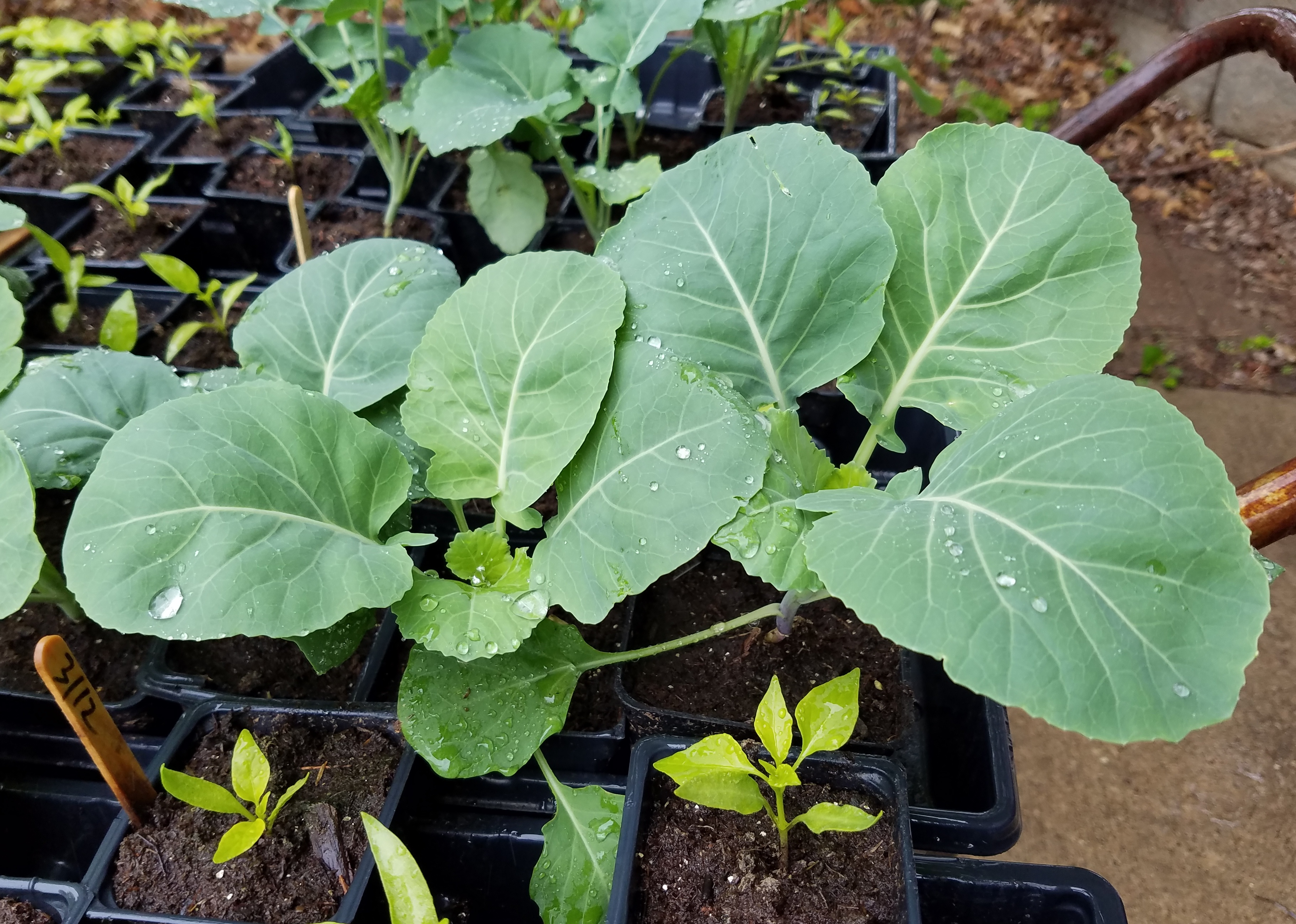
Collard Seedlings in the Rain

The unanswered question is how shall people outside the activist community be recruited to take climate action and by whom?

There are no good answers and no reason for climate activists to lead the effort. However, we can’t give up if we value society’s future.

The main issue is the increase in atmospheric greenhouse gases since the beginning of the Industrial Revolution. The good news is there are renewable sources of energy for transportation, manufacturing and electricity. How will society make climate change action ubiquitous with a majority of the world population?

Mass demonstrations can play a role in an effort to raise awareness about climate change. So can articles written by journalists, scientists, bloggers and organizations. At a minimum we can each strive to live with as light an environmental footprint as possible. We can explain to our friends, family and neighbors. Everyone has the potential to do something.

Today’s cool weather and gentle rain is a reminder.

“Staying out of the cold and warm inside? So are we,” Richard Fischer of Bernard wrote this afternoon via email. “Due to the weather we’re moving the event over to Convivium Urban Farmstead and Coffee shop, 2811 Jackson St., Dubuque.”

We must consider our lives in the built environment and let it rain. Have faith in today’s potential and adjust, knowing as long as rain comes and sustains our gardens and farms we too will be sustained.

There is much we can do when it rains. We can act on climate before it’s too late.

Categories
Environment

Pelicans Left

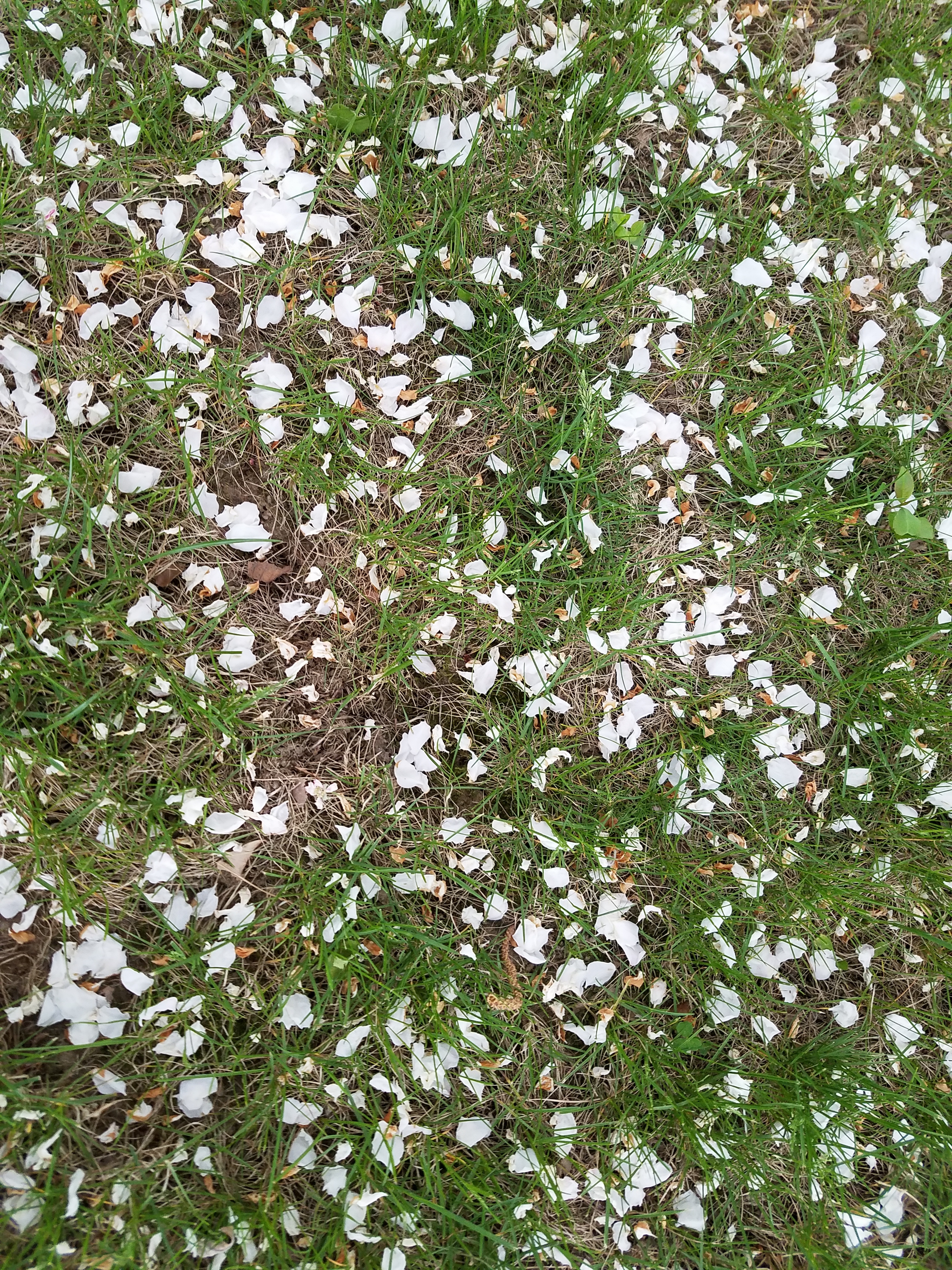
Fallen Apple Blossom Petals

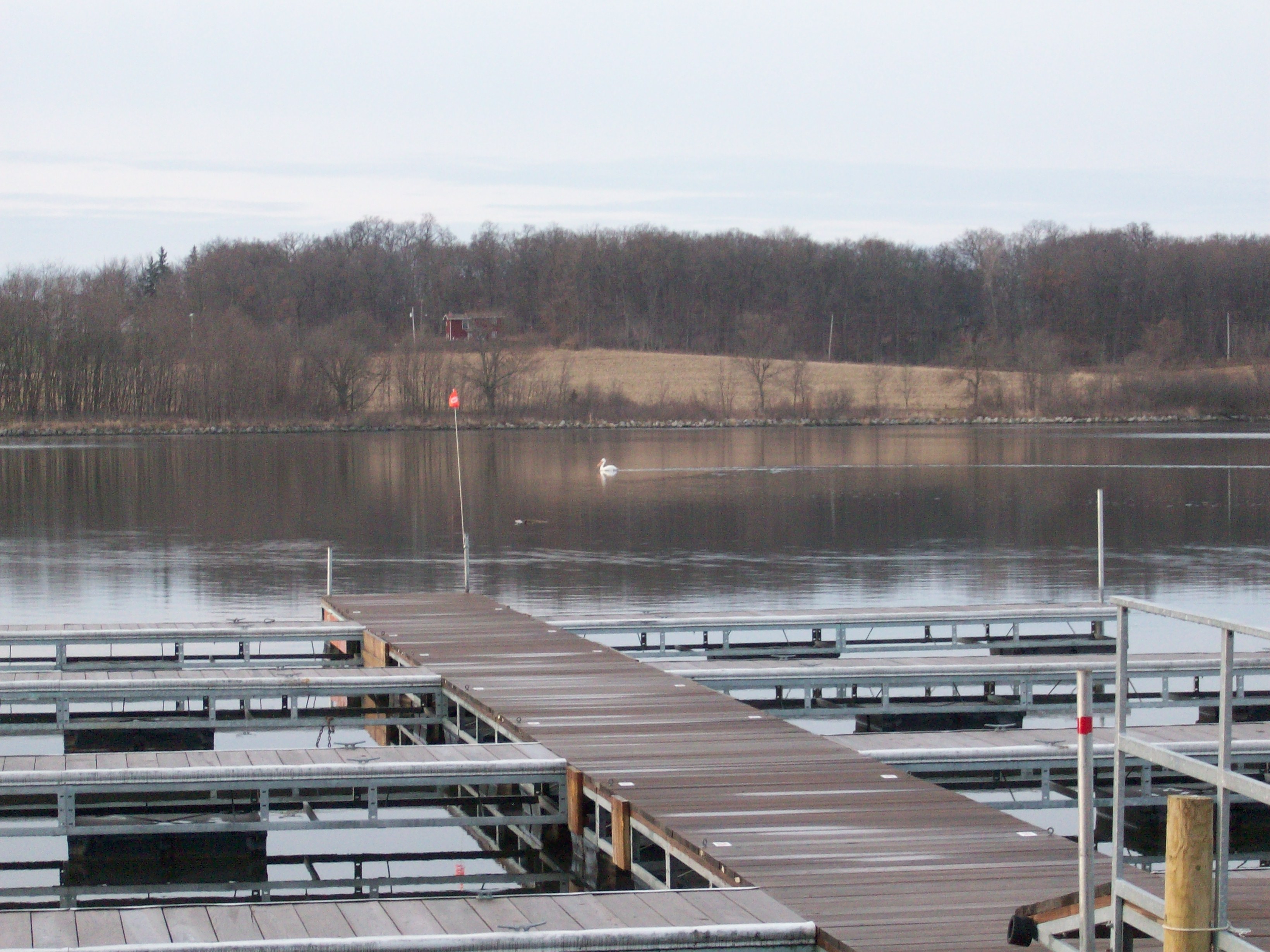
Pelicans left Lake Macbride this week. They were gone when I drove across Mehaffey Bridge Road on Monday.

Have they depleted the fish stocks and gone to better hunting grounds?

Did they detect something in nature that triggered migration?

I don’t know, but hope they will return in the fall.

Pollination of fruit trees appeared to go well. Apple blossom petals are falling as fruit sets. We enjoyed the flowers for so brief a time. They served their purpose and are transformed by pollinators buzzing through the trees.

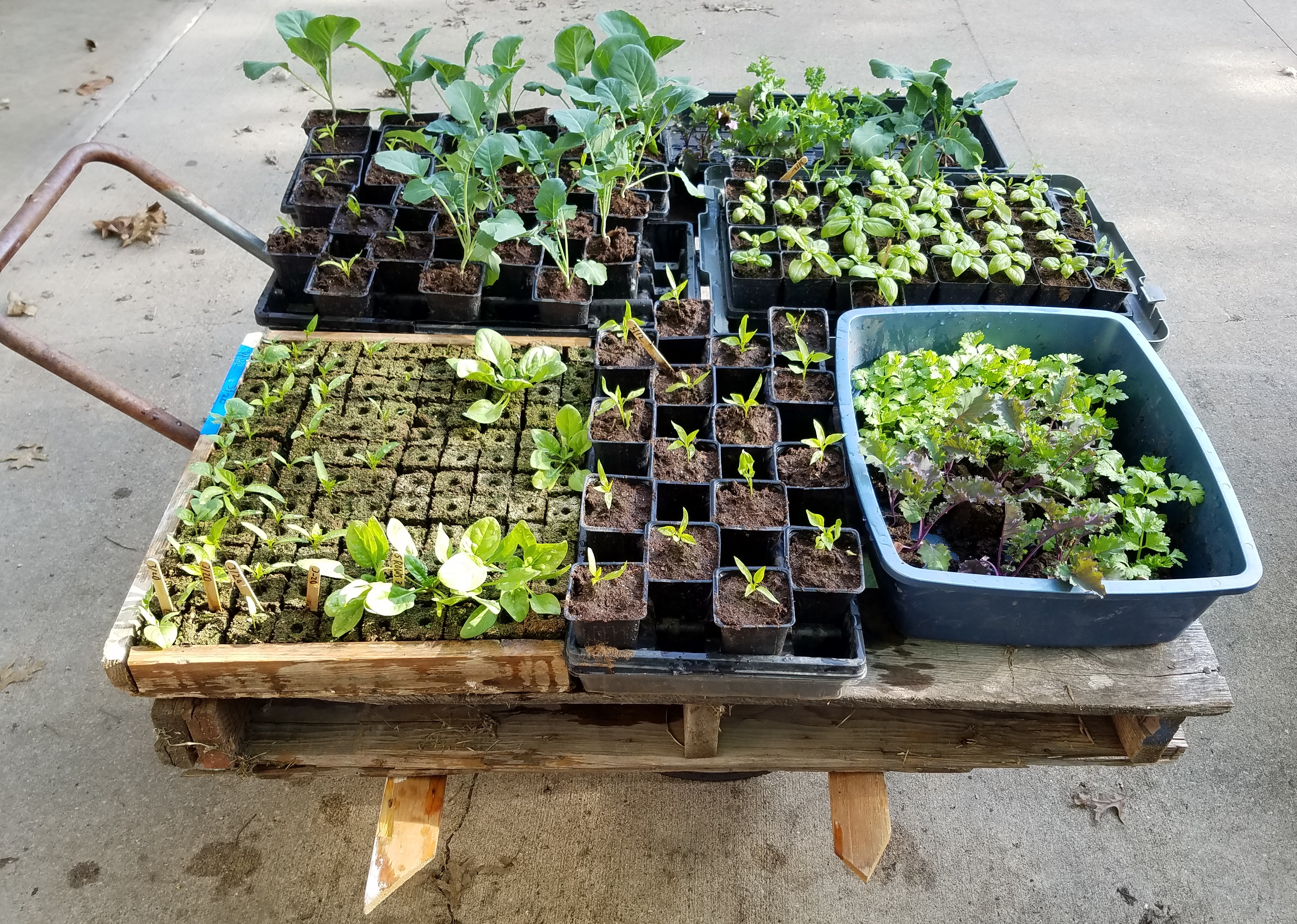
Rain began Wednesday and is expected to continue through the weekend. Tomato and lettuce seedlings remain at the greenhouse and the cart of seedlings at home is ready to plant if the ground dries out. I move the cart outside the garage in the morning and back inside as the sun sets. A transient ritual of gardeners who grow their own seedlings. Only a few more weeks and the cart will be re-purposed to other garden tasks.

A sense of transition is palpable as pelicans leave, blossoms are deflowered, and we take next steps on our walk through this season. We smell, touch and look at the wonder of life around us understanding it can’t be held — only lived.

Categories
Writing

First Share

New Seedling Cart with a Pallet from the Farm

After work at the home, farm and auto supply store I drove to the farm and picked up the first spring share. In it were spinach, baby kale, Bok Choy, Choi Sum, broccoli raab, rhubarb, oregano and garlic chives.

Already my mind is swirling with cooking ideas.

I’ll prepare a breakfast omelet using greens seasoned with oregano and garlic chives. Most of the oregano will be dried and flaked for cooking. Garlic chives will be processed with cream cheese for a sandwich spread. In the mix is rhubarb jam, spinach casserole, and sautéed greens. There will be lots of cooking with this week’s abundance.

It’s the next stop on along the annual circle of local food.

While at the farm I sorted through a stack of pallets used to deliver straw and hay and found two to bring home. I made a wheeled cart for summer crop seedlings finishing before the big May planting. The other will be used to organize the garage until Memorial Day. I’ve requested May 6 – 14 off work at the store to get planting done.

For the moment, life is about the weather — seeing how it unfolds and checking my weather app for forecast updates. It is also about forgetting the fray of politics for a while to become a practitioner of something useful — not only in Iowa but globally.

Categories
Environment Kitchen Garden Living in Society

Politics Takes a Holiday – Local Edition

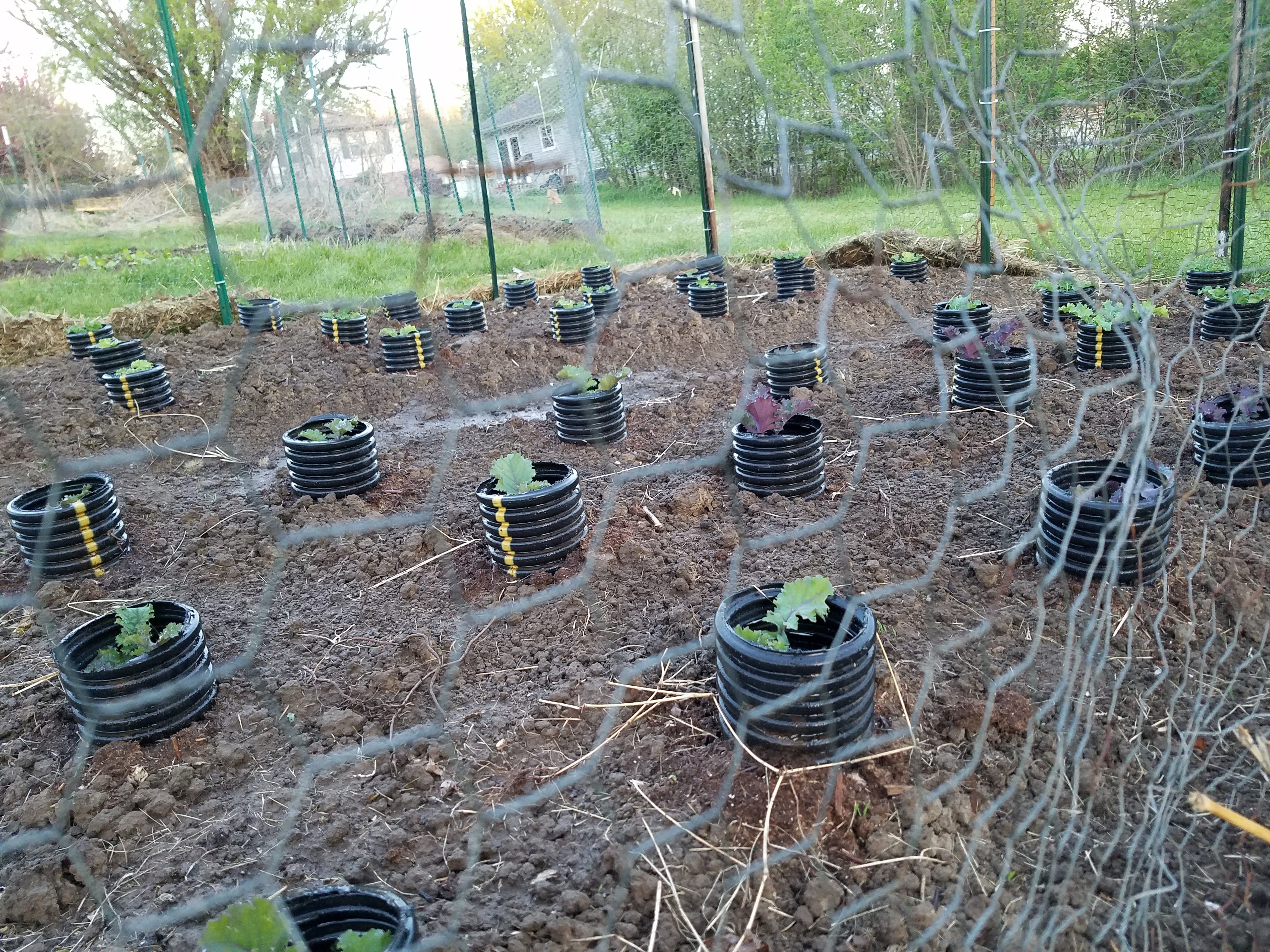
Kale Plot

The first session of the 87th Iowa General Assembly adjourned sine die on Saturday morning after pulling an all-nighter to wait for Republican leadership.

The decision was about improving Iowa water quality and reauthorizing use of medical marijuana. They did nothing positive on water quality and may as well have let the current medical marijuana law expire, saving everyone the trouble. However, harassment by Iowa Republicans has become de rigueur.

The best part of this year’s adjournment is legislators won’t be in Des Moines doing more damage to family and friends. The dark cloud hanging over the capitol is they are just getting started and the second session could be worse.

Lynda Waddington summarized my feelings in her Cedar Rapids Gazette column on Friday.

“The final straw came this week when lawmakers decided that if my daughters become pregnant the state can force them to continue the pregnancy and give birth,” she wrote. “It’s a decision that sickens me to my very core, and not just theoretically.”

“I will not encourage my daughters to return or stay here, and I will hasten plans for my own escape,” she concluded. “Thanks to the General Assembly, Iowa is no longer a safe place for women or families.”

I’ll make my stand in Iowa. Unlike Lynda, I was born here and have nowhere else to go without being a refugee. At the end of this legislative session, we’ve weathered the storm and are beaten but not down.

It is fitting the session ended on Earth Day.

Around the world people rallied to support a scientific method in solving problems. Except for the Dunning Kruger effect, I’d recommend state legislators pay attention.

Apple Tree in Bloom

As has become custom on Earth Day, I minimized my carbon footprint and spent time in our garden. The calm winds and abundance of pollinators made conditions nearly perfect for setting apple blossoms. Small white petals already had begun to fall, giving hope that the new apple crop will eclipse all of the bad news from Des Moines.

I gardened. Except for collards, all of the cold weather vegetables are planted. There is plenty of remaining space for crops to be planted after the last frost. I transplanted peppers into larger soil blocks to provide nutrients before going into the ground in a couple of weeks. I cleaned up four soil block trays to take back to the farm on Sunday.

I wasn’t alone. While Jacque was at work I did some neighboring and heard the sound of children playing, birds singing and bees buzzing.  People took advantage of perfect spring weather to get outside. Social interaction enabled me to stop thinking about politics and I could focus on simple garden problems which were eminently solvable. It’s easy to see that the support for the pea plants was off center, exposing them to predators. Adjusting it took only a few minutes.

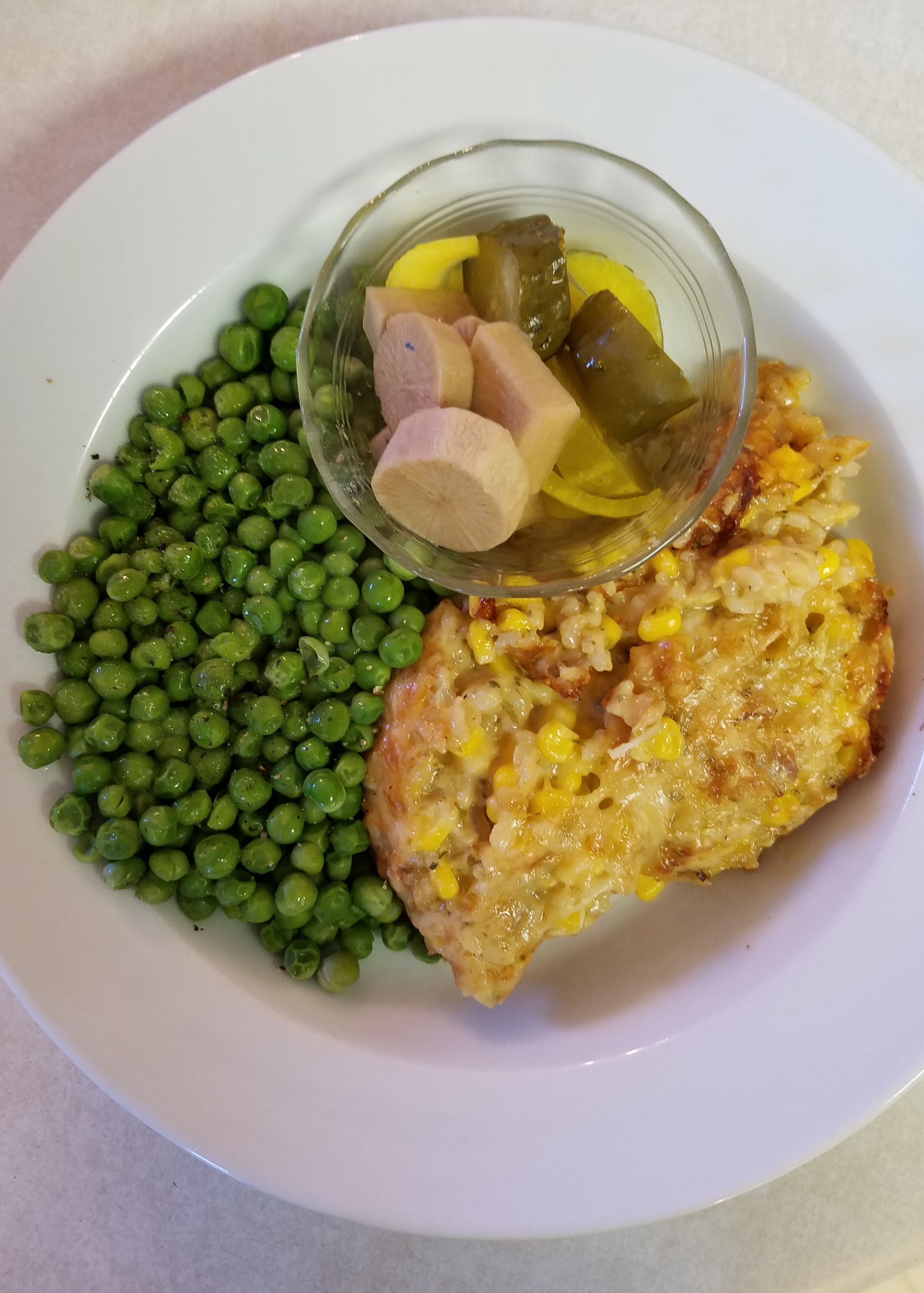
Corn-Rice Casserole, Peas and Pickles

Our garden and interaction with local food sources make the kitchen part of the garden. I made a simple supper of corn-rice casserole, steamed peas and a dish of home made pickles (onions, cucumbers and daikon radishes). Such meals go well in our household because they taste good with leftovers to be heated up for another meal.

As I entered the world of low wage work in 2013, I stepped back from most social commitments. It’s time to re-engage. This week I re-joined the home owners association board and was elected president. Comes a time for people to step forward and get involved in community. If we seek a better society, our work begins locally.

It’s part of what sustains us in a turbulent world.

Categories
Living in Society Social Commentary Writing

Defining Community

Pelican Swimming in Lake Macbride

Each of us defines community through our engagement in society.

Whether participation is passive, active, or in between, our lives and how we live them contribute in a meaningful way to how we live with others in a community.

Not everyone is a joiner. For some the focus is on the county seat, the state capitol, or the federal government. For some it is on school systems and the public library. For others it is the world of commerce — transportation, shopping, working a job. Many people just try to make it through each day with dignity. Community is broader than any one of these pursuits.

Misunderstanding our role in shaping a community and how we do and can contribute is a source of affliction in modern society. For me, the best remedy is getting involved at a local level. In consideration of that, I joined our home owners association board as a way to influence the place where we live. I wrote this note on the community Google group:

Association members:

Tonight at the regular monthly meeting of the Lake Crest Manor Home Owners Association Board of Directors I was appointed to the board and then elected as president to replace Bob Huber.

I appreciate the board’s confidence in electing me.

For those who don’t know Jacque and me, we moved here in August 1993 and raised our daughter who graduated from Solon High School in 2003. I “retired” in 2009 from CRST Logistics and currently work four different jobs in the community: at Theisen’s Supply in Coralville, at Local Harvest CSA, at Wild Woods Farm and at Wilson’s Orchard. Jacque works part time at the Solon Public Library.

I began serving on the board in 1994. My first tour of duty was ten years followed by a second tour from November 2009 until December 2013. I’m glad to be back for a third (I think). When we moved here we were told that everyone takes a turn on the board. While that turned out not to be true, I believe changing board members regularly is good for the health of our community. If you are interested in serving, there will be a position open at our next board meeting.

A couple of important things came out of tonight’s meeting.

Gene Lawson was elected treasurer to replace Rob Sprague who resigned effective May 1. Gene and Rob will be working together to make sure there is a smooth transition in our finances.

On Sunday, April 30, at 1 p.m. at the Solon Public Library, there will be a meeting about the boat docks. If you care about this issue it would be a good meeting to attend. The Iowa DNR made a proposal to change who is eligible for our dock spaces to include Lake Crest Manor Parts I and IV that are not part of our association. Note this is a proposal only. We will explain the proposal and get your feedback at the meeting. The board will get back to the DNR after the meeting saying that either 1). we accept it, 2). we reject it, or 3). we have a counter proposal. Since we lost our original grandfathered arrangement in 1998, the DNR has asserted more power in regulating our docks. This is a complicated issue so it’s best to attend the meeting if you are interested. Already there has been a lot of discussion about it by the board and in our community.

Tonight the board passed a motion to apply by May 1 to the Iowa DNR to add additional slips to our docks. I would point out a couple of things. 1). The DNR is open to adding dock space around Lake Macbride, so now is the time to secure that permission. 2). If we get approved for additional space we may or may not actually add it. There is some opposition in the association to the idea of adding dock space and those viewpoints should be considered. 3). The DNR approval of a request is not at the state park. Because of this, we may not get a response for this boating season. After a discussion the board decided to set a date certain for the application submission. I was the only board member to vote against the motion, with one abstaining.

I’m not planning to pepper you with constant emails. Just wanted to say hello to those in the Google group.

The best way to contact me about association business is via email. The response will be more timely than chasing phone mail messages, which is inevitable when dealing with a person holding four jobs.

Hope to see you at a board meeting soon.

Regards, Paul

Categories
Writing

Goats of Easter

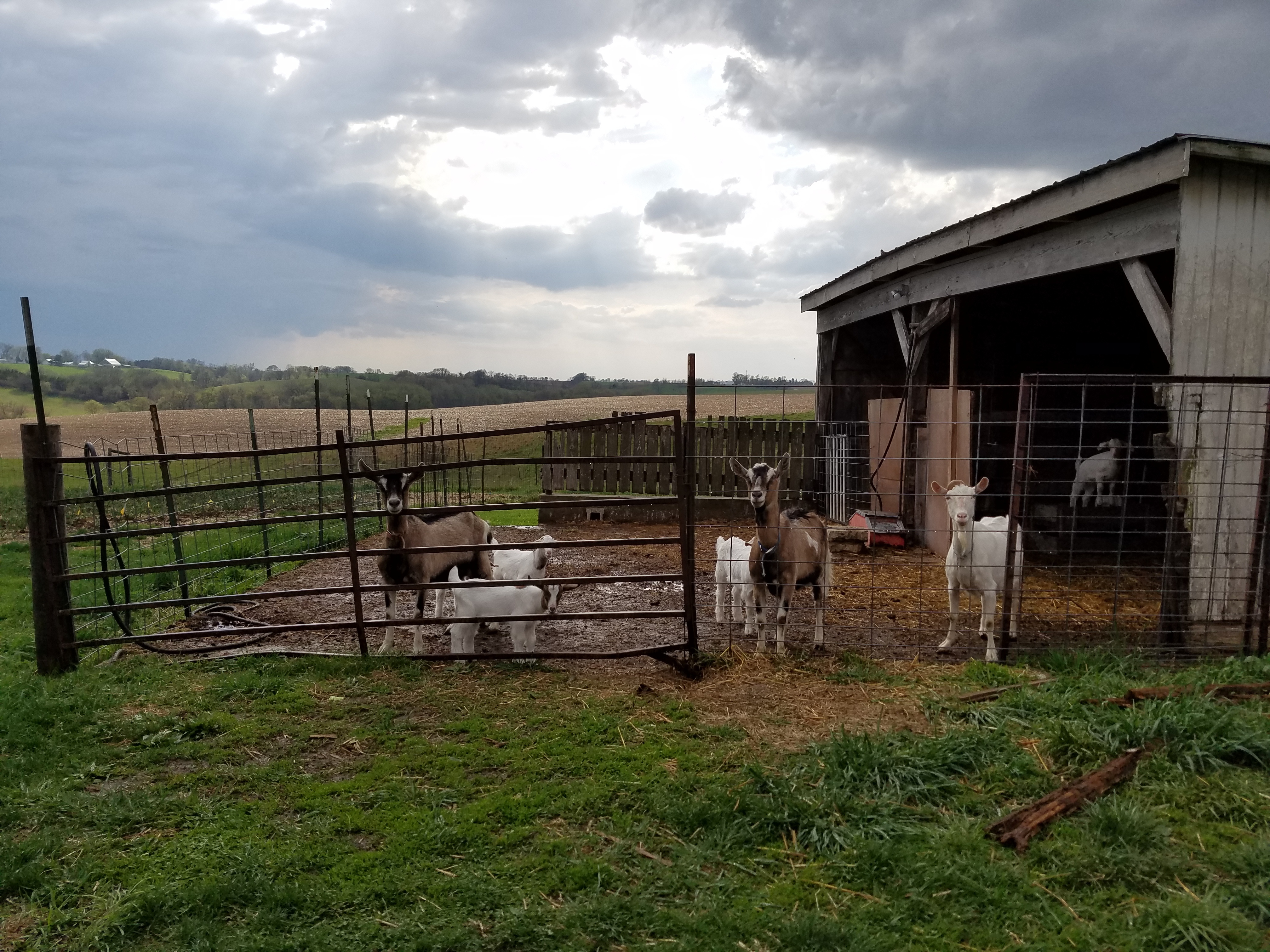
Goats of Easter

The sound of bleating lambs pierced the air during yesterday’s shift at the farm. It was a sad sound because we know their destiny.

Above is a photo of goats instead.

I made 60 trays of soil blocks for the germination shed. It’s time to transplant pepper plants from plastic trays where they germinated to individual soil blocks for finishing before planting. There are a lot of them.

Saturday, April 15 in the Germination Shed

I was to do 78 trays, but a thunderstorm blew over, dropping a brief torrent of rain and hail — enough hail to sting our skin. All of us —four people, two dogs and a cat — made our way into the germination shed to wait out the storm. It didn’t take long. The storm was an emphatic punctuation ending the day’s work.

Between Passover and Easter none of our lambs was sacrificed despite the popularity of leg of lamb as a holiday main course. On a farm we accept the reasons for raising lambs and goats, and the reality of thunderstorms.

I barter my work. Soil blocking yields participation in selected shares, notably the spring share which begins April 24, and fall shares from both farms. It is a way to leverage the high tunnel for early lettuce and greens, and to secure potatoes, sweet potatoes, cabbage, carrots, squash and other storage vegetables so I don’t have to grown them myself. We also exchange work canning tomatoes and freezing bell peppers with each receiving a share of the resulting jars or zip top bags.

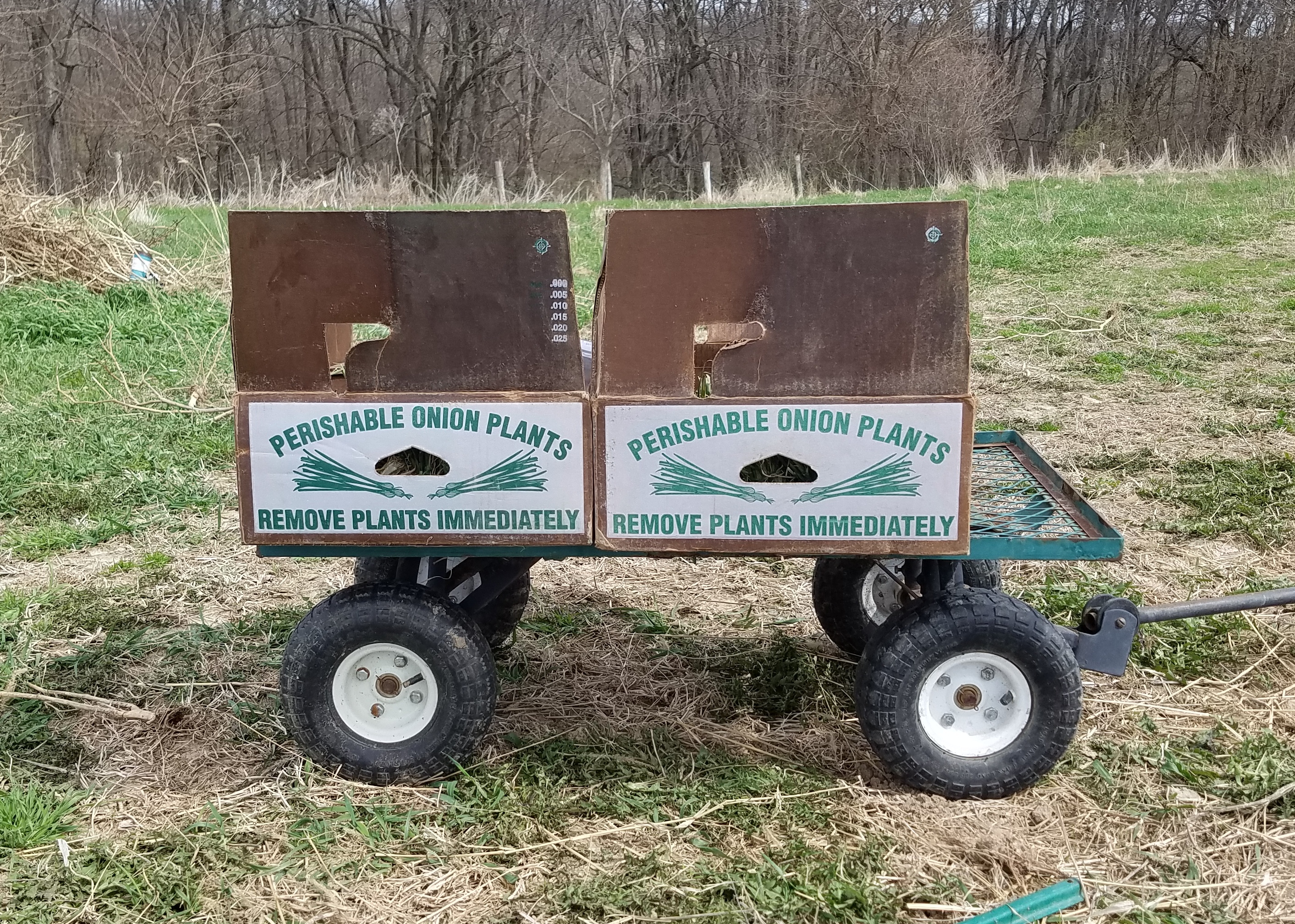
I started seven trays of my garden seedlings in the germination shed, also part of the deal. I got bags of last year’s soil mix and onion sets that were part of the farm order. There are other sundry items: pallets saved from the burn pile, leftover partial trays of seedlings, and vegetables when there is over-abundance or if they are too imperfect for members.  While no money changes hands, there is mutual benefit from barter deals. My car was loaded as I departed the farm.

The sound of lambs permeates spring days bringing with it both hope and mortality. It’s a hopeful and sad sound. One that leads me to prefer goats.

Categories
Home Life Kitchen Garden

Week Night Productivity Window

Pepper Transplants with Broccoli

Between arrival home from the home, farm and auto supply store and sunset were three hours to work outside. I did.

I watered the garden, rolled up the garden hose, repaired the bird feeder, and emptied the kitchen compost bucket.

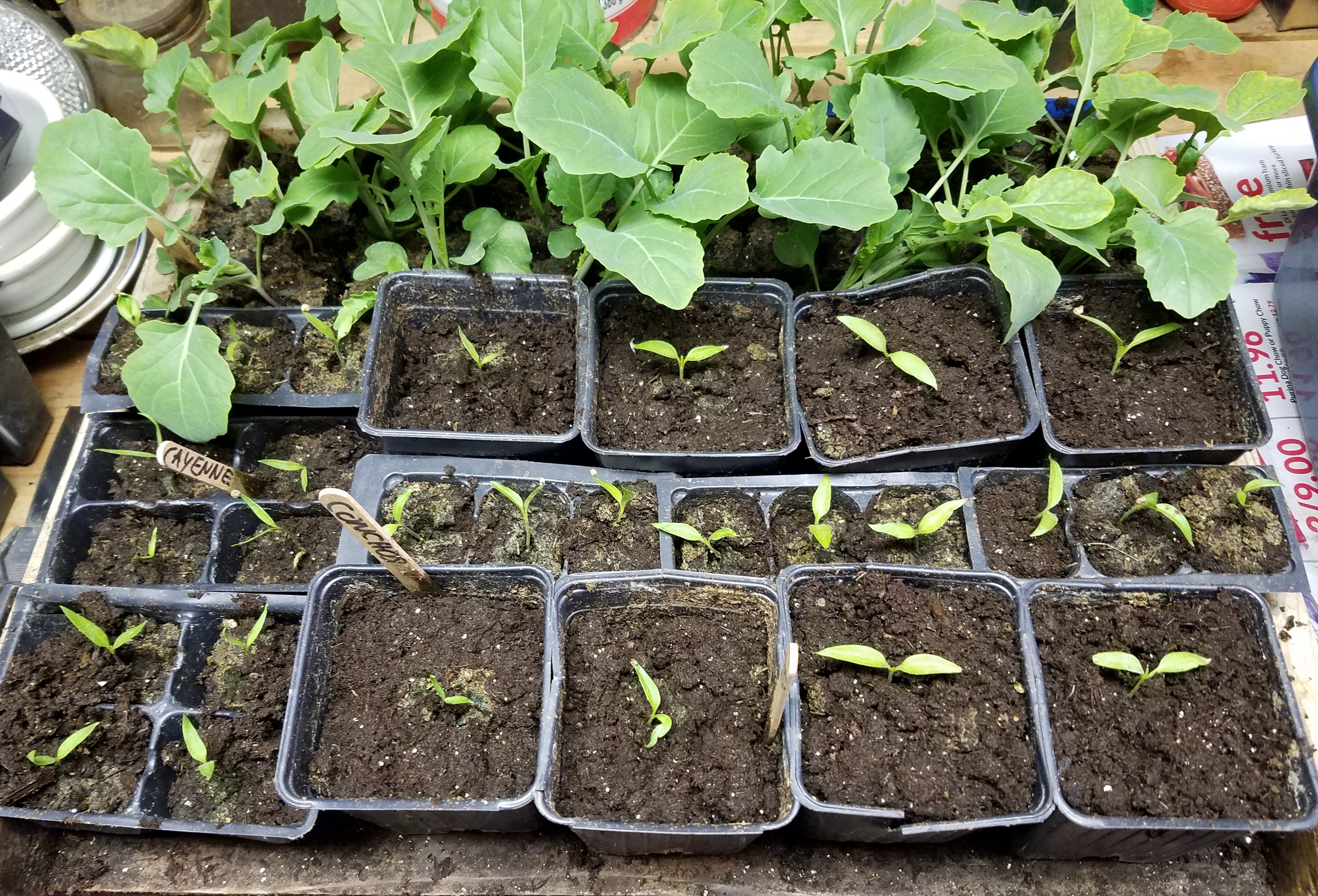
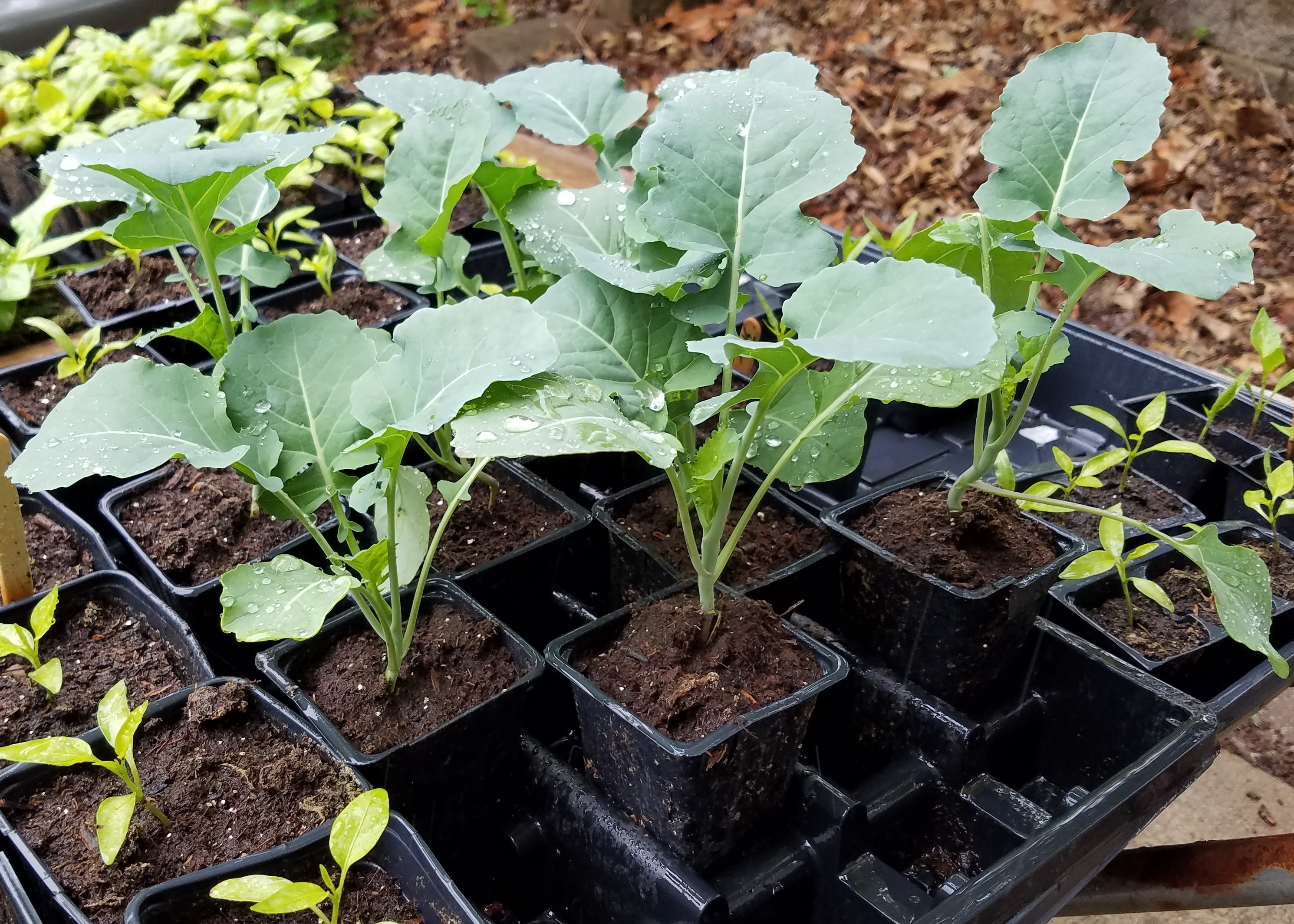
Broccoli and kale seedlings look good. After a third day of conditioning outside, they should be ready to go into the ground. I transplanted the hot pepper plants to larger containers. Three varieties in this batch: cayenne (8 each), conchos jalapeno (1 each) and early jalapeno (23 each).

It felt like I got something done. That’s saying something in a life consumed with work.

A gardener never knows what a season will yield. We keep busy planning and doing things to grow a crop to share with family, friends and neighbors. A window of daylight and temperate conditions can be well used on a week night.

It’s where we live — on the margin between hope and despair.

Categories
Kitchen Garden

Weekend in the Field

Onion Plants

The weather on Saturday was perfect for getting into the field. Wind had dried the ground making it tillable.

In the cycle of community supported agriculture projects, now is the time to plant onions — a key crop to share with members.

Most farmers I know were planting them — tens of thousands of onions.

I soil-blocked for the next planting in the germination houses — 4,608 at one farm and 4,320 at the other. I brought home two trays of kale, broccoli and hot peppers. The pepper plants will be transferred to larger soil blocks. The kale and broccoli will go into the ground this week after conditioning outside a few days.

Brought Two Trays Home for Conditioning

Saturday morning a group of about 20 people “pulled plastic” over a high tunnel damaged in a storm earlier in the year. We gathered at sunrise before the wind came up. I stayed until the bulk of the work was done. All the adults were either farmers or farm workers. Here’s what the new plastic looked like after the job was finished.

Repaired High Tunnel

I worked in the garden after returning home. There’s a lot to do. The carrots and lettuce are up. I planted potatoes in containers, peas in cages, and beets and radishes near the peas.

I measured the remaining space in that plot and determined 36 kale plants would fit. That’s the same number I planted last year, although I hope for a better yield this year. The kale plot will be 6 Vates, 6 Starbor, 12 Scarlet and 12 Darkibor. I grew way more than I’ll need and leftovers will be given away to friends and neighbors.

I decided to just keep working until I drop this year. Life is short and gardening and farming is a good way to use it. I was tired by Sunday night.