Categories
Home Life

Taking a Deep Dive

Gala Apples

It’s raining as I type on the keyboard. Rain is to relent and I hope it does because one of the farmers for whom I work is getting married today.

In our small family there are not many celebrations. I’m not sure what to do at a wedding, although I’ll figure it out by 3:30 p.m. today.

Jacque is steering me in the right direction. We bought a gift on line and had it sent to the bride’s home. She is making a card. She suggested I refrain from going directly from the orchard in my work clothes as I had planned to do. I looked through the closet to find something to wear and there was my blue shirt and a pair of slacks. I have a pair of dress shoes left over from when I worked in the Chicago loop. I need to pick a tie. My navy blue blazer still fits. Special things for a special day. I’ll change in the employee rest room at the orchard then head down to the county seat for the ceremony. Civilization at work.

It’s still raining.

Since my first retirement nine years ago I’ve kept track of significant activities.

I keep a balance sheet, a list of books I’ve read recently, and record every event, meeting and significant encounter with people outside immediate family who are part of my world.

Early on there was a purpose to this, although I’m not sure now what it was. Three full binders later, I’m ready to give up tracking things so closely. My last full report was in December 2017 as my Social Security pension began. My second retirement seems opportunity enough to let go of details and focus on main tasks at hand. Things like weddings, funerals, birthdays, housekeeping and the like. I expect I’ll get better at it.

September begins the turn toward winter. The garden is in late summer production so there are tomatoes, celery, cucumbers, winter squash, green beans, eggplant and peppers coming in, requiring processing. Fruit is also coming in from the orchards with pears, apples and peaches lined up on the counter waiting to eat. Cooking has taken a fresh flavor with local food dominating most menus. Cucumber salad is happening daily and we’re not tired of it… yet.

2018 is proving to be a year of transition. So aren’t they all?

I’ve been planning garlic planting in late September and haven’t decided whether to use the cloves I grew as seed or to get more from the farm. I picked a place for them and once the cucumbers are done I’ll prep the soil. I think I know the answer. At some point we have to live on our own — I’ll use the cloves I grew this year, hoping they multiply and eventually become self-sustaining. I’m confident they will.

Categories
Living in Society Social Commentary

Late Summer in Iowa

Summer Vegetables

A pall fell on Iowa as the family prepares for tomorrow’s funeral of Mollie Tibbetts, the 20 year-old college student who was murdered near Brooklyn, Iowa.

Many of us feel a connection to her whether we knew her or not. She went jogging and never came back. We grieve with her family and friends.

Many, including the 45th president, seek to politicize her death. We can’t let that stand. We won’t let it stand. May she rest in peace.

Tragic summers are part of living in Iowa.

While the current midterm election cycle will continue toward its fall conclusion, we live our lives outside of politics. The politics I have come to know recalls a few triumphant moments: Lyndon Johnson’s 1964 re-election; Dave Loebsack’s 2006 election; and maybe Barack Obama’s 2008 election. So few celebrations in the wicked world and none of them perfect. Politics is not why we go on living.

Set aside our work and endeavors to make society better, and what’s left? For some of us it is a deep and abiding love of life — including its comedic and tragic drama. If we tell ourselves stories to live, what story will we tell about this summer so we can go on living?

Division among us makes it harder to craft a narrative for holding back tears — tears of loneliness, of sadness for the loss. Tears unexpectedly salty and wet pulled down by gravity to our tongue. Impartial tears of grief. I am heartened by the idea there is no other side, just one country of which we are all a part.

In the wee hours of morning lightning and thunder preceded rain. I couldn’t sleep. I got up to get a drink of water from the kitchen and felt dizzy walking down the hall. I drank a few ounces and went back to bed, sleeping fitfully.

I’m still tired yet ready to go, ready to take on what’s next. To make the next effort worthy of a life, honorable to our predecessors and invigorating for who’s next. Despite summer’s tragedy we look forward to winter, and ultimately to spring and the chance to renew our lives.

In this moment it’s hard to contemplate the garden’s bounty. Even though it is hard, we will persevere and make something of it. A meal for today and ingredients for the future. What else will we do in the face of tragedy but go on living?

Categories
Writing

Writing in Summer Rain

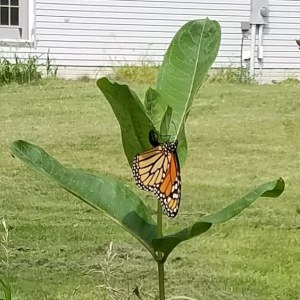
Monarch Butterfly on Milkweed Plant

Thunderstorms have been rolling over all day bringing needed rain and a chance to get caught up indoors.

I’m less freaked out about the amount of food processing ahead. There have been more cucumbers than normal and I canned the last seven quarts of sweet pickles this morning. That will be the last, I promise. I also canned pints of tomatoes, apple sauce and a jar of the same pickles. While the water bath was bubbling I made a pot of chili for supper with fresh tomatoes and Vidalia onions. We’ll cook the remaining sweet corn of the season. My retirement has had that effect — things are less freaky.

Tomatoes are next, although the plan is to eat as many fresh as possible. With only two of us at home, we can’t eat fast enough to keep up with the growing and cooking so some will be canned and turned into tomato juice and sauce. I’m taking it in stride.

Two weekends ago the orchard hosted our back to school weekend. A balloon artist/magician entertained children, and of course there were apples to pick and eat. It was a chance for parents to have one more family fun event before school begins.

Getting ready to attend grade school was one of the great pleasures of life. Each fall began with friends, new clothes, new pencils, and lined, blank sheets of paper. I needed new clothes after growing out of mine. I was first born, so no hand-me-downs. The sensation of hope and opportunity to begin anew is memorable, unlike anything I experience these days. It was something. I hope today’s graders feel the same way.

A Dad walked into the sales barn at the orchard carrying a young child on a backpack and a two-year old on his shoulders. He looked very fit. After they picked apples the toddler helped me transfer apples from our basket to a bag. “Do you want to count them?” I asked. At two, children aren’t really sure what counting is, or how exactly to do it. He just pick up one apple after another and let me do the counting after one and two.

I can see why people return to work after retirement. When we’ve worked our whole lives in stressful situations there’s no slowing down. It will take work to settle in more comfortably after 50 years in the workforce. What I once thought were extra things — cooking, gardening, reading and writing — are now life’s main event. Not sure how I feel about that. I won’t be for a while.

August is the last month to cover editorial duties at Blog for Iowa. I’m not sure what will be next. We’re moving quickly through the procession of apples, Red Gravenstein, Sansa, Akane and Burgundy this week. We have family Friday events through the month of September, so with work at the home, farm and auto supply store time will fly — almost like I’m working again.

Not really. Living one day in society at a time as best I can, hopefully with enough money for seeds in the spring.

Categories
Kitchen Garden

Making Applesauce

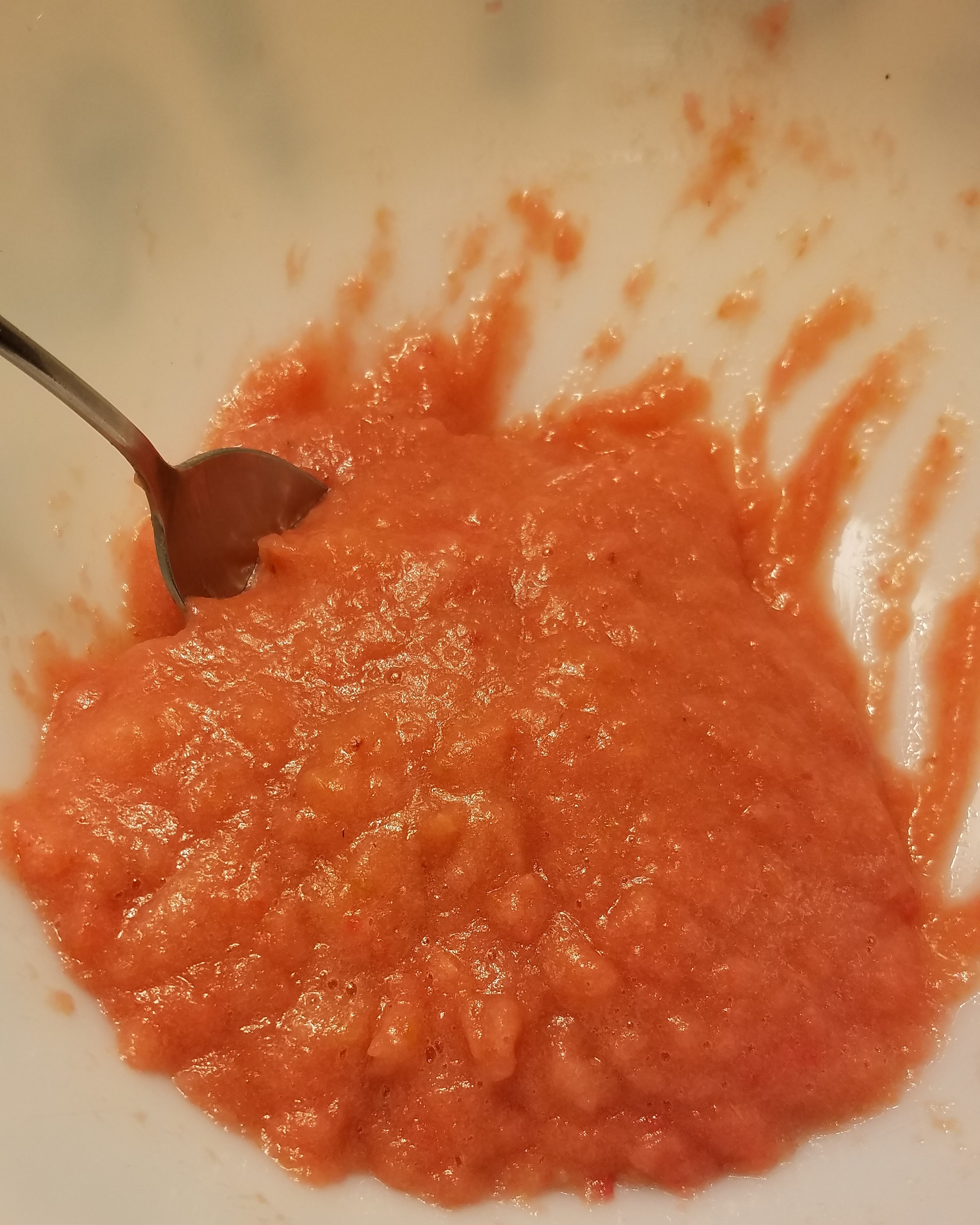
Applesauce Made With Viking and Dolgo Crab apples

I asked our chief apple officer the following question:

“If I wanted to win a blue ribbon for making applesauce at the state fair which apples, available now, would I use?”

His answer was straightforward.

“Use Viking because it’s one of the best for sauce. Plus no one else at the fair would have that variety.”

I took home six each Viking and Dolgo Crab apples after work. This morning I made applesauce with them.

The Dolgo Crab apples were for flavoring, but may not have been needed.The pink sauce produced was tart and delicious… and that’s no apple joke.

Now that the experiment produced a successful result, it’s time to go big with a lot more apples.

It’s part of living in the seasons of local food.

Categories
Writing

Apple Harvest is Under Way

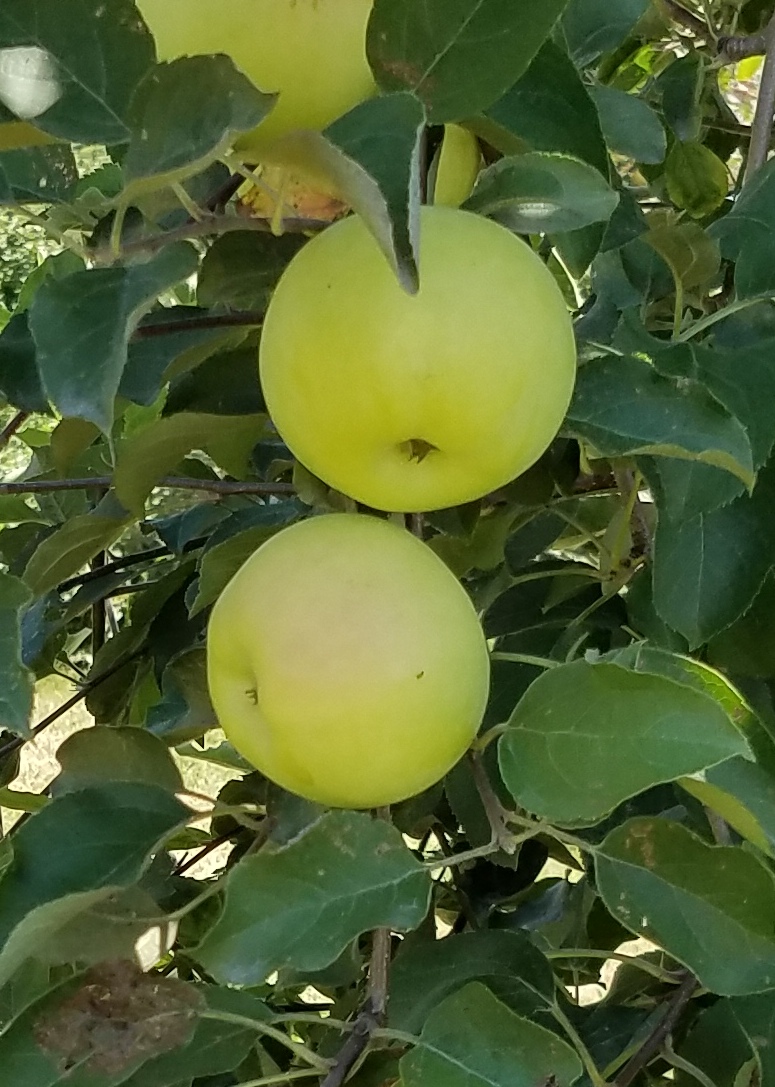
Pristine Apples

I bought State Fair, William’s Pride, Pristine and Duchess of Oldenberg apples at the orchard and brought them home. All but one have been eaten.

The goal was to taste them and determine which apples to buy for out of hand eating next week. My sixth year of weekend shifts at Wilson’s Orchard begins tomorrow.

We decided on Pristine, which is a yellow-skinned, sweet and juicy apple. It doesn’t keep long so about ten should be enough for next week.

After an hour-long hike through the grounds, I can predict an abundant harvest. With zero apples on our three home apple trees, we’ll need the fruit.

What’s best about working at an orchard is meeting thousands of people from every background. Wealthy and poor, young and old, able bodied and infirm, urban and rural, liberals and conservatives, and everyone in between. Many visitors have a personal history with the orchard, or in the apple business. I relish hearing their stories. It’s great to work where my role is to help people find their way in the orchard and discuss something positive with them as they get away from their usual environment.

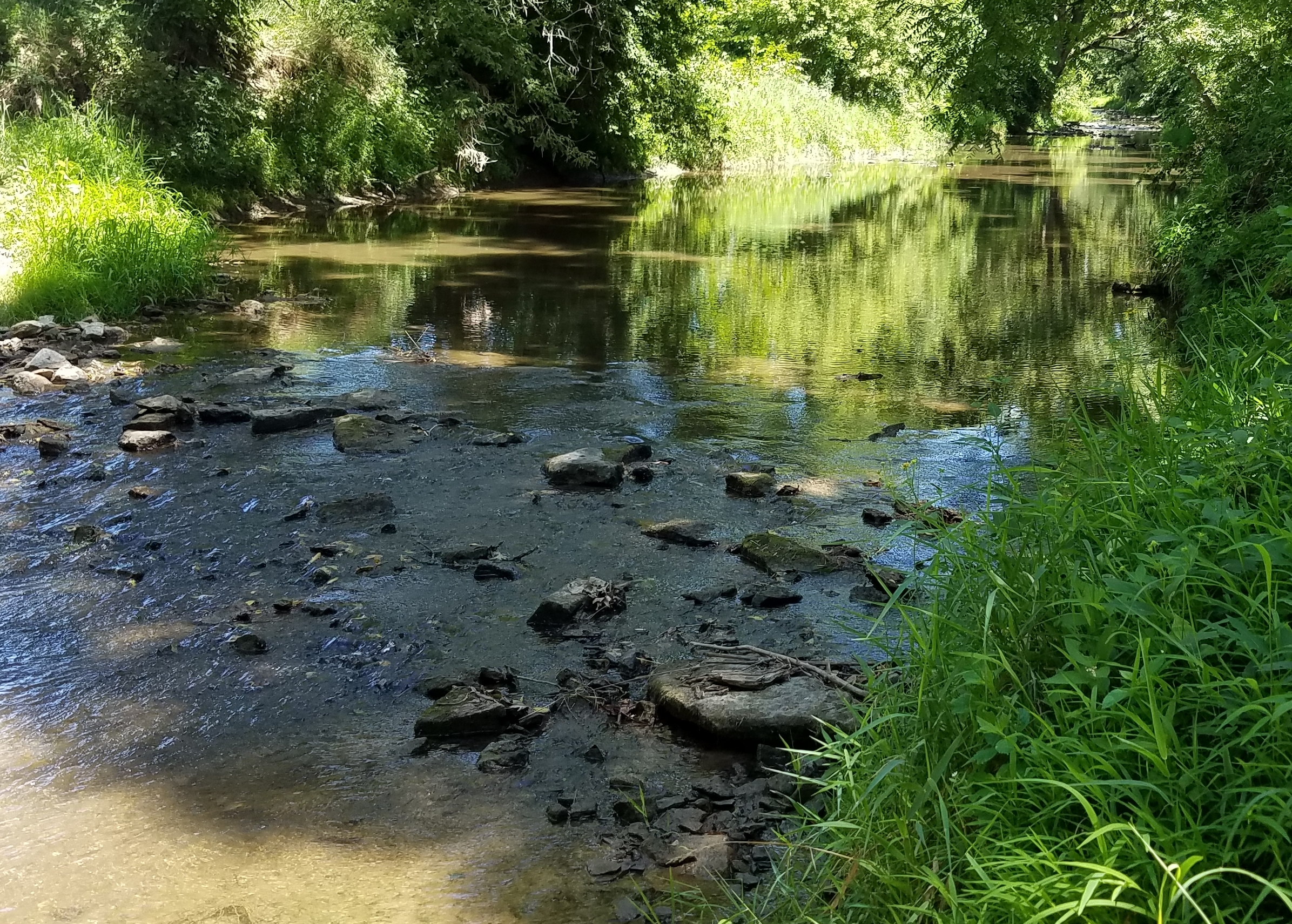
Here’s a photo of Rapid Creek, which runs through the middle of the orchard. The pre-season pic captures something serene in an otherwise turbulent world. We all need that from time to time.

Rapid Creek
Categories
Environment Home Life Kitchen Garden

Gardening in End Times

Japanese Beetles Enjoying a Pear

I’ve been a gardener since we got married.

We planted a few tomatoes near the duplex we rented in Iowa City the spring after the wedding. As we lived our lives, raised our daughter, and sought economic stability, we either planted a garden or harvested what was there. When we owned a home, first in Merrillville, Indiana, and then in Big Grove, the garden got bigger and I became a better gardener. There is evidence in this year’s abundant harvest.

It didn’t come naturally even though gardening is elemental. The brief narrative of my gardener’s life.

As I step back from the working world to focus on home life what seems clear is society is moving at a startling pace toward disaster. Our industrial society consumes everything useful in nature, leaving us with foul air and water, depleted soil, polluted and acidified oceans devoid of marine life, and a warming world with all the consequences that yields. The earth will survive as it has. We people seem to be on the downside of our prominence. In multiple ways these are end times.

The Slovenian philosopher Slavoj Žižek asserts there is a chance for a new beginning in the terminal crisis in which human society finds ourselves. His arguments are not convincing to us regular humans.

What do we do?

What we have done is argue about approaches. Should we have a carbon tax? Should we ban abortion? Should we ban plastic straws? Is wind, sun, nuclear or natural gas a better source of electricity? Should we cut taxes and reduce government’s role in our lives? Should we become socialists, or even worse, democratic socialists? Should we let go of Hillary’s emails? Should we all just try to get along? Approaches don’t work and we should let go of them all.

The better question to ask is what story do we want to tell? As others have said, notably author Joan Didion, “We tell ourselves stories in order to live.” What narrative will take us out of the current crisis?

For me it’s “I’m becoming a better gardener.”

Regardless of pending social collapse we must go on with our lives. Partly to keep our sanity, and partly — importantly — to take steps toward a more livable world. We will never go back to the Iowa of 1832 before the great division and clear cutting began. What we can do is plant the seeds of a better life where we live. Our forebears left us a disaster. What can we do about it? Make the best of it with forward-looking narratives for the next generations.

I get it that many people don’t have means to do more than survive. When I see the abundance of our garden it’s hard to believe people go without a meal. Yet they do, in large numbers. We can feed a couple of them, but is that enough? It’s something.

The essence of the narrative is the verb to become. “I seem to be a verb,” R. Buckminster Fuller wrote. I seem to be that verb. We are not predestined to anything except our human span of nine decades, and that only if we are lucky. We live in an imperfect society that beckons engagement. I’m not sure working toward perfection is as good as doing something positive is. Knowing what to do requires a better narrative. One that hasn’t been invented for the 21st Century and beyond.

I plan to work on a better narrative, although garden in end times doesn’t seem too bad.

Categories
Writing

Carrying the Past

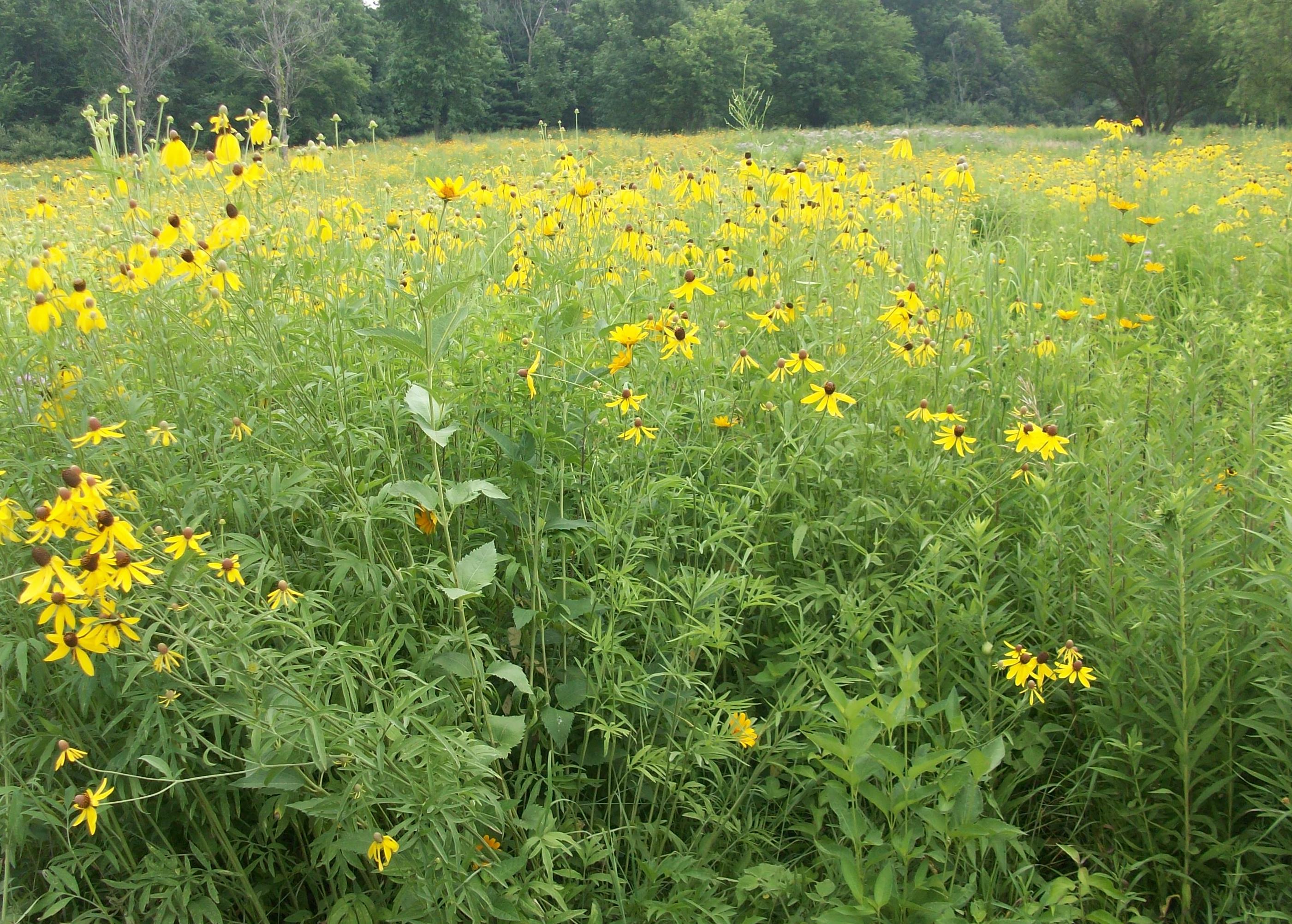
Field of Yellow Flowers

We live each moment in a march of time weighed down by our past.

Cognizant of what we experienced and hopeful for a future, we live lives drenched in the culture that engendered us and provided what sensibilities we have.

Living is not perfect and who knows what God sees when she looks down on us from the heavens?

Today and tomorrow I’m scheduled to work at the home, farm and auto supply store, then I’m off work until my shift at the orchard Aug. 4. Eight days to finish up summer projects (I hope) and prepare for the rush toward year end.

We carry our past with us — a rucksack of memories to help us live each day better. Sometime it becomes becomes a millstone. It draws our attention and delays us.

The past is the raw material of creativity when naivety serves no useful purpose in the matrix society has become.

It is okay to set the rucksack down on our way — to rest, drink water, and pick it up again. We are unwilling to leave it behind until the final curtain falls and that’s our humanity.

Categories
Home Life Milestones

Remembering Donald Kaul in High Summer

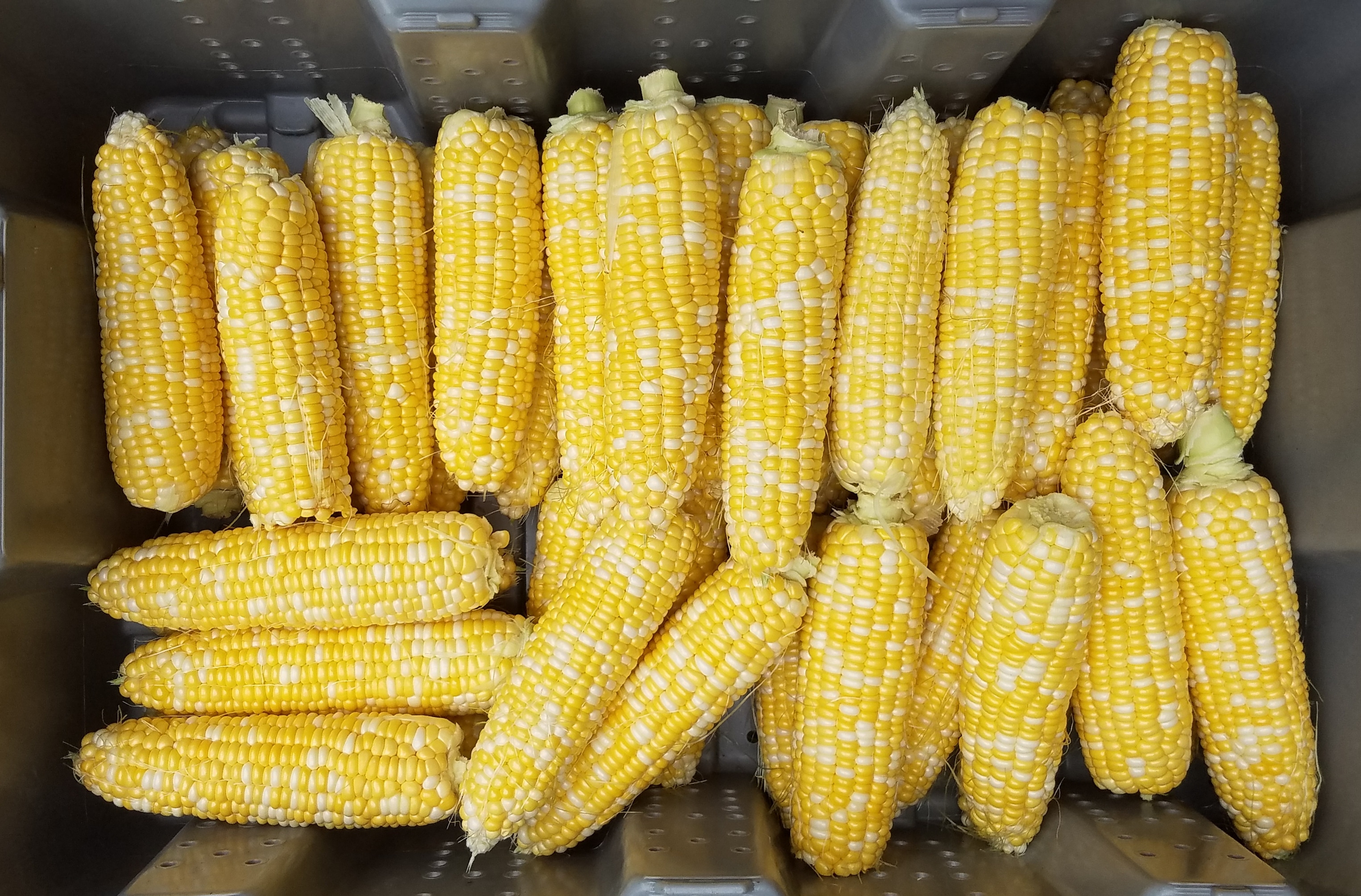
Sweet Corn from a Roadside Stand

Sunday was a day to hang out on memory lane.

Sweet corn, tomatoes, cucumbers and Donald Kaul.

I bought sweet corn from a roadside stand and we had it for dinner with tomatoes and cucumbers from the garden, and thin slices of cheddar cheese from Vermont.

At some point after our return to Iowa in 1993, I decided to outsource corn growing. It takes up too much space and what space could be devoted to it produced a small crop. It was a good decision.

I cooked and froze the remainder of three dozen ears in two-cup portions in zip top bags.

We revisited stories of our lives during and after dinner.

How our cat would lick the cobs cleaned of corn kernels.

How putting up corn had been a long tradition — a family project.

How simple and good this year’s corn tasted compared to the past.

The trick to eating sweet corn is knowing how much to eat without getting a belly ache. The first ear was buttered, then sprinkled with lemon pepper seasoning and a little salt. Three ears is a usual portion. I ate four and went light on the salt. There were no ill effects.

Tomatoes

The arrival of sweet corn and tomatoes is the arrival of high summer. A short window — a couple of weeks max — when summer is good and we get a chance to be human again.

That’s something we need in this turbulent world.

In Iowa we also have the Register’s Annual Great Bike Ride Across Iowa, more commonly known as RAGBRAI, which began yesterday. Donald Kaul and John Karras were two Des Moines Register reporters behind the annual event. It was expected this year, and Kaul died of prostate cancer Sunday morning.

“On January 11, 2018, Kaul, an agnostic, revealed that the cancer in his prostrate has spread to his skeleton and that he will no longer take treatments,” wrote Des Moines Register columnist Kyle Munson. “He was in the end stages of his battle with cancer and didn’t expect to live beyond the year.”

The end came at 11:50 a.m., according to a local radio station.

The narrative of this year’s RAGBRAI seems already written, and it doesn’t include Kaul. There is time for some show of recognition on the seven-day tour. We’ll see what happens.

For me RAGBRAI was about the summer of 1973 when it started. An artist I met in Davenport invited me to her family’s home near the Catholic orphanage to meet her parents. Her brother was out in the garage when I met him too. He was talking about riding his bicycle across the state with the Des Moines Register. Over the Coffee, Kaul’s column, was popular in this household.

Today people prepare for months for the long endurance test the annual ride has become. Specialized, lightweight bicycles, meal plans, and training. Not in 1973 when the sequence of events was 1. figure out how to get to the Missouri River with the bike; 2. tighten up the hub axle nuts; and 3. air up the tires. I can’t recall, but I don’t believe he even had a derailleur gear on his bike. It was pretty simple then and proved to be enduring.

Kaul’s death on the beginning day of the 46th RAGBRAI is likely coincidence. In any case, he is memorable for his writing more than his promotion of bicycle riding.

In high summer, after our dinner of sweet corn and tomatoes, my wife and I discussed our interactions with Donald Kaul. She got his autograph in a bookstore in Iowa City, and I corresponded with him when he was a Washington, D.C. correspondent for the Register. He was a constant part of our Iowa lives. That will still be true now he succumbed to cancer.

Categories
Kitchen Garden

Going Without a Share

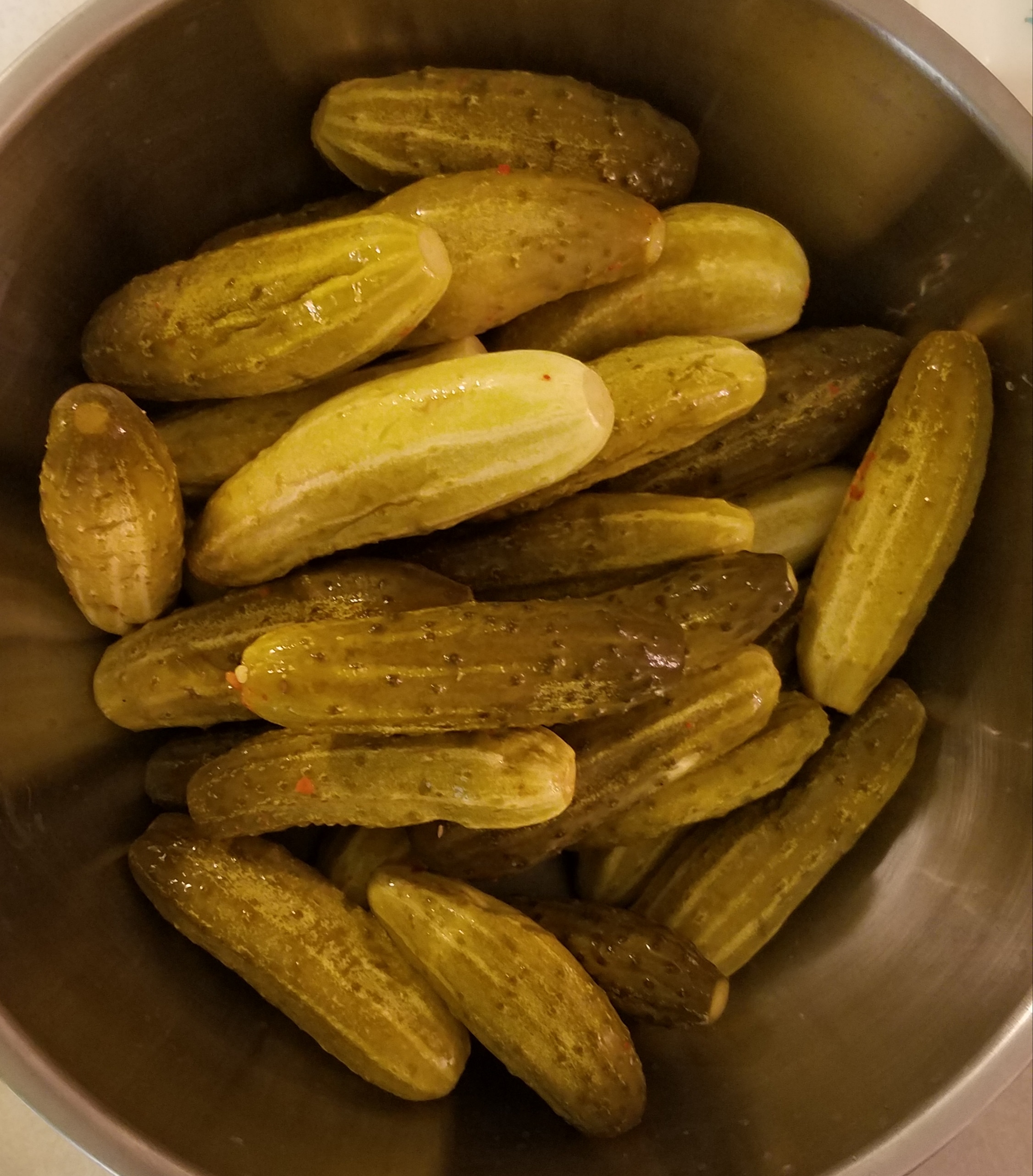
Fermented Dill Pickles

The change in our local food ecosystem from last summer to this is hard to fathom.

We let go of the summer share from the Community Supported Agriculture projects to rely on our garden.

It was a big step and I feel much less stress from over abundance. Some days I’d like more lettuce, and some of the specialty crops, but there is plenty from our garden to fill the gap. Now that tomatoes, cucumbers, eggplant and peppers are beginning to come in, I don’t forecast any gaps.

What is hard to fathom is why the transition has been so easy. Maybe I’m getting to be a better gardener. Maybe I was due to go on my own.

Tornadoes tore through Marshalltown, Pella and Bondurant yesterday as I got off work at the home, farm and auto supply store. It doesn’t appear anyone was seriously injured or died, although damage to the communities was substantial. Photos and video posted on social media depicted a horrible scene. The Marshalltown Times-Republican newspaper got an issue out the next day despite the storm — practicing journalists they are.

Are these storms due to climate change? I don’t know. What I do know is the seasons are out of wack. A late spring, early high ambient temperatures, and more frequent storms make our climate exceedingly weird. We adjust, accommodate, but something’s different.

Ben Santer, an atmospheric scientist at the Lawrence Livermore National Laboratory, led a study of four decades of climate data that concluded human activity is disrupting our seasonal balance. That is, the seasons don’t proceed through time the way they did. It may be confirmation bias, but I doubt it. Eric Roston at Bloomberg wrote a more accessible article about the study here.

In the kitchen it’s cucumber day! A batch is sweating over a bowl and the crock is full of sweet pickles to be water bath processed tomorrow. The dill pickles in the photo took 13 days to ferment. It was worth every minute.

Categories
Home Life Writing

Moving On to Fall

July 15 Harvest

My supervisor at the orchard called yesterday to ask me to work this weekend. I said yes.

We’ll be selling blueberries from Michigan for a few hours on Saturday and we’ll discuss plans for the upcoming season.

It is my earliest start in six seasons. It’s also a sign the year is on the back slope. Fall will soon arrive.

Being home more has helped make the garden our best ever. Just an hour a day after planting has been enough time. Some of the new techniques: using composted chicken manure for fertilizer, mulching pepper and cucumber plants immediately after planting, using a fence to grow cucumbers, and putting a deer fence around the tomatoes have facilitated Mother Nature’s growth. I still haven’t had to buy a single onion or head of garlic at the store this year. We are eating something fresh from the garden daily.

I’m used to having events to which to look forward. That means I’m not used to the five-day weekends semi-retirement and completion of spring farm work brought this July. I’ve been doing a lot of resting in between activities. I’ve made a conscious effort to reduce the number of activities. So resting outranks doing for the time being.

Based on more than 50 years in the workforce, I’m used to a scheduled shift being the focal point of each day. In retirement, that changes and will take accommodation.The idea is not to replace work shifts with other, different kinds of events. Rather focus on awareness of tasks being required and doing them as needs rise to the surface of our new lives together.

For example, I planted 48 celery plants. Yesterday I harvested five to see how they were growing. I trimmed the heads of bad stalks and used what was salvageable in a stir fry for lunch. The five cores, or what grocery stores call “hearts” I bagged and refrigerated for later. What I learned was celery is about ready for harvest and that means a big project of cleaning, trimming, slicing and freezing for winter use in soup and stir fry. That task is lingering and will rise up soon.

The point of retirement is to perform tasks like this in time, but when fancy deems best. It would be a waste not to get this done, but I’m reluctant to write it on my calendar. I’d rather wait for the right intersection of seasonable temperatures, personal energy and peak vegetable readiness. That time will reveal itself outside the unforgiving tyranny of a calendar.

Milkweed Pods Growing

Even the milkweed plants are doing well this year. I did little other than weed around them and cut away the vines wanting to grow up the stem. Several plants are forming seed pods. I’ll learn a little bit about them and harvest the seeds to grow more in a different spot. Someday I hope to see a butterfly caterpillar on one of them.

It looks like as I’m writing the presser in Helsinki, Finland with Vladimir Putin and Donald Trump is about to begin. A reporter claiming to be from The Nation has been forcibly removed. Neither leader is a fan of a free press, although both use it to their advantage when they can. We also know about the many journalists who “disappeared” under Putin. I’d rather look at butterflies than think about U.S. – Russian relations. It’s hard to avoid, just like it’s hard to stop thinking about my next work shift.

If we’re to change habits, we have to work at it. That may be why I continue to write these posts, work at the orchard, and at the home, farm and auto supply store… for now. My life would be worse without it.