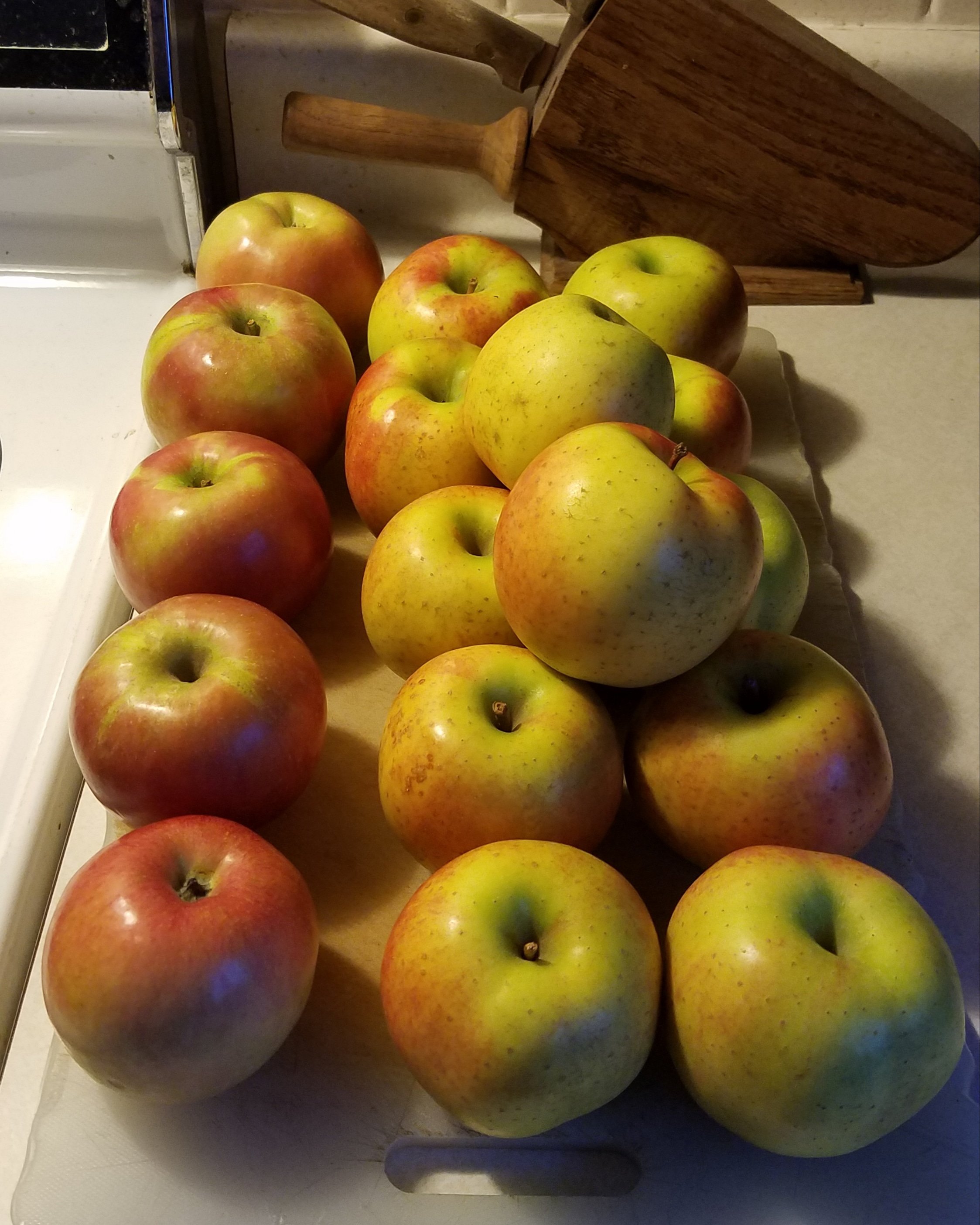
Gold Rush and Snow Sweet apples purchased on the last day of the season, Oct. 31, 2019.
The soybean harvest was disrupted by snowfall.
Several inches fell in the last 48 hours. Farmers came to town, including to the home, farm and auto supply store.
It will be a wet crop, propane prices are already higher. The main worry is when will farmers be able to get soybeans and corn out of the field. There’s no clear answer.
Farmers sought things to help deal with unexpected winter weather: boots, gloves, salt, sand, feed, bedding, shovels, and the like. We do a fair amount of trade during and after snowstorms.
Employees who farm called in asking for an additional shift because they can’t get in the fields. Our pay is meager, but off-farm income is important in the financial calculus of small-scale farming.
In the nearby county seat there is little discussion of the daily lives of row croppers and livestock producers. Those city folk come to our store, but to purchase pet food, shovels for the walk, disposable hand warmers, and ice melting compounds less harmful to pets. We cater to everyone.
After my shift I diverted along the Interstate to visit the orchard sales barn on the last day of the season. While there, I was recruited to work an event in December. Details are sketchy but why wouldn’t I do it?
I picked a dozen Gold Rush apples for storage and another five Snow Sweet for fresh eating. There were still a lot of apple varieties available.
Hurrying home, I made final preparations for Halloween, which included sweeping and salting the front steps, preparing a bowl near the door for treats, and baking pizza for dinner. Our visitors during the two-hour window for trick or treating were neighborhood children, many of whom made a previous costumed appearance on their parents’ social media accounts.
Regarding the Nov. 5 election, I’m settling into choices. I asked around about the election of our trustee on the Kirkwood Community College board and plan to vote for the incumbent, Tracy Pearson. For school board my decision is not final. I’m leaning toward Carlos Ortega and Jami Wolf. I also like Lauren O’Neil. If she doesn’t win this time I hope she runs again in 2021 when three positions are up. I’ve written so much about the school board election I thought it important to communicate where I’m landing. It seems doubtful most of the hundreds of post readers will find this obscure reference to the election. I’m okay with that. It’s not about me.
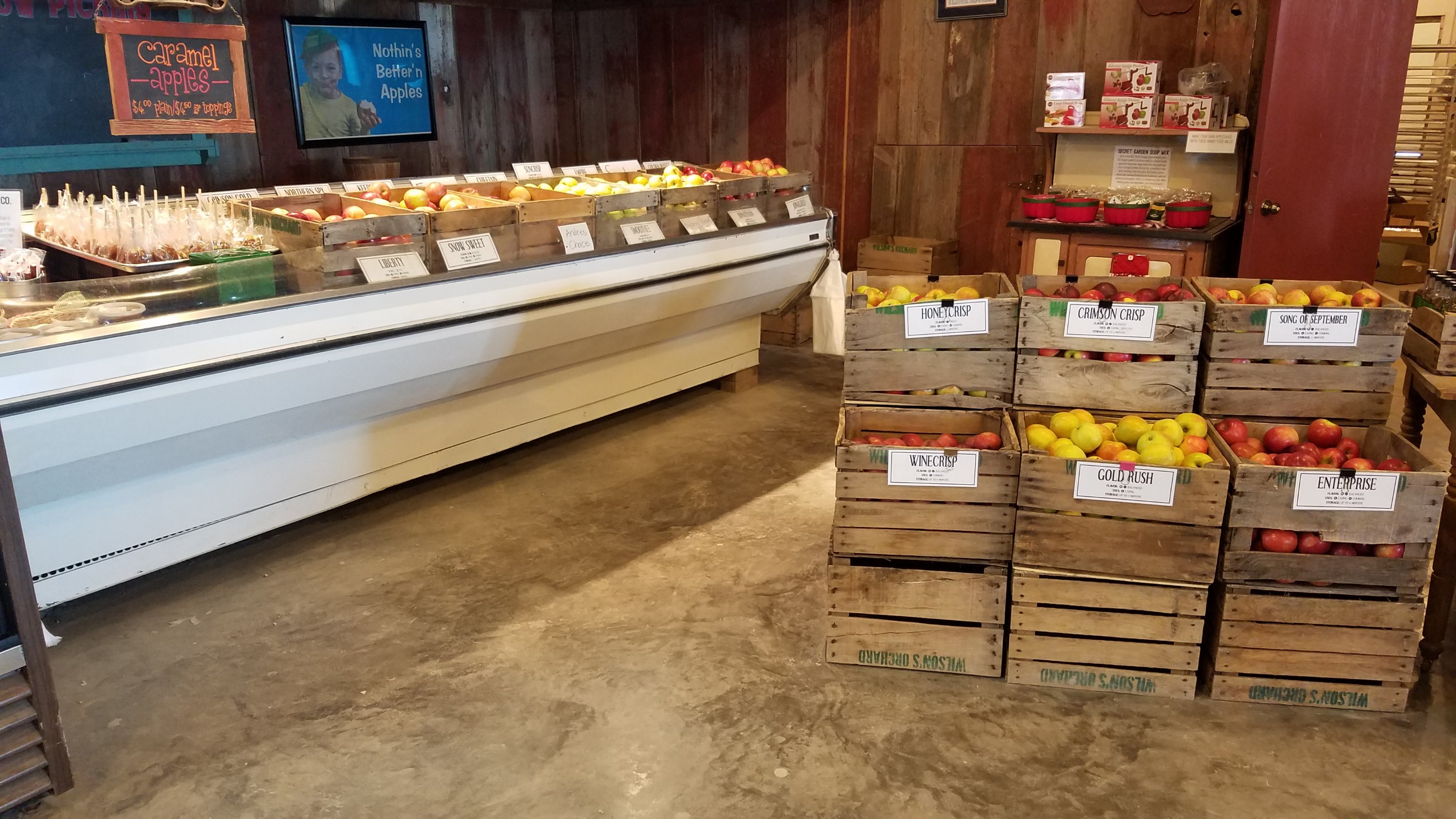
Showcasing 22 varieties of apples at Wilson’s Orchard, Oct. 27, 2019
On a brilliant Autumn day I finished my seventh season at Wilson’s Orchard where I work in the sales barn.
It has been a positive experience with my friends and co-workers Barb, Sara, Paul, Jack, Alex, Karen, and Kyle, as well as with the rest of our seasonal staff.
When I began work in 2013 it was for the money. Over the years weekly consultations with our chief apple officer about fruit growing have become the most valuable part of the experience. Socialization one experiences on a fall weekend with thousands of visitors seeking a recurring, positive activity is unique and needed as we age.
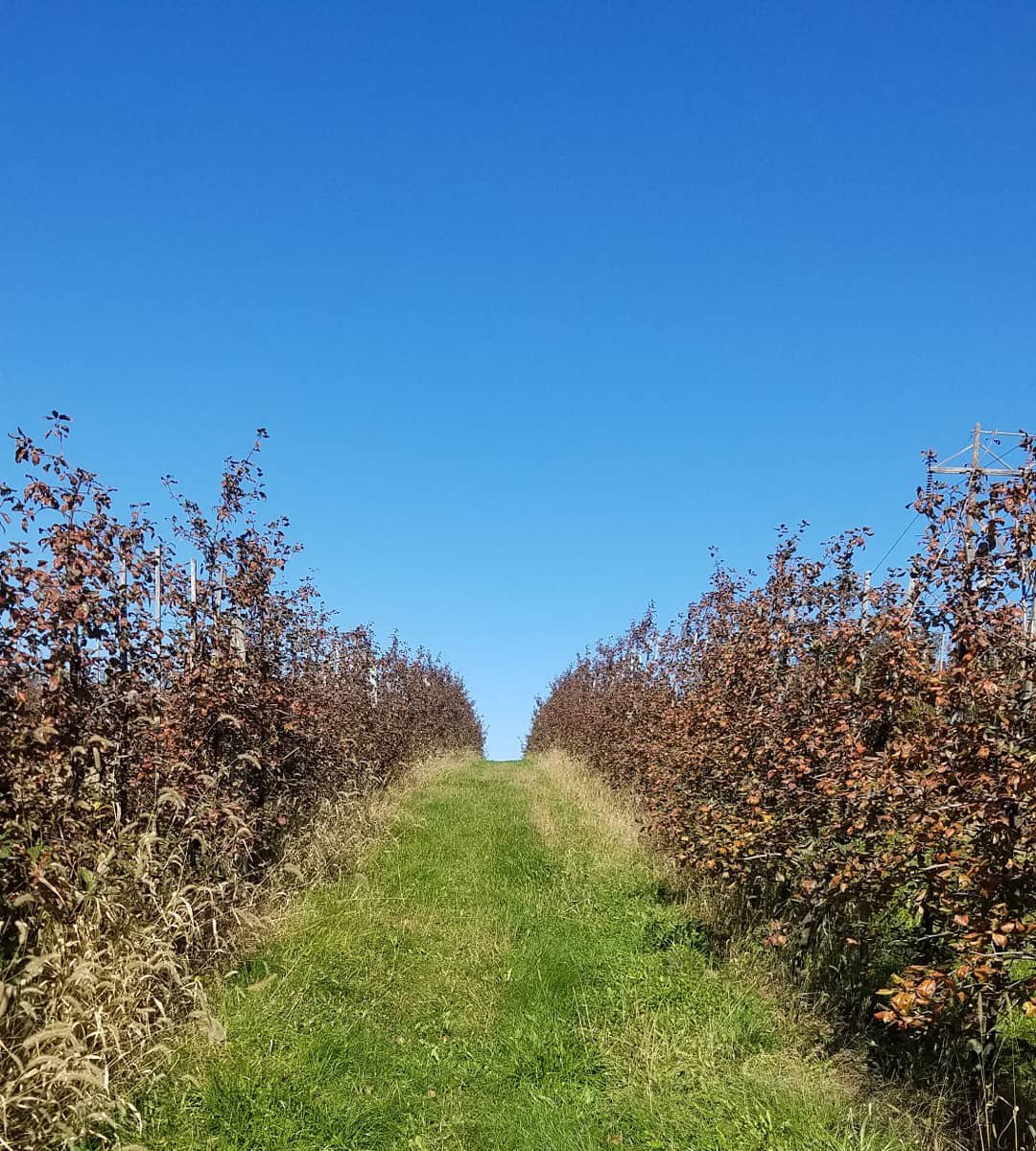
Rows of apple trees at Wilson’s Orchard Oct. 25, 2019
I spent more time walking among the trees this year. It is important to view where each week’s apples were and their picking conditions. It’s helpful to customers and kept me grounded in the reality of the orchard. Feedback when a customer using my directions returned from picking made the extra hour most weeks rewarding.
We grow more than 100 varieties of apples and 2019 was a great year for our crop. We finished the season with an abundant variety of apples available for customers, including some that don’t produce every year.
The operation has gotten better at managing apples. I recall years when all we had on the last weekend was Gold Rush and Enterprise. This year 25 varieties were available in the sales barn. If you’re going to manage an orchard having such a variety is an acquired and important skill.
I spent more time discussing apple selection and usage this year. As I talked about which fruit to use for applesauce, crisp and pies, I found myself tending toward traditional usage. The ways people use apples are traditional for a reason and some of the old varieties like Cortland, Jonathan and McIntosh continue to be in demand. Not every orchard grows them.
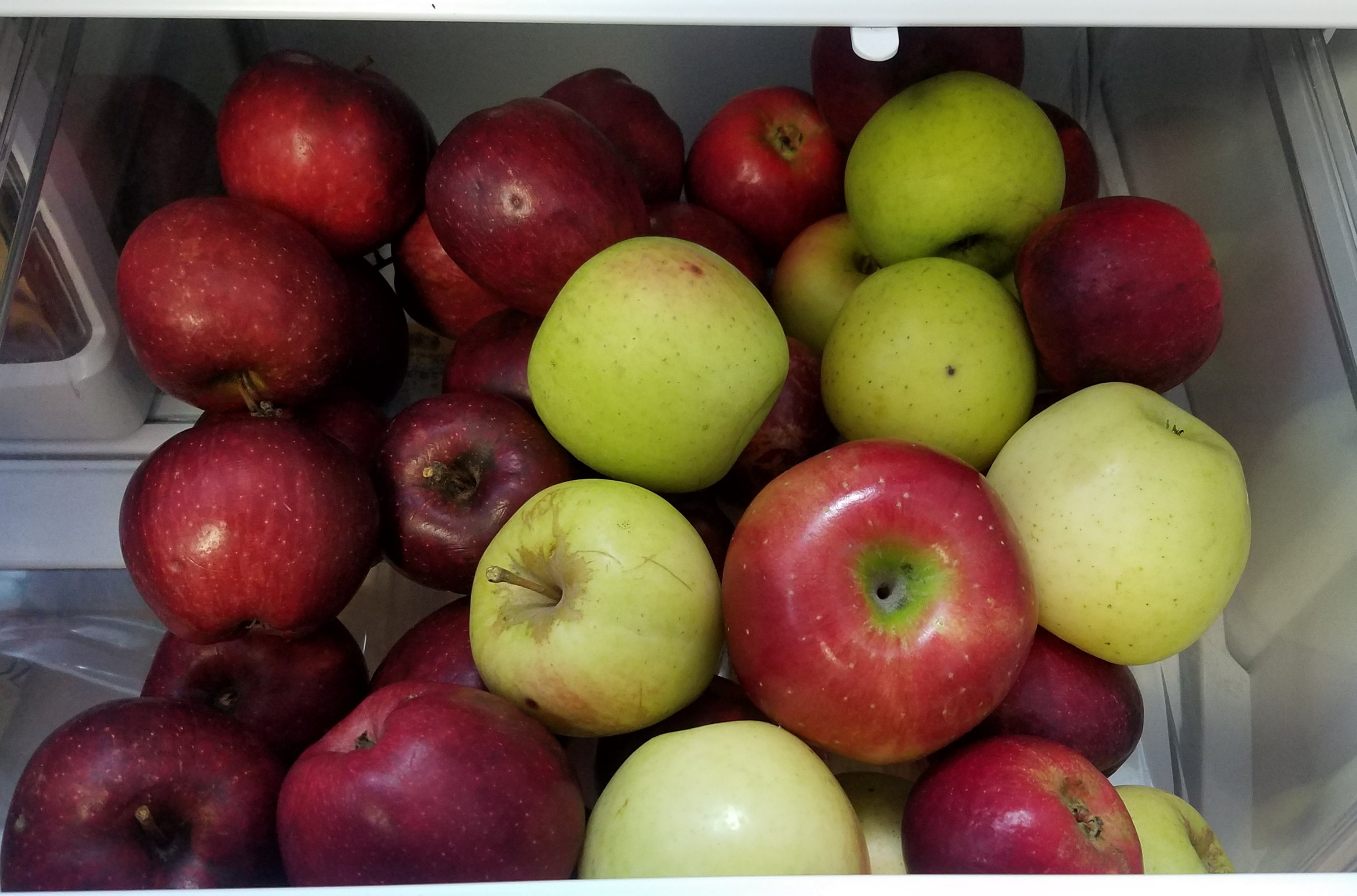
Home storage apples. My Red Delicious on the left, Wilson’s Orchard variety on the right.
It has been tough giving up every weekend from Aug. 1 until Oct. 31 to maintain this job. When it rains on Saturday or Sunday I don’t work and this year it rained a lot. Inclement weather translated into a 32 percent decrease in income in August and September compared to last year.
With seasonal work done I’ll return to get some Gold Rush apples for storage before the Oct. 31 final day of the season. Next weekend is our post-season potluck, one of the best in terms of food quality I attend. When the entire staff gathers one realizes it takes a lot of talented people to put on the show each year.
I was asked to return next year, and most likely will.
After planting garlic last week I made hot sauce using leftover seeds: Jalapeno and Serrano peppers, tomatoes, onions, garlic, apple cider vinegar and salt.
The recipe evolved over time from one Juan San Miguel explained in 1977 when we both garrisoned in Mainz, Germany. Those were days before a four-foot section of assorted hot sauces became standard in supermarkets.
I lost contact with him yet the recipe persists. It is a rare day when there is no hot sauce in the ice box.
We carried the condiment in plastic milk jugs and put it on our army rations while on maneuvers in the Fulda Gap. It made our eyes water and changed regular food into edible fire. We laughed a lot in that peace-time army… and ate sandwiches of bread and hot sauce. I continue to make it mostly the way Juan taught me.
What role does tradition play in our lives? It is significant.
Who wants a life weighed down with endless traditions? I made hot sauce this year after planting garlic. Once is enough. There is little need to make it an annual tradition. If we eschew spontaneity in favor of pursuit of tradition we are the less for it.
I enjoy remembering days of subzero ambient temperatures inside tracked vehicles traversing central Germany and eating hot sauce. Juan’s wife made more than we could use on an operation, although as we returned to garrison some sought to use it up.
Obsession with tradition and it’s traveling partner ritual is not good. Like anything, a little goes a long way. If I could live without hot sauce, why would I want to?
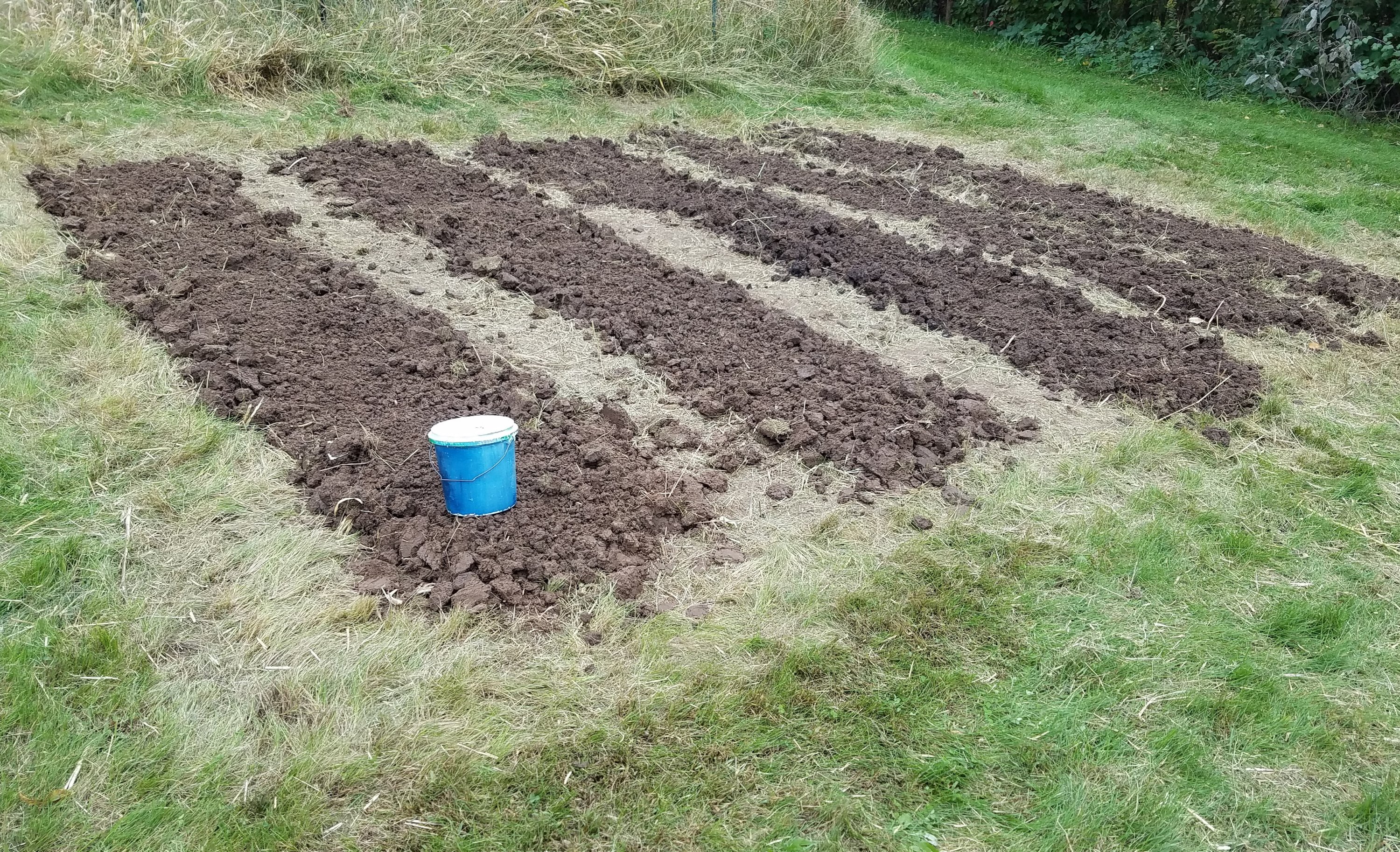
After missing last year I planted garlic on Oct. 15. A couple of clear days dried the ground sufficiently to mow the plot, turn it, and put seeds in the ground.
I increased the number of rows from two to five which if all goes well will yield plenty of scapes and about 60 head of garlic.
Whether I’ll harvest anything next July is always a question. A gardener learns to live with unanswered questions that remain so until season’s end.
This photo highlights a developing process of minimizing the amount of ground I turn over for planting. Garlic needs space with 18 inches between seeds and 36-inch row separation. There’s no good reason to plow up all the ground in the plot. Even though the soil was cold earthworms were near the surface. That’s not to mention the unseen organisms that make soil fertile. I no longer use a mechanical tiller and do everything by hand. It’s good exercise that doesn’t use fossil fuels.
Fingers crossed there is an abundant harvest.
At a meeting of our home owners association board, I announced I’m looking to exit responsibilities as board president. I’ll finish my current term, I said. If the other board members are nice to me I might be convinced to re-up for one more three year term. That would be it. I will have lived 68 years in December and it’s time to focus on other things.
Because of the board meeting I missed the televised Democratic debate. That’s a joke. I haven’t turned on our tube-style television in years. Now that Elizabeth Warren is leading in the polling averages the knives are out. Read last week’s post here for my take on why support for Warren persists now that she is the front runner.
As responses to my email to Solon School Board candidates come in, I’m impressed by the field. Three men and three women who would each bring something positive to the board. Because of a scarcity of information about the election, yesterday’s post really took off, becoming the most viewed new writing on this blog in 2019. The majority of views are coming from Facebook, but I don’t see much discussion in my feed. What that usually means is a group in the district has latched on to my post and discussed it in a private group. Last time that happened, someone trolled me with a letter to the editor of the local paper. Any discussion will be good for what is expected to be a low-turnout election.
I’m sitting on four bushels of apples and need to get to work processing them. It won’t be today or tomorrow as I’m back at the home, farm and auto supply store. I’m blown away by the quality and quantity of this year’s crop. Years like this make gardening rewarding. On deck are more dried apples, small batches of applesauce and apple butter, more juice for vinegar-making, and baked goods for potlucks. Some of the last-picked apples will go into sweet cider, and of course some of them will be eaten raw.
It is fall in the gardening year but even after first frost we are busy planting and processing the harvest. It’s how we sustain ourselves in a turbulent world.
Daylight remained as I drove into the driveway after a shift at the orchard.
If the garden appeared scorched by the previous night’s first frost, some tomato plants survived and the kale looked resilient.
The weather forecast is a couple of days without rain. I scheduled garlic planting for Tuesday when the ground should be dry enough. Fingers crossed I get a crop in this year.
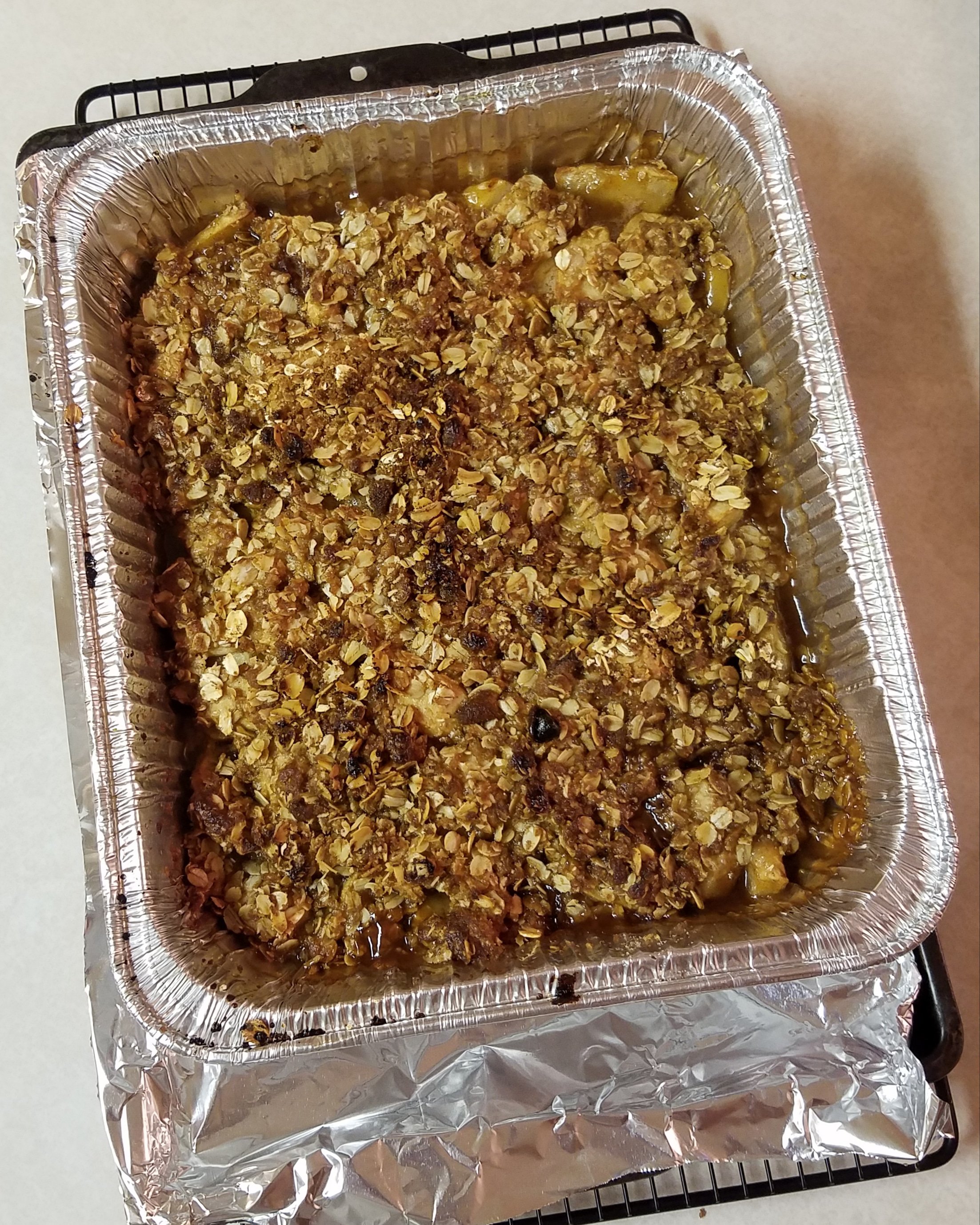
I picked another bushel of fully ripened Red Delicious apples yesterday morning. This morning I used apples knocked down and damaged during the picking process to make an apple crisp for the county party’s fall fundraiser. In September I bought 30 aluminum food service trays for potlucks. This was the fifth one used.
We were busy at the orchard Saturday. Because of rainy weekends there is a pent up demand for the u-pick apple experience. I was tired at the end of my shift. I fixed eggplant Parmesan for dinner and could go no further. I was so tired I left the dishes to clean this morning. If there was any doubt, autumn has definitely arrived.
The forecast calls for 32 degrees tonight so tomatoes and peppers need gleaning from the garden.
There aren’t many left, maybe enough to make the effort useful. While at it, I’ll pick apples I can reach as well.
It is the end days for this year’s garden.
My farmer friends have already been through their fields. They remind me the garden season is not over as kale and other greens, root vegetables, and some squash will continue to grow. They have high tunnels which extend the season. I’m in the fall share with one of them and look forward to seeing what we will receive on Monday.
Last night I made a burger that violated Anthony Bourdain’s instructions on keeping it simple. Using a veggie burger, I thawed a frozen bun leftover from a potluck in the microwave. Buttering it, I placed it butter-side down on the frying pan with the burger patty. When it toasted, I removed it from the heat and piled on mustard, ketchup, a tomato slice, lettuce and onions. It stood three inches tall when fully assembled and hit all the flavor notes. It was a positive, day-ending meal.
Political interests turn toward the school board. One incumbent and five other candidates are running for two seats in the Nov. 5 election. I don’t know any of them very well and plan to attend a forum hosted by the Solon Education Association and the Solon Parent Teacher Organization on Oct. 22. Being on the school board is a thankless, unpaid job that requires a lot of engagement. People are upset with the way the board implemented recent changes to collective bargaining law. It is important to make an informed decision.
On Our Own has become something of a public journal, especially since Mother died on Aug. 15. I’m not sure of the future direction, but for now it serves. There is a lot to engage us in a busy society. Some of that needs consideration for further understanding.
I picked low-hanging fruit from the Red Delicious apple tree last week. All that’s left is dangling red orbs high above the reach of my 20-foot ladder plus 10-foot picker.
Most of those apples will fall to the ground for deer and wildlife food.
I blame the nursery person who grafted this supposed “semi-dwarf” cultivar on the root stock. Either something was wrong from the git-go or the cultivar grew around the root stock and made it’s own roots in its 24 years since planting. The tree has produced in abundance — an investment that repaid itself many times over. I’m happy with the hundreds of pounds of apples I was able to harvest this year, even if I couldn’t reach every one of them.
It rained all day Saturday so I stayed home from the orchard. When touching base with my supervisor mid-morning, more staff than customers were in the sales barn. I used the day for house work, cleaning the kitchen, doing laundry, organizing recycling, processing the last batch of tomato sauce, cooking reading and writing. I also took a nap.
The rain is suppressing my orchard paycheck with take home pay down 30 percent compared to last year. Nonetheless, with good health, Social Security, and my spouse’s small pension we are doing alright financially. I can spend some of the apple money on books and political work.
Friday a copy of What I Stand On: The Collected Essays of Wendell Berry 1969-2017 arrived via letter carrier. It will make excellent winter reading.
This week I purchased some items for our political organizing office in the county seat: paper towels, trash bags, paper cups and the like. I baked a large apple crisp which was used at yesterday’s volunteer training. I also contributed to Brad Kunkel’s campaign. He’s running for Johnson County Sheriff in a contested primary next June and is purchasing his “cowboy cards” this week. These are reasons we work an extra job even if the weather keeps the amount down.
A neighbor is hosting 2020 presidential candidate Rep. Tulsi Gabbard next week, so I offered baked goods with apples for the event. I noticed one of the school board candidates will be in attendance. I support Elizabeth Warren, but I’m going because that’s what neighboring means.
With cooler overnight temperatures, the season is turning to fall in earnest. Soon I’ll glean the garden and prepare a bed for garlic planting. If it ever dries out I’ll collect grass clippings for mulch next year. I see a brush fire in the works to return the dead fuel of plants and trees to minerals for next year’s garden.
October is looking to be busy so I have to be organized, which is no hill for a climber. If only I could climb up and get those last dangling apples. The third month of apple season is another part of sustaining a life in a turbulent world.
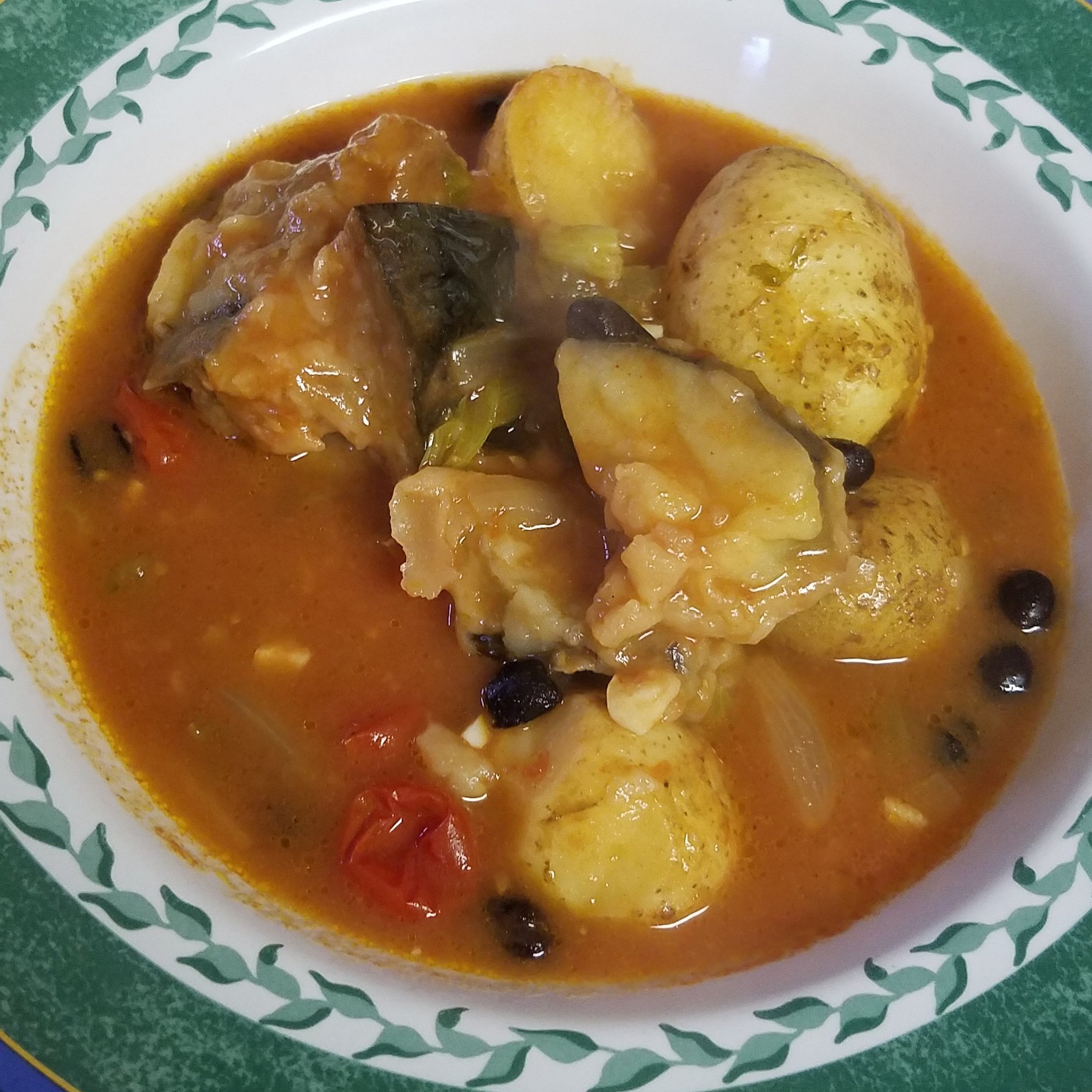
Stew of potatoes, eggplant, tomato, black beans and vegetables.
Who wants to reinvent home cooking every time they enter the kitchen?
Here’s a better question, how can I work to be present in the kitchen and produce tasty, nutritious food for our family?
While I have a strong memory of Mother’s cooking, I don’t recall many of the dishes. For me, home food begins in 1959 when we moved to Northwest Davenport where I lived at home until going to university in 1970. During those years Mom cooked what I believed was standard fare for working class people. If there was a typical dinner, it included beef or chicken as a main course, potatoes or rice, and a vegetable. Sometimes there was dessert. Dad got a discount at the butcher shop co-located at the meat packing plant where he worked. He brought home mostly beef and pork products, and we had plenty. Memorable tastes include liver and onions, beef vegetable soup served on white rice, and usual fare of hamburgers, grilled cheese and meat loaf. It was a staple cuisine that tasted good and provided nourishment.
When I became mostly ovo-lacto vegetarian in 1982, traditions associated with Mom’s cooking went out the window except when we visited her. I started cooking while I was in college and like most beginning home cooks was not very good at it. I recall serving Mother tuna and noodle casserole during the visit she made to my small apartment. I used her recipe, which included canned tuna and condensed mushroom soup. We got through the meal, one of the few during my life where she came to my place for dinner. I liked the dish with its savory richness. Today, I wouldn’t use tuna because of my mostly vegetarianism, but also because of over fishing of the species combined with the use of slave labor to harvest it in waters off Asia.
There is a utopian impulse in American society in which groups of people separate from social traditions and strike out anew. In that sense, a cook has a choice. Should we learn and perpetuate cooking traditions in our kitchen or improvise new meal solutions against a perceived and newly created blank slate? My choice is to make a cuisine from an ecology of food I identified and help create that borrows from everywhere to create new dishes. I may write a cook book to record the journey, but have little interest in creating traditions. A tasty, nutritious meal is enough.
In retirement for 16 months, I’ve found we have become increasingly isolated from society. Even though we rarely use the television set, I now understand the archetypal image of retired man yelling at the TV from a chair. It is harder than imagined to get out of the house for anything other than my part time jobs. The new paradigm has been good for our marriage and provides a natural break for utopian culinary endeavors.
The meal began with weighing out a pound of small potatoes from my barter arrangement with Farmer Kate. When I brought them to the kitchen, I didn’t know what I would do with them.
While looking through the weedy, end of season garden, I found three large Galine eggplants behind the foliage. I picked them and brought them inside.
On the counter was a good supply of garlic and cherry tomatoes. In the ice box was half a Vidalia onion, the last of the fresh garden celery, part of a bell pepper, some leftover black beans, and jars of thick tomato juice.
There was a meal in these ingredients.
After cleaning and trimming the potatoes I put them in a large sauce pan and covered them with tomato juice. My tomato juice is very thick due to a process I developed to use excess tomato water while canning. I brought the mixture to a boil then turned it down to simmer until the potatoes were fork tender.
I cut the eggplant with skin on into large chunks, soaked the pieces in room temperature tap water for 30 minutes, dredged them in flour, then fried them in two tablespoons extra virgin olive oil until browned on all sides.
In the Dutch oven I cooked the onion, bell pepper, celery and garlic in a tablespoon of extra virgin olive oil on high heat until tender. The only seasoning used was sea salt.
When the potatoes were done, I dumped the whole pan into the Dutch Oven, added the black beans and some cherry tomatoes, then added the eggplant. I scraped the bottom of the frying pan into the Dutch oven with a spatula to get all the flour and oil mixture and thicken the sauce.
I turned the heat to medium low and warmed until everything was evenly heated and the sauce thickened.
In retrospect, I could have added some frozen okra and seasoned it with red or green hot peppers. We keep the spicy dial turned to low in shared meals. It made four servings and was satisfying.
Humans consume only so many vegetables. 20 percent of an estimated 20,000 species of edible plants represent 90 percent of our food. Others may have made dishes similar to this potato eggplant stew. Each ingredient, each technique and each vegetable has its own detailed and unique history. There are a finite number of ways to pull them together into a tasty, nutritious dish. Improvisational cooking need not be unique, just as utopian living works to meet the same human needs as the rest of society. As a seasoned home cook, I no longer have to reinvent things. At the same time, improvising based on available ingredients renews our interest in cuisine.
Cart of Red Delicious apples harvested Sept. 30, 2019.
(Editor’s Note: This year I donated 350 pounds of Red Delicious apples to Local Harvest CSA for distribution in member shares. Here’s the note I wrote for weekly newsletter).
The apples in your share are Red Delicious variety grown from a tree planted on Earth Day 1995 by Paul Deaton in Big Grove Township.
Back yard apples are maligned for a couple of unjust reasons.
First, the State of Washington about ruined the Red Delicious, which was first discovered in Iowa, where it was called the Hawkeye by some. Growers in Washington decided this apple was the way to go because of its marketability. They went all in and devised techniques that took the flavor right out of the fruit, including picking before they were ripe, then “ripening” them in a chamber of ethylene gas before shipping. Applying science to the Red Delicious about ruined it and gave it a bad name.
Second, backyard apples have developed a number of “reasons” why people don’t want to cultivate them. If someone has an apple tree they inherited, they may make up a hundred excuses not to prune and take care of it. While these apples aren’t perfect, get a knife out, cut off the bad spots, and they make good eating if fully ripe. They make other fall apple things like crisps, cobblers, sauce, butter and dried apples.
Let’s face it, when Johnny Appleseed, born in 1774, came across the country he had one thing in mind as he planted apples by seed: enabling future settlers to make hard cider. Although the technique is making a comeback, many city-dwellers have forgotten that piece of apple lore. As long as the apple isn’t rotten, it can go into cider (press or many use a juicer for small batches) from which one can make vinegar, sweet cider or hard cider. If one is concerned about bacteria, get your cooking thermometer out and heat the cider thoroughly to about 165 degrees for ten seconds. It will kill the bad bugs and leave most of the flavor.
(Editor’s Note: First of a multi-post series comparing traditional and improvisational cuisines)
I am doing a noggin analysis of how we cook.
I’m trying to wrap my head around the symbiotic relationship between traditional cuisines and improvisational cuisines found in American kitchens like ours. It’s complicated.
Last week, while dropping off a shipment of kale to friends at the city’s public library, I picked up half a dozen community cook books on the used book cart for a small donation. Included was Carolina Cookery, the front page of which asserted, “Dishes tried and true; Dishes old and new.” Published by the Equipment Committee of the Woman’s (sic) Club of Mullins, S.C., the plastic-bound tome lists five women editors, all of them using their presumed husband’s names. This cook book is an example of what I would call “traditional cuisine.”
Based on four-digit telephone numbers in the advertisements, Carolina Cookery was published before World War II. It includes recipes like Mammy’s Pan Cakes, an old Mammy’s recipe submitted by Mrs. Hughes Schoolfield; Hop’n John, requiring one pound hogshead, one pound black-eyed peas and one half pound rice, submitted by Bishop B. Anderson in the section titled “Men in Aprons;” and Sweet Potato Bread from Georgiana, who was Mrs. L.M. Roger’s cook. Mullins was incorporated in 1872 in a tobacco-growing region that today hosts the South Carolina Tobacco Museum.
What I haven’t yet said is the influence of chattel slavery runs throughout the book even if the authors are careful to exclude any but the most indirect mentions of it. Reading it immediately after finishing Michael W. Twitty’s The Cooking Gene: A Journey Through African American Culinary History in the Old South brought that element of the recipes and narrative to the fore. It’s why I picked this South Carolina volume from the two dozen available on the used book cart.
Black cooks working in white households, referenced in Carolina Cookery, is a legacy that continued into my memory. During a visit to Sangamon County, Illinois I dined at a home with such an arrangement. I felt uncomfortable about the vestige of slavery then and today it would be outrageous for a salary man without further means to be able to afford a part-time cook. In the United States, hiring girls and middle-aged women for house work is a common form of lowly paid work. At a young age my grandmother left the farm and worked as a house servant and cook in the Minnesota Twin-Cities. She continued to work for wealthy clients into my teen years. Maybe I should get over it but there was more to the experience than a woman finding work she knew how to do. It is a form of economic white privilege I today find repugnant.
What do I mean by an “improvisational cuisine?”
It’s what I’m doing, and also how many Americans organize their cuisine. For me that means creating a food ecology from which I pull in elements of our kitchen garden, the farms where I work, and area markets to prepare meals based on what’s readily available. Occasionally I purchase items on-line or via snail mail when I want something that’s not available locally. Recently I bought bags of dried Mexican-grown Guajillo chilies and Mexican oregano on-line. It is a never-ending process that produces, as Tamar Adler called it, “an everlasting meal.”
At home, we are lacto-ovo-vegetarian which requires and fosters a constant dialogue about nutrition, cooking, ingredients, flavors and diet. Being vegetarian strips away most traditional dishes. Occasionally we mimic meat dishes with the growing number of manufactured meat substitutes. If we make a pie chart of our diet, those meat substitutes would occupy a tiny slice.
Improvisational cuisine draws from the broader society. For example, Mother was one of the first white women I knew who prepared tacos in her kitchen. When she did, I invited some of my friends to share them. In retrospect, a contributing reason she took up this dish was the introduction of tortillas into our local grocery store before the advent of “Mexican food” sections like one finds at a supermarket today. It was another chance to use many ingredients normally found in her pantry to make something different and special.
I make tacos today, typically for breakfast, and they are more improvisational than Mother’s were, but use some of the same techniques. I buy raw flour tortillas to cook as I need them and make my own with corn Masa. The tortilla is a delivery system for a pan-fried amalgam of fresh vegetables, herbs and spices, and protein topped with salsa or hot sauce, fresh tomatoes in season, and a form of soft cheese. It is a recognizable dish even though the ingredients vary from day to day.
Exploring the symbiosis between traditional and improvisational cuisine is a popular topic when talking to friends and neighbors about cooking. There is more to explore.





 Journey Home
You must be logged in to post a comment.