Categories
Environment Kitchen Garden

Bringing Food Home

Farmers Market Food

A relationship with food in American society is complicated.

Some don’t have enough. Others are awash in calories. We each have a human need for nourishment and the ways we go about meeting it are as different as the families which engendered us.

A favorite childhood memory is when Mother went to work in the school cafeteria after the Catholic Church built a new grade school near our home. With other women like her, she took a list of ingredients based partly on government programs (including lots of cheese) and partly on a limited budget, and made meals that included such dishes as porcupine meatballs (hamburger and rice) and grilled cheese sandwiches with tomato soup. Father worked at the meat packing plant which had an employee butcher shop where he could buy beef, pork and meat products at a discount, and did. The idea of stretching hamburger by mixing it with cooked rice was a novelty in our household and eventually we implored Mother to make porcupine meatballs for us at home, just like the ones at school. She did.

This story of external culinary practices coming into our home is essential to understanding the rise of a diverse diet in American society. We see things out there, they look good, and we want them. Most people, including low-wage workers, have or find the means to get them.

Many books, careers and lives have been based on food in society. We are an individualized rather than generalized culture with regard to food acquisition, preparation and consumption. To a large extent, the rise of the modern mega grocery store has shaped our eating habits in ways no one would have expected. Much ink has been spilled about that and I’m less interested in regurgitating my slice of it.

What I do know is local food farmers work hard for the sparse income they garner. All farmers do. The local food movement of which they are a part is based on the hope more people will bring locally produced, raw ingredients produced in a sustainable manner into their kitchens, ice boxes and pantries. Enough people do for a small group of farmers to make a living.

In many ways the increased interest in local food is the same type of behavior that took place in our home in the 1960s. We experience surprise when our CSA share includes Broccoli Raab, Koji or Bok Choy. We learn how to eat and cook them and want more. It’s not that our home nourishment plan is boring. We want and enjoy the experience of creation as it relates to cooking and eating. We want that experience to be personal and shared with family. That is very American.

I concede promotion of local food is a form of consumerism no different from a tomato catsup purveyor who spends dollars on an advertising campaign to enhance sales. The same behavioral forces are at work. I’m okay with that.

Just so you know, I’m not bewitched by the allure of eating a kale salad, at least not yet. Suffice it to say the diversity and behavior regarding food in our household with its kitchen garden, farm sourcing and grocery shopping has some unique qualities that may not be of interest to the authors of the Michelin Guide, but make our lives a little better. That too is very American. That’s part of who I am, who we Americans all are.

Categories
Kitchen Garden Writing

Green Washing and a Local Food System

Spring Onions

Wind came up yesterday and would not relent.

I planted onions and cilantro in the garden, transplanted some seedlings to larger pots, but that’s about it. The septic tank service arrived and pumped our solids tank while I trimmed the lilac sprouts from the space in front of our house.

Constant wind beating against me took its toll.

The first of five spring shares was ready yesterday afternoon from our CSA: Bok Choy, Koji and Broccoli Raab.

Both CSAs where I work are running behind due to weird spring weather. Carmen Black’s newsletter summed up where we are nicely:

First of all I want to thank all of you for your patience and understanding in starting a week later than planned! As I’m sure all of you can guess this weather has been very difficult to deal with on the farm. Two weeks ago it snowed, and today it’s eighty degrees! In addition to the swings in temperature its been the driest April on record, which means that everything we’ve finally been able to plant has needed to be watered immediately. Through all of this weather stress I’ve been very grateful to know that you all are so supportive of this farm, and will understand the challenges we’re facing in organically growing local veggies this spring.

First Seasonal Salad

Dinner was a salad to go along with pasta last night. Three kinds of greens and this year’s spring onions along with odds and ends of cold storage vegetables. It’s why we invest our time and resources in a food ecology.

The words “local food” mean less today than they did, and not what we thought they meant. I discuss local food with farmers and gardeners and I’ve heard the usage it is a form of green washing. Is “local food” a form of green washing? Maybe.

I know the produce harvested in our back yard is local food. With each passing season I see less significance. We want food we serve at home to be fresh, tasty and pleasurable. When we take a dish to a potluck, using garden produce gives a personal touch to a classic casserole. A kitchen garden like ours serves those things well.

“Local government can make policy that makes it easier to grow and consume #LocalFood,” Johnson County Supervisor Kurt Michael Friese posted on twitter.

If anyone is familiar with the local food system, Friese, a long-time restaurateur and food writer is. He is well positioned to make and implement policy that supports local food. But what exactly is that?

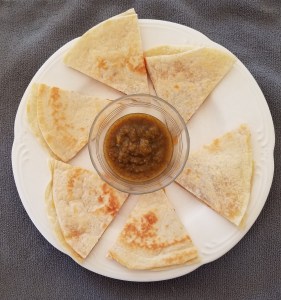
Breakfast Quesadilla with Homemade Salsa

Early on, local food referred to how and where food was sourced. There was talk about mitigating “food miles.” As I explained in a 2013 post, “Food distribution and related costs are a social construct that makes transportation seem inexpensive, or irrelevant to what we find in grocery store aisles.”

Where advocates of local food may have gone wrong is using the idea of food miles as a place holder for complex, flawed arguments. Costs are costs, and a producer has to recover his or her financial production costs when the consumer buys an item. Using any complex argument, including food miles, as a place holder seems a diversion. Such talk belongs more appropriately in a sales and marketing context as a form of puffery.

Read my entire set of arguments here.

The better framing for “local food” is to know the face of the farmer. Two years ago I wrote at length about what it means to know your farmer and practices they use. Here is the salient point related to green washing:

Driven in part by mass media, consumers are concerned about a wide range of food issues that include contamination with harmful bacteria; dietary concern about consumption of carbohydrates, fat and sugar; the way in which plant genetics are modified to improve them; and more. Partly in response to media campaigns, annual sales of organic food exceed $30 billion in the U.S. (USDA). The increase in organic market share from national advertising campaigns is significant. If you get to know your local food farmer, what you may find is they benefit from this marketing, but their customers come and stay with them because of a personal relationship with the farmer.

Local food is not exactly green washing, which is defined as “disinformation disseminated by an organization so as to present an environmentally responsible public image.” However, there is a lot of conflicting and sometimes contradictory information related to food. Plant genetics alone set off a firestorm of media and organizational controversy and spawned a new food labeling process under the aegis of the Non-GMO Project. Simply said, it’s complicated.

If a definition of “local food” is elusive, how our county defined a local food system may be as good as it gets:

In Johnson County we see the need to localize our food system – and we are working to create a healthy, intact system that lessens resource inputs, promotes worker’s rights and preserves the natural environment.

Yesterday’s wind blew a single-use plastic bag into our Ash tree where it got stuck and is flailing in the wind. Part of me is tempted to leave it there as a symbol of all that is wrong with our society. Then again, if I want it fixed, I’d better do something about it. So it is with the local food system.

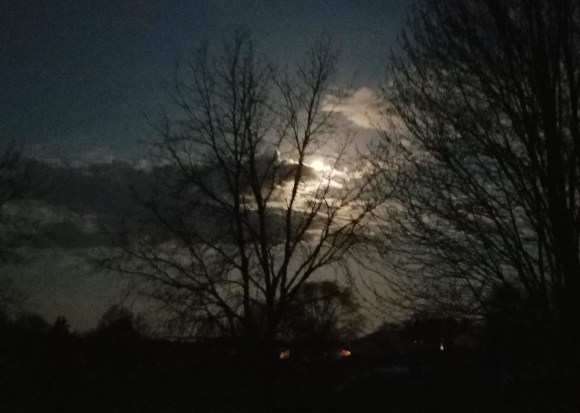
Full Moon Setting Behind Clouds

Categories
Kitchen Garden Writing

Back to the Garden

Spinach Seedlings

No food is more local than a kitchen garden. I’ve got to get moving on mine after a late spring.

Everyone was in a good mood at the farms when I soil blocked Friday and Sunday. My farmer friends caught up last week by finishing onion and potato planting. Trays of seedlings are moving to wagons and then into the ground, thus clearing the greenhouse for what will be June and July crops. I started zucchini and cucumbers Sunday in the greenhouse.

The first spring share is today and in honor of it I’m composting my over-wintered lettuce.

A neighbor and I had a conversation about spinach and how it grows. She is changing her garden around as last year the zucchini they love developed powdery mildew. Her tactic is to plant the whole garden in corn to give the soil a break and let the fungus dissipate. Here’s hoping that works.

As for me, Monday is mine to do what I want. This week that will include getting our septic tank pumped, writing off line, gardening and yard care. It’s time to put winter behind us.

Categories
Kitchen Garden Writing

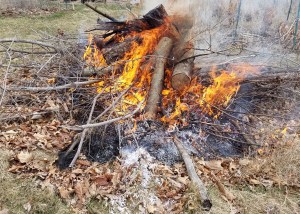
Spring Burn Pile

Spring Burn Pile

Part of yesterday was spent outside — in the garden, working compost, cleaning buckets, collecting the bits of drainage tile used to support celery plants, tending the garlic, planting turnips and radishes.

Using a bag of shredded office paper and a match, I started the burn pile created in the aftermath of an unusual wind storm last year. An arborist cut down the big branches and I sawed them into smaller logs and branches. The wood was dry and burned quickly even though it was covered with snow a couple days ago.

The first spring burn pile marks the beginning of gardening season.

I didn’t connect the garden hose as we are expecting freezing temperatures again this weekend. There is plenty of moisture in the ground to give the seeds a start.

A week ago I got a haircut. Partly it was too shaggy and in my eyes while working outside at the home, farm and auto supply store. Partly it was about casting aside the experience it represents for a new start.

My retirement March 16 has been something of a crash landing. Long anticipated, I know the major themes — writing, gardening, farm work, home maintenance and community organizing. I’ve had to add a need to deal with my aging frame and life systems. I made an appointment to see a medical doctor for a physical next week.

Even though I have more time, there never seems like enough to get what I want accomplished. With that in mind, I’ve come to believe what I said in February, that low income workers and retirees can’t afford social media. I posted this on Facebook this morning:

I’ve decided to end my relationship with the Facebook application on or about April 30. I joined in 2008 to follow our daughter and she deleted her account a couple of years ago. It’s not you fair reader, it’s me.

I listened to Mark Zuckerberg testify to Congress yesterday and his plans for dealing with public issues here. I have no interest in artificial intelligence reading my every post to determine if it is worthy according to Facebook criteria.

That said, I will miss the exchanges, likes and shares and appreciate your interest in what I’ve been doing. Facebook has been a creative outlet for me and I plan to channel those impulses elsewhere.

You are invited to continue to follow me elsewhere. I plan to keep my twitter account @PaulDeaton_IA and my WordPress account pauldeaton.com. If you are on WordPress click the button on my home page to add me to your reader, or click on the Follow Via Email button if you are not.

So that’s it. Hope to see you around… literally.

The burn pile was hot and I had to keep my distance while using a hoe to move partly burned branches to the top of it. By supper time it was a pile of white ashes with minerals returned to the ground and carbon released into the atmosphere. I plan to add another garden plot where the burn pile was.

We don’t know what tomorrow will bring. A burn pile reminds us all of the natural world is in transition. In a burn pile there’s no judgment, just the heat of released energy and beautiful, ever changing orange-yellow-blue flames.

In this moment that’s all we require to sustain ourselves.

Categories
Home Life Kitchen Garden

Late Winter in Big Grove

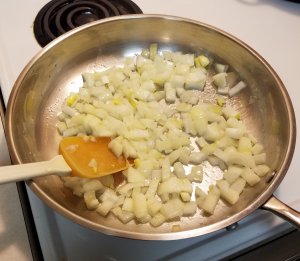
Sautéing onions for a casserole

It is time to use up fresh onions, garlic and potatoes, then rotate the canned goods so oldest jars are consumed first.

Winter means soup, casseroles, pasta and hearty meals made from pantry and ice box ingredients.

As the ambient temperature warms, we are ready to move into the new year’s fresh food cycle. But not so fast!

There are egg sandwiches, chili mac and soups to be made before spring buds.

I donned my LaCrosse rubber boots and toured the yard and garden.

The ground is too hard to plant lettuce. Garlic is not up. The only bit of sprouting green was flowers I transplanted from Indiana. Tips of green were frosted on those that emerged. A thick layer of sand lies on the side of the road. Time to sweep it up and save it for next winter.

At 13 days until the transformation of worklife, I’m spending time organizing time and tasks.

To be successful means purging old habits and developing new. The work seems much harder than it should be. While working at the home, farm and auto supply store I’ve developed some questionable habits around internet usage, resting and eating. They produced the current result, so they were not all bad. One only gets so many chances to start over.

There are two problems with my transformation. First, I’m limited to 12 hours per day of primary activity. Not everything I want to do will fit. Second, I’m not used to working 12-hour days. To get things done, I need to ramp up. The situation is complicated by keeping two days of paid work in the mix. We’ll find a use for the money, but I’ll also need to figure out how to get more productivity out of a day to meet overall goals.

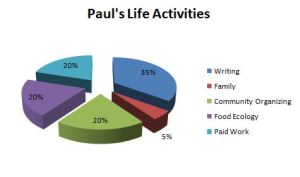
Paul’s Pie

Drawing the pie chart was fairly simple. Making that fit among rigid schedules of paid work, writing and farm work has proven to be challenging. Where I suspect this will end is with a hard schedule that includes writing, food ecology and paid work, leaving everything else flexible.

I’m committed to this now, so no turning back.

The week of the county party central committee turns into a session of drinking politics from a fire hose. As you can see in the pie chart, community organizing gets a 20 percent allocation of time and politics is a subset of that. I’ve limited myself to one social event per week and expect most of those to be related to politics for the next couple of months. I learned a couple of things:

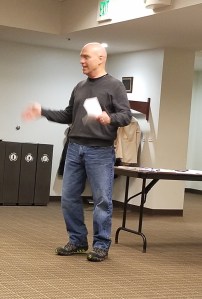
Rep. Dave Jacoby explaining plan to run 100 Democrats for 100 House seats.

Iowa House Democrats are planning to run 100 candidates for 100 seats in the midterm elections. We don’t usually run everywhere, so that makes this year different.

In the governor’s race, Democrats are working to win the primary. With seven announced candidates at the beginning of the filing period we’ll see if everyone files and if there is anyone else. It takes 35 percent of votes cast to win the primary. Cathy Glasson’s campaign is playing a side bet that the governor candidate will be chosen at the state convention with no one getting enough votes to win outright. The campaign claims to have won 30 percent of delegates at the caucus, which may or may not translate into 30 percent at the state convention after counties pick their delegates at the March 24 county conventions. 30 percent seems unlikely to win at the convention.

There are still too many geezers like me on the central committee. I’d gladly step aside and let someone else take my seat, but the truth is these women, millennials and newly registered voters who are supposedly playing a key role in the midterms don’t come to the meetings, don’t want the job. It’s a truism that flying at 30,000 feet, political strategists come up with all manner of demographic projections about the electorate. Our local elections of everyone up and down the ticket are made at a distance of six inches in front of our noses, rendering strategist musings moot.

Cold and frosty as the ground is today I can justify another day indoors to file our tax returns, work on community organizing and get caught up on everything else. However, it won’t be long before lettuce and potato planting. Next Sunday I start my first trays of seedlings in the greenhouse.

There’s everything spring brings and for which we yearn.

Categories
Writing

2018 and Beyond

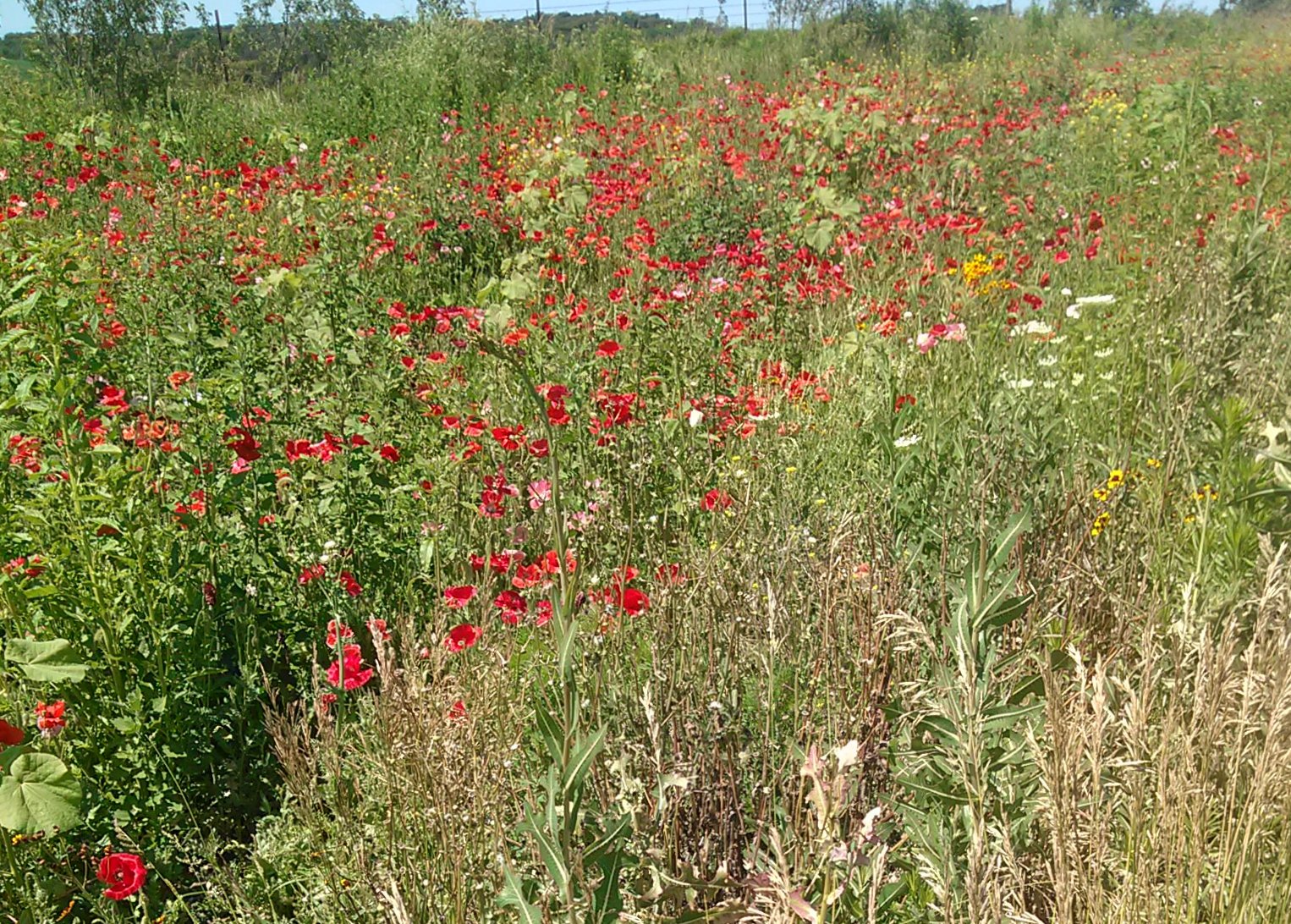
Wildflowers

“Each moment is different from any before it. Each moment is different, it’s now.”~ Incredible String Band

Best wishes for a happy 2018!

The ambient temperature is 23 degrees below zero outside, the kind of winter we expect in the Midwest. The cold snap should and hopefully will last a week or more. If we’re lucky, it will be followed by another later this month. After that, I’m ready for winter to be over.

There is a lot to do in 2018.

January will be a month to see if financial plans made in December work.

The switch from work-based health insurance to Medicare means managing six different payments for health insurance each month. With this change, my net income from the home, farm and auto supply store should increase, less any additional tax. There is also Social Security, scheduled to begin the fourth week of the month. Now begins the monitoring to see if it comes together as planned. Assuming it does, the rest of the year falls into place as follows.

I haven’t set a date to leave the home, farm and auto supply store, although I’m looking at March 16, giving me three full months of paychecks, which when combined with Social Security, will help the transition. Farm work starts in late February/early March and is expected to run through June or July. Orchard work starts in August. There are only a few other focal points.

Writing: After picking a project, I plan to get back to writing 1,000 words a day, six days a week by spring.

Reading: Read 50 pages a day, six days a week, split between books for learning, enjoyment, and research for writing.

Social Media: Who knew this would even be a category? I plan to maintain my blog and use Facebook and Twitter to develop a readership for new writing. I may add other social media platforms.

Business Development: Once I leave the home, farm and auto supply store attention will be turned to generating cash to help pay down debt and take care of major, deferred household expenses. This must be done in a sustainable way, one considering my aging frame. Over the next year or two I will reduce income from work that makes physical demands.

Food Ecology: Combining gardening, farm work and networking, leverage the local food system to provide a greater share of the food we consume at home. Get better at gardening.

Social Engagement: Develop a sustainable, local group to work on the midterm election, and advocate for environmental, public health, and social justice issues. Work with national organizations to reduce the existential threat of nuclear weapons.

Health: Take care of myself so I can do the aforementioned things.

While not really resolutions, there is a lot to do. Without a plan, one might slip into the abyss and never be heard from again. I’m not ready for that.

Best wishes to readers for a peaceful and prosperous 2018.

Categories
Environment Kitchen Garden

Armistice Day at Home

Group of captured Allied soldiers on the western front during World War I representing eight nationalities: Anamite (Vietnamese), Tunisian, Senegalese, Sudanese, Russian, American, Portuguese and English. Photo Credit – Library of Congress

Most of Armistice Day was at home.

The forecast had been rain, however, a clear fall day unfolded and I planted garlic. Pushing cloves into the ground with my thumb and index finger, I made two rows and covered them with mulch retrieved from the desiccated tomato patch. It doesn’t seem like much, it’s my first garlic planting ever. If it fails to winter I have plenty of seed to replant in the spring.

Had I been more prescient about the weather I would have spent more time outside: mowing, trimming oak trees and lilacs, clearing more of the garden, and burning the burn pile. Neighbors were mowing. The mother of young children piled up leaves from the deciduous trees at the end of a zip line portending great fun. Instead, I spent the morning cooking soup, soup broth, rice and a simple breakfast.

Leaves of scarlet kale were kissed by frost leaving a bitter and sweet flavor. I harvested the crowns and bagged the leaves to send to town for library workers. Usable kale remains in the garden. It will continue to grow with mild temperatures. Leaves of celery grow where I cut the bunches. There is plenty of celery in the ice box so I didn’t harvest them and won’t until dire cold is in the forecast. An earlier avatar of gardener wouldn’t have done anything in the garden during November.

I picked up provisions at the orchard: 15 pounds of Gold Rush apples, two gallons of apple cider, two pounds of frozen Montmorency cherries, packets of mulling spices and 10 note cards. Sara, Barb and I had a post-season conversation about gardening, Medicare and living in 2017.

The morning’s main accomplishment was clearing the ice box of aging greens by producing another couple gallons of vegetable broth. I lost count of how many quart jars of canned broth wait on pantry shelves. For lunch I ate a sliced apple with peanut butter.

We live in a time when favorite foods are under pressure from climate change. Chocolate, coffee and Cavendish bananas each see unique challenges from global warming. In addition, recent studies show the higher concentration of carbon dioxide in the atmosphere is reducing the nutrient value of common foods. Our way of life has changed and will continue to change as a result of what Pope Francis yesterday called shortsighted human activity. He was immediately denounced in social media by climate deniers.

This week, Congressman Ron DeSantis (R-FL) introduced the HERO Act which purports to reform higher education. Specifically, the bill would open up accreditation for Title IV funding to other than four-year colleges and universities. In an effort to break up the “college accreditation cartel” DeSantis would keep current Title IV funding but add eligibility for other post K-12 institutions. States could accredit community colleges and businesses to be recipients of federal loans for apprenticeships and other educational programs.

Telling in all of this is that as soon as he introduced the bill, DeSantis made a beeline for the Heritage Foundation for an interview about it with the Daily Signal. Does higher education funding need reform? Yes. What are Democrats doing to effect change in higher education? That’s unclear. A key problem is progressives don’t have a network of think tanks and lobbying groups funded by dark money to counter the HERO act or the scores of other conservative initiatives gaining traction in the Trump administration.

Even though the 45th president seems an incompetent narcissist, the influence of a conservative dark money network within his administration is clear: in appointments to the Supreme Court and judiciary; in dismantling the Environmental Protection Agency, in undoing progress in national monuments and parks, in weakening the State Department, in potentially politicizing the 2020 U.S. Census, and much more. The reason for his success is his close relationship with wealthy dark money donors and the agenda they sought to implement since World War II.

Today is the 39th anniversary of my return to garrison from French Commando School. I returned with a clear mind, physically fit, and an awareness of my place in the world.

“I am ready to experience the things of life again,” I wrote on Nov. 12, 1978. “The time at CEC4 has cleansed me of all things stagnant. I will pursue life as I see it and make it a place where I pass with love and peace for all.”

We work for peace on the 99th anniversary of the Armistice. If people are not unsettled by evidence of climate change and a Congress that ignores it in favor of pet projects designed to please the wealthiest Americans, we haven’t been paying attention. The need to sustain our lives in a global society has never been clearer.

Categories
Kitchen Garden

Overnight Soup

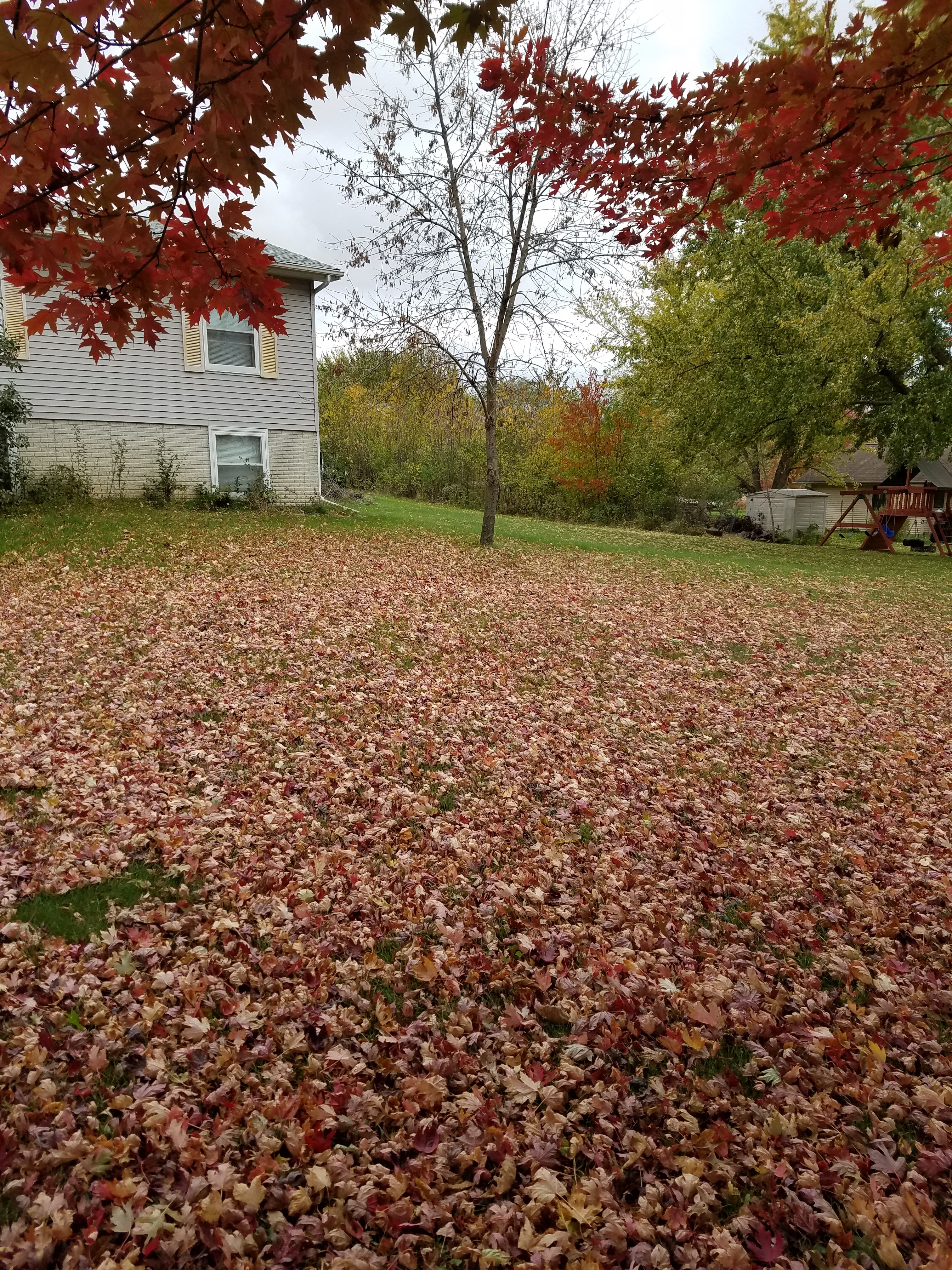
Deciduous Tree Leaves

In our search for truth and meaning there’s nothing like making soup.

Each batch can be spontaneous yet based in traditional flavors and processes. Soup uses what comes in from the garden, is stored in the pantry and ice box, and our kitchen skills. A gardener makes a lot of soup.

It is honest food.

Friday I drove straight home from work at the home, farm and auto supply store and got started.

I wanted to glean the garden before the weekend’s hard frost. I brought in carrots, eggplant, tomatoes, kale, bell peppers, Red Rocket and Jalapeno peppers, basil and broccoli along with a five gallon bucket of apples.

I’ve had an idea about making crock pot or slow cooker soup for a few weeks. The idea is to do the prep work Friday night and set the temperature on high. At bedtime I would turn it to low, letting the mixture slow-cook overnight. I hope to can fewer big batches of soup while continuing to use up vegetables at the end of the span between fresh and compost. A crock pot makes enough for four to six meals.

It began with a cup of dried lentils and a third cup of pearled barley in the bottom of the crock. I turned on the heat and added a quart of home made tomato juice then got to work prepping vegetables:

All of the carrots from the garden and some from the CSA.
The remainder of a head of home grown celery.
One large yellow onion.
Bay leaves.
Two leaves of green kale, including the stalk finely sliced.
Small tomatoes, quartered.
Root vegetables: kohlrabi, turnip and potatoes.
A leek.
Several broccoli florets with stalks finely sliced.
Dried savory and salt to taste.

The vegetables went into the crock as I cleaned and cut them. When prep work was done I added a quart of home made vegetable broth and covered with water.

That’s it.

In the morning the soup was flavorful, thick and hearty. I had a bowl for breakfast, leaving more than a half gallon in glass jars for the ice box.

In a turbulent society there is no better way to sustain ourselves than with a bowl of hot soup.

I plan to make more.

Categories
Kitchen Garden

End of 2017 Garden Year

Frosted Squash Plants

A garden never ends. First hard frost is forecast this week and kale will likely survive, tasting better after being kissed by cold.

If the ground dries out, I will plant next year’s crop of garlic. If it really dries out, I’ll remove stakes and fencing, mow everything down, and add to the burn pile. With the warmer fall weather these activities go later into each cycle. As Senator Joe Bolkcom pointed out yesterday, September was the fourth hottest on record with the first three being in 2014, 2015 and 2016. I scheduled time off work at the home, farm and auto supply store for gardening the first week in November.

I’ll analyze the garden results later but already know the basics: pick good seeds, rejuvenate the soil, cultivate more, and mulch, mulch and mulch. The composted chicken manure applied to some plots produced great results. Like many gardeners, I realize if the garden failed in any way it is mostly my fault for decisions made about planting, insects, cultivation and soil quality.

Because of engagement in local food production, our pantry is overflowing. Apples, potatoes, onions and garlic are plentiful. Winter shares from CSAs continue until Thanksgiving. There are abundant ingredients for cooking. It’s cooking meal to meal for the time being with big canning sessions giving way to large dishes with leftovers.

Eight days remain in the apple season after which I plan to take a weekend to consider the future. That includes health care decisions, signing up for Social Security, and getting back to reading. I may get my hair cut and take some needed personal time to recover.

I may even go into the county seat.

Categories
Kitchen Garden Writing

Practical Gardening

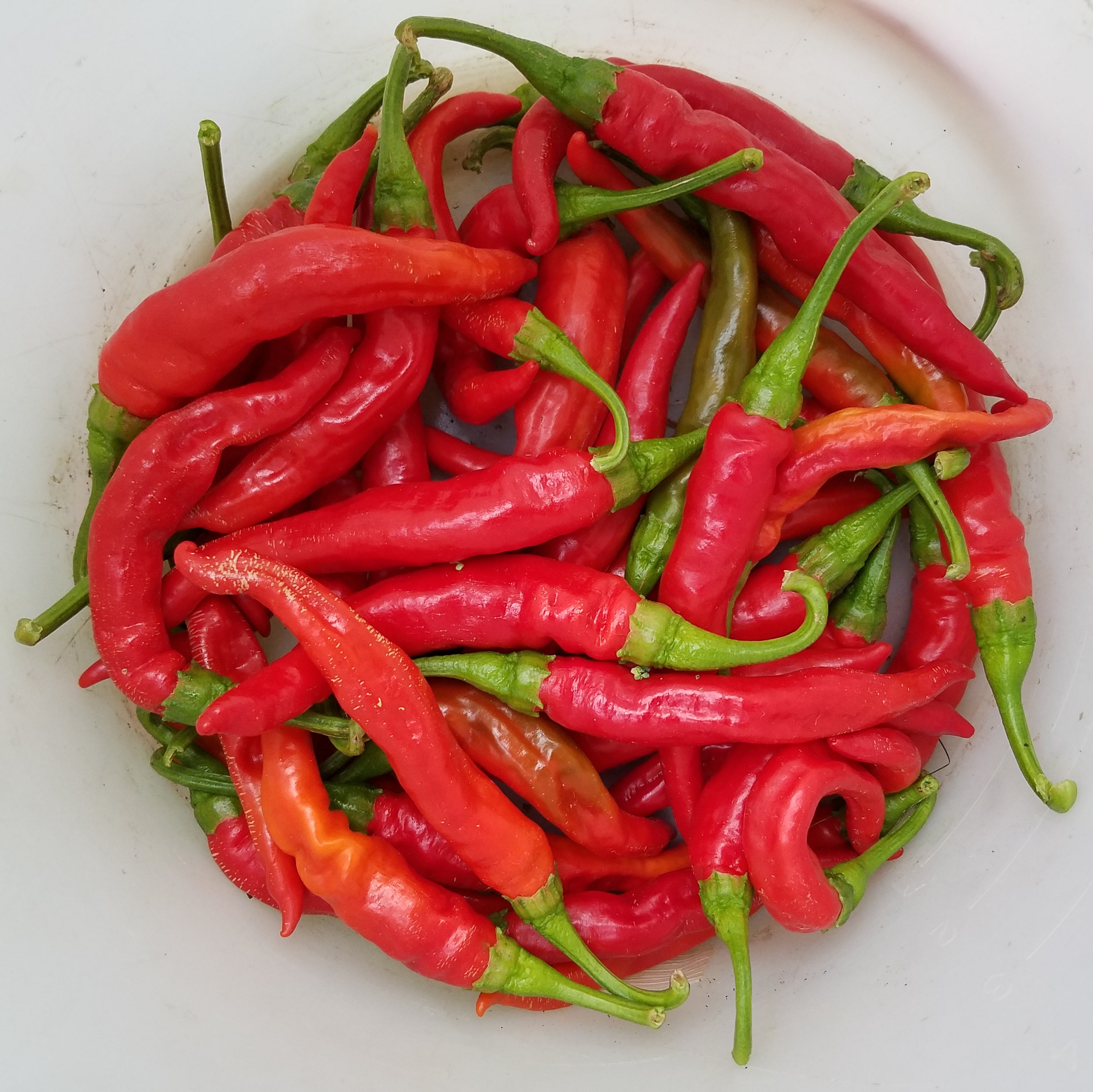
Red Rocket Peppers

Gardening is of light and shade, moisture and soil health, seed genetics and cultivation. It is an endeavor in which we can invest personal effort and a few resources to see practical results.

We garden in complex creation, only partly of our own making. Imbued with elements, animals, insects and microorganisms we don’t fully understand, this year’s garden plots brought new understanding, a bountiful harvest and a busy kitchen.

Gardeners become the verb “to garden,” and if lucky, become inseparable from the process of growing and cooking food. What was once new knowledge becomes embedded in daily actions that appear intuitive. We become the syntax of food production. Words can’t do justice to what gardeners experience and learn over decades. One sees it only in practice.

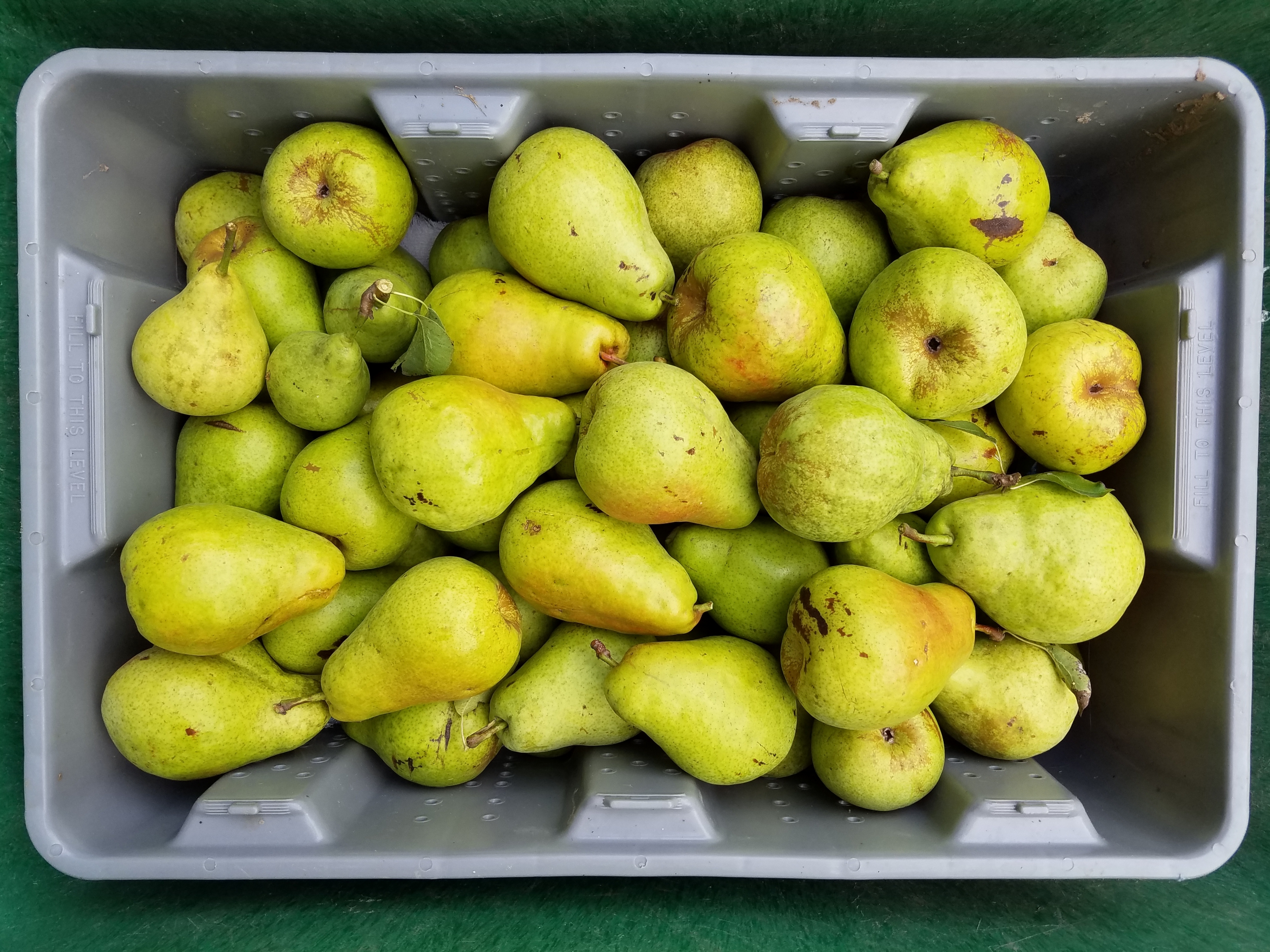
Pear Harvest 2017

Last night I rushed into the house after work at the home, farm and auto supply store to change clothes, get the ladder, and pick pears before they all drop. We planted the tree at our daughter’s high school graduation party and have had some almost every year since they bore fruit. The season is very short as are our lives. We plan to enjoy the sweetness of fresh pears as long as we can.

Red Delicious apples are not fully ripe. I ate one while rushing around the back yard chasing pears and sunlight. Sugars are beginning to dominate starches and a couple more weeks on the tree will serve them well. After that it will be a mad rush to pick and preserve them. It could be another 1,000 pound harvest.

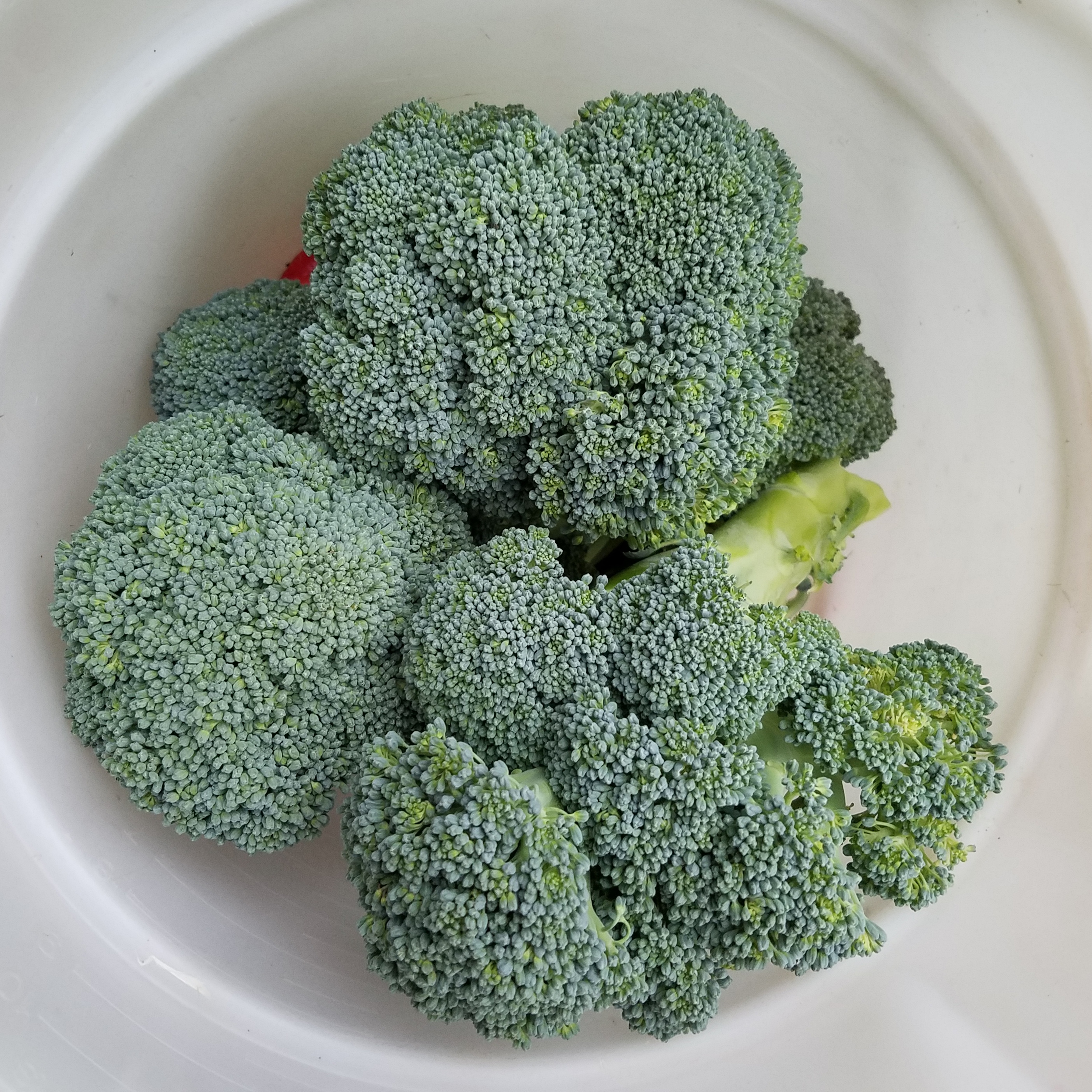
Second Growth Broccoli

There were beautiful second growth broccoli heads, about eight of them. I broke them off by hand, cut and peeled the stems for work lunch.

There were more Red Rocket peppers. I harvested the reddest ones, leaving many more to ripen. In the kitchen I took the others from the baking sheet in the oven (oven turned off) and carefully spaced them on the five trays of the dehydrator. I’ll dry them until they are ready to grind into red pepper flakes.

Someone brought cucumbers to the orchard on Monday. I took half a dozen (there were an inch thick and 5-6 inches long) and combined them with what was already in the ice box to make a second batch of fermented dill pickles. It takes 10 days if everything goes according to plan. Fingers crossed.

Monday I picked up two crates of tomatoes and two dozen quart Mason jars at Kate’s farm for canning. This is part of our barter arrangement in which she provides tomatoes, I process them, and we split them resulting canned goods. I sorted them Tuesday morning before my shift. Once spread out they filled four and a half crates instead of two.

I made ground tomatoes from the ones with bad spots as a base for pasta sauce. Here’s the process: Wash, trim and quarter the tomatoes then pulse in a blender until the big pieces break down. Put the blended tomato pulp in a juice funnel to separate liquid from the flesh.

After an hour, the split was 50 percent juice to 50 percent flesh. I put the results in jars and stored them in the ice box. I’ll can the juice and make pasta sauce while I work in the kitchen tonight or tomorrow night.

With two paid jobs and diminishing daylight there’s not much gardening time in my schedule. The lawn needs mowing and I plan to plant garlic in a week or two and there’s work to do preparing the soil.

It’s a rush until first frost, after which I may be able to slow down — but I doubt it.