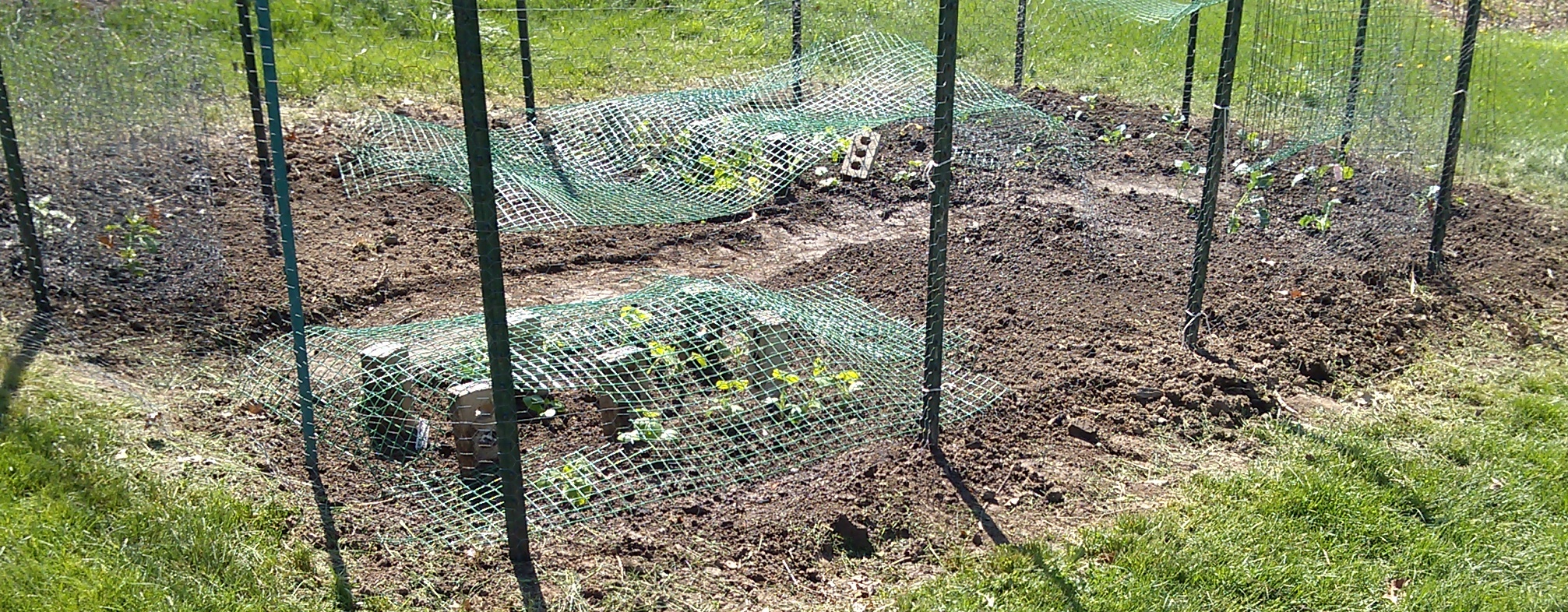
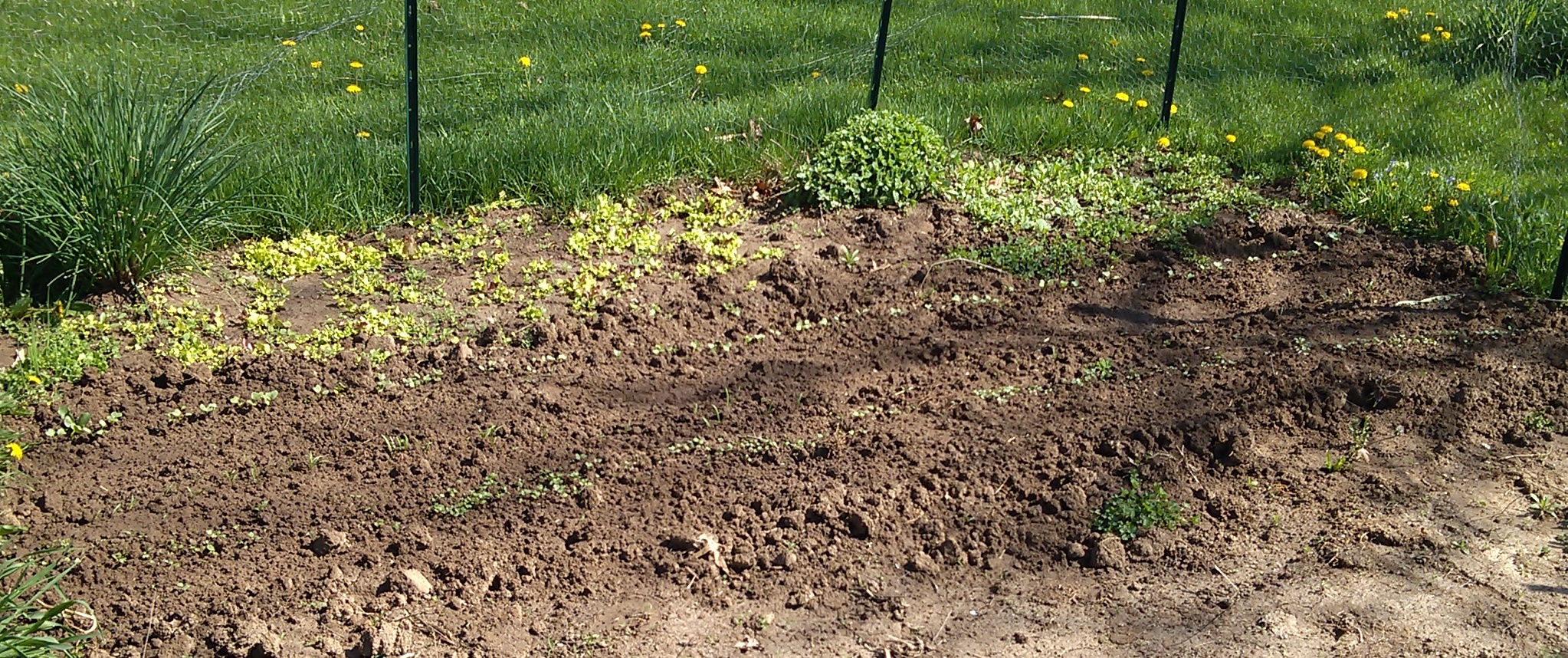
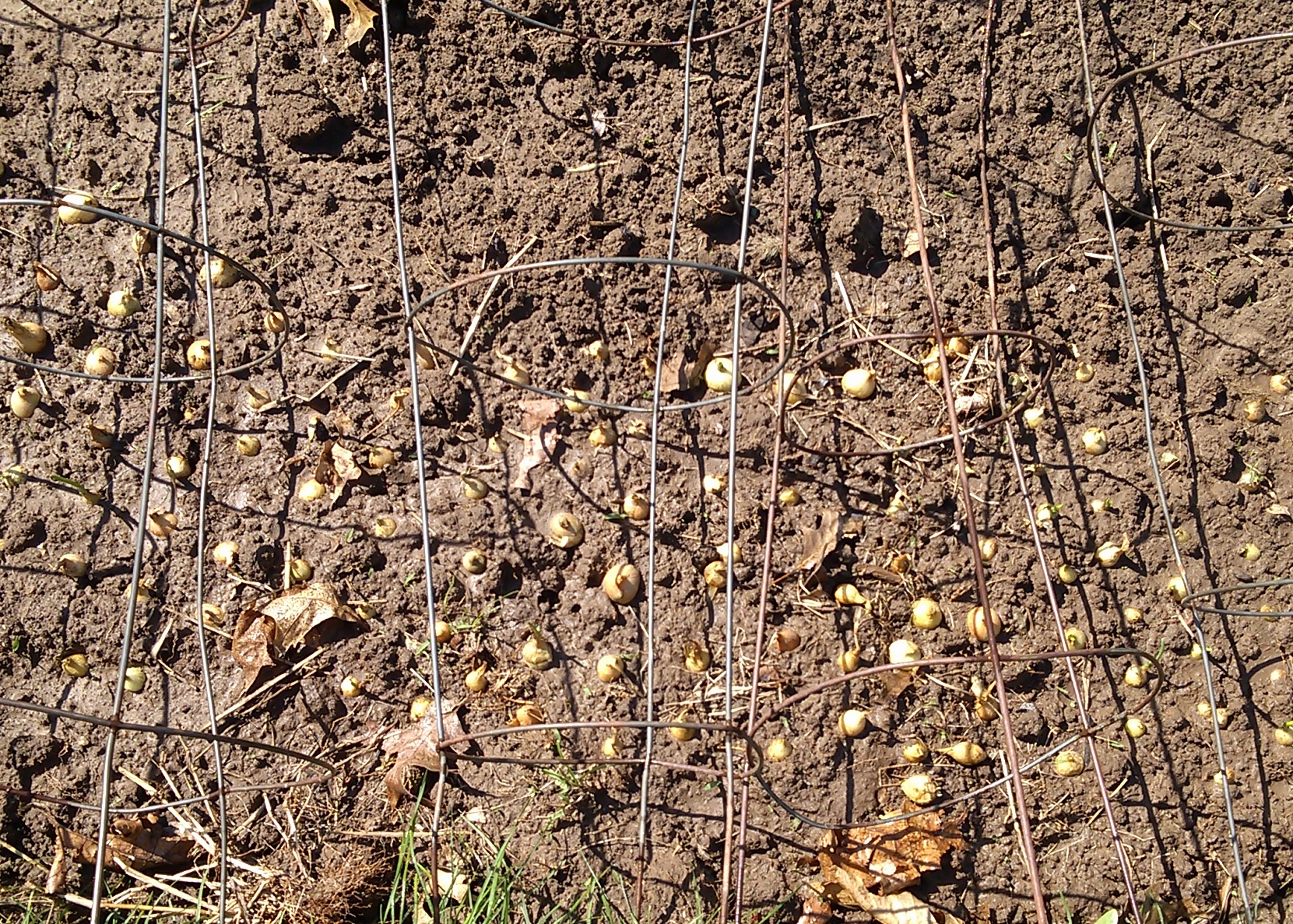
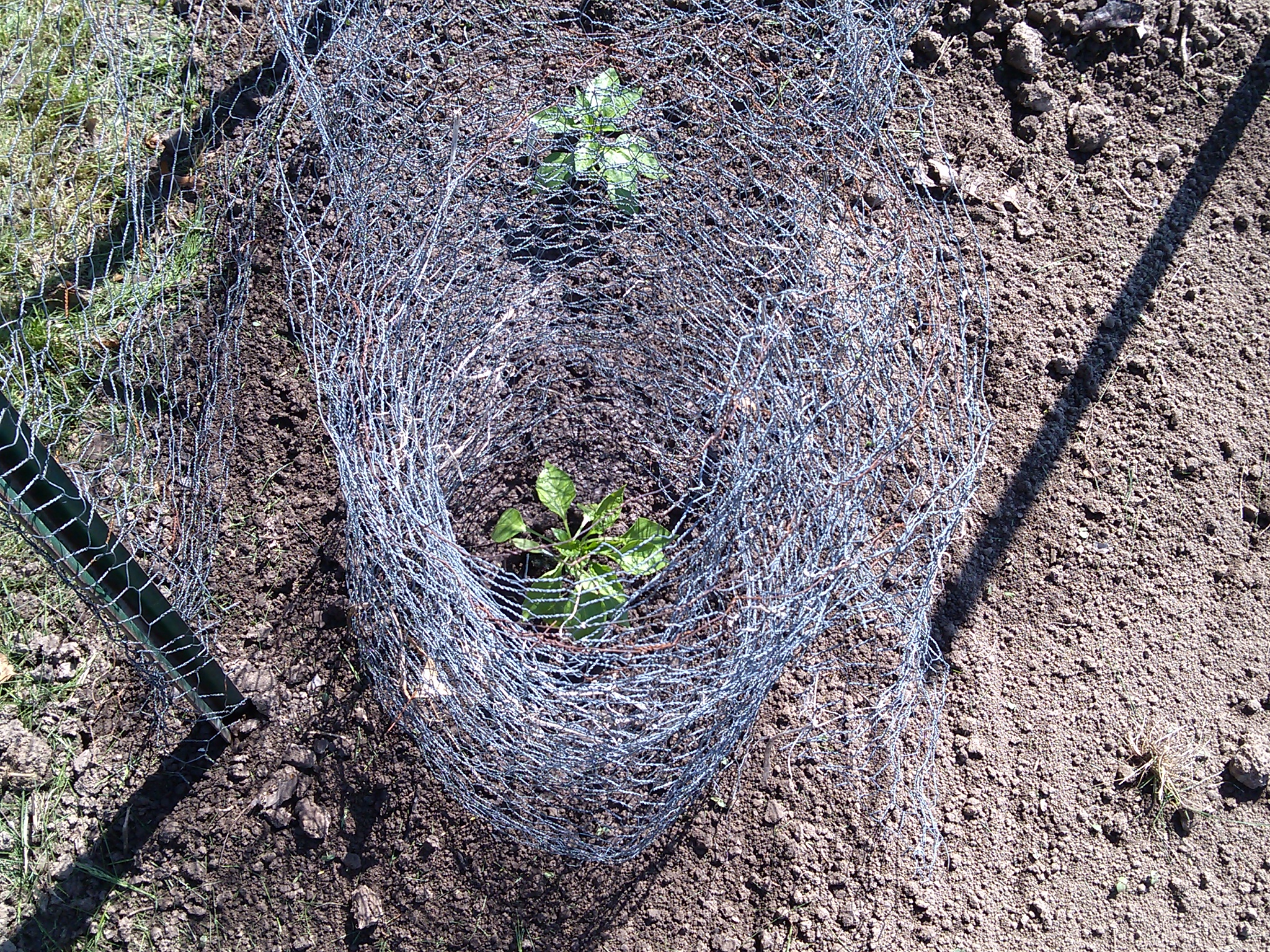
LAKE MACBRIDE— Our garden is on a deer path. They have likely been using it much longer than we, so when I put out new garden seedlings, they are protected as best as possible with existing fences, cages and stakes. Today, yellow squash and zucchini seedlings went in the garden in three by three foot sections. I placed them apart from each other so there would be less cross pollination. I also tended to the onions, which are rooting well, and planted Brussels sprouts, broccoli and Anaheim peppers. Here are some photos of the garden today:
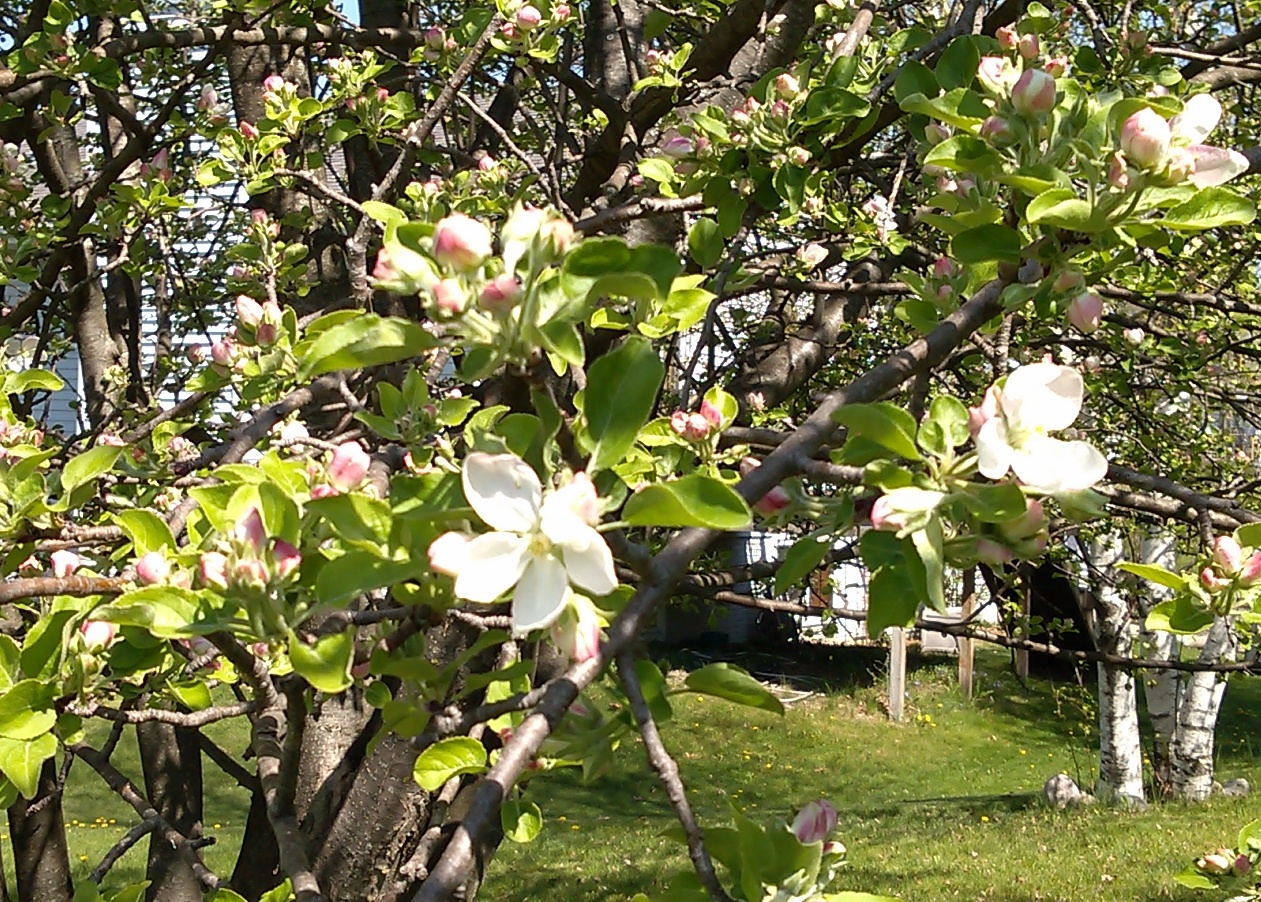
Apple Blossoms Ready for BeesSpring PlotSpring OnionsAnaheim Peppers in a Roll of Chicken Wire
LAKE MACBRIDE— Two of the four apple trees are developing blossoms today. There should be plenty of apples this fall if flowers become fruit. The risk is a late frost before they are pollinated. I barely dodged the bullet last year, having good pollination just as the frost hit. The good news today is that I saw a few bees out. Fingers crossed that the blossoms open today or tomorrow and get pollinated. I suppose we can’t rush Mother Nature.
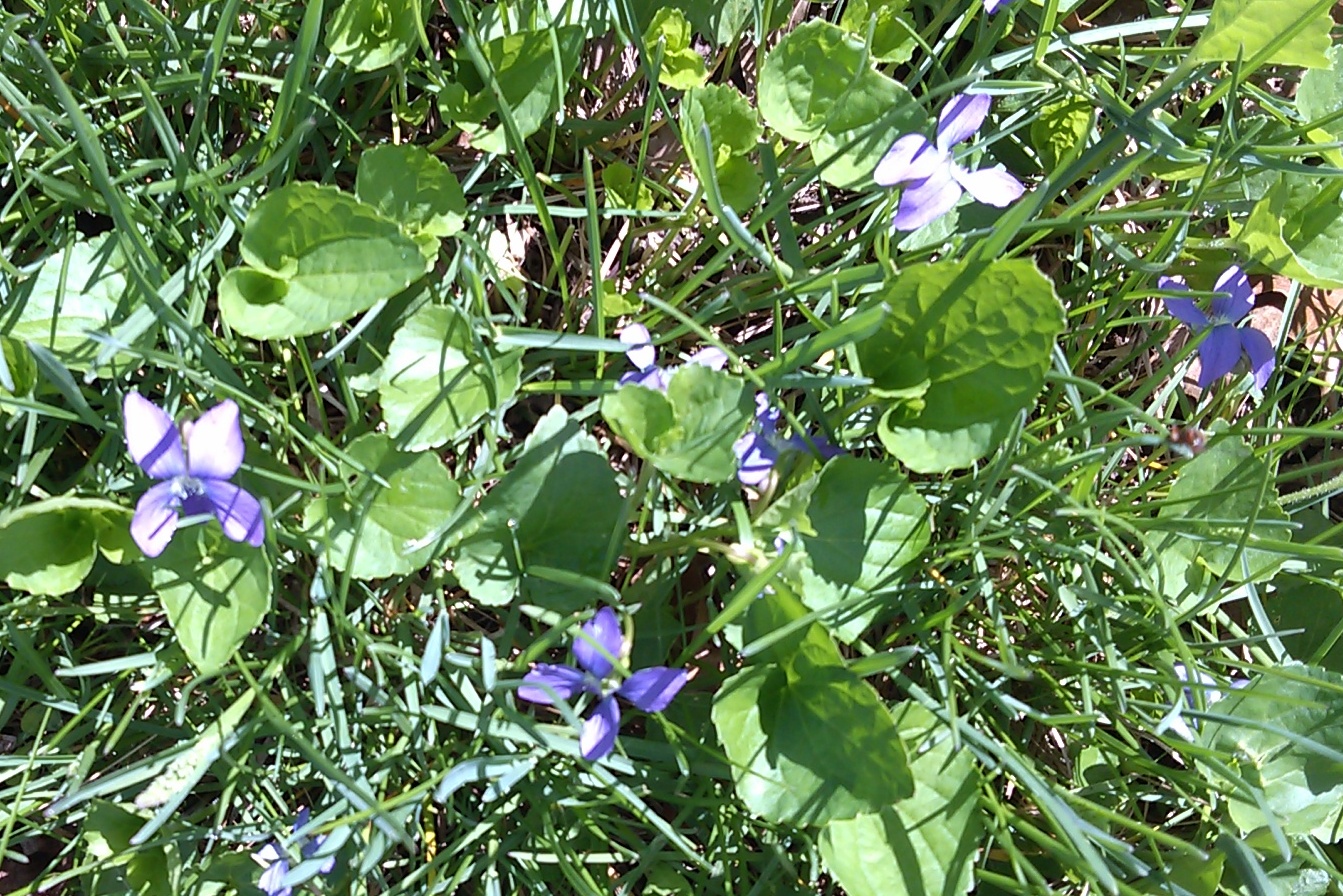
Our home owners association has a rule about cutting the grass. I ignore it completely. Some neighbors have mowed three times already and the border of our properties resembles the scene in The Great Gatsby where Nick Carraway compares his ragged lawn to the expansive and neatly trimmed one of his neighbor. If people pay attention to this sort of thing, one is assured the neighbors are grumbling about my unkempt lawn.
Wildflowers in the Lawn
I let it go during the spring for two reasons. First, I want to see what wildflowers show themselves— vestiges of the time before we developed the property. Second, the first cutting in the spring makes excellent mulch for the garden. Last year, the drought conditions produced only a scant amount of grass clippings. This year, I am going to take advantage of the rainfall and use every bit of this abundance. If I cut too often, the small pieces of grass blade fall to the earth and mulch the lawn. That’s not bad, but the garden means more to me than a neat and tidy lawn.
Monday morning inspection of the garden revealed that the lettuce looks like lettuce, the arugula is growing, it pays to sow radish seeds properly spaced and one at a time, and there are spinach and turnip plants popping into the sunlight. The spring garlic should be ready to harvest soon. I intend to share that with our CSA and will dig some and take it to the farm on Wednesday for a proper evaluation. The next step is to plant the six trays and five buckets of seedlings. The ground was too wet for that this morning, so maybe tomorrow.
It is a glorious day to be outside working in the yard. There is much to do, so I’d better close for now and get back outside to the garden.
LAKE MACBRIDE— The sound of rain dripping in the downspout woke me. Opening the blinds revealed a queue of cars protecting school children from the rain at the bus stop. It is an overcast day, with rain we surely need. The school bus arrived, and I moved trays of seedlings outside to harden them. Better plants be hardened by the weather than children. Life will be hard enough as they finish grade school and begin to grow up.
Spring has been a time of lessons learned in Big Grove.
Cooperation with neighbors enabled me to borrow a rototiller and till the garden as well as it has ever been at no financial cost. That benefit, combined with working together in a common enterprise, is a reminder of our local culture, and the need to nurture it.
Seeking out people with experience in similar interests can provide benefits. Working together with them is even better. The inspiration to plant more seeds in trays this year was working with experienced growers at a local farm. Seeing the success others have can inform our own successes.
Adaptation to the sometimes crazy weather was the climate reality with which we lived. The cold, wet spring retarded progress in yard and garden work. Though delayed, the trees and plantings are now thriving. It is better to focus on what progress can be made than to complain about the weather, and other things beyond our control.
Life is what we make of it is the old saw. Quotes, proverbs and sayings aren’t worth much unless we put them into practical application by doing things with others. It takes time and effort. Sometimes it takes replacing bad habits accumulated over time with something better.
Perhaps the best lesson of this spring has been the reminder that we can’t stop living. If there is any hope for social progress, it is in working together with others toward a common good— a lesson that extends beyond spring.
LAKE MACBRIDE— A gardener accepts risks. Soil, insects, weeds, temperature variation, hail, frost, flood, drought, neighbors’ pets, deer, and others. No doubt, we will take those risks, and after the season’s promise is in the ground, mitigate them as best we can.
Risk management is also part of most people’s lives. In the middle of the economic spectrum, people spend a lot of money managing risk in the form of insurance. Health insurance is the biggest monthly expense in our household, and if one adds in auto insurance, dental insurance, home owner’s insurance, life insurance and others, insurance payments dominate household expenses.
Most people I know, who buy into the consumer society, are not very good at managing risk, even if they are adept at apples to apples comparisons between competing insurance policies. Gardening represents a chance to learn how to take risks.
Evaluating the weather and making decisions about when to plant specific vegetables seems part of the living dynamic of being a grower— large scale or small.
What are the risks, in life and in gardening, and are we willing to take them? For a home gardener, the risk of making a mistake is high, but the cost of mistakes are mostly very low— time spent, opportunities missed, labor invested, and the cost of seeds and seedlings. With little to lose financially, the social aspect of gardening becomes more important in risk taking.
Yesterday, I asked a grower her thoughts about planting with the current 30 day forecast. She would wait until the weekend to put squash, tomato and other seedlings out… because of the potential to reach the mid-30s later this week. “I wouldn’t risk it,” she said, mentioning the traditional May 10 last frost date. Her farm operation has a lot at stake in making the wrong call, and she exhibited a conservative approach, her judgement tempered by decades of experience as a farmer.
Getting better at risk management takes practice: studying opportunities, evaluating data, considering our experience, making informed decisions, and evaluating results. A garden, with its low financial investment, is the perfect field to get practice managing risk.
If one lives, there is risk and living is something no insurance policy can adequately protect. As a gardener, we go on living, mindful of the risks involved, but being willing to take them.
When the Iowa City Farmers Market opened last year, I offered spring garlic, lettuce and radishes. This year, the cold, wet spring retarded progress in the garden. It has been a season without early produce while adapting to the climate reality.
The only question inhibiting garden planting is when will the last frost come? According to the 30-day forecast, we have had the last frost. If things turn cold, there is a box of old sheets that can be spread over the plants in the garden. It’s time to turn to planting.
The plan for my garden is sketchy at best. A gardener plays a balancing act between planning and doing. Whimsy and experimentation enter into it. Sometimes we do dumb things, and sometimes we reach for brilliance. A gardener’s process isn’t always logical, but it is hard to fail.
A home gardener can rely on the grocery store, and other growers, should something fail to produce. It is a food safety net we take for granted and it makes garden planning an expression of personality more than anything else.
Food is abundant and relatively inexpensive in Iowa. What matters more is the interconnectedness we have with other growers, large scale and small. Such relationships are the true fabric of our food system, and provide comfort and security.
One can accept that Florida, Texas, Mexico and California will continue to provide produce for the Midwest. However, when the quality and quantity of locally grown foods puts price pressure on out of state commodities, local food may gain more traction.
Planting a home garden is an important step in the local food direction.
LAKE MACBRIDE— Last year at this time, I offered spring garlic, lettuce and radishes at the first farmers market. This year, they are not close to ready because of the cold, wet spring. It has been a season of adapting to the climate reality.
Yesterday began the seasoning, or hardening of the indoor seedlings. The were out in the full sunlight for several hours and received a long misting from the garden hose. This morning, in my bathrobe, I ran them outside in the pre-dawn light with temperatures around 50 degrees. The only real question inhibiting planting action is when will the last frost come? According to the Weather.com 30-day forecast, we have had the last frost, so some of the seedlings will go in the ground today. If things turn cold, I have a box of old sheets that can be spread over the plants in the garden. It’s time to turn to planting.
Of course, a lot of things are already in the ground. I planted onion sets yesterday— another late start— and green beans. To recap, already in the garden are yesterday’s plantings, chives, oregano, garlic, radishes, spinach, arugula, lettuce and turnips. If I accomplish anything today, it will be locating places for the major crops.
A whole plot is devoted to herbs, leafy greens, radishes and a few other items. I planted half of a plot in onions, hoping to grow more this year. I threw up a low chicken wire fence to prevent loose dogs from digging around in the bed of onions. I can cut back on tomatoes because of my work for vegetables at the CSA where I will receive a number of varieties of heirloom tomatoes. I also agreed to can tomatoes for a local grower in exchange for some of the canned goods. There should be plenty of tomatoes this year, so I adjusted by adding different varieties. This is about as far as I have gotten with the planning. As you can see, it is not much of a plan.
A gardener plays a balancing act between planning and doing. Whimsy and experimentation enter into it. Sometimes we do dumb things, like planting trees in the garden, intended to be moved later, then becoming so engaged in a job or career that they grow to 40 feet high without our realizing it. Now they are too nice to take out, and provided morning shade for the leafy green vegetables during last year’s drought. A gardener’s process isn’t always logical, but it is hard to fail.
As a home gardener, one always feels able to rely on the grocery store, or other growers, should something fail to produce. It is a social safety net we have come to take for granted. Food is abundant and relatively inexpensive in Iowa and elsewhere in the U. S., but what matters more is the interconnectedness we have with other growers, large scale and small. That is the true fabric of our food system, and it provides comfort and security the way a blanket does.
I look forward to the day when our food system is more sustainable. For now, I accept the fact that Florida, Texas, Mexico and California will continue to provide produce for the Midwest. But at some point, the cost of transportation will be too much because of the quality and quantity of locally grown foods. Planting a garden, no matter how disorganized, is a step toward sustainability.
LAKE MACBRIDE— The schedule for the rototiller changed from next weekend to this shortly after writing yesterday’s post. No panic or complaints, I just got to work as soon as I found out.
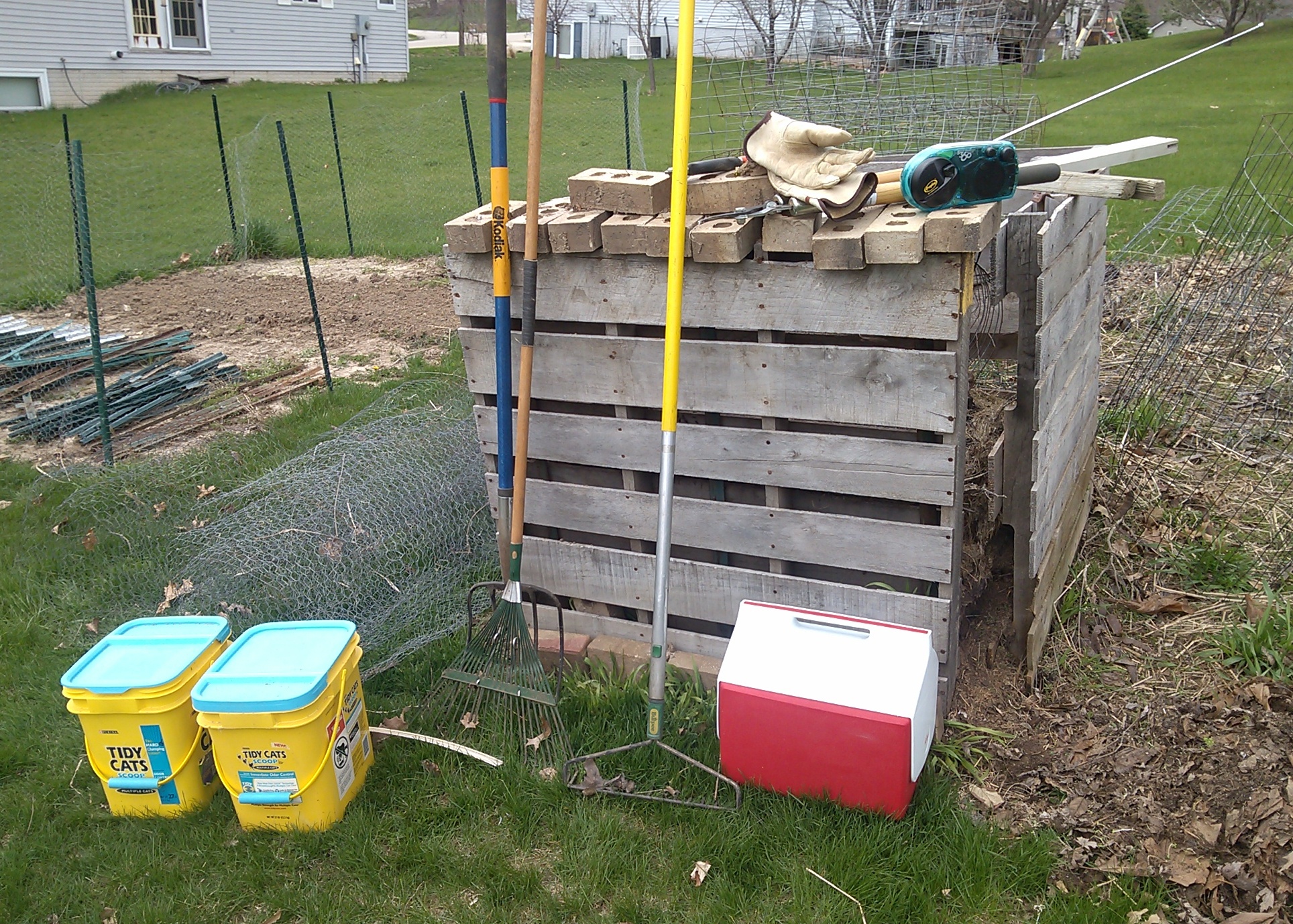
First things first, a cooler full of drinks: three mason jars filled with filtered water, on ice. A solar powered radio set on the compost pile to listen to the Metropolitan Opera on public radio: a series of arias was featured yesterday. A ball cap and a pair of leather gloves completed the pre-work inventory.
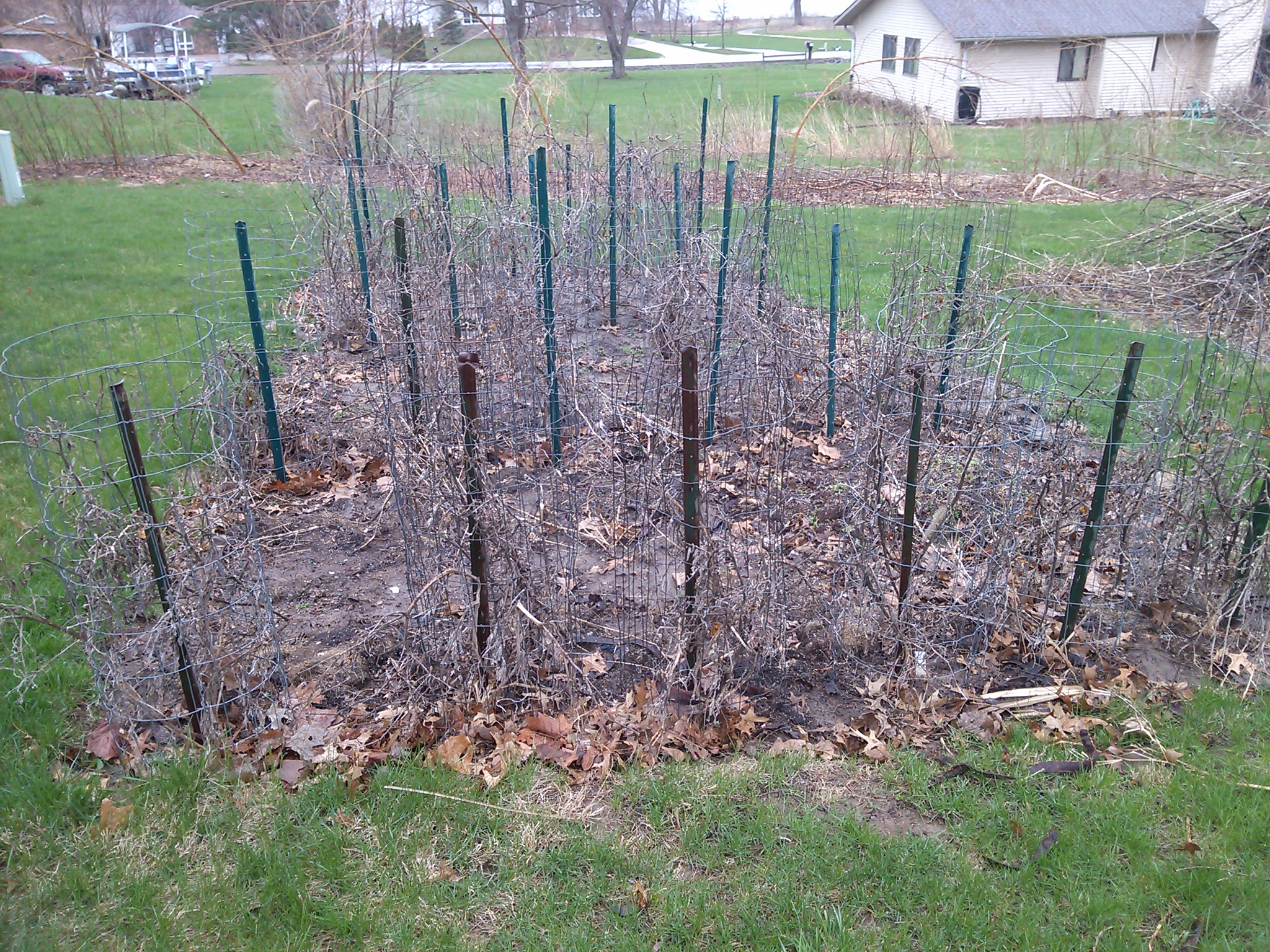
The cold, wet spring delayed clearing the brush, so that had to be done first. Broken limbs and branches from the trees and lilac bushes were cut, collected and added to the brush pile. Next, I cleared last year’s growth from the remaining garden plots and piled that on. A light breeze was evident, light enough to determine it was okay to burn the brush. I did, exposing the third of three plots targeted for the dig.
When we moved to Big Grove, built our home, and established a garden, the lot was vacant, filled with a semblance of the tall grasses that once were here. The first shovel full of earth revealed the developer’s practice of skimming the topsoil and removing it. Heavy clay and hardly an earthworm was to be found below the grasses. Almost twenty years of working the soil changed all that. It is now filled with earthworms and the multitude of living things that make soil fertile.
With my long handled spade, I turned the plots slowly and methodically. The act of spading the soil connects to the memories of doing so each year. A gardener lives for this common thread to the roots of our humanity. Halfway through, my right hand started to cramp and I took a break to make dinner reservations and check in on my smart phone. When I returned, a couple of birds had landed to dine on the earthworms revealed by the digging. In all, it took three and a half hours to turn the garden plots. The rototiller arrived just as I was finishing.
The ashes from the burn pile and two buckets of corn gluten meal served to fertilize this year. I raked the ashes to spread them around the plot where the burn was, and cast the corn gluten meal over all three plots. The distribution was not as even as in the anhydrous ammonia application that was going on in a field about half a mile from here, but was more ecologically friendly.
The rototiller was an old Sears model with widely spaced tines. A neighbor had borrowed and shared it. I fired up the engine, gripped the handles, and allowed the machine to do its work. It became clear it would be the best tilling yet done in my garden. The soil was aerated, and light, and one could sense that living things would grow there. After cleaning the tiller, another neighbor came to pick it up. I raked the furrows level and cleaned up the workspace. My bird friends returned to finish their meal.
The day’s work produced three blank canvasses upon which to plant more of this season’s promise.
LAKE MACBRIDE— Unexpectedly, there were no roadside deer as I drove back to Big Grove after midnight this morning. I am getting to know their grazing areas, and crossing points. Most post-midnights there are half a dozen or more encounters. Watching for them heightens my awareness of the world in which we live.
For shift workers, the last day of the week still means letting loose from the disciplines of a Monday through Friday job. The anticipation increases the last hour of the shift, when everyone is focused on finishing the day’s work and punching out. My warehouse peers did not invite me along to socialize after work, and I’m okay with that. During the wee hours of morning, I’d rather take a load off my feet, enjoy a snack and a glass of chilled water and head to bed. Actually, I’m not sure what I would do if asked into their non-work lives. Another new adventure, perhaps?
Today’s weather looks perfect for outdoors work. I’m off to the newspaper for a while, then the balance of the day is planned in the yard and garden— ending at a restaurant for dinner with out of town friends.
The list of garden tasks is long, but today I want to clear three of the plots for machine tilling next weekend. I’ll take some of the seedlings outside to season them and bring them back indoors at the end of the day. If the wind is down, I’ll burn the brush pile. Little time for computer life today. The garden is calling.
LAKE MACBRIDE— The forecast was rain and raining it is. The debate was whether to don my wax jacket and rubberized boots and venture out to clear last year’s tomato plot in the garden. It was not really a debate, but an internal dialogue balancing the need to get the garden ready for planting and the common sense notion that we should be in out of the rain. Not sure which side will dominate, but I’m leaning toward going outside. Actually I did go outside and explored the garden. It was showering small pellets of ice, not big enough to be hail, but not snow either. After checking yesterday’s work and the tomato patch, I headed back to the house.
Watering Station
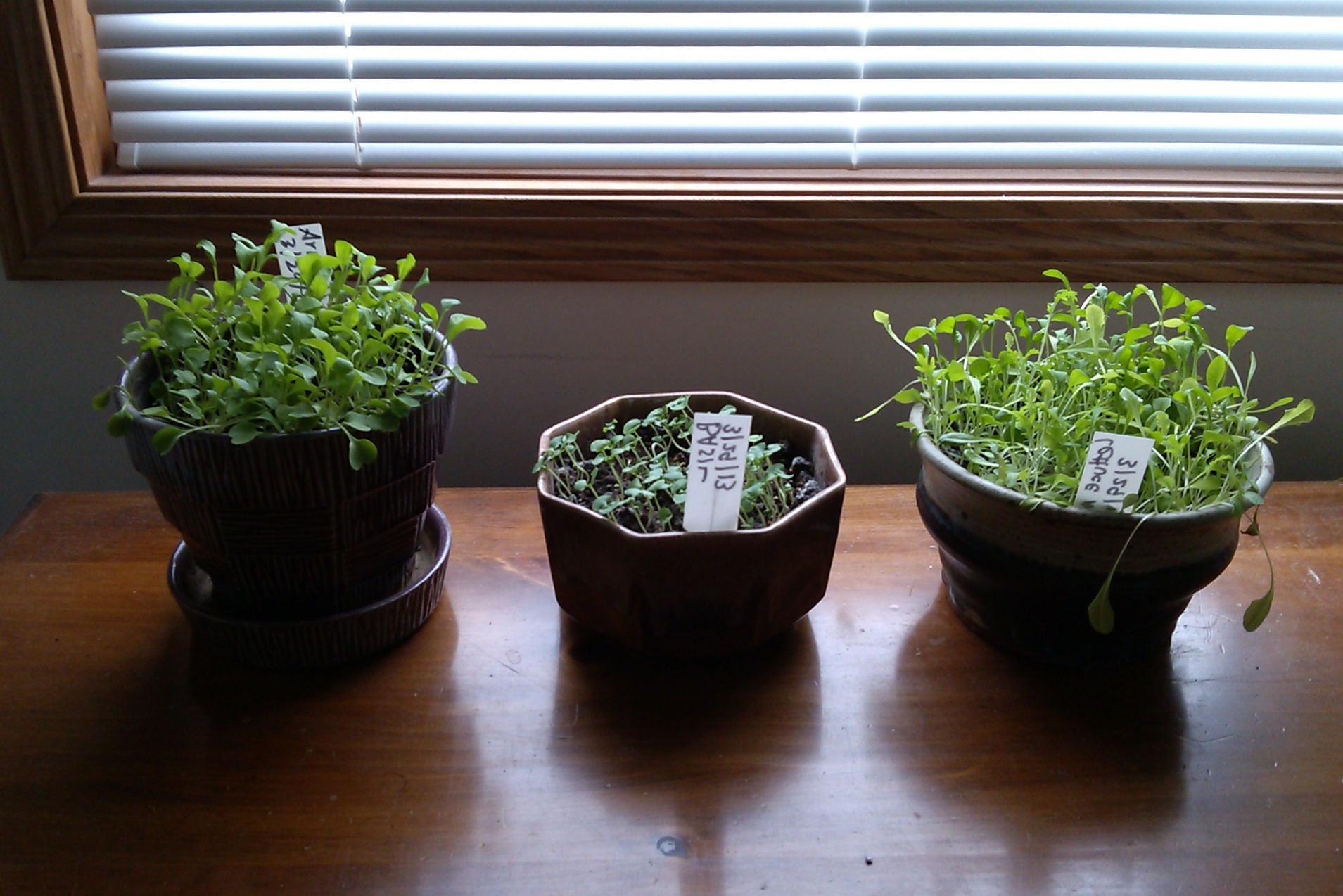
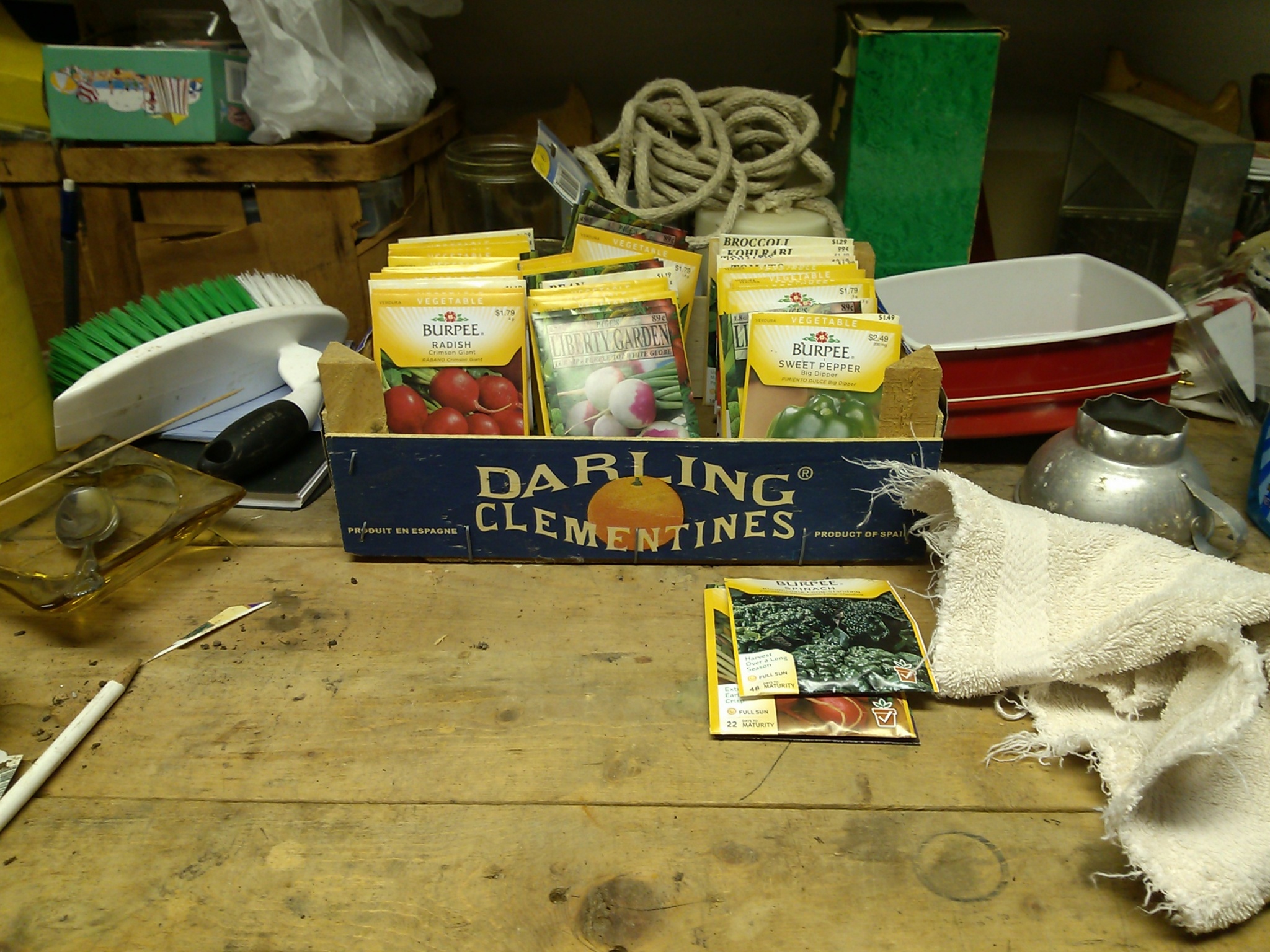
I’m hauling the trays of seedlings to the garage, one at a time to water them. We use our bedroom window for exposure to sunlight, and am watering the trays from the bottom. The soil has been continually moist, and the seedlings are growing. The idea seems to be working.
There is always work to support the garden, rain or no, although the continued cold and rainy weather feels like another setback. One feels this year’s garden is either going to be the greatest one ever, or a complete disaster, as long as the weather continues the way it has been.
LAKE MACBRIDE— Today was the first real work session in the garden and I cleaned up two of the plots, built my burn pile, evened out the ground near where the backhoe dug to fix the waterline leak last fall, and planted Cherry Belle Radishes, Bloomsdale Long Standing Spinach and Purple Top White Globe turnips. The arugula and lettuce seeds have sprouted and survived the gully washer of a rain a few days ago. There are chives ready to cut, and the garlic patch is growing well. Three types of bulb flowers are growing, and after they flower, will be transplanted somewhere else. That is, except for the daylilies, which will be dug and transplanted as soon as I get around to it: nothing can kill those things.
A neighbor messaged me on Facebook, and a group of us is planning to go in on a rototiller rental. I usually dig by hand, but am okay with community projects like this. Partly, it means three plots have to be turned by spade to get ready for the rototiller in two weeks.
Last week, an experienced gardener said we had missed the opportunity for spring turnips, but I don’t know. I planted a row today, and will likely do another in a week or so. She said if one misses spring turnips, the date is July 25 for turnip planting. I’ll reserve some seeds for then and attempt a double crop.
It feels good to work in the sun and soil in the morning.





 Journey Home
You must be logged in to post a comment.