Categories
Home Life

Taking a Deep Dive

Gala Apples

It’s raining as I type on the keyboard. Rain is to relent and I hope it does because one of the farmers for whom I work is getting married today.

In our small family there are not many celebrations. I’m not sure what to do at a wedding, although I’ll figure it out by 3:30 p.m. today.

Jacque is steering me in the right direction. We bought a gift on line and had it sent to the bride’s home. She is making a card. She suggested I refrain from going directly from the orchard in my work clothes as I had planned to do. I looked through the closet to find something to wear and there was my blue shirt and a pair of slacks. I have a pair of dress shoes left over from when I worked in the Chicago loop. I need to pick a tie. My navy blue blazer still fits. Special things for a special day. I’ll change in the employee rest room at the orchard then head down to the county seat for the ceremony. Civilization at work.

It’s still raining.

Since my first retirement nine years ago I’ve kept track of significant activities.

I keep a balance sheet, a list of books I’ve read recently, and record every event, meeting and significant encounter with people outside immediate family who are part of my world.

Early on there was a purpose to this, although I’m not sure now what it was. Three full binders later, I’m ready to give up tracking things so closely. My last full report was in December 2017 as my Social Security pension began. My second retirement seems opportunity enough to let go of details and focus on main tasks at hand. Things like weddings, funerals, birthdays, housekeeping and the like. I expect I’ll get better at it.

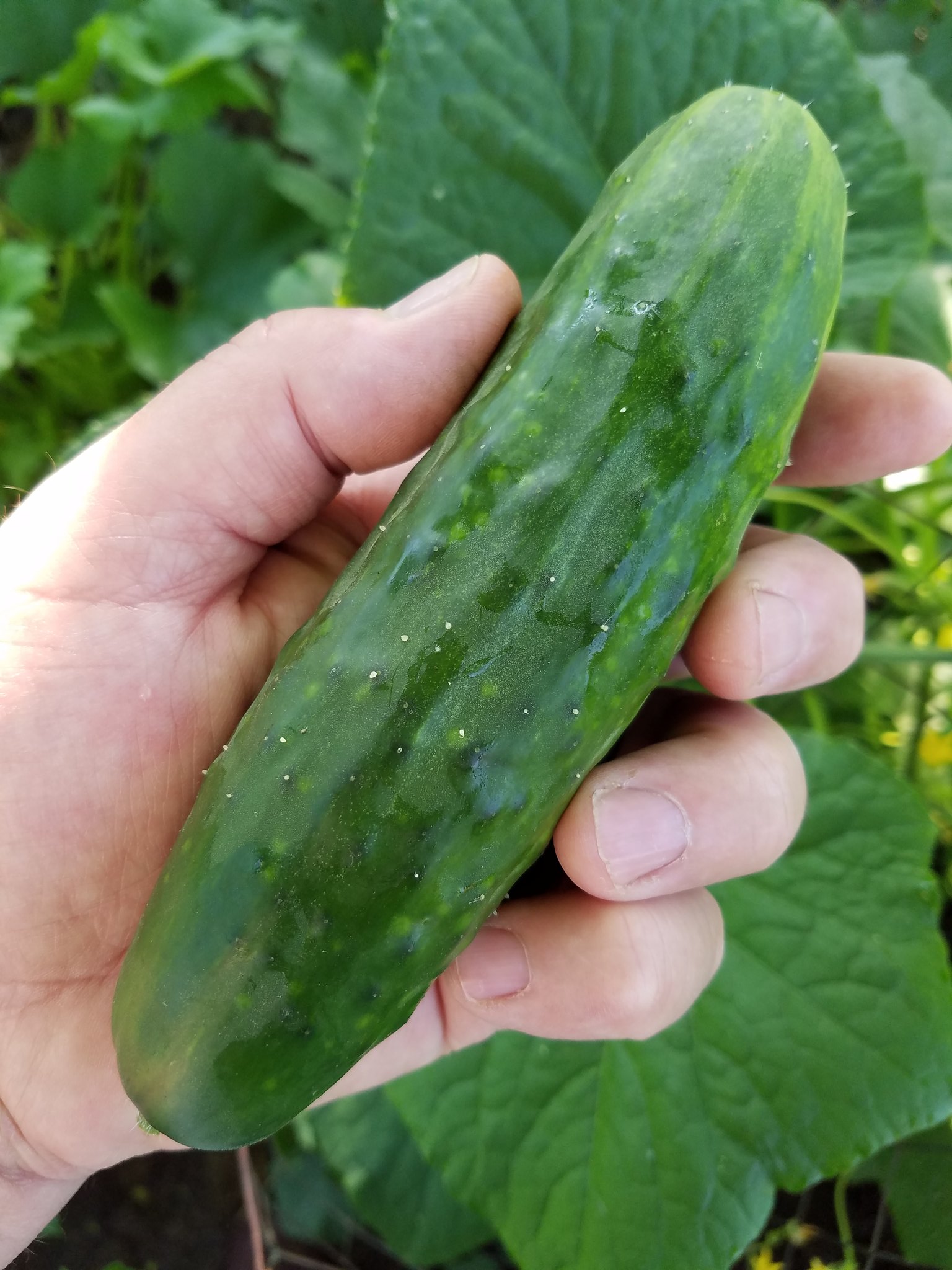
September begins the turn toward winter. The garden is in late summer production so there are tomatoes, celery, cucumbers, winter squash, green beans, eggplant and peppers coming in, requiring processing. Fruit is also coming in from the orchards with pears, apples and peaches lined up on the counter waiting to eat. Cooking has taken a fresh flavor with local food dominating most menus. Cucumber salad is happening daily and we’re not tired of it… yet.

2018 is proving to be a year of transition. So aren’t they all?

I’ve been planning garlic planting in late September and haven’t decided whether to use the cloves I grew as seed or to get more from the farm. I picked a place for them and once the cucumbers are done I’ll prep the soil. I think I know the answer. At some point we have to live on our own — I’ll use the cloves I grew this year, hoping they multiply and eventually become self-sustaining. I’m confident they will.
Categories
Environment Kitchen Garden

A Difficult And Strange Season Of Weather

Carmen Black at Sundog Farm

By Carmen Black

(Editor’s Note: Iowa Farmers deal with an existential reality that is the weather. Regardless of increasingly polarized discussions about climate change, weather affects real people in tangible ways. Carmen recently wrote this piece to members of her Community Supported Agriculture project Local Harvest.)

The weather has been consistently challenging from the late spring to immediately hot May, from lots of rain to this current dry spell. There hasn’t been a catastrophic weather event, but all these different difficult weather conditions create more work to keep everything growing well.

I’ve been thinking more about it as we’ve been observing its impacts while harvesting more of the summer crops. I’ve talked to many other farmers (including folks that grow other types of crops) about the challenges of this season, and anecdotally it seems like the conditions have been hard on many types of crops and livestock alike. One of things that has struck me about this year is that it hasn’t been just one way like really hot or really wet, but every month has brought a different extreme to contend with. It’s made me wonder if it’s all this erraticness that’s been stressful to the plants and animals rather than just the heat or just the late spring.

I was curious to find out if the weather has just felt difficult to us or if it really has been extreme in the grand scheme of things, so I did a little internet research for weather data. What I found was interesting, and did seem to affirm my feeling that this year really has been weird. This was the coldest April on record (since records began in 1895), and was on average 10 degrees colder than normal. It was also somehow both the 5th snowiest April and the 13th driest April, which seemed a little ironic. 2018 tied for the 6th warmest May with 1887, and the average temperature was about seven degrees warmer than normal. Des Moines had three consecutive daily record highs from May 26-28. I was surprised that in Cedar Rapids the daily record highs for the end of May were all held by 1931 or 1934, and then I realized that was the dust bowl! June was the 10th warmest and 10th wettest June on record. July seems to have been pretty average after all those top 20 finishes for the previous months, as it was the 54th coolest July and the 47th driest July on record. Which I think kind of puts the extremeness of the previous months in perspective. Kind of nice to have an average month finally.

Anyhow, my main takeaway is that this year really does seem to be remarkably erratic when you look at the numbers, and it makes sense that plants and animals would respond unpredictably to all of these changes in the weather. I feel both good that I wasn’t making up that the weather has been extreme in many different ways this season, and kind of bad that it really has been historically weird this year. The fact that it took the dust bowl to beat this year out for daily heat records in May felt kind of grim.

Some crops like onions seem to have really suffered from this weather. You may have noticed that they’ve been smaller than normal this year, and after getting most of onion harvest done last week I’m sorry to report that many of the longer season onions are even smaller. This was especially disappointing to me after such a bountiful onion harvest of really giant ones last summer, but I think makes sense considering what we were up against. We planted more than 3 weeks later than we did last year because it kept snowing, and then had to irrigate the onions (which we hardly ever have to do) because it was so dry. We struggled to keep the weeds under control in the onion field in June when it was so wet, and spent almost a week wallowing in the mud trying to hand weed. All in all I’m glad we have some onions to show for all of it, and have a few ideas of things to try in case this ever happens again.

I also have to say that some crops seem to have really thrived in this weather. We’ve never had such a good cucumber or spring carrot crop before, both of which are crops that we have historically struggled to produce large quantities of for several weeks in a row. The combination of having plenty of carrots and cucumbers has felt like a great accomplishment, and I hope that we’re able to replicate it in a better weather year as well!

~ Carmen Black farms in Cedar Township in Johnson County, Iowa.

Categories
Kitchen Garden Living in Society

Why Don’t Iowa Farmers Export More to Europe?

Sundog Farm

During a brief appearance at Northeast Iowa Community College in Peosta on July 26, President Trump claimed a trade breakthrough with European allies.

“We just opened up Europe for you,” he said.

Not so fast!

On Saturday, European Union Commission President Jean-Claude Juncker, who met with Trump, said trade talks almost collapsed over U.S. agricultural demands.

Agricultural trade will remain off the table in any trade talks between the U.S. and EU, Juncker said, according to Deutsche Welle. A European commitment to buy more U.S. soybeans is driven by market conditions.

Europe is the second largest importer of soybeans after China and prices are low because of the U.S. trade war with China. In other words, after market conditions driven by the president beat the price of soybeans down, Europe sees a bargain. It is hard to fathom how Trump sees Europe “opened up” under these conditions. Granted Iowa farmers planted more acres in soybeans this year, but the president’s statement can only be seen as political posturing in advance of the 2018 midterm elections and everyone should know it.

There is a more significant problem with “opening up” Europe for agricultural trade — the issue of genetically modified organisms.

There are very few genetically modified crops grown in Europe compared to the U.S., according to a July 27 New York Times article. The reason is in 2001, the EU issued a directive about GMOs. From the early stages of research to the marketplace, these products would have to pass a series of tests for environmental risks and human safety. The consequence of the directive in Europe is few farmers produce GMO crops.

In the U.S., neither the USDA nor the National Academy of Sciences is concerned that GMO crops have any impact on consumers different from non-GMO crops, despite a slate of regulations. Driven by science, farmers embrace GMO crops because of their acceptance in the U.S. marketplace combined with the attributes of genetically modified seeds. Regardless of science, increasing the amount of GMO crops exported to Europe seems unlikely given the fact many European countries have banned GMOs.

Shorter version of Trump’s statement, “Farmers, here’s a bone.”

It’s hard to see how help for Iowa farmers will materialize from current discussions with Europe. The irony of increased soybean sales to Europe after Trump’s trade war beat down prices as something positive seems lost on his true believers. They may swallow this hook, line and sinker, but other sentient beings should not. It is another deception from a president with an unending supply of deceit.

~ First posted on Blog for Iowa

Categories
Writing

Apple Harvest is Under Way

Pristine Apples

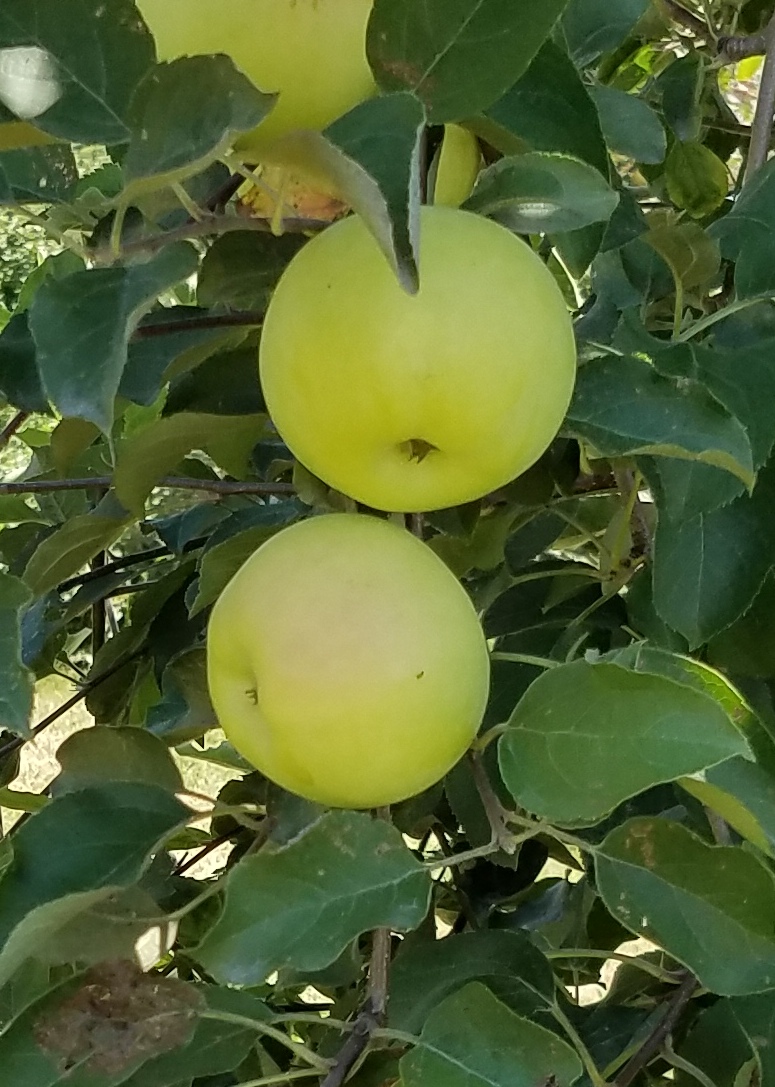
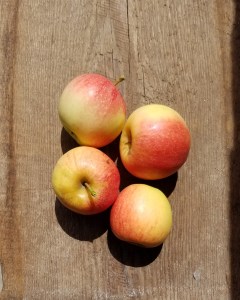
I bought State Fair, William’s Pride, Pristine and Duchess of Oldenberg apples at the orchard and brought them home. All but one have been eaten.

The goal was to taste them and determine which apples to buy for out of hand eating next week. My sixth year of weekend shifts at Wilson’s Orchard begins tomorrow.

We decided on Pristine, which is a yellow-skinned, sweet and juicy apple. It doesn’t keep long so about ten should be enough for next week.

After an hour-long hike through the grounds, I can predict an abundant harvest. With zero apples on our three home apple trees, we’ll need the fruit.

What’s best about working at an orchard is meeting thousands of people from every background. Wealthy and poor, young and old, able bodied and infirm, urban and rural, liberals and conservatives, and everyone in between. Many visitors have a personal history with the orchard, or in the apple business. I relish hearing their stories. It’s great to work where my role is to help people find their way in the orchard and discuss something positive with them as they get away from their usual environment.

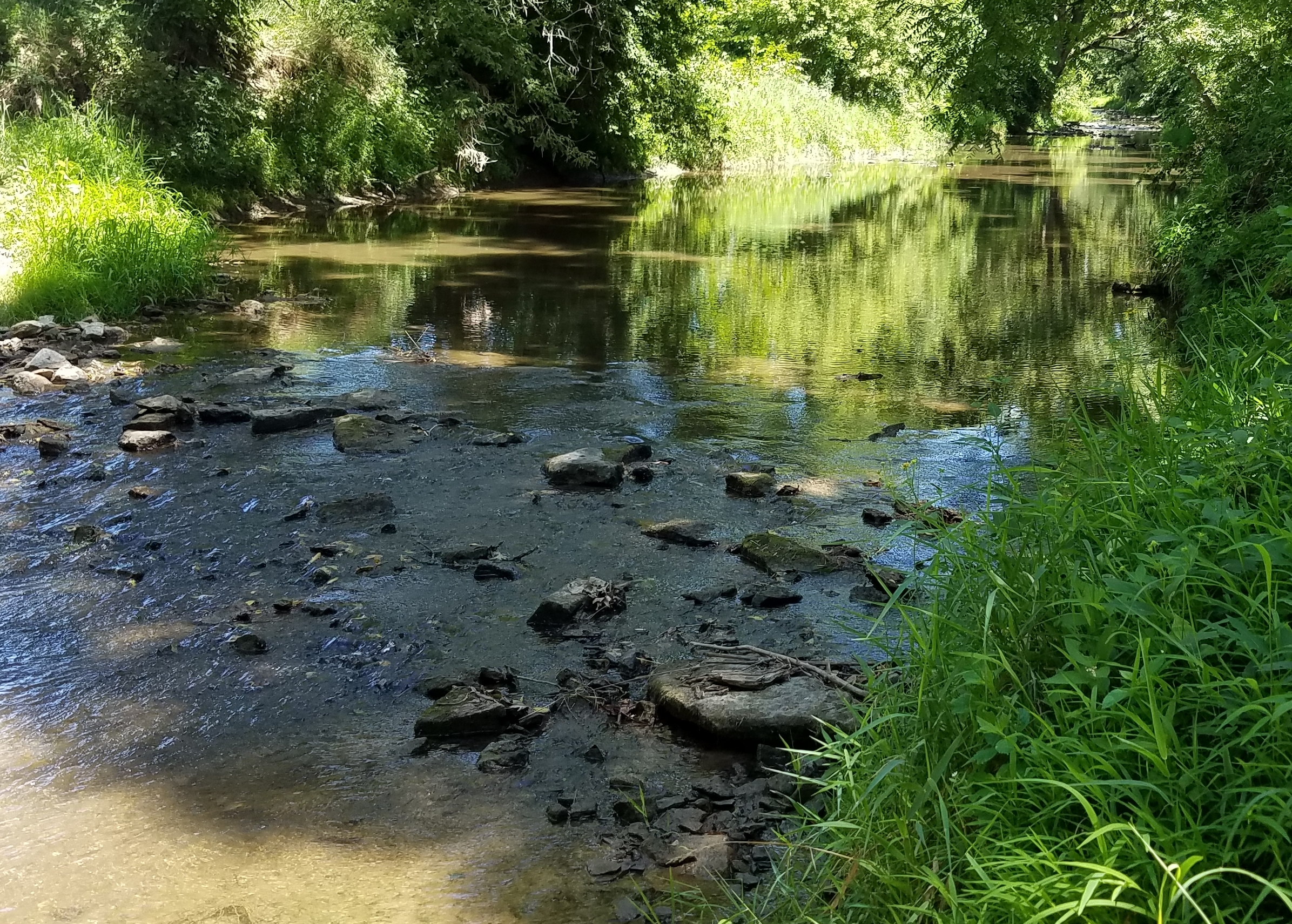
Here’s a photo of Rapid Creek, which runs through the middle of the orchard. The pre-season pic captures something serene in an otherwise turbulent world. We all need that from time to time.

Rapid Creek
Categories
Kitchen Garden Work Life Writing

Last Day of the Season 2018

Chicken at Sundog Farm

Beginning on Feb. 25, and 862 trays of soil blocks later, my 2018 farm work season ended today at Sundog Farm. I finished at Wild Woods Farm on Friday.

More than anything, farm work has been time with young people — doing the work and talking about crops, challenges, and everything else.

In my sixth year of soil blocking I kept up physically. I plan to do it again next year if able.

Now to take a break from farming until returning to Wilson’s Orchard for the fall season.

This will be the first summer in a long time we haven’t taken a share from the CSAs. Our garden is big enough to provide most vegetables and I’m confident of the yield. What we can’t get at home I’ll secure elsewhere. Getting enough to eat is never a problem when working in a local food system.

Next on the practical agenda is home repairs and cleaning. There is never a shortage of work for home owners.

It’s also an opportunity to resume writing. Each time I rejoin the project I lose track of everything else. Hours and days pass and like a coal miner I follow the seam wherever it goes. There is a lot more reading, thinking and organizing than writing at this point. I’ve forgotten more than I know about my own life and it can’t be re-lived, merely touched through a gauze woven of memory.

I began addressing the chronology. I’m not sure that will be the presentation. As I delve into the volumes of writing and artifacts collected since college a thematic approach seems better. It would be cultural aspects of growing up, education, work life, how we developed an ecology of living as a family, and my path toward social responsibility. It will also focus on what readers may find interesting.

Writing is exhilarating at a time when the rest of the world seems weary and worn down. What a great way to spend the rest of this summer.

Categories
Kitchen Garden Reviews

Summer Begins

First Marketmore Cucumber

A letter from our rural medical clinic reached me early this morning. I read every word it had to say.

I said, the letter reached me early this morning, I read every word it had to say.

Rural life ain’t nothing but the blues, how much longer can we live this way?

The physician I saw in April is moving his practice to Williamsburg — too far to drive for routine appointments. His replacement is an ARNP, which stands for advanced registered nurse practitioner. I read the definition but don’t understand what it means except we’re changing from two physicians to one… another nail in the coffin of rural health care.

We’re lucky to live close to the clinic’s hospital, and a large teaching hospital operates in the county seat. We won’t be deprived of care. I don’t look forward to changing physicians for the fourth time since leaving my transportation career.

I’ll try the new arrangement. What else is there to do?

This is the last weekend for soil blocking at the two CSA farms. After that, the farmers will make their own for the remaining fall share starts. I’m taking a break before returning to the orchard in August.

I finished reading The Shepherd’s Life: Modern Dispatches from an Ancient Landscape by James Rebanks before heading to the garden.

The shepherd went to Oxford, so it’s natural he would do something outside the normal range for a sheep herder. He’s been traveling and speaking to groups of farmers about his life in the Lake District of England. Last January in Ames, he spoke to members of Practical Farmers of Iowa at their annual convention. They made a YouTube of his speech. I haven’t viewed it yet.

What struck me about the book is the comparison with Iowa. Not necessarily what one might think.

On the one hand a well-settled place of William Wordsworth, Samuel Taylor Coleridge, Beatrix Potter and the Lake Poets. In front of us a landscape barely settled since the Black Hawk War of 1832. Any sense of ancient Iowa prairie is long gone and replaced with a grid of roads outlining row cropped fields and concentrated animal feeding operations. The long history of sheep herding in the Lake District served as a reminder most Iowa farmers are recent trespassers as agriculture and land use continue to evolve. There won’t always be soy and corn in what was once an ancient lake bed.

Rebanks informed my view of the annual cycle of sheep farmers. Now I know why some of my friends are so stressed during spring lambing. I’m sorry I missed the speech, and when spring farm work is done, I plan to spend the hour to watch it.

For the time being back to working on the garden to chase away these summertime blues.

Categories
Kitchen Garden Living in Society

Farmers Talk Land Use

Ready to Exit Stage Left if Proceedings get Dull

The room was packed for the Johnson County Board of Supervisors public hearing on the County’s comprehensive plan. Current and would-be farmers were present and spoke about their profession. The hearing took two and a half hours.

Supervisors have been working on the plan for two years and would like to finish it and move on to what matters more, the Unified Development Ordinance, which codifies how the plan will be implemented. Last night’s public hearing brought the county closer to closure, even if the subject of land use will continue to be debated well beyond my years of walking the earth.

The main points were the 40-acre rule for definition of a farm is an obstacle to beginning farmers, and there is a wide difference of opinion regarding the role of animal feeding operations in producing the beef, pork and chicken non-vegetarians love to eat.

The Frequently Asked Questions page of the plan website addressed the first issue, “Will the new Comprehensive plan change the 40-acre rule?” Short answer is no. While officials expressed a desire to accommodate smaller farms during the process of developing the comprehensive plan, one expects the 40-acre rule to remain intact. A farmer can make a living on less than ten acres, especially if they can benefit from the State Code’s agricultural exemption from county zoning regulations. The path is unclear to enable farmers to acquire smaller parcels that would be zoned as ag exempt. There may not be a path, except by supervisors establishing special criteria and deciding each parcel individually on its merits. That’s no way to go. Not only is it labor intensive the politics of the board can and will change over time. People have spoken on the issue. Now it’s time to see what supervisors do.

If people want meat and meat products, livestock will be raised to meet demand. The words “concentrated animal feeding operation” have become a lightening rod of tumult about livestock production. Many do eat meat and few non-farmers want to live next to a livestock production facility. In any case, the State of Iowa maintains preemption over concentrated animal feeding operations. Under Republican control of government, preemption is here to stay. I doubt that would change under Democratic governance. People like their pulled pork, fried chicken, hamburgers and steaks, and it has to come from somewhere. Environmentally it would be better for humans to source protein from plants. If you believe they will over the near term, stand on your head.

The highlight of the hearing was a grader and son of a farmer who read an essay titled, My Barn. “I see my cows Jake and Nick coming up to me because they’re excited for me to rub their noses,” he said. “They feel as soft as a teddy bear.” The hearing engaged several livestock farmers. The ones who raised cattle and hogs took issue with persecution of their trade and the appellation “CAFO.” They said treatment of animals was humane on their farms.

There was insider baseball about the new map to accompany the comprehensive plan. My view is “whatever.” Let the supervisors decide based on best practices. There’s no going back to the way the land was before it was settled. It’s already been ruined by development and that happened in the 19th Century. The North Corridor Development Area has been designated as a buildable area in the plan in order to preserve county farmland. When one flies over it, it’s clear it has been settled from the outskirts of Iowa City and Coralville all the way to the county line. Everyone who has a strong opinion on the NCDA has an ox being gored. Speaker and naturalist Connie Mutel made the best case about how the new map was developed using “best practices.” Managing development in the county is like carrying water in a half empty leaking bucket.

Despite the serious nature of the presentations last night was fun. I got a chance to see friends and acquaintances in the context of working together to resolve issues of beginning farmers. That counts for something and in these turbulent times where would we be without that?

Categories
Kitchen Garden

Farm Friday

Seedlings

Friday is my day to work with Farmer Kate near Iowa City.

I made 30,288 soil blocks for plants at Wild Woods Farm this season. Add in additional work at Sundog Farm and my total production was 59,688 soil blocks since Feb. 25. That’s a lot of vegetable seedlings.

We’re planting lettuce, squash, cucumbers and zucchini which indicates we are more than halfway through spring production. Last year I finished at both farms on June 25 to get ready for the apple season beginning in August.

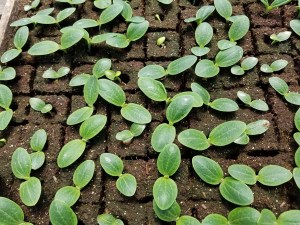
Cucumber Seedlings

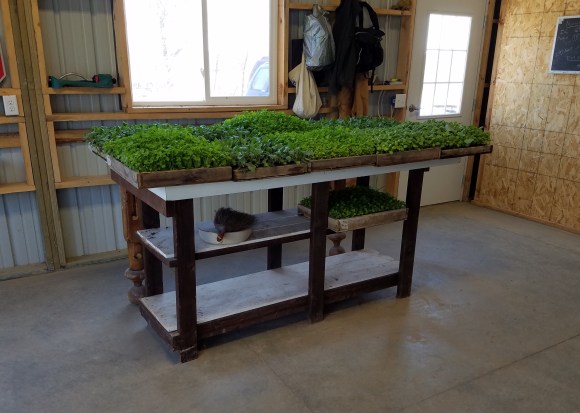
Soil blocking is specialized. I use unique tools and soil to make the 72 and 120 block trays. This is my sixth year and I’ve incorporated soil blocked seedlings into our kitchen garden. Better propagation through this process makes a difference. Soil blocked seedlings are a part of growing better plants which produce great tasting vegetables. With retirement, healthy seedlings combined with additional weeding and better cultivation should result in higher yields. Importantly, it is all about freshness and flavor.

I receive fair compensation for my farm work. Over a few years we arranged a part barter – part cash settlement that works out for both parties. Each season has been a little different. This year I exchange labor for standard CSA shares in the spring and fall, then secure crates of tomatoes, potatoes, peppers and onions for preservation and storage. If my labor is more than that, I get a cash settlement. It is probably unnecessary to place a monetary value on these arrangements. Vegetable shares supplement our kitchen garden which produces much of what we need along with some specialty crops not grown on the farms. In turn, sourcing some crops from the farms reduces work in my garden. The arrangement is part of an ecology of food our household developed over time.

Over the course of spring, soil blocking at the farms has become part of our culture. I intend to continue as long as I can and the farmers are willing.

Categories
Kitchen Garden Living in Society

Hoping for Garden Time

My next shift at the home, farm and auto supply store is May 16. That schedule provides a solid block of time at home to work in the yard and garden.

If it rains, I’ll work inside. There is no shortage of work, although I’m not concerned with that now.

The 87th Iowa General Assembly has been a pisser.

When Republicans won control of the Iowa Senate during the 2016 general election everything changed. It wasn’t small changes. They had a vision of Iowa and executed their legislative agenda in support of it. They took a broadsword to almost everything that matters. They reduced taxes beyond belief and hobbled the state’s ability to generate sufficient revenue to balance the budget. Then, because of the revenue shortfall, they drastically cut services. In Iowa that means cutting education, health and human services, public safety, and governmental compliance. Tomorrow the legislature is expected to pass more tax cuts and a budget that as of this writing isn’t finalized.

The state sought to get more involved in people’s lives under Republican governance, seeking to control how counties manage the minimum wage, how residents protest, how communities work with the federal government, and managing reproductive rights under established law.

Almost none of this legislation during the last two sessions was bipartisan.

The legislative changes impact everyone, including our family. We are not better off for it now and the prospects for the future are dim. The Republican vision for Iowa is not widely shared, especially among the 30 percent of Iowa voters who register as Democrats.

That doesn’t mean we have given up, we haven’t. Participation in the four Iowa Democratic district conventions was the highest anyone can remember during a midterm election cycle. A number of groups rose in resistance to Republican governance immediately after the election. The Iowa Democratic Party fielded the largest number of house candidates this year in most people’s memory.

However, the obstacles to convincing Iowans that Republican governance leaves much to be desired are daunting. 800,983 Iowa voters, or 51 percent of the electorate, chose Donald Trump as president. The votes are there to flip the state Democratic if we can find them. When everyone is running for cover by registering no preference or retreating into small family networks, that is no small task.

Proverbs 16:29 informs us here, “A violent man enticeth his neighbour, and leadeth him into the way that is not good.” Republicans may have been successful in accomplishing much of their agenda in the 87th Iowa General Assembly. We don’t plan to let them get away with it for long.

Categories
Environment Kitchen Garden

Bringing Food Home

Farmers Market Food

A relationship with food in American society is complicated.

Some don’t have enough. Others are awash in calories. We each have a human need for nourishment and the ways we go about meeting it are as different as the families which engendered us.

A favorite childhood memory is when Mother went to work in the school cafeteria after the Catholic Church built a new grade school near our home. With other women like her, she took a list of ingredients based partly on government programs (including lots of cheese) and partly on a limited budget, and made meals that included such dishes as porcupine meatballs (hamburger and rice) and grilled cheese sandwiches with tomato soup. Father worked at the meat packing plant which had an employee butcher shop where he could buy beef, pork and meat products at a discount, and did. The idea of stretching hamburger by mixing it with cooked rice was a novelty in our household and eventually we implored Mother to make porcupine meatballs for us at home, just like the ones at school. She did.

This story of external culinary practices coming into our home is essential to understanding the rise of a diverse diet in American society. We see things out there, they look good, and we want them. Most people, including low-wage workers, have or find the means to get them.

Many books, careers and lives have been based on food in society. We are an individualized rather than generalized culture with regard to food acquisition, preparation and consumption. To a large extent, the rise of the modern mega grocery store has shaped our eating habits in ways no one would have expected. Much ink has been spilled about that and I’m less interested in regurgitating my slice of it.

What I do know is local food farmers work hard for the sparse income they garner. All farmers do. The local food movement of which they are a part is based on the hope more people will bring locally produced, raw ingredients produced in a sustainable manner into their kitchens, ice boxes and pantries. Enough people do for a small group of farmers to make a living.

In many ways the increased interest in local food is the same type of behavior that took place in our home in the 1960s. We experience surprise when our CSA share includes Broccoli Raab, Koji or Bok Choy. We learn how to eat and cook them and want more. It’s not that our home nourishment plan is boring. We want and enjoy the experience of creation as it relates to cooking and eating. We want that experience to be personal and shared with family. That is very American.

I concede promotion of local food is a form of consumerism no different from a tomato catsup purveyor who spends dollars on an advertising campaign to enhance sales. The same behavioral forces are at work. I’m okay with that.

Just so you know, I’m not bewitched by the allure of eating a kale salad, at least not yet. Suffice it to say the diversity and behavior regarding food in our household with its kitchen garden, farm sourcing and grocery shopping has some unique qualities that may not be of interest to the authors of the Michelin Guide, but make our lives a little better. That too is very American. That’s part of who I am, who we Americans all are.