Categories
Writing

My Apple Life

Backyard Red Delicious Apples

LAKE MACBRIDE— 2013 has been the best year for local apples since I planted trees. Every tree bore fruit, and around the county, everyone with an apple tree had a good harvest if they wanted to pick them. Yesterday I bought half a bushel of Gold Rush apples from the orchard, the last maturing fruit of the season. Because I work at the orchard during the peak season, I got a discount.

Dolgo Crab Apples
Dolgo Crab Apples

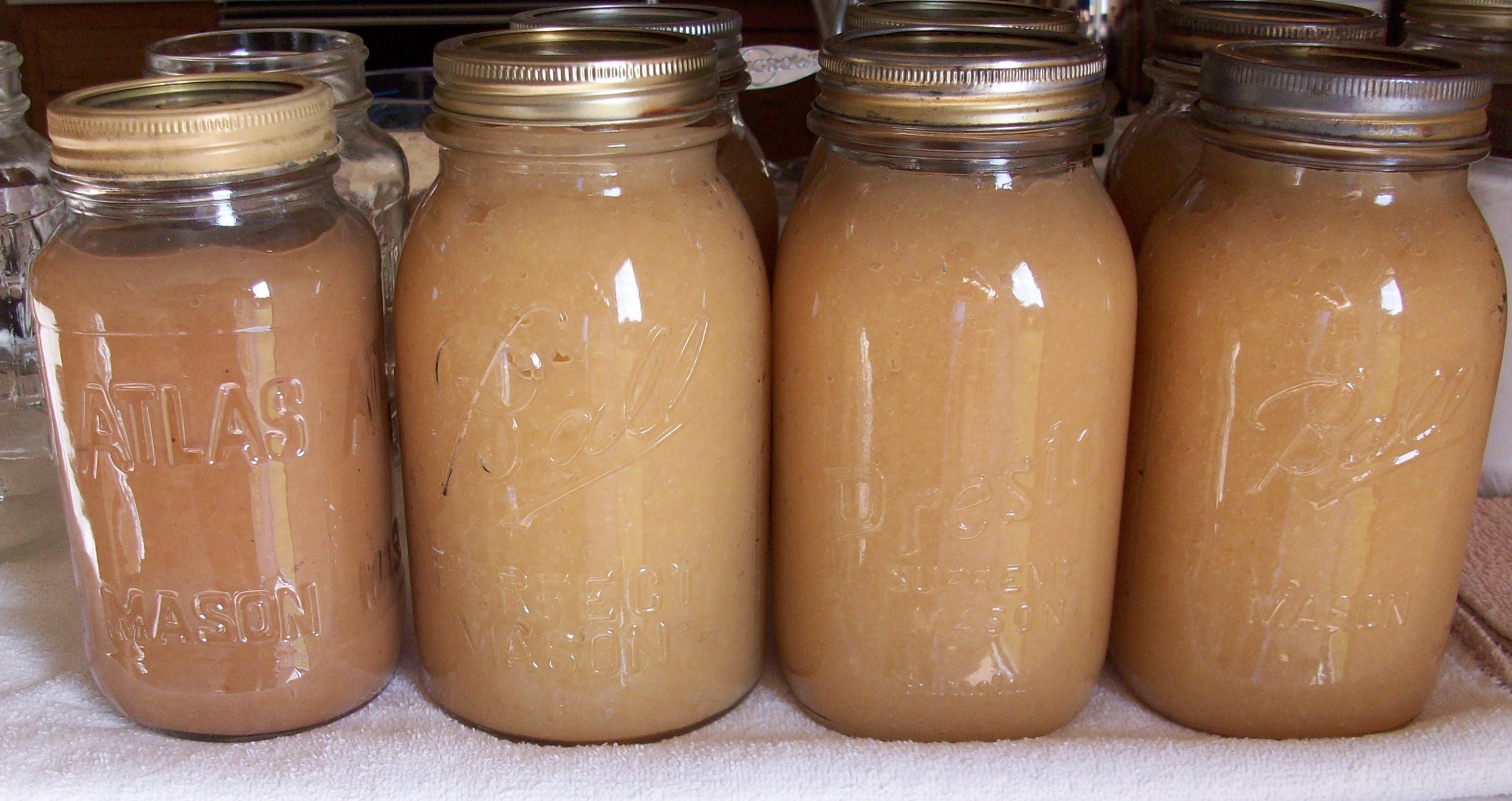
As winter approaches, the work has turned to making chunky applesauce a quart at a time with the ripest fruit. It’s delicious, if you know what I mean. The main uses for the bumper apple crop have been as follows:

Delicious Apples
Delicious Apples

Apple butter has become a staple for the last few years. I made a batch with the earliest apples, then a big batch of fallen apple butter from fruit knocked down by a storm. I also made apple butter from Dolgo Crab and Cortland apples purchased at the orchard. There was also a batch made from a mixture of 9 different varieties picked at the orchard. With what apple butter was leftover from last year, there is more than a two-year supply in the pantry.

Livestock Apples
Livestock Apples

The Sept. 19 storm brought a disappointing end to much of the large apple crop. In addition to apple butter, I made applesauce and apple crisp with fallen apples, and sent a lot of them with a friend who keeps livestock. She returned the favor with fresh eggs from their chicken house. A neighbor had borrowed a cider press and he and his children made about four gallons of apple cider from my fallen fruit. The fruit was all used, but it was a rush to get it done before they spoiled.
Apple Sauce
Apple Sauce

As summer turned to fall, I learned about longer keeping varieties, particularly the Winecrisp and Gold Rush apples. We don’t have the refrigeration capacity to keep them cool, but they are stacked in crates in the coolest part of the house and I’m hoping for crispy apples into winter. Since they are around, it’s likely they will all be eaten before going bad.

Thanksgiving Apple Pie

As December approaches, it will soon be time to prune. I took some photos of my Golden Delicious tree to the orchard where the chief apple officer gave me some pointers on how to salvage the tree. The expectation is that 2014 will be a bust year for home apples, but my four remaining trees have been little pruned, so I have some work to do.

My apple work will go on for a while, but it’s time for closure on a great season. Little by little, gaining an understanding of apples and apple culture has become a part of who I am. I am only just beginning to understand my apple life.

Categories
Home Life

50 Years Later

Fillmore at Locust
Fillmore at Locust

LAKE MACBRIDE— The school crossing guard at Fillmore and Locust told me President Kennedy had been shot on my way back to school. I don’t recall walking the last block, but  upon arriving at the sixth grade classroom, our teacher pulled down the window shades while we waited for news.

In the fifty years since, this memory persisted, with immediacy, and its uncertainty. I’m still don’t understand what it meant or what it means.

The crossing occurred three blocks from where I was born, a block and a half from where my mother had just served lunch, and a couple of hundred feet from the Catholic church where my parents wed, my grandmother had worked, and where I was baptized, confirmed and attended my father’s funeral. A couple of hundred feet ahead was the duplex where as a toddler I visited my maternal grandmother. That neighborhood was at the core of who I was.

I don’t recall much from the rest of sixth grade, after which we attended school in the new building, and experienced the first of many renderings. I was placed in a classroom with the group of kids who were bound for college, and separated from most of my neighborhood friends. In high school we were rent further as the boys were separated from the girls. After high school, we belonged to the world, and college, and I left not knowing I was also leaving Davenport for good. None of it had anything to do with the Kennedy assassination, and I’ve known that all along.

50 years later I attended an event in the county seat where a local author, the owner of an independent bookstore, one of my graduate school professors and someone else spoke about the day Kennedy died. Familiar icons were mentioned, and the bookstore had a table full of JFK books for sale outside the room. That hour provoked this post, and that seems okay. Because without the noon event, I would not likely have thought of President Kennedy at all today, as I had long ago moved on, almost forgetting how simple life was then.

Categories
Home Life Kitchen Garden Work Life

Turkey Wrangling and Friday

Loaves
Loaves

LAKE MACBRIDE— With the Thanksgiving holiday upon us, thoughts turn to turkey in a lot of households. Unlike during most of our vegetarian holidays, I am dealing with 100 locally grown, free range slaughtered birds tomorrow. Along with others, we are taking delivery from a local farm, sorting and weighing, and preparing them for delivery in the CSA shares next week. I’ve never been a dead (or live) turkey wrangler before, so despite the implications, I am looking forward to a new experience.

We see a lot of wild turkeys near our home. Mostly, they browse in the field near the lane to the highway, or are seen flying over the road. For those of us that remember when Iowa turkeys were an endangered species, it is always a happy sight. But enough turkey talk.

If the farm work has been winding down, it comes to a halt after delivering the final shares on Tuesday. We’ll settle up and settle in for winter. That it’s snowing as I write this post is a sign of the time of year. Confronted with the end of year holidays, it’s time to take stock of home life and work life, and make plans. This year’s planning will be as important as in any previous year.

Home life is patterned by habits formed over a lifetime: more indoor work— cooking, cleaning, writing and reading— and the part of work life devoted to research and development— studying opportunities and determining viability. As with most who live an alternative lifestyle, funding cash flow during 2014 will be a pressing issue, although I am not yet willing to sell plasma to do so.

If 2013 was anything, it was an experiment in lowly paid work, first in a warehouse, assembling kits for Whirlpool, and then on a number of farms. What I’ve found is my aging frame can take the work, but there are limits to how the tendons and muscles can tolerate increased physical activity. I am optimistic about performing physical work in more active jobs.

That said, I don’t plan to return to the warehouse, even though they invited me to return when the farm season was finished. The pay was low, and the social networking not good enough to distill further benefit. So what’s next? That’s the question for answering during the next few weeks. There are ideas, but no plans yet. I am thankful for the ability to be in this position as the snow falls and winter approaches.

Categories
Living in Society

Precinct Politics

Se.n Bob Dvorsky
Sen. Bob Dvorsky

LAKE MACBRIDE— The Braley for U.S. Senate campaign came to our political precinct last night, and a small group of friends and neighbors gathered near the lake to hear what the campaign staff had to say. They were looking for help this year to contribute to the effort. No surprise there. The event kicked off the campaign in a way that will begin to get local political activists involved.

What was a surprise is that Braley hired Sarah Benzing. The surprise is that even though the hire is old news and was covered in August, it’s the first many of us that don’t follow politics regularly heard about it. Benzing was Braley’s first chief of staff after winning the 2006 election. More recently, she served as campaign manager in high profile U.S. Senate campaigns for Kirsten Gillibrand of New York, Sherrod Brown of Ohio and Ed Markey of Massachusetts. An old, but more complete biography is here. Braley brought in someone he trusts, but more importantly, he hired a top gun in the political operative world.

Congress is in session, so Representative Braley was in Washington during the event and State Senator Bob Dvorsky spoke briefly on his behalf. The message was that despite a dysfunctional congress, Braley has been able to get some substantial work done to benefit Iowans.

What was missing from the two minute campaign video and the discussion was the Affordable Care Act (ACA). Braley sided with Republicans on the recent house vote to “fix” Obamacare, a bill the White House said would gut the ACA. It will become a political liability if Braley walks back his support for the ACA as a senate candidate. President Obama won re-election in our precinct by four votes, so it seems clear why Braley would try to hedge his bets. But fence straddling on this issue is not becoming of a candidate who asserts he is a progressive politician.

In Big Grove precinct, we gave Senator Tom Harkin 64 percent of the vote during the 2008 election, but also gave Senator Chuck Grassley 62 percent during the 2010 election. It’s no secret that the so-called no-preference voters will decide the 2014 senate race. In this precinct, somewhere between 850 and 1,000 people can be expected to vote in 2014, and that means to win the precinct, if Braley is nominated, he will have a core of 35 percent of the votes, and needs to persuade another 15-16 percent, or roughly 130-150 voters. It can be done, but it will not be a cake walk.

The group gathered last night will support Bruce Braley’s campaign going forward. Whatever he may lack as a candidate is made up by the fact that once the Republican clown car drops off their nominee next year, the race will be depicted as a high-profile duel of the titans. Money is expected to pour into the race, and one can only thank our lucky stars that our household does not turn on the television much any more. Politics is local, so what happens in Big Grove precinct has broader meaning. Maintaining the U.S. Senate majority is high on our list of priorities, and that means working now to elect Bruce Braley.

Categories
Social Commentary

Navigating Change in Health Insurance — Part 4

Kathleen Sebelius in Cedar Rapids (2008)
Kathleen Sebelius (2008)

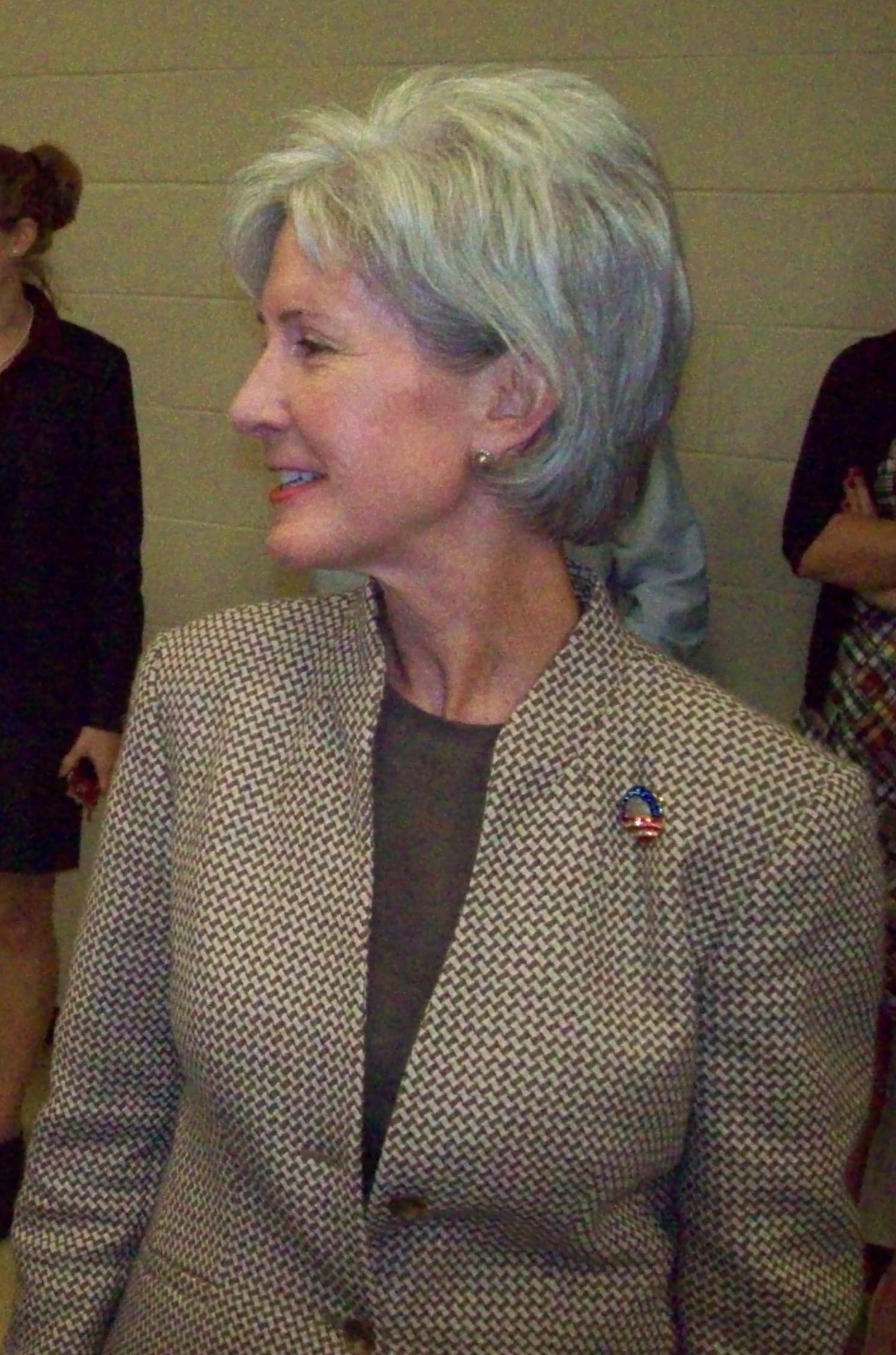
LAKE MACBRIDE— The folks at the insurance exchange caught me in the barn yard, and we had a conversation about the challenges of not knowing what my 2014 income will be. The operator said, “we didn’t anticipate that people wouldn’t know how much they would earn in 2014.” She said they were working on the software to enable us to revise our application and someone would call me back when it was fixed. It has been a couple of weeks since that conversation, so we are in a holding pattern.

The impact of the Affordable Care Act (ACA) on most people I know is nil, mostly because they already have a health insurance policy that complies with the ACA. The requirement to get health insurance is vaguely understood, and there have been zero times someone has talked about the financial penalties for not having insurance. There has been no impetus for people to sign up for a policy any different from before the open enrollment period began Oct. 1.

There is a fee for not having health insurance, and it ranges from $95 or one percent of income up to the cost of buying a specific plan (whichever is higher) in 2014, up to $695 or 2.5 percent of income in 2016. People who pay a fee will also be required to pay the entire cost of their health care. What isn’t clear is how emergency rooms will deal with the group of patients who show up at their doors for treatment without insurance— something else people are not talking about.

What we know is the Dec. 15 deadline to change policies for Jan. 1 will be here soon, and action will be required. The easy decision would be to keep our current health insurance policy. That postpones things for a year, providing time for the bugs to work out of the system. It’s our default position.

When the exchange calls me back, I’ll re-do our application, which will finalize eligibility and costs, and enable us to make a decision to change or hold our policy for another year. Until then, we watch, learn and wait.

Click on the links to read Part 1, Part 2 and Part 3.

Categories
Writing

Into the City

Book Shelf
Book Shelf

LAKE MACBRIDE— Having never been a fan of the UNESCO City of Literature designation for Iowa City, I can see why people like it. It gives the social mavens something to preen over. In telling the story of Iowa’s development into a cultural oasis among fields of row crops, mine is somewhat different than what I read and hear about from the source of brightly lit night skies to the south. The main benefit of what the late Darrell Gray described as the U.S.S. Prairie Schooner has been an increased ability to hear writers, authors and lecturers invited by the local literati to speak or read from their work. Last night it was Margaret Atwood.

I don’t know Atwood or her work at all, so it was easy to listen to her talk without prejudice.  Somewhere in a box, I have a copy of “The Handmaid’s Tale,” which someone posted on social media is “canonical.” First to admit my deficiencies, I looked up canonical and it means, “included in the list of sacred books officially accepted as genuine.” Genuine is good, and when I find my copy, I’ll give it a try.

What most engaged me was Atwood’s question and answer period. Between you, me and the Internet, I didn’t care much for some of the questions, especially if they revealed too much about the questioner. One teacher went on about a group of women students and their class. She had one of Atwood’s works on the syllabus, but it appeared she wasn’t very knowledgeable about it. An awkward moment that soon passed. While I’m complaining, in the row in front of me was a couple behaving like they were in Juliet’s boudoir, and one or both of them needed a shower to wash away an offensive body odor that reminded me of stints in the oil patch of West Texas. Get a room people and take a shower before coming out in public. My neighbor to the right made a comment about reading the Guardian on my handheld device while waiting for the event to start. Nonetheless, we live life’s diversity, and these things were not a real distraction, even if recalled here.

I perked up at the question about the e-book – paper book divide. Atwood said the market share of e-books had declined from 30 to 20 percent, and that e-readers were better suited for short works. That resonates. She also mentioned her “Three Reasons to Keep Paper Books,” which can be found here, and is worth a read.

Margaret Atwood was smart, witty and attentive to the audience. I was happy to immerse myself in the weird, smelly, nosy and boisterous literary scene in the city just to hear her speak.

Categories
Environment

Monday Morning

We Stand With YouLAKE MACBRIDE— Spending the weekend with 25 or so environmental organizers and activists kept me busy, and engaged. Meeting new people and matching names with faces is important to any social justice effort, and the weekend did not disappoint in that regard.

Erin Pratt and Patty O’Keefe from Minnesota 350, and Erika Thorne of Training for Change arrived in Iowa Friday night, and led the workshop Saturday and Sunday. The focus of the workshop included planning strategic actions and campaigns, leadership skills, and tools for building a local team. The logistics were well organized, but the stars of the show were the Iowans who participated for part or all of the workshop. Old friendships were renewed, and new ones initiated. It was all good.

That said, it’s Monday, and the recurring, and ever present question, what’s next, needs answering… again.

Is there anyone on the planet that believes something positive will come from COP 19, the United Nations Framework Convention on Climate Change conference of the parties in Warsaw? The web page on decisions coming from the conference hopefully says, “decisions will be available shortly.” I doubt it.

In order for COP 19 to take substantial steps to mitigate the causes of global warming after Warsaw, the United States and other security council members have to lead. Ours is a country where a significant number of people are pro-life, anti-UN, anti-taxes, and tuned out to most of what the rest of the world does. Because of the influence of this small, but powerful minority view, the chances of the U.S. government leading this year are between slim and none.

A lot of the conversations at our workshop were around political influence to address climate change. Political change is important, but do we have time to implement a carbon tax and dividend, or to amend the U.S. Constitution to overturn Citizens United? Both seem to be good intentioned, but hopeless pursuits. Investing our time and resources in such endeavors occupies bandwidth that could be used for other needed activities, the most important of which is organizing and educating our communities about the existential threat to our way of life represented by greenhouse gas emissions. For me, some part of today will be working toward that end.

Categories
Environment

Closure on the Garden Season

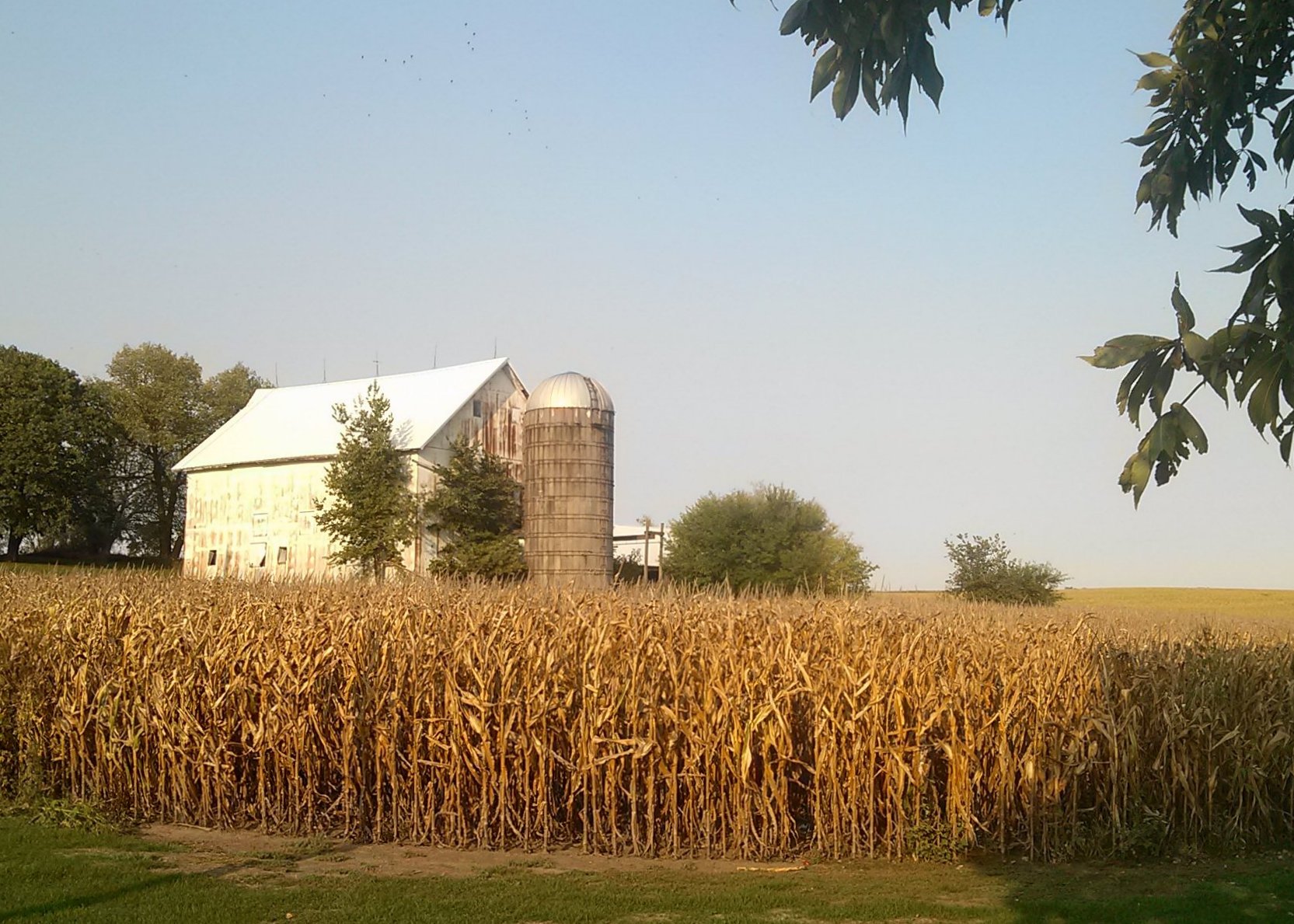
Iowa Row Crops
Iowa Row Crops

LAKE MACBRIDE— Taking down the fences and mowing the garden plots brought a sense of closure to this year’s growing season. It’s over, and it was time. The remaining fall task is to plant garlic, and while it is late for that calendar-wise, if the warmth continues, the roots may get a couple of week’s growth before frigid temperatures set in and produce normally. With the variability in our weather, all bets are off about predictability. Why not plant garlic? The worst that could happen is it fails to grow, and we have plenty for winter eating.

Yesterday, the U.S. Environmental Protection Agency (EPA) announced a proposal to reduce the renewable fuel standard for ethanol. This is a first, and within hours, Iowa governor Branstad reacted negatively toward the idea (statement here). The New York Times posted a valuable article on the issue here. The EPA’s proposed 2014 renewable fuel standard program is here. The Wikipedia article on ethanol is here. While widely expected, the EPA announcement kicks off what is expected to be resounding resistance here in corn country.

The world has changed since ethanol was first blended with gasoline, and it is appropriate to re-evaluate the percentage mixed with motor fuels. Following is my take on the matter from a Big Grove perspective.

It is hard to argue with governor Branstad’s statement, “the EPA has turned its back on rural America, and our economy and family farms will suffer as a result. Corn prices have already dropped to the cost of production, and this will likely further squeeze corn producers and negatively impact income growth in rural America. We have more than 50 ethanol and biodiesel plants in Iowa, and these EPA reductions would negatively impact thousands of Iowa jobs.” All of this is true, but what the governor didn’t say is that if anything, Iowa farmers are resilient. Re-directing growing patterns to deal with the over-abundance of corn is possible and should be done.

People seem to forget that the gasoline gallon equivalency of ethanol is 1.5:1. This means it takes one and a half gallons of ethanol to create the energy of one gallon of gasoline. The reason ethanol blended motor fuel costs less at the gasoline pump has little to do with the energy it produces, and everything to do with the current structure of federal government subsidies. Ethanol is not cheap by this standard, or by any reckoning.

This week, U.S. crude oil production exceeded imports for the first time in more than 20 years (USA Today story here). To the extent ethanol use increased in response to domestic oil production declines, that trend appears to have been reversed, precipitating a need to re-evaluate the renewable fuel standards. The bad news is the increase in domestic crude production is due to the environmentally questionable process of hydraulic fracturing. In any case, as a society, we should reduce the amount of fuel we burn to supply energy, so this is a red herring argument. We should divest ourselves of fossil fuels.

Ethanol has provided a market for corn growers, comprising as much as 40 percent of sales. Some argue corn for ethanol has less market share when the value of distillers grain and other by products are considered, but in any case, a lot of the corn crop goes to ethanol production. This market is at the core of governor Branstad’s argument against revising the fuel standards. The thing is, either Republicans want society to suck at the pap of big government, or they don’t. This is the core hypocrisy of a group that seeks favorable treatment on only those issues that effect their segment of society. The EPA rules, once finalized may impact corn markets, and in the end, the markets will set an appropriate price. Farmers, like everyone else, will have to deal with it.

Finally, there is a criticism that the corn crop should be going to food, not fuels. In a self-serving way, industrial farmers tout their ability to feed the world. Freeing up some of the corn crop to serve a growing global population should be a suitable market, right? Have you ever bitten into a kernel of No. 2 field corn? Without processing it’s hardly food for humans. The overall trend for food production will be to produce it locally and sustainably, something that sending vessels full of Iowa grain to Asia and Africa does not accomplish. While a short term market for grain exports may exist, in the end, large scale buyers, will produce the same crops much closer to home.

Anyone who has studied the matter can’t believe corn ethanol production is good for the environment. The EPA is on the right track, and the public comment period enables people who are impacted by the proposed rules to have their say. Not sure what ore we want from our democracy.

Categories
Kitchen Garden

Restless Night of Pickles

Daikon Radish Pickles

LAKE MACBRIDE— Reaching for the two empty quart Mason jars in the cupboard, I filled them, and another pint— with daikon radish pickles. Rather, there will be pickles once the mixture of sliced daikon, vinegar, filtered water, salt, agave nectar, mustard seed, peppercorns, garlic cloves, jalapeno and Serrano peppers has been in the refrigerator a few days. The kitchen work was finished before 4 a.m.

There is more to the story of a sleepless night. Perhaps there was solid sleep, but after midnight, it would not return. As the screen from the mobile phone illuminated the room, I found a recipe for pickles in my twitter feed. The ingredients were in the refrigerator and pantry. The allure was too much, the daikon radishes too many. I turned on the light and started to get busy.

The day was ruined after that. Not enough sleep. A couple of hours at a farm planting garlic, then to town to get a gallon of milk and some limes. An afternoon of dozing in and out of activity. No dreaming. That’s the worst of it.

For if dreams kept me awake that would be good. Instead, it was a restless night of pickles, such restlessness leading to a day of discontent, and dreamless wonder— wondering about what’s next. Was it concerns of advancing age, with a spicy pickle to distract from quotidian blandness? No, it was the idea of pickles, as they were just made, not ready to eat. Not what I’d hoped for when I was young, this imaginary pickle making life.

As the sun moves toward the horizon, the day is coming back to life. The pickle disruption is over, with ingredients melding in the refrigerator. Fully awake, filled with wonder, I’m ready to take on a project. My restless pickle-making finished, at least for now.

Categories
Writing

Autobiography, Blogging and Canning

Apple Sauce 2013
Apple Sauce 2013

LAKE MACBRIDE— The afternoon was spent making applesauce with the last of the fallen apples from the Sept. 19 storm. They stored well, and six quart Mason jars and a pint are processing in the water bath canner. It’s local food more so than most: they fell about 30 feet from the kitchen window during the storm.

After experimenting with applesauce techniques, I cored, but did not peel the apples, cut each into about 16 pieces, steamed them in a bit or water until they released their own juice and begin to fall apart, and processed them through a food mill. I also made chunky-style apple sauce, using a potato masher before spooning it into a jar. No spices or sweeteners here. They can be added when serving, but this applesauce really needs no additives.

Is the story of my applesauce afternoon worth writing or reading? I don’t know about the latter, but the process of writing helps me understand life on the plains in a way that takes the rough, dull and lonely parts out, rendering it into a sweet pulp to serve to friends and family, and packaged to give as a gift. Seriously. Who wants to hear about the rough, dull and lonely parts of life anyway?

There is the actuality of the time spent and the image above. If that’s all there were in this post, an autobiography of a moment in time, it would not be worth reading. The hope is that by imagining a life, and writing it down, some value can be added, and if we are lucky, an epiphany reached.

According to WordPress, there are more than 72 million blogs on their site. Add in the other sites and there is a lot to read, many thoughtful, some hate-filled, and more than a person could ever consider. For the blogger, it is a way to write, an outlet for expression in a world where only a very small number of writers get read, and even less get paid. We need outlets.

There is a first draft quality to a blog post. A flawed freshness that can be like the life from which it is expressed. Sometimes it is sticky, syrupy sweet or messy, and that goes with the territory. We’re not the Scientific American or Harvard Business Review in the blogosphere. What we hope to be is an expression of the imagination. Taking the desultory moments of a modern life as the ingredients of something better, something universal. Bloggers mostly fail to reach the sublime, but once in a while, things come together.

So there it is, the ABCs of writing in autobiography, blogging and canning. Write about what one knows, do actually write on some platform, and think in terms of a finite product that is useful to someone, to nourish a body, but more importantly, one’s intellect and spirit. There are benefits, not the least of which can be jars of applesauce.