Categories
Writing

Autobiography in 1,000 Words

On the Back Porch
Fillmore Street

LAKE MACBRIDE— At 6:56 p.m. on Dec. 28, 1951, I was born at Mercy Hospital in Davenport, Iowa to Mr. and Mrs. Jack H. Deaton. Curiously, my mother’s full name is not on the birth certificate, although the attending physician, Howard A. Weis, M.D., is. We lived at 1730 Fillmore Street, a duplex shared with my maternal grandmother, down the street from where I was baptized, and three blocks from the hospital. A few photographs and memories of that time survive.  I believe I had a normal city childhood among people who never had much money, but had a well defined culture centered on family, work and church.

Soon after, we moved to a house my parents bought at 919 Madison Street. While there, I was hospitalized for a head injury from a swing set in the basement, and still carry the scar.  My sister was born in 1955, and my brother in 1956. In 1957 I entered Kindergarten at the Thomas Jefferson Elementary School on Marquette Street where my teacher, Ms. Frances Rettenmaier wrote about me, “he has good work habits and is willing and able to accept responsibility in the room.”

My parents sold the house on Madison on contract, and we moved to a rental behind the Wonder Bakery on River Drive. I attended first grade at Sacred Heart Cathedral where Sister Mary Edwardine, B.V.M. was the first of six nuns, along with two lay teachers, who taught me in parochial grade schools. I recall this because Mother kept all of my report cards. During the spring of 1959, my parents bought the house where I lived until leaving home to attend college in 1970. I transferred to Holy Family School in the parish of the same name, and spent some of the best years I recall as the Polish-American odd duck among children who were mostly the descendents of German and Irish immigrants. I met my best friend in the seventh grade and our friendship has endured. I entered Assumption High School during the Fall of 1966.

My father died in an industrial accident on Feb. 1, 1969, and the company he worked for gave me a four-year scholarship which I used at the University of Iowa beginning the Fall of 1970. My grades were lackluster in college, and I drifted, but graduated in four years with a bachelor’s degree in English, listening to the commencement exercises on the radio while I tie-dyed some shirts in the basement of our rented house on Gilbert Court in Iowa City.

When Richard Nixon resigned the presidency on Aug. 9, 1974 I felt a weight had been lifted. I had a little money and decided to tour Europe after college, visiting Canada, England, France, Spain, Italy, Austria, Germany and Holland. While in Rome, I had an audience with Pope Paul VI.

I worked a couple of low wage jobs in Davenport upon my return to Iowa. When the Vietnam War ended with the fall of Saigon on April 30, 1975, I decided to follow in my father’s footsteps and enlist in the U.S. Army that winter.  I began basic training at Fort Jackson, S.C. in January 1976, took Officer Candidate Training at Fort Benning, Ga., and was assigned to a mechanized infantry battalion in the Eighth Infantry Division in Mainz-Gonsenheim, West Germany.

I served in the Fulda Gap, attended French Army Commando School, and was an exchange officer with a French Marine regiment in Vannes, France. On two occasions, some of my Iowa friends were able to visit and we made brief tours of Germany, France, Spain and other countries.

In 1979, after military service, I returned to Davenport and was accepted into the American Studies Program in the graduate college of the University of Iowa. I received my master of arts degree in May 1981, achieving a 4.0 grade average and feeling I had made up for my lackluster undergraduate years.

In order to stay in Iowa City after graduate school, I secured a job at the university, where I met my future wife, Jacque. We were married on Dec. 18, 1982. I began a career in transportation in March 1984 at CRST, Inc. in Cedar Rapids. Our daughter was born in 1985 in Iowa City and brought home to our house on the southeast side of Cedar Rapids. We relocated to Merrillville, Ind. in 1987, where I was a terminal manager for two years. I left the company to work for Amoco Oil Company in Chicago and eighteen months later, returned to CRST. I was transferred back to Cedar Rapids in 1993 and retired on July 3, 2009 as director of operations for CRST Logistics, Inc.

During the time after Nixon’s resignation until the 2000 Al Gore v. George W. Bush election, I remained mostly inactive in politics. The election and George W. Bush’s administration, especially after the Sept. 11, 2001 Al-Qaeda attacks, incensed me enough to get involved again. Beginning with the 2004 election I was very active in partisan politics and contributed in a small way to significant victories in 2006, 2008, 2010 and 2012. My political life culminated in getting elected as a Township Trustee during a write in campaign in 2012 while I managed an unsuccessful campaign for a statehouse candidate.

When our daughter left home to attend college in 2003, I began to get more involved in our community, and was appointed to the county board of health for two terms. This led to meeting friends around the state and country, and I became involved in a number of organizations, including Physicians for Social Responsibility.

I contributed to advocacy efforts to pass the Smoke-Free Iowa Act, to stop the coal fired power plants in Waterloo and Marshalltown from being built, to ratify the New START Treaty in the U.S. Senate, and to stop a nuclear power finance bill proposed in the Iowa legislature. In August 2013 I graduated from Al Gore’s training as a member of the Climate Reality Leadership Corps.

Having helped organize to protect our environment on the first Earth Day in 1970, I have come full circle, making environmental advocacy the center piece of my volunteer time today.

Importantly, I began blog writing in November 2007.

Categories
Home Life

Soup Suppers and Movies

Animal Tracks
Animal Tracks

LAKE MACBRIDE— A winter byproduct of an active local food life is several dozen jars of soup and soup stock in the pantry and refrigerator. Curried lentil, root vegetable, kale and carrot, leftover chili, and many others. With summer abundance, leafy green vegetables (turnip greens especially) are suited for soup making and several large stock pots get canned as excess vegetables and garden seconds appear in the kitchen. Soup will serve as dinner on many nights during the long end of year holiday season, and through the first spring harvest.

Most nights between Christmas and New Years we watch a movie with our supper. This year I got out bankers boxes of VHS movies we collected, when that was the current technology, and hooked up the player. Last night it was “Sense and Sensibility” directed by Ang Lee. After a number of years, I am beginning to understand that the story is about more than Mrs. Dashwood marrying off her daughters. Others we watched are “It’s a Wonderful Life” directed by Frank Capra, “Christmas in Connecticut” directed by Peter Godfrey, and a version of “The Nutcracker,” with Mikhail Baryshnikov and Gelsey Kirkland, directed by Tony Charmoli. This morning I viewed Edwin S. Porter’s “The Great Train Robbery,” one of the first narrative films, made in 1903. It’s online here and if you haven’t seen the 12-minute film you should.

VHS Movies
VHS Movies

Once our video-cassette player wears out, I’m not sure what we might do. They continue to be sold and we used to keep an extra one in the house, but no more. When we reach the creek, if ever, we’ll cross that bridge.

There is an open question about a diversity of technology over the long term. Will we be able to open *.jpg and *.bmp files in 20 years? What about Microsoft Outlook files where tens of thousands of emails are stored? Will Amazon.com and their Kindle files persist? There is too much life to be lived to worry about that now. Presumably, we’ll go with the flow, and break out the old technology to access them like we do with the VHS tapes. Like in so many ways, we are in this together as a society, and as is currently said on the Internet, these are first world problems.

It is a simple pleasure to find the boxes of tapes in storage, set up the machine and pick one each night to watch with family. It is part of a workingman’s life, subject to change. Technology and popular culture are the least of our worries as we go on living in the post-Reagan society.

Categories
Home Life

Working Class Reflection

All Roads Lead Home
All Roads Lead Home

LAKE MACBRIDE— The days between Christmas and New Year’s Eve have become a quiet time of reflection over the years. Queen Elizabeth agrees that “we all need to get the balance right between action and reflection.” Nonetheless, there is not much action here in Big Grove among the holidays. Taking front stage is reflection about music and other media experienced through the years, including these ten memorable concerts.

August 27, 1966 — Herman’s Hermits at Municipal Stadium, Davenport, Iowa.

April 3, 1970 — Van Morrison at Fillmore East, New York, New York.

March 20, 1971 — Grateful Dead at the University of Iowa Field House, Iowa City, Iowa.

April 24, 1971 — Laura Nyro at the University of Iowa Field House, Iowa City, Iowa.

February 20, 1973 — Ravi Shankar at Sinclair Auditorium Coe College, Cedar Rapids, Iowa.

February 24, 1973 — Grateful Dead at the University of Iowa Field House, Iowa City, Iowa.

July 22, 1974 — Johnny Cash at John O’Donnell Stadium, Davenport, Iowa.

July 27, 1974 — Eric Clapton at Mississippi Valley Fairgrounds, Davenport, Iowa.

April 25, 1975 — Jefferson Starship at University of Iowa Field House, Iowa City, Iowa.

March 25, 1983 — B.B. King at the Col Ballroom, Davenport, Iowa.

August 28, 1992 — Sharon, Lois and Bram at the Star Plaza Theatre, Merrillville, Indiana.

October 24, 2006 — Sir Elton John at the Cow Palace, Daly City, California.

November 4, 2012 — Bruce Springsteen on Locust Street, Des Moines, Iowa.

Categories
Home Life

Christmas 2013

Christmas 2013
Christmas 2013

Merry Christmas. May there be peace on Earth, especially in South Sudan.

Categories
Home Life

Christmas Eve 2013

Gift under the Tree
Lump of Coal

LAKE MACBRIDE— Sixteen degrees below zero on Christmas Eve morning and the furnace just ignited. The Internet connection is down, but there is phone service to connect us to the world as the coffee steams and the laptop glows along with the colored lights of our decorated Christmas tree. The sound of the dishwasher creates noise that muffles the outside. Now the water softener cycles, adding to the score. And then the furnace turns off, having warmed the thermostat to 60. It seems quiet as memory reminds me it should be this day, despite the symphony of sight, sound and touch.

Ours is a small family, spread around the country. We have never had a Christmas holiday where we needed to do more than set up a card table or two away from the grown-ups. No card tables needed today. Do people even have card tables any longer? No travel plans, so I took a nap. After waking, the Internet connection was up and so was the sun. A brilliant day to be thankful for our many blessings and to make contact with friends and loved ones. There is more contact in the era of telephones, social media and Skype than previously, especially when it is too cold to go outside unless one is required to do so by work or trade.

Yesterday I made a batch of shortbread cookies― a contribution to holiday treats. Regardless of what we cook at home, Christmas gifts add to the edible bounty, with a fruitcake from Mother and some apple butter from a friend. Having enough to eat has never been a problem in our household, and the festive fare won’t last long. One batch of cookies is enough this year, although since writing the first sentences of this paragraph, I took a bag of rhubarb out of the freezer and made rhubarb crisp for dessert.

This year I left the lump of coal in the bin with other unused Christmas ornaments. It was a joke gift and except for 2013, it has been under our tree every year. Not this year. We’ve all been naughtier than we should and nicer than we thought. No need to joke about it. We just need to be better after this day of rest and quiet.

Categories
Social Commentary

Moving Forward with Obamacare

ForwardLate last Thursday the electronic payment to Coventry Health Care cleared our bank account, indicating we have new health insurance coverage effective Jan. 1, 2014, purchased on the exchange created by the Patient Protection and Affordable Care Act. With that action, our household budget changed from health insurance costs that were 38.0 percent of annual expenses to 9.8 percent. The budget decrease was due solely to the federal tax credit for which we qualified, as the new policy cost more than the current plan. As vice president Joe Biden said to president Obama when the bill was signed into law, “this is a big fucking deal.” It is bigger than just one household budget.

Iowa is a place where a large majority of people already had health insurance before the ACA became law. As of Dec. 11, only 757 individual Iowans had signed up for a plan on the new exchange. Iowa’s target for enrollments was only 6,970. Here’s what seems most noteworthy moving forward.

The fact that Iowa’s largest insurer, Wellmark Blue Cross and Blue Shield, decided to opt out of the exchange in 2014 was significant. Since the law was enacted, Wellmark has been bringing their individual policies into compliance, removing the lifetime limits, and increasing the amount of covered preventive care, and taking substantial rate increases as they did. In a brilliant public relations move, they attributed their 2014 rate increase solely to the requirements of the new health care law. (That rate increase was very low at 6.8 percent). For 2015, Wellmark is likely to enter the exchange, and take another significant rate increase, again blaming the ACA requirements.Why is that important?

As a large business with substantial financial reserves, Wellmark will have used the time between 2010 when the law was enacted until October 2014 when the next open enrollment period begins to study the law and its effects on their business and competition to make a smooth transition. But also to maximize market share and profits. Here’s how.

In a marketplace people can shop for things, but they also can compare prices and the value proposition. It’s consumer behavior 101. Prices include the cost of delivery for the service and a gross margin (the difference between the selling price and cost of delivery). Today, almost all of the 30 health plans for which I was eligible were significantly more expensive than my current Wellmark policy, with a lot of variation in coverage. Whatever changes Wellmark has to make to finish the compliance process and enter the market, they will be positioned to sell a similar or better insurance policy for a lower price without substantial changes in their gross margin. This will enable them to pick up increased market share.

What almost no one is talking or writing about is the November report from the White House that describes how the underlying expense of providing health care is coming down already, as a part of the reforms of the ACA. These three bullet points from the report tell the story.

  • Health care spending growth is the lowest on record.
  • Health care price inflation is at its lowest rate in 50 years.
  • Recent slow growth in health care spending has substantially
    improved the long-term Federal budget outlook (Medicare and Medicaid costs are coming down).

What does that mean for companies like Wellmark? Because of the new law and its impact upon underlying costs, they have a generational opportunity to make a bigger profit from their policy holders. This opportunity is made better by the ability to review their competitors’ pricing in the public health insurance marketplace. Wellmark will also benefit by watching what marketplace adjustments are made as the first year unfolds and how their competitors handle them. Thank goodness for the 80-20 rule that requires individual insurance policies to spend at least 80 percent of the premium dollars on health care. If I am missing something, please let me know by commenting on this post, but 2015 should be a very good year for Wellmark.

What about for the rest of us? Like always, I intend to stay away from the doctor as much as I can, taking an annual exam, and a colonoscopy that is covered by my new plan without any copay or expense on my part. (Fingers crossed on the outcome). Other than that, I’ll go on living with one less worry than I had before Obamacare came into reality.

~ Written for Blog for Iowa

Categories
Home Life

After the Winter Solstice

Blue Spruce Tree
Blue Spruce Tree

LAKE MACBRIDE— Snow weighed upon the blue spruce and pin oak trees begging someone to shake it loose so the branches won’t break. That someone is me. It snowed between four and five inches overnight, framing up several hours of outdoors work to add to the plans for decorating the house for Christmas and baking a batch of cookies. Today, with its simple pleasures and honest work, may be one of the best days this year.

Having done my tour of duty on the Salisbury Plain, memories are scant. I stayed at a youth hostel, and made visits to Salisbury, Bath and Stonehenge. Another traveler, who spent the previous few weeks wandering about the moorland of southwest England, invited me to accompany him. I declined. It sounded too much like Iowa, and a bit dreary. I bought a post card at the Stonehenge gift shop and worked my way from the chalky plateau to the chalk cliffs of Dover and then to Calais, where my journal of Salisbury and England was pinched with my backpack after crossing the channel in a hovercraft.

I never looked back on England, and don’t understand the fascination with Stonehenge at the winter solstice. It is an old thing, shrouded in lost history. I’m more thankful that the days start getting longer, and planning for 2014 can begin in earnest.

Categories
Writing

In the Mega-Mart Checkout Line

Mega-Mart
Mega-Mart

LAKE MACBRIDE— The last three times I’ve been to the grocery store, the person in front of me in the checkout line has commented that some baking must be planned in our household. What they don’t know is because of my work on farms this year, flour, sugar, butter, dried fruit, chocolate chips, and other shelf-stable and dried goods are all I need to pick up. Going into 2014, the pantry and freezer are still pretty full of the season’s goodness, with a couple of months food on hand should disaster strike.

There are usually some luxuries on the conveyor belt leading to the cash register: a small jar of hazelnut spread mixed with chocolate and skim milk, cured Spanish olives stuffed with pimiento, a bag of caramel corn on special, or a box of snack crackers. Those items not withstanding, the majority of food we buy at the grocery store is raw material to supplement our pantry while cooking our own meals. As people have noticed, what we buy at a grocery store is evidence that we use appliances beside a microwave oven in our home kitchen.

People snoop at my purchases, but I don’t mind. I do the same, but don’t usually comment, having been raised differently. When people comment, I respond politely, giving out as little additional information as possible, saying something like, “the sugar was on sale for $0.25 per pound, so I thought I would pick up a bag.” Like it or not, checkout is a sociable time.

I have gotten to know some of the cashiers at the mega-mart, and they call me by name after the transaction. They must read it on the display screen after my debit card goes through. It is not a personal relationship, but familiarity after long years of my repeat business and their continued employment. It is not a bad thing, and as people smarter than me have said, the sweetest sound is that of our own name. It’s good salesmanship to call customers by their name.

Neighborliness may have been reduced to these brief commercial interludes in the grocery store. Where I live, seldom do I see my neighbors outside, and even less frequent is an in depth conversation about anything other than the weather. I speak with my friends via email, and in person at events, but that is conversation through association rather than neighborliness. A little more neighborliness would be welcome in our increasingly contentious society. Even if it is only in the checkout aisle.

Categories
Social Commentary

Federal Food Funding Sequestered

Senior Dining
Senior Dining

SOLON— After proof reading the newspaper last night, it is hard to feel cheery this holiday season. The Area Agency on Aging has cut off funds to our congregate meals site, and the seniors found the proposed replacement meals to be a form of prepackaged pabulum. The administrators at the agency blamed the change on not enough participation and on the sequester.

A group of politicians and community folk put on a telethon that raised some $100,000 for the agency. That money was raised and will be spent outside our community. The Senior Advocates, a local 501 (c) 3 group, along with the Old Gold Dining site council, decided to do something else, and contracted with a local business to furnish meals during 2014. Where the money to pay for it will come from is an open question.

The county board of supervisors provided some money to cover the initial funding gap, but has expressed reluctance to fund a private business providing the meal service going forward. The city also provided some stop-gap money, but after going on a spending spree on Main Street, money is tight for them as well. Undaunted, community advocates will find the money somehow.

Our town has an active ministry of food. In addition to the countless soup suppers, pancake breakfasts, fish fries and church potlucks, the three churches formed a food bank. One of the churches hosts a free community meal on Thanksgiving and Christmas for anyone who comes. Bottom line is seniors will have an opportunity to eat without the federal program. The trouble is, taking care of seniors is only partly about food.

What is more important is that congregate meals are a way for people to break the isolation that so often comes with aging. It is a way for people to be motivated to get out of their pajamas, clean up and do something with others. I’m no expert, but people who are say that is an important part of making seniors feel a part of the community, and maintaining mental health.

The federal sequester isn’t real until we see how it impacts people we know. Our community needs haven’t changed, nor have the people who are trying to meet the special needs of senior citizens. One has to ask about the values of a country where we pay enormous subsidies to businesses, and forsake one of our most vulnerable populations. Our community is working to prevent any of our seniors from being left behind, so government, if you can’t help, please get out of the way.

Categories
Reviews

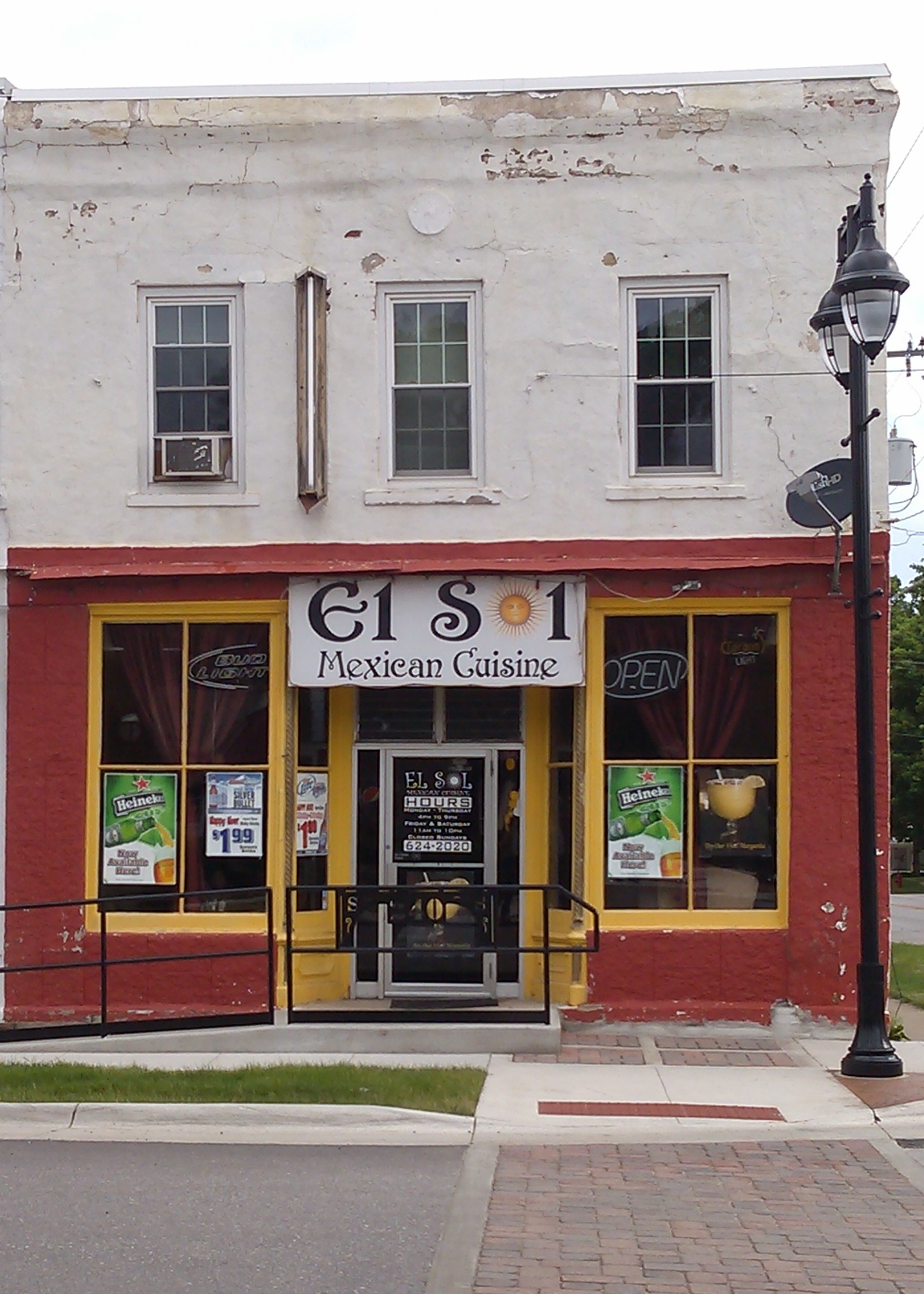
El Sol de Solon

El Sol de Solon
El Sol de Solon

SOLON— El Sol Mexican Cuisine has been a hit since it opened. The small space at 240 E. Main St. can be crowded and a fun place to dine. On busy days, the noise level can high and the excitement contagious. It is Solon’s place to get tasty Mexican fare and enjoy life.

We recently had dinner there, and besides the two flat panel televisions, custom happy birthday songs and festive decorations, the star is the food. Our family is a repeat customer and that means they serve a selection of vegetarian fare on their full menu, the food is good, and the prices are reasonable. The menu is posted on line, so check it out. El Sol also serves a variety of bottled Mexican beers.

El Sol opened in March 2010, and has proven its staying power in a small town. We ordered two combination meals from the menu and an appetizer for a total of $20.50 (less gratuity). If you feel like Mexican food, and a good time, this is it. Try it once, and I predict you will want to return.

Open Monday through Saturday. Business hours are posted here.