The garage retained enough heat to make predawn work tolerable. The ambient temperature is 31 degrees, climbing to around 45 by the time I leave for the warehouse. There is much to get done before starting the car.
Over winter tools get piled on the workbench instead of being put away. Perhaps it is too cold to be mucking about behind the table saw, wheelbarrow full of walnut firewood, and wagon full of junk. This morning everything is put away where it belongs, clearing a new space for new work.
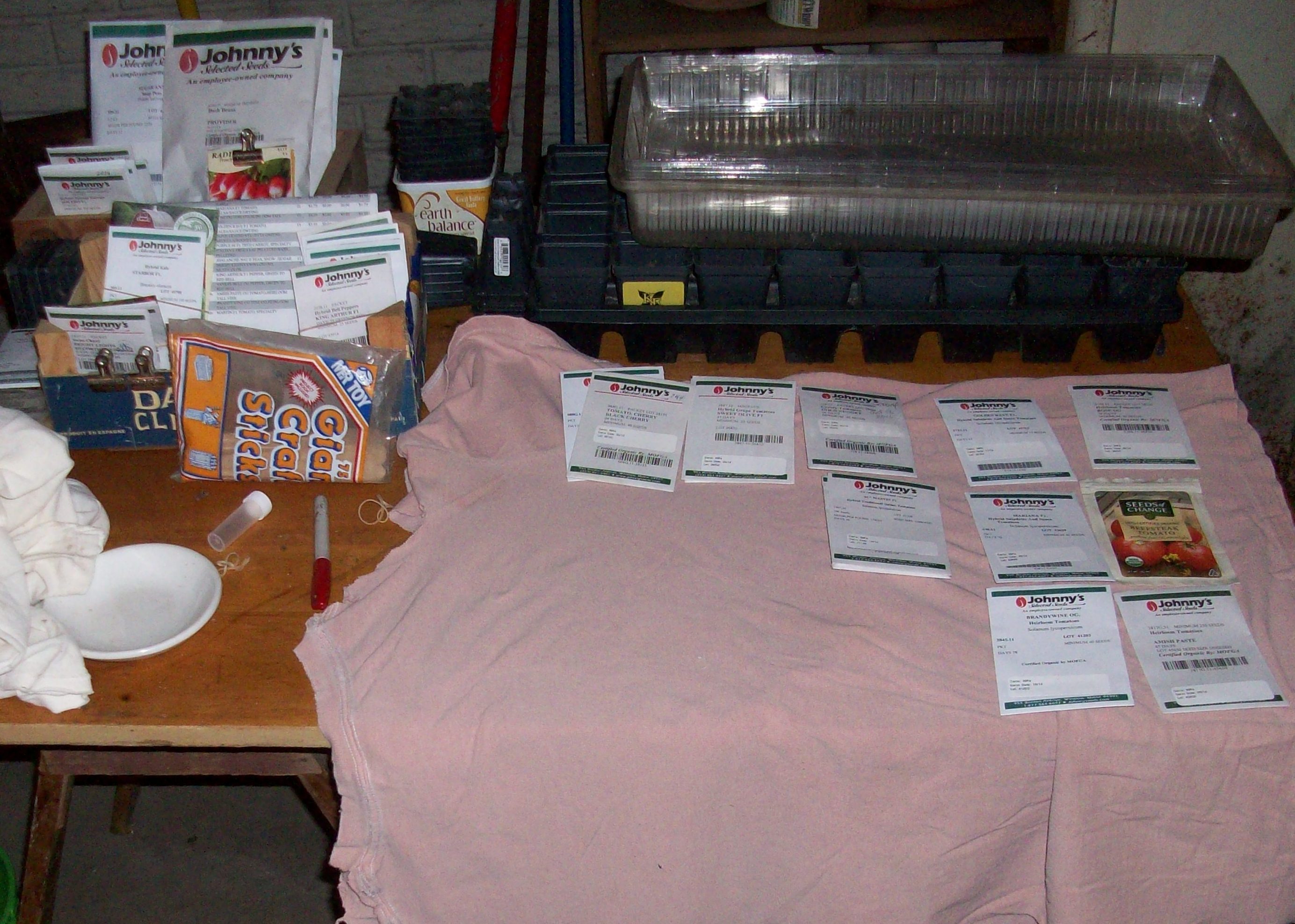
Tomato Seeds
Yesterday was tedious work of trying to understand our health insurance plan. Phone calls to the hospital and insurance company yielded partial understanding at best—at least enough to understand how our doctors applied charges. It is distasteful work, but the specialists to whom I spoke were cordial and professional enough and I made progress. Would that I never had to go to a doctor, not even for routine checkups.
And today is a day of hope for making a difference in life. Now that the tools are put away, it’s time to get them out again and make something of this brief interval between sleep and departure.
Our freezer shows a little space, but is still loaded with food.
I grabbed a pint jar of pesto and about three dozen cherry tomatoes from the freezer, some Parmesan cheese from the ice box, and a box of farfalle pasta from the pantry to make dinner.
It’s easy.
Cook the whole box of farfalle al dente. Strain and pour the lot into a big bowl. Spoon about half a pint of pesto on top, add the tomatoes (cut in half or peeled, the latter being easier with thawed, frozen tomatoes), and a cup of Parmesan. Stir gently with a rubber spoon, salt and pepper to taste, and it’s dinner.
Serve with a vegetable, some white wine, or lime sparkling water, and it is dinner, as good as it gets.
The broccoli seeds I planted three days ago—a full tray of 96 cells—have begun to sprout.
This year we hope to harvest enough broccoli from our home garden to freeze some for next winter. It is a numbers game: starting a large number of seeds and devoting more work and space in the garden to tending them. We’ll see how it goes. With the newly sprouted life, I am hopeful. The down side is we never use chemicals, so there is risk of a poor crop even before we get started. That has never been a deterrence.
The Coralville Lake was mostly open water last night on my way home from the warehouse. The eagles have gone. A wild turkey was browsing near the roadway. That pretty much sums up modern life: we are left with the turkeys.
In the 1930s there was a sense that something substantial had been lost since the land was settled and converted to farms. The name of our township, “Big Grove,” refers to an ancient forest that stretched from the Cedar River to the Iowa River.
“Before the Louisiana Purchase in 1803, the land which is now Iowa was heavily wooded,” wrote Golda Leighton Jenkinson in her 1969 A History of Lake Macbride State Park. “As the time passed, it gradually became depleted until all that was left consisted of second and third growth, and even this was rapidly disappearing because of the owners’ need for cash, excessive pasturing and other forms of destruction.”
We take the current farm landscape and new growth trees for granted but it wasn’t always so. Today, local farmers are still removing buffers, installing tile, and keeping farmland empty of animals except for occasional post-harvest browsing. Most farming is about seed genetics and inputs these days, combined with managing a profit on thin, subsidized margins.
Our garden plot used to be part of the Kasparek farm. When we arrived, the topsoil was mostly gone and rumor was the best of it had been sold. Over 20 years, I’ve built back the soil so our garden is full of worms and other life. It was a long time coming with irregular progress.
Still there is hope. The sprouting seeds create a yearning to plant more, and it won’t be long until we are past the last frost and ready for the growing season.
Today’s sprouted seeds are a sign that hope is not lost. There will be another growing season—at least for another year.
Winter persists—mostly because of its recent vigor.
Half a dozen bald eagles stood on the ice at the Coralville Reservoir yesterday while I drove to work. Perhaps they were fishing a section of open water near the bridge. Perhaps they were waiting for spring to arrive before departing. They were still there on the drive home.
I planted the first seeds in trays last week: broccoli, basil and celery. I’ve been parking my car in the driveway leaving the garden workshop set up inside. It will be that way for a few weeks, although I hope to accomplish a lot during the work day planned for Friday.
It feels like elected officials, especially those from fossil fuel producing states, have crawled into the barn of my life over the winter.
Mitch McConnell (R-KY), a proponent of coal mining and use, is not new, but there’s more. Ted Cruz (R-TX) is now overseeing NASA and wants to focus more on space than on studying Earth. Perhaps he want to seek a Planet B where we can live after his ilk have thoroughly pillaged this one. James Inhofe (R-OK) heads up the Environment and Public Works Committee, and halted any possible action to mitigate the human causes of climate change. Sen. Tom Cotton’s (R-AR) letter to Iran meddles with negotiations that have been years in the making, involving substantial coalition building. The Senate Foreign Relations Committee under Bob Corker (R-TN) seeks to pass a law to force the administration’s hand in Iran. Corker did not sign the Cotton letter in hope of building a veto-proof bill in the senate.
Maybe we should invoke Saint Patrick to drive the snakes out.
The trouble is even a saint would be pressed to deal with this crowd.
Elections matter, and the public doesn’t really care unless it affects them personally. That’s one take that provides a bit of sanity, but only for a while.
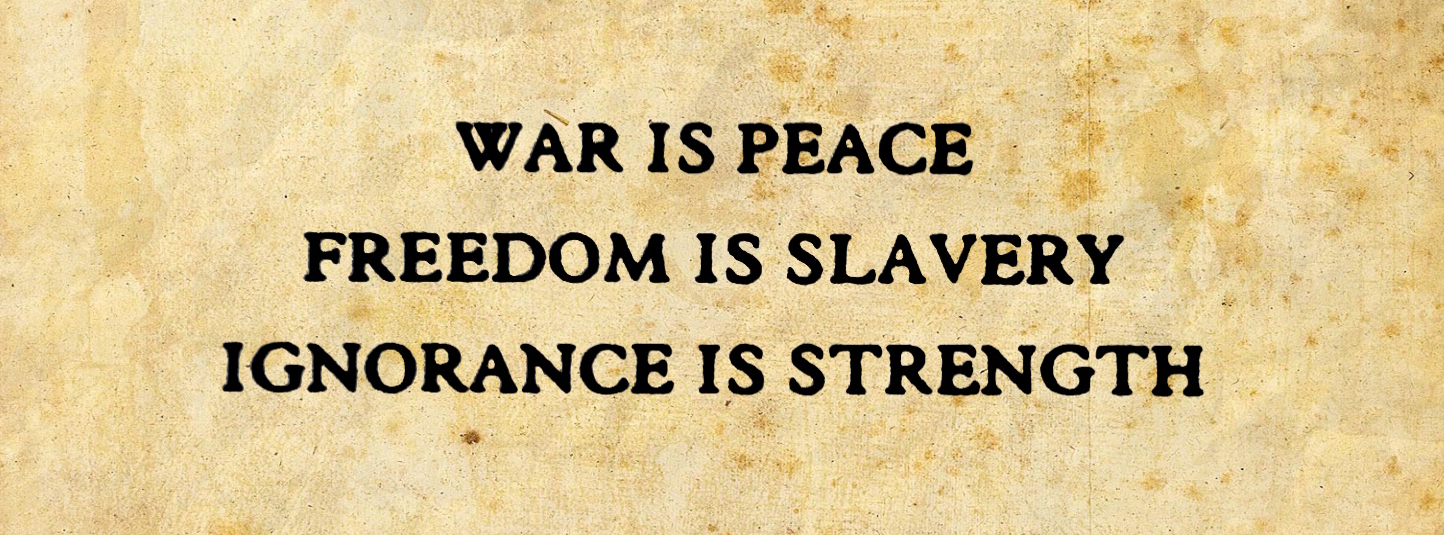
It is like we are in a dream in which the meaning of everything is unhinged. “War is peace. Freedom is slavery. Ignorance is strength,” as George Orwell wrote in 1984. “In a time of universal deceit—telling the truth is a revolutionary act.”
We are not yet revolutionaries, although maybe we need to be.
Theodore Roosevelt said it well.
“No man can be a good citizen unless he has a wage more than sufficient to cover the bare cost of living and hours of labor short enough so that after his day’s work is done he will have time and energy to bear his share in the management of the community, to help in carrying the general load.”
The power in Washington and on Wall Street is everywhere endeavoring to suppress this basic American instinct.
When you won election as U.S. Senator with 588,575 votes, I decided to step back from criticism of my government, just as I did when I entered the U.S. Army during the Ford Administration. That’s what soldiers do, or at least did during the difficult times of reorganizing our military after the Vietnam War. The lessons I learned then serve now in our partisan and toxic era of politics.
Your signature on the recent Tom Cotton letter to the Islamic Republic of Iran was unneeded, counterproductive, and some say treasonous. As a former member of the U.S. military, I expected more restraint from meddling in ongoing international negotiations from a field grade officer in the Iowa National Guard.
I’ve read the letter and it reflects a type of audacity with regard to the Iranian leaders that has no place in international affairs.
Your tampering with the negotiating process with Iran served no useful purpose to Iowans who seek a world with less war and less nuclear armed states. Luckily the current negotiations are based upon resilient foundations and inoculated against such blatant political posturing.
I urge you to represent my Iowa views and support the administration’s negotiations to bring Iran’s nuclear program into compliance with their obligations under the Nuclear Non-proliferation Treaty.
I also hope you will pursue with equal vigor, fulfillment of the U.S. obligations under the Non-proliferation Treaty.
After filing eight stories for the newspaper this week, and a freelance job, I’m ready to work on the garden. Before I do, a few bits and pieces from Big Grove.
Breakfast this morning began with my new favorite—home blended yogurt. We buy a large tub of plain yogurt at the warehouse and I mix it in a stainless steel bowl with spoonfuls of homemade jam or apple butter, dried fruits and nuts. It’s a simple pleasure and a boost of protein.
I decided to read 1381 next, for those who follow this blog. Just closing the loop on that.
At a fund raiser for Ed Fallon, I secured some horse manure for the garden. A friend keeps horses fed organically raised hay and he has plenty. As soon as I get my schedule from the warehouse, I’m planning to take some big black tubs over to their farm in the western part of the county to fill them up.
Speaking of filling things up, I began my street sweeping project to collect sand in buckets to use next winter. The first was filled yesterday and I hope to finish the project today. Some of that sand has been spread on the driveway multiple years.
Finally, with the warmer weather, I hope to built this spring’s burn pile on a garden plot. There was some damage over the winter, and with what’s left from the fall, it should make a big pyre, returning some minerals to the soil.
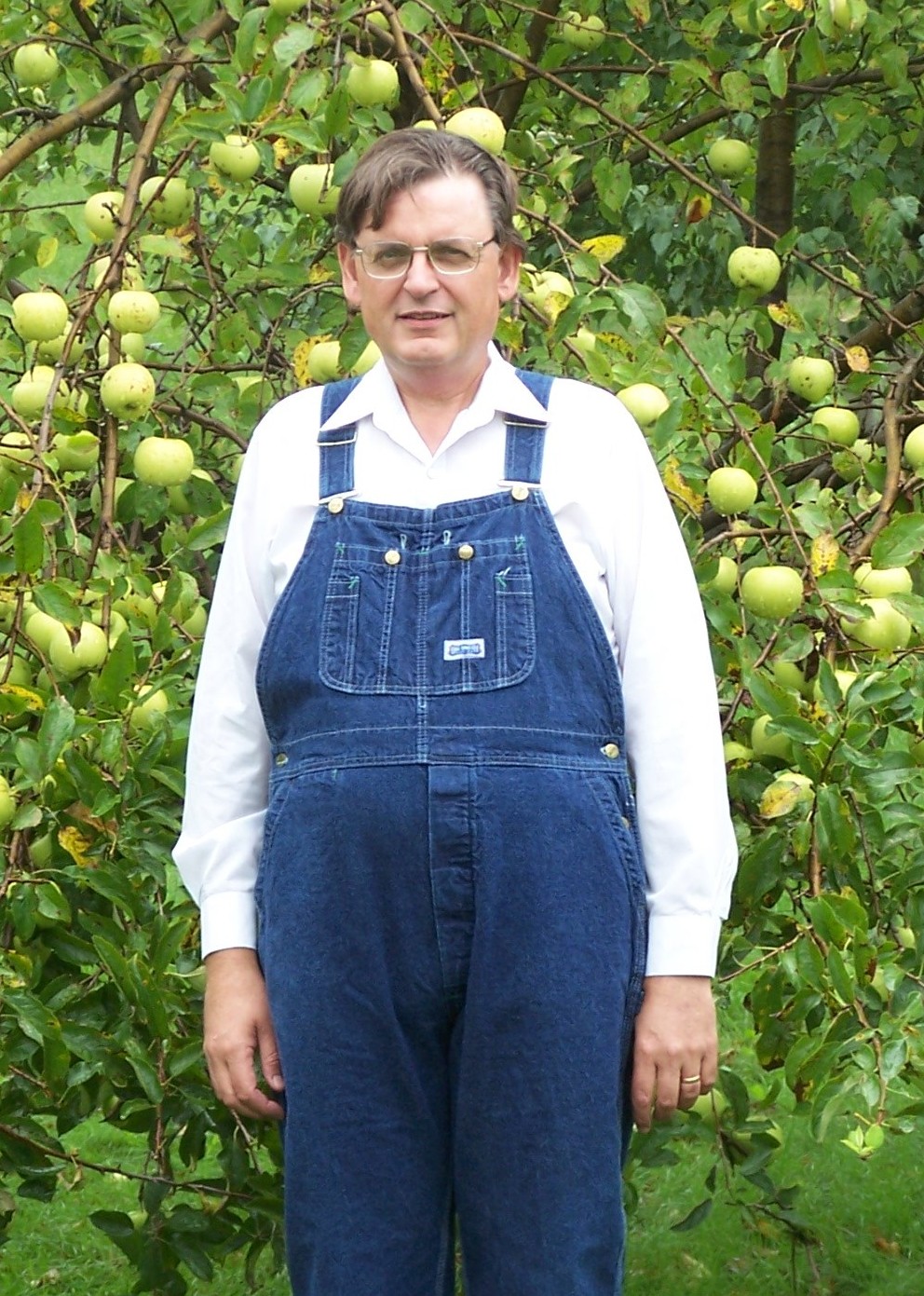
(NB: I submitted this brief bio to The Climate Reality Project to be posted on the web site as part of the promotion of the Iowa training May 5-7). Paul Deaton of Solon, Iowa retired in 2009 after a career in transportation and logistics, seeking a way to sustain a life in the rural community he calls home. He became a Climate Reality Leader in Chicago in 2013 as a continuation of advocacy work he had been doing since his participation in the first Earth Day on April 22, 1970.
“Iowans see the effects of global warming and climate change in their daily lives, but often don’t get beyond discussing the weather,” he said. “The understanding of global warming and its impact on severe weather events I gained at the Chicago training has been invaluable in increasing awareness of how weather is connected to climate.”
Becoming a Climate Reality Leader provided tools and resources to address everyday concerns about Iowa’s record flooding, severe storms and changes in the hydrologic cycle. As an agricultural state this matters.
Home of the first in the nation Iowa caucuses, there is a political tone to many conversations about our environment.
“I’m proud to be a part of the Climate Reality Project and the work of sustaining our lives in a turbulent world.”
This is how The Climate Reality Project edited my submitted comments:
Paul Deaton knows that if you want proof of climate change, all you need to do is ask a farmer. As a native of Iowa, Paul has seen how farmers and rural communities have had to face the devastating effects of climate change. In 2009, Paul retired from his career in transportation and logistics to advocate for sustainable ways to support life in the rural community he calls home.
Paul has played an active role in his community, including being elected as a Township Trustee, serving on the county Board of Health, and serving on the Boards of multiple non-profit organizations.
Paul joined the Climate Reality Leadership Corps at our training in Chicago in 2013 where, he says, he received “the tools and resources to address everyday concerns about Iowa’s record flooding, severe storms and changes in the hydrologic cycle.” Since then, he has given presentations to community groups across Iowa, helping them connect the dots between recent extreme weather events, climate change, and agriculture.
Environmental advocacy is the centerpiece of Paul’s volunteer efforts, and he is “proud to be a part of the Climate Reality Project and the work of sustaining our lives in a turbulent world.”
David Rhodes is one of my favorite fiction writers because he writes about my world, literally and figuratively. When he describes Highway 151 near Dubuque in Jewelweed, it resonates because I’ve been there. That kind of literary experience occurred in the three of his five books I’ve read.
It’s hardly a way of making a reading list, but when I seek respite in words, Rhodes is the go-to author. He’s only written five books, so I dole them out slowly, with only two more to go.
Reading any book-length work is a bigger commitment than it was when I vowed to read every book in the Iowa City Public Library. At that time, the library was located in the Carnegie building, and used the Dewey Decimal System. I started with zero and worked my way through a pittance of the collection before abandoning the project. I learned a lot about religion.
Last year I read twelve books and it is not enough. Nonetheless, even if I make it to two dozen books, each one makes a bigger impact. One has to choose carefully and that’s where I am today.
Among the choices are one of a dozen books given to me by friends. I owe it to each of them to read the volume sent, but am stalled.
I recently bought the Robert Gates and Leon Panetta memoirs, but that purchase was more for reference than actual reading. They gather dust and are not even on a shelf yet.
Most likely on my list is 1381: The Year of the Peasants’ Revolt by Juliet Barker. One of our more questionable ancestry links takes my family back to England and this seminal event. As I recall, the rebellion was squashed. If I seek to use the peasants’ revolt as a metaphor, I should know more about it, and reading 1381 is the plan.
Then there is the collection of books about Iowa, books written in Iowa and books written by residents of the area past and present. Too many for this lifetime, but I should begin chipping away at them.
Not sure which book will be next opened, I’ll relish today’s process of selecting one. Let’s hope I choose well.
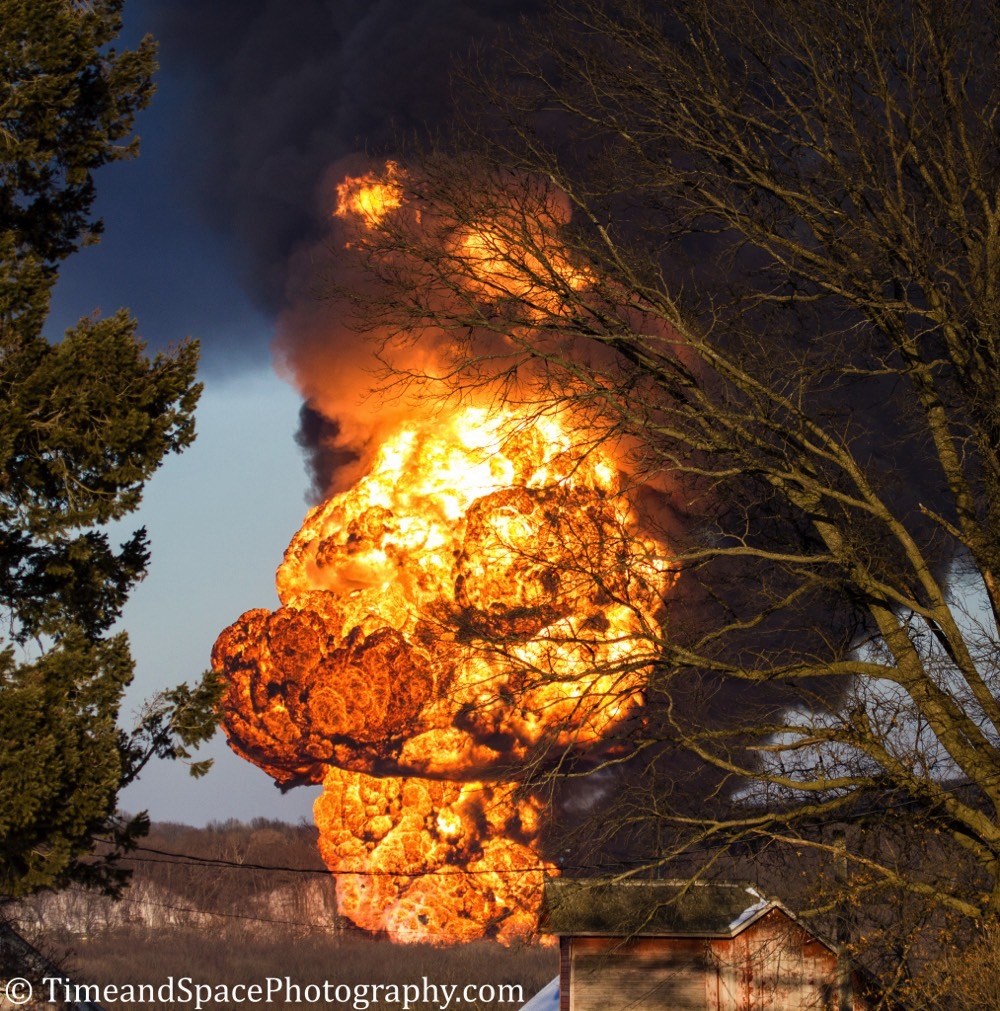
As punctuation to my article Why Bakken Oil is Dirty, last Thursday’s BNSF oil train derailment in a remote area near Galena, Ill. tells the story better than I could.
It is the third Bakken oil train derailment in the last three weeks according to National Public Radio.
Carrying light sweet crude to market from the Bakken field, the train derailed on tracks inaccessible to first responders, rupturing at least five tank cars of 21 that left the tracks, igniting a pyre that could be seen for miles. No one was injured and officials are investigating the causes. Because of the location, accessible only via a bicycle path, fire fighters decided to let the fire burn itself out. Remediation of the oil spill will be difficult because of the location, but no oil has made its way to the Mississippi River yet. As I write, the fire is still burning.
BNSF was quick to report the rail cars were a newer, safer model voluntarily designed to be less prone to rupture. Critics say it’s not good enough. Being a level headed Iowan, I’m willing to wait until the investigation is complete before condemning anyone but ourselves and our addiction to fossil fuels.
“In the coming days, we need to look at not just the safety of the rail cars, but the safety of what is being put into those cars,” U.S. Senator Dick Durbin told NPR. “There is mounting evidence that stricter standards are needed in the handling of Bakken crude which appears to be particularly volatile. We can’t wait. The safety of our communities depends on it.”
News coverage of the accident revealed that the State of North Dakota will require oil producers to remove excess natural gas from the crude oil before shipping it by rail to help reduce volatility, according to NPR. What exactly that means, and whether it will make a difference is uncertain. It confirms what I said in my last article about the volatile nature of the Bakken crude oil being shipped, and the role the refining process plays in its volatility.
Photo Credit: Quad City Times
While the Galena fire burned, Bruce Rastetter’s Des Moines Ag Summit proceeded on schedule, serving up Republican nostrums the way cattle in a CAFO are fed. All twittering eyes were on the summit, leaving a void among Democrats. Democrats don’t have anything similar to this, so it was a great way for Republicans to build party support. Disagreement and agreement with looney ideas is part of Republican party-building, and they are getting better at it with each election cycle.
Iowa Citizens for Community Improvement, who demonstrated at the Ag Summit and held their own event, are neither Democrats nor lefties, despite repeated corporate media attempts to characterize them that way. In my experience, they are issue-oriented individuals who band together to make points about life in Iowa, using visible, direct action tactics in their advocacy. The reason they receive media characterization at all is Democrats cede the space to Republicans on these presidential candidate cattle calls. There is nothing else for political reporters and bloggers to cover.
Rastetter contributed over $60,000 to the Branstad-Reynolds re-election, and $1.49 million to various candidates over the last 16 years according to FollowtheMoney.org. Who is the Democratic equivalent? Maybe Fred Hubbell, who gave $60,000 to the Hatch-Vernon campaign.
Hubbell may be well known to political insiders but most Democrats only know vaguely that he is an attorney, if they even know that. He would be no useful substitute to the hated, loved, and very public Rastetter.
Democrats had the Harkin Steak Fry as a comparable event, although last year’s was to have been the last. Maybe it will return, but that’s up to Harkin, not us.
For the first time in a long while, I didn’t hear that our county party was having an off-year caucus last week until after it had begun. I arrived home from work just as it was finishing. If a couple of people hadn’t been covering it on twitter, it would have passed unseen. That’s a train wreck of a different kind.
As we hope for spring, society begins to make more sense. For now, winter’s cold remains, and there’s plenty to keep us busy as we sustain our lives on the Iowa prairie.
Friday is my Monday as I embark on a substantial project to write several articles for the newspaper before the county seat makes a mass exodus for spring break. The paper expects to be shorthanded, so my editors want articles in the vault.
Today will be gathering information, with four scheduled interview events and a few followups. Tomorrow will be writing the first article and organizing to write the rest.
In part, it’s what being a writer means.
The rest of writing is varied and elusive. It is one thing to write for a newspaper, and quite another to compete for readers in the media jungle where their eyeballs reside. At some point writers decide whether to actively join the competition, or to focus on improving writing by cranking out work as quickly and as well as one can. It makes sense for me to choose the latter, and here’s why. Writing is a craft that requires practice. The only way to get better at it is to do it—often and regularly.
One of my projects is to create an anthology of past writing in book form to sell at public speaking engagements. When I review pieces written 40 years ago, a lot of them are pretty rough. My style has changed, and improved, even since I began blogging in 2007. Even more so since I began newspaper writing last year. The reaction to such editing of the past is to rewrite them all, or to let them stand warts and all. I have been unable to embrace either—the project is stalled.
Here’s the hard part: it’s easier to focus on paid work with an editor because there are specific demands to be met in a fixed time frame. When taking a drink from the fire hose of what’s possible, the rush of project ideas is hard to tame. Combine that with required attention to economic security and it is easy to see why many writers don’t get beyond the idea, outline or draft stage.
In a way, the short piece, around 1,000 words, is a great opportunity to improve stylistically without a big commitment. Writers miss an opportunity if they don’t create in short form because people are simply not reading that many books. According to the Pew Research Center, an average American reads five books per year, with 24 percent reading no books. Why spend the effort to produce book-length work if the chance of finding readers is remote?
Maybe it’s the full moon, maybe it’s threats to economic security, or maybe I’m just arriving, but as we cope with life’s busy-ness, it is important to consider where we’re bound and why. Becoming a better wordsmith to present short, meaningful pieces is never a bad path to take.






 Journey Home
You must be logged in to post a comment.