Categories
Environment Home Life Kitchen Garden

Gardening in End Times

Japanese Beetles Enjoying a Pear

I’ve been a gardener since we got married.

We planted a few tomatoes near the duplex we rented in Iowa City the spring after the wedding. As we lived our lives, raised our daughter, and sought economic stability, we either planted a garden or harvested what was there. When we owned a home, first in Merrillville, Indiana, and then in Big Grove, the garden got bigger and I became a better gardener. There is evidence in this year’s abundant harvest.

It didn’t come naturally even though gardening is elemental. The brief narrative of my gardener’s life.

As I step back from the working world to focus on home life what seems clear is society is moving at a startling pace toward disaster. Our industrial society consumes everything useful in nature, leaving us with foul air and water, depleted soil, polluted and acidified oceans devoid of marine life, and a warming world with all the consequences that yields. The earth will survive as it has. We people seem to be on the downside of our prominence. In multiple ways these are end times.

The Slovenian philosopher Slavoj Žižek asserts there is a chance for a new beginning in the terminal crisis in which human society finds ourselves. His arguments are not convincing to us regular humans.

What do we do?

What we have done is argue about approaches. Should we have a carbon tax? Should we ban abortion? Should we ban plastic straws? Is wind, sun, nuclear or natural gas a better source of electricity? Should we cut taxes and reduce government’s role in our lives? Should we become socialists, or even worse, democratic socialists? Should we let go of Hillary’s emails? Should we all just try to get along? Approaches don’t work and we should let go of them all.

The better question to ask is what story do we want to tell? As others have said, notably author Joan Didion, “We tell ourselves stories in order to live.” What narrative will take us out of the current crisis?

For me it’s “I’m becoming a better gardener.”

Regardless of pending social collapse we must go on with our lives. Partly to keep our sanity, and partly — importantly — to take steps toward a more livable world. We will never go back to the Iowa of 1832 before the great division and clear cutting began. What we can do is plant the seeds of a better life where we live. Our forebears left us a disaster. What can we do about it? Make the best of it with forward-looking narratives for the next generations.

I get it that many people don’t have means to do more than survive. When I see the abundance of our garden it’s hard to believe people go without a meal. Yet they do, in large numbers. We can feed a couple of them, but is that enough? It’s something.

The essence of the narrative is the verb to become. “I seem to be a verb,” R. Buckminster Fuller wrote. I seem to be that verb. We are not predestined to anything except our human span of nine decades, and that only if we are lucky. We live in an imperfect society that beckons engagement. I’m not sure working toward perfection is as good as doing something positive is. Knowing what to do requires a better narrative. One that hasn’t been invented for the 21st Century and beyond.

I plan to work on a better narrative, although garden in end times doesn’t seem too bad.
Categories
Kitchen Garden

Eggplant Season

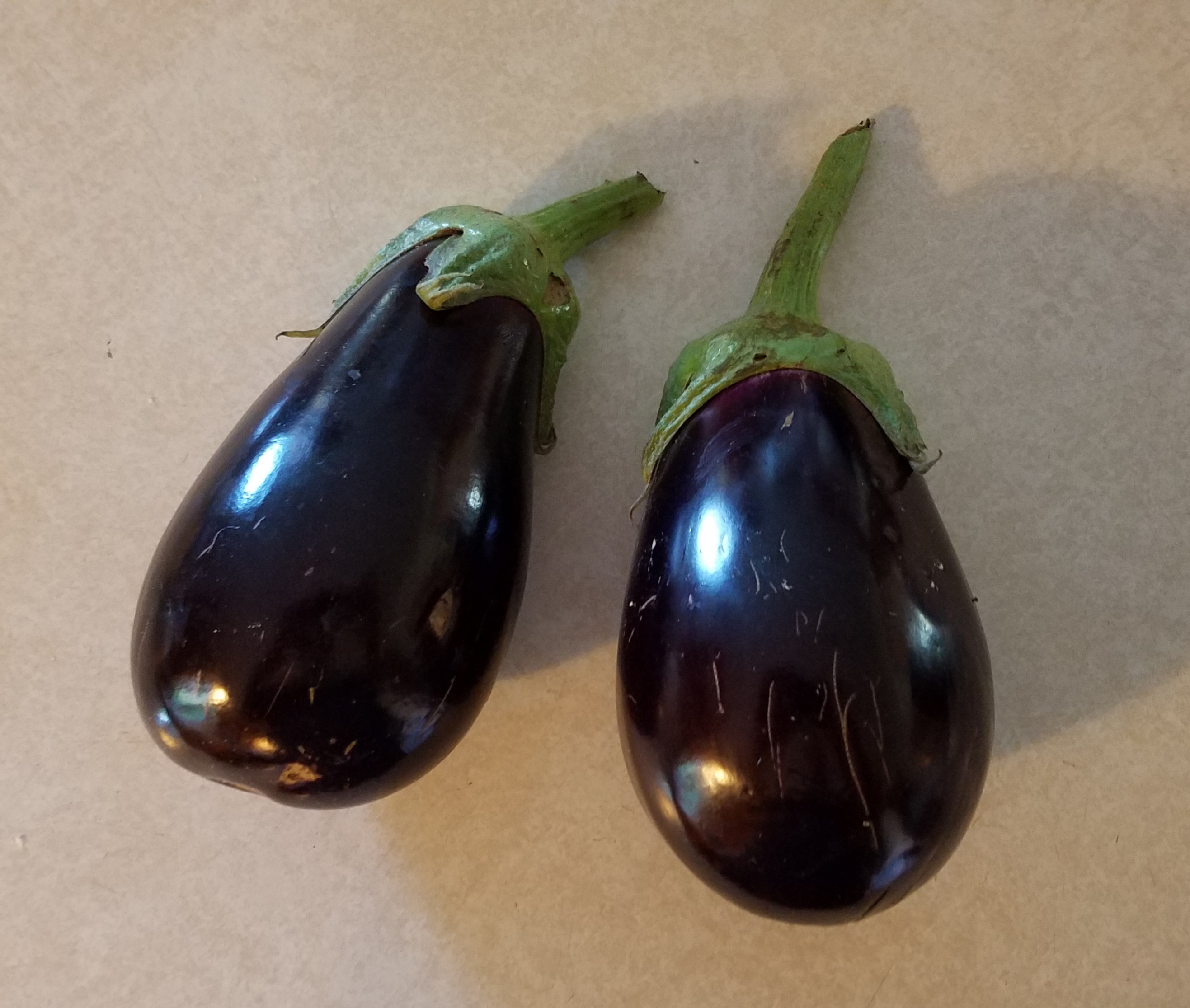
Galine Eggplant

By the time eggplant season is finished. everyone in the family is tired of it.

Here’s a simple, tasty recipe that’s not as much a recipe as techniques to use garden abundance in mid summer. The savory flavor will have diners coming back for more.

The first part is preparing eggplant slabs for the dish and for freezing.

Cut two half-inch slabs lengthwise from the middle of each eggplant and reserve the smaller portions from the sides. Skin on or off, your choice.

Lightly salt the slab of eggplant and drizzle extra virgin olive oil on it until both sides are coated. Place it on a baking sheet lined with parchment paper or a silicone mat. Cut slabs from all the large eggplants you have and line them up.

Place the pan in a 450 degree preheated oven and bake for 8 minutes. Take the pan out and flip each slab using tongs and put them back in the oven for another seven to eight minutes. Take them out and set the pan on a cooling rack.

Once cooled, what is not needed for the dish can be frozen, then bagged up in zip top bags for later in the year. Great to use these in Eggplant Parmesan.

Eggplant Dinner

The dish has three components: the eggplant slab, quarter inch slices of fresh mozzarella cheese, and a vegetable ragout.

The ragout is a way of using what’s available. Put a frying pan on the burner with a tablespoon of high smoke point cooking oil. I diced an onion, diced the reserved small slices of eggplant, finely sliced garlic scapes, fresh celery, and two hot peppers (jalapeno or Serrano). Any combination of what needs to be used up should serve. Sautee until the onions begin to soften.

While the vegetables are sauteing, grate half a large zucchini on a piece of parchment paper and set it aside. Halve eight to ten cherry or grape tomatoes and put them with the zucchini. Check the vegetables and once soft add the zucchini and tomatoes and stir constantly until the zucchini begins to cook. Don’t overcook the zucchini.

In individual baking dishes, or in a glass baking pan if you don’t have individual, line up one or two eggplant slabs per serving, depending on size. Next place a slice of fresh mozzarella on each large slab of eggplant. Top with the ragout and put another slice of mozzarella in the middle on top. Put the dish in to the oven and warm it for 10 minutes or until the cheese melts.

Take it out, transfer it to a plate, salt and pepper to taste, and the entree is finished. If you like, top it off with a poached egg.

Note: I did not use any seasoning other than salt and pepper and the dish was quite savory. If you have herbs and spices on hand, feel free to add your favorites.

Categories
Kitchen Garden

Going Without a Share

Fermented Dill Pickles

The change in our local food ecosystem from last summer to this is hard to fathom.

We let go of the summer share from the Community Supported Agriculture projects to rely on our garden.

It was a big step and I feel much less stress from over abundance. Some days I’d like more lettuce, and some of the specialty crops, but there is plenty from our garden to fill the gap. Now that tomatoes, cucumbers, eggplant and peppers are beginning to come in, I don’t forecast any gaps.

What is hard to fathom is why the transition has been so easy. Maybe I’m getting to be a better gardener. Maybe I was due to go on my own.

Tornadoes tore through Marshalltown, Pella and Bondurant yesterday as I got off work at the home, farm and auto supply store. It doesn’t appear anyone was seriously injured or died, although damage to the communities was substantial. Photos and video posted on social media depicted a horrible scene. The Marshalltown Times-Republican newspaper got an issue out the next day despite the storm — practicing journalists they are.

Are these storms due to climate change? I don’t know. What I do know is the seasons are out of wack. A late spring, early high ambient temperatures, and more frequent storms make our climate exceedingly weird. We adjust, accommodate, but something’s different.

Ben Santer, an atmospheric scientist at the Lawrence Livermore National Laboratory, led a study of four decades of climate data that concluded human activity is disrupting our seasonal balance. That is, the seasons don’t proceed through time the way they did. It may be confirmation bias, but I doubt it. Eric Roston at Bloomberg wrote a more accessible article about the study here.

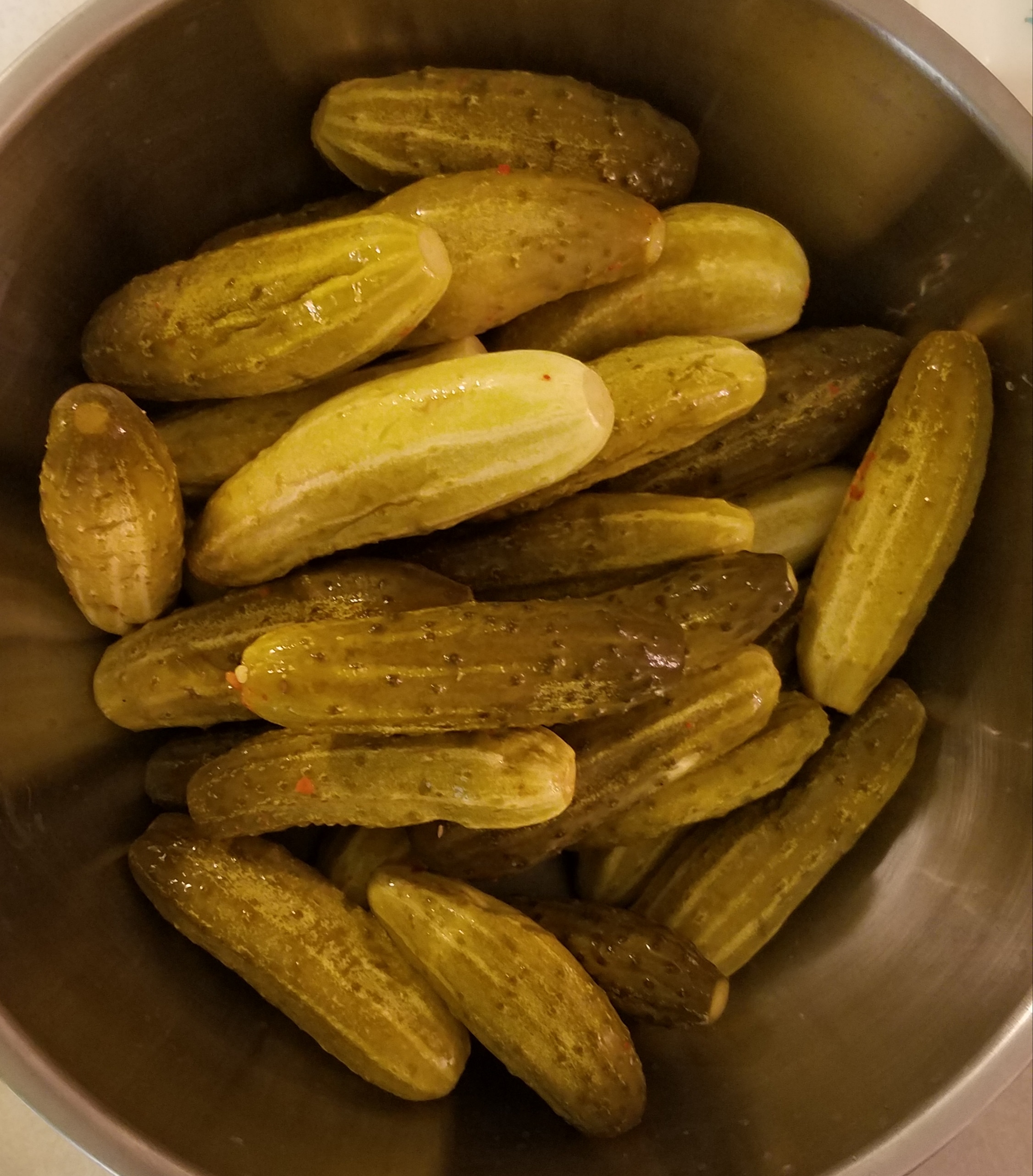
In the kitchen it’s cucumber day! A batch is sweating over a bowl and the crock is full of sweet pickles to be water bath processed tomorrow. The dill pickles in the photo took 13 days to ferment. It was worth every minute.

Categories
Kitchen Garden Living in Society

Garden is In

Friday Harvest

It may seem late yet I declared the garden planted on Friday.

We’ve already had a bumper crop of vegetables and we’re not even started with tomatoes, eggplant, peppers, green beans and more. There will always be garden work to do but for now it’s planted.

Time to turn to other things.

What I mean is between now and Aug 4, when orchard work begins, there is writing, household repairs and cleaning, and loads of work to improve our home life. At some point I switched from being a consumer to a doer and that makes the difference in my mid-sixties. I just stay home and do.

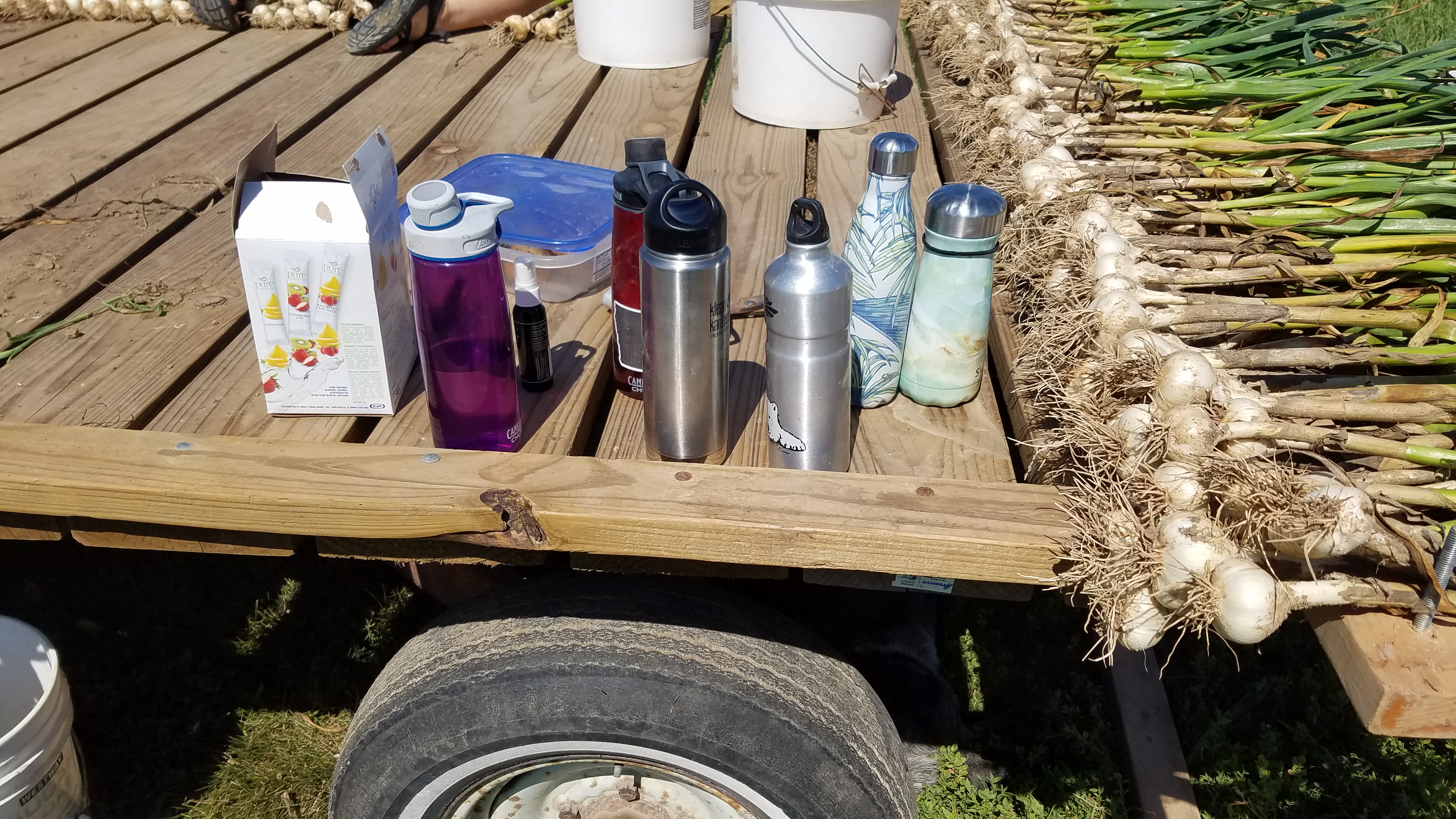
Water Bottles

Politics plays a role in current affairs and it’s much different than it was. My focus is to understand the complex world in which we live and work to make a positive impact. My themes haven’t changed (environment, social justice, economic survival, good governance) although my understanding of what needs doing has. During the re-election of George W. Bush I re-activated in politics. Each succeeding campaign was both learning and engagement. After seven campaigns, I enter my eighth with a deeper understanding of the role social networks play in determining winners and losers. I’m not referring to Facebook, Instagram and Twitter here, but broader social movements and the momentum they bring to an election.

The first Obama campaign, with its demographics analysis and targeted voter lists seems like ancient history. What Obama did can’t be replicated, even if we wanted. To better understand the electorate, we must knock on every door, hear every voter, and determine how to fix the broken politics endemic to our lives. Creativity and networking are important. We don’t know if what’s broken can be fixed in a generation. If we don’t start now, it may never be fixed.

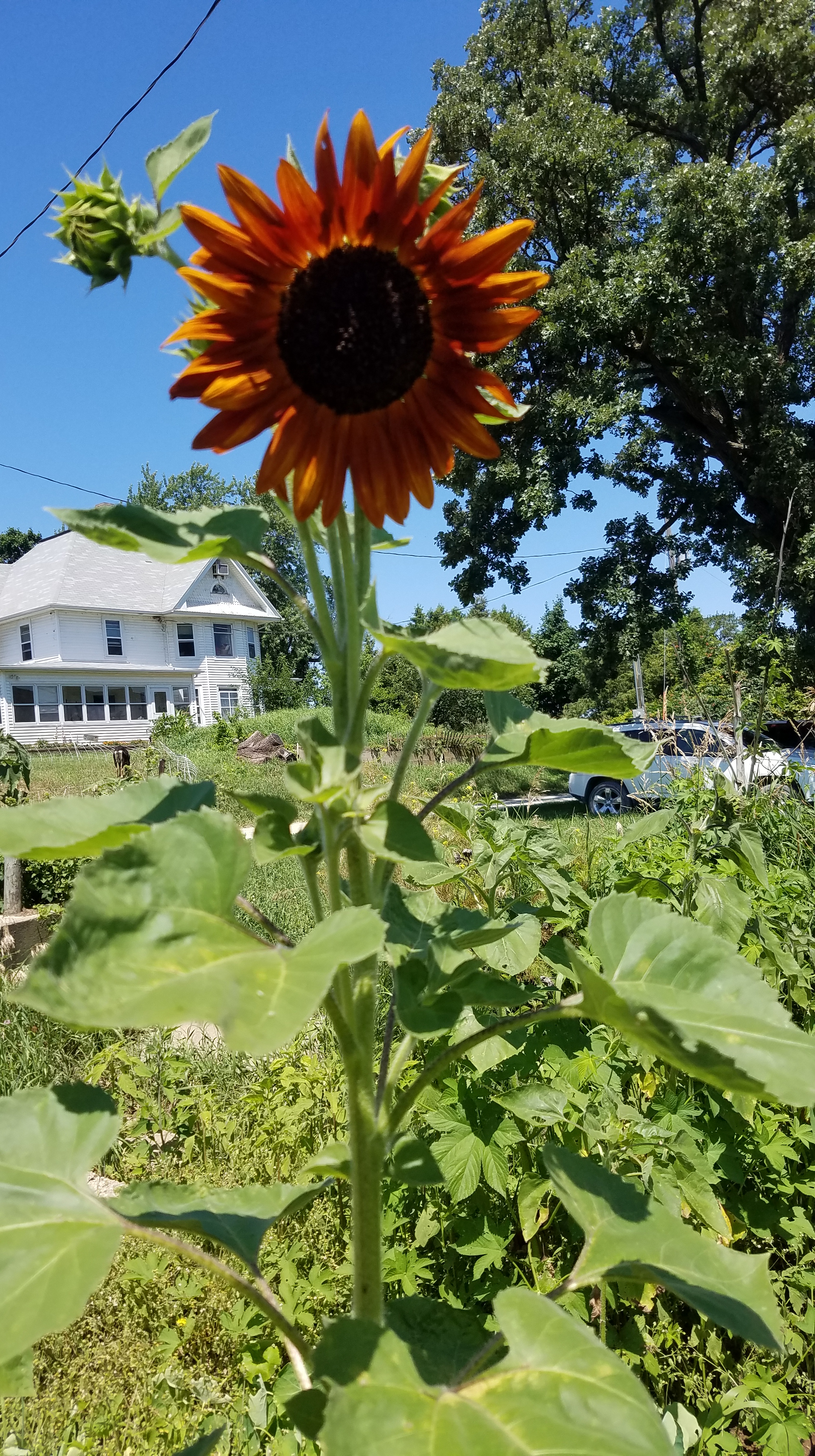
Flower at the Farm

Politics is not everything. After only three hours at yesterday’s garlic harvest at the farm I felt a bit dizzy, presumably because of hard work in the sun. It was a temperate day, nonetheless, I played it safe and called it early. My point is I’m not getting any younger. Working a six or eight hour shift in the sun doesn’t work as well as it did a few years ago. Working smart is replacing working harder.

The rest of the year goes something like this. July is a month to work at home: advance my writing projects, get space at home to be more livable, and work to get the yard into better shape. August through October is work at the orchard. This year I may be taking on additional responsibilities, but for sure I’ll be there weekends and on Friday Family nights. November and December will be focused on writing. While this is going on, I’ll continue to work at the home, farm and auto supply store two days a week. Every dime of income has a place to be used at this point.

Declarations like mine about the garden are ephemeral. What matters more is a process of continual improvement in which life goes on as best we can make it until the final curtain falls. In the meanwhile, we expect there will be garden vegetables to eat.

Categories
Home Life Kitchen Garden

Onslaught of the Mechanicals

First Carrots

Having time to garden is helping the results.

It is one thing to know what to do and another to execute according to that knowledge.

For the first time in I can’t remember when weeds did not get the better of me this summer. With plenty of grass clippings for mulch, and plastic to suppress weeds around the cucumbers and peppers, everything looks pretty good.

There is an abundant harvest already. I’m proud of the carrots in the photo, as this is the first year I’ve grown such big ones.

While gardening is going well, mechanical things around our 25-year old house are not.

I don’t know whether it was the dryer or the kitchen sink that had problems first. Then the washer went out… then the refrigerator. Yikes!

At this writing we hired repairmen to fix the washer, dryer and kitchen faucet, ordered a new refrigerator, and have a new freezer — all within eight days. Here’s hoping the onslaught of the mechanicals is finished.

Once the refrigerator arrives from the factory in a couple of weeks, we’ll get back to normal. In the meanwhile I just finished an ice run to town so I can refresh the four coolers in the morning. We’ll use our daughter’s college refrigerator and the coolers until a loaner arrives later this week.

Kate’s Garlic Rack

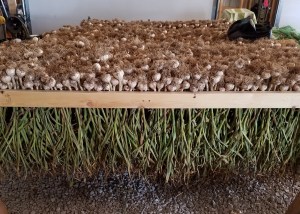
This morning I stopped at the two farms where I work to pick up final settlement checks. We’ll need those and more to pay for the mechanicals. There’s a lot of action at the farms. At Kate’s place the garlic is in the barn and looking great. At a CSA the farmer must grow enough for members plus an additional amount for seed in the fall. It is a big crop and the photo is only part of it.

I caught up with Carmen tilling a field and made arrangements to help with her garlic harvest on Saturday. She has an international crew of students helping us. I asked if there was any dill to make pickles. She said most of it bolted but I could glean what I could. There was plenty to make a gallon batch using yesterday’s cucumber harvest. Those pickles are already in a crock.

Recent days have been like an Indy 500 pit stop of getting things fixed and serviced. Now I’m ready to get back to the track.

Categories
Kitchen Garden

Kale and Garlic Scape Pesto

Garlic Scapes

Here’s a second recipe for kale and garlic scape pesto. The first uses walnuts and Parmesan cheese and can be found here.

Get out the food processor and place it on the counter.

Measure the following and place in the bowl of the food processor in the same order:

Two thirds cup raw pine nuts
One third cup thinly sliced garlic scapes
One and one half cups roughly chopped kale, packed
One third cup whole basil leaves, packed
One teaspoon sea salt
One half teaspoon freshly ground black pepper
Two tablespoons lemon juice. If fresh lemon, peel first and add the yellow rind
Two thirds cup extra virgin olive oil (reserved)

Turn on the processor and grind the mixture until it starts to break down.
Drizzle the olive oil into the mixture as the machine runs.

Scrape the bowl into a quart canning jar with a spatula.

Spread some immediately on a slice of sourdough bread toast for the cook and any kitchen visitors. Screw on the lid and refrigerate until ready to use.

Fresh pesto keeps only briefly without oxidation in the ice box. If you want to use it way later, put the jar in the freezer.

Categories
Kitchen Garden

Garden Garlic

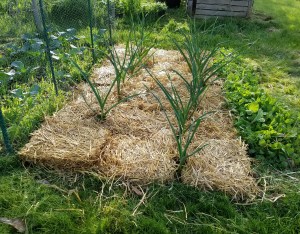
Garlic Patch

Garlic growing happened in our home garden.

After randomly planting it in a plot where it propagated year after year without care, last October I planted cloves the way I learned from my friend and mentor Susan Jutz.

I harvested 20 head of garlic this morning.

What made this year different was devoting time to find every available opportunity for good growth. It was worth it.

Following are some photos of the harvest.

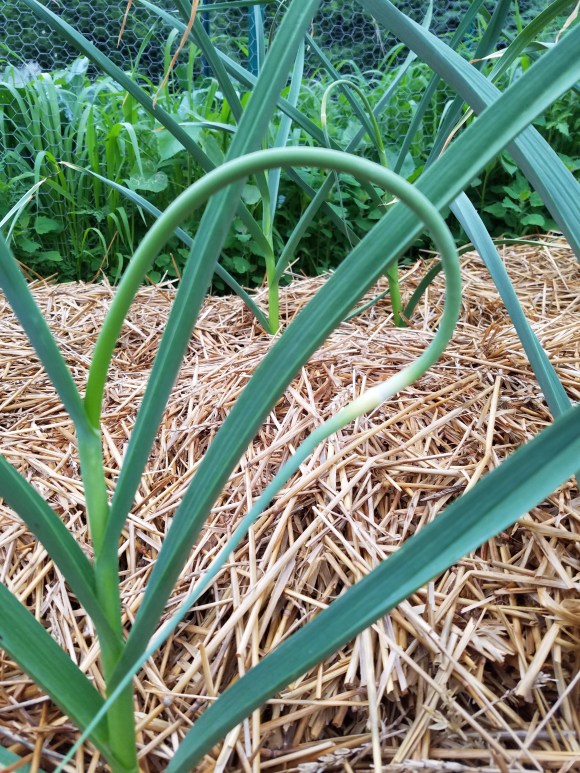
Garlic Scapes
First Head of Garlic
The Garlic Harvest
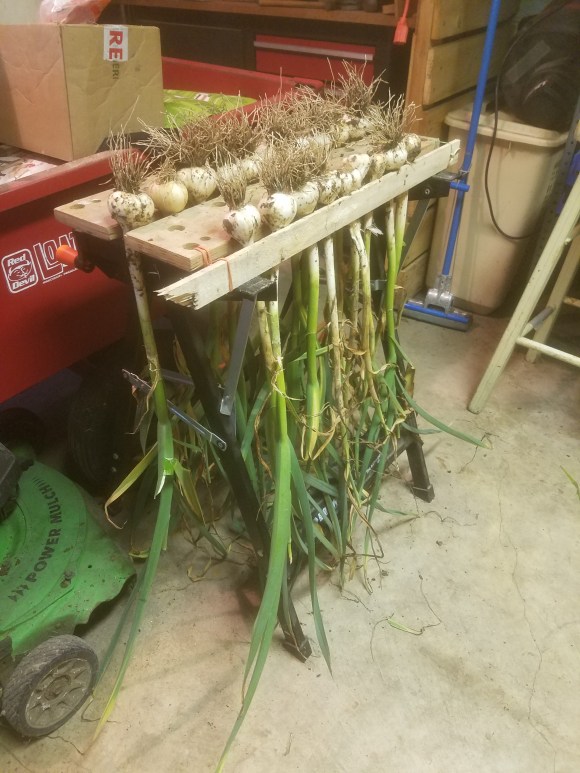
Makeshift Garlic Rack

Now that the harvest is in the garage, I’m heading to the kitchen to make some kale-garlic scape pesto for lunch.

Categories
Kitchen Garden

Summer Harvest – 2018

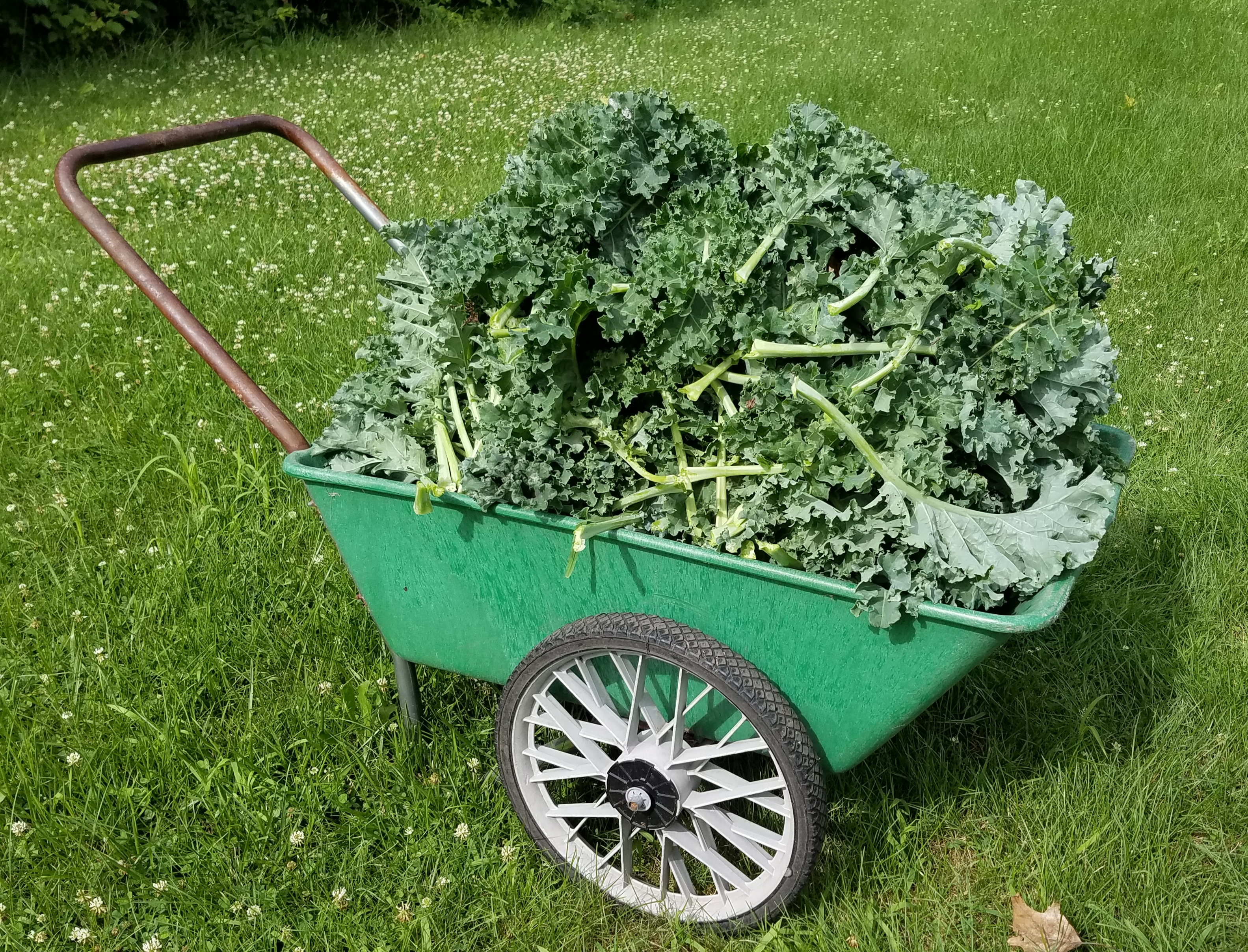
Cart of Kale

It has already been a good year for our garden. We’re just getting started.

Yesterday I picked first broccoli, along with cucumbers and cilantro. The ice box is jammed with garlic scapes, greens, beets, turnips, lettuce, sugar snap peas, celery, herbs and much more.

Yet to come are pears, eggplant, tomatoes, peppers, carrots, zucchini, and lots more. The challenge becomes figuring out what to do with the abundance through cooking, preserving and giving it away. It’s a nice challenge to face.

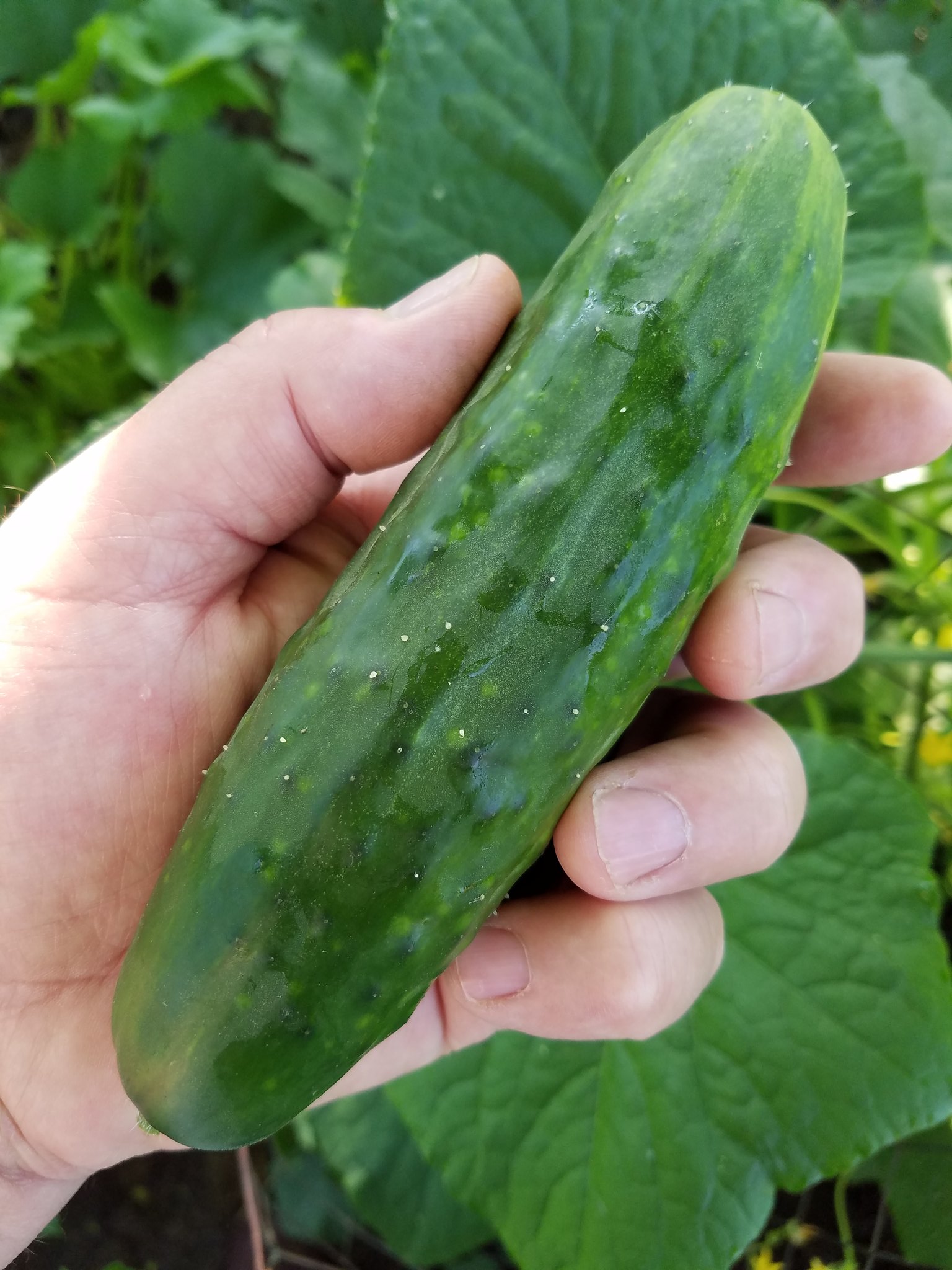
For dinner I made a simple salad with oddly shaped cucumbers from the garden. The recipe is easy: peel and chop cucumbers from the garden, four small ones; one cup Greek yogurt; two teaspoons finely chopped fresh dill; salt and pepper to taste. Combine ingredients in a mixing bowl and gently stir until fully incorporated. Refrigerate until dinner time. Served with a simple pasta dish, the flavor was excellent, the meal satisfying — perfect summer fare.

Our news is we found a plumber who fixed our ailing kitchen faucet. After 25 years of normal use the brass ring where the lever hooks to the valve had worn out and we couldn’t draw water. I examined the problem in the morning and determined since the pipes were soldered together, fixing it was beyond my skill level. I made three calls before getting a live person on the telephone. The plumber arrived within a couple of hours.

“As long as there is indoor plumbing there will be work for plumbers like me,” he said.

Once the repair was completed, we admired the new faucet… for more than a little while. It’s small things like running water in the kitchen that make our lives better. A brief interruption in service brought with it an appreciation of things we take for granted.

It rained overnight, vindicating my decision not to water the garden last night. Rain nourishes the landscape and can wash away our problems if we’ll let it. Knowing how to go with the flow of rainfall can be a source of constant joy.

Categories
Kitchen Garden Work Life Writing

Last Day of the Season 2018

Chicken at Sundog Farm

Beginning on Feb. 25, and 862 trays of soil blocks later, my 2018 farm work season ended today at Sundog Farm. I finished at Wild Woods Farm on Friday.

More than anything, farm work has been time with young people — doing the work and talking about crops, challenges, and everything else.

In my sixth year of soil blocking I kept up physically. I plan to do it again next year if able.

Now to take a break from farming until returning to Wilson’s Orchard for the fall season.

This will be the first summer in a long time we haven’t taken a share from the CSAs. Our garden is big enough to provide most vegetables and I’m confident of the yield. What we can’t get at home I’ll secure elsewhere. Getting enough to eat is never a problem when working in a local food system.

Next on the practical agenda is home repairs and cleaning. There is never a shortage of work for home owners.

It’s also an opportunity to resume writing. Each time I rejoin the project I lose track of everything else. Hours and days pass and like a coal miner I follow the seam wherever it goes. There is a lot more reading, thinking and organizing than writing at this point. I’ve forgotten more than I know about my own life and it can’t be re-lived, merely touched through a gauze woven of memory.

I began addressing the chronology. I’m not sure that will be the presentation. As I delve into the volumes of writing and artifacts collected since college a thematic approach seems better. It would be cultural aspects of growing up, education, work life, how we developed an ecology of living as a family, and my path toward social responsibility. It will also focus on what readers may find interesting.

Writing is exhilarating at a time when the rest of the world seems weary and worn down. What a great way to spend the rest of this summer.

Categories
Kitchen Garden Reviews

Summer Begins

First Marketmore Cucumber

A letter from our rural medical clinic reached me early this morning. I read every word it had to say.

I said, the letter reached me early this morning, I read every word it had to say.

Rural life ain’t nothing but the blues, how much longer can we live this way?

The physician I saw in April is moving his practice to Williamsburg — too far to drive for routine appointments. His replacement is an ARNP, which stands for advanced registered nurse practitioner. I read the definition but don’t understand what it means except we’re changing from two physicians to one… another nail in the coffin of rural health care.

We’re lucky to live close to the clinic’s hospital, and a large teaching hospital operates in the county seat. We won’t be deprived of care. I don’t look forward to changing physicians for the fourth time since leaving my transportation career.

I’ll try the new arrangement. What else is there to do?

This is the last weekend for soil blocking at the two CSA farms. After that, the farmers will make their own for the remaining fall share starts. I’m taking a break before returning to the orchard in August.

I finished reading The Shepherd’s Life: Modern Dispatches from an Ancient Landscape by James Rebanks before heading to the garden.

The shepherd went to Oxford, so it’s natural he would do something outside the normal range for a sheep herder. He’s been traveling and speaking to groups of farmers about his life in the Lake District of England. Last January in Ames, he spoke to members of Practical Farmers of Iowa at their annual convention. They made a YouTube of his speech. I haven’t viewed it yet.

What struck me about the book is the comparison with Iowa. Not necessarily what one might think.

On the one hand a well-settled place of William Wordsworth, Samuel Taylor Coleridge, Beatrix Potter and the Lake Poets. In front of us a landscape barely settled since the Black Hawk War of 1832. Any sense of ancient Iowa prairie is long gone and replaced with a grid of roads outlining row cropped fields and concentrated animal feeding operations. The long history of sheep herding in the Lake District served as a reminder most Iowa farmers are recent trespassers as agriculture and land use continue to evolve. There won’t always be soy and corn in what was once an ancient lake bed.

Rebanks informed my view of the annual cycle of sheep farmers. Now I know why some of my friends are so stressed during spring lambing. I’m sorry I missed the speech, and when spring farm work is done, I plan to spend the hour to watch it.

For the time being back to working on the garden to chase away these summertime blues.