Categories
Home Life Writing

Holiday Fun

Frosted Squash Plants

Hard frost and cooler temperatures make way for end of year holidays. Stress diminishes as plans for outdoor work become moot.

Diversity in the United States means holidays differ among social groups with each family developing a way of participating in a national culture.

Specific things have been on the agenda in our home. We discuss when to set up the Christmas holiday decorations, make and receive phone calls, cook a special meal, and pretty much stay within the boundary of our lot lines. It has been a quiet day for the last several years.

Some activities are particularly fun.

I mentioned the meal in yesterday’s post. What made it special was discussion about what to have combined with its simplicity. We made enough food for leftovers from recipes developed at home. The concession to consumer culture was an inexpensive bottle of Martinelli’s Sparkling Apple Cider. It was sweet and fizzy.

We don’t receive many seed catalogues in the mail yet I started online orders at Seed Savers Exchange and Johnny’s Selected Seeds. The activity informs visualization of next year’s garden. There is a lot of thinking and planning to be done prior to entering payment information and hitting the order button on the web sites. There are discounts from both companies for ordering online this early.

I read a couple chapters of Avenue of Mysteries by John Irving. Books to read pile up on the filing cabinet near my writing desk. I finish most of the books I read each year between December and February. Reading is part of the holiday quiet time and sustains me through winter.

Napping is a lost art. Balance between falling asleep on the couch from exhaustion and intentionally resting is hard to achieve. After the day’s activities I slept straight through the night. I didn’t take a nap this Thanksgiving, but should have.

As a schooler we had at least a four-day Thanksgiving holiday. In the work force, I worked on Thanksgiving Day countless times, even the single time Mother made it out to Indiana for the holiday. That day I coordinated holiday meals for some of more than 600 drivers based at our trucking terminal and missed the main meal service at home.

Indiana was a tough place to live in the late 1980s and early 1990s. The Reagan era was noted for downsizing or eliminating large industrial job sites like U.S. Steel. I can’t recall the number of conversations about what used to be in the steel business. There were many. Even lake-effect snow from Lake Michigan couldn’t deaden the angst people felt. Electing Bill Clinton president didn’t change what the radio stations described as the “steel mill culture.” There wasn’t much for which to give thanks in that economic and political environment.

Memories fade with time and Thanksgiving presents opportunities to re-tell the stories of our lives together. Such storytelling has been wide-ranging and keeps the past alive. A past to inform our future, or so we hope even if the teller doesn’t get details right.

If we work a little, Thanksgiving can be a time to have fun. That may be enough to sustain us.
Categories
Kitchen Garden Writing

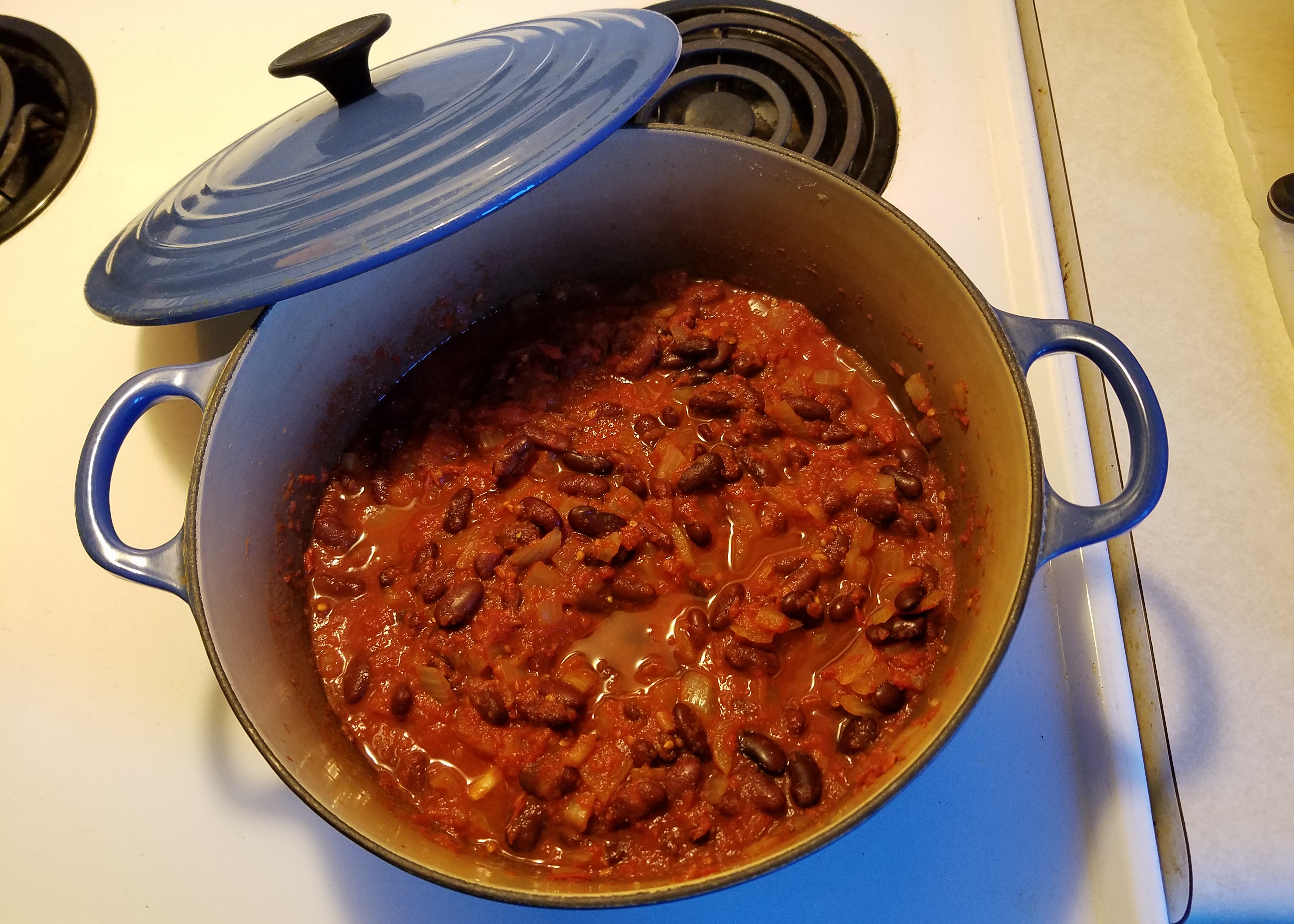
Thanksgiving Chili Bowl

Homemade Chili

We discussed plans for Thanksgiving dinner exactly three minutes.

It’s the two of us and we haven’t had chili with cornbread for a long time. We haven’t had an apple crisp this season either, so that will be our Thanksgiving supper along with a bottle of sparkling apple cider.

A person can eat only so many pizzas, bowls of soup, squash, rice and potato dishes in one month.

We don’t use the television much, so no Macy’s Thanksgiving Day parade, no movies, just us, chez nous with talk and naps. We get a signal from basic cable and have talked about getting a new television to replace the one that displays varying shade of red regardless of channel. The conversation was inconclusive.

People call it a holiday, but this year it’s merely a different day off work as I have to add Saturday to my schedule at the home, farm and auto supply store. A mid-week day of rest anyway… and some overtime pay.

We had a phone call with our daughter during which I was described as “Garrison Keillor-like” while telling a story about the orchard. Don’t know if that’s good or bad and I denied it. I claimed the Minnesota writer was much taller so how could I sound like him? The moniker stuck despite my denial. I’m okay with that.

I started talking about Minnesota where my Polish forebears bought land from the railroad. The only trip I made to the home place was the summer after Grandmother died. I brought back a turtle carved from pipestone for our daughter. She remembered the gift but not the context around it. We likely all have imperfect memories which should encourage us toward humility.

I understand why parents tell their children the same story over and over again. It’s a way of defining shared history. If we are honest, we craft the story to accurately reflect our experience, sanding off rough edges to help it along. Tricksters among us may misrepresent certain aspects of a story to see if listeners catch on. That’s part of the story telling craft, one that reinforces what is shared about our experiences. I believe we can be honest tricksters.

About now people are finishing their holiday feasts and winding down: viewing television, making phone calls, drinking coffee, putting away leftovers, et. al. I plan to read while the chili simmers, then make the apple crisp. It will go into the oven timed so it can be served warm.

Happy Thanksgiving!

Categories
Living in Society Social Commentary Writing

Waking and the Imagination

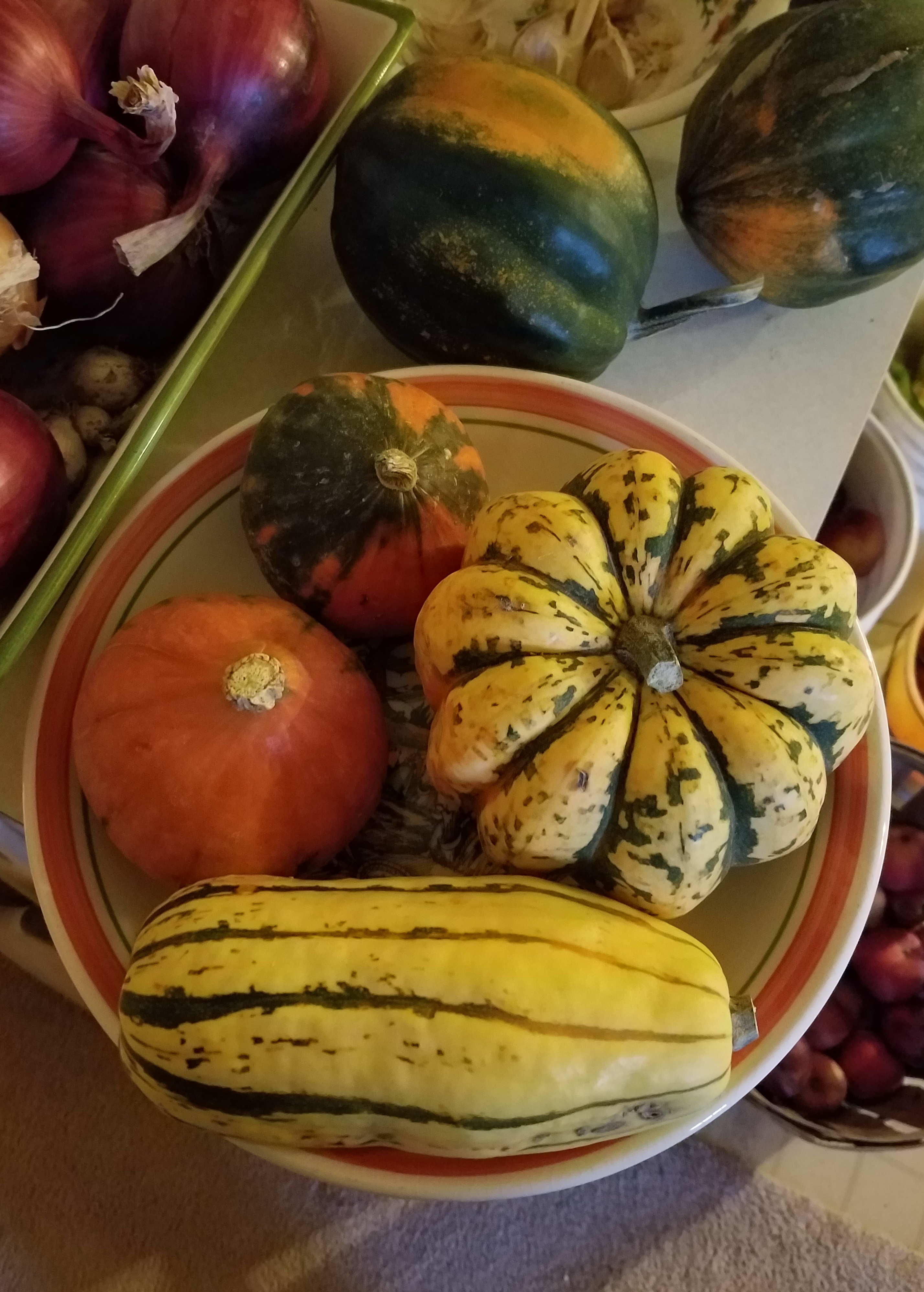
Curing Squash

I’m not a fan of human physiology. Given a Cartesian outlook toward life, I’d rather not think about or acknowledge my physicality even exists.

Yet there it is, influencing my daily affairs in ways I don’t comprehend. The physicality of others impacts everything I do in public and in private. My physicality — driving a lift truck, operating a bar code scanner, lifting bags of feed, sitting in meetings with other humans — impacts others as well as myself. For at least a moment, I should consider and endeavor to understand physiology.

Maybe in another life.

“I think, therefore I am” has been my beacon since I was a grader. I call it Cartesian now but its roots are in serving as an altar boy a few blocks from home in the Catholic Church and in the convent located on the upper floor of our elementary school. I’d come home from daily Mass and read what today is called juvenile literature printed on cheap paper and mailed from places of which I’d never heard. I became fixated on my own awareness and with the fact that other people, places and things existed and had impact on me. I felt separate from their reality, connected only by ink on paper, conversation, and radio and television. I became aware that in fact it was a reality.

The origins of a Cartesian outlook have roots further back in my hospitalization for a head injury at age three.

“What I learned through the injury and recovery in the hospital was that there is an infrastructure of knowledge and caring to support us when things happen,” I wrote in 2009. “This experience assured me that although we are vulnerable, we are not alone.”

Four physicians ago, when we first moved to Big Grove, my doctor laid me back on the examination table and rested his left hand on my naked belly and held it for a moment.

“This is not normal,” he said, referring to excess weight layered between my guts and skin. I agreed, respecting his training and experience in physiology, something about which I cared little. One would have thought it easy to improve my Body Mass Index given the intellectual provenance awareness can bring.

But no.

It has been especially hard to exercise since developing plantar fasciitis. Given my love of jogging, I tend to avoid thinking about exercise now, hoping gardening and the physicality of work at the home, farm and auto supply store compensates. I don’t know if it does and am reluctant to do the type of analysis I did with other life schemes.

If mine is a life of the imagination, that’s where I’d prefer to live. Yet reality beckons: in the form of news stories of horrible things happening to people the world over; in the work required to put a balanced meal on the table; or in staying awake during the 25 minute commute to the home, farm and auto supply store. Who wouldn’t want to live in the imagination? There is an unparalleled comfort there.

Whatever I am, physically or intellectually, I go on looking.

I look through a window where spiders persistently weave and reweave a web to catch insects drawn to the warmth and light of our home;
I look through eyeglasses the prescription of which needs an upgrade;
I look through the car windshield alert for the sudden appearance of deer during the rut;
I look through the fog of morning to see what each day brings;
I look for things I recognize more than for discovery and that’s regrettable.

After college I vowed to read every book in our Carnegie library. At the time that may have been possible. I didn’t get past the religion section of the Dewey Decimal System-organized stacks. I don’t read as much today as I did then.

Now the veil of Maya wears thin.

Everything I believed upon retirement from my transportation career has been called into question. I was hopeful the long, difficult work of electing a Democratic president was finished and that common sense would dominate public discourse. It turned out to be too much imagining as we were struck in the tuchus by the physicality of modern politics.

As if awakening from a dream, it will soon be time again to get dressed and find my running shoes. Not because my plantar fasciitis is in abeyance, but because the built in arch support will comfort my aging feet as I re-engage in society. I didn’t imagine I’d have to do that again in this life. It turns out I was wrong and Frederick Douglass was right:

It is in strict accordance with all philosophical, as well as experimental knowledge, that those who unite with tyrants to oppress the weak and helpless, will sooner or later find the groundwork of their own liberties giving way. The price of liberty is eternal vigilance.It can only be maintained by a sacred regard for the rights of all men.

I imagine it’s time to get back to work in the physical world.

Categories
Environment Kitchen Garden

Armistice Day at Home

Group of captured Allied soldiers on the western front during World War I representing eight nationalities: Anamite (Vietnamese), Tunisian, Senegalese, Sudanese, Russian, American, Portuguese and English. Photo Credit – Library of Congress

Most of Armistice Day was at home.

The forecast had been rain, however, a clear fall day unfolded and I planted garlic. Pushing cloves into the ground with my thumb and index finger, I made two rows and covered them with mulch retrieved from the desiccated tomato patch. It doesn’t seem like much, it’s my first garlic planting ever. If it fails to winter I have plenty of seed to replant in the spring.

Had I been more prescient about the weather I would have spent more time outside: mowing, trimming oak trees and lilacs, clearing more of the garden, and burning the burn pile. Neighbors were mowing. The mother of young children piled up leaves from the deciduous trees at the end of a zip line portending great fun. Instead, I spent the morning cooking soup, soup broth, rice and a simple breakfast.

Leaves of scarlet kale were kissed by frost leaving a bitter and sweet flavor. I harvested the crowns and bagged the leaves to send to town for library workers. Usable kale remains in the garden. It will continue to grow with mild temperatures. Leaves of celery grow where I cut the bunches. There is plenty of celery in the ice box so I didn’t harvest them and won’t until dire cold is in the forecast. An earlier avatar of gardener wouldn’t have done anything in the garden during November.

I picked up provisions at the orchard: 15 pounds of Gold Rush apples, two gallons of apple cider, two pounds of frozen Montmorency cherries, packets of mulling spices and 10 note cards. Sara, Barb and I had a post-season conversation about gardening, Medicare and living in 2017.

The morning’s main accomplishment was clearing the ice box of aging greens by producing another couple gallons of vegetable broth. I lost count of how many quart jars of canned broth wait on pantry shelves. For lunch I ate a sliced apple with peanut butter.

We live in a time when favorite foods are under pressure from climate change. Chocolate, coffee and Cavendish bananas each see unique challenges from global warming. In addition, recent studies show the higher concentration of carbon dioxide in the atmosphere is reducing the nutrient value of common foods. Our way of life has changed and will continue to change as a result of what Pope Francis yesterday called shortsighted human activity. He was immediately denounced in social media by climate deniers.

This week, Congressman Ron DeSantis (R-FL) introduced the HERO Act which purports to reform higher education. Specifically, the bill would open up accreditation for Title IV funding to other than four-year colleges and universities. In an effort to break up the “college accreditation cartel” DeSantis would keep current Title IV funding but add eligibility for other post K-12 institutions. States could accredit community colleges and businesses to be recipients of federal loans for apprenticeships and other educational programs.

Telling in all of this is that as soon as he introduced the bill, DeSantis made a beeline for the Heritage Foundation for an interview about it with the Daily Signal. Does higher education funding need reform? Yes. What are Democrats doing to effect change in higher education? That’s unclear. A key problem is progressives don’t have a network of think tanks and lobbying groups funded by dark money to counter the HERO act or the scores of other conservative initiatives gaining traction in the Trump administration.

Even though the 45th president seems an incompetent narcissist, the influence of a conservative dark money network within his administration is clear: in appointments to the Supreme Court and judiciary; in dismantling the Environmental Protection Agency, in undoing progress in national monuments and parks, in weakening the State Department, in potentially politicizing the 2020 U.S. Census, and much more. The reason for his success is his close relationship with wealthy dark money donors and the agenda they sought to implement since World War II.

Today is the 39th anniversary of my return to garrison from French Commando School. I returned with a clear mind, physically fit, and an awareness of my place in the world.

“I am ready to experience the things of life again,” I wrote on Nov. 12, 1978. “The time at CEC4 has cleansed me of all things stagnant. I will pursue life as I see it and make it a place where I pass with love and peace for all.”

We work for peace on the 99th anniversary of the Armistice. If people are not unsettled by evidence of climate change and a Congress that ignores it in favor of pet projects designed to please the wealthiest Americans, we haven’t been paying attention. The need to sustain our lives in a global society has never been clearer.

Categories
Writing

Potluck Beginnings

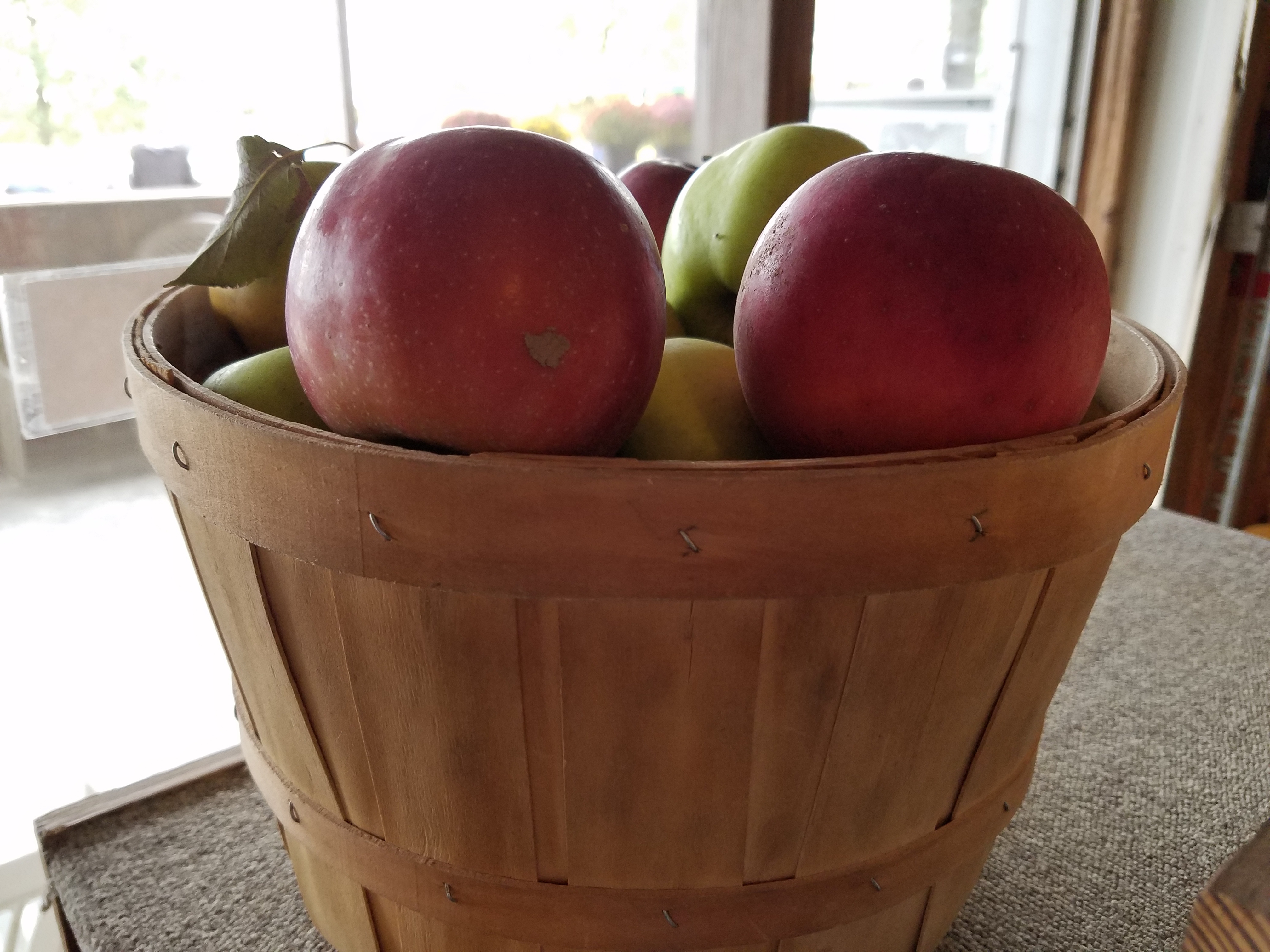
Basket of Apples

On Friday I clocked out of work at the home, farm and auto supply store for four days off in a row!

I drove straight home, dumped the coleslaw I made in the morning into a bowl and mixed it up one last time before the potluck. I grabbed a pair of tongs for serving and headed to the orchard for the 6 p.m. event.

The annual crew potluck is our biggest and only non-work event at Wilson’s Orchard.

About 80 people attended at the on-site Rapid Creek Cidery, bringing the best side dishes imaginable to go along with chef Matt Stiegerwald’s braised pork from hogs raised at the orchard’s farm.

We joked we weren’t sure if we were supposed to bring potluck table service. A veteran of many church potlucks brought a basket with plates, silverware, glasses and everything one would need. Most of us used paper plates and flatware. I enjoyed a glass of plain hard cider as aperitif before switching to non-alcoholic.

When serving began, I made a southern-themed plate with pork, my coleslaw, macaroni and cheese, dumplings and raw tiny carrots. One of countless possibilities given the many tables of side and desserts. All that was lacking was corn bread but it was a potluck after all.

My work pals were all there: the octogenarian who makes dinosaurs and showed off the scar from his recent knee surgery to all who were curious; the pilot who recounted his air-search for the other orchard, which he couldn’t find until I gave directions from ground level; the artist who gave a speech about entering the drawing for fabulous prizes mostly from the Orchard’s lost and found (think sunglasses); the data analyst who is sharp as a tack yet made a six-figure error on the cash register; the Ukrainian guest workers; and the crew of bakers with their families — it takes a lot of bakers to make all the turnovers, pies, apple and peach crisps and blueberry buckles we sell. The sales barn manager was there. She works non-stop from before the August opening until the end of the season. Actually just about everyone was there. Needless to say the conversations and meal, with a chance to win prizes, were delicious. That’s no apple joke.

We talked about when we might see each other again and confirmed that God willing and the creek don’t rise we would be back next year. My only regret was it wouldn’t be soon enough. Heaven help us if it’s not until next season.

Categories
Writing

Drawer of Ingredients

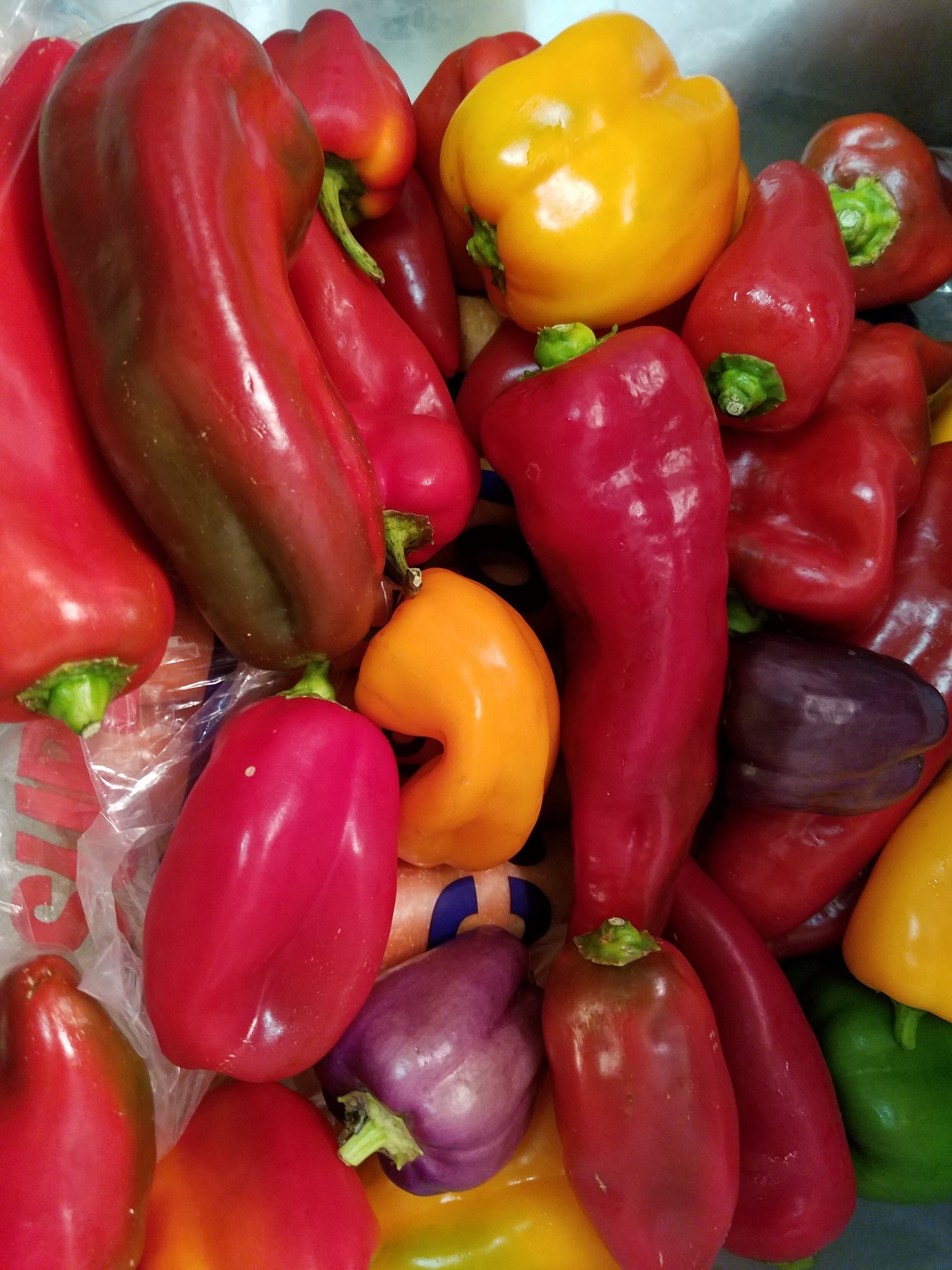
Drawer of Bell Peppers

Our household had no shortage of fresh food this year.

Barter agreements with two farms, my work at the orchard, and a garden that produces more food each year created a kitchen full of ingredients to feed the two of us and others.

I’m thankful to have figured out how to provide local food for our family mostly grown using organic practices.

So it is with this blog. It is a place to capture what’s going on in a turbulent world and make sense of it if I can. I post original content and significant writing from elsewhere. The interplay between this blog, email, Twitter and Facebook is complex and ever changing. Like the fruit and vegetable production, it is a pantry full of ingredients for bigger projects — snippets of this and that drawn from memory and experience.

I’ve written about 2017 as the final lap leading to a finish line. It is also a starting line. In addition to taking care of our aging home, ourselves and our relationships, I plan some writing projects, including an expansion of my post Autobiography in 1,000 Words. I made the plan a year and a half ago and once end of year chores are done I hope to schedule the work. Something else has to give — likely be my work at the home, farm and auto supply store.

At this point, memory is still good and the larder is full of ideas. Now to make something of all these ingredients. What else is there to do?

Categories
Living in Society Social Commentary

‘I’ve got mine’ is not enough

Main Street in Solon

Our town has a bustling Main Street thanks to smart investments by the city council and willing businessmen and women.

Shops serve basic needs: hair styling, hardware, groceries, fuel and insurance. There are plenty of restaurants. The newspaper is located off Main Street at the only four-way traffic light in town. The library and medical clinic are down the hill. New construction is building capacity for shops and I hope the city welcomes entrepreneurs who give it a go.

Solon’s downtown seems idyllic: a place to forget about the rest of the world for a while. Many of us appreciate that aspect of living here.

At the same time, the Solon area also serves as a bedroom community for lives elsewhere.

During 24 years our family lived here I’ve worked in Cedar Rapids, Coralville, the Quad Cities, Iowa City and North Liberty. I’ve travelled to 40 of the 50 states and to Canada on business and on holiday. We bought our first home computer in 1996 when we connected to the World Wide Web. All of this is to say despite our idyllic setting we live in a much broader world.

There’s the rub. In the generally happy, peaceful and pleasant setting we’ve made for ourselves we bear some responsibility for what goes on elsewhere. We’ve got ours, but what about the rest of society? When we see the tumult and conflict in the United States and around the world it is not enough to say, “I’ve got mine.”

Protecting what we value in society falls on each of us whether it is public safety on our roads or doing something about the genocide in Myanmar. There is something to work on for each of us and Solon makes the perfect base camp for us to make a difference. We should make a difference.

~ Published Oct. 12, 2017 in the Solon Economist

Categories
Writing

Grit Alone Won’t Protect Local Food Systems

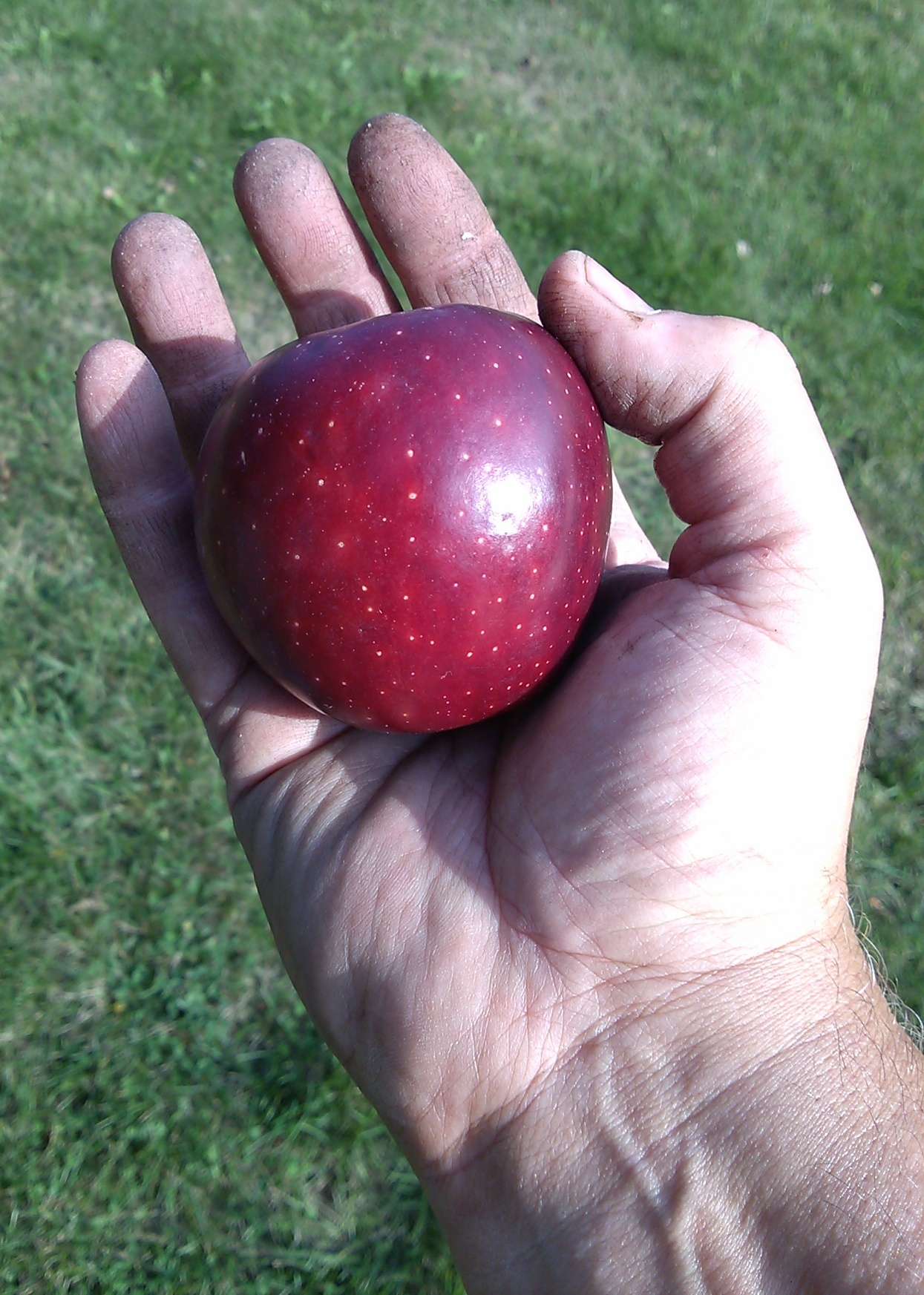
Red Delicious Apples

The marketplace of home vegetable gardens, community supported agriculture, farmers markets, road side vegetable stands, restaurants, retail interests and direct farm sales hasn’t coalesced into a sustainable local food system, and may not.

One should never doubt the resilience of farmers. At the same time, due to unwelcome changes in society, our local food system is at risk before it has become sustainable.

A small group of pioneers made progress toward a sustainable, local food system. People like Denise O’Brien, Dick and Sharon Thompson, Fred Kirschenmann, Francis Thicke, Laura Krouse and Susan Jutz took ideas about sustainability and put them into practice. Their work enabled a new generation to enter the local food business — people like Tony Thompson (New Family Farm), Kate Edwards (Wild Woods Farm) and Carmen Black (Sundog Farm).

The idea of a return to diversified farms producing food for local markets begs the question how did we get away from it?

If markets for local food become stale or disappear due to changing tastes or financial stress, increased commodification could erase slim margins and lead to bankruptcy.

A local food system is about cooperation and support: between farmers, and with their customers, suppliers, workers, volunteers and bankers. Without that a family may have their dinner on the table, but the entire system is risked if such individualism is the prevailing attitude.

Change is in the air. Change driven by economic hardship and oppressive policies originating in Des Moines and Washington.

It doesn’t look good for growers, retailers or consumers, not because business models have changed, but because we are entering an era when wealth flows to the top, leaving the rest of us struggling. How will farmers get health insurance if the individual market becomes too expensive? They may take a job in town and let their agricultural aspirations go.

These changes and the challenges they bring will test the sustainability of a fledgling local food system.

Climate change is impacting society negatively as well. What we assume about Iowa’s growing conditions — adequate rainfall and predictable temperatures — is subject to change as the oceans and atmosphere warm, increasing the number and intensity of extreme weather events. Likewise, increased carbon dioxide in the atmosphere may be reducing the nutritional value of food, according to a recent study published in the journal Nature.

I don’t doubt the resilience of farmers I know. If a local food system can be sustained, they will do it. Isn’t it time you got to know your farmer? We could all use a friend during these turbulent times.

~ First published in the Saturday, Sept. 30, 2017 edition of the Cedar Rapids Gazette.

Categories
Writing

Apple Weekend

Apple Harvest

Best news of the week arrived Friday afternoon via email. The Cedar Rapids Gazette decided to publish my opinion piece on the local food system at risk.

A writer lives for exposure to an audience and my readership will get a boost just by being in print media with daily circulation over 30,000.

I will probably run to the convenience store before sunrise to buy a copy as soon as I hit publish. (UPDATE: Here’s the link).

This weekend is mostly about apples. It’s Golden Days at the orchard. We have multiple varieties of Golden Delicious and for the most part, that’s what we’ll be picking. There are a lot of them still on the trees. Last night was family night and I spent most of my shift stocking shelves, coolers and freezers in preparation for what we hope is a good Saturday turnout. I laundered my orchard T-shirts last night and am ready to go. It’s the beginning of the end of the u-pick season.

Fallen Apple Pile

It’s time to pick the Red Delicious apples on our backyard tree. With the record-breaking heat apples are beginning to drop. I’d better not wait any longer. They are sweet enough to eat out of hand and should make great apple sauce. Whatever I’m able to harvest will be a fraction of the potential. We can only eat fresh and process so many.

So that’s the plan. Read and publicize my article in the Gazette and live in Iowa’s apple world. There’s work involved, but it will be a labor of love.

Categories
Environment Kitchen Garden

Hurricane Weekend

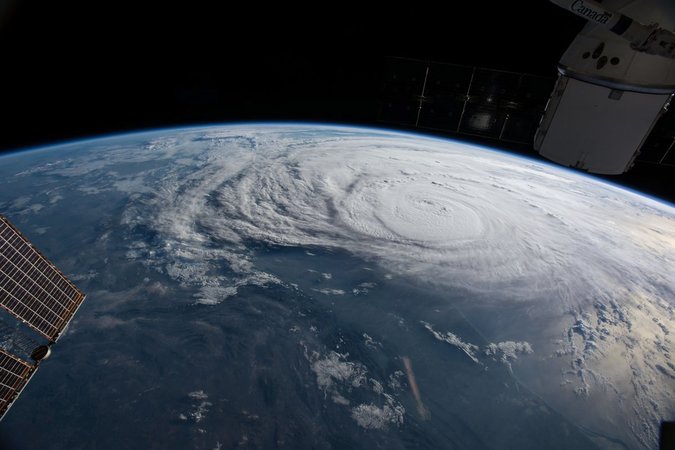
Hurricane Harvey from the International Space Station on Aug. 25, 2017. Photo Credit – NASA European Pressphoto Agency

Rain tapped the bedroom window this morning on the fringe of Hurricane Harvey.

It was a reminder of our connection to the oceans. They are absorbing heat from the atmosphere on a planet experiencing some of its warmest days in living memory. A warmer atmosphere holds more moisture and the result is intense storms like the Category 4 Hurricane Harvey.

In Iowa we adapt easily to hurricanes because of our distance from the coast. Needed rain benefits our gardens and farms. It recharges our surface aquifers. As the weather pattern moved over it seemed normal, not as devastating as it was when Harvey made landfall in Texas Friday afternoon.

Overcast skies and a slight rain depressed attendance at the orchard on Saturday. There were enough visitors to keep busy, especially in the afternoon when the sun came out. Sales seemed steady if light.

One of my favorite August apples is Red Gravenstein, a Danish cultivar. It was introduced to western North America in the early 19th century, according to Wikipedia, perhaps by Russian fur traders, who are said to have planted a tree at Fort Ross in 1811. Red Gravenstein is tart, juicy and crisp — great for eating out of hand.

The cider mill made the first press of apples for the sales barn. The gallon and half gallon jugs sold well. Over the years I’ve come to appreciate the changing flavor of our cider as we move through the apple harvest. I bought a gallon of cider and a dozen Red Gravenstein apples at the end of my shift.

I’ve been reading recipes for tomato catsup in old community cookbooks. After reviewing a dozen or so I went to the kitchen and created this sauce from the abundance of red bell peppers and tomatoes:

Red Pepper Sauce

Ingredients

Half dozen cored and seeded red bell peppers cut in quarters
Equal amount by weight of cored tomatoes one inch dice
One cup of malt vinegar
One teaspoon salt
One tablespoon refined sugar.

Process

Pour the vinegar into a saucepan and bring to a boil.
Add tomatoes and peppers.
Add sugar and salt.
Bring back to a boil and cook for 10-20 minutes until the vegetables are soft.

Strain the mixture. Retain the liquid to use as vinegar in salad dressings.
Run the vegetable mixture through a food mill and either serve immediately or bottle and refrigerate.

Recipe notes

To make a thicker sauce, either reduce it in the saucepan or add tomato paste.
I used malt vinegar because it was on hand. Absent malt vinegar I’d use homemade apple cider vinegar.