Categories
Environment

What’s After Paris?

Gore ParisLast week, Al Gore reflected on the ten years since he founded The Climate Reality Project. Following is an excerpt from an email he sent to the Climate Reality Leaders he trained.

Ten years ago, I trained the first group of Climate Reality Leaders in my barn in Carthage, Tenn. I asked them to join me in spreading the word about the urgency of the climate crisis, and I was impressed by the commitment and passion they demonstrated. I’m even more impressed now as the work they’ve done in their own communities and beyond has helped to spark a global movement for action on climate change.

In the decade since that first group came together, I’ve trained more than 10,000 Climate Reality Leaders who are just as committed to making the world a better place for future generations. The Climate Reality Leadership Corps is active in more than 130 countries around the world and represents people from all backgrounds and walks of life. I’ve enjoyed working alongside teachers, scientists, community leaders, business owners, students, and so many others who all share a dedication to promoting solutions to the climate crisis.

Ten years of concerted action by the Climate Reality Leadership Corps came together last year when 195 countries committed to working together to reduce greenhouse gas emissions planet-wide as part of the Paris Agreement. Now, it’s time for us to continue our work together and push countries to strengthen and implement their commitments so we can make the promise of Paris a reality.

Even as we look to the future, I want to make sure we take a moment to appreciate the last 10 years and all of the amazing work that you’ve done to help share the truth about the science and solutions of climate change with your friends, family members, colleagues, and everyone else.

I want to thank each and every one of you for what you’ve done in your own communities to bring attention to the most important issue of our time.

It is easier to play a role in the global effort to mitigate the causes of global warming and climate change when thousands of others are doing the same thing, each in their own way. That’s been my personal benefit from The Climate Reality Project.

I joined in Chicago (August 2013) and have no regrets. I learned the story behind Gore’s film An Inconvenient Truth, and the science behind it. Gore presented a broad mix of information about what is happening in our environment because of global warming and how it impacts communities.

Since then, I’ve presented my story to individuals and groups in the area and seek opportunities to do more. I served as a mentor at the Cedar Rapids training last year and have written about the need to act on climate change in my blogs, and in letters to the editor of our local newspaper. When I worked as a freelance correspondent, climate change informed my world-view and was a context in which I framed stories whether they were about farming or forestry, the school board or city council, or about new business openings or individual achievements.

Talking about global warming and climate change has become part of my life.

If the Paris agreement was the culmination of ten years of work, as Gore said it was, the work is not finished.

With a sharp focus on identifying the impact on our climate of CO2 emissions from burning fossil fuels, Gore and many allies made the point about seeking alternatives. As solar and wind-generated electricity reach price parity with fossil fuels (and they are doing so faster than anyone imagined) the coal industry is in disarray and nuclear power is waning.

There is a cloud on the hopeful horizon of renewable energy. Buoyed by exploration and discovery of oil and shale gas reserves, companies like British Petroleum, once green washing us with their interest in renewables, divested their interests in solar and wind energy this decade to focus on oil and gas.

I predict declining prices of solar power will help it dominate the future of municipal and regional electricity generation. Already companies like Central Iowa Power Company (CIPCO) are changing their tune. Not so long ago they were promoting nuclear power at their annual shareholder’s meeting. Today, they are building solar arrays.

If there is a blind spot in Gore’s laser focus on burning fossil fuels it is the impact of greenhouse gas emissions from other sources. He acknowledges them, but they have not taken the spotlight. There’s work to be done regarding manufacturing, agriculture, mining and other aspects of our industrialized global economy.

Every time I talk to an Iowa farmer Gore’s work can be heard in the conversation. Not so much from me, but from farmers. They’ll tell you the hydrology cycle seems different even if they dislike Al Gore and don’t acknowledge it is related to global warming. They don’t have to and I don’t need ratification of my own beliefs.

Like so many others I am focused on the work of mitigating the causes of climate change. You may not know it, but it is baked into everything I do.

What have you done lately to create a better environment for all of us to enjoy?

~ Written for Blog for Iowa

Categories
Home Life

Sleep Came Easily

Cherry Tomatoes from the Garden

Mounds of grass clippings blocked the John Deere’s steering as I mowed part of the lawn.

The temperature was ideal, the sky clear, and I was alert enough to safely operate the equipment.

To engage the steering I backed off and tried again.

Grass clippings lie in wind rows where I mowed last night. Using a rake and wagon I’ll transfer them to the garden for mulch.

In high summer a gardener/low wage worker/family member finds more to do than there is time. I managed to send a box of kale, fairy-tale eggplant and tomatoes to the library for the workers earlier in the day. They were appreciative.

The garden hose was coiled near the house for mowing. While driving past the garden I noticed the cucumber leaves drooping. I stopped, got the hose back out, and watered. I missed a lot of cucumbers during the morning harvest so I picked them. They filled a crate and created another thing to do.

Dinner was sweet corn on the cob and tomatoes with cheese plate, bread, and blueberry yogurt for dessert. The corn and tomatoes were filling, so I didn’t get to dessert.

After dinner I put cucumbers — newly harvested and those already in the ice box — on the counter after washing them. I sorted and found a place to put them. I hadn’t planned another task, but it needed doing. I’d say I’m in a pickle, and that’s more solution than problem.

As a result of my cucumbering, processing peppers and tomatoes got pushed back.

Sleep came easily after my eighteen hour day.

Categories
Environment

Bakken Oil Pipeline Pledge

BakkenPledge_v2_600px(EDITOR’S NOTE: Ed Fallon has long been a friend of Blog for Iowa. Here is his latest on the Bakken Oil Pipeline).

Over the past two years landowners, farmers, tribes and environmentalists have done everything possible to stop the pipeline.

We have pursued legal and legislative channels at great cost of time and money.

We have held forums, rallies, protests, flotillas, press conferences and more.

We have written letters and opinion pieces for our newspapers, spoken with radio stations and TV reporters, and written countless letters to government agencies.

We have learned more about pipelines, climate change, watersheds and eminent domain than we ever imagined we’d need to know. With the knowledge we’ve acquired, we’ve educated others — and public opinion has moved our direction. The most recent Iowa Poll shows less than half of Iowans support the pipeline while three fourths oppose the use of eminent domain to build it.

We await court rulings on a lawsuit filed by ten Iowa landowners and another just filed by Tribal leaders in the Dakotas, and remain cautiously optimistic that the court will decide in our favor. But barring an injunction, those cases may take time.

Meanwhile our land, water, property rights and climate are being trampled.

From the perspective of climate change, it is unconscionable that our government enables this pipeline to go forward. President Obama claims to understand the seriousness of climate change, having said, “No challenge–no challenge–poses a greater threat to future generations than climate change.” Yet he hasn’t lifted a finger to stop this pipeline.

From the perspective of eminent domain, Republican Governor Terry Branstad campaigned against the abuse of eminent domain, yet now has no problem with its use for a powerful, wealthy pipeline company.

From the perspective of our environment, Democratic officials like State Senator Mike Gronstal and Congressman Dave Loebsack either openly support the pipeline or refuse to stand with their constituents against it, despite grave concerns about the potential impact on our land and water.
As with many great struggles before us, when those elected to represent and protect our interests fail to do so, it is incumbent upon the people to challenge an unresponsive government through nonviolent civil disobedience.

In this struggle against the Bakken pipeline, there are two key examples of the failure of law and government to respect and protect our rights.

First is the Army Corps of Engineers’ abdication of its responsibility to assure the safety of our waters. In issuing a permit to Dakota Access, the Corps failed to assess the full range of the pipeline’s probable impacts.

Second, the decision by the Iowa Utilities Board to issue eminent domain to a private company providing no service to Iowans is an assault on the sanctity of our right to own and enjoy property. If government can allow your land to be confiscated for an oil pipeline, where will the assault on liberty strike next?

Yes, it is time to defy an unjust law, time to defend liberty, time to fight the expansion of the fossil-fuel infrastructure and the accompanying destruction of our environment.

In the tradition of other great American struggles for freedom . . .
From the Boston Tea Party to the labor movement struggle to secure rights and freedoms we still enjoy and take for granted;

From the fight for women’s suffrage to the civil rights struggle of the 1960s;

From the Farm Crisis when farmers stood with their neighbors to block foreclosure auctions to the struggles happening now all across the country in opposition to fracking, pipelines and oil drilling;
. . . It is time to step forward and risk arrest.

Over a month ago, a Pledge of Resistance was circulated. The Pledge was initiated by Bold Iowa and supported by Iowa CCI, CREDO Action and 100 Grannies for a Livable Future. To date, over 1,000 people have signed the Pledge, which reads:

“{W}e are the conservatives, standing up for a safe and secure future for our families. It is those we protest, those who profit from poisoning our water, who violate our property rights, and who are radically altering the chemical composition of our atmosphere — and the prospects for survival of humanity — that are the radicals.”

If you are moved, please sign the Pledge and stand with us in a final attempt to stop this pipeline that our planet can’t sustain and most Iowans don’t want.

Ed Fallon
Des Moines

Categories
Home Life

Couple Hours to Myself

Gardener's Breakfast of tomato, salt, pepper and feta cheese.
Gardener’s Breakfast of tomato, salt, pepper and feta cheese.

Hope regular readers are well tolerating my posts from Blog for Iowa. They are different from what I normally write here, but then none of us is one-dimensional — I hope.

I got off work at the orchard a couple hours early. It’s the beginning of the season and we had plenty of staff to cover customers. The apples coming in are mostly tart and useful for baking, apple sauce and apple butter. We had ten varieties available today.

Had a great conversation with a gent who bought a large bag of Dolgo crabs for crab apple jelly. His recipe was basically this one.

“Don’t squeeze the jelly bag,” he cautioned. “The jelly will go cloudy.”

I wished him good luck as he headed for the sales barn exit.

We get a treat for each shift we work. I ate a Zestar apple. Before leaving I bought a 10-pound box of blue berries and on the way home secured a dozen ears of sweet corn at a roadside stand. Tonight’s dinner will be sweet corn on the cob and fresh tomatoes with blueberry yogurt for dessert.

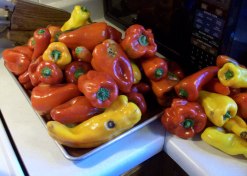
Seconds Bell PeppersPlans for the unexpected mid day gap are to mow the lawn, gather the grass clippings, process bell peppers and Roma tomatoes, fix dinner and freeze some of the blueberries. The freezer is already packed, so I hope the peppers and blue berries will fit. I have no idea if everything will get finished.
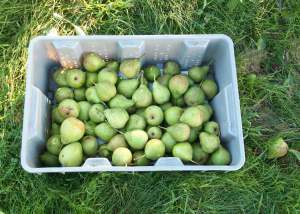
A storm blew down a pear tree branch. After inspecting the damage I picked the unripe fruit then cut the branch cleanly from the trunk. Once they ripen we’ll have more than enough for fresh and maybe some for pureed pear sauce. The tree is still loaded.

Crate of pears.
Crate of pears.

Working three jobs is challenging mentally, physically and every way in between. It’s hard to keep up and a couple of unexpected hours to myself was a welcome surprise.

Categories
Sustainability

Hiroshima Day 2016

Hiroshima, Japan after U.S. Nuclear Attack. Photo Credit: The Telegraph

The Washington, D.C. rumor mill is saying President Barack Obama may “do something” about nuclear weapons before the end of his term.

Among ideas being discussed are early retirement of some of the non-deployed weapons in the arsenal; declaration of a no first use policy; or taking weapons off hair-trigger alert.

The arms control community is pushing for no first use policy, but whatever — any Obama action to reduce the threat of a nuclear weapons exchange near the end of his presidency would be welcome, and largely symbolic.

Saturday, Aug. 6, marks seventy-one years since the United States dropped the first of two nuclear weapons on Japan.

When the Enola Gay dropped “Little Boy” over an unsuspecting Hiroshima, it killed between 60,000 and 80,000 people immediately with a total death toll estimated at 135,000. The bombing of Nagasaki occurred three days later. Men, women and children were killed indiscriminately.

President Harry Truman made the decision to use the bomb. In the end, he had no questions or regrets. Truman believed in the larger picture of World War II, a conflict in which tens of millions of people lost their lives, dropping the bomb would save lives. More than seven decades later we continue to debate whether bombing Hiroshima was necessary or played any significant role in ending the war.

After signing the New START Treaty with Russia, which entered into force in February 2011, the U.S. Congress embarked on a nuclear weapons modernization process expected to spend as much as $1 trillion over the next 30 years. That’s a lot of money for a weapons system we hope never to use.

What’s an Iowan to do? My friend and colleague Peter Wilk speaks for many of us.

Calling for “No First Use” of Nuclear Weapons
Submitted to the Brunswick (Maine) Times Record

This August 6th and 9th we are once again reminded of the atomic bombings of Hiroshima and Nagasaki, which killed an estimated 200,000 women, men and children. This past May, President Obama was the first President to visit the site and to commemorate the bombing victims.

While in Hiroshima, President Obama declared, “Among those nations like my own that hold nuclear stockpiles, we must have the courage to escape the logic of fear and pursue a world without them.” Thousands of members and supporters of Physicians for Social Responsibility completely agree.

Although most of us would rather not think about it, the U.S. and Russia continue to have thousands of nuclear warheads deployed on hundreds of missiles, bombers and submarines. We and the Russians keep over 1,000 of them on so-called “launch on warning” status. These warheads can be launched within minutes and reach their targets around the world within thirty minutes, putting millions of innocent civilians at risk in each of our countries.

The recent military uprising in Turkey reminds us just how unstable our current situation is, with 50 of our nuclear weapons stored in a U.S. airbase there. This airbase was surrounded and cut-off during the most unstable period of that coup attempt.

Perhaps most frightening is that the U.S. maintains a policy of threatening to be the first to use nuclear weapons in a future conflict. Combining this policy with our “launch on warning” stance sets the stage for a potential nuclear war initiated out of fear, anger, miscalculation or accident.

These horrific weapons threaten our own national security rather than enhance it. They are unusable in any meaningful sense of the word, given the global disruption to the world’s climate, food supply and economy that would result. At the same time, they have no value in countering terrorists or cyber-attacks.

Fortunately there are also some positive developments upon which to build. 127 countries have taken the Humanitarian Pledge calling for elimination of nuclear weapons. As a result, the United Nations established an Open-Ended Working Group that has begun meeting to discuss the most promising next steps toward a treaty to ban nuclear weapons around the world.

Meanwhile, the potential humanitarian impact of any use of nuclear weapons is so overwhelming that we in the U.S. must pull ourselves back from the brink by taking an easy step of our own. Since these weapons are in reality unusable, the U.S. should minimize their role in our military planning. President Obama can and should declare that the U.S. is adopting a “no first use” policy – pledging to never again be the first nation to launch nuclear weapons against another.

The U.S led the world into the nuclear age. Now it’s time to lead the world beyond it – to move to safer national security strategies that do not put all that we care about at risk, under the false premise that threatening to use nuclear weapons against others can protect us.

President Obama – your legacy and our lives are at stake. Please complete your presidency by taking a meaningful step to reduce nuclear risks by initiating a “no first use” policy.

On this 71st anniversary of the destruction of Hiroshima, let us all pledge “never again” and commit ourselves to do what we can to help make progress toward a world free of nuclear weapons.

Peter Wilk, MD
Physicians for Social Responsibility — Maine

It’s time to prevent what we cannot cure, and abolish nuclear weapons.

Categories
Work Life

At the Apple Farm

Sign at Wilson's Orchard
Sign at Wilson’s Orchard

Between working opening day at the orchard and the kickoff of a friend’s political campaign I had two hours.

Day six of a hundred straight work days was about as good as it gets: a reunion with friends from last season, a chance to catch up and engage again in this apple life.

It’s not that the garden went neglected. I picked kale for the library workers and tomatoes, cucumbers and jalapeno peppers for the kitchen. There’s plenty of work to do around the house. Instead of doing it I crashed on the couch and slept deeply for an hour after my shift.

Refreshed enough to go at it again, I will — not later, but now.

Categories
Work Life

100 Days of Work

Locally Grown Sweet Corn

Today begins 100 straight days of work.

Monday through Friday I’ll be at the home, farm and auto supply store, Saturday and Sunday at the orchard, and in between there is writing, gardening, cooking, home maintenance, yard work and living.

It’s not a life of fun. It is doing what’s needed to sustain a life in Iowa.

I bought two new pair of blue jeans to accommodate the new schedule and get by with once a week laundry. Other than that, the logistics were already in place and I’m ready to go.

Next week I begin editing Blog for Iowa — at least one post a day. The 23 August posts have been roughly framed, although what happens in society will drive what gets posted when. I’m looking forward to posting 500-600 words daily.

Preseason Saturday at Wilson's Orchard
Preseason Saturday at Wilson’s Orchard

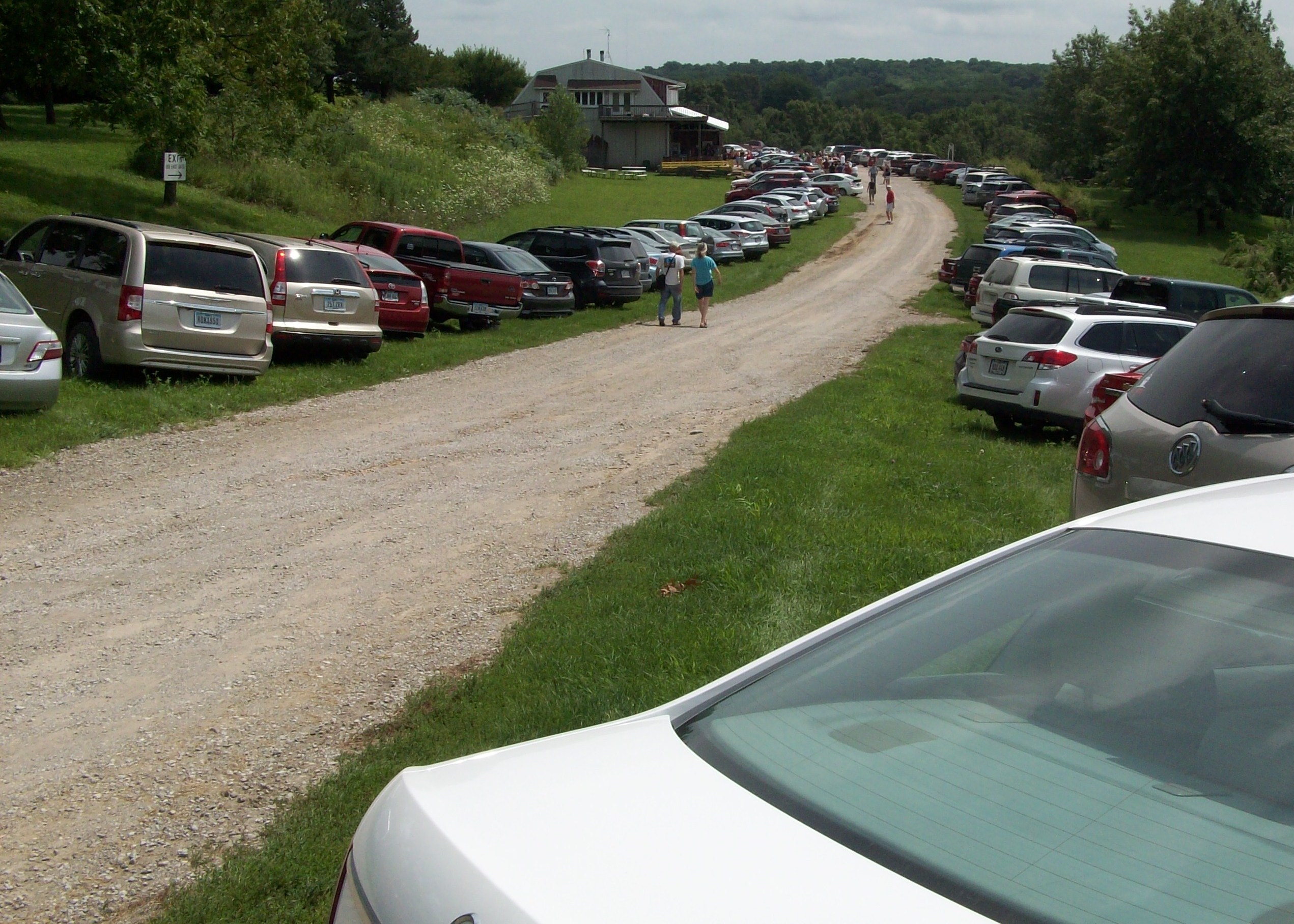
On Saturday at the orchard cars were lined up for preseason raspberries, blueberries and Lodi apples. With 50+ people in line, I didn’t go inside. If this crowd was any indication it’s going to be a very busy season.

I will work in the sales barn although the chief apple officer and his operations manager weren’t sure what I’ll be doing opening weekend. The octogenarian friend who got me the job four years ago has given up driving the tractor-trailer that provides tours. I enjoy working at the orchard because it is a nexus of contact with people I’ve known most of my life.

Missing is a plan to get enough rest in the coming days. While not a high priority, it needs consideration. I better get on that too.

Categories
Environment Home Life Kitchen Garden

New Saturday Night

Audio Cassettes
Audio Cassettes

Music filled the Saturday afternoon gap left by Garrison Keillor’s retirement.

Not radio, but music recorded on audio cassette tapes.

It is amazing there is even a player in the house. (There are two that work). The sound quality of this outdated technology was surprisingly good.

While processing vegetables into meals and storage items, I listened to Shaka Zulu and Journey of Dreams by Ladysmith Black Mambazo, and Graceland and The Rhythm of the Saints by Paul Simon. I hit the pause button when I left the room so the tape wouldn’t run out without hearing it.

When Jacque returned home from work we had our first sweet corn meal of the season: steamed green beans and corn on the cob. As they ripen, tomatoes will replace green beans. There is nothing like seasonal Iowa sweet corn. I made a cucumber-tomato salad as accompaniment using a recipe found by googling on-hand ingredients.

The Saturday kitchen produced a gallon of vegetable soup, refried bean dip, daikon radish refrigerator pickles and sweet pickles made with turmeric. Outside was hot and humid although nowhere near as oppressive as the summer of 2012 when we had record drought.

On Friday Donnelle Eller posted an article about corn sweat at the Des Moines Register. Corn and soybean plants, which cover Iowa farmland, transpire moisture. During pollination and ear formation as much as 4,000 gallons of water per acre of corn is released into the atmosphere daily, making it feel humid. There were a number of articles about corn sweat in the media last week.

What makes this year different is not corn sweat. The first half of 2016 was Earth’s hottest year on record. This impacts the hydrology cycle, change in which is a primary manifestation of climate change. With global warming the atmosphere can hold more moisture until a precipitating event makes a rainstorm. It is more often a gully-washer.

The high winds and heavy, short-duration rain have become more frequent in recent years. This week a storm caused significant damage to the garden. In addition to losing the Golden Delicious apple tree, the cucumber towers blew over uprooting about half of the pickling cucumber plants. The Serrano pepper plants blew over, breaking the stalk of one near the ground. The high deer fence blew down and deer got into the kale and pepper patch by jumping the low fence. The cherry tomato plants blew over, however I was able to upright and re-stake them without damage.

Climate change is real, it is happening now. It is time to act to mitigate the effects of global warming.

Political Event with Tim Kaine at Bob and Sue Dvorsky's home in Coralville, Iowa on Aug. 17, 2010
Tim Kaine at Bob and Sue Dvorsky’s home in Coralville, Iowa on Aug. 17, 2010

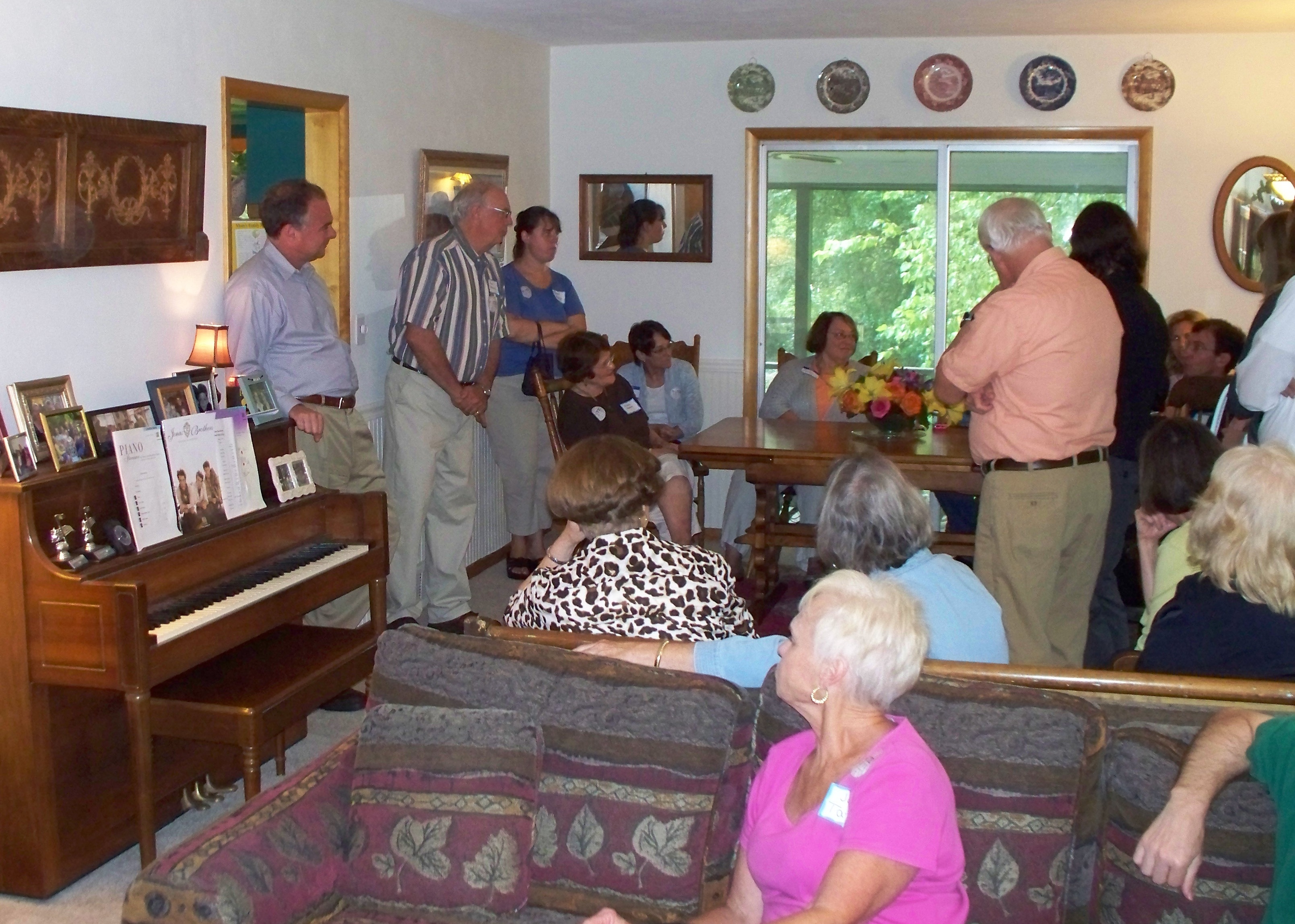
Hillary Clinton announced Senator Tim Kaine would be her running mate this weekend. Friends were posting photos all weekend from the August 2010 event he attended in Coralville. If he wasn’t the center of attention then, as the photo suggests, he will be now.

I’m torn about viewing the Democratic National Convention this week. Hopefully key speeches will be available for viewing afterward and I can avoid social media enough to think clearly about what Hillary Clinton says.

As Sunday begins, I’m not sure listening to recorded music will adequately replace Garrison Keillor’s A Prairie Home Companion. It’s here. It’s what I can do to sustain our lives in a turbulent world.

Categories
Kitchen Garden

Cook or Quit

Harvest for the Weekend Kitchen

I put on my rubber boots and went to the garden in the predawn sunlight. I left a trail where my boots scraped against the dew drops formed on the lawn.

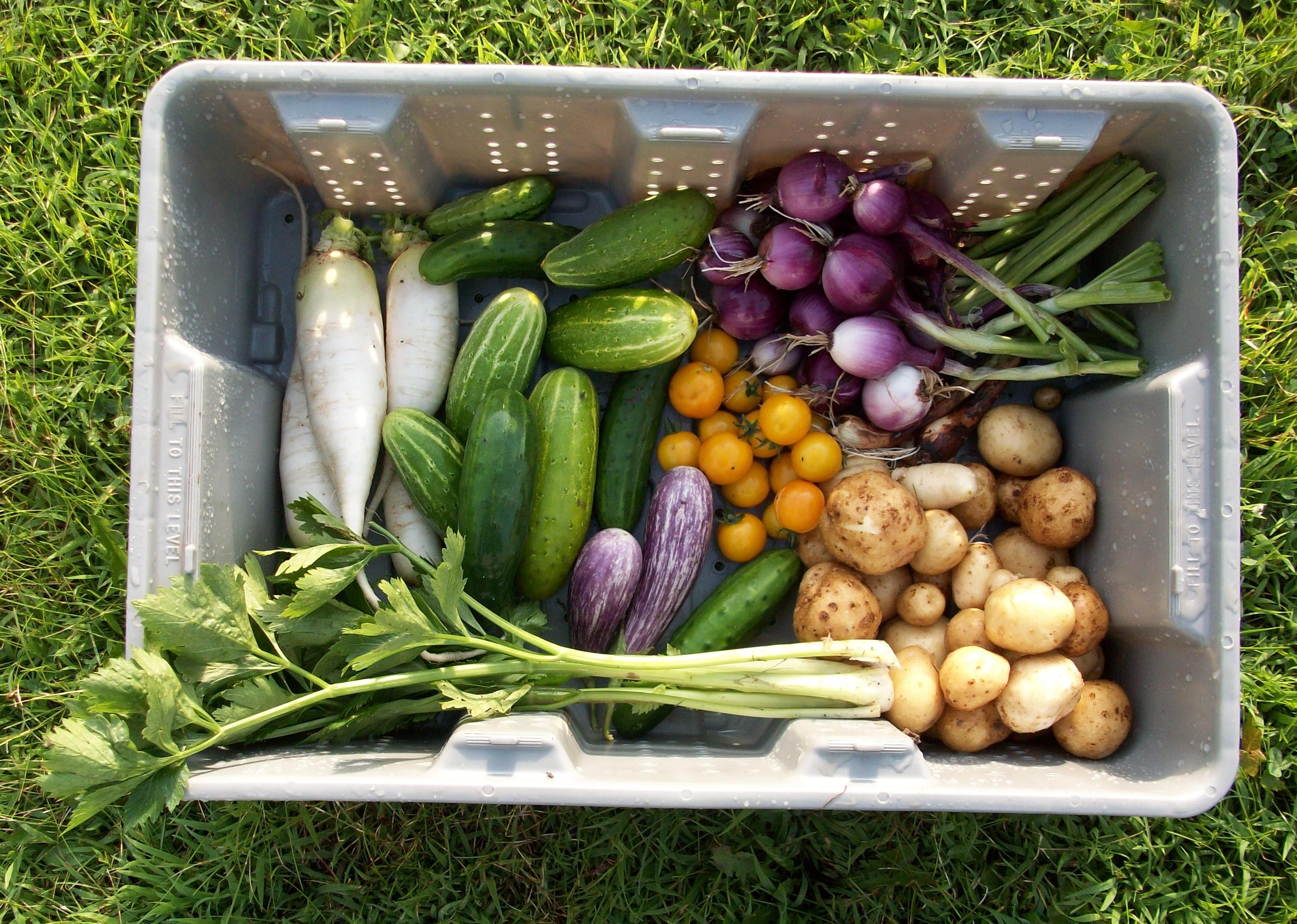
Fresh deer droppings lay moist under the oak trees and two rabbits stopped and watched as I made my way through the clover. I picked cherry tomatoes, jalapeno peppers, daikon radish and everything in this photo.

In the kitchen I made salsa using fresh ingredients, some old relish — everything that made sense. It was tasty and spicy, quite delicious.

The future of any local food movement is in the hands and kitchens of people who do these kinds of things.

If you ask my mother’s generation, “what is local food,” they often mention sweet corn and tomatoes. Hard to argue with the taste and seasonality of those two vegetables, but there is more.

Cooking goes against the grain of a global society increasingly and intentionally seeking to remove creative, engaged prep work from the kitchen and replace it with heat and serve processed food. Here’s an example.

While on break at the home, farm and auto supply store food preparation became a conversation topic as it often does.

A colleague explained how he bought a bag of prepared frozen meatballs from COSTCO and warmed them in his favorite barbecue sauce. He then took a small loaf of white bread, halved and toasted it, and spooned the meatballs on the bottom half making a meatball sandwich. He said it was really good as we listened.

If taste and ease of preparation is all we seek, the industrial food supply chain can meet our needs. In that case, when it comes to local food, what’s here becomes local.

I’ve been spending time in the kitchen this week. At 5 a.m. I stop what I’m doing and make breakfast. Stirfry, roasted vegetables, and because they are in season, fresh steamed green beans with every meal. It feels a little weird, but I felt better all day because I ate mostly what I grew before 7 a.m.

The local food movement is just not going to happen based on a small number of farmers, chefs and advocates and there’s the ceiling. If it becomes a part of our daily lives, which include vegetables from the garden, eggs from chickens we know and preparing food to taste, then the local food movement has a chance.

What it reduces to is either cook or quit.

Categories
Kitchen Garden

Farm Transition

View from the Barn
View from the Barn

RURAL CEDAR TOWNSHIP — Yesterday was the Practical Farmers of Iowa field day at Carmen Black’s Sundog Farm.

Carmen and Susan Jutz explained their farm transition process in a simple duet about bankers, government agencies, insurance companies and community.

Like everything Susan has done since I met her almost 20 years ago, the transaction of selling the farm had a home made feel to it. It looks like Carmen will continue that localized and home made culture.

Attendees walked the farm, with Carmen and Susan explaining pest control practices. Highlights included treatment for flea beetles, tomato blight, worms and cucumber beetles.

What I hadn’t thought about was providing proper space for air to circulate among tomato plants to prevent spread of disease. The wall of cherry tomatoes that blew over in yesterday’s storm is a good example. The wind caught the entire planting like a sail. If they were separated more, wind might blow through them, leaving them upright.

Susan’s eventual departure from the farm is another instance of my generation going home. On Sundog Farm there is a chance for sustainability as Carmen adds farm management to her experience. Opportunities like this are rare and Carmen appears to be making the most of it.