Categories
Writing

Holiday Weekend

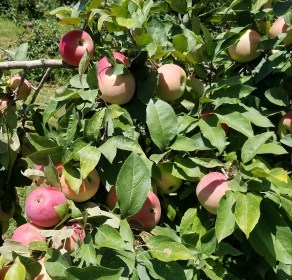
Apples Ripening

Since 2013 I’ve worked at the apple orchard on Labor Day.

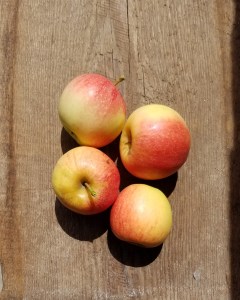
The holiday coincides with ripening of Honeycrisp apples which is one of our most popular varieties. There are more than a dozen others, including Gala, McIntosh, Red Gravenstein, Burgundy, Cortland, Ginger Gold, Red Free and Akane, ripe and ready to pick.

It rained on Saturday, which suppressed the crowd, but Sunday a couple thousand guests stopped by. It was our busiest day this season.

My job title is “mapper.” That means I talk to many of our customers and help them have a positive experience at the orchard. A large map is displayed at my work station, from which I tell a story about how to find apples. Even when a majority of people seek the same variety, each customer is wants something a little different. It’s my job to figure out what that is and help them find it in a personal way. Sometimes I draw a map on a slip of paper showing where specific apples are. Mostly I use the map as a reference point and work to enable customers to break the chains of intellectual engagement and look at the 80 acres of land that makes up our orchard. With popular varieties that’s easier because the rows of apple trees are visible from my perch at the top of the hill. Among the many things our orchard represents, it is a chance to get away from daily life for a while.

Rain had been holding off Sunday until around 4:30 p.m. when clouds gathered and let loose a shower. Our guests headed into the sales barn and to their vehicles to get out of the weather. Rainfall signaled the end of the day more than our business hours.

I enjoy working at the orchard, especially when it is busy. My personal tradition has been to work on Labor Day and I’ve done it for as long as I can remember.

In the transportation and logistics business operations never ceased and our family had no culture of celebrating this holiday. I recall a Labor Day I drove into the Chicago loop to work in my office. I parked at a construction site near Lake Michigan, walked the block and a half to work, and went through security. I was one of the few people other than security inside the Standard Oil building on Randolph Drive. I believe I got a lot of work done that day, although today am not so sure.

Over the years we’ve become a family that doesn’t celebrate the eight or ten big holidays of the year. That might change in retirement. Even though I grew up in a union household, was a union member at the meat packing plant where my maternal grandmother and father worked, and have a daughter who is represented by a large union, Labor Day is a forgotten time for me. Maybe because I’d been part of management most of my worklife. More likely if I took the day off I wouldn’t know what to do as celebration. In the end, I’d rather spend time with people who are getting away from la vie quotidienne and help make their experience better on Labor Day.

After the rainfall I policed up trash from the picnic area and a young couple asked me to take a photo of them. Guest relations like this is an unwritten part of my job. I looked for proper framing where I could capture the day for them. She handed me her mobile device and I got them to smile. I snapped a photo of them in front of apple trees with our restaurant on the hill in the distant background. The photo pleased them.

I picked up discarded apples, plastic and paper and put them in trash barrels not full enough to empty. That work will be for Labor Day, when if the rain holds off we should have a couple thousand of guests seeking something, apples mostly, but also learning how to live in the 21st Century.
Categories
Home Life

Taking a Deep Dive

Gala Apples

It’s raining as I type on the keyboard. Rain is to relent and I hope it does because one of the farmers for whom I work is getting married today.

In our small family there are not many celebrations. I’m not sure what to do at a wedding, although I’ll figure it out by 3:30 p.m. today.

Jacque is steering me in the right direction. We bought a gift on line and had it sent to the bride’s home. She is making a card. She suggested I refrain from going directly from the orchard in my work clothes as I had planned to do. I looked through the closet to find something to wear and there was my blue shirt and a pair of slacks. I have a pair of dress shoes left over from when I worked in the Chicago loop. I need to pick a tie. My navy blue blazer still fits. Special things for a special day. I’ll change in the employee rest room at the orchard then head down to the county seat for the ceremony. Civilization at work.

It’s still raining.

Since my first retirement nine years ago I’ve kept track of significant activities.

I keep a balance sheet, a list of books I’ve read recently, and record every event, meeting and significant encounter with people outside immediate family who are part of my world.

Early on there was a purpose to this, although I’m not sure now what it was. Three full binders later, I’m ready to give up tracking things so closely. My last full report was in December 2017 as my Social Security pension began. My second retirement seems opportunity enough to let go of details and focus on main tasks at hand. Things like weddings, funerals, birthdays, housekeeping and the like. I expect I’ll get better at it.

September begins the turn toward winter. The garden is in late summer production so there are tomatoes, celery, cucumbers, winter squash, green beans, eggplant and peppers coming in, requiring processing. Fruit is also coming in from the orchards with pears, apples and peaches lined up on the counter waiting to eat. Cooking has taken a fresh flavor with local food dominating most menus. Cucumber salad is happening daily and we’re not tired of it… yet.

2018 is proving to be a year of transition. So aren’t they all?

I’ve been planning garlic planting in late September and haven’t decided whether to use the cloves I grew as seed or to get more from the farm. I picked a place for them and once the cucumbers are done I’ll prep the soil. I think I know the answer. At some point we have to live on our own — I’ll use the cloves I grew this year, hoping they multiply and eventually become self-sustaining. I’m confident they will.

Categories
Living in Society Social Commentary Writing

Newspapers Are Working – So Subscribe

Solon Economist – 2016

Despite significant decreases in staff and other expenses, many newspapers crank out stories relevant to our daily lives.

For example, Jason Clayworth and Brianne Pfannenstiel published a full-page article about Democratic gubernatorial candidate Fred Hubbell’s tenure at Younkers in the Gannett newspapers on Monday. I don’t know how many people will read the article but the fact newspapers crank out copy for Iowans addicted to politics says something positive about the fourth estate, even if having to re-litigate the quotes attributable to the Iowa GOP is somewhat annoying.

Also on Monday, the Cedar Rapids Gazette had front page, above the fold coverage of 2020 Democratic presidential candidate John Delaney’s completion of a 99-county tour of Iowa. Delaney won’t likely be our next president but having the field to himself gives him name recognition he won’t be able to get once more Democrats jump into the presidential race.

I’m told newspapers run non-political stories as well.

Blog for Iowa encourages people who read newspaper coverage on line to subscribe. Without paid readership advertisers won’t buy ads. Without revenue, newspapers will cease to exist. If newspapers cease to exist… well that would be a much different bag of cats. In fact, I predict cats and dogs is all you will read about. While personal, funny, sad, and sometimes delightful, a story about pets is not news.

There may be no saving larger newspapers. As we’ve seen in our county, large news organizations are consolidating, and local coverage has been stripped from daily ink. Instead of getting the Iowa City Press Citizen, most people here read the Cedar Rapids Gazette because of its breadth and depth of coverage. There isn’t even a Sunday edition of the Press Citizen here, and the opinion page runs only a couple of times a week. Team Gannett produces valuable coverage, but it is not local. It is not enough.

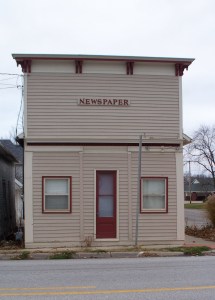
Small, local papers with subscriptions of a thousand readers are doing well in Iowa, so if your community has one, spend the nominal annual fee and subscribe. It’s a great place to start and coverage of city council, school board and community activities is second to none. Even though your large local paper may be on the decline, subscribe. I prefer digital so I don’t have to recycle the newsprint. But either way would be better than the alternative.

Thomas Jefferson is reputed to have said, “Were it left to me to decide if we should have a government without newspapers, or newspapers without a government, I should not hesitate a moment to prefer the latter.”

Just imagine what our lives would be like with government but no newspapers. Subscribe.

~ First posted at Blog for Iowa

Categories
Living in Society Social Commentary

Late Summer in Iowa

Summer Vegetables

A pall fell on Iowa as the family prepares for tomorrow’s funeral of Mollie Tibbetts, the 20 year-old college student who was murdered near Brooklyn, Iowa.

Many of us feel a connection to her whether we knew her or not. She went jogging and never came back. We grieve with her family and friends.

Many, including the 45th president, seek to politicize her death. We can’t let that stand. We won’t let it stand. May she rest in peace.

Tragic summers are part of living in Iowa.

While the current midterm election cycle will continue toward its fall conclusion, we live our lives outside of politics. The politics I have come to know recalls a few triumphant moments: Lyndon Johnson’s 1964 re-election; Dave Loebsack’s 2006 election; and maybe Barack Obama’s 2008 election. So few celebrations in the wicked world and none of them perfect. Politics is not why we go on living.

Set aside our work and endeavors to make society better, and what’s left? For some of us it is a deep and abiding love of life — including its comedic and tragic drama. If we tell ourselves stories to live, what story will we tell about this summer so we can go on living?

Division among us makes it harder to craft a narrative for holding back tears — tears of loneliness, of sadness for the loss. Tears unexpectedly salty and wet pulled down by gravity to our tongue. Impartial tears of grief. I am heartened by the idea there is no other side, just one country of which we are all a part.

In the wee hours of morning lightning and thunder preceded rain. I couldn’t sleep. I got up to get a drink of water from the kitchen and felt dizzy walking down the hall. I drank a few ounces and went back to bed, sleeping fitfully.

I’m still tired yet ready to go, ready to take on what’s next. To make the next effort worthy of a life, honorable to our predecessors and invigorating for who’s next. Despite summer’s tragedy we look forward to winter, and ultimately to spring and the chance to renew our lives.

In this moment it’s hard to contemplate the garden’s bounty. Even though it is hard, we will persevere and make something of it. A meal for today and ingredients for the future. What else will we do in the face of tragedy but go on living?

Categories
Writing

Writing in Summer Rain

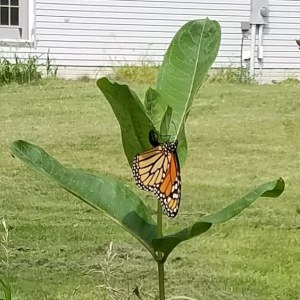
Monarch Butterfly on Milkweed Plant

Thunderstorms have been rolling over all day bringing needed rain and a chance to get caught up indoors.

I’m less freaked out about the amount of food processing ahead. There have been more cucumbers than normal and I canned the last seven quarts of sweet pickles this morning. That will be the last, I promise. I also canned pints of tomatoes, apple sauce and a jar of the same pickles. While the water bath was bubbling I made a pot of chili for supper with fresh tomatoes and Vidalia onions. We’ll cook the remaining sweet corn of the season. My retirement has had that effect — things are less freaky.

Tomatoes are next, although the plan is to eat as many fresh as possible. With only two of us at home, we can’t eat fast enough to keep up with the growing and cooking so some will be canned and turned into tomato juice and sauce. I’m taking it in stride.

Two weekends ago the orchard hosted our back to school weekend. A balloon artist/magician entertained children, and of course there were apples to pick and eat. It was a chance for parents to have one more family fun event before school begins.

Getting ready to attend grade school was one of the great pleasures of life. Each fall began with friends, new clothes, new pencils, and lined, blank sheets of paper. I needed new clothes after growing out of mine. I was first born, so no hand-me-downs. The sensation of hope and opportunity to begin anew is memorable, unlike anything I experience these days. It was something. I hope today’s graders feel the same way.

A Dad walked into the sales barn at the orchard carrying a young child on a backpack and a two-year old on his shoulders. He looked very fit. After they picked apples the toddler helped me transfer apples from our basket to a bag. “Do you want to count them?” I asked. At two, children aren’t really sure what counting is, or how exactly to do it. He just pick up one apple after another and let me do the counting after one and two.

I can see why people return to work after retirement. When we’ve worked our whole lives in stressful situations there’s no slowing down. It will take work to settle in more comfortably after 50 years in the workforce. What I once thought were extra things — cooking, gardening, reading and writing — are now life’s main event. Not sure how I feel about that. I won’t be for a while.

August is the last month to cover editorial duties at Blog for Iowa. I’m not sure what will be next. We’re moving quickly through the procession of apples, Red Gravenstein, Sansa, Akane and Burgundy this week. We have family Friday events through the month of September, so with work at the home, farm and auto supply store time will fly — almost like I’m working again.

Not really. Living one day in society at a time as best I can, hopefully with enough money for seeds in the spring.

Categories
Environment

Irony About Climate Change in New Orleans

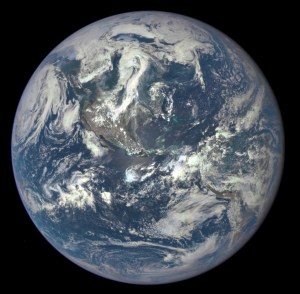
Image of Earth 7-6-15 from DSCOVR (Deep Space Climate Observatory)

It is no surprise the Heartland Institute hosted a conference called “The America First Energy Conference” for climate change deniers on Aug. 7 in New Orleans.

Heartland is the libertarian think tank that teamed up with Philip Morris to deny the health impacts of tobacco use. Climate change denial is high on their priority list.

“The day-long conference reflected the political rise of global warming skeptics in Donald Trump’s America that is occurring despite mounting scientific evidence, including from U.S. government agencies,” Reuters correspondent Collin Eaton wrote, “that burning oil, coal, and natural gas is heating the planet and leading to drought, floods, wildfires, and more frequent powerful storms.”

“The leftist claims about sea level rise are overblown, overstated or frankly just wrong,” Heartland president and CEO Tim Huelskamp said in an interview with Reuters. Regarding the United Nations’ findings on climate change, he said it was “fake science” motivated by a desire for “power and control.”

An irony is the conference is being held in the American city most impacted by extreme weather made worse by climate change. New Orleans has not recovered and may never recover from the August 2005 Hurricane Katrina.

“One of the country’s largest credit rating agencies has put New Orleans and other coastal cities on notice: prepare for the effects of climate change or risk a hit on your credit score,” according to Tristan Baurick at the New Orleans Times-Picayune. When the risk analysis community says it, it must be real.

Climate change is real, it’s happening now, and human activity is a primary contributor to extreme weather events like New Orleans experienced.

The rise of a conference like this is attributable almost entirely to the rise in prominence of libertarian billionaires with a long range plans to re-make American society to their liking. They believe their liberties have been infringed upon by government regulations and the Trump administration has been removing barriers to the practice of unfettered capitalism. That’s not good for you, me, or the people of New Orleans.

It is shocking how much the Trump administration has deregulated government in less than two years. The fact the Environmental Protection Agency is deregulating asbestos, a known carcinogen banned in 55 countries, is a sign of how far they will go. The only check on such behavior is for Democrats to win a majority in at least one chamber of the next Congress during the 2018 midterm elections, or to vote Trump out in the 2020 general election. Much damage has already been done. Some of it can’t be reversed.

I met a nine-year-old from Saudi Arabia recently. He lives with his extended family on the Arabian Peninsula and has come to Iowa the last couple of years to visit his mother before school starts in September. We talked about the weather.

“It sure is hot,” I said.

“Yes, but I don’t believe it is climate change,” he replied.

“No, probably not,” I said. “It’s August in Iowa.”

It is one thing for children to learn the difference between weather and climate change. When adults in the room deny the science of climate change, it’s something else. It’s clear there were few adults at the conference in New Orleans.

~ First posted on Blog for Iowa

Categories
Environment Kitchen Garden

A Difficult And Strange Season Of Weather

Carmen Black at Sundog Farm

By Carmen Black

(Editor’s Note: Iowa Farmers deal with an existential reality that is the weather. Regardless of increasingly polarized discussions about climate change, weather affects real people in tangible ways. Carmen recently wrote this piece to members of her Community Supported Agriculture project Local Harvest.)

The weather has been consistently challenging from the late spring to immediately hot May, from lots of rain to this current dry spell. There hasn’t been a catastrophic weather event, but all these different difficult weather conditions create more work to keep everything growing well.

I’ve been thinking more about it as we’ve been observing its impacts while harvesting more of the summer crops. I’ve talked to many other farmers (including folks that grow other types of crops) about the challenges of this season, and anecdotally it seems like the conditions have been hard on many types of crops and livestock alike. One of things that has struck me about this year is that it hasn’t been just one way like really hot or really wet, but every month has brought a different extreme to contend with. It’s made me wonder if it’s all this erraticness that’s been stressful to the plants and animals rather than just the heat or just the late spring.

I was curious to find out if the weather has just felt difficult to us or if it really has been extreme in the grand scheme of things, so I did a little internet research for weather data. What I found was interesting, and did seem to affirm my feeling that this year really has been weird. This was the coldest April on record (since records began in 1895), and was on average 10 degrees colder than normal. It was also somehow both the 5th snowiest April and the 13th driest April, which seemed a little ironic. 2018 tied for the 6th warmest May with 1887, and the average temperature was about seven degrees warmer than normal. Des Moines had three consecutive daily record highs from May 26-28. I was surprised that in Cedar Rapids the daily record highs for the end of May were all held by 1931 or 1934, and then I realized that was the dust bowl! June was the 10th warmest and 10th wettest June on record. July seems to have been pretty average after all those top 20 finishes for the previous months, as it was the 54th coolest July and the 47th driest July on record. Which I think kind of puts the extremeness of the previous months in perspective. Kind of nice to have an average month finally.

Anyhow, my main takeaway is that this year really does seem to be remarkably erratic when you look at the numbers, and it makes sense that plants and animals would respond unpredictably to all of these changes in the weather. I feel both good that I wasn’t making up that the weather has been extreme in many different ways this season, and kind of bad that it really has been historically weird this year. The fact that it took the dust bowl to beat this year out for daily heat records in May felt kind of grim.

Some crops like onions seem to have really suffered from this weather. You may have noticed that they’ve been smaller than normal this year, and after getting most of onion harvest done last week I’m sorry to report that many of the longer season onions are even smaller. This was especially disappointing to me after such a bountiful onion harvest of really giant ones last summer, but I think makes sense considering what we were up against. We planted more than 3 weeks later than we did last year because it kept snowing, and then had to irrigate the onions (which we hardly ever have to do) because it was so dry. We struggled to keep the weeds under control in the onion field in June when it was so wet, and spent almost a week wallowing in the mud trying to hand weed. All in all I’m glad we have some onions to show for all of it, and have a few ideas of things to try in case this ever happens again.

I also have to say that some crops seem to have really thrived in this weather. We’ve never had such a good cucumber or spring carrot crop before, both of which are crops that we have historically struggled to produce large quantities of for several weeks in a row. The combination of having plenty of carrots and cucumbers has felt like a great accomplishment, and I hope that we’re able to replicate it in a better weather year as well!

~ Carmen Black farms in Cedar Township in Johnson County, Iowa.

Categories
Living in Society Social Commentary

Public Health Approach to Gun Violence

Polish Carpentry Crew in Chicago

On page A5 of Tuesday’s Cedar Rapids Gazette was the headline “75 shot in Chicago last weekend.”

From 3 p.m. Friday until 6 a.m. Monday 12 people were killed and 63 wounded, mostly on the south and west sides of the city.

It seems like a lot, even for a large city. Shootings in Cedar Rapids are frequent, but not like this. Is the headline a call to do something about gun violence?

Chicago law enforcement attributed the shootings to gangs who shoot into summer crowds at night, according to the news story. The shootings appear to be random, and ongoing. At least 1,700 people have been shot in Chicago this year. It is one tough city.

In the early 1990s I attended a session of arraignment court near the Washington Park neighborhood on the south side. It was an eye opener. Case after case came before the judge: shootings, domestic violence, assault, petty theft, sexual assault — plaintiffs were bandaged and bruised by incidents that provoked the court appearance. The public defender would lose track of his clients and which case was being heard. It was a chaotic meat grinder.

Experiences like these lead me somewhere besides lack of gun control as the core problem regarding social violence. The lightning rod has been the National Rifle Association.

Progressives found a certain amount of glee in the recent story in Rolling Stone titled “The NRA Says It’s in Deep Financial Trouble, May Be ‘Unable to Exist.’” The NRA is the poster child for what’s wrong about gun culture in the United States.

“The National Rifle Association uses its enormous lobbying power to stymie legislative debate and block most constructive gun legislation,” Ralph Scharnau recently wrote. “Thus even very moderate provisions fail to pass or even get out of committee.”

As a society Americans are not good at controlling violence. That includes our elected officials.

Chicago stands as an example the solution to gun violence is not only gun control. I’m not alone in believing that. The World Health Organization proposes violence be treated as a public health problem, outlining four basic approaches:

  1. Uncovering as much basic knowledge as possible about all the aspects of violence through systematically collecting data on the magnitude, scope, characteristics and consequences of violence at local, national and international levels.
  2. Investigating why violence occurs – that is, conducting research to determine the causes and correlates of violence; the factors that increase or decrease the risk for violence; and the factors that might be modifiable through interventions.
  3. Exploring ways to prevent violence, using the information from the above, by designing, implementing, monitoring and evaluating interventions.
  4. Implementing interventions that appear promising, widely disseminating information and determining the cost-effectiveness of programs.

Hasn’t this work been done? Yes it has. WHO produced a list of ten evidence-based strategies for preventing violence.

  1. Increase safe, stable, and nurturing relationships between children and their parents and caretakers;
  2. Reduce availability and misuse of alcohol;
  3. Reduce access to lethal means, such as guns, knives,and pesticides (often used to commit suicide, especially in low-and middle-income countries);
  4. Improve life skills and enhance opportunities for children and youth;
  5. Promote gender equality and empower women;
  6. Change cultural norms that support violence;
  7. Improve criminal justice systems;
  8. Improve social welfare systems;
  9. Reduce social distance between conflicting groups;
  10. Reduce economic inequality and concentrated poverty.

Will a public health approach to preventing gun violence work? I don’t know, but what we are doing now — hammering the NRA and elected officials — isn’t. It’s time to try something else.

~ First posted at Blog for Iowa

Categories
Environment Home Life Kitchen Garden

Gardening in End Times

Japanese Beetles Enjoying a Pear

I’ve been a gardener since we got married.

We planted a few tomatoes near the duplex we rented in Iowa City the spring after the wedding. As we lived our lives, raised our daughter, and sought economic stability, we either planted a garden or harvested what was there. When we owned a home, first in Merrillville, Indiana, and then in Big Grove, the garden got bigger and I became a better gardener. There is evidence in this year’s abundant harvest.

It didn’t come naturally even though gardening is elemental. The brief narrative of my gardener’s life.

As I step back from the working world to focus on home life what seems clear is society is moving at a startling pace toward disaster. Our industrial society consumes everything useful in nature, leaving us with foul air and water, depleted soil, polluted and acidified oceans devoid of marine life, and a warming world with all the consequences that yields. The earth will survive as it has. We people seem to be on the downside of our prominence. In multiple ways these are end times.

The Slovenian philosopher Slavoj Žižek asserts there is a chance for a new beginning in the terminal crisis in which human society finds ourselves. His arguments are not convincing to us regular humans.

What do we do?

What we have done is argue about approaches. Should we have a carbon tax? Should we ban abortion? Should we ban plastic straws? Is wind, sun, nuclear or natural gas a better source of electricity? Should we cut taxes and reduce government’s role in our lives? Should we become socialists, or even worse, democratic socialists? Should we let go of Hillary’s emails? Should we all just try to get along? Approaches don’t work and we should let go of them all.

The better question to ask is what story do we want to tell? As others have said, notably author Joan Didion, “We tell ourselves stories in order to live.” What narrative will take us out of the current crisis?

For me it’s “I’m becoming a better gardener.”

Regardless of pending social collapse we must go on with our lives. Partly to keep our sanity, and partly — importantly — to take steps toward a more livable world. We will never go back to the Iowa of 1832 before the great division and clear cutting began. What we can do is plant the seeds of a better life where we live. Our forebears left us a disaster. What can we do about it? Make the best of it with forward-looking narratives for the next generations.

I get it that many people don’t have means to do more than survive. When I see the abundance of our garden it’s hard to believe people go without a meal. Yet they do, in large numbers. We can feed a couple of them, but is that enough? It’s something.

The essence of the narrative is the verb to become. “I seem to be a verb,” R. Buckminster Fuller wrote. I seem to be that verb. We are not predestined to anything except our human span of nine decades, and that only if we are lucky. We live in an imperfect society that beckons engagement. I’m not sure working toward perfection is as good as doing something positive is. Knowing what to do requires a better narrative. One that hasn’t been invented for the 21st Century and beyond.

I plan to work on a better narrative, although garden in end times doesn’t seem too bad.

Categories
Environment Living in Society

Reynolds Proclaims Weather Disaster – 11 Times

Front Moving In

Governor Kim Reynolds proclaimed counties in Iowa to be a disaster because of severe weather. It is time to act on climate.

Tornadoes tore through Marshalltown, Pella and Bondurant last Thursday as I got off work at the home, farm and auto supply store. It doesn’t appear anyone was seriously injured or died, although damage to the communities was substantial. Photos and video posted on social media depicted a horrible scene.

Are these storms due to climate change? We know Governor Kim Reynolds issued 11 disaster proclamations since June 11 for severe weather, heavy rains, storms, tornadoes and flooding. Something is different about our weather. Even a casual observer understands our climate changed and contributed to these extreme weather events.

Additionally, the seasons have been out of wack this year. A late spring, early high ambient temperatures, and more frequent storms make our weather exceedingly weird. Iowans have noticed and are talking about it. It’s not a random occurrence.

Ben Santer, an atmospheric scientist at the Lawrence Livermore National Laboratory, led a study of four decades of climate data that concluded human activity is disrupting our seasonal balance. That is, the seasons don’t proceed through time the way they did. Eric Roston at Bloomberg wrote a more accessible article about the study here.

“Poring over four decades of satellite data, climate scientists have concluded for the first time that humans are pushing seasonal temperatures out of balance — shifting what one researcher called the very ‘march of the seasons themselves,’” Roston wrote. “Ever-mindful of calculable uncertainty and climate deniers, the authors give ‘odds of roughly 5 in 1 million’ of these changes occurring naturally, without human influence.”

While an individual study is one thing, the science of climate change is clear. I wrote about it in 2014:

People seeking scientific proof of anthropogenic global climate change are barking up the wrong tree. The goal of science is not to prove, but to explain aspects of the natural world. Following is a brief explanation of climate change.

Around 1850, physicist John Tyndall discovered that carbon dioxide traps heat in our atmosphere, producing the greenhouse effect, which enables all of creation as we know it to live on Earth.

Carbon dioxide increased as a percentage of our atmosphere since Tyndall’s time at the beginning of the Industrial Revolution. As a result, Earth’s average temperature increased by 1.5 degrees Fahrenheit.

The disturbance of the global carbon cycle and related increase in carbon dioxide concentrations in the atmosphere is identifiably anthropogenic because of the isotope signature of atmospheric carbon dioxide.

We can also observe the effects of global warming in worldwide glacier retreat, declining Arctic ice sheets, sea level rise, warming oceans, ocean acidification, and increased intensity of weather events.

It is no wonder the vast majority of climate scientists and all of the national academies of science in the world agree climate change is real, it is happening now, it’s caused by humans, and is cause for immediate action before it is too late.

To learn more about what you can do to help solve the climate crisis, go to The Climate Reality Project.

~ First posted on Blog for Iowa