LAKE MACBRIDE— I planted Acer and Beefsteak tomatoes today, commonly referred to as slicers. Also harvested some radishes for dinner. It was about 2-1/2 hours all-told. The first tomato seedlings seem to be surviving, although they haven’t grown much. There is one more variety of tomato to plant, the Best Boy.
LAKE MACBRIDE— The tomato seedlings weathered the afternoon sun and overnight rain, and each cage has at least one survivor from the transplanting. The next threat is bugs that chew on the young stems. I’m ready with extra seedlings should some be stricken.
The plot of spring vegetables looks nice after yesterday’s hoeing. Dark wet soil between bursts of green. The carrots did not germinate. It won’t be long before the radishes are ready to harvest. The ground is too wet to work in the garden this morning.
Mike Carberry, Diane Dunlap, Lisa Green-Douglass and Janelle Rettig
The local Sierra Club, Iowa City Climate Advocates, 100 Grannies for a Livable Future and my organization, Iowa Physicians for Social Responsibility, hosted a county supervisor forum at the Iowa City Public Library last night. Since we were a co-sponsor I felt obligated to attend.
Martha Norbeck moderated, and the way she crammed three or four questions into a single one gave the candidates license to answer how they would around the topics. I would have picked other questions, but was not in charge of that.
The forum went like this.
I’m supporting Carberry and Rettig because I know them best, their strengths and weaknesses, and believe they will work to do well as supervisors. The other two would likely work hard if elected, but I don’t know them at all, and picking a candidate is far from being a logical process on a level playing field.
Only two weeks until the Democratic primary, which in Johnson County has been the election for local races. The lone Republican supervisor, John Etheredge, is expected to be sanded off in the Democratic wood shop that is this county’s general election. For the time being, I’m planning to vote at the polls, but get back to gardening as soon as the ground dries, and there is a break in my outside work schedule.
LAKE MACBRIDE— We agreed I could skip soil blocking at the CSA this week. There is a lot of planting to do on the farm, but the summer help has arrived, and the greenhouse needs emptying into the high tunnel and fields before planting begins again in earnest. I spent a seven hour shift in my own garden.
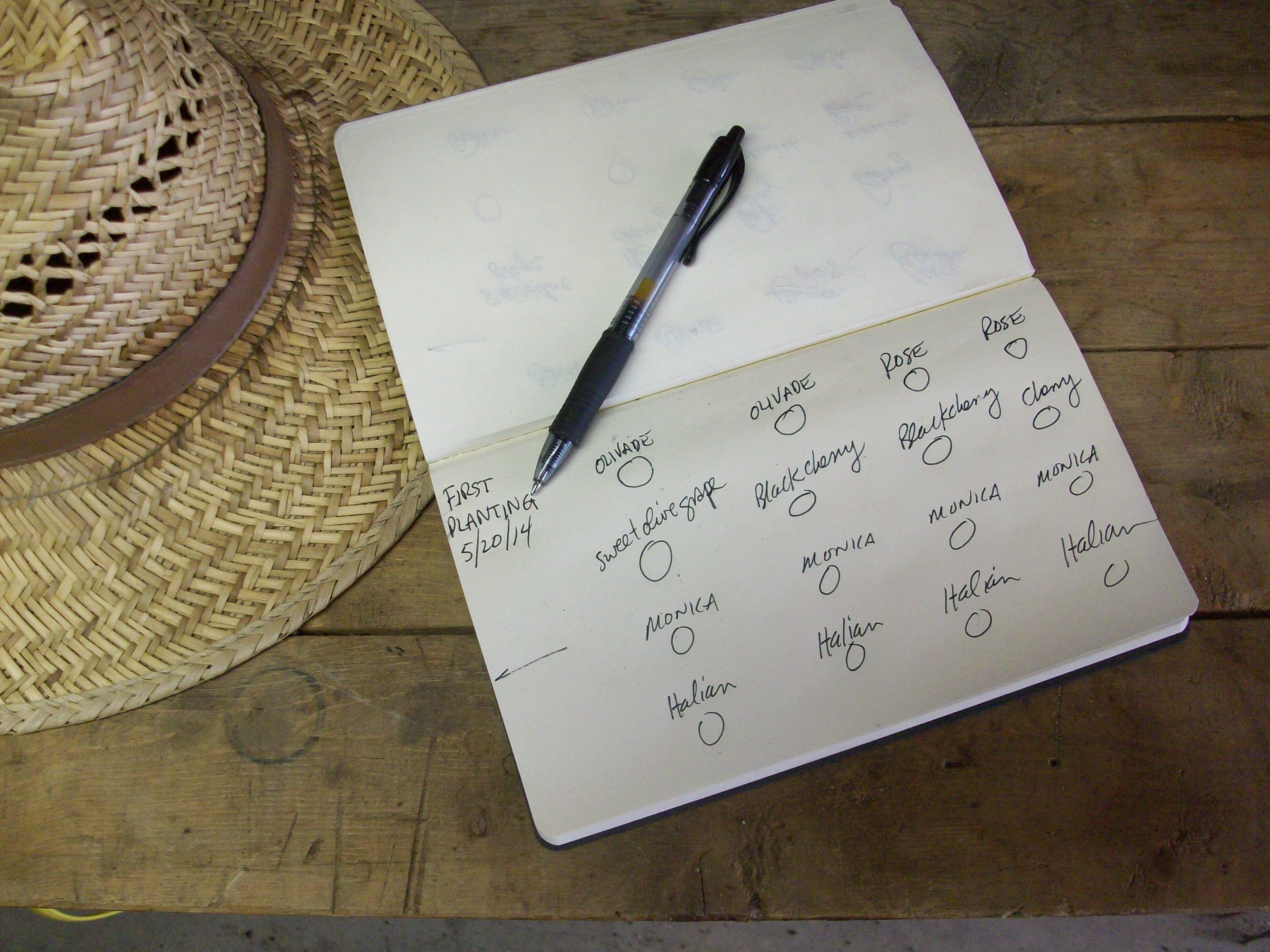
First task was planting tomatoes. I finalized a plan and planted the seedlings according to this plan.
Final Planting Schematic
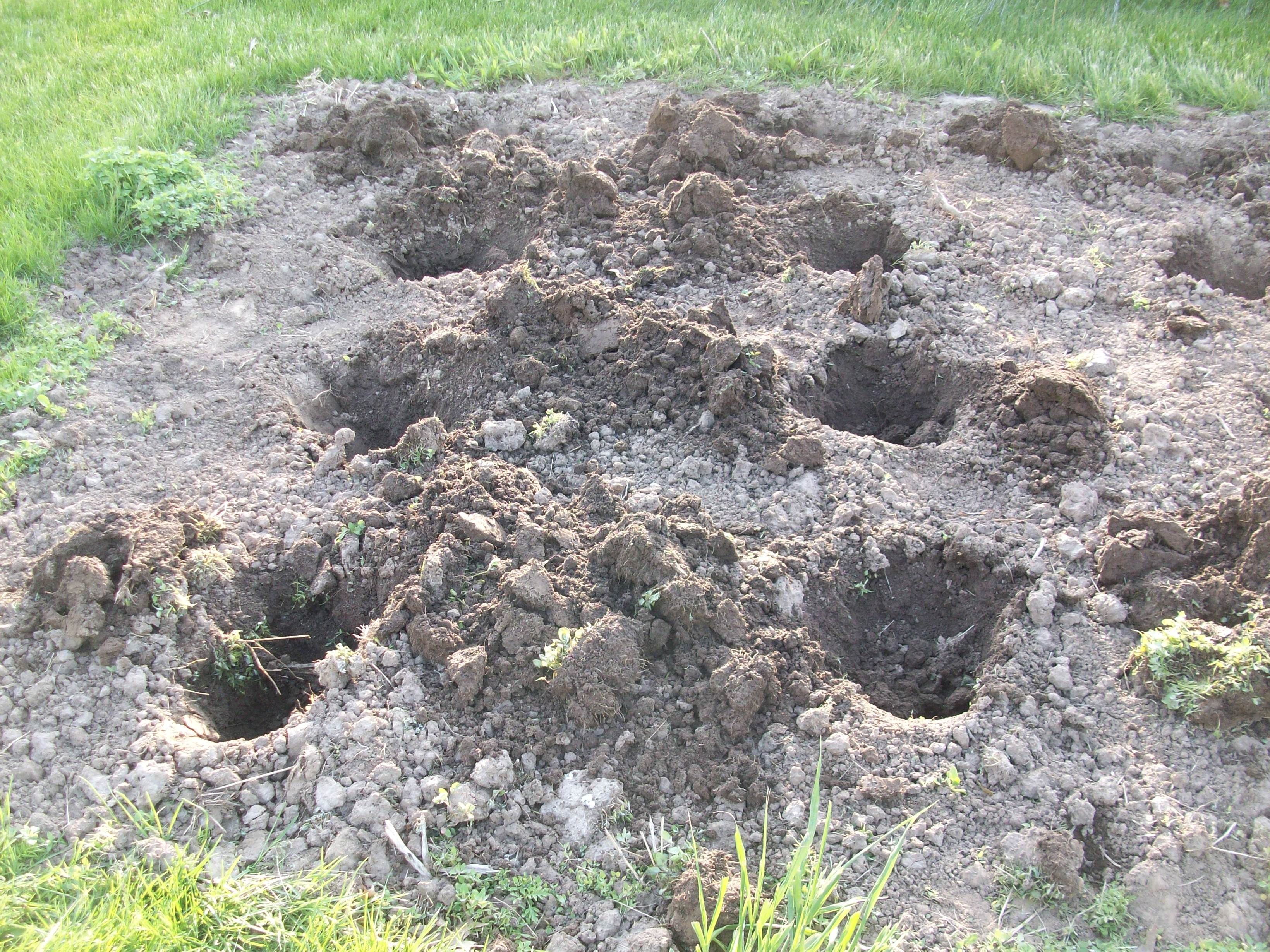
It began by digging holes for the seedlings. They looked like this.
Tomato Holes
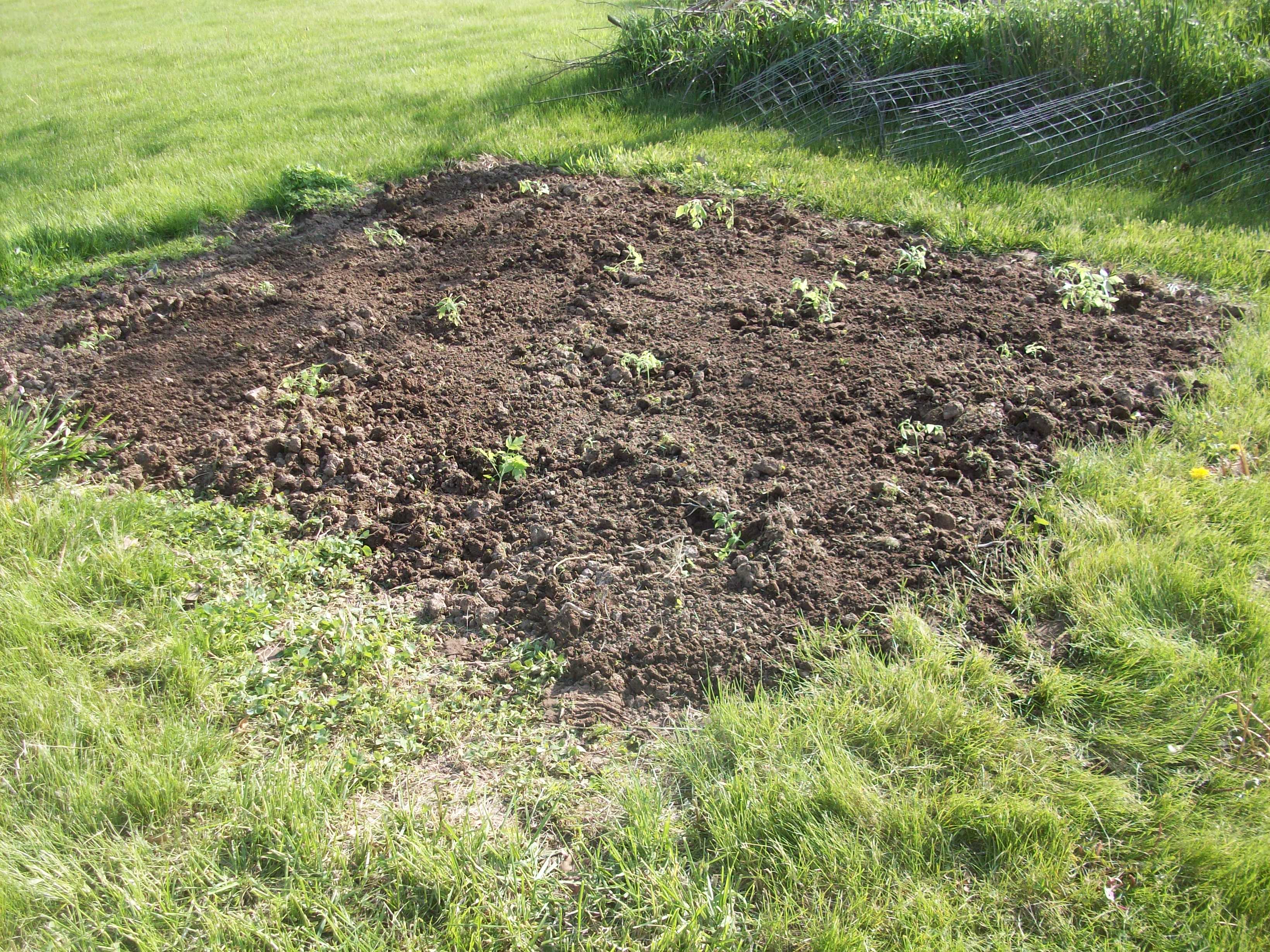
After a lot of work, delicately trying to plant the tomatoes without damage, the plot looked like this. I left a small strip for herbs on the north end.
Tomato Patch
I watered, staked and caged them before moving on the next plot. I transplanted the remainders in case I need them to replace failed plants.
Surplus Seedlings
I found a couple of cloves of garlic in a ditch and planted them last summer, and they came up. Because I have a supply of garlic chives, I trim off the green leaves, compost them, and use the thicker part of the plant in cooking. The leaves are definitely edible, and I would slice and mince them finely and use the same way you use chives for a very mild garlic flavor.
The plot had been left as it was at the end of the season, so there was a lot of work to be done. I removed all the fencing, the aforementioned spring garlic, and brought the John Deere up from the garage to mow it short. I dug a bit, but the day was getting late, and I stopped at about five spade rows.
Spring Garlic
It was a busy day and a lot of work. Seven hours was about all I could take before heading inside for a shower. It was a constructive day in the garden.
LAKE MACBRIDE— Farmers are back in the fields after a wet spell. According to today’s hourly forecast, there is a window for planting that lasts until 2 p.m. when scattered thunderstorms are expected.
Suddenly the house is full of greens and soup vegetables, mostly from the CSA— there is plenty to eat. But if planting isn’t done soon, there will be only a slight garden harvest.
After proof reading six late breaking stories for the newspaper, and making soup from last night’s asparagus steaming water and bits of asparagus ends, the rest of the day is mine for the garden.
Turn off the Internet and walk into the garden. That’s how today will be spent.
SOLON—My first reaction to Salt Fork Kitchen was accurate— except the part about struggling in the old, well used space. Great food will make the restaurant, even if the old church pews are uncomfortable, and the cheap, stackable restaurant chairs don’t rise to the food’s quality. Bent forks and all, the restaurant has become a popular stopping spot at 112 E. Main St. It’s because of the food.
Breakfast is the foundation of the restaurant according to their website. “Salt Fork Kitchen is a made-from-scratch, locally sourced restaurant that works with area farmers to provide exceptional, in-season food. We believe in quality first at a fair price.” They are open from 7 a.m. until 2 p.m. Tuesday through Sunday. On Saturdays from 9 a.m. until noon they offer a market of farm fresh products which supplements their sales at the nearby Iowa City Farmer’s Market. They also offer farm-to-table dinners on special occasions for a fixed price. A list of their local food sources is here.
Breakfast is a meal best made at home, but from time to time, people want a place to meet, or overnight company needs an easy transition to a road trip home. Salt Fork Kitchen serves these basic needs. If you stop there for breakfast or lunch, don’t expect fancy— just great food.
Read my previous posts about Salt Fork Kitchen here, here, here, and here.
LAKE MACBRIDE— A friend was coming to overnight, so I baked a cake— an applesauce cake with rhubarb sauce.
The challenge of growing and preparing local food is cooking, and I don’t mean heating up the latest frozen concoction from H.J. Heinz. It is understanding what types of fruit and vegetables can be consistently sourced locally, then working those items into a localized cuisine— a micro cuisine specific to a household.
For example, we have four apple trees, and at some point we stopped letting them fall for wildlife and started processing them into food. Among other things, I make applesauce— quarts and quarts of it— from the Red and Golden Delicious apples grown on our trees. Are Red Delicious the optimal choice for applesauce? Probably not, but they are what we have.
Over the years I developed two critical things: a recipe for applesauce cake as a way to use up the abundance of canned sauce; and occasions like the visit of a friend to prepare and serve them. Both are important.
This spring we received an abundance of rhubarb from the CSA, so we needed a way to use it. A bag or two from last year is in the freezer, so we don’t need more there. Nor do we dip it in sugar and eat it raw, so I decided to get sauced, making a simple rhubarb and raw honey sauce to top slices of applesauce cake. The recipe is simple cutting, mixing and tasting.
Rhubarb Sauce
Finely dice a large bunch of rhubarb stalks and place into a saucepan.
Add a tablespoon of water to create the initial steam. The rhubarb will produce a lot of its own moisture, so much that most of it can be removed before adding the honey.
Add a generous amount of local honey to the cooking rhubarb. I used raw honey from the same farm where the rhubarb grew.
Stir until it is incorporated, bring to a boil, and then turn the heat to a simmer and cook. Taste the sauce and adjust honey. No spices are needed, but feel free to add if you like. The rhubarb-honey taste will carry the sauce as it is served.
Cook until the sauce thickens a bit. Serve hot or chilled.
Applesauce Cake
1 cup brown sugar
1-1/2 cups applesauce
1 tablespoon cinnamon
1/2 teaspoon ground cloves
2 teaspoons baking soda
1-1/4 cups whole wheat flour
1-1/4 cups unbleached flour
1/2 cup melted butter
1 cup raisins
Cook the raisins in water until plumped. Drain and set aside.
Incorporate applesauce, sugar, cinnamon, cloves and butter in a large bowl.
Sift the flour and raisins into a separate bowl and add the raisins. Stir until the raisins are coated with flour.
Add the dry ingredients to the wet ones and beat well until fully incorporated.
Line a cake pan with parchment paper and pour the cake batter in.
Bake in a 350 degree oven for 45 minutes.
Place the cake on a cooling rack.
Serving suggestion. Cut a 1-1/2 inch wedge and place on a small plate. Pour 1/4 cup rhubarb sauce on top and serve. Add whipped cream if you like, or decorate the plate with fresh fruit.
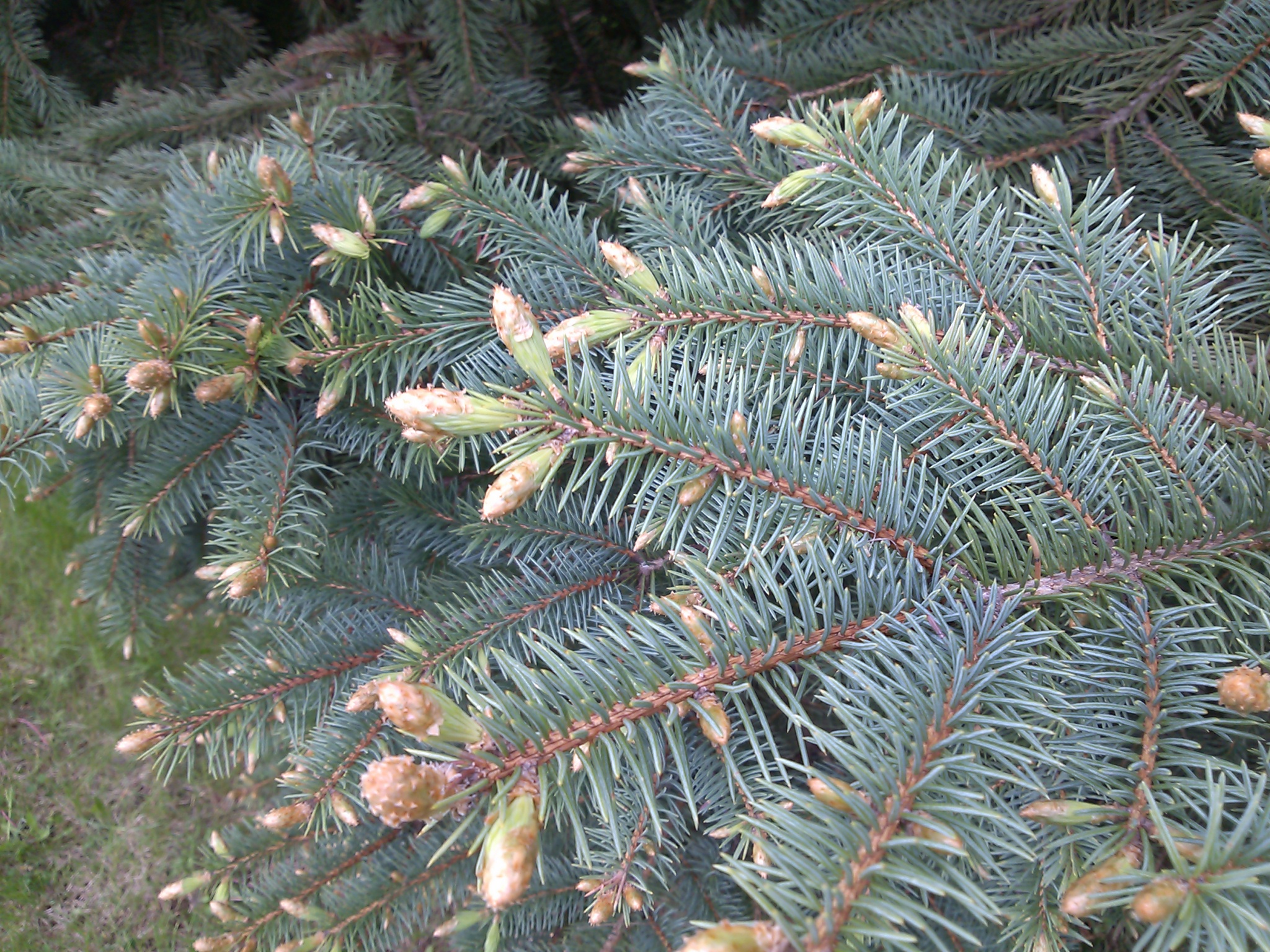
LAKE MACBRIDE— The Blue Spruce (picea pungens) showed new growth during my yard and garden walk. The tan-colored tips are breaking away, revealing young needles below. What was once a nine-inch seedling is now more than nine feet tall. It has been a nice, non-native addition. We are all transplants of a fashion. While it was not my intent when planting the Blue Spruce, it serves as a reminder of many recent trips to Colorado.
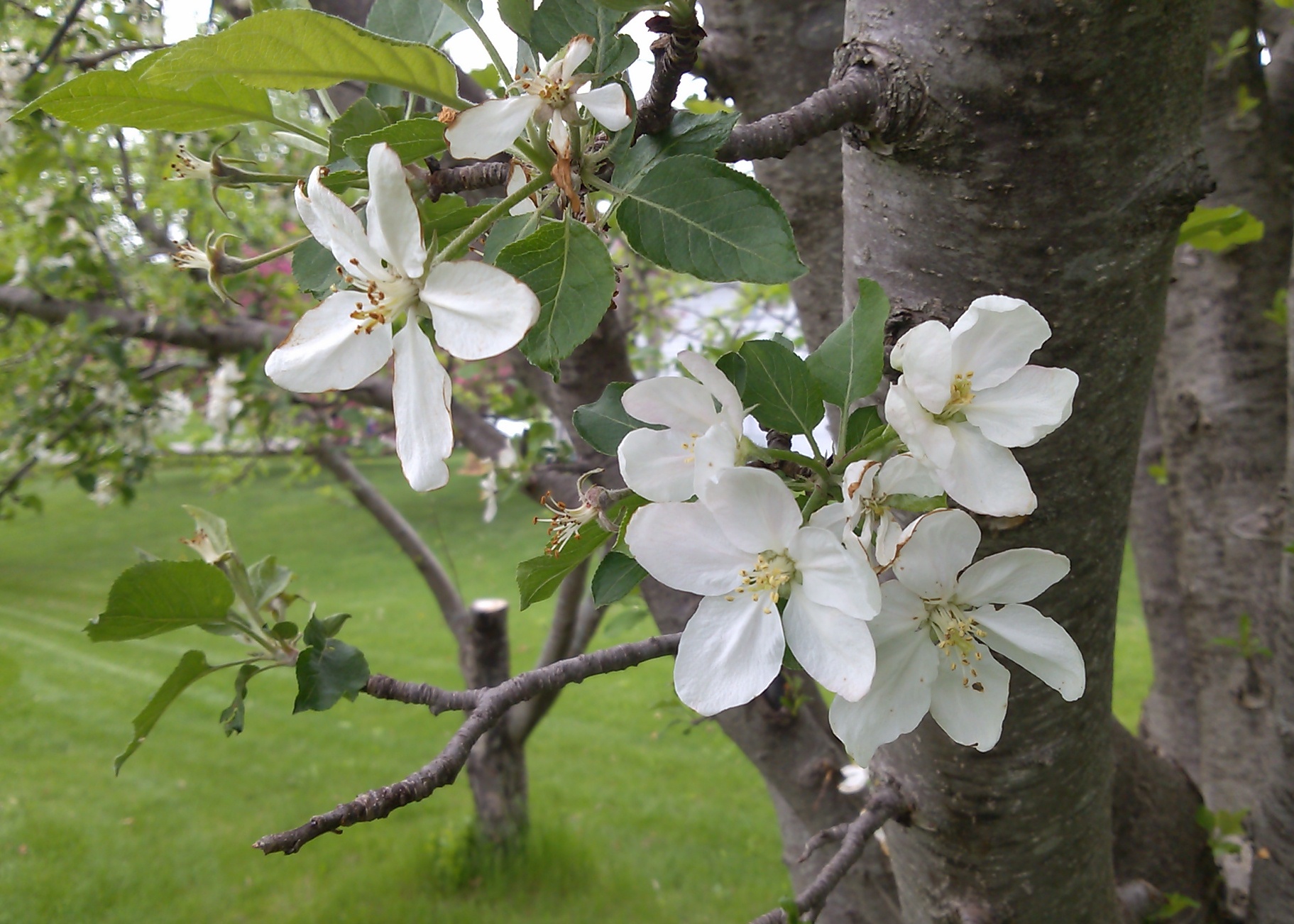
Apple Blossoms
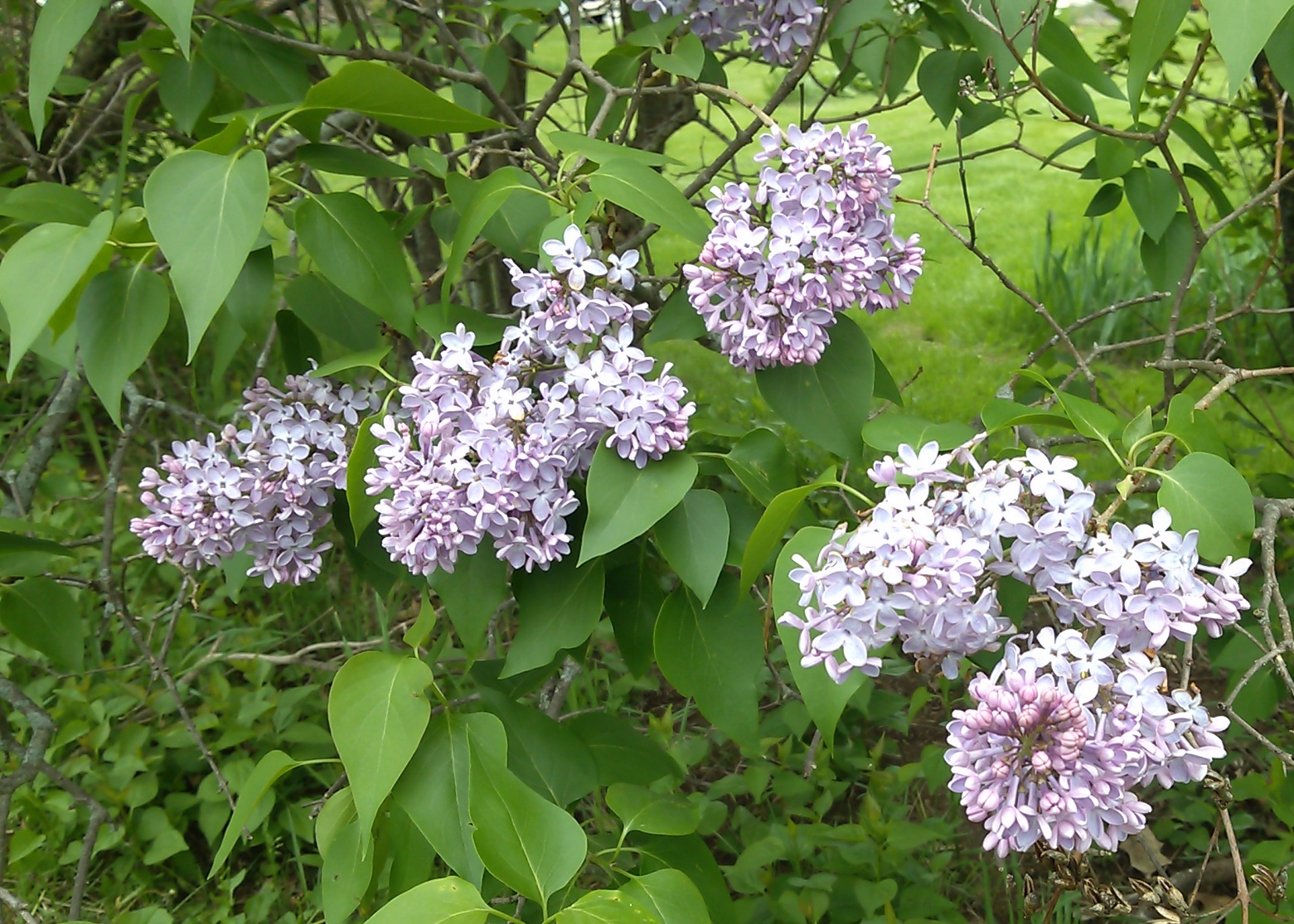
The lilacs and apple trees in bloom made the first lawn mowing memorable with fragrances that bond me to this place. The bare rooted plants from the nursery were dormant but have come alive and enliven me.
The mowing deck was set as high as possible during the first cut of lawn. The grass was long and my process is to prepare for re-cutting and collecting the clippings today. After the first cut, the lawn looks lush.
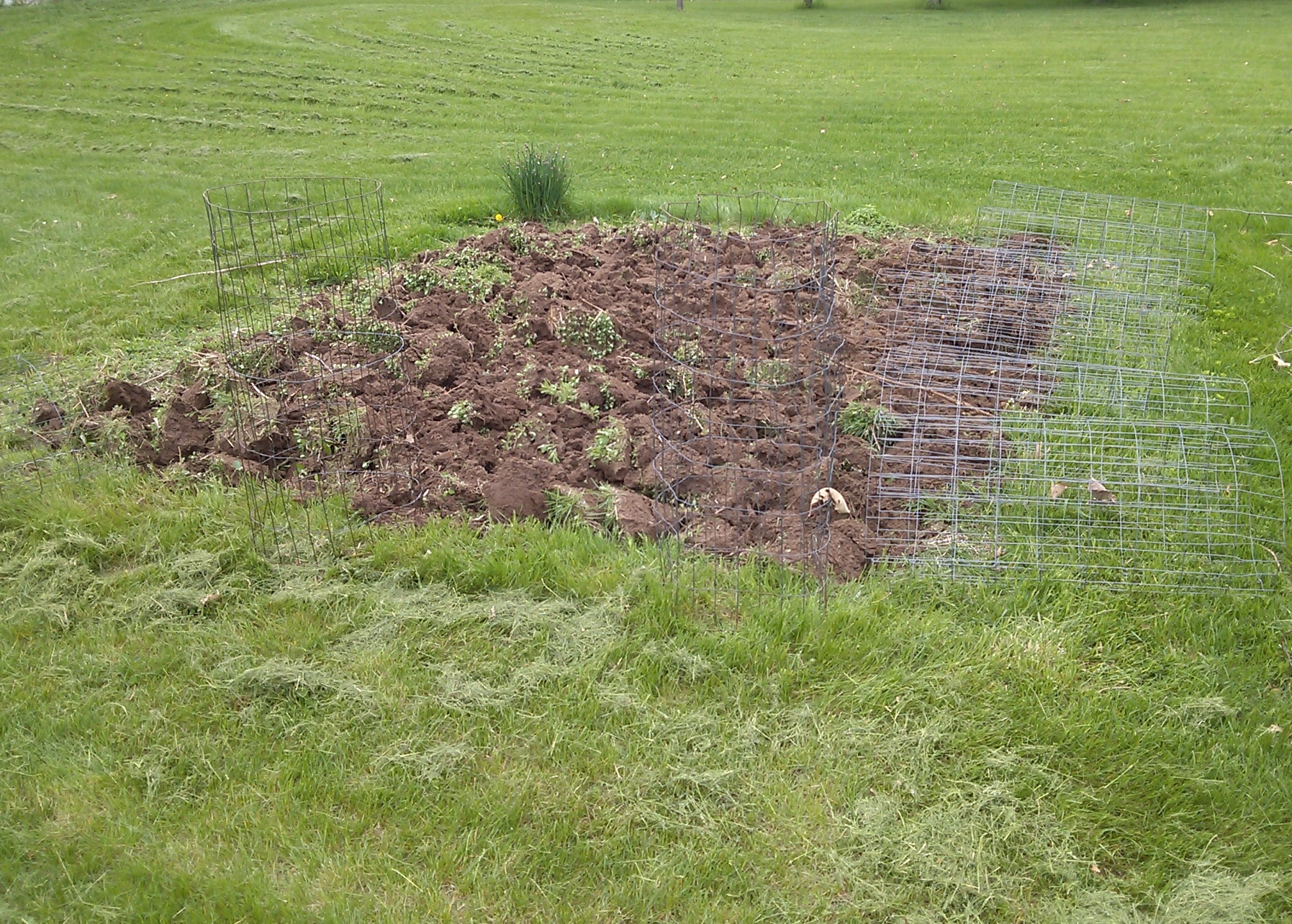
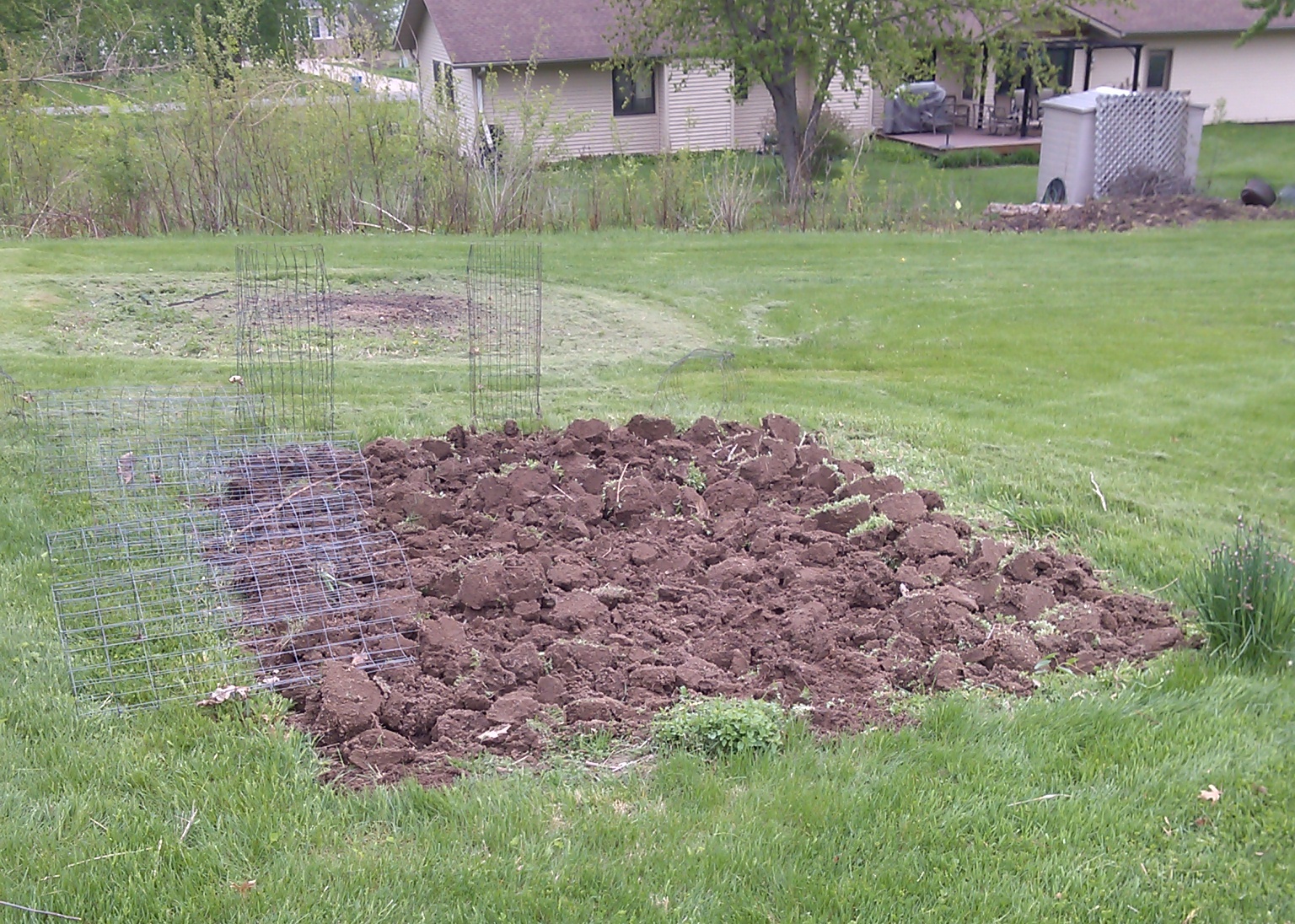
Space for 18 Tomato Plants
I spaded the first of two tomato plots. After working the soil with a rake, I’ll plant the first seedlings and dump the clippings directly on the plot as I cut them. I left a shallow row on the north end for existing chives and oregano. That space will be filled out with other herbs.
The tomato decision has been made. The first plot will be home to eighteen growing cages bonded together in couples on a single stake. This is to reduce the number of metal stakes used and optimize the space around them. One row will be the Martin (F1) Italian tomato which retains a variegated green and red color when ripe. The intent for this tomato is ketchup making, although that may change as they mature and we see what they taste like. The center of the plot will be three types of cherry tomatoes (Sweet Olive (F1) baby grape tomatoes, Black Cherry (OG), and Gold Nugget (OG) golden cherry tomatoes). The third row will be Olivade (F1) and Monica (F1) (OG), two tomatoes for use in sauces, and Rose (OG), an heirloom pink tomato. Unlike in past years, I plan to keep closer track of the varieties and how they produce.
Lilac Blooms
The other tomato plot hasn’t been finalized, but it will be some combination of Acer, Beefsteak and Best Boy planted in similar couples. The Beefsteak and Acer are slicers, and the Best Boy will be canned whole. Whatever tomato seedlings I don’t use will go to my sister-in-law’s garden.
A local chef is seeking spring garlic, and it looks like my plot will produce an abundance. Once it matures to spring garlic stage, I’ll harvest a couple of bunches and take it to his restaurant to barter for store credit.
LAKE MACBRIDE— Apple blossoms are in full bloom, and it never lasts for long. Once bees pollinate, the petals fall in snowy softness, carpeting the ground as quickly as they went from pink to bloom.
One of the farms where I work is an apple orchard— a resource for learning about my four trees. I recently sent a question via email.
“Can last winter’s pruning cause a lot of blooms this spring?
I pruned my trees and the Red Delicious tree is loaded with blooms like it was last year. Not sure the pruning helped that, but I was expecting very little fruit because it was a branch buster last year.”
The answer came promptly:
“I spoke to my dad about your question. He said that pruning and the number of blossoms aren’t directly related. The exact reason is quite a long answer, but he said that you must just have a good tree!”
That’s a good enough answer for me, “it’s a good tree.”
I did my first experiment in making flour tortillas at home yesterday. They came out more flatbread than tortilla, so it needs more work. Trouble is we’re not running a test kitchen here and need to consume what we cook. We’ll enjoy the flatbread, but wait a couple of weeks for round two.
The dough recipe included some baking powder, which leavened the bread. Next time, I’ll omit it and see if the result is more tortilla-like.
There is a zero percent chance of precipitation through sunset today, so hopefully the ground will dry out, enabling preparation of more garden space for transplanting. There is a lot to get into the ground before Memorial Day.
The row croppers took advantage of last week’s drying conditions, and according to the USDA crop report, 70 percent of the corn and 20 percent of the soybeans are planted, putting spring planting right on its traditional schedule.
Reflecting on time spent with Physicians for Social Responsibility (PSR) last week, I am glad I participated in their national meetings. My primary interest in the group is their long history of nuclear abolition work. Dr. Ira Helfand from Massachusetts has been a prominent figure in the nuclear abolition movement, and it was good to spend some time with him. Likewise, the Washington, D.C. staff was there, along with chapter leaders from around the country. The organization has expanded its reach beyond abolition to include the relationship between health and climate change, and toxic substances in the environment.
I broached the topic of the effectiveness of non-governmental organizations (NGOs) in effecting policy change. In today’s political environment, more people associate with NGOs, and a lot of people make a living doing that work. My concern is that in the perpetual chase for grant money, the number of funders is reducing, and whatever may have been successful last year, is out of step this year.
In Washington, there is a small group of people working on nuclear disarmament and they talk among themselves constantly. This includes people in NGOs, the U.S. and foreign governments and citizen advocates. I met a number of these people during my treaty ratification advocacy work in 2009. However, there is a certain self-interest they have in keeping conversations alive that perhaps may be better off placed on the back burner.
We are entering an era when regardless of which political party dominates the Washington conversation, the same work goes on, and currently it is work that includes refurbishing the nuclear weapons complex with a great diversion of funds. A person can’t be happy about that.
Nonetheless, while NGOs may not be as effective as I would like, they are currently the only game in town, so I plan to re-engage with PSR over the near term. The work will include rolling out a program on nuclear abolition to local Rotary clubs, working in between gardening and yard care sessions.
LAKE MACBRIDE— Jaime Oliver and Gennaro Contaldo taught me to make pasta without tomato sauce. The two television chefs went searching around London for wild rocket, brought it to Oliver’s kitchen, and made a simple pasta dish with it. That local greens could be the beginning of a pasta dish was a new idea I am adopting into my cooking.
We have an abundance of baby bok choy from the CSA and a large bag of leaves separated from the stems was the starting point for last night’s dinner.
Ingredients: a bread bag of roughly chopped baby bok choy leaves, three full heads of garlic peeled and sliced thinly, bits and pieces of aromatic vegetables leftover from salad making (carrot and bell pepper), a cup of grated Parmesan cheese, a half pint of last summer’s pesto thawed from the freezer, a roughly chopped large onion, and salt and pepper to taste.
Process: Bring a pot of water to boil for the farfalle. While the water is heating, perform the chopping work: rough chop a large onion, dice the carrot and bell pepper, rough chop the greens and peel and slice the garlic heads. This is a lot of garlic, and our kitchen has two dozen from last year needing to be used up before the spring garlic comes in.
In a large frying pan sauté the onions and carrots in olive oil. Add salt. Add the bell pepper next and when the onions begin to soften, add the sliced garlic, stirring to prevent the garlic from burning. Once everything is soft, add the baby bok choy leaves, turn down the heat and cover to let them wilt. Take the pan off the heat and let it rest until the pasta is done.
Drain the farfalle and put it in a large bowl. Add the cooked greens mixture, half a pint of pesto and a cup of grated Parmesan cheese. Mix gently with a spoon and serve, adding freshly ground pepper on top, and salt to taste.
Notes: The greens mixture is a form of mirepoix, and my ingredients were chosen because they were on hand: the operative principle in this local food dish. Farfalle is used because of the broad surfaces for the sauce to adhere. Most other forms of dried pasta would work well. Last summer I made and froze three different kinds of pesto based on what was coming from my garden. Any pesto would be fine in this dish. Other ingredients to consider would be pine nuts, fresh herbs, leeks or shallots.









 Journey Home
You must be logged in to post a comment.