Categories
Kitchen Garden

Getting Sauced

Apple Blossoms
Apple Blossoms

LAKE MACBRIDE— A friend was coming to overnight, so I baked a cake— an applesauce cake with rhubarb sauce.

The challenge of growing and preparing local food is cooking, and I don’t mean heating up the latest frozen concoction from H.J. Heinz. It is understanding what types of fruit and vegetables can be consistently sourced locally, then working those items into a localized cuisine— a micro cuisine specific to a household.

For example, we have four apple trees, and at some point we stopped letting them fall for wildlife and started processing them into food. Among other things,  I make applesauce— quarts and quarts of it— from the Red and Golden Delicious apples grown on our trees. Are Red Delicious the optimal choice for applesauce? Probably not, but they are what we have.

Over the years I developed two critical things: a recipe for applesauce cake as a way to use up the abundance of canned sauce; and occasions like the visit of a friend to prepare and serve them. Both are important.

This spring we received an abundance of rhubarb from the CSA, so we needed a way to use it. A bag or two from last year is in the freezer, so we don’t need more there. Nor do we dip it in sugar and eat it raw, so I decided to get sauced, making a simple rhubarb and raw honey sauce to top slices of applesauce cake. The recipe is simple cutting, mixing and tasting.

Rhubarb Sauce

Finely dice a large bunch of rhubarb stalks and place into a saucepan.
Add a tablespoon of water to create the initial steam. The rhubarb will produce a lot of its own moisture, so much that most of it can be removed before adding the honey.
Add a generous amount of local honey to the cooking rhubarb. I used raw honey from the same farm where the rhubarb grew.
Stir until it is incorporated, bring to a boil, and then turn the heat to a simmer and cook. Taste the sauce and adjust honey. No spices are needed, but feel free to add if you like. The rhubarb-honey taste will carry the sauce as it is served.
Cook until the sauce thickens a bit. Serve hot or chilled.

Applesauce Cake

1 cup brown sugar
1-1/2 cups applesauce
1 tablespoon cinnamon
1/2 teaspoon ground cloves
2 teaspoons baking soda
1-1/4 cups whole wheat flour
1-1/4 cups unbleached flour
1/2 cup melted butter
1 cup raisins

Cook the raisins in water until plumped. Drain and set aside.
Incorporate applesauce, sugar, cinnamon, cloves and butter in a large bowl.
Sift the flour and raisins into a separate bowl and add the raisins. Stir until the raisins are coated with flour.
Add the dry ingredients to the wet ones and beat well until fully incorporated.
Line a cake pan with parchment paper and pour the cake batter in.
Bake in a 350 degree oven for 45 minutes.
Place the cake on a cooling rack.

Serving suggestion. Cut a 1-1/2 inch wedge and place on a small plate. Pour 1/4 cup rhubarb sauce on top and serve. Add whipped cream if you like, or decorate the plate with fresh fruit.
Categories
Kitchen Garden

Garden Log 2014-05-14

Spring Growth
Spring Growth

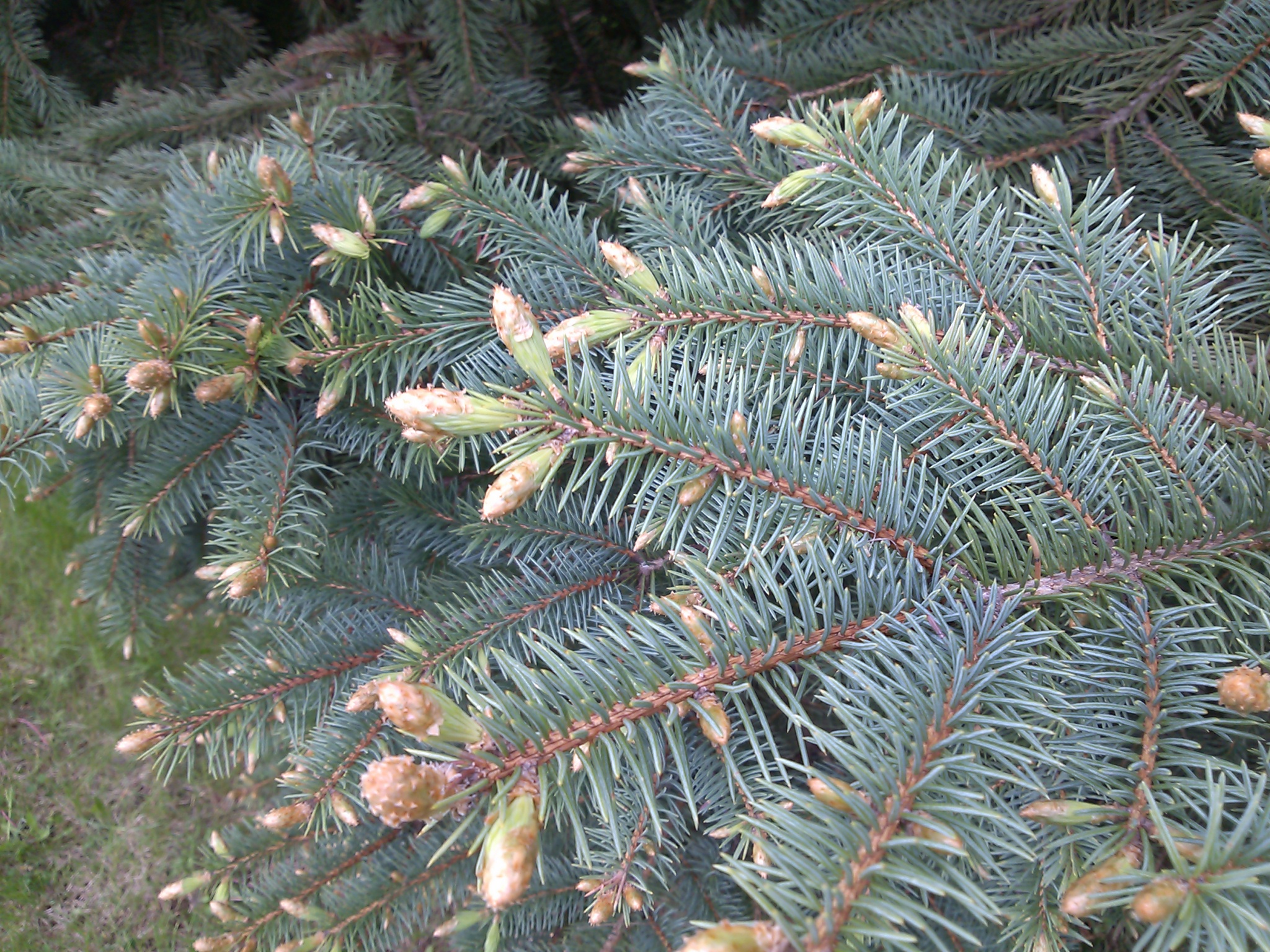
LAKE MACBRIDE— The Blue Spruce (picea pungens) showed new growth during my yard and garden walk. The tan-colored tips are breaking away, revealing young needles below. What was once a nine-inch seedling is now more than nine feet tall. It has been a nice, non-native addition. We are all transplants of a fashion. While it was not my intent when planting the Blue Spruce, it serves as a reminder of many recent trips to Colorado.

Apple Blossoms
Apple Blossoms

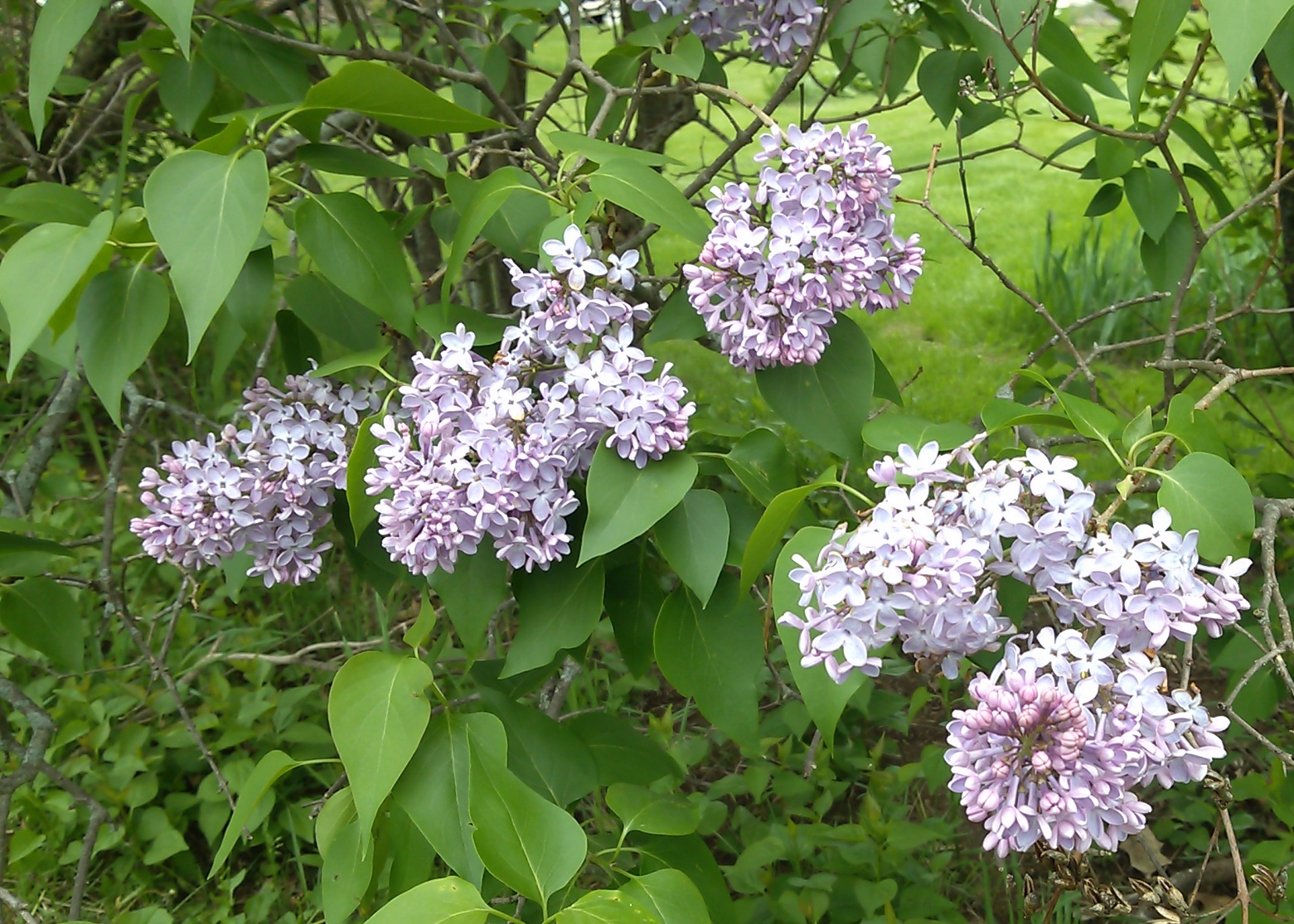
The lilacs and apple trees in bloom made the first lawn mowing memorable with fragrances that bond me to this place. The bare rooted plants from the nursery were dormant but have come alive and enliven me.

The mowing deck was set as high as possible during the first cut of lawn. The grass was long and my process is to prepare for re-cutting and collecting the clippings today. After the first cut, the lawn looks lush.

Space for 18 Tomato Plants

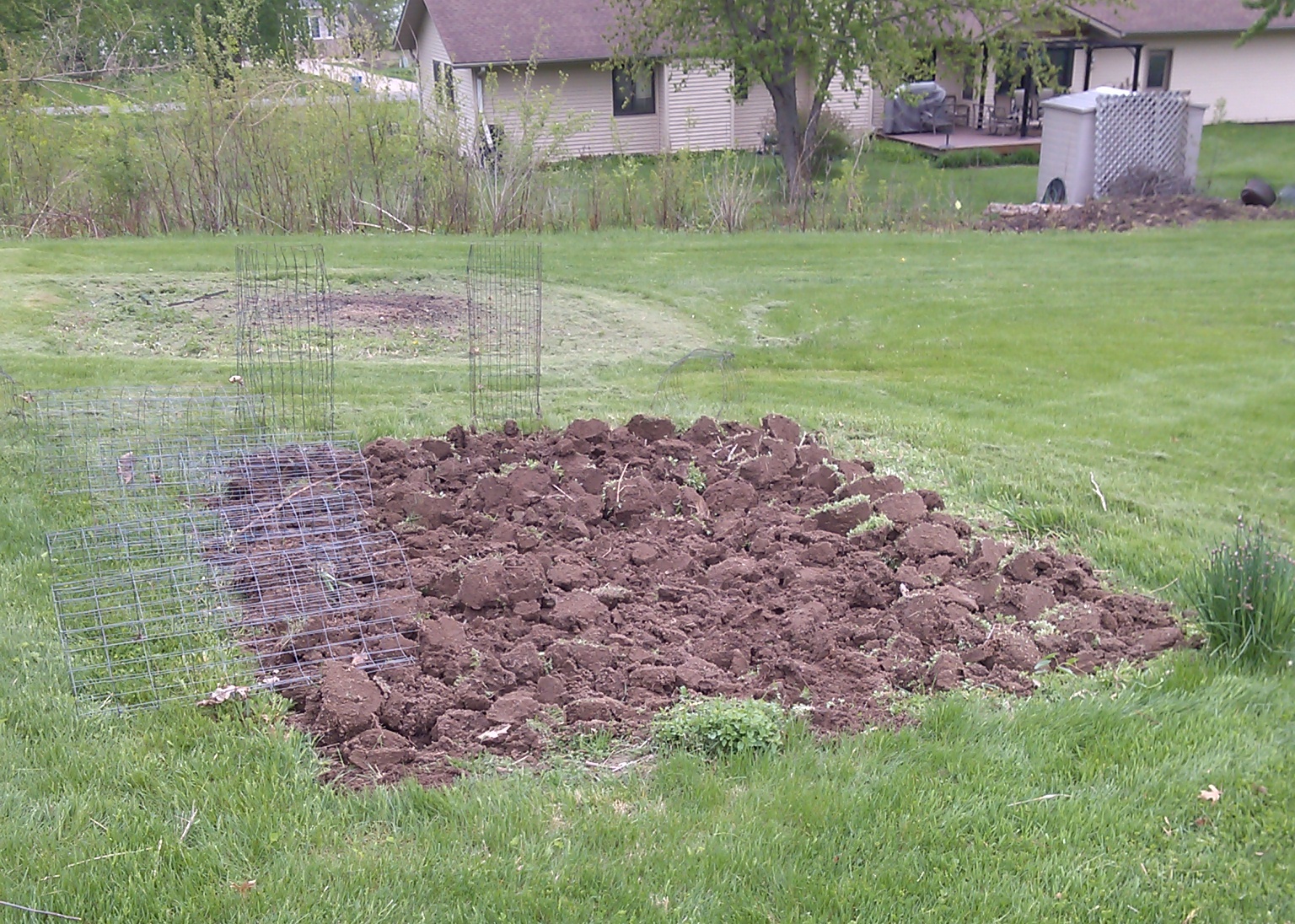
I spaded the first of two tomato plots. After working the soil with a rake, I’ll plant the first seedlings and dump the clippings directly on the plot as I cut them. I left a shallow row on the north end for existing chives and oregano. That space will be filled out with other herbs.

The tomato decision has been made. The first plot will be home to eighteen growing cages bonded together in couples on a single stake. This is to reduce the number of metal stakes used and optimize the space around them. One row will be the Martin (F1) Italian tomato which retains a variegated green and red color when ripe. The intent for this tomato is ketchup making, although that may change as they mature and we see what they taste like. The center of the plot will be three types of cherry tomatoes (Sweet Olive (F1) baby grape tomatoes, Black Cherry (OG), and Gold Nugget (OG) golden cherry tomatoes). The third row will be Olivade (F1) and Monica (F1) (OG), two tomatoes for use in sauces, and Rose (OG), an heirloom pink tomato. Unlike in past years, I plan to keep closer track of the varieties and how they produce.

Lilac Blooms
Lilac Blooms

The other tomato plot hasn’t been finalized, but it will be some combination of Acer, Beefsteak and Best Boy planted in similar couples. The Beefsteak and Acer are slicers, and the Best Boy will be canned whole. Whatever tomato seedlings I don’t use will go to my sister-in-law’s garden.

A local chef is seeking spring garlic, and it looks like my plot will produce an abundance. Once it matures to spring garlic stage, I’ll harvest a couple of bunches and take it to his restaurant to barter for store credit.

It was a productive day in the garden.

Categories
Home Life Sustainability

Apple Blossom Time

Red Delicious Apple Tree

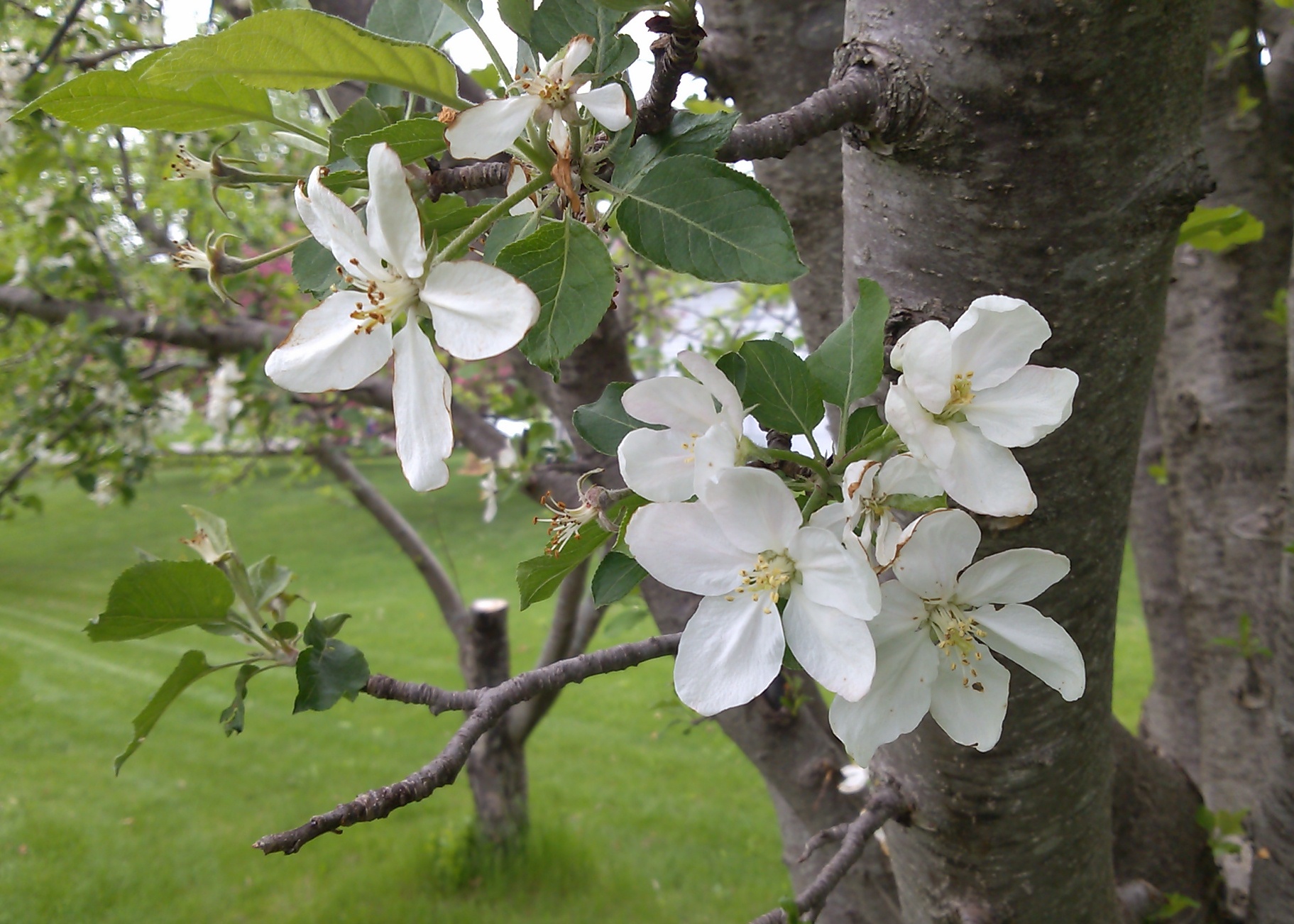
LAKE MACBRIDE— Apple blossoms are in full bloom, and it never lasts for long. Once bees pollinate, the petals fall in snowy softness, carpeting the ground as quickly as they went from pink to bloom.

One of the farms where I work is an apple orchard— a resource for learning about my four trees. I recently sent a question via email.

“Can last winter’s pruning cause a lot of blooms this spring?

I pruned my trees and the Red Delicious tree is loaded with blooms like it was last year. Not sure the pruning helped that, but I was expecting very little fruit because it was a branch buster last year.”

The answer came promptly:

“I spoke to my dad about your question. He said that pruning and the number of blossoms aren’t directly related. The exact reason is quite a long answer, but he said that you must just have a good tree!”

That’s a good enough answer for me, “it’s a good tree.”

I did my first experiment in making flour tortillas at home yesterday. They came out more flatbread than tortilla, so it needs more work. Trouble is we’re not running a test kitchen here and need to consume what we cook. We’ll enjoy the flatbread, but wait a couple of weeks for round two.

The dough recipe included some baking powder, which leavened the bread. Next time, I’ll omit it and see if the result is more tortilla-like.

There is a zero percent chance of precipitation through sunset today, so hopefully the ground will dry out, enabling preparation of more garden space for transplanting. There is a lot to get into the ground before Memorial Day.

The row croppers took advantage of last week’s drying conditions, and according to the USDA crop report, 70 percent of the corn and 20 percent of the soybeans are planted, putting spring planting right on its traditional schedule.

Reflecting on time spent with Physicians for Social Responsibility (PSR) last week, I am glad I participated in their national meetings. My primary interest in the group is their long history of nuclear abolition work. Dr. Ira Helfand from Massachusetts has been a prominent figure in the nuclear abolition movement, and it was good to spend some time with him. Likewise, the Washington, D.C. staff was there, along with chapter leaders from around the country. The organization has expanded its reach beyond abolition to include the relationship between health and climate change, and toxic substances in the environment.

I broached the topic of the effectiveness of non-governmental organizations (NGOs) in effecting policy change. In today’s political environment, more people associate with NGOs, and a lot of people make a living doing that work. My concern is that in the perpetual chase for grant money, the number of funders is reducing, and whatever may have been successful last year, is out of step this year.

In Washington, there is a small group of people working on nuclear disarmament and they talk among themselves constantly. This includes people in NGOs, the U.S. and foreign governments and citizen advocates. I met a number of these people during my treaty ratification advocacy work in 2009. However, there is a certain self-interest they have in keeping conversations alive that perhaps may be better off placed on the back burner.

We are entering an era when regardless of which political party dominates the Washington conversation, the same work goes on, and currently it is work that includes refurbishing the nuclear weapons complex with a great diversion of funds. A person can’t be happy about that.

Nonetheless, while NGOs may not be as effective as I would like, they are currently the only game in town, so I plan to re-engage with PSR over the near term. The work will include rolling out a program on nuclear abolition to local Rotary clubs, working in between gardening and yard care sessions.

Categories
Kitchen Garden

Farfalle Fun with Baby Bok Choy

Saints Peter and Paul

LAKE MACBRIDE— Jaime Oliver and Gennaro Contaldo taught me to make pasta without tomato sauce. The two television chefs went searching around London for wild rocket, brought it to Oliver’s kitchen, and made a simple pasta dish with it. That local greens could be the beginning of a pasta dish was a new idea I am adopting into my cooking.

We have an abundance of baby bok choy from the CSA and a large bag of leaves separated from the stems was the starting point for last night’s dinner.

Ingredients: a bread bag of roughly chopped baby bok choy leaves, three full heads of garlic peeled and sliced thinly, bits and pieces of aromatic vegetables leftover from salad making (carrot and bell pepper), a cup of grated Parmesan cheese, a half pint of last summer’s pesto thawed from the freezer, a roughly chopped large onion, and salt and pepper to taste.

Process: Bring a pot of water to boil for the farfalle. While the water is heating, perform the chopping work: rough chop a large onion, dice the carrot and bell pepper, rough chop the greens and peel and slice the garlic heads. This is a lot of garlic, and our kitchen has two dozen from last year needing to be used up before the spring garlic comes in.

In a large frying pan sauté the onions and carrots in olive oil. Add salt. Add the bell pepper next and when the onions begin to soften, add the sliced garlic, stirring to prevent the garlic from burning. Once everything is soft, add the baby bok choy leaves, turn down the heat and cover to let them wilt. Take the pan off the heat and let it rest until the pasta is done.

Drain the farfalle and put it in a large bowl. Add the cooked greens mixture, half a pint of pesto and a cup of grated Parmesan cheese. Mix gently with a spoon and serve, adding freshly ground pepper on top, and salt to taste.

Notes: The greens mixture is a form of mirepoix, and my ingredients were chosen because they were on hand: the operative principle in this local food dish. Farfalle is used because of the broad surfaces for the sauce to adhere. Most other forms of dried pasta would work well. Last summer I made and froze three different kinds of pesto based on what was coming from my garden. Any pesto would be fine in this dish. Other ingredients to consider would be pine nuts, fresh herbs, leeks or shallots.

Categories
Kitchen Garden

Garden Log 2014-05-06

LAKE MACBRIDE— Today I planted seeds outside. Arugula, Savoyed Spinach, Green Romaine Lettuce and Red Summer Crisp Lettuce.

I also drove the stakes for a fence around the first plot.

Categories
Writing

Local Food Delivery

First Share Delivery

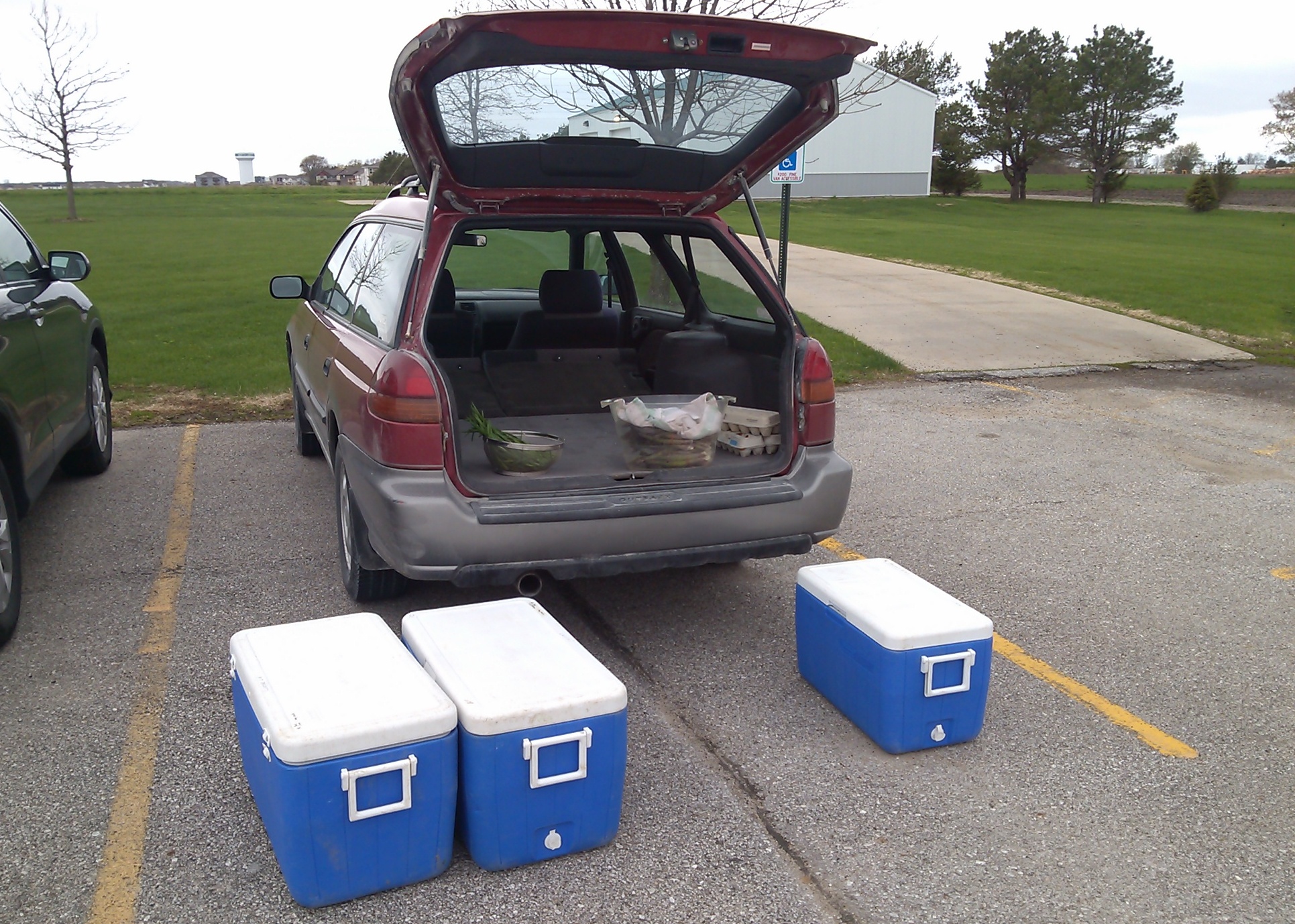
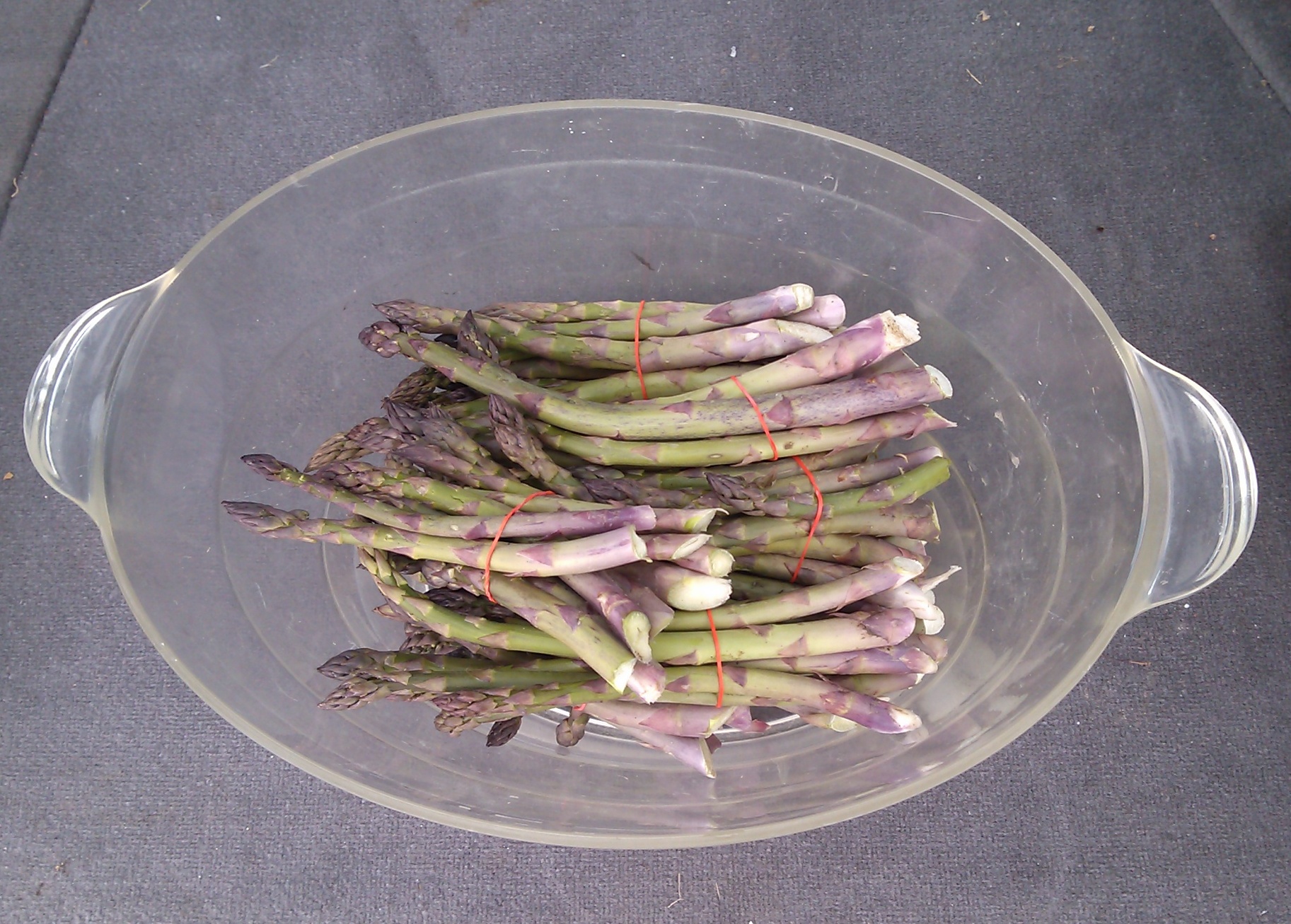
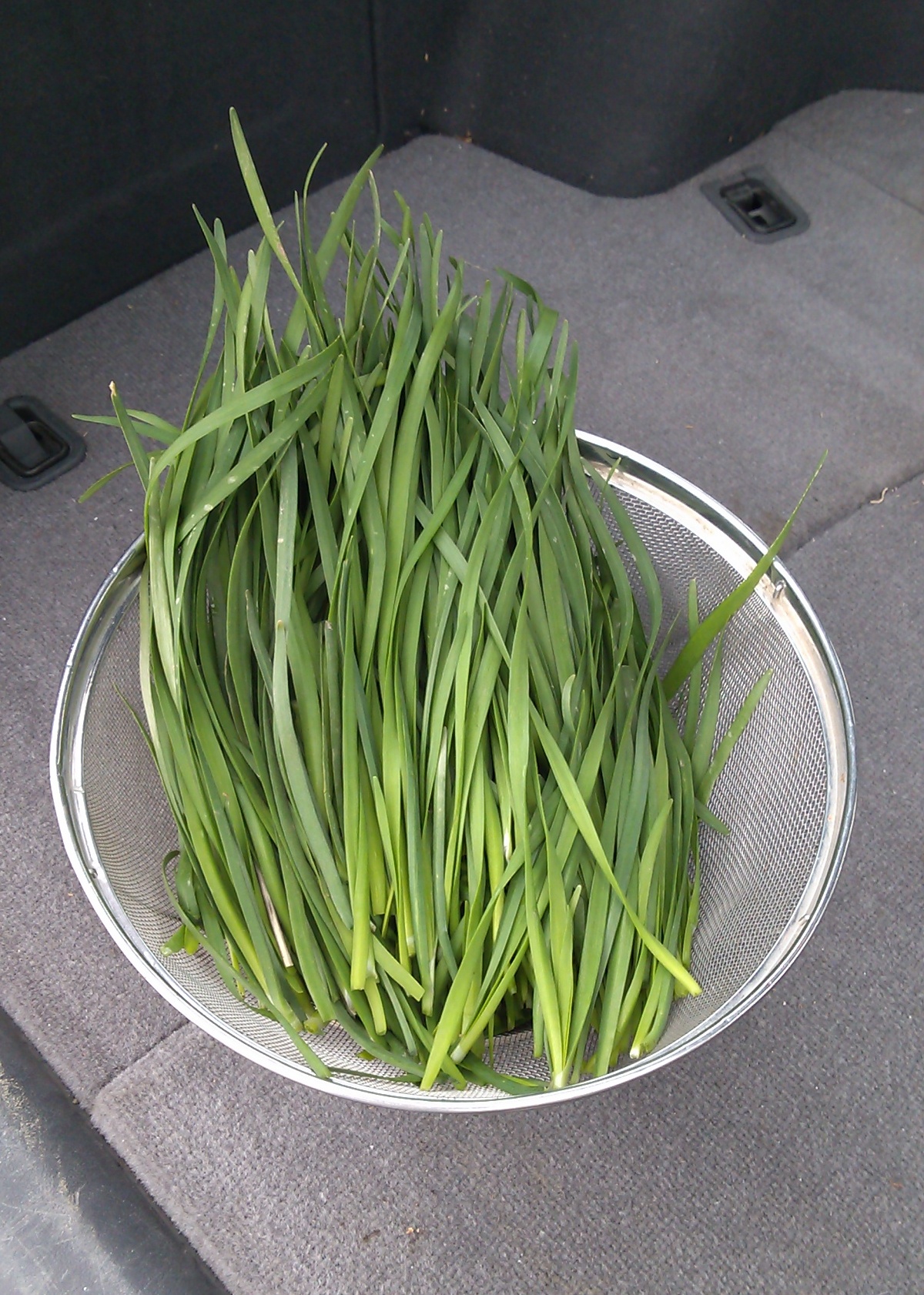
NORTH LIBERTY— One of my part time jobs is working at a Community Supported Agriculture (CSA) farm a few hours each week. The jobs are always interesting. Yesterday I delivered the first shares to customers in the parking lot of the First United Methodist Church. The nearby food pantry receives three shares plus any extra produce or unclaimed shares. This week’s share was baby bok choy, garlic chives, asparagus, lettuce, mixed greens, and for those that ordered them, a dozen eggs. Our customers are always pretty cool, and were talkative last night.

Asparagus
Asparagus

The quality of vegetables is always surprising and consistent. The sorting and packing takes most of a day’s work, and it is remarkable how much of care goes into each weekly share. While field workers in the Central Valley of California, Mexico, Peru or Immokalee, Florida may exercise care in their harvests, it is the personal and special treatment of CSA workers that makes a difference. We know the face of our farmer and that makes it personal.

Garlic Chives
Garlic Chives

I checked the garden and it is sopping wet still. We have had 1.61 inches of rain during the last seven days. The seeds are germinating, and it looks pretty good so far. However, the ground needs digging up, lettuce and kohlrabi transplanted, and fences put up. It will just have to wait until the ground dries out.

In the meanwhile, our kitchen is active this morning, making a breakfast stir fry that includes some bok choy, mixed greens and other delicious vegetables, mostly from local sources.

Categories
Social Commentary Writing

First Share and Living in Society

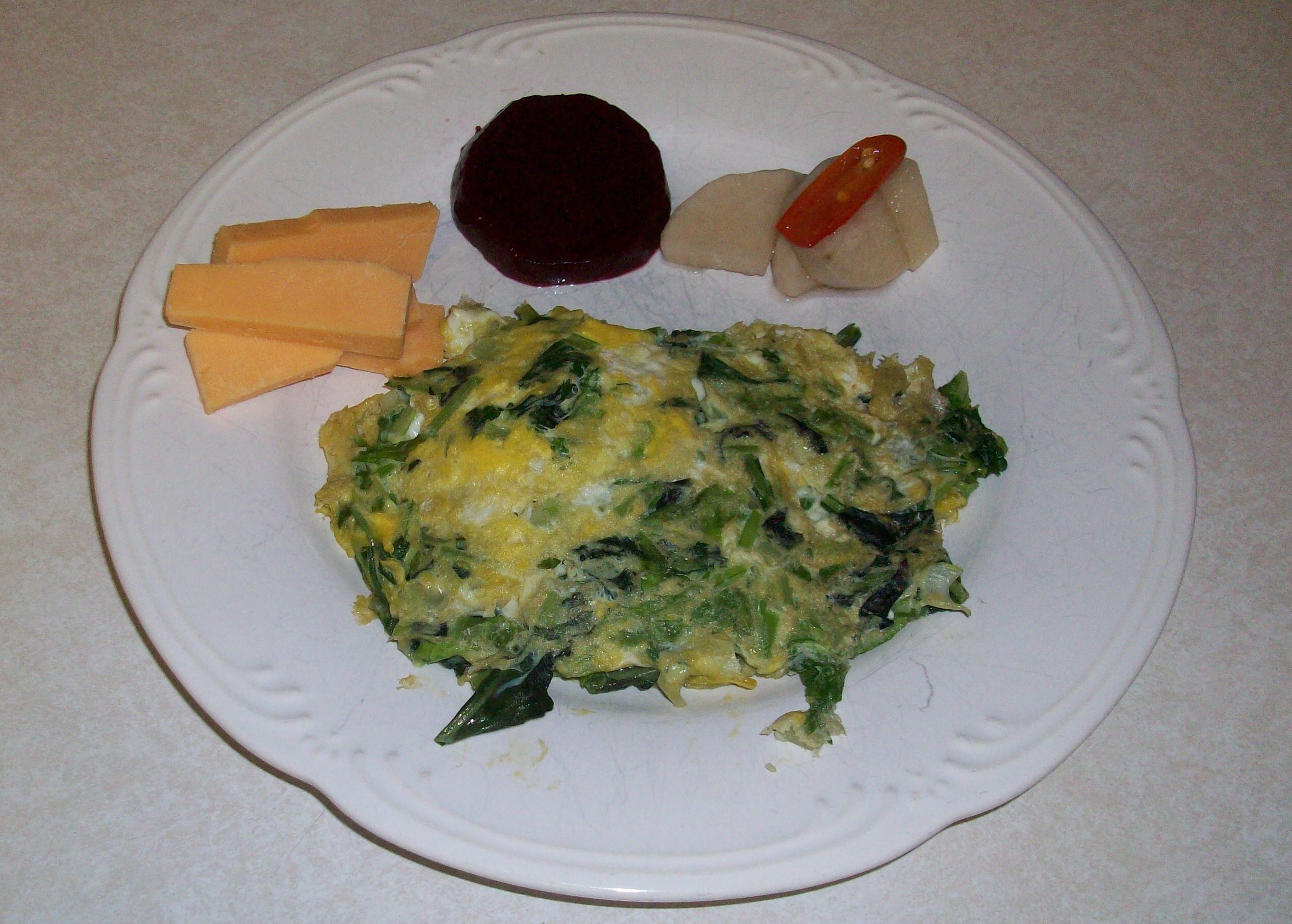
Asian Greens in Scrambled Eggs with Vermont Cheese and Pickled Bits and Pieces

LAKE MACBRIDE— The first share from the Community Supported Agriculture (CSA) farm was ready yesterday— asparagus, lettuce, baby bok choy and Asian greens. Anticipation over spring and summer cooking is building, even if living on bits and pieces from the pantry will continue until the full flow of local produce is unleashed. Picking up the share at the farm was a fine beginning.

We had more than two inches of rain since Earth Day, so outdoor plants are growing. The garden is too wet to work, although as soon as the soil dries, seedlings are ready to go into the ground. Meanwhile I will go on living in society, and that is today’s topic.

The phrase “in society” has a particular usage here. It is part of a spectrum of relationships with people that contrasts with “chez nous,” the French term that refers to “at home” or “with us.” Maybe there is something else on this jumping green sphere (thanks Lord Buckley for this phrase), “outside society” or “foreign,” but most of our lives are spent chez nous or in society. My tag “homelife” could be changed to “chez nous” and sustain the meaning.

Living in society is that set of relationships which sustains a life on the plains. It includes friends, family, neighbors, workplaces, institutions, retail establishments, and organizations with which we associate or interact. The relationships are interpersonal, that is, specific people are associated with each part of society— it is not an abstraction.

When young, we don’t see our life in society this way. We had an ability to live in the moment without a history of interpersonal relationships, anchoring us into something else. As we age, we are more like a character in a William Faulkner novel that must work to suppress the endless flow of memory.

If experience connects us, the way we live in society is based on thousands of previous interactions. For example, someone ran for the U.S. Senate after a long, productive life. If I saw him today in any of a number of settings— at a retail store, at the retirement village, at a literature reading, at a veterans meeting, at a public demonstration— I would think of the courage he displayed by taking on personal debt to challenge an entrenched incumbent politician who would otherwise have run unopposed. I would also think of our many conversations over a period of years. Our relationship is driven by my respect for his courage, and I picture him when I think about the associations we share. When I use the phrase “in society,” it might be referring to an interaction we had, or one like it with someone else.

My usage of the phrase “in society” may have been explained by others who are smarter, but because it is organic there is a peculiar sense to it on this blog. It is personal, but not really, because is it also public.

I am entering one of the richest periods of personal interaction in life. Old enough to have had experience, and young enough to gain new ones. Each day’s potential is vast midst the galaxy of people with whom I interact. Favoring the phrase “in society” enables me to talk about them without revealing where the specific interaction may have occurred. This protects people from unwanted intrusion into their lives, and enables the writing I do for a couple of hours each day.

Chez nous, we would have had breakfast of Asian greens mixed with scrambled eggs, Vermont cheddar cheese and pickled veggies from last season. In society I am part of the local food movement and post photos of my breakfast. Maybe I am drawing a fine line, but it is an important one for a writer.

Categories
Kitchen Garden

Pantry Pasta Sauce

Pantry Shelf
Pantry Shelf

LAKE MACBRIDE— Dressing pasta is a culinary practice with so many variations, it is difficult to justify a single recipe over others. It is a matter of taste, available ingredients and tradition, so far be it from me to set anything in stone.

Prepared pasta sauce— the industrial food kind— is available at warehouse clubs and grocery stores, but it is hard to imagine ever bringing a jar home when it is so easy to make it in the kitchen. Here’s how.

Drain a quart of canned whole tomatoes in a colander, reserving the liquid.

Heat a skillet on medium high heat and coat the bottom with extra virgin olive oil. Use the best oil you have.

Dice a medium onion according to preference and sautée in the heated oil.

Season with salt and pepper.

Mince five cloves of garlic and add to the pan. Cook until the onions are translucent. Don’t let the garlic burn.

Season with dried oregano and basil, fresh if you have it.

Add six ounces of tomato paste. Stir and heat until you can smell the tomato.

Add the drained whole tomatoes, chopping them with the edge of a spoon while stirring the mixture.

It is optional to add protein at this point. We use Morningstar Farms® Recipe Crumbles, although browned ground beef, pork, chicken, tofu, seitan or others could be substituted.

Once the ingredients are thoroughly incorporated, add the reserved tomato juice until the sauce has the desired fluid characteristics. Store any leftover juice in a jar in the ice box, or drink it.

Adjust seasoning.

Turn the heat to low and and simmer until the pasta is cooked.

Makes four generous servings.

Categories
Home Life Kitchen Garden

Last Winter Soup

Winter Soup
Winter Soup

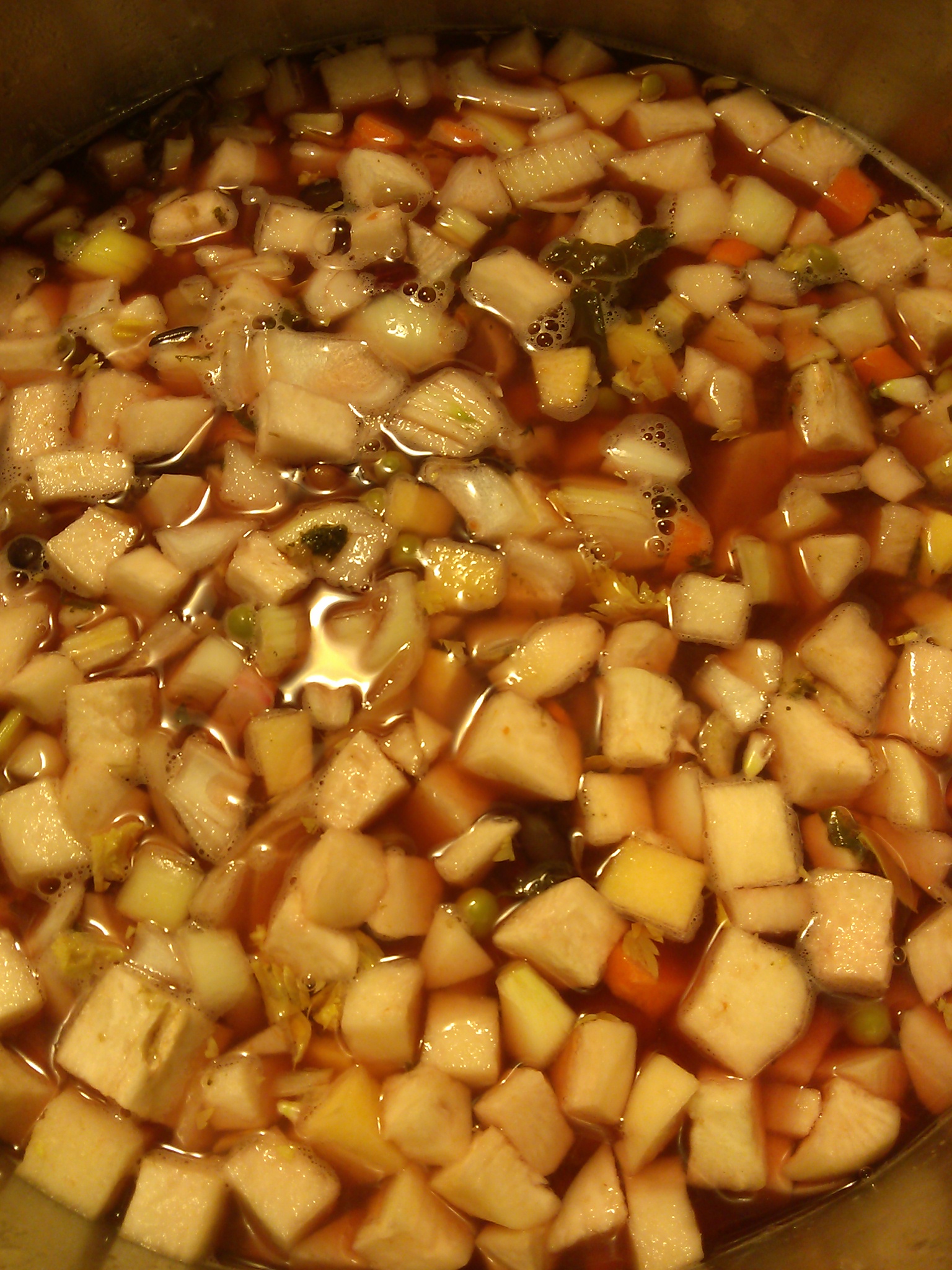
LAKE MACBRIDE— Taking the last of the root vegetables– four kinds of potatoes, three kinds of turnips, and beets– and six jars of canned goods, two kinds of beans, barley, peas, onion, celery and carrot, I made the last batch of winter soup last night. It cooked until bed time, when we turned the heat off to sleep. In the morning, I brought the mixture to a boil, then turned the heat down to simmer until it becomes soup.

All that’s left in the fridge from last year’s local harvest is a couple of daikon radishes and some cabbage. There is plenty of garlic in the pantry, and a single spaghetti squash, but that’s it for fresh. It will be a few weeks until spring produce begins to come in at the markets. The soup and remaining canned goods will have to last.

Yesterday, I finalized plans for a presentation titled, “Living Non-traditional Lives:  Focus on Finances.” It is part of the American Library Association “Money Smart Week,” which is a national initiative in its fourth year between the ALA and the Federal Reserve Bank (Chicago) to provide financial literacy programming to help members of our community better manage their personal finances.

Here’s the blurb I posted on Facebook: “Will be speaking at the Solon Public Library on April 12 about living without working a conventional 5 x 8 job as part of Money Smart Week. I plan to focus on: my personal work history, including what it means to be a writer in a time of social media; the role of jobs, the role of households and family, and personal finance in alternative lifestyles (banking, debt, income, taxes, bartering, health care, transportation, communications), deciding what’s important (community engagement, family, stress management, health, time management).”

My Climate Reality colleagues are meeting in Johannesburg, South Africa today where Al Gore is making his slide show presentation. The organizers didn’t know the exact number of attendees, as visa and finance problems deterred some who had registered. However, it looks like about 700 new members of the Climate Reality Leadership Corps, from many nations, will join us at the conclusion of the 24th training session.

Categories
Reviews

Try Big Grove Brewery

Big Grove Brewery
Big Grove Brewery

SOLON— When one is connected to the community, it is hard not to like Big Grove Brewery. The city council invested a forgivable loan to get them to build at the corner of Main Street and Iowa Avenue, and unlike the last microbrewery in town, this one scaled to a size to brew lots of beer, accommodate large gatherings and employ a lot of people. They opened Aug. 29, 2013. On a Thursday night, the place was packed with a five minute wait for a table.

My connections to the restaurant are many. Last night, a neighbor greeted me upon entry, handing me a glass of house beer. The subject of one of my newspaper articles was having dinner with his wife and provided positive feedback on my story. I’ve been in the kitchen delivering herbs from the farm, and three of the farms where I worked last year are suppliers. Chef Ben Smart and I share an acquaintance who gave up a job in a Washington, D.C. public relations firm to become a chef. They met at the Herbfarm near Seattle, Wash., where Smart was executive sous chef.

I’m not sure how many jobs were created by this business, but more than 40 people were in their initial staff photograph. The managing partner of the business was busing tables last night and seems to have his fingers on the pulse of the community. It’s all good, but what else would I say?

The kitchen has a high temperature pizza oven, and we each had a 12 inch pizza and took some home. She had Pizza Margherita, topped with San Marzano tomato, fresh mozzarella, basil, olive oil and sea salt. I had the Ham and Egg with La Quercia prosciutto, arugula, pesto, soft cooked local eggs, confit potato and Parmigiano Reggiano. We had a side order of caramelized carrots made with red onion, Parmigiano Reggiano, pine nut, arugula pesto, endive and preserved lemon.  For beverages camomile tea and the aforementioned beer. Check out their seasonal menu at www.biggrovebrewery.com.

The vegetarian dishes that were on the menu last year are no longer there. Some friends came from Stone City for the roasted Brussels sprouts, which are now out of season. The dynamic of this restaurant will be whether or not they follow commercial interests, or can develop enough of a market for local, seasonal dishes to continue to be offered, including ample offering of vegetarian fare. In Iowa we like to repeat our favorite meals and dishes and the seasonal menu could get sanded off in the workshop of what sells. I hope not because a vegetarian can live on salad, pizza, side dishes and beer only for so long.

Two pizzas, a side and one paid beverage cost $45.63 with gratuity. It’s a little high for frequent dining, but a competitive price for the quality.

Try Big Grove Brewery in Solon. It’s a great place to get together with friends and celebrate from time to time. The initial energy from the opening has not worn off. Hopefully it never will as the establishment becomes part of the community.