Categories
Home Life

Returning to the Trail

Jewelweed on the Lake Macbride Trail

I view trail hiking with trepidation.

Since entering a low-wage work world a few years ago, where standing for long shifts on concrete floors contributed to plantar fasciitis, I haven’t jogged and reduced the amount of trail hiking I do. Now that I’m semi-retired, my feet appear to be healing. I’d like to get back out on the trail on a regular basis.

We live near an entry point to the Lake Macbride State Park trail system.

The hard-packed gravel trail runs from the state park entry, five miles east to the City of Solon. It is well used by hikers, bicyclists, joggers and locals, and soon will be connected to a much larger trail system. Over the years I’ve used it a lot, notably as a jogging trail where in peak condition I’d jog five miles each day before heading into Cedar Rapids for work.

Friday I hiked home from Solon after dropping my automobile at the repair shop, then hiked back to town once it was repaired: six miles.

The trail is changing.

Human activity in the form of development has taken the biggest toll on nature. The Solon Recreation and Nature Area has been encroaching on natural areas near the trail since it was established. Addition of a paved, concrete bike path near the railroad easement has taken even more of the natural area out of the trail. The city end of the trail has been a mess since the construction began and will end up being an industrialized area rather than the nature it purports to be in its naming. I ran into a townie I know who said designers plan to keep the gravel portion of the trail. If that’s true, it is a blessing because there are so few low impact trails in the area.

My trail experience is partly about exercise, partly about viewing the condition and maintenance of the trail. I enjoy finding new wildflowers like the Jewelweed in the image above. When there were more of them I picked wild blackberries, competing with birds for the sweet treat. The good news is my feet didn’t ache Saturday morning and on Sunday they returned to normal. I should be able to hike regularly again… and complain about human activity encroaching on nature right in front of my eyes.
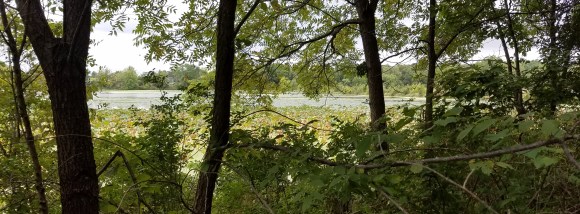
Lake Macbride from the Trail, Sept. 7, 2018

Categories
Home Life

Taking a Deep Dive

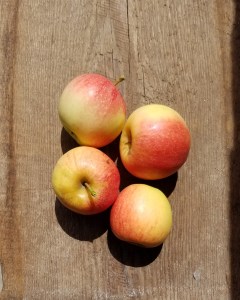
Gala Apples

It’s raining as I type on the keyboard. Rain is to relent and I hope it does because one of the farmers for whom I work is getting married today.

In our small family there are not many celebrations. I’m not sure what to do at a wedding, although I’ll figure it out by 3:30 p.m. today.

Jacque is steering me in the right direction. We bought a gift on line and had it sent to the bride’s home. She is making a card. She suggested I refrain from going directly from the orchard in my work clothes as I had planned to do. I looked through the closet to find something to wear and there was my blue shirt and a pair of slacks. I have a pair of dress shoes left over from when I worked in the Chicago loop. I need to pick a tie. My navy blue blazer still fits. Special things for a special day. I’ll change in the employee rest room at the orchard then head down to the county seat for the ceremony. Civilization at work.

It’s still raining.

Since my first retirement nine years ago I’ve kept track of significant activities.

I keep a balance sheet, a list of books I’ve read recently, and record every event, meeting and significant encounter with people outside immediate family who are part of my world.

Early on there was a purpose to this, although I’m not sure now what it was. Three full binders later, I’m ready to give up tracking things so closely. My last full report was in December 2017 as my Social Security pension began. My second retirement seems opportunity enough to let go of details and focus on main tasks at hand. Things like weddings, funerals, birthdays, housekeeping and the like. I expect I’ll get better at it.

September begins the turn toward winter. The garden is in late summer production so there are tomatoes, celery, cucumbers, winter squash, green beans, eggplant and peppers coming in, requiring processing. Fruit is also coming in from the orchards with pears, apples and peaches lined up on the counter waiting to eat. Cooking has taken a fresh flavor with local food dominating most menus. Cucumber salad is happening daily and we’re not tired of it… yet.

2018 is proving to be a year of transition. So aren’t they all?

I’ve been planning garlic planting in late September and haven’t decided whether to use the cloves I grew as seed or to get more from the farm. I picked a place for them and once the cucumbers are done I’ll prep the soil. I think I know the answer. At some point we have to live on our own — I’ll use the cloves I grew this year, hoping they multiply and eventually become self-sustaining. I’m confident they will.

Categories
Kitchen Garden

Serrano Pepper Salsa

Serrano Pepper Salsa

We don’t need any more salsa in the house yet the abundance of hot peppers this year had me making this recipe… it’s a big batch.

My Serrano pepper crops failed the last couple of years so I’m glad to have more this year.

There weren’t enough of them in the ice box so I went to the garden and picked more. No Roma tomatoes either so I used Clementine, a two-ounce, orange colored tomato of which we have an abundance.

This year I froze the salsa and am not sure how it will turn out when I use it — an ongoing experiment in food preservation. I bagged up two-cup servings. The rest is in the ice box ready for use. The recipe made 17 cups of salsa.

Serrano Pepper Salsa

Ingredients
2 pounds Serrano peppers
3-1/2 pounds Roma tomatoes
1 pound yellow onions
24 ounces tomato sauce
1/4 cup salt
1/4 cup ground black pepper
1 large head of garlic

Technique
Clean and stem the peppers. Clean and prep the garlic, tomatoes and onions, cutting into large chunks. Put the vegetables into a blender in batches. Grind it until medium coarseness. Mix the end result thoroughly in a large bowl. Add the salt, pepper and tomato sauce and mix until ingredients are incorporated.

It is debatable whether to cook the mixture. I like it fresh, although if one wants to can salsa it should be brought to a boil, stirring constantly to keep it from sticking to the pan, and then cooked for ten minutes under medium low heat. After cooking, fill pint Mason jars with the mixture, leaving an inch of head room, and process for 15 minutes.

We’ll be in salsa for months with this recipe. Now what to do with the jalapeno peppers. I’ve already pickled and frozen enough to last until next year.

Categories
Environment Home Life Kitchen Garden

Gardening in End Times

Japanese Beetles Enjoying a Pear

I’ve been a gardener since we got married.

We planted a few tomatoes near the duplex we rented in Iowa City the spring after the wedding. As we lived our lives, raised our daughter, and sought economic stability, we either planted a garden or harvested what was there. When we owned a home, first in Merrillville, Indiana, and then in Big Grove, the garden got bigger and I became a better gardener. There is evidence in this year’s abundant harvest.

It didn’t come naturally even though gardening is elemental. The brief narrative of my gardener’s life.

As I step back from the working world to focus on home life what seems clear is society is moving at a startling pace toward disaster. Our industrial society consumes everything useful in nature, leaving us with foul air and water, depleted soil, polluted and acidified oceans devoid of marine life, and a warming world with all the consequences that yields. The earth will survive as it has. We people seem to be on the downside of our prominence. In multiple ways these are end times.

The Slovenian philosopher Slavoj Žižek asserts there is a chance for a new beginning in the terminal crisis in which human society finds ourselves. His arguments are not convincing to us regular humans.

What do we do?

What we have done is argue about approaches. Should we have a carbon tax? Should we ban abortion? Should we ban plastic straws? Is wind, sun, nuclear or natural gas a better source of electricity? Should we cut taxes and reduce government’s role in our lives? Should we become socialists, or even worse, democratic socialists? Should we let go of Hillary’s emails? Should we all just try to get along? Approaches don’t work and we should let go of them all.

The better question to ask is what story do we want to tell? As others have said, notably author Joan Didion, “We tell ourselves stories in order to live.” What narrative will take us out of the current crisis?

For me it’s “I’m becoming a better gardener.”

Regardless of pending social collapse we must go on with our lives. Partly to keep our sanity, and partly — importantly — to take steps toward a more livable world. We will never go back to the Iowa of 1832 before the great division and clear cutting began. What we can do is plant the seeds of a better life where we live. Our forebears left us a disaster. What can we do about it? Make the best of it with forward-looking narratives for the next generations.

I get it that many people don’t have means to do more than survive. When I see the abundance of our garden it’s hard to believe people go without a meal. Yet they do, in large numbers. We can feed a couple of them, but is that enough? It’s something.

The essence of the narrative is the verb to become. “I seem to be a verb,” R. Buckminster Fuller wrote. I seem to be that verb. We are not predestined to anything except our human span of nine decades, and that only if we are lucky. We live in an imperfect society that beckons engagement. I’m not sure working toward perfection is as good as doing something positive is. Knowing what to do requires a better narrative. One that hasn’t been invented for the 21st Century and beyond.

I plan to work on a better narrative, although garden in end times doesn’t seem too bad.

Categories
Home Life Writing

Staycation 2018

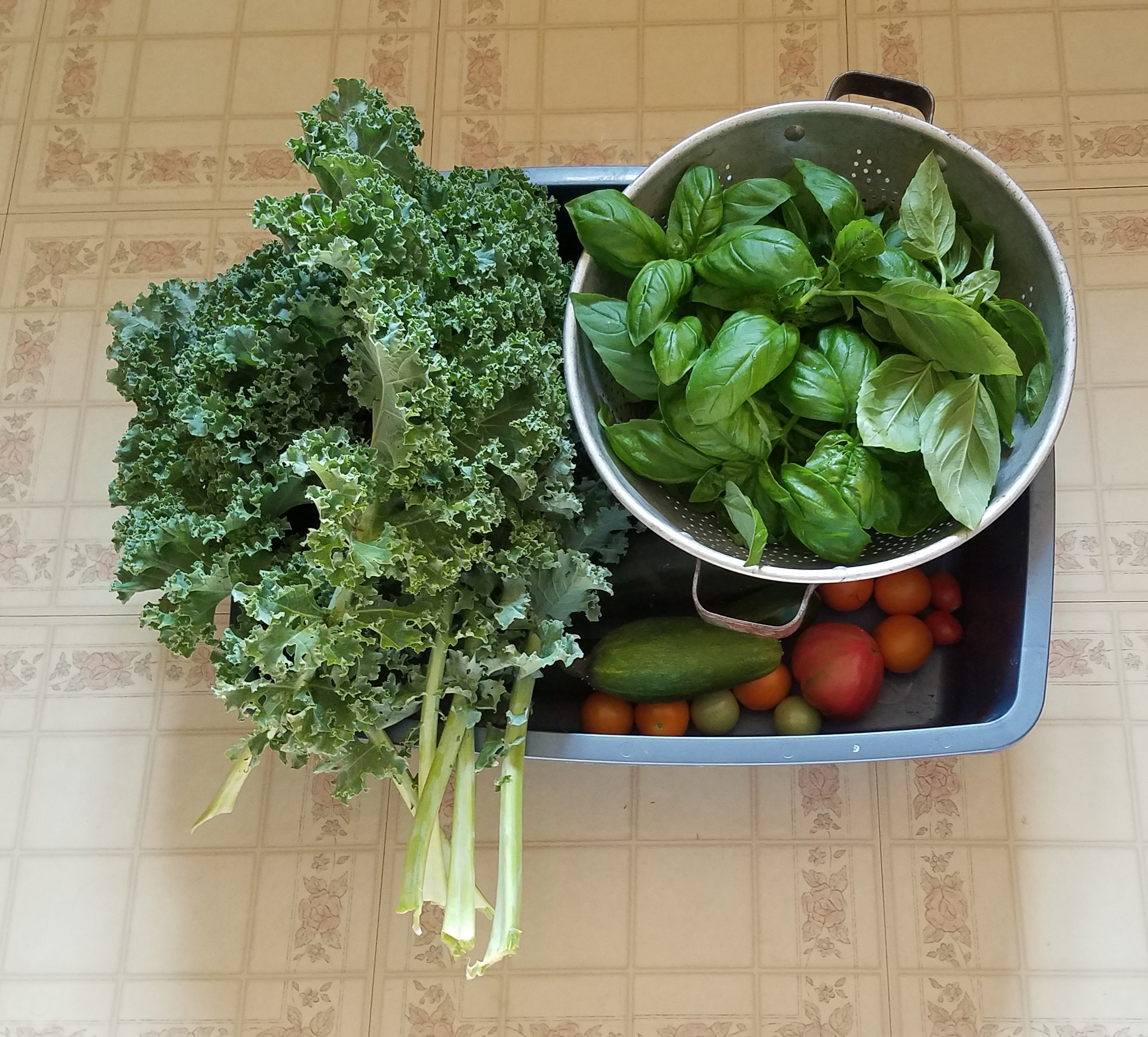
Garden Harvest

There’s plenty to do on the property so this week will be a staycation.

I took paid vacation from the home, farm and auto supply store. On day three of an eight day work hiatus, I left the property twice, visiting the warehouse club both times. I return to work next Saturday when my season at the orchard officially begins.

There are five stops on the staycation itinerary: the garden, the yard, the garage, the kitchen and my storage/study areas. It should be fun.

Yesterday was Mother’s 89th birthday. We had a nice telephone chat. She has trouble moving around because of arthritis, and no longer reads printed books because of macular degeneration. She seemed mentally alert as we reviewed her recent reading from an audio book subscription. We talked about her mother. Busha moved from the farm to Minneapolis at a young age. She took a job in a Chinese restaurant where she learned to prepare chop suey, according to Mother. I’m not sure “Chinese” is accurate, but the dish she learned and taught Mother has a unique flavor I’ve not encountered elsewhere. Mother said she continues to make chop suey from time to time.

It’s getting to be time for a visit.

And so it goes. Time to get outside and take advantage of the temperate weather. While the rest of the world bakes, it is good as it gets here… at least for the moment.

Later I’ll return to the kitchen to prepare a meal with some of the morning harvest. Summer gardening has been pretty good despite Spring’s late start.

Categories
Home Life Milestones

Remembering Donald Kaul in High Summer

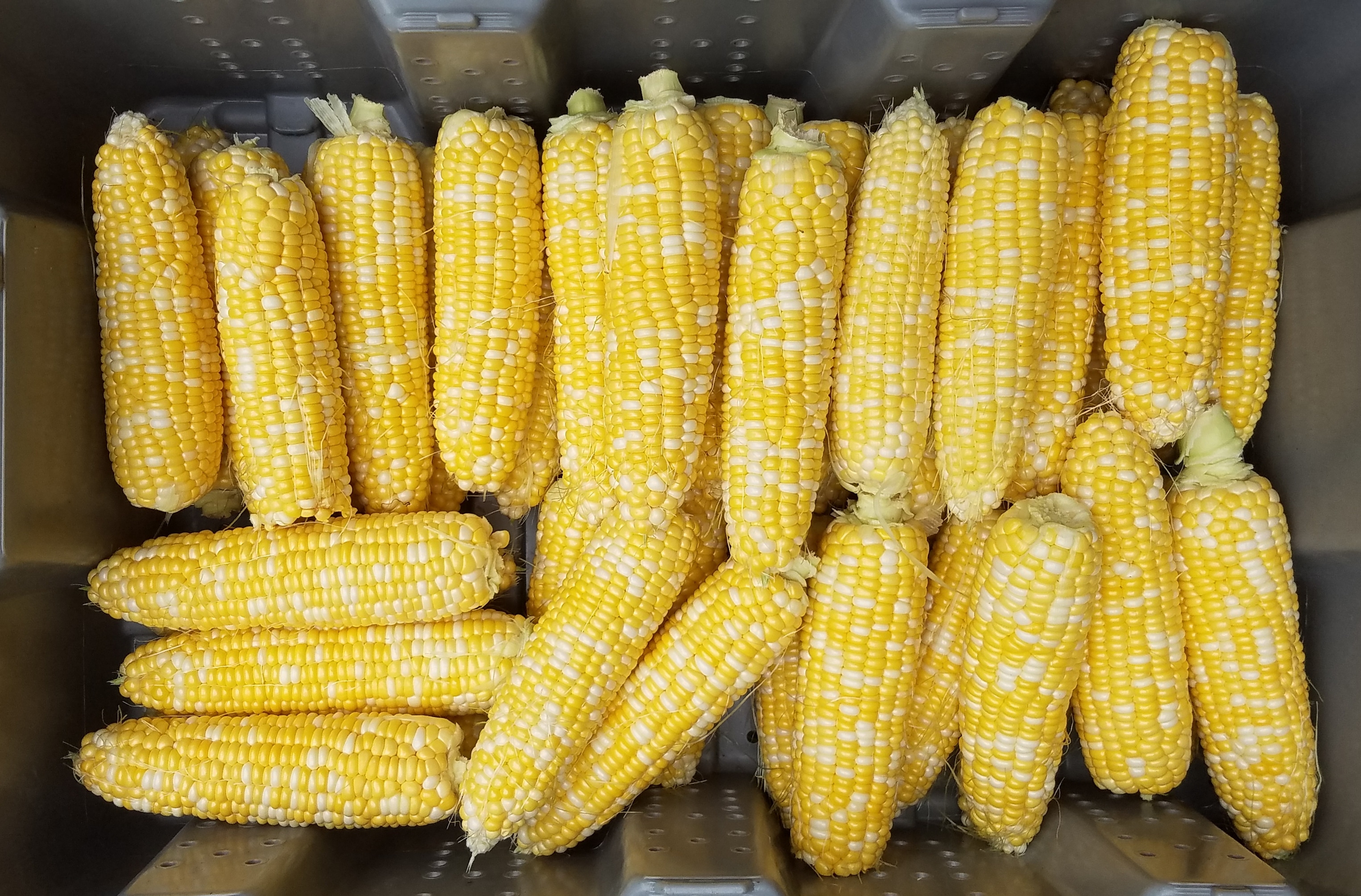
Sweet Corn from a Roadside Stand

Sunday was a day to hang out on memory lane.

Sweet corn, tomatoes, cucumbers and Donald Kaul.

I bought sweet corn from a roadside stand and we had it for dinner with tomatoes and cucumbers from the garden, and thin slices of cheddar cheese from Vermont.

At some point after our return to Iowa in 1993, I decided to outsource corn growing. It takes up too much space and what space could be devoted to it produced a small crop. It was a good decision.

I cooked and froze the remainder of three dozen ears in two-cup portions in zip top bags.

We revisited stories of our lives during and after dinner.

How our cat would lick the cobs cleaned of corn kernels.

How putting up corn had been a long tradition — a family project.

How simple and good this year’s corn tasted compared to the past.

The trick to eating sweet corn is knowing how much to eat without getting a belly ache. The first ear was buttered, then sprinkled with lemon pepper seasoning and a little salt. Three ears is a usual portion. I ate four and went light on the salt. There were no ill effects.

Tomatoes

The arrival of sweet corn and tomatoes is the arrival of high summer. A short window — a couple of weeks max — when summer is good and we get a chance to be human again.

That’s something we need in this turbulent world.

In Iowa we also have the Register’s Annual Great Bike Ride Across Iowa, more commonly known as RAGBRAI, which began yesterday. Donald Kaul and John Karras were two Des Moines Register reporters behind the annual event. It was expected this year, and Kaul died of prostate cancer Sunday morning.

“On January 11, 2018, Kaul, an agnostic, revealed that the cancer in his prostrate has spread to his skeleton and that he will no longer take treatments,” wrote Des Moines Register columnist Kyle Munson. “He was in the end stages of his battle with cancer and didn’t expect to live beyond the year.”

The end came at 11:50 a.m., according to a local radio station.

The narrative of this year’s RAGBRAI seems already written, and it doesn’t include Kaul. There is time for some show of recognition on the seven-day tour. We’ll see what happens.

For me RAGBRAI was about the summer of 1973 when it started. An artist I met in Davenport invited me to her family’s home near the Catholic orphanage to meet her parents. Her brother was out in the garage when I met him too. He was talking about riding his bicycle across the state with the Des Moines Register. Over the Coffee, Kaul’s column, was popular in this household.

Today people prepare for months for the long endurance test the annual ride has become. Specialized, lightweight bicycles, meal plans, and training. Not in 1973 when the sequence of events was 1. figure out how to get to the Missouri River with the bike; 2. tighten up the hub axle nuts; and 3. air up the tires. I can’t recall, but I don’t believe he even had a derailleur gear on his bike. It was pretty simple then and proved to be enduring.

Kaul’s death on the beginning day of the 46th RAGBRAI is likely coincidence. In any case, he is memorable for his writing more than his promotion of bicycle riding.

In high summer, after our dinner of sweet corn and tomatoes, my wife and I discussed our interactions with Donald Kaul. She got his autograph in a bookstore in Iowa City, and I corresponded with him when he was a Washington, D.C. correspondent for the Register. He was a constant part of our Iowa lives. That will still be true now he succumbed to cancer.

Categories
Kitchen Garden

Going Without a Share

Fermented Dill Pickles

The change in our local food ecosystem from last summer to this is hard to fathom.

We let go of the summer share from the Community Supported Agriculture projects to rely on our garden.

It was a big step and I feel much less stress from over abundance. Some days I’d like more lettuce, and some of the specialty crops, but there is plenty from our garden to fill the gap. Now that tomatoes, cucumbers, eggplant and peppers are beginning to come in, I don’t forecast any gaps.

What is hard to fathom is why the transition has been so easy. Maybe I’m getting to be a better gardener. Maybe I was due to go on my own.

Tornadoes tore through Marshalltown, Pella and Bondurant yesterday as I got off work at the home, farm and auto supply store. It doesn’t appear anyone was seriously injured or died, although damage to the communities was substantial. Photos and video posted on social media depicted a horrible scene. The Marshalltown Times-Republican newspaper got an issue out the next day despite the storm — practicing journalists they are.

Are these storms due to climate change? I don’t know. What I do know is the seasons are out of wack. A late spring, early high ambient temperatures, and more frequent storms make our climate exceedingly weird. We adjust, accommodate, but something’s different.

Ben Santer, an atmospheric scientist at the Lawrence Livermore National Laboratory, led a study of four decades of climate data that concluded human activity is disrupting our seasonal balance. That is, the seasons don’t proceed through time the way they did. It may be confirmation bias, but I doubt it. Eric Roston at Bloomberg wrote a more accessible article about the study here.

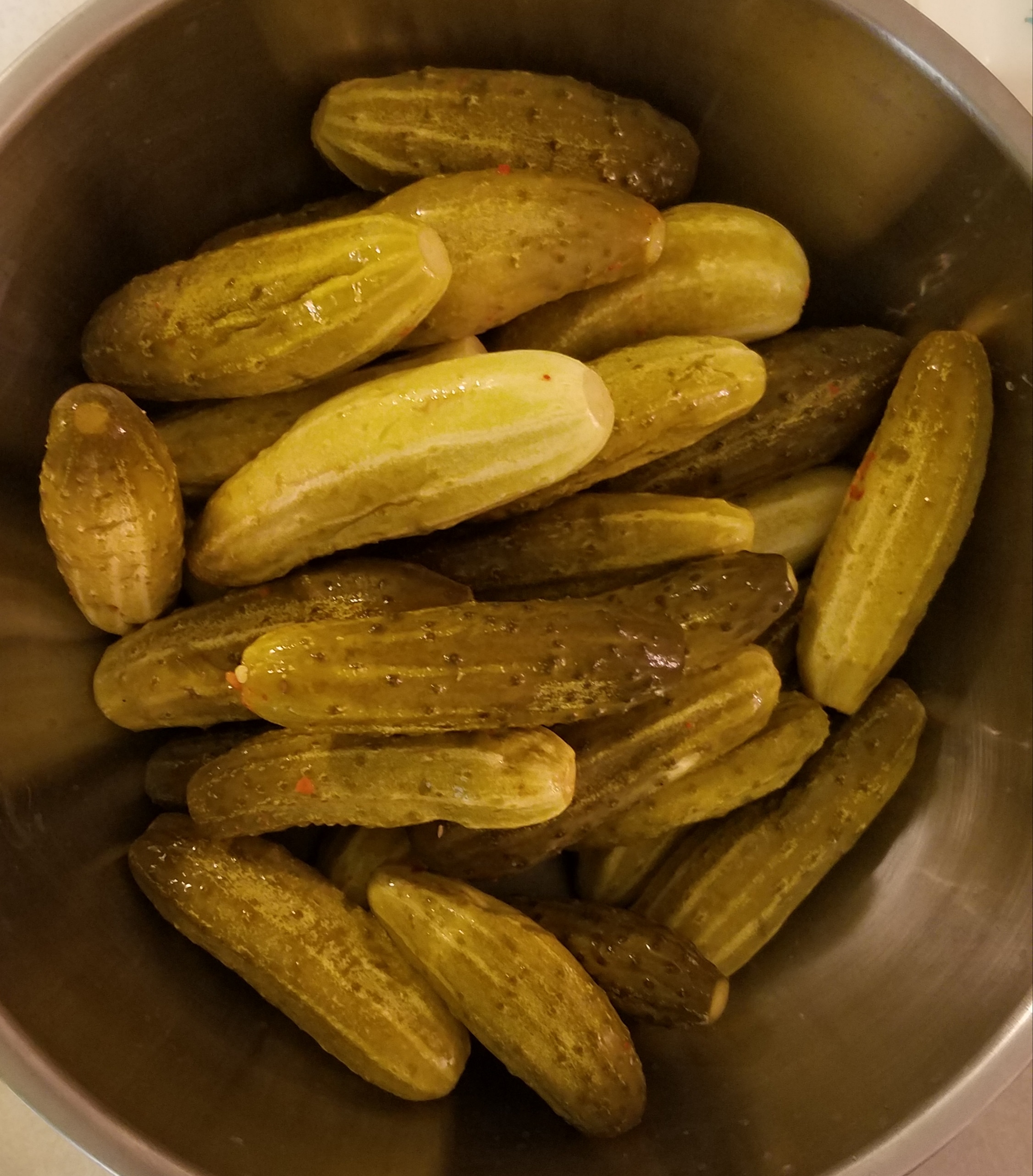
In the kitchen it’s cucumber day! A batch is sweating over a bowl and the crock is full of sweet pickles to be water bath processed tomorrow. The dill pickles in the photo took 13 days to ferment. It was worth every minute.

Categories
Home Life Writing

Moving On to Fall

July 15 Harvest

My supervisor at the orchard called yesterday to ask me to work this weekend. I said yes.

We’ll be selling blueberries from Michigan for a few hours on Saturday and we’ll discuss plans for the upcoming season.

It is my earliest start in six seasons. It’s also a sign the year is on the back slope. Fall will soon arrive.

Being home more has helped make the garden our best ever. Just an hour a day after planting has been enough time. Some of the new techniques: using composted chicken manure for fertilizer, mulching pepper and cucumber plants immediately after planting, using a fence to grow cucumbers, and putting a deer fence around the tomatoes have facilitated Mother Nature’s growth. I still haven’t had to buy a single onion or head of garlic at the store this year. We are eating something fresh from the garden daily.

I’m used to having events to which to look forward. That means I’m not used to the five-day weekends semi-retirement and completion of spring farm work brought this July. I’ve been doing a lot of resting in between activities. I’ve made a conscious effort to reduce the number of activities. So resting outranks doing for the time being.

Based on more than 50 years in the workforce, I’m used to a scheduled shift being the focal point of each day. In retirement, that changes and will take accommodation.The idea is not to replace work shifts with other, different kinds of events. Rather focus on awareness of tasks being required and doing them as needs rise to the surface of our new lives together.

For example, I planted 48 celery plants. Yesterday I harvested five to see how they were growing. I trimmed the heads of bad stalks and used what was salvageable in a stir fry for lunch. The five cores, or what grocery stores call “hearts” I bagged and refrigerated for later. What I learned was celery is about ready for harvest and that means a big project of cleaning, trimming, slicing and freezing for winter use in soup and stir fry. That task is lingering and will rise up soon.

The point of retirement is to perform tasks like this in time, but when fancy deems best. It would be a waste not to get this done, but I’m reluctant to write it on my calendar. I’d rather wait for the right intersection of seasonable temperatures, personal energy and peak vegetable readiness. That time will reveal itself outside the unforgiving tyranny of a calendar.

Milkweed Pods Growing

Even the milkweed plants are doing well this year. I did little other than weed around them and cut away the vines wanting to grow up the stem. Several plants are forming seed pods. I’ll learn a little bit about them and harvest the seeds to grow more in a different spot. Someday I hope to see a butterfly caterpillar on one of them.

It looks like as I’m writing the presser in Helsinki, Finland with Vladimir Putin and Donald Trump is about to begin. A reporter claiming to be from The Nation has been forcibly removed. Neither leader is a fan of a free press, although both use it to their advantage when they can. We also know about the many journalists who “disappeared” under Putin. I’d rather look at butterflies than think about U.S. – Russian relations. It’s hard to avoid, just like it’s hard to stop thinking about my next work shift.

If we’re to change habits, we have to work at it. That may be why I continue to write these posts, work at the orchard, and at the home, farm and auto supply store… for now. My life would be worse without it.

Categories
Home Life Kitchen Garden

Onslaught of the Mechanicals

First Carrots

Having time to garden is helping the results.

It is one thing to know what to do and another to execute according to that knowledge.

For the first time in I can’t remember when weeds did not get the better of me this summer. With plenty of grass clippings for mulch, and plastic to suppress weeds around the cucumbers and peppers, everything looks pretty good.

There is an abundant harvest already. I’m proud of the carrots in the photo, as this is the first year I’ve grown such big ones.

While gardening is going well, mechanical things around our 25-year old house are not.

I don’t know whether it was the dryer or the kitchen sink that had problems first. Then the washer went out… then the refrigerator. Yikes!

At this writing we hired repairmen to fix the washer, dryer and kitchen faucet, ordered a new refrigerator, and have a new freezer — all within eight days. Here’s hoping the onslaught of the mechanicals is finished.

Once the refrigerator arrives from the factory in a couple of weeks, we’ll get back to normal. In the meanwhile I just finished an ice run to town so I can refresh the four coolers in the morning. We’ll use our daughter’s college refrigerator and the coolers until a loaner arrives later this week.

Kate’s Garlic Rack

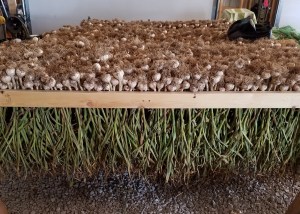
This morning I stopped at the two farms where I work to pick up final settlement checks. We’ll need those and more to pay for the mechanicals. There’s a lot of action at the farms. At Kate’s place the garlic is in the barn and looking great. At a CSA the farmer must grow enough for members plus an additional amount for seed in the fall. It is a big crop and the photo is only part of it.

I caught up with Carmen tilling a field and made arrangements to help with her garlic harvest on Saturday. She has an international crew of students helping us. I asked if there was any dill to make pickles. She said most of it bolted but I could glean what I could. There was plenty to make a gallon batch using yesterday’s cucumber harvest. Those pickles are already in a crock.

Recent days have been like an Indy 500 pit stop of getting things fixed and serviced. Now I’m ready to get back to the track.

Categories
Kitchen Garden

Heat Advisory Blues

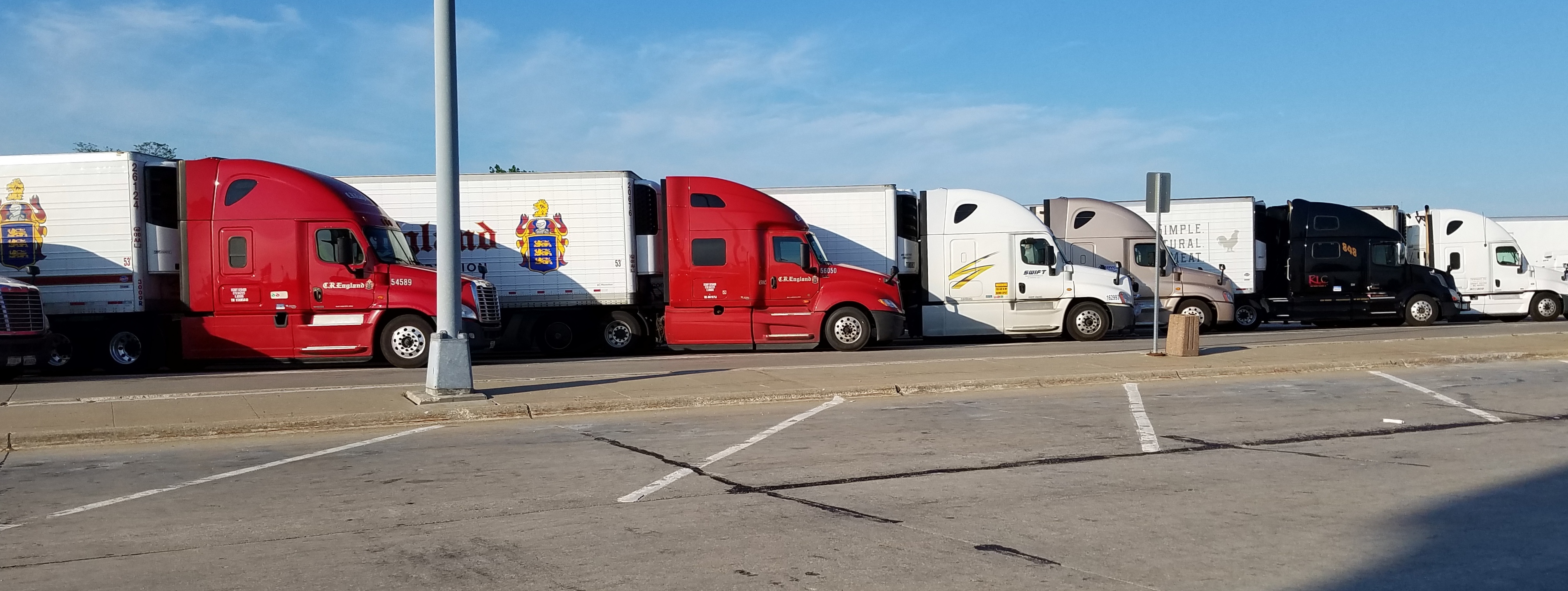
Rest Area in Polk County, Iowa

It seems like spring was never here.

Big Grove is under a heat advisory until 7 p.m. today. That means hot temperatures and high humidity creating a risk of heat-related illnesses. It barely cooled overnight so the day gets a head start on being oppressive.

There is a three hour gardening window before temperatures rise back into the 80s. As soon as the sun rises, I plan to harvest what’s ready and plant bell peppers and basil seedlings. There’s a lot of gardening and yard work to do. I’ll keep at it as long as I can.

The rest of today I’ll work inside — at my desk, in the kitchen, and folding laundry — getting ready for another busy week.

My shirt was drenched with sweat on the drive home from Des Moines yesterday. I made a pit stop at a state run rest area and bought a 20-ounce cherry Coke to drink on the way home. I can’t recall the last time I had one but couldn’t bear the thought of buying bottled water. Regretfully, I forgot my refillable water bottle at home.

I finished making and canning spring vegetable broth after arriving home. Seven new jars are on the shelf with three and a half more in the ice box, about three gallons. My target is to have two dozen quarts on hand, so another batch of seven will do it. There are plenty of turnip and beet greens plus kale for the broth.

We have a functioning air conditioner and will run it to cool down the house. It takes the edge off the heat and humidity and that’s positive. I learned the oppression of high heat and humidity during the drought of 2012. It felt like there was no escape. Today reminds me of that summer.

Light peeks around the curtain on the east side of my study. It’s time to get out in the garden for a while. And to contemplate what is next.