Categories
Home Life Kitchen Garden

Inventing a Cuisine

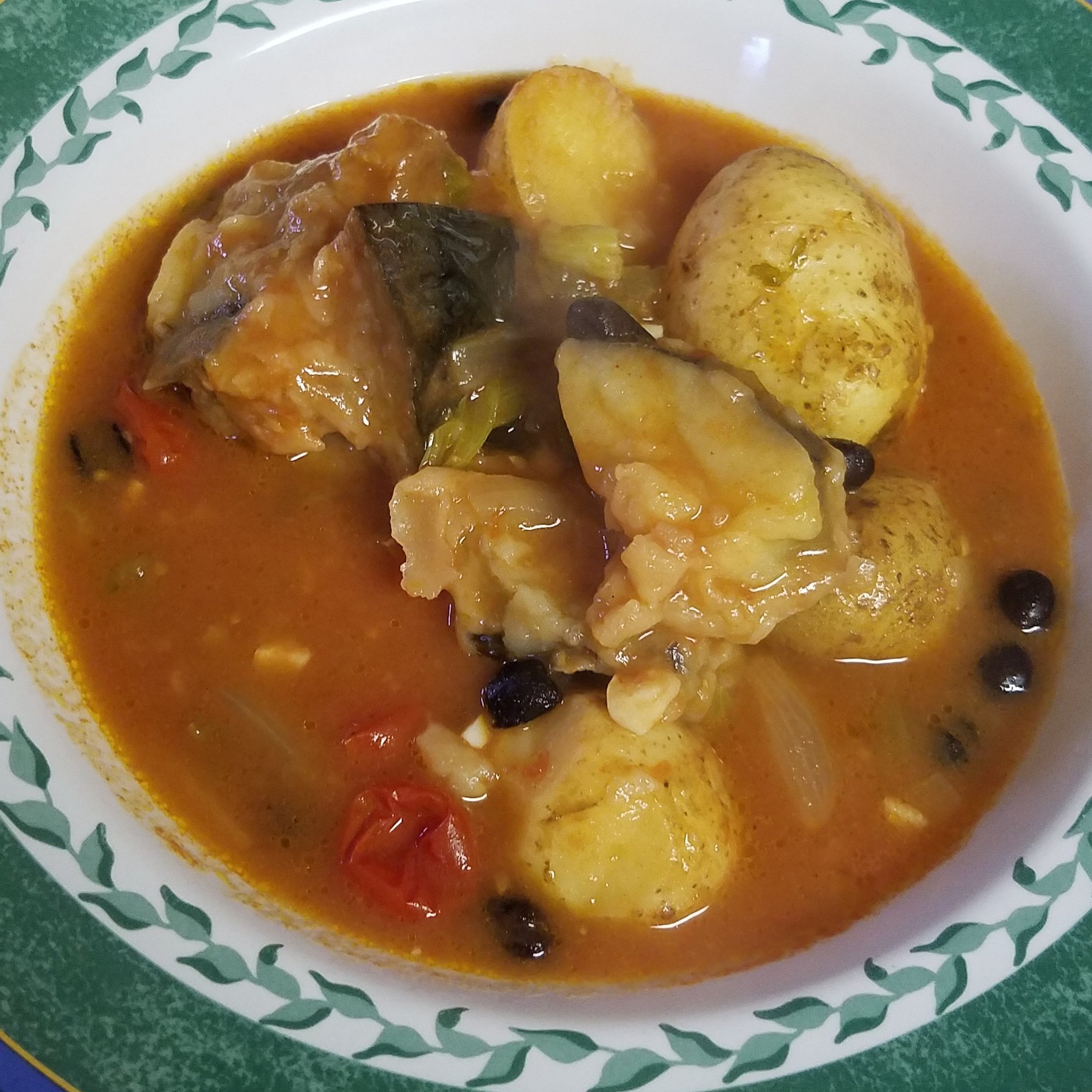
Stew of potatoes, eggplant, tomato, black beans and vegetables.

Who wants to reinvent home cooking every time they enter the kitchen?

Here’s a better question, how can I work to be present in the kitchen and produce tasty, nutritious food for our family?

While I have a strong memory of Mother’s cooking, I don’t recall many of the dishes. For me, home food begins in 1959 when we moved to Northwest Davenport where I lived at home until going to university in 1970. During those years Mom cooked what I believed was standard fare for working class people. If there was a typical dinner, it included beef or chicken as a main course, potatoes or rice, and a vegetable. Sometimes there was dessert. Dad got a discount at the butcher shop co-located at the meat packing plant where he worked. He brought home mostly beef and pork products, and we had plenty. Memorable tastes include liver and onions, beef vegetable soup served on white rice, and usual fare of hamburgers, grilled cheese and meat loaf. It was a staple cuisine that tasted good and provided nourishment.

When I became mostly ovo-lacto vegetarian in 1982, traditions associated with Mom’s cooking went out the window except when we visited her. I started cooking while I was in college and like most beginning home cooks was not very good at it. I recall serving Mother tuna and noodle casserole during the visit she made to my small apartment. I used her recipe, which included canned tuna and condensed mushroom soup. We got through the meal, one of the few during my life where she came to my place for dinner. I liked the dish with its savory richness. Today, I wouldn’t use tuna because of my mostly vegetarianism, but also because of over fishing of the species combined with the use of slave labor to harvest it in waters off Asia.

There is a utopian impulse in American society in which groups of people separate from social traditions and strike out anew. In that sense, a cook has a choice. Should we learn and perpetuate cooking traditions in our kitchen or improvise new meal solutions against a perceived and newly created blank slate? My choice is to make a cuisine from an ecology of food I identified and help create that borrows from everywhere to create new dishes. I may write a cook book to record the journey, but have little interest in creating traditions. A tasty, nutritious meal is enough.

In retirement for 16 months, I’ve found we have become increasingly isolated from society. Even though we rarely use the television set, I now understand the archetypal image of retired man yelling at the TV from a chair. It is harder than imagined to get out of the house for anything other than my part time jobs. The new paradigm has been good for our marriage and provides a natural break for utopian culinary endeavors.

The meal began with weighing out a pound of small potatoes from my barter arrangement with Farmer Kate. When I brought them to the kitchen, I didn’t know what I would do with them.

While looking through the weedy, end of season garden, I found three large Galine eggplants behind the foliage. I picked them and brought them inside.

On the counter was a good supply of garlic and cherry tomatoes. In the ice box was half a Vidalia onion, the last of the fresh garden celery, part of a bell pepper, some leftover black beans, and jars of thick tomato juice.

There was a meal in these ingredients.

After cleaning and trimming the potatoes I put them in a large sauce pan and covered them with tomato juice. My tomato juice is very thick due to a process I developed to use excess tomato water while canning. I brought the mixture to a boil then turned it down to simmer until the potatoes were fork tender.

I cut the eggplant with skin on into large chunks, soaked the pieces in room temperature tap water for 30 minutes, dredged them in flour, then fried them in two tablespoons extra virgin olive oil until browned on all sides.

In the Dutch oven I cooked the onion, bell pepper, celery and garlic in a tablespoon of extra virgin olive oil on high heat until tender. The only seasoning used was sea salt.

When the potatoes were done, I dumped the whole pan into the Dutch Oven, added the black beans and some cherry tomatoes, then added the eggplant. I scraped the bottom of the frying pan into the Dutch oven with a spatula to get all the flour and oil mixture and thicken the sauce.

I turned the heat to medium low and warmed until everything was evenly heated and the sauce thickened.

In retrospect, I could have added some frozen okra and seasoned it with red or green hot peppers. We keep the spicy dial turned to low in shared meals. It made four servings and was satisfying.

Humans consume only so many vegetables. 20 percent of an estimated 20,000 species of edible plants represent 90 percent of our food. Others may have made dishes similar to this potato eggplant stew. Each ingredient, each technique and each vegetable has its own detailed and unique history. There are a finite number of ways to pull them together into a tasty, nutritious dish. Improvisational cooking need not be unique, just as utopian living works to meet the same human needs as the rest of society. As a seasoned home cook, I no longer have to reinvent things. At the same time, improvising based on available ingredients renews our interest in cuisine.

It is okay to want that.
Categories
Kitchen Garden

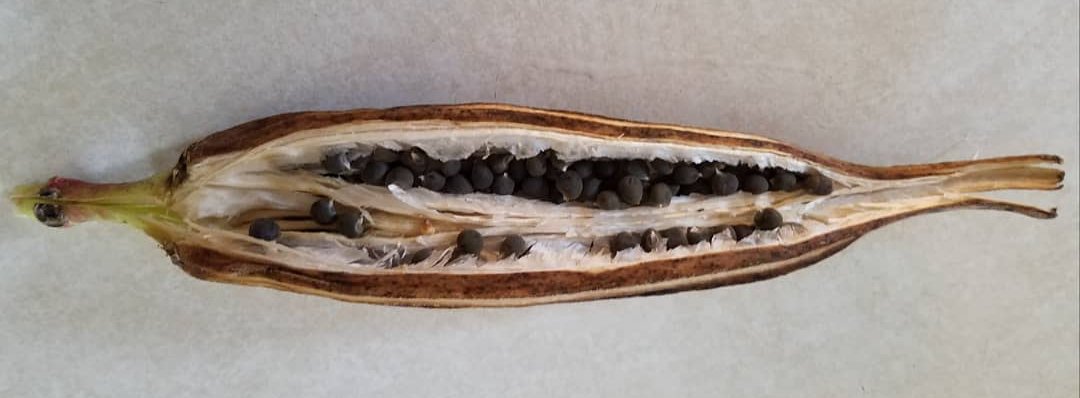
Okra Summer

Okra Seeds

This year I grew okra for the first time.

It was an experimental change from store-bought to growing my own. I use okra mainly for gumbo and after this gardening season I have plenty sliced and in the freezer.

Okra is easy to grow and the plant produces for a long time. I now understand why so many people, especially those with limited financial resources, use it as a basic vegetable.

It’s not the most popular vegetable in Iowa.

I acquired the seeds at the home, farm and auto supply store in a batch of end of season packets left in a cart in the employee break room. If the seeds hadn’t been free, I would not likely have grown the vegetable. The excess pods produce plenty of seeds for next year. If I grow it again, I’ll plant just a few of them.

The reason I make gumbo at all is from watching cooking shows on public television, then on Food Network. Justin Wilson and Emeril Lagasse were most influential, but neither of them uses okra in the gumbo recipes at the links. Here is the recipe I developed after a number of years of exposure to these chefs.

Paul’s Vegetarian Gumbo

Make a roux with four tablespoons each unsalted butter and all purpose flour. Cook to the blonde stage.

Cook 10 ounces vegetarian sausage, sliced on the bias, separately in a tablespoon of extra virgin olive oil. Drain and reserve.

Add one cup each diced celery, onion and bell pepper. Cook until the onions are translucent. Add finely chopped garlic to taste (Use spring garlic when available). Add a thinly sliced hot pepper if you have one from the garden (Serrano and Jalapeno are my favorites).

Add one quart of vegetable broth, one pint of diced tomatoes and one cup sliced okra. Bring it to a boil and turn down the heat.

Season with 1 teaspoon curry powder, ground red pepper, or cayenne. Add prepared hot sauce to taste.

Add one cup chopped fresh parsley plus the sausage and heat thoroughly until the broth thickens.

Serve on its own or with rice.

Categories
Kitchen Garden

Apple Harvest 2019

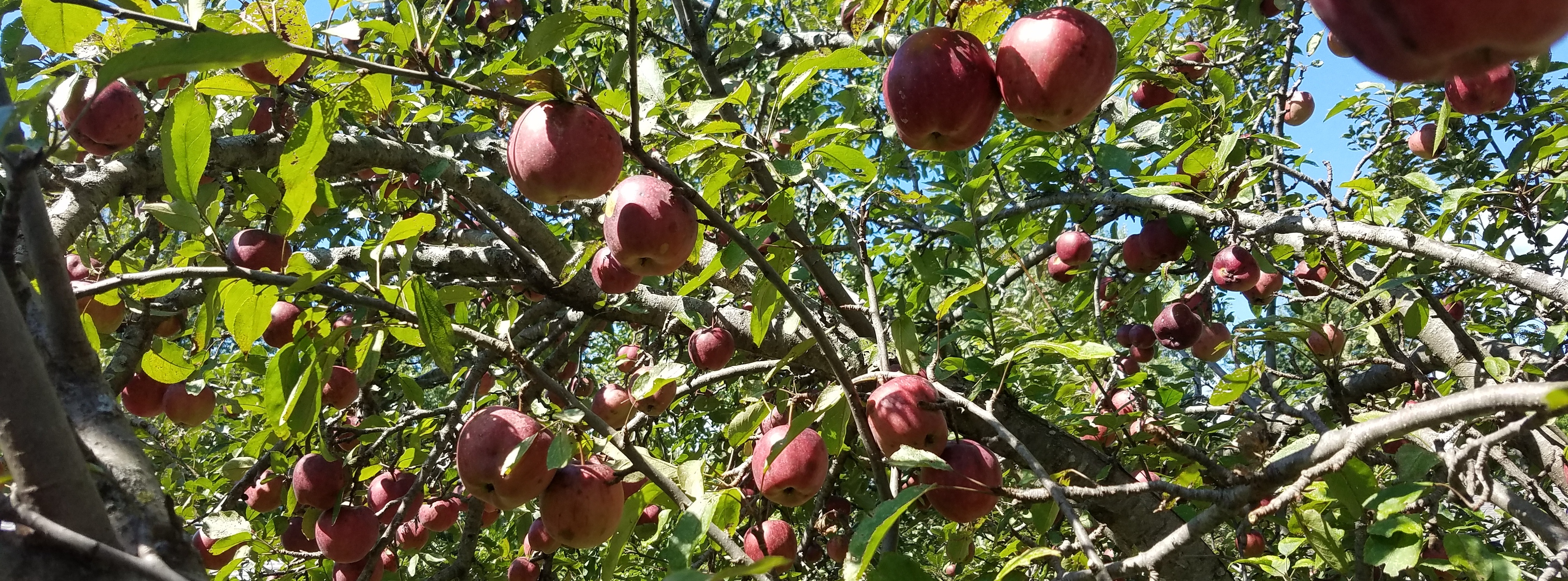
Apple tree viewed from top of a ladder.

The view from atop the ladder was pretty good.

Monday I began harvesting Red Delicious apples from a tree planted on Earth Day 1995. This tree outlasted three others planted the same day.

Tuesday I completed a 350 pound donation to Local Harvest CSA, which has been my go-to outlet when there is an apple abundance. I kept three crates for the kitchen and many apples remain on the tree. Naturally, the best apples are furthest up and hardest to get. They don’t seem to be dropping like Earliblaze did so there is a chance to pick more… a lot more.

The question is always the same: what to do with the abundance? In the past I felt it important to use every apple possible. As a result of such compulsive cookery the pantry is well stocked with canned apple sauce and apple butter. I may can a batch of seven quarts of applesauce this year to refresh the stock rotation, but don’t really need it. With my current concerns about blood glucose levels, applesauce isn’t a go-to option for dessert even if I enjoy it.

Baked goods is an option. 2019 is busier than most years in politics so there are plenty of outlets for apple crisp, applesauce cakes and apple pies, including the county party’s annual fall fundraising barbecue. I can’t make it to the barbecue because of my work schedule but I’ll send in desserts for 24 or 36 people. I’ll also send an apple crisp to the Elizabeth Warren office in the county seat. We don’t eat much in this category, but at least one apple crisp will be for us as well as a celebratory applesauce cake.

This year I plan to dry more apples than usual. As a snack, dried apples are very sweet and something different. I have an old Ronco dehydrator purchased for a buck at a yard sale. It can dry a batch in a day or two.

I offered free apples to neighbors on our private Facebook page. I’ll fill any orders that come in on Friday. I’ll share with folks in town if they ask.

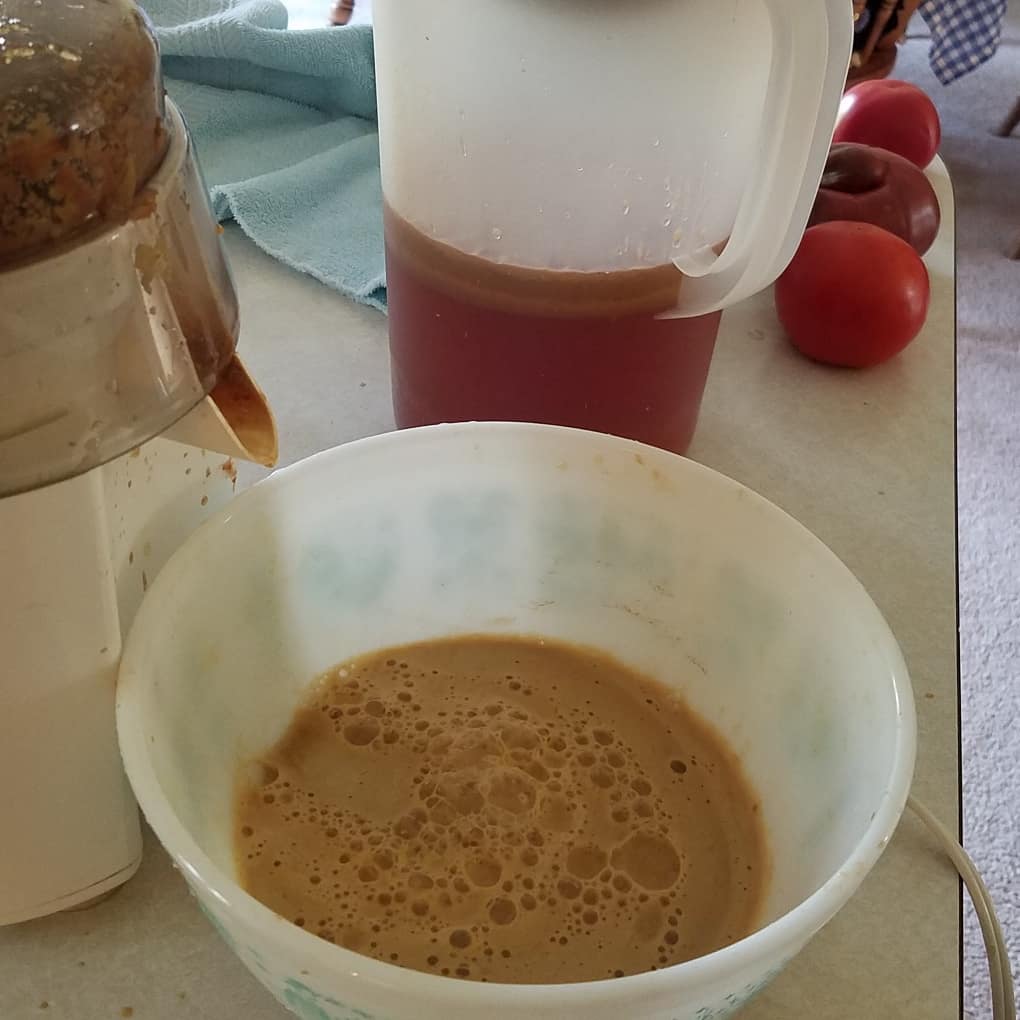
The bumper crop makes me wish we had a cider press. I’ll produce about two gallons of apple juice for additional apple cider vinegar making, but that work with a household juicer is too labor intensive to process all the apples. Maybe I can process a batch of seven quarts of sweet cider for special occasions.

When Johnny Appleseed planted his orchards, he did it for hard cider for settlers. My fermentation is to the vinegar stage, and for now I stay away from the hard stuff. That is, unless a gallon jug sits in the ice box too long and begins conversion of sugar to alcohol on its own. I’ll drink that. I’ve gotten to a place where I prepare our salad dressings using vinegar made in our pantry.

Living an apple life is pretty good. Maybe as good as it gets. It is work — the joyful kind. Thus far I’m nimble enough to scale the ladder and take in in the view for a moment before picking fruit. Apples are a way of dealing with life’s problems and an opportunity for self-improvement. I believe I’ll plant more trees next spring.

Categories
Kitchen Garden

Couldn’t Face the Gumbo

Slicers waiting for gumbo, sandwiches and conversion to sauce.

I had planned gumbo for a few weeks. Yesterday was the day.

Gumbo is a natural dish for our kitchen in late summer. There are plenty of onions, celery stalks, bell peppers, tomatoes, garlic and okra available from the garden. It is an easy dish to prepare after learning how to make a roux. Ingredient availability was not the issue.

I bought veggie sausages from the local food coop, harvested enough tender okra pods, and opened the hand-written recipe book to the page. I was ready.

I couldn’t, then sliced the okra, put it in a zip-top bag and tucked it in the freezer along with too many other bags of okra already there.

Not sure why I couldn’t, I recalled T.S. Eliot who put it thusly in “The Hollow Men:”

Between the conception
And the creation
Between the emotion
And the response
Falls the Shadow

Life is very long

During a month of reminders about end of life, my retort, “it’s not that damn long.”

My work cycle begins again this afternoon with a shift at the orchard for family night. After taking off work there, and at the home, farm and auto supply store, for a week, I’m ready to be among co-workers and guests again.

One hopes I will make gumbo before the end of summer vegetables. Maybe not yesterday, but it’s the best time of year for it. It would be a shame to waste our brief time among the living without it.

Categories
Writing

Shared Culture by the Lake

Making apple cider vinegar.

When we moved to Big Grove Township we had expectations about building a life here. These expectations spoke to our shared culture.

We built a new home, settled into the public school community and began getting to know people as I worked a career that would eventually take me to a job in Eldridge, Iowa where I managed a dedicated fleet operation for a large steel service company. At the time I thought the 55-minute drive was a reasonable commute.

While there, in a staff meeting, news of the planes hitting the World Trade Center and the Pentagon, and crashing in a field in Somerset County, Pennsylvania began to emerge. I was scheduled to fly to Philadelphia that morning but the flight would be delayed. That day became part of an American cultural heritage.

The events of Sept. 11, 2001 were an opportunity for the country to pull together, to unite in shared values. It was squandered by our national leaders who used the terrorist attacks as sufficient reason to invade Iraq. Our disdain for the national culture has increased since then.

Participating in a national culture is made worse by growing income and wealth inequality. If comparisons of modern capitalism with the Gilded Age and the rise of Rockefeller, Morgan, Vanderbilt, Carnegie and others is apples to oranges, Republican leadership of the U.S. government is systematically undoing every constraint on wealth and business implemented since the 1890 Sherman Antitrust Act. This is intentional, and under a government subject to the unlimited financial contributions of businesses. In part, we can thank the U.S. Supreme Court decision in Citizens United v. FEC for unleashing the power of the wealthy in our governance.

Not only do we view the rise of the wealthy into power over our lives with disdain, we spend more time thinking about it because of new media available to us 24/7. We tend to forget our local culture, the culture we share with family, friends and neighbors — things that are shared, yet personal to us.

Mom’s funeral on Monday started an immersion into cultures I forgot existed. Greeting people from every part of Mom’s life at the visitation taxed my ability to remember. I don’t believe I come up short. At the Knights of Columbus Hall after interment I sat with three of my cousins and talked about things I’d forgotten existed. Aunt Wini’s wringer washing machine, Orsinger’s ice cream, Uncle Vince’s photography culture, Chicago steel mill culture, and more. I was able to keep up even though it has been years since I’d seen any of them. I could keep up because it is our shared culture.

Yesterday I took the crate of apples from the summer trees in our backyard and made a gallon of apple cider vinegar. By this morning the brewers yeast was working. After skimming the scum, I put the two half gallon jars on the pantry shelf to ferment. I got the mother of vinegar from a neighbor. His family had been making vinegar with it since the 19th century. The distribution of our vinegar is in a short radius with most of it used in our kitchen. I’d be willing to bet I’m one of a very small number of people fermenting vinegar in our township.

The point is we have shared cultures and the only way they exist, now and into the future, is by participating in them. The sad occasion of Mom’s passing was made better by the celebration of her life by the living. Our cuisine is made better by making our own vinegar for pickles and salad dressings. Eventually our national culture will regain its value but we are not there yet.

We chose this township based on the logistics of living. To make it meaningful we’ve had to participate in local cultures. As bad as the national culture is now, we can’t stop participating because so much is at stake. What happens near the lake ripples throughout society. If enough people engage, that could be life-changing for us, and for us all.

Categories
Kitchen Garden

Cooking in Transition

Go-to Summer Meal – Sliced tomato, toasted whole grain bread, basil pesto , salt and pepper.

Our family cuisine is in transition. I’m hopeful for positive new menu items as summer turns to fall.

My spring diagnosis of high blood sugar brought changes. Through behavior modification I’ve been able to reduce key indicators and hope to continue to do so until the physician takes back his diagnosis of diabetes. At the interim check on Aug. 19, I was well on my way — solely by cutting the quantity of carbohydrates and exercising more.

Most nights it’s easy to get a meal ready for dinner. Our repertory includes easy and complex dishes which satisfy if done right. I prepare dinner for both of us four or five nights a week and we are on our own for breakfast, lunch and snacks. It works.

The cuisine we developed in Big Grove focused on techniques to use readily available ingredients to make repeatable dishes. We regularly eat pasta, pizza, macaroni and cheese, bread, chili, soup, casseroles, toppings with rice, and manufactured non-meat burger patties. Fresh and frozen vegetables are basic. Fruit is seasonal and desserts infrequently made or purchased. To meet a carbohydrate budget, I’ve had to regulate and mostly reduce portion size of these staple dishes. When I make a batch, I use a scale. Dishes last longer with leftovers for the next day or two.

When the garden comes in vegetables dominate the plate. Tomatoes are a favorite and we have fresh with most meals while they last. When lettuce comes in we make big salads for dinner. For the time being, I don’t bake bread very often, eschew meat and meat products, and use only a few manufactured products for their ease and serviceability within the context of our cuisine.

I’ve been cooking since I left home, although some of the dishes I prepared in the 1970s were hardly edible. My main cooking lessons began during a long assignment in South Georgia where I worked long days and crashed in the motel where Food Network was daily relaxation fare. The televised repetition of technique by multiple chefs helped me determine how they would fit in dishes I made. Every cook needs basic lessons in technique.

With the challenge of high blood sugar a new cuisine is in the works. Even if I beat the disease, permanent changes are required to prevent recurrence. Part of our aging in place will include development of a simple process to meet dietary needs in a tasty, efficient matter — focused increasingly on ingredients we produce or source locally.

My go-to recipes are memorized or written in a red spiral-bound notebook I bought on vacation in Stratford, Ontario. My go-to cook books are Julia Child’s Mastering the Art of French Cooking, Joy of Cooking by Marion Rombauer Becker, and a couple of others

Part of this means downsizing my collection of a couple hundred cook books. There is a lot of good stuff there, although a lot of repetition as well. Over the years I’ve been enthusiastic about certain chefs — Child and Rombauer Becker, Rick Bayless, Mario Batali, Giada De Laurentiis, Tamar Adler and, of course, my mother and grandmother. I’m hoping to find new inspiration in Anthony Bourdain, José Andrés, Sally Schneider and Nigella Lawson. In any case, the result I envision is a new repertory of about 25 main course recipes that have predictable nutritional value and can be made with mostly local ingredients. I also hope to learn new ways to prepare vegetables.

During the first seven months of 2019 we spent $124 on restaurant meals. I have a gift certificate to a highly acclaimed restaurant I won at a raffle last fall stuck to the refrigerator with no plans to use. Eating at home has been and will continue to be our focus.

Change is frequently unwelcome. In this case change is driven by health concerns about which I feel compelled to act. I expect it to be a good fall and winter sorting this out.

Categories
Kitchen Garden

Tomatoes on Everything!

Slicers, plum, paste, cherry and grape tomatoes.

The 2019 tomato harvest has begun.

We have fresh tomatoes with every meal, for snacks, and with everything.

We aren’t sick of them yet and work to preserve some of them is imminent. There’s a lot going on in the kitchen garden this August.

Sweet corn is in. Our local farm has had a spotty year, yet we’ve been able to freeze enough two-cup bags to make it until next year. Last night for dinner we had corn on the cob with sliced tomatoes — a classic summer combination.

First up in tomato preservation is to make a dozen pints of diced. This, combined with a backlog from previous years is enough to run the kitchen. I’ll also make as much tomato sauce as I can. Last year I froze it and that worked well. The freezer is filling up already so I may have to can some of it this year. Last year I froze small tomatoes whole and used them during the year to make sauce. I may try canning them whole to supplement the diced.

Yesterday I picked about two bushels of the first apples. A lot more wait on the trees. Our early apple is sweet and makes a great base for apple cider vinegar. I make a couple of gallons each year and the jars to do so are empty and just need cleaning. Our cupboard remains full of apple butter and apple sauce, so maybe a few jars of each is all I’ll make this year. They are good for out of hand eating as well. I’ll need to find a home for some of them or leave them to wildlife.

I froze enough kale for the year early in the season. What I harvest the rest of the year will be to give away or eat fresh. There is enough vegetable broth for the year, frozen jars of pesto, frozen okra, frozen celery, grated and frozen zucchini,  and the hot peppers are beginning to come in. It’s been a good year so far.

The garden didn’t produce green beans. The plants look healthy and there have been flowers. Almost no beans have been produced.

The variety of red beans planted needs to climb and I thought they were bush beans. There are bean pods forming, so there will be some harvest. Next year they need a fence to climb on, if I plant them again. I planted beans mostly to fix nitrogen in the soil.

It seems like there can never be enough beets. I started some in trays and those fared much better than the ones sown in the ground. Will do more of that next year. For now I have one jar of pickled beets to last the year.

The tomato and apple harvest signal the garden’s impending end. There’s a lot of work to be done, but we enjoy the taste of fresh tomatoes as much as anything we grow.

Categories
Home Life

Trail Walk

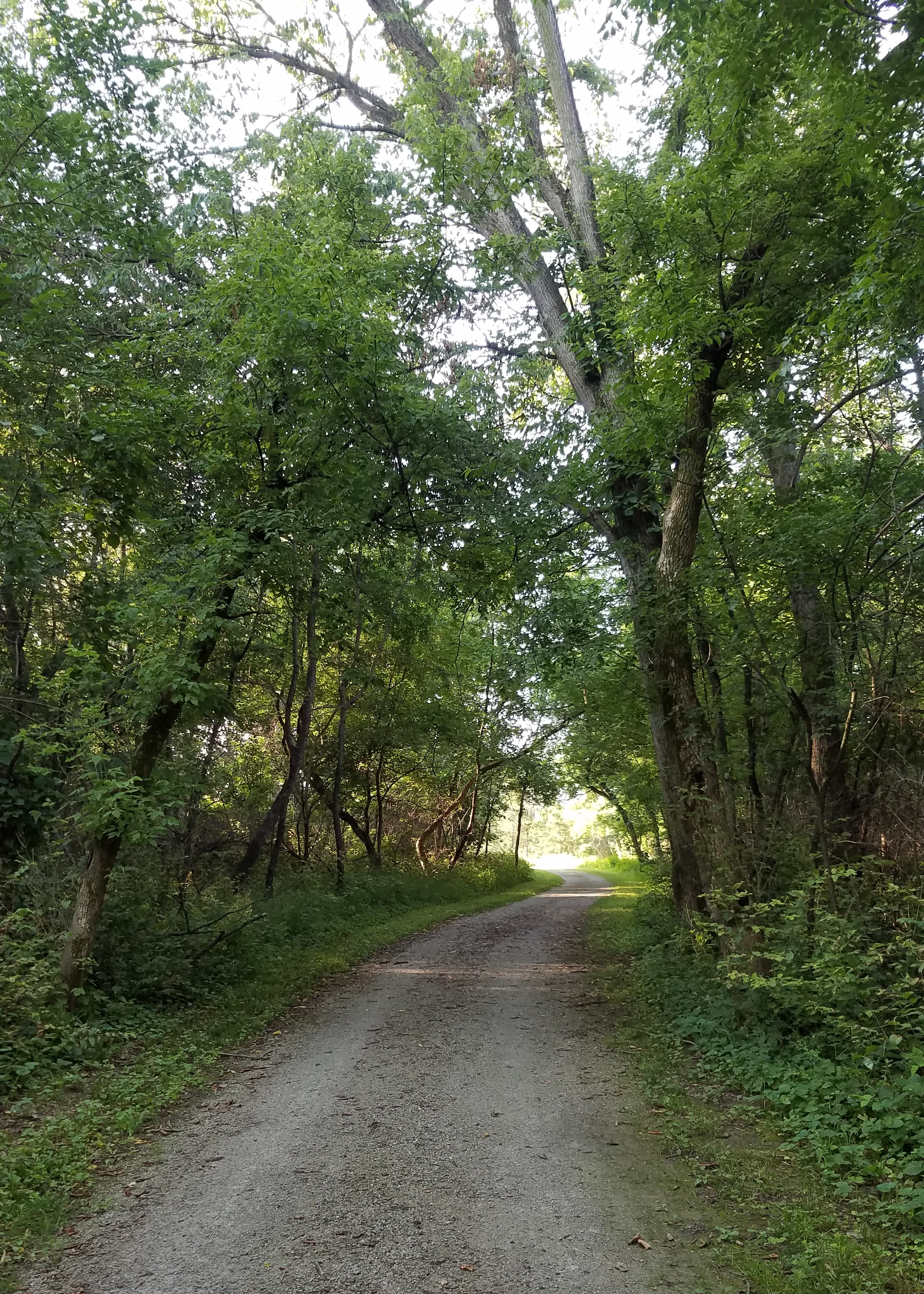
Lake Macbride State Park – Aug. 9, 2019

A main feature of the vacant lot we bought in 1993 was its proximity to Lake Macbride State Park.

When we need exercise, or just want to get away from the house, it’s a short walk to the trail that runs five miles from our nearby city to the main park entrance. In August the park is filled with wildflowers, insects and other flora and fauna of living in Iowa. There is as much to observe as there is to escape in quotidian life.

A trail walk can reset our lives each time we venture out.

Two weekends into my seventh season at an apple orchard I continue to enjoy the work and its customer engagement.

A family drove over from Chicago, one stopped on their way back to Rochester, Minn., and regulars return with the micro-seasons within a procession of a hundred apple varieties. Every chance we have to converse is a window into lives where with at least one common interest. It is the beginning of something positive.

A trail walk can get us centered and ready for such engagement.

Categories
Home Life

Lifestyle Changes

Breakfast – Aug. 9, 2019

I took five sessions with a nutritionist and wellness professional, once individually and four times as part of a group. I email her questions and she quickly emails answers back.

Based mostly on blood test results, the clinic diagnosed me with Type II diabetes in May and like many, I immediately went into denial.

Listening to the professional — a person with lots of letters following her name on the business card she handed me — I’ve been able to lose 10 percent of body weight, exercise more, and feel better. Monday is a reality check as I have blood drawn for another test and a meeting with my care-giving team the following week.

Whether my diabetes can be controlled through lifestyle changes is an open question, the answer to which is I hope to avoid diabetes’s advancement and physiological deterioration. By finding it early, the diagnosis may be beaten back. Included in this sentiment is a bit of lingering denial that I have it, but I am less worried about that than other things.

When my then septuagenarian grandmother was diagnosed with diabetes I was in the U.S. Army, stationed in Mainz, Germany. One day without warning I received a large box from her with all of the instant pudding and gelatin desserts from her cupboard. She accumulated a trove of these small boxes during her food stamps shopping trips and felt she could no longer eat it and I could. Cookery was not my specialty then. I made and ate some of it, favoring the pudding. I don’t remember how much. I am about ten years younger than she was when she had her diagnosis.

The physician’s assistant made a short list of things I should do. I followed them as best I was able: a diabetes screening from an ophthalmologist, the nutrition classes, more exercise, and regular checkups. I avoided taking regular self-administered blood tests and medication, except for a daily low-dose aspirin. Based on the nutritionist’s recommendation, I started taking vitamin B-12, which seems to have improved my sleep. As a mostly ovo-lacto vegetarian I probably get enough B-12, but the supplement is inexpensive and the downside of taking it minimal. The nutritionist taught us about the USP label for dietary supplements and what it means.

The focus of counseling has been to count carbs and establish a carbohydrate budget for each meal, snacks, and for each day. Enjoy food more, including things culturally favored, but stay within the budget. That means one ear of sweet corn, two ounces of pasta, smaller portions of rice and noodles for meals. Nearly complete avoidance of simple sugars is recommended. When one of the group asked about something else — BMI, protein, weight loss or whatever — she steadfastly returned to the need to control glucose when diagnosed with diabetes. She acknowledged there were other weight and nutrition aspects to life, but we were there to learn about how to eat with our diagnosis. I’m trying to own “my diagnosis” but am not there yet.

I’m modifying my behavior although I could relapse at any moment. It hasn’t been easy. It may continue to be not-easy. As a gardener I have access to fresh vegetables that can fill my plate as in the photo of Friday morning’s breakfast. When I returned to work at the orchard, I told my supervisor I had to refrain from eating almost everything we make with the exception of apples. What will I do when winter comes? Near yesterday’s anniversary of the atomic bombing of Nagasaki, I’m thinking if it’s a nuclear winter I may not have to worry about it. However, using that as an excuse for denial of my diabetes diagnosis is pretty lame.

I’m pretty sure this won’t be the last impactful lifestyle change I have to make as I age. Big picture? I’m okay with that. It’s better than the alternative.

Categories
Home Life

Sunday Drive for Ice Cream

Lake Macbride, July 8, 2019.

Sunday afternoon I was getting cabin fever so I drove to Ely, bought gasoline, played Powerball, and bought a pint of mint chocolate chip ice cream.

It is six miles to Dan and Debbie’s Creamery where I shop a couple of times a year. I’d go more often but I keep forgetting they are closed Monday until arriving when the building is locked up. I’m also avoiding sugar and carbohydrates for health reasons or I’d work harder at more frequent visits.

The ice cream was delicious. I debated whether to get a half gallon for $9 or a pint for $5. Economy would have me buying the larger size, but chances are I would have eaten the whole thing in one or two sittings. I managed to split the pint into two dessert-sized servings and fit it into my daily carb budget. I have a carb budget.

Wildflower

Sometimes one has to get out of the house.

My imagination let loose as I drove on Ely blacktop through the Atherton Wetland. So much so I didn’t notice whether flooding has receded, or whether people were using the ATV park.

When I reduced my schedule at the home, farm and auto supply store to leverage Social Security and phase into a slowdown, I had no idea how it would impact me. Mostly, I’m becoming more aware of who I am. It has taken time and I am not sure I fully realize what it means. One thing is certain, I’m not who I was.

This July hiatus is a chance to figure part of that out.

Not certain when it happened, my driving social-style is in remission. It may be gone completely. I no longer need to be in charge. I’m happy to follow the lead of others if they are competent. I take time for things I would not have had the patience. I did not see that coming.

Lake Macbride State Park Trail, July 8, 2019.

With a form of financial security through a pension, the press of bills due without funds to pay them is also in remission (Thanks FDR for Social Security). Our consumer debt is going down: we gained almost $12,500 in net worth since my pension payments began and debt servicing picked up. Once the pressure of nose to the grindstone was relieved new possibilities opened up and there is more than financial improvement.

The biggest change is feeling comfortable staying home and working. I let one of my farmer friends know I would not likely be returning next year. At some point I’ll leave the home, farm and auto supply store to spend even more time at home. There is work here in the form of household repairs, reading, writing, gardening, cooking and such, to fill more time than I have left on this blue-green sphere.

In addition to the work, there’s the occasional chance to buy ice cream and become lost in the wetlands on my way home. I’m learning to see where I live again.