The garden was muddy making it difficult to plant… so I waited.
For exercise I took a walk on the state park trail, 20 minutes out and 20 minutes back… with stops for photos.
Wildflower
Although the pace was slow, I could feel the benefit of the walk. It energized me to install the deer fence around the tomatoes and perform a few garden chores before an afternoon thunder storm.
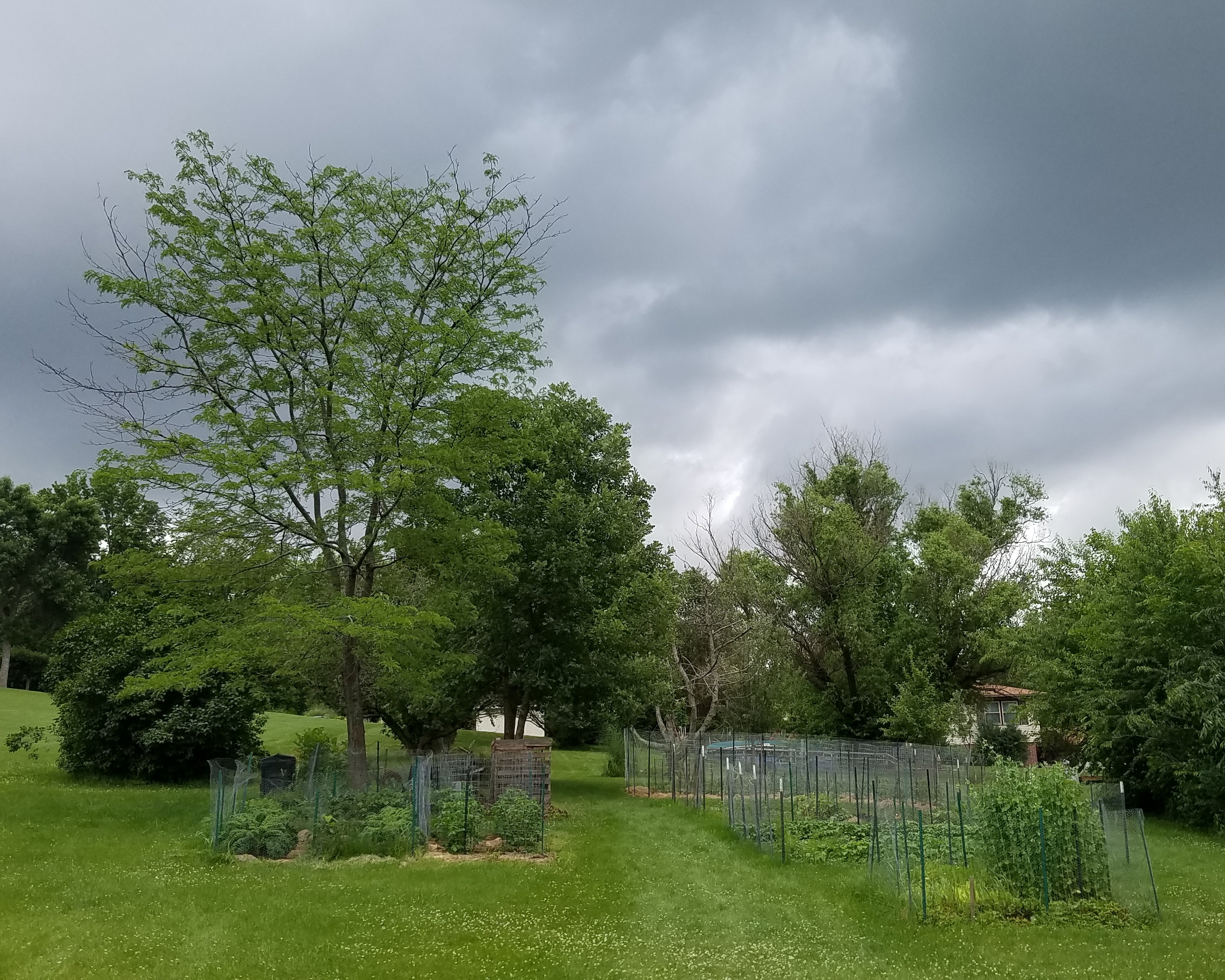
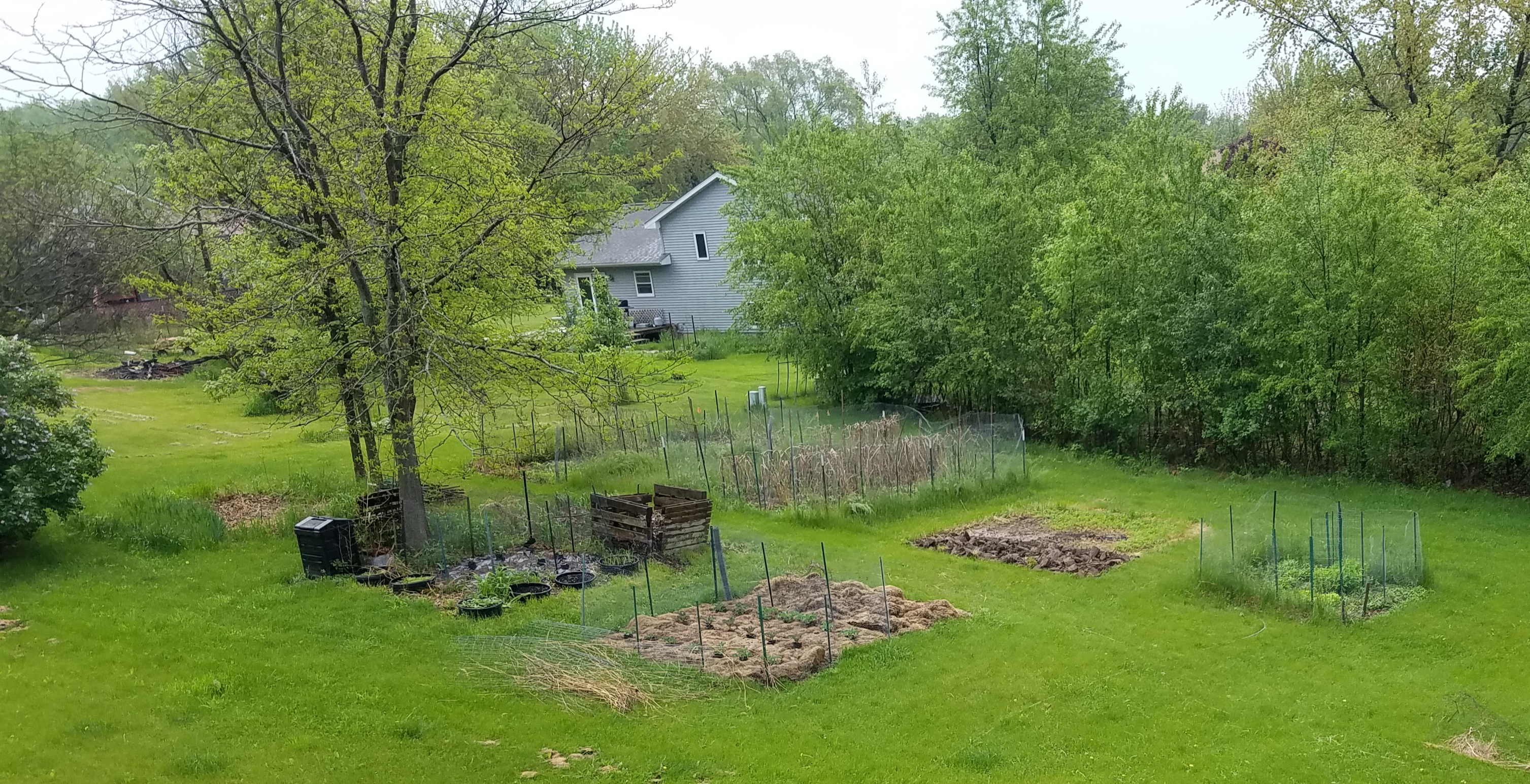
I picked turnips and sugar snap peas from the garden. The first Japanese beetles have arrived. The six-foot stakes worked well to protect the tomato plot from deer who eat the top shoots if they can get to them. It makes a significant difference in yield. Almost everything looks good.
With season’s end of soil blocking tomorrow comes blank space to fill… or not. I’ll do something but let go of filling every moment with intentional action a while back.
One of the most profound things I studied in art history was horror vacui, or fear of the empty. We looked at photos of Greek vases where every space of the surface had images on it. The human tendency is to fill everything the way a person gets a tattoo or two and ends up with a full sleeve. Fear of the empty. It is more creative and more difficult to leave spaces blank. Letting go the obsession to engage every chance to express ourselves frees us to produce better work.
A gardener gets time to think about things like this… and watch the arrival of Japanese beetles, and vegetables planted with one’s own hands grow in sunlight, and devise unique solutions like my deer fence.
Some days we have to stand back and look at what we’ve built:
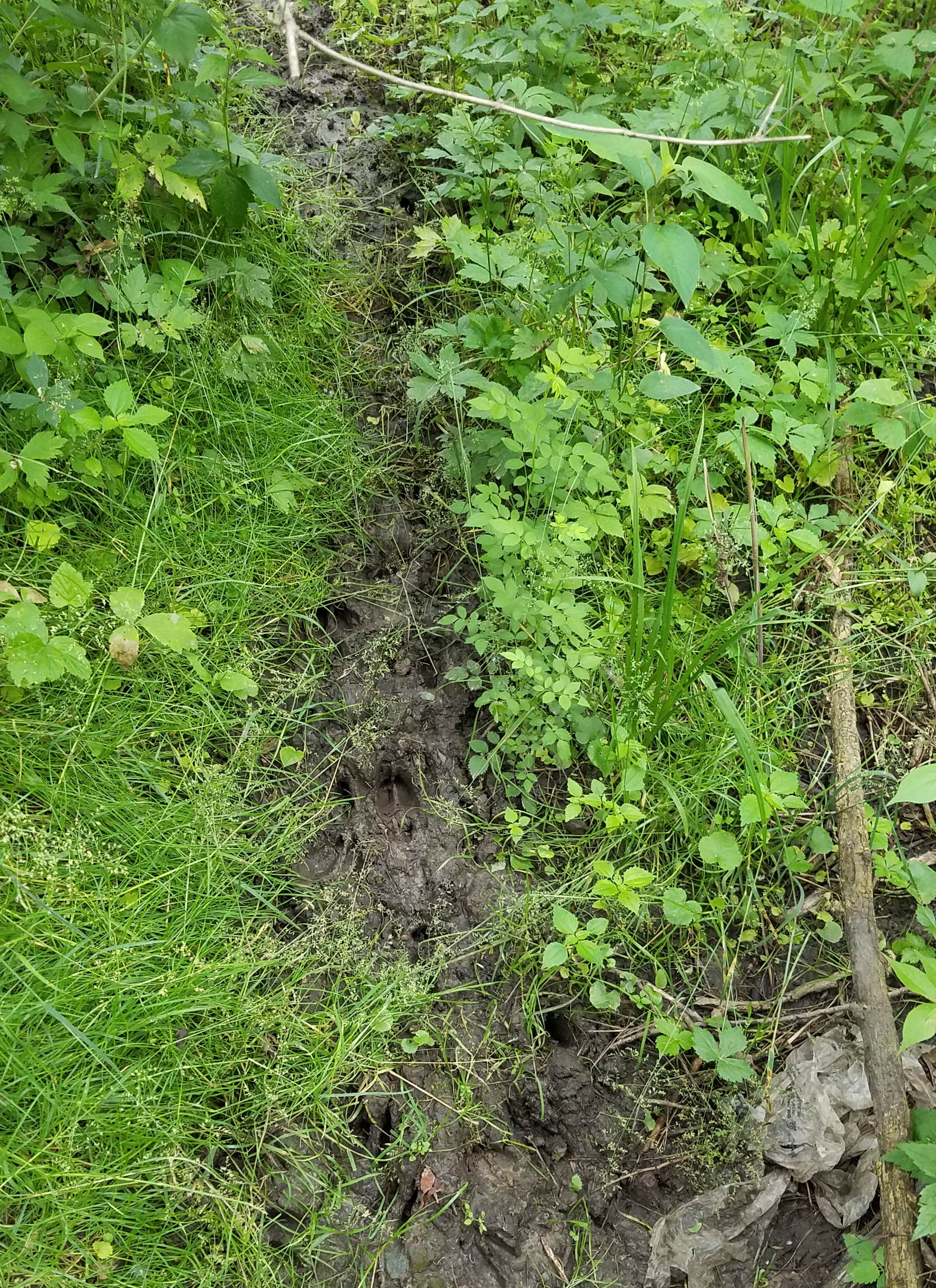
I walked due east from the garden along the utility easement to access a 25-acre stand of woods at the point where deer enter.
Deer are a constant presence in the neighborhood, especially during apple season, and I try to live in harmony with them by understanding what they will and won’t eat, and by using fences on the garden.
After dining, deer run across the same open space I walked to the wood line.
Based on the condition of the undergrowth, few humans visit the woods except around the edges. The main pathways are those made by deer and the brush is so thick I’m not sure how they get through. In 25 years of living here, there has been little interest in using the woods and I’ve hiked them less than half a dozen times.
Unnamed Creek, June 18, 2019.
I walked a deer path on the west bank of an unnamed creek up hill to the pond created by a now forgotten farmer. It was sweaty work and good exercise. I’ve studied the woods on maps for years and there was never a sense of being lost despite the claustrophobic feeling the thick undergrowth created.
The county planning and zoning commission requires our development to maintain a certain amount of open space so the woods can’t be developed with housing. If our association members had an interest in using the woods more, the deer paths could be upgraded to walking paths and mapped out. There has been little interest so it has become a habitat for wildlife.
If we were to develop the woods as a recreational area, there would be little money for it, so the work would be by volunteers. There would be a lot of work to do. Numerous native species of plants exist there, and identification and preservation seems important. The canopy is relatively thick and consideration should be given to long-term forest health. That might mean thinning some mature trees so younger saplings can grow. There are a lot of fallen branches which could be chipped into mulch to pave pathways. It could turn into a really big project. As busy as everyone is, I’m not sure who would volunteer and I know almost everyone in the association.
Native Fern, June 18, 2019.
Suffice it to spend an hour or so hiking the woods once in a while. It takes effort to forget the manicured lawns and gardens to focus on what is in front of us in the woods. By the time I reached the top of the hill, I had forgotten whatever seemed important when I left the garden to focus on finding my way, and then my way home.
It occurred to me that even though the association owns the woods, that ownership is only loosely so. I mean the woods will continue to develop as it has, enabling brief and specific glimpses into what used to be when Iowa was mostly tallgrass prairie. We are visitors on Earth, and that for a short while. Ownership is a cultural concept unknown to the plants and animals that live in the woods. No one truly owns the woods despite legal documents so indicating.
If I want to understand my relationship with wildlife better, I need to spend more time in those woods. Maybe during another hike in the near future.
During the last couple of years I periodically went under a spell.
I don’t mean something another human (or animal) cast on me, but a time of uneasy dizziness and disorientation when I wake.
After a discussion with my physician, he said not to worry. Okay…
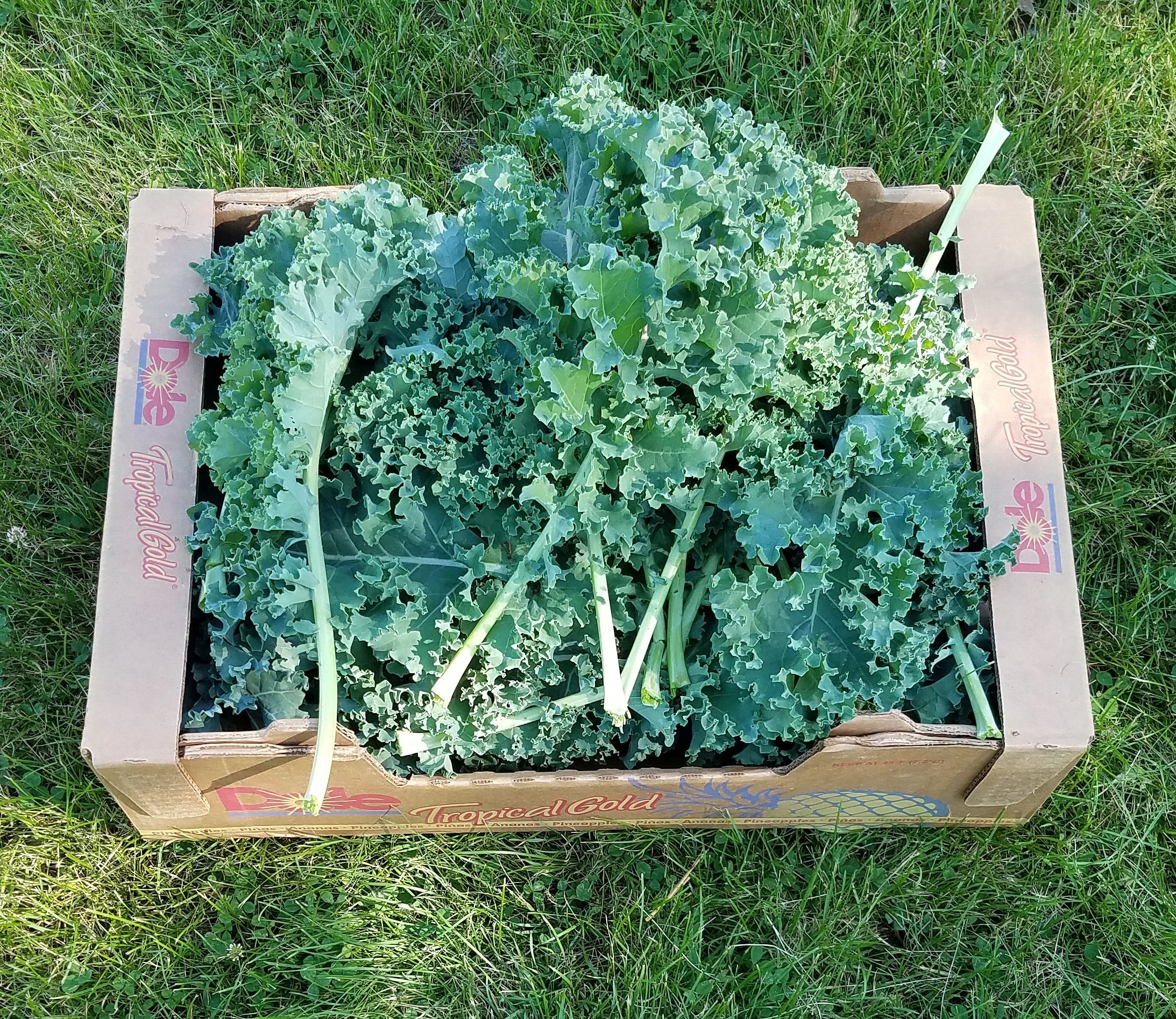
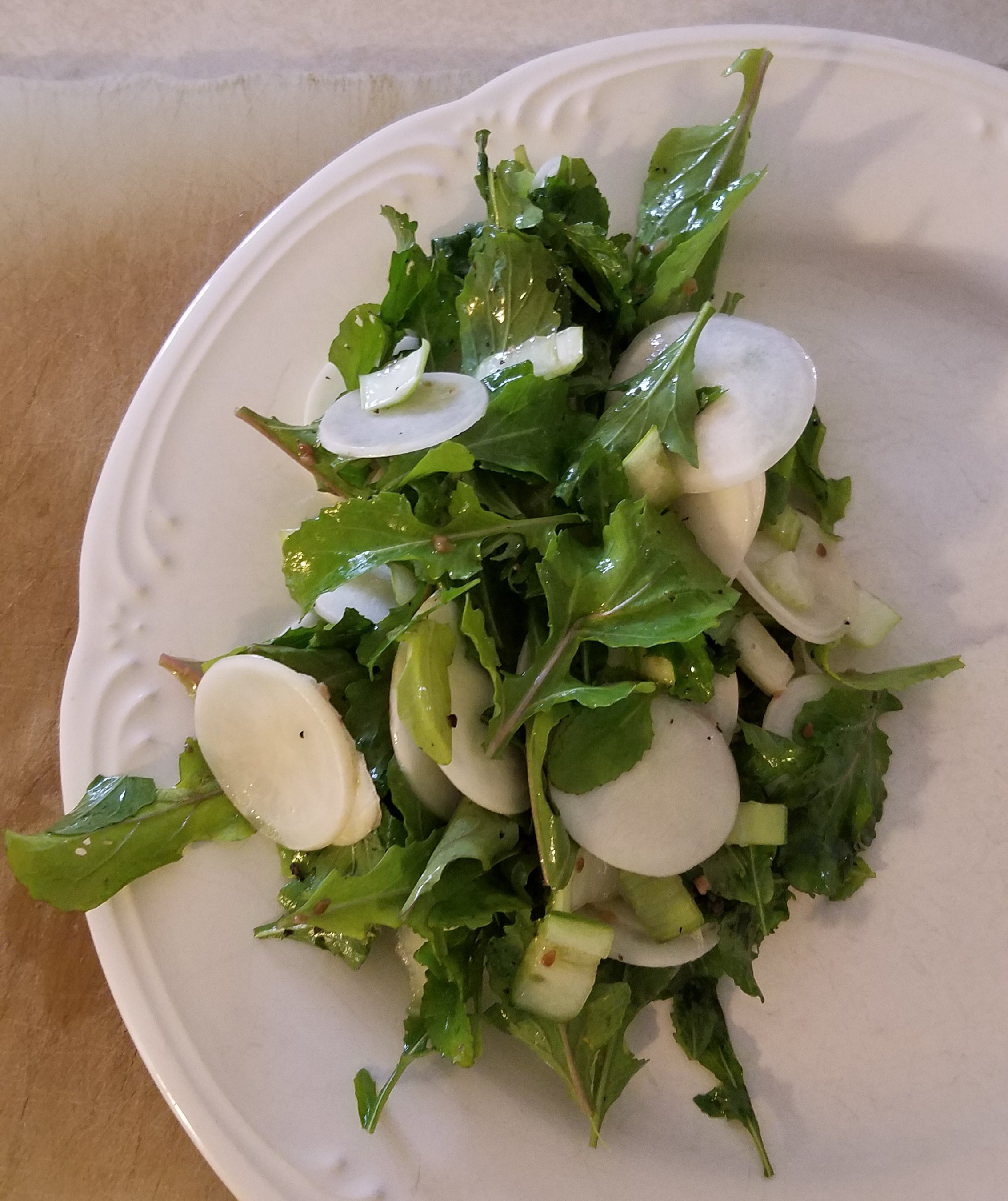
It happened again this morning and I did this: Remedy 1: go back to bed. Remedy 2: eat breakfast. Remedy 3: go outside and harvest garlic scapes, radishes and sugar snap peas for dinner. Remedy 4: take a nap. Remedy 5: Read about the impact of infectious disease on pre-Columbian societies. Remedy 6: eat a bowl of soup. Remedy 7: find a recipe for garlic scape pesto.
By 2:30 p.m. I was feeling more normal. Normal enough to turn on my desktop and maintain some files, deposit a check from a writing gig, and open up WordPress. Normal for a sixty-something is different from when I was a thirty-something. Once I’m done I may go outside to breathe fresh air again and feel a breeze. That seems the most impactful and I could use the exercise. The garden was too wet from last night’s rain to accomplish much there, even if I felt up to it.
I’m trying to keep my blood sugar level within a reasonable range to prevent type two diabetes and that may have prompted today’s episode. According to the Mayo Clinic, a healthy range of daily carbohydrate intake should be between 225 and 325 grams. My estimated average has been 202 since I began the project May 25, ten percent lower than the bottom of the range. In addition I’ve lost 17 pounds since then. I feel better, at least when I’m not under a spell.
The biggest change has been my stomach growls when it is ready for a meal. That hasn’t happened for a very long time. When I hear the sound now, I get a snack if it’s not meal time, or fix a meal if it is. Being mostly retired is the only way this kind of tracking and growl response can work as there are too many distractions in a regular life.
There are always free snacks in the break room of the home, farm and auto supply store to tempt one to give up tracking carbs to enjoy some sweet or salty snacks or baked goods. A recent study of 5,222 employees across the U.S. found we consume an average of 1,300 additional calories per week made up of food at the office, according to Shape.com. Working only two days a week makes a difference for me as the will power struggle is absent when I’m not working at the retail outlet.
This carb counting process continues until August when I get a new blood test and see my practitioner again. We’ll see what we see. According to my ophthalmologist the blood vessels in my eyes look fine and diabetes is absent. I suspect the spell was due to not eating enough before bedtime. I experienced glycogen burnout only once in my life, during a century bicycle ride, and this isn’t it.
I don’t like losing the whole morning and part of the afternoon. But as I finish this post, I’m feeling back to normal: sustaining a life in a turbulent world.
I don’t receive a lot of phone calls and am wary when one rings in. The breakout of inbound is something like 60 percent spam and unsolicited telemarketing, 20 percent political calls, and 20 percent humans with whom I need to have a conversation.
The political calls are getting more frequent and I’m picking them up from familiar area codes… for now. I don’t know how they get my number.
The telephone app is one of the least used on my mobile device.
While I lived in Germany, a fellow officer brought his family with him. He couldn’t stand to be away from his spouse who had to stay in touch with close family back in Alabama. The phone bills almost ruined them. I don’t recall how they resolved it, other than she returned to Alabama early, he moved into the BOQ (bachelor officers quarters) and they had to stretch the $11,000 annual officer’s pay a lot further than it was designed to go. I had a telephone from the local German company but rarely used it. It was too expensive to phone home even though there was a clicker on it that informed me in real time how much I used. The clicker went really fast when I was on line with Mother.
I had two phone calls this week from the Elizabeth Warren and Pete Buttigieg campaigns inviting me to events in the county seat. With the remaining garden and yard work I don’t see that I can afford time to attend either. I do have the Warren office opening on my calendar for Thursday after work at the home, farm and auto supply store. For the summer, I’m sticking to political events closer to home because when I make the half-hour trip to the county seat or to Iowa’s second largest city it takes prime time out of a day I should be spending working at home. I’m usually spent afterward, even if the event itself is short.
Not only do I not like using a telephone, I like driving even less.
I plan to leave my mobile device in the kitchen and work outside until it begins to rain. I have voicemail, which I may access when I come indoors, or may not.
Ideas about how to cook are ubiquitous. Everyone — family, friends, neighbors, co-workers, chefs, dish washers, dieticians and scientists — has something to say about it. Almost everyone cooks. Talk about cooking can be devilishly engaging. Are there things we can do in our kitchen to mitigate the effects of the climate crisis?
It’s not clear how climate change impacts cooking once we get in the kitchen. We should minimize the use of water, electricity and natural gas while cooking. Many are and everyone should be doing so. Maybe that’s the point. Cooking is so common it’s hard to distinguish one process from another when it come to mitigating the effects of the climate crisis.
We recently lived through a rise in manufacture and consumption of pre-cooked and processed meals and ingredients, increased the amount of food grown closer to home, and changed consumer behavior due to national health scares originating in large farm fields in California, Arizona and Florida. Our collective actions to mitigate the effects of climate change, whether in the kitchen or elsewhere, matter in a time of hegemony of fossil fuels culture. For most, spending time cooking is when we nourish ourselves and practice culture that helps us deal with the complexities of a turbulent world. Cooking helps us focus on what we can control.
Inputs
Inputs set the stage for cooking. The focus is often on where ingredients originate and their environmental cost. That remains important yet I also refer to the framing of our lives in society, including land use, construction practices, kitchen configuration, water sourcing, energy sourcing, and education. All of these are inputs to cooking as they are to how we live our lives.
I’ve written about the importance of sourcing as much food as we can locally. My advice is get to know the face of the farmer where possible, and read the ingredient and nutrition labels on anything else.
If one has space, time and the ability, grow some of your own food. Not only can it taste better, time spent in a garden is enough exercise to avoid a trip to the gym or grocery store. Over our years in Big Grove I’ve developed a kitchen garden where what we eat and cook has become synchronous with seasonally available foods.
A cook includes ingredients grown or made a long distance from home where they offer something unique. Nutmeg and black pepper are examples of spices that serve a vital purpose but are not available locally. When the choice is learn to live without them or accept them for what they are, cooks will choose them as long as they are available. I don’t question that impulse.
Assembling and preparing ingredients on a counter t0 mix, saute, fry, steam, grill or bake them into a meal is fundamental. How much water, electricity and natural gas we use is part of background noise: important but seldom the focus of attention except when we configure our kitchen. Seeking energy efficient appliances and a faucet aerator are basic. Once a kitchen is configured few additional changes seem likely. Many of us don’t have the opportunity to configure a kitchen, especially when living in an apartment.
Simple practices like selection of cookware that retains heat, avoiding long preheating of the oven, keeping the oven door mostly closed while baking, and washing vegetables in a bowl instead of under running water have impacts.
A significant aspect of climate-friendly cooking is buying ingredients in a way that avoids food waste. Have a meal plan and buy only what’s needed for it. Plan to use up what’s in the ice box before it goes rotten when planning meals. These practices should be taught in the K-12 school system.
Our household eschews meat and meat products and has since we married in 1982. I’m an omnivore (just barely) and don’t understand the aversion to going meatless. Production of meat contributes to global warming and even if it is only one “meatless Monday” per week, reduction of meat consumption is basic enough that every household can do something.
Outputs
Cooking in our household is an irregular attempt to make something from ingredients that arrive unevenly over time. Cooking is about output, mostly what we serve for meals from our efforts. It is also about how we use what’s generated from the kitchen, including food waste, food storage and cooking by-products like carrot peels and pasta water.
I am a fan of Tamar Adler’s An Everlasting Meal: Cooking with Economy and Grace. Shortly after I read the book in 2011 I spent time generating the next meal from the previous one as she suggests. Adler presents an example of how cooking can be an efficient process that produces delicious meals. While her book is not about climate change, by being an efficient cook less resources are required and it can be better for the climate as well as our pocketbooks… and taste buds.
Our refuse company picks up weekly but we seldom put both containers at the end of the driveway. We could do better in reducing waste but in the kitchen every scrap leftover from inputs and meal production is put to use. We save leftovers for following meals. When there is excess produce we freeze or can it. Because we have a kitchen garden there is never enough compost so organic material goes into a stainless steel bucket, then out to a household waste composter near the garden. Using the results of kitchen production has become a part of a life that would seem weird if we didn’t do it.
Conclusion
The climate crisis is real, it is happening now, and the potential for global warming to harm us and our society is ever present. Cooking is ubiquitous, and determining ways to cook efficiently and with a smaller carbon footprint is as important as many things we do to mitigate the effects of climate change. It is not everything. It is something.
During Saturday morning rain gutters overflowed on both sides of the house. As soon as it stopped, I climbed up a ladder and cleaned them out.
The blockage was mostly leaves from the pin oak tree which sheds them with new spring growth.
At 67 years my roof-walking days are numbered. I’m thinking of my octogenarian uncle who died from a fall from his roof in Alabama. I’m somewhere in between roof-walking and having someone else do it.
Garden ground continues to be too wet for tillage, the next task on my spring to-do list. I went through the lettuce seedlings in the garage, transplanting the best ones into larger containers, and turning the rest into dinner salad. I got my hands dirty with soil, just barely. This wet spring is getting old.
It was another light day at the farm with only 20 seedling trays to prepare. I had seven trays left in the greenhouse and brought the three with tomatoes home. More planting backlog.
At some point the rain will break and the ground will dry out. When exactly that is is uncertain.
It felt good to be outdoors on Friday. The sky was clear and temperatures warmed enough to shed my coat. Green-up has begun.
We filed our income taxes with the Iowa Department of Revenue and the Internal Revenue Service. Earlier in the week I paid the second half of our annual county property taxes.
This morning I plan to walkabout our subdivision, inspect roads, and address concerns about water and sewer leaks. With the hard winter and significant ambient temperature swings, there is damage. Whatever needs fixing requires a plan and a budget. As a board member and trustee of our home owners association and sanitary sewer district I share responsibility for both.
We’ve done our part to support government services. Now spring can begin.
Outdoor work was sweeping up enough sand from the road in front of the house to refill sand buckets used last winter. I haven’t purchased sand in about five years. Because of the hard winter there was plenty available. A 50-pound bag of solar salt filled empty salt buckets.
I found the fan to blow air across the damp garage floor. It took about two hours for moisture to evaporate. Baby steps to start spring 2019.
Governor Kim Reynolds issued a disaster proclamation for Howard County Friday afternoon. The number of counties under disaster proclamations is now 53 (of 99), according to the press release. Current estimates of damage exceed $1.6 billion according to this morning’s Iowa City Press Citizen, although counties reported they have yet to fully assess damage within their jurisdictions. Governor Reynolds proclaimed nothing about what government would do to help mitigate the deleterious effects of climate change going forward.
My farmer friend from the home, farm and auto supply store reported the ground needs drying before getting into his fields. While the weather quickly became spring-like, the usual issues for row-crop farmers remain. My specialty crop friends also found the ground too wet to work. They are planting in their hoop houses which are traditional season-extenders.
Spring began Wednesday and is just getting started. We’re ready.
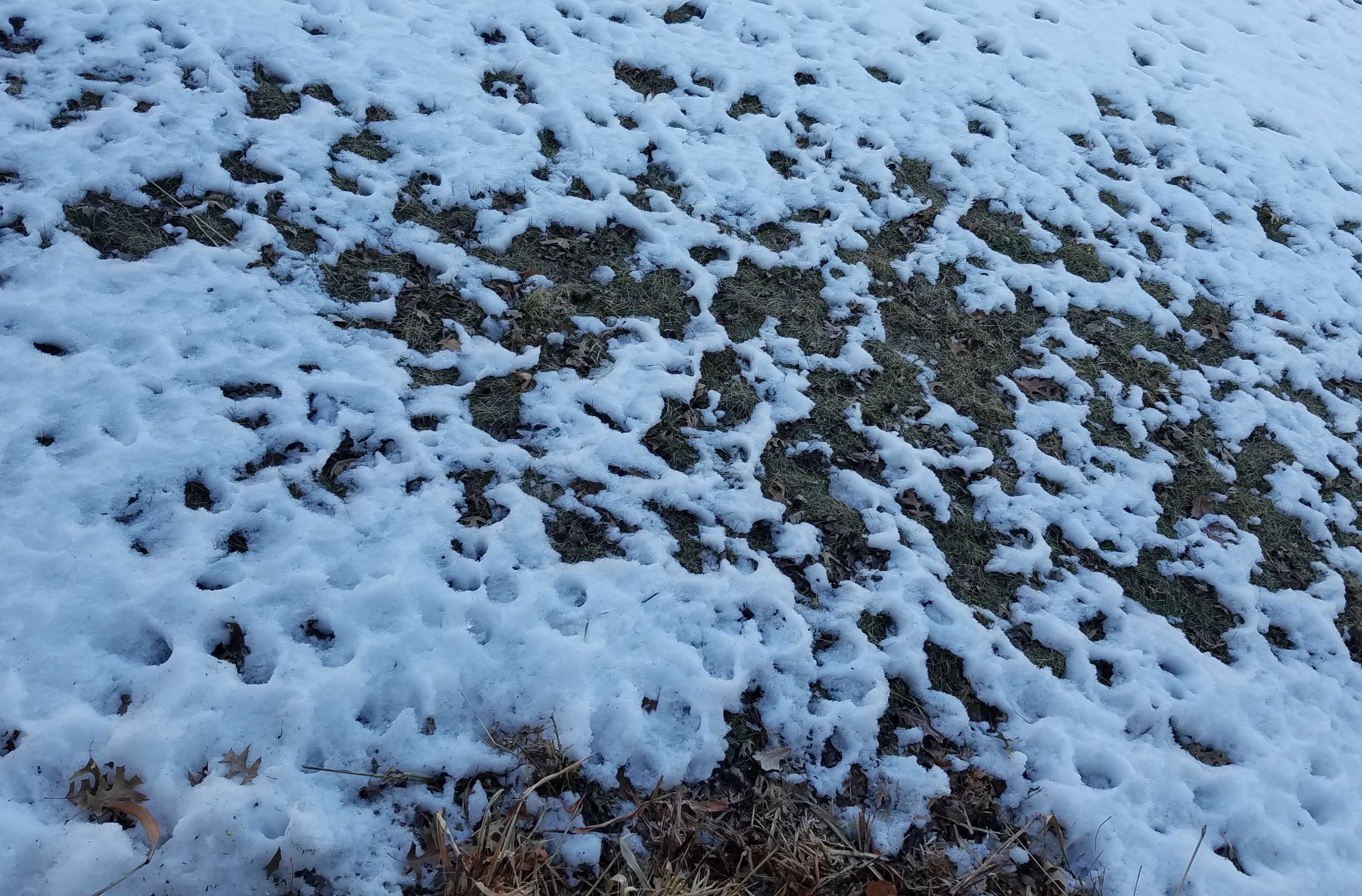
Depressions in the snow pack made a Swiss cheese-looking melt outside the French door where we feed wildlife.
Deer are nocturnal grazers, eating what birds, squirrels and mice don’t, leaving their hoof prints behind in the snow.
We hope this melt is the end of winter. Despite problems with downstream flooding, we are glad to see it go.
It has been a solitary winter. So cold we didn’t feel much like leaving home. So snow-packed it was a struggle to get into the yard. The driveway buckled, providing new places for ice melt to pool. Reading, writing, cooking and hanging out were tasks to relish for the season. It is time to turn the page.
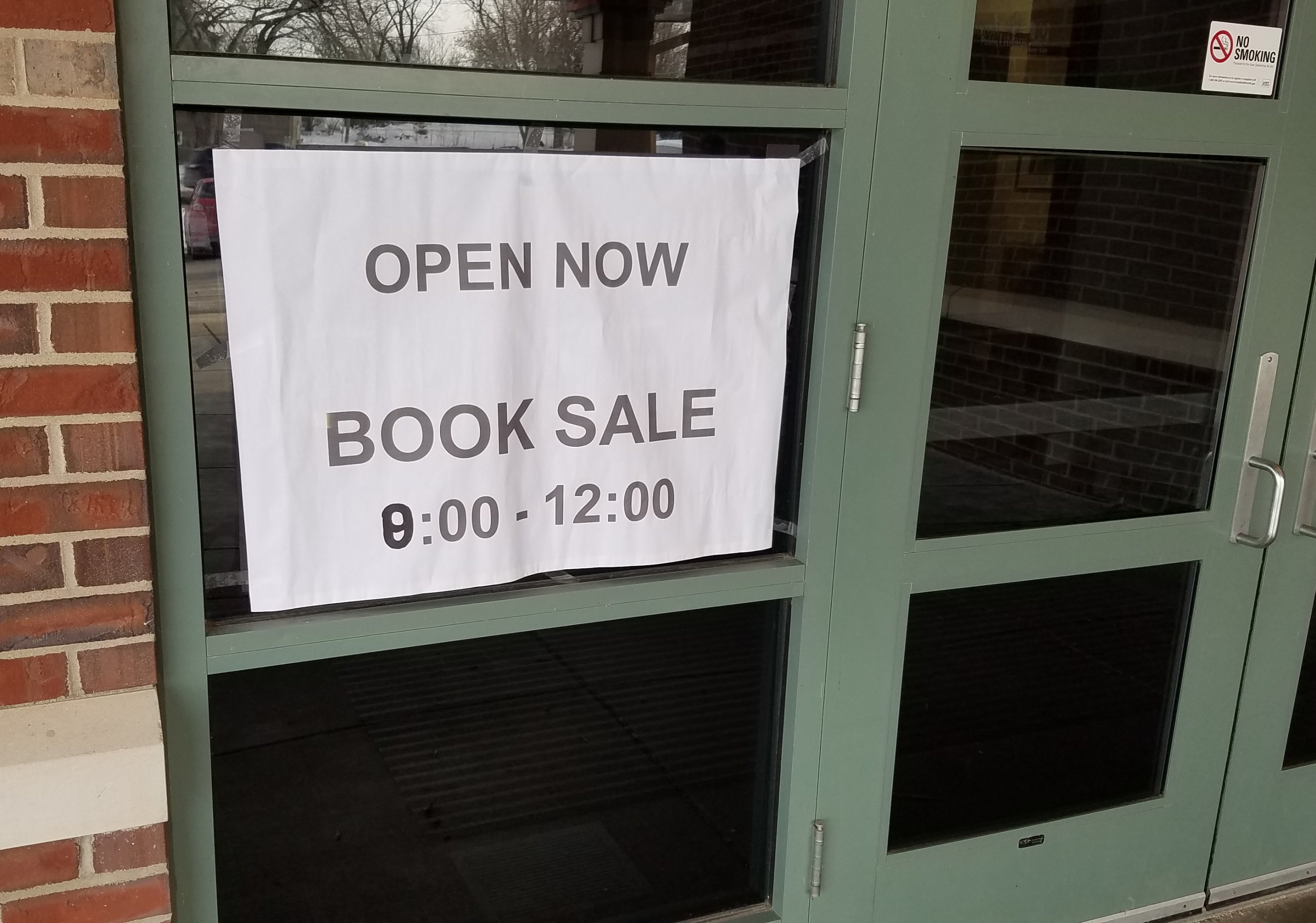
Sign for the Book Sale at the Solon Public library
Yesterday was the annual used book sale at our library.
In addition to clearing the stacks of unpopular or outdated books, the community donates books, media and labor to manage the sale.
Each item is reasonably priced and this year’s proceeds were about $800. That’s a lot of $0.50 and $1.00 books.
I spent ten bucks on ten past issues of the Wapsipinicon Almanac, three large format picture books about Yellowstone National Park, the Vietnam War, and the Marx Brothers, one fiction book, Water for Elephants by Sara Gruen, and a book of poetry, Songs of a Sourdough by Robert W. Service. I spent part of the afternoon reading Service’s poetry about the Yukon. First published in 1907, the copy I got is more than 100 years old. Thoughts of surviving bitter cold, wolves, pine trees, bonfires to stay warm, dog sleds, and the gibbous moon roamed my consciousness for the rest of the day.
It is doubtful I needed more books. The measure of a person’s library is less about reading or having read every book in it. A personal library is more a reminder of what we don’t know. I don’t feel guilty having more books than time to read them. I’m lucky to have a stable home life and the space to fit in a few more books after a used book sale in town. The house hasn’t exploded… yet.
I’ve been buying clothing this year. In 2018 I spent $281, and this year I already spent $150. T-shirts, jeans, socks and underwear, along with a few sweatshirts and woven shirts make up my wardrobe. For funerals and weddings I keep one pair of dress slacks, a good shirt, some neckties, two pair of shined shoes from when I worked in the Chicago Loop in 1991, and a blue blazer. Judging from what people wear to funerals and memorial services, I could get by with a decent pair of jeans, a woven shirt and a newer pair of sneakers.
There was a gift of four t-shirts and a sweatshirt from my spouse. The t-shirts are for the shepherdess to imprint next time she silk screens an image from the farm. I missed out last year because most of my shirts already had something printed on them.
The big 2018 expense was a pair of steel-toed boots to wear on my shifts at the home, farm and auto supply store. Last week, after my shift, I bought a new overcoat using my employee discount.
Me: I need a new coat.
Cashier: You really do.
Me: I know… big grease stains, broken snaps and zipper… it’s disreputable.
Cashier: Oh my!
Me: It will be my first Carhartt… this is Walls. Well I do have a pair of Carhartt bib overalls.
Cashier: Every man has those.
When I worked in the Loop I quickly wore out the pants in my suits. I picked styles where I could get multiple pairs of matching slacks. I don’t need fancy work clothes at the home, farm and auto supply store where the main issue is the quality of Wrangler jeans purchased on discount for less than $20. The denim must be of an inferior quality because holes show up in unexpected places after washing. Too, the radio and box cutter wear a hole just below my belt line on the left side. I asked the Wrangler sales representative about this at a recent trade show. He didn’t have any good answers except to buy more expensive jeans. I didn’t mention my low wages.
Food, shelter and clothing are traditional basic needs. Add potable water, clean air and sanitation and that’s still really basic. A good night’s sleep? Needed, but optional. Without these things, the need for survival dominates our daily lives. Education, healthcare, transportation and internet access are basic needs according to Wikipedia, but seriously, while important, those are extra when it comes to survival.
A lot of people would have us return to life as basic survival. For our family, years of hard work made us financially stable and built a foundation so we don’t often worry about survival. As long as there are used book sales and employee discounts at the home, farm and auto supply store we’ll be alright. Knowing a bunch of farmers and a good auto mechanic helps.
Wolves are mentioned in the history of Lincoln County, Minnesota where my grandmother was born. Wolves can be an issue, but mostly one read about in books about the Yukon… or Iowa and Minnesota at the time of settlement. As we live our modern lives it is important to remember there were once wolves, even if their meaning is lost for want of an education. Education is a salve for our worries. That’s part of why library used book sales remain important.
Seems like I’ve been hunkered down and bunkered in since apple season. I’ve been thoroughly funkified. With 45 days left until spring I’m restless to get out of my lair.
The number of indoor places I spend time is limited: the chair or couch in the living room, the kitchen, the bedroom, the laundry room, the bathrooms, or in my writing room.
It was comfortable early on. Now I’m itching for something.
We live during an assault on reason. I mentioned in my last post the greatest threat to society is a weaponization of ignorance and apathy. Politicians are unable or unwilling to change the status quo, lobbying groups don’t want change, and the public doesn’t seem to care, Matt Field wrote in the Bulletin of the Atomic Scientists. That’s a hell of a sticky mess out of which to gain traction.
Still the light from outside beckons us to go there.







 Journey Home
You must be logged in to post a comment.