The text message came while I worked at the home, farm and auto supply store. I saw it on my afternoon break.
“If you want to start tomatoes there is a crate on the packing shed floor you could pick up on way home from work,” Farmer Kate texted. “I’m not home but if you need help finding them let me know.”
We barter my labor canning for her tomatoes. Ready or not, the next aspect of the local food season begins with its quick-paced rush to beat spoilage.
When I picked up the tomatoes there was also a crate of bell pepper seconds unclaimed by CSA members. A farm worker offered them and I put the crate in the back of my Subaru.
On the way hope I spotted the librarian leaving the library for her car and swung by to offer some peppers. My sister in law was at our house when I arrived home. I offered her some too. They are so sweet — unlike what’s available at the grocery store. A gift to be shared.
The garden is coming in with more apples than can be picked before they drop. Pears are almost ready, there are tomatoes, celery, hot peppers, basil and more waiting to be harvested and processed. There will be more cucumbers for pickling. Sweet corn will run another week or two at the roadside stand and we want to put some up. Every night after work and most mornings before, I’m in the garden harvesting or in the kitchen making dishes and preserving the harvest. Right now tomatoes, peppers, sweet corn and apples are in the house waiting to be processed. It’s a mad rush.
It’s also a good life. Staying busy with useful work blocks out negativity from other sectors of society. It’s cultured and produces the tangible benefits of relationships, knowledge and good food for our table and those with whom we share.
For the rest of August and September, it’s work, kitchen, garden for me.
This year’s apple crop has been one of our best. That means an apple activity vortex beginning now until the last red delicious is picked in October.
The two earlier trees are ready to pick and best suited for eating out of hand, apple sauce, apple butter, apple juice for drinking and cider vinegar, and baked goods.
Red delicious apples are good for these products as well and hold up for slicing, freezing and drying. A bit of everything apple is planned this fall.
Working two paid jobs, seven days a week relegates apple chores, and other processing of pears, tomatoes, hot and bell peppers and the like to late at night or early in the morning. These will be busy days, no doubt.
Canning Soup and Jalapeno Peppers
I’m considering getting a second water bath canner to speed up the process. At seven jars per batch I’ve gotten the work done, but at 14 more may be accomplished in the same time. We’ll see how that goes. I’m ready to start canning.
Some lessons learned. In past years I’ve canned garden vegetable soup and have about 24 quarts on hand. That’s enough to last until spring so there’s little reason to can more. The same is true of apple butter. I need to use some of what I have to make room on the shelf so I plan to skip this year. 20 quarts of apple sauce remain in the pantry from previous years. I’ll make enough to get to three dozen. That should take us through to the next large apple crop.
Ending up in an apple vortex during the last lap in a workingman’s race is not bad. I’d say it’s delicious but that would be an apple joke.
Between planning, planting and weeding a garden, and fall’s frosty end, lies a time to harvest, cook and preserve the results. So it is with our lives.
As humans we possess a unique ability to envision a future: one where we need supper and know we will need food later. We produce in abundance, fearing we won’t have enough. With modern food supply chains producing readily available foodstuffs in the United States this isn’t rational. In this sense, a gardener is an archetypal human living a life on urges, needs and wants we don’t fully understand.
Saturday Harvest in High Summer
The culture that produces a kitchen garden is complex, involving not just the gardener and soil, but seed producers, greenhouse operators, equipment manufacturers, chicken manure composters, potential future diners and others. A gardener is deeply engaged in human society. Much of our garden time seems solitary but isn’t. Animals wander nearby and we view the results when they eat garden plants and produce we’d hoped to harvest later. There is a daily drama of birds which are abundant in Big Grove. There is also a vast and little understood society of insects, some of which are annoying, a few deadly, and without others, the garden could not exist. A gardener embraces the complexity of life’s culture.
A gardener is not only a gardener nor does he or she seek to be. Each is just one iteration of humanity engaged in a broad society and we Americans are a peculiar bunch. We work hard, long hours whether it is at home or in a workplace and leave little time for enjoyment of the fruits of labor. Sometimes, like this weekend when I am between work at farms, we get time to ourselves to enjoy life lived how best we know. My story of Saturday is in four parts.
Predawn
My day begins around 4 a.m. and if I’m lucky, I got six or seven hours of sleep. I slept well Friday into Saturday waking only briefly to put in a load of laundry around 2 a.m. The routine was basic. Do stretching exercises, make coffee, say hello to spouse, go downstairs, and turn on the desktop computer to see what’s going on in the world. That’s not to say I didn’t already know. I use my mobile device in bed before turning on the light. Usually something new has happened since retiring the night before.
I wrote a series of tweets to better understand my memory of the Patient Protection and Affordable Care Act as it pertains to the false accusation it is a job killer. I recall local businessmen who said after the law went into effect they were in a position to add jobs but didn’t want to do so because they would have to provide health insurance per the ACA mandate. The assertion is the mandate killed these jobs and that idea got blown up into hyperbole of unprecedented proportions. Re-circulation of this idea is ongoing and rarely fact checked any more.
Businesses of a certain size should provide a health insurance benefit to employees or risk the possibility of being unable to recruit qualified staff. By defining the size at which to mandate health insurance, the law changed the business structure. In highly competitive local markets for landscapers, concrete workers, framers, heavy equipment operators and the like, employers faced a changed landscape. Operating on tight budgets, rather than embrace quality of life for employees they resisted change. The core problem lies in that the K-12 education system does a really poor job of preparing students to enter business. People carve out a niche, generate revenues and go out of business if they don’t properly manage risks or aren’t adequately capitalized. Small-scale operators I know are not educated in things we took for granted when I managed the profit and loss of a $12 million annual revenue transportation and logistics operation as part of a billion dollar corporation. The problem is not the ACA, or teachers. It is our education system doesn’t provide an adequate path for people to be successful owning and operating a business.
Pickle Fermentation
Outside
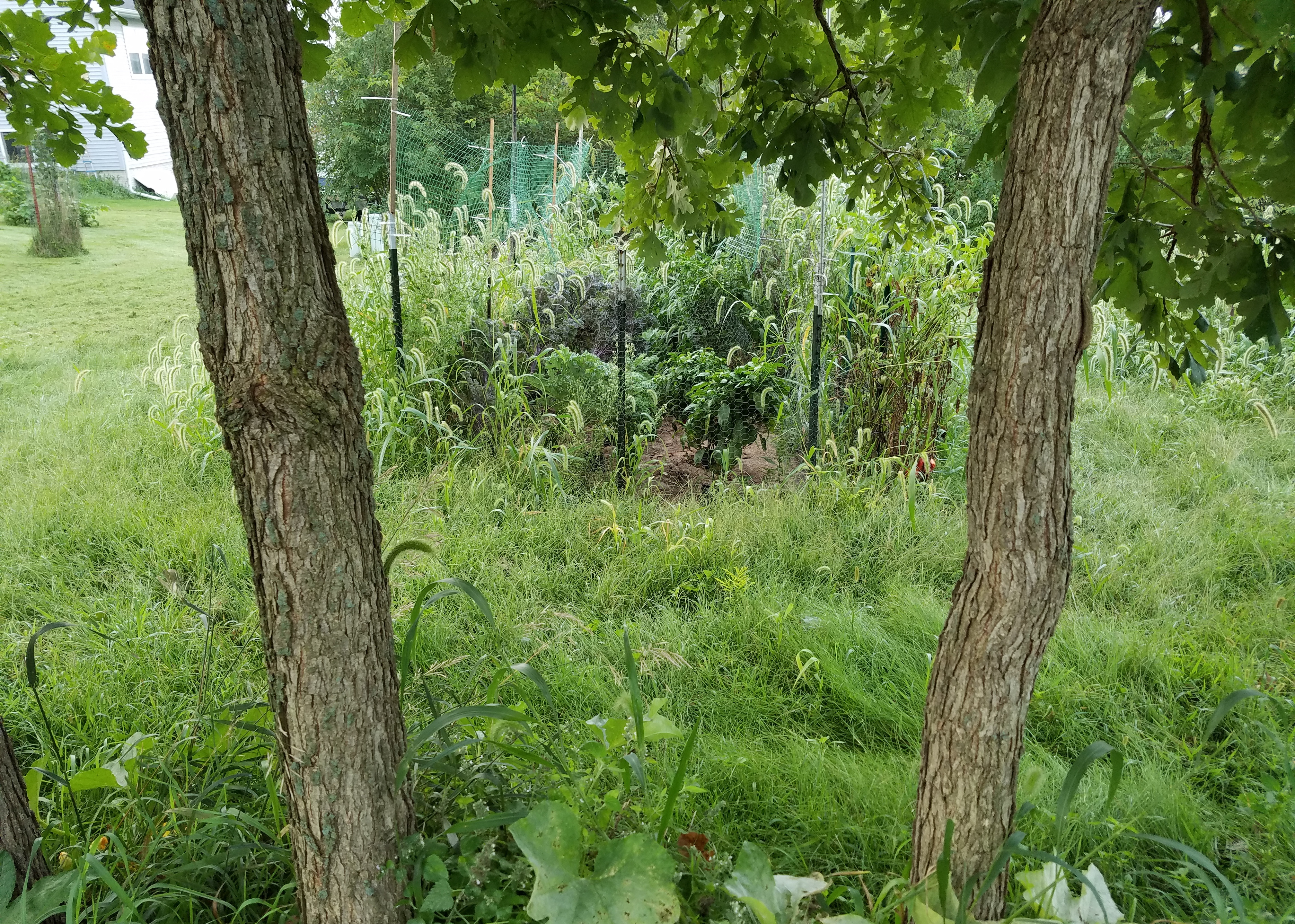
If there was no rain I water the garden shortly after sunrise. Without thinking it turned into weeding, then harvest and before I knew it the time was 11 a.m. The garden looks more like a weedy mess but inside there is abundance.
Before going outside I started soup to take for lunch at the home, farm and auto supply store, and mixed the brine for a batch of dill pickles.
I picked a box of kale for the library then went plot-to plot to collect what was ready. There were broccoli florets, leeks, onions and fairy tale eggplant in one. Jalapeno peppers, a bell pepper and cucumbers in the next. More broccoli and celery near the locust tree. Four kinds of tomatoes in the tomato patch. Basil is ready but I left it in the garden until I’m ready to make pesto.
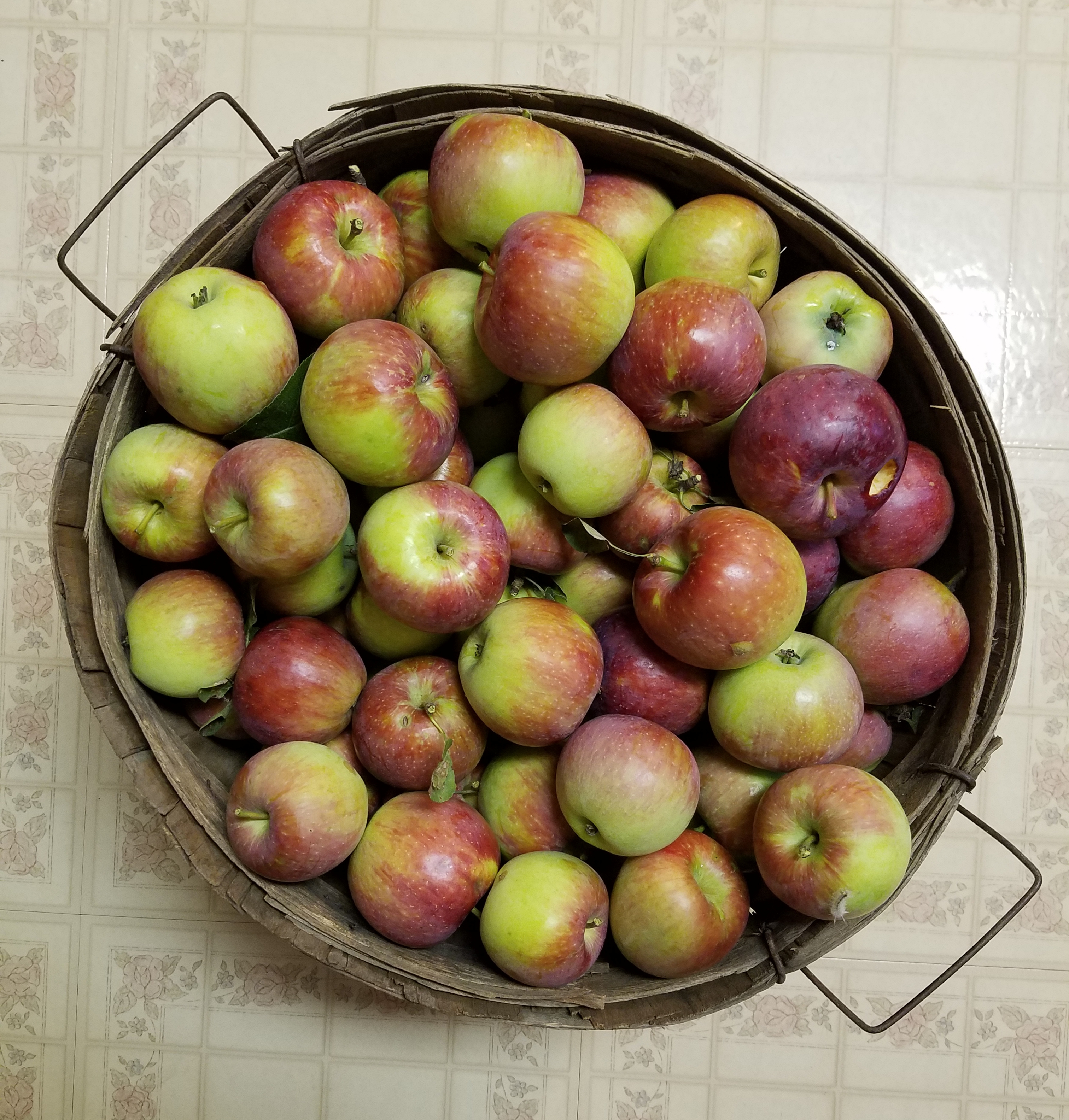
Apples are sweet enough to eat out of hand, but not sweet enough to juice and ferment into apple cider vinegar. I picked the ripest for a batch of apple sauce. There are a lot of apples this year because of almost perfect pollination during spring. It should be a long apple season starting now.
I collected the harvest in a crate and placed it on the kitchen floor. There was another two hours of work cleaning the produce but that could wait.
Soup for Next Week’s Work Lunches
Short Trip
I try not to leave our property on weekends unless for work. Ours remains a car culture and we don’t have disposable income for shopping if we thought we had it before. Saturday I went to HyVee to pick up canned goods, pantry staples, organic bananas and Morningstar Farms frozen products we use. Organic celery is permanently on the shopping list although we have a lot of celery ripening in the garden. I picked three heads that morning so bought none at HyVee.
On the eight mile trip to town I noticed two sweet corn stands on Highway One.
One is the farm where we get most of our sweet corn, Rebal’s Sweetcorn. Supply was uncertain from their Saturday post:
It was tough picking this morning; we had to really search for the corn in this patch… we’ve got corn today, but it’s not a full load, so if you want it, try to get out here early. And, because of having to search to find the better ears, we might just let this one go and wait for the next. We’ve got 4 blocks (patches) coming up that look beautiful!!! The question is when they’ll be on… we’re checking them every day, so I’ll keep posting
They had plenty as I passed Southbound.
Lindsey Boerjan runs a seasonal road-side stand further south and was featuring sweetcorn and melons. I wrote an article about women farmers in the Sept. 22, 2015 Iowa City Press Citizen:
Lindsey Boerjan is a fifth-generation farmer living on the family-owned century farm where she grew up. She moved back in 2011 and farms alongside her aunt, uncle, husband and daughter, who run a beef cow and calf operation. To supplement income from beef sales, Boerjan raises chickens and operates a small community-supported agriculture project.
The CSA didn’t make it, although the road-side stand likely does better. I decided to stick with Rebal’s on my return trip.
A musician played for free will donations outside the entrance to HyVee. He seemed too young and inexperienced to be playing Folsom Prison Blues, although he was very musical.
Dinner Salad
Cooking
On arrival home I put away the groceries and started cleaning the morning harvest.
Leek stalks make a great vegetable broth base so I got out the large stainless steel pot. I added the leek leaves, broccoli stalks, a turnip — greens and root, kale and onion tops. I don’t usually salt vegetable broth and this time I didn’t add bay leaves. It cam out dark and flavorful — two and a half gallons.
Part of summer cooking is going through the ice box and making sure old stuff is used first. We have a broccoli abundance and need to do something soon with the gallon bags of florets. The freezer is almost full, so freezing more is not a good option.
I found some lettuce and decided to make a small salad and pizza for dinner. The salad is a work of art with two kinds of lettuce, kohlrabi, two kinds of tomatoes, cucumber, grated daikon radish, bell pepper, pickled jalapeno pepper, sugar snap peas and other items either from the farm or grown in our garden. Ironically I forgot to put some small broccoli florets on the salad.
I also made applesauce, salsa with tomato, garlic, jalapeno peppers and onion, and a cucumber salad of diced cucumbers dressed with home fermented apple cider vinegar, salt and pepper.
Our pizza process is to buy pizza blanks from the warehouse club and add toppings at home. Making our own pizza dough is no real work, but the convenience of a pre-made cheese pizza for $2.50 presents value. I added Kalamata olives and a diced red onion from the farm, then topped with Parmesan cheese. 15 minutes in a 425 degree oven plus a minute under the broiler and done.
This Morning
Everything on my list didn’t get done Saturday. I’m processing the vegetable broth in a water bath this morning and figuring out how to pack a summer’s worth of yard projects into today’s glorious summer weather. That is, I wrote stuff on my white board. Once I move outside into humanity and culture, I will likely forget about the plans and do what comes naturally.
It’s Christmas Eve in Big Grove, the ambient temperature is about freezing, and we’re ready to bunker in, finish decorating our Christmas tree and prepare a traditional supper of chili and cornbread.
My Christmas wish is for peace on earth.
Elusive as that may have been during 2016, we can’t give up hope. Not now. Not like this.
As winter solstice brought longer days — increasing light imperceptible in each day’s cycle — it is time again to fly with eagles, gain a broader perspective, and thank people who are always in these written words if rarely mentioned — my wife Jacque, our daughter, my parents and my maternal grandmother.
Reading
I continue to read more on my phone and computer than I do full-length books. Nonetheless I managed thirteen books in 2016, the most important of which were authored by people I know: Connie Mutel and Ari Berman.
Methland by Nick Reding had the biggest influence, by a distance.
Here’s the list of books, most recent first:
Diet for a Hot Planet: The Climate Crisis at the End of Your Fork and What You Can Do About It by Anna Lappé; My Life on the Road by Gloria Steinem; Sapiens: A Brief History of Humankind by Yuval Noah Haran; Methland: The Death and Life of an American Small Town by Nick Reding; Give Us the Ballot: The Modern Struggle for Voting Rights in America by Ari Berman; A Sugar Creek Chronicle: Observing Climate Change from a Midwestern Woodland by Cornelia F. Mutel; Atlantic: Great Sea Battles, Heroic Discoveries, Titanic Storms, and a Vast Ocean of a Million Stories by Simon Winchester; And Then All Hell Broke Loose: Two Decades in the Middle East by Richard Engel; Slavery in the Upper Mississippi Valley, 1787-1865: A History of Human Bondage in Illinois, Iowa, Minnesota and Wisconsin by Christopher P. Lehman; The Diary of a Napoleonic Foot Soldier by Jakob Walter; Old Man River: The Mississippi River in North American History by Paul Schneider; MiniFARMING: Self-Sufficiency on 1/4 Acre by Brett L. Markham; and Fast Food Nation: The Dark Side of the All-American Meal by Eric Schlosser.
For the fourth year I edited Blog for Iowa while Trish Nelson took a break, writing at least one post each weekday during August. My book review of Give Us the Ballot ran in The Prairie Progressive, a guest column ran in the Cedar Rapids Gazette, and I wrote two letters to the editor of the Solon Economist since the general election. I cross posted Next for Iowa Democrats on Bleeding Heartland, my first post there.
More outside publication is planned for 2017.
Working
Income from five jobs helped financially sustain us in 2016. Work at the home, farm and auto supply store provided health insurance and a regular, predictably low paycheck. In descending order of income were jobs at Wilson’s Orchard, Local Harvest CSA, Blog for Iowa and Wild Woods Farm.
Each of these jobs was good for a reason. Blog for Iowa encouraged me to write every day. Farm work helped me connect with others in the local food movement. The home, farm and auto supply store provided a venue for conversations with low-wage workers. I’ll seek additional income in 2017 and maintain relationships with each of these organizations.
The common denominator among these jobs is interaction with people. As I enter my last year of work before “full retirement,” I seek that as much as income.
Gardening
2016 was another improved year in our home garden. Among many experiments were growing root vegetables in containers (a success with carrots and daikon radishes), growing squash in the unused storage plot, and using sections of 4-inch drainage tile to protect young seedlings. Failures included bell pepper plants which succumbed to weed competition, and loss of tomato yield due to a lack of attention. The best crops included broccoli, celery, eggplant, tomatoes, Bangkok peppers, turnips, basil, sage, oregano and kale.
Ancillary activities included distribution of kale and a few other vegetables to local library workers and friends, and weekly posts about the garden on Facebook.
We raised adequate produce to serve the needs of our kitchen. I also learned a lot through collaboration with friends and neighbors.
Apples
I followed the 2016 apple season at the orchard and continued to develop our home apple culture. Our apple trees did not produce a crop this year.
The last of the 2015 crop is peeled, sliced and frozen, or turned into applesauce and apple butter. We have enough frozen apples left for a Christmas Day dessert. This year’s orchard apples were mostly eaten fresh.
I made more apple cider vinegar. The process was simple: I added Jack’s heritage mother of vinegar to apple cider from the orchard in half-gallon ventilated jars and waited. This year I added an eighth-teaspoon of brewers yeast to each container at the beginning. The benefit was hastened alcohol production and a superior final product. I also learned that a cooler temperature slows alcohol production and this can produce a better result. Today there are two gallons of apple cider vinegar in the pantry and another gallon and a half in production.
Politics
The general election did not produce the result many people, including me, wanted.
At the same time, a lot of acquaintances seek to become active and “do something” during a Trump administration. There is plenty of work to resist the expected rollback of what we value in society. Specifically, work toward protecting the environment, reducing the number of nuclear weapons, and ensuring social justice.
My term as a township trustee ends Dec. 31, so regarding politics, I can be an unencumbered agent of change. The next step is to leverage the opportunity the general election brought with it.
Retirement
The time since my July 2009 retirement from CRST Logistics can be divided into clearly defined phases. First came a period of social activism characterized by work with community organizations. It lasted until the end of 2011. Next was the political year 2012. After that, life found me working low-wage jobs to support my writing. That’s where I am today. In 2016 came a realization that in order to spend more time writing, I have to get past the finish line to “full retirement” as defined by the Social Security Administration. For me that’s in December 2017. I took the first step by signing up for Medicare this month.
2016 was a time to learn, work on writing, and do things that matter. More than anything, I have been writing. Everything else provided a platform or material for it. If 2017 presents significant challenges, there should be plenty to write about.
On the last shift of the season I walked in the test orchard picking apples.
20 minutes of bliss.
Beginning with a tree the orchard’s namesake planted in the 1980s, I picked a few there then added Connell Red, Regent and Sheepnose to my bag — about six pounds.
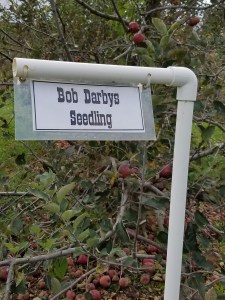
Bob Darby’s Seedling did not make the cut when the orchard expanded. A lone tree sits at the head of the test grove — a reminder of the founder who collected saplings from friends and neighbors to graft to his own root stock as he increased the variety of apples to more than 120.
After cutting and tasting, the whole lot of fruit will be sauced in our kitchen.
Wilson’s Orchard Oct. 30, 2016
And so it is with this and many of the jobs I’ve worked after my career in transportation. It comes down to a beautiful fall day, enjoying the last harvest of this season, and hoping there will be another year.
On my way out of the sales barn the current orchard owner was repairing an extension cord. We live in the same political precinct so local politics was our first topic. Soon we began talking about our customers – how the long, lazy, end of season weekend produced more than its share of long conversations about apples and what people plan to do with them.
I helped a couple from western Virginia near where my father came up find fruit for apple butter. He moved to Iowa to find work when what he described as “Obama’s war on coal” took away his job in the mines. They bought a bushel. We had three separate conversations about coal country, apples, apple butter and getting by. Making apple butter is a family tradition not to be interrupted by the move north.
There were a dozen conversations like this one, each with people of different backgrounds and expectations about apples and local culture. Some found apples in the orchard and those who didn’t bought them from the cooler. I savored each conversation as it happened.
I asked my boss to work next season and he said, “absolutely.”
As long as I breathe air and need paid work to sustain our lives, that’s the plan. Hopefully Bob Darby’s Seedling will survive another year.
For the first time in a long time I missed work on Wednesday.
After a futile attempt to shave, shower and drive into the home, farm and auto supply store, I called off and slept until 2 p.m. — a total of 19 hours in bed.
I’m back to normal and scheduled four days vacation at the end of the month. If approved, I will use the time to catch up around the house and rest.
I don’t want to admit it, but 100 days of work may have been too much to attempt.
In an effort to understand low wage work life and the exigencies of lives where there is not enough income, I dealt with it as many do by adding more jobs. A predictable conclusion has been it doesn’t resolve the issue.
A key driver in the financial shortfall is buying health insurance, an expense that takes 34 percent of my wages from a full-time job. As the two of us approach Medicare age we’ll see some relief. We’ll also be approaching full retirement and presumably slowing our outside work. I look to my maternal grandmother’s example: she did alterations into her eighties. I expect to be doing something to earn money as long as I’m physically able. My current work on area farms is setting the stage for that.
Trying not to complain, these are observations about a life. In the spirit of Cotton Mather I’ve self-inoculated to see what happens. While believing in unlimited potential of a human, the brief illness is evidence of a physical limit. Knowing one’s limits will make us stronger and hopefully more effective.
We are well into the apple harvest at the u-pick orchard where I spend my weekends. It is an abundant crop and I enjoy interacting with hundreds of apple pickers each day. It is something like a fair, about which Garrison Keillor wrote in the Washington Post this week.
“The Fair is an escape from digitology and other obsessions, phobias and intolerances,” Keillor wrote, “also a vacation from the presidential election which has obsessed many people I know, including myself.”
The lone evidence of politics I spotted at the orchard last weekend was a single too-young-to-vote teen wearing a Trump T-shirt. Discussion of politics was completely absent within my hearing. I don’t know the demographics of apple pickers except from my own observations over the last four seasons. What I’d say is apple culture is an equalizer, something almost everyone with transportation can take part in and one in which I am happy to participate.
For me, it’s about forgetting a life that’s challenging and sometimes too hard for a shift at a time. It’s also about hope that society will find common ground.
Gardener’s Breakfast of tomato, salt, pepper and feta cheese.
Hope regular readers are well tolerating my posts from Blog for Iowa. They are different from what I normally write here, but then none of us is one-dimensional — I hope.
I got off work at the orchard a couple hours early. It’s the beginning of the season and we had plenty of staff to cover customers. The apples coming in are mostly tart and useful for baking, apple sauce and apple butter. We had ten varieties available today.
Had a great conversation with a gent who bought a large bag of Dolgo crabs for crab apple jelly. His recipe was basically this one.
“Don’t squeeze the jelly bag,” he cautioned. “The jelly will go cloudy.”
I wished him good luck as he headed for the sales barn exit.
We get a treat for each shift we work. I ate a Zestar apple. Before leaving I bought a 10-pound box of blue berries and on the way home secured a dozen ears of sweet corn at a roadside stand. Tonight’s dinner will be sweet corn on the cob and fresh tomatoes with blueberry yogurt for dessert.
Plans for the unexpected mid day gap are to mow the lawn, gather the grass clippings, process bell peppers and Roma tomatoes, fix dinner and freeze some of the blueberries. The freezer is already packed, so I hope the peppers and blue berries will fit. I have no idea if everything will get finished.
A storm blew down a pear tree branch. After inspecting the damage I picked the unripe fruit then cut the branch cleanly from the trunk. Once they ripen we’ll have more than enough for fresh and maybe some for pureed pear sauce. The tree is still loaded.
Crate of pears.
Working three jobs is challenging mentally, physically and every way in between. It’s hard to keep up and a couple of unexpected hours to myself was a welcome surprise.
Between working opening day at the orchard and the kickoff of a friend’s political campaign I had two hours.
Day six of a hundred straight work days was about as good as it gets: a reunion with friends from last season, a chance to catch up and engage again in this apple life.
It’s not that the garden went neglected. I picked kale for the library workers and tomatoes, cucumbers and jalapeno peppers for the kitchen. There’s plenty of work to do around the house. Instead of doing it I crashed on the couch and slept deeply for an hour after my shift.
Refreshed enough to go at it again, I will — not later, but now.
Monday through Friday I’ll be at the home, farm and auto supply store, Saturday and Sunday at the orchard, and in between there is writing, gardening, cooking, home maintenance, yard work and living.
It’s not a life of fun. It is doing what’s needed to sustain a life in Iowa.
I bought two new pair of blue jeans to accommodate the new schedule and get by with once a week laundry. Other than that, the logistics were already in place and I’m ready to go.
Next week I begin editing Blog for Iowa — at least one post a day. The 23 August posts have been roughly framed, although what happens in society will drive what gets posted when. I’m looking forward to posting 500-600 words daily.
Preseason Saturday at Wilson’s Orchard
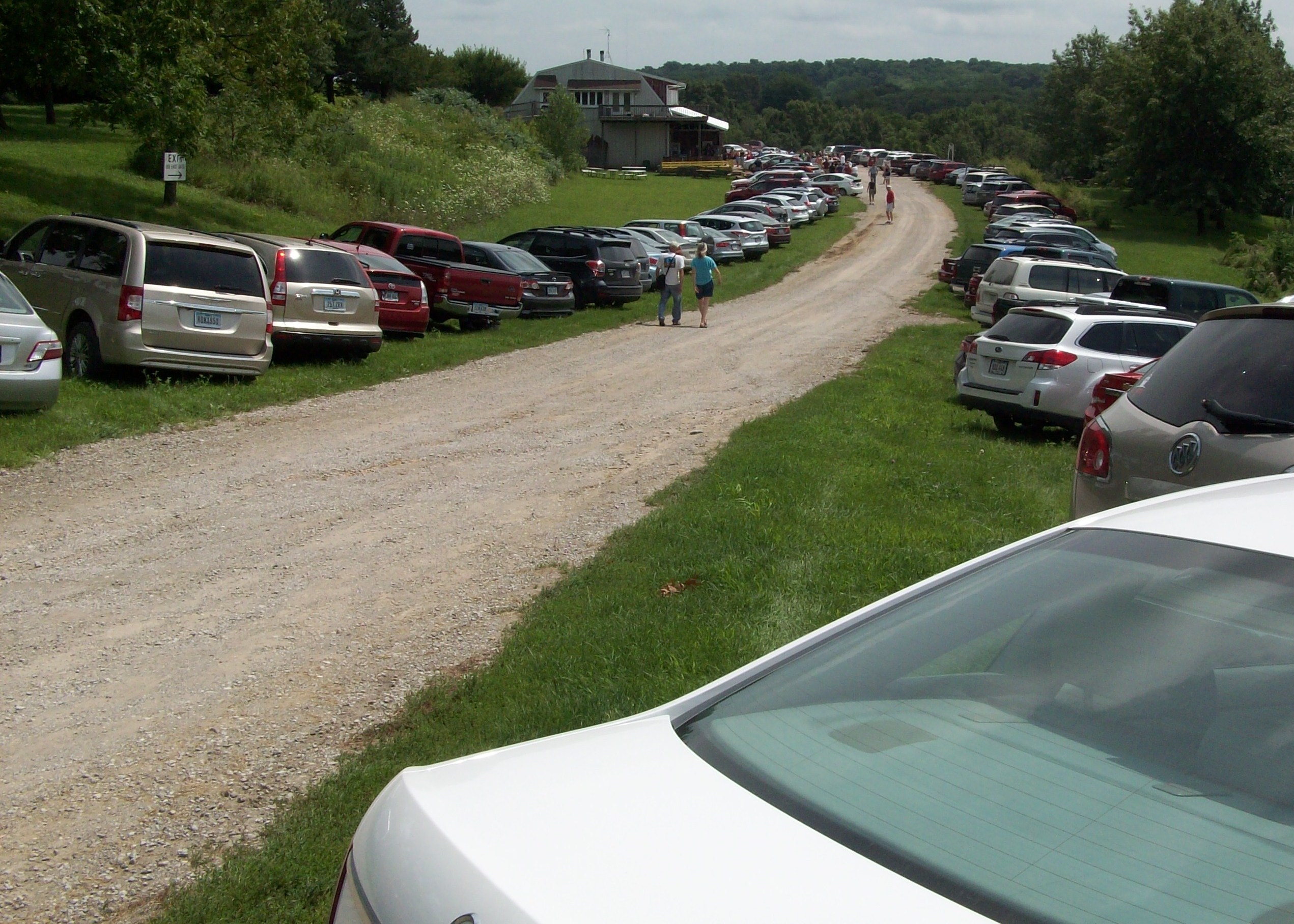
On Saturday at the orchard cars were lined up for preseason raspberries, blueberries and Lodi apples. With 50+ people in line, I didn’t go inside. If this crowd was any indication it’s going to be a very busy season.
I will work in the sales barn although the chief apple officer and his operations manager weren’t sure what I’ll be doing opening weekend. The octogenarian friend who got me the job four years ago has given up driving the tractor-trailer that provides tours. I enjoy working at the orchard because it is a nexus of contact with people I’ve known most of my life.
Missing is a plan to get enough rest in the coming days. While not a high priority, it needs consideration. I better get on that too.
Friday’s Brandywine, Rose and Beefsteak Tomato Harvest
Each day for the last two weeks I picked an apple and tasted it. The crop of Red Delicious is abundant and I want to make sure when the majority is harvested they are at the peak of sweet crispness. We’re almost there.
The pear harvest was limited to what could be reached. The tree grew well above the house leaving some ripe pears beyond the reach of even my long picking pole. We have enough to eat fresh and some leftover for apple-pear sauce.
Tomatoes are coming in faster than they can be eaten fresh. The plan is to can smaller ones whole and the slicers diced. There should be plenty of jars to fill the pantry shelves. The by-products of juice and ground bits and pieces will make soup or chili, although there is a limit to how much can be canned and used over the next year.
The bell pepper plants are flowering again and celery continues to grow. The main job of deconstructing the garden in preparation for winter will soon begin.
But for now, it’s time to pick and preserve as much of the harvest as we can.





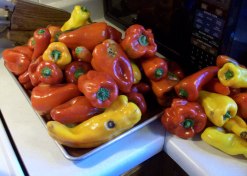 Plans for the unexpected mid day gap are to mow the lawn, gather the grass clippings, process bell peppers and Roma tomatoes, fix dinner and freeze some of the blueberries. The freezer is already packed, so I hope the peppers and blue berries will fit. I have no idea if everything will get finished.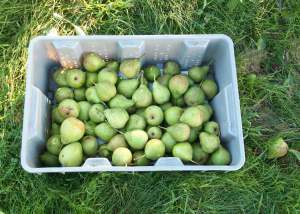



 Journey Home
You must be logged in to post a comment.