I bought State Fair, William’s Pride, Pristine and Duchess of Oldenberg apples at the orchard and brought them home. All but one have been eaten.
The goal was to taste them and determine which apples to buy for out of hand eating next week. My sixth year of weekend shifts at Wilson’s Orchard begins tomorrow.
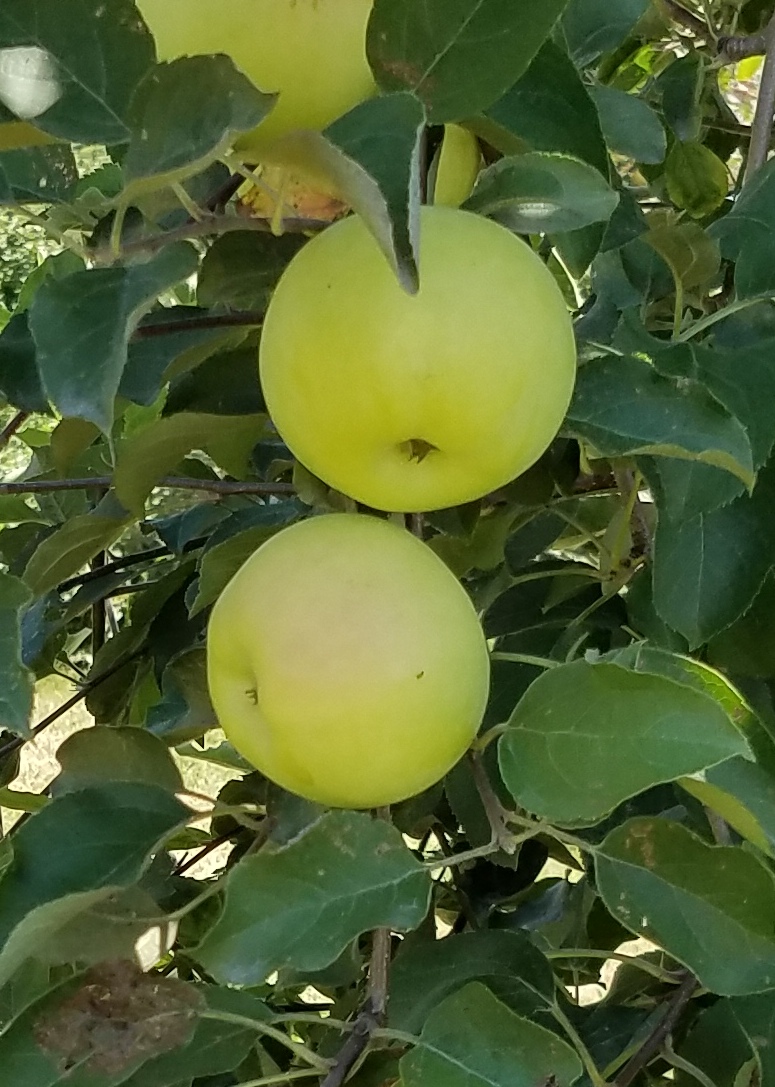
We decided on Pristine, which is a yellow-skinned, sweet and juicy apple. It doesn’t keep long so about ten should be enough for next week.
After an hour-long hike through the grounds, I can predict an abundant harvest. With zero apples on our three home apple trees, we’ll need the fruit.
What’s best about working at an orchard is meeting thousands of people from every background. Wealthy and poor, young and old, able bodied and infirm, urban and rural, liberals and conservatives, and everyone in between. Many visitors have a personal history with the orchard, or in the apple business. I relish hearing their stories. It’s great to work where my role is to help people find their way in the orchard and discuss something positive with them as they get away from their usual environment.
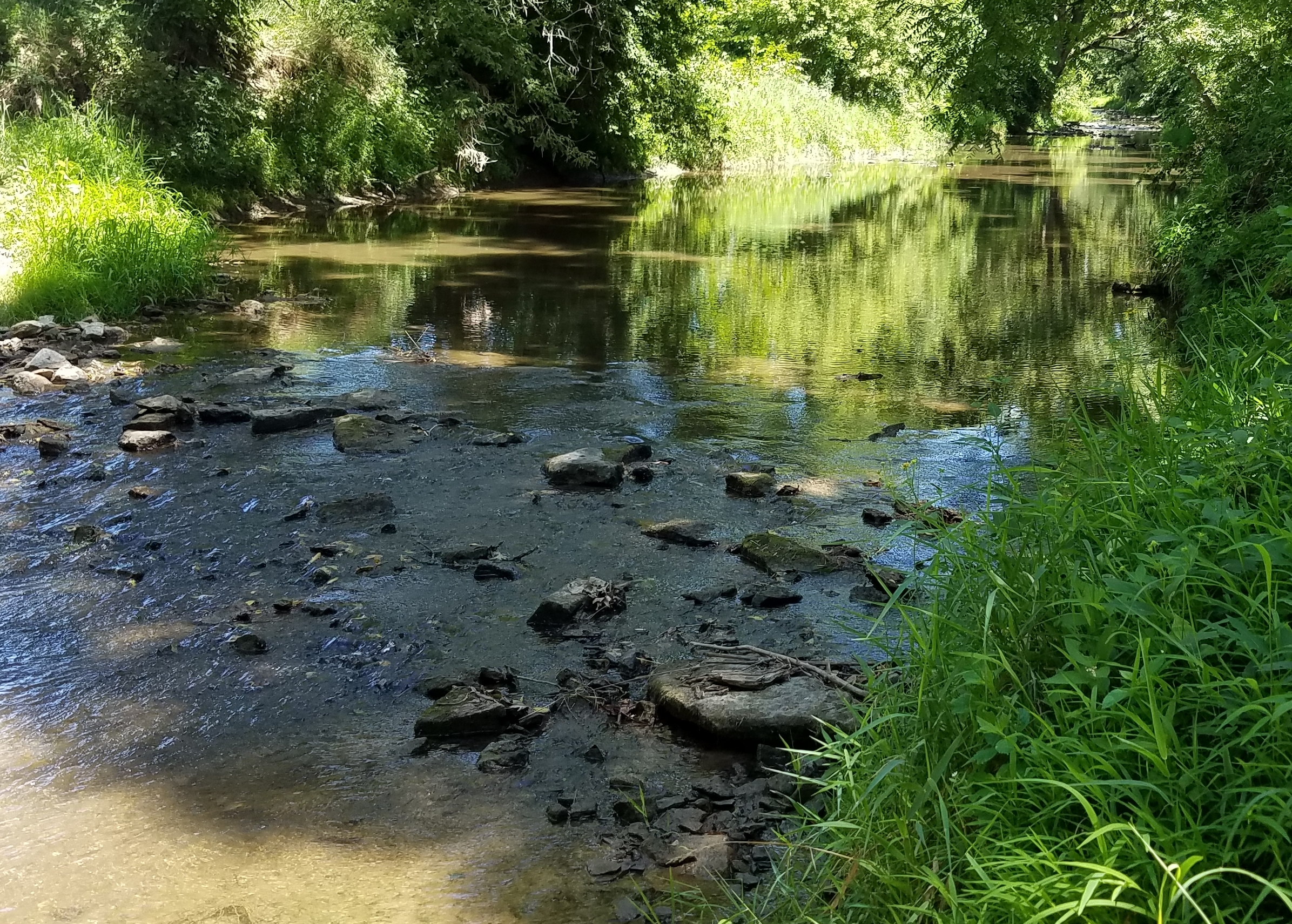
Here’s a photo of Rapid Creek, which runs through the middle of the orchard. The pre-season pic captures something serene in an otherwise turbulent world. We all need that from time to time.
This year a group of Ukrainians with temporary work visas joined us at the orchard.
They were hard-working and fun to be around.
Their contracted wage far exceeds the $185 per month they can earn in Ukraine from their trained profession as English teachers. The visa sets a specific hourly rate of pay and the host is required to provide round trip transportation to Iowa plus housing. They can stay for up to eight months at a time. The Ukrainians went home to their families after the season, although each of them plans to return in a couple of months to help prune apple trees.
Saturday I drove to the orchard to pick up apple cider and frozen cherries. While there, the octogenarian friend who referred me showed up. We talked with the owners long enough for my spouse to wonder where I was. We ran through the usual topics —the hickory nut harvest, Gold Rush apples, cooking projects, which books we were reading, activities of mutual friends — and told jokes, usually one at the expense of another. It was a great conversation among friends.
We live in the same political precinct and have common political interests. We discussed the surprising plan to move the U.S. Embassy from Tel Aviv to Jerusalem within a few years, and scuttlebutt about Democratic candidates considering a run to replace our state senator Bob Dvorsky when he retires at the end of 2018.
Multiple sources told me local internet personality Zach Wahls and former diplomat Janice Weiner are both kicking tires on a state senate run. I’ve not met either of them and it was news to my co-workers. While politically engaged, each of us has bigger fish to fry than politics.
The orchard sales barn will be open next weekend and that’s it for the year. I’ll need more cider… and conversation by then.
Everyone wants work that’s fairly paid. Once one accepts a work contract — agreeing to work for a wage — that usually ends discussion about compensation. We turn to our co-workers and the life we share in a place and time. If the job is any good we don’t talk about compensation, work hours, or much of anything but the idea of what we do and how to do it better. This has been the case most of my life in every job I’ve held.
At the home, farm and auto supply store we recognize it as lowly paid work, not just for hourly employees but for management. Yet we engage in work as a team and do our best to meet our goals. Employee turnover is high in retail and based on my experience compensation is not the driver. What matters more is it’s relatively easy to get retail work and if one keeps their nose clean and shows up, the employment and paycheck are predictable. A job easily secured is one easily left and that drives turnover. Our workplace is a stopping point for many people enroute to something else.
One of my colleagues was recruited from the sales floor to help check in freight during our busy season. We talk while working. Cognizant of his low wages, he said, “you get what you pay for,” indicating he would work harder if paid more. I’m not sure about that but didn’t tell him so. He is already a hard worker compared to others, and his income contributes to a household with his wife and two children. The job means something to him, but he’d leave it on short notice if a better one came along. We don’t talk much politics at work but he wears a stocking cap and coat with the word “Trump” screen-printed on them.
As my worklife winds down before taking “full retirement” next year, I value the people with whom I spend time. They are a diverse group and I hope to add something to our relationship before I go — remembering the past and living each moment to the fullest extent. These are stopping places, part of a long, personal journey that’s not over. As Robert Frost wrote in 1923, “I have miles to go before I sleep.”
Group of captured Allied soldiers on the western front during World War I representing eight nationalities: Anamite (Vietnamese), Tunisian, Senegalese, Sudanese, Russian, American, Portuguese and English. Photo Credit – Library of Congress
Most of Armistice Day was at home.
The forecast had been rain, however, a clear fall day unfolded and I planted garlic. Pushing cloves into the ground with my thumb and index finger, I made two rows and covered them with mulch retrieved from the desiccated tomato patch. It doesn’t seem like much, it’s my first garlic planting ever. If it fails to winter I have plenty of seed to replant in the spring.
Had I been more prescient about the weather I would have spent more time outside: mowing, trimming oak trees and lilacs, clearing more of the garden, and burning the burn pile. Neighbors were mowing. The mother of young children piled up leaves from the deciduous trees at the end of a zip line portending great fun. Instead, I spent the morning cooking soup, soup broth, rice and a simple breakfast.
Leaves of scarlet kale were kissed by frost leaving a bitter and sweet flavor. I harvested the crowns and bagged the leaves to send to town for library workers. Usable kale remains in the garden. It will continue to grow with mild temperatures. Leaves of celery grow where I cut the bunches. There is plenty of celery in the ice box so I didn’t harvest them and won’t until dire cold is in the forecast. An earlier avatar of gardener wouldn’t have done anything in the garden during November.
I picked up provisions at the orchard: 15 pounds of Gold Rush apples, two gallons of apple cider, two pounds of frozen Montmorency cherries, packets of mulling spices and 10 note cards. Sara, Barb and I had a post-season conversation about gardening, Medicare and living in 2017.
The morning’s main accomplishment was clearing the ice box of aging greens by producing another couple gallons of vegetable broth. I lost count of how many quart jars of canned broth wait on pantry shelves. For lunch I ate a sliced apple with peanut butter.
We live in a time when favorite foods are under pressure from climate change. Chocolate, coffee and Cavendish bananas each see unique challenges from global warming. In addition, recent studies show the higher concentration of carbon dioxide in the atmosphere is reducing the nutrient value of common foods. Our way of life has changed and will continue to change as a result of what Pope Francis yesterday called shortsighted human activity. He was immediately denounced in social media by climate deniers.
This week, Congressman Ron DeSantis (R-FL) introduced the HERO Act which purports to reform higher education. Specifically, the bill would open up accreditation for Title IV funding to other than four-year colleges and universities. In an effort to break up the “college accreditation cartel” DeSantis would keep current Title IV funding but add eligibility for other post K-12 institutions. States could accredit community colleges and businesses to be recipients of federal loans for apprenticeships and other educational programs.
Telling in all of this is that as soon as he introduced the bill, DeSantis made a beeline for the Heritage Foundation for an interview about it with the Daily Signal. Does higher education funding need reform? Yes. What are Democrats doing to effect change in higher education? That’s unclear. A key problem is progressives don’t have a network of think tanks and lobbying groups funded by dark money to counter the HERO act or the scores of other conservative initiatives gaining traction in the Trump administration.
Even though the 45th president seems an incompetent narcissist, the influence of a conservative dark money network within his administration is clear: in appointments to the Supreme Court and judiciary; in dismantling the Environmental Protection Agency, in undoing progress in national monuments and parks, in weakening the State Department, in potentially politicizing the 2020 U.S. Census, and much more. The reason for his success is his close relationship with wealthy dark money donors and the agenda they sought to implement since World War II.
Today is the 39th anniversary of my return to garrison from French Commando School. I returned with a clear mind, physically fit, and an awareness of my place in the world.
“I am ready to experience the things of life again,” I wrote on Nov. 12, 1978. “The time at CEC4 has cleansed me of all things stagnant. I will pursue life as I see it and make it a place where I pass with love and peace for all.”
We work for peace on the 99th anniversary of the Armistice. If people are not unsettled by evidence of climate change and a Congress that ignores it in favor of pet projects designed to please the wealthiest Americans, we haven’t been paying attention. The need to sustain our lives in a global society has never been clearer.
Best news of the week arrived Friday afternoon via email. The Cedar Rapids Gazette decided to publish my opinion piece on the local food system at risk.
A writer lives for exposure to an audience and my readership will get a boost just by being in print media with daily circulation over 30,000.
I will probably run to the convenience store before sunrise to buy a copy as soon as I hit publish. (UPDATE: Here’s the link).
This weekend is mostly about apples. It’s Golden Days at the orchard. We have multiple varieties of Golden Delicious and for the most part, that’s what we’ll be picking. There are a lot of them still on the trees. Last night was family night and I spent most of my shift stocking shelves, coolers and freezers in preparation for what we hope is a good Saturday turnout. I laundered my orchard T-shirts last night and am ready to go. It’s the beginning of the end of the u-pick season.
Fallen Apple Pile
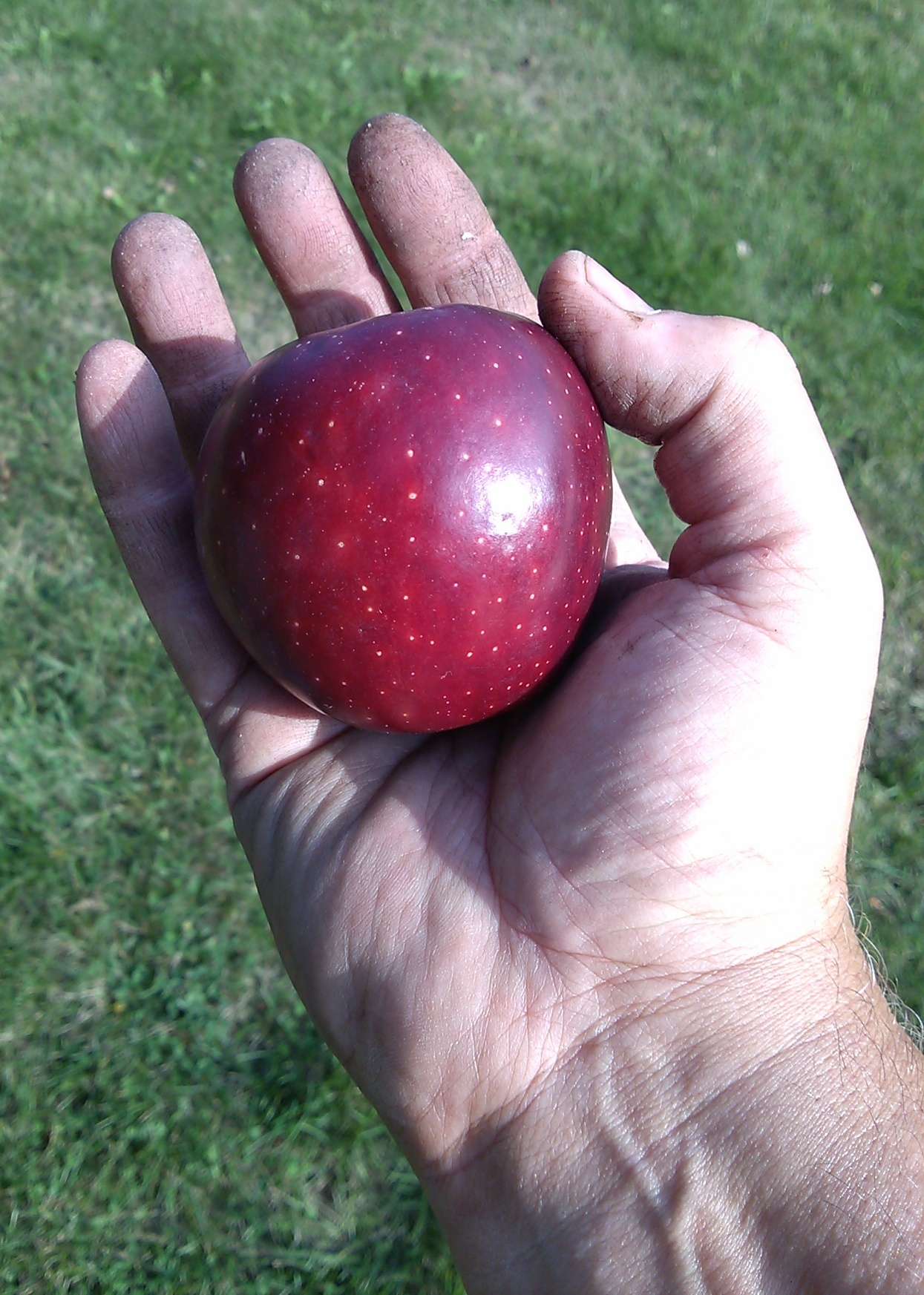
It’s time to pick the Red Delicious apples on our backyard tree. With the record-breaking heat apples are beginning to drop. I’d better not wait any longer. They are sweet enough to eat out of hand and should make great apple sauce. Whatever I’m able to harvest will be a fraction of the potential. We can only eat fresh and process so many.
So that’s the plan. Read and publicize my article in the Gazette and live in Iowa’s apple world. There’s work involved, but it will be a labor of love.
Midst falling leaves, grasses turned brown, and apples dropping to the ground, I mowed for the first time in over a month. It may be the last cut before winter.
Monday I visited the vegetable farms where I work each spring and caught up with the farmers. Both farms want me to soil block next year. I plan to do it.
I picked up vegetables for which I bartered: a fall share at one farm, seed garlic, storage onions and potatoes at the other. We cooked a spaghetti squash for dinner and had sides of a burger patty and fresh green beans. I made pasta sauce with tomatoes, garlic, basil and onions. A jug of apple cider is in the ice box, but we didn’t open it just yet. It’s been hard to keep up with the abundance since the garden began producing and the summer vegetable share began. We could feed a larger family than we have.
Fund raising letters have begun to arrive via snail mail. If we had the cash, I’d contribute to each one of them: Practical Farmers of Iowa, Catholic Worker Houses in Iowa City and Des Moines, Veterans for Peace, Physicians for Social Responsibility, and others.
I called the snow removal contractor for our home owners association and the receptionist took a message. He’s out of town until Wednesday. She said they haven’t really started thinking about snow removal because they have been so busy. Isn’t that true for us all.
During the next six months I’ll be re-engineering our lives to live on our social security, transition our health insurance to Medicare, and slow down on work I do mostly for the paycheck. After a two-day retreat, I head back to jobs which have daily shifts until Nov. 3. I need focus so I get the transition right. That means something has to give.
With the current political and economic climate, most everyone I know seems to be in transition. Each week some new affront comes out of our federal government. The same would be true in Iowa if the legislature were in session. It’s a time to re-group and figure a strategy to deal with an aging frame, diminished income potential, and unwelcome changes in society.
My posts have slowed down. Although there is plenty to write about, life’s turbulence has increased making it more difficult. The existential threat to our way of life manifests itself more each day. We will survive the next steps if we take time to do them right. Writing in public may take a back seat to the tasks of living for a while.
Fall going into winter is a great time to do that.
Our local food system is at risk before it has even become established.
The mix of retail interests, community supported agriculture, farmers markets, road side vegetable stands, restaurants and direct farm sales hasn’t coalesced into a sustainable local food system and it doesn’t appear it will any time soon.
One should never doubt the resilience of farmers. At the same time if markets go away due to changing tastes or financial stress, increased commodification could take slim margins out of farm businesses leading to bankruptcy. Iowans remember well the farm crisis of the 1980s.
A small group of pioneers made progress in starting a sustainable, local food system. People like Denise O’Brien, Dick and Sharon Thompson, Fred Kirschenmann, Francis Thicke and Susan Jutz took ideas about sustainability and put them into practical application. Their work enables a new generation of farmers to enter the local food business, people like Tony Thompson (New Family Farm), Kate Edwards (Wild Woods Farm) and Carmen Black (Sundog Farm). The idea of a return to diversified farms producing food for local markets begs the question how did we get away from it?
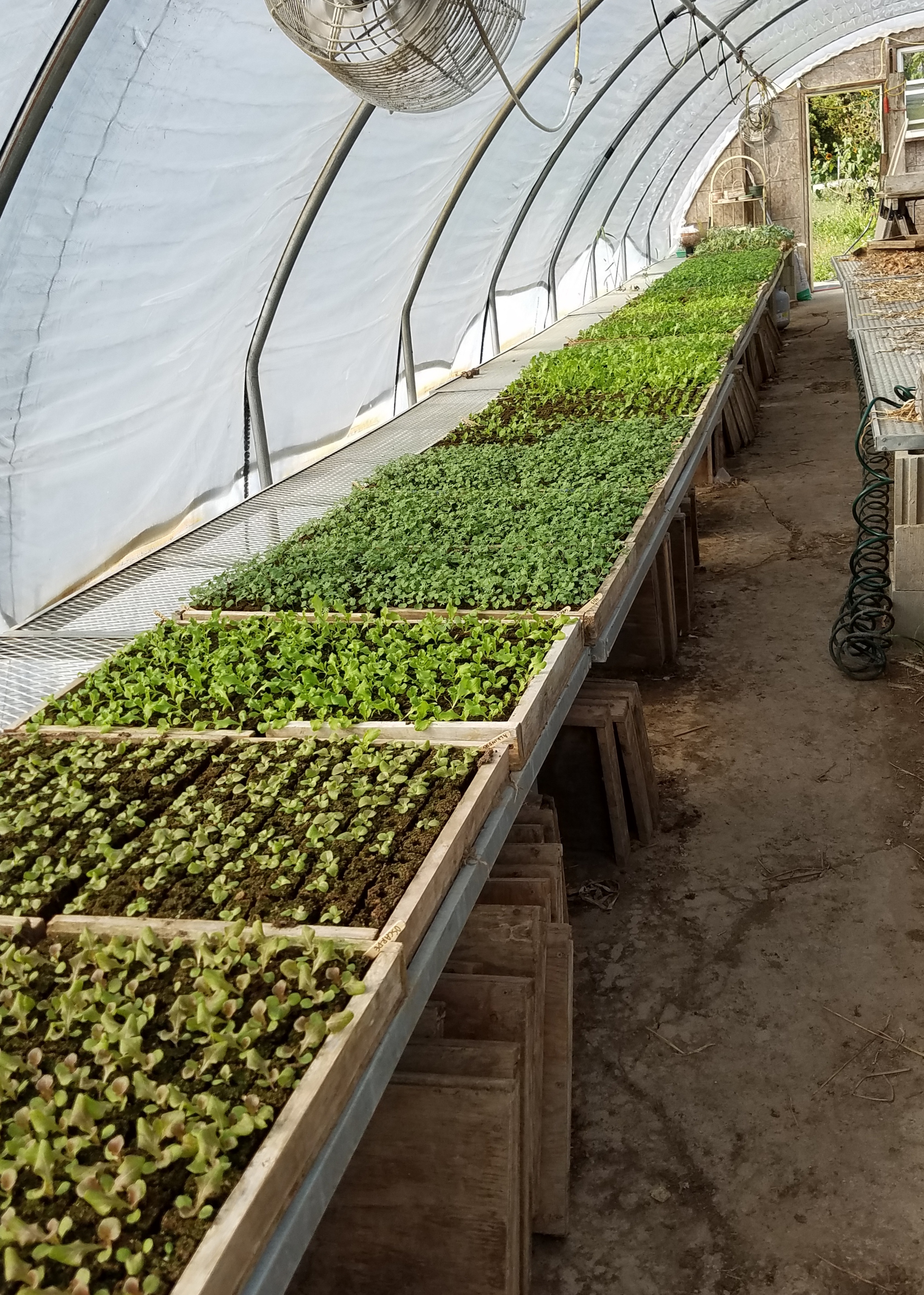
September Seedlings
Change is in the air. Change driven by economic hardship, oppressive policy in Des Moines and Washington, D.C., and climate change. It doesn’t look good for growers, retailers or consumers, not because business models have changed, but because we are entering an era when wealth flows to the top, leaving the rest of us struggling for subsistence. Cultural changes driven by our political and economic climate will test the resilience of a fledgling local food system. What we assume about Iowa’s growing conditions — adequate rainfall, predictable temperatures and soil quality — is subject to change as the oceans and atmosphere warm resulting in increased numbers and intensity of extreme weather events in Iowa.
The challenge is this: If I can buy perfect-looking Honeycrisp apples for $1.98 per pound at the grocery store, why would I pay more at a local apple orchard? The local foods answer is because one knows the farmer, has likely met him or her, and knows the inputs that go into fruit production. As families increasingly make limited resources go further, the risk to local food farmers is they will feel it as consumers pinch pennies.
Today’s food system centers around being able to say, “I’ve got mine,” with regard to a family’s food on the table or a viable agricultural business model. That individualistic, self-centered approach is not sustainable. Sustaining a local food system will take all of us working together.
Versaland, a farm owned by Suzan Erem and Paul Durrenberger, and operated by Grant Schultz, has been in the news. Schultz is well known locally and serves as an example of how a local farmer can create bad press, alienate neighbors and risk failure. In a recent blog post, Erem and Durrenberger answered the question what kind of farmer Schultz is in no uncertain terms: a neglectful, unfocused one. Read their post titled, “Grant Schultz — Facts to Consider.”
Schultz recently applied to the Johnson County Board of Supervisors to rezone part of Versaland. The supervisors rejected the application unanimously, in part because land owners Erem and Durrenberger did not support it. Local farmers with whom I’ve discussed the matter don’t understand why he wouldn’t get buy-in from the landowners before applying for rezoning. The answer is likely he can’t afford to buy the farm according to contract terms without the money his proposed idea might generate.
Whatever one feels about the Versaland saga, disputes — some including lawyers and some not — are common in agriculture. The reason the Versaland dispute stands out is there have been so few of them in the local food system. For the most part, people get along despite differences.
What is more concerning than a legal dispute is the disconnect between Versaland and its reality. This narrative started a couple of years ago.
“Mr. Schultz and Versaland have completely shifted the climate change narrative in the heartland,” author Jeff R. Biggers opined in the Nov. 20, 2015 New York Times. “Today’s farmers can play a key role in climate solutions.”
The narrative Biggers crafted about farming and climate change, featuring Schultz’ work, tells what may be possible but falls far short of what is. Schultz’ first steps in what Biggers asserts should be a global climate change campaign faltered with the revelations about Versaland the dispute brought to light. That Schultz appears to be a neglectful, unfocused farmer isn’t a crime. Those who live in the country know plenty of farmers like that. However it detracts from the credibility of Biggers’ narrative. To the extent Versaland is part of the local food system it drags everyone down.
Our local food system is not at risk for lack of a narrative. What matters more is the relationships between farmers and their customers, suppliers and landlords. Government plays a role and the negative cultural impact of federal and state governments in society remains to be seen. That is the greatest risk the local food system faces.
One hopes the window to establish a vibrant, sustainable local food system remains open, at least for a while.
Yesterday our orchard’s chief apple officer cut a slice of Kidd’s Orange Red to sample and it’s been hard to think of anything else. A cross between Delicious and Cox’s Orange Pippin, developed in New Zealand by James Hutton Kidd, and introduced in 1924, the flavor is unbelievable. I’d say it was delicious but that would be an apple joke, favoring one parent over the other.
The orchard is in peak production. I picked one or two of each from the cooler to bring home: Gala, Crimson Crisp, Crimson Gold, Jonathan, Snow Sweet, and Jonafree. There are more than a dozen other varieties ripe for picking from the trees.
“Heat early in the growing season built sugar,” our chief apple officer told the Iowa City Press Citizen. “Sunny days with cold nights —like those in the past month — brought color and flavor.”
The Crimson Crisp apples are the best I’ve tasted this year. Food is about flavor as much as sustenance, isn’t it?
In our backyard the Red Delicious tree is ready to pick. This is a baseline commodity fruit apple for us. Like many home gardeners I make apple dishes from what is available. The fruit is smaller than usual because there are so many apples on each branch. There are plenty to make juice for drinking and apple cider vinegar, apple sauce, baked goods, dried apples and frozen slices for winter. Once they are picked, a mad rush to preserve them begins — I’m putting it off until Wednesday to work on a couple of other projects.
I took two bushels of kale leaves to the orchard on Sunday. I was surprised how many co-workers had never seen scarlet kale. Likewise my large leaves are much different from the bundles of small ones available in the grocery store. I asked one of my colleagues to compost whatever was left at the end of the shift. She said she wouldn’t but would take any remainders home. A gardener is always looking for outlets for kale.
In the garden, late pepper growth is happening. There should be plenty more Cayenne and Red Rocket hot peppers, some jalapenos, and maybe a few sweet bell peppers. The Fairy Tale eggplant is producing and there will be a few more large tomatoes. Some carrots survive but not enough to make a dish of them.
I took two days vacation at the home, farm and auto supply store next week to work in the yard. Garden cleanup, tree work and much needed mowing and trimming are on the agenda… also apple picking and processing. Here’s hoping the rain holds back those two days.
I’d move on to other work now except I can’t escape the complex flavor of apples. It dominates my waking hours and carries over while I sleep. As leaves on deciduous trees begin to turn I embrace the apple season, holding on until the last fruit falls, the last leaf turns to compost — sustaining a life in a turbulent world.
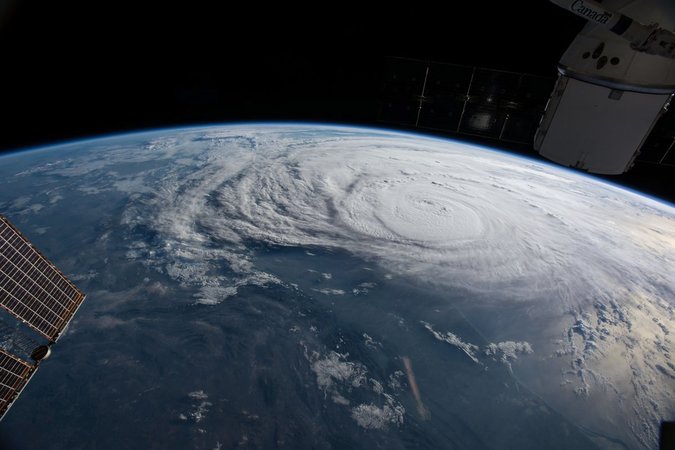
Hurricane Harvey from the International Space Station on Aug. 25, 2017. Photo Credit – NASA European Pressphoto Agency
Rain tapped the bedroom window this morning on the fringe of Hurricane Harvey.
It was a reminder of our connection to the oceans. They are absorbing heat from the atmosphere on a planet experiencing some of its warmest days in living memory. A warmer atmosphere holds more moisture and the result is intense storms like the Category 4 Hurricane Harvey.
In Iowa we adapt easily to hurricanes because of our distance from the coast. Needed rain benefits our gardens and farms. It recharges our surface aquifers. As the weather pattern moved over it seemed normal, not as devastating as it was when Harvey made landfall in Texas Friday afternoon.
Overcast skies and a slight rain depressed attendance at the orchard on Saturday. There were enough visitors to keep busy, especially in the afternoon when the sun came out. Sales seemed steady if light.
One of my favorite August apples is Red Gravenstein, a Danish cultivar. It was introduced to western North America in the early 19th century, according to Wikipedia, perhaps by Russian fur traders, who are said to have planted a tree at Fort Ross in 1811. Red Gravenstein is tart, juicy and crisp — great for eating out of hand.
The cider mill made the first press of apples for the sales barn. The gallon and half gallon jugs sold well. Over the years I’ve come to appreciate the changing flavor of our cider as we move through the apple harvest. I bought a gallon of cider and a dozen Red Gravenstein apples at the end of my shift.
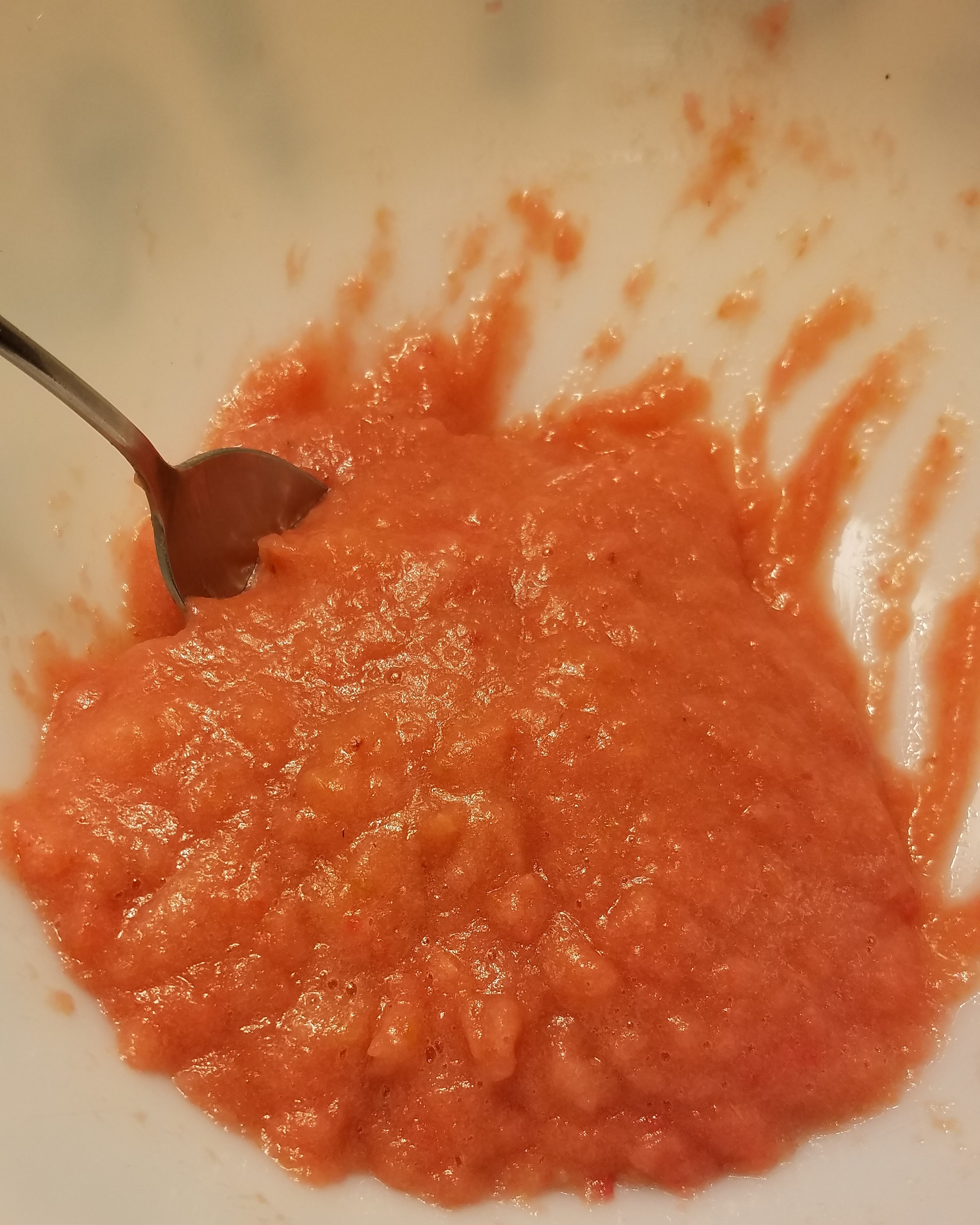
I’ve been reading recipes for tomato catsup in old community cookbooks. After reviewing a dozen or so I went to the kitchen and created this sauce from the abundance of red bell peppers and tomatoes:
Red Pepper Sauce
Ingredients
Half dozen cored and seeded red bell peppers cut in quarters
Equal amount by weight of cored tomatoes one inch dice
One cup of malt vinegar
One teaspoon salt
One tablespoon refined sugar.
Process
Pour the vinegar into a saucepan and bring to a boil.
Add tomatoes and peppers.
Add sugar and salt.
Bring back to a boil and cook for 10-20 minutes until the vegetables are soft.
Strain the mixture. Retain the liquid to use as vinegar in salad dressings.
Run the vegetable mixture through a food mill and either serve immediately or bottle and refrigerate.
Recipe notes
To make a thicker sauce, either reduce it in the saucepan or add tomato paste.
I used malt vinegar because it was on hand. Absent malt vinegar I’d use homemade apple cider vinegar.
The text message came while I worked at the home, farm and auto supply store. I saw it on my afternoon break.
“If you want to start tomatoes there is a crate on the packing shed floor you could pick up on way home from work,” Farmer Kate texted. “I’m not home but if you need help finding them let me know.”
We barter my labor canning for her tomatoes. Ready or not, the next aspect of the local food season begins with its quick-paced rush to beat spoilage.
When I picked up the tomatoes there was also a crate of bell pepper seconds unclaimed by CSA members. A farm worker offered them and I put the crate in the back of my Subaru.
On the way hope I spotted the librarian leaving the library for her car and swung by to offer some peppers. My sister in law was at our house when I arrived home. I offered her some too. They are so sweet — unlike what’s available at the grocery store. A gift to be shared.
The garden is coming in with more apples than can be picked before they drop. Pears are almost ready, there are tomatoes, celery, hot peppers, basil and more waiting to be harvested and processed. There will be more cucumbers for pickling. Sweet corn will run another week or two at the roadside stand and we want to put some up. Every night after work and most mornings before, I’m in the garden harvesting or in the kitchen making dishes and preserving the harvest. Right now tomatoes, peppers, sweet corn and apples are in the house waiting to be processed. It’s a mad rush.
It’s also a good life. Staying busy with useful work blocks out negativity from other sectors of society. It’s cultured and produces the tangible benefits of relationships, knowledge and good food for our table and those with whom we share.
For the rest of August and September, it’s work, kitchen, garden for me.





 Journey Home
You must be logged in to post a comment.