Categories
Home Life Living in Society Social Commentary

Cold and Windy Spring Day

Portable Greenhouse

Tuesday was the last time I started the automobiles.

I plan a drive in each of them later today to make sure the batteries don’t drain. With gasoline selling for $1.259 per gallon I’ll don a protective mask and gloves and fill the one I missed while out to buy groceries.

It’s a maintenance mode of living as we wait out the coronavirus pandemic.

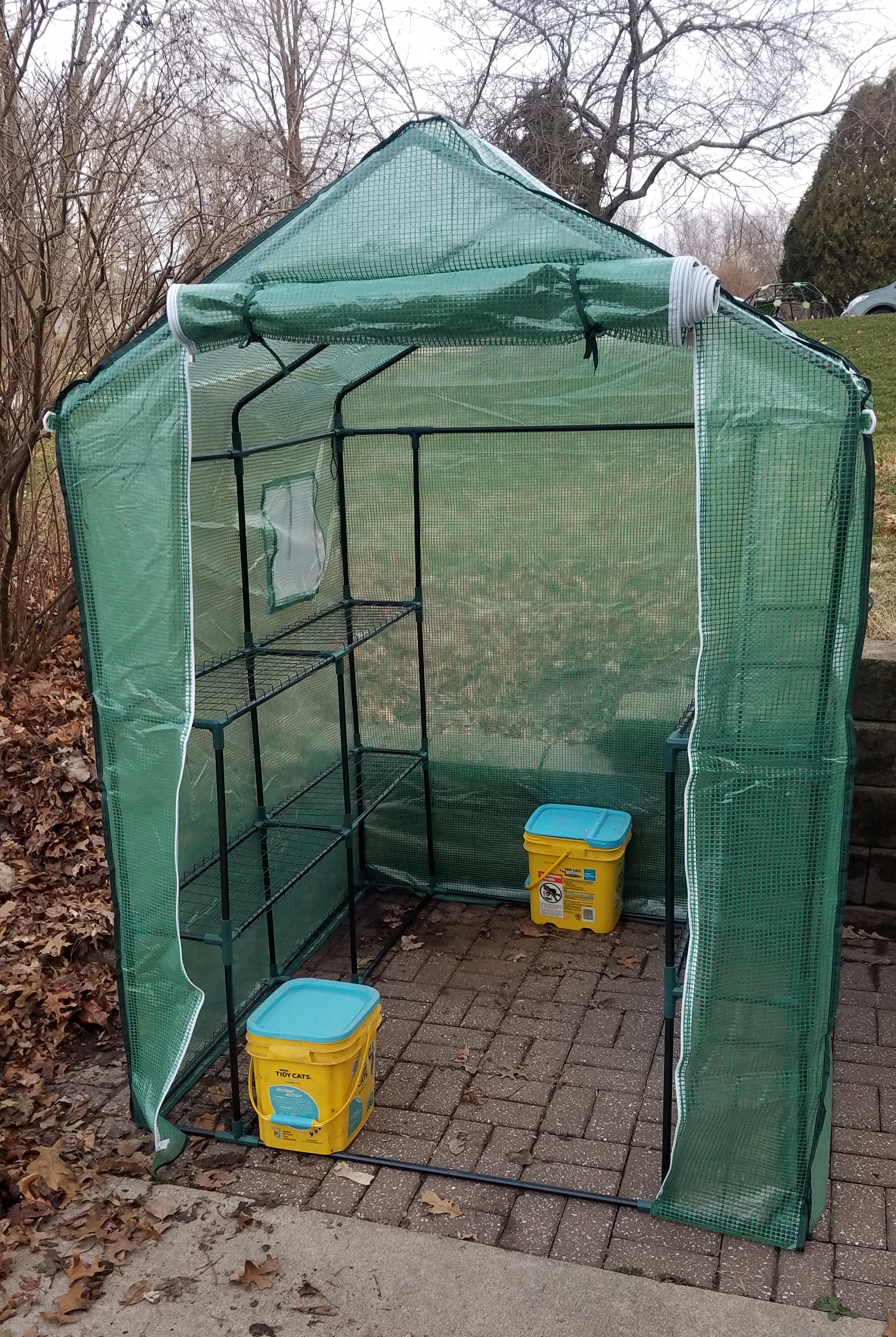
Strong gusts of wind had me bring the greenhouse seedlings into the garage yesterday afternoon. If it did blow over, I didn’t want to lose the work done since February. It’s still standing this morning.

Overnight ambient temperature dropped below freezing, so when I return the plants to their shelves after sunrise I’m going to run a space heater out to warm them. The forecast is ambient temperatures around 50 degrees after noon. The sun should take over warming by then.

The death count in Iowa due to COVID-19 was 29 yesterday. It’s not as bad as in New York where they are digging mass graves, running out of morgue space, and recruiting mortuary workers and out of state funeral directors to help with the volume of work as bodies pile up. Projections in Iowa are there will be plenty of mortuary workers to handle the expected 565 COVID-19 deaths projected by Aug. 4.

The pandemic is real and people who own and operate small businesses are getting antsy. Under normal circumstances a small business owner is eligible for unemployment payments only if they pay in for themselves or their employees. Most sole proprietorship operators don’t.

There is discussion in the national media about stimulus bill funding for small business owner payrolls to make sure they make it to the other side of the pandemic. People I know in this situation, who have applied for unemployment to Iowa Workforce Development, had their claims denied. There is a lack of information about how this provision of the stimulus will work, or whether it even exists. Bottom line is the federal government’s response to the coronavirus pandemic has been too little, too late.

With non-essential business shut down three weeks ago, small business operators are having trouble making ends meet without their regular cash flow. Some are considering returning to work to resolve the stress. It’s easy to say that’s not a good idea during a period of contagion, but our household is financially stable and as such, mine is a perspective of privilege.

As retired workers, our family relies on our Social Security pensions. Politicians floated the idea of increasing Social Security payments temporarily this week. That doesn’t seem necessary. The main thing about Social Security should be to ensure that the trust fund is solvent now and beyond 2034 when if nothing is done it will begin to run out of money. That’s a worry for another day in light of the pandemic.

After Tuesday’s trip to the wholesale club we are provisioned so we can make it through the end of the pandemic. According to current projections the peak is expected to be April 27 although it will take some time past that date for the CDC or Iowa Department of Public Health to give us an all-clear.

For now, I’m focused on planting the garden. If the pandemic continues into summer, we’ll need the produce.

Categories
Kitchen Garden

Planting Cool Weather Crops

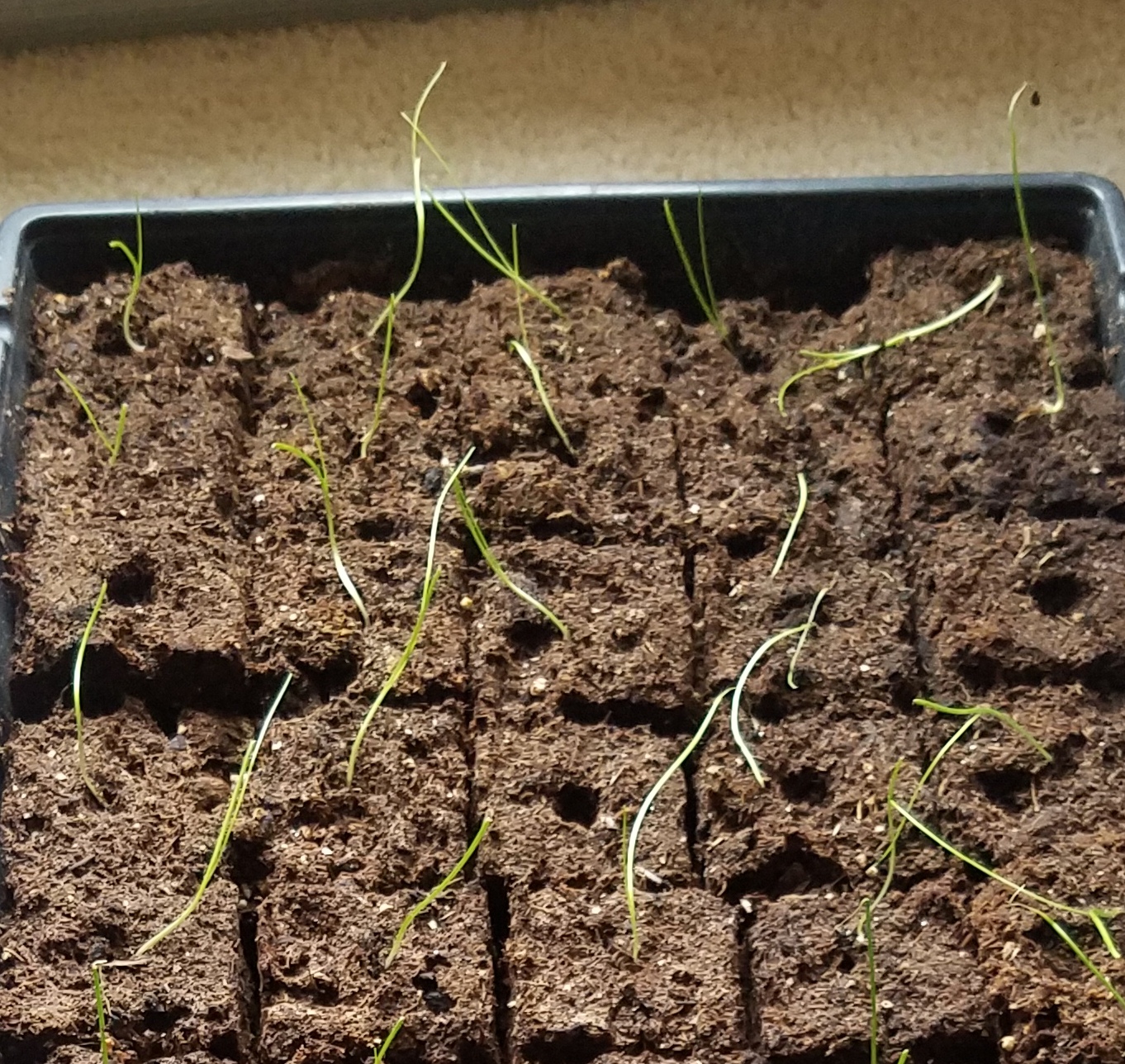
Container planting onion bulbs for spring onions.

On a mild, clear Sunday I planted cool weather crops.

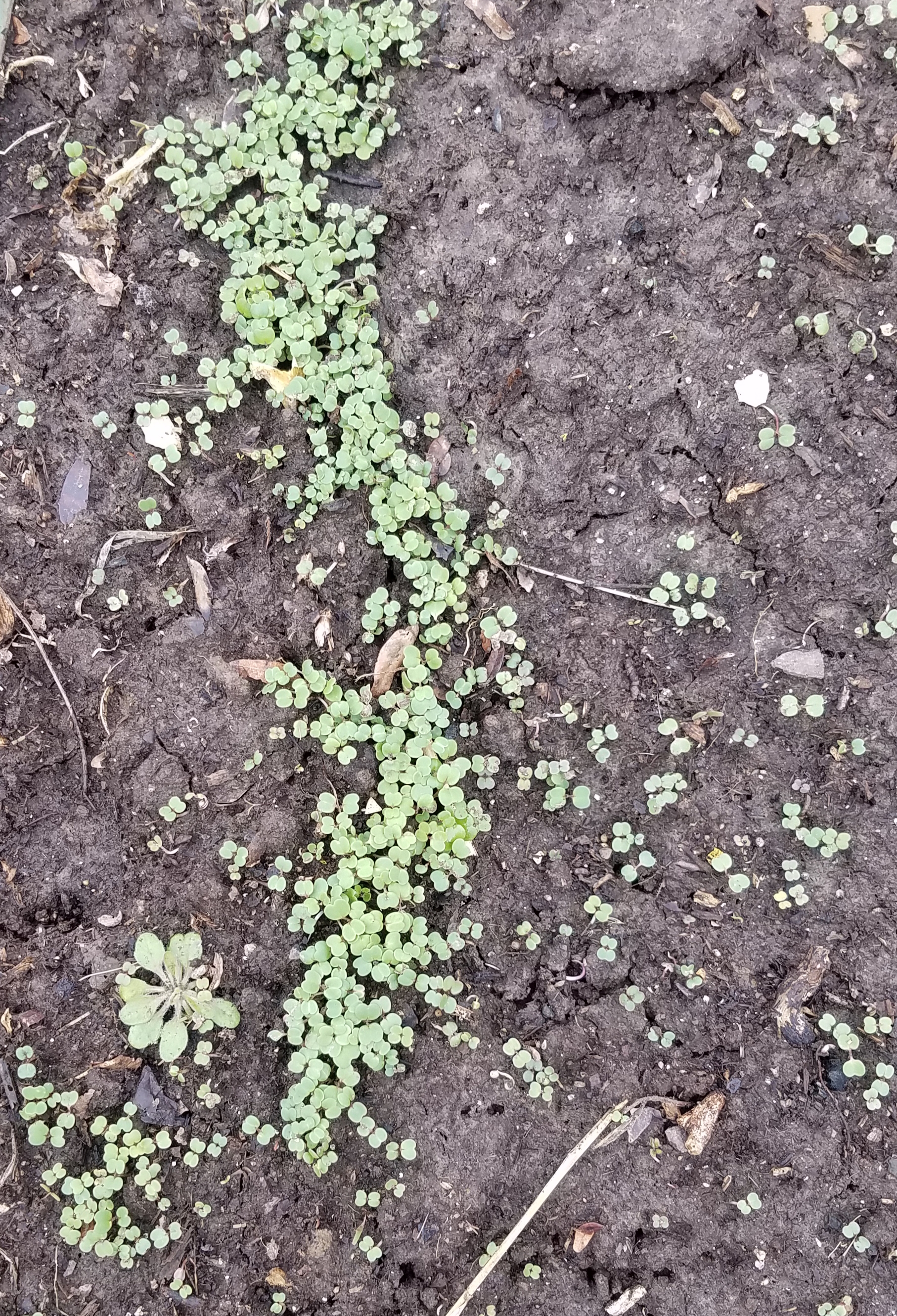
Arugula and lettuce planted in the ground March 2 are coming along. I tasted a tiny arugula leaf to confirm what it was. Mmmm. It won’t be long before I can make a pasta dish using fresh arugula with bow tie pasta.

In spurts of action with deliberate steps — a process developed as I slow down in the garden — I planted beets and turnips to fill out a patch near the early arugula and lettuce, and filled four containers with two varieties of potatoes, one with radishes and another with three types of onions from the home, farm and auto supply store to be harvested as spring onions. I filled out the onion container with basil seeds. It felt like I made progress.

I mulched the leaves remaining in the front yard, cleared off the plot which grew kale and cherry tomatoes last year, and removed the wire containers from the plot near the in ground containers. There’s more work to do as long as the rain holds off. I planted in soil:

Potatoes

Red Norland, ten weeks.
Kennebec, ten weeks.

Onions

Three varieties of bulb onions, three to four weeks for spring onions.

Turnips

Purple Top White Globe, Ferry-Morse, 55 days.
Purple Top While Globe (certified organic), Johnny’s Selected Seeds, 50 days.

Basil

Sweet Italian Basil, Ferry-Morse, 70 days.

Radishes

Red Meat, Johnny’s Selected Seeds, 50 days.
French Breakfast, Johnny’s Selected Seeds, 21 days.
Icicle Short Top, Ferry-Morse, 28 days.
Champion, Ferry-Morse, 28 days.

Beets

Zeppo Hybrid Round Red, Johnny’s Selected Seeds, 50 days.

I removed the automobiles from the garage as I have each spring while planting the garden. I noticed my inventory of powered equipment increased. With a gas-powered trimmer, an electric tiller, two lawn mowers, and an electric and a gas-powered chain saw, it feels like I’m ready. The electric tiller is a concession to age, yet I admit it does a great job of preparing the soil for planting.

Sunday was gardening, as good as it gets. A fit thing to occupy ourselves as we maintain a distance from people because of the coronavirus.

Categories
Kitchen Garden Writing

Clearing the Garden

First Brush Pile Fire of 2020 Gardening Season

It took five and a half hours to plant two apple trees on Saturday.

I need to move the support stakes as I put them too close to the trunk. Hopefully they will be easy to remove as they have been in the ground less than 24 hours.

I planted bare root trees that arrived Friday from Cummins Nursery, Ithaca, New York:

Zestar! on G.210 root stock.
Crimson Crisp (Co-op 39) on G.202 root stock.

Here’s hoping for apples in a couple of years.

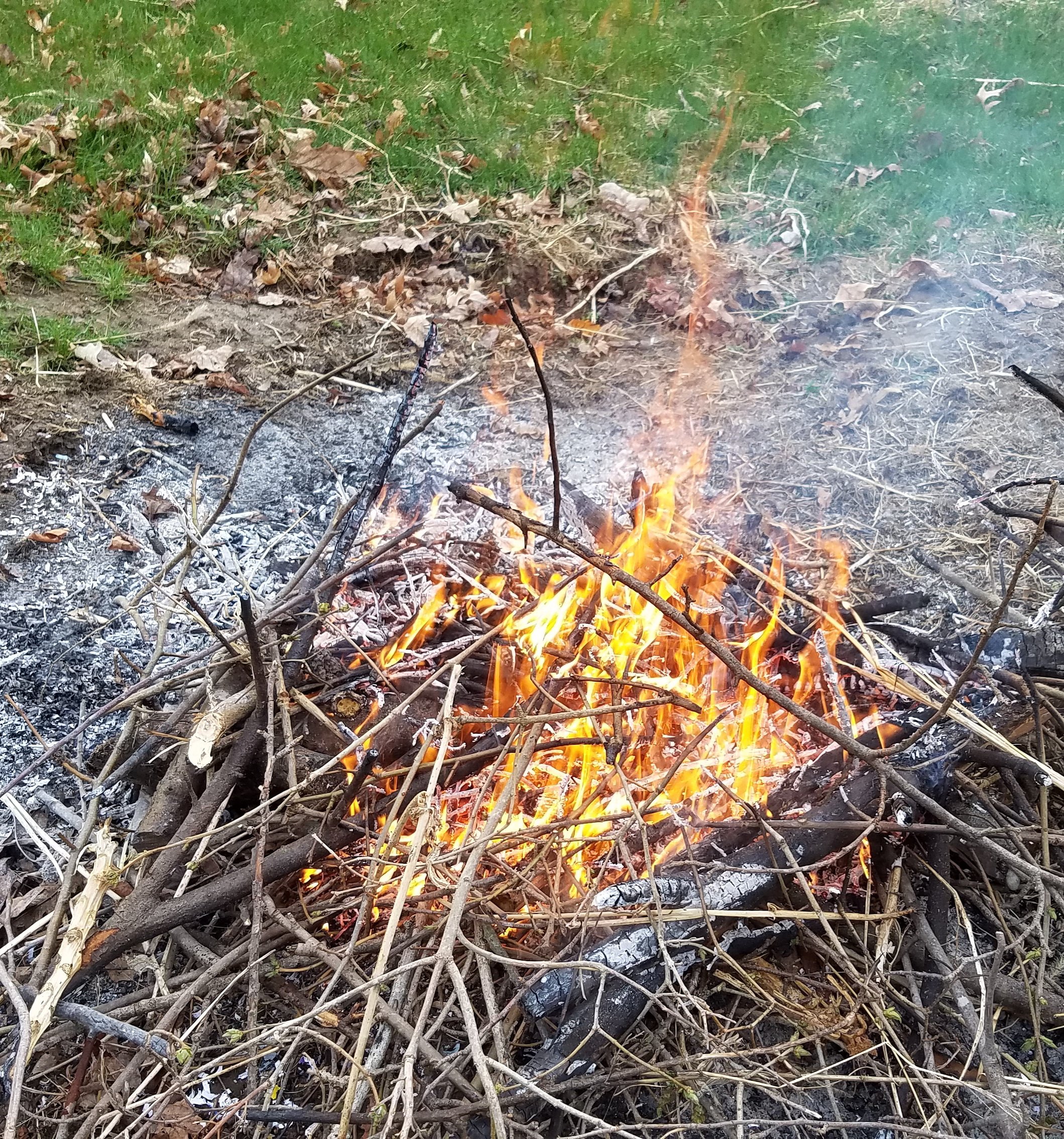
I burned the first brush pile on the to be planted kale plot. It was a clean burn. After sunrise I will spade and till the plot. I also want to plant potatoes in containers and sow peas, beets, carrots, radishes and turnips. If there is time, transplant the first batch of spinach seedlings. There is a lot on the gardening agenda as spring has arrived.

How should I use the time after waking until sunrise, not just today, but going forward? I’m not sure. Other than to continue doing what I am, it is difficult to envision changes from routine as much as they may be needed. I’m too unsettled to contemplate change.

People say it is normal to experience anxiety during the coronavirus pandemic. Knowing I’m normal is not reassuring and has made for restless nights.

The remedy will be to get lost in the work of putting in the garden. If I work longer shifts, maybe I’ll be tired enough at day’s end to sleep through the night. I’m a little sore from yesterday’s work as my spring conditioning regime in the garden begins. Engagement in a project has worked to relieve tension in the past.

It doesn’t help that I’m reading Anne Case and Angus Deaton’s new book exploring why capitalism is proving fatal for the working class with an uptick in mortality rates among white middle-aged Americans from what the authors call “deaths of despair.” There have been enough alcohol, opiod and suicide deaths in this group to reverse the 20th century trend of longer life expectancy. Other wealthy countries continue to see an increase in life expectancy in the new century. Americans do not. I’m looking forward to reading Case and Deaton’s analysis.

All this is not to say I find despair in daily life, I don’t. However, change is on the horizon. Unlike with the sunrise coming in an hour, it’s hard to know what to expect. I affirm today will be a gardener’s day with everything that means. That should be enough to move past the coronavirus engendered anxiety into something more meaningful.

I’m doing the best I can.

Categories
Kitchen Garden

Rainy Spring Dream

Harvesting Spinach – 2013

The forecast was 100 percent chance of rain so I worked on the garden in the garage. I re-seeded dill and cilantro that didn’t germinate. I gave up on the shallots and onions which did not grow the way they should inside our home.

I planted new trays made from small shipping boxes lined with aluminum foil. The box of foil was printed with the date 1972. The improvised flats will serve. I planted:

Cucumbers

Marketmore 76, Ferry-Morse, 68 days.
Tendergreen (a.k.a. burpless), Ferry-Morse, 55 days.
Lemon, Ferry-Morse, 65 days.
Little Leaf Pickling, Johnny’s Selected Seeds, 57 days.
Tasty Jade, Johnny’s Selected Seeds, 54 days.

Lettuce

Buttercrunch, Ferry Morse, 65-70 days

Spinach

Matador, Ferry-Morse, 45 days.

There is a to-do list once the rain finishes and the ground dries out enough to till.

I text messaged the farm about Sunday’s seeding session and we called it off. The greenhouse is full. It’s too cold to put seedlings outside on wagons to harden. We texted back and forth for a while.

Text messages and phone calls are a part of farming that goes on regardless of the crop, almost every day. We stay semi-synchronized, although with a garden I’m very flexible.

My multi-colored Swiss chard didn’t germinate at all. The Fordhook chard didn’t germinate very well. If the seedlings that germinated survive transplant there will be enough chard from the garden for the kitchen. Celery takes the longest time to germinate and the report was it did. Things are looking good. There will plenty of green vegetables to transplant.

Yesterday they tilled and seeded carrots, peas, beets and spinach in the ground. I start my spinach and some beets in trays, but need to plant in the ground as soon as I can get in. Maybe over the next few days. After that, the next step is potatoes, then onions after the ground dries.

While working in the garage I began to dream.

I went on a reconnaissance mission to one of the training areas we used in Germany. I don’t recall where but I got to know Hohenfels, Baumholder, Fulda, Hofbieber, Dipperz and villages at the eastern entry point to the Fulda Gap.

My driver was Cheyenne and had just returned from leave where he attended a Sundance in Montana. I asked him if he ate peyote. He said he had. The driver was an E-1, the lowest enlisted rank. We had busted for getting into a fight and demoted him. He’d been our driver for almost a year. He was the best and the best we had. The peyote buttons remained between him and me. Our battalion commander didn’t want officers driving themselves, so he drove the M-151 quarter ton jeep.

Soon after I arrived in garrison the company motor pool sergeant who gave me a license to operate any piece of equipment in our unit. I’d had familiarization training at Fort Benning and qualified as a jeep driver at Fort Jackson, but the battalion commander was right, I didn’t know jack about fixing the jeep should it break down.

We drove up a ridge high above a valley whose name I can’t recall. It was a beautiful and calm place for reflection. I took notes and viewed the terrain through a pair of binoculars. We watched the clouds blow east up the ascent and over the ridge mid morning. As the valley cleared I finished the work we had come for and then drove back into a village to find lunch.

I don’t know why that experience came to me while planting cucumbers and lettuce. I’m thankful to have had it. It was a fitting dream while doing what I could to advance the garden.

Categories
Kitchen Garden

Pandemic Gardening

Working at home during the pandemic.

After the first cases of COVID-19 were reported by the State Hygienic Lab on March 8 it took a while to understand the scope of the coronavirus.

The next day, Governor Kim Reynolds signed a proclamation of disaster emergency. Two days after that the World Health Organization declared the virus a pandemic.

The president set a 15-day federal stay at home order which has since been extended until the end of April. Tens of thousands of Americans could die from the virus. We’re all hoping the number is much less.

In Iowa six people died of COVID-19 as of this morning’s update on the Iowa coronavirus website. 183 people have confirmed cases of COVID-19 in our county and the six adjacent ones, or 43 percent of the Iowa total. While we don’t know precisely how the virus spread, it seems obvious reliance on a small number of employers (Collins Aerospace, University of Iowa, multiple food processors) resulted in local commutes that enabled it. During a press conference yesterday the governor noted, “the end is not in sight.”

Jacque hasn’t left the house since March 8, so I am the one with the most risk of contacting the virus. I studied how it is transmitted and have been careful to maintain social distancing and keep clean hands. When I’m out in public I avoid touching my face. Whenever I interacted with people I first ensured they made adequate precautions, then cleaned up when I arrived home.

At the home, farm and auto supply store the company cleans the store multiple times a day, although they don’t go to the extent the grocery store does in wiping down the conveyor belt at the cashier after each customer. According to an article in this morning’s Cedar Rapids Gazette, retail workers are most at risk because a. we are open for business, and b. a quarter of retail workers are age 55 and older and at more risk of contracting COVID-19.

Shopping trips? I don’t like shopping anyway so trips have been limited to the wholesale club, the grocery store, the gas station and to picking up soil mix to start and transplant seedlings at home. Because the cars are mostly parked we don’t use much gasoline. Each business I visited had a regimen to prevent spreading the coronavirus.

Outside I hear the laughter of children. I keep my distance. Occupied with writing, gardening and home life, the isolation from others is welcome even if the cause of it is not. I believe society will survive the pandemic. I also believe we will be changed by it. At least for a while, until we forget, and go on living as we have been for multiple millennia.

Categories
Home Life Kitchen Garden

Nostalgic Breakfast Tacos

Fresh Cilantro Tacos

There is a 25 percent chance of rain beginning at 9 a.m., according to the weather application. I pulled the cars out of the garage so that space can be used for other projects if the forecast proves to be true. Despite the coronavirus epidemic the waste hauler is working today so I put the trash and recycling bins at the end of the driveway.

I made a taco for breakfast this morning and one of my go-to recipes is easy.

Nostalgic Breakfast Taco

When Mother began cooking tacos at home it was revolutionary. We hadn’t had that at home until the 1960s. The change was partly due to the rise of mass-produced, Mexican-style options at the grocery store. It was also a result of her work at the grade school cafeteria where they made dishes different from what we grew up with. Cafeteria work broadened our home food repertory. While we don’t eat beef in our home now, commercial soybean crumbles create a texture and flavor that reminds me of those early days when she made tacos for the first times. Here’s how it went this morning.

Two frying pans go on high heat. In one cook a pre-made organic flour tortilla. In the other heat a scant tablespoon of extra virgin olive oil.

Dice half a medium-sized onion and part of a frozen bell pepper. They go into the hot oil. You’ll hear the sizzle. Stirring constantly, season with salt, dried cilantro and powdered chilies. Cook until the onions and peppers are soft. Stir in a clove or two of minced garlic and cook until a garlic aroma rises from the pan. Stir for a minute or so and add one half cup of commercial frozen soybean crumbles. Stir until thawed and set aside.

Place the cooked tortilla on a dinner plate and garnish from the bottom up: a layer of Mexican cheese to taste, pickled sliced jalapeno peppers, salsa or hot sauce to taste. Put the fry up on top of the garnishes and serve with a beverage of choice.

I look forward to when garden cilantro and tomatoes are available. Tacos are a way to explore your palate and discover who you are. For me it’s a chance to remember standing around the kitchen in that American foursquare home with family while reflecting on how our lives have changed. Even on a rainy day that is positive experience.

Categories
Living in Society Social Commentary Writing

Coping in a Pandemic

Onion Starts

We each need something to cope with the coronavirus pandemic.

The linked video by Dr. David Price of Weill Cornell Medical Center in New York helped me and it might help you. Click here to view the 57 minute video.

It is a recording of a video conference call in which Dr. Price explains what is COVID-19 and how to protect ourselves while living as reasonable a life as may be possible as we keep our distance from each other. It relieved stress about living away from friends, family, neighbors and co-workers. It explained how we should interact with a small group of family members who live with us. It is presented in a way that is persuasive and practical. Unlike so much of the hyperbole, misstatements, and falsehoods I read and hear elsewhere, Dr. Price is believable when we need that as much as isolation from the virus.

I yearn to get out of the house and trips to the garden and yard are not satisfying enough. Armed with knowledge, I plan to go to work at the home, farm and auto supply store in a couple of hours. I’m not afraid any more. I’m not being foolish. I’ll be keeping my distance from co-workers and customers and washing my hands a lot, trying not to touch my face. Absent a general call to stay in place, either at the federal or state level, we must go on living as best we can.

Social distancing would be more tolerable if the ambient temperature would warm up by about ten degrees. Getting my hands in the soil and doing much needed yard work would take my mind off the coronavirus and self-imposed isolation.

As a writer, I’m used to working in isolation. It gives me strength and an ability to distance myself from social media and unwanted contact with others. I find a chance to think clearly about my life with others and how it will be lived. There cannot be enough of this time.

As the number of cases of COVID-19 rises in the United States we don’t know how the infection will escalate. In New York, the number of cases is doubling about every three days. In Iowa, we have limited testing availability for the coronavirus, so what numbers we have don’t tell the whole story. The first person died of COVID-19 in Iowa yesterday. While tragic, I’m not sure what it means in the context of everything else going on.

My remedy was to view Dr. Price’s video, and use the information in it to go on living. We’re doing the best we can.

Categories
Living in Society Social Commentary Writing

A Post Consumer Life Worth Living

Arugula and lettuce planted March 2, 2020.

When I say post-consumer, I mean the one percent of richest people in the world have extracted what they can of what we have.

Something’s now got to give.

Yes, I’ll buy at the grocery store, gas station and drug stores, but a budget like ours can’t afford much extra. If shoes and clothing wear out, I’ll buy some on sale. Maybe some books, or a cup of coffee at a restaurant or shop will be bought, but little else that is unnecessary for daily living.

No longer do I just get into my car and drive in wanderlust.

We hope to avoid potentially big and unexpected expenses associated with an accident, automobile malfunction, health concern or home or family emergency. In a capitalistic society, all of those unexpected expenses are good for someone, as they generate revenue for them and unwanted expense for us. The bottom line is that we won’t be generating much for the consumer society overlords to rejoice about.

That said, to go on living in our current lifestyle, bills must be paid, and I’ll maintain paying work to support all of our creditors and suppliers. We seek to live without incurring additional debt, having to sell our home, or spend all of our life savings. We have our pensions yet if something big happened — an expense of thousands of dollars — how would we pay for it? Our pensions cover basic expenses and some debt retirement yet there is little extra at the end of each month.

I wrote the following in 2013 when confronted with the gap between my first retirement in 2009, before our pensions kicked in.

There are plenty of jobs in the area that pay below $10 per hour. The trouble is they don’t pay enough to meet our financial requirements, even if I were to work a few of them.

Year-to-date, wages accounted for 14.3 percent of income. Consulting income was another 5 percent. Adding these two amounts to consulting accounts receivable, the total is roughly 30 percent of required 2014 income. If I were to return to warehouse work at $9.25 per hour, that would generate 60 percent of required income. Low wage jobs can be a trap to get further in debt, especially if they do not provide benefits.

A portfolio that includes some lowly paid work is acceptable, but there has to be something else, a significant part of it, that pays more.

The best part of 2013 has been working in the local food system. The pay was low, but the relationships fostered by participating were meaningful. Working in the local food system offers the prospect of something more than dollars.

The job as proof reader was in my sweet spot, relevant to my writing. Same goes for my brief stint as editor of Blog for Iowa last summer. All were lowly paid work that I want to be doing.

What Didn’t Work

The warehouse work did not work because of the physical toll it extracted. Too, taking loans and withdrawing from savings, were steps in the wrong direction. Stopping the outflow of savings will be a high priority for 2014. We’ve tapped our current home equity loan ceiling, and what is left is credit cards.

How to Get There

At its simplest, based on a six-day work week, I need to generate between $94 and $125 each work day to pay our bills. To make progress, by paying down loans, we need more.

We survived the gap that year and until Social Security payments began in 2018. The coronavirus pandemic and social change it is bringing will cause an adjustment. I see these things happening.

While weather continues with adequate rainfall and favorable temperatures, growing more of our own food will be part of the solution. When we chose to live here we picked a lot with 0.62 acres: enough for a large garden. Likewise, my relationships with farmers helps secure food items we don’t or can’t grow.

Maintaining health through exercise, eating well, and regular medical, dental and eye examinations is foundational.

During the pandemic I find myself talking people through challenges. Not that I am an expert, but there is a vacuum of concern about others that pulls me in. Whether it is family or friends, it is important to stay connected now and once the pandemic has run its course.

Focus on one financial thing. Right now it is paying down debt with any extra money. Major appliance purchases (stove and dishwasher) will wait, as will replacing our current vehicles to secure reliable transportation for our last decades of driving an automobile.

If we do pay down debt, there are possibilities. We don’t want to get too far ahead of ourselves.

Most important in all this is having a life worth living and working toward that end. With that I’m prepared as can be to sustain our lives in a turbulent world.

Categories
Living in Society Social Commentary

What Drudgery This Mortal Coil?

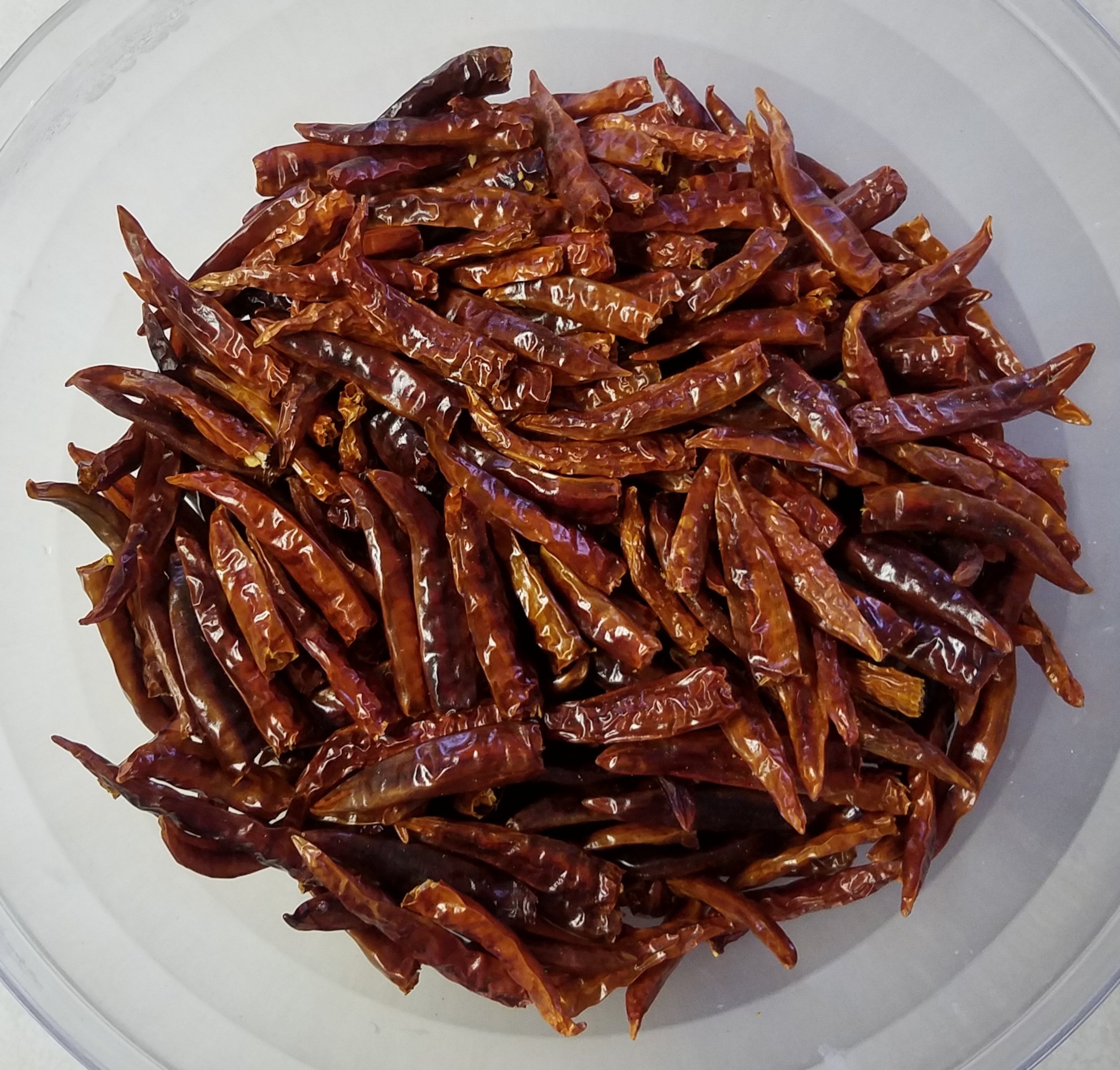
Dried chilies ready for grinding.

The coronavirus pandemic is changing us. Changes are just beginning. We’re not ready, change is likely permanent, and there’s no going back.

Attempts at social distancing push us to stay home and make constructive use of time. I don’t like what I see in this new awareness.

I’m not talking about our home with a fair share of boomer-style clutter. We seem to be at a point where the richest one percent of the population has extracted as much as they can from the rest of us. We are entering a post-consumer society in which assumptions about the past are out the window.

We’ve been inoculated and gained immunity to everything unrelated to meeting basic needs: the president’s lies and obfuscation, the GOP U.S. Senate lining the pockets of big business, the climate crisis, nuclear annihilation, foreign affairs, you name it. It will take all we have to survive and make ends meet. Other concerns? They are not ours as we hunker down to defend against the coming social apocalypse.

I discussed our tax return with a professional who characterized us as a “low-income household.” I did not know. Translated: anything we paid in federal and state taxes through payroll will be refunded. The tax refunds will go to paying debt incurred during lean times, a quotidian use of the money to be sure. Nothing will be left for the one percent.

So it begins – our life in the post-consumer society. We’d best embrace it. If we can there is hope we can do better than merely survive. If we can’t, what drudgery will be this mortal coil?

Categories
Living in Society Social Commentary

Getting a Grip on the Pandemic

Above the fold at the Solon Economist, March 19, 2020.

When I started this blog there was no intention to write daily about a pandemic. Isolation, quarantine, social distancing, shelter in place, self-quarantine, and more are words to describe our behavior in response to the coronavirus.

As a writer and blogger I understand the concepts. Who knew it would feel important to write so much about them.

The words suggest something — communal behavior, loneliness, or disruption. I’m not sure exactly which. It’s as if once we understand what’s going on we know what to do.

When I returned from yesterday’s shift at the home, farm and auto supply store my spouse was waiting on the stairs.

“Give me your phone,” she said, ready to disinfect it on the spot with a homemade disinfectant swab.

I was directed to the kitchen sink where I washed my hands, then to the bedroom where I changed clothes. If I carried something home it could be isolated and not spread throughout the house.

I recognize these instincts from spending time with my maternal grandmother who took no quarter against threats to her household. One has to wonder why they are not my own instincts.

Nuclear, biological and chemical military training well prepared me for the coronavirus pandemic. Except for the phone part, I knew the drill, and can execute it without losing focus on main events. Being an infantry soldier prepares us for life in unexpected ways.

A co-worker said they wished “the thing would run its course and be done so we can get back to normal.” I don’t know what that means. We are all active agents in a pandemic. The number of cases of Covid-19 and resulting deaths is largely dependent on what we do as a society. It’s not a given that any particular thing will happen or that a specific result is preordained.

At work a local medical facility ordered 800 welding shields to protect health care workers. We had them express shipped from the supplier to arrive overnight. If they can protect an arc welder from getting sparks on their face, they can likely prevent moisture droplet borne contamination from reaching a physician or nurse’s face. If we lose front line health care providers to the coronavirus we’re sunk.

We don’t know the future of the coronavirus, but it is likely here to stay. The pandemic will run a course but coronavirus will infect many of us potentially creating an immunity for those who survive it.

In China, where the virus originated, we’ve gone two days in a row without a new case being diagnosed. The first inklings of trouble there were in late December so if that is the course of the pandemic, 11 to 13 weeks, that’s better than it could be. It’s unknown whether the delay in recognizing the threat in the United States, and our apparent slow response will lengthen that trajectory. It will have an impact that takes additional lives.

Yesterday the home, farm and auto supply store announced a paid leave program for full and part time employees who must be quarantined. It’s not the same pay as working, but it is recognition by the family who owns the business and their managers that they must be socially responsible to remain in business. They have been flexible with other time off related to the pandemic.

Midst all of this, Spring arrived yesterday. May the gentle rain falling this morning wash away our concerns so we can accept our lives and become positive forces in the outcomes of friends and neighbors.  We hope for that regardless of whether there is a pandemic. If this blog helps readers that way, then I’m doing my job.