Categories
Environment Home Life Kitchen Garden

New Saturday Night

Audio Cassettes
Audio Cassettes

Music filled the Saturday afternoon gap left by Garrison Keillor’s retirement.

Not radio, but music recorded on audio cassette tapes.

It is amazing there is even a player in the house. (There are two that work). The sound quality of this outdated technology was surprisingly good.

While processing vegetables into meals and storage items, I listened to Shaka Zulu and Journey of Dreams by Ladysmith Black Mambazo, and Graceland and The Rhythm of the Saints by Paul Simon. I hit the pause button when I left the room so the tape wouldn’t run out without hearing it.

When Jacque returned home from work we had our first sweet corn meal of the season: steamed green beans and corn on the cob. As they ripen, tomatoes will replace green beans. There is nothing like seasonal Iowa sweet corn. I made a cucumber-tomato salad as accompaniment using a recipe found by googling on-hand ingredients.

The Saturday kitchen produced a gallon of vegetable soup, refried bean dip, daikon radish refrigerator pickles and sweet pickles made with turmeric. Outside was hot and humid although nowhere near as oppressive as the summer of 2012 when we had record drought.

On Friday Donnelle Eller posted an article about corn sweat at the Des Moines Register. Corn and soybean plants, which cover Iowa farmland, transpire moisture. During pollination and ear formation as much as 4,000 gallons of water per acre of corn is released into the atmosphere daily, making it feel humid. There were a number of articles about corn sweat in the media last week.

What makes this year different is not corn sweat. The first half of 2016 was Earth’s hottest year on record. This impacts the hydrology cycle, change in which is a primary manifestation of climate change. With global warming the atmosphere can hold more moisture until a precipitating event makes a rainstorm. It is more often a gully-washer.

The high winds and heavy, short-duration rain have become more frequent in recent years. This week a storm caused significant damage to the garden. In addition to losing the Golden Delicious apple tree, the cucumber towers blew over uprooting about half of the pickling cucumber plants. The Serrano pepper plants blew over, breaking the stalk of one near the ground. The high deer fence blew down and deer got into the kale and pepper patch by jumping the low fence. The cherry tomato plants blew over, however I was able to upright and re-stake them without damage.

Climate change is real, it is happening now. It is time to act to mitigate the effects of global warming.
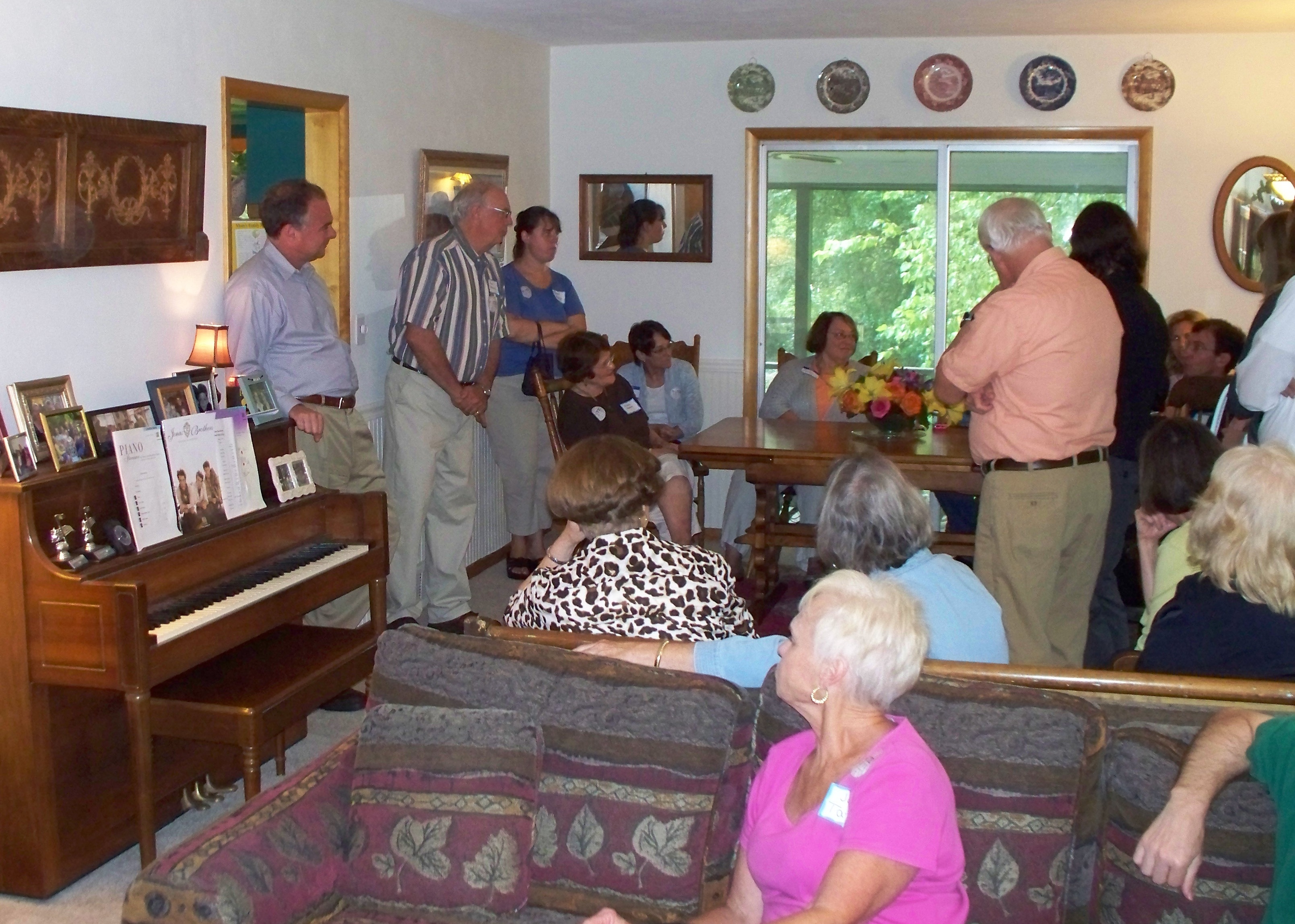
Political Event with Tim Kaine at Bob and Sue Dvorsky's home in Coralville, Iowa on Aug. 17, 2010
Tim Kaine at Bob and Sue Dvorsky’s home in Coralville, Iowa on Aug. 17, 2010

Hillary Clinton announced Senator Tim Kaine would be her running mate this weekend. Friends were posting photos all weekend from the August 2010 event he attended in Coralville. If he wasn’t the center of attention then, as the photo suggests, he will be now.

I’m torn about viewing the Democratic National Convention this week. Hopefully key speeches will be available for viewing afterward and I can avoid social media enough to think clearly about what Hillary Clinton says.

As Sunday begins, I’m not sure listening to recorded music will adequately replace Garrison Keillor’s A Prairie Home Companion. It’s here. It’s what I can do to sustain our lives in a turbulent world.
Categories
Kitchen Garden

Cook or Quit

Harvest for the Weekend Kitchen

I put on my rubber boots and went to the garden in the predawn sunlight. I left a trail where my boots scraped against the dew drops formed on the lawn.

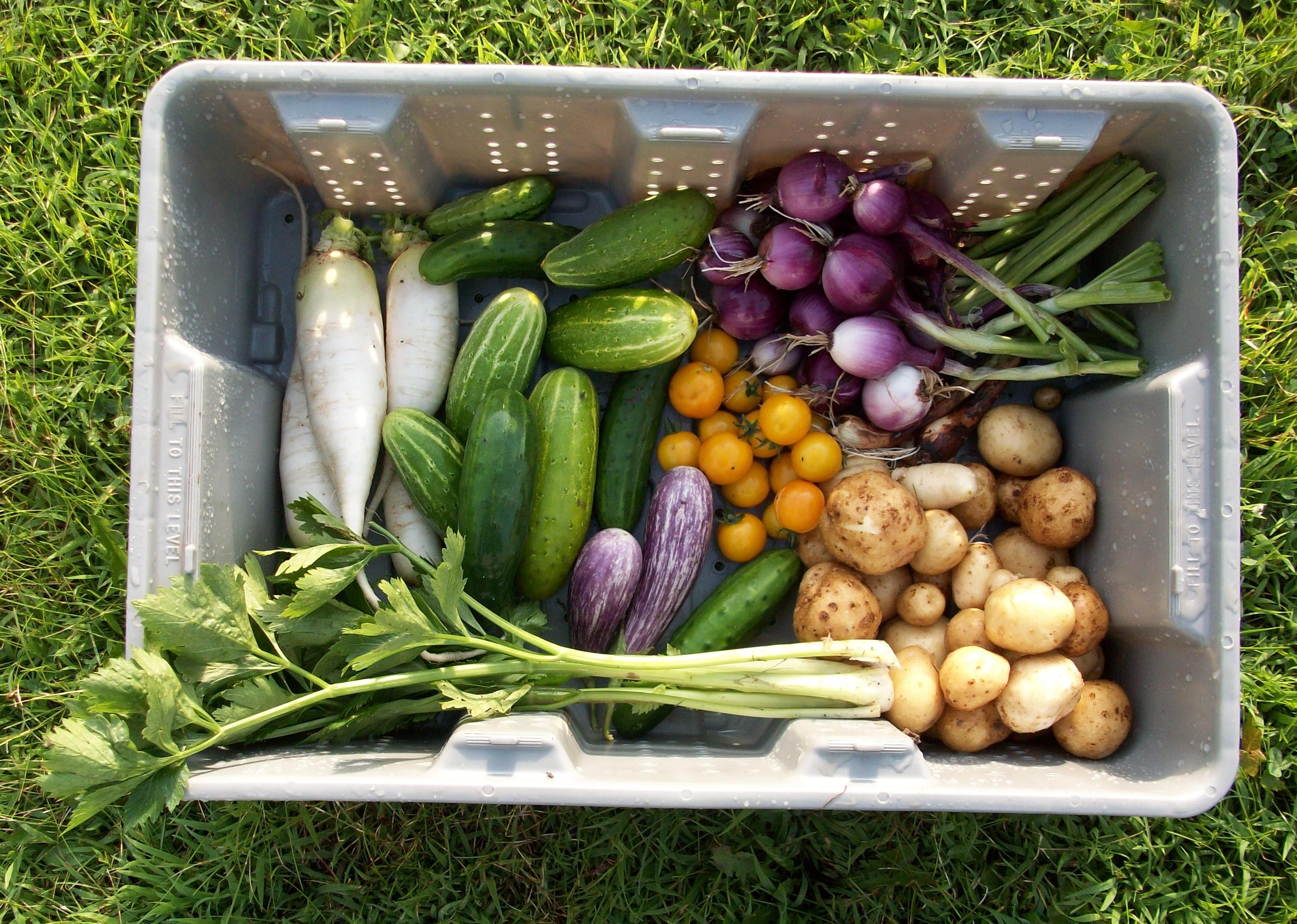
Fresh deer droppings lay moist under the oak trees and two rabbits stopped and watched as I made my way through the clover. I picked cherry tomatoes, jalapeno peppers, daikon radish and everything in this photo.

In the kitchen I made salsa using fresh ingredients, some old relish — everything that made sense. It was tasty and spicy, quite delicious.

The future of any local food movement is in the hands and kitchens of people who do these kinds of things.

If you ask my mother’s generation, “what is local food,” they often mention sweet corn and tomatoes. Hard to argue with the taste and seasonality of those two vegetables, but there is more.

Cooking goes against the grain of a global society increasingly and intentionally seeking to remove creative, engaged prep work from the kitchen and replace it with heat and serve processed food. Here’s an example.

While on break at the home, farm and auto supply store food preparation became a conversation topic as it often does.

A colleague explained how he bought a bag of prepared frozen meatballs from COSTCO and warmed them in his favorite barbecue sauce. He then took a small loaf of white bread, halved and toasted it, and spooned the meatballs on the bottom half making a meatball sandwich. He said it was really good as we listened.

If taste and ease of preparation is all we seek, the industrial food supply chain can meet our needs. In that case, when it comes to local food, what’s here becomes local.

I’ve been spending time in the kitchen this week. At 5 a.m. I stop what I’m doing and make breakfast. Stirfry, roasted vegetables, and because they are in season, fresh steamed green beans with every meal. It feels a little weird, but I felt better all day because I ate mostly what I grew before 7 a.m.

The local food movement is just not going to happen based on a small number of farmers, chefs and advocates and there’s the ceiling. If it becomes a part of our daily lives, which include vegetables from the garden, eggs from chickens we know and preparing food to taste, then the local food movement has a chance.

What it reduces to is either cook or quit.

Categories
Kitchen Garden

Farm Transition

View from the Barn
View from the Barn

RURAL CEDAR TOWNSHIP — Yesterday was the Practical Farmers of Iowa field day at Carmen Black’s Sundog Farm.

Carmen and Susan Jutz explained their farm transition process in a simple duet about bankers, government agencies, insurance companies and community.

Like everything Susan has done since I met her almost 20 years ago, the transaction of selling the farm had a home made feel to it. It looks like Carmen will continue that localized and home made culture.

Attendees walked the farm, with Carmen and Susan explaining pest control practices. Highlights included treatment for flea beetles, tomato blight, worms and cucumber beetles.

What I hadn’t thought about was providing proper space for air to circulate among tomato plants to prevent spread of disease. The wall of cherry tomatoes that blew over in yesterday’s storm is a good example. The wind caught the entire planting like a sail. If they were separated more, wind might blow through them, leaving them upright.

Susan’s eventual departure from the farm is another instance of my generation going home. On Sundog Farm there is a chance for sustainability as Carmen adds farm management to her experience. Opportunities like this are rare and Carmen appears to be making the most of it.

Categories
Home Life Kitchen Garden

A Brief Storm

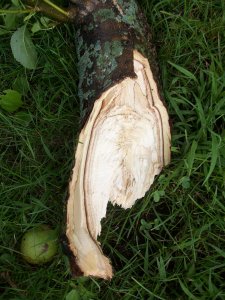
Fallen Apple Tree Branch

A brief storm made a decision for me.

The last branches of the Golden Delicious apple tree blew over in a gust of wind during an intense thunderstorm.

I hoped there would be fruit again but not now, not ever from that tree.

I’ll chain-saw the stump for the fall burn pile, finishing the work time brought.

When I planted six trees on the day of my mother-in-law’s funeral I had no idea about apples. The second Red Delicious tree was the first to go, and the Lodi was felled by another storm. Three trees remain and I know a lot more about apples today.

The storm blew over the row of six-foot cherry tomato plants and some of the hot pepper and kale plants. The cucumber cages were also blown around. I straightened everything as best I could. There was some damage, but not ruinous. The wind exposed a generous crop of slicing tomatoes under the leaves. Here’s hoping everything makes it to maturity.

Categories
Kitchen Garden Living in Society Social Commentary

High Summer Harvest

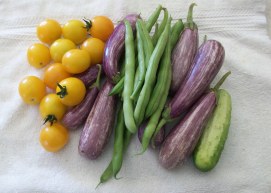
Cherry tomatoes, Fairy Tale eggplant, green beans and a pickling cucumber harvested July 16, 2016

Photographs of kale can only be interesting for so long.

The leafy green and purple leaves are producing in abundance — so much so I pick only what is needed, removing imperfect leaves from the plants to the compost heap.

Seven kale leaves stand in a jar of water on the counter to keep them fresh and ready to use.

If summer were only about kale, this one would be an unmitigated success.

Something else is going on.

This week I conversed with a group of twenty-somethings about the new application for smart phones, Pokémon Go. It was the most animated they had ever been. I asserted the application represented the beginning of the zombie apocalypse. They didn’t dispute it. One had already tried the game and moved on to something else. Apparently there are not that many Pokémon to find in rural Iowa.

The continuous stream of violence manifest its latest event Thursday with a terrorist attack in Nice, France. More than eighty people were killed and as many as 300 injured as a lone driver drove a large truck through a crowd gathered to view a Bastille Day fireworks display. The terrorist made it two kilometers before he was shot dead by law enforcement. French President Francois Hollande seeks to extend the existing state of emergency put in place after the November 2015 attacks in Paris.

In American political news, the Republican top of the ticket is set with Indiana Governor Mike Pence named presumptive presidential nominee Donald Trump’s running mate. The less said about this pair the better. Suffice it that I disagree with them on just about everything. The national political conventions are imminent, with the Republicans this week and Democrats the following. Something unexpected might happen at either convention.

In a strange turn of events, twice failed U.S. Senate candidate Tom Fiegen made a post on Facebook that blogger Laura Belin re-posted:

FB Post Belin

Belin makes sense if Fiegen, not so much. The episode represents further coarsening of Iowa politics. Fiegen likening an effort to persuade him on his presidential vote to sexual advances is plain weird. I know I wouldn’t want to get in the back seat with him on a dark gravel road. Whatever virtue he may have had vaporized after he quit being his own person and hitched his campaign wagon to Bernie Sanders. His current, post being a Democrat, rants serve as an example of how low politics has gotten. I know my mother said if you don’t have something nice to say about someone, don’t say anything, but Fiegen lives in our house district and may foment more ill will. I hope not.

Lastly, this week Deadhorse, Alaska set a record high for any Arctic Ocean location. Is it climate change? How could it not be.

At least for now there is plenty to eat and fewer photographs of cruciferous vegetables.

Categories
Writing

Working the Story Board

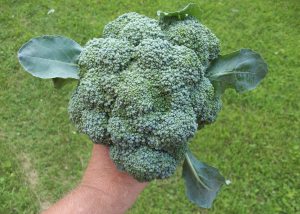
First Pick of the Broccoli

My work as fill-in editor at Blog for Iowa begins in three weeks.

It has been easy to fill a story board with post ideas. What’s hard is picking what matters from flotsam and jetsam in a sea of social media.

A goal of Blog for Iowa is to “harness the power of the Internet to continue to build our Iowa grassroots communication network.” Our blog has its roots in the 2004 Howard Dean campaign, which innovated use of the Internet to organize and raise money in politics. Internet use has evolved since then with most news outlets having a presence. I don’t think we had today’s social media — Twitter, Facebook, Instagram, Snapchat and YouTube — in mind ten years ago.

That social media would be a source of stories is still new, but has gone mainstream. Often the stories I read in our local newspaper have their roots in an Internet discussion. If a person wants to write a decent blog post, at least one toe should be dipped in life to be grounded in reality. It would be better to immerse oneself totally in life and eschew the Internet as a primary source of stories.

To the extent writers do this, their work is more readable and that’s what I hope to accomplish in 23 posts this August.

The topics will be familiar. Publicize the campaigns of candidates for election to congress; the presidential election campaign; climate change; the local food movement; nuclear weapons modernization; voting rights; civil rights; drug abuse; working poor; and the Iowa legislature quickly fill the slots. The challenge is saying something others haven’t — grounded in conversations that take place in the course of daily lives.

This approach presumes a level of participation in society. The material is there. The trick is to harvest the stories, both positive and negative, without creating unnecessary friction, then tell them.

It can be done and it’s what I have in mind for August.

Categories
Kitchen Garden

Sundog Farm Field Day

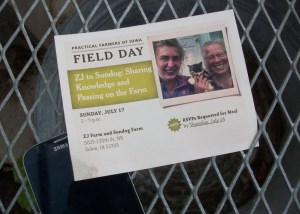
Field Day FlyerMy friends Carmen and Susan are hosting a Practical Farmers of Iowa field day called “ZJ to Sundog: Sharing Knowledge and Passing on the Farm” at Sundog Farm on Sunday, July 17, from 2 until 5 p.m.

The transition in farm ownership has been a long time coming and Sundog Farm is finally here.

Susan Jutz began Local Harvest CSA on ZJ Farm in 1996. After almost 20 years building a successful business and farm, she began looking for an opportunity to transition her farm to the next generation. The process was completed in May 2016, when Susan sold her farm and business to Carmen Black.

Carmen grew up nearby, was friends with Susan’s children, and had Susan as her 4-H leader. She has worked on the farm with Susan for five years. ZJ Farm has been the site for numerous Practical Farmers field day programs; this event will be the farm’s first as Sundog Farm.

The event will include a field tour and discussion with Susan and Carmen about their systems for pest management in vegetable production, including cabbage worms, cucumber beetles, flea beetles and tomato blight. They will discuss field scouting, cultural pest management, products they’ve tried and those they prefer. During the second part of the program, they will share their farm transition story.

Carmen has been part of the farm since I began working there in 2013. She called Friday to ask for help to begin the clean up in preparation for the field day. I spent part of Saturday removing weeds from around the old grain silos and barns and edging some of the fields. I was reminded of how far the farm had come since its days of being a conventional livestock operation before Susan began farming there. Sundog Farm should look good by next Sunday, so come to the field day, learn a small part about Iowa’s ongoing farm land ownership transfer, and wish Carmen well.

A potluck follows the program; bring a dish to share and your own table service. Please RSVP for the meal by July 14 to Lauren Zastrow at (515) 232-5661 or lauren@practicalfarmers.org.

Hosts:
Susan Jutz and Carmen Black
ZJ Farm and Sundog Farm
5025 120th St. NE • Solon • 52333
(319) 331-3957 • localharvestcsa@southslope.net
solonsundogfarm.com

Categories
Kitchen Garden

Why Not More Celery?

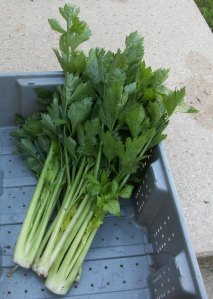
Freshly Picked Celery

Why don’t more Iowans grow celery?

More specifically, why don’t more Community Supported Agriculture projects produce it for members and local food farmers for restaurants and markets?

I’ve been asking this question of growers and the reaction has been surprise at my results and maybe an assertion they will try it. There is substantial demand for the aromatic vegetable in kitchens and restaurants yet the perception is celery doesn’t grow well in Iowa, so farmers mostly don’t.

Celery from my garden tastes better than regular or organic available at the grocery store. In addition, celery is in the Environmental Working Group’s Dirty Dozen fruits and vegetables for use of pesticides, ranking #5. Why buy California celery when we can produce our own at least part of the year? Having the best possible flavor is important to everything cooked with celery.

Celery takes about 120 days and requires adequate water, more than most vegetables. That means seeding trays planted in late February to produce the crop being harvested this weekend. I use Conquistador OG seeds from Johnny’s Selected Seeds in Winslow, Maine. (OG stands for organic). It took me a couple of years to get successfully from seedlings to the ground to a crop as I experimented with growing. This year’s crop has been the best ever.

I attribute success to using 4-inch drainage tile cut into 8-inch lengths to protect and support young seedlings. I mulch with grass clippings and weed regularly. Each morning I make sure a substantial dose of water is applied. Larger scale farmers shun this extra work, focusing more on crops that can be mechanized (like potatoes) or are popular among customers (like cabbage, tomatoes and peppers). The flavor of local celery, and growing it pesticide-free, make the extra work worth it.

Every head of celery will be used fresh this year. There were only a dozen from the garden in this experimental year and I shared some with library workers in town. Next year I plan to double production and if there is more than can be used fresh, preserve part of it.

In June at the Global Foods Market in Kirkwood, Missouri, I bought a jar of celery salad in a glass jar. The preparation uses celery, apple juice, walnut extract and vinegar and is an example of a shelf-stable item for winter consumption. For the time being, I expect to use everything fresh in soups, stir fry and Louisiana-style beans and rice.

If the local foods movement doesn’t wake up to celery, there is a market for sales to restaurants to pursue. If they don’t exploit it, I will.

Categories
Work Life

Independence Day Parade

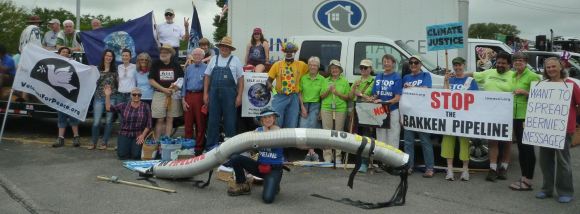
Peoples' Coalition at the Coralville Independence Day Parade
Peoples’ Coalition at the Coralville Independence Day Parade

When someone waves at a parade, wave back.

It is the polite thing to do, and every act of kindness and consideration adds to a tasty soup of life.

If one doesn’t do things with friends and colleagues relationships can wither. Engaging in society, including the thousands of people participating in and watching Independence Day parades is an important common denominator.

We did our part yesterday in Coralville.

Group Shot at the Coralville, Iowa Independence Day Parade Photo Credit: Ed Flaherty

Once August arrives every day will be a work day outside home. July is becoming a month of re-tooling before my work at Blog for Iowa and Wilson’s Orchard begins. I’m looking forward to it.

Here are some focus points:

1. Home and yard maintenance.
2. Develop a story board for the blog.
3. Tend the garden and preserve the harvest.
4. Increase financial margins on our economic life.
5. Maintain physical and spiritual health.

Many thanks to my friends and colleagues for yesterday’s conversations.

Categories
Home Life Living in Society Social Commentary

Processing Vegetables Before Independence Day

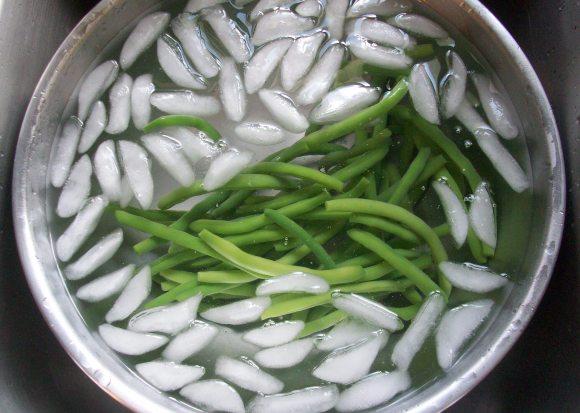
Shocking Green Beans After Parboiling

It takes longer to process vegetables from the garden than it does to harvest them.

That means a lot of summer spent in the kitchen.

I focus on each job — sorting kale leaves, parboiling and freezing green beans, cutting turnips for storage — yet the mind wanders along paths hidden in a day’s activities.

We opened the house and listened to birds at the feeder. From time to time we watched as rabbit, squirrel, chipmunk, and a variety of birds sought seeds. The weather was perfect for anything and my choice was to preserve some of the harvest for later in the year.

Birds scattered when I opened the screen door and cast sunflower seeds in the grass. Eventually they returned to forage for them. It is a predictable behavior that encourages their proximity and my seed-buying. That’s not what was on my mind as I made pesto, bagged kale leaves and prepared luncheon of vegetable soup served on rice.

We live in a violent world and acceptance of such violence is part of who we are.

The list of recent bombings and killings is long, getting longer: Orlando, Florida; Istanbul, Turkey; Quetta, Pakistan; Baghdad, Iraq; Jeddah, Saudi Arabia. These violent and regrettable incidents in the last month may seem bad, and are. What is worse is the long history of genocide embedded in our civilization. The ability to tolerate genocide is a passive crime and a forgotten legacy.

The web site United to End Genocide lists our recent genocides: Armenia (1915), the Holocaust (1933), Cambodia (1975), Rwanda (1990), Bosnia (1995), and Darfur (2003). The passing this weekend of Elie Wiesel reminds us of the need to remember humanity’s crimes and do something to prevent them going forward. For Wiesel, and for many, this process begins by telling the story.

Immaculée Ilibagiza’s memoir, Left to Tell: Discovering God Amidst the Rwandan Holocaust, tells a story of how personal genocide is to those involved. She recounts specific incidents of machete killings too graphic to repeat. Her purpose is similar to that of other holocaust survivors.

“I believe that our lives are interconnected,” Ilibagiza wrote. “that we’re meant to learn from one another’s experiences. I wrote this book hoping that others may benefit from my story.”

The history of genocide against the first people in the Americas is under-recognized and little discussed. The common story is of colonial conflict, disease, specific atrocities and policies of discrimination, according to United to End Genocide. Last week an ailing and imprisoned Leonard Peltier released a letter in which he told a different story.

As the First Peoples of Turtle Island, we live with daily reminders of the centuries of efforts to terminate our nations, eliminate our cultures, and destroy our relatives and families. To this day, everywhere we go there are reminders — souvenirs and monuments of the near extermination of a glorious population of Indigenous Peoples. Native Peoples as mascots, the disproportionately high incarceration of our relatives, the appropriation of our culture, the never-ending efforts to take even more of Native Peoples’ land, and the poisoning of that land all serve as reminders of our history as survivors of a massive genocide. We live with this trauma every day. We breathe, eat and drink it. We pass it on to our children. And we struggle to overcome it.

Today the United States celebrates the signing of a declaration of independence from England with parades, barbecue, family gatherings, food, fireworks, music, travel and intoxication. The opportunity for such revelry came at a high cost.

With each cut of the knife and batch of green beans placed in the freezer I focus on the task at hand. Partly to make something that wasn’t here, and partly to forget the stains on the soul of American society.

I’m processing a lot more than vegetables.