Some of my friends and acquaintances are women who carry handguns.
I’m not worried about getting shot by my lunch partner. I also don’t feel more secure knowing she has a handgun in her purse. It used to be a bit jarring to see weapons unexpectedly in everyday places. Not any more. I’m confident in studies that show women are not the main problem with gun violence, it’s the men.
A common social behavior among men particularly, but with women also, is to assert their gun ownership into a conversation as a way of launching a comfortable jeremiad about why they own them, the positive features of gun ownership, and as a way of testing the waters in social relationships to identify where people stand. This is at the heart of what elected Trump, Ernst and others. Gun ownership and discussions about it are a way to sort people in society into “us” and “them” categories. It has consequences in the electorate, so it is important to discuss and understand.
Data shows gun violence is disproportionately a male problem. Of the 91 mass shootings in which four or more victims died since 1982, only three were committed by women, according to a database from the liberal-leaning news outlet Mother Jones. Men also accounted for 86% of gun deaths in the United States, according to an analysis by the non-partisan non-profit Kaiser Family Foundation.
Men are more likely to own a gun — three times more, according to a 2017 survey from the Pew Research Center. This, despite marketing from gun manufacturers and groups such as the National Rifle Association to lure women.
Fast forward to Dastagir’s conclusion that to understand gun violence we must examine the cultural forces that equate being a man with violence.
Financial inequality is impacting society by making men protectors of what limited resources each family has.
I know few people who are increasing their wealth in the post-Reagan era. The rich get richer and the rest of us pay for it as dollars systematically, relentlessly find their way to the richest one percent of the population. Families struggle to get a share of societal wealth and if they do, feel privileged enough to say, “I’ve got mine.”
The struggle to provide for a family is getting harder with the transformation of American business to globalization, government efforts to eliminate regulations, and the current administration’s tampering with healthcare, defense, foreign policy, energy, education, immigration and more.
The impact of financial inequality on the role of men in society has been to make it more difficult for them to provide for their families. That said, I don’t know many families where a male is the sole provider. Women began moving to the paid work force in large numbers decades ago. The idea women wouldn’t seek paid work is a social legacy of male dominance. The male narrative lacks proper consideration for the value of work by women. That seems obvious in workplaces where women earn a fraction of a dollar men do for the same work, and also in homes where a male provides money and resources for the family and women work unpaid.
Men are challenged to be providers so their role shifted to being protectors of what they have. The rise in gun ownership in the United States is directly related to income inequality and the diminished role of men as providers. Let’s talk about that.
Some of my friends and acquaintances are women who carry handguns.
It’s no big deal. The banal and ubiquitous presence of guns is part of living in the United States.
I’m not worried about getting shot over lunch or at an event. I also don’t feel any more secure knowing she has a handgun in her purse. It used to be a bit jarring to see weapons unexpectedly in everyday places. Not any more. I’m confident in studies that show women are not the main problem with gun violence, it’s the men.
Data shows gun violence is disproportionately a male problem. Of the 91 mass shootings in which four or more victims died since 1982, only three were committed by women, according to a database from the liberal-leaning news outlet Mother Jones. Men also accounted for 86% of gun deaths in the United States, according to an analysis by the non-partisan non-profit Kaiser Family Foundation.
Men are more likely to own a gun — three times more, according to a 2017 survey from the Pew Research Center. This, despite marketing from gun manufacturers and groups such as the National Rifle Association to lure women.
Fast forward to Dastagir’s conclusion that to understand gun violence we must examine the cultural forces that equate being a man with violence. Read her information-packed article here.
What is it to be a man? It’s no secret having a Y chromosome is less important than the culture in which boys are nurtured to adulthood. There remains a significant, lingering perception that procreation is part of being a man even though wombs are more important than sperm. Only primitives continue to believe having a large family is a sign of manhood. At the same time male sexual dominance often trumps a woman’s right to choose. We read news daily about sexual predators, soldiers raping villagers, and widespread sexual harassment. Even so, something more powerful than traditional views about the role of men in procreation is at work.
After my first year in college (1971) I went home for the summer. I met with a number of male friends from high school and we each had been able to apply for work at manufacturing plants in the Quad Cities and find a summer job. Some literally went from business to business until they found a job and everyone who wanted one got one. It was easy. That changed.
The jobs environment has gotten very scrappy in Iowa and well-paid jobs with benefits are difficult to find and secure. Such jobs exist, however, the rise of professional human resources consultants has businesses seeking employees who meet very specific “profiles.” Don’t meet the profile or offer something unique to the position? Applicants will politely be sent on their way. If an applicant is lucky enough to be hired, human resource consultants have structured pay and benefits to meet the company’s minimum needs more than the needs of employees. Under the guise of taking inefficiencies out of business operations well-paid jobs with benefits are hard to get for almost anyone. It is worse with large companies who have the capitalization and scale to hire human resources consulting firms.
The transformation from manufacturing jobs to service jobs has not gone well from the standpoint of men seeking work. Retail, lawn care, janitorial, restaurant, banking, accounting, health care, sales, and other low-skill level employment performs necessary work in the economy. Such jobs are far from adequately compensated. Our education system increasingly fails to prepare students for jobs in a service economy. I’m not talking about adding a STEM curriculum in K-12 classrooms, but simple things like how to make a decision to start a business, work for a service company, or get a government job. Provider males are increasingly on their own when it comes to crafting a career, if that’s even possible in the 21st Century. Most I know get by, just barely.
In a society of income inequality, limited resources, women’s rights, and unsatisfactory job options, men get stymied in traditional roles of procreation and providing. They turn to protecting what they have, and that often includes buying guns. It is a predictable reaction in a society with a legacy of male dominance with no outlet.
A focus on resolving gun violence in the United States without considering the changing role of men in society isn’t going anywhere.
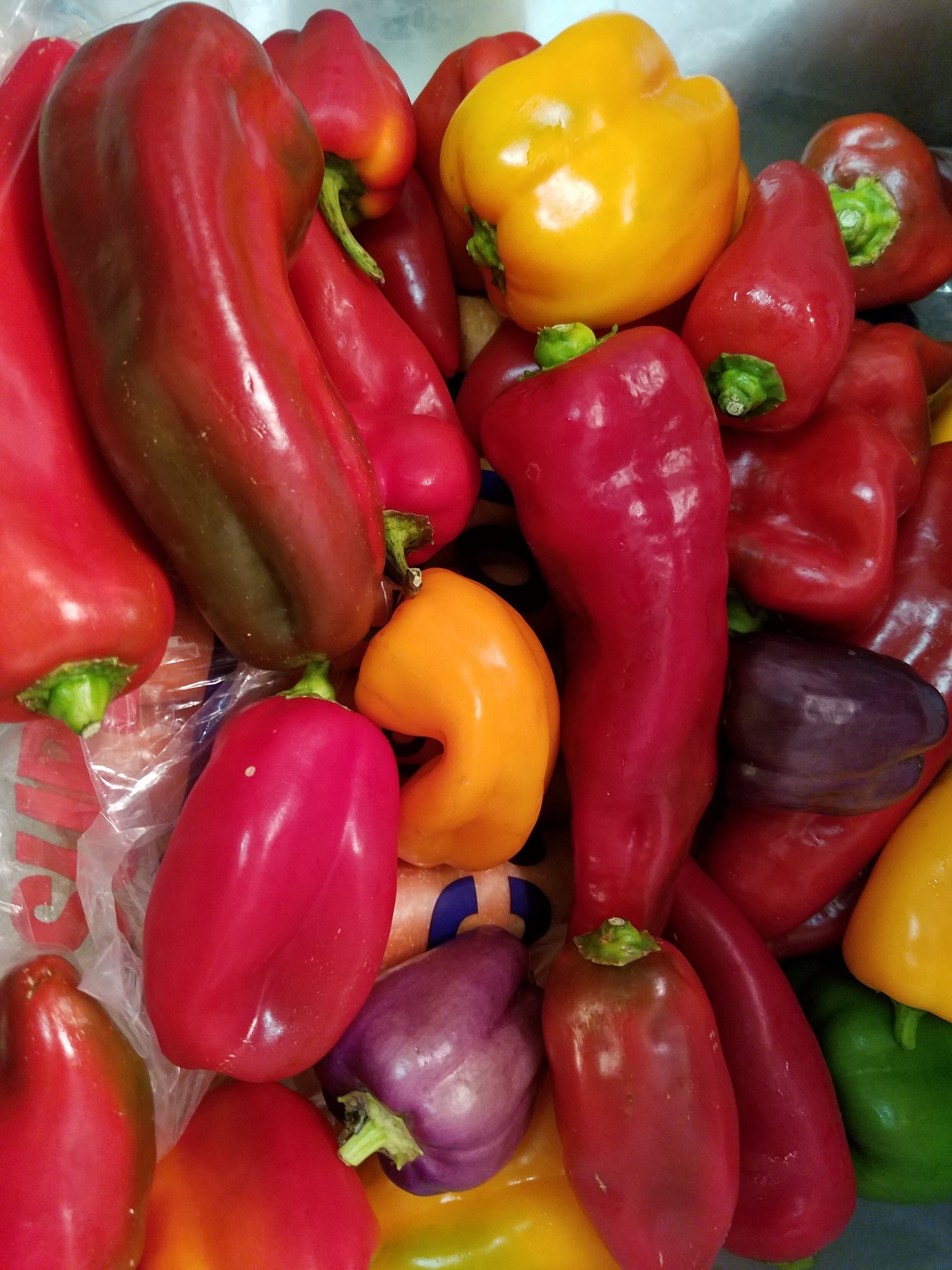
Our household had no shortage of fresh food this year.
Barter agreements with two farms, my work at the orchard, and a garden that produces more food each year created a kitchen full of ingredients to feed the two of us and others.
I’m thankful to have figured out how to provide local food for our family mostly grown using organic practices.
So it is with this blog. It is a place to capture what’s going on in a turbulent world and make sense of it if I can. I post original content and significant writing from elsewhere. The interplay between this blog, email, Twitter and Facebook is complex and ever changing. Like the fruit and vegetable production, it is a pantry full of ingredients for bigger projects — snippets of this and that drawn from memory and experience.
I’ve written about 2017 as the final lap leading to a finish line. It is also a starting line. In addition to taking care of our aging home, ourselves and our relationships, I plan some writing projects, including an expansion of my post Autobiography in 1,000 Words. I made the plan a year and a half ago and once end of year chores are done I hope to schedule the work. Something else has to give — likely be my work at the home, farm and auto supply store.
At this point, memory is still good and the larder is full of ideas. Now to make something of all these ingredients. What else is there to do?
The following message was sent to Senators Joni Ernst and Chuck Grassley, and to Congressman Dave Loebsack:
I urge you to protect and support the 2015 nuclear agreement between Iran and the P5+1 nations. Please refrain from any actions that would undermine it and encourage your Senate colleagues to do likewise.
I understand President Trump is expected to declare the Iran Deal is not in the U.S. national interest and withhold re-certification before the Oct. 15 deadline. If he does so, he would increase the threat of nuclear proliferation in an already dangerous world.
Four brief points:
1. A deal is a deal. There is no realistic option for renegotiating the current agreement, which is working effectively to block Iran’s pathways to a nuclear weapon.
2. Congress should not re-impose nuclear-related sanctions so long as the International Atomic Energy Agency confirms Iran is meeting its commitments under the agreement.
3. President Trump should focus on solving the North Korean nuclear crisis rather than provoking a proliferation crisis with Iran.
4. The administration should also focus efforts toward strengthening the Iran/P5+1 agreement with our international partners.
Thanks in advance for considering my message. Good luck with your deliberations on this complex topic.
Regards, Paul
Response from Senator Joni Ernst on Oct. 25, 2017:
Dear Mr. Deaton,
Thank you for taking the time to contact me about the Joint Comprehensive Plan of Action (JCPOA), commonly referred to as the “Iran deal.” It is important for me to hear from folks in Iowa on policy matters such as this.
On July 14, 2015, the Obama Administration announced they had reached a final deal with Iran on its nuclear program. At the time, I expressed concern that this agreement, which was reached as sanctions were crippling the Iranian economy, capitulated to Iran’s demands and threatened the security of the United States and our allies.
Overtly, the Iranian regime continues to exploit loopholes in JCPOA to advance its ballistic missile capability. Covertly, Iranian weaponization efforts are unknown, as military leaders have stated publicly they will refuse to allow International Atomic Energy Agency (IAEA) inspections of their sites. All the while, sanctions relief has fueled Iran’s support for its terrorist organization proxies engaged in malign activities in Iraq, Syria, Lebanon, Yemen, Afghanistan, and elsewhere – places where these groups are engaged in direct combat with American service members or our partners. Indisputably the JCPOA failed to meet its requirements to appropriately and proportionally contain Iran’s nefarious activities – the original purpose of the agreement.
As you may know, President Trump decided not to certify the deal under the Iran Nuclear Agreement Review Act on October 13, 2017. This action does not withdraw the U.S. from the JCPOA, but rather, it provides an opportunity for Congress to work with the Trump administration and our allies to fix the failures of the original agreement. I support the president’s decision and believe we will maintain a position of global leadership by upholding our obligations, while finally beginning to hold Iran accountable for not meeting the expectations of the international community.
I look forward to working with the Trump administration, my congressional colleagues and overseas partners to formalize a strategy that prevents Iran from obtaining a nuclear weapon and protects American interests. Feel free to contact my office with any further information, as I always enjoy hearing from Iowans.
Sincerely,
Joni K. Ernst
United States Senator
Response from Senator Chuck Grassley on Nov. 8, 2017
Dear Mr. Deaton:
Thank you for taking the time to contact me with your concerns. As your senator, it is important to me that I hear from you.
I appreciate hearing of your support for maintaining the Joint Comprehensive Plan of Action (JCPOA), otherwise known as the Iran nuclear deal. First, I’d like to take this opportunity to discuss the tenants of the Iran nuclear deal and why I have been against it from the beginning.
On April 2nd, 2015, President Obama and Secretary of State John Kerry announced the parameters for a potential deal with the Iranian government to end the country’s nuclear enrichment capabilities and attempts to obtain a nuclear weapon.
President Obama and Secretary Kerry both made important statements about the goal of negotiations leading to the conclusion of the JCPOA – the goal was to dismantle Iran’s nuclear program. Secretary Kerry himself said, in the fall of 2013, that Iran has “no right to enrich” and that a good deal with Iran “would help dismantle its nuclear program.”
In reality, the deal has failed to achieve its key objective of a denuclearized Iran. This deal, as it stands, puts Iran in a position of strength – economically and militarily – from which to further destabilize the Middle East.
The nuclear deal granted Iran a series of continuous sanctions relief in exchange for a reduction in nuclear enrichment capabilities while requiring the access of international inspectors to certify the country’s compliance with the deal’s terms. However, although the United States has granted Iran sanctions relief upwards of $160 billion dollars, the architecture of the agreement only requires Iran to temporarily reduce its nuclear weapons program. This temporary reduction in activities grants massive sanctions relief to a country which could ultimately decide to pursue its threatening activities once the agreement’s sunset clauses expire without any additional punishment.
Despite assurances that the deal would include “anytime, anywhere” inspections, the Obama administrated negotiated away from these provisions and provided Iran with a 24-day inspection delay following an announcement from International Atomic Energy Agency (IAEA) investigators of intent to inspect a site. Furthermore, the IAEA has not been able to conduct adequate inspections of Iranian Military sites where nuclear research is conducted. To a large extent, this deal requires the United States to accept, without good reason, that the Iranians are engaged in a good faith effort to not cheat.
On May 7th, 2015, the Senate passed the Iran Nuclear Agreement Review Act by a vote of 98-1 which provided an opportunity for Congress to express its approval or disapproval of the deal. Despite 98 Senators voting in favor of reviewing the agreement, a minority of Senators lead by then minority leader Senator Reid, voted to block debate, consideration and a vote on a resolution of disapproval.
Following the JCPOA’s implementation on January 16th, 2016, Iran has continued to engage in a number of activities violating key provisions of the agreement. Most notably, these include cheating on provisions requiring the country to limit its nuclear enrichment activities through centrifuge development, prohibitions on research technology procurement, and not adhering to limitations on the amount of heavy water that the JCPOA sets forth for Iran’s nuclear reactors.
On October 13th, 2017, President Trump announced his decision to decertify the JCPOA. President Trump asserted that the JCPOA does not address the full range of potential threats posed by Iran, or permanently ensure that Iran cannot develop a nuclear weapon. In short, Iran is not living up to the spirit of the deal and that continued sanctions relief provided to Iran is not “appropriate and proportionate” to the measures taken by Iran to terminate its illicit nuclear program.
President Trump’s decision to decertify the Iranian nuclear deal is in full accordance with the statutory requirements imposed on the deal by Congress under the Iran Nuclear Review Act. Under the Iran Nuclear Review Act, the President is required to recertify Iran’s compliance with the JCPOA every 90 days. The Iran Nuclear Review Act provides Congress 60 days to consider whether to re-impose sanctions waived under the JCPOA and or to modify the deal to ensure Iran’s compliance.
The United States has not formally withdrawn from the Iran nuclear deal. Rather, President Trump’s decision to decertify the deal now puts the onus on congress to address the shortcomings of the deal. Iran continues to be the world’s leading state sponsor of terrorism, and President Trump is right to point out the failings of the deal. I look forward to working with my colleagues to further curtail Iran’s dangerous and destabilizing behavior.
Rest assured, that as your senator I will continue to follow these developments.
Again, thank you for taking the time to contact me. Please keep in touch.
Sincerely,
Chuck Grassley
Response from Congressman Dave Loebsack on Nov. 2, 2017
Dear Mr. Deaton,
Thank you for contacting me about the Iran Nuclear Agreement, also known as the Joint Comprehensive Plan of Action (JCPOA). Your opinion is very important to me and my priority is to provide Iowa’s Second District with the best representation possible.
From the beginning, I have made it clear that I believe it is unacceptable for Iran to be allowed to develop nuclear weapons. Today, it is more important than ever that we continue to work towards that commonly held goal and ensure the safety of the American people.
Under the Iran Nuclear Agreement Review Act of 2015 (INARA), the President is required to publicly certify every 90 days that Iran is complying with the terms of the JCPOA. On Friday, October 13, 2017, President Trump announced that he is formally decertifying the nuclear deal with Iran. Decertification does not put the U.S. in violation of the JCPOA, but it does give Congress a 60-day window to reimpose the sanctions that were suspended by the deal.
I believe that the administration should be focusing its efforts on ensuring the conditions of the agreement are being thoroughly enforced. Instead, the administration has chosen to ignore the warnings of the White House’s own national security staff, sow uncertainty, and undermine our national security. I appreciate you reaching out to share your thoughts with me on the importance of the U.S. remaining part of the JCPOA. Please be assured that I will continue to monitor the situation closely, and will keep your thoughts in mind should legislation related to the JCPOA come before the House of Representatives for a vote.
Thank you again for contacting me about this important issue. I encourage you to visit my website at http://www.loebsack.house.gov and sign up for my e-newsletters to stay informed of the work I’m doing in Congress. I am proud to serve Iowa’s Second District, and I am committed to working hard for you.
Our town has a bustling Main Street thanks to smart investments by the city council and willing businessmen and women.
Shops serve basic needs: hair styling, hardware, groceries, fuel and insurance. There are plenty of restaurants. The newspaper is located off Main Street at the only four-way traffic light in town. The library and medical clinic are down the hill. New construction is building capacity for shops and I hope the city welcomes entrepreneurs who give it a go.
Solon’s downtown seems idyllic: a place to forget about the rest of the world for a while. Many of us appreciate that aspect of living here.
At the same time, the Solon area also serves as a bedroom community for lives elsewhere.
During 24 years our family lived here I’ve worked in Cedar Rapids, Coralville, the Quad Cities, Iowa City and North Liberty. I’ve travelled to 40 of the 50 states and to Canada on business and on holiday. We bought our first home computer in 1996 when we connected to the World Wide Web. All of this is to say despite our idyllic setting we live in a much broader world.
There’s the rub. In the generally happy, peaceful and pleasant setting we’ve made for ourselves we bear some responsibility for what goes on elsewhere. We’ve got ours, but what about the rest of society? When we see the tumult and conflict in the United States and around the world it is not enough to say, “I’ve got mine.”
Protecting what we value in society falls on each of us whether it is public safety on our roads or doing something about the genocide in Myanmar. There is something to work on for each of us and Solon makes the perfect base camp for us to make a difference. We should make a difference.
Originally posted April 8, 2008. My only meeting with Congressman Dave Loebsack in his office on Capitol Hill.
This morning, I walked to DuPont Circle and took the Metro to the Capitol. The Metro ticket cost $1.65 so that was quite a bargain. I emerged from the station near the Longworth House Office Building where Congressman Loebsack’s office is on the fifth floor. I got in an hour early, so with the help of some construction workers, I located a coffee shop and waited for my appointment. As I walked back to the Longworth Building, there was a haze covering the top of the capitol dome. Tulips were in bloom. I cleared security and located the office.
I was able to meet with the congressman one-on-one. I had a few minutes to talk about politics with him before his chief of staff and legislative assistant joined us. He offered me a seat in his professor emeritus chair from Cornell College. It was cool!
We talked about a number of issues, and I joked that I had a very long list of talking points. He made me feel like we had all the time in the world, and that was also cool.
We talked about the transportation industry, and specifically about the energy policy, or lack thereof as it pertains to class eight vehicles. I explained that using food for fuel was not a sustainable answer to our oil dependence or to high diesel prices. I explained that biodiesel was not a solution for the trucking industry. He asked me if biodiesel was equivalent to food for fuel, and I showed some restraint and said I would get him an answer.
We talked about the California law that regulated particulate emissions in port areas. I asked him to support keeping the federal government out of this dispute between the state and port operators and truckers. I presented information about the health impacts of fine particulate matter from engine emissions on residents living near the ports. He could support the federal government keeping out of this situation. This led to a longer discussion about cutting the rain forests down to plant palm oil and jatropha plantations for biofuels and the related effect of removing capacity to absorb CO2 by doing this. I also gave them suggested reading of Carbon Free and Nuclear Free by Arjun Makhijani.
We discussed the US-India nuclear trade deal that is currently being debated in India. I explained that if this initiative was allowed to go forward, the rest of the world would view this as a form of nuclear proliferation and would set a poor example. He agreed.
We discussed the need to have a surge in diplomacy with Iran by holding talks without preconditions. I believe that if we focus our efforts on discussing preconditions, that no discussions would take place. Whereas if we had discussion and reached impasse, then we would gain respect in the world for having tried.
I asked him to cut all funding for reliable replacement warheads from the federal budget as was done last year. He said he would.
We discussed a number of other issues ranging from food deserts to public health to trucking to politics. It was a great start to the day and a memorable one.
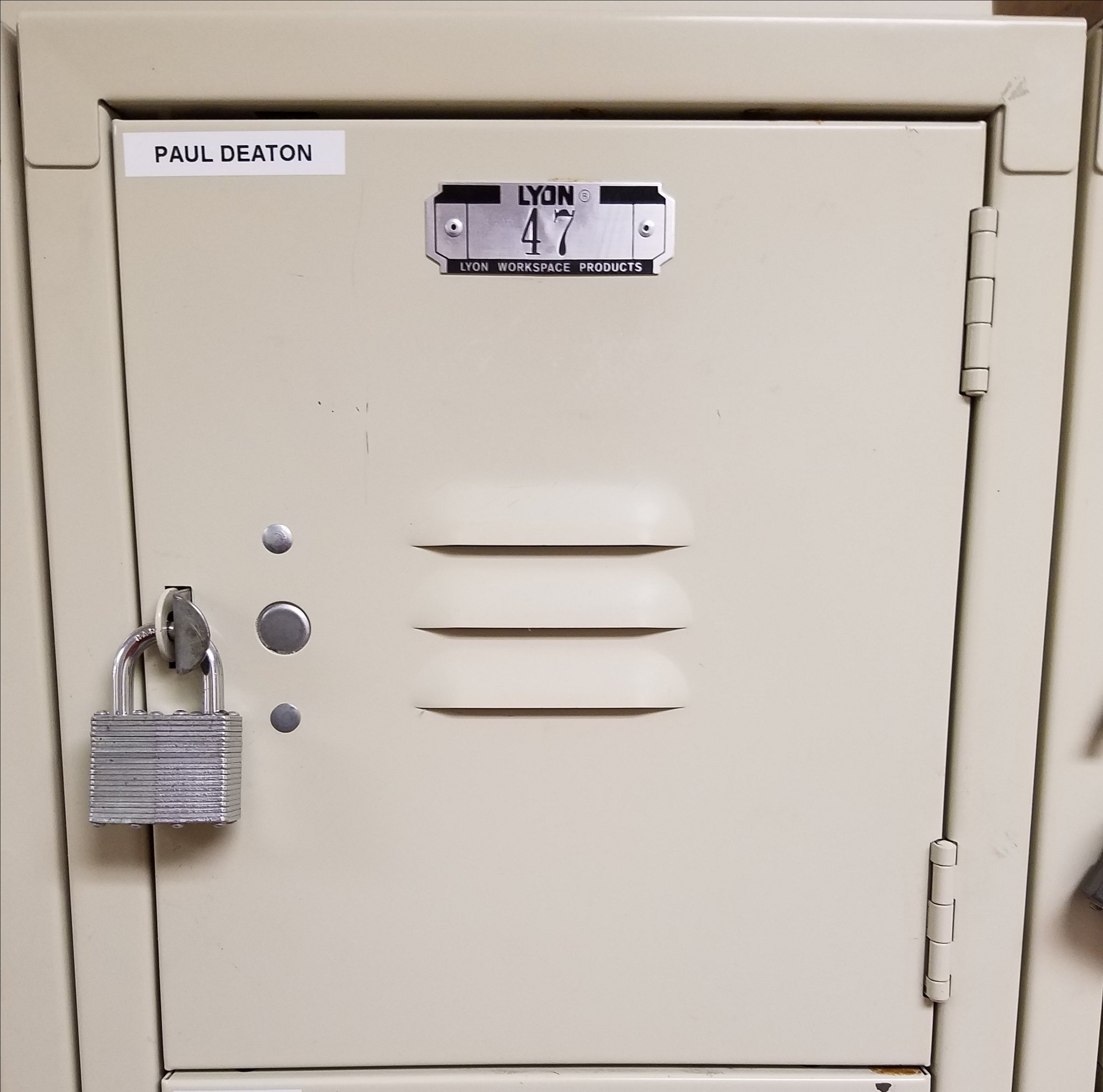
My mobile device lived in this locker for 3,960 hours since I began working at the home, farm and auto supply store.
Carrying our devices with us while at work is not allowed and that’s fine with me.
There is no need for a human to be constantly connected to social media, email and news, especially when engaged with people at a job site or other location in the real world. I don’t suffer from lack of connection.
What matters more is the security of my lunch until I eat it. Marauding teens and twenty-somethings have been known to pillage the shared ice box while hungry, eating anything found. The locker resolves that concern.
While I’m gone from work, the locker is home to a radio earpiece, ink pen, box cutter, name tag, padlock keys, tape measure, duster, hat, aspirin tablets and a few other work items. Those might disappear if the locker wasn’t locked.
It’s a flimsy locker and anyone who wanted to break into it easily could. Suffice it the padlock discourages people from looking inside. I’ve had no issues since I began working there about two years ago.
I won’t get the time spent at the home, farm and auto supply store back. I took the job to avoid taking loans for living expenses. I stayed because of the reasonably priced group health insurance plan. It fills the gap between failure to start a viable business after my transportation career and Social Security.
Time spent there is fit bookend to my part time high school job in retail. The company I work for now bought the building where I worked almost 50 years ago and opened a store. I hope to visit before long, before fading into the oblivion of an ultra local life writing, gardening and living from a perspective built on the shore of a man-made lake.
The marketplace of home vegetable gardens, community supported agriculture, farmers markets, road side vegetable stands, restaurants, retail interests and direct farm sales hasn’t coalesced into a sustainable local food system, and may not.
One should never doubt the resilience of farmers. At the same time, due to unwelcome changes in society, our local food system is at risk before it has become sustainable.
A small group of pioneers made progress toward a sustainable, local food system. People like Denise O’Brien, Dick and Sharon Thompson, Fred Kirschenmann, Francis Thicke, Laura Krouse and Susan Jutz took ideas about sustainability and put them into practice. Their work enabled a new generation to enter the local food business — people like Tony Thompson (New Family Farm), Kate Edwards (Wild Woods Farm) and Carmen Black (Sundog Farm).
The idea of a return to diversified farms producing food for local markets begs the question how did we get away from it?
If markets for local food become stale or disappear due to changing tastes or financial stress, increased commodification could erase slim margins and lead to bankruptcy.
A local food system is about cooperation and support: between farmers, and with their customers, suppliers, workers, volunteers and bankers. Without that a family may have their dinner on the table, but the entire system is risked if such individualism is the prevailing attitude.
Change is in the air. Change driven by economic hardship and oppressive policies originating in Des Moines and Washington.
It doesn’t look good for growers, retailers or consumers, not because business models have changed, but because we are entering an era when wealth flows to the top, leaving the rest of us struggling. How will farmers get health insurance if the individual market becomes too expensive? They may take a job in town and let their agricultural aspirations go.
These changes and the challenges they bring will test the sustainability of a fledgling local food system.
Climate change is impacting society negatively as well. What we assume about Iowa’s growing conditions — adequate rainfall and predictable temperatures — is subject to change as the oceans and atmosphere warm, increasing the number and intensity of extreme weather events. Likewise, increased carbon dioxide in the atmosphere may be reducing the nutritional value of food, according to a recent study published in the journal Nature.
I don’t doubt the resilience of farmers I know. If a local food system can be sustained, they will do it. Isn’t it time you got to know your farmer? We could all use a friend during these turbulent times.
~ First published in the Saturday, Sept. 30, 2017 edition of the Cedar Rapids Gazette.
Best news of the week arrived Friday afternoon via email. The Cedar Rapids Gazette decided to publish my opinion piece on the local food system at risk.
A writer lives for exposure to an audience and my readership will get a boost just by being in print media with daily circulation over 30,000.
I will probably run to the convenience store before sunrise to buy a copy as soon as I hit publish. (UPDATE: Here’s the link).
This weekend is mostly about apples. It’s Golden Days at the orchard. We have multiple varieties of Golden Delicious and for the most part, that’s what we’ll be picking. There are a lot of them still on the trees. Last night was family night and I spent most of my shift stocking shelves, coolers and freezers in preparation for what we hope is a good Saturday turnout. I laundered my orchard T-shirts last night and am ready to go. It’s the beginning of the end of the u-pick season.
Fallen Apple Pile
It’s time to pick the Red Delicious apples on our backyard tree. With the record-breaking heat apples are beginning to drop. I’d better not wait any longer. They are sweet enough to eat out of hand and should make great apple sauce. Whatever I’m able to harvest will be a fraction of the potential. We can only eat fresh and process so many.
So that’s the plan. Read and publicize my article in the Gazette and live in Iowa’s apple world. There’s work involved, but it will be a labor of love.
Midst falling leaves, grasses turned brown, and apples dropping to the ground, I mowed for the first time in over a month. It may be the last cut before winter.
Monday I visited the vegetable farms where I work each spring and caught up with the farmers. Both farms want me to soil block next year. I plan to do it.
I picked up vegetables for which I bartered: a fall share at one farm, seed garlic, storage onions and potatoes at the other. We cooked a spaghetti squash for dinner and had sides of a burger patty and fresh green beans. I made pasta sauce with tomatoes, garlic, basil and onions. A jug of apple cider is in the ice box, but we didn’t open it just yet. It’s been hard to keep up with the abundance since the garden began producing and the summer vegetable share began. We could feed a larger family than we have.
Fund raising letters have begun to arrive via snail mail. If we had the cash, I’d contribute to each one of them: Practical Farmers of Iowa, Catholic Worker Houses in Iowa City and Des Moines, Veterans for Peace, Physicians for Social Responsibility, and others.
I called the snow removal contractor for our home owners association and the receptionist took a message. He’s out of town until Wednesday. She said they haven’t really started thinking about snow removal because they have been so busy. Isn’t that true for us all.
During the next six months I’ll be re-engineering our lives to live on our social security, transition our health insurance to Medicare, and slow down on work I do mostly for the paycheck. After a two-day retreat, I head back to jobs which have daily shifts until Nov. 3. I need focus so I get the transition right. That means something has to give.
With the current political and economic climate, most everyone I know seems to be in transition. Each week some new affront comes out of our federal government. The same would be true in Iowa if the legislature were in session. It’s a time to re-group and figure a strategy to deal with an aging frame, diminished income potential, and unwelcome changes in society.
My posts have slowed down. Although there is plenty to write about, life’s turbulence has increased making it more difficult. The existential threat to our way of life manifests itself more each day. We will survive the next steps if we take time to do them right. Writing in public may take a back seat to the tasks of living for a while.
Fall going into winter is a great time to do that.







 Journey Home
You must be logged in to post a comment.