The desultory nature of lowly paid work is a grind.
That’s what I found yesterday upon returning to the home, farm and auto supply store after a four-day vacation. By afternoon I was ready for a nap but instead scratched at the stacks of piled up work and made a day of it. I won’t run out of work there any time soon.
I had thought to secure provisions at the warehouse club after work but was tired, achy and my feet hurt. I skipped shopping and drove straight home.
Vacation consisted mostly of sleeping, reading, napping, cooking, writing and resting. I’ve been working almost every weekday and weekend since February when I started soil blocking at the farm. It all caught up with me. By Tuesday night I felt more human if not fully rested.
I left our property exactly three times: to meet with a neighbor about our relationship with Iowa Department of Natural Resources, to fill Jacque’s car with gasoline, and to pick up our share at the farm. Most of what I hoped to do while vacationing remains undone. I did manage a few things using the internet: applying for Social Security retirement benefits, ordering a couple of books for winter reading, and ordering parts to repair a burner on our aging electric range. It’s something.
I’m not complaining. We have it better than most who make it on less than a livable wage in the post Reagan society.
What matters more was the ability to author a few posts during this down time. Nothing profound — public journaling really — and that escape into the imagination made all the difference.
The president of the Gallery Acres West home owners association invited me to attend Wednesday’s city council meeting and I did. I was amazed.
It was amazing that council gave such thoughtful and considerate deliberation to a request by the rural subdivision to hook up to city water.
Running a three-mile water line from Solon to Gallery Acres West would help resolve a public health issue for about 50 residents who have elevated arsenic levels in their drinking water. They have been consuming non-compliant water since 2001 when the Environmental Protection Agency standard for arsenic changed from 50 to 10 parts per million.
The history of this public water system (No. 5282306) and its failure to comply with the arsenic standard is available on line. In 2015 the Iowa Department of Natural Resources threatened legal action over non-compliance. DNR should not back down from enforcing public water system standards in this or any other case.
Whether running a three-mile water line from Solon to Gallery Acres West is a good or fair idea is for others to say. That council is willing to consider this proposal, even though they are under no legal or moral obligation to do so, reflects well on them and the City of Solon.
Wednesday’s council meeting was a living demonstration of what it means to be a good neighbor and Iowa nice.
~ Published in the Nov. 9 edition of the Solon Economist
Never mistake absence of political noise for lack of a campaign. In both Solon and West Branch, the number of write-in votes in yesterday’s city elections was substantial. West Branch write-ins may make a difference in the outcome of one city council seat.
In West Branch there were 105 write-in votes of 213 cast (49 percent) with Andrew Mundell getting 91 of those and 14 remaining unresolved on election night. That makes Mundell competitive with Jodee Stoolman who received 93. Nicholas Goodweiler received 163 votes for councilperson and is safely elected to one of the two open seats.
In Solon there were 94 write-in ballots for city councilor of 214 cast (44 percent). The Johnson County auditor has not identified the write-in candidate(s) and those votes won’t change the election outcome of Steve Duncan, Lynn Morris and Lauren Whitehead being safely re-elected. One suspects a sub rosa write-in campaign for Dale Snipes who lost to Whitehead in a May 30 special election. I asked the auditor’s office for the names of write-in candidates once they are tabulated.
In low turnout elections a write-in campaign can make a difference by activating voters. I decided to run for township trustee only after casting my ballot in the 2012 general election when only one candidate for two township trustee seats was listed. It took some work to activate my network to vote for me, but not that much for an easy win.
These elections highlight the importance of local political engagement.
On Nov. 2, Dallas County Republicans heard how important they are. Acting Lieutenant Governor Adam Gregg and Republican Party of Iowa chair Jeff Kaufmann extolled local political activists saying their county effort was essential to implementing the Republican agenda.
“This is where so much energy is, and this is where the work that gets done to elect conservative candidates really happens,” Gregg said. “This is where the organization happens, this is where the get-out-the vote effort happens, this is where the door knocking happens, and it’s so critical and it’s so important.”
“Electorally, there’s only one way that we counter a Johnson County, and that is for a Dallas County to run up the total,” Kaufmann said. “That’s the numbers game, how that does that.”
Elections matter and there is no denying Lauren Whitehead confirmed her credibility with last night’s solid win. However, when 12.4 percent of registered voters show up for a city election it also indicates people are engaged. In the 2013 Solon city election only 63 voters (4.5 percent) cast a ballot. By tripling voter participation in an uncontested city election last night, Solon voters set the stage for further electoral wins.
It’s a year until the 2018 general election and last night’s results indicate we’re off to a good start.
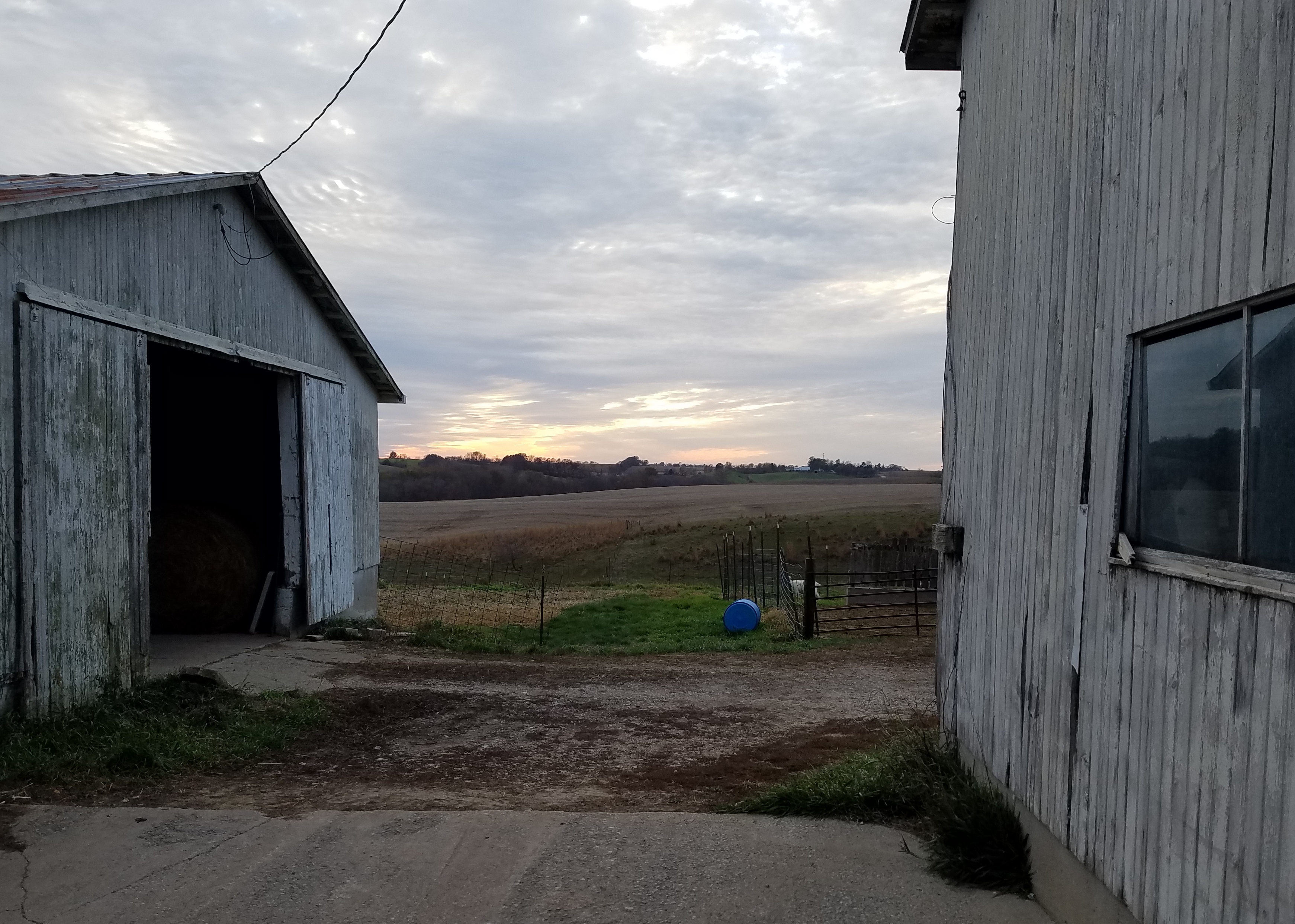
The sun set as I pulled into Sundog Farm, home of Local Harvest CSA.
Eileen from Turkey Creek Orchard had just dropped off fresh aronia berries and jars of fruit jam to fill orders placed over the weekend. Farmers Carmen and Maja were there but didn’t have time to talk as they had deliveries in Cedar Rapids.
That left me with the goats and sheep to pick up our share.
Low wage work has kept me so busy everything that was once important gave way. I finished reading What Happened by Hillary Rodham Clinton, the first book I read since April. Clinton’s book is an important read for Americans and finishing it a year after she lost the election seemed good timing. What surprised me was how much space she devoted to Russian meddling in the 2016 election. My native reaction was what happens on the internet doesn’t matter much to a U.S. general election, but she convinced me that maybe it does. I also enjoyed her personal stories throughout the book. As was the case while reading her last book, Hard Choices, I found her analysis to be helpful and reasonable.
Today is election day in Iowa’s cities and towns. My pal from the Clinton campaign, Lauren Whitehead, is running unopposed for city council in the town nearest us. There is no election in the unincorporated area where we live. Because of our family roots in southwestern Virginia, I have been following the gubernatorial race there. The Democrat is leading in the polls although that’s no guarantee he’ll win. Whatever the result in Virginia my Twitter feed will be clogged up with analysis and punditry tonight. It’s a good night to retire early with a book and read about the election in the morning.
Yesterday I applied for Social Security retirement benefits. If all goes as expected the first check will hit in late January. By Spring I’ll be in a position to scale back my work at the home, farm and auto supply store. After that I hope to return to the CSA farms to help with spring planting. It will be the sixth year.
For now, I took the vegetables home and will consider how best to use them before they turn to compost. That’s an essential human question. One I spend extra time trying to answer.
It’s a crash landing after the apple harvest and a summer working almost every day at the orchard or the home, farm and auto supply store. Time to sleep, read and rest.
Four days off work is not enough to fully recuperate but it’s what I have.
Saturday was mostly at home resting, then cooking. Sunday was several long sleep sessions, reading and staying indoors. Today and tomorrow turn toward stuff I want to do and stuff I have to do, mostly the latter. There’s more on my list than will fit in the remaining 48 hours so it’s not really a vacation but more a time to do other kinds of work.
The most important things I do are related to full retirement. Specifically, submitting my application for Social Security benefits to begin after my birthday and changing our health insurance from my work to Medicare. I expect to spend much of today doing just that.
What matters more is figuring out how we want to live going forward. I am already up to my armpits in community organizing so there’s that for the time being.
Once our financial situation reveals itself after Social Security and Medicare, I want to change things around. I expect to slow down or quit at the home, farm and auto supply store next year to focus on writing, gardening and preparing our home for a long retirement. I expect to continue to work in the local food system — at the farms, and at the orchard — but the focus will be on our homelife. It’s been neglected for too long.
Needed work toward sustaining a life in our turbulent world.
On Friday I clocked out of work at the home, farm and auto supply store for four days off in a row!
I drove straight home, dumped the coleslaw I made in the morning into a bowl and mixed it up one last time before the potluck. I grabbed a pair of tongs for serving and headed to the orchard for the 6 p.m. event.
The annual crew potluck is our biggest and only non-work event at Wilson’s Orchard.
About 80 people attended at the on-site Rapid Creek Cidery, bringing the best side dishes imaginable to go along with chef Matt Stiegerwald’s braised pork from hogs raised at the orchard’s farm.
We joked we weren’t sure if we were supposed to bring potluck table service. A veteran of many church potlucks brought a basket with plates, silverware, glasses and everything one would need. Most of us used paper plates and flatware. I enjoyed a glass of plain hard cider as aperitif before switching to non-alcoholic.
When serving began, I made a southern-themed plate with pork, my coleslaw, macaroni and cheese, dumplings and raw tiny carrots. One of countless possibilities given the many tables of side and desserts. All that was lacking was corn bread but it was a potluck after all.
My work pals were all there: the octogenarian who makes dinosaurs and showed off the scar from his recent knee surgery to all who were curious; the pilot who recounted his air-search for the other orchard, which he couldn’t find until I gave directions from ground level; the artist who gave a speech about entering the drawing for fabulous prizes mostly from the Orchard’s lost and found (think sunglasses); the data analyst who is sharp as a tack yet made a six-figure error on the cash register; the Ukrainian guest workers; and the crew of bakers with their families — it takes a lot of bakers to make all the turnovers, pies, apple and peach crisps and blueberry buckles we sell. The sales barn manager was there. She works non-stop from before the August opening until the end of the season. Actually just about everyone was there. Needless to say the conversations and meal, with a chance to win prizes, were delicious. That’s no apple joke.
We talked about when we might see each other again and confirmed that God willing and the creek don’t rise we would be back next year. My only regret was it wouldn’t be soon enough. Heaven help us if it’s not until next season.
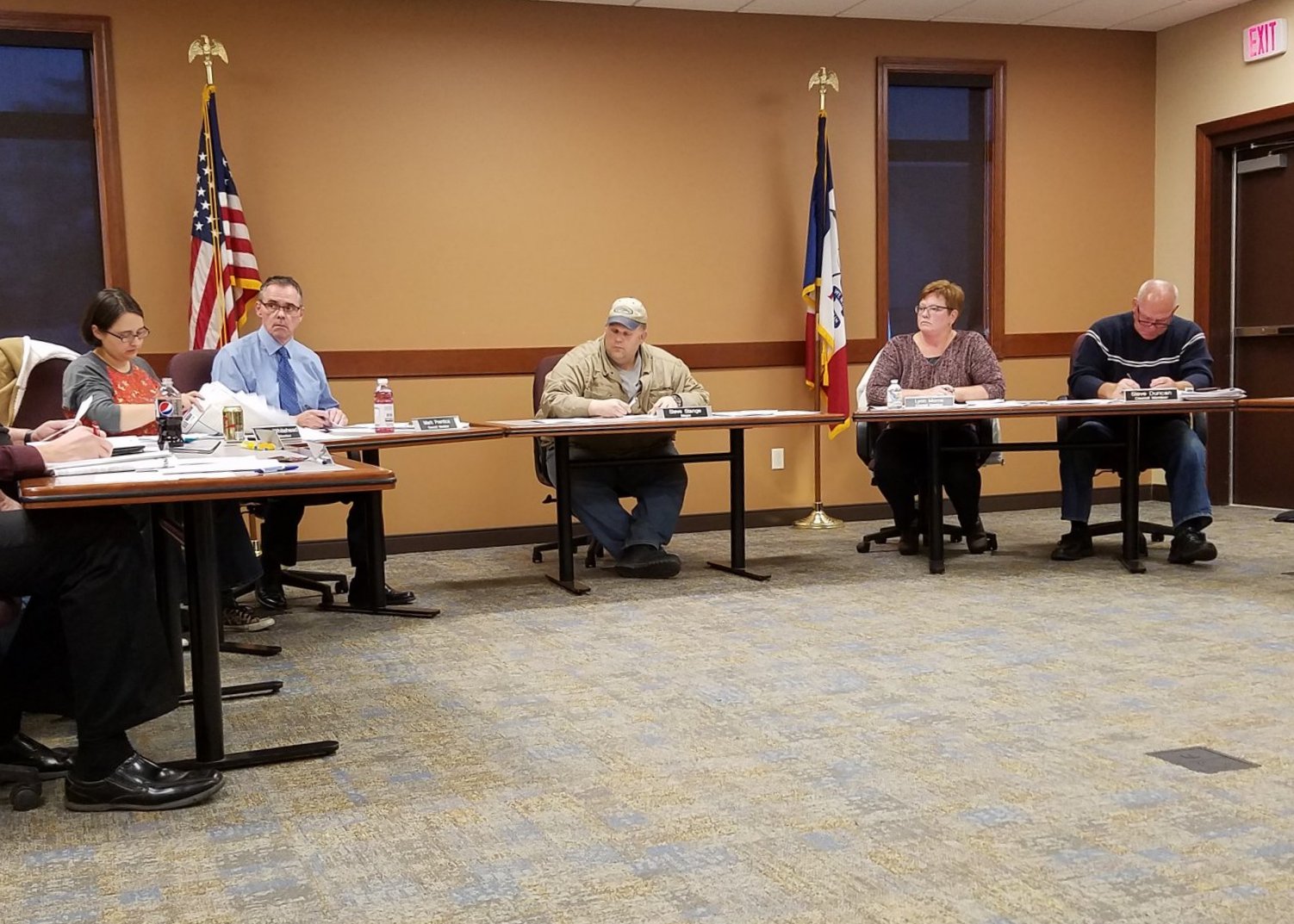
Solon City Council Nov. 1, 2017 left to right Lauren Whitehead, Mark Prentice, Mayor Steve Stange, Lynn Morris and Steve Duncan. Councilor Shawn Mercer participated via video conference.
My reaction to the Nov. 1 Solon City Council meeting was amazement.
I was amazed at how helpful council was being — a living demonstration of being good neighbors and Iowa nice.
Gallery Acres West requested a hook up to the city water supply. The City of Solon has no obligation to provide the service. Despite the fact Gallery Acres West has been delinquent in complying with the 2001 arsenic standards for public water systems, council politely and professionally is hearing them out. Councilors want additional information before making a decision. Mayor Stange said he would like a decision by the end of the year. Whether council votes for the final proposal is an open question.
Information of varying quality has come out over the subdivision’s proposal and related issues. Council is smart to sort through what’s been presented before deciding. However, the bottom line is leadership of Gallery Acres West decided homes could use high arsenic drinking water since 2001. It’s not the city’s problem.
Why didn’t the subdivision comply? During an Oct. 30 phone call with the president of their home owners association, who recently moved to the subdivision, I asked him that question. He told me it was the cost of compliance. With only 14 homes in their association compliance would run thousands of dollars per household. Who wants an unexpected expense like that? At the same time, who wants to risk public health because a community believes they can’t afford it?
In 2015, the Iowa Department of Natural Resources threatened legal action if Gallery Acres West did not comply with arsenic standards for their public water system. By then it had been 13 years since their first violation. Push has come to shove and Iowa DNR shouldn’t back down.
If Solon decides to help Gallery Acres West I hope council gets all the information they need. Based on Wednesday’s meeting it appears they will. In the meanwhile, 14 homes continue to use high arsenic drinking water.
In our search for truth and meaning there’s nothing like making soup.
Each batch can be spontaneous yet based in traditional flavors and processes. Soup uses what comes in from the garden, is stored in the pantry and ice box, and our kitchen skills. A gardener makes a lot of soup.
It is honest food.
Friday I drove straight home from work at the home, farm and auto supply store and got started.
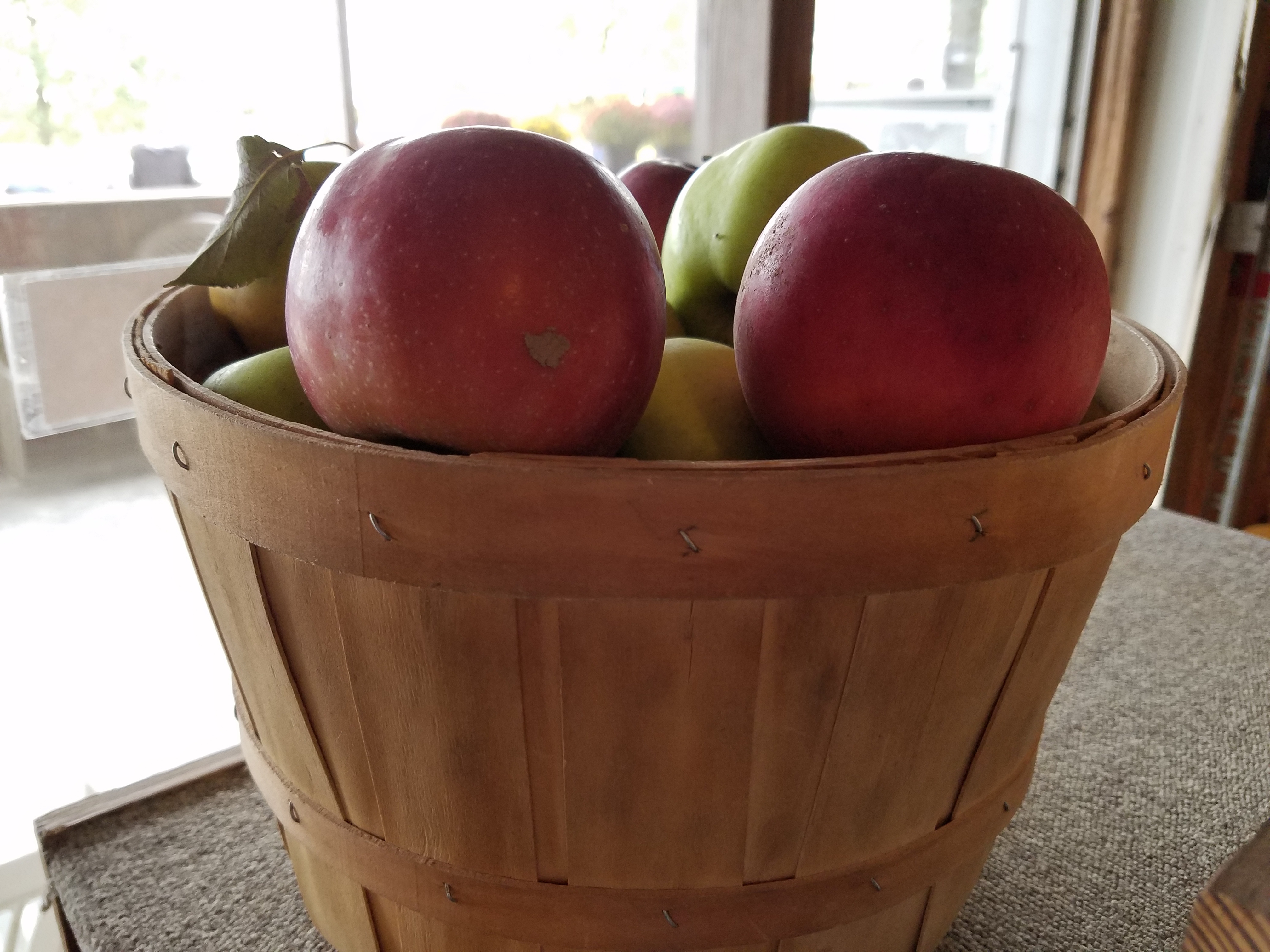
I wanted to glean the garden before the weekend’s hard frost. I brought in carrots, eggplant, tomatoes, kale, bell peppers, Red Rocket and Jalapeno peppers, basil and broccoli along with a five gallon bucket of apples.
I’ve had an idea about making crock pot or slow cooker soup for a few weeks. The idea is to do the prep work Friday night and set the temperature on high. At bedtime I would turn it to low, letting the mixture slow-cook overnight. I hope to can fewer big batches of soup while continuing to use up vegetables at the end of the span between fresh and compost. A crock pot makes enough for four to six meals.
It began with a cup of dried lentils and a third cup of pearled barley in the bottom of the crock. I turned on the heat and added a quart of home made tomato juice then got to work prepping vegetables:
All of the carrots from the garden and some from the CSA.
The remainder of a head of home grown celery.
One large yellow onion.
Bay leaves.
Two leaves of green kale, including the stalk finely sliced.
Small tomatoes, quartered.
Root vegetables: kohlrabi, turnip and potatoes.
A leek.
Several broccoli florets with stalks finely sliced.
Dried savory and salt to taste.
The vegetables went into the crock as I cleaned and cut them. When prep work was done I added a quart of home made vegetable broth and covered with water.
That’s it.
In the morning the soup was flavorful, thick and hearty. I had a bowl for breakfast, leaving more than a half gallon in glass jars for the ice box.
In a turbulent society there is no better way to sustain ourselves than with a bowl of hot soup.
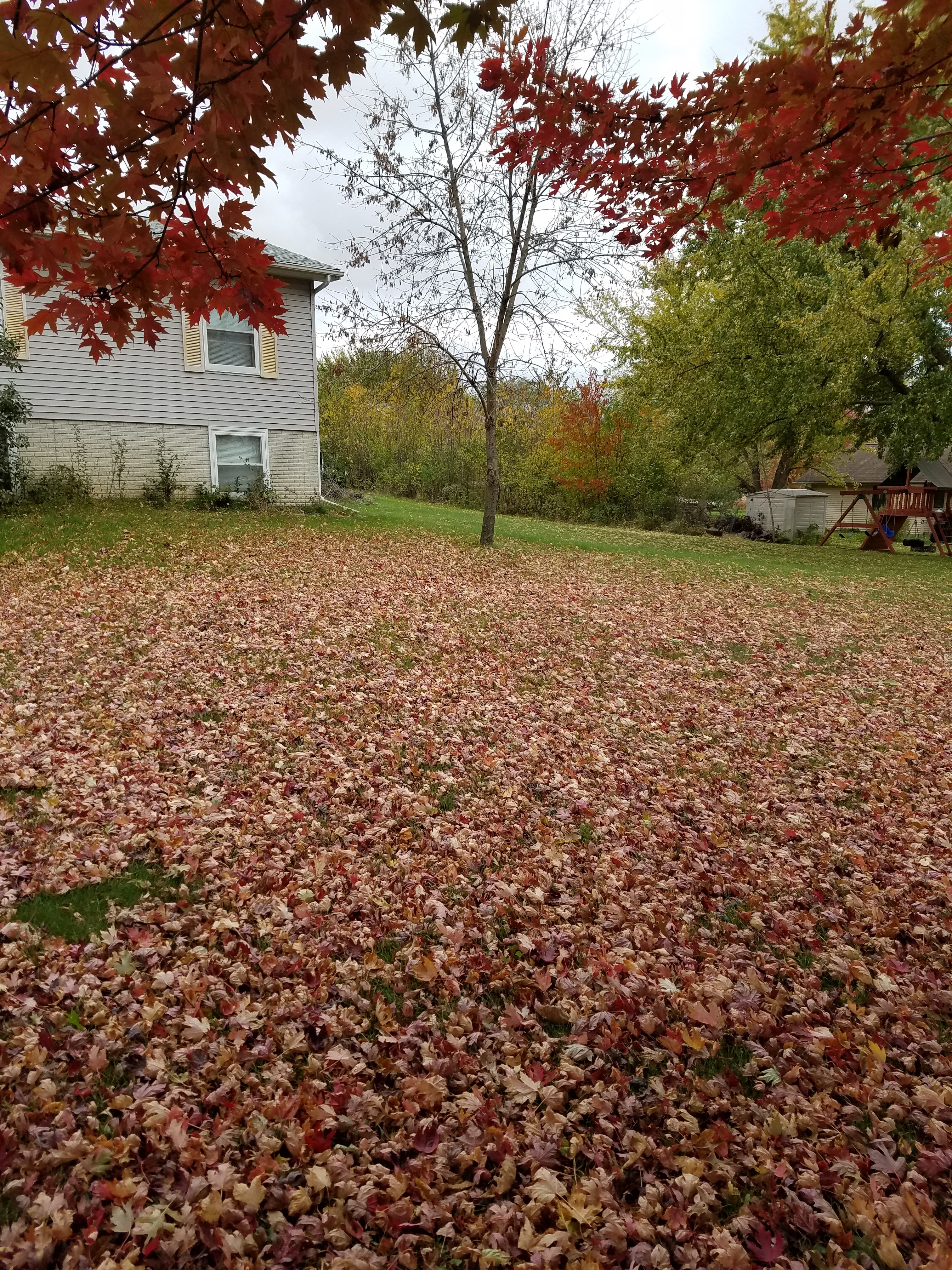
A garden never ends. First hard frost is forecast this week and kale will likely survive, tasting better after being kissed by cold.
If the ground dries out, I will plant next year’s crop of garlic. If it really dries out, I’ll remove stakes and fencing, mow everything down, and add to the burn pile. With the warmer fall weather these activities go later into each cycle. As Senator Joe Bolkcom pointed out yesterday, September was the fourth hottest on record with the first three being in 2014, 2015 and 2016. I scheduled time off work at the home, farm and auto supply store for gardening the first week in November.
I’ll analyze the garden results later but already know the basics: pick good seeds, rejuvenate the soil, cultivate more, and mulch, mulch and mulch. The composted chicken manure applied to some plots produced great results. Like many gardeners, I realize if the garden failed in any way it is mostly my fault for decisions made about planting, insects, cultivation and soil quality.
Because of engagement in local food production, our pantry is overflowing. Apples, potatoes, onions and garlic are plentiful. Winter shares from CSAs continue until Thanksgiving. There are abundant ingredients for cooking. It’s cooking meal to meal for the time being with big canning sessions giving way to large dishes with leftovers.
Eight days remain in the apple season after which I plan to take a weekend to consider the future. That includes health care decisions, signing up for Social Security, and getting back to reading. I may get my hair cut and take some needed personal time to recover.
Water is life. We take its quality for granted if the source is a public water system.
Consumers rely on drinking water standards developed by the U.S. Environmental Protection Agency and enforced by the Iowa Department of Natural Resources. Where we live municipalities do a good job of compliance with drinking water standards. There are few standards for private wells and the experience is uneven at best in unincorporated areas with public water permits.
In January 2001 the U.S. Environmental Protection Agency issued a reference guide for compliance with the new standard for arsenic in public drinking water, reducing the allowable amount from 50 parts per billion to ten.
Arsenic is a naturally occurring element in many water systems. Neither number in the range seems like much, and at 10 ppb it isn’t. Public water systems have been required to comply with the new standard and if EPA persists in enforcing the new standard, all public water systems should be in compliance eventually.
Not so with private wells where testing and compliance is voluntary. A study published this month in Environmental Science and Technology estimates about 2 million people in the Unites States drink water from private wells with arsenic concentrations exceeding 10 ppb.
The change, initiated during the Bill Clinton administration, took time to develop and more time for communities to implement. The idea was to bring the United States into compliance with the World Health Organization standard for arsenic in drinking water. There are currently communities where the public water system does not meet the new arsenic standard, including one that has been the source of news here in Big Grove. Hopefully they are all working on complying.
There have been at least two deaths caused by cancer among the 85 homes on our public water system. Whether this experience is or isn’t connected to historic arsenic levels is a question that hasn’t been asked. I’m not sure of the merit of asking it, although there are studies with evidence supporting such a connection in larger communities. It is also unclear whether two deaths from anything would be statistically significant in a population of 300. In any case, our public water system has been in compliance with arsenic standards since the new treatment facility was brought on line more than ten years ago.
I doubt many home buyers look at public water or sewer records when considering buying a home even though the data is easily available on line. The proliferation of development in unincorporated areas raises an issue of the quality of management in home owners associations. The arsenic compliance experience demonstrates it is uneven at best.
People seek to escape municipalities. Gasoline remains inexpensive relative to average household income and there are perceived freedoms in living in a small, insular community away from city life. Commuting to a job within an hour’s drive from home is common in Iowa. There is a cost. Things that could be taken for granted in a municipality require attention and potential action in rural Iowa. Who has time for that?
The presence of arsenic in ground water is just one example of the issues of living in an unincorporated area. In a culture of affluence, the quality of water does not often come to the forefront. When it does there is a perception that money and technology will resolve it. That’s mostly true but it requires our engagement, something many people are unwilling to give.
It’s part of sustaining a life in a turbulent world.






 Journey Home
You must be logged in to post a comment.