Categories
Kitchen Garden Writing

40 Acres Sans Mule

Flooded Farm Near the Cedar River, Sept. 27, 2016

There is nothing magical about 40 acres in the 21st Century. Today’s American farmers can make a living on much less, largely because of crop diversification, technology, and emerging markets for locally grown food.

For a beginning specialty-crop farmer, 40 acres might be too much to handle.

“40 acres and a mule” entered the vernacular as a way of dealing with the question of what to do with newly freed slaves during and after the Civil War. Give them 40 acres and a mule to get started as free men, or so the line of thinking went.

In 1865, William Tecumseh Sherman provided for confiscation of 400,000 acres of land in South Carolina, Georgia and Florida, to redistribute in 40-acres parcels to formerly enslaved farmers. The arrangement did not persist, although even today, presidential candidates posit the United States should pay reparations for slavery.

While specialty crop farmers work hard, long days to make ends meet and sometimes take a job in town to provide enough household cash, they increasingly seek to own their future. To a person, that means buying land. In Iowa good farmland is expensive.

For farmers, the desire to create a farm on less than 40 acres has to do with start up capital. To make a go of it as a specialty farmer on 40 acres, that means $350,000 or more for land, another $100,000 or more for an on-farm dwelling, and more for at least one barn, a couple tractors, and other equipment for cultivation, mowing, tilling, fencing and general operations. Finding a banker to finance such an operation is difficult without collateral other than the land. There is also the hurdle of what to do with all that land. While a small farm can grow into 40 acres with success and over time, a beginning farmer has much to learn and the scale can be intimidating.

Shouldn’t there be opportunities to start a farm on less than 40 acres? The county board of supervisors said no. Couldn’t you move to another county? The market is in urban centers.

In Iowa farms have an agricultural zoning exemption. Beginning farmers seek the ag exemption in order to make ends meet on narrow gross margins. To be defined as a farm in our county, and get the exemption, 40 acres is required. Some of my farmer friends have been asking for accommodation of smaller farms for many years and none has been forthcoming from the county board. The future belongs to the young and they will not be stopped.

That brings us to House Study Bill 239, an act relating to the county zoning exemption for property used for agricultural purposes. Farms are defined as follows:

The bill provides that property is used for agricultural purposes if at least 51 percent of the annual gross revenue derived from the property comes from the growing, harvesting, or selling of crops and livestock raised and produced on the property or brought to the property and not more than 49 percent of the annual gross revenue derived from the property comes from the sale of agricultural experiences and other farm-related activities.

The number of acres defining a farm becomes irrelevant should the measure pass the legislature and be signed by the governor.

This bill amounts to an end run around the county board of supervisors. While it didn’t clear the state government committee this session, it remains eligible for consideration and debate next year in the second session of the 88th Iowa General Assembly.

A representative from our county made it to the bill’s subcommittee hearing on March 5. In what was described as a long, arrogant speech, the official characterized rural residents who had been working with the county board of supervisors as “loud complainers.” Not a good look for anyone, especially a county official.

Today was a great day of spring-like weather. We can feel it in the air as farmers prepare equipment, tend livestock, and prepare for another crop. Whether on 40 acres or 4,000 there are many common threads running through farming. Whether they will be defined according to the same standard is an open question. It’s time to see if the legislature can resolve the issue for beginning farmers, since the county won’t.

Categories
Environment

Flooding at Mill Creek

Cedar River at Iowa Highway One Sept. 27, 2016 at 11:36 a.m.

Mill Creek swelled its banks swamping nearby farm fields. It looks like the nearby city sewer system was spared inundation… for now.

Snow melt is everywhere in the county. Inches of packed snow yielded to ambient temperatures in the 50s and continuous rain. After a frigid, snowy winter the ice and snow pack is melting all at once. Snow was here Sunday and now is mostly gone.

Winter’s damage is being revealed. Our driveway buckled with the big swings in temperature. In one event, ambient temperatures swung more than 70 degrees in a day. Ice melted, then refroze under the cement, buckling the slabs leading to the road. Yesterday’s rain diverted inside the garage because of a buckle, requiring clean up to prevent further damage. Whether the buckled driveway will settle back down as it has before is unknown. It’s never been this bad.

The scale of the melt in a short period of time is what has Mill Creek flooding. Farmers removing buffer strips to grow a few more rows near the creek will take topsoil and farm chemicals downstream. It was foolish to sacrifice topsoil for a few more bushels of corn or beans. Farmers who did this likely didn’t see it that way even though flooding is not new to the area. Topsoil can’t be easily replaced but chemicals can.

Is this about climate change?

“A historic March blizzard is taking shape across Colorado, Wyoming, Montana, Nebraska, South Dakota, and North Dakota,” according to the National Weather Service. “Between one and two feet of snow is expected in some locations with wind gusts as high as 80 MPH.”

It is called a “bomb cyclone.” With hurricane strength, it has been forming over the Rocky Mountains and Great Plains, creating blizzard conditions and stranding hundreds of motorists.

“During the first 10 days of March, the Colorado Avalanche Information Center recorded more than 500 avalanches statewide (a record number),” wrote Jonathan Romeo in the Durango Herald. “For the season, a total of eight people have been killed in avalanches.”

Issues abound. Icebergs and open water were found on Norton Sound near Nome, Alaska where the Ititarod Sled-Dog Race finished this week. It’s raining in Greenland when it shouldn’t be. Global oceans are at the highest heat content on record. The planet is warming, there is no doubt.

It won’t take long for water to recede into the banks of Mill Creek. When everything melts at once, immediate damage is exacerbated, the duration shortened.

My colleagues with The Climate Reality Project are meeting this week in Atlanta to train another group of leaders. As newcomers join thousands of others, let’s work to mitigate the effects of climate change on humans. March has been a month where the evidence of climate change has come to the forefront. March has run only half its course.

Categories
Writing

Tuesday Snow Melt

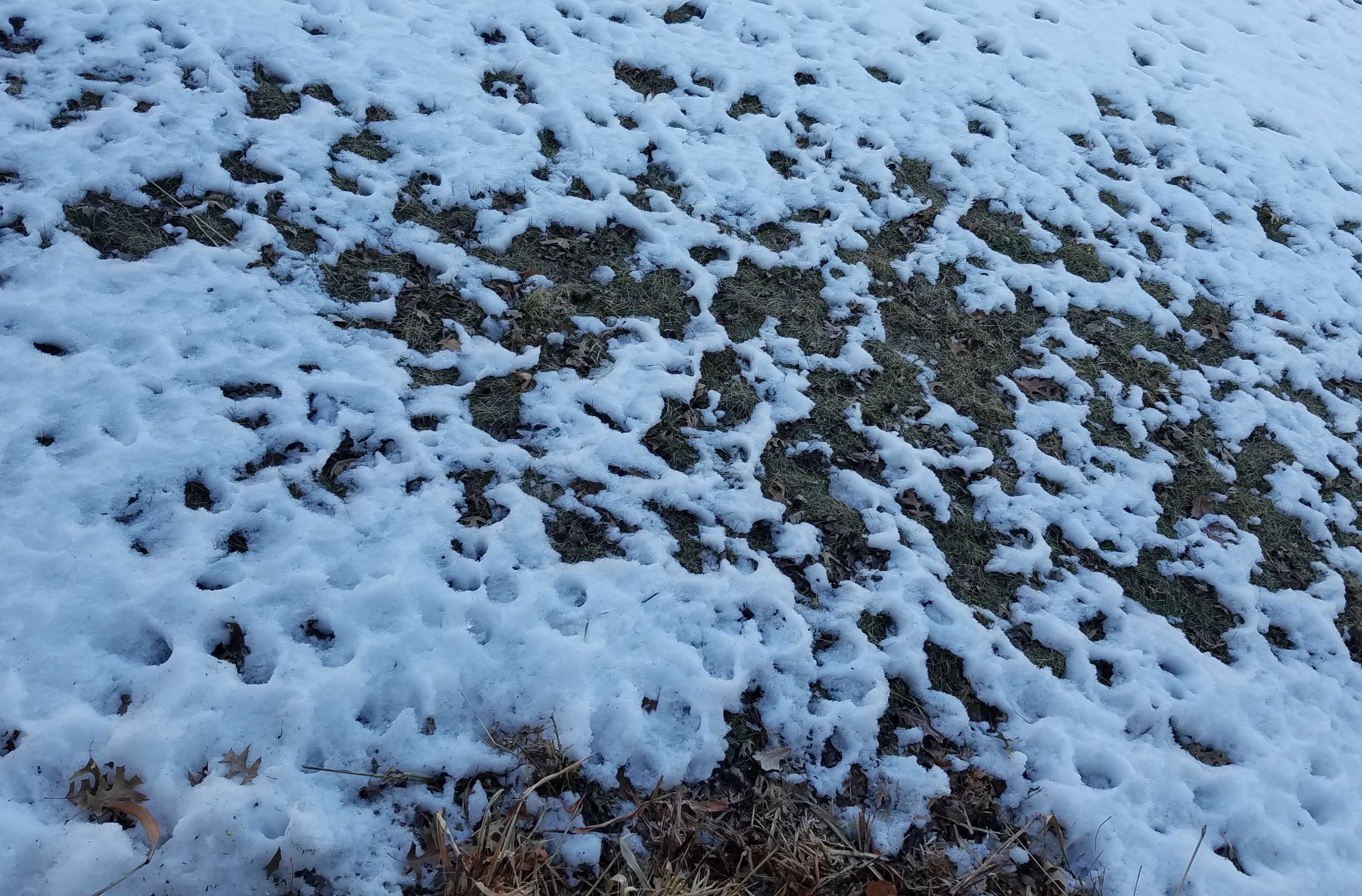
Snow Melt Patterned by Deer Hooves

Depressions in the snow pack made a Swiss cheese-looking melt outside the French door where we feed wildlife.

Deer are nocturnal grazers, eating what birds, squirrels and mice don’t, leaving their hoof prints behind in the snow.

We hope this melt is the end of winter. Despite problems with downstream flooding, we are glad to see it go.

It has been a solitary winter. So cold we didn’t feel much like leaving home. So snow-packed it was a struggle to get into the yard. The driveway buckled, providing new places for ice melt to pool. Reading, writing, cooking and hanging out were tasks to relish for the season. It is time to turn the page.

Categories
Kitchen Garden

Early Garden Planting

First Seeds Planted in the Greenhouse on March 10, 2019

I planted seeds at the greenhouse and am hopeful of the results. Here’s what I planted:

Kale:

Scarlet, Seed Savers Exchange, 60 days.
Winterbor, Johnny’s Selected Seeds, 60 days.
Starbor, Johnny’s Selected Seeds, 55 days.

Celery:

Tall Utah, Seed Savers Exchange, 100 days.
Conquistador, Johnny’s Selected Seeds, 80 days.

Leeks:

Megaton, Johnny’s Selected Seeds, 90 days.
King Richard, Johnny’s Selected Seeds, 75 days.
American Flag, Ferry-Morse, 150 days.

The garden continues to be snow covered. According to the National Weather Service, frost in the region is estimated to be 24 to 36 inches in the ground. Needless to say, until I can see the ground, I can’t dig in it.

Summary: The garden is running behind, the greenhouse is chilly, and the soil is frozen. Planting in the ground will be delayed until the soil can be worked. Hopefully the greenhouse starts will be successful. Garden work has begun.

Categories
Living in Society

Normal Saturday Morning of Politics

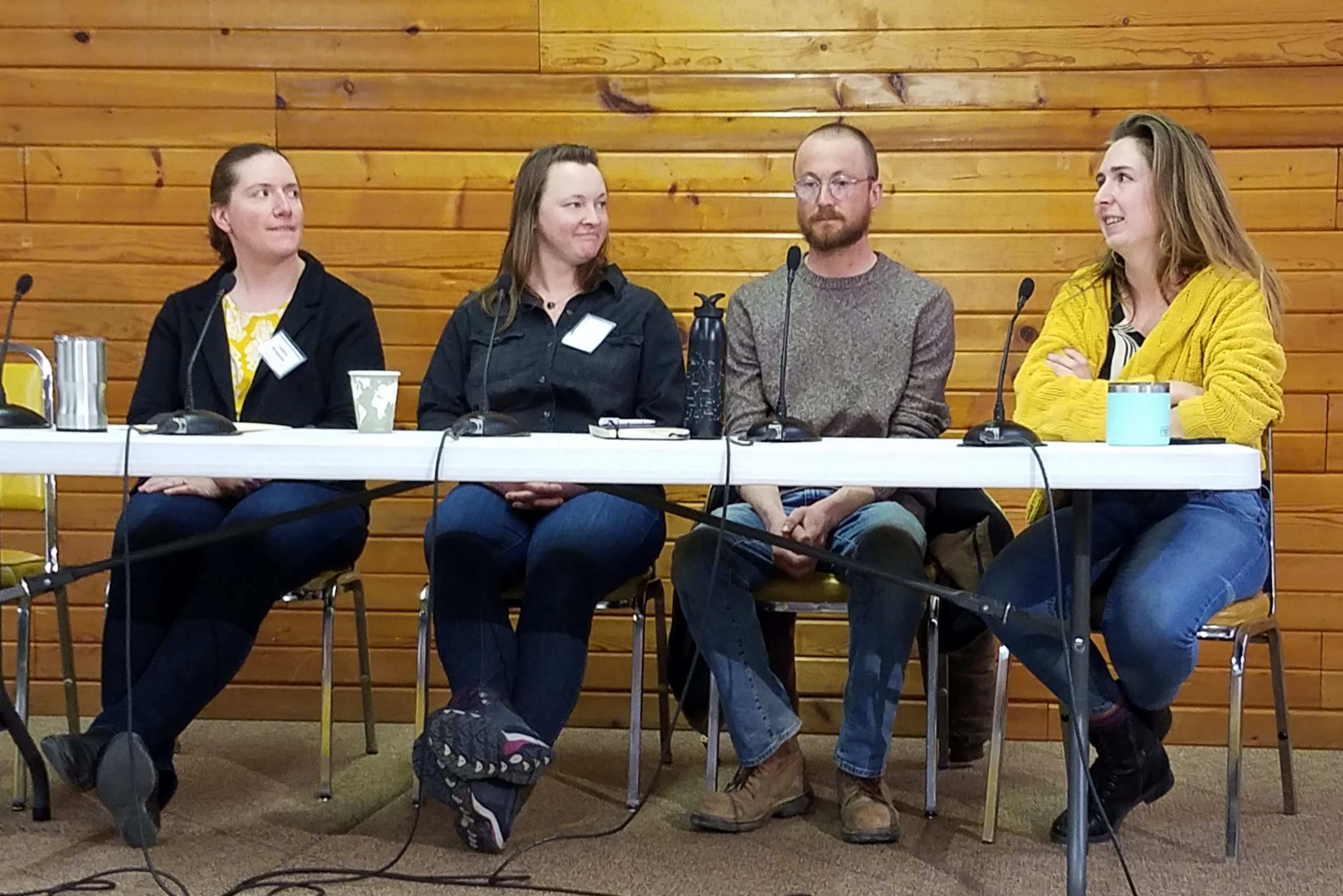
Colleen Bringman, Katie Biesendorfer, Kyle Tester and Carmen Black on a Specialty Crop Producer Panel in Montgomery Hall, Johnson County, Iowa on March 9, 2019

Ice and snow began to melt, exposing a small disk of grass over the septic tank. It suggested an overdue spring is arriving. After a long, hard winter I’m skeptical.

Time to get outside the house for something other than work.

Saturday became a series of renewed conversations with friends. Politics was part of three events in Iowa City and Coralville, coffee with Congressman Dave Loebsack, a forum hosted by the Johnson County Food Policy Council, and a fundraiser for Eric Giddens who is running to represent State Senate District 30 in a March 19 special election. I’d forgotten how many friends I have in the community.

Not everyone in Iowa has first in the nation caucus fever. Politics was discussed. It was local politics. The field of Democratic candidates for president is beginning to come into focus. While some have declared a candidate preference, many of us are anxious for spring to begin, such anxiety pushing aside the vagaries of the nascent Democratic presidential nominating process. I felt like a normal human by not thinking about presidential politics for a morning.

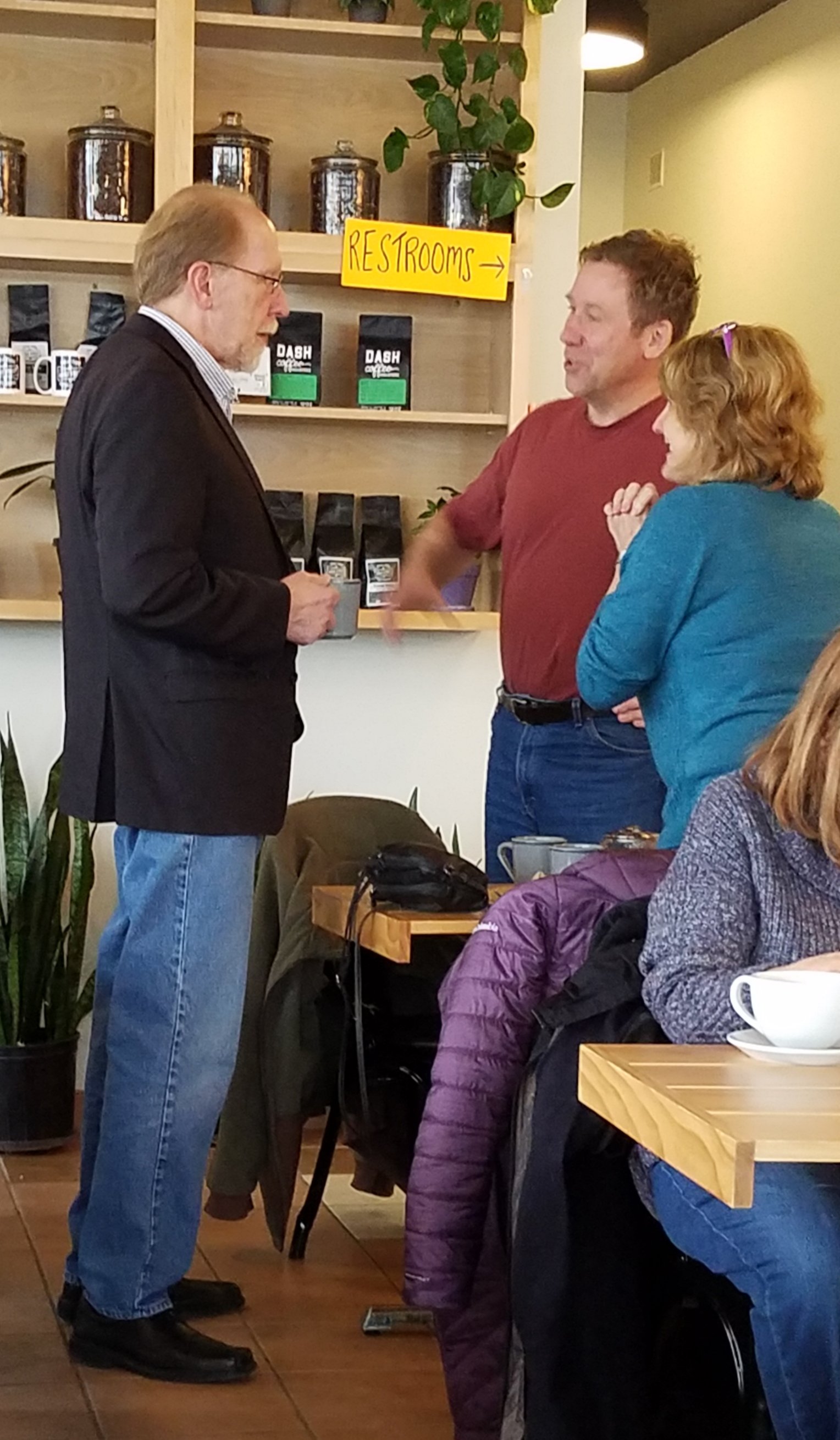
Congressman Dave Loebsack chatting with constituents at Dodge Street Coffee, Iowa City on March 9, 2019.

The first event was coffee with Congressman Dave Loebsack at a coffee shop co-located with a convenience store near Interstate 80. In a welcome turn of events, there was no speech. Loebsack spent the hour meeting individually with attendees without a set agenda. The event was very personal and individualized.

I overheard the retired college professor mention his age, 66 years.  The average age of members of the 116th Congress is 58.6, according to Politico, so that makes Loebsack older than average. It seems unlikely he will have the longevity in the House of Representatives of the late John Dingell or other long-serving men and women. Who might replace him when he retires is an open question for constituents. The last few times I was with Loebsack he publicly mentioned his age or his potential retirement so it’s out there.

I didn’t have much to say to the second district congressman as we shook hands. He knows my issues: climate change and preserving Social Security and Medicare. We met during his first election campaign in 2006. He knows me, we share a common history, and that is something for a person who represents roughly 750,000 people.

From North Dodge Street I drove through the county seat to the fairgrounds where the Johnson County Food Policy Council was hosting its 5th annual forum in Montgomery Hall. My friends and colleagues Carmen Black of Sundog Farm and Kyle Tester of Wilson’s Orchard were both part of a specialty crop producer panel.

Black announced that HSB239 is advancing in the legislature. She later said the bill is expected to pass the Iowa House of Representatives. The intent of the legislation is to help small and new farmers overcome high land prices and get started in farming. The bill defines a farm by the amount of agricultural revenue a property produces rather than any set number of acres.  Getting the agricultural exemption, which is part of the point of the bill, is crucial for small and new farmers.

I spoke to two of the county supervisors after the panel and brought the bill to their attention. Supervisors have a lot of issues on their legislative agenda and this bill was introduced without fanfare only last week. If adopted, HSB239 could have an impact on county land use policy and regulations.

I left Montgomery Hall, and a free luncheon from Local Burrito Catering, heading to the Iowa River Landing in Coralville where the fundraiser was in progress. I arrived as Iowa senate minority leader Janet Petersen was finishing her speech. The event was hosted by the three state senators who represent Johnson County, Kevin Kinney, Joe Bolkcom and Zach Wahls, who were all present. Wahls is my state senator. My intent was to drop in, write a check, and head home. So many people I hadn’t seen in a while were there so I spent most of an hour in conversations. Zach Wahls has proven to be accessible since we elected him last November. I encouraged him to continue his excellent communication about what’s happening in the legislature in various media.

As the gathering broke up I walked in a light, sweet rain to my car across the roundabout. I headed north on Highway One thinking, “I’ve got to get out more often.” I felt a longing to make more trips to the county seat. When spring arrives, maybe in April, I will.

Categories
Environment

A Role for Tall Grass Prairie

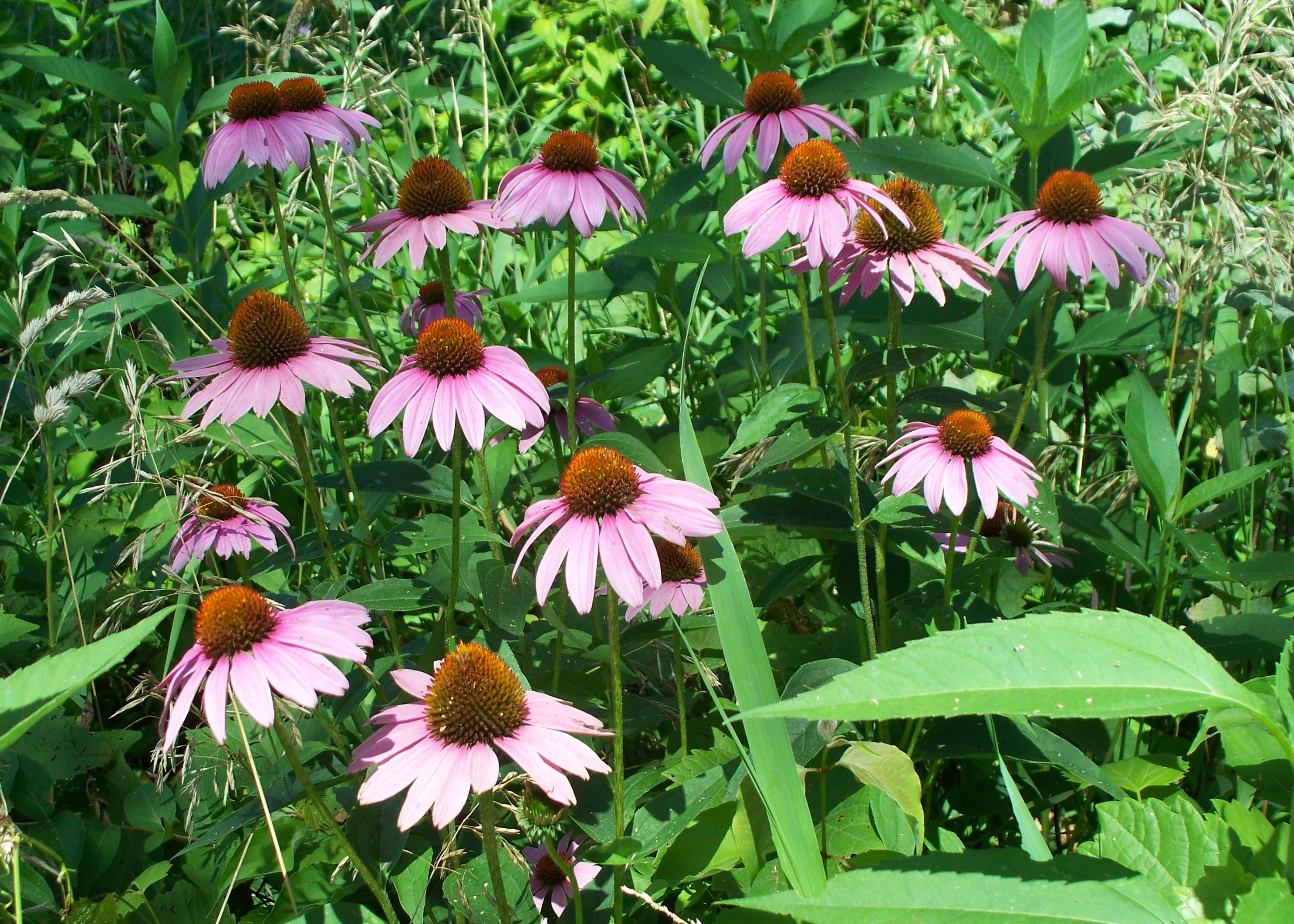
Wildflowers along Lake Macbride

Reading a book about tall grass prairie and savannas has me wondering why people bother preserving them.

Prairie used to cover more than 85 percent of Iowa land, according to the Neal Smith National Wildlife Refuge. Today less than one tenth of a percent of original tall grass prairie remains in the state.

In that context, the Iowa legislature considered a bill to prohibit setting aside new land for conservation with state money. After a popular outcry, the bill was suppressed last week before the first legislative funnel. There is substantial support among a diverse constituency for conserving prairie, savannas and woodlands. Such support drags political will along as best it can.

The Neal Smith National Wildlife Refuge is mostly replanted, which suggests human cultivation rather than a naturally occurring ecology. Which parcel is one of the many original prairie fragments at Neal Smith, and which a human tall grass garden? Presumably guides can point them out. There were no guides when tall grass prairie dominated Iowa landscape.

Either one participates in the culture of tall grass prairie or one doesn’t. It is a culture rather than nature. Throughout the state people and groups work to “restore the prairie” or “restore woodlands.” What does that even mean except as a style of gardening? Partly it means pulling garlic mustard plants and other invasive species during their early growth period. It means cutting down selected mature trees so saplings can survive to replace them. There is enough garlic mustard to make pesto for the whole state if such a delicacy were desired — all this cultivation is a lot of work. A lot of human work doesn’t seem natural.

The ecosystem that was our tall grass prairie relied upon burning the prairie to remove dead plant matter and stop the growth of trees that would shade plants growing close to the ground. Naturally occurring burns have been replaced with prescribed burns which are diligently considered and executed in a way that doesn’t catch whole neighborhood landscapes on fire. A local fire department has been summoned to put out a prescribed burn that got out of control more than a few times. Without burns a parcel of prairie or woodlands would cease to be what humans intended. I don’t know if a new and different ecosystem would be better or worse. If one is a believer in tall grass prairie, different is viewed negatively. Is that hubris?

We tend to forget the role vast herds of buffalo and other grazing animals played in the formation of tall grass prairie. Hooves kicking up dirt contributed to creation of the unique prairie biome. Animal grazing helped shorter plants gain access to sunlight and thrive. Animal droppings helped fertilize. Most of the land is fenced now with buffalo herds diminished and relegated to a form of domesticated hides, steaks, ground meat and sausages.

We are at the end of nature, Bill McKibben wrote in his 1989 book of the same name. There may be something to learn from remnants of tall grass prairie. There may be a human use for seeds from plants that survived and thrived on the prairie. If one is interested in the survival of tall grass prairie it is important to follow the work of people engaged in it. There is also a question.

How will we use our lives to mitigate the effects of global warming? Managing tall grass prairies is one check box on a long to-do list. My answer to “why bother” is that every bit of carbon sequestration has value and that’s what tall grass prairie accomplishes. My problem is under current land ownership policies and practices increasing the amount of tall grass prairie is not scalable quick enough.

I encourage people who seek to preserve parcels of prairie and woodlands to continue. If nothing else, it will improve our personal well-being and that is worth something in this turbulent world.

Categories
Living in Society

In the Odd Year

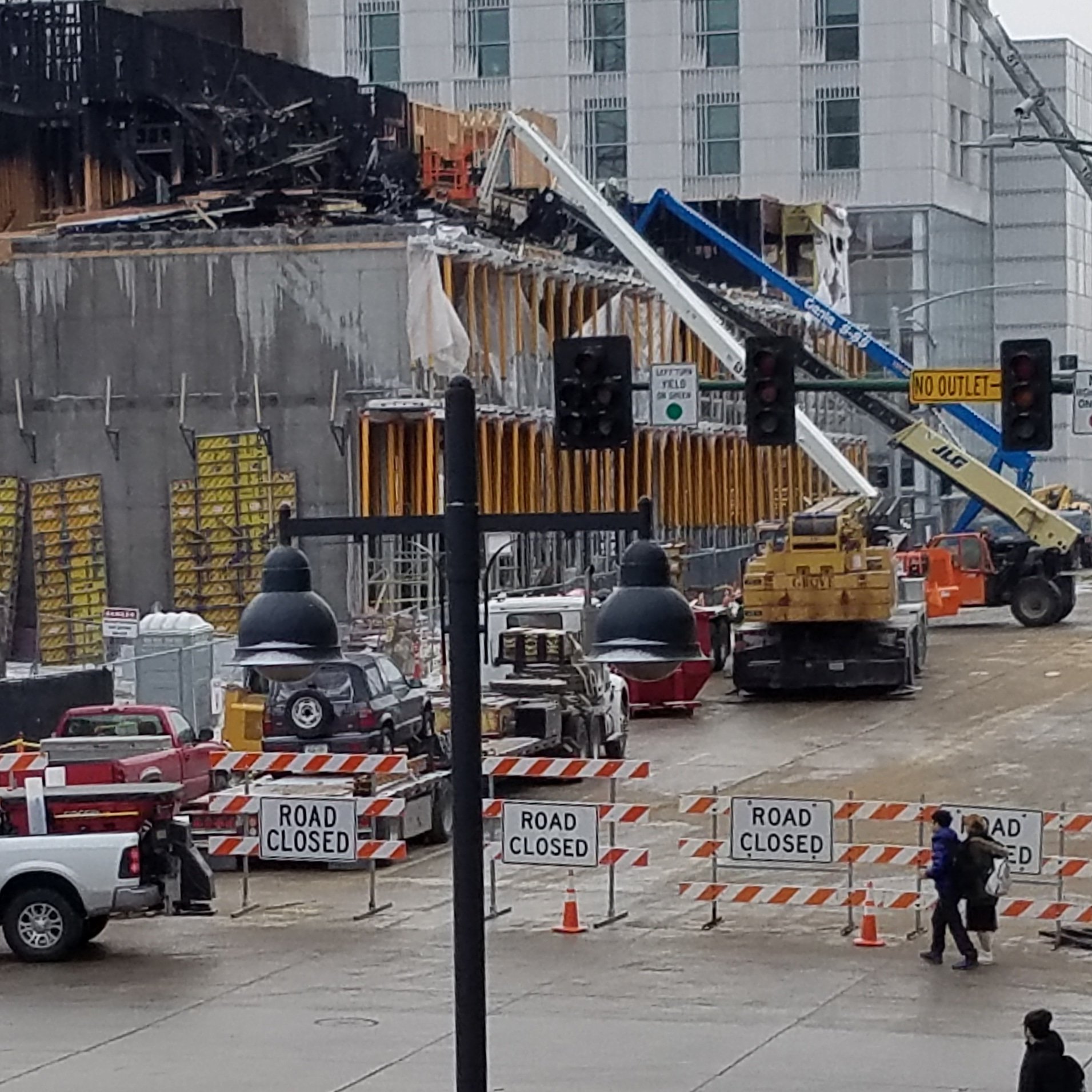
Aftermath of the Hieronymous Square Fire in Iowa City

Our county Democratic party held it’s odd-numbered year meeting last night.

We had little choice in the matter as the call came from state Democratic party chair Troy Price:

The Iowa Democratic Party calls upon each County Party to hold an Odd-Numbered Year Meeting, often called “Off-Year Caucus,” within the first quarter of the year of 2019.

The purpose of the Odd-Numbered Year Meeting is to nominate committee persons to fill precinct vacancies, to discuss priorities regarding platform resolutions, and to begin precinct-level planning for the remaining year.

This call is in accordance with the Iowa Democratic Party Constitution, Article II, Section 4 and has been issued by me as the Chair and approved by the State Central Committee.

All Odd-Numbered Year Meetings must be held by March 31, Price added, continuing the excessive use of capital letters. Bold type is mine.

Former State Senator Bob Dvorsky chaired our meeting. The chair and everyone who was a committee person was re-nominated and elected for another term. Our liberal central committee is mostly about fund raising, volunteer recruitment, and servicing the policy peccadilloes of central committee members. Thanks to the experience and efficiency of our chair, tedium, while present, was kept to a minimum.

State Representative Mary Mascher reported on the recently finished “funnel week” at the state house. There was good, bad and ugly. With Republicans in charge, there was more than enough bad and ugly to go around. As Mascher said, “Republicans took the fun out of funnel.”

There were legitimate victories for everyone in clearing bills from committees. Particularly important was HF608 which would create a uniform process in Iowa for determining which absentee ballots sent via U.S. Postal Service would be counted. Also important was a bill working toward a constitutional amendment to restore voting rights to felons once they paid their debt to society. Contrary to what we can read on social media, it is possible for Democrats and Republicans in the legislature to work together on common goals, and they do. Wish they would do more of it on key issues where we disagree.

Toward the end of the meeting, county chair Chris Taylor kicked off a discussion of deterioration of Democratic presence in rural areas. I piggy-backed onto his comments as did half a dozen others who represent rural communities on the central committee. I had previously explained the challenge Democrats have in rural precincts and quoted some of those election results in my short speech. Results of the recent special election of County Supervisor Royceann Porter place the rural-urban divide in sharp contrast.

It’s not that party officials don’t want to slow or stop the deterioration of support from rural voters, they do. County auditor Travis Weipert asked me after the meeting what could be done about the problem. Answers are hard to come by but it boils down to inclusiveness.

Part of the problem is an often-repeated narrative about electoral margins for which party officials pat themselves on the back. The narrative is a false one in the sense that if Johnson County and it’s margins were removed from statewide results in recent elections, those results would not change. The narrative does little to improve inclusiveness in the county and should be abandoned.

The county party should create a positive, welcoming environment for people who aren’t as involved in politics as central committee members are. Almost all Iowans spend some fraction of their time on politics and the rest of it avoiding the p-word. Democrats should hold signature events — the fall barbecue, the hall of fame induction — while realizing they have little impact on rank and file members of the community. When it gets to caucus day next February, regardless of the outcome, every Democrat should feel like their time was well spent trying to make a difference. As a first time caucus-goer told the group in 2018, “we have to do something.”

If I could recruit a replacement on the central committee, I would. I fill the seat because no one at our caucus would take the job. I’ll continue to recruit someone, all the while knowing it’s possible to flip the precinct from giving Trump a win in 2016 back to a place that elected Obama twice. It will take work and everyone being included. Staying in touch with the urban Democrats is part of that, although not a big one. The odd year caucus puts that in relief.

Categories
Living in Society Work Life

Potluck Luncheon

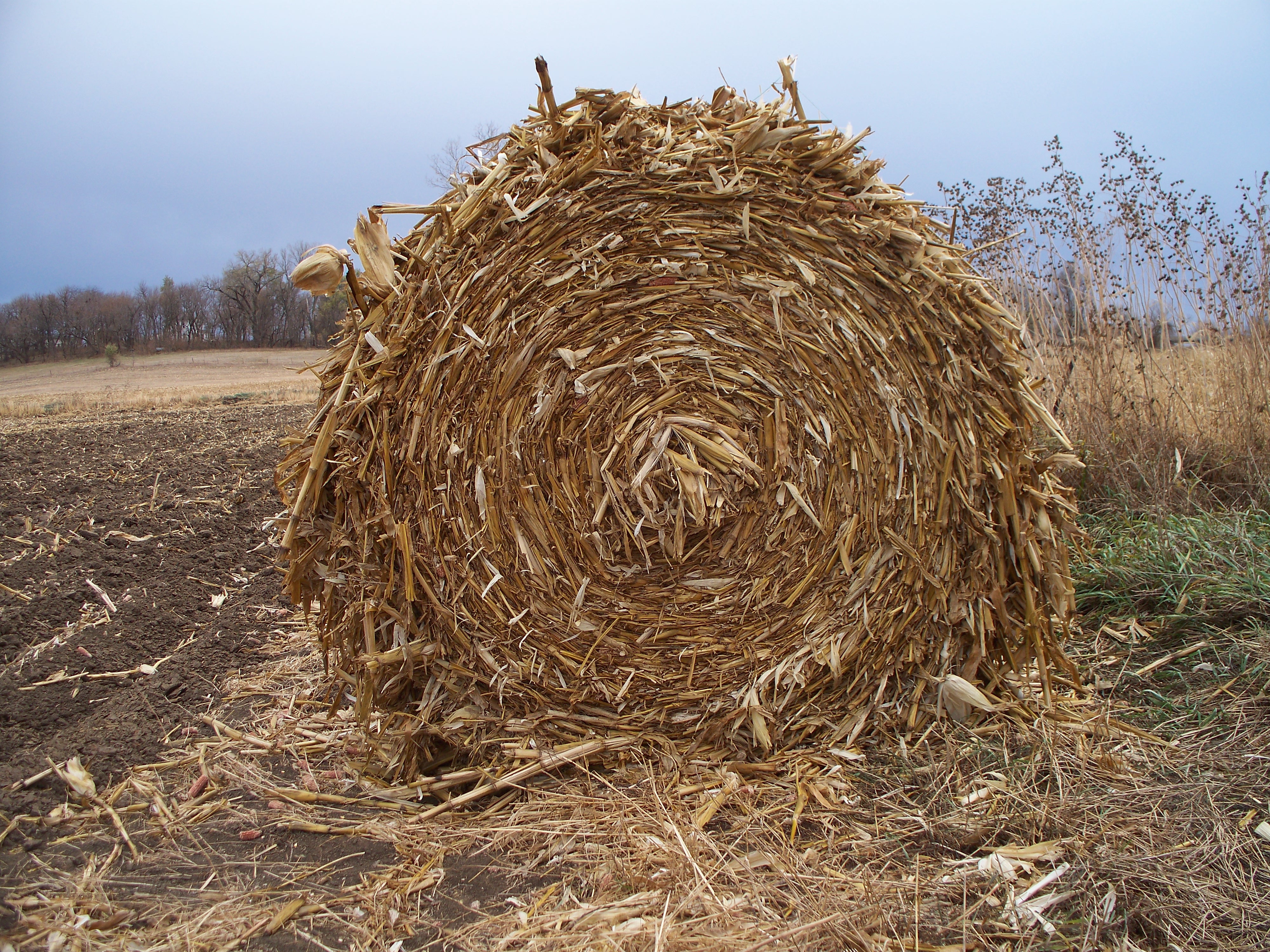
Hay Bale

It runs counter to the Western Christian tradition but employees at the home, farm and auto supply store held a potluck luncheon on Ash Wednesday.

While others were submitting to dust from a priest’s thumb, my co-workers were feasting on loose meat sandwiches, deviled eggs and Amish Wedding fare in the form of pickled green beans and jalapeno-stuffed mushrooms. Tater tots revolved under the heating element of a shared pizza-cooking appliance.

One person brought red checkered tablecloths for our industrial tables in the break room, providing a festive look to the event.

The only penitence among my colleagues was related to over-eating.

The last Chevy Cruze rolled off an assembly line at the Lordstown, Ohio GM plant yesterday. I looked at photos of workers standing around the vehicle and had to look away. Too many memories of heartbreak among factory workers I’ve known. I conducted thousands of interviews with laid off workers when we lived in Indiana. Enough to understand the look in their eyes. Another sad day in the evolution of American manufacturing in the rust belt.

After work I stopped to secure provisions at the warehouse club, comme d’habitude. A farmer called me while I was contemplating the value of pre-cut aluminum foil sheets to be used wrapping root vegetables before baking. The issue was whether I needed a restaurant-sized box of 500 sheets rather than an inexpensive roll of aluminum foil to be replaced from the grocery store as needed. The farmer and I talked about legislation before the first funnel of the Iowa legislature. After 10 minutes we hung up and I decided to wait on the foil squares. I’ve been thinking about this for over a year.

Our county political party is re-organizing tonight. The meeting starts a little earlier than normal and word is the current party chair will seek another term. He’s the mayor of a small city near our border with Linn County. If he wants another term, I’ll vote for him. In our liberal county we tend to find a new chair each cycle, whereas counties with less Democrats in them tend to keep their party chairs for much longer periods of time. The chair has done a good job including old timers like me. The main work of the county party this year is preparing for the 2020 Iowa caucus. I know the drill, and since no one stepped up in 2018, I’m planning to run it again next February.

On my way home from work I noticed a number of homes along the route displayed political yard signs for the same candidate for city council in North Liberty’s March 12 special election. Placement is on or near property where signs saying “Lock Her Up” and “Trump-Pence” continue to be displayed more than two years after the 2016 general election. A reminder that even in the state’s most liberal county the overall political color continues to be red.

The best news this week was after my initial soil-blocking efforts at the farms I feel better with no soreness to report. Now if the frozen ice-pack that is our yard would thaw, I’d be ready for spring. It won’t be long.

Categories
Living in Society

Political Funnel Land

Iowa State Capitol

Monday’s date was written on an almost completed to-do list. I failed to figure out why.

I think it was because South Bend Mayor Pete Buttigieg held two public events in the county seat. At 2:30 p.m. he was hosted by the University of Iowa Democrats at a local bar, and at 7:30 p.m. the Iowa City Book Festival and Iowa City Public Library hosted him in one of a series of LIT Talks where he read from and discussed his book, Shortest Way Home: One Mayor’s Challenge and a Model for America’s Future. Buttigieg is a Democrat running for president in 2020.

Glad I’m not obsessing with the horse race to be president. I also wish my memory was better.

The political news originates from Des Moines where the Iowa legislature’s “first funnel” is this week. That means bills must be introduced and passed out of committee to remain viable for debate during the remainder of session. That is, unless someone, typically in the majority party, wants to stick the language into the end of year bills to balance the budget and close the session. A bill is dead if it doesn’t pass the first funnel, but not dead, dead.

I checked the daily bill roster several times yesterday and found one I believe has merit pertaining to pioneer cemeteries. I wrote an email to the county supervisors:

Supervisors,

House Study Bill 234 pertaining to pioneer cemeteries was introduced to Representative Bloomingdale’s committee on Local Government today. I read the bill and find it to have merit.

I served as a Big Grove Township Trustee for one four-year term. We managed Fackler’s Grove Cemetery near Seven Sisters Road which meets the criteria for a pioneer cemetery outlined in the legislation. George Fackler is said to be the first person who died in the township and is interred there. The cemetery had been neglected for many years and despite efforts between the trustees and the Ely Historical Society, little progress has been made identifying the graves, if that’s even possible at such a late date.

The question the legislation poses is whether management of the county pioneer cemeteries should be by the township trustees or a centralized county commission for that purpose. I favor the commission approach because of its potential to make the county approach to pioneer cemeteries more uniform.

I realize you have a lot on your to-do list, but if this bill makes it out of the first funnel I hope you will support it.

Thanks for your work on the board.

Regards, Paul

Many bills were filed yesterday addressing fundamental issues with government. There was a bit of fluff, but you’ll have that.

This morning I wrote the chair and ranking member of the State Government Committee about HF 608 which is “an act relating to the tracking and counting of mailed absentee ballots.” The post office no longer uniformly postmarks mail but they do affix a bar code with a time stamp in it. This unresolved technical issue could have changed the 2018 general election results in House District 55 where a number of ballots that lacked a postmark, yet had a bar code, weren’t opened or counted. The law needs fixing to keep up with post office practices and so voters will not be disenfranchised by a minor process deficiency going forward. We’ll see what the legislature does this week.

Adults in Iowa spend some part of their time discussing politics and the rest of their time pretending politics doesn’t exist. Yesterday was a day to spend in political funnel land. I’m not sure I’m the better for it.

Categories
Home Life Writing

Used Book Sale and Other Necessities

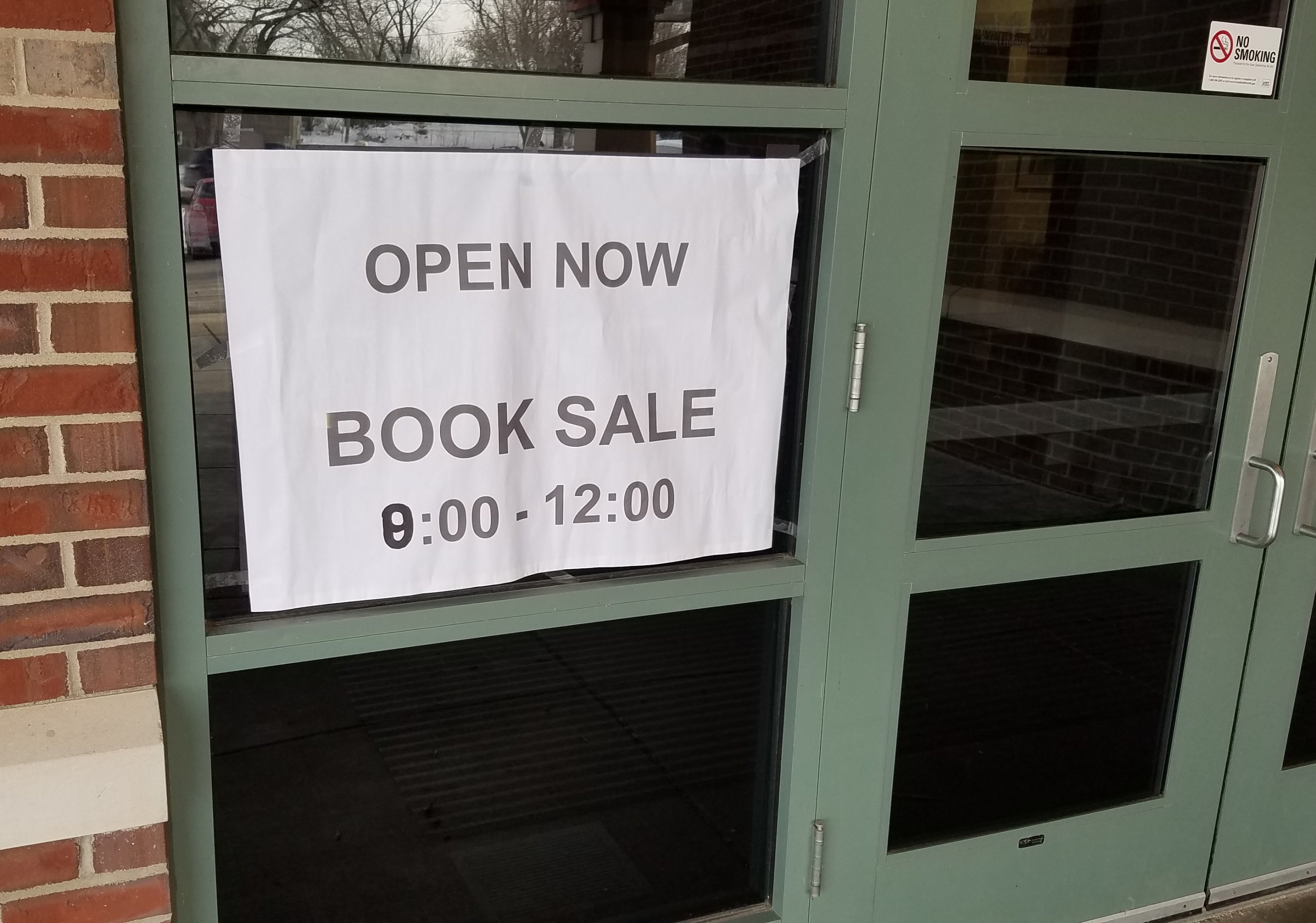
Sign for the Book Sale at the Solon Public library

Yesterday was the annual used book sale at our library.

In addition to clearing the stacks of unpopular or outdated books, the community donates books, media and labor to manage the sale.

Each item is reasonably priced and this year’s proceeds were about $800. That’s a lot of $0.50 and $1.00 books.

I spent ten bucks on ten past issues of the Wapsipinicon Almanac, three large format picture books about Yellowstone National Park, the Vietnam War, and the Marx Brothers, one fiction book, Water for Elephants by Sara Gruen, and a book of poetry, Songs of a Sourdough by Robert W. Service. I spent part of the afternoon reading Service’s poetry about the Yukon. First published in 1907, the copy I got is more than 100 years old. Thoughts of surviving bitter cold, wolves, pine trees, bonfires to stay warm, dog sleds, and the gibbous moon roamed my consciousness for the rest of the day.

It is doubtful I needed more books. The measure of a person’s library is less about reading or having read every book in it. A personal library is more a reminder of what we don’t know. I don’t feel guilty having more books than time to read them. I’m lucky to have a stable home life and the space to fit in a few more books after a used book sale in town. The house hasn’t exploded… yet.

I’ve been buying clothing this year. In 2018 I spent $281, and this year I already spent $150. T-shirts, jeans, socks and underwear, along with a few sweatshirts and woven shirts make up my wardrobe. For funerals and weddings I keep one pair of dress slacks, a good shirt, some neckties, two pair of shined shoes from when I worked in the Chicago Loop in 1991, and a blue blazer. Judging from what people wear to funerals and memorial services, I could get by with a decent pair of jeans, a woven shirt and a newer pair of sneakers.

There was a gift of four t-shirts and a sweatshirt from my spouse. The t-shirts are for the shepherdess to imprint next time she silk screens an image from the farm. I missed out last year because most of my shirts already had something printed on them.

The big 2018 expense was a pair of steel-toed boots to wear on my shifts at the home, farm and auto supply store. Last week, after my shift, I bought a new overcoat using my employee discount.

Me: I need a new coat.
Cashier: You really do.
Me: I know… big grease stains, broken snaps and zipper… it’s disreputable.
Cashier: Oh my!
Me: It will be my first Carhartt… this is Walls. Well I do have a pair of Carhartt bib overalls.
Cashier: Every man has those.

When I worked in the Loop I quickly wore out the pants in my suits. I picked styles where I could get multiple pairs of matching slacks. I don’t need fancy work clothes at the home, farm and auto supply store where the main issue is the quality of Wrangler jeans purchased on discount for less than $20. The denim must be of an inferior quality because holes show up in unexpected places after washing. Too, the radio and box cutter wear a hole just below my belt line on the left side. I asked the Wrangler sales representative about this at a recent trade show. He didn’t have any good answers except to buy more expensive jeans. I didn’t mention my low wages.

Food, shelter and clothing are traditional basic needs. Add potable water, clean air and sanitation and that’s still really basic. A good night’s sleep? Needed, but optional. Without these things, the need for survival dominates our daily lives. Education, healthcare, transportation and internet access are basic needs according to Wikipedia, but seriously, while important, those are extra when it comes to survival.

A lot of people would have us return to life as basic survival. For our family, years of hard work made us financially stable and built a foundation so we don’t often worry about survival. As long as there are used book sales and employee discounts at the home, farm and auto supply store we’ll be alright. Knowing a bunch of farmers and a good auto mechanic helps.

Wolves are mentioned in the history of Lincoln County, Minnesota where my grandmother was born. Wolves can be an issue, but mostly one read about in books about the Yukon… or Iowa and Minnesota at the time of settlement. As we live our modern lives it is important to remember there were once wolves, even if their meaning is lost for want of an education. Education is a salve for our worries. That’s part of why library used book sales remain important.