Categories
Writing

Anti-war Demonstrations University of Iowa 1971

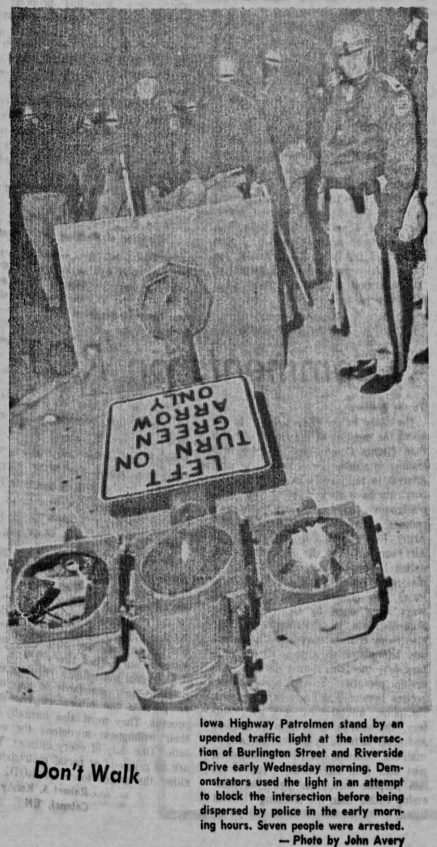
Photo Credit – The Daily Iowan, May 13, 1971.

Anti-war sentiment ran strong among my cohort of university students. Many felt like I did: we opposed the war yet as new students were hesitant to publicly protest. Spring 1971 was my first year experiencing student anti-war demonstrations at the University of Iowa. To hear then-university president Willard Boyd tell it, anti-war demonstrations were non-existent that year, receiving no mention in his autobiography, A Life on the Middle West’s Never-ending Frontier. Boyd had a specific narrative to tell about the demonstrations. The period from Kent State on May 4, 1970, until May 1972 encompassed most of the anti-war activity at the University of Iowa campus, he wrote.

During the 1971 demonstrations, he held a meeting in the student lounge at the Quadrangle dormitory where I lived. I attended and Boyd seemed engaged and reasonably open minded about balancing needs for free expression by students, law and order in the community, and controlling how events evolved through policy. D.C. Spriestersbach, dean of the Graduate College in the 1970s, presented a timeline of campus turbulence from 1965 through 1972 in his memoir The Way it Was: The University of Iowa 1964-1989. Because of his position, his narrative, like Boyd’s, is tilted toward the administration’s view of the protests. It is familiar yet it was not the whole story.

While in high school I participated in an anti-war demonstration outside the Davenport Armory after Kent State, and in a student strike of classes. I kept to myself in Iowa City. I was inexperienced at living away from home.

Feb. 10, 1971 was a day of student meetings about the Vietnam War at the Iowa Memorial Union. There was an all-day teach-in attended by more than 1,500 people. A variety of speakers made presentations about war itself, and the history of Vietnam War specifically. About 500 people met that evening to draft demands of the State Board of Regents and develop a plan of action to protest expansion of the war. The next day, Student Senate President Robert Beller read the demands at a meeting of the board of regents, saying in part, “We will act to stop university involvement in the war effort and university contribution to the domestic oppression related to the war-unemployment. Therefore, we demand that (1) The University of Iowa end complicity with the war – abolish ROTC, war research and war recruiters. (2) The university end all layoffs of campus workers.”

The next day there was a demonstration at the Iowa Memorial Union attracting about 50 people. The group walked from the union toward the Rec Building where a group of ROTC students was conducting drills. Finding the door locked upon their arrival, they next went to the University Field House where they ransacked the ROTC offices. They left the Field House and milled about near the Rienow, Quadrangle and Hillcrest dormitories, then crossed the Iowa River to the Student Union to see if they could gather more protesters. They then went to Campus Security and to the U.S. Post Office where the Johnson County Draft Office was located. The crowd had dwindled by that point.

A large-scale demonstration and celebration had been planned for May 1, yet there was no place on campus large enough to accommodate the number of people expected to attend. President Boyd granted permission for the event to be held at the Macbride field campus near Lake Macbride. The Daily Iowan estimated 12,000 people attended the non-stop day of speeches and musical acts. I attended and it was more rock festival than anti-war demonstration. Alternative activities and a 10 p.m. demonstration on campus were planned for those who couldn’t make it to the field campus for the main event.

While anti-war demonstrations began in April, violence began on Wednesday, May 5. Here is the description from Spriestersbach’s book:

Anti-War Violence Strikes City – Scattered Arrests Follow Three Hours of Trashing. A handful of people were arrested Wednesday night (May 5) after a crowd of anti-war demonstrators estimated at an average of between 400-500 people ranged through Iowa City for four hours breaking windows and blocking traffic. About 100 law enforcement officers, including Johnson County Sheriff’s Deputies, the Iowa Highway Patrol and the Iowa City and Coralville Police Departments, dressed in riot gear, charged down Clinton Street and into the Pentacrest to break up the crowd shortly before midnight.

On Friday, May 7, someone set off an explosion near the Iowa City Civic Center with two or three sticks of dynamite causing thousands of dollars of damage. Monday, May 10, for the first time during the demonstrations, law enforcement used teargas to disperse an anti-war demonstration at the University of Iowa Pentacrest. Also, that day, about 40 people conducted a sit-in at President Boyd’s office. Law enforcement made the decision to clear the streets of all people by the end of the day, according to the Daily Iowan. Each of these events was violent, so I stayed in my dorm room when not in class or at the dining hall.

On Tuesday, May 11, there were more demonstrations. Law enforcement called in members of the Scott County Sheriff’s posse to assist. I stayed away from demonstrations that included violence and vandalism, although that evening changed my mind.

After nightfall I walked from the Quadrangle downhill to Grand Avenue to see what was going on. A student had built a crude catapult to take to the roof of Hillcrest dormitory and send rocks flying down on law enforcement officers as they came up the hill toward the dorms. As a former engineering student, I cast a skeptical eye on the contraption. Descending the hill, I found officers had closed the intersection with Riverside Drive and were assembling there. There was construction halfway up the hill to the Field House on Grand Avenue and some students moved concrete culverts around and started them rolling down the hill toward law enforcement. As the first culvert reached the bottom of Grand Avenue, and officers began advancing up the hill, I turned around and headed back to my room to wait out whatever might happen.

According to The Daily Iowan, one of their reporters was at the police station when news of the disturbances near the dormitories arrived. They overheard Highway Patrol Captain Lyle Dickinson order officers to “take the gas gun. Lob some gas in and chase the others up the hill.” And so, they did.

I heard the commotion outside yet stayed in my room. That is, until I began to smell tear gas. I opened the window facing the courtyard and saw a tear gas cannister ignited and bouncing towards the center of the courtyard. I headed outside to escape the fumes. After it was over that night, we blamed the rough handling students got on the Scott County Sheriff’s Posse, although it was the Highway Patrol who were in command of the operation.

A junior student named David Yepsen, who later became a journalist, was quoted in the newspaper, “(the teargassing of the dormitories was) an over-reaction on the part of the police. It was totally out of line. They made a grave mistake in doing that.” None of us liked it and people who had been neutral toward the anti-war demonstrations were now provoked and activated after our dormitories were tear gassed. Overnight, seven persons were arrested, and 16 patrolmen and 3 students injured. Governor Robert Ray dispatched 200 Highway Patrol officers to assist local law enforcement.

With the presence of uniformed Highway Patrol officers on campus, Wednesday, May 12, passed without disturbances. Peace continued through Saturday. On May 14, President Boyd suspended outdoor rallies and Monday, May 17, classes ended for the academic year. The entire series of anti-war demonstrations in April and May made us feel powerless to influence our government and the interminable war in Southeast Asia.

I was much more active the following year when demonstrators briefly shut down the eastbound lane of Interstate 80.

This is an excerpt from a draft of an autobiography in progress.

Categories
Writing

Saturday Morning Rainstorm

Friday night pizza dough with sauce ready for toppings.

Rain is forecast all day, making this a Saturday to stay indoors. If the storms clear, I’ll go on walkabout. Otherwise, I’m making a second pot of coffee.

There is plenty to do in our community. The United Methodist Church is hosting a “Pharmacy Brown Bag” at which we can take and turn in unused and expired medications for proper disposal. We gathered a bag of pills to be delivered. Friends of the Public Library is hosting their annual used book sale, although I have plenty to read and will skip the sale this year. I lean toward reducing the number of books in the house. There are political events, including a meet and greet in Marengo for our recently declared state representative candidate. The one way hour drive seems too far for a single purpose trip.

Soup is already made for supper so a rainy Saturday is an opportunity to get things done indoors. I will focus on creative endeavor in the form of writing, reading and gardening. Without a source of income like our pensions, I don’t know how creative people make ends meet.

I know several people who consider themselves to be “content creators” on social media platforms like Twitch, YouTube and Tik Tok. They work full time creating content and try to make a living from it. I don’t know how they do without a supplemental source of income. There is money to be made as a content creator yet not enough to pay typical living expenses of $30,000 or more per year.

One individual said in a Facebook post being a content creator takes time away from their previous income pursuits of playing music and writing books. They also mention how many hours are involved and how tired they constantly are. There are no pensions in being a content creator so I’m not sure how it is sustainable as one ages. There may be a niche market for a septuagenarian content creator, yet the role assumes another source of income as a platform.

One of the full-time Twitch streamers I follow has almost daily streams where they are “just chatting.” Whenever I visit, the screen is filled with a well-groomed image of them at a microphone interacting with viewers who make chat posts. I don’t know how the streamer is so positive for five or six hours at a time but he is. One of the tags in the stream is “mental health.”

The attraction for a viewer is that as we became isolated during the coronavirus pandemic, we craved community. I’ve been following streamers for more than a year and the same users gravitate toward the same kinds of streams. I often find myself in streams tagged English, Social Eating, LGBTQIA+, Makers and Crafting, Safe Space and Mental Health. I particularly like streams hosted outside North America tagged English. The interaction between streamer and viewers is a way to establish a feeling of safety and community on the internet. The best streamers address every chat post in a positive manner.

Social media has become an important means of self expression if one accepts it for that. I don’t know about making a living from YouTube or the others. I’m not sure my way of making a living by working jobs that paid into Social Security and Medicare for 54 years was an improvement over the vagaries of being a content creator. The early decisions I made at university paved a path where I could create written works. It freed me from the idea that I needed to earn money with my writing. That has made a difference.

Categories
Living in Society

Joint Statement Condemning Nuclear Threats from Russia

B-61 Nuclear Bombs

FOR IMMEDIATE RELEASE: 
March 2, 2022

Joint Statement from the Nuclear Weapons and Arms Control Working Group Condemning Russian Nuclear Threats

WASHINGTON, DC— Senators Edward J. Markey (D-Mass.), Jeff Merkley (D-Ore.) and Representatives Don Beyer (VA-08) and John Garamendi (CA-03), co-chairs of the Nuclear Weapons and Arms Control Working Group, today issued the following statement condemning Russian nuclear threats:

“On Sunday, Russian President Vladimir Putin ordered his country’s nuclear deterrent forces to be put into an alert status, further intensifying his unjustified and unprovoked invasion of Ukraine by threatening a nuclear attack.  

“We, the Co-Chairs of the Nuclear Weapons and Arms Control Working Group, condemn President Putin’s threats to escalate a conflict of his own creation into nuclear war. His invasion of Ukraine has already resulted in the tragic loss of life, and an escalation to nuclear war would bring untold additional suffering. 

“President Putin should recall what he said in January, along with leaders from the United States, France, China, and the United Kingdom, that ‘a nuclear war cannot be won and must never be fought.’

“We applaud the Biden administration for trying to deescalate against such provocative actions and for making clear that America’s own alert status has not changed. It is in the fog of war that there is the greatest risk that a conventional conflict escalates into a nuclear one. That is why it is imperative that the United States, Russia, and all nuclear powers back a No First Use nuclear policy and affirm that the sole purpose of nuclear weapons is to deter the use of nuclear weapons. The crisis in Ukraine is evidence that there are no plausible military options for direct confrontation between the United States and a nuclear armed adversary – and the folly of investing $1 trillion in unusable new U.S. nuclear capabilities. 

“At the same time, as the U.S. works in lockstep with our European allies to rebuff Russian aggression, we must coordinate closely on our nuclear policy as well. The U.S. Department of Defense should also continue its efforts to open military communication channels with Russia, as they have done in other theatres where the Russians are present, so that “red-lines” are not inadvertently crossed. 

“President Putin has already made his country a global pariah by launching an unjustified and unprovoked war against Ukraine. His threat to escalate his meritless invasion of Ukraine into nuclear war would cross a line from which our world cannot return. The United States and its allies must do everything in their power to disincentivize this dangerous and costly mistake.

“We continue to stand firmly with the people of Ukraine in this crisis as they fight to preserve their sovereignty and democracy,” the lawmakers said. 

Categories
Kitchen Garden

Spring is Coming 2022-Style

Working in the garage with door open on Wednesday, March 2, 2022.

I resumed daily walkabouts around our property line after the snow melt and noticed the toll taken on our trees. Of 15 remaining trees, all but one of which I planted, only six have no apparent issues.

Most of them are damaged from either the 2020 derecho, or from one or more of the straight line wind events we’ve had in recent years. Disease is creeping into the two EarliBlaze apple trees as lower branches blacken, die, and are cut off in pruning.

The Green Ash by the house appears to be doing well. We expect the Emerald Ash Borer to take it eventually, although there had been no infestation as of yesterday.

The Bur Oak is native to Iowa and is also doing well. Planted in the 1990s, it will come to dominate the front yard as years progress. It is a good tree. In the backyard there is a Bur Oak planted from an acorn from the one in front. There were three oak trees planted from acorns near the garden at the same time. Two of them blew a kilter during the derecho. I removed one last year and the other needs to come down. The backyard Bur Oak that will remain is flourishing.

The pear tree planted at our daughter’s high school graduation party is thriving. We all placed some kind of organic matter in the hole before planting it. Most years we get pears. They are sweet and juicy and some years there are enough to put up pear sauce. The only issue is it is growing too tall to collect all the ripe fruit. It was a nice addition to the back yard.

The two apple trees planted near the garden have been growing acceptably. I hope they begin to fruit before the three remaining apple trees have faded and are gone.

It is unclear what to do about the trees this spring. I considered taking scions from the Red Delicious tree and growing new from the same genetics. The trouble is it will take from six to eight years for them to grow to maturity and fruit. That’s too long for a septuagenarian to wait.

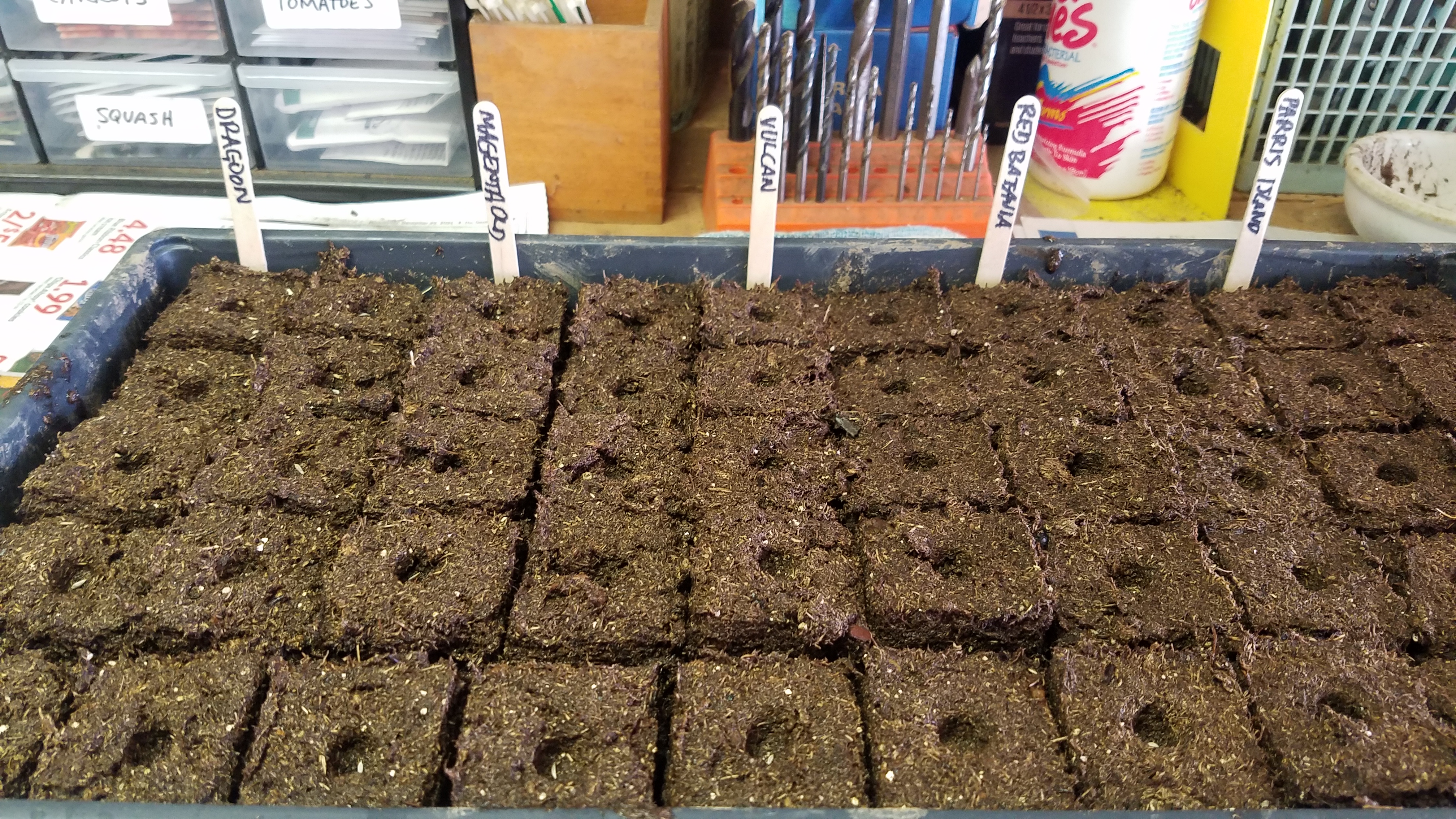
I planted lettuce. My maternal grandmother passed down the tradition of planting “Belgian lettuce” on March 2. Usually it is to be direct seeded, although the ground was still frozen. I honored the tradition by planting a flat indoors for transplant into a row covered planting area. Spring is coming and we’ll want lettuce when it arrives.

“Belgian lettuce,” March 2, 2022.
Categories
Living in Society

Images from the Russian Invasion of Ukraine

Photo Credit – Goodreads

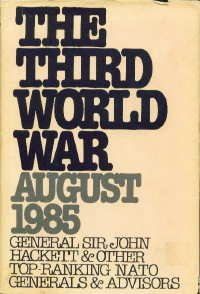
In his 1979 book The Third World War: August 1985, General Sir John Hackett identified that the public generally disregards the possibility of war. He wrote about the role media embedded in combat units would play in his hypothetical war, bringing home different aspects of the conflict from what had been experienced in previous wars. What he didn’t predict was the role of mobile devices sending video and photographs from war zones like those we see on social media posts from Ukraine.

At the time, when I was returning to Iowa after leaving military service in West Germany, Hackett’s book was a page from the lives of everyone like me who participated in making battle plans to defend Western Europe as Soviet army units attempted to penetrate the Fulda Gap. Hackett was right about new methods of reporting from war zones. The experience is more immediate after the rise of Twitter and social media. It changes everything.

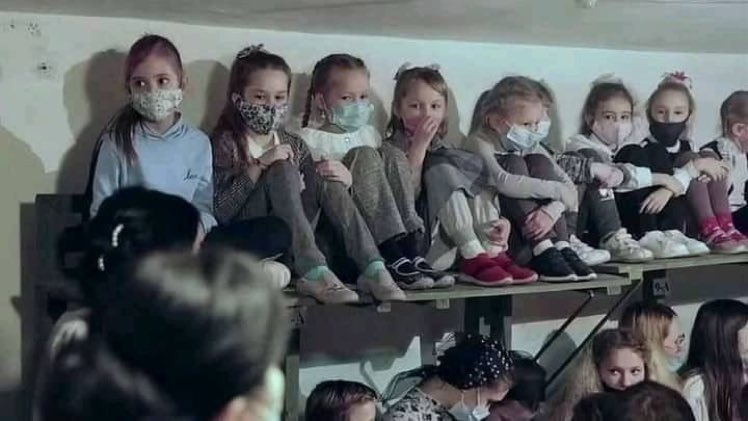
It is difficult to winnow kernels of fact from streams of social media. While something real goes into images posted there, their meaning and veracity, is an open question. It is not helpful that certain photos, like those of children in a bomb shelter, get the most views. I mean photos like this.

Image from Twitter feed of @anniegowen.

We should take video and photographs coming out of Ukraine with a grain of salt. We should resist confirmation bias and let the events tell their own story. That may not be possible, yet it is important to how we determine what political action our country should be taking.

For example, is this photograph posted on Twitter real or fake? I separated it from the accompanying text which appears below.

Image from Twitter feed of @olex_scherba
Text from Twitter feed of @olex_scherba

The post appears to be real. While the reliability of this reporter is known, there has been an attempt to create a fake profile of him as part of a larger disinformation campaign by the aggressors.

Most reasonable people know social media posts are hardly unbiased information. We should remind ourselves as they become a major source of information about the Russia-Ukraine conflict.

Categories
Reviews

Book Review: Bet the Farm

The craftsmanship of Bet the Farm: The Dollars and Sense of Growing Food in America by Beth Hoffman is good, better than many books I read. For people unfamiliar with the challenges of Midwestern, sustainable agriculture, it is a good introduction, covering most issues.

Hoffman is a member of Practical Farmers of Iowa and so am I, so there are some connections. Even though we never met, I know people she mentions in the book and we would likely have friends and acquaintances in common. The PFI community is not that big.

For nine seasons, I worked with beginning and experienced farmers who operate community supported agriculture projects, large vegetable or fruit farms, and raise livestock, so I know some of the work and the challenges. In total, I worked on or did interviews for newspapers on a dozen or so of them.

As she mentions more than once in the narrative, she is from the coast and the land was owned outright by the Iowa family. The former is more typical of beginning farmers, the latter isn’t. It is a good book, yet I hoped there would be a connection to the author and her narrative. There wasn’t.

Bet the Farm was a quick read and if a person is interested in this topic, there are a number of other works by beginning farmers I’d read first.

I wish Beth and John good luck on their farm and would read another book about their progress after they have been farming five or ten more years.

Categories
Living in Society

Sleepless Night

Is Spring Coming?

Around midnight I woke with my mind racing. There was a high-pressure fire hose full of news on Monday. It is continuing into Tuesday.

With Ukraine being eight time zones ahead, there were a lot of reports coming in via Twitter when I looked at the mobile device in bed. Much of the information was negative. The fact there is a war in Ukraine at all is negative. If Russian Federation President Vladimir Putin intended to make quick work of conquering Ukraine, he failed.

Putin put Russian nuclear forces on high alert and no one is certain what that will mean, other than creation of an opportunity for unintentional detonation of nuclear warheads. Monday President Biden said people should not fear a nuclear war. He obviously has information I don’t, yet knowing this is happening raised my personal tension a notch.

The Intergovernmental Panel for Climate Change released their latest report yesterday. The last sentence of the 3,675-page report says it all. “Any further delay in concerted anticipatory global action on adaptation and mitigation will miss a brief and rapidly closing window of opportunity to secure a livable and sustainable future for all.”

The U.S. Supreme Court heard oral arguments in West Virginia v. EPA on Monday. Justice questions centered around “major questions” which should be decided by the Congress, not by a regulatory agency. The fear is SCOTUS will severely limit the kind and amount of regulation the Environmental Protection Agency can introduce, sending any action on controlling greenhouse gas emissions back to a stalemated Congress. With a 6-3 conservative tilt, Republicans got what they wanted when President Trump appointed three justices during his term in office.

Republicans in the Iowa Legislature are making laws without regard for dissenting voices. They have a clear majority and are passing whatever laws pop into their heads. The degrading of intellectual standards among lawmakers is obvious and frustrating.

I continue to wait for dust to settle and determine personal next steps. Spring will soon be here, I’m working on income taxes, and once garden planting begins there will be a rush toward Memorial Day. Things seem a bit out of control.

Later this morning I will take a nap. Otherwise, I’m unlikely to make it until supper time. With everything going on, it is hard to sleep and unlikely there is any returning to normal. It is hard to know what the new normal will be.

Categories
Reviews

Book Review: The Hidden History of Big Brother in America

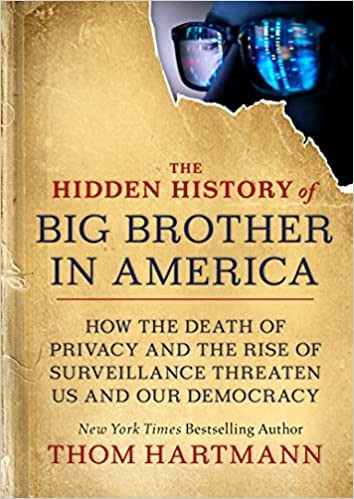
In The Hidden History of Big Brother in America: How the Death of Privacy and the Rise of Surveillance Threaten Us and Our Democracy, author Thom Hartmann focuses on Big Data and its consequences for all aspects of our lives. In the framework of surveillance and social control, Hartmann traces the history of surveillance and the threat of violence to control behavior, thought, and belief by our political and social masters.

Referencing George Orwell’s book 1984, Hartmann wrote, “Orwell was only slightly off the mark. Big Brother types of government, and Thought Police types of social control, are now widespread in the world and incompatible with democracy.”

What makes this book timely is the way Trump campaigns used Facebook and Cambridge Analytica to scrape personal data about tens of millions of voters from the internet, and then custom targeted them with tens of thousands of distinct daily ads designed to either persuade people to vote for Trump or not vote at all. On the day of the third presidential debate in October 2020, Hartmann wrote, team Trump ran 175,000 variations of ads micro-targeting voters. These ads were, for the most part, not publicly seen.

Here in Iowa the Republican legislature seeks to control our behavior with legislation intended to address perceived constituent needs. Iowa Republicans approach it with a dull knife. For example, because of feedback and paranoia about transgender girls, Republicans introduced legislation to ban trans females from Title IX activities. This legislation would create discrimination for sure, and potentially a bullying environment for children. They seek to control our behavior and even such crude attempts at social control are anti-democratic. By using bludgeoning methods, Iowa Republicans were not nearly as effective as Trump’s use of Big Data to spy on voters and use what they found to influence their decisions.

Thom Hartmann

Whether one is liberal, conservative, libertarian or whatever, we have concerns about how Big Data firms like Google, Facebook, Oracle, Microsoft, Amazon, and others surveil and use data we consider to be private. In the beginning we considered such data collection and use to be for advertising like generating sales for a brand of energy drink. Whether it is conservatives who have paranoid feelings that “Big Data” is collecting personal information, censoring and manipulating people, liberals who see companies like Cambridge Analytica violating their privacy, or Amazon Ring customers concerned about law enforcement gaining warrantless access to video from the camera at their doorstep, Big Brother is watching us, eroding our privacy, and threatening our democracy.

In The Hidden History of Big Brother in America, Hartmann uses extensive examples to highlight the consequences of Big Data on our lives. He traces the history of surveillance and social control, looking back to how Big Brother invented whiteness to keep order, and how surveillance began to be employed as a way to modify behavior. “The goal of those who violate privacy and use surveillance is almost always social control and behavior modification,” Hartmann wrote.

Big Data threatens privacy and enables surveillance, Hartmann wrote. The lack of alternatives to lifestyles that involve feeding into Big Data leads to almost forced participation in surveillance by Big Brother. Surveillance and lack of privacy are a threat to freedom, he wrote, because the information gathered can be abused, people have a right not to be observed, and being observed is an intervention that can affect those who are observed.

Are we doomed to live under Big Brother’s watchful eye? How much social and political control should corporations have in society? How much Big Brother will modern people tolerate? For discussion of answers to these timely questions and more, I recommend the Hidden History of Big Brother in America.

Thom Hartmann is a four-time winner of the Project Censored Award, a New York Times bestselling author of thirty-two books, and America’s #1 progressive talk radio show host. His show is syndicated on local for-profit and nonprofit stations and broadcasts nationwide and worldwide. It is also simulcast on television in nearly 60 million US and Canadian homes.

To buy a copy of the Hidden History of Big Brother in America: How the Death of Privacy and the Rise of Surveillance Threaten Us and Our Democracy, click here. The book is available March 8, 2022.

Categories
Living in Society

Planting for Change

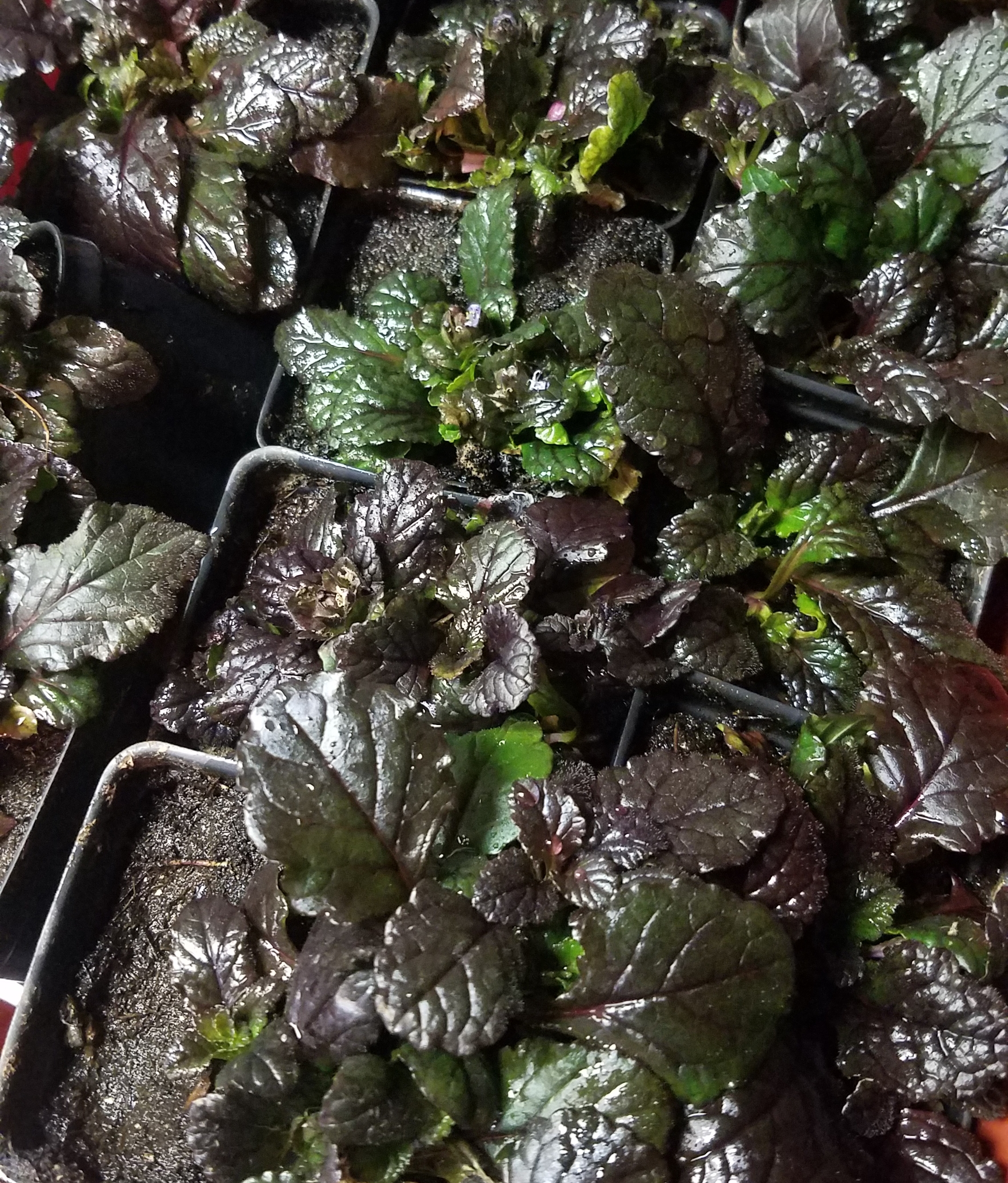
Ajuga rescued from the lawn.

Ajuga is a hearty plant. In the 1990s, we brought some from my father in law’s home to use as ground cover. It spread until plants were visible all along the drainage ditch on the north property line, stretching some 80 feet from the house into the ditch. We hope to use it in the planting area in front of the house this spring.

The last couple of years, before the coronavirus pandemic, there was a small crew of guest workers from Ukraine at the orchard. They were great guys, hard workers, and all with families left behind as they worked in Iowa. They lived in an apartment over the retail space and could be seen hanging around outside their apartment as I left work each day. I hope they and their families are alright during the war.

Our household has been consumed by news of the Russian invasion of Ukraine. We feel powerless. After receiving more than two dozen messages from politicians asking for a donation yesterday, I got an idea.

World Central Kitchen came to Iowa to support us during the aftermath of the 2020 derecho. Chef José Andrés set up World Central Kitchen on the Ukraine-Poland border to feed refugees. I went to a computer and found the non-profit and made a small donation.

It’s a drop in the bucket of needs for humanitarian assistance. It was something useful. We need more of that as the tension escalates.

Categories
Kitchen Garden

A Recipe Can Lead to Disaster

My recipe book.

We have plenty of recipes in our household. When I’m cooking, I rarely follow any of them. No worries. The end product has always been edible.

Every cook understands following a recipe exactly can be a disaster. A recipe functions like a tool in the kitchen, not a computer algorithm. Recipes are also the starting point for developing one’s own cuisine, not the end result. Cuisine is about actual dishes created and eaten from a kitchen, not some abstraction of design.

An example is the recipe for lemon chicken my maternal grandmother prepared from time to time. I asked her to write it down. Somewhat reluctantly, she did: on the back of an envelope, in front of me, from memory. There was an omission. Lemon was not listed in the ingredients. I had watched her prepare the dish and saw her squeeze the lemon. The interplay of memory with cooking is an underappreciated aspect, and little to do with written or printed recipes.

When baking, I follow ingredient amounts in a recipe carefully because the science is more specific. Even so, actual temperature in the oven, what kind of baking dish is used, humidity, and elevation above sea level all play a role and can create variations in the end product. Learning how to cope with variations is part of being a cook.

Variation on a recipe is expected and usually welcome. Chef Jacques Pépin explains it better than I in this short video. As he might say, “Happy cooking.”