A new perspective revealed itself from paths traveled daily.
Something showed through the uncut grass and garden in the light of a rising sun.
I should quit thinking and mow the damn lawn.
It depends. What time will I finish at the orchard? How will I feel after interacting with locals for a shift? Will the press of decaying produce draw me into the kitchen again? How guilty will I feel about letting grass grow long?
So much depends. If conditions are right — temperatures moderate, weather dry, and a couple hours of remaining daylight — I may mount the John Deere and make a first pass. The lawn is so long it will take at least two.
So much depends upon weather, capacity for work, and a will to sustain our lives in a turbulent world.
I looked up and saw the vanishing point through the middle of my garden for the first time in 23 years this has been our home.
It has been there all along, the work of the farmer who subdivided his homestead, the surveyors who platted the lots, and the home builders who positioned structures according to convention and restrictive covenants recorded at the county administration building. I played my part unintentionally by positioning my garden in the southeast corner of our lot.
It was hard to miss.
Yet it was there. I walked into it and am still here.
A goal of a writer should be to provide unique insight into contemporary society informed by life events. If what’s written is not so informed, then why bother?
At the rate internet memes are cranked out and distributed in conventional social media channels, a primary source for contemporary information and opinion, it is not easy to differentiate oneself from the vociferous hoards. Like an amateur anthropologist it is difficult to avoid tainting the insight with questions asked.
At the same time, there is no such thing as “objective” reportage. Those who have been through “new journalism” know that by now. Unique is not equal to unbiased. Tainted can be akin to seasoned, as in adding chervil leaf to a soup or casserole. We bloggers should seek to be a cross between Margaret Mead, Howard Zinn, Joan Didion and Hunter S. Thompson, with a dash of Truman Capote, Molly Ivins or Tom Wolfe added for extra measure.
There are two parts of this: reading and writing. Of these, reading to inform one’s point of view is the critical aspect requiring diligence. Following are some authors you may not have heard of who are worth reading.
Arnie Alpert is Co-Director of the American Friends Service Committee’s New Hampshire Program. He recently participated in a two-week fact-finding trip to Mexico focused on human rights. He posts at https://inzanetimes.wordpress.com/. I met Arnie at FCNL in Washington, D.C. while advocating for the New START Treaty.
Carrie La Seur practices energy and environmental law on behalf of farmers, ranchers, and Native Americans, and does a little writing, from an office in Billings, Montana. I met Carrie while serving as a member of the Johnson County, Iowa Board of Health.
Leilani Münter is a biology graduate, professional race car driver and environmental activist. I attended Al Gore’s Climate Reality Project Training with Leilani and a thousand others in Chicago in 2013.
Paul Street is an independent radical-democratic policy researcher, journalist, historian, author and speaker based in Iowa City, Iowa, and Chicago, Illinois. He is the author of seven books. I met Paul at a reading from one of his books in Iowa City.
Rod Sullivan is a Johnson County, Iowa supervisor and blogger since 2007 at RodSullivan.blogspot.com. I met Rod while working on a campaign at the Johnson County Democrats office in Iowa City.
Lynda Waddington Sometimes dances in the rain. Often sings in the car. Always loves the journey. Columnist at The Cedar Rapids Gazette. Lynda was secretary of our Second Congressional District caucus for John Edwards.
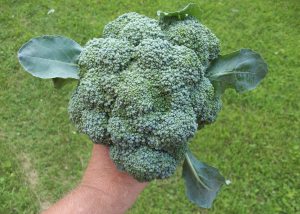
The local food movement relies more on kitchens than grocery stores; more on gardens than commercial growers.
While use of locally sourced food by many restaurants has changed to include more of it, a local foods movement cannot be sustained by the hodge-podge of farmers, growers and entrepreneurs who sell locally produced food to restaurants, or for that matter, to grocery stores.
The problems include scalability and sustainability.
We are living in a time where demand for local food exceeds supply. Scaling up to meet demand requires a capital investment most small farmers can’t make. Sustainability relies on creating value along with the food in a way that cooks can afford it and farmers can make a reasonable return on their investment.
Someone recently asked if the area was becoming saturated with Community Supported Agriculture projects and if that’s why some are having trouble growing membership. An answer lies elsewhere. The market for local fresh food has grown so big corporations noticed.
Companies like Hy-Vee, have tapped into the fresh food market by increasing their number of suppliers and offering fresh and local food alongside wares from large commercial growers. They are sucking up market share like a vacuum cleaner as their business model is designed to do – putting pressure on small and mid-sized growers.
Corporate involvement in the local food market is a two edged sword. Growers can sell their best wares to companies like Hy-Vee and get a reasonable return. At the same time reliance on companies rather than CSA members can distract a farmer from his or her core business.
A solution? CSAs should stick to their knitting by getting payment up front and sharing the harvest with members… all of it. It may be tempting to sell some on the side to restaurants and grocery stores, but the further away from the model they get, instead of doing one thing well, everything they do can suffer. In addition, the market share they help corporations grow may be detracting from their core business.
There is nothing wrong with a farmer growing organic greens for restaurant salads and stir fries. In the end, each farmer must make ends meet, and operating a farm —even a small one — is an expensive operation with tight margins. My point is to focus on one thing and do it well.
It is one thing for a farmer to disassemble a barn and use the materials to create raised beds for a ten-person CSA. It is quite another to support a couple hundred families with the variety of produce the market demands. If you ask a hundred CSA members, as I have, why they belong, answers are all over the map. Some want assurance of a grower who uses organic methods to produce food. Some want variety unavailable at Aldi’s or Fareway. Others want to create a cooking experience with young children as part of their education. Most want to feel good about what they are doing with their lives.
One hopes we are beyond the discussion of “food miles” and on to the core value of the nascent local food economy: know the face of the farmer. It’s corollary is know how your food is grown. Try as they might with life-size cutouts of farmers in their stores, corporations have a hard time doing that. Their customers are too diverse, and they have to cater to everyone in the community. If a person combines these two ideas, knowing how our food is produced and creating demand for local, fresh food the local food movement has a chance.
A very few people strive to source every food ingredient locally. It is not with them the future of local food lies. The future of local food is within the potential of every Iowa kitchen.
To sustain the local foods movement requires consideration of what it means to belong to a CSA or buy from a farmers market. Can that fit into culinary habits in a way that is not an encumbrance to what most perceive as very busy lives?
Can kitchen cooks grow some of their own produce? Probably yes, even if it means only a large flower pot with some cherry tomatoes or an herb jar on a window ledge. Even these small things may be a step too far for some.
The trend in food includes extensive prep work done by machines and large companies. Heat and serve has become a by-line for many available grocery items. Along with taking the kitchen work out of meals, risks of contamination have been created and along with it the need for recalls from large processors whose products get contaminated by E. coli and listeria.
In a consumer society it will always be tough for small-scale producers to survive and thrive. That’s why I say the future of the local food movement rests in Iowa kitchens where cooks can use less processed foods and more fresh — secured by buying local and growing their own.
It’s work many can’t do because of choices made about careers and family. What may be the saving grace of the local food movement is the idea of taking control of our kitchens, in part by living and eating local as much as we can.
SOLON, Iowa — While Trish Nelson takes a well-deserved break, I will attempt to fill her shoes at Blog for Iowa.
Delegates from the national party conventions dispersed last week and there is a lot to write about. Party and twitterverse aside, the telltale sign the election campaign shifted to a new phase was when a political friend called last Tuesday for help finding lodging for our Iowa Democratic Party organizer.
As politics takes a summer vacation in August for most Iowans, I want to cover as much ground as I can, and less of what everyone else is posting. Following is part of my storyboard.
I’ll cover each of the four Iowa congressional candidates at least once. This is mostly to learn what I don’t know. My Congressman Dave Loebsack was confident about his chances in the second district when I saw him in July. Monica Vernon is a hard worker and fighter, and the prospects look good for her winning against first term congressman Rod Blum. Jim Mowrer and Kim Weaver are running in the western half of the state, and those races will be informative. These four races are the most important, yet under-covered in the state.
Because of it’s high visibility, I’ll rely on the coverage of others for the U.S. Senate race. As primary winner Patty Judge attempts to upset incumbent Chuck Grassley it is unclear she has the organization to win or that he is truly vulnerable. A campaign operative told me convincing Iowa Democrats Grassley is vulnerable is a key challenge. My reaction when she spoke near my home July 17 was she needs to point out the faults of her opponent less and talk more about Democratic values. Let third parties do the work of calling out Grassley on his many flaws.
Here is an entire month of posting about the presidential contest in four sentences. “Republicans nominated Donald Trump and Mike Pence for president and vice president respectively at their national convention. If they think they are going to win this election solely by demonizing Hillary Clinton they are on crack. I disagree with them on virtually everything so that’s enough said about the mogul and his sidekick. The focus should be winning down-ticket races.”
There will be discussion of the 2020 presidential caucuses during the 2016 campaign and I land in the camp of eliminating Iowa’s first in the nation status. With due respect to Dave Redlawsk, author of Why Iowa: How Caucuses and Sequential Elections Improve the Presidential Nominating Process, the quadrennial presidential caucus should be the first casualty in blowing up the Iowa Democratic Party. I have long believed first in the nation helps Republicans more than Democrats and plan to lay out my case over the next few weeks. Shorter version: Democrats should stop helping Republicans organize in Iowa.
Iowa native Ari Berman posts constantly about the importance of voting rights after Chief Justice John Roberts gutted the Voting Rights Act in Shelby County v. Holder in 2013. What are the challenges to voting rights in Iowa? There has been a lot of posting about the Iowa Supreme Court decision about voting rights for convicted felons. There is more to elucidate.
What else?
At the county fair our group had a corn kernel vote on security issues. Air and water quality were most important to fair-goers’ sense of security by a distance. Forestry management is part of that discussion. People forget the state was once prairie with oak-hickory forests that stood and regenerated for millennia. What is surprising is how slight is the modern role of urban sprawl compared to pressure on forests. I hear almost no one discussing forestry management and its impact on air and water quality yet see farmers tear out riparian buffers on a regular basis to plant a few more rows of corn and beans. This issue needs a voice.
Our government insanely wants to spend more than a trillion dollars re-furbishing our nuclear arsenal. What we should be doing is eliminating it. I’ll share some of the work of my colleagues in International Physicians for the Prevention of Nuclear War during coming weeks.
Nuclear power is on the wane nationally and some attention should be paid to the Palo, Iowa plant. Their permit was extended to 2024, and already there are rumblings at the plant that the “good jobs” there will be going away. It is in Iowa’s best interests to shutter Duane Arnold Energy Center and I’ll explain why.
Lastly, we need an alternative to our industrial food production system. There is a nascent local foods movement, but its rise has not been fast enough. There are substantial questions about local foods sustainability in its present form. Issues like land ownership, creating markets, reducing the use of pesticides, and scalability are all unresolved. If the local foods movement does not work toward solutions, one questions whether it will exist as a distinct entity going forward.
These and other topics will be my summer. I hope readers will follow along as I do my best to make it worth while to return to Blog for Iowa often.
While Europeans vacation in Italy and the South of France, I’ll be writing some 12,000 words on Blog for Iowa. August is neither recess nor vacation for low-wage American workers.
I’ll have a chance to earn a little more money to pay corporations for things we need like fuel, communications, health care and insurance, loans, and electricity. There’s also taxes wanting cash.
It’s been a struggle to earn enough money to pay monthly bills, so if I write as well, my life can correctly be characterized as “struggling writer.”
Not sure I like the moniker.
Yesterday a fellow said I needed a haircut.
“I don’t have the money,” I said.
“Haircuts only cost $15,” he said.
“If you give me the $15, I’ll get a haircut.”
“It’s really about the money?”
“Yes it’s about the money.”
I work in low-wage jobs to understand what people experience. It’s an attempt to be grounded in society and inform my writing. With a comfortable platform, that includes a line of credit and no mortgage, good health, and two working cars, my family has it easier than most.
The main challenge of low-wage jobs has been physical. Assembling kits, selling produce, demonstrating products, lifting bags of bulk commodities, chainsawing trees, and farm work all required standing and use of upper body strength. I’m stronger than I was, but my aging joints are taking a toll.
Writing jobs have been good when I could get them. There was little money in freelancing while the newspapers sought to do more with less. I filled a specific need for editors, and once the need went away, so did the offer of stories.
In August I’ll post my articles on Blog for Iowa, then here a day later. This site is home for my writing, so most everything I write longer than 140 characters finds its way here.
A new writing adventure begins and I’m so looking forward to it.
My work as fill-in editor at Blog for Iowa begins in three weeks.
It has been easy to fill a story board with post ideas. What’s hard is picking what matters from flotsam and jetsam in a sea of social media.
A goal of Blog for Iowa is to “harness the power of the Internet to continue to build our Iowa grassroots communication network.” Our blog has its roots in the 2004 Howard Dean campaign, which innovated use of the Internet to organize and raise money in politics. Internet use has evolved since then with most news outlets having a presence. I don’t think we had today’s social media — Twitter, Facebook, Instagram, Snapchat and YouTube — in mind ten years ago.
That social media would be a source of stories is still new, but has gone mainstream. Often the stories I read in our local newspaper have their roots in an Internet discussion. If a person wants to write a decent blog post, at least one toe should be dipped in life to be grounded in reality. It would be better to immerse oneself totally in life and eschew the Internet as a primary source of stories.
To the extent writers do this, their work is more readable and that’s what I hope to accomplish in 23 posts this August.
The topics will be familiar. Publicize the campaigns of candidates for election to congress; the presidential election campaign; climate change; the local food movement; nuclear weapons modernization; voting rights; civil rights; drug abuse; working poor; and the Iowa legislature quickly fill the slots. The challenge is saying something others haven’t — grounded in conversations that take place in the course of daily lives.
This approach presumes a level of participation in society. The material is there. The trick is to harvest the stories, both positive and negative, without creating unnecessary friction, then tell them.
It can be done and it’s what I have in mind for August.
I’m as busy as ever figuring out what life is and what my life will be. In August I’ll be filling in for the editor of Blog for Iowa. Regular posting will resume no later than then.
Like the air traffic controller, we can only land one plane at a time. I need to focus on sustainability in a turbulent world for a while.
Click on the tags to read some of my archived posts while you are here. Also consider following me on twitter @PaulDeaton_IA.
That scholars would publish newly found material written by Walt Whitman is not surprising.
In a time where old newspapers are being digitized and new methods of scholarship seine existing publications like factory ships trawl the Bering Sea, Whitman’s voluminous work shows up.
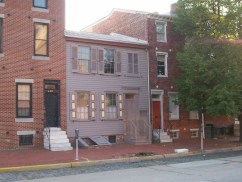
My relationship with Whitman is comprised mostly of the 1983 visit my wife, her brother, and I made to Whitman’s home in Camden, N.J. It is a simple place, much neglected over the years. By then it was restored to be a fitting remembrance of his last days. It is the only home Whitman owned.
Whitman’s Last Home
It was easy to imagine supplicants waiting downstairs for their turn to meet with Whitman in his parlor/bedroom up the narrow stairway. More than the host of American writers who preceded him, Walt Whitman was tangible, with footprints in society. He left them everywhere.
I hope to return to reading Whitman’s work, even this newest publication.
Yet there is so much to do and take in — and even in good health, life is short. Nonetheless, a new Whitman book is news, and in the digital age, it is available for free to anyone with access to the internet. A type of democratization Whitman may have appreciated.
The next non-internet writing project will be an autobiography in 10,000 words — taking the relative success of Autobiography in 1,000 words and expanding it to twenty 500-word parts as follows:
Birth and parents (1951 – 1954)
Earliest memories (Through 1957)
Kindergarten (1957 – 1958)
First Grade (1958-1959)
Marquette Street (1959 – 1970)
College (1970 – 1974)
Military service (1975 – 1980)
Graduate school (1980 – 1981)
Marriage (1982 – 1985)
A daughter (1985)
Cedar Rapids (1985 – 1987)
Indiana (1987 – 1993)
Living in Big Grove – Family (1993 – present)
Living in Big Grove – Career (1993 – 2009)
Living in Big Grove – Gardening (1993 – present)
Living in Big Grove – Empty nesters (2003 – present)
Living in Big Grove – Retirement from transportation (2009)
Visiting Colorado
Visiting Florida
Second Retirement
I’ve learned to keep the scope of things large enough to say something meaningful and small enough so the project can be accomplished. Using a short form requires focus. Focus brings clarity if I’m lucky.








 Journey Home
You must be logged in to post a comment.