It’s 287 days until I plan to leave work at the home, farm and auto supply store and create a day job as a writer.
I had hoped to continue writing when I joined the retail outlet. However, it has proven difficult to work full time and write.
Living as best I can, I convert bits and pieces of experience and memory into 500-word dispatches. It’s a form of writing, but not what I seek.
Life the way we live it is raw material for creativity which is essential to living a good life. Through shared or common experiences we build bridges connecting disparate manifestations of humanity. Writing can be the glue that holds societies together. Lofty goal that.
It didn’t occur to me I needed a process. My posts have been native and raw. Quick slices of what’s on my mind in a moment. Little time was allowed for rewriting. Write, quick edit, post.
A couple of things would go into a writing process. Most important is memory of my span on Earth. Memory serves if I can focus.
Living is another aspect of a writer’s process. That includes reading, conversing with people and soaking up news from multiple sources. It also includes the physicality of a life.
The written pieces I kept date from 1966 until today. These artifacts seem important though there’s little use in rewriting them now because they are set in time. Too, I don’t want to make a compendium of them, except to sort and organize them for use as research material. How did I feel on that train to Vannes, France back in the 1970s? Why does it matter now?
Today’s process is based on a schedule. I do things in society then have times available to write. If I’m lucky, I do. Having life experiences and ideas hasn’t been an issue. Scheduling adequate time for writing and rewriting has.
The best I can do this Saturday afternoon is sit at the screen and type. After doing dinner prep and before Jacque returns home. I’m gaining readership and technical skills. Trouble is I want more.
The folks I hang with in the local food system are focused on product.
Is the asparagus ready? What about the rhubarb? When should I plant peppers and tomatoes? How much should we put into a member share?
I’m interested in the answers, yet those aren’t my questions. My work in the local food system is to inform and supply culinary endeavors in our kitchen. Technique and creativity seem more important than the fungible commodity fresh produce is becoming. Objectifying and standardizing things, an American obsession, plays a role in the kitchen. At the same time inspiration, creativity and technique seem more important than consumable objects. That’s where I live.
My questions are different from farmer friends. What food can be sourced locally? How can I use an abundance of spring greens before they spoil? What seasoning tastes best with scrambled eggs? What is the best way to preserve food in the ice box? How many pints and quarts of tomatoes shall I can this year? How do I combine bits and pieces from the pantry with fresh food to make satisfying meals? At some point, questioning must yield to creativity.
There is something about Saturday afternoon in the kitchen. It’s partly immersion into the cooking process and partly reliving memories. Saturday was a time to work in the yard and garage, then cook a meal while my spouse worked in town. I used to listen to Iowa Public Radio all day. Due to budget priorities, those programs are gone. Cooking time came with the beginning of Garrison Keillor’s A Prairie Home Companion which is gone too. I now draw life from the task at hand without musical accompaniment.
I made an Iowa version of pad thai last Saturday.
The dish has been in the works for a while. A couple of months ago I noticed the warehouse club sold USDA Certified Organic pad thai noodles for about $0.37 per serving. I bought a box on Friday.
With cabbage, onions and carrots from last season; a drawer and more of cooking greens from the farm; spring garlic from the garden; and bits and pieces stored in the ice box and pantry, the dish came together. The resulting meal was tasty, filling and seasonal — satisfying on multiple levels.
My kitchen experience made the dish as much as the ingredients.
I stock basic kitchen staples — high smoke point oil, salt, extra virgin olive oil, celery, onions, carrots and cabbage. Sources included retail merchants and local farms, however, the essence of cuisine is using what’s ubiquitous and on hand. It’s a fine distinction. Regardless of source, what’s in the pantry, ice box and garden now is what’s on hand. Creativity is in that moment.
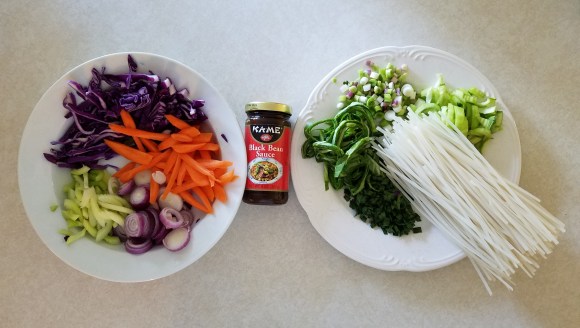
Except for the noodles, no specific shopping was needed to prepare pad thai. Canned black beans and a jar of fermented black bean sauce were the only prepared foods used and I stock both in the pantry.
Spring Garlic
Inspiration for the meal occurred at the intersection of discovery of a small patch of spring garlic in the garden and the memories it aroused. I recall a paper sack of garlic cloves brought home from the library and planting them more than a decade ago. The scent was intoxicating. I harvested enough for a meal.
Where is the creativity? Thinly cutting vegetables, sorting ingredients by cooking time, and measuring seasonings can all be taught. With an eye toward plating, carrots can be cut on the bias, green leaves julienned and celery stalks cut thick. Pad thai noodles are to cook 5-6 minutes, according to the package, then immersed in an ice water bath to stop the cooking. These techniques are like loading a palette with paint.
Creativity begins once the noodles are on and the wok is heated to high temperature. There’s no going back.
Using a high smoke point oil, onions, carrots, celery, cabbage go into the wok first. It’s “stir fry,” not “occasionally stir” fry, so full attention is required at the stove. Season with salt. Once the timer for the noodles expires, strain and dump into the ice water bath. When the first round of vegetables is tender and add plate two (spring garlic, garlic chives, sliced bok choy stems, and julienned bok choy leaves, stirring constantly. Add the drained and washed black beans and a generous serving of cooking greens. Once the greens are wilted, add a couple of tablespoons of fermented black bean sauce. Strain and add the noodles last, garnishing with a couple of tablespoons of extra virgin olive oil. Toss gently until heated. Plate and serve with your favorite sweet chili sauce.
Cheap, prepared food is everywhere in the United States. It’s convenient. It reduces time in the kitchen. It is engineered to appeal to our senses. Most of us eat at a restaurant or get help from the industrial food supply chain from time to time. However, there is no substitute for inspired cooking.
It provides engagement seldom found elsewhere in life. It’s a source of satisfaction hard to replicate. It sustains us in a turbulent world. This kind of inspiration and creativity is needed more than ever.
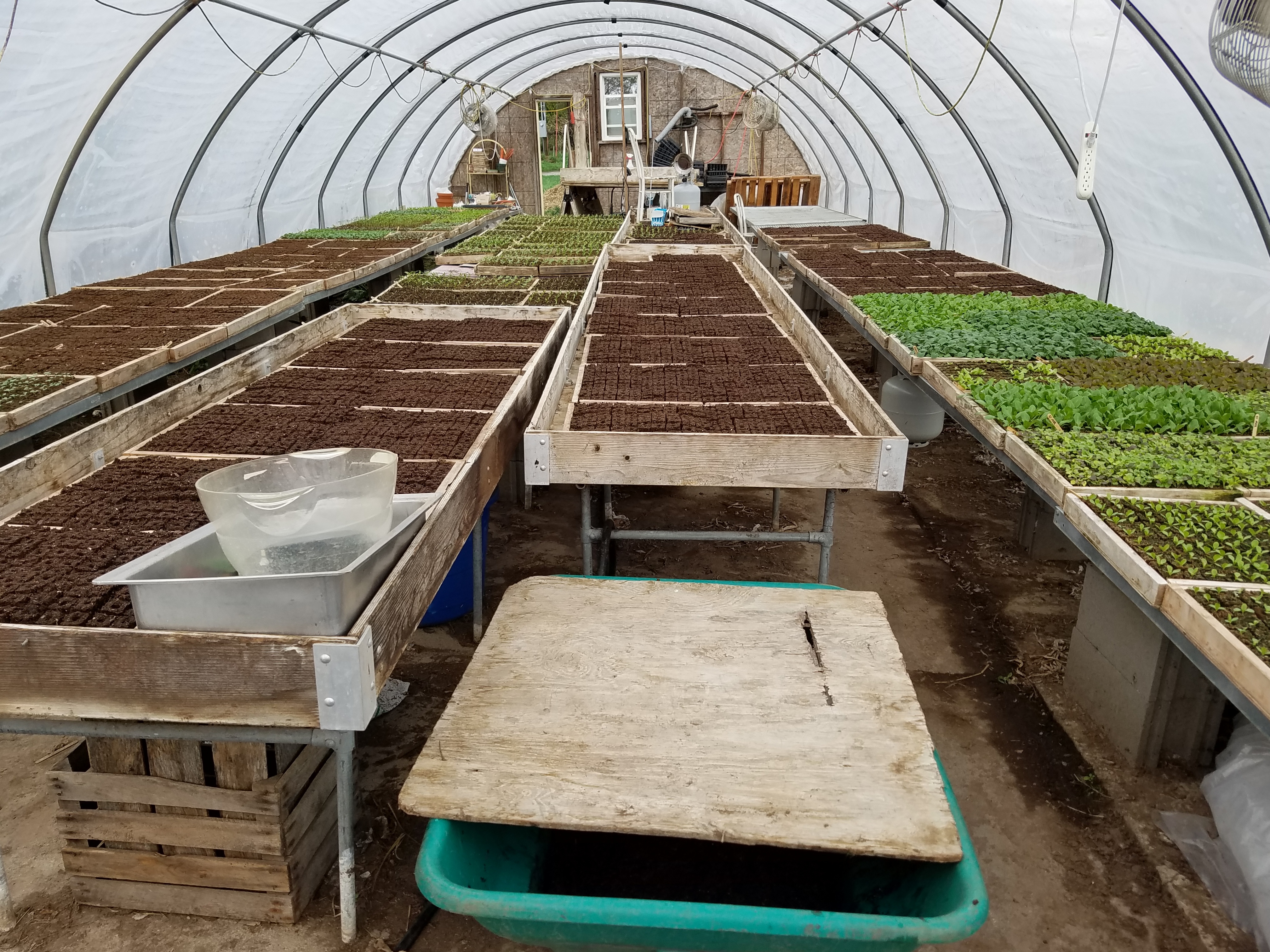
I assumed it was the long day, split between two farms, getting tired after making 57 trays of soil blocks.
As I placed the last tray of 72 blocks on the table for cucumber seeding, I washed my tools and headed for the car. Something was up.
It took three days to winkle it out: I caught some kind of bug that kept me from working at the home, farm and auto supply store.
On Monday morning I was dizzy and nauseous. I brushed my teeth, shaved, showered and dressed, then headed to the car for the drive across Mehaffey Bridge. Just after I crossed the south arm of Lake Macbride I stopped, too nauseous to continue. I called off sick and turned around. Near the old barn north of the lake I stopped again and vomited twice. I spent most of the rest of the day sleeping. I did pick up our vegetable share at the farm — probably not my best decision.
Determined not to take a second of my five annual sick days today, I woke, got dressed and tried it again. I made it to the parking lot, went in and found my supervisor. After preliminary pleasantries told him I felt too sick to work and went home and back to bed.
In all I clocked 25 hours of sleep in a 36 hour period. As the sun moves lower in the western sky I’m on the mend. I don’t recall much about the last 48 hours.
I woke this morning about 9 a.m. just when Governor Terry Branstad’s hearing at the Senate Foreign Relations Committee was beginning. Branstad is President Trump’s nominee to become ambassador to China. The Des Moines Register live-streamed it, so I watched on my phone in bed. He looks to be a shoe-in because of his service as governor of Iowa and his long relationship (since 1985) with Chinese President Xi Jinping. I posted on Twitter, “Branstad seemed present, cognizant, schooled and mannered at his hearing today. Much different from person who nominated him.” It was a sign I was feeling better.
This week is the anniversary of President Nixon’s 1970 invasion of Cambodia and the protests that erupted around the country. At Kent State four students were killed by national guardsmen during the protests. My reaction to the news was to participate in my first-ever protest march. I carried one corner of one of four mocked up coffins to the National Guard Armory on Brady Street in Davenport. I felt participation would raise awareness about the war. When our photo appeared in the local newspaper, it confirmed my belief.
This week’s hope is that the ground will dry. The farming community is waiting for the ground to dry to begin planting. After a Rip Van Winkle style nap, what I winkle out is the need to focus on today because we never know what tomorrow will bring or what may disable us.
One third of the way into 2017 I’m like the horse that smells hay in the barn.
I can’t wait to finish the year, bed down for an evening, and get on to what’s next.
When writing about this final lap I felt a Social Security payment beginning next year would alleviate daily cash flow concerns, helped not a little by cancelling our health insurance through the home, farm and auto supply store and both of us going on Medicare. I won’t completely stop working outside home. Beginning next year, we could.
What’s next? Writing, I hope.
The most productive writing I did was between 2010 and 2015 when I was an editor at Blog for Iowa and wrote over 100 articles for the Solon Economist, North Liberty Leader and Iowa City Press Citizen. I gained perspective about structure and clarity. I came to understand the 200-1,000 word post and what makes them interesting. Most importantly, I had great editors — five of them. When they found time to provide feedback, I learned from it. Practice combined with editing didn’t make me a perfect writer. It made me better.
I’m ready to take on different topics and longer writing projects as soon as we have enough income to take care of bills and pay down debt. Just eight more months to get there.
Reading goes with writing and I’m concerned about my ability to focus on longer narratives after a). having viewed so much television during my formative years, and b). bringing home our first personal computer in 1996. In a 2007 interview with Andrew O’Hagan for the Paris Review, Norman Mailer expressed my concerns.
“Now people grow up with television, which has an element within it that is absolutely inimical to serious reading, and that is the commercial,” Mailer said. “Any time you’re interested in a narrative, you know it’s going to be interrupted every seven to ten minutes, which will shatter any concentration. Kids watch television and lose all interest in sustained narrative.”
I have managed to be an avid reader, although internet habits have become more important than the formative influence of television. Beginning with access to the internet my reading habits changed. There is greater access to a diversity of articles and opinions on the internet. There is also a tendency to skip around from short article to short article. What’s concerning is the new and compulsive behavior of picking up a hand-held device and searching for the next story as if it were an addiction. The information gained through internet applications keeps me informed. However, when I decided to break away from political reading and try a novel, it was a disaster.
Cloudsplitter by Russell Banks came highly recommended. It is a well-written narrative, engaging on several levels according to many readers. I had to re-start the book three times to retain essential points and make sense of the narrative. I’m still only a few pages into the book after previously reading the first fifty.
Part of my experience was witnessing Banks’ craftsmanship. Part of it was difficulty focusing on the narrative —not because of Banks’ style — but because my reading abilities have been tainted by the internet. I’m determined to read the book through to the end. I need better focus to dive in and do so. Whether I gain it remains to be seen.
Human resilience give me hope of becoming a better reader and writer. If I learned bad reading habits, they can be unlearned. In the meanwhile I’ll be writing through the final lap in a workingman’s race on this blog, hoping sweet oats and better reading and writing lay past the finish line.
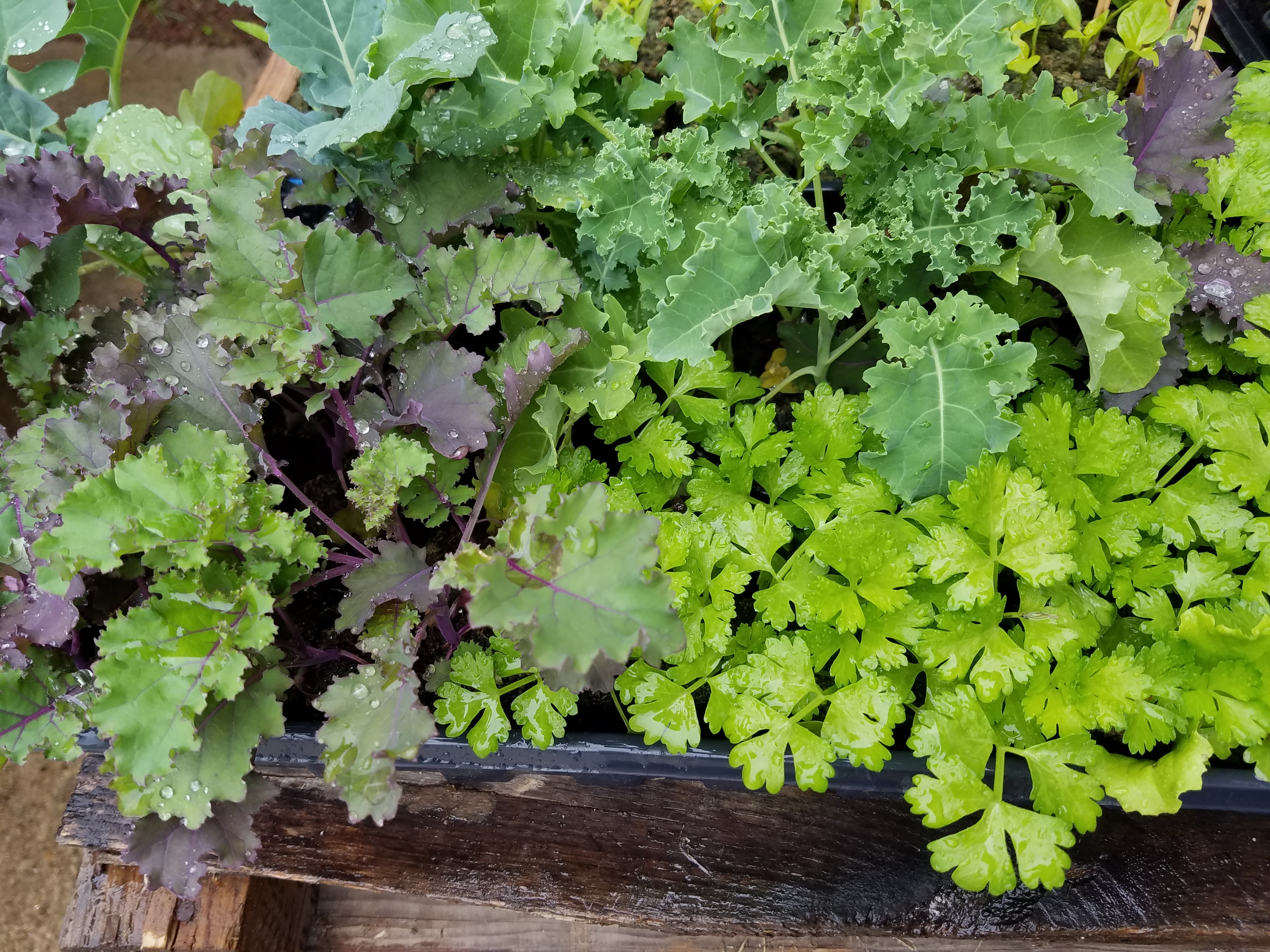
After work at the home, farm and auto supply store I drove to the farm and picked up the first spring share. In it were spinach, baby kale, Bok Choy, Choi Sum, broccoli raab, rhubarb, oregano and garlic chives.
Already my mind is swirling with cooking ideas.
I’ll prepare a breakfast omelet using greens seasoned with oregano and garlic chives. Most of the oregano will be dried and flaked for cooking. Garlic chives will be processed with cream cheese for a sandwich spread. In the mix is rhubarb jam, spinach casserole, and sautéed greens. There will be lots of cooking with this week’s abundance.
It’s the next stop on along the annual circle of local food.
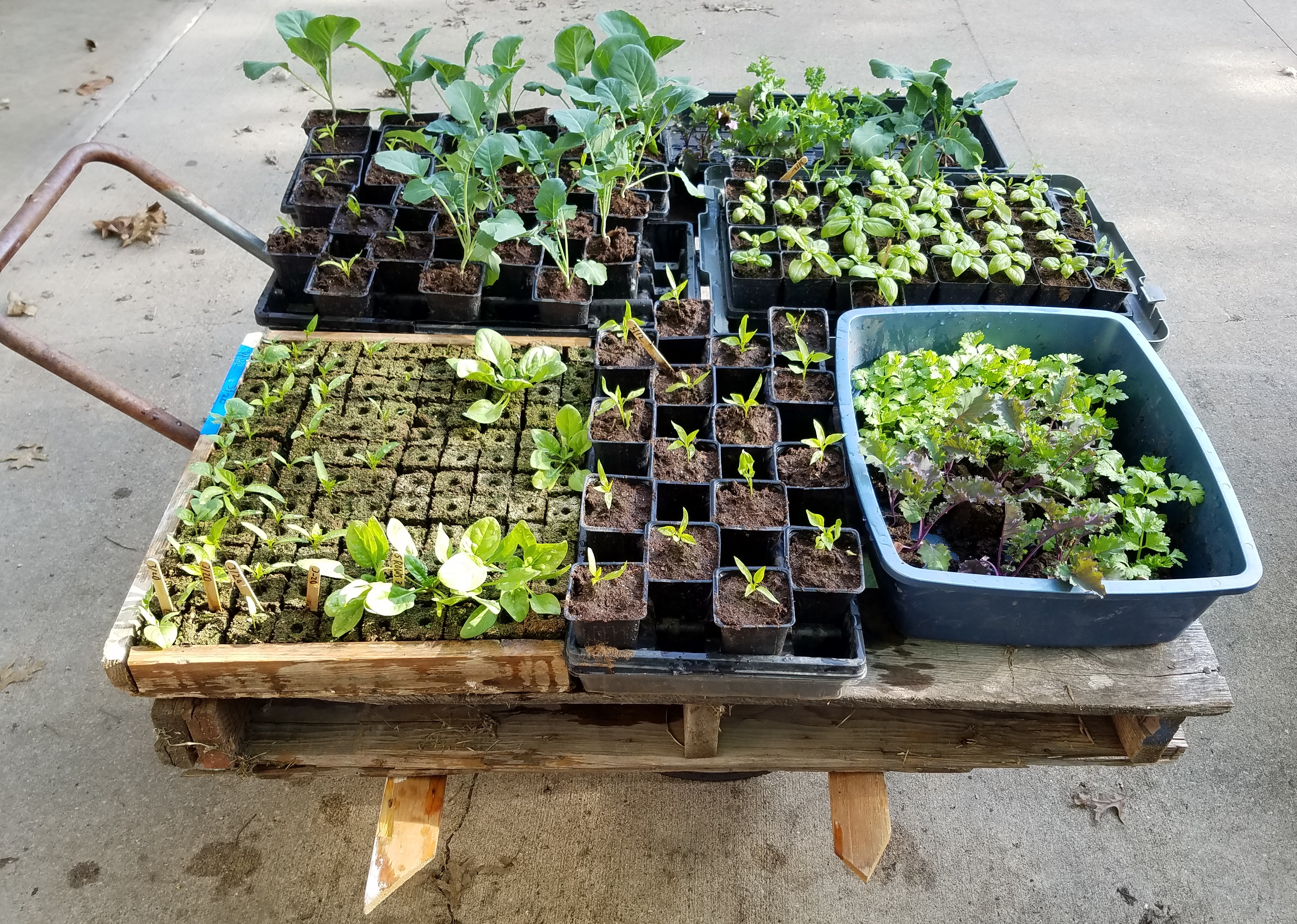
While at the farm I sorted through a stack of pallets used to deliver straw and hay and found two to bring home. I made a wheeled cart for summer crop seedlings finishing before the big May planting. The other will be used to organize the garage until Memorial Day. I’ve requested May 6 – 14 off work at the store to get planting done.
For the moment, life is about the weather — seeing how it unfolds and checking my weather app for forecast updates. It is also about forgetting the fray of politics for a while to become a practitioner of something useful — not only in Iowa but globally.
Each of us defines community through our engagement in society.
Whether participation is passive, active, or in between, our lives and how we live them contribute in a meaningful way to how we live with others in a community.
Not everyone is a joiner. For some the focus is on the county seat, the state capitol, or the federal government. For some it is on school systems and the public library. For others it is the world of commerce — transportation, shopping, working a job. Many people just try to make it through each day with dignity. Community is broader than any one of these pursuits.
Misunderstanding our role in shaping a community and how we do and can contribute is a source of affliction in modern society. For me, the best remedy is getting involved at a local level. In consideration of that, I joined our home owners association board as a way to influence the place where we live. I wrote this note on the community Google group:
Association members:
Tonight at the regular monthly meeting of the Lake Crest Manor Home Owners Association Board of Directors I was appointed to the board and then elected as president to replace Bob Huber.
I appreciate the board’s confidence in electing me.
For those who don’t know Jacque and me, we moved here in August 1993 and raised our daughter who graduated from Solon High School in 2003. I “retired” in 2009 from CRST Logistics and currently work four different jobs in the community: at Theisen’s Supply in Coralville, at Local Harvest CSA, at Wild Woods Farm and at Wilson’s Orchard. Jacque works part time at the Solon Public Library.
I began serving on the board in 1994. My first tour of duty was ten years followed by a second tour from November 2009 until December 2013. I’m glad to be back for a third (I think). When we moved here we were told that everyone takes a turn on the board. While that turned out not to be true, I believe changing board members regularly is good for the health of our community. If you are interested in serving, there will be a position open at our next board meeting.
A couple of important things came out of tonight’s meeting.
Gene Lawson was elected treasurer to replace Rob Sprague who resigned effective May 1. Gene and Rob will be working together to make sure there is a smooth transition in our finances.
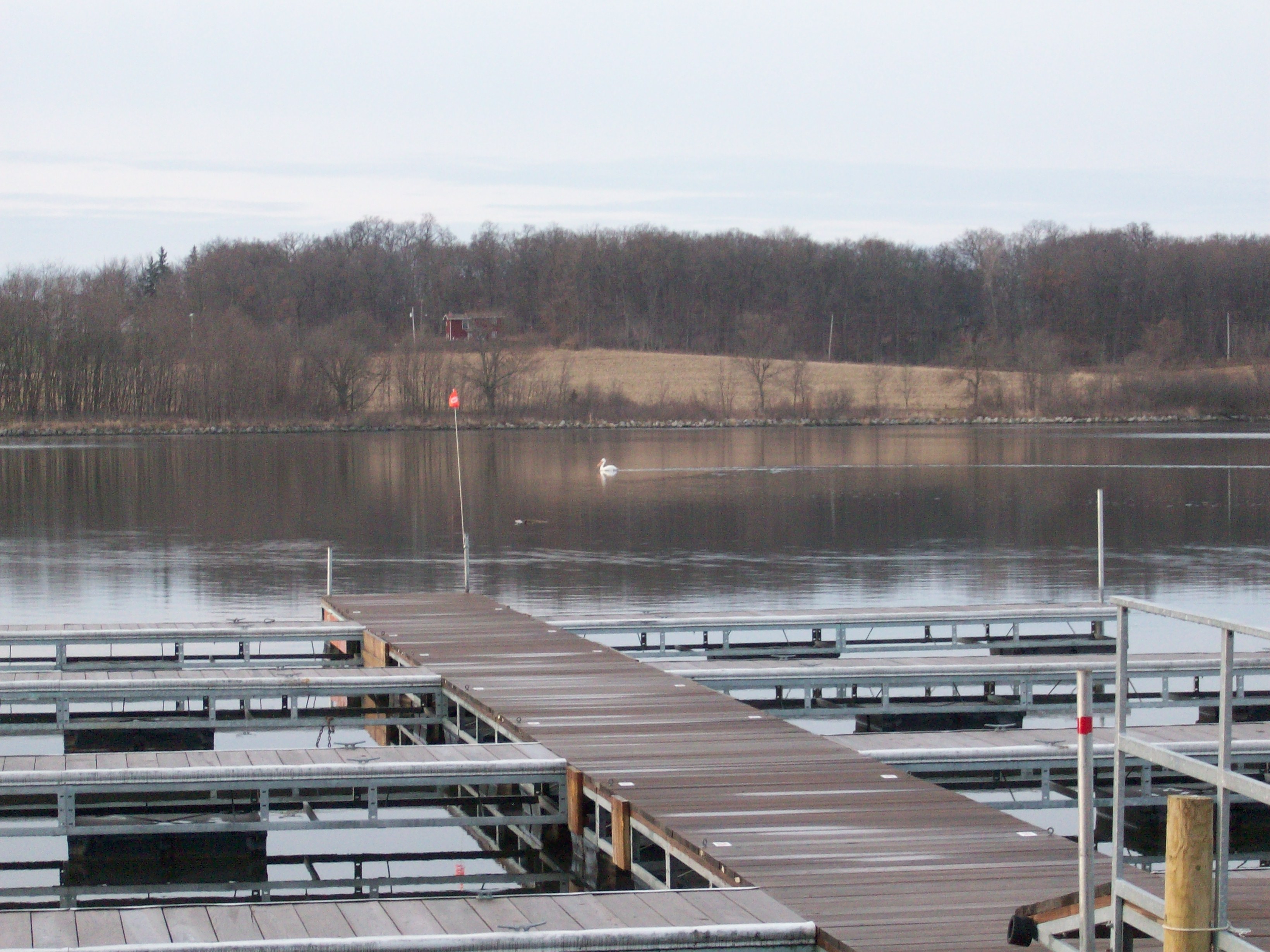
On Sunday, April 30, at 1 p.m. at the Solon Public Library, there will be a meeting about the boat docks. If you care about this issue it would be a good meeting to attend. The Iowa DNR made a proposal to change who is eligible for our dock spaces to include Lake Crest Manor Parts I and IV that are not part of our association. Note this is a proposal only. We will explain the proposal and get your feedback at the meeting. The board will get back to the DNR after the meeting saying that either 1). we accept it, 2). we reject it, or 3). we have a counter proposal. Since we lost our original grandfathered arrangement in 1998, the DNR has asserted more power in regulating our docks. This is a complicated issue so it’s best to attend the meeting if you are interested. Already there has been a lot of discussion about it by the board and in our community.
Tonight the board passed a motion to apply by May 1 to the Iowa DNR to add additional slips to our docks. I would point out a couple of things. 1). The DNR is open to adding dock space around Lake Macbride, so now is the time to secure that permission. 2). If we get approved for additional space we may or may not actually add it. There is some opposition in the association to the idea of adding dock space and those viewpoints should be considered. 3). The DNR approval of a request is not at the state park. Because of this, we may not get a response for this boating season. After a discussion the board decided to set a date certain for the application submission. I was the only board member to vote against the motion, with one abstaining.
I’m not planning to pepper you with constant emails. Just wanted to say hello to those in the Google group.
The best way to contact me about association business is via email. The response will be more timely than chasing phone mail messages, which is inevitable when dealing with a person holding four jobs.
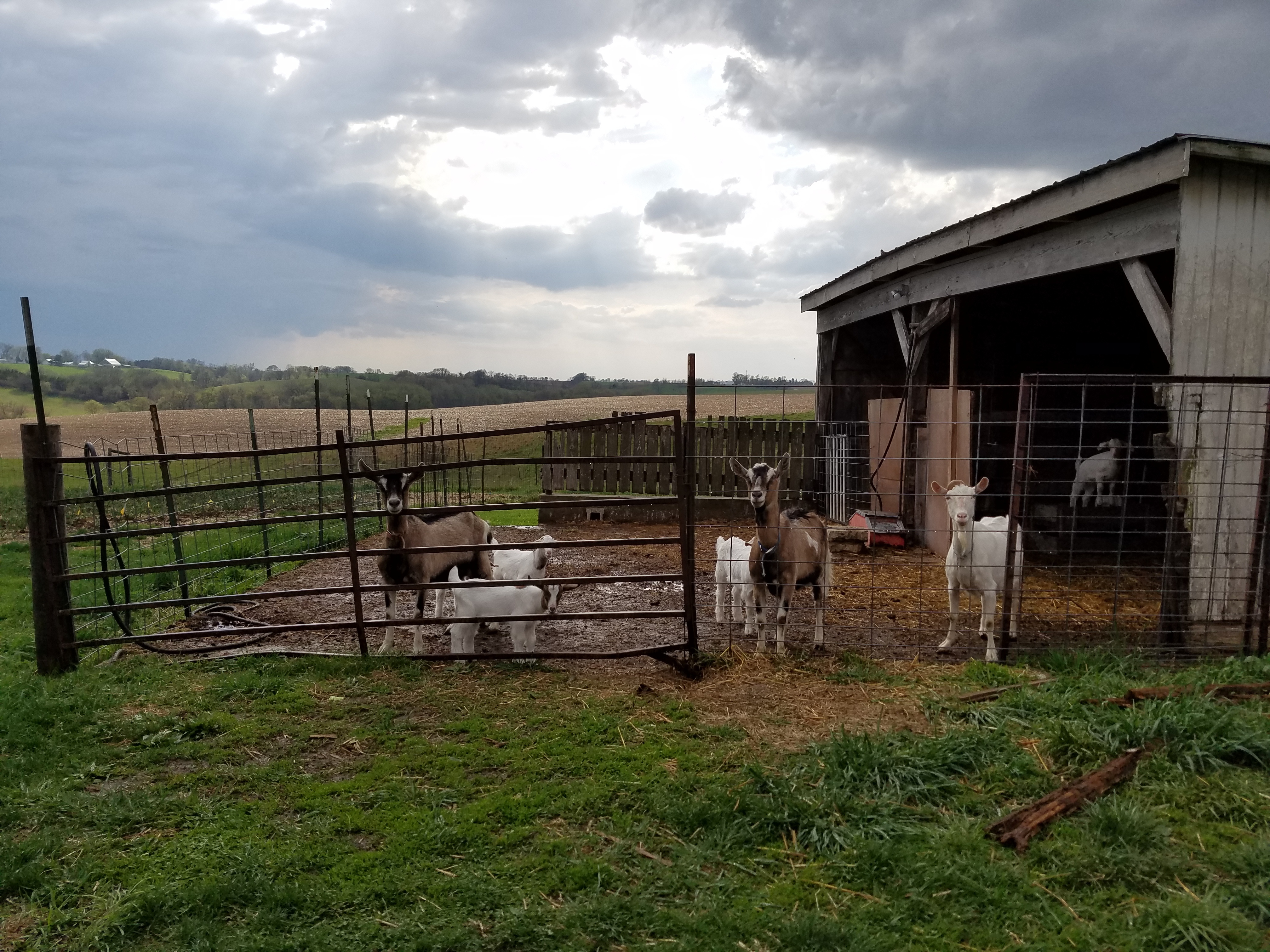
The sound of bleating lambs pierced the air during yesterday’s shift at the farm. It was a sad sound because we know their destiny.
Above is a photo of goats instead.
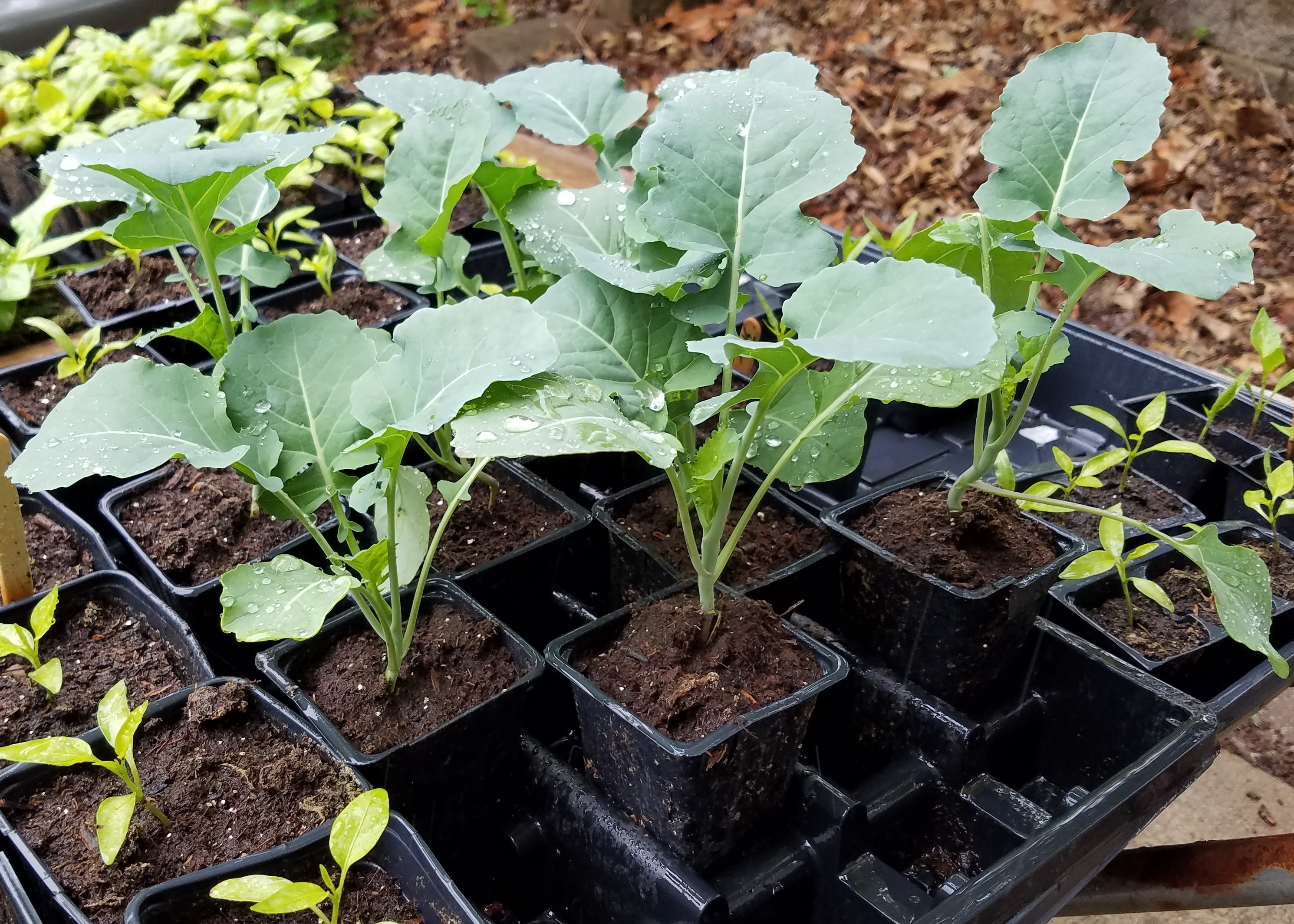
I made 60 trays of soil blocks for the germination shed. It’s time to transplant pepper plants from plastic trays where they germinated to individual soil blocks for finishing before planting. There are a lot of them.
Saturday, April 15 in the Germination Shed
I was to do 78 trays, but a thunderstorm blew over, dropping a brief torrent of rain and hail — enough hail to sting our skin. All of us —four people, two dogs and a cat — made our way into the germination shed to wait out the storm. It didn’t take long. The storm was an emphatic punctuation ending the day’s work.
Between Passover and Easter none of our lambs was sacrificed despite the popularity of leg of lamb as a holiday main course. On a farm we accept the reasons for raising lambs and goats, and the reality of thunderstorms.
I barter my work. Soil blocking yields participation in selected shares, notably the spring share which begins April 24, and fall shares from both farms. It is a way to leverage the high tunnel for early lettuce and greens, and to secure potatoes, sweet potatoes, cabbage, carrots, squash and other storage vegetables so I don’t have to grown them myself. We also exchange work canning tomatoes and freezing bell peppers with each receiving a share of the resulting jars or zip top bags.
I started seven trays of my garden seedlings in the germination shed, also part of the deal. I got bags of last year’s soil mix and onion sets that were part of the farm order. There are other sundry items: pallets saved from the burn pile, leftover partial trays of seedlings, and vegetables when there is over-abundance or if they are too imperfect for members. While no money changes hands, there is mutual benefit from barter deals. My car was loaded as I departed the farm.
The sound of lambs permeates spring days bringing with it both hope and mortality. It’s a hopeful and sad sound. One that leads me to prefer goats.
Rain kept vegetable farmers out of their fields. The rule of thumb is wait four days after a rain for fields to dry. It rained all day yesterday.
Equipment is ready, truckloads of seed potatoes wait in bags, and farmers want them in the ground.
Conditions are ready to plant any cold weather vegetable once soil dries.
Traditional potato planting day is Good Friday, and some gardeners, including me, continue to follow that timetable. I’m growing in containers this year, so feel good about planting a bit early this weekend. I grow them in containers to keep burrowing rodents from getting the first pick and last year the technique worked.
In the break room at the home, farm and auto supply store a case was made not to grow potatoes at all.
They are cheap at the store. There is little difference between a freshly dug potato and a proper storage potato, they said. They take up space that can be planted with more desirable crops like tomatoes, squash and cucumbers. Nutritionally, potatoes are carbohydrates shunned in many modern households.
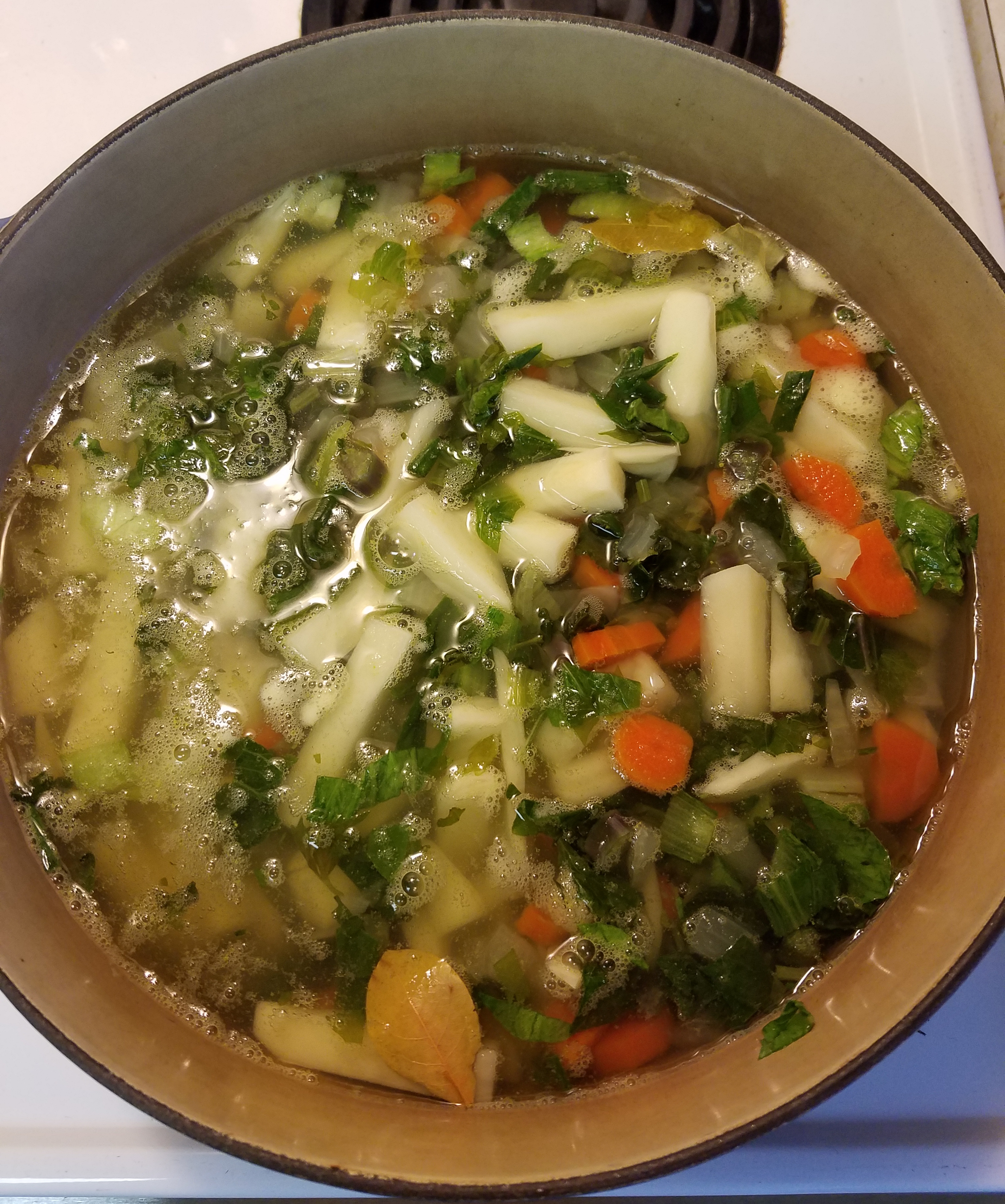
Leek and Potato Soup
Nonetheless, I persist in producing spuds for fresh eating and cooking. They are a small crop in a diverse home garden.
Growing potatoes — gardening generally — is a statement of resilience. A personal action running counter to a political class with which we increasingly disagree.
Let them ask their questions. What is a leek? Why grow potatoes? While they do, a family can be sustained with leek and potato soup in a way hard to find during a time of pre-cooked meals and convenience store restaurants.
Thinking and talking about potatoes is sublime as gardeners head toward dry ground and the weekend.
After a Saint Patrick’s Day meetup with friends in Iowa City I drove home, parked my car in the garage and haven’t moved it since.
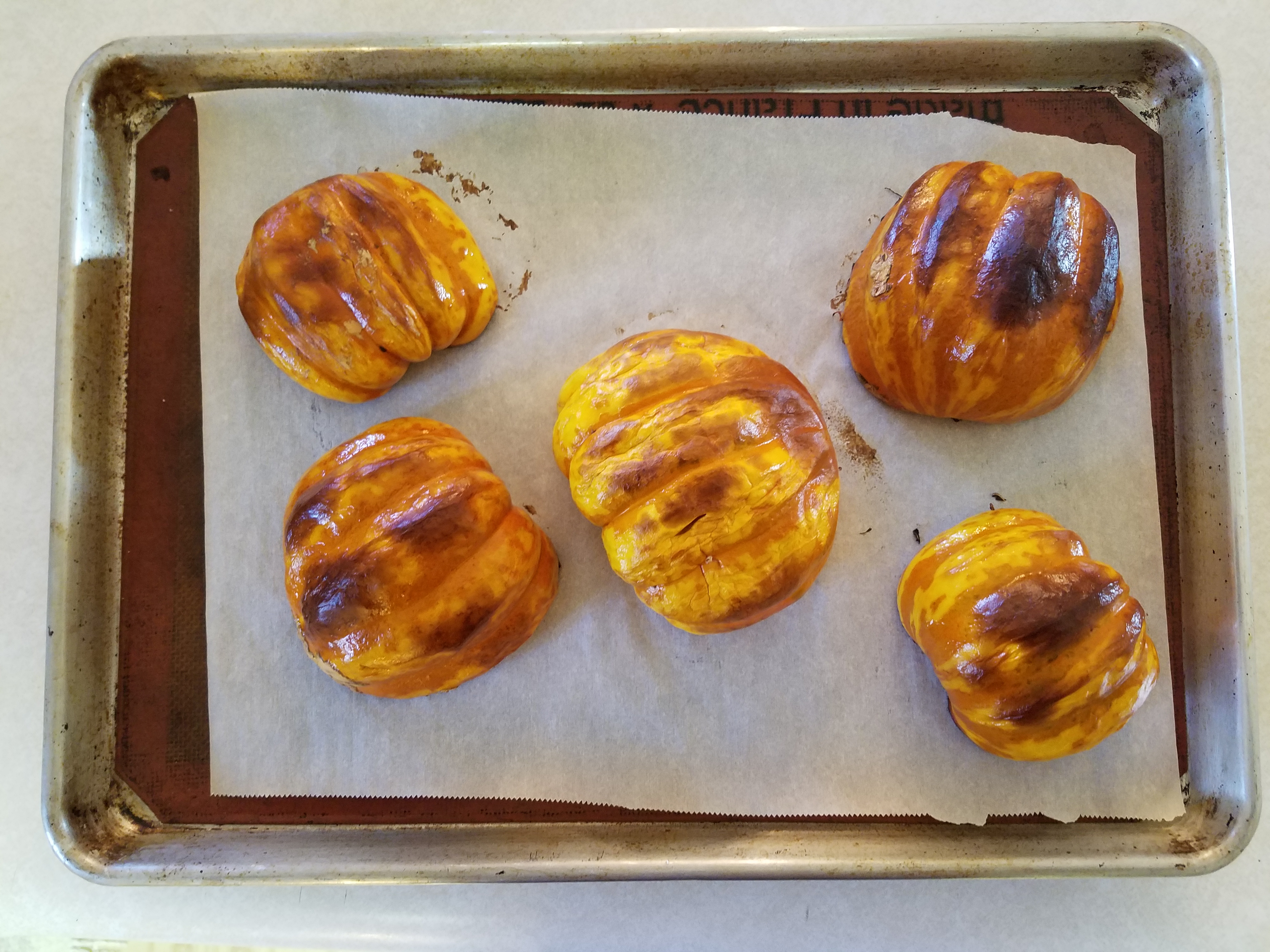
It was too cold for outside work on Saturday so I stayed in, did laundry, cleaned the bird feeder, wrote, read, and cooked dinner of bean soup, Carnival squash and applesauce cake.
The ambient temperature is expected to rise to almost 60 degrees, so I’m planning to work outside after a shift of soil blocking at a community supported agriculture farm.
I read Elizabeth Kolbert’s The Sixth Extinction: An Unnatural History in its entirety this weekend. Her combination of background information with personal stories of field trips is eminently readable. I can’t remember a day so absorbed in a book since leaving transportation. The main takeaway is how uncertain scientists are about changes in earth history over the long term and the consequences of our lifestyle.
Japanese Beetles
The broader meaning of words like “Anthropocene” is not settled, nor agreed. What I know after this immersion, and after reading Sapiens: A Brief History of Humankind by Yuval Noah Haran, I am ready to move forward with something other than narratives of how homo sapiens swarmed over the planet like Japanese beetles.
I buy more bird feed since working at the home, farm and auto supply store. Counting whole kernel corn, I have five different varieties in the garage. Each type attracts a different bird and we enjoy watching them through the French door off the dining area. Some days I feel like picking up a 20-pound bag on sale, and do. I went overboard with 50-pound bags of whole corn and millet, although sparrows seem to really like the millet. There is no science to my purchases.
Bartering is making this year’s garden planning a lot different. Part of the barter system is trading labor for a spring and fall share. Each side of the deal can be defined monetarily. I get a credit of $13 per hour for labor which is applied to retail price of the shares. I use greenhouse space and materials to germinate seeds and care for seedlings until planting in my garden. I will also acquire onion sets and seed garlic through the farms. Where there is a clear financial value, the barter system is simple and easy. This part of the exchange translates into things we can use in our garden or kitchen.
The exchange for specific produce is more complicated.
Canned Tomatoes
Tomatoes are a large part of summer. Last year I planted them in three different garden plots. This year I’ll decrease my plantings to what we’ll use fresh and rely on the farms for canning tomatoes. In 2013 the farmer provided crates of tomatoes which I canned. We split the canned goods 50-50 that year. That was a bit disadvantageous to me considering the amount of work. We haven’t finalized the split, but both farms I work on produce many more tomatoes than needed for their members. One farmer wants lots of canned tomatoes. Something can be worked out.
Bell peppers were a garden failure last year and for many previous years. I’m eliminating them completely. The farms produce bell peppers with a high frequency of imperfect fruit. I plan to trade labor for these seconds and get all of my bell peppers from them. In addition to fresh eating, I seed and freeze them to use throughout the year. We did a 50-50 split on these in 2013, however, this year I’m considering a straight trade of labor hours against a to be determined cost per crate.
There are a number of items we don’t use much in our kitchen but are abundant on the farms. I don’t plan to grow any kohlrabi or cabbage. Should be no problem getting what we need without occupying space in our garden. I’ll barter for some additional broccoli for freezing.
Likewise, I don’t plan to grow lettuce outside my small plot of Belgian lettuce. In between the spring and fall shares that’s coming from bartering.
Summer squash is abundant and available from the farms as are many kinds of greens: collards, chard and “braising greens.” I will grow my own kale and spinach, and everything else will be bartered from the farms.
Eggplant? If Johnny’s Selected Seeds proofs and sends Black Beauty seeds I’ll plant them along with Fairy Tale eggplant. The former can be sliced thick, baked and frozen. The latter are good for the kitchen while in season. There is always an abundance of eggplant at the farms.
Yesterday was the last winter Saturday of staying indoors. Going into the planting season it will also be my day off from the home, farm and auto supply store and the farms. Yesterday was a good day, made better by a feeling of accomplishment. As humans we sometimes need that.
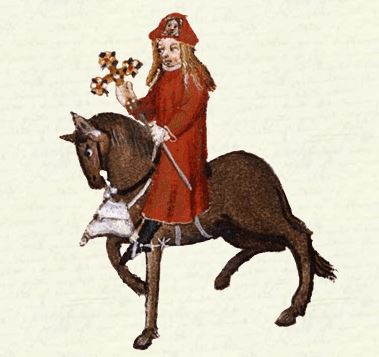
“Lordynges,” quod he, “in chirches whan I preche, I peyne me to han an hauteyn speche, And rynge it out as round as gooth a belle, For I kan al by rote that I telle.
My theme is alwey oon, and evere was
Radix malorum est Cupiditas.
~ Geoffrey Chaucer, The Pardoner’s Prologue
Chaucer’s Pardoner
Outrage at Iowa Republicans serves no useful purpose. Organize your family and friends, or your neighborhood or your social groups.
Resist.
In our house such endeavors begin by getting to work. Making contact with potential fellow travelers is part of it. So is rejuvenating our spirits. Most important before departing on a pilgrimage, we must question assumptions that led us here, those that lead us on. To flesh out faulty timbers of a political view rendered obsolete by the recent election will take effort. The same indulgences, relics and stones will not serve. Soon work will consume us. Before it does, check the compass and kit bag.
Spring will be here soon and winter’s work is not finished. Begin there. Today. Head outside with broom in hand and breathe the crisp air of our future… and organize.





 Journey Home
You must be logged in to post a comment.