Categories
Home Life Living in Society Social Commentary

Weekend Reckoning

Garage Rags
Garage Rags

Supper was a leftover jar of bean soup, sage and cheddar biscuits, and apple crisp from last year’s crop.

It was delicious… an apple joke.

I set my alarm for 4 p.m. to begin two hours of cooking. I also wanted to hear Garrison Keillor’s radio show from Tanglewood. He’s retiring in July.

Keillor lucked into radio.

“Through a series of coincidences, I lucked onto this show, for which I had no aptitude to speak of, sort of like a kid in Port-au-Prince who’s never seen ice becoming captain of the Haitian Olympic hockey team,” Keillor wrote in an email sent Saturday afternoon. “I was never in theater, never sang in public, but I had grown up at the end of the radio era so I had some ideas about how it might sound. I was a plodder, but persistent.”

So did I luck into a pattern of preparing Saturday dinner with A Prairie Home Companion in the background. All of my other favorite Saturday shows on public radio are gone – likely as a result of budget cuts. Soon Keillor will be gone too. New times require new patterns and I’m okay with that.

Saturday’s harvest included a head of cauliflower, carrots, turnips, an onion, two bunches of celery, and lots of kale for the kitchen and to give to library employees. The herb garden is coming along. I didn’t pick basil but will need to soon.

Planting included an acorn squash seedling and some dill, both given to me by a library worker. The Swiss chard seedlings went into the ground, as did some more jalapeno peppers. I planted lettuce where the carrots grew. The overnight thunderstorm provided needed rain.

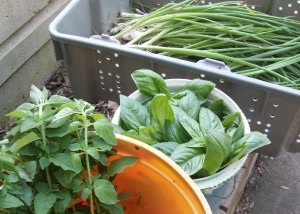
Turk's Turban Squash Plant
Turk’s Turban Squash Plant

The harvest was shortly after sunrise. I was out in time to see dew around the edges of the Turk’s Turban heirloom squash plant leaves. It’s as if the leaf was a large moisture collection device, and the drops waiting to get big enough to roll to the ground and provide moisture to the roots. Summer Saturday harvest is becoming one of my favorite times.

After lunch I organized and cleaned the garage, which is to say I put things away, swept the floor and laundered the rags. I decided to leave the bagging attachment on the John Deere for another pass at collecting garden mulch. It’s debatable whether more is needed. It can always be composted if not used.

It’s been a couple of tough weeks in the news, making it difficult to process what’s happened in society. The murders at Pulse Orlando kicked off a series of news cycles that have been enervating at best, at worst a beginning of the end of society as we know it.

There’s a lot to write about. The futile efforts of the U.S. Congress to call attention to gun violence and do something about it, the referendum in Great Britain about whether to leave the European Union, a slate of Supreme Court decision announcements, the peace agreement between the FARC rebels and the Colombian government, and more.

What caught my attention midst the swirl of current events was yesterday’s 140th anniversary of Custer’s last stand during the battle of Little Bighorn in southeastern Montana. During a visit to the battlefield it occurred to me Custer was a fool. The idea the Seventh U.S. Cavalry Regiment could prevail in that open terrain was ridiculous.

Little Big Horn was part of a genocide that began shortly after arrival of Europeans in the west. It found it’s last practical expression 14 years later in 1890 on the Pine Ridge Reservation at Wounded Knee. Leonard Peltier’s case notwithstanding, our war with native populations in the Americas is finished.

The removal of cultures is in many ways the history of the country. We removed native populations, trees and wildlife and called it “settling.” Surveyors laid out a pattern of land use that enabled us to settle the prairie and forget what once was here. Oak-hickory forests, tall grasses and bison as far as human eyes could see have been relegated to special heritage sites. It’s not all been good but it is what we live with.

As rain falls, reminding me to clean the gutters, it’s hard to miss the need to engage in society outside a surveyed lot in Big Grove. To sustain a single life requires engagement in everything around us and many things that no longer are here. At least that’s how I cope with American violence and sustain the will to do something more about it.

Categories
Living in Society Reviews

Book Review: Give Us the Ballot

Berman

The word “progressive” got bandied about more this year than it has in a while.

Who is a progressive? Who is a “real” progressive? Who will continue a progressive legacy after the 2016 election?

Hillary Clinton and Bernie Sanders debated what it means to be a progressive at the beginning of the 2016 Democratic presidential nominating process, with both claiming progressive bona fides.

Here’s what I say. You are not a progressive unless you have read Give Us the Ballot: The Modern Struggle for Voting Rights in America by Iowa’s own Ari Berman.

In this extensively researched, easy to read text, Berman reminds many of us of the reason we became politically active: as a way of engaging in progress toward racial and social justice centered around the Voting Rights Act (VRA) signed into law by President Lyndon B. Johnson on Aug. 6, 1965.

There has been a concerted, well-planned effort to suppress provisions of the VRA. The June 25, 2013 decision by the Supreme Court of the United States to overturn Section 4, which required certain states to get pre-clearance of changes to voting laws from the Department of Justice, was only the most obvious, recent incident. Berman’s account of the Nixon and Reagan administrations provides insight that de-fanging the law was part of Republican intent from the beginning. My reaction was incredulity at everything that was happening before my eyes without me understanding it.

Berman interviewed Rep. John Lewis extensively for the book (along with many others) and it shows. Lewis wrote in the Washington Post,

“(Give Us The Ballot) should become a primer for every American, but especially for congressional lawmakers and staffers, because it so capably describes the intricate interplay between grass-roots activism and the halls of Congress . . . Congress must fix the Voting Rights Act, and Berman’s book explains why, without passion or favoritism. It is the first history of the contemporary voting rights movement in the United States. It is long overdue, but Berman’s extensive reporting makes it well worth the wait.”

It’s hard to disagree.

Be a progressive. Read Give Us the Ballot this summer.

~ Written for The Prairie Progressive

Categories
Living in Society Social Commentary

Summer Reading List

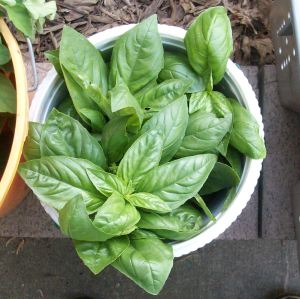
Basil
Basil

I posted a request for summer reading suggestions on Facebook and Twitter. There were a lot of replies and suggestions, some I would not have considered had I not asked.

My summer usually begins with a re-read of The Great Gatsby by F. Scott Fitzgerald. This year I am re-reading Saul Bellow’s The Adventures of Augie March instead. If there’s time, I’ll read something by Joan Didion from the 1970s and some William Carlos Williams.

In no particular order, here is a gleaned list of reading suggestions from social media:

Water by Jennifer Wilson

Dark Money by Jane Mayer

My Life on the Road by Gloria Steinem

Diet for a Hot Planet by Anna Lappe

The Other Side of Paradise: Life in the New Cuba by Julia Cooke

Cloudsplitter by Russell Banks

Sapiens: A Brief History of Humankind by Yuval Noah Harari.

Have a great summer of reading!

Categories
Kitchen Garden Living in Society Social Commentary Work Life

Father’s Day Weekend

Spring Harvest
Spring Harvest

A benefit of an American lifestyle is having the occasional weekend off.

Yet the weekend is more French than American — le weekend!

In June 1977, over two weekends, I was in France with a French infantry marine unit. Those days imprinted the meaning of “weekend” on me even if I don’t get to weekend very often.

My guide for the exchange officer experience was an infantry marine platoon leader stationed on the Atlantic coast in Vannes. The unit was on alert to deploy to Djibouti, which had recently declared its independence from France. If there was trouble in the transition, the unit would head there.

Upon arrival at the train station I was driven straight to the officer’s club. I drank too many pastis before attending a reception in my honor — no one told me about the reception until several pastis had passed my lips. The non-commissioned officers lined up one aperitif after another in front of me with glee. Too drunk to be embarrassed, when someone mentioned the reception, I decided to leave the remaining drinks on the table, sober up, and listen and learn about the culture.

At the reception I practiced my French and mustered a dim comment about the Concorde, which was still new. The alcohol drove out my vocabulary so it was the best I could do.

In homes and apartments I briefly lived as French do. There was a continuous series of meals and events tied together with a notion of forgetting about work for a while. Weekends continue to be French in Big Grove, although with much less alcohol and no drunkenness. God’s in his heaven, all’s right with the world.

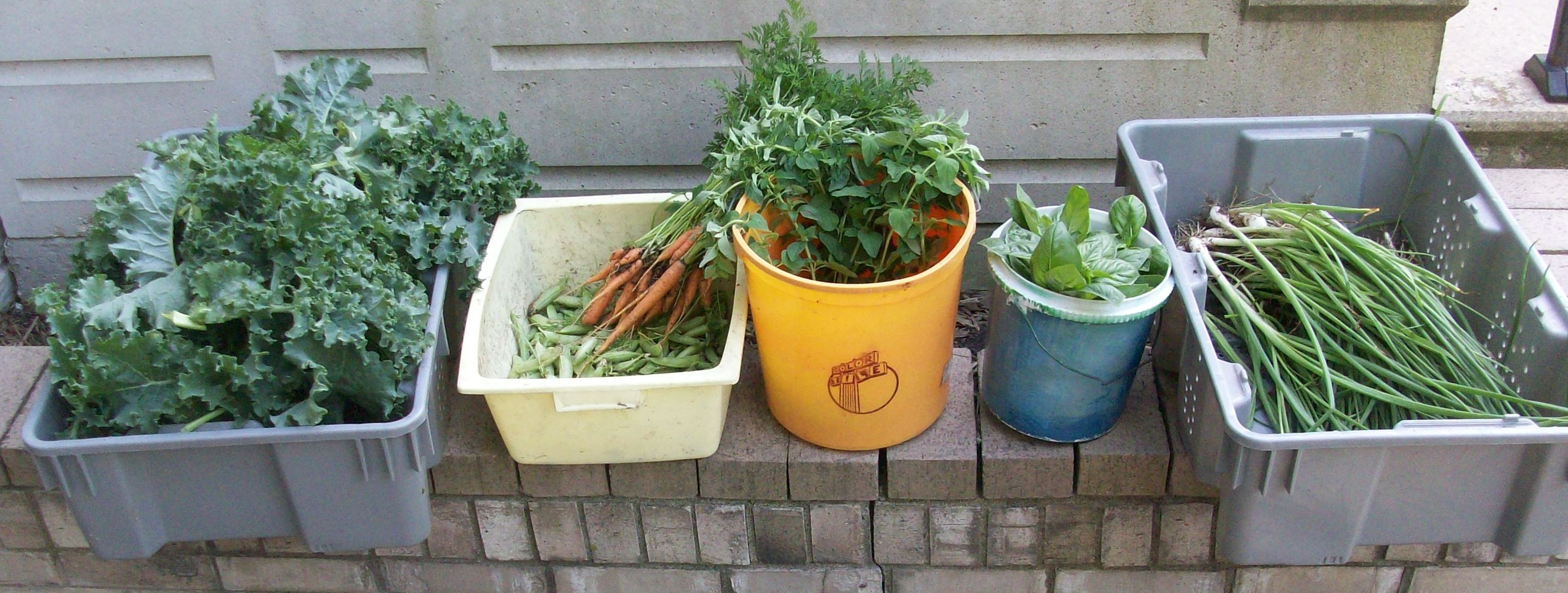
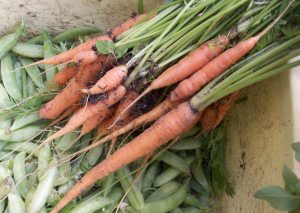
Last Saturday of Spring Harvest - kale, peas, carrots, celery, oregano, basil and spring onions.
Last Saturday of Spring Harvest – kale, peas, carrots, celery, oregano, basil and spring onions.

The garden is in, harvest begun and work remains to be done this Father’s Day weekend.

Weekends at home are a way to avoid expenses as I navigate from semi-retirement to full retirement in a few years. There is no extra money to drive into the county seat for “shopping,” nor is there adequate clothing in the closet to attend any galas to which I may be invited. Working at home avoids expense.

Saturday was the first of many harvests from the vegetable garden. Untold hours were devoted to planting, cultivation and now harvest of kale, celery, carrots, peas, spring onions, basil and oregano. It was exciting.

Garden Shares for Library Workers

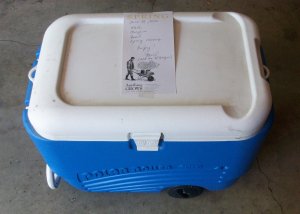
One of my outlets for excess produce has been workers at the public library. I prepared shares of onions, kale, oregano and basil in a cooler and drove them into town. One of the library workers gave me an acorn squash seedling for which I will find room.

Next I went to the grocery store where a neighbor and I talked for ten minutes about beer selections. He didn’t carry the union-made Pabst Blue Ribbon that would have been my first choice, nor did he have made in Canada Labatt’s Blue which would have been my second. Partly as political commentary I settled for a six-pack of a Mexican mass produced brand. Upon return home I iced three of them and two cans of Royal Crown Cola in the cooler.

Broccoli in Cages
Broccoli in Cages

The garden entered the summer phase and it’s time to break loose the broccoli.

Last year the broccoli crop was a failure. I decided to protect the seedlings with chicken wire a
nd they survived initial growth. It’s time to take the chicken wire off the individual plants and create a close fence that will keep deer from jumping in and allow the plants to spread their leaves. I scoped it out on Saturday and hope to free the broccoli later this morning.

Peas and Carrots
Peas and Carrots

Harvest is unfinished until the produce is washed, distributed and processed. In a kitchen garden like ours that means cleaning, storage and cooking which takes more time than one might expect.

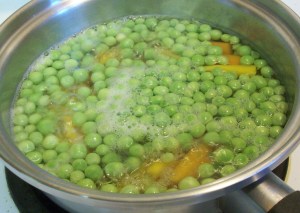
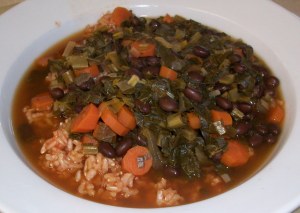
For dinner I made peas and carrots, and kale-black bean-vegetable soup poured over brown rice made with a jar of home made tomato juice. By the end of Saturday I was very tired.

I took a course in African American Studies while in graduate school.

Kale - Black Bean Soup on Brown Rice
Kale – Black Bean Soup on Brown Rice

The late Jonathan Walton made the case that slaves were likely too tired to do much organizing after working a shift on Southern plantations. I learned a lot about the literature of slavery and its narratives because of Walton. I wasn’t sure what to make of his assertion, other than that slaves were people just as we are.

I yawned during class from time to time and Walton called me on it, inquiring about my condition… was the subject matter too tedious? Had I been up late the previous night? I tried to stay awake. It was a dry topic.

Peas and Carrots
Peas and Carrots

Everyone has an opinion about slavery. For the most part, people don’t directly favor it. It is a stain on our public consciousness that has not been removed, nor likely will be in my lifetime. I’m not sure what exactly that means in 21st Century America.

The term “wage-slave” is popular today, especially among people ascendant from low-paying work. Forced labor continues to exist unawares, notably through labor trafficking. Neither is the same thing the peculiar institution was.

Modern life has us removed from the actuality of things like neighboring, sharing and slavery and we are the less for it. This Father’s Day Weekend I plan to commune with what is actual — what is real. By doing so sustain our lives in a turbulent world.

Categories
Living in Society Social Commentary

Chinese Chicken

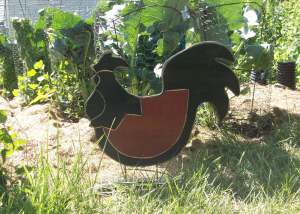
Decorative Chicken
Decorative Chicken

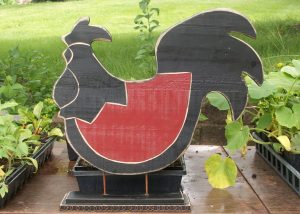
My current inspiration is a decorative image of a rooster, made in China, and purchased at a home, farm and auto supply store.

Eying the clearance aisle wooden chickens for weeks, I finally bought one at a deep discount. The price tag was not much and the cash register receipt describes it as a 17-inch wooden rooster on a base. Deciding what to do with it will be more expensive in time and consideration. I just had to have it, as if an urge from the great beyond struck me.

“It represents nothing about us,” said a person who saw it.

It may represent most things that matter today I thought. It has the potential to present everything wrong and much that is right about living in the United States in 2016.

The task for the next few weeks is to ferret out the meaning of this black, red and grey bird. A meaning beyond its Chinese chicken-ness.

Categories
Living in Society

Briefly on Politics

Global Zero's Brittany Kimzety Bird-Dogging Hillary Clinton in Coralville
Bird-Dogging Hillary Clinton in Coralville

BIG GROVE TOWNSHIP, Iowa — On Tuesday, June 7, Hillary Clinton won the California, New Jersey, New Mexico and South Dakota primaries, securing enough delegates to win the Democratic nomination for president at the July 25 national convention.

I agree with Jeff Weaver and Tad Devine, key Bernie Sanders advisors, that Clinton isn’t nominated until the convention. However, under what circumstances won’t she be? Today’s popular usage is “Clinton clinched the nomination.”

For me, my mother, and women I know Tuesday was a momentous occasion as the first woman ever has been selected for president by a major political party in the United States. A century ago, women weren’t allowed to vote here.

The formalities of July are minor points as key figure after key figure in the Democratic Party gets behind Clinton’s candidacy. We now turn toward the general election.

As the last days of spring yield to summer warmth, and the garden produces vegetables for the table, political campaigns go on the back burner. There is more to life than politics.

As it does, it is important to note that on June 7, 2016 Hillary Clinton made history. Whether one likes her or not, that is something.

Categories
Juke Box Writing

Pickled Items

Pickled Imports
Pickled Imports

I’ll be taking a break for a while.

I’m as busy as ever figuring out what life is and what my life will be. In August I’ll be filling in for the editor of Blog for Iowa. Regular posting will resume no later than then.

Like the air traffic controller, we can only land one plane at a time. I need to focus on sustainability in a turbulent world for a while.

Click on the tags to read some of my archived posts while you are here. Also consider following me on twitter @PaulDeaton_IA.

I plan to be back and hope you will be too.

Categories
Living in Society Social Commentary

Cemeteries and Decorations

Flags at Oakland Cemetery

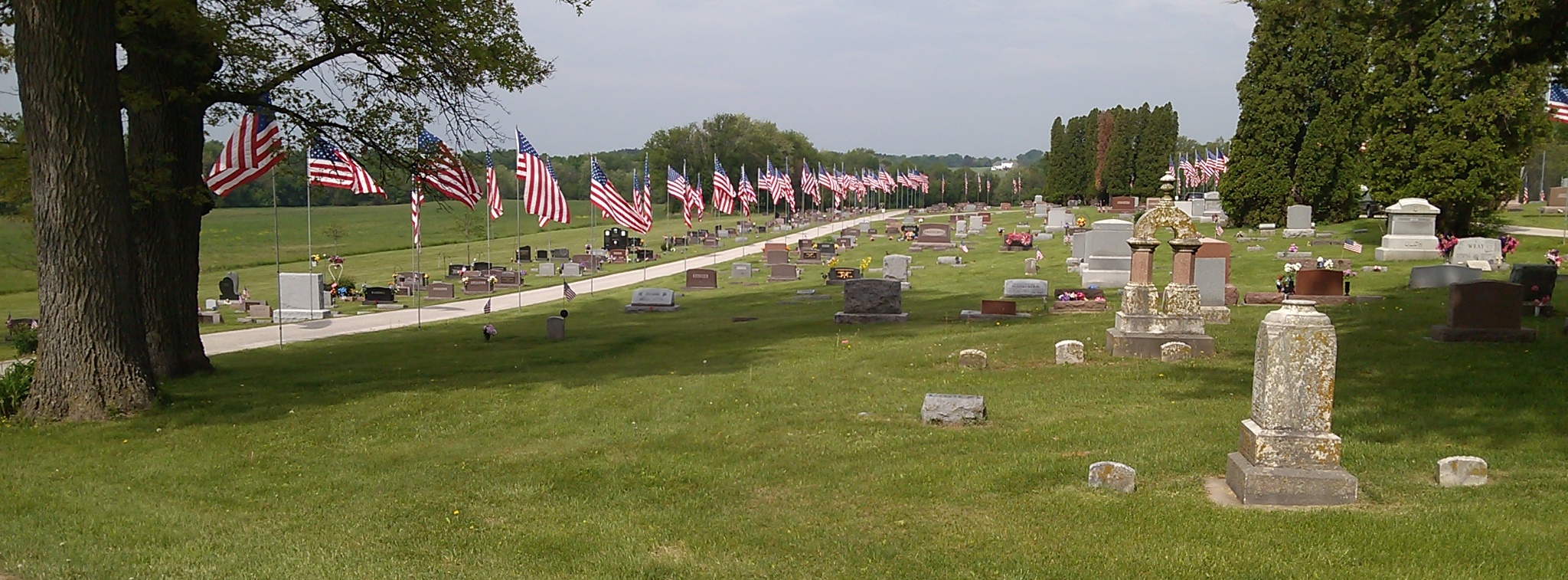
BIG GROVE TOWNSHIP, Iowa — A couple of years ago the Solon American Legion moved their annual Memorial Day commemoration from Oakland Cemetery to the new service memorial at American Legion Field.

As remaining World War II veterans depart on their long journey after this life, the new field is level, lessening the possibility of a fall for increasingly fragile nonagenarians.

The annual event seems better attended since moving to town.

The township trustees consider the condition of the cemetery before Memorial Day and the legion adorns its roadway with full-sized American flags with the names of local veterans on each flag post. We want the cemetery to present well regardless of where the event is held. After inspections, we decided it looked good for the holiday, although the trash barrels needed emptying.

Memorial Day began as Decoration Day in 1868 — a remembrance established by the Grand Army of the Republic to recognize union soldier deaths while defending against the rebellion. Confederate women had begun decorating graves during the earliest years of the long war that took 620,000 lives. It was traditional to visit the family cemetery and enjoy a picnic lunch and family reunion near remains of the departed. It took an act of Congress (the National Holiday Act of 1971) to sort out differences and competing claims of the remembrance. In many places traditions have vanished as family cemeteries gave way to cremation and burial in larger, public and commercial places of rest.

Just as grilling at home or at a park supplanted picnics near the deceased, and Memorial Day gets confused with Veterans Day, not many here think about what divided the North and South in the 1860s. Neither is there common cause in the deaths perpetrated by our modern national militarism. Our constant state of warfare has become a part of background noise many people try to ignore.

My ancestors and shirt tail relatives in Virginia fought on both sides of the Civil War and those roots provided me a form of ethnic identity — an indigenous culture shared by a localized clan of kinfolk. I’m not sure such culture is even possible today.

As for this Memorial Day, I’ll be working a shift at the home, farm and auto supply store and unable to attend the commemoration.

Memorial Day will start the summer vacation season, like it does for most Americans, and be a chance to relax after getting the garden planted. The bloody wars our country has fought and continues fighting will seem distant for a while… almost an abstraction. I’m not alone in that. Even drone pilots can go home after a shift to spend time with their families.

Memorial Day is part of a procession of life events that helps things seem stable and predictable. We want that as politicians and corporate news media slam us with bad news and frightening potentialities every time we tune in on a device. The idea that the dead don’t move unless someone made a mistake, and that grave decorations aren’t intended to be permanent provides comfort.

On the way to my shift I’ll stop briefly at the cemetery and pay my respects to neighbors killed in action, most of whom I didn’t know. Such deaths seem tragic and complex — clouded in a present that assigns new values to them. I’ll stand in silence on the hill among old oak trees considering the meaning of honor and valor and why it’s still important. I hope that’s decoration enough.

~ Written for Blog for Iowa

Categories
Living in Society

We Like Amy Nielsen

Amy Nielsen
Amy Nielsen

Once Amy Nielsen of North Liberty set her mind on getting involved with government in one of Iowa’s fastest-growing cities there was no stopping her.

When Mayor Tom Salm died unexpectedly in 2014, she pursued a council appointment after nine-year councilor Gerry Kuhl was appointed mayor. The city council chose someone else.

Nielsen then ran for mayor and defeated Kuhl in a tight race, garnering 55 percent of the vote.

She’s running for election in the June 7 primary to represent Iowa House District 77 in the Iowa legislature. I believe there will be no stopping Amy Nielsen now either.

There is a lot to like about her.

“My primary ‘career’ is being a mom,” she said in a recent email.

Nielsen was born in Keokuk and grew up in Eastern Iowa. She attended Kirkwood Community College before moving to South Carolina where husband Jason took a job with Kimberly Clark. Nielsen took a job in a bank there. They followed his work to Utah, where their first daughter Catie was born, to Tennessee where son Ben was born, and to Wisconsin where daughter Jillian was born. The family next moved to Atlanta, which they found was “not a good fit.”

“We decided it was time to come back to Iowa,” Nielsen said. “We knew we wanted to raise our kids here. My husband was hired at Alliant Energy and we chose to settle in North Liberty.”

In 2007 the family moved and a few years later Nielsen burst on the scene of public engagement. She worked as a volunteer in a number of community organizations including local schools, the Iowa City Blue Zones Project, the North Liberty Community Pantry and more.

Nielsen is engaged fully in life and has the audacity to run for office to get things done for her family and her constituents.

“As a graduate of Iowa City Public Schools, and a parent of three children currently enrolled in those same schools, I know first-hand how important a world-class education is to our state’s future,” Nielsen said in a press release for her house bid. “I’m deeply concerned that some in Des Moines are shortchanging our children by refusing to invest in Iowa’s public schools.”

When asked how she would replicate outgoing State Representative Sally Stutsman’s connections in rural parts of District 77, Nielsen responded.

“I will do what I have always done,” she said, “which is proactively seek input from individual stakeholders that have more knowledge and experience to learn about their specific needs.”

Part of living in a fast-growing community is the expansion of low-wage jobs and North Liberty has more than its share of them.

“I am in favor of a state-wide higher minimum wage,” Nielsen said. “I would like to find a way to close the loop holes that allow for exemptions or advantages for doing things like using ‘temporary’ workers or ‘subcontracting.’  This is just a way to boost profits on the backs of low wage earners.”

Check out Nielsen’s campaign website, amyforiowa.com for her position on other issues. However, policy isn’t the only reason to like Amy Nielsen.

In the face of disparaging remarks by outgoing Mayor Kuhl in 2014, Nielsen handled herself well.

“I have largely ignored the criticism of Gerry Kuhl,” Nielsen said. “He was quoted after the election as saying ‘the mayor doesn’t have any power anyway’ and he was wrong. The mayor sets the attitude and tone of not only the council and staff, but the entire community. I firmly believe certain opportunities have come our way because of the change in leadership.”

I’m proud to offer my support to Amy Nielsen in her bid to win the Democratic primary in House District 77.

Categories
Living in Society

Into the Dirt

Part of the Big Grove Sample Ballot

SOLON, Iowa — At a table under a locust tree on Main Street I chatted with Kurt Friese, his wife and son as people gathered for his political meet and greet.

Most of the small group of attendees are not in my circle of political friends. Maybe they should be.

I’ll support Friese in the June 7 Democratic primary. With that decision made, I can move on to more engaging endeavors. That means digging in the dirt in my garden until the initial planting is done.

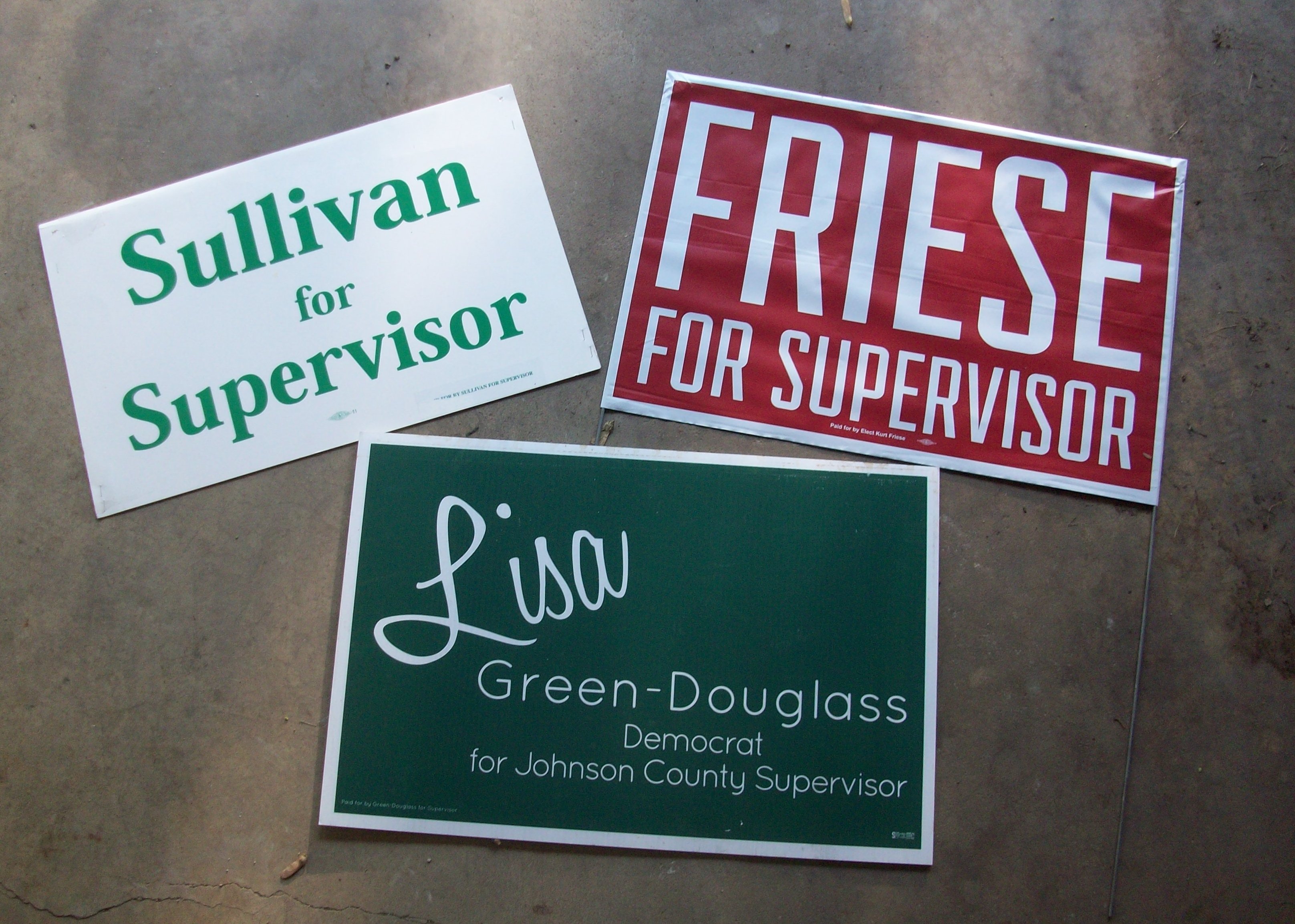
I brought a lawn sign home and found the two from previous supervisor campaigns. After sizing them up for wires in the garage, they will go out on Friday for the weekend traffic in front of our home.

Sizing Signs for Wires in the Garage

I took the time to meet and have a conversation with five of the six supervisor candidates before deciding, also considering the work of the two incumbents. Comparing what I know about the job of supervisor, the needs of the county, and how each candidate seemed as a person, Friese was the best fit to fill out my votes. The five candidates I met would each bring something different to the table. (I still don’t get what the helicopter pilot is doing). This slate fits the direction the county should go during the next four years.

Someone on social media asked why Friese over Heiden? First, I have more in common with Friese and his circle. Second, Heiden didn’t take my advice a month ago about getting on top of her recent switch in party registration. The switch itself is not an issue. The way she handled it publicly is. Finally, my pick was about having a business person on the board of supervisors. Being a successful restaurateur and author carried more weight than being executive director of a retirement home for the affluent. Either one would make a competent supervisor.

Now it’s into the dirt for me.