Categories
Kitchen Garden

Red Chile Sauce

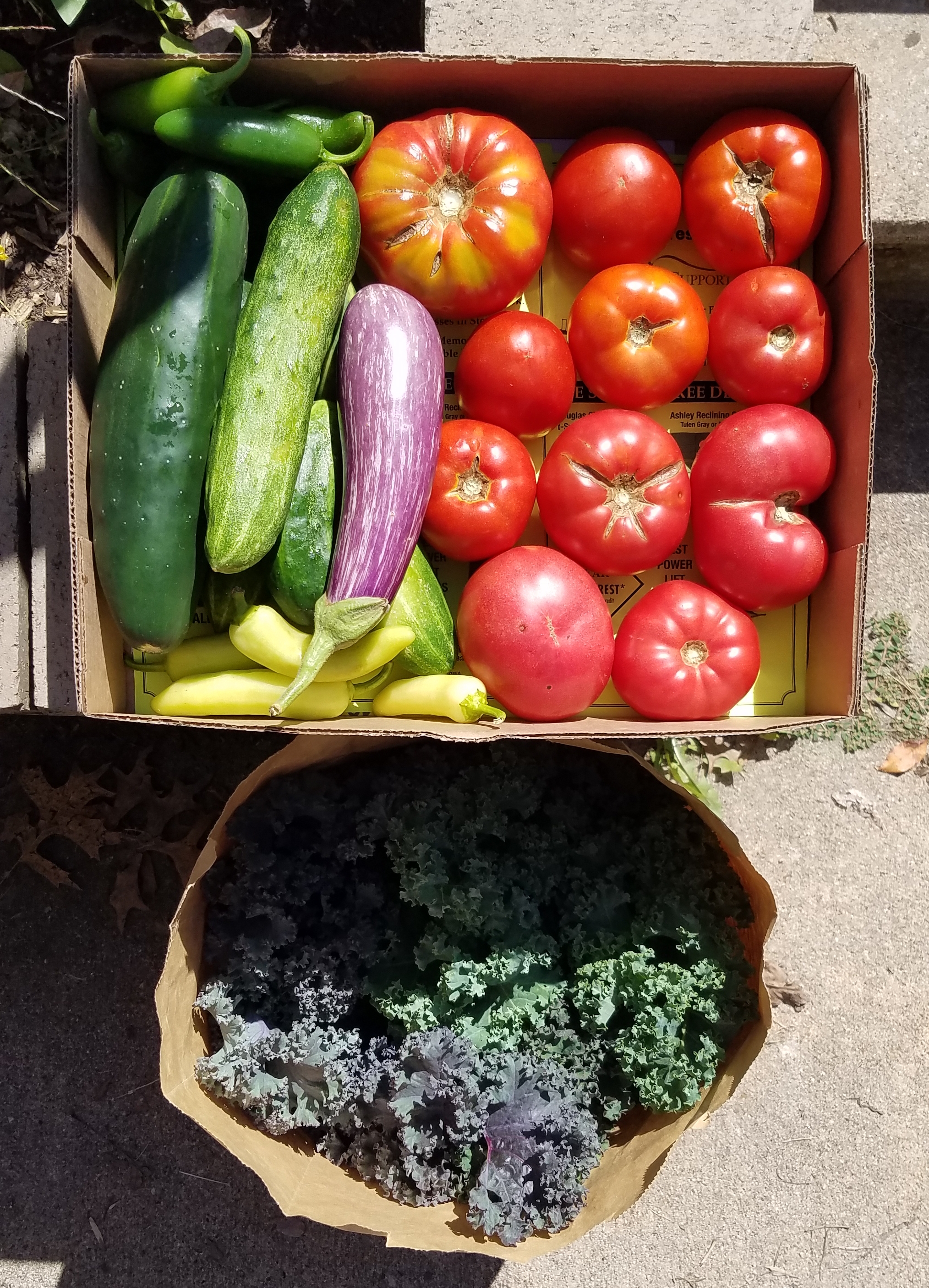
Part of my barter agreement at two Community Supported Agriculture farms was participation in fall shares. I pick up the final share this afternoon and sweet mother of Mary that’s a lot of vegetables.

Now that I’ve learned to make corn tortillas at home we need something to put in them. Something different — black beans, kale and Guajillo chile sauce. It didn’t use up many of the vegetables in the ice box, but that’s where I am after the frustrating results of the statewide election contests became known.

I watched more than a dozen YouTube videos on red pepper sauce, notably two by Rick Bayless, before arriving at this recipe.

Guajillo Red Pepper Sauce

Ingredients

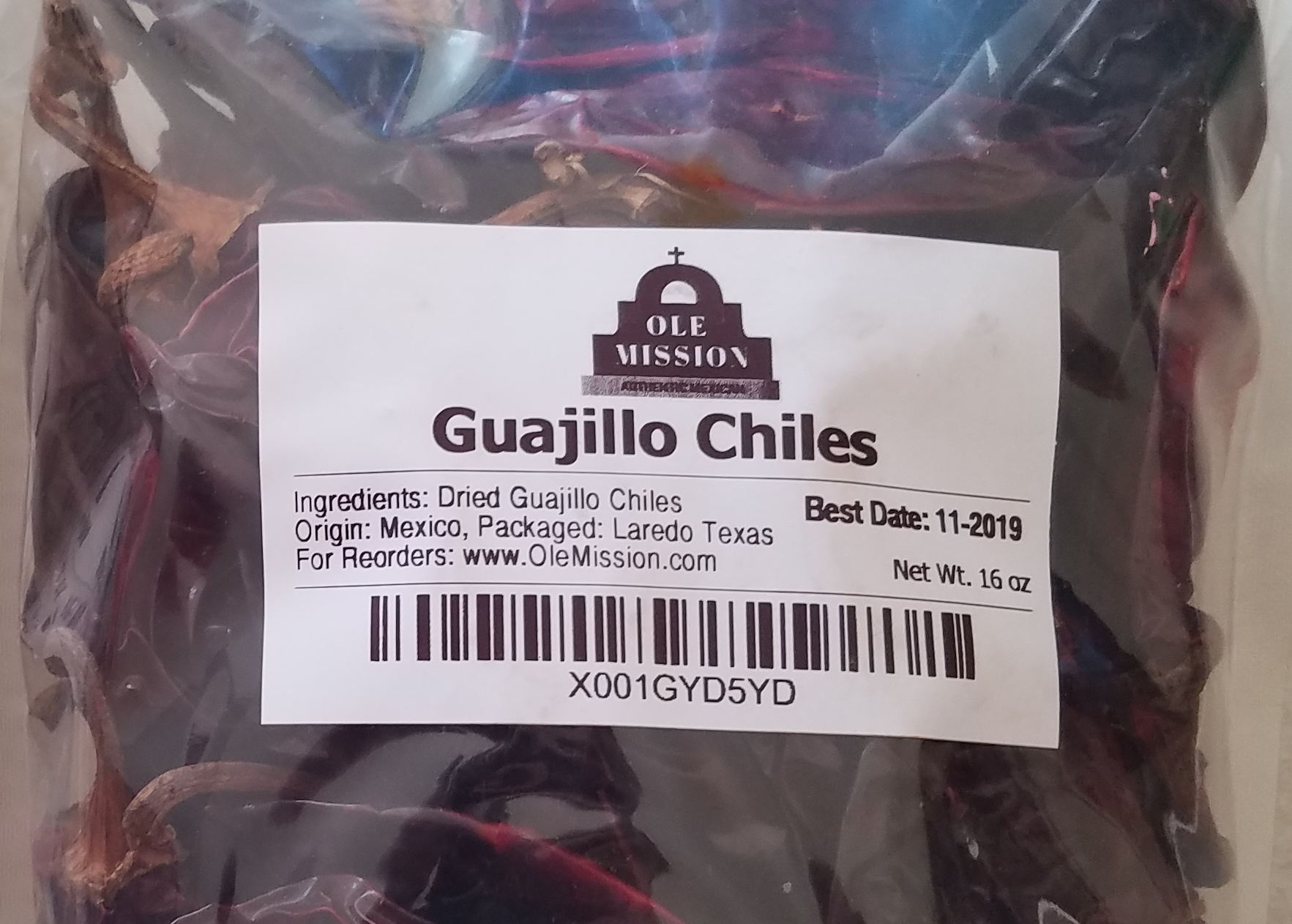
Four ounces dried Guajillo chile peppers
Tablespoon Mexican oregano
Two head of garlic, peeled and crushed
Salt
Black pepper
Sugar
Water

Process

Stem and seed the chile pods, tearing them open. Toast them flesh side down in a frying pan with vegetable oil until the flesh turns a lighter color. It doesn’t take long. When the chilies are toasted, place them in a bowl and submerge them in hot tap water. Re-hydrate them for about 20 minutes.

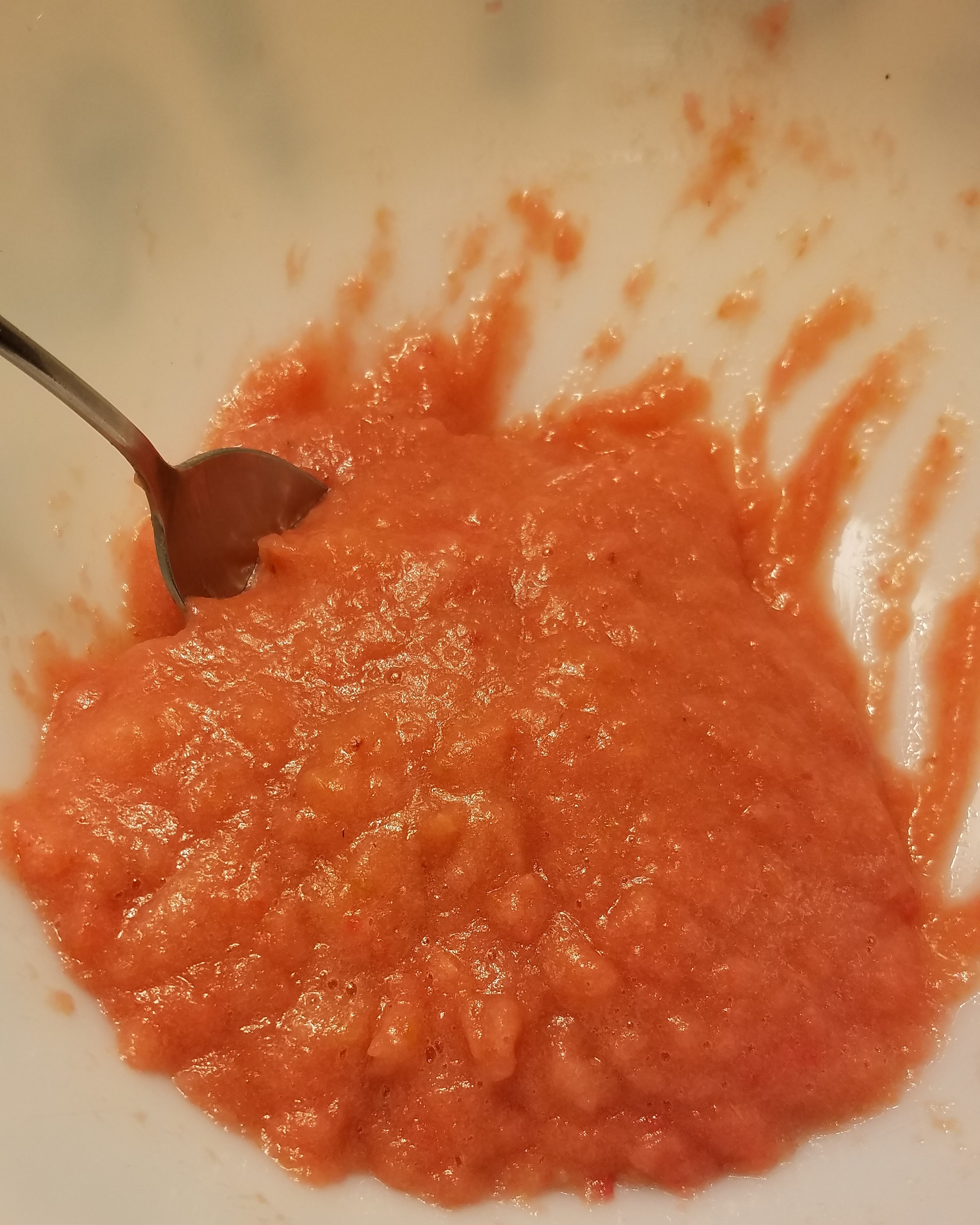
Transfer the chilies to a blender and add about a cup of the soaking liquid. Add the Mexican oregano, crushed garlic and black pepper and blend together until the mixture is incorporated and as smooth as can be. Strain the contents of the blender into the frying pan used for toasting and simmer on low heat until the sauce is reduced to a thick consistency between tomato sauce and tomato paste.

Add salt to taste and a pinch of sugar. Add a half cup of water and stir until the mixture is incorporated. Simmer over medium heat to enable the flavors to meld and the sauce is complete. Taste and adjust seasonings.

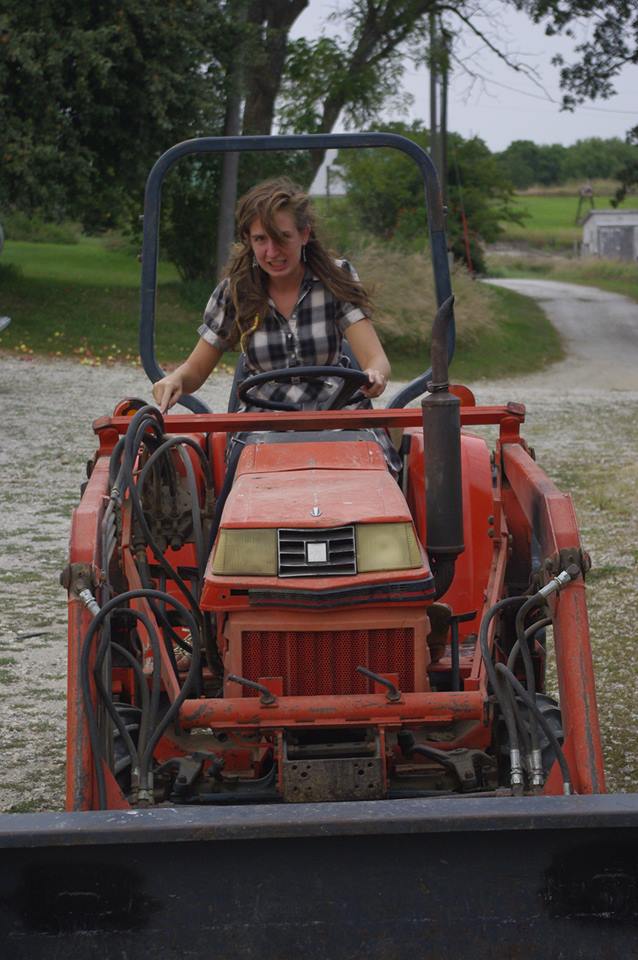
Guajillo chile sauce can be used on almost anything. I made a taco filling with green kale and black beans cooked in this sauce. I also served the finished kale, black bean and chile sauce as a side dish at the end of season potluck at the orchard. It was well received and our tractor driver asked me for the recipe.

I put a batch of the sauce in a squeeze bottle. While there’s no way to pour the sauce on the election, it will make many dishes in our kitchen taste better.

Categories
Kitchen Garden

Functional Tortillas

Second Batch of Tortillas

I made corn tortillas for the first time last week. They tasted okay, but weren’t the best. They served.

A tortilla press is forgiving but my dough texture and portioning needs practice. The second batch was better than the first, so there’s hope of better fresh tortillas.

Tortilla-making was not part of our family culture coming up. Mother began making tacos at home when she worked in the grade school cafeteria. She used store-bought tortillas and everyone liked them, including some of my friends who frequently asked, “when is taco night?” Those were the days when neighborhood grocery stores began selling more prepared food and eventually instituted a “Mexican section” in one of the aisles. Occasionally I make taco filling similar to what Mother made. When I do, it’s comfort food, plain and simple.

I’ve been buying raw flour tortillas from the warehouse club and make breakfast tacos once or twice a week. Home made tortillas provide better control of what goes into them.

Tortillas serve as a better delivery system than a slice of bread, or pouring stir fry on rice. Fillings can more interesting than tortillas. In the works is a kale, black bean and Guajillo chili sauce filling. My recent project of buying a press and warmer, Guajillo and New Mexican chilies, Mexican oregano and Mexican cheese is to develop new meal options. If it goes well, I’ll cultivate different chilies in the garden next year, although I’ve already ordered the seeds so there’s little doubt about that.

Tortillas are like the mathematical function that establishes relationship between inputs and outputs. At the beginning is the raw material from the garden. In the end, it can lead to a better life.

Categories
Kitchen Garden

Fennel Potato Soup

Fennel Potato Soup

We have yet to have a hard frost, which is okay by me until I get the kale in for cleaning and freezing. Despite weird weather, this year was the best ever for our home garden. It seems I should say more about it than that.

Truth is I’ve been bedridden the last 48 hours, spewing mucus into tissues without end. I’m over the worst of it, feeling more like working at my desk under lamplight and the glow of my monitor in the wee hours of morning. The last two days seem lost in endless fits of coughing. The two times I went outside to get the mail the weather was perfect for fall.

The ice box was getting overfilled with greens from fall CSA shares. Despite my punk feelings I cleaned eight varieties and made a vegetable broth using them with traditional celery, onion and carrots. This set the stage for other dishes to use the abundance. I made a test batch of fennel potato soup while the broth was bubbling.

Fennel Potato Soup

Melt two tablespoons of butter in a small skillet. Clean and slice a bulb of fennel into spoon-sized pieces and fry it in the melted butter until it begins to soften. Turn off the heat.

In a saucepan cover seven or eight small, peeled and diced potatoes with vegetable broth and bring to a boil. Add the fennel and butter mixture then salt to taste. Add broth to cover again. Return the soup to a boil then reduce to a simmer. Cook until the vegetables are soft and serve with a dollop of sour cream and salt and pepper to taste.

Made three servings.

This weekend was the kick-off of GOTV (Get Out The Vote) for Democrats, and I’m sorry to have missed the action. Between scheduled work and being sick, there was no time to do much but generate sales for tissue manufacturers. I followed along on social media, but that’s not the same as being there.

I don’t have any predictions about the results, and based on the 2016 presidential race, don’t plan to make any. What I do know is more people I know are engaged this year than since 2006. That’s a positive sign for Democrats.

Republicans seem to be using an outdated playbook. A group called the Congressional Leadership Fund spent almost half a million dollars on behalf of Congressman Rod Blum in the First Congressional District to scare us about Abby Finkenauer who is leading in the polls. They warn us she wants to create more “sanctuary cities” and team up with Nancy Pelosi to implement an extreme liberal agenda. Despite the scary music in the internet spots, there are no sanctuary cities in Iowa and it remains unknown if the U.S. House of Representatives will flip to Democratic or whether Pelosi will be elected speaker if it does. Voters who might respond favorably to these ads have been conditioned by the rise of right wing radio and to a lesser extent, FOX News. Accepting these ads may not be reasoned, but it’s in their wheelhouse, and something of a concern.

What I see locally is the same Republican candidate placing the same campaign lawn signs in the same places as he has done since first elected in 2012. It’s clear his segment of the electorate is not growing and that’s good news for the Democratic candidate.

Our gubernatorial candidate Fred Hubbell led in the last polling. Republicans handed Democrats a full quiver to use this cycle. Between their malpractice on privatization of Medicaid, alienating large numbers of voters over abortion rights, and getting teachers and other public employees mad over changes to collective bargaining, there is plenty to shoot down the incumbent. There is so much to talk about Democrats should disband the party if they can’t win the governor’s race this cycle. If we do win, we’ll be able to check the most egregious aspects of the Republican agenda going forward.

I guess I’m getting over my sickness if I can write about two of my favorite things, local food and politics. After I post this I’ll head upstairs, have leftover soup for breakfast and see if I can get feeling well enough to go to the orchard for a my shift. There’s kale to pick before the hard frost leading to winter.

Categories
Kitchen Garden

Fermenting A Vinegary Fall

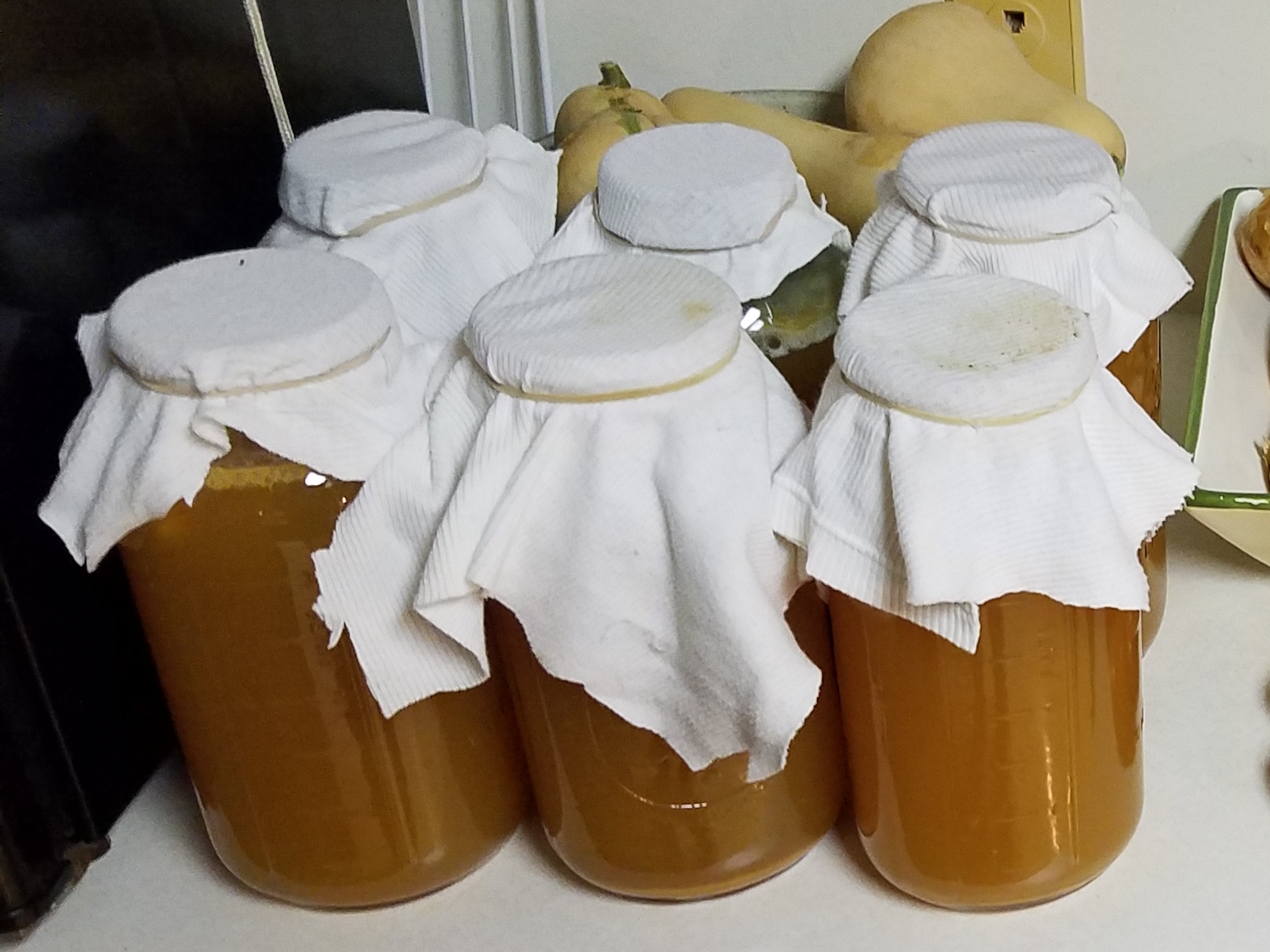
Fermenting Apple Cider Vinegar

We were busy at the orchard last weekend with perfect fall weather: sunshine and cooler temperatures. Throngs of people visited picking apples, buying apple products, and having fun with friends and family.

We are at peak apple cider sweetness this week. Gala and Honeycrisp apples make the cider sugar content highest of the year. A great time to make fermented products — cider vinegar for me. Since my apple trees did not produce this year, I bought four gallons and started vinegar on Saturday.

The mother of vinegar I use is traced back to the 19th Century. It’s a proven process and if one cares about flavor in a home kitchen, a necessary ingredient.

I haven’t written for a week, due mostly to my brother-in-law’s passing on Sept. 19. Jim and I started at the University of Iowa the same year, although I didn’t run into him after university until Jacque and I met. He married Jacque’s sister. A Celebration of Life is planned in October.

This year has been a challenge for many people I know. As our eyes turn toward the midterm elections we’re hoping to break the spell of this sour time. At least dilute it enough so it is more tolerable.

Categories
Kitchen Garden

End of the Garden

Rapid Creek, Sept. 11, 2018

It’s down to eggplant, green beans, peppers, butternut squash and kale as the garden winds down in late summer. Four crates of tomatoes remain to be used, and the ice box, storage shelves and freezer are nearing capacity.

The next project is planning the garlic patch for October planting. I think it will go where the celery and cucumbers grew this year. It was a successful crop so I’m doubling the amount planted — all with seed from this year’s crop.

The Autumnal Equinox begins Sept. 22 this year. After that, the winter cycle of cooking and living mostly indoors is renewed. Garden cleanup will be after first frost, usually in the middle of October. Then there is collecting grass clippings for mulch and trimming branches from trees and shrubs for a winter burn pile.

Apples, Sept. 11, 2018

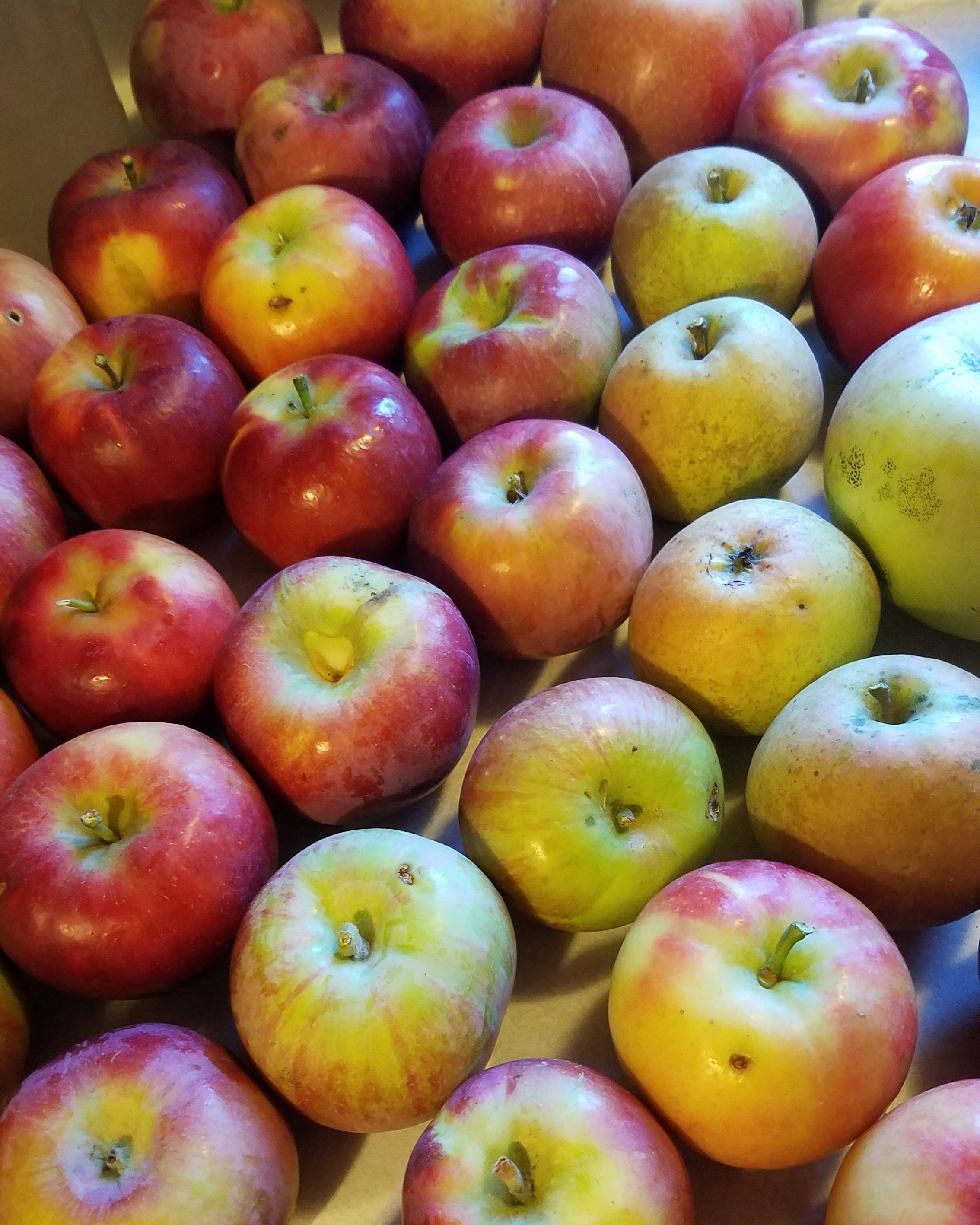
Tuesday I made a trip to the orchard to pick apples and brought home more than a week’s worth in eight varieties. I had to stop picking before getting to all the ripe kinds because the bag was getting heavy. They will keep in the refrigerator… I hope.

There are seven weeks left in the apple season and I’m looking forward to all of them. There is nothing like my work as a mapper, helping guests find apples in our orchard. Last Sunday it was so busy, with perfect weather and pent up desire for customers to get outdoors, I began losing my voice after explaining the operation so many times. The harvest is a series of fleeting moments stretching toward a vanishing point.

The orchard has 100 varieties of apples that begin ripening in late July and continue until the last day of October. Pictured are Cortland, McIntosh, Wolf River, Jonagold, Honeycrisp, Hudson’s Golden Gem, and more. I’d say they were delicious and that would be an apple joke.

Vegetables for Library Workers

I took a care package to our library workers on the way to the orchard. Some of them work on Tuesdays and we didn’t want them to be left out of summer produce. They always appreciate fresh vegetables and this year favored Japanese cucumbers.

The garden has already been a success with some of the best crops I’ve yet grown in many varieties. Where there were failures (bell peppers, radishes, snow peas) there were big successes (tomatoes, celery, cucumbers, spinach, butternut squash, hot peppers). It has been a great year despite the weird weather.

Being in semi-retirement made a difference in preserving the harvest. An extra day or two during the week enabled me to take care of what was planted and process what came in the kitchen.

The plan is to do it again next year.

Categories
Kitchen Garden

Serrano Pepper Salsa

Serrano Pepper Salsa

We don’t need any more salsa in the house yet the abundance of hot peppers this year had me making this recipe… it’s a big batch.

My Serrano pepper crops failed the last couple of years so I’m glad to have more this year.

There weren’t enough of them in the ice box so I went to the garden and picked more. No Roma tomatoes either so I used Clementine, a two-ounce, orange colored tomato of which we have an abundance.

This year I froze the salsa and am not sure how it will turn out when I use it — an ongoing experiment in food preservation. I bagged up two-cup servings. The rest is in the ice box ready for use. The recipe made 17 cups of salsa.

Serrano Pepper Salsa

Ingredients
2 pounds Serrano peppers
3-1/2 pounds Roma tomatoes
1 pound yellow onions
24 ounces tomato sauce
1/4 cup salt
1/4 cup ground black pepper
1 large head of garlic

Technique
Clean and stem the peppers. Clean and prep the garlic, tomatoes and onions, cutting into large chunks. Put the vegetables into a blender in batches. Grind it until medium coarseness. Mix the end result thoroughly in a large bowl. Add the salt, pepper and tomato sauce and mix until ingredients are incorporated.

It is debatable whether to cook the mixture. I like it fresh, although if one wants to can salsa it should be brought to a boil, stirring constantly to keep it from sticking to the pan, and then cooked for ten minutes under medium low heat. After cooking, fill pint Mason jars with the mixture, leaving an inch of head room, and process for 15 minutes.

We’ll be in salsa for months with this recipe. Now what to do with the jalapeno peppers. I’ve already pickled and frozen enough to last until next year.

Categories
Environment Kitchen Garden

A Difficult And Strange Season Of Weather

Carmen Black at Sundog Farm

By Carmen Black

(Editor’s Note: Iowa Farmers deal with an existential reality that is the weather. Regardless of increasingly polarized discussions about climate change, weather affects real people in tangible ways. Carmen recently wrote this piece to members of her Community Supported Agriculture project Local Harvest.)

The weather has been consistently challenging from the late spring to immediately hot May, from lots of rain to this current dry spell. There hasn’t been a catastrophic weather event, but all these different difficult weather conditions create more work to keep everything growing well.

I’ve been thinking more about it as we’ve been observing its impacts while harvesting more of the summer crops. I’ve talked to many other farmers (including folks that grow other types of crops) about the challenges of this season, and anecdotally it seems like the conditions have been hard on many types of crops and livestock alike. One of things that has struck me about this year is that it hasn’t been just one way like really hot or really wet, but every month has brought a different extreme to contend with. It’s made me wonder if it’s all this erraticness that’s been stressful to the plants and animals rather than just the heat or just the late spring.

I was curious to find out if the weather has just felt difficult to us or if it really has been extreme in the grand scheme of things, so I did a little internet research for weather data. What I found was interesting, and did seem to affirm my feeling that this year really has been weird. This was the coldest April on record (since records began in 1895), and was on average 10 degrees colder than normal. It was also somehow both the 5th snowiest April and the 13th driest April, which seemed a little ironic. 2018 tied for the 6th warmest May with 1887, and the average temperature was about seven degrees warmer than normal. Des Moines had three consecutive daily record highs from May 26-28. I was surprised that in Cedar Rapids the daily record highs for the end of May were all held by 1931 or 1934, and then I realized that was the dust bowl! June was the 10th warmest and 10th wettest June on record. July seems to have been pretty average after all those top 20 finishes for the previous months, as it was the 54th coolest July and the 47th driest July on record. Which I think kind of puts the extremeness of the previous months in perspective. Kind of nice to have an average month finally.

Anyhow, my main takeaway is that this year really does seem to be remarkably erratic when you look at the numbers, and it makes sense that plants and animals would respond unpredictably to all of these changes in the weather. I feel both good that I wasn’t making up that the weather has been extreme in many different ways this season, and kind of bad that it really has been historically weird this year. The fact that it took the dust bowl to beat this year out for daily heat records in May felt kind of grim.

Some crops like onions seem to have really suffered from this weather. You may have noticed that they’ve been smaller than normal this year, and after getting most of onion harvest done last week I’m sorry to report that many of the longer season onions are even smaller. This was especially disappointing to me after such a bountiful onion harvest of really giant ones last summer, but I think makes sense considering what we were up against. We planted more than 3 weeks later than we did last year because it kept snowing, and then had to irrigate the onions (which we hardly ever have to do) because it was so dry. We struggled to keep the weeds under control in the onion field in June when it was so wet, and spent almost a week wallowing in the mud trying to hand weed. All in all I’m glad we have some onions to show for all of it, and have a few ideas of things to try in case this ever happens again.

I also have to say that some crops seem to have really thrived in this weather. We’ve never had such a good cucumber or spring carrot crop before, both of which are crops that we have historically struggled to produce large quantities of for several weeks in a row. The combination of having plenty of carrots and cucumbers has felt like a great accomplishment, and I hope that we’re able to replicate it in a better weather year as well!

~ Carmen Black farms in Cedar Township in Johnson County, Iowa.

Categories
Kitchen Garden

Bowl of Summer – Cucumber Salad

Cucumber Salad

Cucumber salad is not even a recipe.

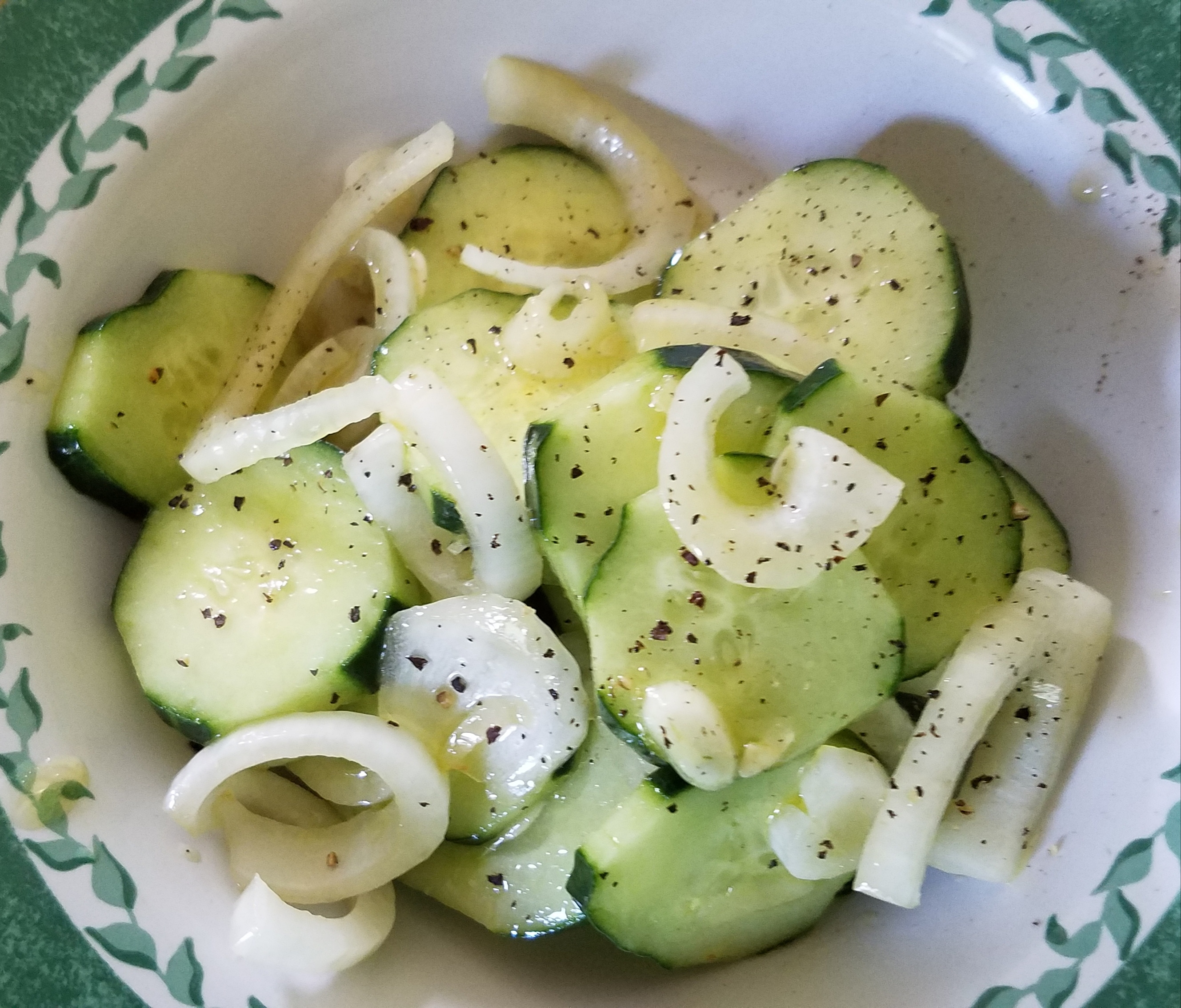
Peel them, slice and put them in a bowl. Add thinly sliced onions, extra virgin olive oil and your favorite vinegar, then salt and pepper to taste.

Mix gently then serve. It’s summer in a bowl.

When the garden produces them, we eat a lot of cucumber salads. This year I mastered the art of cucumber growing with a couple of simple things. First, I mulched as soon as I planted the seedlings. Then, I made sure deer had no access to the plants. I also put up cages and a fence for the vines to grow upward. The result has been abundant.

Other than in pickles, cucumbers don’t preserve well. They must be enjoyed in the moment, and sometimes that’s as good as it gets.

Categories
Kitchen Garden Living in Society

Why Don’t Iowa Farmers Export More to Europe?

Sundog Farm

During a brief appearance at Northeast Iowa Community College in Peosta on July 26, President Trump claimed a trade breakthrough with European allies.

“We just opened up Europe for you,” he said.

Not so fast!

On Saturday, European Union Commission President Jean-Claude Juncker, who met with Trump, said trade talks almost collapsed over U.S. agricultural demands.

Agricultural trade will remain off the table in any trade talks between the U.S. and EU, Juncker said, according to Deutsche Welle. A European commitment to buy more U.S. soybeans is driven by market conditions.

Europe is the second largest importer of soybeans after China and prices are low because of the U.S. trade war with China. In other words, after market conditions driven by the president beat the price of soybeans down, Europe sees a bargain. It is hard to fathom how Trump sees Europe “opened up” under these conditions. Granted Iowa farmers planted more acres in soybeans this year, but the president’s statement can only be seen as political posturing in advance of the 2018 midterm elections and everyone should know it.

There is a more significant problem with “opening up” Europe for agricultural trade — the issue of genetically modified organisms.

There are very few genetically modified crops grown in Europe compared to the U.S., according to a July 27 New York Times article. The reason is in 2001, the EU issued a directive about GMOs. From the early stages of research to the marketplace, these products would have to pass a series of tests for environmental risks and human safety. The consequence of the directive in Europe is few farmers produce GMO crops.

In the U.S., neither the USDA nor the National Academy of Sciences is concerned that GMO crops have any impact on consumers different from non-GMO crops, despite a slate of regulations. Driven by science, farmers embrace GMO crops because of their acceptance in the U.S. marketplace combined with the attributes of genetically modified seeds. Regardless of science, increasing the amount of GMO crops exported to Europe seems unlikely given the fact many European countries have banned GMOs.

Shorter version of Trump’s statement, “Farmers, here’s a bone.”

It’s hard to see how help for Iowa farmers will materialize from current discussions with Europe. The irony of increased soybean sales to Europe after Trump’s trade war beat down prices as something positive seems lost on his true believers. They may swallow this hook, line and sinker, but other sentient beings should not. It is another deception from a president with an unending supply of deceit.

~ First posted on Blog for Iowa

Categories
Kitchen Garden

Making Applesauce

Applesauce Made With Viking and Dolgo Crab apples

I asked our chief apple officer the following question:

“If I wanted to win a blue ribbon for making applesauce at the state fair which apples, available now, would I use?”

His answer was straightforward.

“Use Viking because it’s one of the best for sauce. Plus no one else at the fair would have that variety.”

I took home six each Viking and Dolgo Crab apples after work. This morning I made applesauce with them.

The Dolgo Crab apples were for flavoring, but may not have been needed.The pink sauce produced was tart and delicious… and that’s no apple joke.

Now that the experiment produced a successful result, it’s time to go big with a lot more apples.

It’s part of living in the seasons of local food.