Categories
Environment

Iowa Water Quality and Confirmation Bias

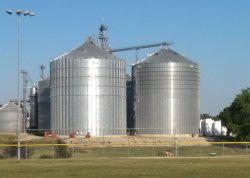
Grain Silos

Progressives, farmers and environmentalists heard there is movement in the Iowa legislature to fund water quality and ears perked up — a natural impulse to interpret new events as supporting something we already believe or are working on, also known as confirmation bias.

56 percent of Iowans support increasing the state sales tax three-eighths of a cent to pay for water quality projects and outdoor recreation, according to a Selzer and Company poll reported by the Des Moines Register on Feb 12.

On March 14, Rep. Bobby Kaufmann (R-Wilton) introduced such a bill: the WISE (Water, Infrastructure and Soil for our Economy) bill House File 597.

After a three year implementation the tax would generate $180 million to fund Iowa’s Natural Resources and Outdoor Recreation Trust Fund, which was created by a 2010 amendment to Iowa’s constitution. It sounds pretty good. However, we shouldn’t let our confirmation bias help Republican efforts to tax the poor, cut the general fund, and support the failed Nutrient Reduction Strategy.

Rep. Chip Baltimore (R-Boone) had previously introduced a water quality bill (HSB 135) addressing structural issues related to the use of water quality funds. Baltimore favored spending funds on watershed programs such as the governor’s Nutrient Reduction Strategy. Kaufmann’s bill mandates 60 percent of funding be directed to “a research-based water quality initiative (that) includes but not limited to a practice described in the Iowa nutrient reduction strategy.”

When Governor Branstad created the Nutrient Reduction Strategy, in response to a federal requirement to address water quality, it was the least he could do. It was a way of tinkering around the edges of a water quality program, leveraging wide-spread concern about the need to act without changing the underlying structure of the system that creates excessive nitrate and phosphate loads in our water.

Branstad’s approach sucked up media attention and political will while doing little to address the root cause of the water quality problem.

“I welcome any legislative effort regardless of party that looks to protect the environment,” a progressive voter posted on Facebook. “While I agree that it is not fair that we have to take on the burden of trying to clean up after the farmers, I also know that they are a stubborn lot that hold great political power in Iowa. Therefore we need to be pragmatic and take whatever we can get while the Republicans are in charge.”

A lot of people would agree with this sentiment.

It’s clear solutions proposed in the Nutrient Reduction Strategy could work. They won’t work until either the strategy is compulsory, or there is funding to support broad participation.

“Republicans sometimes get accused of not being pro-environment, of not being pro-water quality,” Kaufmann said. “Well, this is our way of taking that bull by the horns and putting forth a good, tax-neutral water quality bill that puts guarantees in it that we can make sure dollars go to water quality.”

Despite Kaufmann’s work on the bill there are issues with the WISE approach to water quality.

Sales tax is regressive, which means it would be applied uniformly to all situations, regardless of the payer. Some might argue that everyone uses water so why shouldn’t everyone pay through sales tax? It is a straw man argument. A sales tax takes a larger percentage of income from low-income earners than from people causing this problem.

What’s worse than the regressive nature of sales tax is the Republican position any new tax must be revenue neutral. That means cutting the general fund budget. Where will the legislature find an additional $180 million in budget cuts after a year with three successive revenue shortfalls?

“Kaufmann admits there (are) still some questions about how the bill would affect other state programs,” Rob Swoboda reported in Wallaces Farmer. “But, he says, the only way the Republican-led legislature will pass a water-quality funding plan would be if the plan is revenue-neutral.”

Proposed budget cuts should be defined before advocating for the WISE bill.

There is no need to hold the agricultural community harmless in the pursuit of clean water. In 2013, when developing the Iowa Fertilizer Plant (a.k.a. Orascom) in Wever, Governor Branstad said, “the plant would create 2,500 temporary construction jobs and 165 permanent jobs and save farmers $740 million annually by cutting the price of fertilizer.” Whether or not there was a windfall in fertilizer savings farmers can afford to put skin in the water quality game.

“Where public money is needed (to fund water quality initiatives), consider an obvious source: the sale of farm fertilizer,” former state senator David Osterberg wrote in a May 25, 2016 column in the Des Moines Register. “If an urban person buys fertilizer for the lawn, there is a sales tax on the purchase. Farmers are exempt from the normal sales tax on fertilizer and a lot of other things. There is no reason for this exemption. Put the sales tax on fertilizer, earmark it to water-quality strategies and you have, conservatively, about $130 million a year to work with.”

While a majority of voters agree something must be done to improve water quality, political capital to act shouldn’t be diverted to supporting failed Republican policies just because they sound good or appear to support what we all believe.

Categories
Kitchen Garden

Racing to Sunset

Seasoning Seed Potatoes

A text message came March 20 while I was stopped at a traffic light in North Liberty.

“In total we need 22 120s this week so you actually might be able to do it all tonight!”

It was 4: 51 p.m.

The combination of daylight savings time and the vernal equinox provided a window to soil block at the farm after my shift at the home, farm and auto supply store.

Driving east on Mehaffey Bridge Road toward Solon and the farm, descending into the Coralville Lake and then the Lake Macbride dip in the road, I made mental plans on how to approach the work.

Pelicans had returned to the sand bars on the east end of the north branch of Lake Macbride on their annual migration. Their bright whiteness cheered the beginning of spring.

Sunset was at 7:18 p.m. It would be a push to get 22 finished by then. I made it, just barely.

I had planned to plant lettuce of my own, but waning sunlight made it difficult to see and separate the small seeds. I planted spinach instead. Chasing sunset is not always what we expect.

Garden Burn Pile

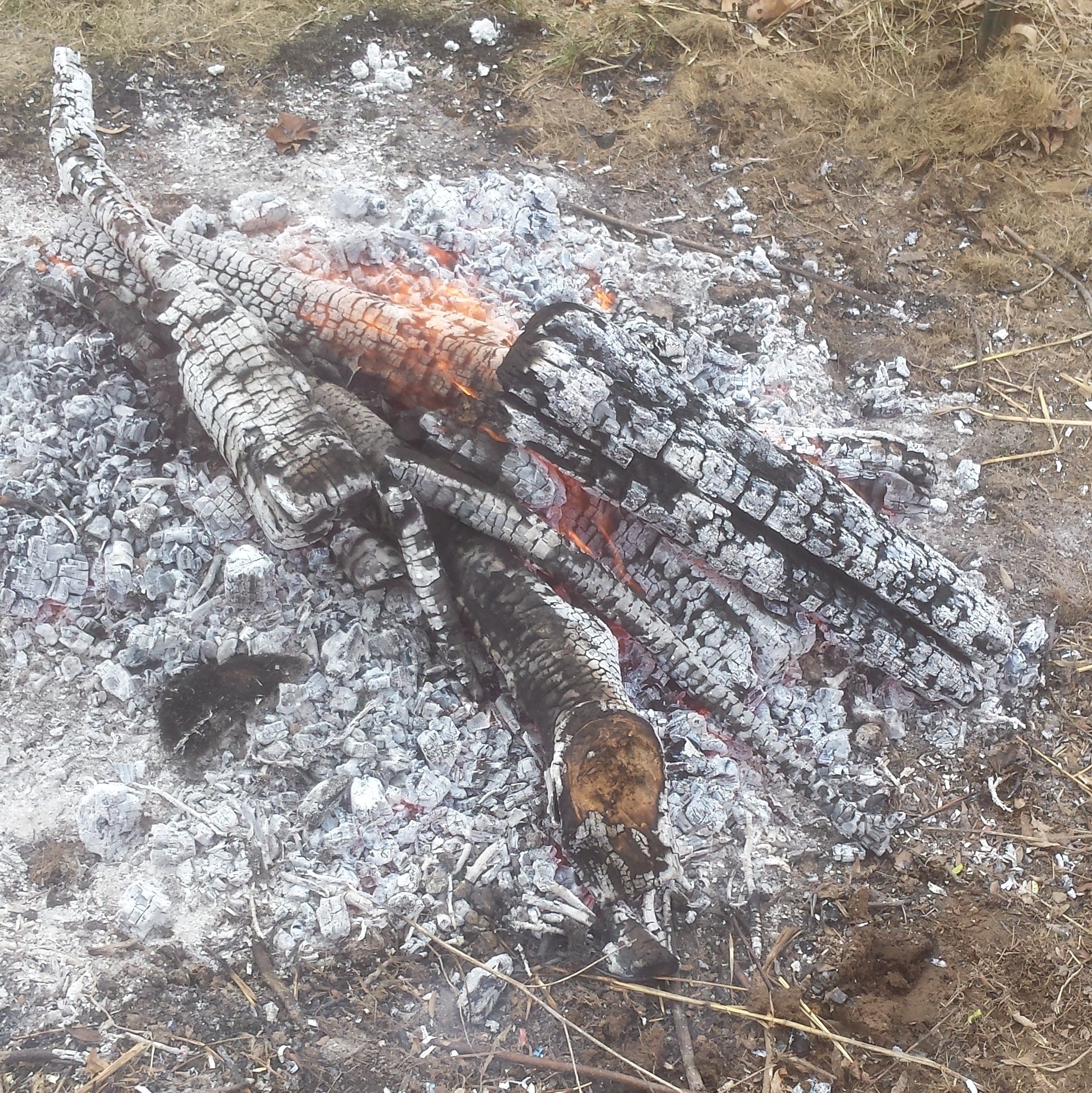
Yesterday I worked in the yard and garden, clearing one of the plots to make a burn pile.

The wind was negligible so I dumped a garbage can filled with shredded mailer envelopes and other paper at the base of the brush pile. It took one match to make the burn.

I got out the chain saw and cut down four volunteer mulberry trees that had grown 15 feet tall midst the lilacs. I hadn’t noticed them until last fall when sunlight from the Western sky highlighted them. They burned easily.

Tomato Cages Protecting Belgian Lettuce

I gathered the tomato cages and piled them over the Belgian lettuce planted in March. The seeds are germinating and popping through the damp soil’s surface. The cages will be there to protect the lettuce for three to four weeks before the tomato seedlings are ready to plant.

It was a great day to spend in the garden.

A neighbor visited. She said the president of our home owners association sold his house and was downsizing to move into town. There would be three vacancies on the board with other resignations. I spend 14 years on the board beginning in 1995 and told her I would consider joining the board for the third time. I explained that I would start working at the orchard again in August, returning to a seven-day-per-week schedule. She thought the board could cover my absence, if needed, for a while.

Early spring has been busy already. There is so much life in which to engage. Taking part is important and contributes to sustaining a life in a turbulent world.

Categories
Home Life Kitchen Garden Writing

Saturday at Home

Baked Carnival Squash

After a Saint Patrick’s Day meetup with friends in Iowa City I drove home, parked my car in the garage and haven’t moved it since.

It was too cold for outside work on Saturday so I stayed in, did laundry, cleaned the bird feeder, wrote, read, and cooked dinner of bean soup, Carnival squash and applesauce cake.

The ambient temperature is expected to rise to almost 60 degrees, so I’m planning to work outside after a shift of soil blocking at a community supported agriculture farm.

I read Elizabeth Kolbert’s The Sixth Extinction: An Unnatural History in its entirety this weekend. Her combination of background information with personal stories of field trips is eminently readable. I can’t remember a day so absorbed in a book since leaving transportation. The main takeaway is how uncertain scientists are about changes in earth history over the long term and the consequences of our lifestyle.

Japanese Beetles

The broader meaning of words like “Anthropocene” is not settled, nor agreed. What I know after this immersion, and after reading Sapiens: A Brief History of Humankind by Yuval Noah Haran, I am ready to move forward with something other than narratives of how homo sapiens swarmed over the planet like Japanese beetles.

I buy more bird feed since working at the home, farm and auto supply store. Counting whole kernel corn, I have five different varieties in the garage. Each type attracts a different bird and we enjoy watching them through the French door off the dining area. Some days I feel like picking up a 20-pound bag on sale, and do. I went overboard with 50-pound bags of whole corn and millet, although sparrows seem to really like the millet. There is no science to my purchases.

Bartering is making this year’s garden planning a lot different. Part of the barter system is trading labor for a spring and fall share. Each side of the deal can be defined monetarily. I get a credit of $13 per hour for labor which is applied to retail price of the shares. I use greenhouse space and materials to germinate seeds and care for seedlings until planting in my garden. I will also acquire onion sets and seed garlic through the farms. Where there is a clear financial value, the barter system is simple and easy. This part of the exchange translates into things we can use in our garden or kitchen.

The exchange for specific produce is more complicated.

Canned Tomatoes

Tomatoes are a large part of summer. Last year I planted them in three different garden plots. This year I’ll decrease my plantings to what we’ll use fresh and rely on the farms for canning tomatoes. In 2013 the farmer provided crates of tomatoes which I canned. We split the canned goods 50-50 that year. That was a bit disadvantageous to me considering the amount of work. We haven’t finalized the split, but both farms I work on produce many more tomatoes than needed for their members. One farmer wants lots of canned tomatoes. Something can be worked out.

Bell peppers were a garden failure last year and for many previous years. I’m eliminating them completely. The farms produce bell peppers with a high frequency of imperfect fruit. I plan to trade labor for these seconds and get all of my bell peppers from them. In addition to fresh eating, I seed and freeze them to use throughout the year. We did a 50-50 split on these in 2013, however, this year I’m considering a straight trade of labor hours against a to be determined cost per crate.

There are a number of items we don’t use much in our kitchen but are abundant on the farms. I don’t plan to grow any kohlrabi or cabbage. Should be no problem getting what we need without occupying space in our garden. I’ll barter for some additional broccoli for freezing.

Likewise, I don’t plan to grow lettuce outside my small plot of Belgian lettuce. In between the spring and fall shares that’s coming from bartering.

Summer squash is abundant and available from the farms as are many kinds of greens: collards, chard and “braising greens.” I will grow my own kale and spinach, and everything else will be bartered from the farms.

Eggplant? If Johnny’s Selected Seeds proofs and sends Black Beauty seeds I’ll plant them along with Fairy Tale eggplant. The former can be sliced thick, baked and frozen. The latter are good for the kitchen while in season. There is always an abundance of eggplant at the farms.

Yesterday was the last winter Saturday of staying indoors. Going into the planting season it will also be my day off from the home, farm and auto supply store and the farms. Yesterday was a good day, made better by a feeling of accomplishment. As humans we sometimes need that.

Categories
Living in Society

Tears of Politics

Embers
Embers

Shed no tears because it has been an unfair fight between the moneyed class and the rest of us.

I hear laments about lack of organization, policy and management within the Democratic party and shake my head.

Neither “organization” nor “policy” nor “management” reflect an answer to the question why Republicans were so successful against Democrats in 2010 and afterward.

I hear about “wings” in the Democratic party: progressive, establishment, left, moderate and neoliberal. I don’t know about you, but I came to the Democratic party and stayed because of the big tent it continues to represent.

After the Jan. 21, 2010 U.S. Supreme Court decision in Citizens United, a few very rich people took advantage of the political climate and used vast amounts of money to organize a political staff that would work toward effecting long held policies. Rich people declared war on the rest of us and appear to be winning.

Key Democrats, including the Obama White House, were caught off guard by the rising influence of dark money, had no viable response, and suffered the November 2010 defeats with which we are familiar: lost majority in House of Representatives, lost half dozen U.S. Senate seats, and Republicans gained control of legislatures and governorships in about two dozen states.

Moneyed interests have been fighting progressive reforms for a hundred years. They didn’t like Roosevelt (Teddy or Franklin) and in my opinion the current times have parallels with the Harding-Coolidge-Hoover era when moneyed interests last governed. It didn’t turn out well then nor do I believe it will now.

Today’s trouble is while people are becoming politically active — more now than when it would have mattered last year — there has been no sustainable response to the advent of dark money in politics. That is the progressive problem wanting an answer.

My ancestors and I have never been moneyed. Privileged by our Midwestern farm, coal mining and manufacturing roots, occasionally we had windfalls and were flush with cash — only for a while. More often, living paycheck to paycheck has been our stock in trade.

Hardened by the shit storm politics has been, many, including me, accept it and work toward remediation as we can. My people know disappointment and how to go on living. I don’t cry much, nor should any of us who believe we can do better.

As the current administration destroys our work, it’s hard not to wonder if any trace will be left when they are done. The taste of salty tears awakens us to a life we knew and believe we can know again. It is no longer our time.

With purposeful work it could be again.

Categories
Kitchen Garden

Season’s New Hope

Sundog Farm in Late Winter

My first work day at Local Harvest CSA, was spent organizing for the season and soil blocking for the first seedlings.

I made two trays for myself as part of the barter deal with the farmer.

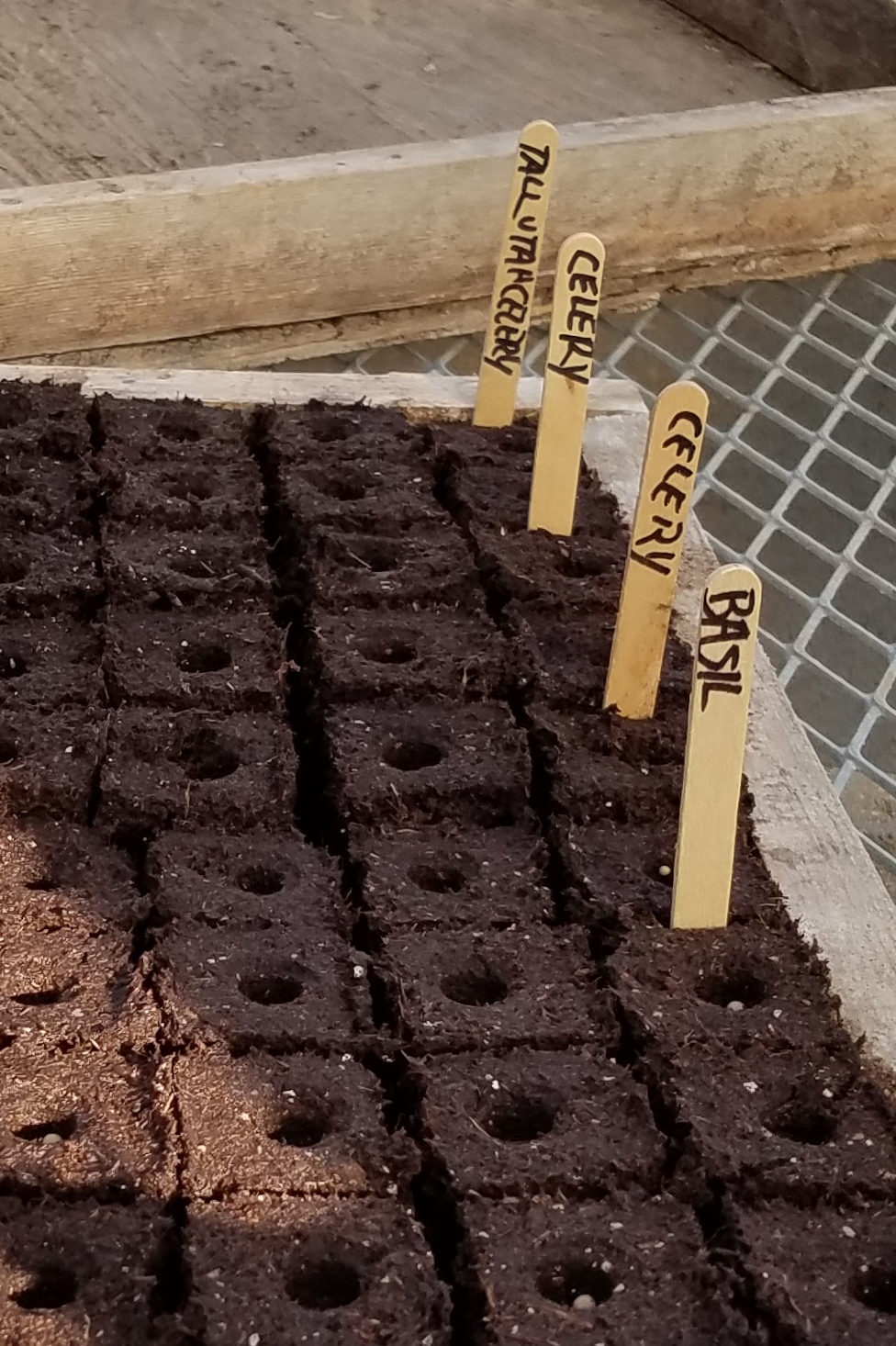
In one I seeded basil, Conquistador celery and Tall Utah celery. In the other was four kinds of kale: Dwarf Vates Blue Curled Scotch, Scarlet, Darkibor and Starbor. The growing season is here.

Basil and Celery
Basil and Celery

We never know the outcome of gardening. Tall Utah celery seeds are very small. It was difficult to get only one or two into each dibbled cell — I didn’t. I bought them on special from the Seed Savers Exchange in Decorah, Iowa where they don’t pellet seeds. Like with so much about gardening it is another experiment to see what grows well and tastes delicious. The pelleted Conquistador celery seeds from Johnny’s Selected Seeds in Winslow, Maine were easier to plant. A controlled germination house environment should encourage the best from these seeds. We’ll see how it goes.

3,120 Soil Blocks
3,120 Soil Blocks

Soil blocking is endemic to Community Supported Agriculture projects. Like much of our work, it is done by hand. Getting the moisture content of the soil mix right is a constant challenge. It is dry as it comes out of the bag into a tub. Watering is done in stages, testing the moisture content after each round of turning with a transfer shovel. Moisture management continues as the soil blocks are made. The pressure of the soil block tool squeezes moisture from the mixture as the blocks are made. It makes the soil mix wetter. It took 3.83 hours to get organized and produce the first batch of trays. As the season progresses, I’ll get faster.

The farmer went to town to get some supplies for the germination shed leaving me alone with two dogs and partly cloudy skies. I took a moment to breathe the fresh air and look at the sky. Hope springs from days like this. New hope for a successful season.

Categories
Environment

Erasing the White Board

To-do List
To-do List

Snow fell in darkness leaving a thin blanket of white.

The pin oak tree began shedding last year’s foliage indicating warm weather activated new leaf buds and pushed out the old.

Seems weird to rake leaves in February. More to the point, it’s not normal.

In a couple of hours I return for a fifth season at Local Harvest CSA. The main spring task is soil blocking 72 and 120 cell trays for seed starting in the germination house. Part of my arrangement is keeping some of my own seedlings there. When I’m finished with the farm’s trays, I’ll make one 72 and one 120 tray for myself and seed them with kale, celery and basil. I’m hopeful they will do better than in the south-facing window in our bedroom. Getting my hands dirty with soil is a great way to get ready for spring, three weeks away by the calendar.

Other chores on my white board include doing taxes, computer file backup, cleaning the car, preparing the garden for spring and Belgian lettuce planting this week (traditionally March 2). I made extra servings of spaghetti with tomato sauce for lunches and want to make a batch of taco filling for breakfast on work days at the home, farm and auto supply store. There’s also more writing projects.

During a Climate Reality Project conference call on Thursday, a friend from Waterloo and I decided to work on a project with other friends from Waterloo-Cedar Falls. I’ve done two presentations there and look forward to more meaningful work. We’re planning luncheon, maybe next weekend.

This last lap in the workingman’s race looks to be action packed with local food, environmental and cash producing projects coming into focus.

Night’s snowfall melting in the sun makes way for budding plants in a grey and brown landscape. It is almost time to wipe the whiteboard clean and begin anew.

Categories
Home Life

Outdoors Work Day

Collected Road Sand
Collected Road Sand

BIG GROVE TOWNSHIP — Sweeping sand signals the beginning of an outdoors season.

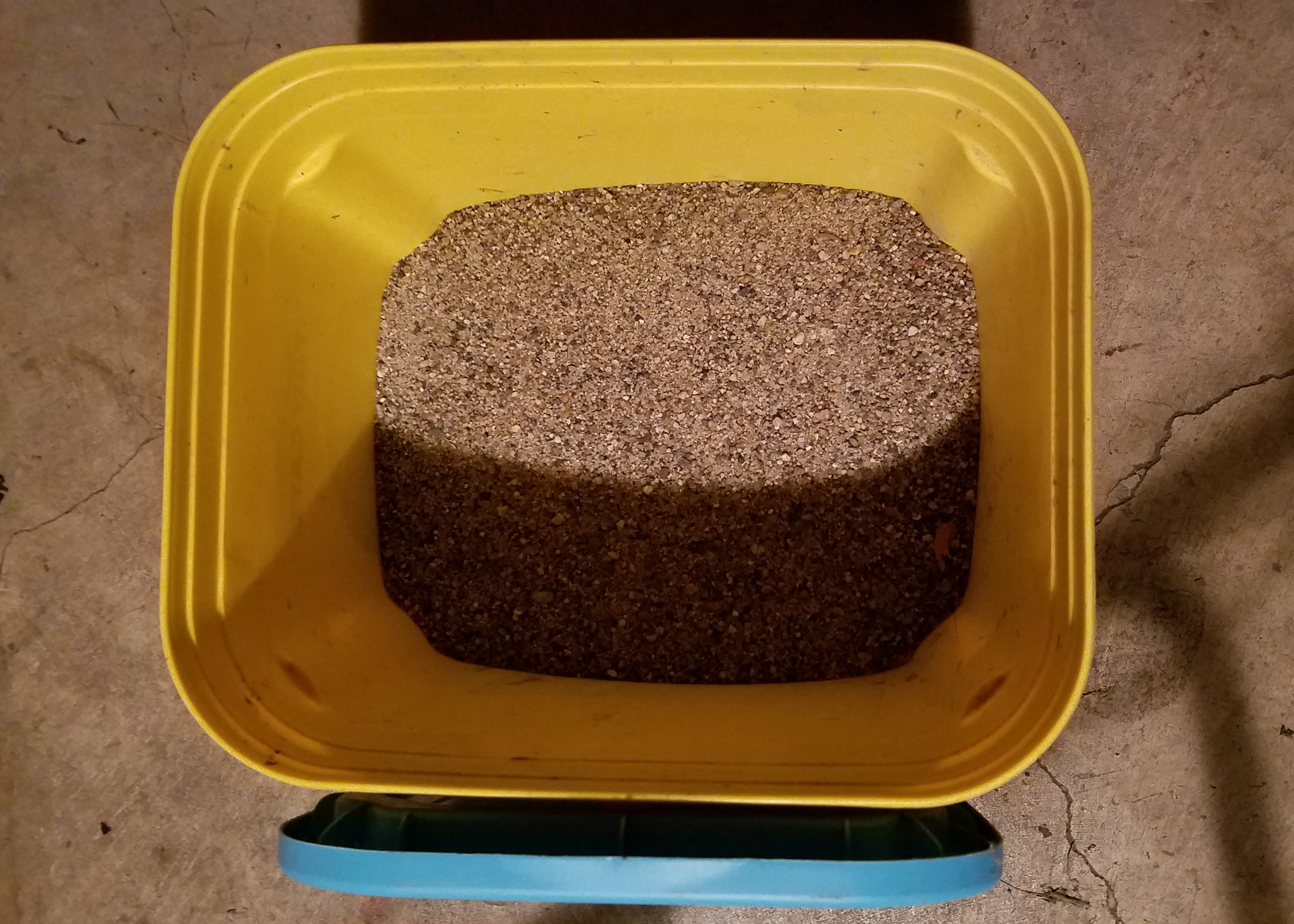
I spent part of Saturday collecting sand from the road in front of the house. I harvested more than we used this winter, so inventory is net positive by 1.5 buckets. It has been so warm we didn’t use sand at all on the driveway or steps.

Trees and lilac bushes are beginning to bud. Troubling but okay as long as a frost doesn’t return between apple blossom time and when they set. I shared my concerns about the early warm weather with a neighbor. We ended up planning a joint project for when frost is out of the ground. “Climate change” and “global warming” didn’t come up but weighed in nonetheless.

I breathed in fresh air and contemplated the beginning of things positive.

Thursday I coughed up a nickel-sized piece of phlegm. By Saturday the cold dominated my attention rendering me lethargic the rest of the day. Besides sand collection, I managed four loads of laundry and a simple dinner of cooked carrots and rice with a vegetarian “chicken cutlet.” Productivity was punk.

Calling off sick from the home, farm and auto supply store is an undesirable option. The reduction in pay for missing work is significant. Although we get 40 hours of sick pay during the year, I don’t want to use it unless I feel sicker than I do. We are incentivized by an end of year payment for unused sick pay. That check for last year came in handy.

Hopefully I can finish several outdoors chores on today’s list.

Categories
Environment Writing

Spring Pilgrimage

“Lordynges,” quod he, “in chirches whan I preche,
I peyne me to han an hauteyn speche,
And rynge it out as round as gooth a belle,
For I kan al by rote that I telle.
My theme is alwey oon, and evere was
Radix malorum est Cupiditas.

~ Geoffrey Chaucer, The Pardoner’s Prologue

From the Ellesmere Manuscript
Chaucer’s Pardoner

Outrage at Iowa Republicans serves no useful purpose. Organize your family and friends, or your neighborhood or your social groups.

Resist.

In our house such endeavors begin by getting to work. Making contact with potential fellow travelers is part of it. So is rejuvenating our spirits. Most important before departing on a pilgrimage, we must question assumptions that led us here, those that lead us on. To flesh out faulty timbers of a political view rendered obsolete by the recent election will take effort. The same indulgences, relics and stones will not serve. Soon work will consume us. Before it does, check the compass and kit bag.

Spring will be here soon and winter’s work is not finished. Begin  there. Today. Head outside with broom in hand and breathe the crisp air of our future… and organize.

Categories
Work Life Writing

Final Lap in a Workingman’s Race

Holy Blue Jeans
Blue Jeans Full of Holes

In several ways, 2017 will be my final season as a working person.

That’s not to say I won’t continue to work hard in life. According to the Social Security Administration I have a lot of life to live —19.2 years on average. Longevity’s secret is no secret: as long as life holds, engage in it and don’t stop until the final curtain.

By year’s end, my spouse and I will be in a position to slow down and work on projects better aligned with our interests. We won’t be rich, but that was never a goal.

A constant theme is embedded in the thousands of posts I’ve made over the last ten years: Radix malorum est Cupiditas, money (or greed) is the root of all evil. We managed cash flow well during our lives together with almost never a bounced check. Yet currency has been little more than sunlight, reasonably available if one is willing to join in society. Its value is as part of photosynthesis in the botany of our lives.

On the final workingman’s lap some things are clear.

My work at the home, farm and auto supply store is needed to provide health insurance until we both are on Medicare. Health insurance has been the biggest and most unpredictable expense since leaving my transportation career in 2009. I compare my experience to co-workers from Mexico. When they need significant healthcare, they travel home to take advantage of Mexico’s free clinics. In the United States health insurance is pay to play. Premiums contribute to many jobs: physicians, nurses and lab technicians, of course. But also to corporate entities with their executives, sales representatives, manufacturing staff, actuarial workers and legal counsel. By my calculation, monthly premiums for an individual health insurance policy are roughly ten percent higher than Medicare’s cost of service. My lowly paid work will continue at least one more year.

I hope this year’s growing season will produce in abundance. If last year created one of the best gardens ever, I plan to make this one even better. What I don’t or can’t grow will be acquired from two barter arrangements with Community Supported Agriculture projects. If my execution of garden work isn’t flawless, decades of experience should serve us well. Knowing what to do and when makes a big difference.

Our logistics system needs attention. Downsizing possessions, maintaining the house and its mechanical systems, and ensuring cost-effective transportation enter into this year’s plans. Because of the low cost of storage (i.e. loss of usable space), and the value of having built a new house needing few repairs, these tasks have been delayed.

Writing will continue to be important next year, both here and on social media. Writing has been a way to work through problems and relieve stress. When I write a fixed piece — a guest column for a newspaper — I write with confidence. When I start with a blank Microsoft Word document, ideas rise from a deep well of experience. As I mature as a short-form writer, increasing readership will be important.

I feel a sense of limited opportunity as the final months before great change come into focus. There are only so many days to get things done. The feeling is encouragement to make the most of my time. A sense of hope pervades everything and for that I am thankful.

Categories
Home Life Living in Society

Lingering Holidays

1970s To-Do List
Bound 1970s To-Do Lists

We decided to keep holiday decorations up until after inauguration day.

The prospect of a new administration we won’t like has us dragging our feet.

Dregs remain of the half gallon of ultra-pasteurized half and half I bought at the warehouse club for holiday cooking.

I poured another tablespoon for morning coffee.

One day I made pancakes using half and half and an old flour mixture found in a Mason jar. I made a stack with home made pear butter instead of syrup. The expiration date on the milk carton was yesterday.

Holiday cards remain in the basket, we received a call from our daughter who is starting a new job, and Saturday I plan to visit Mother in my home town. I got a haircut yesterday after work at the home, farm and auto supply store. I consulted with a friend about pruning her fruit trees. I’ll work at three farms this season. I’m cranking up a life, but the inauguration and what it represents drags enthusiasm.

Wednesday I wrote my editor:

My post about rain is scheduled for Friday at 5 a.m.

There is so much upsetting in politics this week I’m having trouble sustaining the pretense of normal. At least Obama continues to act presidential.

Bill Palmer pointed out yesterday Trump’s response to his inauguration is to put up a Jumbotron obscuring the view of the Lincoln Memorial so all can see and hear Trump. It’s a sign of the times and I don’t like it. So typical of what I expect from our narcissistic president-elect.

I couldn’t listen to all of the DeVos questioning because it was too brutal, and sad for our country. I think I liked it better when Reagan said he was going to eliminate the Department of Education rather than the idea of putting this creature of wealth and privilege in charge of it.

Then there’s the “debate” on enabling women who have had an abortion to sue their doctors. I’m going to make myself listen to the audio put up by Radio Iowa, even though I don’t want to. Not now, though. Maybe the weekend.

Sorry to be such a downer this morning, but if there is hope, it comes from knowing we did the right thing by electing Barack Obama president.

And so it goes Kurt Vonnegut famously said.

The half and half may last until the weekend when it will be time to put away decorations and embrace new life during the post-Obama reality. The best treatment is to get busy with work worth our time and energy. Read books, write articles, and plan the garden. Such activities serve as fit occupations until the meaning of the next four political years is revealed.

I won’t believe what the D.C. Jumbotrons will present and neither should any of us as we struggle against political winds.

Such struggle defines our character even though we already know who we are.