Soft shell taco, Spanish Rice, and refried beans. Midwestern staples.
Yesterday was my Monday and today is my Friday at the home, farm and auto supply store.
A two-day work week suits me.
I’m ready to call it quits from an operational standpoint. Spring is coming with its multitude of outdoors work. The two days could readily be used for more productive endeavors. It’s the paycheck that keeps me there. There is always a use for the income.
The Iowa precinct caucuses are Monday, which leaves four days to prepare for my role as temporary chair. I’m pretty well along but little else will get done in the run up to Feb. 3. After that I can focus on pruning fruit trees, getting our income taxes prepared, spring gardening, and everything else that has been delayed by winter.
In 2018 NextEra Energy Resources announced plans to retire the Duane Arnold Energy Center (DAEC) — a 615-MW nuclear power plant located in Palo, Iowa — before the end of 2020.
NextEra’s main customer at DAEC, Alliant Energy, will buy out its contract in September for $110 million, sourcing electricity instead from NextEra’s wind generation fleet. The move is expected to save Alliant Energy customers $300 million over 21 years.
There are no plans to replace Duane Arnold with new nuclear generating capacity.
Two essential problems with nuclear power plants are they cost too much, and a lack answers to the question of what to do with spent nuclear fuel. These problems are political. In our current political climate that makes them unsolvable, practically speaking, even though potential solutions exist for both.
Certain environmental groups favor nuclear power to replace coal as an emissions reduction tactic. On its face this is belied by the urgency of the climate crisis.
“Nuclear, especially next-generation nuclear, has tremendous potential to be part of the solution to climate change,” climatologist James Hansen said on Dec. 3, 2015. “The dangers of fossil fuels are staring us in the face. So for us to say we won’t use all the tools (such as nuclear energy) to solve the problem is crazy.”
The challenge for nuclear energy is the timeline for market penetration in the industrial age. It will take too long.
Cesare Marchetti of the International Institute of Applied Systems Analysis did research which suggests the historical trend on implementation of new technologies such as wood, coal, oil and gas takes 40-50 years to go from one percent to 10 percent of market share. Nuclear energy occupies about 12 percent of current global market share. It will take almost a century for an energy source to occupy half the market. The world doesn’t have 50 years, and likely longer, to wait for nuclear energy sources to gain acceptance and growth the way coal, oil and gas have.
Even if political issues surrounding nuclear waste disposal could be resolved, the financial cost of building out a fleet of new nuclear power plants would likely follow the course of the Georgia Power Vogtle Plant expansion, which, when they broke ground, was the first nuclear power plant contemplated in 30 years. Despite proclamations of “making American nuclear cool again,” by then Energy Secretary Rick Perry, the Georgia Public Service Commission questions whether the plant will be economically viable if going on line is delayed much longer. New nuclear energy remains too expensive, especially when compared to renewables and natural gas.
Renewable energy (wind, solar, hydroelectric) is further along than nuclear in its evolution as an energy source. At 31 percent of global market share, we remain decades away from achieving 50 percent market penetration, according to Marchetti’s analysis. At the rate we are going, elimination of coal, oil and natural gas from the energy production mix for electricity won’t occur in my lifetime, and likely not the lives of the millennial cohort. By then all of this electricity talk may be rendered moot by the climate crisis.
There are no big-picture answers to the trouble of an over-heating planet in a 500-word blog post. What remains clear is our problems are driven more by politics than by technology and reason.
It is critical we root out influence and corruption in government. To do that it will take voters who care about our future and are willing to make the hard choices necessary to address the climate crisis.
In any case, from my vantage point, it seems unlikely nuclear power plants will be part of our energy future.
For a recipe I got out my copy of the Holy Family School PTA cookbook. I like this book for the familiar names of the recipe authors, some of whom I knew. Monsignor T.V. Lawlor served as the church’s second pastor from 1943 until 1961 and his photograph is printed inside the front cover of the book. This dates the cookbook in the 1950s most likely, after the school moved to the location I attended a couple of blocks south of the church on Fillmore Street.
I chose a banana bread recipe contributed by Mrs. H.A. Tholen. It called for shortening, although I substituted butter and kept everything else the same. Here are the ingredients as written:
1/2 cup sugar, 1/2 cup shortening, 2 eggs, 3 bananas mashed, 1 teaspoon baking powder, 1/2 teaspoon soda, 1-3/4 cup flour, and a pinch of salt.
Instructions are, “Mix in the order given and bake in a slow oven.”
Well that won’t do. Looking at other sweet breads in the book I decided on a 350 degree oven for 50 minutes. It turned out great as you can see in the image.
Making banana bread from overly ripe bananas is a cultural inheritance not only from my mother and maternal grandmother, but from a broader society where fruit like the Cavendish banana is readily and cheaply available. However, like most mass marketed fruit and vegetables it is subject to change from climate and from other pressures, forcing old habits and patterns to change.
There was something positive in yesterday’s bakery. It was a warning too, that life is fragile and ever changing. We seek comfort in what we know, delaying the embrace of what is coming. I don’t just mean what’s coming for Cavendish bananas.
My 2013 decision to develop a barter arrangement with my friend Susan Jutz helped resolve a couple of issues.
I needed the cash income plus a share of the vegetables she grew. More importantly than income, I wanted to become a better gardener and needed a mentor.
By almost any measure our relationship was successful and endured even as Susan sold her farm and moved out of state.
On Feb. 1, 2013 I sent this email proposing an arrangement at her Local Harvest CSA:
Susan:
Hope you are staying warm. I have an interest in developing a deeper relationship with producing local foods. While our kitchen garden is doing well, I want to explore the possibility of doing more with local foods to provide a source of income. This is a long range project, and if you offer it, I would like to exchange my labor for a share of your CSA this season.
I think you would find this a cheap and reliable source of farm labor, and what I would get out of it would be a deeper knowledge of how you do your work.
What do you think?
Regards, Paul
We worked through details that lasted not only that season but established a continuing relationship now entering its eighth year. I expect the conversation about local food to continue this month with Carmen, Susan’s successor. Greenhouse work usually begins in February.
The Community Supported Agriculture model is the workhorse of the local food system. Instead of producing a few fungible commodities, CSA farms produce many types of vegetables in many varieties, providing a weekly share for members who buy in at the beginning of the season. They also leverage other producers to provide eggs, meat, bread, jellies, jams, and other items they don’t produce for their customers. On Carmen’s farm she produces grass-fed lambs and goats. The presence of livestock on a farm is an important part of reducing reliance on chemical fertilizers. Some CSA farms are more diverse than others but the salient feature is that the main consumer model is changed to include a share the farmer provides.
Operating a small farm is challenging. It requires hard work and specific knowledge about a wide variety of issues. It seems like more work than people with a big job at a large-sized employer are used to. There is also more risk during a growing season. Most local food farmers I know do something off the farm to supplement farm income. Every one of them has a positive disposition despite the challenges.
There is an ongoing discussion about alternatives to the CSA model.
Chris Newman of Sylvanaqua Farm in Virginia posted an article on Medium in which he wrote, “The romance of neoliberal peasant farming blinds us to our collective power.” Newman’s assertion is small family farms are not competition for, or a sustainable answer to burgeoning consolidation of agriculture. He touched on a number of obvious points, beginning with farmers markets.
Farmers markets are nice for consumers, but expensive to participate in. If some local food farmers produce for the seasonal markets they compromise their flexibility and scalability, he said. I don’t know about the operational advantages of a local food cooperative because many farmers already coordinate activities with each other. A farmer of meat, vegetables, flowers or the like can do better to avoid such markets. At a minimum one requires additional outlets to extend sales beyond the farmers market season.
Newman lays out the challenges small family farms face regarding workforce in a labor intensive business. Putting together a workforce that accomplishes weeding, cultivation, planting, harvesting, pest control, and everything else isn’t easy when the operating assumption is some percentage of workforce will volunteer or work for very low wages. Newman’s idea of forming a cooperative addresses the wage issue but also seems overly idealistic.
In his book The New Farm: Our Ten Years on the Front of the Good Food Revolution, Ontario farmer Brent Preston tells the story about how he and his spouse found sustainability in the local food movement by transitioning away from farmers markets to wholesale production and sales. This book is a must read for people interested in the local food movement.
Michelle Kenyon, executive director of Field to Family, is establishing a food hub in Johnson County. She’s been featured in the local newspaper. The idea is simple from a farmer’s perspective. Got too much basil? Bundle it to specs and sell to the food hub.
Having an outlet for a farm’s produce is important. Few local farmers follow the traditional CSA model of sharing the farm produce exclusively with members. That would mean all of the extra basil in my example would go to members who would presumably become rich in pesto and pasta sauce. Separating food production from CSA membership provides options for additional revenue streams such as selling to a food hub, to restaurants and to retailers.
A smart farm operator won’t put all their eggs and produce in single basket. They manage a portfolio of revenue streams based on farm production, but include variation in how customers are approached. So often, just having an item when others don’t makes a big difference in exploiting some types of “pop-up” marketing opportunities.
I would like to establish independence from the farms on which I’ve worked since 2013. Controlling everything would free me from outside responsibilities and enable re-designing my garden to expand and produce extra crops that could be sold to others. That has always been a small part of my garden operation but as I progress through my transition to “retirement,” any income generated could help supplement our structure of pension, Social Security and savings. For the time being, I look forward to returning to the farm for another spring of soil blocking. Looking back at this email to Susan, it’s clear I was not wrong to pursue the opportunity.
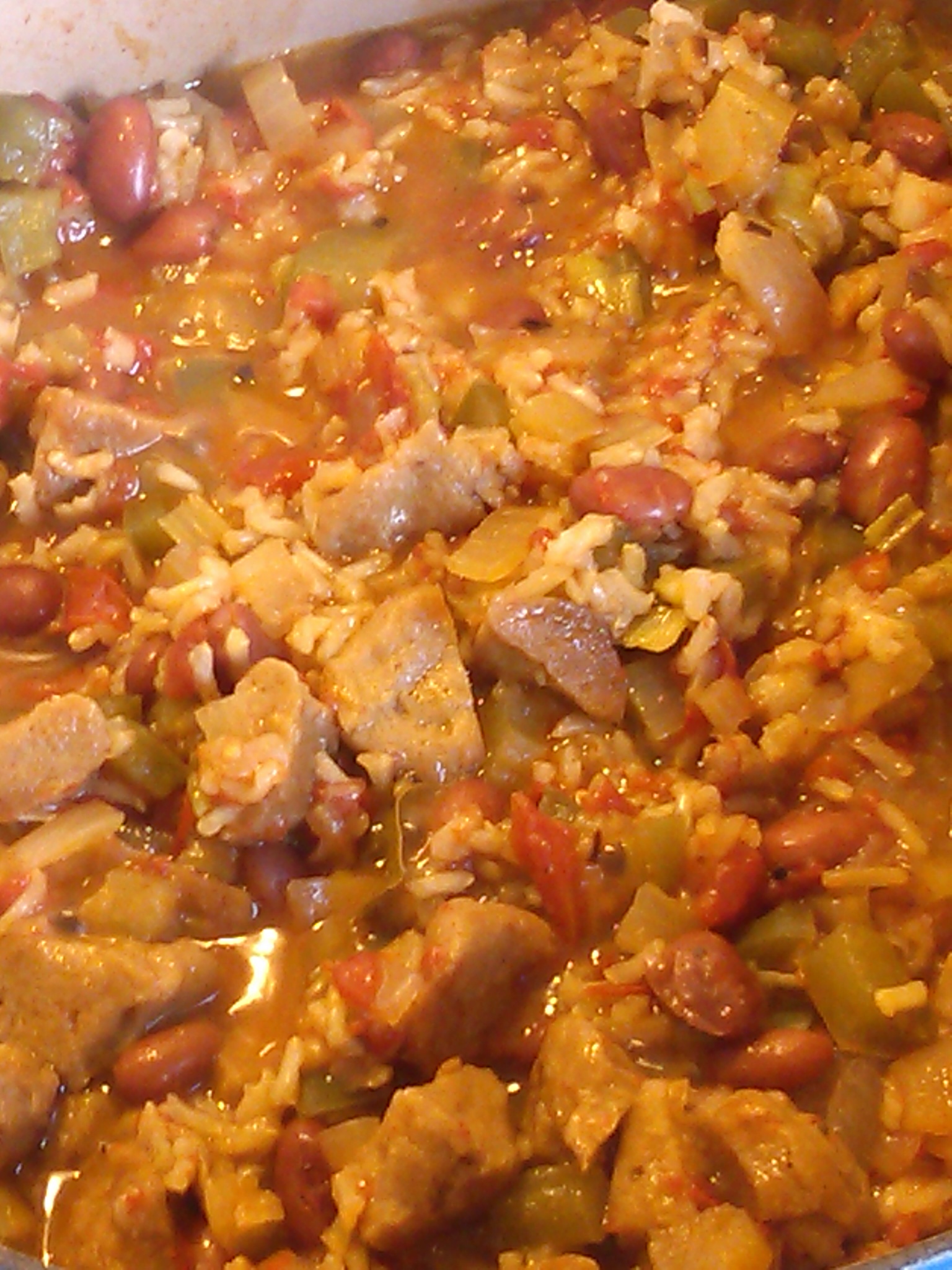
Preparing to cook red beans and rice has been a year-long process because most of the ingredients were produced in my garden or on farms where I work.
The garden produced red beans, okra, tomatoes and celery. Local farms produced onions, garlic and bell peppers. I also grew red pepper flakes and blended the powdered dry spices. Pantry staples of extra virgin olive oil, all purpose flour, and long grain brown rice were USDA organic but not produced in Iowa.
I invested several hours preparing a luncheon meal and time was worth it because of the flavor.
In the morning we discussed my 5-1/2 quart Dutch oven, the enamel of which is wearing off the inside. I’m don’t favor replacing it. Not because of the $350 price tag for a new one from Le Creuset. With a bit of cooking oil on the bottom to prevent rusting it will serve many more years. It is my go-to pan for making red beans and rice. It has been a reliable part of our kitchen.
Cooking is a ritual that evokes memory and skill in bringing a dish together. I soaked a cup of dried red beans in the Dutch oven overnight, then cooked them with half a diced red onion until tender but not mushy. I drained the beans and reserved the cooking liquid, letting them sit on the counter until ready to make the dish.
Around 10 a.m. I started work.
I fried a couple of home made vegetarian burger patties from the freezer and set them aside to drain. (Andouille sausage would be more traditional).
Heating the dutch oven, I added two tablespoons of extra virgin olive oil and cooked a generous tablespoon of red pepper flakes. I diced half a large onion, red bell peppers, and celery stalks and sautéed them in the oil-pepper mixture with a little salt. Once they began to soften I added two cloves of minced garlic and added home made seasoning — think powdered garlic, curry powder, paprika, and powdered hot, red peppers. I added a few dashes of prepared hot sauce from the refrigerator and stirred until everything was incorporated.
Next came additions. I deglazed the pan with a pint of diced tomatoes. Next, a cup each of sliced okra and long grain, brown rice. I stirred in two tablespoons of all purpose flour, then the cooked beans, until everything was incorporated. I tried not to bust up the beans.
What liquid to use was an open question. This time my answer was two cups of the bean cooking liquid (that’s all there was) plus two cups of water. Other options I considered were canned tomato juice and home made vegetable broth. The flavor of the bean cooking liquid made it a good decision.
Stirring everything together, I brought it to a boil then turned the heat down to a simmer, cooking until the rice was done and most of the liquid had been absorbed. Toward the end of cooking I crumbled the burger patties and folded them into the mixture.
It was ready to eat at noon, making four to five portions.
We seek opportunity to follow our creative impulses and cooking is primal. It provides an opportunity to shed anxiety from quotidian affairs, if only for a few hours. A recipe makes the experience replicable but not really. Cooking is a story of how we sustain ourselves in a turbulent world.
After I returned from a shift at the home, farm and auto supply store I scrubbed and cut up potatoes to roast for dinner. Roasted potatoes, a burger patty and frozen peas made a dinner — comfort food as winter approaches.
The Thanksgiving leftovers are gone, our pantry and ice box are full. There was no need to grocery shop after my shift comme d’habitude.
In eight weeks it will be time to start onions, leeks, and shallots inside, then begin soil blocking at the farm a week or two later. For now there’s indoors work of reading, writing, cooking and cleaning.
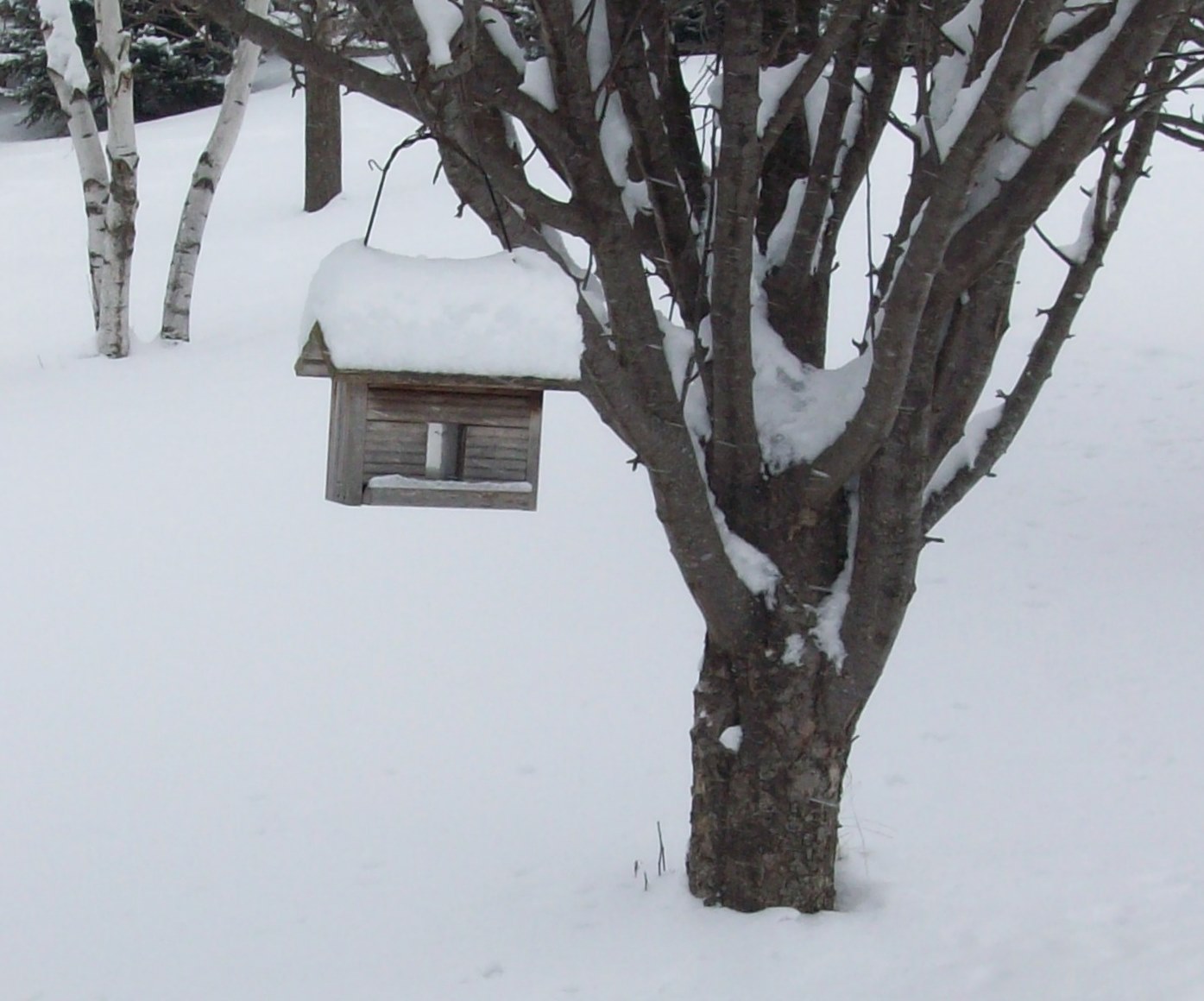
A neighbor put out bird feeders to attract birds, then expressed concern that cats were hanging around, chasing the birds away and prompting her dogs to bark at them. I wrote a response.
This is an interesting topic. Although I don’t have any solution to the issue of dogs barking at wandering cats, by putting out bird seed, like I have, a person attracts a variety of animals to the yard, which includes not only birds but mice, voles, chipmunks, squirrels, raccoons, deer, and maybe others.
Because of our proximity to the state park, we see almost every species native to Iowa here.
The bird feeder also brings predators of small animals, including cats, but also hawks, owls, and foxes. Then there are the scavengers like possums, turkey vultures and crows.
My point is when we decide to place a bird feeder out we are creating an ecosystem, especially if we fill feeders year-around. If members have pets, they should be kept on a leash or indoors, that’s long been our policy. However, there is a bigger ecosystem that will continue, even in the event pets can be controlled.
The inbox — digital and physical — overflows with unattended mail, outdoors work remains if snow melts and we get a few days of dry warmth. There’s laundry to do, winter reading to arrange, apples to preserve, a house to clean, and cars to winterize — a whole life compressed between first snowfall and January. Any remaining goals for the year need prompt action. November and early December can be a frantic rush to the finish line.
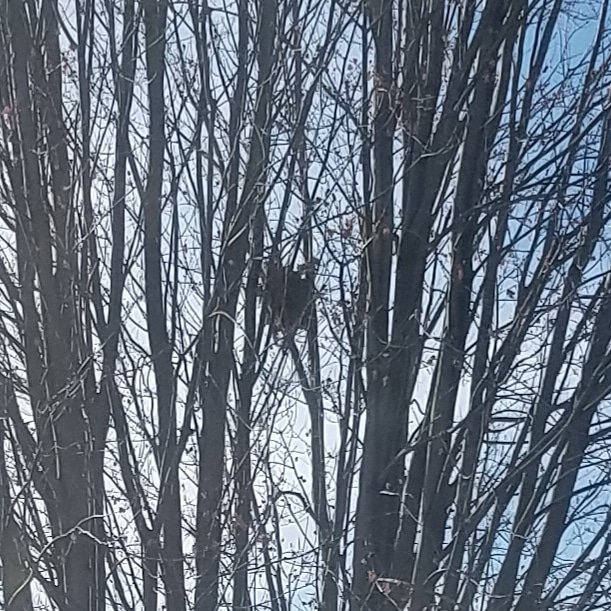
As leaves fell from deciduous trees a squirrel nest revealed itself high in our maple tree. I’ve hoped for this many years. What was a vacant, treeless place when we arrived in Big Grove has become a habitat. Wildlife sighting is frequent. In addition to newly resident squirrels, birds, foxes, raccoons, opossums, field mice and voles, deer, and every other type of animal native to the area shows up here and return. When I spend time in the garden or look through our windows to the yard I feel the community even if I’m the only human around.
I have a bottle of Jameson purchased years ago. It sits in a crate unopened because I have been too busy for kicking back and sipping. Maybe I need to take a lesson from the orchard operator and relax for a while. At least before accepting that winter will arrive and all that means.
The climate crisis calls for us to dream big and fight hard because our future depends upon solving its underlying problems.
If I sound like Elizabeth Warren, it’s because last night I heard a presentation about her plans for climate action by staffers Spencer Dixon and Jackie Curnick at the campaign office in the county seat.
The expected positioning was present.
“What about a carbon tax?” one attendee asked. Dixon responded Warren believed with her plans a carbon tax wasn’t needed. The discussion drew in the Citizens Climate Lobby position of a carbon fee and dividend which friends have been lobbying in the Congress this week (HR763). Dixon wouldn’t endorse this plan.
“What about nuclear power?” another asked. Warren opposes construction of new nuclear power plants and plans to phase out existing ones. The suggestion of one attendee that current nuclear power generating stations continue to operate indefinitely belies the physical limits of reactors constructed in the 1970s and 1980s. Many pixels have been spilled explaining why.
Two things surprised me: Spencer’s assertion that public lands could be developed to help meet our electricity needs, and the U.S. should help colonize Africa and Asia the way China is doing to resist and potentially displace their hegemony. I don’t see how the former is different from what Republicans under Trump are already doing in their ways, and the latter is morally reprehensible. It’s not clear Warren herself would back these assertions and Spencer acknowledged that.
The top Democratic candidates have a plan for climate action. Republicans are coming along to a very limited degree. Former Republican presidential candidate Senator Mitt Romney (R-UT) acknowledges a need for significant private sector investments and innovation to reduce greenhouse gas emissions and switch to more green energy. Romney joined the newly formed, bipartisan U.S. Senate Climate Change Caucus. A president Warren would have to have some backing by Republicans for her climate plan to be durable. The Obama administration is a casebook in why executive orders can ultimately fail without legislative backing. Our participation in the Paris Climate Agreement was reversed with the stroke of a pen by the following Republican president. Obama may have had a plan for single-payer health insurance. Because of political realities what we got was the Patient Protection and Affordable Care Act which thus far has proven durable despite countless attacks by conservatives. Any climate solution must be backed by legislation and according to Spencer, Warren has a plan for that.
The Republican elephant in the room is how does any presidential climate action plan go into effect when in a best case scenario Democrats, with two Independents, might in 2020 win a slim majority in the upper chamber, not enough to stop a filibuster. The immediate reaction, and Warren’s position, is a new meme for Democrats, “abolish the filibuster.” In other words, if one can’t win the traditional way, change the rules. If the filibuster were abolished, that action would originate in the U.S. Senate, not in the executive branch.
After the presentation I spoke to other attendees and avoided the discussion of which Democratic presidential candidate’s climate action plan was the best. We’re not at a grocery store comparing canned vegetables, after all. The next president, if it’s not Donald Trump, must act on climate change. Plans notwithstanding, the expectation is Republicans will resist, obstruct and delay any meaningful changes as they have since the rise of Senator Mitch McConnell (R-KY) as the Republican leader. Winning the U.S. House and Senate is as important as winning the presidency.
The benefit of last night’s meeting was identifying Warren’s plans for climate action so there will be something to talk about when door-knocking potential caucus-goers. Climate change appears to be on most Iowans’ mind so that’s necessary and important.
I didn’t know where bartering labor for local food would lead. In retrospect, it was not about economics, but learning, access to a greenhouse and participating in farm life.
This Feb. 1, 2013 email to Susan Jutz, one of the first organic farmers and community supported agriculture farm operators in the state got things going.
Susan:
Hope you are staying warm. I have an interest in developing a deeper relationship with producing local foods. While our kitchen garden is doing well, I want to explore the possibility of doing more with local foods to provide a source of income. This is a long range project, and if you offer it, I would like to exchange my labor for a share of your CSA this season.
I think you would find this a cheap and reliable source of farm labor, and what I would get out of it would be a deeper knowledge of how you do your work.
What do you think?
Regards, Paul
She accepted my offer and I’ve been working at Local Harvest ever since. When Carmen Black bought the farm and CSA operation from Susan, I stayed on. I plan to return next year.
In seven seasons I’ve learned a lot about food production. This year’s garden was the best ever, and if I had more time it could be better still. The education I gained has been valuable and I’m ready for next steps.
I engaged with three farms in 2019: Sundog Farm where Carmen lives, Wild Woods Farm where Kate Edwards leases land, and at Wilson’s Orchard owned by Sara Goering and Paul Rasch. Before tax income was $2,423.08 in cash with another $861.75 in bartered goods comprised of vegetables, greenhouse space, and soil mix for home use. I scheduled my work to do soil-blocking at Sundog Farm and Wild Woods Farm beginning in March, finishing in June. That gave me a month off before working at the orchard sales barn where the season runs from Aug. 1 through Oct. 31. I plan leave work at Wild Woods Farm in 2020 which frees up a day a week for gardening.
What else can I learn? Having a place to ask questions about vegetable and fruit growing is important to a gardener. The greenhouse space remains important, although eventually I’ll want to do this at home. Perhaps most valuable is participating in farm life, getting to know young farmers, workers and volunteers and the challenges they face in farming and in life generally.
Our home freezer and pantry are loaded with produce and that’s one measure of success of what began as a barter arrangement. As winter approaches there is a lot to consider for 2020.





 Journey Home
You must be logged in to post a comment.