Categories
Writing

In the Mega-Mart Checkout Line

Mega-Mart
Mega-Mart

LAKE MACBRIDE— The last three times I’ve been to the grocery store, the person in front of me in the checkout line has commented that some baking must be planned in our household. What they don’t know is because of my work on farms this year, flour, sugar, butter, dried fruit, chocolate chips, and other shelf-stable and dried goods are all I need to pick up. Going into 2014, the pantry and freezer are still pretty full of the season’s goodness, with a couple of months food on hand should disaster strike.

There are usually some luxuries on the conveyor belt leading to the cash register: a small jar of hazelnut spread mixed with chocolate and skim milk, cured Spanish olives stuffed with pimiento, a bag of caramel corn on special, or a box of snack crackers. Those items not withstanding, the majority of food we buy at the grocery store is raw material to supplement our pantry while cooking our own meals. As people have noticed, what we buy at a grocery store is evidence that we use appliances beside a microwave oven in our home kitchen.

People snoop at my purchases, but I don’t mind. I do the same, but don’t usually comment, having been raised differently. When people comment, I respond politely, giving out as little additional information as possible, saying something like, “the sugar was on sale for $0.25 per pound, so I thought I would pick up a bag.” Like it or not, checkout is a sociable time.

I have gotten to know some of the cashiers at the mega-mart, and they call me by name after the transaction. They must read it on the display screen after my debit card goes through. It is not a personal relationship, but familiarity after long years of my repeat business and their continued employment. It is not a bad thing, and as people smarter than me have said, the sweetest sound is that of our own name. It’s good salesmanship to call customers by their name.

Neighborliness may have been reduced to these brief commercial interludes in the grocery store. Where I live, seldom do I see my neighbors outside, and even less frequent is an in depth conversation about anything other than the weather. I speak with my friends via email, and in person at events, but that is conversation through association rather than neighborliness. A little more neighborliness would be welcome in our increasingly contentious society. Even if it is only in the checkout aisle.

Categories
Social Commentary

Federal Food Funding Sequestered

Senior Dining
Senior Dining

SOLON— After proof reading the newspaper last night, it is hard to feel cheery this holiday season. The Area Agency on Aging has cut off funds to our congregate meals site, and the seniors found the proposed replacement meals to be a form of prepackaged pabulum. The administrators at the agency blamed the change on not enough participation and on the sequester.

A group of politicians and community folk put on a telethon that raised some $100,000 for the agency. That money was raised and will be spent outside our community. The Senior Advocates, a local 501 (c) 3 group, along with the Old Gold Dining site council, decided to do something else, and contracted with a local business to furnish meals during 2014. Where the money to pay for it will come from is an open question.

The county board of supervisors provided some money to cover the initial funding gap, but has expressed reluctance to fund a private business providing the meal service going forward. The city also provided some stop-gap money, but after going on a spending spree on Main Street, money is tight for them as well. Undaunted, community advocates will find the money somehow.

Our town has an active ministry of food. In addition to the countless soup suppers, pancake breakfasts, fish fries and church potlucks, the three churches formed a food bank. One of the churches hosts a free community meal on Thanksgiving and Christmas for anyone who comes. Bottom line is seniors will have an opportunity to eat without the federal program. The trouble is, taking care of seniors is only partly about food.

What is more important is that congregate meals are a way for people to break the isolation that so often comes with aging. It is a way for people to be motivated to get out of their pajamas, clean up and do something with others. I’m no expert, but people who are say that is an important part of making seniors feel a part of the community, and maintaining mental health.

The federal sequester isn’t real until we see how it impacts people we know. Our community needs haven’t changed, nor have the people who are trying to meet the special needs of senior citizens. One has to ask about the values of a country where we pay enormous subsidies to businesses, and forsake one of our most vulnerable populations. Our community is working to prevent any of our seniors from being left behind, so government, if you can’t help, please get out of the way.

Categories
Writing

Letter to the Solon Economist

To the editor,

There were two pictures of biscuits and gravy next to each other in my Facebook newsfeed Sunday morning. One from Salt Fork Kitchen and one from Big Grove Brewery, two new restaurants that opened this year in Solon. While I am not partial to the dish, one has to appreciate the fact that there is some competition for the Sunday brunch trade on Main Street. Not to leave them out, the American Legion serves the dish for breakfast as well.

In this simple offering is a sign of hope for revitalizing Main Street in our and many other small towns. While the shelf stable and highly processed foods available in most grocery stores serve a purpose in family meals, there is a trend toward using fresh ingredients and sourcing food locally. Whether we realize it or not, Solon is in the mainstream of this trend.

At last count, there were eight places to get something to eat on Main Street in Solon, counting the grocery store and the gas station. In addition, a number of local growers produce everything from spring radishes to fall squash. In our midst, without us really being aware of it, we have the necessary elements of a vibrant local food system.

In order to revitalize Main Street, people have to want to come there, and since these new eateries opened, I have noticed more vehicles filling the newly designed parking spaces downtown. That is a good thing. I don’t know, but the increased foot traffic has to be good for established businesses like the grocery store, the hardware store, the barber shop and others.

If we seek to become boosters of life in Solon, we should support our Main Street businesses, and with the recently improved local food scene, there is more reason to do so.

Paul Deaton
Solon

Categories
Writing

Biscuits and Gravy

Photo Credit Salt Fork Kitchen

LAKE MACBRIDE— Biscuits and gravy is not a balanced meal, but it is very popular around the lake, and at the restaurants in town. Recently, a restaurant developed the dish to stave off its ultimate demise. Biscuits and gravy are popular, but not miraculous. The restaurant closed. Most local restaurants that serve breakfast offer the item on the menu, and people buy it.

While growing up, our mother prepared a variation on biscuits and gravy we called creamed hamburger on toast. Slices of toasted white bread were cut into small squares and placed on a plate. Ground beef was browned in a cast iron skillet, then removed, leaving the drippings. Using flour and milk, she made gravy with the fat in the pan, seasoned with salt and pepper. When the gravy thickened, she added back the meat, stirred and served the mixture on the toast. We didn’t have it often, but enjoyed it when we did. It was a tribute to my father’s southern heritage, and a somewhat exotic, inexpensive meal made with ingredients usually on hand.

Photo Credit Big Grove Brewery, Solon

In a vegetarian kitchen, there is no meat fat, so our gravies, if made at all, are done so with butter, using the familiar process. It serves. Biscuits are a quick bread, and easy to make, but at home the similar use has been to place a halved biscuit in the bottom of a large bowl and spoon a hearty vegetable soup or stew over it. This is a traditional serving method, one that stretches back in time for multiple millennia. It is much more common in our household than preparing gravy.

Our neighboring town is in a position to develop a vibrant Main Street with the recent interest in local food combined with a proliferation of eateries. While biscuits and gravy is far from haute cuisine, competitive offerings of the dish make a case that a local food scene is alive and growing. That can only be good for those of us who live nearby.

While locals enjoy biscuits and gravy, will outsiders, whose business is needed to supplement local purchases, make the trip for such items? It’s an open question. An answer lies in restaurants serving good food, something which the competition for business will hopefully provide for those who dine out on a Sunday drive, or during a motorcycle or bicycle rally.

One would like to support local businesses, but can only eat so much biscuits and gravy. Here’s hoping the word gets out about our growing food scene in town. In the meanwhile, for those who do most of their cooking at home, here’s a simple biscuit recipe that is easy and quite tasty.

Whole Wheat Biscuits

Ingredients:

2 cups whole wheat flour
4 teaspoons baking powder
1/2 teaspoon salt
4 tablespoons cold unsalted butter
1 cup milk

Preparation:

Preheat the oven to 450 degrees.
In a medium sized bowl, combine the flour, baking powder and salt, mixing thoroughly. Cut the butter into tiny bits and mix into the flour mixture until the texture is coarse. Pour in the milk and mix the dough until it comes together. Knead it 8 to 10 times and turn it out on a floured surface. Flatten the dough to 3/4 inch thickness and cut biscuits into single serving sizes. Bake at 450 degrees for 10 to 12 minutes or until lightly browned. Makes about eight servings.

Categories
Writing

Scalloped Potatoes

Scalloped Potatoes
Scalloped Potatoes

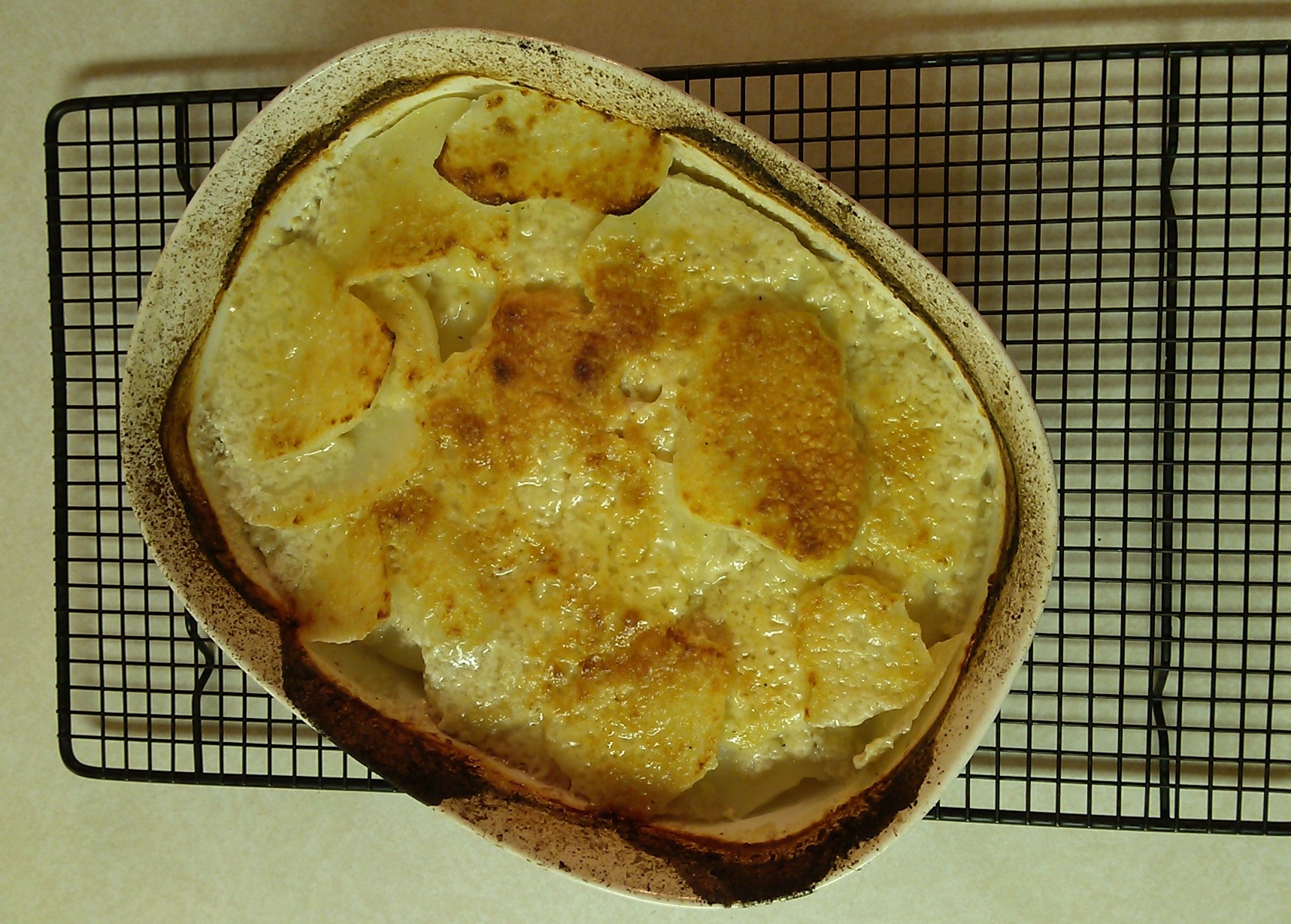
LAKE MACBRIDE— As Thanksgiving leftovers linger in the refrigerator, diminishing bit by bit each day, we need to make something different, a new dish. With the abundance of potatoes at the end of the growing season, making a scalloped potato dish fits the bill instead of the usual mashed, boiled or fried. Serve it with a green vegetable and a protein, and it would make a comforting meal on a day that didn’t get above 15 degrees.

My first thought was to find a home neighborhood recipe in one of the cookbooks I collected from the church and hospital near where I grew up. No luck there. Apparently the church ladies didn’t cook gratin much. (There were no credits to men in the book). So off to the Internet and a review of the standard fare of websites returned after a search for “scalloped potatoes.” While there are many variations of potato dishes, I sought the simplest, with the fewest ingredients, and least prep time. Modified from the recipe to use items on hand, here is the dish.

Scalloped Potatoes

Ingredients: 1-1/2 cups milk (or heavy cream), 3 bay leaves, half teaspoon dried thyme, 2 garlic cloves run through a garlic press, half teaspoon freshly grated nutmeg, salt to taste, 2 pounds of potatoes peeled and cut into eighth inch slices, half cup Parmesan cheese, salt and pepper to taste.

Preheat the oven to 400 degrees.

In a saucepan, heat the milk or cream with the bay leaves, garlic, thyme, nutmeg and salt and pepper. Butter a casserole that will hold the potatoes. Pour the heated milk through a strainer into a large bowl with the slices potatoes. Sprinkle half the Parmesan cheese on top and mix gently to coat the sliced potatoes with milk and cheese.

Spoon part of the milk mixture into the bottom of the casserole and layer the potatoes so they are evenly positioned. Pour the rest of the liquid over the potatoes and sprinkle the remaining Parmesan cheese on top as a crust.

Cover the dish with aluminum foil and bake for 40 minutes. Remove from the oven and let cool for five to ten minutes and serve.

Note: If chives were in season, I’d finely slice them and sprinkle them between layers of potato.

Categories
Kitchen Garden

Breeding Season

Tagged Cow
Cow

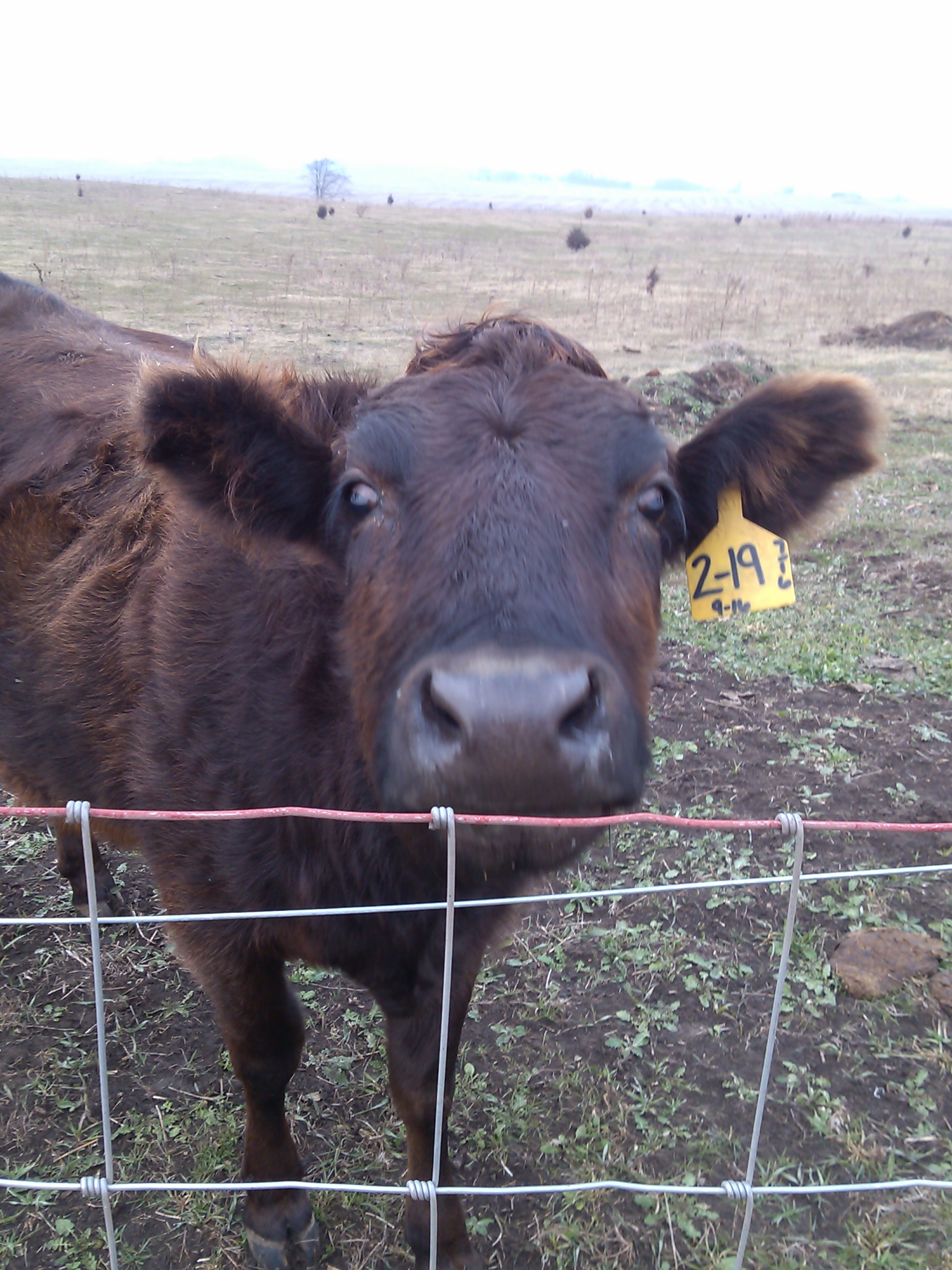
LAKE MACBRIDE— Breeding livestock is as old as dirt and the season for cattle and sheep is wrapping up now. Bulls and rams have begun their fall courtship, and the question remaining is whether or not the ladies are pregnant during the first go-around. Some farmers can “tell” if the females are pregnant, while others consult with a large animal veterinarian. The idea is to impregnate the livestock now for spring lambs and summer calves.

Cattle
Cattle

As a flexitarian, I’ve given little thought to where meat comes from since my days of working in a slaughterhouse more than 40 years ago. The animals with which I am familiar now are grass and grain fed and well cared for. While confinement operations are de rigueur in Iowa, in the local food system, we don’t talk much about concentrated animal feeding operations (CAFOs), except to criticize the environmental issues associated with them. We believe our way of managing livestock is better.

That said, my intersection with raising livestock is more tourism than economic activity. I enjoy reading about the complex solutions to cattle feeding involving corn, silage, alfalfa, distillers grain, corn stalks and grass, but wouldn’t want to spend my life in a constant analysis of nutrient values and costs. There is a knack, rather than a science to this, and farmers seem to do what pleases them with an eye to what others may be doing and saying.

At the end of the day, when a person works in the local food system there is exposure to the entirety of things people consume as food. Learning more about livestock this year has been another valuable lesson in sustainability.

Categories
Kitchen Garden

Thanksgiving Menu 2013

Vegetarian Thanksgiving

Happy Thanksgiving!

Today, among many things, I am thankful for the readers of On Our Own. Whether we have met or not, having an audience is an encouragement that provides a sense of validity when I write. So thank you.

Today is a family cooking day in our house and we prepared a special vegetarian menu that will nourish us today and feed us leftovers for days to come. Our family is scattered around the U.S. and we’ll be thinking of them all as we prepare this meal:

Relish tray of pickled vegetables, Kalamata olives, bell pepper, young carrots
Deviled eggs
Cranberry relish
Lentils with carrot
Wild Rice
Baked beans
Sage dressing
Steamed broccoli
Sweet potatoes
Root vegetable stew
Apple crisp
Iced water

Best wishes for a happy Thanksgiving, and thanks for reading On Our Own.

Categories
Writing

The Season is Over

Farm Landscape
Snowy Landscape

LAKE MACBRIDE— It was pitch dark when I arrived at the packing shed. Driving a 1970s-era Ford Econoline van, the previous three hours had been spent loading vegetables in it and another truck, and delivering them to CSA customers in nearby Iowa City and North Liberty. The wind was cold, but there have been worse, the customers were positive about the final fall share delivery, and the old vehicle served.

Supplementing starlight with my phone’s flashlight app, I found the light switch inside and turned it on to illuminate the area and unload and stack the empty crates and coolers and head home. The CSA season was over.

Proceeding cautiously on the icy gravel road, I made my way to the highway and turned south toward town. An email had reported the community well was broken, so I stopped at the grocery store and bought a gallon of water to use for cooking if needed. Resisting the temptation to purchase a frozen pizza for dinner, thoughts turned to what to make from food at home. The well had been repaired by the time I turned the kitchen faucet on. Dinner was a grilled cheese sandwich, a glass of cow’s milk and some oatmeal-raisin cookies from the store.

Instead of reflecting on the end of seasonal work, or depositing my paychecks, I went right to my queue of movies on Hulu. I started “Bob Dylan and the Band: Down in the Flood” and watched it straight through. I remember listening to copies of the bootlegged Dylan recordings at a friend’s home in high school. Downstairs is my copy of “Music from Big Pink,” purchased the day it arrived at the discount store in 1968. On the computer are tracks from the 2000 re-release of the album… I was enamored of the creative process of that music and that time, and still am. The film called up memories.

Memories are not about the past, but to help us live today… and tomorrow.  I retired around 10:15 p.m. wondering what to do with memories from a time of youth, hope and promise. By morning it was clear. There is nothing to do but go on living.

Thanksgiving and the following weeks have become a time to work on a plan for the coming year— true especially after leaving full-time paid work for a corporation. There is a sense of receding into the landscape— a seduction of the active mind. The season is over, but the living goes on.

While youth has flown like a murder of crows annoyed by a brown fox preening in the sunlight, hope drives us toward new seasons, the uncertainty of which is tempered by experience, and a succession of cold nights like last night. Yes, it’s time to go on living.

Categories
Writing

My Apple Life

Backyard Red Delicious Apples

LAKE MACBRIDE— 2013 has been the best year for local apples since I planted trees. Every tree bore fruit, and around the county, everyone with an apple tree had a good harvest if they wanted to pick them. Yesterday I bought half a bushel of Gold Rush apples from the orchard, the last maturing fruit of the season. Because I work at the orchard during the peak season, I got a discount.

Dolgo Crab Apples
Dolgo Crab Apples

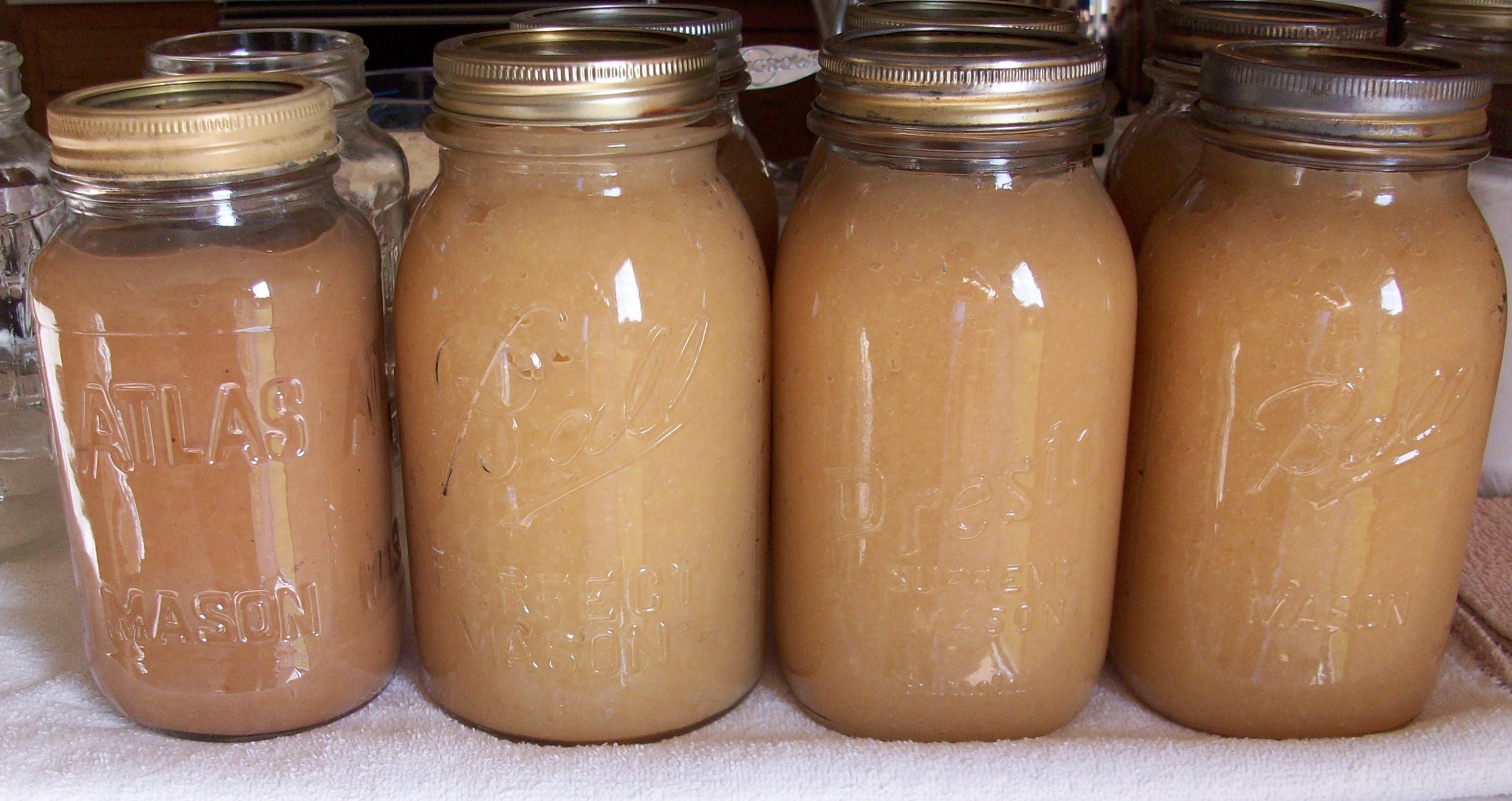
As winter approaches, the work has turned to making chunky applesauce a quart at a time with the ripest fruit. It’s delicious, if you know what I mean. The main uses for the bumper apple crop have been as follows:

Delicious Apples
Delicious Apples

Apple butter has become a staple for the last few years. I made a batch with the earliest apples, then a big batch of fallen apple butter from fruit knocked down by a storm. I also made apple butter from Dolgo Crab and Cortland apples purchased at the orchard. There was also a batch made from a mixture of 9 different varieties picked at the orchard. With what apple butter was leftover from last year, there is more than a two-year supply in the pantry.

Livestock Apples
Livestock Apples

The Sept. 19 storm brought a disappointing end to much of the large apple crop. In addition to apple butter, I made applesauce and apple crisp with fallen apples, and sent a lot of them with a friend who keeps livestock. She returned the favor with fresh eggs from their chicken house. A neighbor had borrowed a cider press and he and his children made about four gallons of apple cider from my fallen fruit. The fruit was all used, but it was a rush to get it done before they spoiled.

Apple Sauce
Apple Sauce

As summer turned to fall, I learned about longer keeping varieties, particularly the Winecrisp and Gold Rush apples. We don’t have the refrigeration capacity to keep them cool, but they are stacked in crates in the coolest part of the house and I’m hoping for crispy apples into winter. Since they are around, it’s likely they will all be eaten before going bad.

Thanksgiving Apple Pie

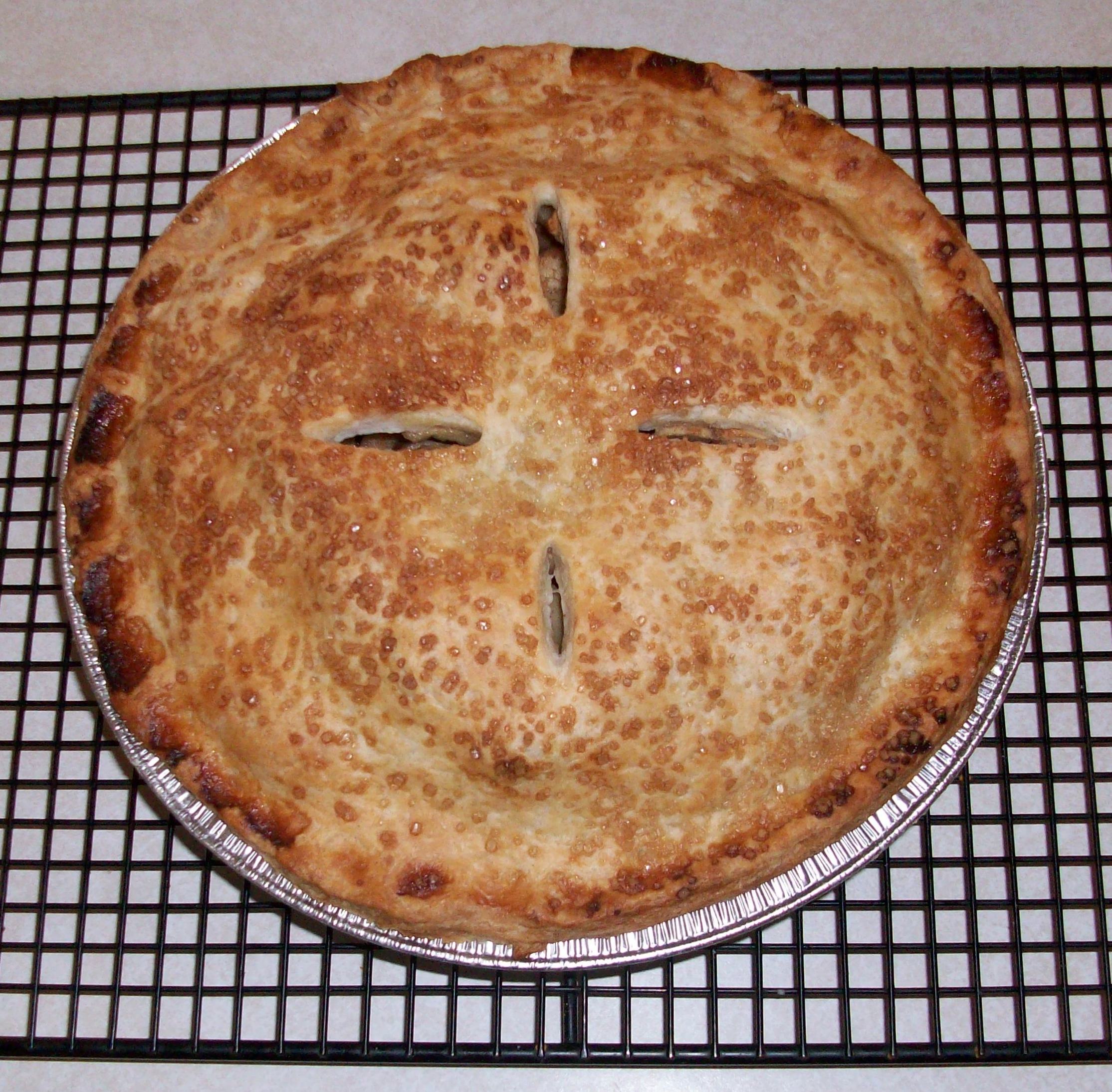
As December approaches, it will soon be time to prune. I took some photos of my Golden Delicious tree to the orchard where the chief apple officer gave me some pointers on how to salvage the tree. The expectation is that 2014 will be a bust year for home apples, but my four remaining trees have been little pruned, so I have some work to do.

My apple work will go on for a while, but it’s time for closure on a great season. Little by little, gaining an understanding of apples and apple culture has become a part of who I am. I am only just beginning to understand my apple life.

Categories
Home Life Kitchen Garden Work Life

Turkey Wrangling and Friday

Loaves
Loaves

LAKE MACBRIDE— With the Thanksgiving holiday upon us, thoughts turn to turkey in a lot of households. Unlike during most of our vegetarian holidays, I am dealing with 100 locally grown, free range slaughtered birds tomorrow. Along with others, we are taking delivery from a local farm, sorting and weighing, and preparing them for delivery in the CSA shares next week. I’ve never been a dead (or live) turkey wrangler before, so despite the implications, I am looking forward to a new experience.

We see a lot of wild turkeys near our home. Mostly, they browse in the field near the lane to the highway, or are seen flying over the road. For those of us that remember when Iowa turkeys were an endangered species, it is always a happy sight. But enough turkey talk.

If the farm work has been winding down, it comes to a halt after delivering the final shares on Tuesday. We’ll settle up and settle in for winter. That it’s snowing as I write this post is a sign of the time of year. Confronted with the end of year holidays, it’s time to take stock of home life and work life, and make plans. This year’s planning will be as important as in any previous year.

Home life is patterned by habits formed over a lifetime: more indoor work— cooking, cleaning, writing and reading— and the part of work life devoted to research and development— studying opportunities and determining viability. As with most who live an alternative lifestyle, funding cash flow during 2014 will be a pressing issue, although I am not yet willing to sell plasma to do so.

If 2013 was anything, it was an experiment in lowly paid work, first in a warehouse, assembling kits for Whirlpool, and then on a number of farms. What I’ve found is my aging frame can take the work, but there are limits to how the tendons and muscles can tolerate increased physical activity. I am optimistic about performing physical work in more active jobs.

That said, I don’t plan to return to the warehouse, even though they invited me to return when the farm season was finished. The pay was low, and the social networking not good enough to distill further benefit. So what’s next? That’s the question for answering during the next few weeks. There are ideas, but no plans yet. I am thankful for the ability to be in this position as the snow falls and winter approaches.