In our search for truth and meaning there’s nothing like making soup.
Each batch can be spontaneous yet based in traditional flavors and processes. Soup uses what comes in from the garden, is stored in the pantry and ice box, and our kitchen skills. A gardener makes a lot of soup.
It is honest food.
Friday I drove straight home from work at the home, farm and auto supply store and got started.
I wanted to glean the garden before the weekend’s hard frost. I brought in carrots, eggplant, tomatoes, kale, bell peppers, Red Rocket and Jalapeno peppers, basil and broccoli along with a five gallon bucket of apples.
I’ve had an idea about making crock pot or slow cooker soup for a few weeks. The idea is to do the prep work Friday night and set the temperature on high. At bedtime I would turn it to low, letting the mixture slow-cook overnight. I hope to can fewer big batches of soup while continuing to use up vegetables at the end of the span between fresh and compost. A crock pot makes enough for four to six meals.
It began with a cup of dried lentils and a third cup of pearled barley in the bottom of the crock. I turned on the heat and added a quart of home made tomato juice then got to work prepping vegetables:
All of the carrots from the garden and some from the CSA.
The remainder of a head of home grown celery.
One large yellow onion.
Bay leaves.
Two leaves of green kale, including the stalk finely sliced.
Small tomatoes, quartered.
Root vegetables: kohlrabi, turnip and potatoes.
A leek.
Several broccoli florets with stalks finely sliced.
Dried savory and salt to taste.
The vegetables went into the crock as I cleaned and cut them. When prep work was done I added a quart of home made vegetable broth and covered with water.
That’s it.
In the morning the soup was flavorful, thick and hearty. I had a bowl for breakfast, leaving more than a half gallon in glass jars for the ice box.
In a turbulent society there is no better way to sustain ourselves than with a bowl of hot soup.
A garden never ends. First hard frost is forecast this week and kale will likely survive, tasting better after being kissed by cold.
If the ground dries out, I will plant next year’s crop of garlic. If it really dries out, I’ll remove stakes and fencing, mow everything down, and add to the burn pile. With the warmer fall weather these activities go later into each cycle. As Senator Joe Bolkcom pointed out yesterday, September was the fourth hottest on record with the first three being in 2014, 2015 and 2016. I scheduled time off work at the home, farm and auto supply store for gardening the first week in November.
I’ll analyze the garden results later but already know the basics: pick good seeds, rejuvenate the soil, cultivate more, and mulch, mulch and mulch. The composted chicken manure applied to some plots produced great results. Like many gardeners, I realize if the garden failed in any way it is mostly my fault for decisions made about planting, insects, cultivation and soil quality.
Because of engagement in local food production, our pantry is overflowing. Apples, potatoes, onions and garlic are plentiful. Winter shares from CSAs continue until Thanksgiving. There are abundant ingredients for cooking. It’s cooking meal to meal for the time being with big canning sessions giving way to large dishes with leftovers.
Eight days remain in the apple season after which I plan to take a weekend to consider the future. That includes health care decisions, signing up for Social Security, and getting back to reading. I may get my hair cut and take some needed personal time to recover.
The marketplace of home vegetable gardens, community supported agriculture, farmers markets, road side vegetable stands, restaurants, retail interests and direct farm sales hasn’t coalesced into a sustainable local food system, and may not.
One should never doubt the resilience of farmers. At the same time, due to unwelcome changes in society, our local food system is at risk before it has become sustainable.
A small group of pioneers made progress toward a sustainable, local food system. People like Denise O’Brien, Dick and Sharon Thompson, Fred Kirschenmann, Francis Thicke, Laura Krouse and Susan Jutz took ideas about sustainability and put them into practice. Their work enabled a new generation to enter the local food business — people like Tony Thompson (New Family Farm), Kate Edwards (Wild Woods Farm) and Carmen Black (Sundog Farm).
The idea of a return to diversified farms producing food for local markets begs the question how did we get away from it?
If markets for local food become stale or disappear due to changing tastes or financial stress, increased commodification could erase slim margins and lead to bankruptcy.
A local food system is about cooperation and support: between farmers, and with their customers, suppliers, workers, volunteers and bankers. Without that a family may have their dinner on the table, but the entire system is risked if such individualism is the prevailing attitude.
Change is in the air. Change driven by economic hardship and oppressive policies originating in Des Moines and Washington.
It doesn’t look good for growers, retailers or consumers, not because business models have changed, but because we are entering an era when wealth flows to the top, leaving the rest of us struggling. How will farmers get health insurance if the individual market becomes too expensive? They may take a job in town and let their agricultural aspirations go.
These changes and the challenges they bring will test the sustainability of a fledgling local food system.
Climate change is impacting society negatively as well. What we assume about Iowa’s growing conditions — adequate rainfall and predictable temperatures — is subject to change as the oceans and atmosphere warm, increasing the number and intensity of extreme weather events. Likewise, increased carbon dioxide in the atmosphere may be reducing the nutritional value of food, according to a recent study published in the journal Nature.
I don’t doubt the resilience of farmers I know. If a local food system can be sustained, they will do it. Isn’t it time you got to know your farmer? We could all use a friend during these turbulent times.
~ First published in the Saturday, Sept. 30, 2017 edition of the Cedar Rapids Gazette.
Best news of the week arrived Friday afternoon via email. The Cedar Rapids Gazette decided to publish my opinion piece on the local food system at risk.
A writer lives for exposure to an audience and my readership will get a boost just by being in print media with daily circulation over 30,000.
I will probably run to the convenience store before sunrise to buy a copy as soon as I hit publish. (UPDATE: Here’s the link).
This weekend is mostly about apples. It’s Golden Days at the orchard. We have multiple varieties of Golden Delicious and for the most part, that’s what we’ll be picking. There are a lot of them still on the trees. Last night was family night and I spent most of my shift stocking shelves, coolers and freezers in preparation for what we hope is a good Saturday turnout. I laundered my orchard T-shirts last night and am ready to go. It’s the beginning of the end of the u-pick season.
Fallen Apple Pile
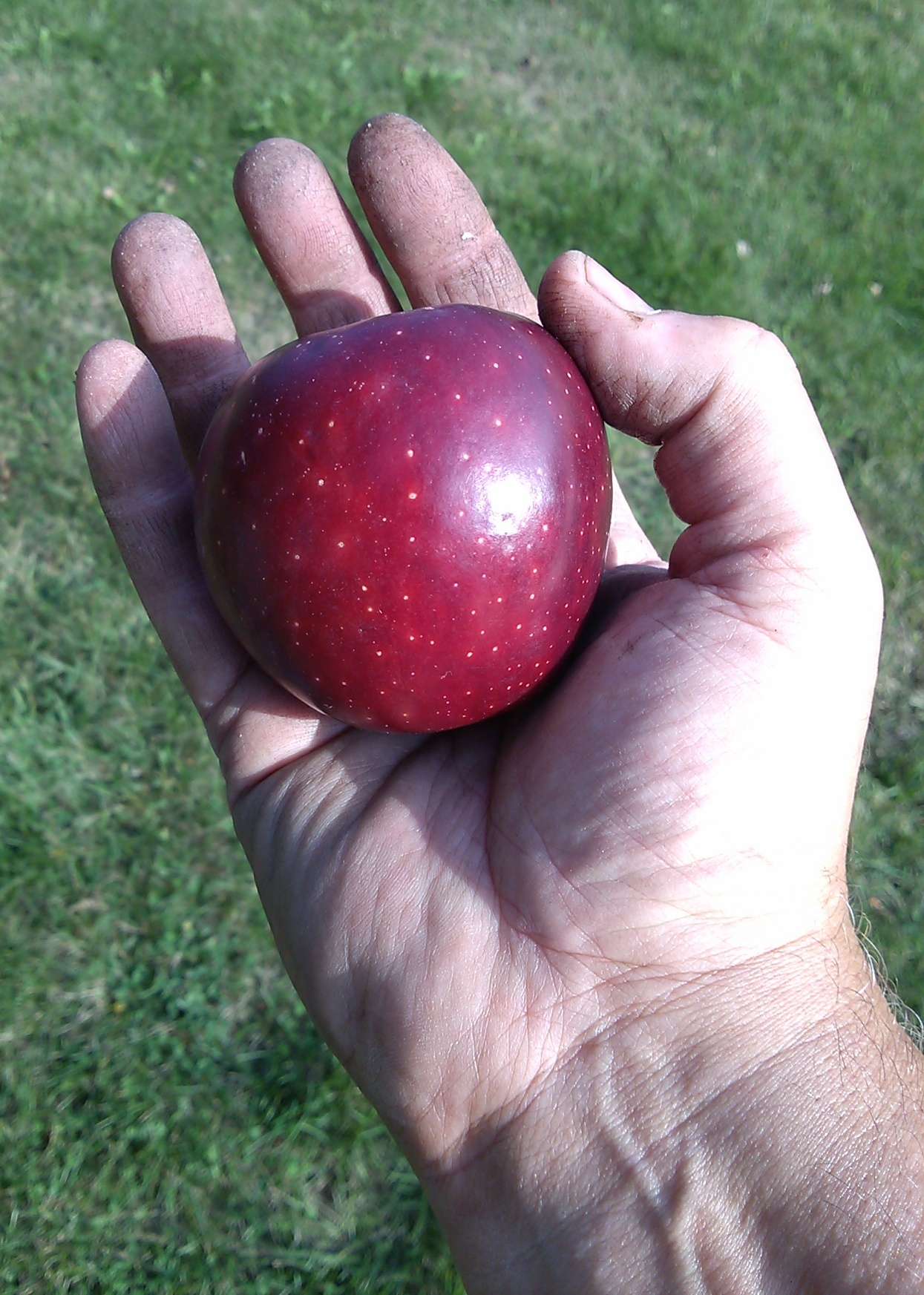
It’s time to pick the Red Delicious apples on our backyard tree. With the record-breaking heat apples are beginning to drop. I’d better not wait any longer. They are sweet enough to eat out of hand and should make great apple sauce. Whatever I’m able to harvest will be a fraction of the potential. We can only eat fresh and process so many.
So that’s the plan. Read and publicize my article in the Gazette and live in Iowa’s apple world. There’s work involved, but it will be a labor of love.
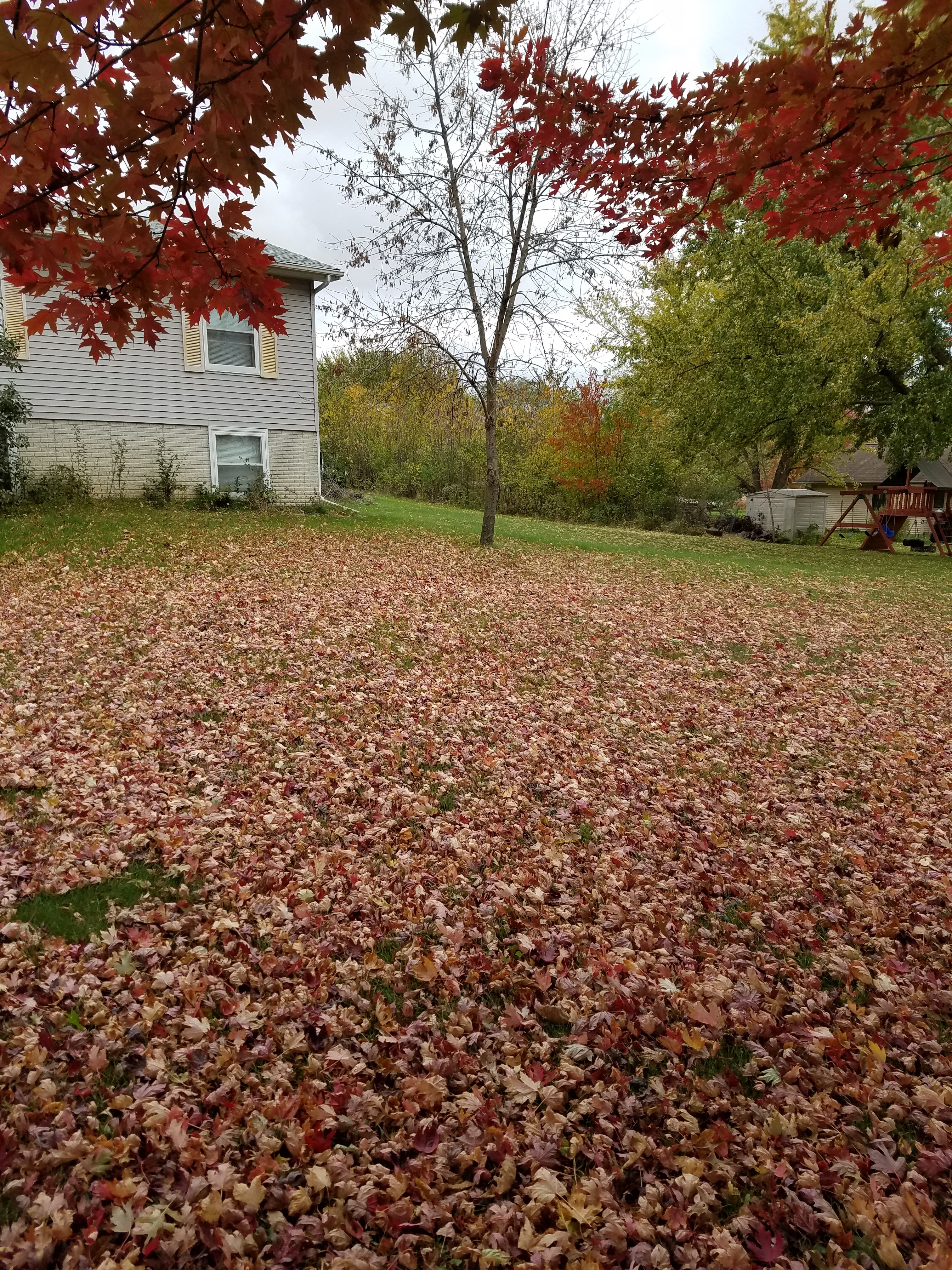
Midst falling leaves, grasses turned brown, and apples dropping to the ground, I mowed for the first time in over a month. It may be the last cut before winter.
Monday I visited the vegetable farms where I work each spring and caught up with the farmers. Both farms want me to soil block next year. I plan to do it.
I picked up vegetables for which I bartered: a fall share at one farm, seed garlic, storage onions and potatoes at the other. We cooked a spaghetti squash for dinner and had sides of a burger patty and fresh green beans. I made pasta sauce with tomatoes, garlic, basil and onions. A jug of apple cider is in the ice box, but we didn’t open it just yet. It’s been hard to keep up with the abundance since the garden began producing and the summer vegetable share began. We could feed a larger family than we have.
Fund raising letters have begun to arrive via snail mail. If we had the cash, I’d contribute to each one of them: Practical Farmers of Iowa, Catholic Worker Houses in Iowa City and Des Moines, Veterans for Peace, Physicians for Social Responsibility, and others.
I called the snow removal contractor for our home owners association and the receptionist took a message. He’s out of town until Wednesday. She said they haven’t really started thinking about snow removal because they have been so busy. Isn’t that true for us all.
During the next six months I’ll be re-engineering our lives to live on our social security, transition our health insurance to Medicare, and slow down on work I do mostly for the paycheck. After a two-day retreat, I head back to jobs which have daily shifts until Nov. 3. I need focus so I get the transition right. That means something has to give.
With the current political and economic climate, most everyone I know seems to be in transition. Each week some new affront comes out of our federal government. The same would be true in Iowa if the legislature were in session. It’s a time to re-group and figure a strategy to deal with an aging frame, diminished income potential, and unwelcome changes in society.
My posts have slowed down. Although there is plenty to write about, life’s turbulence has increased making it more difficult. The existential threat to our way of life manifests itself more each day. We will survive the next steps if we take time to do them right. Writing in public may take a back seat to the tasks of living for a while.
Fall going into winter is a great time to do that.
Our local food system is at risk before it has even become established.
The mix of retail interests, community supported agriculture, farmers markets, road side vegetable stands, restaurants and direct farm sales hasn’t coalesced into a sustainable local food system and it doesn’t appear it will any time soon.
One should never doubt the resilience of farmers. At the same time if markets go away due to changing tastes or financial stress, increased commodification could take slim margins out of farm businesses leading to bankruptcy. Iowans remember well the farm crisis of the 1980s.
A small group of pioneers made progress in starting a sustainable, local food system. People like Denise O’Brien, Dick and Sharon Thompson, Fred Kirschenmann, Francis Thicke and Susan Jutz took ideas about sustainability and put them into practical application. Their work enables a new generation of farmers to enter the local food business, people like Tony Thompson (New Family Farm), Kate Edwards (Wild Woods Farm) and Carmen Black (Sundog Farm). The idea of a return to diversified farms producing food for local markets begs the question how did we get away from it?
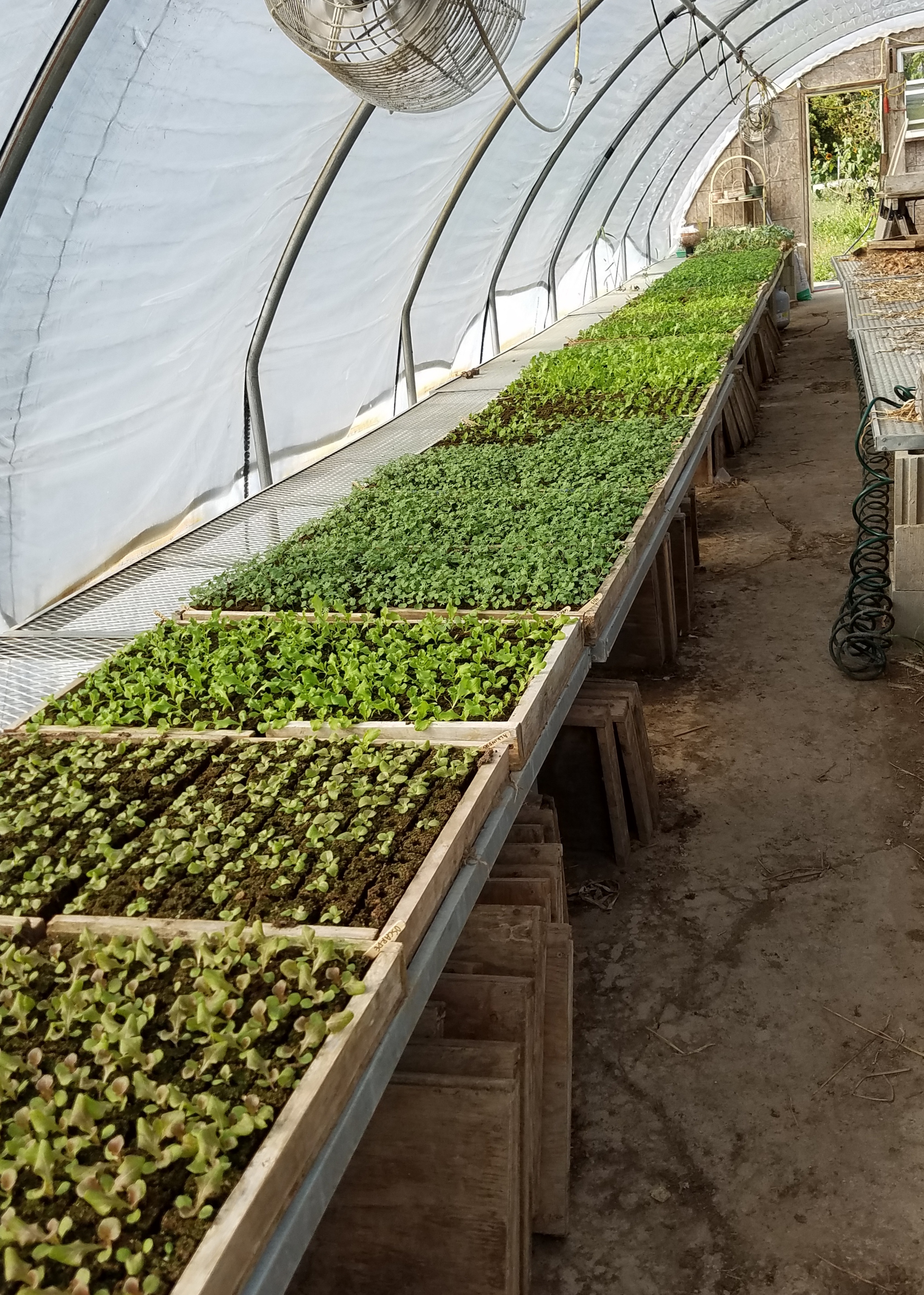
September Seedlings
Change is in the air. Change driven by economic hardship, oppressive policy in Des Moines and Washington, D.C., and climate change. It doesn’t look good for growers, retailers or consumers, not because business models have changed, but because we are entering an era when wealth flows to the top, leaving the rest of us struggling for subsistence. Cultural changes driven by our political and economic climate will test the resilience of a fledgling local food system. What we assume about Iowa’s growing conditions — adequate rainfall, predictable temperatures and soil quality — is subject to change as the oceans and atmosphere warm resulting in increased numbers and intensity of extreme weather events in Iowa.
The challenge is this: If I can buy perfect-looking Honeycrisp apples for $1.98 per pound at the grocery store, why would I pay more at a local apple orchard? The local foods answer is because one knows the farmer, has likely met him or her, and knows the inputs that go into fruit production. As families increasingly make limited resources go further, the risk to local food farmers is they will feel it as consumers pinch pennies.
Today’s food system centers around being able to say, “I’ve got mine,” with regard to a family’s food on the table or a viable agricultural business model. That individualistic, self-centered approach is not sustainable. Sustaining a local food system will take all of us working together.
Versaland, a farm owned by Suzan Erem and Paul Durrenberger, and operated by Grant Schultz, has been in the news. Schultz is well known locally and serves as an example of how a local farmer can create bad press, alienate neighbors and risk failure. In a recent blog post, Erem and Durrenberger answered the question what kind of farmer Schultz is in no uncertain terms: a neglectful, unfocused one. Read their post titled, “Grant Schultz — Facts to Consider.”
Schultz recently applied to the Johnson County Board of Supervisors to rezone part of Versaland. The supervisors rejected the application unanimously, in part because land owners Erem and Durrenberger did not support it. Local farmers with whom I’ve discussed the matter don’t understand why he wouldn’t get buy-in from the landowners before applying for rezoning. The answer is likely he can’t afford to buy the farm according to contract terms without the money his proposed idea might generate.
Whatever one feels about the Versaland saga, disputes — some including lawyers and some not — are common in agriculture. The reason the Versaland dispute stands out is there have been so few of them in the local food system. For the most part, people get along despite differences.
What is more concerning than a legal dispute is the disconnect between Versaland and its reality. This narrative started a couple of years ago.
“Mr. Schultz and Versaland have completely shifted the climate change narrative in the heartland,” author Jeff R. Biggers opined in the Nov. 20, 2015 New York Times. “Today’s farmers can play a key role in climate solutions.”
The narrative Biggers crafted about farming and climate change, featuring Schultz’ work, tells what may be possible but falls far short of what is. Schultz’ first steps in what Biggers asserts should be a global climate change campaign faltered with the revelations about Versaland the dispute brought to light. That Schultz appears to be a neglectful, unfocused farmer isn’t a crime. Those who live in the country know plenty of farmers like that. However it detracts from the credibility of Biggers’ narrative. To the extent Versaland is part of the local food system it drags everyone down.
Our local food system is not at risk for lack of a narrative. What matters more is the relationships between farmers and their customers, suppliers and landlords. Government plays a role and the negative cultural impact of federal and state governments in society remains to be seen. That is the greatest risk the local food system faces.
One hopes the window to establish a vibrant, sustainable local food system remains open, at least for a while.
Yesterday our orchard’s chief apple officer cut a slice of Kidd’s Orange Red to sample and it’s been hard to think of anything else. A cross between Delicious and Cox’s Orange Pippin, developed in New Zealand by James Hutton Kidd, and introduced in 1924, the flavor is unbelievable. I’d say it was delicious but that would be an apple joke, favoring one parent over the other.
The orchard is in peak production. I picked one or two of each from the cooler to bring home: Gala, Crimson Crisp, Crimson Gold, Jonathan, Snow Sweet, and Jonafree. There are more than a dozen other varieties ripe for picking from the trees.
“Heat early in the growing season built sugar,” our chief apple officer told the Iowa City Press Citizen. “Sunny days with cold nights —like those in the past month — brought color and flavor.”
The Crimson Crisp apples are the best I’ve tasted this year. Food is about flavor as much as sustenance, isn’t it?
In our backyard the Red Delicious tree is ready to pick. This is a baseline commodity fruit apple for us. Like many home gardeners I make apple dishes from what is available. The fruit is smaller than usual because there are so many apples on each branch. There are plenty to make juice for drinking and apple cider vinegar, apple sauce, baked goods, dried apples and frozen slices for winter. Once they are picked, a mad rush to preserve them begins — I’m putting it off until Wednesday to work on a couple of other projects.
I took two bushels of kale leaves to the orchard on Sunday. I was surprised how many co-workers had never seen scarlet kale. Likewise my large leaves are much different from the bundles of small ones available in the grocery store. I asked one of my colleagues to compost whatever was left at the end of the shift. She said she wouldn’t but would take any remainders home. A gardener is always looking for outlets for kale.
In the garden, late pepper growth is happening. There should be plenty more Cayenne and Red Rocket hot peppers, some jalapenos, and maybe a few sweet bell peppers. The Fairy Tale eggplant is producing and there will be a few more large tomatoes. Some carrots survive but not enough to make a dish of them.
I took two days vacation at the home, farm and auto supply store next week to work in the yard. Garden cleanup, tree work and much needed mowing and trimming are on the agenda… also apple picking and processing. Here’s hoping the rain holds back those two days.
I’d move on to other work now except I can’t escape the complex flavor of apples. It dominates my waking hours and carries over while I sleep. As leaves on deciduous trees begin to turn I embrace the apple season, holding on until the last fruit falls, the last leaf turns to compost — sustaining a life in a turbulent world.
Last week was stressful as Hurricane Irma passed through central Florida over our daughter’s home.
They boarded the windows, sandbagged the doors and laid in water and shelf stable food for when the electricity went out.
“The whole house has been playing Settlers of Catan, which we never get to play enough,” she texted. “Next up is Fluxx, a rules changing card game. The lights have been flickering slightly, but we still have power and water. Every so often, the outside sounds a bit like a car wash.”
She and her housemates weathered the hurricane, suffering minimal property damage. Her final message in the hurricane series was
Stay safe out there. If anything, I am reminded that everywhere in the US, there is some kind of emergency that can happen. Please, pack a Go Bag, prepare a plan, know where your evac locations are. I love you. Stay safe. Be prepared.
It turns out the previous board of directors for our sanitary sewer district failed to communicate new requirements to comply with ammonia nitrogen standards when they all resigned without notice. I emailed the Iowa Department of Natural Resources to learn more and there is a multi-year process for compliance added to our agenda. Stress level kicked up a notch with this.
The week ground down with efforts to meet my tomato contract. Farmer Kate and I traded my labor for her tomatoes. To finish the deal, I prepared seven quart jars of diced tomatoes each morning and water bath processed them in the evening. The work is not hard but it blocks out other things. A deal is a deal and she met her part of it with an abundance of organic tomatoes. On Friday before work at the home, farm and auto supply store I delivered two cases of canned tomatoes. We each should have plenty to make it until the next tomato season.
At Thursday’s county board of supervisors meeting a zoning application for a farm near here was considered and rejected unanimously. The controversy involves people I know in government and in the local food system. None of it is good for any of us.
“In one respect farming can be considered a tedious series of lawsuits, disputes and legal struggles,” I posted on Twitter. “Versaland bares that for all to see.”
I’m trying to understand the context and situation with more clarity and plan to write a longer post about local food in light of it.
September is always busy so there’s no surprise in any of the week’s activities and developments. Last night a group called the Iowa Faith and Freedom Coalition lavished praise and support for the 45th president. That was a pisser too.
The Johnson County Board of Supervisors disagrees on how to use the property known as the “Poor Farm” and that’s okay.
There’s no surprise something will be done with the property, especially to those paying attention. Supervisors recently decided what that may be.
In June, “The Johnson County Board of Supervisors on Friday voted (3-2) to move forward with a plan to restore and develop the historic county Poor Farm, including increasing the amount of land leased to small farmers and adding permanent affordable housing,” Iowa City Press Citizen reporter Stephen Gruber-Miller wrote.
I accept the 3-2 vote because we don’t elect supervisors with differing views to agree all the time. We want a diverse group of five supervisors. One that creates enough friction among themselves to hone the use of county assets and community resources in a way to make society better for everyone in this liberal-dominated community. Supervisor Rod Sullivan laid out the case for the board’s decision in a June 23, 2017 post on his website Sullivan’s Salvos. I’m confident something positive can come out of the board’s decision to develop the long-neglected county asset.
I like the idea of using county land as a way to help beginning farmers get started. The idea is different from reality. If they don’t have capital, farmers lease land — a temporary solution in which a lot of hard work building soil health can come to nought if they have to relocate. The cost of farm land remains high in Iowa. Every beginning farmer with whom I’ve spoken said their start-up issue is not only access to land, but the ability to purchase it. The county could help farmers by changing the definition of a “farm” from 40 acres to something smaller. In some cases an acre or two was all that was needed to get started in business. The point is local food operators can make a living farming less than ten acres. Resolution of this challenge does not lie in developing the Poor Farm.
In Johnson County there is a concern that if the farm size were changed, developers would take advantage of a smaller farm definition and build single homes on a larger acreages to serve the affluent local market of highly paid workers and retirees. The concern is not misplaced. This board of supervisors has the smarts to figure out how to enable beginning farmers to buy smaller acreages while protecting any changed land use ordinance from what the county deems undesirable development.
The key unanswered question about development of the Poor Farm is how do farmers make the transition from government dependency to independence via a stint there? Using the Poor Farm to provide land access presumes things I’m not sure are accurate — particularly a level of farming competence I’m not sure many have. It also presumes there will be a high failure rate from beginning farmers who take advantage of the program but then choose another career path. It seems obvious a better apprenticeship for new farmers would be to work on an established farm with an experienced farmer, as some local operators have done. On-site, subsidized housing is a way to help new farmers financially and makes some sense. Answering the question of how to enable a successful farmer to use and then leave the Poor Farm is the dominating question.
The idea of a “poor farm” is so Midwestern 19th century. I resist the idea of isolating beginning farmers from the agricultural community or outside the infrastructure of the city with its proximity to work, transportation, shopping and church. I would have thought we had learned a better way in the more than 175 years since Iowa was first settled.
We elected our board of supervisors to do what they think is right. If we don’t like it, we can elect someone else. That’s the way the system works. Based on the way they are handling development of the Poor Farm I’m not ready to fire any of them yet, despite unresolved issues.
Gardening is of light and shade, moisture and soil health, seed genetics and cultivation. It is an endeavor in which we can invest personal effort and a few resources to see practical results.
We garden in complex creation, only partly of our own making. Imbued with elements, animals, insects and microorganisms we don’t fully understand, this year’s garden plots brought new understanding, a bountiful harvest and a busy kitchen.
Gardeners become the verb “to garden,” and if lucky, become inseparable from the process of growing and cooking food. What was once new knowledge becomes embedded in daily actions that appear intuitive. We become the syntax of food production. Words can’t do justice to what gardeners experience and learn over decades. One sees it only in practice.
Pear Harvest 2017
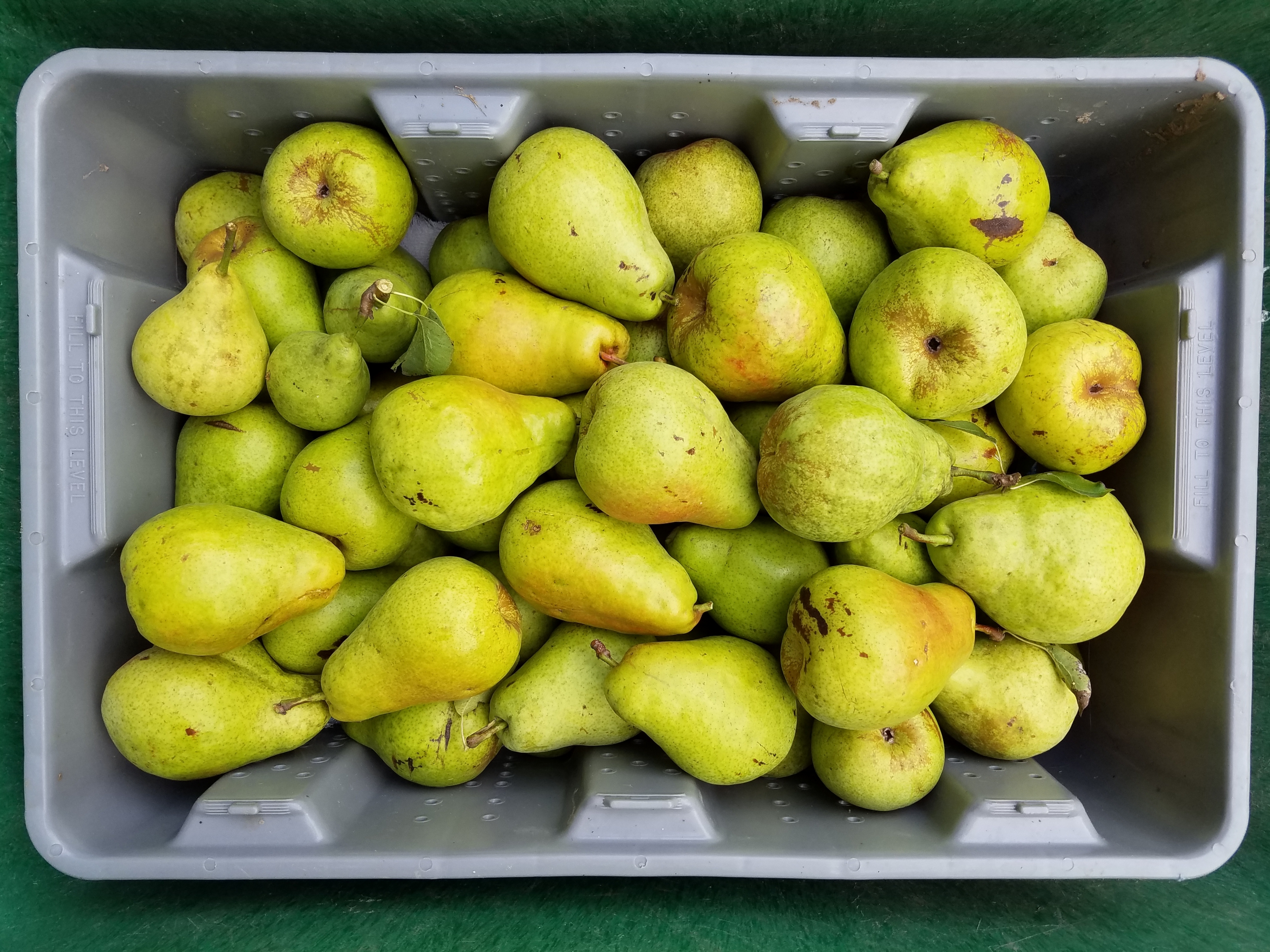
Last night I rushed into the house after work at the home, farm and auto supply store to change clothes, get the ladder, and pick pears before they all drop. We planted the tree at our daughter’s high school graduation party and have had some almost every year since they bore fruit. The season is very short as are our lives. We plan to enjoy the sweetness of fresh pears as long as we can.
Red Delicious apples are not fully ripe. I ate one while rushing around the back yard chasing pears and sunlight. Sugars are beginning to dominate starches and a couple more weeks on the tree will serve them well. After that it will be a mad rush to pick and preserve them. It could be another 1,000 pound harvest.
Second Growth Broccoli
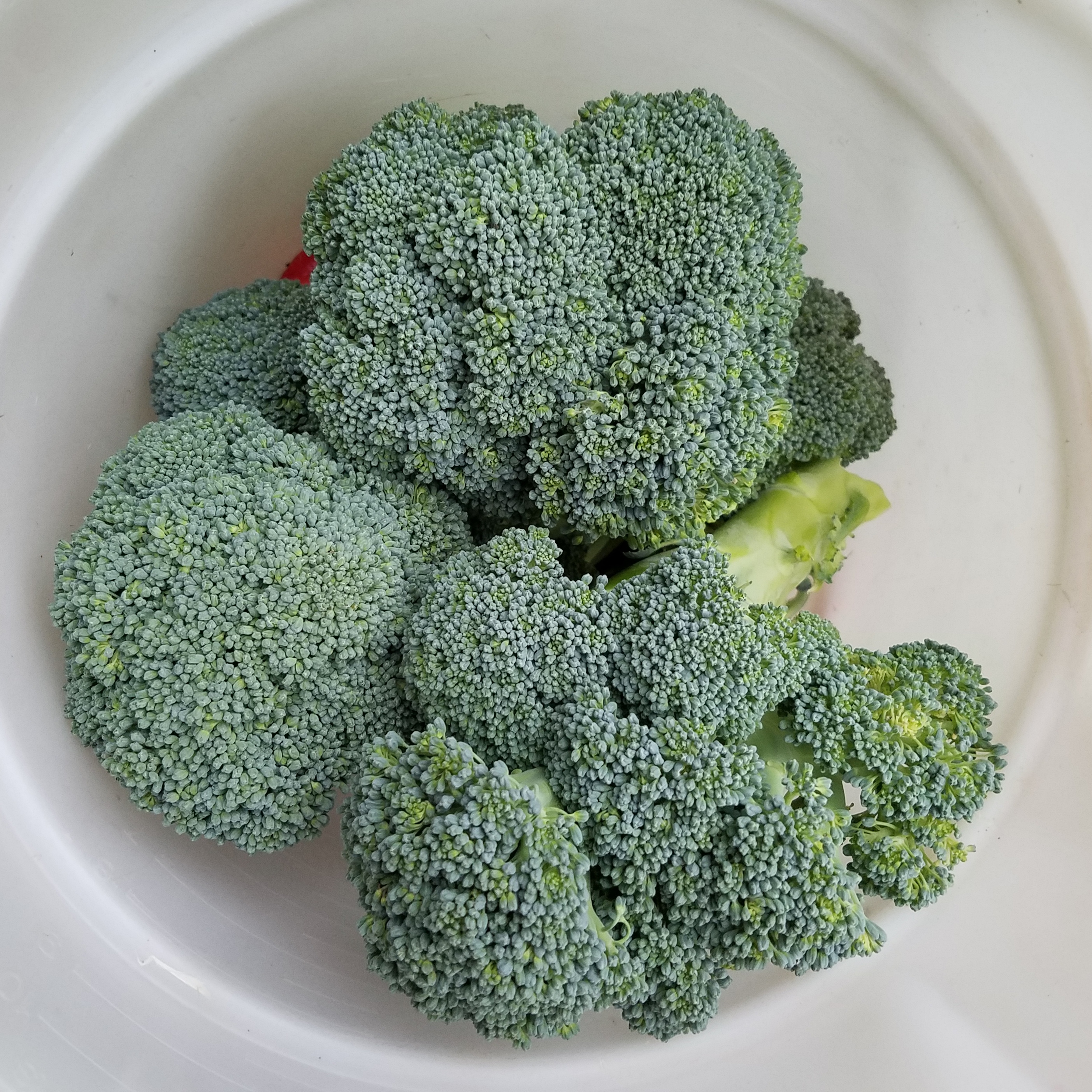
There were beautiful second growth broccoli heads, about eight of them. I broke them off by hand, cut and peeled the stems for work lunch.
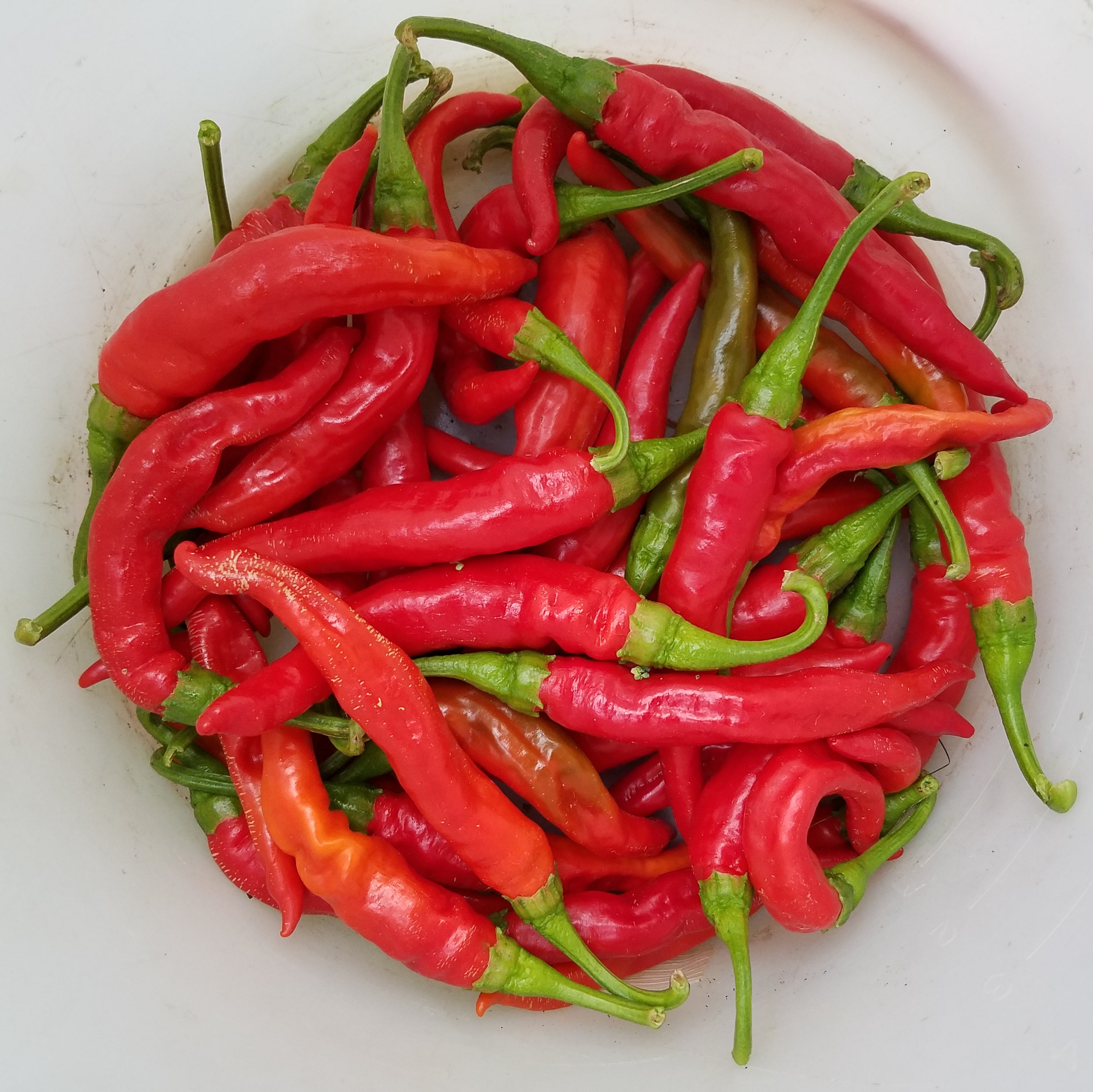
There were more Red Rocket peppers. I harvested the reddest ones, leaving many more to ripen. In the kitchen I took the others from the baking sheet in the oven (oven turned off) and carefully spaced them on the five trays of the dehydrator. I’ll dry them until they are ready to grind into red pepper flakes.
Someone brought cucumbers to the orchard on Monday. I took half a dozen (there were an inch thick and 5-6 inches long) and combined them with what was already in the ice box to make a second batch of fermented dill pickles. It takes 10 days if everything goes according to plan. Fingers crossed.
Monday I picked up two crates of tomatoes and two dozen quart Mason jars at Kate’s farm for canning. This is part of our barter arrangement in which she provides tomatoes, I process them, and we split them resulting canned goods. I sorted them Tuesday morning before my shift. Once spread out they filled four and a half crates instead of two.
I made ground tomatoes from the ones with bad spots as a base for pasta sauce. Here’s the process: Wash, trim and quarter the tomatoes then pulse in a blender until the big pieces break down. Put the blended tomato pulp in a juice funnel to separate liquid from the flesh.
After an hour, the split was 50 percent juice to 50 percent flesh. I put the results in jars and stored them in the ice box. I’ll can the juice and make pasta sauce while I work in the kitchen tonight or tomorrow night.
With two paid jobs and diminishing daylight there’s not much gardening time in my schedule. The lawn needs mowing and I plan to plant garlic in a week or two and there’s work to do preparing the soil.
It’s a rush until first frost, after which I may be able to slow down — but I doubt it.






 Journey Home
You must be logged in to post a comment.